


 购物车
购物车 个人中心
个人中心

After Life
¥270.76
Life is one of our most basic concepts, and yet when examined directly it proves remarkably contradictory and elusive, encompassing both the broadest and the most specific phenomena. We can see this uncertainty about life in our habit of approaching it as something at once scientific and mystical, in the return of vitalisms of all types, and in the pervasive politicization of life. In short, life seems everywhere at stake and yet is nowhere the same.In After Life, Eugene Thacker clears the ground for a new philosophy of life by recovering the twists and turns in its philosophical history. Beginning with Aristotle's originary formulation of a philosophy of life, Thacker examines the influence of Aristotle's ideas in medieval and early modern thought, leading him to the work of Immanuel Kant, who notes the inherently contradictory nature of "life in itself." Along the way, Thacker shows how early modern philosophy's engagement with the problem of life affects thinkers such as Gilles Deleuze, Georges Bataille, and Alain Badiou, as well as contemporary developments in the "speculative turn" in philosophy.At a time when life is categorized, measured, and exploited in a variety of ways, After Life invites us to delve deeper into the contours and contradictions of the age-old question, "what is life?"
Marine Macroecology
¥394.36
Pioneered in the late 1980s, the concept of macroecology-a framework for studying ecological communities with a focus on patterns and processes-revolutionized the field. Although this approach has been applied mainly to terrestrial ecosystems, there is increasing interest in quantifying macroecological patterns in the sea and understanding the processes that generate them. Taking stock of the current work in the field and advocating a research agenda for the decades ahead, Marine Macroecology draws together insights and approaches from a diverse group of scientists to show how marine ecology can benefit from the adoption of macroecological approaches.Divided into three parts, Marine Macroecology first provides an overview of marine diversity patterns and offers case studies of specific habitats and taxonomic groups. In the second part, contributors focus on process-based explanations for marine ecological patterns. The third part presents new approaches to understanding processes driving the macroecolgical patterns in the sea. Uniting unique insights from different perspectives with the common goal of identifying and understanding large-scale biodiversity patterns, Marine Macroecology will inspire the next wave of marine ecologists to approach their research from a macroecological perspective.

Maternal Effects in Mammals
¥353.16
Evolutionary maternal effects occur whenever a mother's phenotypic traits directly affect her offspring's phenotype, independent of the offspring's genotype. Some of the phenotypic traits that result in maternal effects have a genetic basis, whereas others are environmentally determined. For example, the size of a litter produced by a mammalian mother-a trait with a strong genetic basis-can affect the growth rate of her offspring, while a mother's dominance rank-an environmentally determined trait-can affect the dominance rank of her offspring. The first volume published on the subject in more than a decade, Maternal Effects in Mammals reflects advances in genomic, ecological, and behavioral research, as well new understandings of the evolutionary interplay between mothers and their offspring. Dario Maestripieri and Jill M. Mateo bring together a learned group of contributors to synthesize the vast literature on a range of species, highlight evolutionary processes that were previously overlooked, and propose new avenues of research. Maternal Effects in Mammals will serve as the most comprehensive compendium on and stimulus for interdisciplinary treatments of mammalian maternal effects.

A Grammar of Murder
¥282.53
The dark shadows and offscreen space that force us to imagine violence we cannot see. The real slaughter of animals spliced with the fictional killing of men. The missing countershot from the murder victim's point of view. Such images, or absent images, Karla Oeler contends, distill how the murder scene challenges and changes film.?Reexamining works by such filmmakers as Renoir, Hitchcock, Kubrick, Jarmusch, and Eisenstein, Oeler traces the murder scene's intricate connections to the great breakthroughs in the theory and practice of montage and the formulation of the rules and syntax of Hollywood genre. She argues that murder plays such a central role in film because it mirrors, on multiple levels, the act of cinematic representation. Death and murder at once eradicate life and call attention to its former existence, just as cinema conveys both the reality and the absence of the objects it depicts. But murder shares with cinema not only this interplay between presence and absence, movement and stillness: unlike death, killing entails the deliberate reduction of a singular subject to a disposable object. Like cinema, it involves a crucial choice about what to cut and what to keep.
Sorcery in the Black Atlantic
¥253.10
Girls abused in London and torsos of black boys found in the Thames; African boys disappearing from school and child traffic in Africa; child sacrifice and Brazilian Pentecostal exorcism. Unrelated events are swiftly connected in an uncanny work of prestidigitation, including hitech digital images of torsos and forensic drawings of abused children. Les correspondances symboliques, Baudelaire would say, or contiguous magic, in Frazer’s more prosaic de*ion. It all could make sense, if we believe in our fears, suspicions, gossip, and prejudices. Furthermore, this incredible work of prestidigitation was engineered by two respectable institutions, known for their enlightened search of truth: the BBC and Scotland Yard. But where was the evidence that all these things were connectedThe “exorcism scandal” bewitched the media in Britain for the whole month of June, until some dissenting voices started to talk about a “racist witch hunt.” 5 By then, however, a population of hundreds of thousands of Africans, in particular Pentecostal Africans, was already under suspicion. “What if some of that was true?” some people still may ask. In fact, shortly before completing this introduction, the local London newspaper Evening Standard published a two-page report on an African church in the United Kingdom, with the title “Miracles and claims of baby-snatching,” mixing rumors of child trafficking, sorcery, syncretism, and extreme wealth. 6 That is how sorcery works: not by fully demonstrating its power, but by opening a possible doubt; one is never fully sure it is not true.

A Documentary History of Arkansas
¥142.34
A Documentary History of Arkansas provides a comprehensive look at Arkansas history from the state's earliest events to the present. Here are newspaper articles, government bulletins, legislative acts, broadsides, letters, and speeches that, taken collectively, give a firsthand glimpse at how the twenty-fifth state's history was made. Enhanced by additional documents and brought up to date since its original publication in 1984, this new edition is the standard source for essential primary documents illustrating the state's political, social, economic, educational, and environmental history.

Not Without Honor
¥223.57
Not Without Honor threads together the stories of three American POWs-Carano; his buddy Bill Blackmon, who was also at Stalag 17 b; and John C. Bitzer, who survived the brutal "e;Death March"e; from northern Germany to liberation in April 1945. At times the journal reads like a thriller as he records air battles and escape attempts. Yet in their most gripping accounts, these POWs ruminate on psychological survival. The sense of community they formed was instrumental to their endurance. This compelling book allows the reader to journey with these young men as they bore firsthand witness to the best and worst of human nature.
Coyote Nation
¥253.10
With the arrival of the transcontinental railroad in the 1880s came the emergence of a modern and profoundly multicultural New Mexico. Native Americans, working-class Mexicans, elite Hispanos, and black and white newcomers all commingled and interacted in the territory in ways that had not been previously possible. But what did it mean to be white in this multiethnic milieuAnd how did ideas of sexuality and racial supremacy shape ideas of citizenry and determine who would govern the region?Coyote Nation considers these questions as it explores how New Mexicans evaluated and categorized racial identities through bodily practices. Where ethnic groups were numerous and-in the wake of miscegenation-often difficult to discern, the ways one dressed, bathed, spoke, gestured, or even stood were largely instrumental in conveying one's race. Even such practices as cutting one's hair, shopping, drinking alcohol, or embalming a deceased loved one could inextricably link a person to a very specific racial identity.A fascinating history of an extraordinarily plural and polyglot region, Coyote Nation will be of value to historians of race and ethnicity in American culture.
From Mother and Daughter
¥265.87
Among the best-known and most prolific French women writers of the sixteenth century, Madeleine (1520-87) and Catherine (1542-87) des Roches were celebrated not only for their uncommonly strong mother-daughter bond but also for their bold assertion of poetic authority for women in the realm of belles lettres. The Dames des Roches excelled in a variety of genres, including poetry, Latin and Italian translations, correspondence, prose dialogues, pastoral drama, and tragicomedy; collected in From Mother and Daughter are selections from their celebrated oeuvre, suffused with an engaging and enduring feminist consciousness. Madeleine and Catherine spent their entire lives in civil war-torn Poitiers, where a siege of the city, vandalism, and desecration of churches fueled their political and religious commentary. Members of an elite literary circle that would inspire salon culture during the next century, the Dames des Roches addressed the issues of the day, including the ravages of religious civil wars, the weak monarchy, education for women, marriage and the family, violence against women, and the status of women intellectuals. Through their collaborative engagement in shared public discourse, both mother and daughter were models of moral, political, and literary agency.
Timing of Affect
¥288.41
Affect, or the process by which emotions come to be embodied, is a burgeoning area of interest in both the humanities and the sciences. For Timing of Affect, Marie-Luise Angerer, Bernd Bosel, and Michaela Ott have assembled leading scholars to explore the temporal aspects of affect through the perspectives of philosophy, music, film, media, and art, as well as technology and neurology. The contributions address possibilities for affect as a capacity of the body; as an anthropological in*ion and a primary, ontological conjunctive and disjunctive processes; as an interruption of chains of stimulus and response; and as an arena within cultural history for political, media, and psychopharmacological interventions. Showing how these and other temporal aspects of affect are articulated both throughout history and in contemporary society, the editors then explore the implications for the current knowledge structures surrounding affect today.

57 Ways to Screw Up in Grad School
¥123.61
Don't think about why you're applying. Select a topic for entirely strategic reasons. Choose the coolest supervisor. Write only to deadlines. Expect people to hold your hand. Become "e;that"e; student.When it comes to a masters or PhD program, most graduate students don't deliberately set out tofail. Yet, of the nearly 500,000 people who start a graduate program each year, up to half will never complete their degree. Books abound on acing the admissions process, but there is little on what to do once the acceptance letter arrives. Veteran graduate directors Kevin D. Haggerty and Aaron Doyle have set out to demystify the world of advanced education. Taking a wry, frank approach, they explain the common mistakes that can trip up a new graduate student and lay out practical advice about how to avoid the pitfalls. Along the way they relate stories from their decades of mentorship and even share some slip-ups from their own grad experiences.The litany of foul-ups is organized by theme and covers the grad school experience from beginning to end: selecting the university and program, interacting with advisors and fellow students, balancing personal and scholarly lives, navigating a thesis, and creating a life after academia. Although the tone is engagingly tongue-in-cheek, the lessons are crucial to anyone attending or contemplating grad school. 57 Ways to Screw Up in Grad School allows you to learn from others' mistakes rather than making them yourself.
What Editors Want
¥188.35
Research publications have always been key to building a successful career in science, yet little if any formal guidance is offered to young scientists on how to get research papers peer reviewed, accepted, and published by leading scientific journals. With What Editors Want, Philippa J. Benson and Susan C. Silver, two well-respected editors from the science publishing community, remedy that situation with a clear, straightforward guide that will be of use to all scientists.Benson and Silver instruct readers on how to identify the journals that are most likely to publish a given paper, how to write an effective cover letter, how to avoid common pitfalls of the submission process, and how to effectively navigate the all-important peer review process, including dealing with revisions and rejection. With supplemental advice from more than a dozen experts, this book will equip scientists with the knowledge they need to usher their papers through publication.
Stone Soup Experiment
¥147.15
The Stone Soup Experiment is a remarkable story of cultural difference, of in-groups, out-groups, and how quickly and strongly the lines between them are drawn. It is also a story about simulation and reality, and how quickly the lines between them can be dismantled.?In a compulsively readable account, Deborah Downing Wilson details a ten-week project in which forty university students were split into two different simulated cultures: the carefree Stoners, and the market-driven Traders. Through their eyes we are granted intimate access to the very foundations of human society: how group identities are formed and what happens when opposing ones come into contact.?The experience of the Stoners and Traders is a profound testament to human sociality. Even in the form of simulation, even as a game, the participants found themselves quickly-and with real conviction-bound to the ideologies and practices of their in-group. The Stoners enjoyed their days lounging, chatting, and making crafts, while the Traders-through a complex market of playing cards-competed for the highest bankrolls. When they came into contact, misunderstanding, competition, and even manipulation prevailed, to the point that each group became so convinced of its own superiority that even after the simulation's end the students could not reconcile. Throughout her riveting narrative, Downing Wilson interweaves fascinating discussions on the importance of play, emotions, and intergroup interaction in the formation and maintenance of group identities, as well as on the dynamic social processes at work when different cultural groups interact. A fascinating account of social experimentation, the book paints a vivid portrait of our deepest social tendencies and the powers they have over how we make friends and enemies alike.?

Limits of Critique
¥182.47
Why must critics unmask and demystify literary worksWhy do they believe that language is always withholding some truth, that the critic's task is to reveal the unsaid or repressedIn this book, Rita Felski examines critique, the dominant form of interpretation in literary studies, and situates it as but one method among many, a method with strong allure-but also definite limits.Felski argues that critique is a sensibility best captured by Paul Ricoeur's phrase "e;the hermeneutics of suspicion."e; She shows how this suspicion toward texts forecloses many potential readings while providing no guarantee of rigorous or radical thought. Instead, she suggests, literary scholars should try what she calls "e;postcritical reading"e;: rather than looking behind a text for hidden causes and motives, literary scholars should place themselves in front of it and reflect on what it suggests and makes possible.By bringing critique down to earth and exploring new modes of interpretation, The Limits of Critique offers a fresh approach to the relationship between artistic works and the social world.
Fast, Easy, and In Cash
¥206.01
"e;Artisan"e; has become a buzzword in the developed world, used for items like cheese, wine, and baskets, as corporations succeed at branding their cheap, mass-produced products with the popular appeal of small-batch, handmade goods. The unforgiving realities of the artisan economy, however, never left the global south, and anthropologists have worried over the fate of resilient craftspeople as global capitalism remade their cultural and economic lives. Yet artisans are proving to be surprisingly vital players in contemporary capitalism, as they interlock innovation and tradition to create effective new forms of entrepreneurship. Based on seven years of extensive research in Colombia and Ecuador, veteran ethnographers Jason Antrosio and Rudi Colloredo-Mansfeld's?Fast, Easy, and In Cash?explores how small-scale production and global capitalism are not directly opposed, but rather are essential partners in economic development.Antrosio and Colloredo-Mansfeld demonstrate how artisan trades evolve in modern Latin American communities. In uncertain economies, small manufacturers have adapted to excel at home-based production, design, technological efficiency, and investments. Vivid case studies illuminate this process: peasant farmers in Tquerres, Otavalo weavers, Tigua painters, and the t-shirt industry of Atuntaqui.?Fast, Easy, and In Cash?exposes how these ambitious artisans, far from being holdovers from the past, are crucial for capitalist innovation in their communities and provide indispensable lessons in how we should understand and cultivate local economies in this era of globalization.
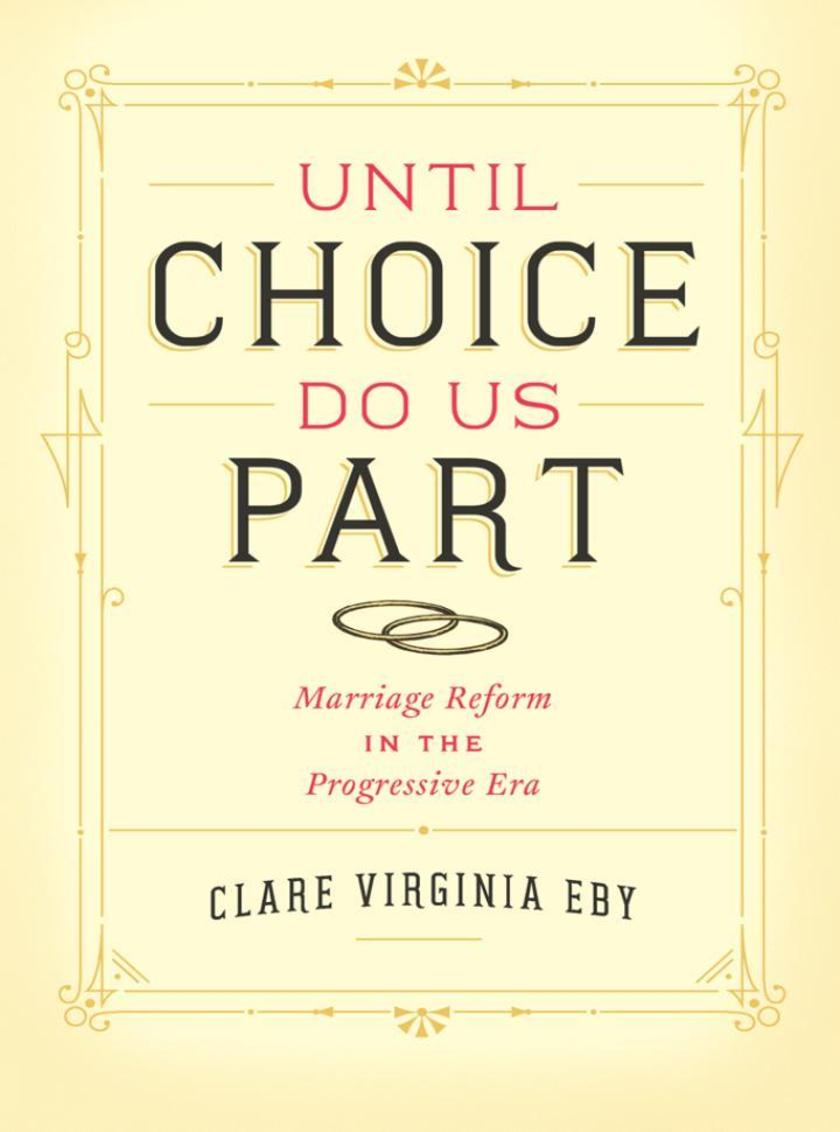
Until Choice Do Us Part
¥229.55
For centuries, people have been thinking and writing-and fiercely debating-about the meaning of marriage. Just a hundred years ago, Progressive era reformers embraced marriage not as a time-honored repository for conservative values, but as a tool for social change.In Until Choice Do Us Part, Clare Virginia Eby offers a new account of marriage as it appeared in fiction, journalism, legal decisions, scholarly work, and private correspondence at the turn into the twentieth century. She begins with reformers like sexologist Havelock Ellis, anthropologist Elsie Clews Parsons, and feminist Charlotte Perkins Gilman, who argued that spouses should be "e;class equals"e; joined by private affection, not public sanction. ?Then Eby guides us through the stories of three literary couples-Upton and Meta Fuller Sinclair, Theodore and Sara White Dreiser, and Neith Boyce and Hutchins Hapgood-who sought to reform marriage in their lives and in their writings, with mixed results. With this focus on the intimate side of married life, Eby views a historical moment that changed the nature of American marriage-and that continues to shape marital norms today.
Enigma of Diversity
¥229.55
Diversity these days is a hallowed American value, widely shared and honored. That's a remarkable change from the Civil Rights era-but does this public commitment to diversity constitute a civil rights victoryWhat does diversity mean in contemporary America, and what are the effects of efforts to support it?Ellen Berrey digs deep into those questions in The Enigma of Diversity. Drawing on six years of fieldwork and historical sources dating back to the 1950s and making extensive use of three case studies from widely varying arenas-housing redevelopment in Chicago's Rogers Park neighborhood, affirmative action in the University of Michigan's admissions program, and the workings of the human resources department at a Fortune 500 company-Berrey explores the complicated, contradictory, and even troubling meanings and uses of diversity as it is invoked by different groups for different, often symbolic ends. In each case, diversity affirms inclusiveness, especially in the most coveted jobs and colleges, yet it resists fundamental change in the practices and cultures that are the foundation of social inequality. Berrey shows how this has led racial progress itself to be reimagined, transformed from a legal fight for fundamental rights to a celebration of the competitive advantages afforded by cultural differences.Powerfully argued and surprising in its conclusions, The Enigma of Diversity reveals the true cost of the public embrace of diversity: the taming of demands for racial justice.

Endgame. Jocul Final: Cheia Cerului
¥106.19
Una dintre cele mai intense poveti de dragoste despre adolesceni pe care le-am citit vreodat.“ – David Levithan De cnd se tie, elul lui Wren Gray a fost s-i mulumeasc prinii. Lucru care nu a deranjat-o, dimpotriv. Acum ns a mplinit 18 ani i simte nevoia s-i mplineasc propriile dorine... doar c nu prea tie care sunt. n schimb, Charlie Parker tie exact care e dorina sa cea mai mare. Charlie e un biat blnd cu un trecut dureros – i a iubit-o pe Wren de cnd a vzut-o prima dat. Dar o fat ca Wren nu s-ar ndrgosti niciodat de un tip ca el. i totui... unele lucruri sunt scrise n stele. Romantic, senzual i att de adevrat – o poveste de neuitat despre prima iubire de la una dintre cele mai bune autoare de adult fiction ale momentului. O poveste de dragoste n acelai timp delicat i plin de pasiune.“ – Kirkus Reviews Relaia dintre personajele lui Lauren Myracle e bazat pe dragoste, respect i ncredere.“ – Publishers Weekly Lauren Myracle mbin tandreea cu erotismul.“ – School Library Journal Miercuri, Charlie trecuse prin ultima zi de coal ca i cnd s-ar fi aflat ntr-o negur. Toi ceilali erau entuziasmai la gndul c vara ncepea n mod oficial, ns Charlie nu-i dorea s vin vacana. El i-o dorea pe Wren. ns, dac nu avea de gnd s prind curaj i s acioneze – de pild, s poarte o conversaie mai lung de cinci cuvinte cu ea, n numele lui Dumnezeu! –, era sortit eecului. Wren urma s-i vad de drumul ei imediat dup ceremonia de absolvire de smbt i exista posibilitatea ca Charlie s nu o mai vad niciodat.“
Lucrarea iubirii
¥48.97
Propor?iile epidemice ale artritei sunt cu at?t mai ?ngrijor?toare dac? avem ?n vedere faptul c?, de?i este considerat? ?n general o boal? a v?rstei a treia, v?rsta medie la care debuteaz? boala a sc?zut la 47 de ani.Dar exist? ?i ve?ti bune: artrita poate fi ?nt?rziat? sau gestionat?, ceea ce poate ?mbun?t??i ?n mod spectaculos calitatea vie?ii. Noua ?tiin?? a gestion?rii artritei ofer? solu?ii pentru to?i cei care doresc s? previn? suferin?a, disconfortul ?i limit?rile asociate cu artrita sau chiar s?-i opreasc? evolu?ia.Este prima carte despre artrit? care include ultimele cercet?ri ?tiin?ifice ?i strategiile de tratament pentru o boal? cu care se confrunt? marea majoritate a celor din genera?ia ?baby-boom“, de dup? cel de-al Doilea R?zboi Mondial. Iar genera?iile mai tinere au la dispozi?ie un plan u?or de urmat pentru minimizarea ?i chiar evitarea aspectelor debilitante ale artritei.Cartea de fa?? ofer? r?spunsuri la ?ntreb?ri de maxim interes precum:* De ce ne ?mboln?vim de artrit??* Ce suplimente pentru artrit? sunt eficiente?* Care sunt cele mai bune exerci?ii fizice ?i strategii dietetice?* Ce terapii alternative pot fi folosite f?r? riscuri?* Care sunt cele mai noi descoperiri ?tiin?ifice cu privire la celulele stem ?i terapiile viitoare legate de genele ?i biologia uman??InfoDad.com, 16.01.2014?O lucrare scris? ?ntr-un limbaj accesibil despre artrit? ?i cum s?-i facem fa??, despre o boal? deloc pl?cut? pentru cei ?n cauz?… o excelent? trecere ?n revist? a concep?iilor curente referitoare la acest complex de afec?iuni, la tratament ?i la direc?ia spre care se ?ndreapt? cercet?rile din domeniu.“Chatelaine.com: ?10 Best Health Books of 2014“, 03.02.2014?De ce ne place cartea: autorul nu inten?ioneaz? s? ne sperie, ci s? arunce lumin? asupra adev?rului… De asemenea, nu sus?ine o diet? riguroas? sau restrictiv?, ci ?ndeamn? la un regim alimentar echilibrat, care s? contribuie la men?inerea greut??ii ?i a imunit??ii.“

Prizonier? ?n p?nza de p?ianjen. Millennium 4
¥106.19
Maestrul Benedict Blackthorn, membru de vaz? al Breslei Spi?erilor, este pe cale s? descopere cea mai de seam? re?et? a tuturor timpurilor: cea prin care se ob?ine Focul Arhanghelului – puterea suprem? pe P?m?nt. Pe urmele lui se afl? un coleg de breasl?, care vrea s? fure re?eta ?i s? foloseasc? Focul pentru ?nl?turarea regelui Carol de pe tronul Angliei. C?nd Maestrul Benedict simte c? este ?n pericol de moarte, ?i ?ncredin?eaz? ucenicului s?u Christopher Rowe misiunea de a salva re?eta ?i, totodat?, via?a ?i tronul lui Carol, precum ?i soarta Angliei. ?Un debut spectaculos. “- Kirkus Reviews ?Magie, aventur? ?i multe chestii care explodeaz? – ador cartea asta! “- Eoin Colfer ?Kevin Sands a creat un erou ambi?ios, inimos ?i plin de umor ?n Christopher Rowe, ucenicul spi?erului. Aceast? aventur? palpitant? v? va captiva. “- Ingrid Law ??ns? re?etele noi nu pic? din cer. Trebuie s? le descoperi. Asta cere zile, luni, chiar ani ?ntregi de munc? grea. ?i cost? o avere: ingredientele, instrumentele, c?rbunele pentru ?ntre?inut focul, ghea?a pentru r?cit. Mai presus de toate, era primejdios. Focuri p?rjolitoare. Metale topite. Elixiruri care miroseau dulceag, dar care ??i devorau m?runtaiele. Tincturi care p?reau inofensive, ca apa, dar emanau vapori invizibili. La fiecare experiment nou, ??i primejduiai via?a. A?adar, o re?et? care func?iona era mai pre?ioas? dec?t aurul." ?Debutantul Sands a scris o poveste incitant? despre alchimie ?i secrete ad?nc ?ngropate. Kevin Sands alterneaz? abil p?r?ile mai ?ntunecate ale romanului cu momente de umor ?i destindere, ad?ug?nd detalii picante ?n descrierea personajelor ?i a contextului istoric. To?i cei interesa?i de chimie, istorie, puzzle-uri complicate ar trebui s? citeasc? romanul. “- Publishers Weekly
Pove?ti de moarte ?i de s?nge
¥32.62
Ce este tensiunea arterial? ?i de ce ne poate face r?u o valoare ridicat? a acesteia? Cum se ajunge la hipertensiune ?i cum poate fi prevenit?? ?i, cel mai important, ce se poate face pentru tratarea ei?Pornind de la ultimele cercet?ri ?n domeniu, William Manger ?i colegii ofer? o serie de r?spunsuri la ?ntreb?ri legate de exerci?iile fizice, regimul alimentar, Viagra, estrogen, vitamine, sare, alcool ?i fumat. Informa?iile privind analizele de s?nge ?i medicamentele folosite ?n mod curent ?i ajut? pe cititori s? discute ?n cuno?tin?? de cauz? cu medicul despre tratamentul prescris, s? ?n?eleag? ce li se ?nt?mpl? ?i s? dezvolte o rela?ie doctorstr?ns?, esen?ial? pentru ?inerea sub control a tensiunii arteriale.Men?in?ndu-?i tensiunea arterial? ?n limite normale, ??i salvezi via?a. Ce poate fi mai important?Cele 101 ?ntreb?ri ?i r?spunsuri preg?tite de exper?i de frunte din domeniul hipertensiunii arteriale reprezint? un instrument necesar pentru dob?ndirea unui stil de via?? s?n?tos ?i gestionarea cu succes a tensiunii arteriale ridicate.Dr. Alberto Zanchetti, profesor emerit de medicin? la Universitatea din MilanoAutorii au f?cut o treab? excelent? formul?nd ?i r?spunz?nd la numeroasele ?ntreb?ri pe care oamenii ?i le pun cu privire la tensiunea arterial? ridicat?: ce este, cum se manifest? ?i ce putem face ?n privin?a ei. Pentru modul ?n care au clarificat ?i au corectat multe dintre miturile ?i concep?iile eronate legate de aceast? boal?, merit? toate felicit?rile.Dr. Marvin M. Moser, profesor de medicin? clinic?, Facultatea de Medicin? Yale, redactor emerit, Journal of Clinical Hypertension.PRINTRE CELE 101 SUBIECTE SE NUM?R?:? cea mai bun? metod? de monitorizare a tensiunii arteriale? principalii factori de risc care duc la apari?ia hipertensiunii? sugestii pentru diet?, combaterea stresului, renun?area la fumat ?i exerci?ii fizice? diferite medicamente pentru tratarea hipertensiunii? boli ?i medicamente care cresc riscul de hipertensiune? c?i de prevenire a hipertensiunii la copiiAcum po?i s? ?ncepi s? faci schimb?rile necesare ca s?-?i protejezi inima ?i s? duci o via?? lung? ?i fericit?!


