


 购物车
购物车 个人中心
个人中心
Day of Judgment
¥54.25
A classic thriller from Jack Higgins, the undisputed master of adrenalin packed adventure and the bestselling author of ‘The Eagle has Landed’ It’s 1963 and the eve of John F.Kennedy’s historic visit to Berlin. Locked away inside the impregnable fortress of Schloss Neustadt, Father Sean Conlin, survivor of Dachau and lifelong champion of human freedom is fighting to deny his jailers their ultimate goal. On this momentus day, when the whole world is watching they must make him admit to being a CIA hireling. But the West is determined to save him, and gambling with their lives a small band of men begin a daring rescue mission that could change the course of history.
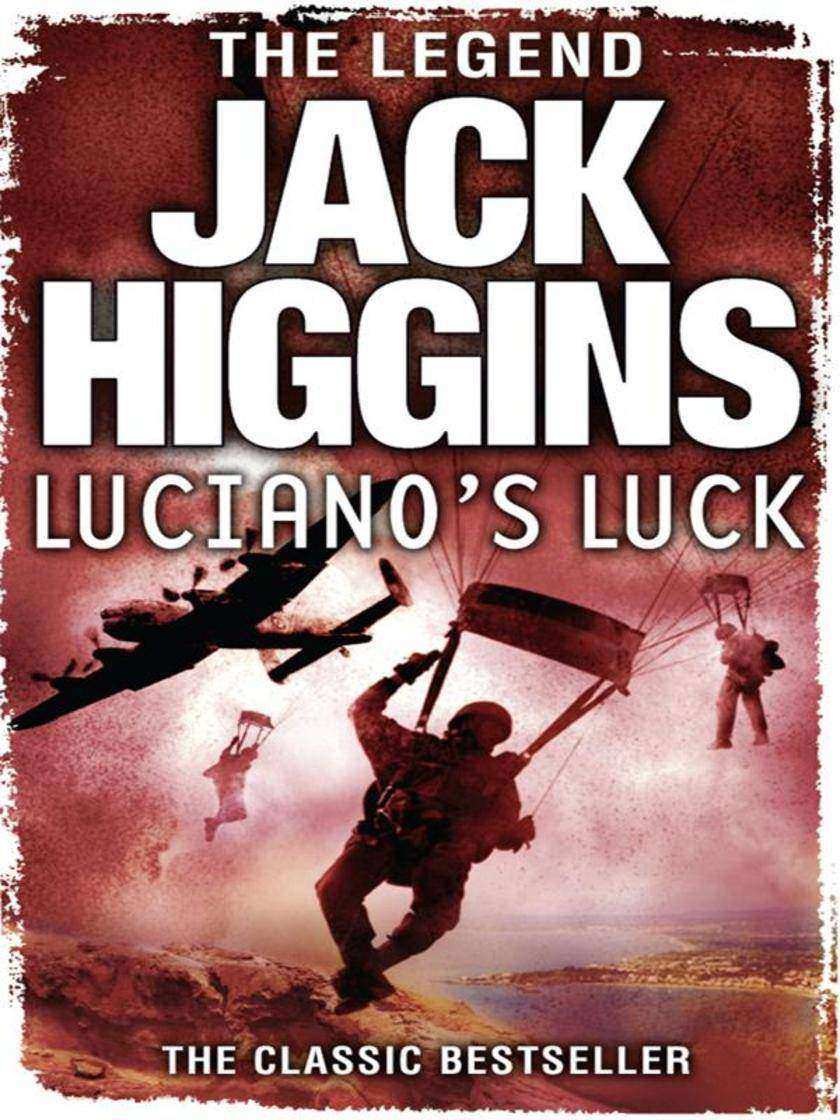
Luciano’s Luck
¥57.09
The brilliant suspense thriller from the author of THE EAGLE HAS LANDED, set in the wartime battlegrounds of the Mediterranean. A brilliant suspense thriller from the wartime battlegrounds of the Mediterranean. In the historic summer offensive of 1943, the Allies stand ready to invade Sicily. The cost will be high in lives and time, unless the Sicilians themselves can be persuaded to rise against their Nazi oppressors. Only the Mafia can command an uprising – and the Godfather refuses to fight… Desperate action is needed to dent Hitler's evil pride. Someone who understands Mafia ways, and knows how to earn the loyalty the Allies crave. Someone who isn't afraid of killing his own…
Sad Wind from the Sea
¥45.62
The very first novel written by Jack Higgins, re-packaged to celebrate 50 years of bestsellerdom. He guesses it's around 3am. Gun runner and occasional smuggler Mark Hagen, hears a scream through the fog. He finds a girl; young, beautiful, trouble. But as Mark Hagen himself said "I love trouble, angel. It makes life so much more interesting." Before long he is hauled into a chaotic chase involving The Red Chinese, and a lot of gold. From feeling he had lost everything to suddenly fighting for his life, Hagen must battle his inner demons and some truly terrifying enemies in a deadly game of power, action and murder.

The Last Highlander
¥73.58
Fans of Outlander must read this Saltire Society Literary Awards Scottish First Book of the Year – a great non-fiction adventure about Scotland’s most notorious clan chief. Simon Fraser, Lord Lovat, was the last of the great Scottish chiefs – and the last nobleman executed for treason. Determined to seek his fortune with the exiled Jacobite king in France, Fraser acted as a spy for both the Stuarts and the Hanoverians; claimed to be both Protestant and Roman Catholic. In July 1745, Bonnie Prince Charlie launched his last attempt to seize back the throne, supported by Fraser and his clans. They were defeated at Culloden. Fraser was found hiding in a tree. This swashbuckling spy story recreates an extraordinary period of history in its retelling of Fraser’s life. He is surely one of Scotland’s most notorious and romantic figures, a cunning and ambitious soldier who died a martyr for his country and an independent Scotland.

Apache
¥57.09
Ed Macy is an elite pilot, one of the few men qualified to fly Apache helicopters, the world’s deadliest fighting machines. This is his account of a fearless mission behind enemy lines in Afghanistan. After a brutal accident forced him out of the Paras, Ed Macy refused to go down quietly. He bent every rule to sign up for the Army’s gruelling Apache helicopter programme and was one of the handful to pass the nightmare selection process. Dispatched to Afghanistan’s notorious Helmand Province in 2006, his squadron were on hand when a marine went MIA behind enemy lines – and they knew they were his only hope. From the cockpit of the mighty Apache helicopter comes this incredible true story of a rescue mission so dangerous they said it couldn’t be done, and of the man who dared to disagree.

Ship of Rome (Masters of the Sea)
¥63.18
Against a backdrop of the clash of the Roman and Carthaginian empires, the battle for sovereignty takes place on the high seas Atticus, captain of one of the ships of Rome's small, coastal fleet, is from a Greek fishing family. Septimus, legionary commander, reluctantly ordered aboard ship, is from Rome, born into a traditionally army family. It could never be an easy alliance. But the arrival of a hostile fleet, larger, far more skilful and more powerful than any Atticus has encountered before, forces them to act together. So Atticus, one of Rome's few experienced sailors, finds himself propelled into the middle of a political struggle that is completely foreign to him. Rome need to build a navy fast but the obstacles are many; political animosities, legions adamant that they will only use their traditional methods; Roman prejudice even from friends, that all those not born in Rome are inferior citizens. The enemy are first class, experienced and determined to control the seas. Can Atticus, and the fledgling Roman navy, staffed with inexperienced sailors and unwilling legionaries, outwit and outfight his opponents. SHIP OF ROME, full of magnificent sea-battles, packed with strong characters, torn between two powerful empires, is the first book in a new series, MASTERS OF THE SEA, by a brilliant new author.

The Street Philosopher
¥58.86
An elegant, powerful novel, set in Victorian England, a time not so different from our own… perfect for fans of THE INTERPRETATION OF MURDER and THE SHADOW OF THE WIND Ambitious young journalist Thomas Kitson arrives at the battlefields of the Crimea as the London Courier’s man on the ground. It is a dangerous place, full of the worst horrors of war but Kitson is determined to make his mark. Under the tutelage of his hard-bitten Irish boss Cracknell, and assisted by artist Robert Styles, he sets about exposing the incompetence of the army generals. Two years later, as Sebastopol burns, Thomas returns to England under mysterious circumstances. Desperate to forget the atrocities of the Crimea, he takes a job as a ‘street philosopher’, a society writer reporting on the gossip of the day. But on the eve of the great Art Treasures Exhibition, as Manchester prepares to welcome Queen Victoria, Thomas’s past returns to haunt him in the most horrifying way…
Coming Home
¥54.25
Ever experienced deja vu? An enchanting and magical novel from the author of Could It Be Magic? A freak snowstorm leaves a young woman unconscious and stranded. Coming to, she has no recollection of who she is or how she happened to be stuck in the middle of unfamiliar countryside. All she recalls is the warm arms of a passing stranger coming to her rescue and carrying her to safety… She awakes in an idyllic country cottage, a cottage belonging to Vincent, a recently widowed city banker who uses it as his rural getaway. Dashing and polite, the woman can't think of a better knight in shining armour. While the housekeeper isn't best pleased abut her arrival, Vincent's six-year-old daughter Jadie, can hardly contain her excitement, chattering away excitedly. Trouble is, she's been mute for the past two years… As she struggles with flashbacks to her past, memories come back to the woman which aren't her own, bringing with them a stream of questions. What secrets does Vincent hide? Why has Jadie being silent for so long? Will she ever discover her true identity? Or is she, as Jadie believes, an angel come to save them all? An enchanting and magical novel about forgotten lives and second chances for fans of Cecelia Ahern and Sophie Kinsella.
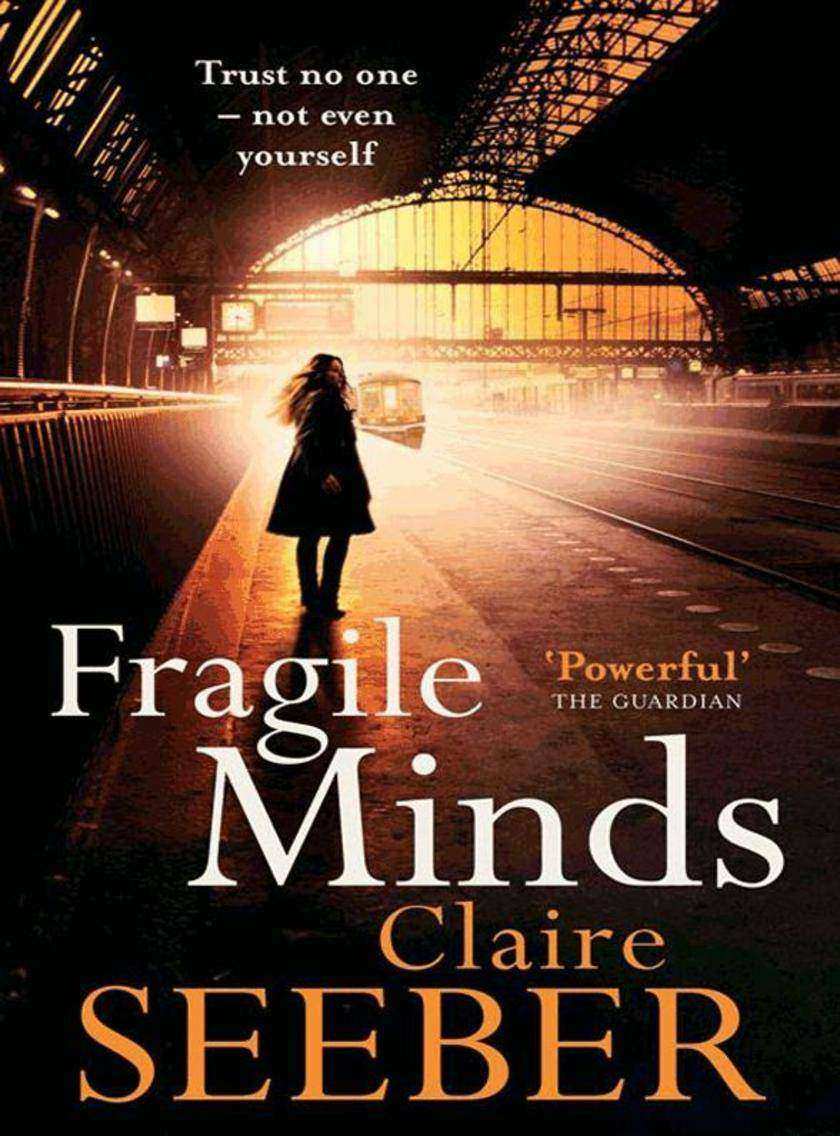
Fragile Minds
¥68.67
Trust no one - not even yourself . 'I think I might have done something bad. Last Friday.' When a bomb explodes outside the Royal Academy of Ballet in the heart of London, the police initially suspect a terrorist group. But the pieces don't fit and DCI Silver is struggling to find any suspects. Still recovering from Post Traumatic Stress Disorder after a terrible tragedy, Claudie fears that her recent black-outs are a sign that her symptoms are returning. When her friend Tessa dies in the explosion, Claudie is gripped by the inexplicable certainty that she is involved in some way – if only she could remember. Meanwhile, Silver is shocked to find that one of the dancers from the academy – now missing in the aftermath of the explosion – is linked to his past, and the lines between his personal and professional life are starting to blur. Can Claudie and Silver get to the heart of what is real and what isn't before something terrifying happens again? A compelling read for fans of Nicci French and Sophie Hannah.

Last Known Address
¥63.77
Thelma and Louise for The Empty Nest generation! Get ready for the trip of a lifetime in this endearing new novel from the author of Second Chance. Ever fancied escaping your normal life? Then join three friends as they take the road trip of a lifetime and pick up a few strays along the way … For best friends C.C. Byrd, Meg Bartholomew and Shelly Kostens, middle age is feeling awkwardly familiar: fluctuating hormones, heartbreak and romance and believing no one understands you. CC must cope with widowhood after the sudden death of her husband while Meg rues the day she ever met hers after he ditches her for a younger model. Even the ever-confident Shelly is facing money worries. In a bid to forget their problems, the three woman head south to fix up and sell C.C.'s newly-inherited childhood house. Meeting unsuitable men, stray dogs and a few home truths along the way, the women re-discover their own identities and their friendship and learn that love - in all its forms - can make any address a home. Thelma and Louise for the young at heart, this heart-warming and captivating tale will delight fans of Maeve Binchy, Cathy Kelly and Marley & Me.

Orphans of War
¥34.14
The ones you leave behind are the ones that stay with you forever…

A Brand New Me
¥54.25
For anyone who’s ever thought January 1st would be the first day of their new life… Three-Two-One…. Happy New Year! The champagne corks popped, streamers fell, the music blared, lovers embraced and hearts overflowed with joy as they welcomed in 2009… But unfortunately all that happened on the TV. In Leni Lomond’s living room three twenty-something friends sat shrouded in dejection, each clutching a sparkler in one hand and a drink in the other. Eventually Leni spoke up. "I'm making a resolution." ‘This is it - this is the year I find the perfect job, the perfect man and the perfect life." Three Weeks Later… Leni is now PA to Zara Delta, spiritual guru, author, television celebrity and founder of the web's most popular astrology site www.itsinthestars.net. So what if she doesn't know her rising moon from Uranus, she'll wing it somehow. Less than a month into the New Year and she’s already on her way to fulfilling one of her resolutions. But she hasn’t counted on her first assignment - to date men who belong to every sign of the zodiac and then report back to her batty boss. Mission Impossible? Well, certainly Mission Bloody Difficult, given that she's spent the last two of her 27 years resoundingly single. Exasperation, cynicism and sheer exhaustion soon set in. Just when Leni's ready to give it all up, forget her resolutions and return to a life of tedium her fortunes begin to turn. Can Leni control her fate, her feelings and fulfil the promise she made to herself at the start of the year? Or is her destiny already written in the stars?
New Beginnings
¥63.77
When loved ones leave you, it’s time to change your life. A poignant and uplifting new novel about love and loss, for fans of Nora Roberts. Recently widowed March Cantrell must deal with her beloved husband's death while trying to escape the constant interference from her well meaning grown-up children. All her children that is, apart from Molly. March discovers that the new man she's dating, Spider Olsen, is 23 years older than her daughter - and believes the relationship is doomed to failure. However, any attempt to talk to Molly only drives them further apart. Meanwhile, March's sons are fighting for control of the family business. In order to heal the growing rifts between them all, the family decides to spend Christmas at their mountain home in Lake Tahoe. Whilst skiing one day, March finds herself stranded with a young man called Rio and is surprised to discover that she is attracted to him. A few weeks after the holidays, March returns to the mountains. One lonely night, whilst dining alone, March is joined by Rio. What starts as a one-night stand becomes something much more. Her children think March has lost her mind. However, somewhere in this tangled chaos, in the betrayal and competition and the innocence of new love, is the answer for all the Cantrells.

The Moral State We’re In
¥72.30
A study of the moral state of the nation – the acid test of this being how we treat the weakest among us. Rabbi Julia Neuberger assesses the situation in the UK from her own unique viewpoint and draws some challenging and thought-provoking conclusions. Just as Will Hutton looked at the political landscape at a turning point in Britain, Rabbi Julia will take the moral temperature of the nation by looking at the ways in which we treat the weakest amongst us. The National Health Service, government pensions and asylum seekers all make daily headlines, and here is a writer with the moral authority and mastery of the necessary information to undertake this timely project. The way we treat the weak and vulnerable members of society has long been an established way to judge how civilised a society is. In this book, Julia looks at the extent to which the elderly are thought a burden, the way we care for the mentally ill, attitudes to asylum seekers and support for ex-offenders, as well as the care of children and the future of society in the UK. Her straight-forward approach to what has elsewhere proven highly esoteric, is here written with ease and fluidity and with a style that is highly approachable for those interested in the state of their nation with purely social, rather than academic, motivations. With her uncomplicated but extremely intelligent and candid take on the issues that make daily headlines, and with Julia’s high media profile, this book is guaranteed to tap into the state of our nation. Includes exciting new sections, reviewing the past year’s events, reception to her book and what – if anything – has changed in the way she sees our nation’s moral predicament.

Dark Angels
¥51.50
How far would you go to protect your past? How much further to protect someone else's? The start of a thrilling Edinburgh-based series starring rebellious young lawyer Brodie McLennan. A celebrated Edinburgh lawyer is found murdered outside an infamous gay haunt and notorious dominatrix Kailash Coutts stands accused. Against her wishes, headstrong, unorthodox Brodie McClennan is appointed to defend Kailash under the watchful gaze of the 'Dark Angels', a violent street-gang led by the enigmatic Moses Tierney. As the case becomes ever more complex, Brodie receives a chilling photograph, establishing a link to a number of brutal murders and a suspected paedophile ring. It becomes apparent that a serial killer is haunting the city - and that powerful people are involved, intent on covering up past crimes. Brodie herself becomes a target - both for a depraved killer and for deadly forces in the highest of circles… A shocking, atmospheric thriller that combines a centuries-old conspiracy with heart-stopping terror for fans of Ian Rankin and Mo Hayder…
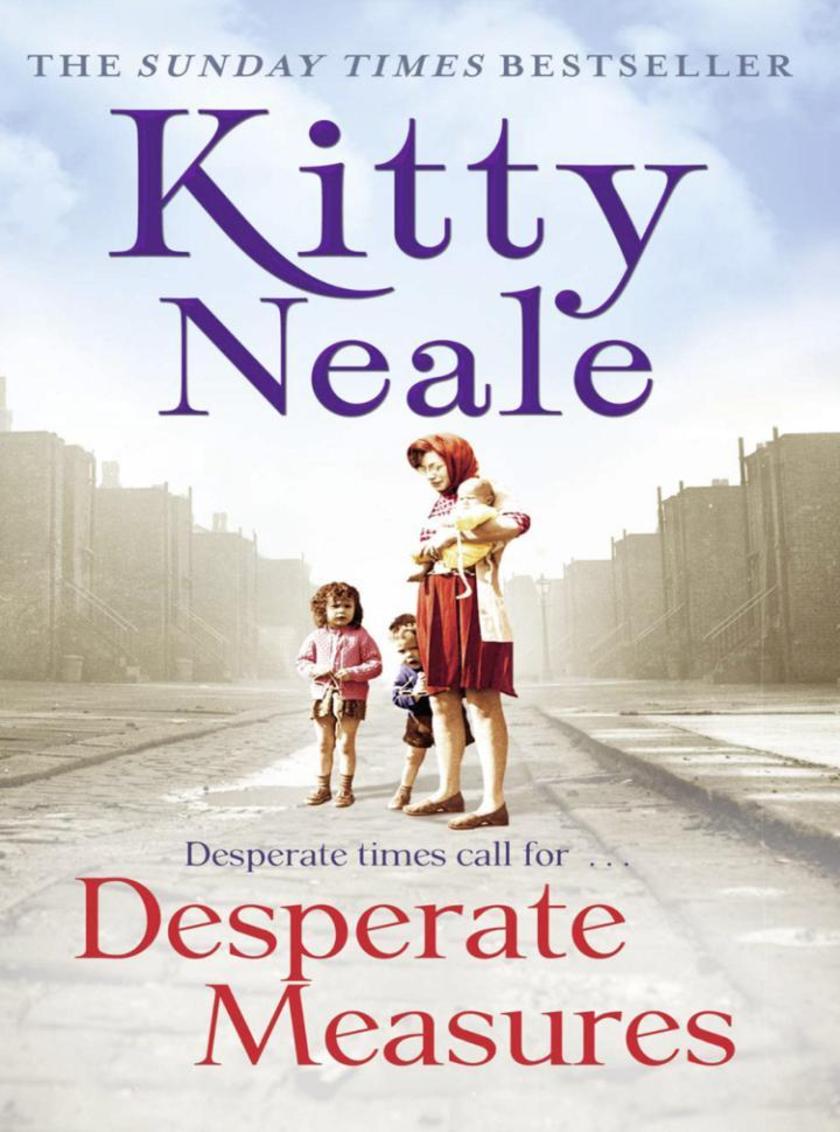
Desperate Measures
¥45.22
Four women seek the ultimate revenge against the men who betrayed them. The gritty drama from the Sunday Times bestselling author of Nobody’s Girl. SWINDLED… Val Thorn, Paula Richardson, Cheryl Cutter and Betty Grayson have one thing in common - they have all been betrayed by men. SHAMED… Rape victim Paula has been terrified ever since her brutal attack. High-flyer Val's life has fallen to pieces since she was forced out of her job. Grief-stricken by her grandmother's death, nurse Cheryl was tricked out of her inheritance. Timid housewife Betty sacrificed all for her husband. Now, 20 years later, he's left her and she's destitute. SACRIFICED… Now these four women want revenge. Masterminded by Val, the four women set out to right past wrongs. But will their role of avenging angels take them down a terrible road?

The Blue Zone
¥45.62
A breathtaking novel of suspense from the co-author of five bestselling James Patterson novels, including ‘Judge and Jury’ and ‘Lifeguard’. THERE ARE NO RULES IN THE BLUE ZONE. They were the perfect family. And he was the perfect family man. One day changed it all. Arrested for racketeering, Ben Raab must take his family into America’s Witness Protection Programme. Only his eldest daughter, Kate, chooses to stay on the outside. But the Programme's perfect success rate is about to come to a shocking end. A case agent is tortured to death and Ben vanishes. The one person who might be able to find him is Kate. Pursued by killers, forced to question everything she knows about her life so far, Kate is plunged into a terrifying existence for which nothing has prepared her. Most people would call it certain death. The FBI calls it the Blue Zone.

Last of the Summer Wine (The Best of British Comedy)
¥50.62
Compo: I thought you'd be open. Sid: Well that's a natural assumption if you ignore the drawn blinds and the forty foot sign that says closed. Set and filmed in and around Holmfirth, West Yorkshire, Last of the Summer Wine follows the adventures of three quirky pensioners and their equally unusual neighbours. A true British classic that appeals to all generations, it is our nation's longest running comedy programme. The line-up of the comedy trio has changed numerous times over the years, but the calibre of the family-friendly humour Roy Clarke creates has remained the same, and it's as funny and eccentric now as it was in the first episodes he wrote over 25 years ago. Including the pilot, broadcast ten months before the first series, 29 series, made up of 279 episodes, have been screened to date, with the 30th series set to air this autumn. The sitcom has consistently been a favourite in the ratings, with viewing figures peaking at 18.8 million in the mid-eighties. Famous fans include Prince Charles, the Queen Mother and the Queen, who said it was her favourite TV show. The Best of British Comedy - Last of the Summer Wine includes: ”? The History: an overview of how Last of the Summer Wine was born and developed ”? Gags and Catchphrases: a collection of classic quotes ”? Did You Know?: snippets of info about the show, cast, etc. ”? Favourite scenes: the most memorable scenes in full ”? A LOSW quiz 'If God's omnipotent, what could he possibly want with my old woman?' Clegg Compo: Your old lady's dog is crapping all over the pavement. Blamire: That's funny. He usually sews it up in little bags and sends it by post.

Sharpe’s Christmas
¥9.71
A Richard Sharpe short story, featuring scenes of action and adventure at Christmas. ‘You’ll like Irati,’ Colonel Hogan said. ‘It’s a nothing place, Richard. Hovels and misery, that’s all it is and all it ever will be, but that’s where you’re going for Christmas.’ Sharpe was sent to Irati because maybe the French were going there. The garrison planned to march at Christmas in the hope that their enemies would be too bloated with beef and wine to fight, but Hogan had got wind of their plans and was now setting his snares on the only two routes that the escaping French could use. One, the eastern road, was by far the easier route, for it entered France through a low pass, and Hogan guessed it was that route that the French would choose. But there was a second road, a tight, hard, steep road, and that had to be blocked as well and so the Prince of Wales’s Own Volunteers, Sharpe’s regiment, would climb into the hills and spend their Christmas at a place of hovels and misery called Irati. Soldier, hero, rogue – Sharpe is the man you always want on your side. Born in poverty, he joined the army to escape jail and climbed the ranks by sheer brutal courage. He knows no other family than the regiment of the 95th Rifles whose green jacket he proudly wears.
Forest Mage (The Soldier Son Trilogy, Book 2)
¥70.63
The second book in the brand new trilogy from the author of the Tawny Man trilogy, following on from the bestselling Shaman’s Crossing. The King's Cavalla Academy has been ravaged by the Speck plague. The disease has decimated the ranks of both cadets and instructors, and even the survivors remain sickly. Many have been forced to relinquish their military ambitions and return to their families to face lives of dependency and disappointment. As the Academy infirmary empties, Cadet Nevare Burvelle also prepares to journey home, to attend his brother Rosse's wedding. Far from being a broken man, Nevare is hale and hearty after his convalescence. He has defeated his nemesis, Tree Woman and freed himself of the Speck magic that infected him and attempted to turn him against his own people. A bright future awaits him as a commissioned officer betrothed to a beautiful young noblewoman. Yet his nights are still haunted by dreams of the voluptuous Tree Woman, dreams in which his Speck self betrays everything he holds dear in his waking life. Has the plague infected him in ways far more mysterious than the merely physical? Despite his fears, Nevare will journey back to Widevale in high spirits, in full expectation of a jubilant homecoming and a tender reunion with his beautiful fiancée, Carsina. But his life is about to take a shocking turn, as the magic in his blood roars to life and forces him to recognize that his most dangerous enemy, an enemy that seeks to destroy all he loves, might dwell within him.

Forget Me Not
¥57.09
The sparkling new novel from the bestselling author of ‘A Question of Love.’ It’s never easy putting down new roots… After the sudden death of her mother, Anna Temple realises she needs to live for the moment and pursue her dream of becoming a garden designer. Swapping hedge funds for herbaceous borders, and shares for scented stocks, she says goodbye to City life for a fresh start in the country. But on the eve of her sparkling new future she meets the gorgeous Xan and their chance encounter changes her world in more ways than she could ever imagined – enter baby Milly. Juggling her new business with the joys and fears of motherhood is a struggle, especially alone and when Anna unearths a long-buried family secret, skeletons tumble from the closet. Suddenly nothing is as it seems, past or present…


