


 购物车
购物车 个人中心
个人中心

How to Deceive a Duke
¥55.91
When deception leads to desire . . .When her stubborn sister runs off the night before her arranged marriage, Meg Lyntonhardly hesitates before donning the wedding veil and walking down the aisle herself. It's the only way to save her family from sure destitution. By the time her wealthy groom discovers he has married the wrong sister, it will be too late to annul their vows. And too late for Meg to escape her wifely duty to a man reputed to be a devil in battle and the bedroom . . .A bride is the last thing Nicholas Hartley, Duke of Temberlay, wants. Then he sees Meg and realizes that his wedding night will be a great pleasure indeed. But aside from the agreeable business of begetting an heir, Temberlay will never change his wicked ways for a wedding vow until he discovers Meg's deception, and decides to teach the scheming beauty how to be a proper duchess, kiss by devastating kiss . . .

The Outlaw Viking
¥55.31
As tall and striking as the Valkyries of legend, Dr. Rain Jordan is proud of her Norse ancestors despite their warlike ways. But she can't believe her eyes when a blow to her head transports her to a nightmarish battlefield of yore and there standing before her is the barbarian of her dreams.A wild-eyed berserker, Selik can slay a dozen Saxons with a single swing of his deadly sword yet he can't control a saucy wench from the future. In his eyes, Rain is a prisoner and he'd dearly love to avail himself of her medical skills not to mention her considerable knowledge of the male anatomy. But the infuriating woman has ideas of her own. If Selik isn't careful, the stunning siren might very well capture his savage heart and make a warrior of love out of . . . The Outlaw Viking
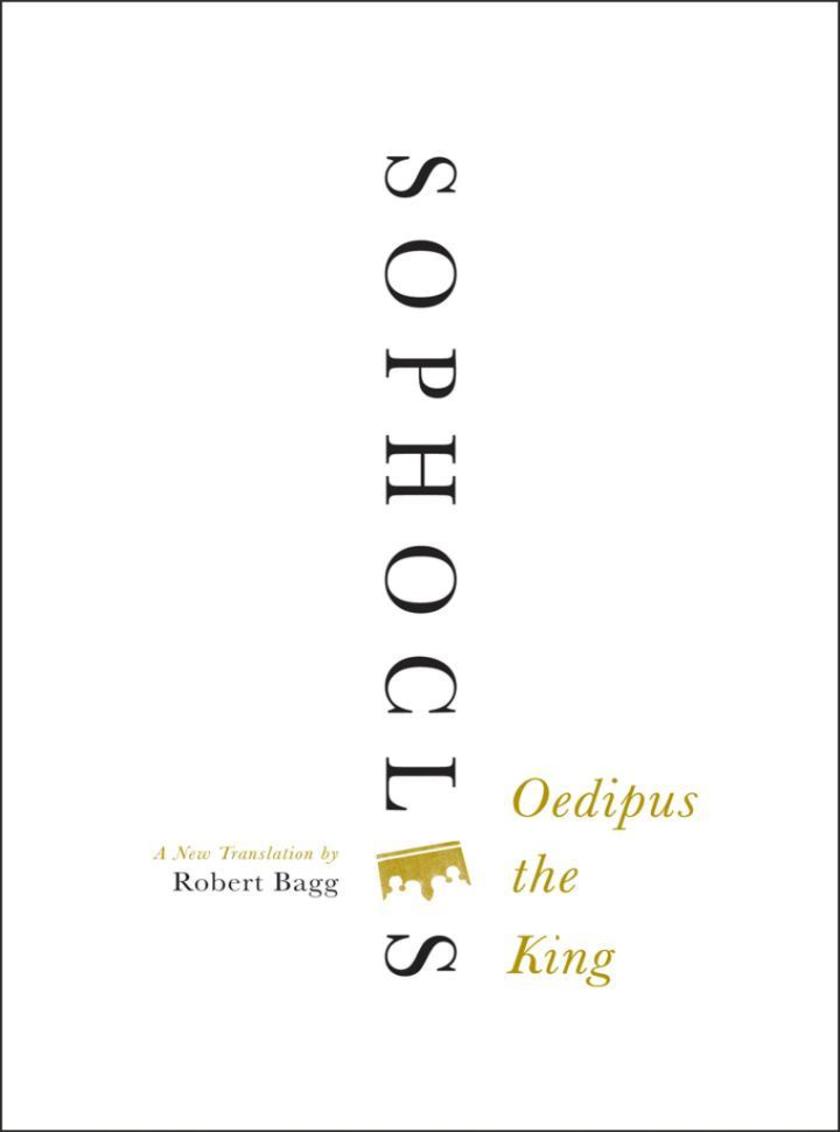
Oedipus the King
¥55.33
Sophocles' most profound and celebrated play in a vivid and dynamic new translation by award-winning poet Robert BaggOedipus the King remains, after 2,500 years, a shocking, suspenseful, and highly emotional drama in which a royal family is brought to hellish ruin by fate, an inscrutable god, and the kindness of a stranger. Oedipus must find and destroy the murderer of his predecessor, King Laios, to rid Thebes of the plague caused by the killer's undetected and malignant presence. The play's headlong action resembles a tautly woven criminal investigation, but one whose immense stakes pose a host of wrenching and still unresolved questions: What constitutes human guiltWhy do gods punish the innocentWhat are the limits of human intellectWhy do family bonds so often prove destructive?Robert Bagg's spare, idiomatic, and nuanced translation is ideally suited for reading, teaching, or performing. This is Sophocles for a new generation.
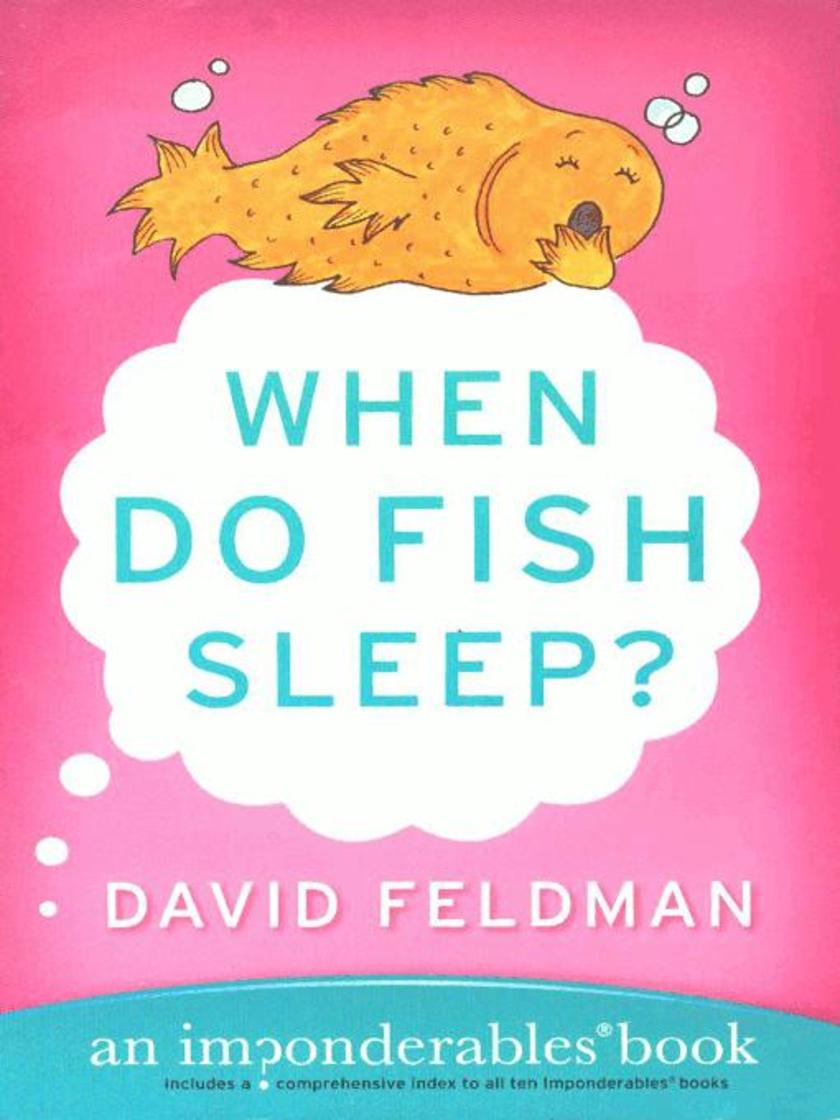
When Do Fish Sleep?
¥72.71
Ponder, if you will ...Why are tennis balls fuzzyHow come birds don't tip over when they sleep on telephone wiresWhat makes yawning contagiousWhy, oh why, do roosters have to crow so early in the morningPop-culture guru David Feldman demystifies these topics and so much more in When Do Fish Sleep-- the unchallenged source of answers to civilization's most baffling questions. Part of the Imponderables series and charmingly illustrated by Kassie Schwan, When Do Fish Sleeparms readers with the knowledge about everyday life that encyclopedias, dictionaries, and almanacs just don't have. And think about it, where else are you going to get to the bottom of why Mickey Mouse has only four fingers?

America's Mom
¥85.05
For two generations of Americans, reading Ann Landers's daily column was as important as eating breakfast. For nearly fifty years an entire nation turned to this quick-witted, worldly-wise counselor for advice on everything from dinner etiquette to sex. But who was the woman behind the byline?Iowa-born Eppie Lederer was first hired by the Chicago Sun-Times to take over the daily advice column in 1955 -- and over the next half-century she helped shape the nation's social and sexual landscape. Award-winning journalist Rick Kogan was Ann Landers's last editor and close friend, and he paints a fascinating, full-bodied account of the triumphs, the wisdom, the courage, and the trials of one of the twentieth century's most enduring icons -- including her painful lifelong feud with her identical twin sister, "Dear Abby"; her stubborn refusal to shy away from even the most controversial topics; and the tragic breakup of her own thirty-six-year marriage. Filled with remarkable stories shared by people from all walks of life who were profoundly affected by the good sense and guidance of Ann Landers, America's Mom is a moving tribute to a singular woman who has earned an eternal place in our culture ... and our hearts.

What Mama Taught Me
¥84.16
Millions of viewers of Tony Brown's Journal, the longest-running series on PBS, know Tony Brown as an advocate for self-reliance and self-enrichment. Now, in his most personal book yet, he introduces us to the woman who brought him up and taught him the seven core values he lives by to this day: reality, knowledge, race, history, truth, patience, and love. What Mama Taught Me states that only by understanding one's place in the world can one become free in mind and spirit, which is the path to true success. Brown argues that by following other people's rules, we betray ourselves and our desires, resulting in a vicious cycle of disconnection, unhappiness, and spiritual death. Enhanced by the homespun storytelling he heard as a child, this is Brown's personal recipe for achievement, imparting values that provide a blueprint for reaching success and happiness -- on one's own terms.

Lit
¥56.15
The Liars' Club brought to vivid, indelible life Mary Karr's hardscrabble Texas childhood. Cherry, her account of her adolescence, "continued to set the literary standard for making the personal universal" (Entertainment Weekly). Now Lit follows the self-professed blackbelt sinner's descent into the inferno of alcoholism and madness and to her astonishing resurrection. Karr's longing for a solid family seems secure when her marriage to a handsome, Shakespeare-quoting blueblood poet produces a son they adore. But she can't outrun her apocalyptic past. She drinks herself into the same numbness that nearly devoured her charismatic but troubled mother, reaching the brink of suicide. A hair-raising stint in "The Mental Marriott," with an oddball tribe of gurus and saviors, awakens her to the possibility of joy and leads her to an unlikely faith. Not since Saint Augustine cried, "Give me chastity, Lord but not yet!" has a conversion story rung with such dark hilarity. Lit is about getting drunk and getting sober; becoming a mother by letting go of a mother; learning to write by learning to live. Written with Karr's relentless honesty, unflinching self-scrutiny, and irreverent, lacerating humor, it is a truly electrifying story of how to grow up as only Mary Karr can tell it.
Promise Ahead
¥90.77
When Duane Elgin's classic bestseller, Voluntary Simplicity, was published in 1981, it transformed the lives of thousands and was hailed as the "bible" of the simplicity movement by the Wall Street Journal. Now, for anyone seeking to navigate today's profoundly changing world, Promise Ahead is the powerful sequel to a road map for securing a promising future.

Coming of Age on Zoloft
¥83.92
When Katherine Sharpe arrived at her college health center with an age-old complaint, a bad case of homesickness, she received a thoroughly modern response: a twenty-minute appointment and a pre*ion for Zoloft a drug she would take for the next ten years. This outcome, once unlikely, is now alarmingly common. Twenty-five years after Prozac entered the marketplace, 10 percent of Americans over the age of six use an SSRI antidepressant.In Coming of Age on Zoloft, Sharpe blends deeply personal writing, thoughtful interviews, and historical context to achieve an unprecedented portrait of the antidepressant generation. She explores questions of identity that arise for people who start medication before they have an adult sense of self. She asks why some individuals find a diagnosis of depression reassuring, while others are threatened by it. She presents, in young people's own words, their intimate and complicated relationships with their medication. And she weighs the cultural implications of America's biomedical approach to moods.
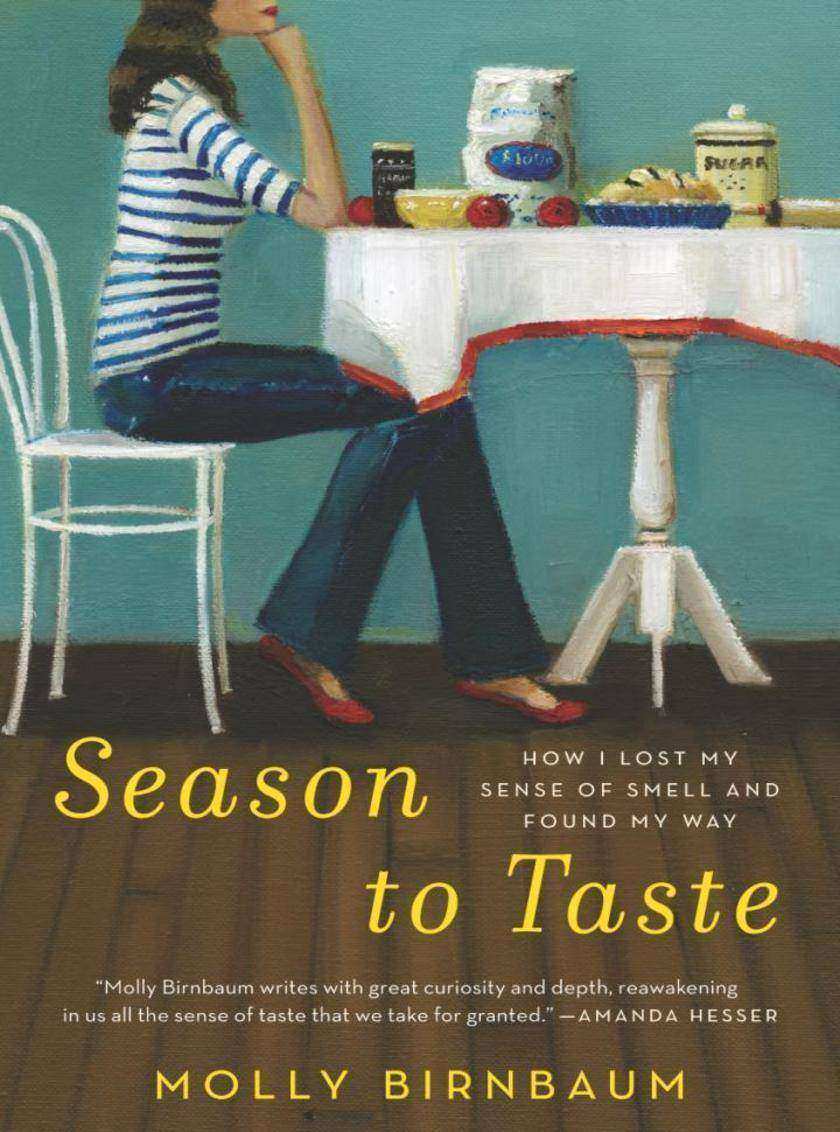
Season to Taste
¥95.11
An aspiring chef's moving account of finding her way in the kitchen and beyond after a tragic accident destroys her sense of smellAt twenty-two, just out of college, Molly Birnbaum spent her nights reading cookbooks and her days working at a Boston bistro, preparing to start training at the prestigious Culinary Institute of America. She knew exactly where she wanted the life ahead to lead: She wanted to be a chef. But shortly before she was due to matriculate, she was hit by a car while out for a run in Boston. The accident fractured her skull, broke her pelvis, tore her knee to shreds and destroyed her sense of smell. The flesh and bones would heal...but her sense of smell?And not being able to smell meant not being able to cook. She dropped her cooking school plans, quit her restaurant job, and sank into a depression.Season to Taste is the story of what came next: how she picked herself up and set off on a grand, entertaining quest in the hopes of learning to smell again. Writing with the good cheer and great charm of Laurie Colwin or Ruth Reichl, she explores the science of olfaction, pheromones, and Proust's madeleine; she meets leading experts, including the writer Oliver Sacks, scientist Stuart Firestein, and perfumer Christophe Laudamiel; and she visits a pioneering New Jersey flavor lab, eats at Grant Achatz's legendary Chicago restaurant Alinea, and enrolls at a renowned perfume school in the South of France, all in an effort to understand and overcome her condition.A moving personal story packed with surprising facts about our senses, Season to Taste is filled with unforgettable de*ions of the smells Birnbaum rediscovers from cinnamon, cedarwood, and fresh bagels to rosemary chicken, lavender, and apple pie as she falls in love, learns to smell from scratch, and starts, once again, to cook.

The Girl Who Fell to Earth
¥83.03
When Sophia Al-Maria's mother sends her away from rainy Washington State to stay with her husband's desert-dwelling Bedouin family in Qatar, she intends it to be a sort of teenage cultural boot camp. What her mother doesn't know is that there are some things about growing up that are universal. In Qatar, Sophia is faced with a new world she'd only imagined as a child. She sets out to find her freedom, even in the most unlikely of places. Both family saga and coming-of-age story, The Girl Who Fell to Earth takes readers from the green valleys of the Pacific Northwest to the dunes of the Arabian Gulf and on to the sprawling chaos of Cairo. Struggling to adapt to her nomadic lifestyle, Sophia is haunted by the feeling that she is perpetually in exile: hovering somewhere between two families, two cultures, and two worlds. She must make a place for herself a complex journey that includes finding young love in the Arabian Gulf, rebellion in Cairo, and, finally, self-discovery in the mountains of Sinai. The Girl Who Fell to Earth heralds the arrival of an electric new talent and takes us on the most personal of quests: the voyage home.
Chasing Utopia
¥112.23
From one of America’s most celebrated poets, Nikki Giovanni, comes this poignant collection of poetry that celebrates the simple pleasures of everyday life and the bonds we share with those closest to us. “This slim volume delights on every page. There are stories, imaginings, whimsy, and startling images which prove the poet’s power and her command of language . . . Anyone with a love of language will be delighted with this book and the continuing publication of America’s treasured poet.”—San Francisco Book Review The poetry of Nikki Giovanni has spurred movements and inspired songs, turned hearts and informed generations. She's been hailed as a healer and as a national treasure. But Giovanni's heart resides in the everyday, where family and lovers gather, friends commune, and those no longer with us are remembered. And at every gathering there is food—food as sustenance, food as aphrodisiac, food as memory. A pot of beans is flavored with her mother's sighs—this sigh part cardamom, that one the essence of clove; a lover requests a banquet as an affirmation of ongoing passion; homage is paid to the most time-honored appetizer: soup. With Chasing Utopia, Giovanni demands that the prosaic—flowers, birdsong, winter—be seen as poetic, and reaffirms once again why she is as energetic, "remarkable" (Gwendolyn Brooks), "wonderful" (Marian Wright Edelman),"outspoken, prolific, energetic" (New York Times), and relevant as ever.

Alek
¥78.55
Since the day she was scouted by a modeling agent while shopping at a London street fair when she was just nineteen, Alek Wek's life has been nothing short of a fantasy. When she's not the featured model in print campaigns for hip companies, or gracing the cover of Elle, she is working the runways of Paris, New York, and Milan to model for the world's leading designers, including Karl Lagerfeld for Chanel. But nothing in her early years prepared her for the life of a model.Born in Wau, in the southern Sudan, Alek knew only a few years of peace with her family before they were caught up in a ruthless civil war that pitted outlaw militias, the Muslim-dominated government, and southern rebels against each other in a brutal conflict that killed nearly two million people. Here is her daring story of fleeing the war on foot and her escape to London, where her rise from young model to supermodel was all the more notable because of Alek's non-European looks. A probe into the Sudanese conflict and an inside look into the life of a most unique supermodel, Alek is a book that will inspire as well as inform.
Autumn Rose
¥77.49
Autumn Rose has the chance to save the world she loves. But how much will she have to sacrificeAutumn Rose lives in a sleepy seaside town, but buried deep under the surface of her quiet life are dark secrets. Her grandmother is dead, murdered eighteen months ago, and the vibrant London social scene in which she was brought up is a world away. Even worse, at her new school she is shunned and condemned––all because of the swirling marks on her skin that prevent her from blending in with the crowd. Then the appearance at her school of a handsome young man—who has the same curious markings as Autumn—sends her world into turmoil. Suddenly the marks are deemed cool, and Autumn is thrust into the limelight. But her sudden popularity brings danger as her secrets threaten to come to light. And then there are her recurring dreams about a girl who is about to be seduced by a very dark prince . . . and Autumn must figure out how to save her before it is too late.
The Art of Mindfulness
¥54.46
This selection from Thich Nhat Hanh's bestselling The Art of Power illuminates the core Buddhist concept of mindfulness for the Western readerIn The Art of Mindfulness, one of the most revered Buddhist teachers in the world, Thich Nhat Hanh delivers a life changing practice to overcome our overdriven mind, to let go of preoccupations and multitasking and focus solely on the task at hand. By devoting 100% of our attention 100% of the time on what we are doing in the moment, we can alleviate suffering, fear, and anxiety. With the energy of mindfulness and the capacity of looking deeply, we can find the insights to transform and heal any situation.
Catastrophe
¥90.77
It's time to take back our country.Now. It's that simple. It's that urgent.So begins Dick Morris and Eileen McGann's latest and most important book. They say that we must act before President Barack Obama fully implements his radical political agenda. Because after Obama has won his war on prosperity and canceled the war on terror, it will be too late to regain our liberty or our security.At a time when we needed a pragmatic centrist to lead us out of recession, we got a doctrinaire socialist who wants to use the crisis to put the government in charge of the economy and enact European socialism here in the United States. Cars, banks what's nextHe will keep at it until Washington governs every major business in America and sets all our salaries.It's a catastrophe.Dick Morris and Eileen McGann saw the meltdown coming. In their book Outrage, they called out the house of cards that was Fannie Mae. In Fleeced, they went after the credit card companies, the subprime mortgage lenders, and the hedge fund billionaires who conspired to wreck the economy and Barack Obama, whose policies, they predicted last summer, would "trigger a stock market crash." Now, in Catastrophe, Morris and McGann take a hard look at America in free fall and at how Obama is transforming a vulnerable America into a socialist state.They tell the truth about Obama and his radical policies: He will destroy our health care system so that no one gets adequate care. He designed his bank rescue plan to pave the way for nation-alization of the banks and socialization of the economy. He firmly believes in government control of our major industries he's already commandeered the banks and the automobile industry. He plans to reshape the political landscape to keep the left in power for decades by cooking the census, enfranchising illegal immigrants, muzzling talk radio, and coercing workers into unions. He is attacking those who fight terrorism while letting the terrorists go free. He gives aid to Hamas while Shariah Law threatens to take over America. He has repealed the Declaration of Independence and put us under a worldwide, European-dominated financial regulatory system. But Obama is not working alone. Morris and McGann spell out how Congress is complicit: How Senator Chris Dodd and Congressman Charlie Rangel use special interests and special friends for their own enrichment and glorification. How Ted Kennedy Jr. is exploiting his father's health care power. "This is no time for apathy or alienation or hopelessness," Morris and McGann remind us. "It's a time for action." And that action must begin now before it's too late.
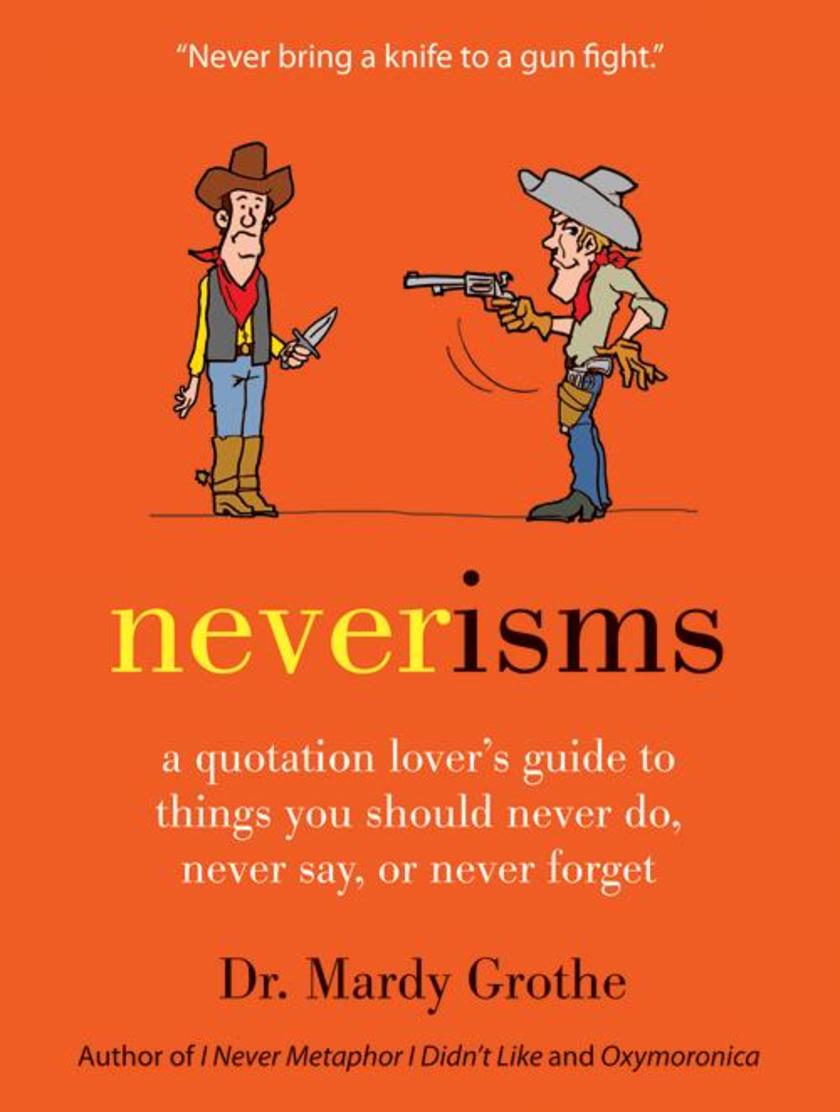
Neverisms
¥88.56
"Never let 'em see you sweat." "Never change diapers in mid-stream." "Never let a crisis go to waste." "Never ruin an apology with an excuse." "Never go to a doctor whose office plants have died." When we strongly encourage people to do something, it's called an exhortation. But what is the proper term for strongly discouraging peopleOne candidate is admonition. Another is dehortation, the opposite of exhortation. But perhaps the best term for an emphatic piece of dissuasive advice is neverism. You won't find the term in any dictionary (at least not yet) because quotation anthologist Dr. Mardy Grothe coined it himself for this collection of nearly two thousand quotable cautionary warnings. With the whimsical and witty intermixed with the serious and profound, contributors range from Aesop and Marcus Aurelius to John Wayne and Mae West. Grothe also tells the fascinating "back stories" of scores of classic quotations as well as the history of hundreds more that have never before appeared in a quotation anthology. Organized by topics such as Wit & Wordplay, Politics & Government, Sports, Stage & Screen, and The Literary Life, this is a book about quotations as well as a book of them. Neverisms is sure to delight quotation lovers and language aficionados everywhere.

William Morrow
¥107.82
Written by the team of former Special Operations warriors who run SOFREP.com, here is the definitive account of what happened before, during, and after the deadly Benghazi attack.On September 12th, 2012, Brandon Webb learned Glen Doherty, one of his closest friends and his former Navy SEAL teammate, was killed alongside Ambassador J. Christopher Stevens and two other Americans when the U.S. State Department and CIA headquarters in Benghazi, Libya, were sieged in a shocking terrorist attack. For the next four months, Webb and his team at SOFREP.com, the world's premier Special Ops website, embarked on a relentless investigation to understand exactly what happened to their countrymen, as well as the roles played by the Obama administration, State Department, and CIA. Drawing on unmatched sources, they spoke to individuals who would talk to no one else, including fellow Special Operations team members familiar with the African theatre, and to well-placed contacts in the Washington intelligence community. This is their report an unforgettably gripping minute-by-minute narrative of the events and their aftermath as they really unfolded on that terrible day in Libya.

A Fool Again
¥21.73
A Fool Again is the story of Genevieve, who once made a dash to Gretna Greene to marry, but was caught by her father. Now, a few years later, she attends the funeral of her elderly husband (not the man she ran away to marry) and who does she see but The One Who Got Away! Can they make their love work this time around or will Genevieve be A Fool Again?

The Forever Summer
¥42.03
The Awful Truth About Emily Ruth!Lucas Griffin has come to Port Gamble for one purpose: to get the Griffin family summer home out of the clutches of his evil ex-wife, Emily Ruth Griffin.But before he can blink twice, she drops dead in the local grocery market. Now he's stuck with her ghost, and her little dog, too.Not-So-Dearly Departed Lila Abbott has had her fill of rich summer people who crowd Port Gamble every year. Townie girls and summer boys just don't mix, and she's learned that the hard way.But Lucas Griffin has a ghost problem that only Lila can solve, and she finds herself knee-deep in Cheez Whiz while Lucas and the deceased Emily Ruth duke it out.Working together to clear his name and get rid of their pesky poltergeist, Lucas and Lila find themselves falling in love. Maybe this will finally be the forever summer for Lila Abbott.

For the Love of a Pirate
¥41.46
After the popular success of her Botany Bay and "C" series, USA Today bestselling author Edith Layton brings us her first stand alone novel in years that is sure to enchant Layton fans everywhere. A proper gentleman, Constantine, Lord Wylde, proposes to a similarly proper young woman. It's a practical proposal that pleases both parties....Until the night Constantine finds an old pistol packing pirate waiting for him at home. The old man claims that Constantine was promised at birth to his granddaughter. Constantine travels to Cornwall to unearth the truth and, once there, discovers the family fortune is the shameful result of piracy and highway robbery. And he meets the young woman his father promised him to at birth. Lisabeth is beautiful and well educated, but because of her unusual upbringing, she's unaware of the proper behavior of young ladies in the ton. As she has always been enamored by stories of Constantine's swashbuckling ancestors, she's half inclined to fall in love with him too, but she finds him nothing like them! He's too staid, and he finds her too Original.... until they fall into each other's arms and realize that they may have been meant for each other after all.


