


 购物车
购物车 个人中心
个人中心
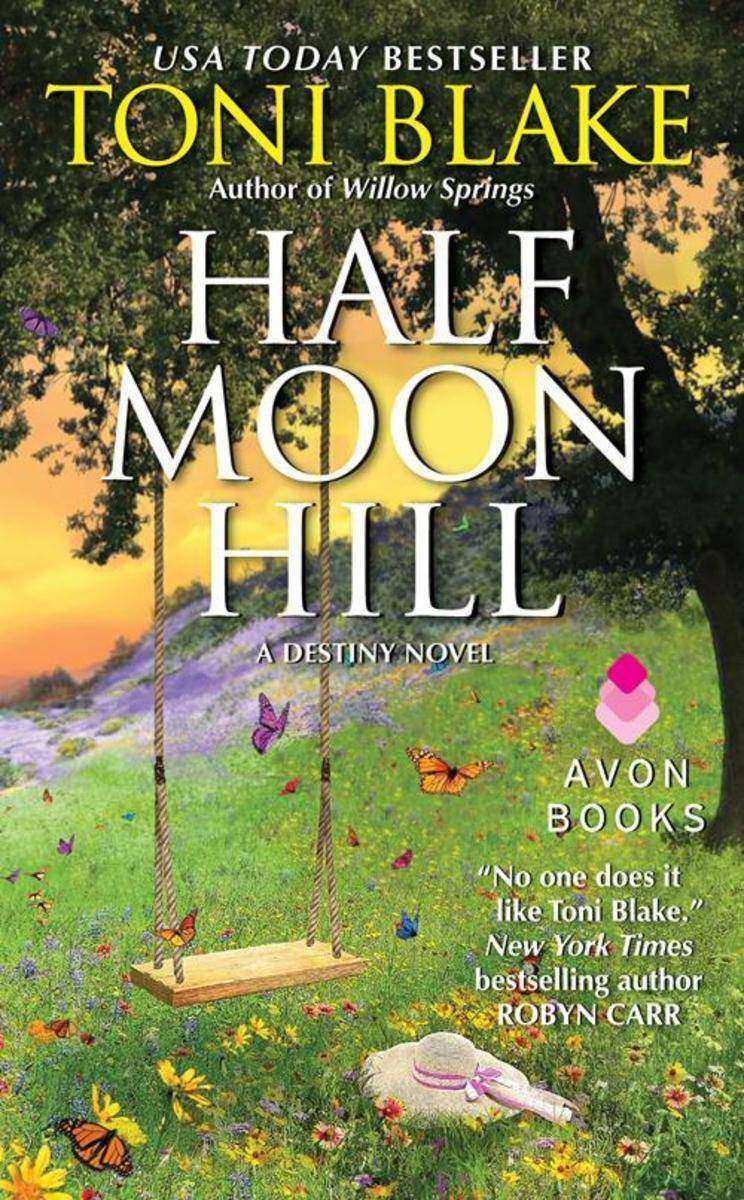
Half Moon Hill
¥42.03
You never know what destiny has in store . . .A rugged loner and ex-biker-gang member, Duke Dawson is looking for some peace and quiet while recovering from an accident. But when Anna Romo comes wandering through his woods and into his cabin, she completely rocks his world. The last thing he expected or wanted was to find himself hungering after a woman whose eyes held hurt even deeper than his own . . .Running from a troubled past, Anna is building a new life in Destiny. When she first meets Duke, she's terrified but something about him calls to her very soul. The hard-bodied rebel is soon helping her turn her new home into a bed and breakfast, and close quarters quickly lead them into her bed. Their passion is palpable, but can she convince a man who has turned his back on life to take the biggest leap of faith of all and fall in love?

Love According to Lily
¥52.70
Lily Langdon has finally grown up. Now that her brother the duke's completely malleable best friend Edward Wallis has been brutally (and luckily) rebuffed by his intended, Lily knows her chance for a very permissive and entirely convenient husband is here. In fact, he is staying in her very own home for a house party.But this promising party's tone is quickly changed by a horrible twist of fate that threatens Edward's very life. Nothing but luck can save Edward, but Lily's heart is lost for good when she sees what a strong and devoted man he can be in times of trouble. Lily has set her cap on a man who should be unlovable and fallen more in love than she ever thought possible. Their passion brings great risk, but when a man and a woman prove to be so much more together than they were apart, is there anything that their love cannot overcome?

Perfect Match
¥42.48
While Not Looking For Mr. Right... Although she vows that she's locked her heart and thrown away the key, ravishing red-headed Lauren Stevens suddenly has several men vying to prove her wrong—and to win the right to set free her passionate self. Button-down banker Oliver Gotho seems like a good candidate, but it's Oliver's sexy brother Alistair who has invited the beautiful, penniless free spirit to share his living space—temporarily, of course. She thinks she should encourage the successful businessman brother, yet is it Alistair with the oh-so-sensual magic touch who holds the key to her happinessHas She Found Her Perfect MatchSexy, wise, and charismatic, Alistair has offered Lauren a place to stay out of the goodness of his heart—and certainly not because of her gorgeous eyes, luscious lips and enchanting body. Lauren may entrance him, but it's time for him to find a sensible woman to take to wife. And Lauren, with her penchant for peccadilloes, spells nothing but trouble. But spring is in the balmy New Orleans air, and so is love, as both Lauren and Alistair discover that the heart-pounding perfect match isn't always the one knocking at the door...

To Love a Scottish Lord
¥56.07
A Lord Not Meant to MarryHamish MacRae, a changed man, returned to his beloved Scotland intending to turn his back on the world. The proud, brooding lord wants nothing more than to be left alone, but an unwanted visitor to his lonely castle has defied his wishes. While it is true that this healer, Mary Gilly, is a beauty beyond compare, it will take more than her miraculous potions to soothe his wounded spirit. But Mary's tender heart is slowly melting Hamish's frozen one . . . awakening a burning need to keep her with him -- forever.A Lady Who Dares Not LoveNever before has Mary felt such an attraction to a man! The mysterious Hamish MacRae is strong and commanding, with a face and form so handsome it makes Mary tremble with wanting him. Already shadowy forces are coming closer, heartless whispers and cruel rumors abound, and it will take a love more pure and powerful than any other to divine the truth -- and promise a future neither had dreamed possible.

The Undead Next Door
¥55.91
Three signs that something is very different with your mew man:1. He sleeps all day . . . which would be annoying except he's so attentive at night.2. He's attacked by sword-wielding assailants, yet insists he can handle it on his own.3. He never seems to age. Heather Westfield has always lived a quiet life, but that all changes when she helps a very handsome, very mysterious stranger. There's something not quite right about Jean-Luc, but still, she's never been with a man so charming, so attractive . . . so wonderful. Now if only a murderous villain wasn't after them, they might get their happily-ever-after.

Wolf and the Dove
¥55.31
The Wolf Noble Aislinn grieves as the Iron Wolf and his minions storm through her beloved Darkenwald. And she burns with malice for the handsome Norman savage who would enslave her. . .even as she aches to know the rapture of the conqueror's kiss The Dove For the first time ever mighty Wulfgar has been vanquished and by a bold and beautiful princess of Saxon blood. He must have the chaste sensuous enchantress who is sworn to his destruction. And he will risk life itself to nurture with tender passion a glorious union born in the blistering heat of hatred and war.
Men at Work
¥88.56
In his classic tribute to America's pastime now with a new introduction political commentator, Pulitzer Prize-winning journalist, and lifelong sports enthusiast George F. Will travels from the baseball field to the dugout to the locker room to get to the root of the game we all love. He breaks down the sport to its four basic components, managing, pitching, hitting, and fielding, and analyzes the way four of its notables, manager Tony La Russa, pitcher Orel Hershiser, outfielder Tony Gwynn, and shortstop Cal Ripken Jr., approach the game. One of the most acclaimed sports books ever written, Men at Work is a revelatory, and often surprising, study of professional baseball.

Pieces of Light
¥90.51
How is it possible to have vivid memories of something that never happenedHow can siblings remember the same event from their childhoods so differently?Do the selections and distortions of memory reveal a truth about the self?Why are certain memories tied to specific places?Does your memory really get worse as you get older?A new consensus is emerging among cognitive scientists: rather than possessing fixed, unchanging memories, we create recollections anew each time we are called upon to remember. As the psychologist Charles Fernyhough explains, remembering is an act of narrative imagination as much as it is the product of a neurological process. In Pieces of Light, he eloquently illuminates this compelling scientific breakthrough via a series of personal stories a visit to his college campus to see if his memories hold up, an interview with his ninety-three-year-old grandmother, conversations with those whose memories are affected by brain damage and trauma each illustrating memory's complex synergy of cognitive and neurological functions.Fernyhough guides readers through the fascinating new science of autobiographical memory, covering topics including imagination and the power of sense associations to cue remembering. Exquisitely written and meticulously researched, Pieces of Light brings together science and literature, the ordinary and the extraordinary, to help us better understand the ways we remember and the ways we forget.
Always and Forever
¥55.31
A desperate need Sassy Grace Atwood never expected to find her proper self accidentally tumbling into a stranger's bed. If she weren't desperate for a man to lead a wagon train of brides to a woman-starved town out West, she never would have gone near Jackson Blake-former lawman or not. She should send the ruggedly charming Texan packing...only he's perfect for the job. Now if her mind would just stop going blank every time she looked at him, they might get this train to Kansas yet.A comsuming passion What's a man to do when a beautiful woman leans over his bed in the middle of the nightCome to think of it, that was the only time Blake's ever seen the straitlaced Miss Atwood the least bit ruffled. He's certain that beneath her buttoned-up appearance lies a passionate woman aching to break free. But though Blake longs to take her in his arms, all he can offer Grace is a life on the run. And when the demons from his past catch up with them, Blake is couaght between the ties that bind and a love that could last...always and forever.

Simply Love
¥55.91
Even the hardest heart can be softened by love ...Cassandra Zerek is a true innocent in a wild anddangerous place -- but her indomitable spirit and gentle soul make her stronger than anyone suspects.The owner of a Colorado mining empire, Luke Taggart's wealth and position can buy him anything, yet he has grown bored with a life of saloons, gambling, and loose women. Nothing soothes his restless inner yearning -- until he spies Cassandra, as fresh and pure as a spring morning, and vows he will possess her. The radiant, charmingly nave youngbeauty seems blind to the depth of Luke's desire or the lengths he is willing to go to seduce her. But the lady is wise, with an unwavering faith in the magical powers of love. And she's determined to awaken the good man hiding in Luke's tormented heart, for only one precious giftwill truly win her: his deep, passionate, and unsullied love.
Passion and Illusion
¥55.31
New York Times bestselling author Barbara Delinsky captures the magic and truth of love in this delightful tale, first published in 1983, of opposites attracting.A controversial Boston radio talk-show host, Monica Grant is a strong, willful, and independent woman. She wants an equally strong man. Someone like the heroes in the romance novels she's addicted to . . . someone like Michael Shaw.A cop with the heart of a poet, Michael is looking for that special someone, too an old-fashioned, feminine woman. And for some reason he thinks Monica just might be the one. By turns infuriatingly chauvinistic and irresistibly attractive, Michael demands something from Monica that she doesn't know if she can give or even wants to. With Michael, can she find the happy ending of her own love story?

Variation on a Theme
¥55.31
New York Times bestselling author Barbara Delinsky enthralls millions of readers with emotionally powerful stories that vividly demonstrate the heart's, power to love. Here, first published in 1984, is an unforgettable story of a woman who must discover who she is before she can give herself to the man she loves.Although he'd already heard a great deal about Rachel Busek, nothing prepared Jim Guthrie for the beautiful flutist's gentle grace. A rough-hewn private investigator, Jim is nearly overwhelmed with the urge to love and protect her. And Rachel is both amazed and delighted at the ease with which Jim slips into her life. Yet as quick passion gives way to leisurely love, Rachel finds herself holding back. Troubling pieces of her past remain a mystery even to her, and keep her from trusting her heart. Now, she must either discover the truth about her past or risk losing the first man in her life worth keeping.
Trapped in the Mirror
¥88.56
In this compelling book, Elan Golomb identifies the crux of the emotional and psychological problems of millions of adults. Simply put, the children of narcissist offspring of parents whose interest always towered above the most basic needs of their sons and daughters share a common belief: They believe they do not have the right to exist.The difficulties experienced by adult children of narcissists can manifest themselves in many ways: for examples, physical self-loathing that takes form of overeating, anorexia, or bulimia; a self-destructive streak that causes poor job performance and rocky personal relationships; or a struggle with the self that is perpetuated in the adult's interaction with his or her own children. These dilemmas are both common and correctable, Dr. Golomb tells us.With an empathic blend of scholarship and case studies, along with her own personal narrative of her fight for self, Dr. Golomb plumbs the depths of this problem, revealing its mysterious hold on the affairs of otherwise bright, aware, motivated, and worthy people. Trapped in the Mirror explores. the nature of the paralysis and lack of motivation so many adults feel stress and its role in exacerbating childhood wrongs why do many of our relationships seem to be "reruns" of the past how one's body image can be formed by faulty parenting how anger must be acknowledge to be overcome and, most important, how even the most traumatized self can be healed. Rooted in a profoundly humanist traditional approach, and suffused with the benefit of the latest knowledge about intrafamily relationships, Trapped in the Mirror offers more than the average self-help book; it is truly the first self-heal book for millions.

Use The News
¥78.32
Explaining the methods that have made her -- and her stock picks -- famous, Maria Bartiromo tells investors how to use hot information to make money in any market, raging bull or lumbering bear. Packed with sage advice from the most influential people on Wall Street, Use the News is an indispensable investment handbook that will disclose the Wall Street insiders' secrets and show you how to take control of your investments.

Vacation Time
¥33.59
Vacation Time by Nikki Giovanni has de*ive copy which is not yet available from the Publisher.

The Watson Dynasty
¥95.39
For an extraordinary fifty-seven-year period, one of the nation's largest and fastest-growing companies was run by two men who were flesh and blood. The chief executives of the International Business Machines Corporation from 1914 until 1971 were Thomas J. Watson and Thomas J. Watson, father and son. That great corporation bears the imprint of both men -- their ambitions and their strengths -- but it also bears the consequences of a family that was in near-constant conflict.Sometimes wrong but never in doubt, both Watsons had clear -- and farsighted -- visions of what their company could become. They also had volcanic tempers. Their fights with each other combined with their commitment to leadership and excellence made IBM one of the most rewarding, yet gut-clutching firms to work for in the history of American business.We are accustomed to describing professional behavior as if men and women leave their emotions and vulnerabilities at home each day. In the case of the Watsons, filial and sibling strife could not be excluded from the office. In closely studying the desires and frustrations of the Watson family, eminent historian Richard S. Tedlow has produced something more than a family portrait or a company history. He has raised the nearly forbidden issue of the role of emotion in corporate life.This book explores the interplay between the person- alities of these two extraordinary men and the firm they created. Both Watsons had deeply held beliefs about what a corporation is and should be. These ideas helped make "Big Blue" the bluest of blue-chip stocks during the Watsons' tenure. These very beliefs, however, also sowed the seeds for IBM's disasters in the late 1980s and early 1990s, when the company had lost sight of the original meaning behind many of the practices each man put into place.Tracing the family's idiosyncratic ability to cope with each other's weaknesses but not their strengths, The Watson Dynasty is a book for every person who ever went to work but didn't want to check his personality at the door.

Ruby Ridge
¥94.10
On the last hot day of summer in 1992, gunfire cracked over a rocky knob in northern Idaho, just south of the Canadian border. By the next day three people were dead, and a small war was joined, pitting the full might of federal law enforcement against one well-armed family. Drawing on extensive interviews with Randy Weaver's family, government insiders, and others, Jess Walter traces the paths that led the Weavers to their confrontation with federal agents and led the government to treat a family like a gang of criminals. This is the story of what happened on Ruby Ridge: the tragic and unlikely series of events that destroyed a family, brought down the number-two man in the FBI, and left in its wake a nation increasingly attuned to the dangers of unchecked federal power.

American Taboo
¥88.56
In 1975, a new group of Peace Corps volunteers landed on the island nation of Tonga. Among them was Deborah Gardner -- a beautiful twenty-three-year-old who, in the following year, would be stabbed twenty-two times and left for dead inside her hut.Another volunteer turned himself in to the Tongan police, and many of the other Americans were sure he had committed the crime. But with the aid of the State Department, he returned home a free man. Although the story was kept quiet in the United States, Deb Gardner's death and the outlandish aftermath took on legendary proportions in Tonga.Now journalist Philip Weiss "shines daylight on the facts of this ugly case with the fervor of an avenging angel" (Chicago Tribune), exposing a gripping tale of love, violence, and clashing ideals. With bravura reporting and vivid, novelistic prose, Weiss transforms a Polynesian legend into a singular artifact of American history and a profoundly moving human story.
Old Man in a Baseball Cap
¥73.71
Conceived in a storytelling workshop given by Spalding Gray, Old Man In a Baseball Cap is not your typical story of World War II. Rochlin recounts in gritty detail how he--an ordinary young man--was thrust into outrageous circumstances during an extraordinary time. Whether he's bumping up against the army's bigotry because he's Jewish, aiding in the delivery of a baby by cesarean section, being ordered to obliterate a Hungarian village, or parachuting from his plane in the middle of Yugoslavia and then walking 400 kilometers to safety with an amorous guide, Rochlin captures the Intensely powerful experience of a teenager away from home for the first time. Old Man In a Baseball Cap is an astonishingly fresh, candid look at "the last good war." At once naive, candid, and wise, Fred Rochlin's voice is unforgettable.
Newspaper Blackout
¥88.56
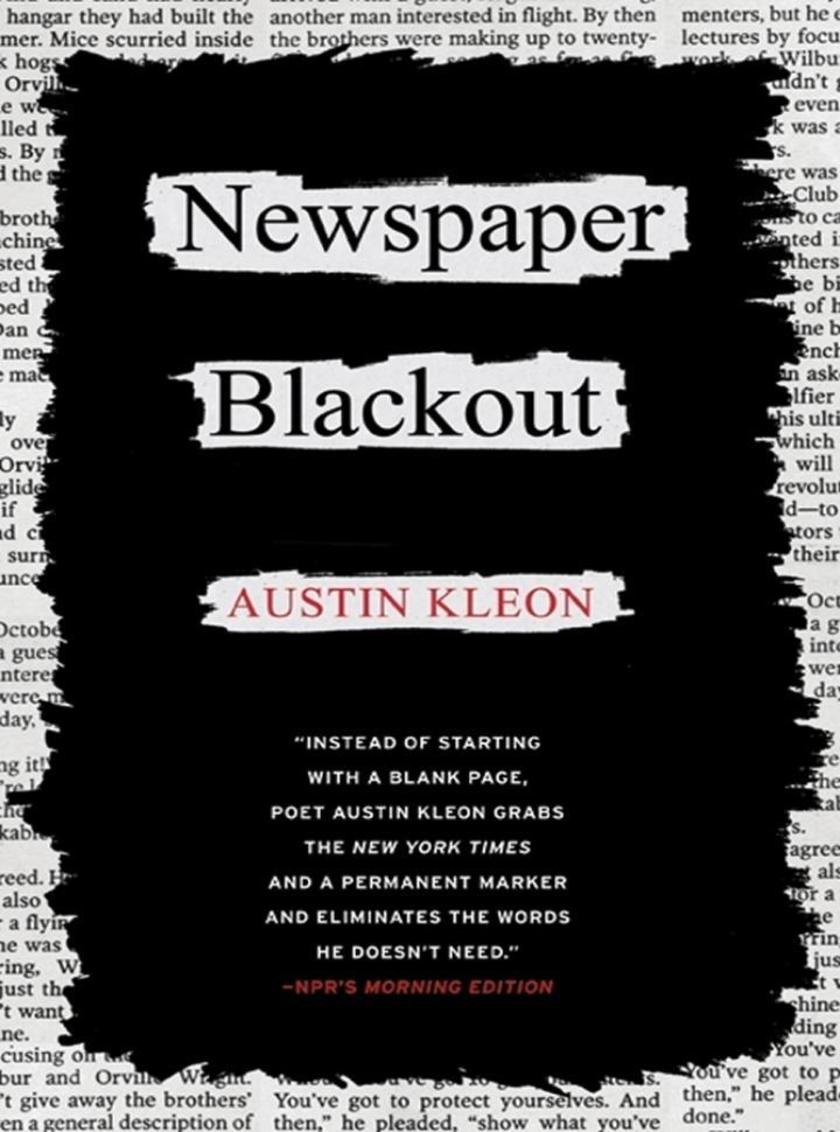
Poet and cartoonist Austin Kleon has discovered a new way to read between the lines. Armed with a daily newspaper and a permanent marker, he constructs through deconstruction eliminating the words he doesn't need to create a new art form: Newspaper Blackout poetry. Highly original, Kleon's verse ranges from provocative to lighthearted, and from moving to hysterically funny, and undoubtedly entertaining. The latest creations in a long history of "found art," Newspaper Blackout will challenge you to find new meaning in the familiar and inspiration from the mundane.Newspaper Blackout contains original poems by Austin Kleon, as well as submissions from readers of Kleon's popular online blog and a handy appendix on how to create your own blackout poetry.
Beginning to Heal
¥77.49
There's nothing as wonderful as starting to heal, waking up in the morning and knowing that nobody can hurt you if you don't let them.Beginning to Heal offers hope and guidance for all survivors starting the healing journey. No matter how great your pain today, you can not only heal but thrive. Based on the authors' bestseller The Courage to Heal, this Revised Edition of Beginning to Heal takes you through the key stages of the healing process, from crisis times to breaking the silence, grief, and anger, to resolution and moving on. It includes inspirational highlights, clear explanations, practical suggestions, and compelling accounts of survivors' pain, their strength, and their triumphs.


