


 购物车
购物车 个人中心
个人中心

Your Own Worst Enemy
¥83.03
Do you suffer from any of the followingProcrastination Wide swings of mood and self-esteem Ambivalence in making decisions Dreaming big, but never following through If you or someone you love isn't living up to his or her potential -- and suffers from even one or two of the above feelings -- here is a program that can help. Your Own Worst Enemy is the first book devoted to the problem of adult underachievement, a problem stemming from common behavior patterns that can manifest itself in almost every walk of life -- from twentysomethings stuck in dead-end jobs to outwardly successful businesspeople who can't help feeling they've missed their true calling.In Your Own Worst Enemy, Dr. Kenneth Christian details the telltale signs of what he calls self-limiting behavior -- everyday habits that can seem harless (like taking unchallenging jobs) or even worthwhile (like setting absurdly high standards), but that over time can send high-potential people into a tailspin of dead ends and frustration. He identifies underachieving types, from charmers, who substitute congeniality for effort, to extreme risk-takers, who casually gamble their future away, to best-or-nothings, who refuse to play if they can't win. And he offers practical 15-step guide to help underachievers shake off their old habits and start taking an active hand in their own future.Filled with persuasive case studies and useful advice on everything from overhauling workspace to remaking self-image, Your Own Worst Enemy will help underachievers everywhere visualize their goals, break through their barriers, and start realizing their unlimited potential.
Saving Childhood
¥90.73
Saving Childhood offers parents and grandparents practical strategies to cope with a society that seems perversely determined to frighten and corrupt its young. Cultural critic and popular radio host Michael Medved and his wife, psychologist Diane Medved, argue that in a mistaken effort to curb problems plaguing its youth, our culture has changed from protecting childhood as a precious time of growth to hammering even the smallest youngsters with a grim, harsh, and menacing view of the world. The Medveds systematically present unassailable scientific evidence, moving anecdotes, and personal experiences of raising their three young children to explain the attack from four primary directions--media, schools, peers, and even well-intentioned parents themselves.In a unique analysis the Medveds define innocence not as ignorance but as the result of three components--security, a sense of wonder and optimism. They empower parents and all who care about childhood with concrete, easily accomplished means to fend off the assault, as well as advice for handling hurdles such as the Internet, television, peer pressure, and the plague of pessimism. Saving Childhood enables us to restore and maintain for our children imagination, confidence, and hope for the future.

Dear Photograph
¥147.48
We all have moments we wish we could relive. We'd give anything to skid down the toboggan hills of our youth, to breathe in the smell of our children as babies, or to spend just one more minute with someone we've lost. Dear Photograph provides a way to link these memories from the past to the present, overlapping them to see how the daydreams of our memories collide with our current realities.The idea is simple: hold up a photograph from the past in front of the place where it was originally taken, take a second photograph, and add a sentence of dedication about what the photograph means to you. The results, however, are astounding, which is why millions have flocked to dearphotograph.com and thousands have submitted their own Dear Photographs.This stunning visual compilation includes more than 140 never-before-seen Dear Photographs, as well as a space for you to attach your own cherished photo. By turns nostalgic, charming, and poignant, Dear Photograph evokes childhood memories, laments difficult losses, and, above all, celebrates the universal nature of love.

Jewish Holidays
¥149.48
The coeditor of the enormously popular Jewish Catalog "help[s] readers understand more fully the meaning of our holidays and thereby to observe these festivals . . . with a greater devotion and joy."--Rabbi Alexander M. Schindler

The Opposite Of Spoiled: Raising Kids Who Are Grounded, Generous, And Smart Abou
¥90.51
We may not realize it, but children are hyperaware of money. They have scores of questions about its nuances that parents often don't answer, or know how to answer well. But for Ron Lieber, a personal finance columnist and father, good parenting means talking about money with our kids much more often. When parents avoid these conversations, they lose a tremendous opportunity not just to model important financial behaviors, but also to imprint lessons about what their family cares about most.Written in a warm, accessible voice, grounded in real-world stories from families with a range of incomes, The Opposite of Spoiled is a practical guidebook for parents that is rooted in timeless values. Lieber covers all the basics: the best ways to handle the tooth fairy, allowance, chores, charity, savings, birthdays, holidays, cell phones, splurging, clothing, cars, part-time jobs, and college tuition. But he also identifies a set of traits and virtues like modesty, patience, generosity, and perspective that parents hope their young adults will carry with them out into the world.In The Opposite of Spoiled, Ron Lieber delivers a taboo-shattering manifesto that will help every parent embrace the connection between money and values to help them raise young adults who are grounded, unmaterialistic, and financially wise beyond their years.
What is Your Life's Work?
¥128.85
What Is Your Life's Workcaptures a most extraordinary moment in each of our lives the time when we sit down with loved ones and attempt to answer the big question about what really matters. Bill Jensen has created a wonderfully practical space for you to explore who you are, what you stand for, what you believe in, what's risky, what's not, what's worth it, what you're struggling with, and what you've accomplished.He has captured the intimate exchanges between mothers and daughters, fathers and sons, and caring teammates all talking about what really matters at work, and in life. Their conversations are as real as yours would be: "Don't kiss tush, beware carnivorous sheep." "Honey, there are no shortcuts." "My daughter was limp with pain ... and I'm worried about deadlines. What was I thinking?!?!" "Speak up if you don't agree." "Be a respectful rebel." In What Is Your Life's Workyou will discover a new way to see and know who you are in today's more-better-faster world. Exposed is what usually stays private; the raw truths we've all experienced, the personal frailties and mistakes we'd like to hide, and the proudest achievements we'd like to celebrate.In the letters and work diaries of others, we see ourselves. In their struggles, we see our own.Bill Jensen has made it his life's work to battle corporate stupidity and help us all simplify our workdays, take more control, and rediscover our passions. As your trail guide and partner, he will take you through five distinct discoveries that thousands have encountered in finding their voices: Finding Yourself Finding the Lessons to Be Learned,the Questions to Be Asked Finding the Choices That Really Matter Finding the Courage to Choose Finding Joy, Serenity, and FulfillmentWhile it touches your heart and lifts your soul, What Is Your Life's Workdoes not shy away from difficult introspection. You are an active participant in this book. Yes, you will find value here stories of people like you, new ways of looking at what really matters, or simple confirmation that others have chosen the same path as you.But the ultimate takeaway asks something of you in return: Take something from this book and pay it forward. Start a new conversation with a loved one about what really matters about your own life's work.You will get back even more than you give. You will have brought these pages to life.
The Art of Mindfulness
¥54.46
This selection from Thich Nhat Hanh's bestselling The Art of Power illuminates the core Buddhist concept of mindfulness for the Western readerIn The Art of Mindfulness, one of the most revered Buddhist teachers in the world, Thich Nhat Hanh delivers a life changing practice to overcome our overdriven mind, to let go of preoccupations and multitasking and focus solely on the task at hand. By devoting 100% of our attention 100% of the time on what we are doing in the moment, we can alleviate suffering, fear, and anxiety. With the energy of mindfulness and the capacity of looking deeply, we can find the insights to transform and heal any situation.

Discover the Wealth Within You
¥90.54
Achieve a Healthy, Balanced, and Richly Rewarding Life!Have your goals and dreams gotten lost in your daily struggle to earn and provide for your familyIf so, join Ric Edelman on a journey to self-discovery and personal fulfillment. In Discover the Wealth Within You, he shows you how to choose fun, enriching ... and rewarding goals and gives you a simple, straightforward plan for achieving them.You'll discover how easy it is to create wealth, once you're headed in the right direction. After using Ric's work sheets to help you get started, you'll embark on a detailed exploration of personal investing and discover Ric's formula for creating a plan to achieve your goals, build your financial future ... and finance your dream.

It Books
¥95.11
Tabatha is back to share her secrets of business success . . .With her characteristic savvy expertise and no-nonsense advice, the perfectly coiffed celebrity hairstylist, Tabatha Coffey, returns with her second book, teaching readers that the secret of success is taking charge of your priorities, your future, and your life. Fans of her hit show, Tabatha Takes Over, value Tabatha's sound approach to overhauling failing businesses, and now, in Own It!, she takes to the page to reach out to anyone with a dream: whether you're just beginning, revamping your career, or starting your own enterprise.Sharing her blunt but rock-solid wisdom, Tabatha provides tips for every aspect of business from entrepreneurship, to customer service, to management as well as on the home front, to help women seeking to balance their family lives with their careers. Filled with stories about real people who have faced challenging transitions, in addition to anecdotes from Tabatha's own experiences, this book reveals, through her unflinching honesty, Tabatha's commitment to the dreams and goals of her readers, and her never-say-never attitude when it comes to bringing them to life. Success is the result when you Own It! in all aspects of your life, and Tabatha breaks it down step-by-step as your straight-shooting personal coach to show you how it's done.

William Morrow
¥123.45
In this inspirational follow-up to the beloved Things I Want My Daughters to Know, lifestyle philosopher Alexandra Stoddard reflects on the lessons she's learned from her daughters and offers further thoughts and words of wisdom garnered from her own life.A mother, a grandmother, and the author of more than twenty-five books on personal fulfillment, Alexandra Stoddard celebrates the wisdom of motherhood and the lessons mothers can learn from their daughters in this warm and deeply moving new book that cuts to the heart of what is important in life.Speaking from her own experience and relying on the many conversations she has had with her contemporaries and their children, Stoddard has created a wonderful gift for every mother, daughter, and mother-to-be to give, receive, and share. Bridging generations, full of timeless insights to help us pursue a life rich with happiness, love, and gratitude, The Shared Wisdom of Mothers and Daughters reminds us of everything that makes life beautiful and profound.
How God Became King
¥83.92
Foundational: The four gospels come directly fromthe ancient church and are among the primary sourcesfor the church's teachings.Familiar: Since Christian worship services began, areading from the gospels has played a central role.Studied: For over two hundred years scholars havechallenged and defended the central claims of thegospels: miracles, historical accuracy, the divinity ofJesus, and more.But Forgotten: Still, leading Bible scholar N. T.Wright reveals shocking news: We have all forgottenwhat the four gospels are about."Despite centuries of intense and heavy industryexpended on the study of all sorts of features of thegospels," Wright writes, "we have often managed tomiss the main thing that they, all four of them, aremost eager to tell us. What we need is not just a bitof fine-tuning, an adjustment here and there. We needa fundamental rethink about what the gospels aretrying to tell us."What Wright offers is an opportunity to confront thesepowerful texts afresh, as if we are encountering themfor the first time. How God Became King reveals thesurprising, unexpected, and shocking news of thegospels: this is the story of a new king, a new kind ofking, a king who has changed everything, and a kingwho invites us to be part of his new world.
HarperCollins e-books
¥140.08
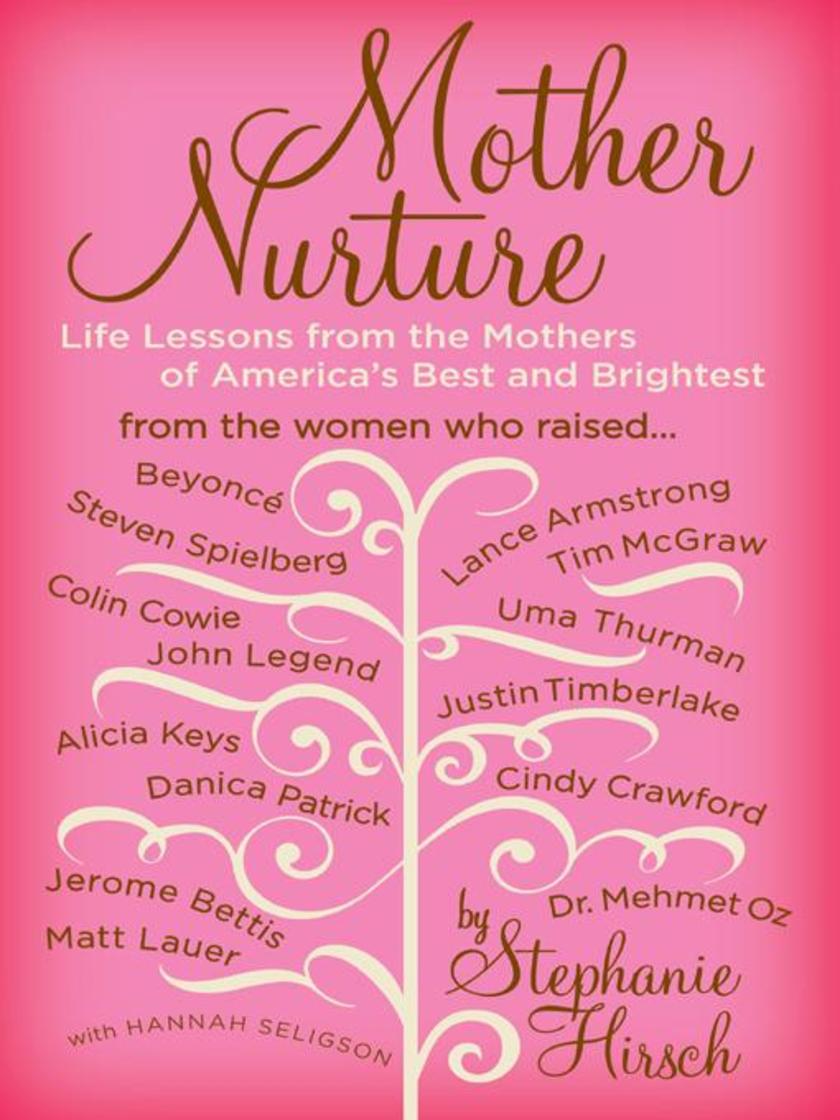
Where did Beyonc get her groove?Where did Lance Armstrong get his drive?Where did Steven Spielberg get his creative vision?Every success story begins with . . . Mom When Stephanie Hirsch gave birth to her son, she began to think about the kind of person she'd like him to be: generous, family oriented, loving, courageous, and professionally accomplished maybe he'd turn out like Steven Spielberg! But what, she wondered, had Spielberg's mother done so well?What started out as one conversation with Steven Spielberg's mom became a quest to interview the mothers of some of the most talented artists, brilliant journalists, and dedicated athletes of our time.Mother Nurture is an inspiring collection of fifty-two stories filled with commonsense advice and memorable personal tales from caring mothers whose children have reached the apex of their fields, from sports, politics, and music to literature, entertainment, and business.If you're expecting, or a parent, or you just want to thank the woman who raised you, Mother Nurture is both the perfect antidote to piles of contradictory parenting advice and a celebration of the gift of motherhood.
HarperCollins e-books
¥128.70
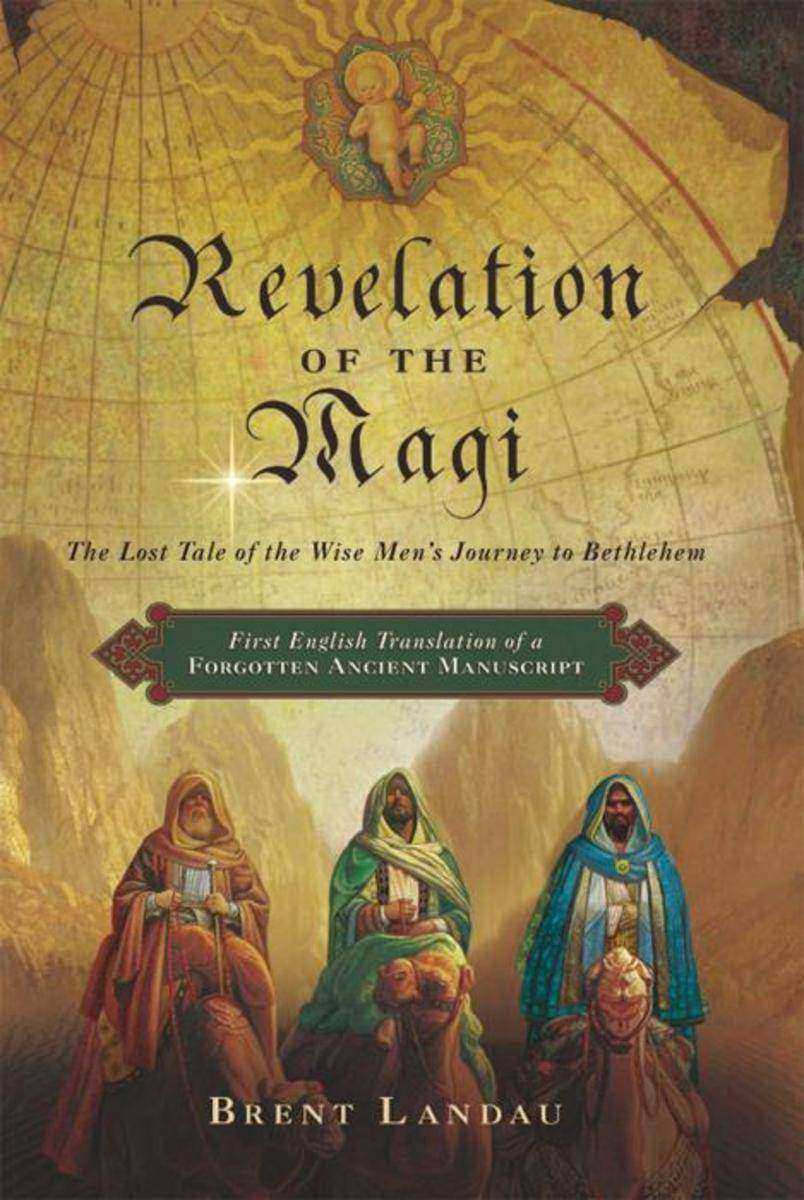
Each Christmas, adults and children alike delight at the story of the kings from the East who followed the star to Bethlehem to offer gifts to the newborn Christ. While this familiar tale is recorded in the Gospel of Matthew, another little-known version later emerged that claimed to be the eyewitness account of the wise men. This ancient manu* has lain hidden for centuries in the vaults of the Vatican Library, but through the determined persistence of a young scholar, Brent Landau, this astonishing discovery has been translated into English for the very first time as the Revelation of the Magi. Everything we know about the wise men is based on only a few verses from the Bible. With the Revelation of the Magi, we can now read the story from the Magi's perspective. Readers will learn of the Magi's prophecies of God's incarnation from the beginning of time, their startling visitation in the form of a star, the teachings they receive from the baby Jesus, and the wise men's joyous return to their homeland to spread the good news. This ancient version of the Christmas story is guaranteed to astonish and delight. It will also raise larger questions of the significance and meaning of Christ's birth, and the mission to spread the good news to every corner of the globe. All the drama and intrigue of the brief de*ion of Jesus's birth in the Bible is filled out in greater, more colorful detail, offering for the first time the complete story of these beloved characters.
Dey Street Books
¥95.11
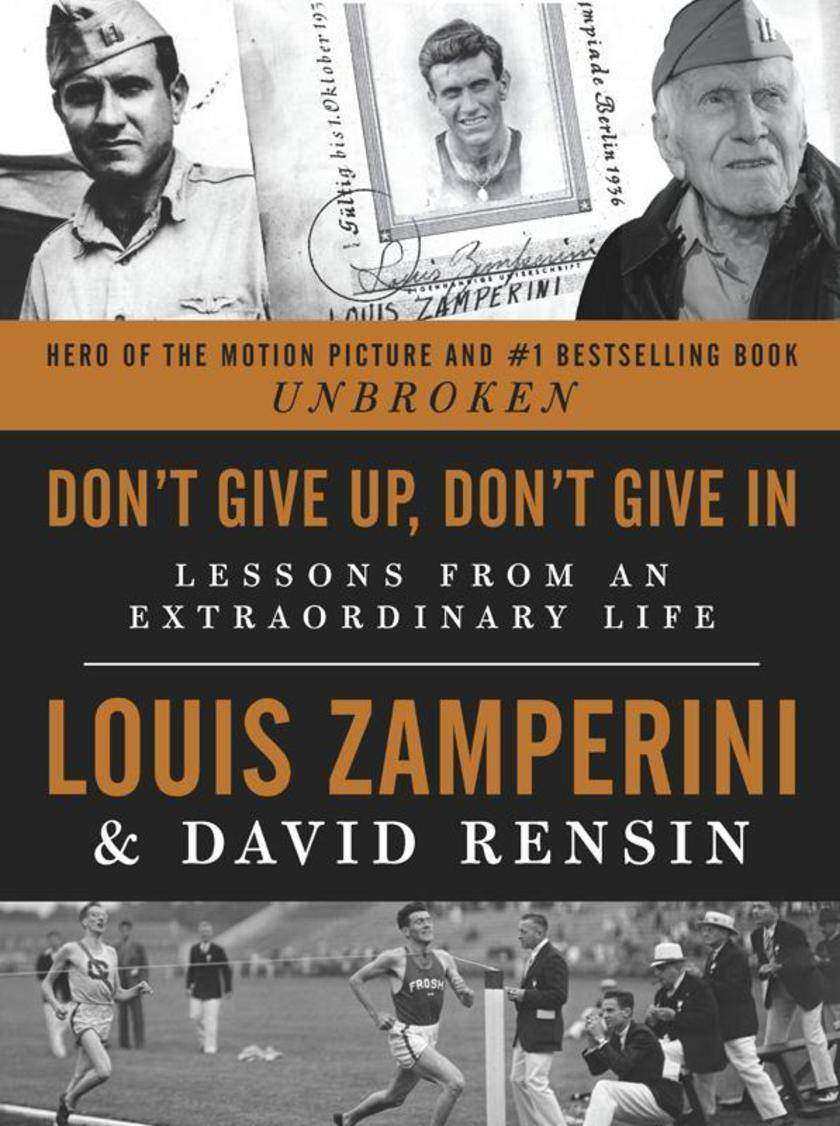
Champion. Survivor. Hero. Legend. Completed just two days before Louis Zamperini's death at age 97, Don't Give Up, Don't Give In shares a lifetime of wisdom, insight, and humor from one of America's most inspiring lives. Zamperini's story has touched millions through Laura Hillenbrand's biography Unbroken, soon to be a major motion picture directed by Angelina Jolie. Now, in his own words, Louis Zamperini reveals, with warmth and great charm, the essential values and lessons that sustained him throughout his remarkable journey. He was a youthful troublemaker from California who turned his life around to become a 1936 Olympian and a world-class miler at the University of Southern California. Putting aside his superstar track career, Louis Zamperini volunteered for the army before Pearl Harbor and was thrust into the violent combat of World War II as a B-24 bombardier. While on a rescue mission, his plane went down in the middle of the Pacific Ocean, where he survived, against all odds, drifting two thousand miles in a small raft for forty-seven days. His struggle was only beginning: Zamperini was captured by the Japanese and, for more than two years, he courageously endured torture and psychological abuse in a series of prisoner-of-war camps. He returned home to face more dark hours, but in 1949 Zamperini's life was transformed by a spiritual rebirth that would guide him through the next sixty-five years of his long and happy life. Cowritten with longtime collaborator David Rensin, Louis Zamperini's Don't Give Up, Don't Give In is an extraordinary last testament that captures the wisdom of a life lived to the fullest. A son of Italian immigrants, Louis Zamperini (1917–2014) was a U.S. Olympic runner, World War II bombardier, and POW survivor. After the war, he returned to the United States to found the Victory Boys Camp for at-risk youth and became an inspirational speaker. Zamperini's story was told in his 2003 autobiography Devil at My Heels, as well as in Laura Hillenbrand's 2010 biography Unbroken. David Rensin worked closely with Louis Zamperini for many years and cowrote Devil at My Heels, as well as fifteen other books, including five New York Times bestsellers.

The Truth
¥167.88
This is not a journey that was undertaken for journalistic purposes. It is a painfully honest account of a life crisis that was forced on me by my own behavior and its consequences. As such, it requires sharing a lot of things I'm not proud of and a few things I feel like I should regret a whole lot more than I actually do. Because, unfortunately, I am not the hero in this tale. I am the villain. So begins Neil Strauss's long-awaited follow-up to The Game, the funny and slyly instructive work of immersive journalism that jump-started the international seduction community and made Strauss a household name revered or notorious among single men and women alike.In The Truth, Strauss takes on his greatest challenge yet: Relationships. And in this wild and highly entertaining ride, he explores the questions that men and women are asking themselves every day: Is it natural to be faithful to one person for lifeDo alternatives to monogamy lead to better relationships and greater happinessWhat draws us to the partners we chooseCan we keep passion and romance from fading over timeHis quest for answers takes him from Viagra-laden free-love orgies to sex addiction clinics, from cutting-edge science labs to modern-day harems, and, most terrifying of all, to his own mother.What he discovered changed everything he knew about love, sex, relationships, and, ultimately, himself.Searingly honest and compulsively readable, The Truth just may have the same effect on you.If The Game taught you how to meet members of the opposite sex, The Truth will teach you how to keep them.

You've GOT to Read This Book!
¥94.10
There's nothing better than a book you can't put down or better yet, a book you'll never forget. This book puts the power of transformational reading into your hands. Jack Canfield, cocreator of the bestselling Chicken Soup for the Soul series, and self-actualization pioneer Gay Hendricks have invited notable people to share personal stories of books that changed their lives. What book shaped their outlook and habitsHelped them navigate rough seasSpurred them to satisfaction and successThe contributors include Dave Barry, Stephen Covey, Malachy McCourt, Jacquelyn Mitchard, Mark Victor Hansen, John Gray, Christiane Northrup, Bernie Siegel, Craig Newmark, Michael E. Gerber, Lou Holtz, and Pat Williams, to name just a few. Their richly varied stories are poignant, energizing, and entertaining.Author and actor Malachy McCourt tells how a tattered biography of Gandhi, stumbled on in his youth, offered a shining example of true humility and planted the seeds that would help support his sobriety decades later. Bestselling author and physician Bernie Siegel, M.D., tells how William Saroyan's The Human Comedy helped him realize that, in order to successfully treat his patients with life-threatening illnesses, "I had to help them live not just prevent them from dying."Actress Catherine Oxenberg reveals how, at a life crossroads and struggling with bulimia, a book taught her the transforming difference one person could make in the life of another and why that person for her was Richard Burton.Rafe Esquith, the award-winning teacher whose inner-city students have performed Shakespeare all over the world, recounts his deep self-doubt in the midst of his success and how reading To Kill a Mockingbird strengthened him to continue teaching.Beloved librarian and bestselling author Nancy Pearl writes how, at age ten, Robert Heinlein's science fiction book Space Cadet impressed on her the meaning of personal integrity and gave her a vision of world peace she'd never imagined possible. Two years later, she marched in her first civil rights demonstration and learned that there's always a way to make "a small contribution to intergalactic harmony."If you're looking for insight and illumination or simply for that next great book to read You've Got to Read This Book! has treasures in store for you.
The Love Fix
¥94.10
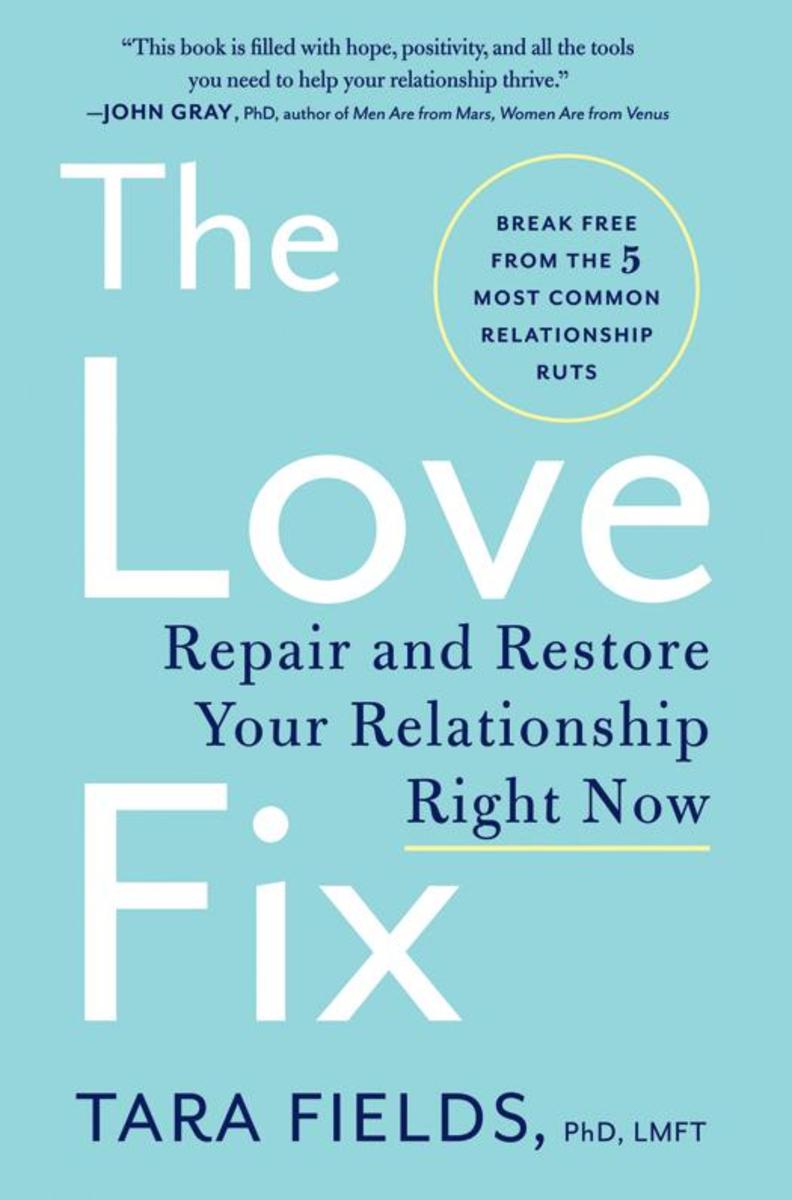
Find your way back to a happy, satisfying relationshipAll couples argue, but how do some couples get to what seems like the point of no returnLicensed marriage and family therapist Dr. Tara Fields has spent more than twenty-eight years working with couples, and she has discovered that there are five common conflict loops that couples fall into and three steps to getting past having the same fights over and over again and onward to building a relationship where each partner feels heard, understood, respected, and loved. These steps include: Recognizing the conflict loop at play Exploring past and present fears Creating opportunities to get in touch with the deepest needs of both partners in order to find new gratitude, respect, and trust Change comes with awareness. When you're present in the moment, conflict with your partner can become an opportunity to work through unresolved issues and to learn more about each other; it can even become a way to grow closer. In The Love Fix, Fields shares her tested and proven tools to help build stronger relationships, including: Insight from real couples who have repaired their relationships Self-assessment quizzes to get to the root of the problem Practical 3-Minute Fixes you can start using immediately HEARTwork exercises to help you dig deeper in order to reconnect It's never too late to reignite your passion and to restore the love between you and your partner. Stop rehashing the same issues, figure out what you're really fighting about, and start enjoying a happier, stronger relationship today.

Healthy Child, Whole Child
¥101.00
Should you give your child nutritional supplementsAre vaccinations safeWhy are more and more children becoming couch potatoesIn Healthy Child, Whole Child, doctors Stuart H. Ditchek and Russell H. Greenfield answer these questions and more, offering authoritative, cutting-edge information on all aspects of children's health and wellness. Taking the position that conventional and alternative approaches to pediatric care are not mutually exclusive, they provide the newest science and most up-to-date information on: The 6 myths (and one true statement) about vaccinations The 10 powerhouse foods for your kids The 7 questions you need to ask to find out if your child is overweight The 16 herbs that are safe and effective for children How to receive more integrative care from your current pediatricianAnd more!

Inner Bonding
¥95.11
Inner bonding is the process of connecting our adult thoughts with our instinctual, gut feelings the feelings of the inner child so that we can minimize painful conflict within ourselves. Free of inner conflict, we feel peaceful, open to joy, and open to giving and receiving love.Margaret Paul, coauthor of Healing Your Aloneness, explores how abandonment of the inner child leads to increasingly negative and destructive feelings of low self-worth, codepenclence, addiction, shame, powerlessness, and withdrawal from relationships. Her breakthrough inner bonding process teaches us to heal past wounds through reparenting and clearly demonstrates how we can learn to parent in the present. Real-life examples illustrate the dynamics of the healing process and show the benefits we can expect in every facet of our lives and in all our relationships.Inner Bonding provides the tools we need to forge and maintain the inner unity that makes our family, sexual, work, and social relationships productive, honest, and joyful.
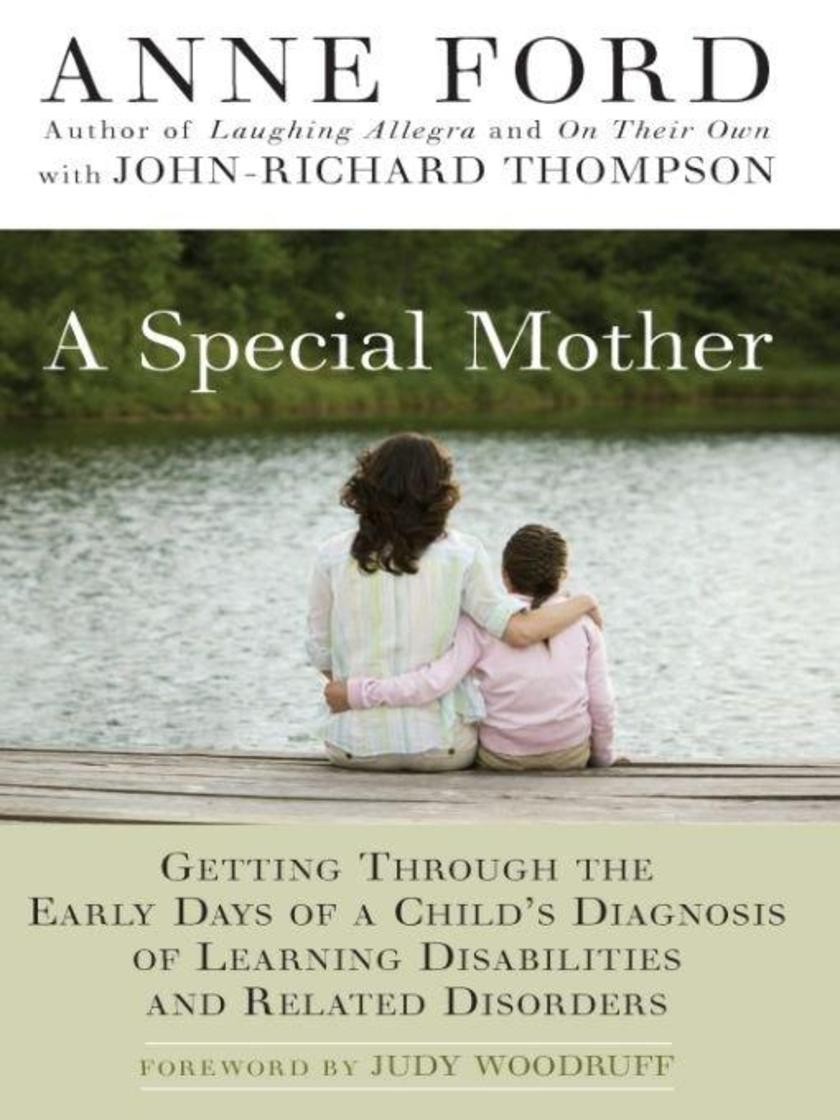
A Special Mother
¥95.39
All mothers experience worries and fears about their children, but none can compare with the early days when a mother feels something's not quite right. Anne Ford knows the feeling. She's had it herself, having raised a daughter with severe learning disabilities, and has gone on to share experiences with others during her many years as a volunteer with the National Center for Learning Disabilities.To bring comfort, support, and hard information to mothers-and fathers, too-in the early period surrounding the diagnosis, here is the book that Anne wishes she'd had years ago when she first received the news about her daughter and didn't know where to turn for the practical and emotional help she desperately needed.Filled with essential advice and the voices of other mothers whose children have LD and related disorders such as Asperger's and ADHD, A Special Mother lets parents know they are not alone and that they can help their child to thrive. This invaluable book addresses such matters as:Understanding Learning Disabilities and Related Disorders What Should You Do FirstInterpreting Evaluation Results Resolving Disputes Special Fathers: They Are Out ThereThe Social Side of LDAdvocacy vs. Obsession How Are You Doing?: Taking Care of Yourself
13 Things Mentally Strong People Don't Do
¥151.53
The Ultimate Guide to Mastering Your Mental StrengthEveryone knows that regular exercise and weight training lead to physical strength. But how do we strengthen ourselves mentally for the truly tough timesAnd what should we do when we face these challengesOr as psychotherapist Amy Morin asks, what should we avoid when we encounter adversityThrough her years counseling others and her own experiences navigating personal loss, Morin realized it is often the habits we cannot break that are holding us back from true success and happiness. Indulging in self-pity, agonizing over things beyond our control, obsessing over past events, resenting the achievements of others, or expecting immediate positive results holds us back. This list of things mentally strong people don't do resonated so much with readers that when it was picked up by Forbes.com it received ten million views.Now, for the first time, Morin expands upon the thirteen things from her viral post and shares her tried-and-true practices for increasing mental strength. Morin writes with searing honesty, incorporating anecdotes from her work as a college psychology instructor and psychotherapist as well as personal stories about how she bolstered her own mental strength when tragedy threatened to consume her.Increasing your mental strength can change your entire attitude. It takes practice and hard work, but with Morin's specific tips, exercises, and troubleshooting advice, it is possible to not only fortify your mental muscle but also drastically improve the quality of your life.


