


 购物车
购物车 个人中心
个人中心
Delphi Complete Works of Mary Wollstonecraft (Illustrated)
¥24.44
English writer, philosopher and pioneering advocate of women's rights, Mary Wollstonecraft wrote novels, treatises, a travel narrative, a history of the French Revolution and a children's book. In her landmark feminist text, A Vindication of the Rights of Woman (1792), Wollstonecraft argued that women are not naturally inferior to men, but appeared to be only because they lacked education. She called for men and women to be treated equally, paving the way for the emergence of the feminist movement at the turn of the twentieth century. This comprehensive eBook presents Wollstonecraft’s complete fictional works, with numerous illustrations, rare texts, informative introductions and the usual Delphi bonus material. (Version 1) * Beautifully illustrated with images relating to Wollstonecraft’s life and works* Concise introductions to the novels and other texts* All the novels, with individual contents tables* Images of how the books were first published, giving your eReader a taste of the original texts* Excellent formatting of the texts* Includes Wollstonecraft’s complete pamphlets* ‘A Vindication of the Rights of Man’ in presented with an appendix of Burke’s ‘Reflections on the Revolution in France’* Includes Wollstonecraft’s posthumously published Works* Features three biographies, including the author’s husband’s controversial memoir - discover Wollstonecraft’s personal and literary life* Scholarly ordering of texts into chronological order and literary genres Please visit www.delphiclassics.com to browse through our range of exciting titles CONTENTS: The FictionMARY: A FICTIONMARIA; OR, THE WRONGS OF WOMANTHE CAVE OF FANCY The Children’s BookORIGINAL STORIES FROM REAL LIFE The Non-FictionTHOUGHTS ON THE EDUCATION OF DAUGHTERSA VINDICATION OF THE RIGHTS OF MENA VINDICATION OF THE RIGHTS OF WOMANAN HISTORICAL AND MORAL VIEW OF THE FRENCH REVOLUTION; AND THE EFFECT IT HAS PRODUCED IN EUROPELETTERS WRITTEN DURING A SHORT RESIDENCE IN SWEDEN, NORWAY, AND DENMARKON POETRY, AND OUR RELISH FOR THE BEAUTIES OF NATURELETTER ON THE PRESENT CHARACTER OF THE FRENCH NATIONFRAGMENT OF LETTERS ON THE MANAGEMENT OF INFANTSLETTERS TO MR. JOHNSON, BOOKSELLER, IN ST. PAUL’S CHURCH-YARDLESSONSHINTSLETTERS The BiographiesMEMOIRS OF THE AUTHOR OF A VINDICATION OF THE RIGHTS OF WOMAN by William GodwinMARY WOLLSTONECRAFT by Elizabeth Robins PennellA BRIEF SKETCH OF THE LIFE OF MARY WOLLSTONECRAFT Please visit www.delphiclassics.com to browse through our range of exciting titles or to purchase this eBook as a Parts Edition of individual eBooks
On Sophistical Refutations
¥40.79
Let us now discuss sophistic refutations, i.e. what appear to be refutations but are really fallacies instead. Some reasonings are genuine, while others seem to be so but are not, is evident. This happens with arguments, as also elsewhere, through a certain likeness between the genuine and the sham.
On the Parts of Animals
¥40.79
Every systematic science, the humblest and the noblest alike, seems to admit of two distinct kinds of proficiency; one of which may be properly called scientific knowledge of the subject, while the other is a kind of educational acquaintance with it. For an educated man should be able to form a fair off-hand judgement as to the goodness or badness of the method used by a professor in his exposition. To be educated is in fact to be able to do this; and even the man of universal education we deem to be such in virtue of his having this ability.
The Enchiridion
¥40.79
The Enchiridion or Manual of Epictetus is a guide on Stoic philosophy and ethical advice compiled by Arrian, a 2nd-century disciple of the Greek philosopher Epictetus. The book has played a disproportionately large role in the rise of modern attitudes and modern philosophy. Montaigne had a copy of the Enchiridion among his books. Frederick the Great carried the book with him on all campaigns. It was a source of inspiration and encouragement to Anthony, Earl of Shaftesbury, in the serious illness which ended only in his death; many pages of his diaries contain passages copied from the Enchiridion. It has been studied and widely quoted by Scottish philosophers like Francis Hutcheson, Adam Smith, and Adam Ferguson who valued Stoic moral philosophy for its reconciliation of social dependency and personal independence.
The Discourses
¥40.79
The Discourses are a series of extracts of the teachings of the Stoic philosopher Epictetus written down by Arrian c. 108 AD. It is a guide for the advanced student of Stoicism to show him the best roads toward the goal of becoming a true philosopher.

Human Condition
¥147.15
A work of striking originality bursting with unexpected insights, The Human Condition is in many respects more relevant now than when it first appeared in 1958. In her study of the state of modern humanity, Hannah Arendt considers humankind from the perspective of the actions of which it is capable. The problems Arendt identified then-diminishing human agency and political freedom, the paradox that as human powers increase through technological and humanistic inquiry, we are less equipped to control the consequences of our actions-continue to confront us today. This new edition, published to coincide with the fortieth anniversary of its original publication, contains an improved and expanded index and a new introduction by noted Arendt scholar Margaret Canovan which incisively analyzes the book's argument and examines its present relevance. A classic in political and social theory, The Human Condition is a work that has proved both timeless and perpetually timely.Hannah Arendt (1906-1975) was one of the leading social theorists in the United States. Her Lectures on Kant's Political Philosophy and Love and Saint Augustine are also published by the University of Chicago Press.
Pure Intelligence
¥288.41
William Hyde Wollaston made an astonishing number of discoveries in an astonishingly varied number of fields: platinum metallurgy, the existence of ultraviolet radiation, the chemical elements palladium and rhodium, the amino acid cystine, and the physiology of binocular vision, among others. Along with his colleagues Humphry Davy and Thomas Young, he was widely recognized during his life as one of Britain's leading scientific practitioners in the first part of the nineteenth century, and thedeaths of all three within a six-month span, between 1828 and 1829, were seen by many as the end of a glorious period of British scientific supremacy. Unlike Davy and Young, however, Wollaston was not the subject of a contemporary biography, and his many impressive achievements have fallen into obscurity as a result.Pure Intelligence is the first book-length study of Wollaston, his science, and the environment in which he thrived. Drawing on previously-unstudied laboratory records as well as historical reconstructions of chemical experiments and discoveries, and written in a highly accessible style, Pure Intelligence will help to reinstate Wollaston in the history of science, and the pantheon of its great innovators.
Recombinant University
¥329.62
The advent of recombinant DNA technology in the 1970s was a key moment in the history of both biotechnology and the commercialization of academic research. Doogab Yi's The Recombinant University draws us deeply into the academic community in the San Francisco Bay Area, where the technology was developed and adopted as the first major commercial technology for genetic engineering. In doing so, it reveals how research patronage, market forces, and legal developments from the late 1960s through the early 1980s influenced the evolution of the technology and reshaped the moral and scientific life of biomedical researchers.Bay Area scientists, university administrators, and government officials were fascinated by and increasingly engaged in the economic and political opportunities associated with the privatization of academic research. Yi uncovers how the attempts made by Stanford scientists and administrators to demonstrate the relevance of academic research were increasingly mediated by capitalistic conceptions of knowledge, medical innovation, and the public interest. Their interventions resulted in legal shifts and moral realignments that encouraged the privatization of academic research for public benefit. The Recombinant University brings to life the hybrid origin story ofbiotechnology and the ways the academic culture of science has changed in tandem with the early commercialization of recombinant DNA technology.
Nature of Selection
¥288.41
The Nature of Selection is a straightforward, self-contained introduction to philosophical and biological problems in evolutionary theory. It presents a powerful analysis of the evolutionary concepts of natural selection, fitness, and adaptation and clarifies controversial issues concerning altruism, group selection, and the idea that organisms are survival machines built for the good of the genes that inhabit them."e;Sober's is the answering philosophical voice, the voice of a first-rate philosopher and a knowledgeable student of contemporary evolutionary theory. His book merits broad attention among both communities. It should also inspire others to continue the conversation."e;-Philip Kitcher, Nature"e;Elliott Sober has made extraordinarily important contributions to our understanding of biological problems in evolutionary biology and causality. The Nature of Selection is a major contribution to understanding epistemological problems in evolutionary theory. I predict that it will have a long lasting place in the literature."e;-Richard C. Lewontin
Natural Questions
¥229.55
Lucius Annaeus Seneca (4 BCE-65 CE) was a Roman Stoic philosopher, dramatist, statesman, and adviser to the emperor Nero, all during the Silver Age of Latin literature. The Complete Works of Lucius Annaeus Seneca is a fresh and compelling series of new English-language translations of his works in eight accessible volumes. Edited by world-renowned classicists Elizabeth Asmis, Shadi Bartsch, and Martha C. Nussbaum, this engaging collection restores Seneca-whose works have been highly praised by modern authors from Desiderius Erasmus to Ralph Waldo Emerson-to his rightful place among the classical writers most widely studied in the humanities.Written near the end of Seneca's life, Natural Questions is a work in which Seneca expounds and comments on the natural sciences of his day-rivers and earthquakes, wind and snow, meteors and comets-offering us a valuable look at the ancient scientific mind at work. The modern reader will find fascinating insights into ancient philosophical and scientific approaches to the physical world and also vivid evocations of the grandeur, beauty, and terror of nature.
Heidegger, Strauss, and the Premises of Philosophy
¥229.55
In this groundbreaking work, Richard L. Velkley examines the complex philosophical relationship between Martin Heidegger and Leo Strauss. Velkley argues that both thinkers provide searching analyses of the philosophical tradition's origins in radical questioning. For Heidegger and Strauss, the recovery of the original premises of philosophy cannot be separated from rethinking the very possibility of genuine philosophizing.?Common views of the influence of Heidegger's thought on Strauss suggest that, after being inspired early on by Heidegger's dismantling of the philosophical tradition, Strauss took a wholly separate path, spurning modernity and pursuing instead a renewal of Socratic political philosophy. Velkley rejects this reading and maintains that Strauss's engagement with the challenges posed by Heidegger-as well as by modern philosophy in general-formed a crucial and enduring framework for his lifelong philosophical project. More than an intellectual biography or a mere charting of influence, Heidegger, Strauss, and the Premises of Philosophy is a profound consideration of these two philosophers' reflections on the roots, meaning, and fate of Western rationalism.
Studying Human Behavior
¥241.33
In Studying Human Behavior, Helen E. Longino enters into the complexities of human behavioral research, a domain still dominated by the age-old debate of "e;nature versus nurture."e; Rather than supporting one side or another or attempting to replace that dichotomy with a different framework for understanding behavior, Longino focuses on how scientists study it, specifically sexual behavior and aggression, and asks what can be known about human behavior through empirical investigation.?She dissects five approaches to the study of behavior-quantitative behavioral genetics, molecular behavior genetics, developmental psychology, neurophysiology and anatomy, and social/environmental methods-highlighting the underlying assumptions of these disciplines, as well as the different questions and mechanisms each addresses. She also analyzes efforts to integrate different approaches. Longino concludes that there is no single "e;correct"e; approach but that each contributes to our overall understanding of human behavior. In addition, Longino reflects on the reception and transmission of this behavioral research in scientific, social, clinical, and political spheres. A highly significant and innovative study that bears on crucial scientific questions, Studying Human Behavior will be essential reading not only for scientists and philosophers but also for science journalists and anyone interested in the engrossing challenges of understanding human behavior.
Distinguishing Disability
¥200.12
Students in special education programs can have widely divergent experiences. For some, special education amounts to a dumping ground where schools unload their problem students, while for others, it provides access to services and accommodations that drastically improve chances of succeeding in school and beyond. Distinguishing Disability argues that this inequity in treatment is directly linked to the disparity in resources possessed by the students' parents.Since the mid-1970s, federal law has empowered parents of public school children to intervene in virtually every aspect of the decision making involved in special education. However, Colin Ong-Dean reveals that this power is generally available only to those parents with the money, educational background, and confidence needed to make effective claims about their children's disabilities and related needs. Ong-Dean documents this class divide by examining a wealth of evidence, including historic rates of learning disability diagnosis, court decisions, and advice literature for parents of disabled children. In an era of expanding special education enrollment, Distinguishing Disability is a timely analysis of the way this expansion has created new kinds of inequality.
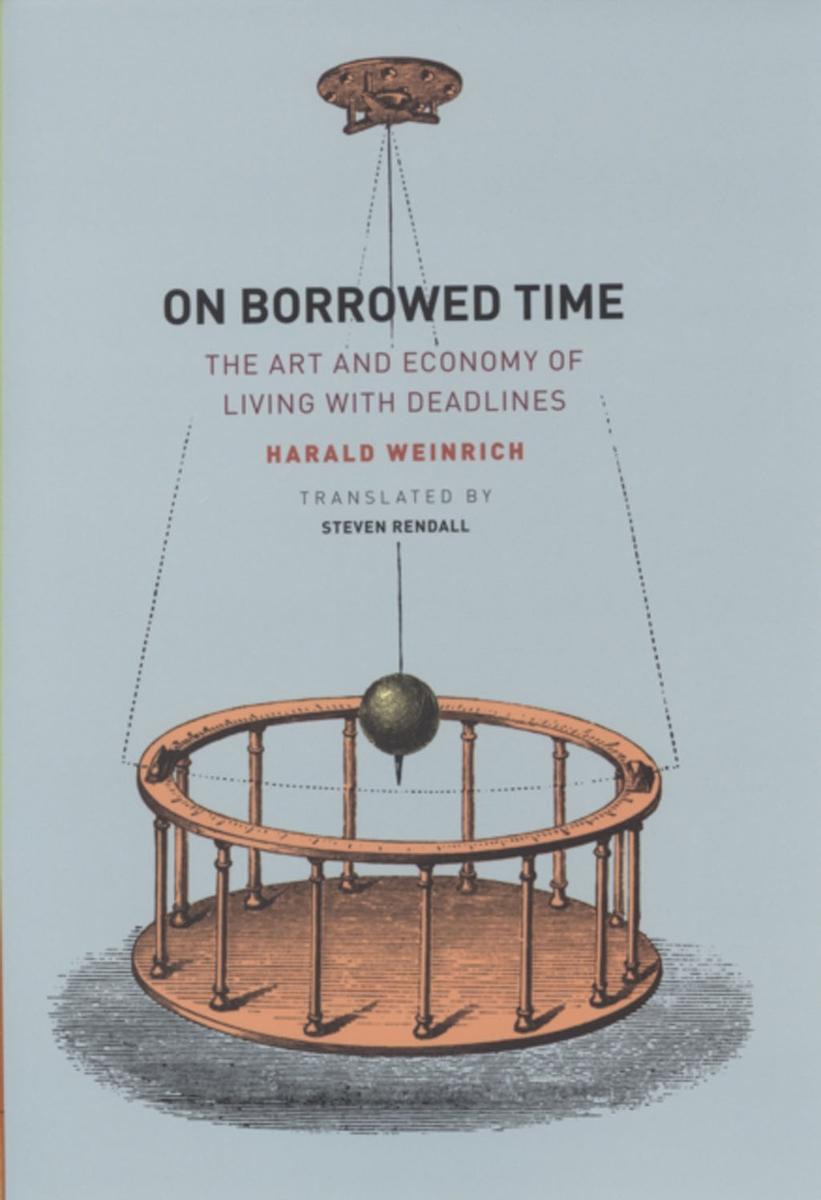
On Borrowed Time
¥311.96
Life is short. This indisputable fact of existence has driven human ingenuity since antiquity, whether through efforts to lengthen our lives with medicine or shorten the amount of time we spend on work using technology. Alongside this struggle to manage the pressure of life's ultimate deadline, human perception of the passage and effects of time has also changed. In On Borrowed Time, Harald Weinrich examines an extraordinary range of materials-from Hippocrates to Run Lola Run-to put forth a new conception of time and its limits that, unlike older models, is firmly grounded in human experience. Weinrich's analysis of the roots of the word time connects it to the temples of the skull, demonstrating that humans first experienced time in the beating of their pulses. Tracing this corporeal perception of time across literary, religious, and philosophical works, Weinrich concludes that time functions as a kind of sixth sense-the crucial sense that enables the other five. Written with Weinrich's customary narrative elegance, On Borrowed Time is an absorbing-and, fittingly, succinct-meditation on life's inexorable brevity.
Paleobiological Revolution
¥329.62
establishment of the modern synthesis in the 1940s and the pioneering work of George Gaylord Simpson, Ernst Mayr, and Theodosius Dobzhansky, as well as the subsequent efforts of Stephen Jay Gould, David Raup, and James Valentine, paleontology became embedded in biology and emerged as paleobiology, a first-rate discipline central to evolutionary studies. Pairing contributions from some of the leading actors of the transformation with overviews from historians and philosophers of science, the essays here capture the excitement of the seismic changes in the discipline. In so doing, David Sepkoski and Michael Ruse harness the energy of the past to call for further study of the conceptual development of modern paleobiology.

Reading Darwin in Arabic, 1860-1950
¥370.82
In Reading Darwin in Arabic, Marwa Elshakry questions current ideas about Islam, science, and secularism by exploring the ways in which Darwin was read in Arabic from the late 1860s to the mid-twentieth century. Borrowing from translation and reading studies and weaving together the history of science with intellectual history, she explores Darwin's global appeal from the perspective of several generations of Arabic readers and shows how Darwin's writings helped alter the social and epistemological landscape of the Arab learned classes.?Providing a close textual, political, and institutional analysis of the tremendous interest in Darwin's ideas and other works on evolution, Elshakry shows how, in an age of massive regional and international political upheaval, these readings were suffused with the anxieties of empire and civilizational decline. The politics of evolution infiltrated Arabic discussions of pedagogy, progress, and the very sense of history. They also led to a literary and conceptual transformation of notions of science and religion themselves. Darwin thus became a vehicle for discussing *ural exegesis, the conditions of belief, and cosmological views more broadly. The book also acquaints readers with Muslim and Christian intellectuals, bureaucrats, and theologians, and concludes by exploring Darwin's waning influence on public and intellectual life in the Arab world after World War I.?Reading Darwin in Arabic is an engaging and powerfully argued reconceptualization of the intellectual and political history of the Middle East.
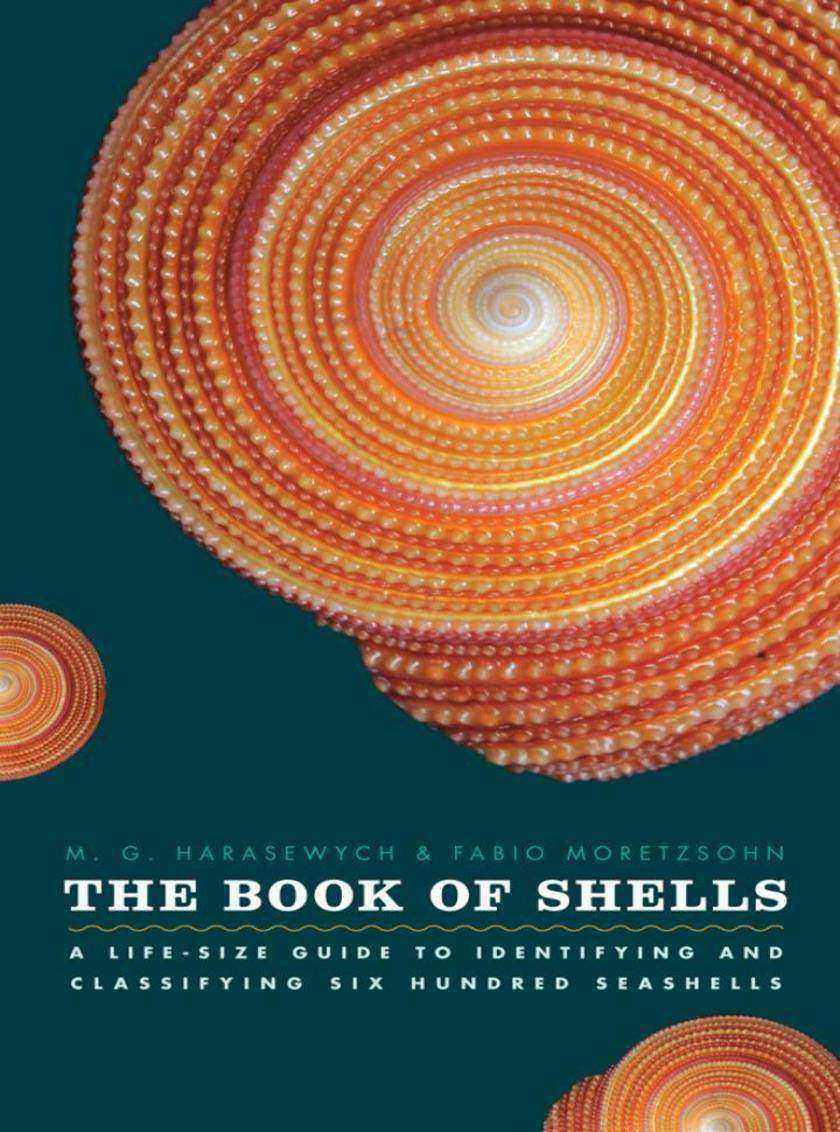
Book of Shells
¥194.24
Who among us hasn't marveled at the diversity and beauty of shellsOr picked one up, held it to our ear, and then gazed in wonder at its shape and hueMany a lifelong shell collector has cut teeth (and toes) on the beaches of the Jersey Shore, the Outer Banks, or the coasts of Sanibel Island. Some have even dived to the depths of the ocean. But most of us are not familiar with the biological origin of shells, their role in explaining evolutionary history, and the incredible variety of forms in which they come.Shells are the external skeletons of mollusks, an ancient and diverse phylum of invertebrates that are in the earliest fossil record of multicellular life over 500 million years ago. There are over 100,000 kinds of recorded mollusks, and some estimate that there are over amillion more that have yet to be discovered. Some breathe air, others live in fresh water, but most live in the ocean. They range in size from a grain of sand to a beach ball and in weight from a few grams to several hundred pounds. And in this lavishly illustrated volume, they finally get their full due.The Book of Shells offers a visually stunning and scientifically engaging guide to six hundred of the most intriguing mollusk shells, each chosen to convey the range of shapes and sizes that occur across a range of species. Each shell is reproduced here at its actual size, in full color, and is accompanied by an explanation of the shell's range, distribution, abundance, habitat, and operculum-the piece that protects the mollusk when it's in the shell. Brief scientific and historical accounts of each shell and related species include fun-filled facts and anecdotes that broaden its portrait.The Matchless Cone, for instance, or Conus cedonulli, was one of the rarest shells collected during the eighteenth century. So much so, in fact, that a specimen in 1796 was sold for more than six times as much as a painting by Vermeer at the same auction. But since the advent of scuba diving, this shell has become far more accessible to collectors-though not without certain risks. Some species of Conus produce venom that has caused more than thirty known human deaths.The Zebra Nerite, the Heart Cockle, the Indian Babylon, the Junonia, the Atlantic Thorny Oyster-shells from habitats spanning the poles and the tropics, from the highest mountains to the ocean's deepest recesses, are all on display in this definitive work.
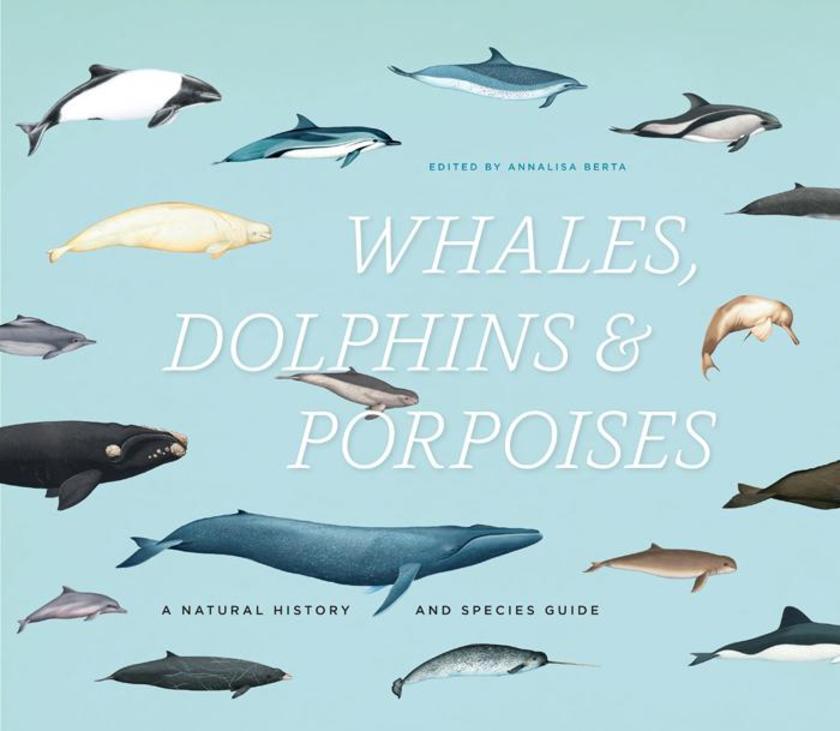
Whales, Dolphins, and Porpoises
¥294.30
The eighty-nine cetacean species that swim our seas and rivers are as diverse as they are intelligent and elusive, from the hundred-foot-long, two-hundred-ton blue whale to the lesser-known tucuxi, ginkgo-toothed beaked whale, and diminutive, critically endangered vaquita. The huge distances these highly migratory creatures cover and the depths they dive mean we catch only the merest glimpses of their lives as they break the surface of the water. But thanks to the marriage of science and technology, we are now beginning to understand their anatomy, complex social structures, extraordinary communication abilities, and behavioral patterns. In this beautifully illustrated guide, renowned marine mammalogist Annalisa Berta draws on the contributions of a pod of fellow whale biologists to present the most comprehensive, authoritative overview ever published of these remarkable aquatic mammals.Opening with an accessible rundown of cetacean biology-including the most recent science on feeding, mating, and communication-Whales, Dolphins, and Porpoises then presents species-specific natural history on a range of topics, from anatomy and diet to distribution and conservation status. Each entry also includes original drawings of the species and its key identifiers, such as fin shape and color, tooth shape, and characteristic markings as they would appear both above and below water-a feature unique to this book.Figures of myth and-as the debate over hunting rages on-figures of conflict since long before the days of Moby-Dick, whales, dolphins, and porpoises are also ecologically important and, in many cases, threatened. Written for general enthusiasts, emergent cetacean fans, and biologists alike, this stunning, urgently needed book will serve as the definitive guide for years to come.

Undertones of War
¥117.72
"e;I took my road with no little pride of fear; one morning I feared very sharply, as I saw what looked like a rising shroud over a wooden cross in the clustering mist. Horror! But on a closer study I realized that the apparition was only a flannel gas helmet. . . . What an age since 1914!"e;In Undertones of War, one of the finest autobiographies to come out of World War I, the acclaimed poet Edmund Blunden records his devastating experiences in combat. After enlisting at the age of twenty, he took part in the disastrous battles at the Somme, Ypres, and Passchendaele, describing them as "e;murder, not only to the troops but to their singing faiths and hopes."e;All the horrors of trench warfare, all the absurdity and feeble attempts to make sense of the fighting, all the strangeness of observing war as a writer-of being simultaneously soldier and poet-pervade Blunden's memoir. In steely-eyed prose as richly allusive as any poetry, he tells of the endurance and despair found among the men of his battalion, including the harrowing acts of bravery that won him the Military Cross.Now back in print for American readers, the volume includes a selection of Blunden's war poems that unflinchingly juxtapose death in the trenches with the beauty of Flanders's fields. Undertones of War deserves a place on anyone's bookshelf between Siegfried Sassoon's poetry and Robert Graves's Goodbye to All That.

Bearing Witness
¥261.73
The first edition of Bearing Witness brought together for the first time 176 slave narratives from the state of Arkansas. Now, this new edition adds ten previously undiscovered accounts. No one knew the truths of slavery better than the slaves themselves, but no one consulted them until the 1930s. Then, recognizing that this generation of unique witnesses would soon be lost to history, the Works Progress Administration's Federal Writers' Project acted to interview as many former slaves as possible. In a continuation of the project's interest in the life histories of ordinary people, writers interviewed over two thousand former slaves, more than a third of them in Arkansas. These oral histories were first published in the 1970s in a thirty-nine-volume series organized by state, and they transformed America's understanding of slavery. They have offered crucial evidence on a variety of other topics as well: the Civil War, Reconstruction, agricultural practices, everyday life, and oral history itself. But some former Arkansas slaves were interviewed in Texas, Oklahoma, and other states, so their narratives were published in those other collections. And more than half of the testimonies in the Arkansas volume were interviews with people who had moved to Arkansas after freedom. Folklorist George Lankford combed all of the state collections for the testimonies properly belonging to Arkansas and deleted from this state's collection the testimony of later migrants
A Natural History of Time
¥147.15
The quest to pinpoint the age of the Earth is nearly as old as humanity itself. For most of history, people trusted mythology or religion to provide the answer, even though nature abounds with clues to the past of the Earth and the stars. In A Natural History of Time, geophysicist Pascal Richet tells the fascinating story of how scientists and philosophers examined those clues and from them built a chronological scale that has made it possible to reconstruct the history of nature itself.Richet begins his story with mythological traditions, which were heavily influenced by the seasons and almost uniformly viewed time cyclically. The linear history promulgated by Judaism, with its story of creation, was an exception, and it was that tradition that drove early Christian attempts to date the Earth. For instance, in 169 CE, the bishop of Antioch, for instance declared that the world had been in existence for quote;5,698 years and the odd months and days quote;Until the mid-eighteenth century, such natural timescales derived from biblical chronologies prevailed, but, Richet demonstrates, with the Scientific Revolution geological and astronomical evidence for much longer timescales began to accumulate. Fossils and the developing science of geology provided compelling evidence for periods of millions and millions of years-a scale that even scientists had difficulty grasping. By the end of the twentieth century, new tools such as radiometric dating had demonstrated that the solar system is four and a half billion years old, and the universe itself about twice that, though controversial questions remain.The quest for time is a story of ingenuity and determination, and like a geologist, Pascal Richet carefully peels back the strata of that history, giving us a chance to marvel at each layer and truly appreciate how far our knowledge-and our planet-have come.


