


 购物车
购物车 个人中心
个人中心
Building Serverless Architectures
¥80.65
Build scalable, reliable, and cost-effective applications with a serverless architecture About This Book ? Design a real-world serverless application from scratch ? Learn about AWS Lambda function and how to use Lambda functions to glue other AWS Services ? Use the Java programming language and well-known design patterns. Although Java is used for the examples in this book, the concept is applicable across all languages ? Learn to migrate your JAX-RS application to AWS Lambda and API Gateway Who This Book Is For This book is for developers and software architects who are interested in designing on the back end. Since the book uses Java to teach concepts, knowledge of Java is required. What You Will Learn ? Learn to form microservices from bigger Softwares ? Orchestrate and scale microservices ? Design and set up the data flow between cloud services and custom business logic ? Get to grips with cloud provider’s APIs, limitations, and known issues ? Migrate existing Java applications to a serverless architecture ? Acquire deployment strategies ? Build a highly available and scalable data persistence layer ? Unravel cost optimization techniques In Detail Over the past years, all kind of companies from start-ups to giant enterprises started their move to public cloud providers in order to save their costs and reduce the operation effort needed to keep their shops open. Now it is even possible to craft a complex software system consisting of many independent micro-functions that will run only when they are needed without needing to maintain individual servers. The focus of this book is to design serverless architectures, and weigh the advantages and disadvantages of this approach, along with decision factors to consider. You will learn how to design a serverless application, get to know that key points of services that serverless applications are based on, and known issues and solutions. The book addresses key challenges such as how to slice out the core functionality of the software to be distributed in different cloud services and cloud functions. It covers basic and advanced usage of these services, testing and securing the serverless software, automating deployment, and more. By the end of the book, you will be equipped with knowledge of new tools and techniques to keep up with this evolution in the IT industry. Style and approach The book takes a pragmatic approach, showing you all the examples you need to build efficient serverless applications.

Performance Testing with JMeter 3 - Third Edition
¥63.21
A practical guide to help you undertand the ability of Apache jMeter to load and performance test various server types in a more efficient way. About This Book ? Use jMeter to create and run tests to improve the performance of your webpages and applications ? Learn to build a test plan for your websites and analyze the results ? Unleash the power of various features and changes introduced in Apache jMeter 3.0 Who This Book Is For This book is for software professionals who want to understand and improve the performance of their applications with Apache jMeter. What You Will Learn ? See why performance testing is necessary and learn how to set up JMeter ? Record and test with JMeter ? Handle various form inputs in JMeter and parse results during testing ? Manage user sessions in web applications in the context of a JMeter test ? Monitor JMeter results in real time ? Perform distributed testing with JMeter ? Get acquainted with helpful tips and best practices for working with JMeter In Detail JMeter is a Java application designed to load and test performance for web application. JMeter extends to improve the functioning of various other static and dynamic resources. This book is a great starting point to learn about JMeter. It covers the new features introduced with JMeter 3 and enables you to dive deep into the new techniques needed for measuring your website performance. The book starts with the basics of performance testing and guides you through recording your first test scenario, before diving deeper into JMeter. You will also learn how to configure JMeter and browsers to help record test plans. Moving on, you will learn how to capture form submission in JMeter, dive into managing sessions with JMeter and see how to leverage some of the components provided by JMeter to handle web application HTTP sessions. You will also learn how JMeter can help monitor tests in real-time. Further, you will go in depth into distributed testing and see how to leverage the capabilities of JMeter to accomplish this. You will get acquainted with some tips and best practices with regard to performance testing. By the end of the book, you will have learned how to take full advantage of the real power behind Apache JMeter. Style and approach The book is a practical guide starting with introducing the readers to the importance of automated testing. It will then be a beginner’s journey from getting introduced to Apache jMeter to an in-detail discussion of more advanced features and possibilities with it.
Statistics for Machine Learning
¥90.46
Build Machine Learning models with a sound statistical understanding. About This Book ? Learn about the statistics behind powerful predictive models with p-value, ANOVA, and F- statistics. ? Implement statistical computations programmatically for supervised and unsupervised learning through K-means clustering. ? Master the statistical aspect of Machine Learning with the help of this example-rich guide to R and Python. Who This Book Is For This book is intended for developers with little to no background in statistics, who want to implement Machine Learning in their systems. Some programming knowledge in R or Python will be useful. What You Will Learn ? Understand the Statistical and Machine Learning fundamentals necessary to build models ? Understand the major differences and parallels between the statistical way and the Machine Learning way to solve problems ? Learn how to prepare data and feed models by using the appropriate Machine Learning algorithms from the more-than-adequate R and Python packages ? Analyze the results and tune the model appropriately to your own predictive goals ? Understand the concepts of required statistics for Machine Learning ? Introduce yourself to necessary fundamentals required for building supervised & unsupervised deep learning models ? Learn reinforcement learning and its application in the field of artificial intelligence domain In Detail Complex statistics in Machine Learning worry a lot of developers. Knowing statistics helps you build strong Machine Learning models that are optimized for a given problem statement. This book will teach you all it takes to perform complex statistical computations required for Machine Learning. You will gain information on statistics behind supervised learning, unsupervised learning, reinforcement learning, and more. Understand the real-world examples that discuss the statistical side of Machine Learning and familiarize yourself with it. You will also design programs for performing tasks such as model, parameter fitting, regression, classification, density collection, and more. By the end of the book, you will have mastered the required statistics for Machine Learning and will be able to apply your new skills to any sort of industry problem. Style and approach This practical, step-by-step guide will give you an understanding of the Statistical and Machine Learning fundamentals you'll need to build models.
Mastering Machine Learning with scikit-learn - Second Edition
¥80.65
Use scikit-learn to apply machine learning to real-world problems About This Book ? Master popular machine learning models including k-nearest neighbors, random forests, logistic regression, k-means, naive Bayes, and artificial neural networks ? Learn how to build and evaluate performance of efficient models using scikit-learn ? Practical guide to master your basics and learn from real life applications of machine learning Who This Book Is For This book is intended for software engineers who want to understand how common machine learning algorithms work and develop an intuition for how to use them, and for data scientists who want to learn about the scikit-learn API. Familiarity with machine learning fundamentals and Python are helpful, but not required. What You Will Learn ? Review fundamental concepts such as bias and variance ? Extract features from categorical variables, text, and images ? Predict the values of continuous variables using linear regression and K Nearest Neighbors ? Classify documents and images using logistic regression and support vector machines ? Create ensembles of estimators using bagging and boosting techniques ? Discover hidden structures in data using K-Means clustering ? Evaluate the performance of machine learning systems in common tasks In Detail Machine learning is the buzzword bringing computer science and statistics together to build smart and efficient models. Using powerful algorithms and techniques offered by machine learning you can automate any analytical model. This book examines a variety of machine learning models including popular machine learning algorithms such as k-nearest neighbors, logistic regression, naive Bayes, k-means, decision trees, and artificial neural networks. It discusses data preprocessing, hyperparameter optimization, and ensemble methods. You will build systems that classify documents, recognize images, detect ads, and more. You will learn to use scikit-learn’s API to extract features from categorical variables, text and images; evaluate model performance, and develop an intuition for how to improve your model’s performance. By the end of this book, you will master all required concepts of scikit-learn to build efficient models at work to carry out advanced tasks with the practical approach. Style and approach This book is motivated by the belief that you do not understand something until you can describe it simply. Work through toy problems to develop your understanding of the learning algorithms and models, then apply your learnings to real-life problems.
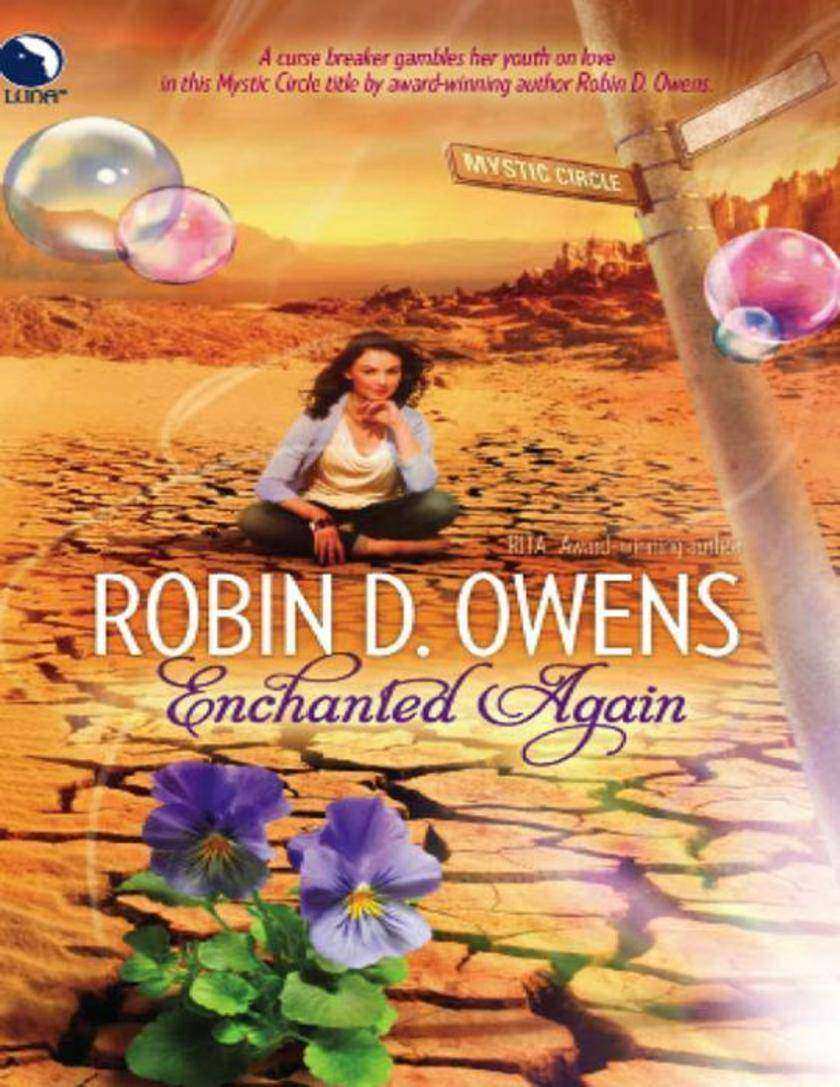
Enchanted Again (Luna) (Mystic Circle, Book 2)
¥54.74
Magic has a price—and for Amber Sarga it’s days and years off her life. Each curse she breaks ages her—and the bigger the curse the bigger the cost, and not only to her. That’s why she hides away and has vowed not to get involved again… That’s why she hates looking in a mirror… And then an ill-fated stranger arrives. Rafe Davail doesn’t believe in curses—not even knowing that in his family every first son dies young. Amber offers guidance but she won’t break the curse. Still, as she grows closer to Rafe and discovers the secrets of their pasts, she wonders if for this time, this man, she should risk it all… .

Island Promises: Hawaiian Holiday / Hawaiian Reunion / Hawaiian Retreat (Mills &
¥45.03
Destination wedding guest list: The Ex-Wife Megan McNeil is genuinely happy to escort her little girls to their father’s wedding in Kauai, Hawaii—even though she feels like a third wheel. One gorgeous groomsman definitely disagrees. But are they both carrying too much baggage to begin a new romance? The Best Man Devlin Marshall won't let anything spoil his buddy's big day—not even his own rocky marriage. Secrets and mistrust have divided him from his Amy, but the love in the air seems to be catching…. The Sister Family comes first. Deep down, Gabi Foster knows it, but this holiday is hurting her career. Can a sweet, sexy surfing instructor convince her that love is worth more than a business deal?

True Love Ranch (Mills & Boon Vintage Cherish)
¥31.10
AND MOMMY MAKES THREE In her seventeenth summer Darcy Beckett discovered true love. So she gave herself, body and soul, to hell-raising ranch hand Joe Tyler. Darcy saw a future of babies and bliss. But her grandfather saw red–and sent Darcy packing. Away from the ranch–and into a monied but loveless marriage. Now, ten years later, her grandfather's will has brought Darcy back to the ranch. Back to Joe. And to his adorable six-year-old son, who wanted a mommy for Christmas. Darcy secretly pined for the rakish cowboy and his enchanting little sidekick. But she and Joe had grown worlds apart. And only a miracle–or the True Love Ranch–could give their hungry hearts a home….

Truly Daddy (Mills & Boon Vintage Cherish)
¥31.10
TRULY A FAMILY? What was it that made rugged mountain man Garret Boyd so irresistible to Toni Carlton? Could it be the tenderness she'd glimpsed in his blue eyes whenever he swept his orphaned niece into his strong, sheltering arms? Or was it the heat Toni saw simmering in his gaze from the moment she'd come to his cozy home? In no time Toni had put a smile in Garret's heart–and a burning need in his wounded soul. And suddenly the brooding loner knew the only way to give little Angie a family was to believe that a strong, silent daddy and his vivacious new nanny were truly meant to be….

Undercover Fiancee (Mills & Boon Vintage Cherish)
¥31.10
Hired: one wife! Annabelle Forrester has only ever loved one man–Rand Dumbarton. The gorgeous tycoon had swept her off her feet and proposed marriage. But their whirlwind courtship had ended bitterly. Annabelle had been unable to forgive him for trying to make her choose between him and her job. The pint-size private eye is, however, shocked when her latest client turns out to be none other than Rand Dumbarton. It seems to Annabelle a cruel twist of fate that the man who couldn't accept her occupation now needs her help. But does Rand want her for business–or as his bride? Love Undercover Their mission was marriage!

Undercover Husband (Mills & Boon Vintage Cherish)
¥31.10
BACHELOR TERRITORY She's his client Roman Lufka is a rough, tough private investigator. He's been hired to protect Brittany Langford. The easiest way to be by her side, twenty-four hours a day, is to go undercover–as Brittany's husband. …and his wife! But if protecting his "wife" is easy, living with her isn't. They're perfect strangers–and for Roman, Brit is all too perfect. It seems this confirmed bachelor is facing his toughest assignment yet–falling in love! "Rebecca Winters writes from the heart…" –Debbi Macomber There are two sides to every story…and now it's his turn!

Weddings Do Come True (Mills & Boon Vintage Cherish)
¥31.10
THE RIGHT HUSBAND… In two weeks, Lacey McCade was supposed to walk down the aisle and say "I do" to the man of every woman's dreams…except her own. So when she heard about a short-term position at Black's Bluff Ranch, Lacey knew the live-in-job would give her time to think. But think was all she could do…about Ethan Black, her very sexy employer…. From the tender way he cared for his little charges to the tough way he tended to the land, Ethan made Lacey's heart stop, swell and swoon. But the proud, half Native-American rancher had closed his own heart to loving again. Still, something in Ethan's searing, soul-searching gaze dared Lacey to hope he'd make her wedding dreams come true….

Wife On His Doorstep (Mills & Boon Vintage Cherish)
¥31.10
JUNE BRIDES HIS MEANT-TO-BE BRIDE When doe-eyed, all gowned-up-and-no-groom-in-sight Megan Morison sought refuge in his arms, bachelor John Vermont offered her a roof over her head, a job to pay the bills and his rugged shoulder to lean on…. HER DESTINED GROOM Megan had had her fill of people trying to run her life, but with strong, silent, steely-eyed John Vermont, she felt truly safe, accepted…and dare she believed loved? But John claimed that marriage wasn't for him, though his longing looks and heated kisses suggested otherwise. And now Megan wished this gorgeous albeit gruff ship captain would take the gift destiny offered and make her his lawfully wedded wife…. Celebrate a month of joyful marriages with Silhouette Romance!

Wyatt's Most Wanted Wife (Mills & Boon Vintage Cherish)
¥31.10
Bachelor Gulch The Bachelor: Wyatt McCully, dedicated–and extremely eligible–town sheriff. Though husband-hungry women were flocking to Jasper Gulch, there was only one single gal Wyatt wanted. The Bride: Lisa Markman, a woman with a yearning for marriage, and with a secret. She couldn't dare consider lawman Wyatt as a potential groom. The sexy sheriff could tell when a woman was interested, and Lisa had all the signs of succumbing to his charming ways. So why did she refuse to take his heartfelt proposals seriously? Wyatt decided he had to uncover everything about the mysterious woman he intended to claim as his wife, and set out to make the pursuit his pleasure…and hers! Bachelor Gulch. This little town wanted women–but are these bachelors ready for marriage?

Selfish Beings (Selfish Beings, Book 1)
¥42.48
There's no place like home… Unless, like Kaarl, you are a demon and your home is Hell…literally! While the rest of Hell enjoys cruel games, Kaarl is looking for a new challenge. So he makes a deal with the devil himself: time in the Mortal Realm in return for human souls… The Mortal Realm offers a taste of freedom he could never experience in Hell and Kaarl jumps at the chance to fulfil his dream. But gathering human souls comes with a cost and as more and more souls lose their way, Kaarl realises that he is creating Hell on his beloved Earth. Now to save the Mortal Realm, Kaarl's going to have to switch sides… Praise for JL Morris 'This was a great read. Very entertaining.' - Koeur's Book Reviews 'A great story from a young author who has, I believe, a strong future in the literary world if he can produce more books like this.' - Fiona's Book Reviews

Candlelight Christmas (The Lakeshore Chronicles, Book 10)
¥50.62
A single father who yearns to be a family man, Logan O'Donnell is determined to create the perfect Christmas for his son, Charlie. The entire O’Donnell clan arrives to spend the holidays in Avalon, a postcard-pretty town on the shores of Willow Lake, a place for the family to reconnect and rediscover the special gifts of the season. One of the guests is a newcomer to Willow Lake–Darcy Fitzgerald. Sharp-witted, independent and intent on guarding her heart, she’s the last person Logan can see himself falling for. And Darcy is convinced that a relationship is the last thing she needs this Christmas. Yet between the snowy silence of the winter woods, and toasty moments by a crackling fire, their two lonely hearts collide. The magic of the season brings them each a gift neither ever expected–a love to last a lifetime.
Pentaho 8 Reporting for Java Developers
¥90.46
Create reports and solve common report problems with minimal fuss. About This Book ? Use this unique book to master the basics and advanced features of Pentaho 8 Reporting. ? A book showing developers and analysts with IT skills how to create and use the best possible reports using the Pentaho platform. ? Written with a very practical approach: full of tutorials and practical examples (source code included). Who This Book Is For This book is written for two types of professionals and students: Information Technologists with a basic knowledge of Databases and Java Developers with medium seniority. Developers will be interested to discover how to embed reports in a third-party Java application. What You Will Learn ? The basics of Pentaho Reporting (Designer and SDK) and its initial setup. ? Develop the most attractive reports on top of a wide range of data sources. ? Perform detailed customization of layout, parameterization, internationalization, behaviors, and more for your custom reports developed with Pentaho Reporting. ? Integrate Pentaho reports into third-party Java application with full control over interactions, layout, and behavior in general. ? Use Pentaho reports in the other components of the Pentaho Suite (BA Platform and PDI). In Detail This hands-on tutorial, filled with exercises and examples, introduces the reader to a variety of concepts within Pentaho Reporting. With screenshots that show you how reports look at design time as well as how they should look when rendered as PDF, Excel, HTML, Text, Rich-Text-File, XML, and CSV, this book also contains complete example source code that you can copy and paste into your environment to get up-and-running quickly. Updated to cover the features of Pentaho 8, this book will teach you everything you need to know to build fast, efficient reports using Pentaho. If your interest lies in the technical details of creating reports and you want to see how to solve common reporting problems with a minimum of fuss, this is the book for you. Style and approach A step-by-step guide covering technical topics relating to environments, best practices, and source code, to enable the reader to assemble the best reports and use them in existing Java applications.
Implementing Microsoft Dynamics 365 for Finance and Operations
¥107.90
Harness the power of Dynamics 365 Operations and discover all you need to implement it About This Book ? Master all the necessary tools and resources to evaluate Dynamics 365 for Operations, implement it, and proactively maintain it. ? Troubleshoot your problems effectively with your Dynamics 365 partner ? Learn about architecture, deployment choices, integration, configuration and data migration, development, testing, reporting and BI, support, upgrading, and more. Who This Book Is For This book is for technology leaders, project managers solution architects, and consultants who are planning to implement, are in the process of implementing, or are currently upgrading to Dynamics 365 for Operations. This book will help you effectively learn and implement Dynamics 365 for Operations. What You Will Learn ? Learn about Microsoft Dynamics 365, it's offerings, plans and details of Finance and Operations, Enterprise edition ? Understand the methodology and the tool, architecture, and deployment options ? Effectively plan and manage configurations and data migration, functional design, and technical design ? Understand integration frameworks, development concepts, best practices, and recommendations while developing new solutions ? Learn how to leverage intelligence and analytics through Power BI, machine learning, IOT, and Cortana intelligence ? Master testing, training, going live, upgrading, and how to get support during and after the implementation In Detail Microsoft Dynamics 365 for Finance and Operations, Enterprise edition, is a modern, cloud-first, mobile-first, ERP solution suitable for medium and large enterprise customers. This book will guide you through the entire life cycle of a implementation, helping you avoid common pitfalls while increasing your efficiency and effectiveness at every stage of the project. Starting with the foundations, the book introduces the Microsoft Dynamics 365 offerings, plans, and products. You will be taken through the various methodologies, architectures, and deployments so you can select, implement, and maintain Microsoft Dynamics 365 for Finance and Operations, Enterprise edition. You will delve in-depth into the various phases of implementation: project management, analysis, configuration, data migration, design, development, using Power BI, machine learning, Cortana analytics for intelligence, testing, training, and finally deployment, support cycles, and upgrading. This book focuses on providing you with information about the product and the various concepts and tools, along with real-life examples from the field and guidance that will empower you to execute and implement Dynamics 365 for Finance and Operations, Enterprise edition. Style and approach This book is a step-by-step guide focusing on implementing Dynamics 365 Operations solutions for your organization.
Deploying Microsoft System Center Configuration Manager
¥90.46
Plan, design, and deploy System Center Configuration Manager 1706 like never before, regardless of how complex your infrastructure is About This Book ? The most up-to-date resource on deploying or migrating to System Center Configuration Manager 1706 within your IT infrastructure ? Plan, design, and deploy ConfigMgr 1706 with ease, both on primary and multiple-hierarchy sites ? Master the new features of ConfigMgr 1706, including Windows 10 support Who This Book Is For If you are a system engineer or an administrator planning to deploy Microsoft System Center Configuration Manager 1706, then this book is for you. This book will also benefit system administrators who are responsible for designing and deploying one or more System CenterConfiguration Manager 1706 sites in their new or existing systems. What You Will Learn ? Install ConfigMgr servers and the necessary roles ? Design and scale ConfigMgr environments ? Configure and administrate essential ConfigMgr roles and features ? Create software packages using .msi and .exe files ? Deliver detailed reports with an automatic patching process ? Apply proper hardening on your deployment and secure workstations ? Deploy operating systems and updates leveraging ConfigMgr mechanisms ? Create high-availability components using the built-in mechanism for backup and recovery In Detail It becomes important to plan, design, and deploy configurations when administrators know that Configuration Manager interacts with a number of infrastructure components such as Active Directory Domain Services, network protocols, Windows Server services, and so on. Via real-world-world deployment scenarios, this book will help you implement a single primary site or multiples sites. You will be able to efficiently plan and deploy a multiple-site hierarchy such as central administration site. Next, you will learn various methods to plan and deploy Configuration Manager clients, secure them and make the most of new features offered through ConfigMgr 1706 like compliance, deploying updates operating systems to the endpoints. Then, this book will show you how to install, configure, and run SQL reports to extract information. Lastly, you will also learn how to create and manage users access in an ConfigMgr environment By the end of this book, you will have learned to use the built-in mechanism to back up and restore data and also design maintenance plan. Style and approach This step-by-step guide teaches you cool ways to plan, deploy, and configure ConfigMgr 1706. This tutorial, which complements the release of ConfigMgr 1706 with a refreshing new approach and expert guidance, will teach you everything you need to know about the essentials of server.

Everything to Lose: Part One, Chapters 1–5
免费
Part 1 of the heart-pounding new thriller from the co-author of five No. 1 James Patterson bestsellers including Judge and Jury and Lifeguard, and the Sunday Times bestsellers The Blue Zone and Reckless.
Learning Continuous Integration with Jenkins - Second Edition
¥80.65
Speed up the software delivery process and software productivity using the latest features of Jenkins About This Book ? Take advantage of a Continuous Integration and Continuous Delivery solution to speed up productivity and achieve faster software delivery ? See all the new features introduced in Jenkins 2.x, such as Pipeline as code, Multibranch pipeline, Docker Plugin, and more ? Learn to implement Continuous Integration and Continuous Delivery by orchestrating multiple DevOps tools using Jenkins Who This Book Is For The book is for those with little or no previous experience with Agile or CI and CD. It’s a good starting point for anyone new to this field who wants to leverage the benefits of CI and CD to increase productivity and reduce delivery time. It’s ideal for Build and Release engineers, DevOps engineers, SCM (Software Configuration Management) engineers, developers, testers, and project managers. If you’re already using Jenkins for CI, you can take your project to the next level—CD. What You Will Learn ? Get to know some of the most popular ways to set up Jenkins ? See all the new features introduced in the latest Jenkins, such as pipeline as code, Multibranch pipeline, and more ? Manage users, projects, and permissions in Jenkins to ensure better security ? Leverage the power of plugins in Jenkins ? Learn how to create a CI pipeline using Jenkins Blue Ocean ? Create a distributed build farm using Docker and use it with Jenkins ? Implement CI and CD using Jenkins ? See the difference between CD and Continuous Deployment ? Understand the concepts of CI In Detail In past few years, agile software development has seen tremendous growth. There is a huge demand for software delivery solutions that are fast yet flexible to numerous amendments. As a result, Continuous Integration (CI) and Continuous Delivery (CD) methodologies are gaining popularity. This book starts off by explaining the concepts of CI and its significance in the Agile. Next, you'll learn how to configure and set up Jenkins in many different ways. The book exploits the concept of "pipeline as code" and various other features introduced in the Jenkins 2.x release to their full potential. We also talk in detail about the new Jenkins Blue Ocean interface and the features that help to quickly and easily create a CI pipeline. Then we dive into the various features offered by Jenkins one by one, exploiting them for CI and CD. Jenkins' core functionality and flexibility allows it to fit in a variety of environments and can help streamline the development process for all stakeholders. Next, you'll be introduced to CD and will learn how to achieve it using Jenkins. Through this book's wealth of best practices and real-world tips, you'll discover how easy it is to implement CI and CD using Jenkins. Style and approach The book uses a simple Maven project to demonstrate the implementation of CI and CD using Jenkins. This step-by-step guide shows you how to implement CI/CD and can be used as a template to perform CI/CD in your projects.

Containers in OpenStack
¥63.21
A practical book which will help the readers understand how the container ecosystem and OpenStack work together. About This Book ? Gets you acquainted with containerization in private cloud ? Learn to effectively manage and secure your containers in OpenStack ? Practical use cases on container deployment and management using OpenStack components Who This Book Is For This book is targeted towards cloud engineers, system administrators, or anyone from the production team who works on OpenStack cloud. This book act as an end to end guide for anyone who wants to start using the concept of containerization on private cloud. Some basic knowledge of Docker and Kubernetes will help. What You Will Learn ? Understand the role of containers in the OpenStack ecosystem ? Learn about containers and different types of container runtimes tools. ? Understand containerization in OpenStack with respect to the deployment framework, platform services, application deployment, and security ? Get skilled in using OpenStack to run your applications inside containers ? Explore the best practices of using containers in OpenStack. In Detail Containers are one of the most talked about technologies of recent times. They have become increasingly popular as they are changing the way we develop, deploy, and run software applications. OpenStack gets tremendous traction as it is used by many organizations across the globe and as containers gain in popularity and become complex, it’s necessary for OpenStack to provide various infrastructure resources for containers, such as compute, network, and storage. Containers in OpenStack answers the question, how can OpenStack keep ahead of the increasing challenges of container technology? You will start by getting familiar with container and OpenStack basics, so that you understand how the container ecosystem and OpenStack work together. To understand networking, managing application services and deployment tools, the book has dedicated chapters for different OpenStack projects: Magnum, Zun, Kuryr, Murano, and Kolla. Towards the end, you will be introduced to some best practices to secure your containers and COE on OpenStack, with an overview of using each OpenStack projects for different use cases. Style and approach An end to end guide for anyone who wants to start using the concept of containerization on private cloud.


