


 购物车
购物车 个人中心
个人中心
Full-Stack Vue.js 2 and Laravel 5
¥80.65
Learn to build professional full-stack web apps with Vue.js and Laravel About This Book ? End-to-end guide on full-stack development with Vue.js 2 and Laravel 5 ? Developing modern user interfaces with a reusable component-based architecture ? Use Webpack to improve applications performance and development workflow ? Explore the features of Vuex to build applications that are powerful, consistent, and maintainable Who This Book Is For This book targets developers who are new to Vue.js, Laravel, or both, and are seeking a practical, best-practice approach to development with these technologies. They must have some knowledge of HTML, CSS and Java*. What You Will Learn ? Core features of Vue.js to create sophisticated user interfaces ? Build a secure backend API with Laravel ? Learn a state-of-the-art web development workflow with Webpack ? Full-stack app design principles and best practices ? Learn to deploy a full-stack app to a cloud server and CDN ? Managing complex application state with Vuex ? Securing a web service with Laravel Passport In Detail Vue is a JavaScript framework that can be used for anything from simple data display to sophisticated front-end applications and Laravel is a PHP framework used for developing fast and secure web-sites. This book gives you practical knowledge of building modern full-stack web apps from scratch using Vue with a Laravel back end. In this book, you will build a room-booking website named "Vuebnb". This project will show you the core features of Vue, Laravel and other state-of-the-art web development tools and techniques. The book begins with a thorough introduction to Vue.js and its core concepts like data binding, directives and computed properties, with each concept being explained first, then put into practice in the case-study project. You will then use Laravel to set up a web service and integrate the front end into a full-stack app. You will be shown a best-practice development workflow using tools like Webpack and Laravel Mix. With the basics covered, you will learn how sophisticated UI features can be added using ES+ syntax and a component-based architecture. You will use Vue Router to make the app multi-page and Vuex to manage application state. Finally, you will learn how to use Laravel Passport for authenticated AJAX requests between Vue and the API, completing the full-stack architecture. Vuebnb will then be prepared for production and deployed to a free Heroku cloud server. Style and approach Learn front-end Vue techniques, back-end Laravel skills, and put them together to build a working application

Learn to Create WordPress Themes by Building 5 Projects
¥63.21
This book will help you take your first steps in the WordPress theme development process, with 5 different projects centered around creating unique and responsive WordPress themes About This Book ? Learn the basics of WordPress theme development in a step by step manner ? Make your themes more dynamic by integrating components of Bootstrap and JQuery ? 5 carefully-selected projects to help you get beyond the theory and create highly marketable WordPress themes from scratch Who This Book Is For If you are a blogger or a WordPress user who wants to learn how to create attractive, eye-catching WordPress themes, this book is for you. A basic understanding of HTML5, CSS, PHP, and some creativity is all you need to get started with this book. What You Will Learn ? Simple and advanced themes – covers basic syntax and files along with archives and search pages ? Photo Gallery – add simple animation and use the W3.CSS framework to design a photo gallery theme ? Wordstrap – incorporate Twitter Bootstrap into the theme and use the WP_NavWalker class ? E-commerce theme – build an e-commerce theme using the Foundation framework In Detail WordPress has emerged as a powerful, easy-to-use tool to design attractive, engaging websites. Themes play a big role in making WordPress as popular as it is today, and having an eye-catching, fully-functional theme could separate your website from the rest! This book will help you take your first steps in the WordPress theme development process, with 5 different projects centered around creating unique and responsive WordPress themes. Start with creating a simple WordPress theme using HTML5, CSS, and PHP. Then, you will move on to incorporate different APIs, widgets, and tools such as Bootstrap and jQuery to create more dynamic and highly-functional themes. Whether you want to create a photo gallery theme, a highly customizable e-commerce theme, or a theme designed to suit a particular business, this book will teach you everything you need to know. By the end of this highly interactive book, you will have the required mastery to develop WordPress themes from scratch. Style and approach This book takes a projects-based approach, where every project incrementally builds on your programming skills required to create different kinds of WordPress themes. With the difficulty of the projects ranging from basic to complex, this book will help you get beyond the theory and put your understanding of WordPress theme development to practical use.
Mastering Node.js - Second Edition
¥90.46
Expert techniques for building fast servers and scalable, real-time network applications with minimal effort; rewritten for Node.js 8 and Node.js 9 About This Book ? Packed with practical examples and explanations, Mastering Node.js contains everything you need to take your applications to the next level. ? Unleash the full potential of Node.js 9 to build real-time and scalable applications. ? Gain in-depth knowledge of asynchronous programming, event loops, and parallel data processing. ? Explore Node's innovative event-non-blocking design, and build professional applications with the help of detailed examples. Who This Book Is For This book is targeted at JavaScript developers who want to take an in-depth look at the latest Node.js framework to create faster, scalable, real-time backend applications. Basic JavaScript programming knowledge—and also some previous Node.js development experience—are mandatory to get the best out of this book What You Will Learn ? Build an Electron desktop app using Node that manages a filesystem ? Explore Streams and understand how they apply to building networked services ? Develop and deploy an SMS-driven customer service application ? Use WebSockets for rapid bi-directional communication ? Construct serverless applications with Amazon Lambda ? Test and debug with headless browsers, CPU profiling, Mocha, Sinon, and more ? Scale applications vertically and horizontally across multiple cores and web services In Detail Node.js, a modern development environment that enables developers to write server- and client-side code with JavaScript, thus becoming a popular choice among developers. This book covers the features of Node that are especially helpful to developers creating highly concurrent real-time applications. It takes you on a tour of Node's innovative event non-blocking design, showing you how to build professional applications. This edition has been updated to cover the latest features of Node 9 and ES6. All code examples and demo applications have been completely rewritten using the latest techniques, introducing Promises, functional programming, async/await, and other cutting-edge patterns for writing JavaScript code. Learn how to use microservices to simplify the design and composition of distributed systems. From building serverless cloud functions to native C++ plugins, from chatbots to massively scalable SMS-driven applications, you'll be prepared for building the next generation of distributed software. By the end of this book, you'll be building better Node applications more quickly, with less code and more power, and know how to run them at scale in production environments. Style and approach Mastering Node.js contains all of the examples and explanations you'll need to build applications in a short amount of time and at a low cost, running rapidly and at scale.
Designing Purpose-Built Drones for Ardupilot Pixhawk 2.1
¥63.21
Design and build land, air, and sea drones using Ardupilot with Pixhawk 2.1 About This Book ? Explore the best practices used by the top industry professionals that will not only help you build drones in time, but also build effective solutions to cater to. ? Navigate through the complexities of Ardupilot to put together a complete functional UAV and assemble your drone ? Learn through practical examples that help you build robust UAV flight and ground control components Who This Book Is For The primary audience for this book is anyone (enthusiasts and hobbyists) who dream of building their own drones. It will also help those who are trying to build UAVs for commercial purposes. Some prior experience with microcontrollers and electronics would be useful. What You Will Learn ? Kitbash "dumb" objects into smart ones ? Program Pixhawk for your drones ? Fabricate your own parts out of different materials ? Integrate Pixhawk into different types of drones ? Build and understand the significant difference between land, sea, and air drones ? Adapt old Pixhawk sensors to the new Pixhawk 2.1 plugs ? Become familiar with procedures for testing your new drones In Detail The Ardupilot platform is an application ecosystem that encompasses various OS projects for drone programming, flight control, and advanced functionalities.The Ardupilot platform supports many Comms and APIs, such as DroneKit, ROS, and MAVLink. It unites OS drone projects to provide a common codebase. With the help of this book, you will have the satisfaction of building a drone from scratch and exploring its many recreational uses (aerial photography, playing, aerial surveillance, and so on). This book helps individuals and communities build powerful UAVs for both personal and commercial purposes. You will learn to unleash the Ardupilot technology for building, monitoring, and controlling your drones.This is a step-by-step guide covering practical examples and instructions for assembling a drone, building ground control unit using microcontrollers, QgroundControl, and MissionPlanner. You can further build robotic applications on your drone utilizing critical software libraries and tools from the ROS framework. With the help of DroneKit and MAVLink (for reliable communication), you can customize applications via cloud and mobile to interact with your UAV. Style and approach Step-by-step instructions to help assemble your first drone with the Ardupilot platform.
ArcPy and ArcGIS - Second Edition
¥90.46
Use Python modules such as ArcPy, ArcREST and the ArcGIS API for Python to automate the analysis and mapping of geospatial data. About This Book ? Perform GIS analysis faster by automating tasks. ? Access the spatial data contained within shapefiles and geodatabases and transform between spatial reference systems. ? Automate the mapping of geospatial analyses and production of map books. Who This Book Is For If you are a GIS student or professional who needs an understanding of how to use ArcPy to reduce repetitive tasks and perform analysis faster, this book is for you. It is also a valuable book for Python programmers who want to understand how to automate geospatial analyses and implement ArcGIS Online data management. What You Will Learn ? Understand how to integrate Python into ArcGIS and make GIS analysis faster and easier. ? Create Python * using ArcGIS ModelBuilder. ? Learn to use ArcGIS online feature services and the basics of the ArcGIS REST API ? Understand the unique Python environment that is new with ArcGIS Pro ? Learn about the new ArcGIS Python API and how to use Anaconda and Jupyter with it ? Learn to control ArcGIS Enterprise using ArcPy In Detail ArcGIS allows for complex analyses of geographic information. The ArcPy module is used to * these ArcGIS analyses, providing a productive way to perform geo-analyses and automate map production. The second edition of the book focuses on new Python tools, such as the ArcGIS API for Python. Using Python, this book will guide you from basic Python *ing to advanced ArcPy * tools. This book starts off with setting up your Python environment for ArcGIS automation. Then you will learn how to output maps using ArcPy in MXD and update feature class in a geodatabase using arcpy and ArcGIS Online. Next, you will be introduced to ArcREST library followed by examples on querying, updating and manipulating ArcGIS Online feature services. Further, you will be enabling your *s in the browser and directly interacting with ArcGIS Online using Jupyter notebook. Finally, you can learn ways to use of ArcPy to control ArcGIS Enterprise and explore topics on deployments, data quality assurances, data updates, version control, and editing safeguards. By the end of the book, you will be equipped with the knowledge required to create automated analysis with administration reducing the time-consuming nature of GIS. Style and approach The book takes a pragmatic approach, showing ways to automate repetitive tasks and utilizing features of ArcPy with ArcGIS Pro and ArcGIS online.
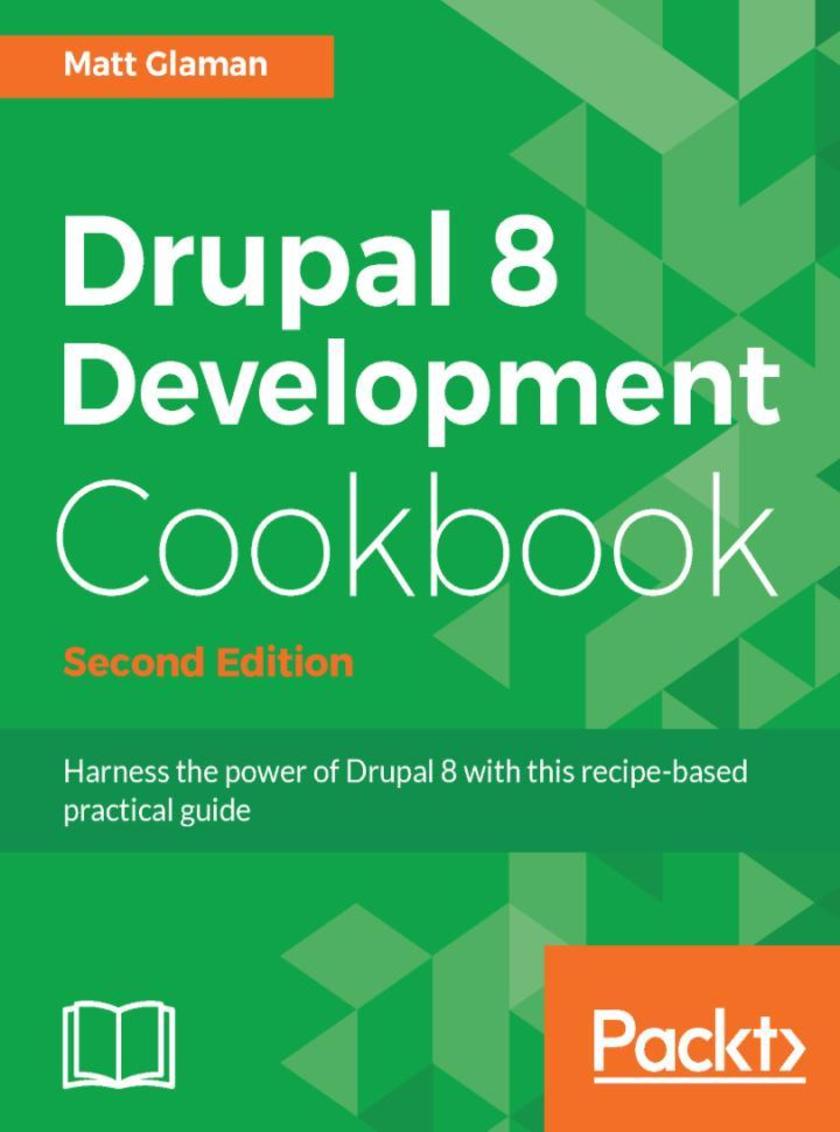
Drupal 8 Development Cookbook - Second Edition
¥80.65
Over 60 hands-on recipes that get you acquainted with Drupal 8's features and help you harness its power About This Book ? Discover the enhanced content authoring experience that comes with Drupal 8 and how to customize it ? Take advantage of the broadened multilingual and tools of the new version to provide an internationalized website ? This step-by-step guide will show you how to deploy from development, staging, and production of a website with Drupal 8's brand new configuration management system Who This Book Is For The audience of the Drupal 8 Cookbook have been using Drupal and are ready to get a grasp of what to expect in Drupal 8. They have worked with Drupal as site builders, back-end developers, and front-end developers and are eager to see what awaits when they start using Drupal 8. This book will be a resource that allows them to get started and have a reference to building new applications with Drupal. What You Will Learn ? Extend Drupal through contributed or custom modules and themes ? Develop an internationalized website with Drupal's multilingual tools ? Integrate third-party front-end and back-end libraries with Drupal ? Turn Drupal into a web services provider using REST ? Create a mobile-first responsive Drupal application ? Run SimpleTest and PHPUnit to test Drupal ? Understand the plugin system that powers many of Drupal 8's new APIs to extend its functionality ? Get to grips with the mechanics of the configuration management system and the ability to import and export site configuration In Detail Began as a message board, Drupal today is open source software maintained and developed by a community of over 1,000,000 users and developers. Drupal is used by numerous local businesses to global corporations and diverse organizations all across the globe. With Drupal 8’s exciting features it brings, this book will be your go-to guide to experimenting with all of these features through helpful recipes. We’ll start by showing you how to customize and configure the Drupal environment as per your requirements, as well as how to install third-party libraries and then use them in the Drupal environment. Then we will move on to creating blocks and custom modules with the help of libraries. We will show you how to use the latest mobile-first feature of Drupal 8, which will help you make your apps responsive across all the major platforms. This book will also show you how to incorporate multilingual facilities in your sites, use web services and third-party plugins with your applications from inside Drupal 8, and test and deploy your apps. Style and approach This practical, recipe-based book will provide you with actionable techniques and methods to improve your existing Drupal development skills.
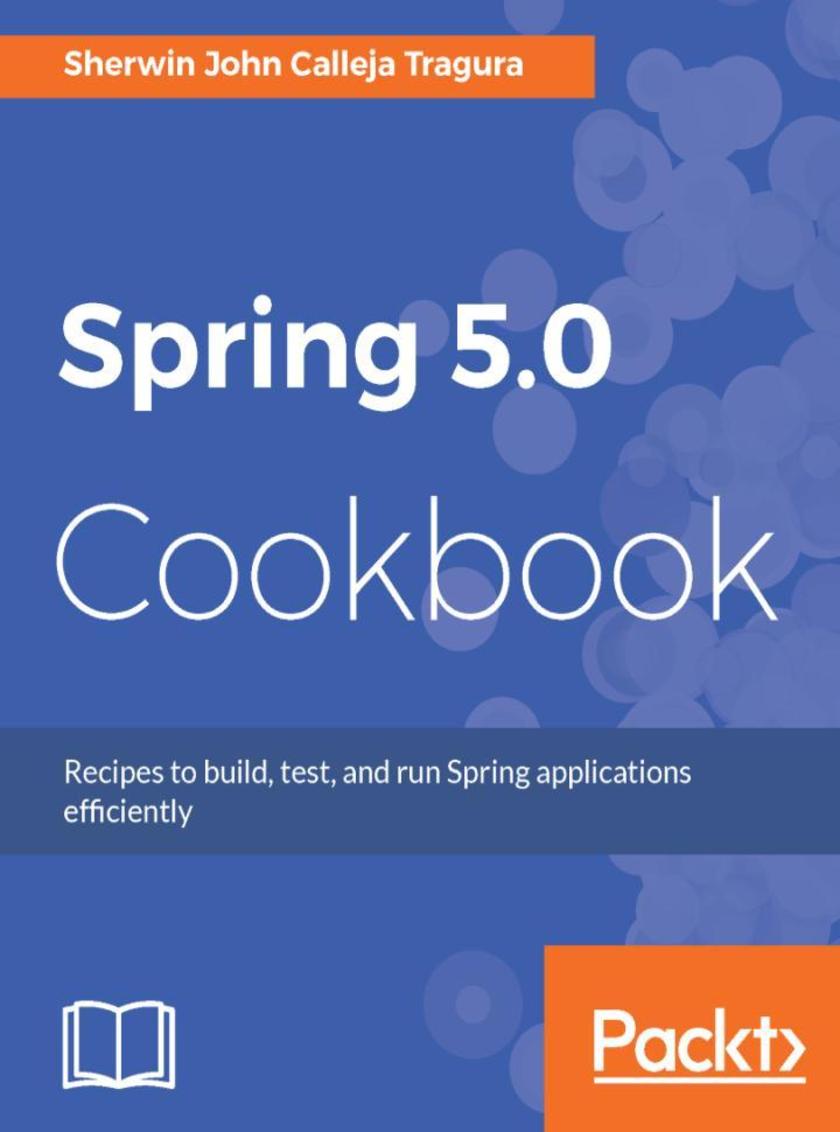
Spring 5.0 Cookbook
¥90.46
Over 100 hands-on recipes to build web applications easily and efficiently IN Spring 5.0 About This Book ? Solve real-world problems using the latest features of the Spring framework like Reactive Streams and the Functional Web Framework. ? Learn how to use dependency injection and aspect-oriented programming to write compartmentalized and testable code. ? Understand when to choose between Spring MVC and Spring Web Reactive for your projects Who This Book Is For Java developers who would like to gain in-depth knowledge of how to overcome problems that they face while developing great Spring applications. It will also cater to Spring enthusiasts, users and experts who need an arena for comparative analysis, new ideas and inquiries on some details regarding Spring 5.0 and its previous releases. A basic knowledge of Spring development is essential What You Will Learn ? Understand how functional programming and concurrency in JDK 1.9 works, and how it will affect Spring 5.0 ? Learn the importance and application of reactive programming in creating services, and also the process of creating asynchronous MVC applications ? Implement different Spring Data modules ? Integrate Spring Security to the container ? Create applications and deploy using Spring Boot ? Conceptualize the architecture behind Microservices and learn the details of its implementation ? Create different test cases for the components of Spring 5.0 components In Detail The Spring framework has been the go-to framework for Java developers for quite some time. It enhances modularity, provides more readable code, and enables the developer to focus on developing the application while the underlying framework takes care of transaction APIs, remote APIs, JMX APIs, and JMS APIs. The upcoming version of the Spring Framework has a lot to offer, above and beyond the platform upgrade to Java 9, and this book will show you all you need to know to overcome common to advanced problems you might face. Each recipe will showcase some old and new issues and solutions, right from configuring Spring 5.0 container to testing its components. Most importantly, the book will highlight concurrent processes, asynchronous MVC and reactive programming using Reactor Core APIs. Aside from the core components, this book will also include integration of third-party technologies that are mostly needed in building enterprise applications. By the end of the book, the reader will not only be well versed with the essential concepts of Spring, but will also have mastered its latest features in a solution-oriented manner. Style and Approach This book follows a cookbook style approach, presenting a problem and showing you how to overcome it with useful recipes. The examples provided will help you code along as you learn.
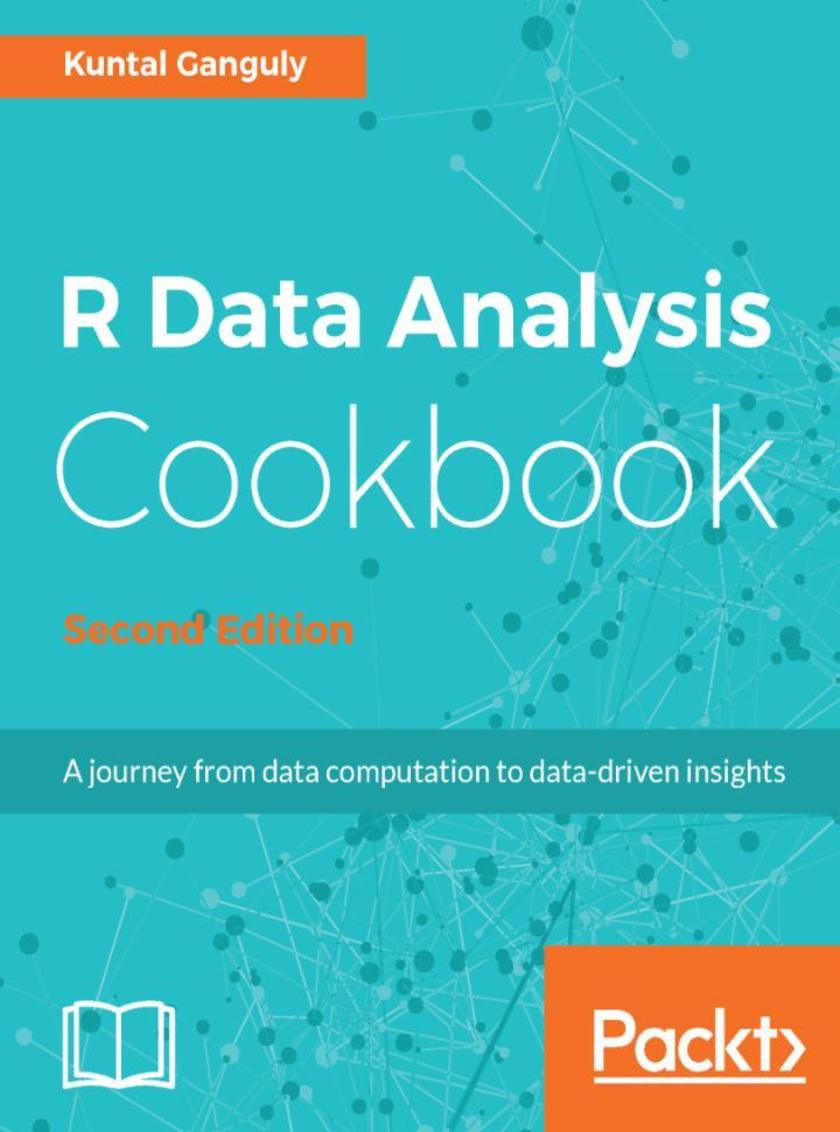
R Data Analysis Cookbook - Second Edition
¥90.46
Over 80 recipes to help you breeze through your data analysis projects using R About This Book ? Analyse your data using the popular R packages like ggplot2 with ready-to-use and customizable recipes ? Find meaningful insights from your data and generate dynamic reports ? A practical guide to help you put your data analysis skills in R to practical use Who This Book Is For This book is for data scientists, analysts and even enthusiasts who want to learn and implement the various data analysis techniques using R in a practical way. Those looking for quick, handy solutions to common tasks and challenges in data analysis will find this book to be very useful. Basic knowledge of statistics and R programming is assumed. What You Will Learn ? Acquire, format and visualize your data using R ? Using R to perform an Exploratory data analysis ? Introduction to machine learning algorithms such as classification and regression ? Get started with social network analysis ? Generate dynamic reporting with Shiny ? Get started with geospatial analysis ? Handling large data with R using Spark and MongoDB ? Build Recommendation system- Collaborative Filtering, Content based and Hybrid ? Learn real world dataset examples- Fraud Detection and Image Recognition In Detail Data analytics with R has emerged as a very important focus for organizations of all kinds. R enables even those with only an intuitive grasp of the underlying concepts, without a deep mathematical background, to unleash powerful and detailed examinations of their data. This book will show you how you can put your data analysis skills in R to practical use, with recipes catering to the basic as well as advanced data analysis tasks. Right from acquiring your data and preparing it for analysis to the more complex data analysis techniques, the book will show you how you can implement each technique in the best possible manner. You will also visualize your data using the popular R packages like ggplot2 and gain hidden insights from it. Starting with implementing the basic data analysis concepts like handling your data to creating basic plots, you will master the more advanced data analysis techniques like performing cluster analysis, and generating effective analysis reports and visualizations. Throughout the book, you will get to know the common problems and obstacles you might encounter while implementing each of the data analysis techniques in R, with ways to overcoming them in the easiest possible way. By the end of this book, you will have all the knowledge you need to become an expert in data analysis with R, and put your skills to test in real-world scenarios. Style and Approach ? Hands-on recipes to walk through data science challenges using R ? Your one-stop solution for common and not-so-common pain points while performing real-world problems to execute a series of tasks. ? Addressing your common and not-so-common pain points, this is a book that you must have on the shelf
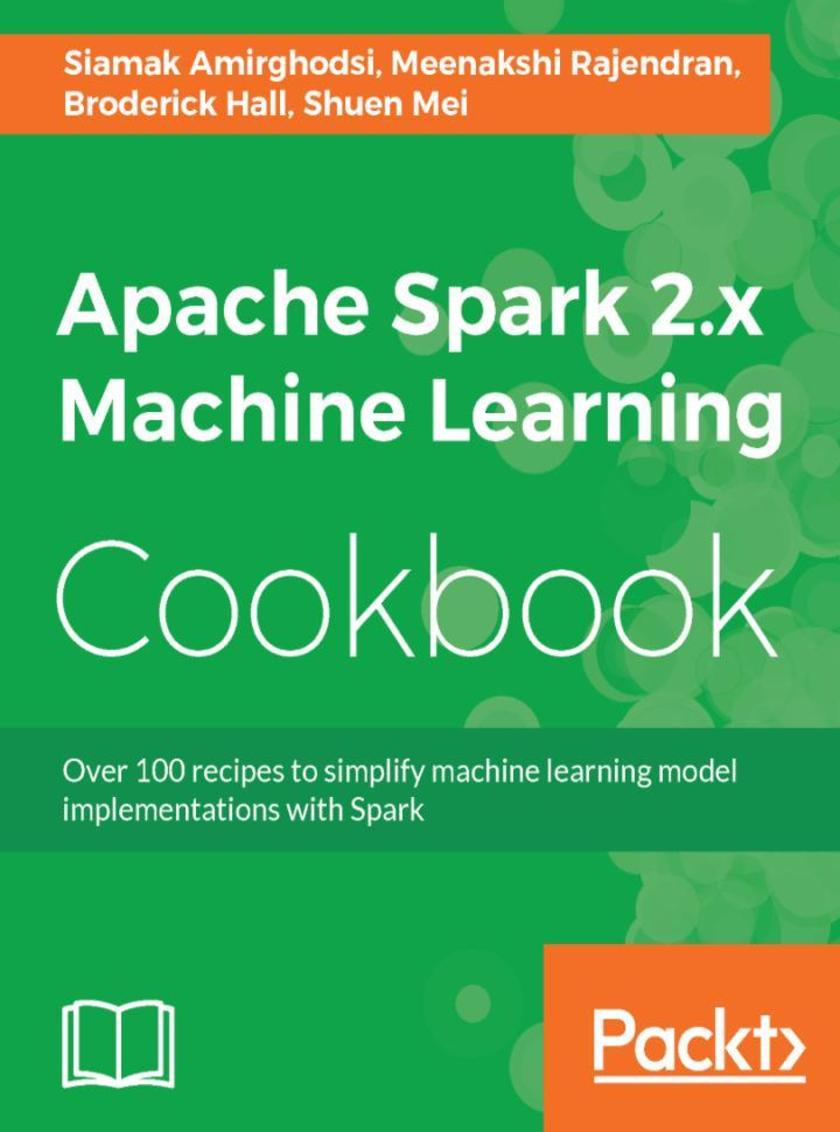
Apache Spark 2.x Machine Learning Cookbook
¥90.46
Simplify machine learning model implementations with Spark About This Book ? Solve the day-to-day problems of data science with Spark ? This unique cookbook consists of exciting and intuitive numerical recipes ? Optimize your work by acquiring, cleaning, analyzing, predicting, and visualizing your data Who This Book Is For This book is for Scala developers with a fairly good exposure to and understanding of machine learning techniques, but lack practical implementations with Spark. A solid knowledge of machine learning algorithms is assumed, as well as hands-on experience of implementing ML algorithms with Scala. However, you do not need to be acquainted with the Spark ML libraries and ecosystem. What You Will Learn ? Get to know how Scala and Spark go hand-in-hand for developers when developing ML systems with Spark ? Build a recommendation engine that scales with Spark ? Find out how to build unsupervised clustering systems to classify data in Spark ? Build machine learning systems with the Decision Tree and Ensemble models in Spark ? Deal with the curse of high-dimensionality in big data using Spark ? Implement Text analytics for Search Engines in Spark ? Streaming Machine Learning System implementation using Spark In Detail Machine learning aims to extract knowledge from data, relying on fundamental concepts in computer science, statistics, probability, and optimization. Learning about algorithms enables a wide range of applications, from everyday tasks such as product recommendations and spam filtering to cutting edge applications such as self-driving cars and personalized medicine. You will gain hands-on experience of applying these principles using Apache Spark, a resilient cluster computing system well suited for large-scale machine learning tasks. This book begins with a quick overview of setting up the necessary IDEs to facilitate the execution of code examples that will be covered in various chapters. It also highlights some key issues developers face while working with machine learning algorithms on the Spark platform. We progress by uncovering the various Spark APIs and the implementation of ML algorithms with developing classification systems, recommendation engines, text analytics, clustering, and learning systems. Toward the final chapters, we’ll focus on building high-end applications and explain various unsupervised methodologies and challenges to tackle when implementing with big data ML systems. Style and approach This book is packed with intuitive recipes supported with line-by-line explanations to help you understand how to optimize your work flow and resolve problems when working with complex data modeling tasks and predictive algorithms. This is a valuable resource for data scientists and those working on large scale data projects.
Scala for Machine Learning - Second Edition
¥107.90
Leverage Scala and Machine Learning to study and construct systems that can learn from data About This Book ? Explore a broad variety of data processing, machine learning, and genetic algorithms through diagrams, mathematical formulation, and updated source code in Scala ? Take your expertise in Scala programming to the next level by creating and customizing AI applications ? Experiment with different techniques and evaluate their benefits and limitations using real-world applications in a tutorial style Who This Book Is For If you’re a data scientist or a data analyst with a fundamental knowledge of Scala who wants to learn and implement various Machine learning techniques, this book is for you. All you need is a good understanding of the Scala programming language, a basic knowledge of statistics, a keen interest in Big Data processing, and this book! What You Will Learn ? Build dynamic workflows for scientific computing ? Leverage open source libraries to extract patterns from time series ? Write your own classification, clustering, or evolutionary algorithm ? Perform relative performance tuning and evaluation of Spark ? Master probabilistic models for sequential data ? Experiment with advanced techniques such as regularization and kernelization ? Dive into neural networks and some deep learning architecture ? Apply some basic multiarm-bandit algorithms ? Solve big data problems with Scala parallel collections, Akka actors, and Apache Spark clusters ? Apply key learning strategies to a technical analysis of financial markets In Detail The discovery of information through data clustering and classification is becoming a key differentiator for competitive organizations. Machine learning applications are everywhere, from self-driving cars, engineering design, logistics, manufacturing, and trading strategies, to detection of genetic anomalies. The book is your one stop guide that introduces you to the functional capabilities of the Scala programming language that are critical to the creation of machine learning algorithms such as dependency injection and implicits. You start by learning data preprocessing and filtering techniques. Following this, you'll move on to unsupervised learning techniques such as clustering and dimension reduction, followed by probabilistic graphical models such as Na?ve Bayes, hidden Markov models and Monte Carlo inference. Further, it covers the discriminative algorithms such as linear, logistic regression with regularization, kernelization, support vector machines, neural networks, and deep learning. You’ll move on to evolutionary computing, multibandit algorithms, and reinforcement learning. Finally, the book includes a comprehensive overview of parallel computing in Scala and Akka followed by a de*ion of Apache Spark and its ML library. With updated codes based on the latest version of Scala and comprehensive examples, this book will ensure that you have more than just a solid fundamental knowledge in machine learning with Scala. Style and approach This book is designed as a tutorial with hands-on exercises using technical analysis of financial markets and corporate data. The approach of each chapter is such that it allows you to understand key concepts easily.
Machine Learning With Go
¥90.46
Build simple, maintainable, and easy to deploy machine learning applications. About This Book ? Build simple, but powerful, machine learning applications that leverage Go’s standard library along with popular Go packages. ? Learn the statistics, algorithms, and techniques needed to successfully implement machine learning in Go ? Understand when and how to integrate certain types of machine learning model in Go applications. Who This Book Is For This book is for Go developers who are familiar with the Go syntax and can develop, build, and run basic Go programs. If you want to explore the field of machine learning and you love Go, then this book is for you! Machine Learning with Go will give readers the practical skills to perform the most common machine learning tasks with Go. Familiarity with some statistics and math topics is necessary. What You Will Learn ? Learn about data gathering, organization, parsing, and cleaning. ? Explore matrices, linear algebra, statistics, and probability. ? See how to evaluate and validate models. ? Look at regression, classification, clustering. ? Learn about neural networks and deep learning ? Utilize times series models and anomaly detection. ? Get to grip with techniques for deploying and distributing analyses and models. ? Optimize machine learning workflow techniques In Detail The mission of this book is to turn readers into productive, innovative data analysts who leverage Go to build robust and valuable applications. To this end, the book clearly introduces the technical aspects of building predictive models in Go, but it also helps the reader understand how machine learning workflows are being applied in real-world scenarios. Machine Learning with Go shows readers how to be productive in machine learning while also producing applications that maintain a high level of integrity. It also gives readers patterns to overcome challenges that are often encountered when trying to integrate machine learning in an engineering organization. The readers will begin by gaining a solid understanding of how to gather, organize, and parse real-work data from a variety of sources. Readers will then develop a solid statistical toolkit that will allow them to quickly understand gain intuition about the content of a dataset. Finally, the readers will gain hands-on experience implementing essential machine learning techniques (regression, classification, clustering, and so on) with the relevant Go packages. Finally, the reader will have a solid machine learning mindset and a powerful Go toolkit of techniques, packages, and example implementations. Style and approach This book connects the fundamental, theoretical concepts behind Machine Learning to practical implementations using the Go programming language.

Emotional Intelligence for IT Professionals
¥63.21
Learn the techniques used by the most successful IT people in the world. About This Book ? Get real-life case studies for different IT roles, developers, testers, analysts, project managers, DBAs ? Identify with your IT scenarios and take the right decision to move up in your career ? Improve your EQ and face any difficult scenario confidently and effectively Who This Book Is For This book is for professionals across the IT domain who work as developers, administrators, architects, administrators system analysts, and so on, who want to create a better working environment around them by improving their own emotional intelligence. This book assumes that you are a beginner to emotional intelligence and will help you understand the basic concepts before helping you with real life scenarios. What You Will Learn ? Improve your observation skills to understand people better ? Know how to identify what motivates you and those around you ? Develop strategies for working more effectively with others ? Increase your capacity to influence people and improve your communication skills ? Understand how to successfully complete tasks through other people ? Discover how to control the emotional content of your decision-making In Detail This book will help you discover your emotional quotient (EQ) through practices and techniques that are used by the most successful IT people in the world. It will make you familiar with the core skills of Emotional Intelligence, such as understanding the role that emotions play in life, especially in the workplace. You will learn to identify the factors that make your behavior consistent, not just to other employees, but to yourself. This includes recognizing, harnessing, predicting, fostering, valuing, soothing, increasing, decreasing, managing, shifting, influencing or turning around emotions and integrating accurate emotional information into decision-making, reasoning, problem solving, etc., because, emotions run business in a way that spreadsheets and logic cannot. When a deadline lurks, you’ll know the steps you need to take to keep calm and composed. You’ll find out how to meet the deadline, and not get bogged down by stress. We’ll explain these factors and techniques through real-life examples faced by IT employees and you’ll learn using the choices that they made. This book will give you a detailed analysis of the events and behavioral pattern of the employees during that time. This will help you improve your own EQ to the extent that you don’t just survive, but thrive in a competitive IT industry. Style and approach You will be taken through real-life events faced by IT employees in different scenarios. These real-world cases are analyzed along with the response of the employees, which will help you to develop your own emotion intelligence quotient and face any difficult scenario confidently and effectively.
AWS Certified Developer - Associate Guide
¥90.46
An effective guide to becoming an AWS Certified Developer About This Book ? This fast-paced guide will help you clear the exam with confidence ? Learn to design, develop, and deploy cloud-based solutions using AWS ? Enhance your AWS skills with practice questions and mock tests Who This Book Is For This book is for IT professionals and developers looking to clear the AWS Certified Developer – Associate 2017 exam. Developers looking to develop and manage their applications on the AWS platform will also find this book useful. No prior AWS experience is needed. What You Will Learn ? Create and manage users, groups, and permissions using AWS Identity and Access Management services ? Create a secured Virtual Private Cloud (VPC) with Public and Private Subnets, Network Access Control, and Security groups ? Get started with Elastic Compute Cloud (EC2), launching your first EC2 instance, and working with it ? Handle application traffic with Elastic Load Balancing (ELB) and monitor AWS resources with CloudWatch ? Work with AWS storage services such as Simple Storage Service (S3), Glacier, and CloudFront ? Get acquainted with AWS DynamoDB – a NoSQL database service ? Coordinate work across distributed application components using Simple Workflow Service (SWF) In Detail AWS Certified Developer - Associate Guide starts with a quick introduction to AWS and the prerequisites to get you started. Then, this book gives you a fair understanding of core AWS services and basic architecture. Next, this book will describe about getting familiar with Identity and Access Management (IAM) along with Virtual private cloud (VPC). Moving ahead you will learn about Elastic Compute cloud (EC2) and handling application traffic with Elastic Load Balancing (ELB). Going ahead you we will talk about Monitoring with CloudWatch, Simple storage service (S3) and Glacier and CloudFront along with other AWS storage options. Next we will take you through AWS DynamoDB – A NoSQL Database Service, Amazon Simple Queue Service (SQS) and CloudFormation Overview. Finally, this book covers understanding Elastic Beanstalk and overview of AWS lambda. At the end of this book, we will cover enough topics, tips and tricks along with mock tests for you to be able to pass the AWS Certified Developer - Associate exam and develop as well as manage your applications on the AWS platform. Style and approach This step-by-step guide includes exercises and mock tests to clear the AWS certification exam and become a successful AWS developer.
UX for the Web
¥71.93
Learn how UX and design thinking can make your site stand out from the rest of the internet. About This Book ? Learn everything you need to know about UX for your Web Design. ? Design B2B, B2C websites that stand out from the competitors with this guide ? Enhance your business by improving customer accessibility and retention. Who This Book Is For If you’re a designer, developer, or just someone who has the desire to create websites that are not only beautiful to look at but also easy to use and fully accessible to everyone, including people with special needs, UX for the Web will provide you with the basic building blocks to achieve just that. What You Will Learn ? Discover the fundamentals of UX and the User-Centered Design (UCD) Process. ? Learn how UX can enhance your brand and increase user retention ? Learn how to create the golden thread between your product and the user ? Use reliable UX methodologies to research and analyze data to create an effective UX strategy ? Bring your UX strategy to life with wireframes and prototypes ? Set measurable metrics and conduct user tests to improve digital products ? Incorporate the Web Content Accessibility Guidelines (WCAG) to create accessible digital products In Detail If you want to create web apps that are not only beautiful to look at, but also easy to use and fully accessible to everyone, including people with special needs, this book will provide you with the basic building blocks to achieve just that. The book starts with the basics of UX, the relationship between Human-Centered Design (HCD), Human-Computer Interaction (HCI), and the User-Centered Design (UCD) Process; it gradually takes you through the best practices to create a web app that stands out from your competitors. You’ll also learn how to create an emotional connection with the user to increase user interaction and client retention by different means of communication channels. We’ll guide you through the steps in developing an effective UX strategy through user research and persona creation and how to bring that UX strategy to life with beautiful, yet functional designs that cater for complex features with micro interactions. Practical UX methodologies such as creating a solid Information Architecture (IA), wireframes, and prototypes will be discussed in detail. We’ll also show you how to test your designs with representative users, and ensure that they are usable on different devices, browsers and assistive technologies. Lastly, we’ll focus on making your web app fully accessible from a development and design perspective by taking you through the Web Content Accessibility Guidelines (WCAG). Style and Approach This is an easy-to-understand step-by-step guide with full of examples to that will help you in creating good UX for your web applications.
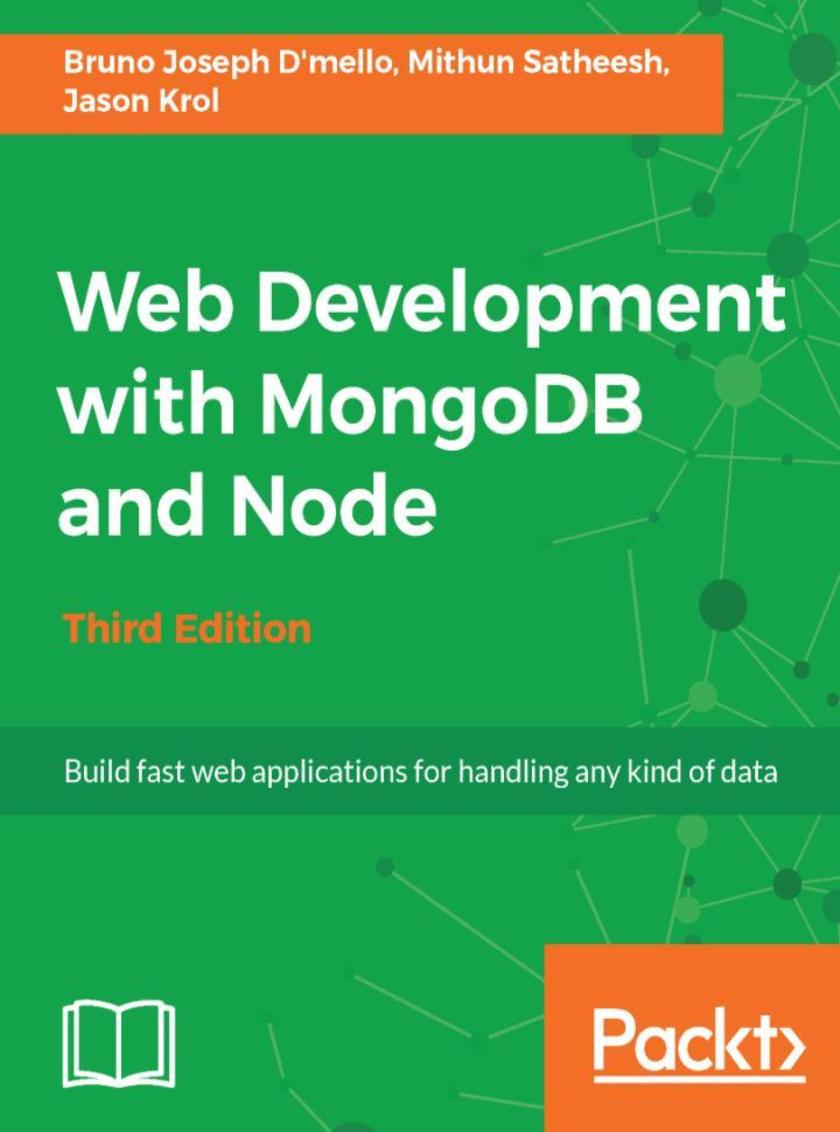
Web Development with MongoDB and Node - Third Edition
¥71.93
Use the two popular web development stacks, Node.js and MongoDB, to build full-featured web applications About This Book ? Learn the new ECMAScript along with Node 8 and MongoDB to make your application more effective. ? Get the up-to-date information required to launch your first application prototype using the latest versions of Node.js and MongoDB. ? A practical guide with clear instructions to designing and developing a complete web application from start to finish using trending frameworks such as angular4 and hapi Who This Book Is For The book is designed for JavaScript developers of any skill level who want to get up-and-running using Node.js and MongoDB to build full-featured web applications. A basic understanding of JavaScript and HTML is the only prerequisite for this book. What You Will Learn ? Work with Node.js building blocks ? Write and configure a web server using Node.js powered by the Express.js framework ? Build dynamic HTML pages using the Handlebars template engine ? Persist application data using MongoDB and Mongoose ODM ? Test your code using automated testing tools such as the Mocha framework ? Automate test cases using Gulp ? Reduce your web development time by integrating third-party tools for web interaction. ? Deploy a development environment to the cloud using services such as Heroku, Amazon Web Services, and Microsoft Azure ? Explore single-page application frameworks to take your web applications to the next level In Detail Node.js builds fast, scalable network applications while MongoDB is the perfect fit as a high-performance, open source NoSQL database solution. The combination of these two technologies offers high performance and scalability and helps in building fast, scalable network applications. Together they provide the power for manage any form of data as well as speed of delivery. This book will help you to get these two technologies working together to build web applications quickly and easily, with effortless deployment to the cloud. You will also learn about angular 4, which consumes pure JSON APOIs from a hapi server. The book begins by setting up your development environment, running you through the steps necessary to get the main application server up-and-running. Then you will see how to use Node.js to connect to a MongoDB database and perform data manipulations. From here on, the book will take you through integration with third-party tools to interact with web apps. You will see how to use controllers and view models to generate reusable code that will reduce development time. Toward the end, the book supplies tests to properly execute your code and take your skills to the next level with the most popular frameworks for developing web applications. By the end of the book, you will have a running web application developed with MongoDB, Node.js, and some of the most powerful and popular frameworks. Style and approach A practical guide with clear instructions to designing and developing a complete web application from start to finish

Ashes to Ashes (free sampler) (Detective Mark Heckenburg, Book 6)
免费
The Sunday Times bestseller returns with his next unforgettable crime thriller. Fans of MJ Arlidge and Stuart MacBride won’t be able to put this down.
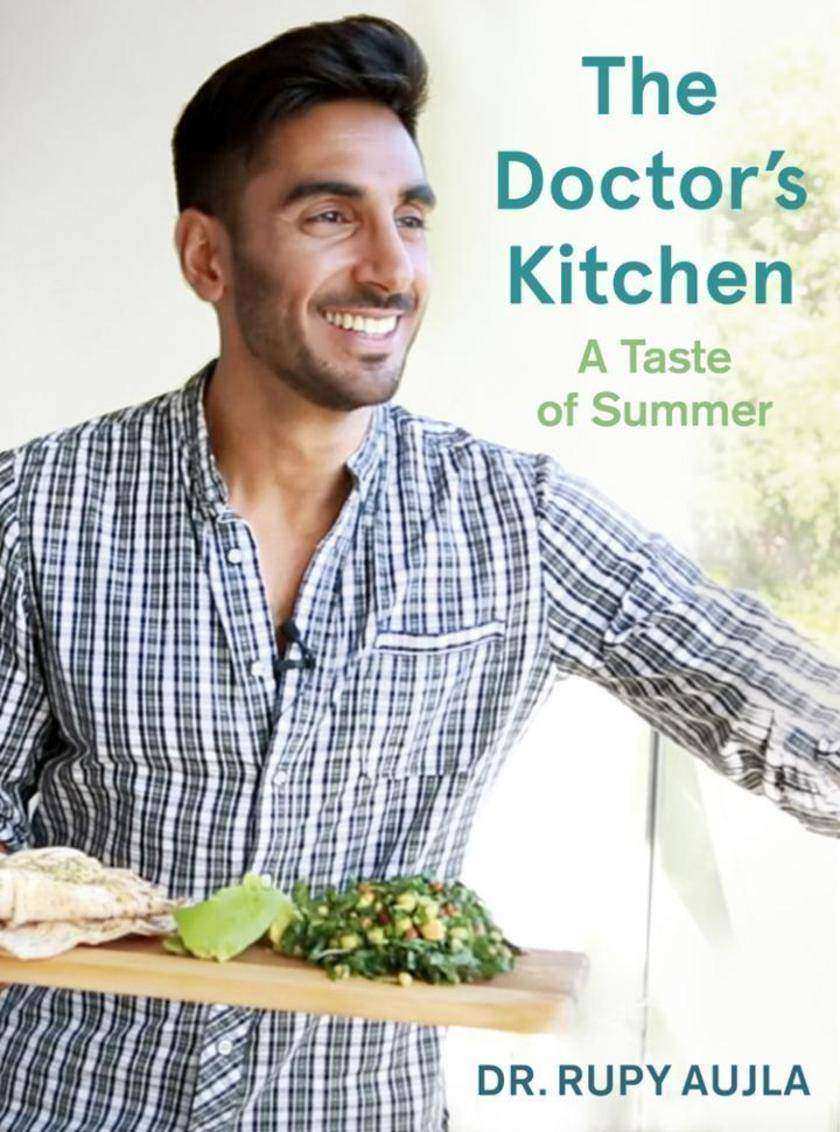
The Doctor’s Kitchen: A Taste of Summer
免费
Dr Rupy Aujla is a practising GP in London. Trained at Imperial College London, his aim is to be the leading voice in how nutrition can heal and improve health. He is one of twenty global ‘I Quit Sugar’ experts, regular Doctor on BBC Asian Network’s Noreen Khan show with half a million listeners, Men’s Health Recipe Creator and Doctor, TEDxNHS Speaker, Huffington Post, Shortlist, Stylist, Metro contributor as well as leading nutrition websites including Nutritionfacts.org. Dr Rupy is developing The Doctors Kitchen social presence on You Tube, Instagram and Twitter.

Jack Pepper
¥7.65
The story of an unforgettable dog, from the bestselling author of A Dog Called Homeless. Someone special will never be forgotten… When Ruby and Sid see a poster about a missing dog, they can’t believe it. It reminds them of an adventure they had, and a little dog they once met. Could it be the same Jack Pepper? Includes beautiful inside artwork from hugely talented illustrator, Gary Blythe.

The Present: The must-read Christmas Crime for 2017 (The Present, Book 1)
¥14.22
This book can also be read with The Present by Charlotte Phillips. Two books, one unforgettable Christmas… 12 deadly gifts, one killer on a Christmas countdown… On the first day of Christmas my true love gave to me… this is one deadly Christmas that you can’t forget. The police are baffled by the ‘Santa’ killer, who sends his intended victims gruesome presents based on the twelve days of Christmas. When a young journalist receives a mutilated bird in the post, it’s a race against time to find the killer…

The Present: The must-read Christmas romance for 2017 (The Present, Book 2)
¥14.22
This book can also be read with The Present by DS Devlin. Two books, one unforgettable Christmas… 12 magical gifts, one love that lasts a lifetime… On the first day of Christmas my true love gave to me … one romantic Christmas you won’t forget. When helping to clear out her beloved grandmother’s home, Lucy Jackson discovers twelve beautiful Christmas decorations hidden in the loft. As she discovers their heartbreaking story, a touching romance develops with the handsome gardener next door. Readers love Charlotte Phillips’ The Present: ‘A gem of a Christmas read…fabulous’ Rachel’s Random Reads ‘A charming, unashamedly romantic tale…perfect for an afternoon in front of the fire with the christmas tree lights on’ Jane Hunt Author Book Reviews

Taurus 2018: Your Personal Horoscope
¥13.15
Joseph Polansky is a leading US astrologer who has been practising astrology for over 20 years.


