


 购物车
购物车 个人中心
个人中心
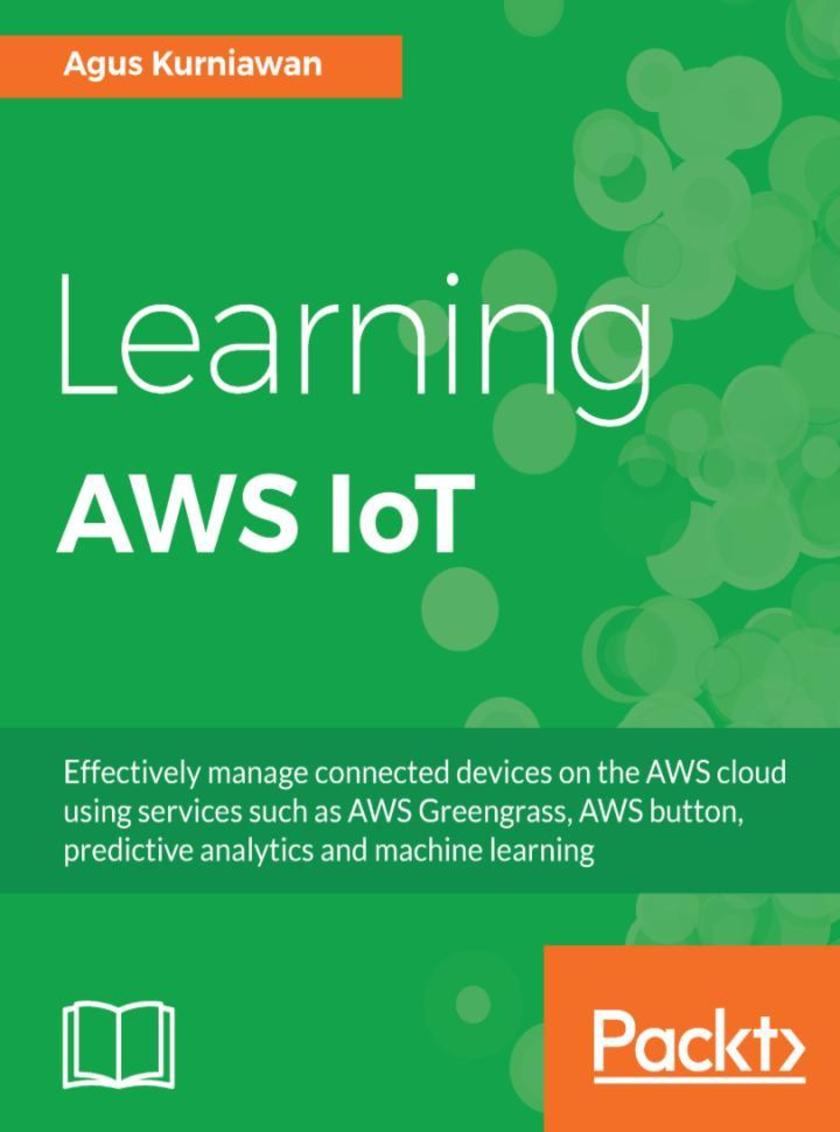
Learning AWS IoT
¥73.02
Learn to use AWS IoT services to build your connected applications with the help of this comprehensive guide. About This Book ? Gets you started with AWS IoT and its functionalities ? Learn different modules of AWS IoT with practical use cases. ? Learn to secure your IoT communication Who This Book Is For This book is for anyone who wants to get started with the AWS IoT Suite and implement it with practical use cases. This book acts as an extensive guide, on completion of which you will be in a position to start building IoT projects using AWS IoT platform and using cloud services for your projects. What You Will Learn ? Implement AWS IoT on IoT projects ? Learn the technical capabilities of AWS IoT and IoT devices ? Create IoT-based AWS IoT projects ? Choose IoT devices and AWS IoT platforms to use based on the kind of project you need to build ? Deploy AWS Greengrass and AWS Lambda ? Develop program for AWS IoT Button ? Visualize IoT AWS data ? Build predictive analytics using AWS IoT and AWS Machine Learning In Detail The Internet of Things market increased a lot in the past few years and IoT development and its adoption have showed an upward trend. Analysis and predictions say that Enterprise IoT platforms are the future of IoT. AWS IoT is currently leading the market with its wide range of device support SDKs and versatile management console. This book initially introduces you to the IoT platforms, and how it makes our IoT development easy. It then covers the complete AWS IoT Suite and how it can be used to develop secure communication between internet-connected things such as sensors, actuators, embedded devices, smart applications, and so on. The book also covers the various modules of AWS: AWS Greengrass, AWS device SDKs, AWS IoT Platform, AWS Button, AWS Management consoles, AWS-related CLI, and API references, all with practical use cases. Near the end, the book supplies security-related best practices to make bi-directional communication more secure. When you've finished this book, you'll be up-and-running with the AWS IoT Suite, and building IoT projects. Style and approach This book is a step-by-step practical guide that helps you learn AWS IoT quickly.
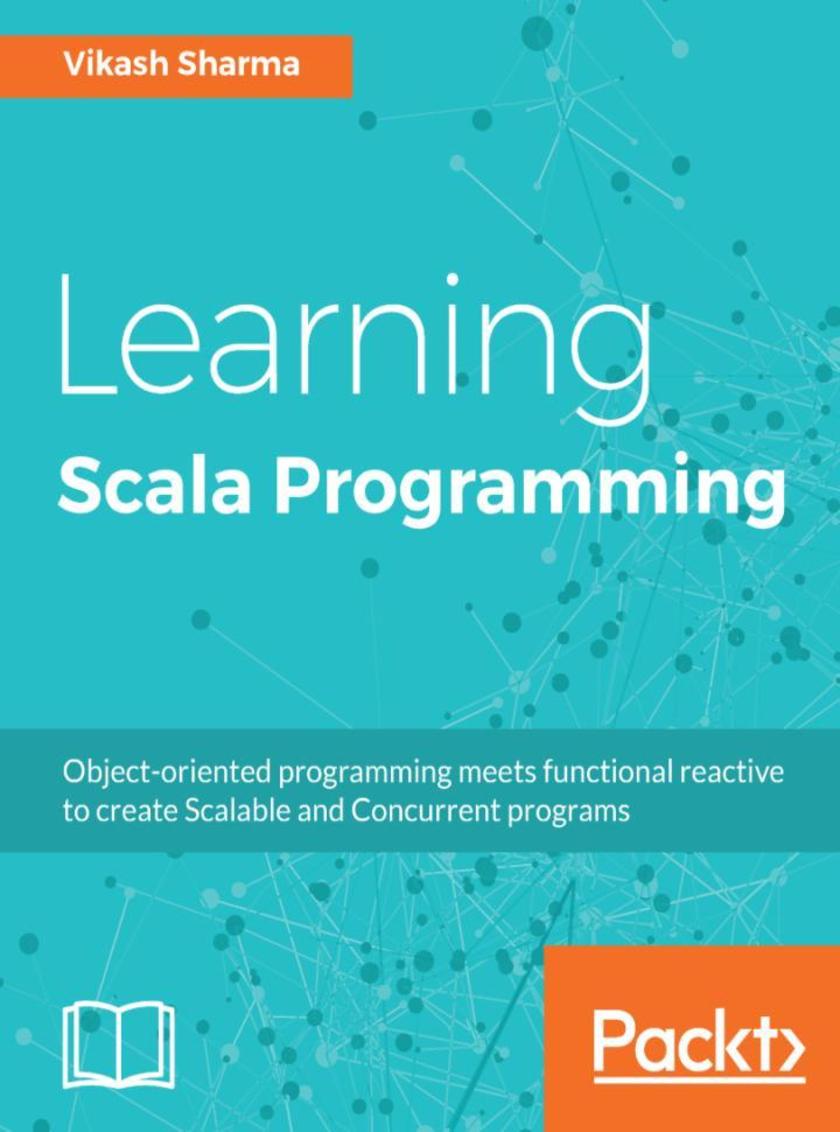
Learning Scala Programming
¥81.74
Learn how to write scalable and concurrent programs in Scala, a language that grows with you. About This Book ? Get a grip on the functional features of the Scala programming language ? Understand and develop optimal applications using object-oriented and functional Scala constructs ? Learn reactive principles with Scala and work with the Akka framework Who This Book Is For This book is for programmers who choose to get a grip over Scala to write concurrent, scalable, and reactive programs. No prior experience with any programming language is required to learn the concepts explained in this book. Knowledge of any programming language would help the reader understanding concepts faster though. What You Will Learn ? Get to know the reasons for choosing Scala: its use and the advantages it provides over other languages ? Bring together functional and object-oriented programming constructs to make a manageable application ? Master basic to advanced Scala constructs ? Test your applications using advanced testing methodologies such as TDD ? Select preferred language constructs from the wide variety of constructs provided by Scala ? Make the transition from the object-oriented paradigm to the functional programming paradigm ? Write clean, concise, and powerful code with a functional mindset ? Create concurrent, scalable, and reactive applications utilizing the advantages of Scala In Detail Scala is a general-purpose programming language that supports both functional and object-oriented programming paradigms. Due to its concise design and versatility, Scala's applications have been extended to a wide variety of fields such as data science and cluster computing. You will learn to write highly scalable, concurrent, and testable programs to meet everyday software requirements. We will begin by understanding the language basics, syntax, core data types, literals, variables, and more. From here you will be introduced to data structures with Scala and you will learn to work with higher-order functions. Scala's powerful collections framework will help you get the best out of immutable data structures and utilize them effectively. You will then be introduced to concepts such as pattern matching, case classes, and functional programming features. From here, you will learn to work with Scala's object-oriented features. Going forward, you will learn about asynchronous and reactive programming with Scala, where you will be introduced to the Akka framework. Finally, you will learn the interoperability of Scala and Java. After reading this book, you'll be well versed with this language and its features, and you will be able to write scalable, concurrent, and reactive programs in Scala. Style and approach This book is for programmers who want to master Scala to write concurrent, scalable, and reactive programs. Though no experience with any programming language is needed, some basic knowledge would help understand concepts faster.

Deep Learning Essentials
¥63.21
Get to grips with the essentials of deep learning by leveraging the power of Python About This Book ? Your one-stop solution to get started with the essentials of deep learning and neural network modeling ? Train different kinds of neural networks to tackle various problems in Natural Language Processing, computer vision, speech recognition, and more ? Covers popular Python libraries such as Tensorflow, Keras, and more, along with tips on training, deploying and optimizing your deep learning models in the best possible manner Who This Book Is For Aspiring data scientists and machine learning experts who have limited or no exposure to deep learning will find this book to be very useful. If you are looking for a resource that gets you up and running with the fundamentals of deep learning and neural networks, this book is for you. As the models in the book are trained using the popular Python-based libraries such as Tensorflow and Keras, it would be useful to have sound programming knowledge of Python. What You Will Learn ? Get to grips with the core concepts of deep learning and neural networks ? Set up deep learning library such as TensorFlow ? Fine-tune your deep learning models for NLP and Computer Vision applications ? Unify different information sources, such as images, text, and speech through deep learning ? Optimize and fine-tune your deep learning models for better performance ? Train a deep reinforcement learning model that plays a game better than humans ? Learn how to make your models get the best out of your GPU or CPU In Detail Deep Learning a trending topic in the field of Artificial Intelligence today and can be considered to be an advanced form of machine learning, which is quite tricky to master. This book will help you take your first steps in training efficient deep learning models and applying them in various practical scenarios. You will model, train, and deploy different kinds of neural networks such as Convolutional Neural Network, Recurrent Neural Network, and will see some of their applications in real-world domains including computer vision, natural language processing, speech recognition, and so on. You will build practical projects such as chatbots, implement reinforcement learning to build smart games, and develop expert systems for image captioning and processing. Popular Python library such as TensorFlow is used in this book to build the models. This book also covers solutions for different problems you might come across while training models, such as noisy datasets, small datasets, and more. This book does not assume any prior knowledge of deep learning. By the end of this book, you will have a firm understanding of the basics of deep learning and neural network modeling, along with their practical applications. Style and approach This step-by-step guide is filled with real-world practical examples and use cases to solve various deep learning problems.
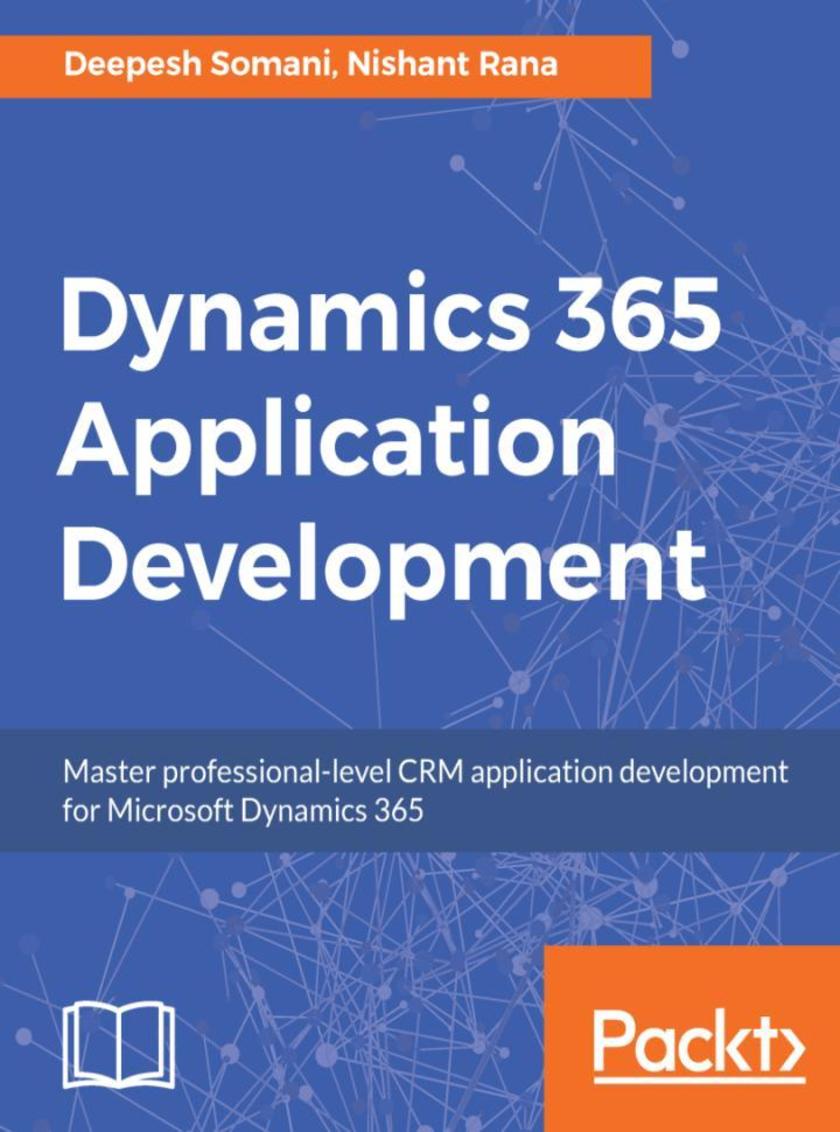
Dynamics 365 Application Development
¥90.46
Learn, develop, and design applications using the new features in Microsoft Dynamics CRM About This Book ? Implement business logic using processes, plugins, and client-side *s with MS Dynamics 365 ? Develop custom CRM solutions to improve your business applications ? A comprehensive guide that covers the new features of Microsoft Dynamics 365 and increasingly advanced topics. Who This Book Is For This book targets skilled developers who are looking to build business-solution software and are new to application development in Microsoft Dynamics 365, especially for CRM. What You Will Learn ? Discover new designers tools included in Dynamics 365 CRM ? Develop apps using the platform-agnostic Web API ? Leverage Azure Extensions to design cloud-aware applications ? Learn how to implement CRUD operation ? Create integrated real-world apps using Microsoft PowerApps and Flow by combining services such as Twitter, Facebook, and SharePoint ? Configure and use Artificial Intelligence Azure Cognitive Services for Recommendation and Text Analytic services In Detail Microsoft Dynamics 365 CRM is the most trusted name in enterprise-level customer relationship management. Thelatest version of Dynamics CRM comes with the important addition of exciting features guaranteed to make your life easier. It comes straight off the shelf with a whole new frontier of updated business rules, process enhancements, SDK methods, and other enhancements. This book will introduce you to the components of the new designer tools, such as SiteMap, App Module, and Visual Designer for Business Processes. Going deeper, this book teaches you how to develop custom SaaS applications leveraging the features of PowerApps available in Dynamics 365.Further, you will learn how to automate business processes using Microsoft Flow, and then we explore Web API, the most important platform update in Dynamics 365 CRM. Here, you'll also learn how to implement Web API in custom applications. You will learn how to write an Azure-aware plugin to design and integrate cloud-aware solutions. The book concludes with configuring services using newly released features such as Editable grids, Data Export Service, LinkedIn Integration, Relationship Insights, and Live Assist. Style and approach The book takes a pragmatic approach, exploring Dynamics 365 and its CRM features with the help of real-world scenarios.
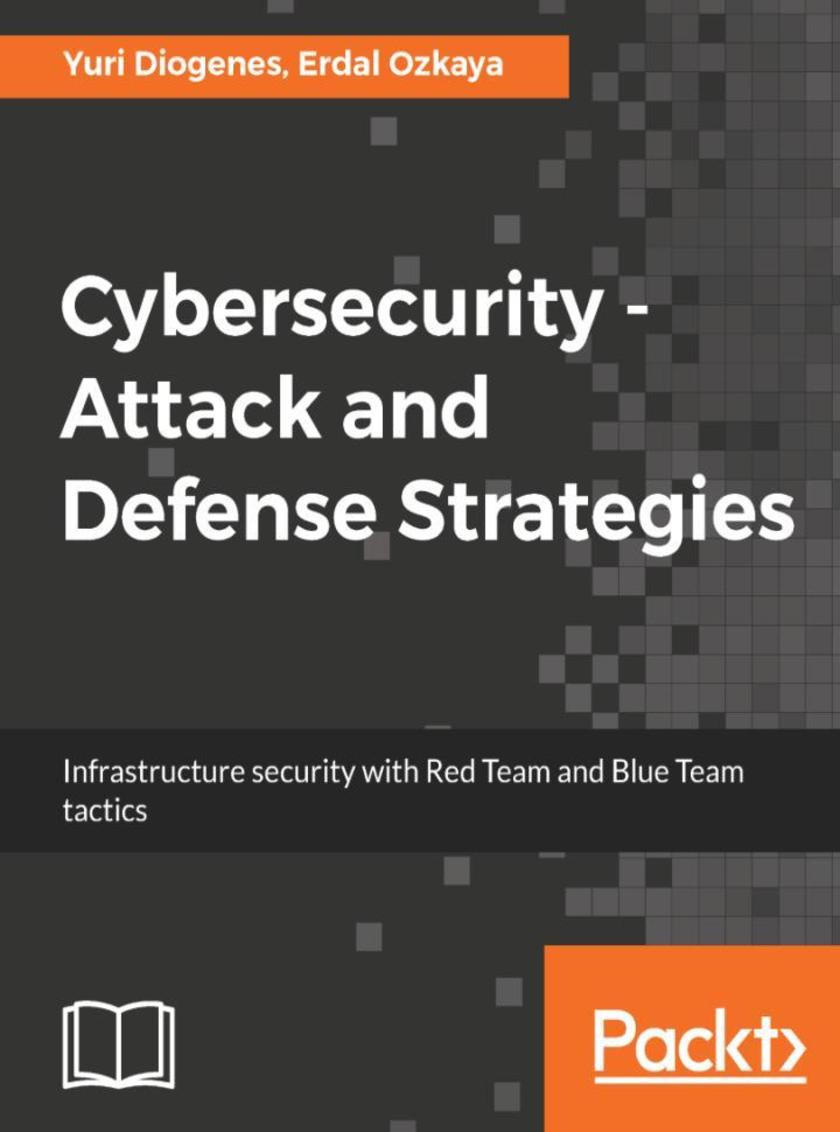
Cybersecurity – Attack and Defense Strategies
¥73.02
Enhance your organization’s secure posture by improving your attack and defense strategies About This Book ? Gain a clear understanding of the attack methods, and patterns to recognize abnormal behavior within your organization with Blue Team tactics. ? Learn to unique techniques to gather exploitation intelligence, identify risk and demonstrate impact with Red Team and Blue Team strategies. ? A practical guide that will give you hands-on experience to mitigate risks and prevent attackers from infiltrating your system. Who This Book Is For This book aims at IT professional who want to venture the IT security domain. IT pentester, Security consultants, and ethical hackers will also find this course useful. Prior knowledge of penetration testing would be beneficial. What You Will Learn ? Learn the importance of having a solid foundation for your security posture ? Understand the attack strategy using cyber security kill chain ? Learn how to enhance your defense strategy by improving your security policies, hardening your network, implementing active sensors, and leveraging threat intelligence ? Learn how to perform an incident investigation ? Get an in-depth understanding of the recovery process ? Understand continuous security monitoring and how to implement a vulnerability management strategy ? Learn how to perform log analysis to identify suspicious activities In Detail The book will start talking about the security posture before moving to Red Team tactics, where you will learn the basic syntax for the Windows and Linux tools that are commonly used to perform the necessary operations. You will also gain hands-on experience of using new Red Team techniques with powerful tools such as python and PowerShell, which will enable you to discover vulnerabilities in your system and how to exploit them. Moving on, you will learn how a system is usually compromised by adversaries, and how they hack user's identity, and the various tools used by the Red Team to find vulnerabilities in a system. In the next section, you will learn about the defense strategies followed by the Blue Team to enhance the overall security of a system. You will also learn about an in-depth strategy to ensure that there are security controls in each network layer, and how you can carry out the recovery process of a compromised system. Finally, you will learn how to create a vulnerability management strategy and the different techniques for manual log analysis. By the end of this book, you will be well-versed with Red Team and Blue Team techniques and will have learned the techniques used nowadays to attack and defend systems. Style and approach This book uses a practical approach of the cybersecurity kill chain to explain the different phases of the attack, which includes the rationale behind each phase, followed by scenarios and examples that brings the theory into practice.
Microservice Patterns and Best Practices
¥81.74
Explore the concepts and tools you need to discover the world of microservices with various design patterns About This Book ? Get to grips with the microservice architecture and build enterprise-ready microservice applications ? Learn design patterns and the best practices while building a microservice application ? Obtain hands-on techniques and tools to create high-performing microservices resilient to possible fails Who This Book Is For This book is for architects and senior developers who would like implement microservice design patterns in their enterprise application development. The book assumes some prior programming knowledge. What You Will Learn ? How to break monolithic application into microservices ? Implement caching strategies, CQRS and event sourcing, and circuit breaker patterns ? Incorporate different microservice design patterns, such as shared data, aggregator, proxy, and chained ? Utilize consolidate testing patterns such as integration, signature, and monkey tests ? Secure microservices with JWT, API gateway, and single sign on ? Deploy microservices with continuous integration or delivery, Blue-Green deployment In Detail Microservices are a hot trend in the development world right now. Many enterprises have adopted this approach to achieve agility and the continuous delivery of applications to gain a competitive advantage. This book will take you through different design patterns at different stages of the microservice application development along with their best practices. Microservice Patterns and Best Practices starts with the learning of microservices key concepts and showing how to make the right choices while designing microservices. You will then move onto internal microservices application patterns, such as caching strategy, asynchronism, CQRS and event sourcing, circuit breaker, and bulkheads. As you progress, you'll learn the design patterns of microservices. The book will guide you on where to use the perfect design pattern at the application development stage and how to break monolithic application into microservices. You will also be taken through the best practices and patterns involved while testing, securing, and deploying your microservice application. At the end of the book, you will easily be able to create interoperable microservices, which are testable and prepared for optimum performance. Style and approach Comprehensive guide that uses architectural patterns with the best choices involved in application development
Regression Analysis with R
¥73.02
Build effective regression models in R to extract valuable insights from real data About This Book ? Implement different regression analysis techniques to solve common problems in data science - from data exploration to dealing with missing values ? From Simple Linear Regression to Logistic Regression - this book covers all regression techniques and their implementation in R ? A complete guide to building effective regression models in R and interpreting results from them to make valuable predictions Who This Book Is For This book is intended for budding data scientists and data analysts who want to implement regression analysis techniques using R. If you are interested in statistics, data science, machine learning and wants to get an easy introduction to the topic, then this book is what you need! Basic understanding of statistics and math will help you to get the most out of the book. Some programming experience with R will also be helpful What You Will Learn ? Get started with the journey of data science using Simple linear regression ? Deal with interaction, collinearity and other problems using multiple linear regression ? Understand diagnostics and what to do if the assumptions fail with proper analysis ? Load your dataset, treat missing values, and plot relationships with exploratory data analysis ? Develop a perfect model keeping overfitting, under-fitting, and cross-validation into consideration ? Deal with classification problems by applying Logistic regression ? Explore other regression techniques – Decision trees, Bagging, and Boosting techniques ? Learn by getting it all in action with the help of a real world case study. In Detail Regression analysis is a statistical process which enables prediction of relationships between variables. The predictions are based on the casual effect of one variable upon another. Regression techniques for modeling and analyzing are employed on large set of data in order to reveal hidden relationship among the variables. This book will give you a rundown explaining what regression analysis is, explaining you the process from scratch. The first few chapters give an understanding of what the different types of learning are – supervised and unsupervised, how these learnings differ from each other. We then move to covering the supervised learning in details covering the various aspects of regression analysis. The outline of chapters are arranged in a way that gives a feel of all the steps covered in a data science process – loading the training dataset, handling missing values, EDA on the dataset, transformations and feature engineering, model building, assessing the model fitting and performance, and finally making predictions on unseen datasets. Each chapter starts with explaining the theoretical concepts and once the reader gets comfortable with the theory, we move to the practical examples to support the understanding. The practical examples are illustrated using R code including the different packages in R such as R Stats, Caret and so on. Each chapter is a mix of theory and practical examples. By the end of this book you will know all the concepts and pain-points related to regression analysis, and you will be able to implement your learning in your projects. Style and approach An easy-to-follow step by step guide which will help you get to grips with real world application of Regression Analysis with R
Mastering PostgreSQL 10
¥73.02
Master the capabilities of PostgreSQL 10 to efficiently manage and maintain your database About This Book ? Your one-stop guide to mastering advanced concepts in PostgreSQL 10 with ease ? Master query optimization, replication, and high availability with PostgreSQL ? Extend the functionalities of your PostgreSQL instance to suit your organizational needs with minimal effort Who This Book Is For If you are a PostgreSQL data architect or an administrator and want to understand how to implement advanced functionalities and master complex administrative tasks with PostgreSQL 10, then this book is perfect for you. Prior experience of administrating a PostgreSQL database and a working knowledge of SQL are required to make the best use of this book. What You Will Learn ? Get to grips with the advanced features of PostgreSQL 10 and handle advanced SQL ? Make use of the indexing features in PostgreSQL and fine-tune the performance of your queries ? Work with stored procedures and manage backup and recovery ? Master replication and failover techniques ? Troubleshoot your PostgreSQL instance for solutions to common and not-so-common problems ? Learn how to migrate your database from MySQL and Oracle to PostgreSQL without any hassle In Detail PostgreSQL is an open source database used for handling large datasets (big data) and as a JSON document database. This book highlights the newly introduced features in PostgreSQL 10, and shows you how you can build better PostgreSQL applications, and administer your PostgreSQL database more efficiently. We begin by explaining advanced database design concepts in PostgreSQL 10, along with indexing and query optimization. You will also see how to work with event triggers and perform concurrent transactions and table partitioning, along with exploring SQL and server tuning. We will walk you through implementing advanced administrative tasks such as server maintenance and monitoring, replication, recovery, high availability, and much more. You will understand common and not-so-common troubleshooting problems and how you can overcome them. By the end of this book, you will have an expert-level command of advanced database functionalities and will be able to implement advanced administrative tasks with PostgreSQL 10. Style and approach This mastering-level guide delves into the advanced functionalities of PostgreSQL 10

Practical Computer Vision
¥63.21
A practical guide designed to get you from basics to current state of art in computer vision systems. About This Book ? Master the different tasks associated with Computer Vision and develop your own Computer Vision applications with ease ? Leverage the power of Python, Tensorflow, Keras, and OpenCV to perform image processing, object detection, feature detection and more ? With real-world datasets and fully functional code, this book is your one-stop guide to understanding Computer Vision Who This Book Is For This book is for machine learning practitioners and deep learning enthusiasts who want to understand and implement various tasks associated with Computer Vision and image processing in the most practical manner possible. Some programming experience would be beneficial while knowing Python would be an added bonus. What You Will Learn ? Learn the basics of image manipulation with OpenCV ? Implement and visualize image filters such as smoothing, dilation, histogram equalization, and more ? Set up various libraries and platforms, such as OpenCV, Keras, and Tensorflow, in order to start using computer vision, along with appropriate datasets for each chapter, such as MSCOCO, MOT, and Fashion-MNIST ? Understand image transformation and downsampling with practical implementations. ? Explore neural networks for computer vision and convolutional neural networks using Keras ? Understand working on deep-learning-based object detection such as Faster-R-CNN, SSD, and more ? Explore deep-learning-based object tracking in action ? Understand Visual SLAM techniques such as ORB-SLAM In Detail In this book, you will find several recently proposed methods in various domains of computer vision. You will start by setting up the proper Python environment to work on practical applications. This includes setting up libraries such as OpenCV, TensorFlow, and Keras using Anaconda. Using these libraries, you'll start to understand the concepts of image transformation and filtering. You will find a detailed explanation of feature detectors such as FAST and ORB; you'll use them to find similar-looking objects. With an introduction to convolutional neural nets, you will learn how to build a deep neural net using Keras and how to use it to classify the Fashion-MNIST dataset. With regard to object detection, you will learn the implementation of a simple face detector as well as the workings of complex deep-learning-based object detectors such as Faster R-CNN and SSD using TensorFlow. You'll get started with semantic segmentation using FCN models and track objects with Deep SORT. Not only this, you will also use Visual SLAM techniques such as ORB-SLAM on a standard dataset. By the end of this book, you will have a firm understanding of the different computer vision techniques and how to apply them in your applications. Style and approach Step-by-step guide filled with real-world, practical examples for understanding and applying various Computer Vision techniques

R Deep Learning Projects
¥63.21
5 real-world projects to help you master deep learning concepts About This Book ? Master the different deep learning paradigms and build real-world projects related to text generation, sentiment analysis, fraud detection, and more ? Get to grips with R's impressive range of Deep Learning libraries and frameworks such as deepnet, MXNetR, Tensorflow, H2O, Keras, and text2vec ? Practical projects that show you how to implement different neural networks with helpful tips, tricks, and best practices Who This Book Is For Machine learning professionals and data scientists looking to master deep learning by implementing practical projects in R will find this book a useful resource. A knowledge of R programming and the basic concepts of deep learning is required to get the best out of this book. What You Will Learn ? Instrument Deep Learning models with packages such as deepnet, MXNetR, Tensorflow, H2O, Keras, and text2vec ? Apply neural networks to perform handwritten digit recognition using MXNet ? Get the knack of CNN models, Neural Network API, Keras, and TensorFlow for traffic sign classification ? Implement credit card fraud detection with Autoencoders ? Master reconstructing images using variational autoencoders ? Wade through sentiment analysis from movie reviews ? Run from past to future and vice versa with bidirectional Long Short-Term Memory (LSTM) networks ? Understand the applications of Autoencoder Neural Networks in clustering and dimensionality reduction In Detail R is a popular programming language used by statisticians and mathematicians for statistical analysis, and is popularly used for deep learning. Deep Learning, as we all know, is one of the trending topics today, and is finding practical applications in a lot of domains. This book demonstrates end-to-end implementations of five real-world projects on popular topics in deep learning such as handwritten digit recognition, traffic light detection, fraud detection, text generation, and sentiment analysis. You'll learn how to train effective neural networks in R—including convolutional neural networks, recurrent neural networks, and LSTMs—and apply them in practical scenarios. The book also highlights how neural networks can be trained using GPU capabilities. You will use popular R libraries and packages—such as MXNetR, H2O, deepnet, and more—to implement the projects. By the end of this book, you will have a better understanding of deep learning concepts and techniques and how to use them in a practical setting. Style and approach This book's unique, learn-as-you-do approach ensures the reader builds on his understanding of deep learning progressively with each project. This book is designed in such a way that implementing each project will empower you with a unique skillset and enable you to implement the next project more confidently.

Ethereum Smart Contract Development
¥63.21
Become an Ethereum Blockchain developer using a blend of concepts and hands-on implementations About This Book ? Understand the Ethereum Ecosystem and its differences from its rich cousin Bitcoin ? Explore the Solidity programming language and smart contract optimizations ? Get a developer’s perspective of Blockchain-as-a-technology with exposure to common challenges faced while building decentralized applications Who This Book Is For If you want to know the ins and outs of the Ethereum network and build your own decentralized applications, then this book is what you need! This book is for anyone who is interested in blockchain and wants to become an Ethereum developer. It’s ideal for existing Ethereum developers who want to develop Ethereum using smart contracts. Basic knowledge of cryptography is expected but is not mandatory. What You Will Learn ? Know how to build your own smart contracts and cryptocurrencies ? Understand the Solidity language ? Find out about data types, control structure, functions, inheritance, mathematical operations, and much more ? See the various types of forks and discover how they are related to Ethereum ? Get to know the various concepts of web3.js and its APIs so you can build client-side apps ? Build a DAO from scratch and acquire basic knowledge of DApps on Ethercast ? Be guided through the project so you can optimize EVM for smart contracts ? Build your own decentralized applications (DApps) by taking a practical approach In Detail Ethereum is a public, blockchain-based distributed computing platform featuring smart contract functionality. This book is your one-stop guide to blockchain and Ethereum smart contract development. We start by introducing you to the basics of blockchain. You'll learn about hash functions, Merkle trees, forking, mining, and much more. Then you'll learn about Ethereum and smart contracts, and we'll cover Ethereum virtual machine (EVM) in detail. Next, you'll get acquainted with DApps and DAOs and see how they work. We'll also delve into the mechanisms of advanced smart contracts, taking a practical approach. You'll also learn how to develop your own cryptocurrency from scratch in order to understand the business behind ICO. Further on, you'll get to know the key concepts of the Solidity programming language, enabling you to build decentralized blockchain-based applications. We'll also look at enterprise use cases, where you'll build a decentralized microblogging site. At the end of this book, we discuss blockchain-as-a-service, the dark web marketplace, and various advanced topics so you can get well versed with the blockchain principles and ecosystem. Style and approach This comprehensive guide takes a practical approach by showing you how to implement Blockchain in different Enterprise use cases. You’ll quickly brush up on the basics of the blockchain database, then learn the advanced intricacies of smart contract development.
Windows Presentation Foundation Development Cookbook
¥108.99
Gain comprehensive insight into WPF mechanics and capabilities. About This Book ? Gain a strong foundation in WPF features and patterns ? Leverage the MVVM pattern to build decoupled, maintainable apps ? Increase efficiency through Performance tuning and UI automation Who This Book Is For The book is intended for developers who are relatively new to WPF (Windows Presentation Foundation), or those who have been working with WPF for some time, but want to get a deeper understanding of its foundation and concepts to gain practical knowledge. Basic knowledge of C# and Visual Studio is assumed. What You Will Learn ? Understand the fundamentals of WPF ? Explore the major controls and manage element layout ? Implement data binding ? Create custom elements that lead to a particular implementation path ? Customize controls, styles, and templates in XAML ? Leverage the MVVM pattern to maintain a clean and reusable structure in your code ? Master practical animations ? Integrate WCF services in a WPF application ? Implement WPFs support for debugging and asynchronous operations In Detail Windows Presentation Foundation (WPF) is Microsoft's development tool for building rich Windows client user experiences that incorporate UIs, media, and documents. With the updates in .NET 4.7, Visual Studio 2017, C# 7, and .NET Standard 2.0, WPF has taken giant strides and is now easier than ever for developers to use. If you want to get an in-depth view of WPF mechanics and capabilities, then this book is for you. The book begins by teaching you about the fundamentals of WPF and then quickly shows you the standard controls and the layout options. It teaches you about data bindings and how to utilize resources and the MVVM pattern to maintain a clean and reusable structure in your code. After this, you will explore the animation capabilities of WPF and see how they integrate with other mechanisms. Towards the end of the book, you will learn about WCF services and explore WPF's support for debugging and asynchronous operations. By the end of the book, you will have a deep understanding of WPF and will know how to build resilient applications. Style and approach This book takes a recipe-based approach to teaching you how to create fault-tolerant WPF applications.
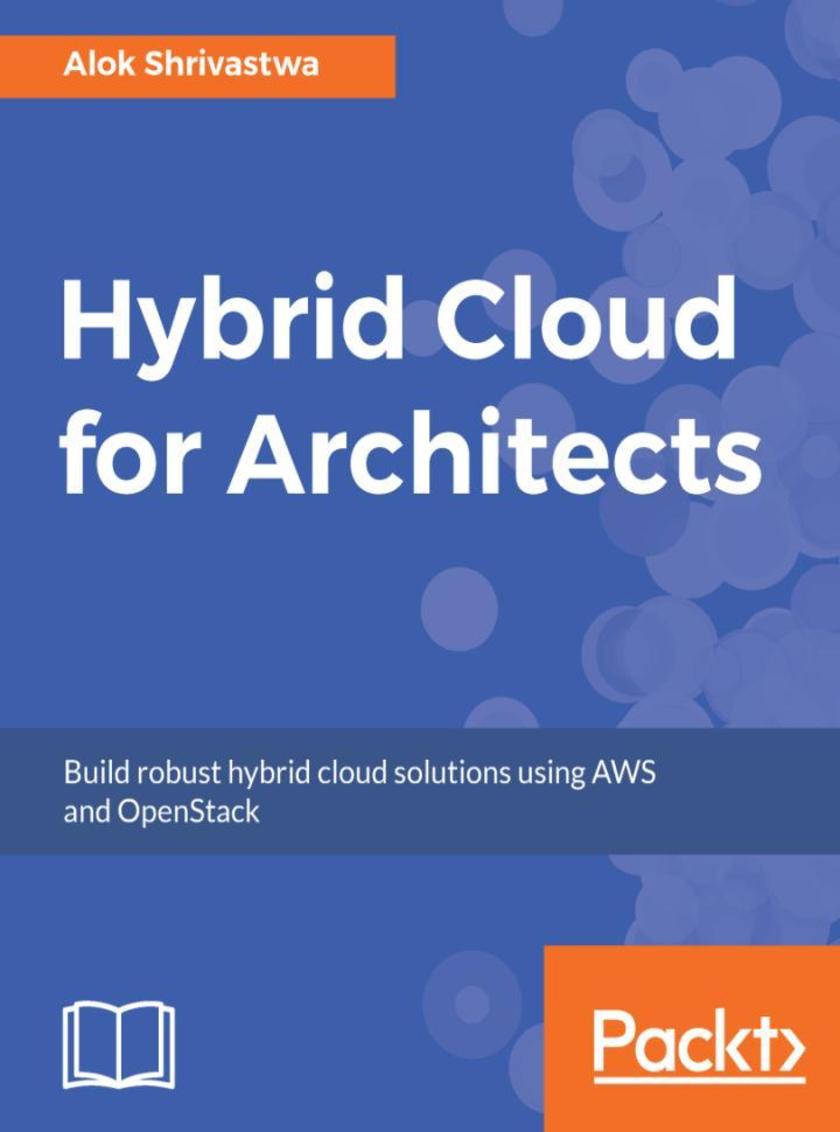
Hybrid Cloud for Architects
¥73.02
Build your own hybrid cloud strategy with this comprehensive learning guide. About This Book ? Build a hybrid cloud strategy for your organization with AWS and OpenStack ? Leverage Hybrid Cloud to design a complex deployment pipeline ? Learn to implement security and monitoring best practices with real-world examples Who This Book Is For This book is targeted at cloud architects, cloud solution providers, DevOps engineers, or any working stakeholder who wants to learn about the hybrid cloud architecture. A basic understanding of public and private cloud is desirable. What You Will Learn ? Learn the demographics and definitions of Hybrid Cloud ? Understand the different architecture and design of Hybrid Cloud ? Explore multi-cloud strategy and use it with your hybrid cloud ? Implement a Hybrid Cloud using CMP / Common API’s ? Implement a Hybrid Cloud using Containers ? Overcome various challenges and issues while working with your Hybrid Cloud ? Understand how to monitor your Hybrid Cloud ? Discover the security implications in the Hybrid Cloud In Detail Hybrid cloud is currently the buzz word in the cloud world. Organizations are planning to adopt hybrid cloud strategy due to its advantages such as untested workloads, cloud-bursting, cloud service brokering and so on. This book will help you understand the dynamics, design principles, and deployment strategies of a Hybrid Cloud. You will start by understanding the concepts of hybrid cloud and the problems it solves as compared to a stand-alone public and private cloud. You will be delving into the different architecture and design of hybrid cloud. The book will then cover advanced concepts such as building a deployment pipeline, containerization strategy, and data storage mechanism. Next up, you will be able to deploy an external CMP to run a Hybrid cloud and integrate it with your OpenStack and AWS environments. You will also understand the strategy for designing a Hybrid Cloud using containerization and work with pre-built solutions like vCloud Air, VMware for AWS, and Azure Stack. Finally, the book will cover security and monitoring related best practices that will help you secure your cloud infrastructure. By the end of the book, you will be in a position to build a hybrid cloud strategy for your organization. Style and approach This book follows a step-by-step, practical approach to deploying and implementing hybrid cloud architectures using AWS and OpenStack.
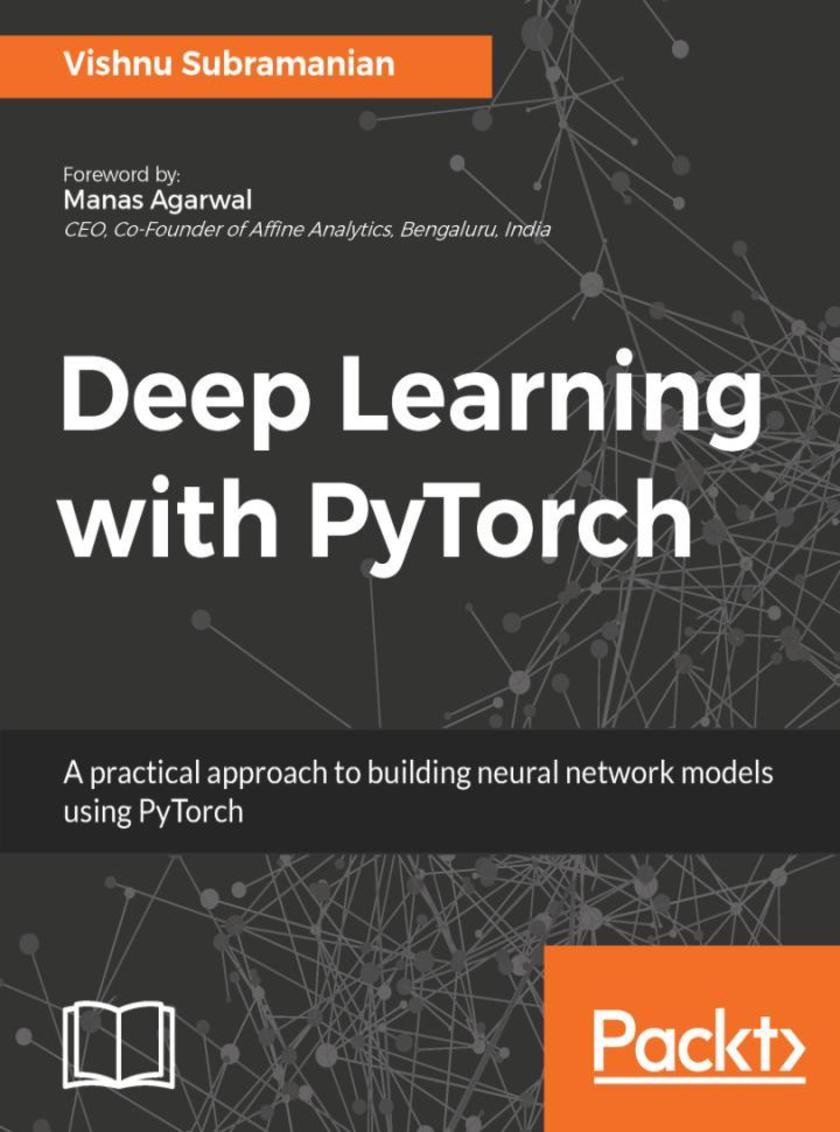
Deep Learning with PyTorch
¥73.02
Build neural network models in text, vision and advanced analytics using PyTorch About This Book ? Learn PyTorch for implementing cutting-edge deep learning algorithms. ? Train your neural networks for higher speed and flexibility and learn how to implement them in various scenarios; ? Cover various advanced neural network architecture such as ResNet, Inception, DenseNet and more with practical examples; Who This Book Is For This book is for machine learning engineers, data analysts, data scientists interested in deep learning and are looking to explore implementing advanced algorithms in PyTorch. Some knowledge of machine learning is helpful but not a mandatory need. Working knowledge of Python programming is expected. What You Will Learn ? Use PyTorch for GPU-accelerated tensor computations ? Build custom datasets and data loaders for images and test the models using torchvision and torchtext ? Build an image classifier by implementing CNN architectures using PyTorch ? Build systems that do text classification and language modeling using RNN, LSTM, and GRU ? Learn advanced CNN architectures such as ResNet, Inception, Densenet, and learn how to use them for transfer learning ? Learn how to mix multiple models for a powerful ensemble model ? Generate new images using GAN’s and generate artistic images using style transfer In Detail Deep learning powers the most intelligent systems in the world, such as Google Voice, Siri, and Alexa. Advancements in powerful hardware, such as GPUs, software frameworks such as PyTorch, Keras, Tensorflow, and CNTK along with the availability of big data have made it easier to implement solutions to problems in the areas of text, vision, and advanced analytics. This book will get you up and running with one of the most cutting-edge deep learning libraries—PyTorch. PyTorch is grabbing the attention of deep learning researchers and data science professionals due to its accessibility, efficiency and being more native to Python way of development. You'll start off by installing PyTorch, then quickly move on to learn various fundamental blocks that power modern deep learning. You will also learn how to use CNN, RNN, LSTM and other networks to solve real-world problems. This book explains the concepts of various state-of-the-art deep learning architectures, such as ResNet, DenseNet, Inception, and Seq2Seq, without diving deep into the math behind them. You will also learn about GPU computing during the course of the book. You will see how to train a model with PyTorch and dive into complex neural networks such as generative networks for producing text and images. By the end of the book, you'll be able to implement deep learning applications in PyTorch with ease. Style and approach An end-to-end guide that teaches you all about PyTorch and how to implement it in various scenarios.
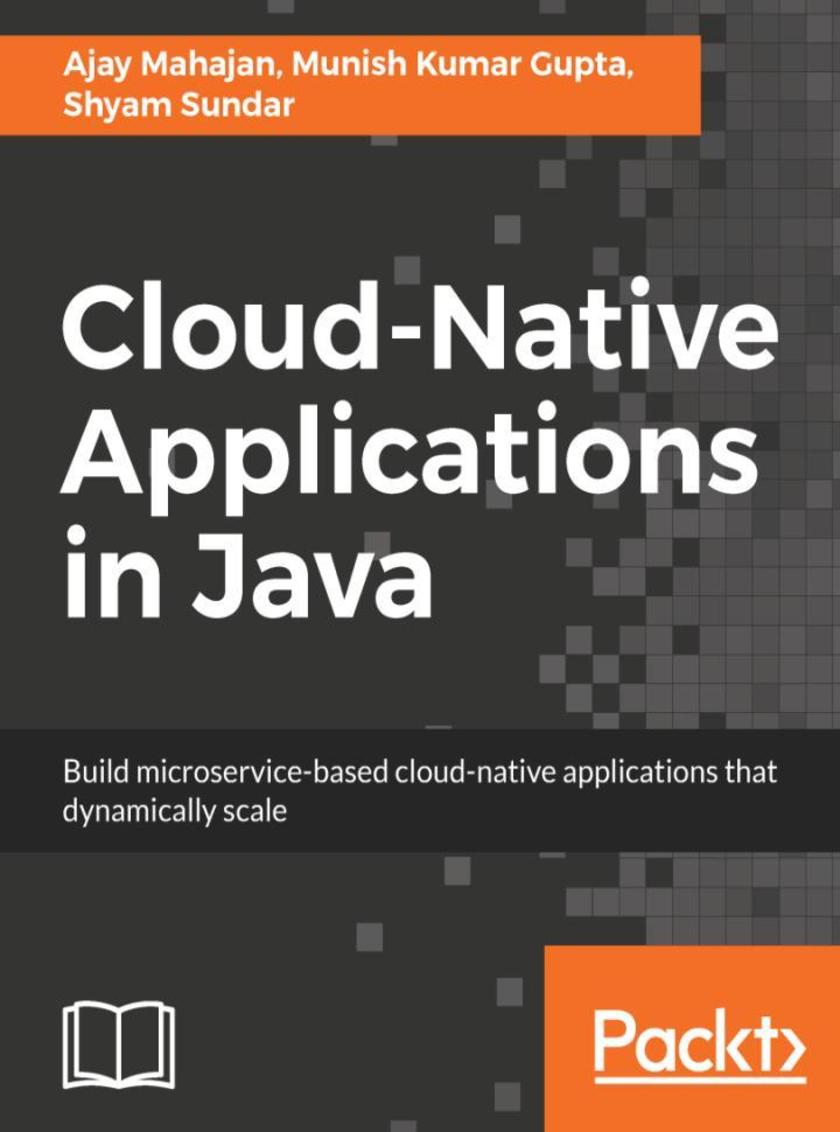
Cloud-Native Applications in Java
¥90.46
Highly available microservice-based web apps for Cloud with Java About This Book ? Take advantage of the simplicity of Spring to build a full-fledged application ? Let your applications run faster while generating smaller cloud service bills ? Integrate your application with various tools such as Docker and ElasticSearch and use specific tools in Azure and AWS Who This Book Is For Java developers who want to build secure, resilient, robust and scalable applications that are targeted for cloud based deployment, will find this book helpful. Some knowledge of Java, Spring, web programming and public cloud providers (AWS, Azure) should be sufficient to get you through the book. What You Will Learn ? See the benefits of the cloud environment when it comes to variability, provisioning, and tooling support ? Understand the architecture patterns and considerations when developing on the cloud ? Find out how to perform cloud-native techniques/patterns for request routing, RESTful service creation, Event Sourcing, and more ? Create Docker containers for microservices and set up continuous integration using Jenkins ? Monitor and troubleshoot an application deployed in the cloud environment ? Explore tools such as Docker and Kubernetes for containerization and the ELK stack for log aggregation and visualization ? Use AWS and Azure specific tools to design, develop, deploy, and manage applications ? Migrate from monolithic architectures to a cloud native deployment In Detail Businesses today are evolving so rapidly that they are resorting to the elasticity of the cloud to provide a platform to build and deploy their highly scalable applications. This means developers now are faced with the challenge of building build applications that are native to the cloud. For this, they need to be aware of the environment, tools, and resources they’re coding against. If you’re a Java developer who wants to build secure, resilient, robust, and scalable applications that are targeted for cloud-based deployment, this is the book for you. It will be your one stop guide to building cloud-native applications in Java Spring that are hosted in On-prem or cloud providers - AWS and Azure The book begins by explaining the driving factors for cloud adoption and shows you how cloud deployment is different from regular application deployment on a standard data centre. You will learn about design patterns specific to applications running in the cloud and find out how you can build a microservice in Java Spring using REST APIs You will then take a deep dive into the lifecycle of building, testing, and deploying applications with maximum automation to reduce the deployment cycle time. Gradually, you will move on to configuring the AWS and Azure platforms and working with their APIs to deploy your application. Finally, you’ll take a look at API design concerns and their best practices. You’ll also learn how to migrate an existing monolithic application into distributed cloud native applications. By the end, you will understand how to build and monitor a scalable, resilient, and robust cloud native application that is always available and fault tolerant. Style and approach Filled with examples, this book will build you an entire cloud-native application through its course and will stop at each point and explain in depth the functioning and design considerations that will make a robust, highly available application
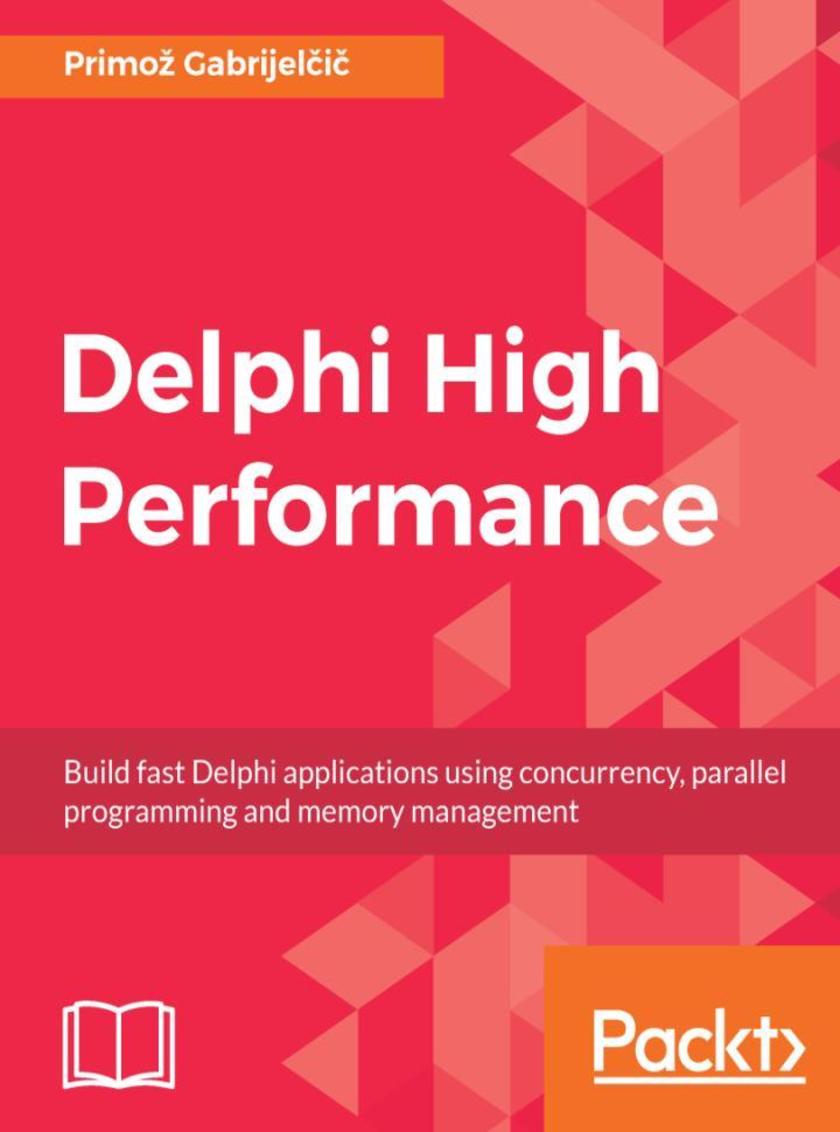
Delphi High Performance
¥81.74
Build fast, scalable, and high performing applications with Delphi About This Book ? Build efficient and concurrent applications in Delphi with focused examples ? Identify performance bottlenecks and apply the correct algorithm to increase the performance of applications. ? Delve into parallel programming and memory management to optimize your code Who This Book Is For This book is for Delphi developers who would like to build high performance applications with Delphi. Prior knowledge of Delphi is assumed. What You Will Learn ? Find performance bottlenecks and easily mitigate them ? Discover different approaches to fix algorithms ? Understand parallel programming and work with various tools included with Delphi ? Master the RTL for code optimization ? Explore memory managers and their implementation ? Leverage external libraries to write better performing programs In Detail Delphi is a cross-platform Integrated Development Environment (IDE) that supports rapid application development for Microsoft Windows, Apple Mac OS X, Google Android, iOS, and now Linux with RAD Studio 10.2. This book will be your guide to build efficient high performance applications with Delphi. The book begins by explaining how to find performance bottlenecks and apply the correct algorithm to fix them. It will teach you how to improve your algorithms before taking you through parallel programming. You’ll then explore various tools to build highly concurrent applications. After that, you’ll delve into improving the performance of your code and master cross-platform RTL improvements. Finally, we’ll go through memory management with Delphi and you’ll see how to leverage several external libraries to write better performing programs. By the end of the book, you’ll have the knowledge to create high performance applications with Delphi. Style and approach This book will take a step-by-step approach with focused examples to teach you how to increase the performance of applications.
Spring Boot 2.0 Cookbook - Second Edition
¥81.74
Take your application development skills to the next level by implementing Spring Boot features effectively About This Book ? This collection of effective recipes serves as guidelines for Spring Boot application development ? Get up to date with features of the latest version of Spring Boot 2.0 ? Tips and tricks to improve your efficiency through the stages of software development Who This Book Is For This book is for Java Developers who have good knowledge and understanding of Spring and Java application development. What You Will Learn ? Get to know Spring Boot Starters and create custom auto-configurations ? Work with custom annotations that enable bean activation ? Use DevTools to easily develop and debug applications ? Learn the effective testing techniques by integrating Cucumber and Spock ? Observe an eternal application configuration using Consul ? Move your existing Spring Boot applications to the cloud ? Use Hashicorp Consul and Netflix Eureka for dynamic Service Discovery ? Understand the various mechanisms that Spring Boot provides to examine an application’s health In Detail The Spring framework provides great flexibility for Java development, which also results in tedious configuration work. Spring Boot addresses the configuration difficulties of Spring and makes it easy to create standalone, production-grade Spring-based applications. This practical guide makes the existing development process more efficient. Spring Boot Cookbook 2.0 Second Edition smartly combines all the skills and expertise to efficiently develop, test, deploy, and monitor applications using Spring Boot on premise and in the cloud. We start with an overview of the important Spring Boot features you will learn to create a web application for a RESTful service. Learn to fine-tune the behavior of a web application by learning about custom routes and asset paths and how to modify routing patterns. Address the requirements of a complex enterprise application and cover the creation of custom Spring Boot starters. This book also includes examples of the new and improved facilities available to create various kinds of tests introduced in Spring Boot 1.4 and 2.0, and gain insights into Spring Boot DevTools. Explore the basics of Spring Boot Cloud modules and various Cloud starters to make applications in “Cloud Native” and take advantage of Service Discovery and Circuit Breakers. Style and approach This practical guide follows a recipe-based approach and provides extremely helpful guidelines to build, configure, and customize your Spring Boot applications.
Mastering ROS for Robotics Programming - Second Edition
¥90.46
Discover best practices and troubleshooting solutions when working on ROS About This Book ? Develop complex robotic applications using ROS to interface robot manipulators and mobile robots ? Gain insight into autonomous navigation in mobile robots and motion planning in robot manipulators ? Discover best practices and troubleshooting solutions Who This Book Is For If you are a robotics enthusiast or researcher who want to learn more about building robot applications using ROS, this book is for you. In order to learn from this book, you should have a basic knowledge of ROS, GNU/Linux, and C++ programming concepts. The book is also excellent for programmers who want to explore the advanced features of ROS. What You Will Learn ? Create a robot model with a seven-DOF robotic arm and a differential wheeled mobile robot ? Work with Gazebo and V-REP robotic simulator ? Implement autonomous navigation in differential drive robots using SLAM and AMCL packages ? Explore the ROS Pluginlib, ROS nodelets, and Gazebo plugins ? Interface I/O boards such as Arduino, robot sensors, and high-end actuators ? Simulate and motion plan an ABB and universal arm using ROS Industrial ? Explore the latest version of the ROS framework ? Work with the motion planning of a seven-DOF arm using MoveIt! In Detail In this day and age, robotics has been gaining a lot of traction in various industries where consistency and perfection matter. Automation is achieved via robotic applications and various platforms that support robotics. The Robot Operating System (ROS) is a modular software platform to develop generic robotic applications. This book focuses on the most stable release of ROS (Kinetic Kame), discusses advanced concepts, and effectively teaches you programming using ROS. We begin with aninformative overview of the ROS framework, which will give you a clear idea of how ROS works. During the course of this book, you’ll learn to build models of complex robots, and simulate and interface the robot using the ROS MoveIt! motion planning library and ROS navigation stacks. Learn to leverage several ROS packages to embrace your robot models. After covering robot manipulation and navigation, you’ll get to grips with the interfacing I/O boards, sensors, and actuators of ROS. Vision sensors are a key component of robots, and an entire chapter is dedicated to the vision sensor and image elaboration, its interface in ROS and programming. You’ll also understand the hardware interface and simulation of complex robots to ROS and ROS Industrial. At the end of this book, you’ll discover the best practices to follow when programming using ROS. Style and approach This is a simplified guide to help you learn and master advanced topics in ROS using hands-on examples.
Advanced Infrastructure Penetration Testing
¥81.74
A highly detailed guide to performing powerful attack vectors in many hands-on scenarios and defending significant security flaws in your company's infrastructure About This Book ? Advanced exploitation techniques to breach modern operating systems and complex network devices ? Learn about Docker breakouts, Active Directory delegation, and CRON jobs ? Practical use cases to deliver an intelligent endpoint-protected system Who This Book Is For If you are a system administrator, SOC analyst, penetration tester, or a network engineer and want to take your penetration testing skills and security knowledge to the next level, then this book is for you. Some prior experience with penetration testing tools and knowledge of Linux and Windows command-line syntax is beneficial. What You Will Learn ? Exposure to advanced infrastructure penetration testing techniques and methodologies ? Gain hands-on experience of penetration testing in Linux system vulnerabilities and memory exploitation ? Understand what it takes to break into enterprise networks ? Learn to secure the configuration management environment and continuous delivery pipeline ? Gain an understanding of how to exploit networks and IoT devices ? Discover real-world, post-exploitation techniques and countermeasures In Detail It has always been difficult to gain hands-on experience and a comprehensive understanding of advanced penetration testing techniques and vulnerability assessment and management. This book will be your one-stop solution to compromising complex network devices and modern operating systems. This book provides you with advanced penetration testing techniques that will help you exploit databases, web and application servers, switches or routers, Docker, VLAN, VoIP, and VPN. With this book, you will explore exploitation abilities such as offensive PowerShell tools and techniques, CI servers, database exploitation, Active Directory delegation, kernel exploits, cron jobs, VLAN hopping, and Docker breakouts. Moving on, this book will not only walk you through managing vulnerabilities, but will also teach you how to ensure endpoint protection. Toward the end of this book, you will also discover post-exploitation tips, tools, and methodologies to help your organization build an intelligent security system. By the end of this book, you will have mastered the skills and methodologies needed to breach infrastructures and provide complete endpoint protection for your system. Style and approach Your one-stop guide to mastering the skills and methodologies of breaching infrastructures and providing complete endpoint protection to your system.
The Agile Developer's Handbook
¥73.02
A pragmatic companion guide to your Agile journey About This Book ? Make your team Agile by implementing industry-standard Agile techniques ? Assess scope, scale up efficiently ? Create the correct roles and identify the right candidates for your team ? Finish your projects faster and stay ahead of the curve Who This Book Is For If you’re a software developer or a project manager with little to no experience of Agile, but you want to efficiently implement it, this is the book for you. What You Will Learn ? Create a solid foundation that gives your team an Agile jumpstart ? Understand how to select and evolve practices to increase your team’s agility ? Use experiments to accelerate your team’s understanding ? Fine-tune your approach by incorporating aspects of Lean and Lean Startup ? Know how to foster an environment of continuous improvement and learning that will become self-sustaining In Detail This book will help you overcome the common challenges you’ll face when transforming your working practices from waterfall to Agile. Each chapter builds on the last, starting with easy-to-grasp ways to get going with Agile. Next you’ll see how to choose the right Agile framework for your organization. Moving on, you’ll implement systematic product delivery and measure and report progress with visualization. Then you’ll learn how to create high performing teams, develop people in Agile, manage in Agile, and perform distributed Agile and collaborative governance. At the end of the book, you’ll discover how Agile will help your company progressively deliver software to customers, increase customer satisfaction, and improve the level of efficiency in software development teams. Style and approach Think of this book like a manual, rather than a theoretical textbook. It’s packed full of visual ways to understand Agile, helpful tips to get you set up quickly, tried and tested solutions when challenges arise, and heaps of support to get the day-to-day tasks in Agile done. You’ll want to keep a copy on your desk, right next to your coffee cup.
Building Smart Drones with ESP8266 and Arduino
¥54.49
Leverage the WiFi chip to build exciting Quadcopters About This Book ? Learn to create a fully functional Drone with Arduino and ESP8266 and their modified versions of hardware. ? Enhance your drone's functionalities by implementing smart features. ? A project-based guide that will get you developing next-level drones to help you monitor a particular area with mobile-like devices. Who This Book Is For If you are a programmer or a DIY enthusiast and keen to create a fully functional drone with Arduino and ESP8266, then this book is for you. Basic skills in electronics and programming would be beneficial. This book is not for the beginners as it includes lots of ideas not detailed how you can do that. If you are a beginner, then you might get lost here. The prerequisites of the book include a good knowledge of Arduino, electronics, programming in C or C++ and lots of interest in creating things out of nothing. What You Will Learn ? Includes a number of projects that utilize different ESP8266 and Arduino capabilities, while interfacing with external hardware ? Covers electrical engineering and programming concepts, interfacing with the World through analog and digital sensors, communicating with a computer and other devices, and internet connectivity ? Control and fly your quadcopter, taking into account weather conditions ? Build a drone that can follow the user wherever he/she goes ? Build a mission-control drone and learn how to use it effectively ? Maintain your vehicle as much as possible and repair it whenever required In Detail With the use of drones, DIY projects have taken off. Programmers are rapidly moving from traditional application programming to developing exciting multi-utility projects. This book will teach you to build industry-level drones with Arduino and ESP8266 and their modified versions of hardware. With this book, you will explore techniques for leveraging the tiny WiFi chip to enhance your drone and control it over a mobile phone. This book will start with teaching you how to solve problems while building your own WiFi controlled Arduino based drone. You will also learn how to build a Quadcopter and a mission critical drone. Moving on you will learn how to build a prototype drone that will be given a mission to complete which it will do it itself. You will also learn to build various exciting projects such as gliding and racing drones. By the end of this book you will learn how to maintain and troubleshoot your drone. By the end of this book, you will have learned to build drones using ESP8266 and Arduino and leverage their functionalities to the fullest. Style and approach This is an easy-to-follow guide with illustrations and technical de*ions to help you assemble your vehicle.


