


 购物车
购物车 个人中心
个人中心
Who Said That?: The Stories Behind Familiar Expressions
¥24.44
Who Said That? provides an entertaining and authoritative reference for the origins and meanings of our common figures of speech. Who said 100+ famous expressions? Who really said them? What did they actually say? What did they actually mean? Why did they say them that way? Who repeated what was said? Surprisingly true, sometimes strange, always fascinating, the stories about whence came these expressions will entertain, educate, and even amaze you.
Le Songe D'Une Nuit D'?té
¥9.00
L'action se déroule en Grèce et réunit pour mieux les désunir deux couples de jeunes amants, Lysandre, Démétrius, Hélène et Hermia. Hermia veut épouser Lysandre, mais son père, ?gée, la destine à Démétrius, dont est amoureuse Hélèna. Lysandre et Hermia s'enfuient dans la forêt, poursuivis par Démétrius, lui-même poursuivi par Hélèna. Pendant ce temps, Obéron, roi des fées, a ordonné à Puck de verser une potion sur les paupières de sa femme, Titania. Il entre dans la forêt avec Puck. Pendant la nuit, la confusion règne.
Espada dos Deuses (Edi??o Portuguesa): Livro 1 da saga Espada dos Deuses
¥8.09
Portugues do Brasil! No limiar dos tempos, dois antigos adversários batalharam pelo controle da Terra. Um homem insurge-se para ficar ao lado dos humanos. Um soldado cujo nome nós ainda lembramos hoje. Mortalmente ferido, as angelicais for?as especiais do coronel Mikhail Mannuki despertam em sua nave destruída. A mulher que salvou sua vida tem habilidades que lhe parecem familiares, mas, por estar sem memória de seu passado, ele nada p?de lembrar. O povo de Ninsianna tem profecias de um campe?o alado, de uma espada dos deuses, que irá defendê-los de for?as malignas. Mikhail insiste que n?o é um semideus, porém, sua misteriosa habilidade para matar diz o contrário. O mal sussurra a um príncipe sombrio. Espécies enfermas procuram frear sua extin??o. Dois imperadores, enraizados em suas antigas ideologias, n?o conseguem enxergar a amea?a neste relato da história épica, cujo cenário é a batalha entre o bem e o mal, o choque de impérios e ideologias, e o maior super-herói a andar pela Terra, o Arcanjo Mikhail. B?NUS ESPECIAL: contém o Livro 1: Heróis do Antigo. Este livro n?o é uma fic??o de religi?o. * Ordem de leitura - série Sword of the Gods: —Espada dos Deuses (conter 'Heróis do Antigo' novela) —N?o há Lugar para Anjos Caídos —Fruta Proibida (em breve)

A Gothic Guardian Angel ???? ???? ???? ARABIC: ?????? ??????? - Arabic edition
¥8.09
. . " " . . . . " thirteen reasons why" "it’s a wonderful life " " " . ! . " " — . " " — . " " — . " " — . " " — - Arabic language
Aici nu e loc pentru ?ngeri c?zu?i (Edi?ia rom?n?): Volumul II al Epopeei Sabia
¥32.62
n zorii timpurilor, doi adversari antici se luptau pentru controlul Pmntului. Un singur brbat s-a nlat, pe atunci, de-a dreapta oamenilor. Un soldat al crui nume ni-l amintim nc i astzi... . Dobort pe Pmnt fr a avea vreo amintire din trecut, Colonelul Forelor Speciale Angelice, Mikhail Mannuki’ili, nu are alt alegere dect s se integreze n satul Ninsiannei. Dar fiul Cpeteniei, Jamin, este hotrt s l alunge. Atunci cnd cunotinele sale legate de tehnologie se dovedesc a fi inutile ntr-o cultur din Epoca de piatr, Mikhail este confruntat cu o alegere dificil: s i ncheie misiunea Sau s rmn n Assur, cu Ninsianna . Ct despre Ninsianna, ultimul lucru pe care i-l dorete este s se ntoarc n Assur. Atunci cnd nceteaz s mai primeasc viziuni, ns, tatl ei insist c el ar fi Alesul- pn la urm, ea este doar o femeie! Cea-Care-Este i-a promis o frm din Rai. Dac Mikhail nu i poate aminti cum s ajung acolo, atunci ine de ea s descopere semnificaia profeiei. . ntre timp, n ceruri, Lucifer face o nelegere cu Shay’tan. Aceast nelegere va sfri prin a provoca un rzboi galactic, purtat chiar pn la porile Assurului. . Epopeea Sabia Zeilor” continu n volumul al II-lea: Aici nu e loc pentru ngeri czui. . Aceast carte NU este o creaie cu caracter religios! . Volumul II al Epopeei Sabia Zeilor . Ordinea de citire a "Sabia zeilor":—Eroi de Demult: Episodio 1x01 (o nuvel)—Sabia Zeilor—Aici nu e loc pentru ngeri czui—Fructul interzis(n curnd) . Limba romn, cri romneti - Romanian language, Romanian edition
Gotiskais Ziemassvētku e??elis (Izdevums latvie?u valodā): Latvian Edition
¥24.44
eFestival '’Pasaules labākās neatkarīgās e-grāmatas balvas'’ uzvarētāja - 2014. Gada labākā novele. . Spoki no vecām atmiām nekad nav tālu prom... . Kesiju Baruu Ziemassvētku vakarā pameta puisis, via cerēja, ka vias sāpes beigsies, kad via triecās ar savu maīnu senajā diskābara kokā. Bet, kad vias priekā parādījās skaists eelis ar melniem spārniem un teica: '’ī tev nav smirdīga paranormāla romance, bērns,'’ via saprata, ka nāve nav atrisinājusi visas vias problēmas. Vai Deremiels varēs viai palīdzēt atbrīvoties no pagātnes spokiem un rast mieru . is modernais, paranormālais stāsts par sargeeu mītiem apvieno "Ziemassvētku dziesma" (A Christmas Carol) ar "Tā ir brīniīga dzīve" (It's a Wonderful Life) un "Trīspadsmit iemesli, kāpēc" (Thirteen Reasons Why) lai dotu cilvēkiem cerību, ka vii var satvert pagātni savās rokās un pārvarēt to. . Latvieu valoda, latvieu grāmatas - Latvian language * '’oti maz grāmatu spēj mani novest līdz asarām, bet ī to panāca, turklāt viskrāākajā veidā. eit ir vēstījums, stāstīts ar humora devu un eleganci. Brīniīgi!'’ —Lasītāja atsauksme . '’Via lika man just līdzi. Un via lika man raudāt. Un es esmu oti pateicīga par beigām.'’—Lasītāja atsauksme . '’Grāmata, kas lika man justies tā, kā neviena cita grāmata!'’—Lasītāja atsauksme . '’Jau atkal Anna pārveido vārdus tīrā zeltā. īs mūsdienu Ziemassvētku dziesmas gotiskās pieskaas iekauana ir pārsteidzoa...'’ —Lasītāja atsauksme . '’Ja es varētu, es dotu im stāstam bezgalīgi daudz zvaigu! ī grāmata/stāsts lika man just skudrias skrienam pār muguru.'’ —Lasītāja atsauksme

Speaking of Poetry...
¥15.40
A book of poetry on various themes. Springtime I shall wait for you springtimeWhen winter has passed awayRosebuds will be dancing in the nightBeneath the Milky Way Lovers kissing and holding handsWaltzing a brisk and lively danceUnderneath the crescent moon that shownAs Orpheus sings a joyful song Mockingbirds will send forth merry soundsAwakening nature's dreary brownChildren playing games while folksLaugh and tell their silly jokes
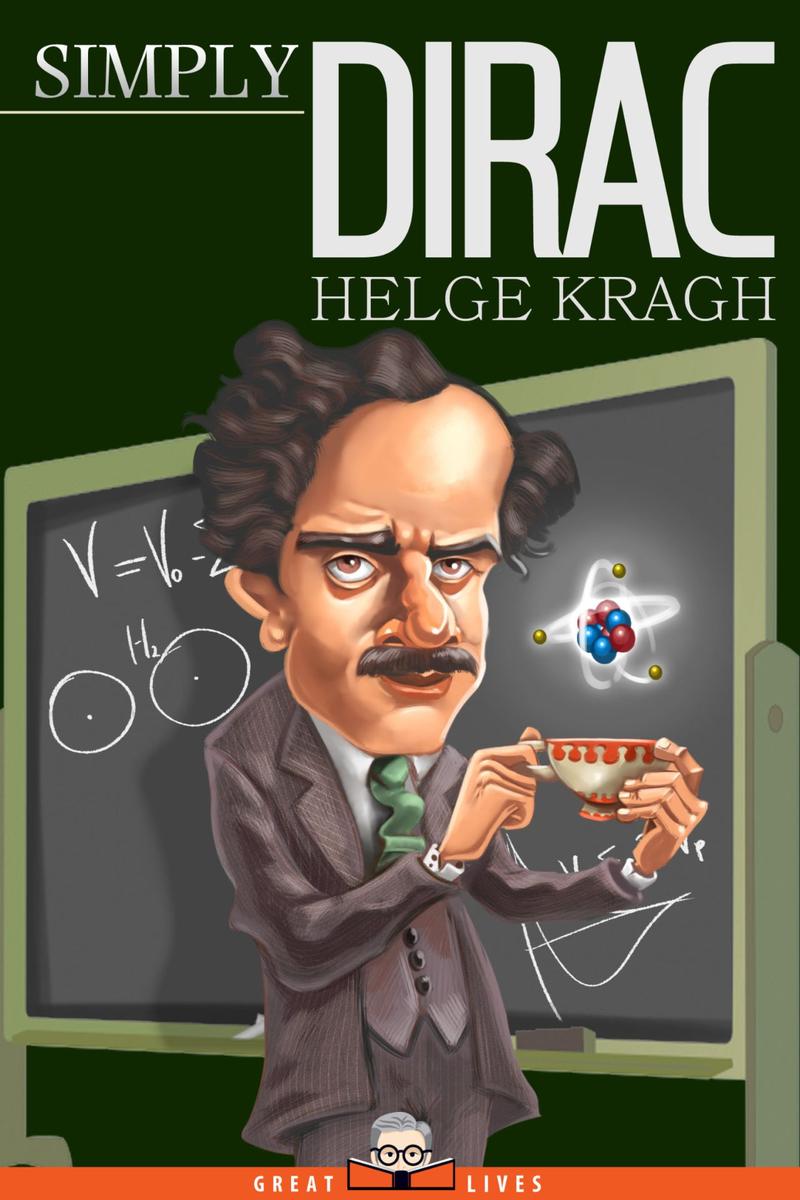
Simply Dirac
¥65.32
Paul Dirac?(1902–1984) was a brilliant mathematician and a 1933 Nobel laureate whose work ranks alongside that of Albert Einstein and Sir Isaac Newton. Although not as well known as his famous contemporaries Werner Heisenberg and Richard Feynman, his influence on the course of physics was immense. His landmark book,?The Principles of Quantum Mechanics, introduced that new science to the world and his “Dirac equation” was the first theory to reconcile special relativity and quantum mechanics. Dirac held the Lucasian Chair of Mathematics at Cambridge University, a position also occupied by such luminaries as Isaac Newton and Stephen Hawking. Yet, during his 40-year career as a professor, he had only a few doctoral students due to his peculiar personality, which bordered on the bizarre. Taciturn and introverted, with virtually no social skills, he once turned down a knighthood because he didn’t want to be addressed by his first name. Einstein described him as “balancing on the dizzying path between genius and madness.” In?Simply Dirac, author?Helge Kragh?blends the scientific and the personal and invites the reader to get to know both Dirac the quantum genius and Dirac the social misfit. Featuring cameo appearances by some of the greatest scientists of the 20th century and highlighting the dramatic changes that occurred in the field of physics during Dirac’s lifetime, this fascinating biography is an invaluable introduction to a truly singular man.
The Weatherman
¥32.62
Josie Skye was one of the most accurate meteorologists in the country - but not everyone considered that a good thing. When weather forecasters and others start disappearing or dying and Josie fears she's one of the targets, she teams up with weather researcher, Oliver Burns, to try to find some of their missing colleagues and figure out what's going on. And what's with all these butterflies? The Weatherman is a science fiction adventure, featuring Josie Skye, a middle-aged meteorologist. This science-fiction adventure story with a mystery twist has readers begging for a sequel.
A Bit of a Twist
¥24.44
The twelve short stories presented in A Bit of A Twist are each mostly normal and ordinary, but somewhere in the story is a twist. In “David’s Not Here”, “Marriage Counselor”, “Down Home”, “River Road”, “Happily Ever After”, and “Blind Date”, the ending takes a bit of a twist from what you were probably expecting. “The Chateau de Puyguilhem” and “The Wish” take stories you’re already familiar with, and give the whole thing a bit of a twist. “Reunion”, “Eternal Youth”, and “Aliens Among Us” each have a bit of a mental twist. And “Air of Authority” shows what happens when you twist around words. As you read these stories, you will also discover that many of them involve some degree of revenge. Because, after all, what is revenge but twisting someone’s own actions back on them? And as always, each story in the Read on the Run series of anthologies is short, to suit your busy lifestyle.
Uncommon Pet Tales
¥24.44
Fifteen short stories involving pets. But don’t think for a moment that you’ll “See Spot Run”, or that Lassie will save her master who’s fallen in the well. Those are common pet tales, and these are Uncommon Pet Tales. Within this collection, you’ll find a little bit of romance, a little bit of revenge, a few ghosts, and some fantasy and magic. You’ll find some uncommon pets such as Katelynn, and Mr. MacCawber, and you’ll find some uncommon stories, such as Patience, and Schrodinger’s Other Cat. You’ll find stories of man’s (or woman’s) best friend, and stories where the animals are far from friendly. And you'll find some stories that simply refuse to fit into a category. As always, each story in the Read on the Run series of anthologies is short, to suit your busy lifestyle.?
A Wink and a Smile
¥32.62
An anthology of 18 short romance stories.? Not love stories, although some of them do include aspects of that.??But whereas love stories are often sad, each of the selections in A Wink and a Smile has either a 'happily-ever-after' ending, or at least a strong suggestion that this is where the characters are heading.? That doesn't mean these tales all sound the same; to the contrary, we've found quite a diverse collection of romances.??Yes, there are a couple of traditional romances, and there's a healthy handful of budding romances, but we've included a story set in the future, and a couple of fantasy tales.??Within this mix, you will meet several matchmakers and you'll see couples reconcile, and? even?a few stories that will make you laugh. As always, each story in the Read on the Run series of anthologies is short, to suit your busy lifestyle.
The Healing Properties of Flowers: An Earth Lodge Introductory Guide to Flower E
¥32.62
Interested in learning more about flower essences, what they are and how to use them? This handy pocket guide lists 115 healing flowers, including the most commonly used remedies, and what you can do with them.Looking for a more in-depth guide to vibrational healing remedies? Check out "The Comprehensive Vibrational Healing Guide" . The comprehensive guide includes information on how to make your own crystal, flower and environmental essences; explains Rife machines, bioenergetic remedies, and homeopathy; covers energy healing methods, sound healing, color therapy and so much more.
Heart Ward: An Inner Origins Companion Novella
¥24.44
Alec's been hurt before. As a child, he discovered the ravaged bodies of his mother and sister dead at the hands of Dark Fae, and vowed never to love again. What will he do when a sassy parkour-running, krav-maga-kicking, viking-eyed goddess walks into his life? Can he resist the urge to give her his heart? Does he even want to try?Heart Ward, the Inner Origins companion novella, is a steamy dive deep into the heart of Alec Ward, champion of the Fae Light Guard. Experience first-hand Alec's inner struggle to let himself take a chance on love again. YA paranormal romance may be read on its own, or after Book 2 or 3 in the Inner Origins Fantasy series.
Fathers and Sons
¥8.82
When a young graduate returns home he is accompanied, much to his father and uncle's discomfort, by a strange friend "who doesn't acknowledge any authorities, who doesn't accept a single principle on faith." Turgenev's masterpiece of generational conflict shocked Russian society when it was published in 1862 and continues today to seem as fresh and outspoken as it did to those who first encountered its nihilistic hero.
Symphony
¥8.09
Aurora Award Finalist.? The colony ship, The Last Chance, has fled a plague-poisoned Earth with the remnants of the human race. Launched before completion of its biosphere, the ship is only partly self-sustaining. Humanity has to find a new home—and time is running out. It isn’t called The Last Chance for nothing. When they find the planet, it seems a dream come true. Earth-like, breathable atmosphere, unpopulated. They name it Aurora, for the beauty that dances in its skies. At least, it had seemed beautiful at the time. Now they aren’t so sure. Now people are dying. Gar Franck is the ship’s communication expert. When signs point to a non-human intelligence on the planet, Gar becomes the key to communicating with it. But how can he communicate with an alien being when he can’t even talk to his autistic son, Anton, or his increasingly distant wife, Clara? "There are two stories in "Symphony"...both converge in a spectacular, explosive finale. Smith's prose is poetic and evocative. He creates an intricate fabric of light, color, and sound with effortless flair. The story’s fluid style and the abundance of complex, wrenching emotions [make this] another recommended story in this issue." —Eugie Foster and Marsha Sisolak, Tangent Online "A strong SF-nal story about a 'sentient light symphony' that objects to humans colonizing 'its planet.' How would you communicate with such and how would it react to a baby who lacks all 'human baggage' are some of the issues addressed here. (A+)" —Fantasy Book Critic
The Dancer at the Red Door
¥8.09
Aurora Award Finalist.? Alexander King has everything--wealth, power, a business empire over which he rules. But lately, the corporate game in which he excels has lost its thrill for him. He needs a new game. And then, on the crowded streets of Toronto, in the dead cold of winter, she appears before him. The Dancer. Achingly beautiful, half-naked, and dancing to a song that only she and King seem to hear, she becomes King’s new obsession, an obsession that draws him into a journey through a secret world hidden within the city he thought he knew…and to a very special club. "'The Dancer at the Red Door,' with its mix of oblique horror, urban fantasy, and monsters ... recalls British horror novelist Clive Barker at his most disturbingly fanciful." —Quill and Quire "An excellent story … urban fantasy at its best." —Fantasy Book Critic "...intriguing meditation on escapism...evoking Gaiman's Neverwhere, the obligatory helping of Lovecraft, plus a touch of something like Kubrick's Eyes Wide Shut" —Strange Horizons "Just as the song of the city leads King throughout his journey, so too does it lead the reader throughout Douglas Smith's beautifully crafted 'The Dancer at the Red Door.' The writing is lean and evocative; every element of the story works double-time as setting informs character, action creates mood, and nothing is superfluous. The song becomes a living, breathing creature which, more so than hearing, I could feel viscerally as I read Doug's wonderful story. Highly, highly recommended." —Rainbow Dragon Recommends
The Last Ride
¥8.09
Vaya is an immortal Valkyrie and favorite daughter of Odin All Father, sworn to carry dead heroes from the battlefields of Earth to live forever in Valhalla. One day, she intervenes on the battlefield to save the life of a soldier who has captured her heart, and is forced by Odin to choose between immortality and the man she loves. Vaya chooses love, not knowing that the hardest choice still lies ahead of her. "…exemplifies the best elements of Douglas Smith’s writing. A Valkyrie falls for her hero, gives up her immortality for him then has to make that inevitable and awful choice afterwards. As always, even for such a brief time, there is so much life in these characters. I don’t bother to marvel at how quickly I come to care for Douglas Smith’s people anymore, it’s a given." —SF Crowsnest Reviews "A gripping portrayal of Vaya, a Valkyrie, and the ultimate sacrifices one makes for love." —SFRevu
Le Capitaine Hyx: Aventures effroyables de M. Herbert de Renich - Tome I
¥8.82
Herbert de Renich, citoyen luxembourgeois, toujours amoureux d'Amalia, pourtant devenue la femme du terrible amiral allemand Von Treischke, se retrouve à bord du Vengeur, un sous marin extraordinaire, con?u pour le plaisir mais surtout pour la guerre, par un américain masqué - les ?tats-Unis n'étant pas encore en guerre - qui, pour venger sa femme, souhaite ch?tier les crimes allemands et fait ainsi subir les pires tortures à ses prisonniers. Herbert se retrouve mêlé à la bataille invisible - puisqu'elle est électrique - que se livre les troupes de l'américain et des allemands autour d'un fabuleux trésor enfoui dans la baie de Vigo... Vaste fresque rendant hommage à Jules Verne, ce roman de guerre fait appel à la science-fiction pour dénoncer une fois encore les atrocités allemandes. Le thème du combat subaquatique et du trésor est repris d'un projet d'aventure de Rouletabille que Leroux a abandonné pour ?entrer en guerre?.

The Walker of the Shifting Borderland
¥8.09
Aurora Award WINNER. The Walker is a child of the two Realms of the Continuum, a prince of Order and of Chaos—and a rebel against both. When he falls in love with an ephemeral, a mortal woman who is the key to the balance between the Realms, he triggers a struggle for her life—and the fate of her universe. "A very different sort of tale. ... A cosmic story of gods which seems to be inspired by the works of Michael Moorcock, and I think he would not be ashamed of it." —SF Crowsnest Reviews "A tale of epic love when a mortal gets caught between a battle of the gods. Smith reminds us that we have the potential to change the world around us and that self-sacrifice can be a means of making the world around us better." —Speculating Canada "The descriptions here have cosmic sweep…" —Locus Online
King Arthur and The Knights Of The Round Table
¥8.09
King Arthur and the Kinghts of the Round Table Complete Works World's Best Collection This is the best King Arthur Collection available, including the most complete set of the Arthurian legends plus many extra free bonus materials. The Most Complete Collection Available In this irresistible collection we include all 11 complete Books (more than 130 chapters) from Thomas Malory (published by William Caxton) of the legendary epic ‘Le Morte D’ Arthur’. We also give you all the other, rare stories of the other famous Knights of the Round Table. Plus, we include additional bonuses covering Arthur related mythologies, including Celtic Mythology and other British and European Legends. Everything Arthur related in one, amazing comprehensive compilation. Works Included: Le Morte D’ Arthur -The legendary, famous compilation by Sir Thomas Malory of romance? tales about the legendary King Arthur. One of the best-known works of the English language and Arthurian literature. It coves the grand adventures and complete stories of the beloved characters, from Arthur himself, to Merlin, to Tristram, Launcelot and Guinevere, Morgan le Fay, Arthur’s sister, and even Mordred, Arthur’s villainous son. Who was the Real King Arthur? -?A special analysis of the 'suspects', written specifically for this collection. Additional Sir Gawayne Stories -?Additional stories of the popular Sir Gawayne, including the well known fairy tale: ‘Sir Gawayne and the Green Knight’ The Mabinogion -?11 classic stories from Welsh and Celtic mythology, known as prime examples of folktales, and early medieval and Iron age narratives, even including more stories of King Arthur. Myths And Legends Of The Celtic Race -?Devoted to explaining the fascinating and expansive Celtic mythology, as well as chapters on Celtic history and information on the Druids. Hero-Myths Of The British Race And Legends Of The Middle Ages -?A rich exploration into more British, as well as European and Middle Age mythology. It includes chapters about many Heroic Sagas, such as Charlemagne, Beowulf, and Robin Hood. Get This Collection Right Now This is the best King Arthur and Arthurian Legends collection you can get, so get it now and start enjoying and being drawn into the magnificent world of myth and legend like never before!


