


 购物车
购物车 个人中心
个人中心
Madarak a dobozban
¥57.14
"A Daughter of the Snows" is Jack London's first novel. The novel features a strong female heroine, Frona Welse. Frona was born into a wealthy family and educated at Stanford but she takes to the Yukon trail after upsetting her father and his wealthy community of friends with her out-spoken ways and her innocent friendship with the town's prostitute. "All ready, Miss Welse, though I'm sorry we can't spare one of the steamer's boats." Frona Welse arose with alacrity and came to the first officer's side. "We're so busy," he explained, "and gold-rushers are such perishable freight, at least—" "I understand," she interrupted, "and I, too, am behaving as though I were perishable. And I am sorry for the trouble I am giving you, but—but—" She turned quickly and pointed to the shore. "Do you see that big log-house Between the clump of pines and the river I was born there." "Guess I'd be in a hurry myself," he muttered, sympathetically, as he piloted her along the crowded deck.Everybody was in everybody else's way; nor was there one who failed to proclaim it at the top of his lungs. A thousand gold-seekers were clamoring for the immediate landing of their outfits. Each hatchway gaped wide open, and from the lower depths the shrieking donkey-engines were hurrying the misassorted outfits skyward. On either side of the steamer, rows of scows received the flying cargo, and on each of these scows a sweating mob of men charged the descending slings and heaved bales and boxes about in frantic search. Men waved shipping receipts and shouted over the steamer-rails to them. Sometimes two and three identified the same article, and war arose. The "two-circle" and the "circle-and-dot" brands caused endless jangling, while every whipsaw discovered a dozen claimants. "The purser insists that he is going mad," the first officer said, as he helped Frona Welse down the gangway to the landing stage, "and the freight clerks have turned the cargo over to the passengers and quit work. But we're not so unlucky as the Star of Bethlehem," he reassured her, pointing to a steamship at anchor a quarter of a mile away. "Half of her passengers have pack-horses for Skaguay and White Pass, and the other half are bound over the Chilcoot. So they've mutinied and everything's at a standstill." "Hey, you!" he cried, beckoning to a Whitehall which hovered discreetly on the outer rim of the floating confusion. A tiny launch, pulling heroically at a huge tow-barge, attempted to pass between; but the boatman shot nervily across her bow, and just as he was clear, unfortunately, caught a crab. This slewed the boat around and brought it to a stop. "Watch out!" the first officer shouted. ABOUT AUTHOR: John Griffith "Jack" London (born John Griffith Chaney, January 12, 1876 – November 22, 1916) was an American author, journalist, and social activist, Authors of; "The Pearls of Parlay" and "The Heathen", and of the San Francisco Bay area in The Sea Wolf. And also; as his dystopian novel The Iron Heel, his non-fiction exposé The People of the Abyss, and The War of the Classes.
Damele din p?l?rie. Pseudospionologykos
¥32.62
Inspirat de o tem? pe care o prime?te de la noul s?u profesor de ?tiin?e sociale, micul Trevor are o idee menit? s? schimbe lumea. O ambi?ie uria?? pentru un pu?ti de numai doisprezece ani, dar care reu?e?te, ?n ciuda obstacolelor, s? nu-?i piard? idealismul ?i s? demonstreze c? to?i putem fi capabili de fapte bune.?n jocul aritmetic al lui Trevor, de la un singur om care face trei lucruri importante pentru trei oameni diferi?i, se poate ajunge la o lume ?ntreag? ?n care o favoare primit? nu se ?ntoarce, ci se r?spl?te?te d?nd mai departe ajutorul celor care au nevoie de el.?O capodoper? cu un final incendiar." Kirkus Reviews?Foarte puternic… dialoguri veridice ?i nuan?e care fac personajele mai vii dec?t ar fi ?n realitate." Chicago Tribune?Catherine Ryan Hyde ne conduce c?tre un final curajos ?i puternic." Los Angeles Times?Filosofia din spatele c?r?ii este at?t de interesant?, iar optimismul ei at?t de contagios, ?nc?t cititorul absoarbe f?r? s?-?i dea seama o poveste de care-?i va aminti mult? vreme." The Denver Post
Zsiványok
¥85.76
Summary: Sara Crewe, a pupil at Miss Minchin's London school, is left in poverty when her father dies, but is later rescued by a mysterious benefactor. ?"Once on a dark winter's day, when the yellow fog hung so thick and heavy in the streets of London that the lamps were lighted and the shop windows blazed with gas as they do at night, an odd-looking little girl sat in a cab with her father and was driven rather slowly through the big thoroughfares." ? She sat with her feet tucked under her, and leaned against her father, who held her in his arm, as she stared out of the window at the passing people with a queer old-fashioned thoughtfulness in her big eyes. ? She was such a little girl that one did not expect to see such a look on her small face. It would have been an old look for a child of twelve, and Sara Crewe was only seven. The fact was, however, that she was always dreaming and thinking odd things and could not herself remember any time when she had not been thinking things about grown-up people and the world they belonged to. She felt as if she had lived a long, long time. ? "The Little Princes, in this Illustrated book, a fantastic girl who Principally, she was thinking of what a queer thing it was that at one time one was in India in the blazing sun, and then in the middle of the ocean, and then driving in a strange vehicle through strange streets where the day was as dark as the night. She found this so puzzling that she moved closer to her father.." Illustrated by Murat UKray, By e-Kitap Projesi
Hétf? csont nélkül
¥58.45
The dual purpose of the revision of this work has been simplification and amplification.?The language has been recast in parts and there have been added sub-titles within each chapter, cross-references and an index. Ideas such as "Religion as law," the Logos of Philo and the development of Messianism have been made as simple as these subjects admit of.??In seeking illustrations to vivify the narrative it is unfortunate that so little is available. Ah! if we had pictures of Hillel, of Akiba the Martyr, of Judah the Saint, of the Jamnia Academy, of the splendor of the Babylonian Exilarch. But this very absence of pictures is in itself a bit of Jewish history.??This new edition contains quotations from the literature of the periods covered, from the Apocrypha, Philo, Josephus and the Mishna. Three chapters have been added, two on "Stories and Sayings of the Sages of the Talmud" and one on "Rabbi Judah and his times."?Other chapters have been placed in more logical sequence. Both the Chronological Tables and the Notes are fuller. A new feature has been introduced in a "theme for discussion" at the close of each chapter that may be found helpful to study circles and Chautauqua societies. This has also been introduced in the recently issued "Modern Jewish History."??The author expresses his grateful indebtedness to Dr. David de Sola Pool for a most careful reading of the manuscript and for many corrections and suggestions; also to Mr. Philip Cowen for the aid rendered in collecting the illustrations. The author has availed himself of writings that have appeared on this epoch since the edition of 1904. He hopes he has succeeded in producing a more readable book.??When the impatient youth demands, like the heathen from Hillel, a definition of Judaism, bid him "go and learn" the history of the Jew. Let him follow the fascinating story from hoar antiquity, when the obscure Hebrews, "leaving kindred and father's house," took a bold and new departure for the land that God would show—the land that would show God.??Point to the colossal figure of Moses on Sinai, "greatest of the prophets," who gave the first uplifting impulse with his Ten Words of Faith and Duty. Trace with him the soul struggle of this "fewest of all peoples" to reach the truth of divinity—beginning with a crude conception that became steadily more exalted and more clarified with each successive age, until, at last, the idea is realized of an all-pervading Spirit, with "righteousness and justice as the pillars of His throne," the "refuge of all generations."??Make clear to him how the revelation of the divine will came to be expressed in Law. And, how the preservation and development of this Law, in the interpreting hands of prophets, scribes, rabbis, poets and philosophers, became henceforth the controlling motif of the history of the Jew, his modus vivendi, whether under Babylonians, Persians, Greeks, Romans, Arabians or Franks. Help him to see that through it the Jew held in his keeping the religious fate of Orient and Occident, that took from him their respective impressions of Islamism and Christianity.??Let him see the "God-intoxicated" teaching his message by living it; the Suffering Servant whose martyrdom brought healing to his smiters.??Then, perhaps, he may understand that no one definition can completely express the Faith of the Jew and his place in the divine economy. But with this glimpse of his history the grandeur of his inheritance will sink into his consciousness, becoming part of himself, and he will be thrilled with the tremendous responsibility devolving upon him as a member of the priest-people, the witnesses of God, whose mission was and is to "bring light to the Gentiles—that salvation may reach to the ends of the earth."??By e-Kitap Projesi, Illustrated by Murat Ukray..
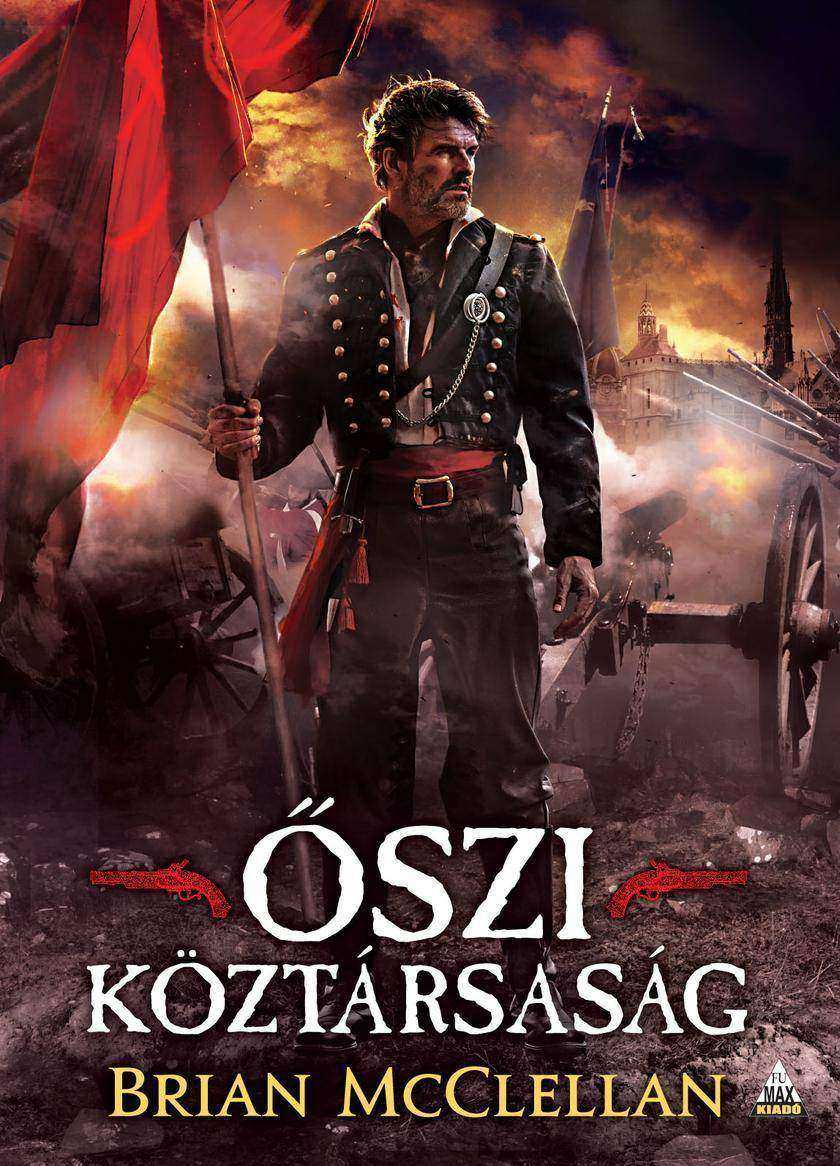
?szi k?ztársaság
¥80.52
Anna Karenina is a novel by the Russian writer Leon Tolstoy, published in serial installments from 1873 to 1877 in the periodical The Russian Messenger. Tolstoy clashed with editor Mikhail Katkov over political issues that arose in the final installment (Tolstoy's unpopular views of volunteers going to Serbia); therefore, the novel's first complete appearance was in book form. Widely regarded as a pinnacle in realist fiction, Tolstoy considered Anna Karenina his first true novel, when he came to consider War and Peace to be more than a novel. Fyodor Dostoevsky declared it to be "flawless as a work of art". His opinion was shared by Vladimir Nabokov, who especially admired "the flawless magic of Tolstoy's style", and by William Faulkner, who described the novel as "the best ever written". The novel is currently enjoying popularity, as demonstrated by a recent poll of 125 contemporary authors by J. Peder Zane, published in 2007 in "The Top Ten" in Time, which declared that Anna Karenina is the "greatest novel ever written" "..The novel opens with a scene introducing Prince Stepan Arkadyevich Oblonsky ("Stiva"), a Moscow aristocrat and civil servant who has been unfaithful to his wife Darya Alexandrovna ("Dolly"). Dolly has discovered his affair with the family's governess, and the household and family are in turmoil. Stiva's affair and his reaction to his wife's distress show an amorous personality that he cannot seem to suppress. In the midst of the turmoil, Stiva informs the household that his married sister, Anna Arkadyevna Karenina, is coming to visit from Saint Petersburg. Meanwhile, Stiva's childhood friend, Konstantin Dmitrievich Levin ("Kostya"), arrives in Moscow with the aim of proposing to Dolly's youngest sister, Princess Katerina Alexandrovna Shcherbatskaya ("Kitty"). Levin is a passionate, restless, but shy aristocratic landowner who, unlike his Moscow friends, chooses to live in the country on his large estate. He discovers that Kitty is also being pursued by Count Alexei Kirillovich Vronsky, an army officer. Whilst at the railway station to meet Anna, Stiva bumps into Vronsky who is there to meet his mother, the Countess Vronskaya. Anna and Vronskaya have traveled and talked together in the same carriage. As the family members are reunited, and Vronsky sees Anna for the first time, a railway worker accidentally falls in front of a train and is killed. Anna interprets this as an "evil omen." Vronsky, however, is infatuated with her. Anna is uneasy about leaving her young son, Sergei ("Seryozha"), alone for the first time.At the Oblonsky home, Anna talks openly and emotionally to Dolly about Stiva's affair and convinces her that Stiva still loves her despite the infidelity. Dolly is moved by Anna's speeches and decides to forgive Stiva. Kitty, who comes to visit Dolly and Anna, is just eighteen. In her first season as a debutante, she is expected to make an excellent match with a man of her social standing. Vronsky has been paying her considerable attention, and she expects to dance with him at a ball that evening. Kitty is very struck by Anna's beauty and personality and becomes infatuated with her just as Vronsky is. When Levin proposes to Kitty at her home, she clumsily turns him down, believing she is in love with Vronsky and that he will propose to her, and encouraged to do so by her mother who believes Vronsky would be a better match.At the big ball Kitty expects to hear something definitive from Vronsky, but he dances with Anna, choosing her as a partner over a shocked and heartbroken Kitty. Levin, crushed by Kitty's refusal, returns to his estate, abandoning any hope of marriage. Anna returns to her husband Alexei Alexandrovich Karenin, a senior government official, and her son Seryozha in Saint Petersburg. On seeing her husband for the first time since her encounter with Vronsky, Anna realises that she finds him unattractive, though she tells herself he is a good man.." ? ABOUT AUTHOR: Tolstoy was born in Yasnaya Polyana, the family estate in the Tula region of Russia. The Tolstoys were a well-known family of old Russian nobility. He was the fourth of five children of Count Nikolai Ilyich Tolstoy, a veteran of the Patriotic War of 1812, and Countess Mariya Tolstaya (Volkonskaya).
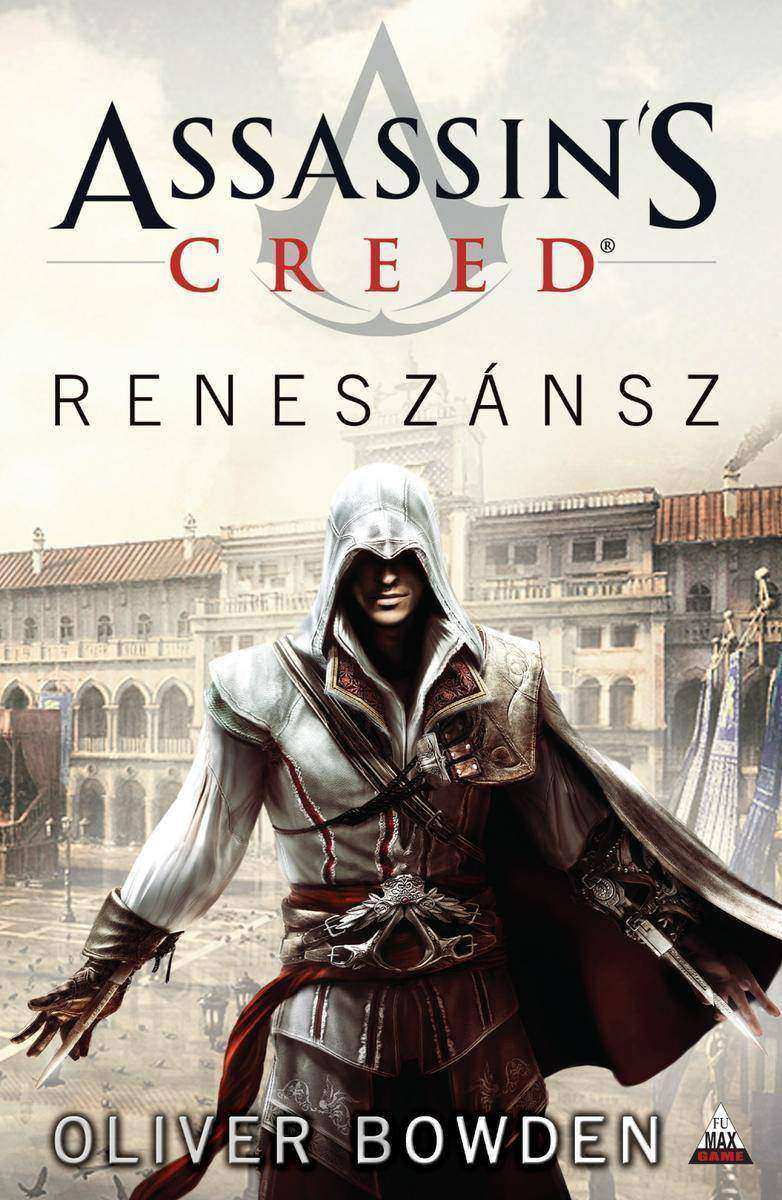
Assassin's Creed: Reneszánsz
¥71.69
The story starts in London on Tuesday, October 1, 1872. Fogg is a rich English gentleman and bachelor living in solitude at Number 7 Savile Row, Burlington Gardens. Despite his wealth, which is ?40,000 (roughly ?3,020,000 today), Fogg, whose countenance is described as "repose in action", lives a modest life with habits carried out with mathematical precision. Very little can be said about his social life other than that he is a member of the Reform Club. Having dismissed his former valet, James Foster, for bringing him shaving water at 84 °F (29 °C) instead of 86 °F (30 °C), Fogg hires a Frenchman by the name of Jean Passepartout, who is about 30 years old, as a replacement. Later on that day, in the Reform Club, Fogg gets involved in an argument over an article in The Daily Telegraph, stating that with the opening of a new railway section in India, it is now possible to travel around the world in 80 days. He accepts a wager for ?20,000 (roughly ?1,510,000 today) from his fellow club members, which he will receive if he makes it around the world in 80 days. Accompanied by Passepartout, he leaves London by train at 8:45 P.M. on Wednesday, October 2, 1872, and thus is due back at the Reform Club at the same time 80 days later, Saturday, December 21, 1872. Mr. Phileas Fogg lived, in 1872, at No. 7, Saville Row, Burlington Gardens, the house in which Sheridan died in 1814. He was one of the most noticeable members of the Reform Club, though he seemed always to avoid attracting attention; an enigmatical personage, about whom little was known, except that he was a polished man of the world. People said that he resembled Byron—at least that his head was Byronic; but he was a bearded, tranquil Byron, who might live on a thousand years without growing old. Certainly an Englishman, it was more doubtful whether Phileas Fogg was a Londoner. He was never seen on 'Change, nor at the Bank, nor in the counting-rooms of the "City"; no ships ever came into London docks of which he was the owner; he had no public employment; he had never been entered at any of the Inns of Court, either at the Temple, or Lincoln's Inn, or Gray's Inn; nor had his voice ever resounded in the Court of Chancery, or in the Exchequer, or the Queen's Bench, or the Ecclesiastical Courts. He certainly was not a manufacturer; nor was he a merchant or a gentleman farmer. His name was strange to the scientific and learned societies, and he never was known to take part in the sage deliberations of the Royal Institution or the London Institution, the Artisan's Association, or the Institution of Arts and Sciences. He belonged, in fact, to none of the numerous societies which swarm in the English capital, from the Harmonic to that of the Entomologists, founded mainly for the purpose of abolishing pernicious insects. Phileas Fogg was a member of the Reform, and that was all. The way in which he got admission to this exclusive club was simple enough. He was recommended by the Barings, with whom he had an open credit. His cheques were regularly paid at sight from his account current, which was always flush. Was Phileas Fogg rich? Undoubtedly. But those who knew him best could not imagine how he had made his fortune, and Mr. Fogg was the last person to whom to apply for the information. He was not lavish, nor, on the contrary, avaricious; for, whenever he knew that money was needed for a noble, useful, or benevolent purpose, he supplied it quietly and sometimes anonymously. He was, in short, the least communicative of men. He talked very little, and seemed all the more mysterious for his taciturn manner. His daily habits were quite open to observation; but whatever he did was so exactly the same thing that he had always done before, that the wits of the curious were fairly puzzled. ABOUT AUTHOR: Jules Gabriel Verne (1828 – 1905) was a French novelist, poet, and playwright best known for his adventure novels and his profound influence on the literary genre of science fiction. Born to bourgeois parents in the seaport of Nantes, Verne was trained to follow in his father's footsteps as a lawyer, but quit the profession early in life to write for magazines and the stage. His collaboration with the publisher Pierre-Jules Hetzel led to the creation of the Voyages Extraordinaires, a widely popular series of scrupulously researched adventure novels including Journey to the Center of the Earth, Twenty Thousand Leagues Under the Sea, and Around the World in Eighty Days.
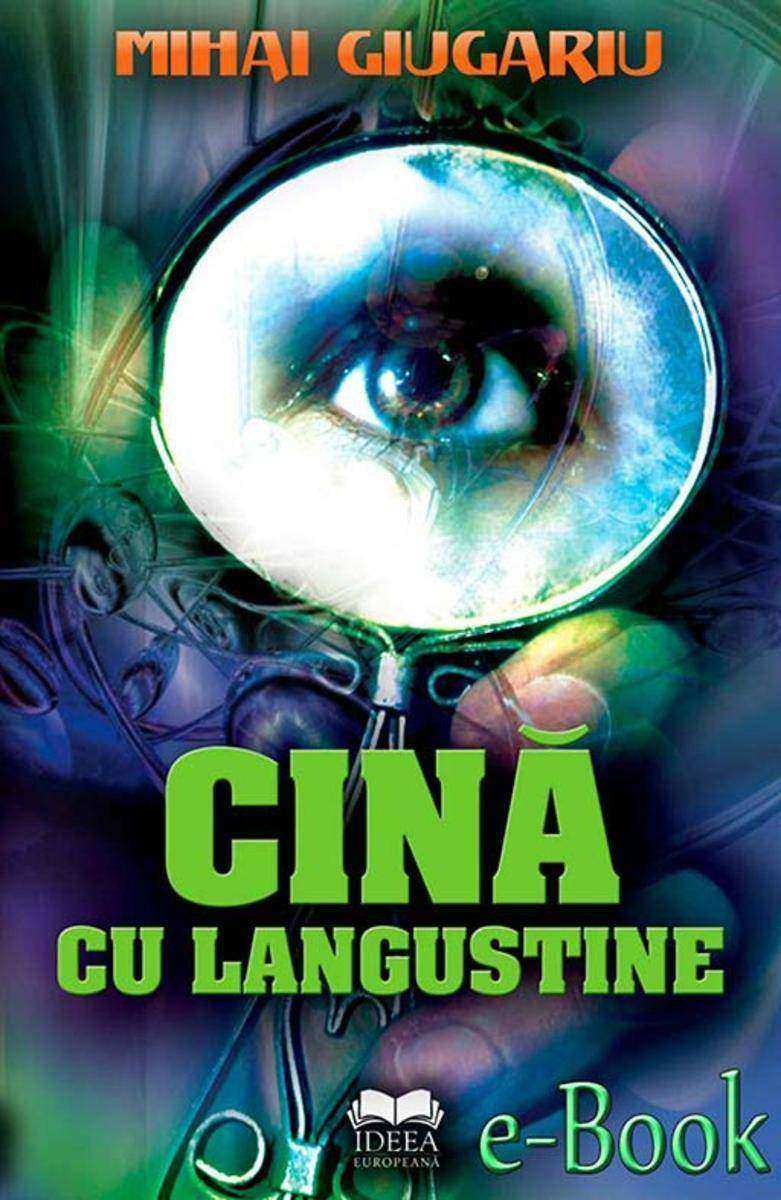
Cin? cu langustine
¥24.44
ansa jocului i comunicrii cu necuvnttoarele“ – animale, psri, peti i alte lighioane, graie sensibilitii, mrinimiei, intuiiei, aduce copiilor foloase existeniale, recunoscute de psihologi, pedagogi, puericultori, artiti, savani, recent chiar de politicieni europeni verzi“ ce susin importana relaionrii omului cu Natura, calitile ei formative i estetice, aportul ei de vitalitate, echilibru, normalitate. Cartea de fa se refer, prin mijloacele poeziei i desenului – apte adesea a fi nelese mai uor de cei mici, dect de maturi – la bogia subiectelor vizuale i afective naturale, ce nc ne stau la dispoziie, alturi de lumea artificial pe care ne-o completeaz. Poezioare i imagini reformuleaz virtual un univers slbatic diminuat ct s ncap n raftul bibliotecii, n viziunea sever a printelui grijuliu, circumspect fa de orice pericole din planul fizic, dar mai ales n orizontul deschis al legitimei investigaii infantile. Strofele scrise n limbile romn, englez, francez dau un plus de universalitate unui ndemn generic: Admirai i iubii animalele!
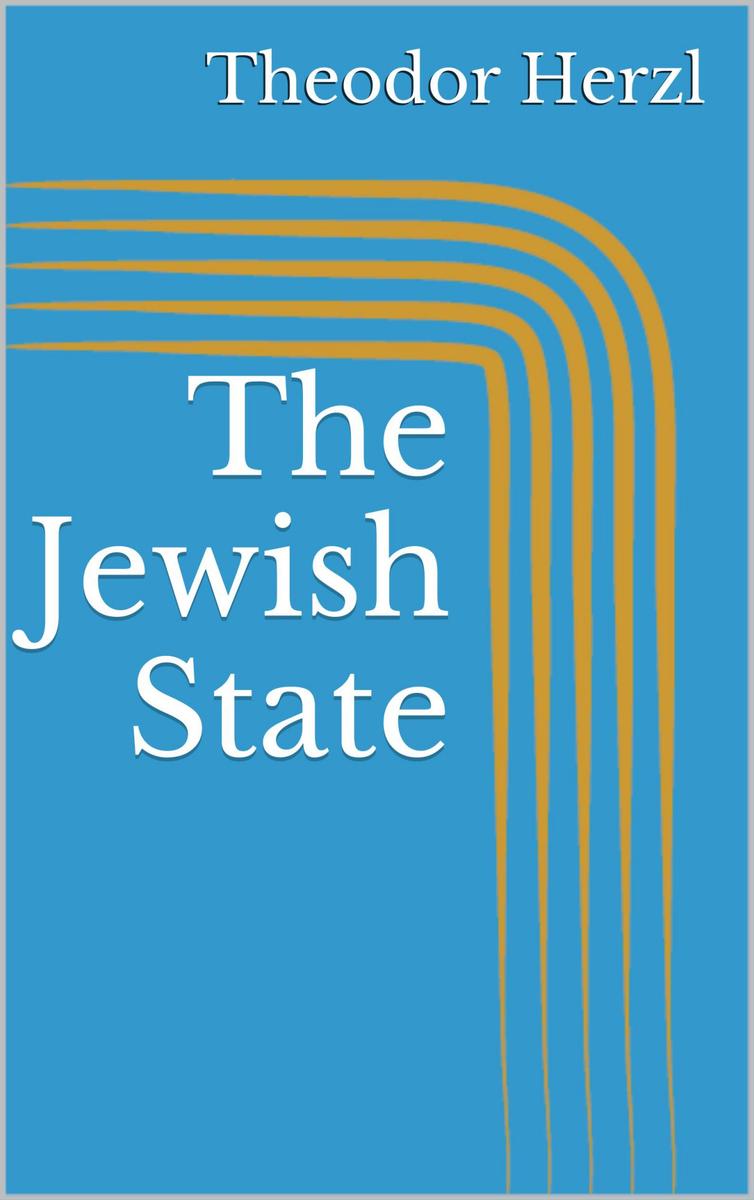
The Jewish State
¥9.48
"Der Judenstaat" (German, literally "The Jew State", commonly translated as "The Jewish State") is a pamphlet written by Theodor Herzl and published in February 1896 in Leipzig and Vienna by M. Breitenstein's Verlags-Buchhandlung. It is subtitled with "Versuch einer modernen L?sung der Judenfrage", "Proposal of a modern solution for the Jewish question", and originally called "Address to the Rothschilds" referring to the Rothschild family banking dynasty.It is considered one of the most important texts of early Zionism. As expressed in this book, Herzl envisioned the founding of a future independent Jewish state during the 20th century. He argued that the best way to avoid antisemitism in Europe was to create this independent Jewish state. Herzl, who had lived as a secular, largely assimilated Jew, was fluent in neither Hebrew nor Yiddish. His lack of contact with Jewish culture and intellectual currents, and his limited contact with Jews less assimilated than he was probably the reason he abandoned fundamental Jewish principles and rekindled Zionism with this text. The book was used to encourage Jews from all across Europe to purchase land in Palestine. In Der Judenstaat, Herzl noted the possibility of a Jewish state in Argentina.Herzl popularized the term "Zionism", which was coined by Nathan Birnbaum. The nationalist movement culminated in the birth of the State of Israel in 1948, though Zionism continues to be connected with political support of the State of Israel.
Apaosuri
¥24.44
Pentru Sanda S?ntimbreanu a venit vremea rememor?rii, vremea c?nd amintirile caut? o alt? exprimare, respira?ia eternit??ii. A dorit s? semneze pactul cu literatura, ?i i-a reu?it, mai ales – prin repetarea unor elemente de via??, prin asem?narea caracterelor unor personaje, printr-o anume continuitate ?ntre unele povestiri, prin obsesia unor teme – cel autobiografic. Autoarea vrea prin aceste povestiri de via?? s? se ?mpace cu trecutul s?u, unul pe care nu l-a acceptat, nu l-a ?n?eles poate destul ?n momentul tr?irii. (Nicoleta Dabija)

The Complete William Shakespeare Collection (Illustrated)
¥17.57
The present ebook comprises the complete writings of William Shakespeare (37 plays, 160 sonnets, 5 poetry books). It comes with 150 original illustrations which are the engravings John Boydell commissioned for his Boydell Shakespeare Gallery.------------Contents:COMEDIES:The Comedy of ErrorsThe Taming of the ShrewThe Two Gentlemen of VeronaLove’s Labor’s LostA Midsummer Night’s DreamThe Merchant of VeniceThe Merry Wives of WindsorMuch Ado about NothingAs You Like ItTwelfth Night, or What You WillThe History of Troilus and CressidaAll’s Well That Ends WellMeasure for MeasureHISTORIES:The First Part of Henry the SixthThe Second Part of Henry the SixthThe Third Part of Henry the SixthThe Tragedy of Richard the ThirdThe Life and Death of King JohnThe Tragedy of King Richard the SecondThe First Part of Henry the FourthThe Second Part of Henry the FourthThe Life of Henry the FifthThe Famous History of the Life of King Henry the EighthTRAGEDIES:The Tragedy of Titus AndronicusThe Tragedy of Romeo and JulietThe Tragedy of Julius CaesarThe Tragedy of Hamlet, Prince of DenmarkThe Tragedy of Othello, the Moor of VeniceThe Tragedy of King LearThe Tragedy of MacbethThe Tragedy of Antony and CleopatraThe Tragedy of CoriolanusThe Life of Timon of AthensROMANCES:Pericles, Prince of TyreCymbelineThe Winter’s TaleThe TempestThe Two Noble KinsmenPOEMS:Venus and AdonisThe Rape of LucreceSonnetsA Lover’s ComplaintThe Passionate PilgrimThe Phoenix and Turtle

A Kis Herceg
¥8.18
La ora la care scriu aceste r?nduri, revista Contemporanul se apropie de aniversarea a 130 de ani de la fondare, si ne ?ntreb?m, cu to?ii, iar??i ?i iar??i, ce schimb?ri s-au produs ?n peisajul cultural, literar, social ?n ultimii 20 de ani? Ce viitor vor avea cultura, literatura rom?n? vie ?n contextul acestor schimb?ri? Cum ??i va reveni din criza actuala, mai grav?, mai dramatic? dec?t criza economic? propriu-zisa fiind, f?r? ?ndoiala, profunda criz? moral? de care este cuprins? societatea rom?neasc?? R?spunsurile formulate de participan?ii la anchet? – precum ?i celelalte articole, eseuri, reportaje etc. – cuprinse ?n acest supliment aniversar vizeaz? ?i aceste aspecte, greu de neglijat, din v?rtejul evenimentelor istorice, din acest dramatic prezent, rezist?nd, spre gloria na?iunii rom?ne, Excelen?a Sa, cultura, literatur? rom?n? vie. (Aura Christi)
Rom?nia - ?ocul viitorului
¥48.97
Abia atept s ajung… S vd, n sfrsit, New York-ul! Ultima dat cnd mi-a fost fric de moarte… De fapt nu de ea, ci de teroarea i schingiuirea fizic din sistemul nostru aberant! De ce s m-ngrozeasc moartea O simpl prelungire a vieii. O banal fa a imparitii. Moartea! O nedeplin via a singurtii...“ O istorie palpitant despre via i despre moarte.
Rū?ītis
¥9.32
Cartea e ca o pies? de teatru alc?tuit? din personaje, parantezele autorului, dialoguri, secven?e, scene, acte, cu leg?tura necesar?, intre acestea. ?n treac?t fie spus, critica poate s? ?ntre?in? longevitatea operei, dac? are destul? vigoare ?i dac? opera e de calitate. Sunt vorbe optimiste la vremea Internetului care, deocamdat?, nu de?ine puterea controlului critic ?i nici nu se ?ntrev?d ?anse de aceast? natur?. Tocmai de aceea pericolul dispari?iei c?rt?ii de h?rtie pare anun?area unui cataclism. Noi mai credem ?n ceva. R?m?ne hot?r?t c? interpretarea critic?, pentru a fi c?t mai aproape de text, trebuie s? se asocieze cu "partea estetic?" a demersului, care e scriitura, citatul, descrierea ?i altele. O "conversa?ie", pe c?t posibil neretoric?.
Star Maker: "A Prodigious Novel"
¥18.88
“Star Maker”, regarded as one of the true classics of science fiction, Star Maker is a poetic and deeply philosophical work. The story details the mental journey of an unnamed narrator who is transported not only to other worlds but also other galaxies and parallel universes, until he eventually becomes part of the "cosmic mind." First published in 1937, Olaf Stapledon's descriptions of alien life are a political commentary on human life in the turbulent inter-war years. The book challenges preconceived notions of intelligence and awareness, and ultimately argues for a broadened perspective that would free us from culturally ingrained thought and our inevitable anthropomorphism. This is the first scholarly edition of a book that influenced such writers as C.S. Lewis and Arthur C. Clarke and which Jorge Luis Borges called "a prodigious novel."? Some Books of Stapledon: Last and First Men (1930) Sirius: A Fantasy of Love and Discord (1944) Odd John: A Story Between Jest and Earnest (1935) Last Men in London (1932) A Modern Magician (1979) Death into Life (1946) Darkness and the Light (1942) A World of Sound (1936) A Man Divided (1950) The Seed and the Flower (1916)
Tales of Space and Time
¥18.80
Tales of Space and Time, A collection of short stories: "The Crystal Egg", "The Star", "A Story of the Stone Age", "A Story of the Days to Come" & "The Man who could Work Miracles" ? Some Books of Wells: The War of the Worlds (1898) The Time Machine (1895) A Modern Utopia (1905) The Invisible Man (1897) The Island of Dr. Moreau (1896) The Food of the Gods and How It Came to Earth (1904) The Sleeper Awakes (1910) The Story of the Inexperienced Ghost (1902) The First Men in the Moon (1901) A Dream of Armageddon (1901)
The Blazing World
¥28.37
“The Blazing World”, is a Description of a New World, Called The Blazing-World, better known as The Blazing World, is a 1666 work of prose fiction by English writer Margaret Cavendish, the Duchess of Newcastle. It has been described as an early fore-runner of science fiction.??Here on this Figure Cast a Glance.?But so as if it were by Chance,?Your eyes not fixt, they must not Stay,?Since this like Shadowes to the Day?It only represent's; for Still,?Her Beauty's found beyond the Skill?Of the best Paynter, to Imbrace?These lovely Lines within her face.?View her Soul's Picture, Judgment, witt,?Then read those Lines which Shee hath writt,?By Phancy's Pencill drawne alone?Which Peces but Shee, can justly owne.??To The Duchesse of Newcastle, ?On Her New Blazing-World.??Our Elder World, with all their Skill and Arts,?Could but divide the World into three Parts:?Columbus, then for Navigation fam'd,?Found a new World, America 'tis nam'd;?Now this new World was found, it was not made,?Onely discovered, lying in Time's shade.?Then what are You, having no Chaos found?To make a World, or any such least ground??But your Creating Fancy, thought it fit?To make your World of Nothing, but pure Wit.?Your Blazing-World, beyond the Stars mounts higher,?Enlightens all with a C?lestial Fier.??William Newcastle.
?n fiecare zi moare un celebru
¥35.15
Dinu are 25 de ani, o carier? ?n presa de scandal ?i nemul?umiri pe toate planurile: e convins c? iubita ?l ?n?al?, a scris o carte pe care nu reu?e?te s-o publice, iar jobul s?u, de a scoate senza?ionalul din necazurile altora, nu-i aduce nici o satisfac?ie. ?n loc s?-?i accepte cu demnitate condi?ia de t?n?r intelectual rom?n, e decis s?-?i rezolve toate problemele, ?n doar o s?pt?m?n?. ?ntr-o astfel de situa?ie, de o gravitate medie, c?teva sfaturi ra?ionale ar putea fi exact ce are nevoie. Din p?cate, persoanele din jurul s?u nu se obosesc cu a?a ceva. Luca, prietenul s?u cel mai bun ?i fost coleg de facultate, ?l ?mpinge, de fiecare dat?, spre cea mai simpl? sau imoral? solu?ie. De cealalt? parte, fratele s?u Andrei ?ncearc? s?-l transforme ?ntr-un bun cre?tin, precum ceilal?i membrii ai sectei. Obsesia fa?? de starul hip-hop Ty Julius, impus? de cerin?ele publicului de tabloid, e singurul lucru care reu?e?te s?-i mai st?rneasc? sentimente puternice. Asta p?n? c?nd o ?nt?lne?te pe Simona, care i-ar putea schimba via?a complet, ?n bine, sau ?n r?u, sau poate chiar deloc.
The Double
¥18.80
-THE DOUBLE- centers on a government clerk who goes mad. It deals with the internal psychological struggle of its main character, Yakov Petrovich Golyadkin, who repeatedly encounters someone who is his exact double in appearance but confident, aggressive, and extroverted, characteristics that are the polar opposites to those of the toadying "pushover" protagonist. ??The motif of the novella is a doppelganger (Russian "dvoynik"), known throughout the world in various guises such as the fetch. * * *? It was a little before eight o’clock in the morning when Yakov Petrovitch Golyadkin, a titular councillor, woke up from a long sleep. He yawned, stretched, and at last opened his eyes completely.?For two minutes, however, he lay in his bed without moving, as though he were not yet quite certain whether he were awake or still asleep, whether all that was going on around him were real and actual, or the continuation of his confused dreams. ??Very soon, however, Mr. Golyadkin’s senses began more clearly and more distinctly to receive their habitual and everyday impressions. The dirty green, smoke-begrimed, dusty walls of his little room, with the mahogany chest of drawers and chairs, the table painted red, the sofa covered with American leather of a reddish colour with little green flowers on it, and the clothes taken off in haste overnight and flung in a crumpled heap on the sofa, looked at him familiarly. At last the damp autumn day, muggy and dirty, peeped into the room through the dingy window pane with such a hostile, sour grimace that Mr. Golyadkin could not possibly doubt that he was not in the land of Nod, but in the city of Petersburg, in his own flat on the fourth storey of a huge block of buildings in Shestilavotchny Street.
The Fairy Ring
¥37.85
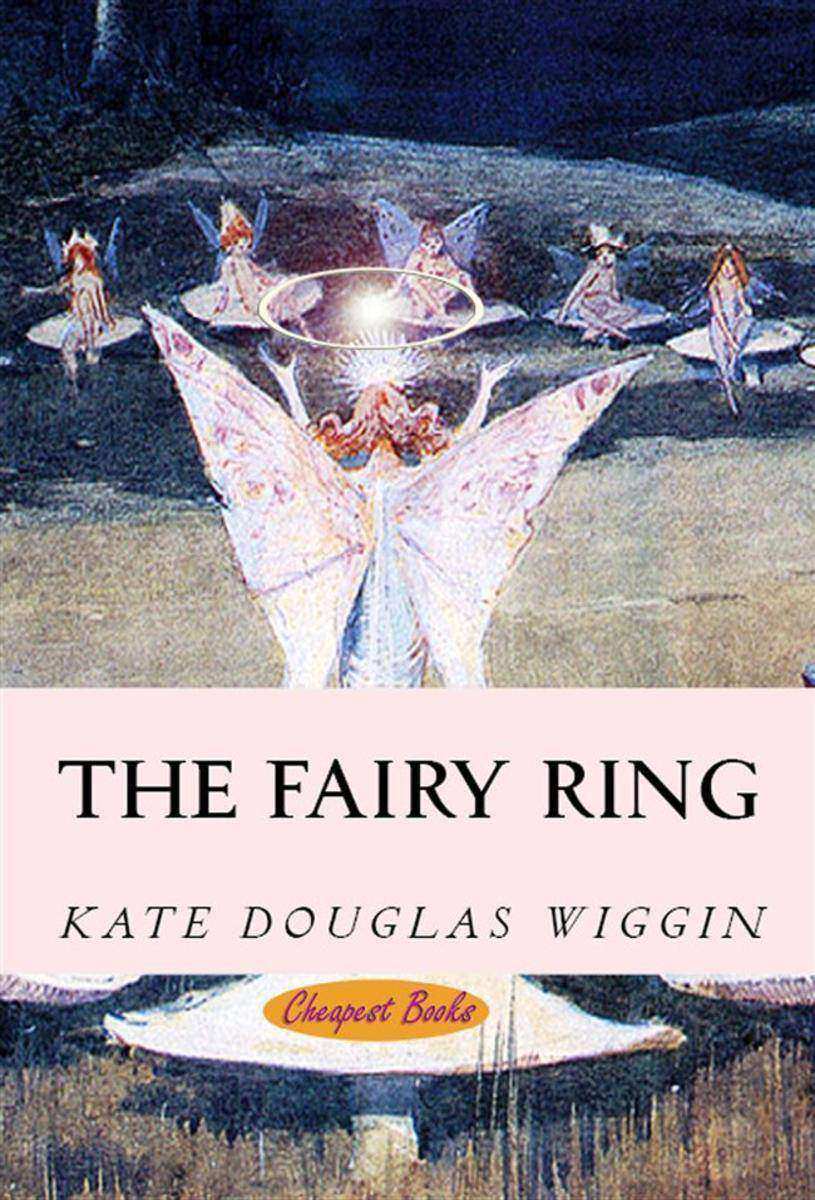
"THERE was once upon a time a king who had a garden; in that garden was an apple tree, and on that apple tree grew a golden apple every year."?These stories are the golden apples that grew on the tree in the king's garden; grew and grew and grew as the golden years went by; and being apples of gold they could never wither nor shrink nor change, so that they are as beautiful and precious for you to pluck today as when first they ripened long, long ago.??Perhaps you do not care for the sort of golden apples that grew in the king's garden; perhaps you prefer plain russets or green pippins? Well, these are not to be despised, for they also are wholesome food for growing boys and girls; but unless you can taste the flavor and feel the magic that lies in the golden apples of the king's garden you will lose one of the joys of youth.??No one can help respecting apples (or stories) that gleam as brightly today as they did hundreds and thousands of years ago, when first the tiny blossoms ripened into precious fruit.??"Should you ask me whence these stories,?Whence these legends and traditions?With the odors of the forest,?With the dew and damp of meadows?"—??I can say only that the people were telling fairy tales in Egypt, in Joseph's time, more than three thousand years ago; and that grand old Homer told them in the famous "Odyssey," with its witches and giants, its cap of darkness, and shoes of swiftness. Old nurses and village crones have repeated them by the fireside and in the chimney corner; shep-herds and cowherds have recounted them by the brookside, until the children of the world have all learned them by heart, bequeathing them, generation after generation, as a priceless legacy to their own children. Nor must you fancy that they have been told in your own tongue only. Long, long before the art of printing was known, men and women of all nations recited these and similar tales to one another, never thinking that the day would come when they would be regarded as the peculiar property of youth and childhood. ?
Baletul fantasmelor
¥47.01
Un nou gen de proz? literar?? A?a s-ar p?rea, dac? pornim de la separarea ?n con?tient ?i incon?tient a sinelui uman, aprofundat? magistral de marele psihiatru elve?ian C.G. Jung ?n celebra ?i monumentala sa Carte Ro?ie. Dumitru Popescu are o bogat? oper? literar?-fic?ional? ?i nonfic?ional? – inspirat? din yona con?tientului. Baletul fantasmelor ne propune sondarea cu mijloace literare a celeilalte zone a spiritului, cu origini ?i mecanisme ?nc? greu decelabile ?i care deschide o alt? fabuloas? perspectiv? a l?untricului omenesc.
The Scottish Fairy Book
¥18.80
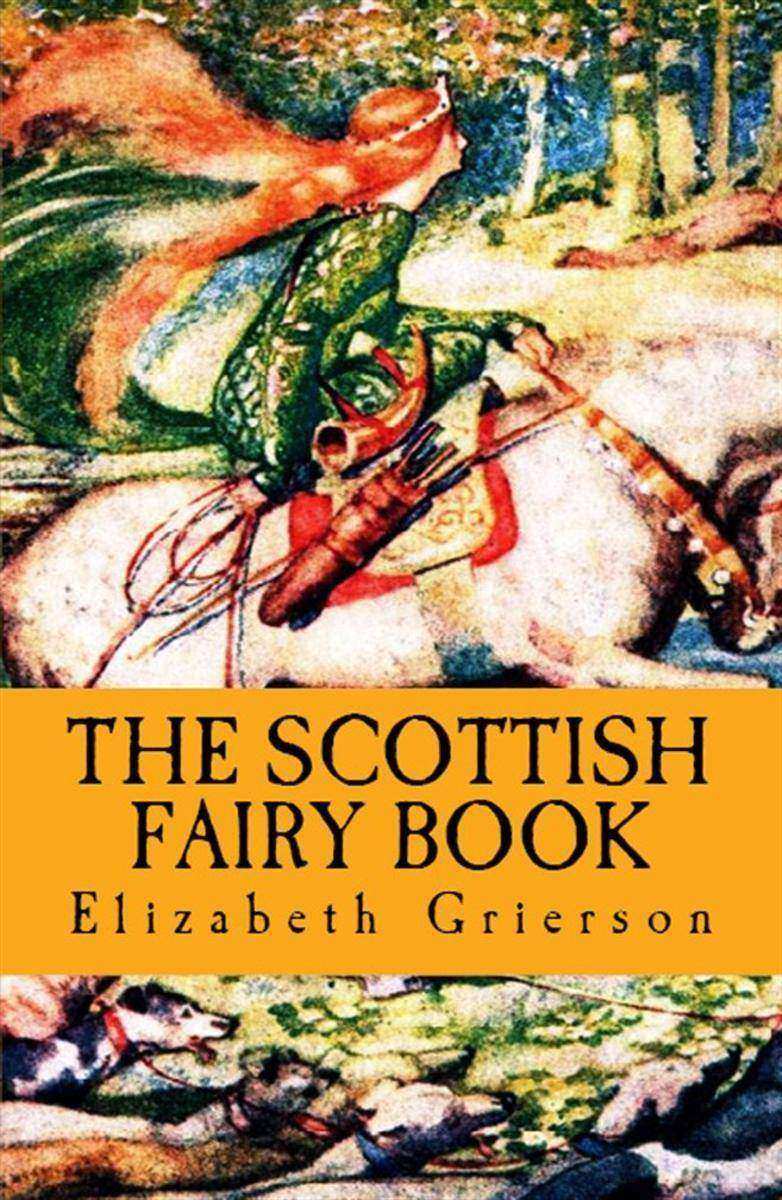
There are, roughly speaking, two distinct types of Scottish Fairy Tales. There are what may be called "Celtic Stories," which were handed down for centuries by word of mouth by professional story-tellers, who went about from clachan to clachan in the "High-lands and Islands," earning a night's shelter by giving a night's entertainment, and which have now been collected and classified for us by Campbell of Isla and others.??These stories, which are also common to the North of Ireland, are wild and fantastic, and very often somewhat monotonous, and their themes are strangely alike. They almost always tell of some hero or heroine who sets out on some dangerous quest, and who is met by giants, generally three in number, who appear one after the other; with whom they hold quaint dialogues, and whom eventually they slay. Most of them are fairly long, and although they have a peculiar fascination of their own, they are quite distinct from the ordinary Fairy Tale.


