


 购物车
购物车 个人中心
个人中心

Pesticides and Pollution (Collins New Naturalist Library, Book 50)
¥456.66
Pesticides and Pollution examines the problems of pollution of air, land, river, and the sea, by herbicides, pesticides, sewage, industrial effluents, gases, radiation, leakages, over-drainage, mistakes and mismanagement, in Britain today. From an objective and scientific standpoint, Dr. Mellanby examines the problems of pollution of air, land, river, and the sea, by herbicides, pesticides, sewage, industrial effluents, gases, radiation, leakages, over-drainage, mistakes and mismanagement, in Britain to-day. He sets out to placate neither farmers nor naturalists, but to explain in each case what is happening, to point to both dangers and practical necessities, and to discuss what steps should be taken. Dr. Mellanby is Director of the Nature Conservancy's Monks Wood Experimental Station, was head of the Entomology department at Rothamsted, and for many years before that did research in medical entomology both in Britain and the tropics.
On Nature: Unexpected Ramblings on the British Countryside
¥154.12
A diverse and entertaining collection of writing examining and celebrating the British Countryside, from falconry to foraging and from the musings of a nighttime angler to tips for seasonal drinking. LAND Stuart Maconie (Radio 2) on hill walking / Wainwright walks Nick Small (CAUGHT BY THE RIVER regular) how to get nature into your garden, no matter how urban it is Richard King (Loops magazine editor) on the Winter Solstice and on the Summer Solstice John Wright (www.wild-food.net/ on the basics of getting started in foraging Bill Drummond (Damsons in Distress) Dan Kieran (Crap Towns/I Fought The Law) on falconry RIVER / INLAND WATERS John Andrews (CAUGHT BY THE RIVER regular) on winter pike fishing Jon Berry (CAUGHT BY THE RIVER regular) writing about the night from a fishermen's perspective, the sounds, shadows, the hallucinatory effects of sleep deprivation when the sun rises COASTLINE Ian Vince (The Lie of the Land) on the Jurassic coast and fossils Martin Noble (British Sea Power) the Exmoor to Dartmoor coastal walk Nick Hand (http://www.slowcoast.co.uk/) on what you see when cycling the entire coastline of the UK Michael Smith (BBC4 Drivetime) on the coastline in the north of England ISLAND LIFE Sarah Boden (The Observer) on fleeing London to move and become a sheep farmer on Eigg
British Birds of Prey (Collins New Naturalist Library, Book 60)
¥456.66
Leslie Brown's account of our 15 resident, 7 vagrant and 2 migrant species of eagles, falcons, hawks and vultures in Britain presents a great mass of scientific information about our birds of prey in a manner as attractive to the general reader as to the dedicated ornithologist. The diurnal raptors are among the most arresting and dramatic of British bird species, from the magnificent and immense golden eagle of the Highlands to the more widespread but equally spectacular peregrine falcon and the frequent and adaptable kestrel of motorways and urban ledges. Leslie Brown's account of our 15 resident, 7 vagrant and 2 migrant species of eagles, falcons, hawks and vultures in Britain presents a great mass of scientific information about these birds in a manner as attractive to the general reader as to the dedicated ornithologist. Each of the resident species is discussed in detail - its status, past and present; its feeding and hunting behaviour; its life history; its breeding behaviour; migration and the threats to its survival. Then the biology of the birds of prey, changes in their habitat and status, their food habits, breeding behaviour, their territories and populations are examined in depth in separate chapters. An acknowledged world authority on birds of prey - co-author with Dean Amadon of Eagles, Hawks and Falcons of the World, and author of many other books besides - Leslie Brown is immensely enthusiastic; and the many tables, maps, figures and bibliography are all indicative of the thoroughness of his research. Also illustrated with 40 superb black and white photographs.
The Natural History of Orkney (Collins New Naturalist Library, Book 70)
¥456.66
This is the first survey of the islands' natural history, complete in one volume. Because Orkney is exceptional, it is vital reading for the serious naturalist, as well as for being a comprehensive and absorbing guide for every visitor. This edition is exclusive to newnaturalists.com Orkney is a very special place for naturalists. Closer to Oslo than to London, its geography and climate create quite distinct environmental conditions - even though it is only six miles from the Scottish mainland. On these islands of fierce gales, long summer days and long winter nights, the wildlife has adapted in intriguing ways… Starlings adapt to ground-nesting…local sheep eat seaweed…and there are voles exclusive to Orkney. Here is one of the very few areas where the rare and delicate Scottish Primrose thrives…where you find the British stronghold of the Hen Harrier, and vast colonies of seabirds and seals. This is the first - and long-needed - survey of the islands' natural history, complete in one volume. Because Orkney is exceptional, it is vital reading for the serious naturalist, as well as for being a comprehensive and absorbing guide for every visitor. In his tracing of the island's evolution from its geological creation to the effects of oil technology; in the detailed, yet fascinating exploration of the plants and animals (and where best to see them), Professor Berry's expertise and enthusiasm is backed by that of local specialists, and Orkney's long tradition of natural history study. Appendices include definitive lists of all the species of flora and fauna on record, and an extensive bibliography.
The New Naturalists (Collins New Naturalist Library, Book 82)
¥228.28
A history of the most successful, significant and long-running natural history series in the world. A history of the most successful, significant and long-running natural history series in the world. In 1995 Collins published the 82nd volume in the New Naturalist series to coincide with its 50th anniversary. Ten years on, Peter Marren has revised this fascinating account of the series. He covers the illustrious careers of its authors, how each title was conceived and received, and includes plates of the sketches and roughs of the jackets. It also gives behind-the-scenes details of the also-rans and the books-that-never-were. This will appeal to the collector's market - it has a lengthy appendix dedicated to collecting the series with advice on how to spot a good edition, and a star rating according to scarcity - and will mark the 60th anniversary of the publication of the first new naturalist title. Peter Marren is a trained ecologist who worked as a woodland scientist, conservation officer and author-editor with the Natural Conservancy Council between 1977 and 1992. He has written numerous book and articles and contributes regularly to British Wildlife.

Birds Britannia
¥132.53
Birds and bird lore provide a fascinating window onto our social and cultural history, and can tell us much about our changing relationship with the British landscape, our people and society. We Brits love our birds. They hold a special place in our hearts – whether it's the sound of birdsong on a spring morning, the sight of a Barn Owl hunting on a summer's evening, or a Robin perched on our garden spade. In this book, Stephen Moss focusses on some of our most beloved and charismatic birds. He explores their fascinating biology, and their place in the evolving culture and history of the British people. The author delves into the worlds of Sea Birds (Puffin, Sea Eagle and Gannet), Water Birds (Kingfisher, Swan and Avocet), Countryside Birds (Red Grouse, Nightingale and Skylark ) and Town & Garden Birds (Robin, House Sparrow and Magpie), weaving their stories together to tell four very different stories about the changing face of Britain.

Warsaw 1920: Lenin’s Failed Conquest of Europe
¥70.44
The dramatic and little-known story of how, in the summer of 1920, Lenin came within a hair's breadth of shattering the painstakingly constructed Versailles peace settlement and spreading Bolshevism to western Europe. In 1920 the new Soviet state was a mess, following a brutal civil war, and the best way of ensuring its survival appeared to be to export the revolution to Germany, itself economically ruined by defeat in World War I and racked by internal political dissension. Between Russia and Germany lay Poland, a nation that had only just recovered its independence after more than a century of foreign oppression. But it was economically and militarily weak and its misguided offensive to liberate the Ukraine in the spring of 1920 laid it open to attack. Egged on by Trotsky, Lenin launched a massive westward advance under the flamboyant Marshal Tukhachevsky. All that Great Britain and France had fought for over four years now seemed at risk. By the middle of August the Russians were only a few kilometres from Warsaw, and Berlin was less than a week's march away. Then occurred the 'Miracle of the Vistula': the Polish army led by Jozef Pilsudski regrouped and achieved one of the most decisive victories in military history. As a result, the Versailles peace settlement survived, and Lenin was forced to settle for Communism in one country. The battle for Warsaw bought Europe nearly two decades of peace, and communism remained a mainly Russian phenomenon, subsuming many of the autocratic and Byzantine characteristics of Russia's tsarist tradition.

The Irish Are Coming
¥80.25
In the sequel to his bestselling JFK in Ireland, the Emerald Isle’s favourite son delves into his country’s past to celebrate the Irish people who through their skills and endeavours helped make the British Isles great. In ‘The Irish Are Coming’ Ryan Tubridy takes a journey into Ireland’s past to unearth the many amazing, and altogether fascinating, contributions the Irish have made to everyday British life; whether it be making us laugh (Graham Norton), thrilling us with their acting (Peter O’Toole), or dazzling us with their audacious adventuring (Earnest Shackleton). Just as Stuart Maconie has celebrated in his own unique way all that is great about his North of England roots, so Ryan Tubridy makes a passionate case for the magnificent contribution Ireland has made to its nearest neighbour.
Bird Populations (Collins New Naturalist Library, Book 124)
¥229.16
Earlier naturalists formed the impression that bird numbers remained more or less stable through time. In the years since these words were written, however, changes have occurred in the landscapes of the British Isles and in the seas around our coasts, causing bird populations to fluctuate in an unprecedented way. In Ian Newton’s latest New Naturalist volume, he explores bird populations and why their numbers vary in the way they do, from year to year or from place to place. He addresses the various factors that we know limit bird numbers – food supplies and other resources, competitors, predators, parasites and pathogens, and various human impacts. The combination of a rapidly expanding human population, a predominantly utilitarian attitude to land, central government policy on land use, and increasing mechanisation have combined to promote more massive changes in land use – and hence in bird habitats – in recent decades than at any comparable period previously. These developments have in turn brought huge changes in bird populations, as some species dependent on the old landscapes declined, and others benefiting from the changes increased. Over the same period, changing public attitudes to wildlife, protective legislation and a growing network of nature reserves allowed previously scarce bird species to recover from past onslaughts, while climate warming has promoted further changes. In this seminal new work, Ian Newton sets out to explain why different bird species are distributed in the numbers that they are, and have changed over the years in the way that they have. He emphasises the factors that influence bird numbers, rather than the numbers themselves, thus providing a much-needed overview which is necessary if we are to successfully manage bird populations, whether for conservation reasons, for sustainable hunting or for crop protection. The continued monitoring of bird numbers can also alert us to impending environmental problems. In addition, the regular watching and study of birds now provides a source of recreation and pleasure for very large numbers of people, who would find a world with fewer birds a poorer place.
The Men Who United the States
¥73.58
From bestselling author Simon Winchester, the extraordinary story of how America was united into a single nation. For more than two centuries, E pluribus unum – out of many, one – has been featured on America’s official government seals and stamped on its currency. But how did America become ‘one nation, indivisible’? In this monumental history, Simon Winchester addresses this question, introducing the fearless trailblazers whose achievements forged and unified America. Winchester follows in the footsteps of America’s most essential explorers, thinkers, and innovators. He treks vast swaths of territory, introducing these fascinating pioneers – some, such as Washington and Jefferson, Lewis and Clark being familiar, some forgotten, some hardly known – who played a pivotal role in creating today’s United States. Throughout, he ponders whether the historic work of uniting the States has succeeded, and to what degree. ‘The Men Who United the States’ is a fresh, lively, and erudite look at the way in which the most powerful nation on earth came together, from one of our most entertaining, probing, and insightful observers.
Farewell Kabul: From Afghanistan To A More Dangerous World
¥81.03
From the award-winning co-author of ‘I Am Malala’, this book asks just how the might of NATO, with 48 countries and 140,000 troops on the ground, failed to defeat a group of religious students and farmers? How did it go so wrong? Twenty-seven years ago, Christina Lamb left Britain to become a journalist in Pakistan. She crossed the Hindu Kush into Afghanistan with mujaheddin fighting the Russians and fell unequivocally in love with this fierce country of pomegranates and war, a relationship which has dominated her adult life. Since 2001, Lamb has watched with incredulity as the West fought a war with its hands tied, committed too little too late, failed to understand local dynamics and turned a blind eye as their Taliban enemy was helped by their ally Pakistan. Farewell Kabul tells how success was turned into defeat in the longest war fought by the United States in its history and by Britain since the Hundred Years War. It has been a fiasco which has left Afghanistan still one of the poorest nations on earth, the Taliban undefeated, and nuclear armed Pakistan perhaps the most dangerous place on earth. With unparalleled access to all key decision-makers in Afghanistan, Pakistan, London and Washington, from heads of state and generals as well as soldiers on the ground, Farewell Kabul tells how this happened. In Afghanistan, Lamb has travelled far beyond Helmand – from the caves of Tora Bora in the south to the mountainous bad lands of Kunar in the east; from Herat, city of poets and minarets in the west, to the very poorest province of Samangan in the north. She went to Guantánamo, met Taliban in Quetta, visited jihadi camps in Pakistan and saw bin Laden’s house just after he was killed. Saddest of all, she met women who had been made role models by the West and had then been shot, raped or forced to flee the country. This deeply personal book not only shows the human cost of political failure but explains how short-sighted encouragement of jihadis to fight the Russians, followed by prosecution of ill-thoughtout wars, has resulted in the spread of terrorism throughout the Islamic world

We Should All Be Feminists
¥36.99
A personal and powerful essay from Chimamanda Ngozi Adichie, the bestselling author of Americanah and Half of a Yellow Sun, based on her 2013 TEDx Talk of the same name.
Waterloo: The History of Four Days, Three Armies and Three Battles
¥72.30
The Sunday Times Number 1 Bestseller ‘A fabulous story, superbly told … cannot be bettered’ Max Hastings ‘Some battles change nothing. Waterloo changed almost everything.’ On the 18th June 1815 the armies of France, Britain and Prussia descended upon a quiet valley south of Brussels. In the previous three days the French army had beaten the British at Quatre-Bras and the Prussians at Ligny. The Allies were in retreat. The blood-soaked battle of Waterloo would become a landmark in European history, to be examined over and again, not least because until the evening of the 18th, the French army was close to prevailing on the battlefield. Now, brought to life by the celebrated novelist Bernard Cornwell, this is the chronicle of the four days leading up to the actual battle and a thrilling hour-by-hour account of that fateful day. In his first work of non-fiction, Cornwell combines his storytelling skills with a meticulously researched history to give a riveting account of every dramatic moment, from Napoleon’s escape from Elba to the smoke and gore of the battlefields. Through letters and diaries he also sheds new light on the private thoughts of Napoleon and the Duke of Wellington, as well as the ordinary officers and soldiers. Published to coincide with the bicentenary in 2015, Waterloo is a tense and gripping story of heroism and tragedy – and of the final battle that determined the fate of Europe.
GI Brides:The wartime girls who crossed the Atlantic for love
¥42.67
The Sunday Times bestseller From the bestselling authors of The Sugar Girls, G.I. Brides weaves together the real-life stories of four women who crossed the ocean for love, providing a moving true tale of romance and resilience. The 'friendly invasion' of Britain by over a million American G.I.s caused a sensation amongst a generation of young women deprived of male company during the Second World War. With their exotic accents, smart uniforms and aura of Hollywood glamour, the G.I.s soon had the local girls queuing up for a date, and the British boys off fighting abroad turning green with envy. But American soldiers offered something even more tantalising than a ready supply of chocolate, chewing gum and nylon stockings. Becoming a G.I. bride provided an escape route from Blitz-ravaged Britain, an opportunity for a whole new life in America - a country that was more affluent, more modern and less class-ridden than home. Some 70,000 G.I. brides crossed the Atlantic at the end of the war to join the men who had captured their hearts - but the long voyage was just the beginning of a much bigger journey. Once there, the women would have to adapt to a foreign culture and a new way of life thousands of miles away from family and friends, with a man they hardly knew out of uniform. Some struggled with the isolation of life in rural America, or found their heroic soldier was less appealing once he returned to Civvy Street. But most persevered, determined to turn their wartime romance into a lifelong love affair, and prove to those back home that it really was possible to have a Hollywood ending. www.gibrides.com

Margaret’s Story (GI Brides Shorts, Book 2)
¥9.71
This is Margaret’s story, one of four true stories from the book GI Brides. “Margaret’s eyes were on the handsome officers who milled around the US Army headquarters. But it was one young second lieutenant that she particularly looked out for… And she secretly deteThe room was filled with GIs – some playing pool, some jostling for control of rmined to make him hers.” An attractive young English girl, Margaret finds herself working at the US Army headquarters in London, where she meets a dashing American officer who breaks her heart. Soon she falls pregnant by another GI, marries, and follows him to America’s deep south. What she finds out in Georgia about her husband's true character will shock her. Margaret’s story is extracted from GI Brides, written by the bestselling authors of The Sugar Girls. It tells the true stories of four of the 70,000 British women who crossed the Atlantic for love after the Second World War.

Yorkshire Dales (Collins New Naturalist Library, Book 130)
¥257.90
A definitive natural history of the Yorkshire Dales, covering the range of wildlife habitats, rich cultural heritage and ecological history of one of our best-loved National Parks. The Yorkshire Dales National Park is a special place: its outstanding scenery and the diversity of habitats is perhaps unrivalled in any other National Park in Britain. This rich biodiversity has been a great attraction to naturalists for over two centuries. But to fully appreciate the present-day plant and animal communities, their status and the constraints upon them, it is important to understand the geology and landscape history of the National Park, including the role that human populations have played in modifying the environment. In this long-anticipated New Naturalist volume, John Lee introduces the National Park, exploring both its geology and geomorphology, and describing the role of early naturalists and the Yorkshire Naturalists Union in recording and understanding the natural history of the Dales. He describes the major habitats or groups of habitats which underline the ecological importance of the Dales. Lee covers the earliest settlement times to the modern day, and he focuses in particular on the most iconic plant of the Dales, the Lady’s Slipper Orchid, arguably the rarest of native British plants, which until recently was thought to be confined to a single plant in the Dales. Lee takes a historical approach, describing its near eradication and early attempts to conserve it – including the establishment of a secret society – concluding with recent scientific conservation approaches.
George Washington:History in an Hour
¥14.81
Love history? Know your stuff with History in an Hour. George Washington – a figure synonymous with American history. His image is known worldwide, marked on American currency, postage stamps – even a state is named after him. George Washington in an Hour explores the man beneath the symbol. This is the essential chronicle of Washington’s life – his rise from middle class Virginian upbringing to America’s first President, elected unanimously twice. Explore Washington’s legacy – from securing Independence, to his instrumental role in writing and adopting the American constitution. George Washington in an Hour covers Washington’s redefinition of greatness, relinquishing power not once but twice – at the end of Revolution and his second term in Presidency. Learn why Washington is still considered one of the most influential people in history, and how his impact shaped the world in this engaging overview of his life. Love history? Know your stuff with History in an Hour…
The Gunpowder Plot:History in an Hour
¥18.05
Love history? Know your stuff with History in an Hour. ‘Remember, remember, the fifth of November’. The gunpowder plot is a famed tale of treachery that continues to fascinate and capture the imagination four hundred years on. The Gunpowder Plot in an Hour reveals the elaborate background to the infamous plot to blow up the Houses of Parliament and James I, the ultimate act of treason. This compelling and engaging account of one of the most famous historical events in English history follows the Catholic protagonists hatching their plan through to their inevitable, gruesome deaths. Learn who the Catholic traitors were, what drove them to such desperate measures, and how the plot was discovered. The Gunpowder Plot in an Hour gives a concise overview of this enduring event and is a must for all history lovers. Love history? Know your stuff with History in an Hour…

Unlocking Memories- Cognitive Interviewing for Lawyers
¥981.00
Would you like to know how to elicit 40% more information from your witnesses, saving time and moneyWhether you're a solicitor, barrister or legal executive, this comprehensive toolkit will help you master the cognitive interviewing technique. Written by cognitive interviewing expert and trainer to litigators involved in the Bloody Sunday and Shipman inquiries, Geoff Coughlin, this practical guide will teach you how to: Obtain the right information, faster and more efficiently Eliminate the need for re-interviewing Address specific common interview challenges, as identified by solicitors in the field Discover how to uncover lies and deceit based on the latest most reliable indicators Uncover more useful information in less time You'll also gain hints and tips on how to prepare for your witness interview and take notes during it. You'll take away knowledge on how to adapt your communication style for this purpose, and use Neuro-Linguistic Programming (NLP) techniques to decipher memory recall patterns. The problem is widespread. According to a Law Society survey, 95% of lawyers have some negative stress in their jobs, and 17% say that this is extreme. Lawyers feel overloaded with work, unappreciated, isolated, and unsupported; many complain of unattainable targets, poor pay, and long hours. And while many firms say they have programmes in place that are geared towards improving the wellbeing of staff, 66% of lawyers say they would be concerned about reporting feelings of stress to their employer because of the stigma involved. Nobody wishes to be seen as a weak link in the chain of a professional practice. A solution won’t be found overnight. This book is designed to encourage lawyers and firms to think more about the question of stress, how to recognise it in others and themselves, and how to take action before it becomes excessive. It is written for lawyers everywhere – regardless of location or career level.
Peter Williams Designed To Race
¥245.17
On his day, Peter Williams was the best motorcycle road racer in the world and is one of that small band of sportsmen, 'the best never to win a World Championship'. Peter's unique career in the 1960s and 1970s as racer, designer and development engineer culminated in many great victories on bikes from 125cc to 750cc. For two months in 1967 he lead the 500cc class of the World Championship on his single cylinder 500cc MkI Arter Matchless Special against the much more powerful Honda and MV Augusta multis of Mike Hailwood and Giacomo Agostini. Just when he was, perhaps, due for a 'works' ride, the Japanese withdrew from Grand Prix road racing and Peter joined the re-emergent manufacturers of Norton. Peter had two consuming passions; riding his motorcycles at 10/10ths of the limit, and for Britain to regain motorcycle supremacy. Indeed, the latter was his mission, his crusade, and so he rode almost exclusively British motorcycles but, interestingly, won his only Grand Prix on a foreign one. Peter's engineering designs gave him advantage on the race track and set the trends for what motorcycles are today. He was one of the first to design and race with disc brakes, the first in the world to design and use cast magnesium wheels and tubeless tyres. Peter won the 1970 500cc class British Championship and was the first in motorcycle racing to benefit from tobacco sponsorship. The 1973 John Player Norton 'Monocoque' incorporated all his previous experiments and the first twin spar frame. The pinnacle of his career came on this machine when he won the Formula 750 TT in the Isle of Man with record race and lap speeds. Peter's racing career came to an end in 1974 with a terrible crash at Oulton Park but his engineering continued with work at Cosworth Engineering and Lotus Engineering. Motorcycle innovation continues, too, with his true monocoque design, his Shell Chassis, which, in its electric drive form, finished 5th in its very first outing in the 2010 TT Zero.
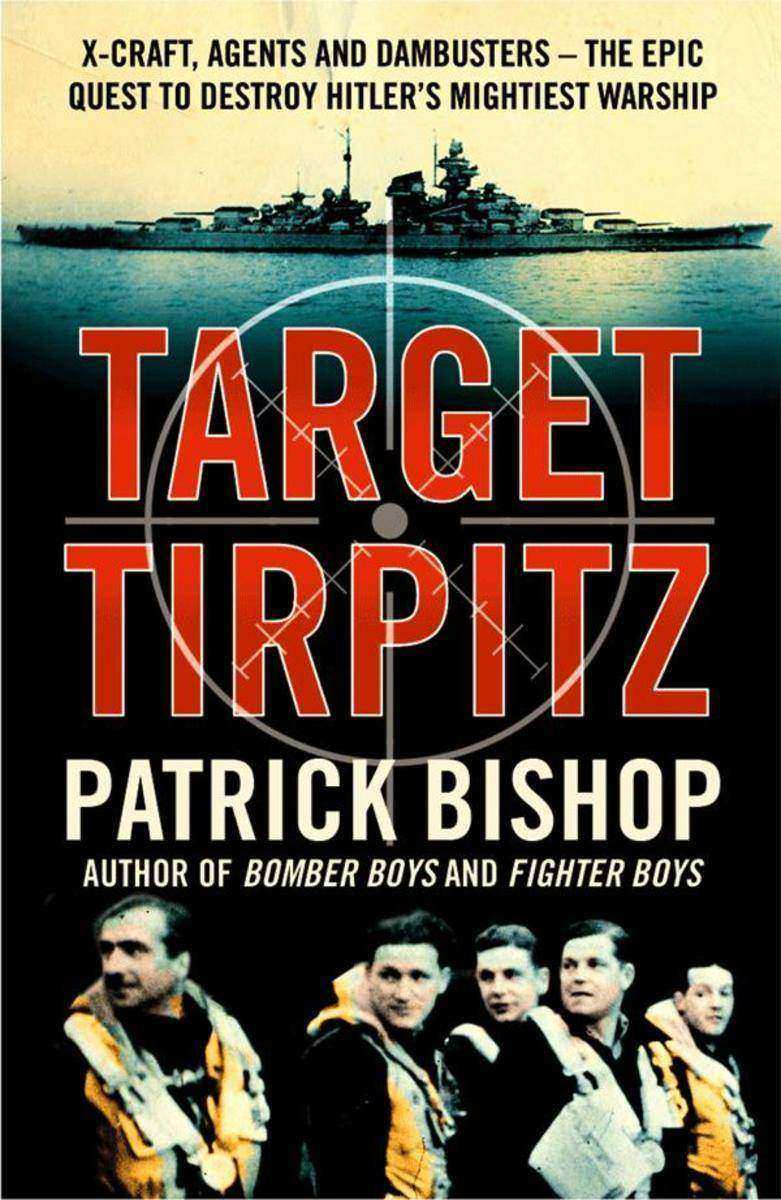
Target Tirpitz
¥68.67
A gripping account of the epic hunt for Hitler’s most terrifying battleship – the legendary Tirpitz – and the brave men who risked their lives to attack and destroy this most potent symbol of the Nazi’s fearsome war machine. Tirpitz was the pride of Hitler’s navy. To Churchill, she was ‘the Beast’, a menace to Britain’s supply lines and a threat to the convoys sustaining Stalin’s armies. Tirpitz was said to be unsinkable, impregnable –no other target attracted so much attention. In total 36 major Allied operations were launched against her, including desperately risky missions by human torpedoes and midget submarines and near-suicidal bombing raids. Yet Tirpitz stayed afloat. It was not until November 1944 that she was finally destroyed by RAF Lancaster Bombers flown by 617 Squadron – the Dambusters – in a gruelling mission that tested the very limits of human endurance. The man who led the raid – Willie Tait – was one of the most remarkable figures of the war, flying missions almost continuously right from the start. Until now his deeds have been virtually unknown. With exclusive co-operation from Tait’s family, Patrick Bishop reveals the extraordinary achievement of a man who shunned the spotlight but whose name will be renowned for generations to come. The book is a magnificent, accessibly written wartime adventure, perfect for fans of Ben Macintyre’s ‘Agent Zigzag’ or ‘Operation Mincemeat’.


