


 购物车
购物车 个人中心
个人中心
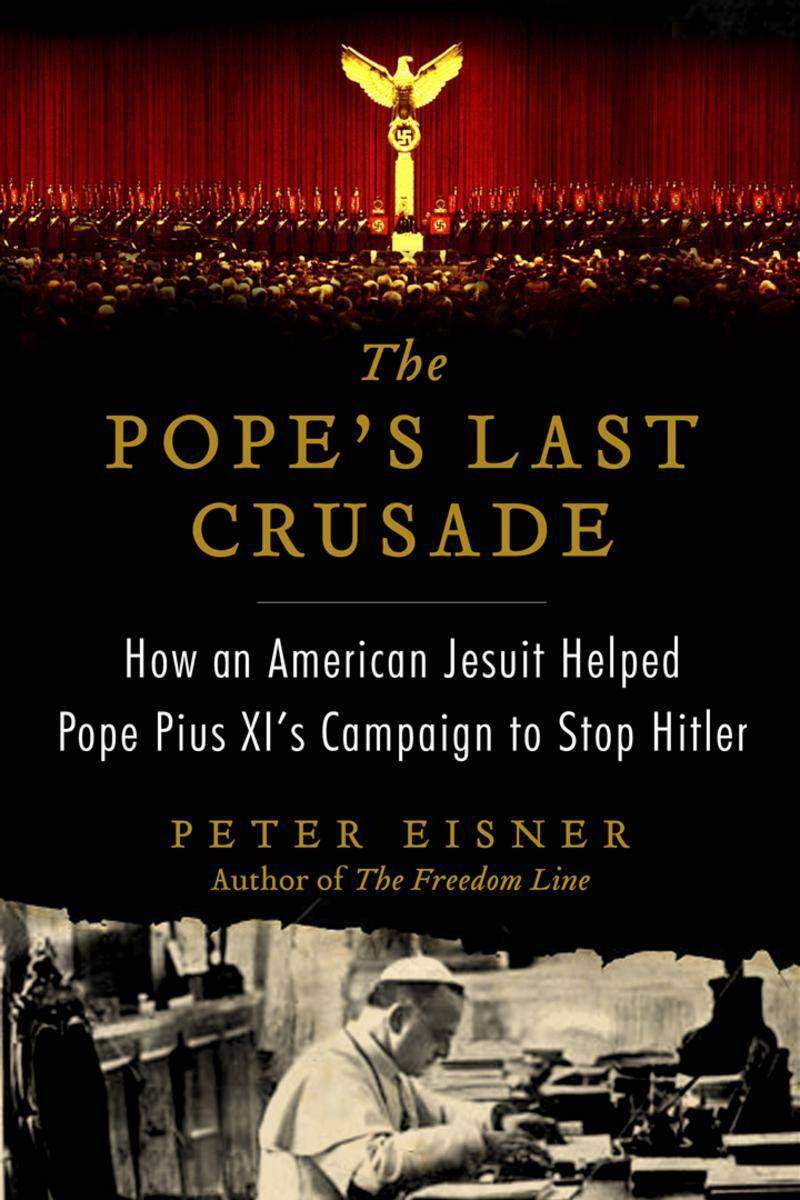
The Pope's Last Crusade
¥90.77
A conspiracy within the Vatican to stop an outspoken Pope In 1938, Pope Pius XI was the world most prominent critic of Hitler and his rhetoric of ethnic purity. To make his voice heard, Pius called upon a relatively unknown American Jesuit whose writing about racism in America had caught the Pope attention. Pius enlisted John LaFarge to write a papal encyclical the Vatican strongest decree publicly condemning Hitler, Mussolini, and their murderous Nazi campaign against the Jews. At the same time conservative members of the Vatican innermost circle were working in secret to suppress the document. Chief among them was Cardinal Eugenio Pacelli, whose appeasement of the Germans underlay a deep-running web of conspiracy. Pacelli, who would become Pope Pius XII, was joined by Wlodimir Ledóchowski, leader of the Jesuit order, to keep the finished encyclical from reaching the increasingly ill Pope. Peter Eisner, award-winning reporter and author of the critically acclaimed The Freedom Line , combines shocking new evidence (released only recently from Vatican archives) and eyewitness testimony to create a compelling journey into the heart of the Vatican and a little-known story of an American partnership with the head of the Catholic Church. A truly essential work, it brings staggering new light to one of the most critical junctures in modern history.

King, Warrior, Magician, Lover
¥99.65
The bestselling, widely heralded, jungian introduction to the psychological foundation of a mature, authentic, and revitalized masculinity.
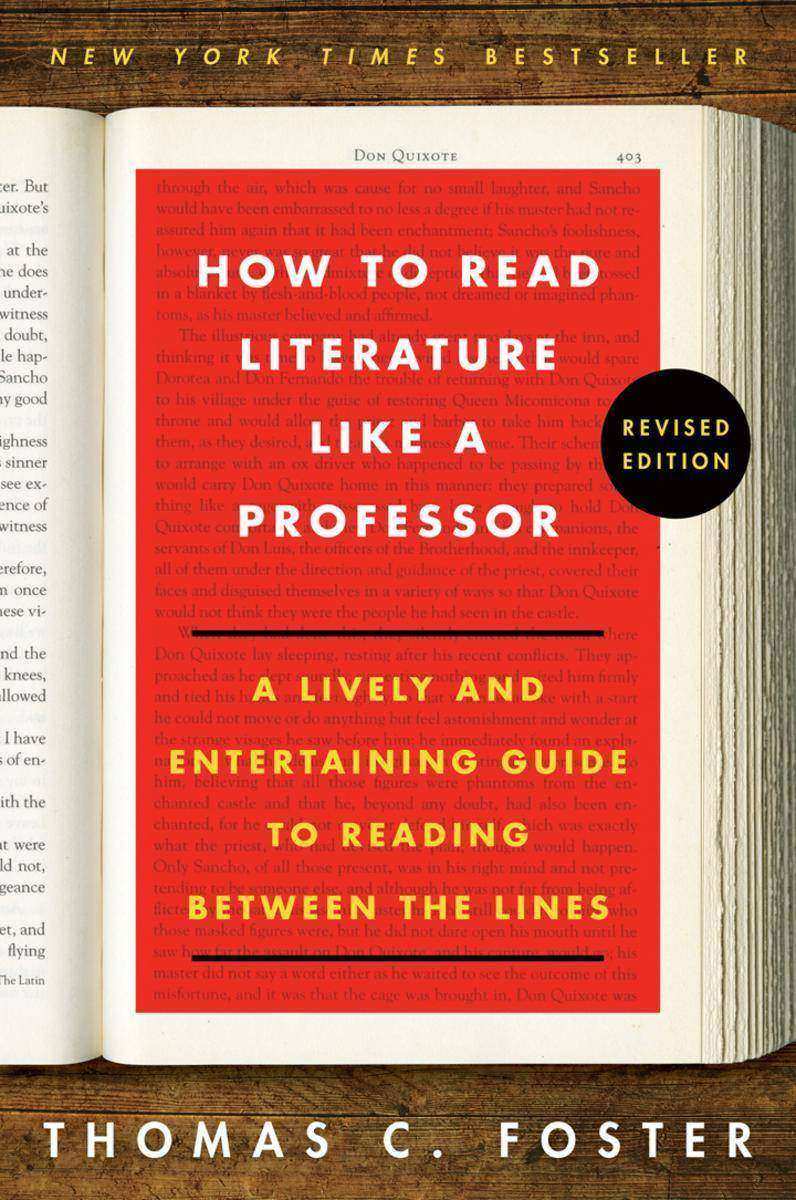
How to Read Literature Like a Professor Revised
¥95.11
A thoroughly revised and updated edition of Thomas C. Foster classic guide a lively and entertaining introduction to literature and literary basics, including symbols, themes, and contexts that shows you how to make your everyday reading experience more rewarding and enjoyable. While many books can be enjoyed for their basic stories, there are often deeper literary meanings interwoven in these texts. How to Read Literature Like a Professor helps us to discover those hidden truths by looking at literature with the eyes and the literary codes of the ultimate professional reader: the college professor. What does it mean when a literary hero travels along a dusty roadWhen he hands a drink to his companionWhen he drenched in a sudden rain showerRanging from major themes to literary models, narrative devices, and form, Thomas C. Foster provides us with a broad overview of literature a world where a road leads to a quest, a shared meal may signify a communion, and rain, whether cleansing or destructive, is never just a shower and shows us how to make our reading experience more enriching, satisfying, and fun. This revised edition includes new chapters, a new preface, and a new epilogue, and incorporates updated teaching points that Foster has developed over the past decade.
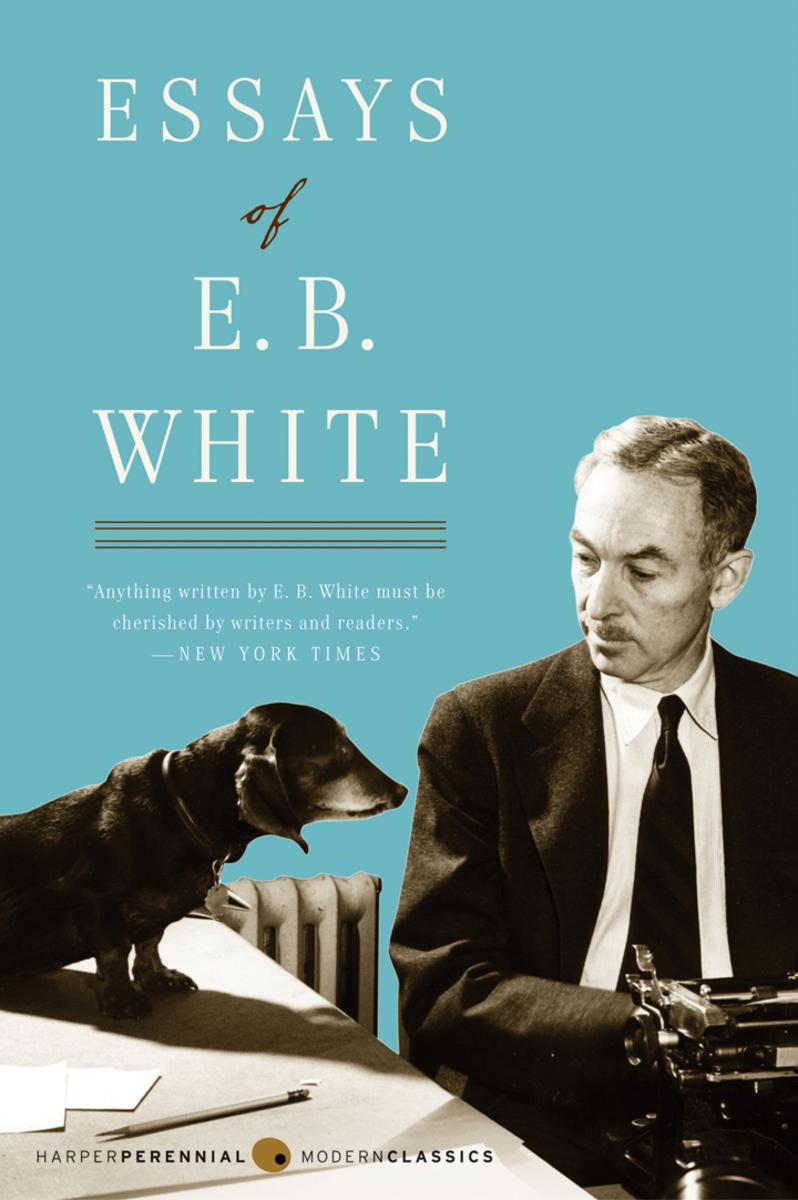
Essays of E. B. White
¥95.11
The classic collection by one of the greatest essayists of our time.

Avon
¥55.31
Lady Philippa Marbury is . . . odd The brilliant, bespectacled daughter of a double marquess cares more for books than balls, for science than the season, and for laboratories than love. She looking forward to marrying her simple fianc and living out her days quietly with her dogs and her scientific experiments. But before that, Pippa has two weeks to experience all the rest fourteen days to research the exciting parts of life. It not much time, and to do it right she needs a guide familiar with London darker corners. She needs . . . a Scoundrel She needs Cross, the clever, controlled partner in London most exclusive gaming hell, with a carefully crafted reputation for wickedness. But reputations often hide the darkest secrets, and when the unconventional Pippa boldly propositions him, seeking science without emotion, she threatens all he works to protect. He is tempted to give Pippa precisely what she wants . . . but the scoundrel is more than he seems, and it will take every ounce of his willpower to resist giving the lady more than she ever imagined.

Wicked Intelligence
¥453.22
In late seventeenth-century London, the most provocative images were produced not by artists, but by scientists. Magnified fly-eyes drawn with the aid of microscopes, apparitions cast on laboratory walls by projection machines, cut-paper figures revealing the "e;exact proportions"e; of sea monsters-all were created by members of the Royal Society of London, the leading institutional platform of the early Scientific Revolution. Wicked Intelligence reveals that these natural philosophers shaped Restoration London's emergent artistic cultures by forging collaborations with court painters, penning art theory, and designing triumphs of baroque architecture such as St Paul's Cathedral. ?Matthew C. Hunter brings to life this archive of experimental-philosophical visualization and the deft cunning that was required to manage such difficult research. Offering an innovative approach to the scientific image-making of the time, he demonstrates how the Restoration project of synthesizing experimental images into scientific knowledge, as practiced by Royal Society leaders Robert Hooke and Christopher Wren, might be called "e;wicked intelligence."e; Hunter uses episodes involving specific visual practices-for instance, concocting a lethal amalgam of wax, steel, and sulfuric acid to produce an active model of a comet-to explore how Hooke, Wren, and their colleagues devised representational modes that aided their experiments. Ultimately, Hunter argues, the craft and craftiness of experimental visual practice both promoted and menaced the artistic traditions on which they drew, turning the Royal Society projects into objects of suspicion in Enlightenment England.?The first book to use the physical evidence of Royal Society experiments to produce forensic evaluations of how scientific knowledge was generated, Wicked Intelligence rethinks the parameters of visual art, experimental philosophy, and architecture at the cusp of Britain's imperial power and artistic efflorescence.
Between History and Myth
¥453.22
All groups tell stories about their beginnings. Such tales are oft-repeated, finely wrought, and usually much beloved. Among those institutions most in need of an impressive creation account is the state: it's one of the primary ways states attempt to legitimate themselves. But such founding narratives invite revisionist retellings that modify details of the story in ways that undercut, ironize, and even ridicule the state's ideal self-representation. Medieval accounts of how Norway was unified by its first king provide a lively, revealing, and wonderfully entertaining example of this process.?Taking the story of how Harald Fairhair unified Norway in the ninth century as its central example, Bruce Lincoln illuminates the way a state's foundation story blurs the distinction between history and myth and how variant tellings of origin stories provide opportunities for dissidence and subversion as subtle-or not so subtle-modifications are introduced through details of character, incident, and plot structure. Lincoln reveals a pattern whereby texts written in Iceland were more critical and infinitely more subtle than those produced in Norway, reflecting the fact that the former had a dual audience: not just the Norwegian court, but also Icelanders of the twelfth and thirteenth centuries, whose ancestors had fled from Harald and founded the only non-monarchic, indeed anti-monarchic, state in medieval Europe.?Between History and Myth will appeal not only to specialists in Scandinavian literature and history but also to anyone interested in memory and narrative.

Reading Clocks, Alla Turca
¥453.22
Up until the end of the eighteenth century, the way Ottomans used their clocks conformed to the inner logic of their own temporal culture. However, this began to change rather dramatically during the nineteenth century, as the Ottoman Empire was increasingly assimilated into the European-dominated global economy and the project of modern state building began to gather momentum.In Reading Clocks, Alla Turca, Avner Wishnitzer unravels the complexity of Ottoman temporal culture and for the first time tells the story of its transformation. He explains that in their attempt to attain better surveillance capabilities and higher levels of regularity and efficiency, various organs of the reforming Ottoman state developed elaborate temporal constructs in which clocks played an increasingly important role. As the reform movement spread beyond the government apparatus, emerging groups of officers, bureaucrats, and urban professionals incorporated novel time-related ideas, values, and behaviors into their self-consciously "e;modern"e; outlook and lifestyle. Acculturated in the highly regimented environment of schools and barracks, they came to identify efficiency and temporal regularity with progress and the former temporal patterns with the old political order.Drawing on a wealth of archival and literary sources, Wishnitzer's original and highly important work presents the shifting culture of time as an arena in which Ottoman social groups competed for legitimacy and a medium through which the very concept of modernity was defined. Reading Clocks, Alla Turca breaks new ground in the study of the Middle East and presents us with a new understanding of the relationship between time and modernity.

Golden Rules
¥453.22
Fresh water has become scarce and will become even more so in the coming years, as continued population growth places ever greater demands on the supply of fresh water. At the same time, options for increasing that supply look to be ever more limited. No longer can we rely on technological solutions to meet growing demand. What we need is better management of the available water supply to ensure it goes further toward meeting basic human needs. But better management requires that we both understand the history underlying our current water regulation regime and think seriously about what changes to the law could be beneficial.For Golden Rules, Mark Kanazawa draws on previously untapped historical sources to trace the emergence of the current framework for resolving water-rights issues to California in the 1850s, when Gold Rush miners flooded the newly formed state. The need to circumscribe water use on private property in support of broader societal objectives brought to light a number of fundamental issues about how water rights ought to be defined and enforced through a system of laws. Many of these issues reverberate in today's contentious debates about the relative merits of government and market regulation. By understanding how these laws developed across California's mining camps and common-law courts, we can also gain a better sense of the challenges associated with adopting new property-rights regimes in the twenty-first century.

Geographies of Philological Knowledge
¥447.34
Geographies of Philological Knowledge examines the relationship between medievalism and colonialism in the nineteenth-century Hispanic American context through the striking case of the Creole Andres Bello (1781-1865), a Venezuelan grammarian, editor, legal scholar, and politician, and his lifelong philological work on the medieval heroic narrative that would later become Spain's national epic, the Poem of the Cid. Nadia R. Altschul combs Bello's study of the poem and finds throughout it evidence of a "e;coloniality of knowledge."e;?Altschul ?reveals how, during the nineteenth century, the framework for philological scholarship established in and for core European nations-France, England, and especially Germany-was exported to Spain and Hispanic America as the proper way of doing medieval studies. She argues that the global designs of European philological scholarship are conspicuous in the domain of disciplinary historiography, especially when examining the local history of a Creole Hispanic American like Bello, who is neither fully European nor fully alien to European culture. Altschul likewise highlights Hispanic America's intellectual internalization of coloniality and its understanding of itself as an extension of Europe. A timely example of interdisciplinary history, interconnected history, and transnational study, Geographies of Philological Knowledge breaks with previous nationalist and colonialist histories and thus forges a new path for the future of medieval studies.
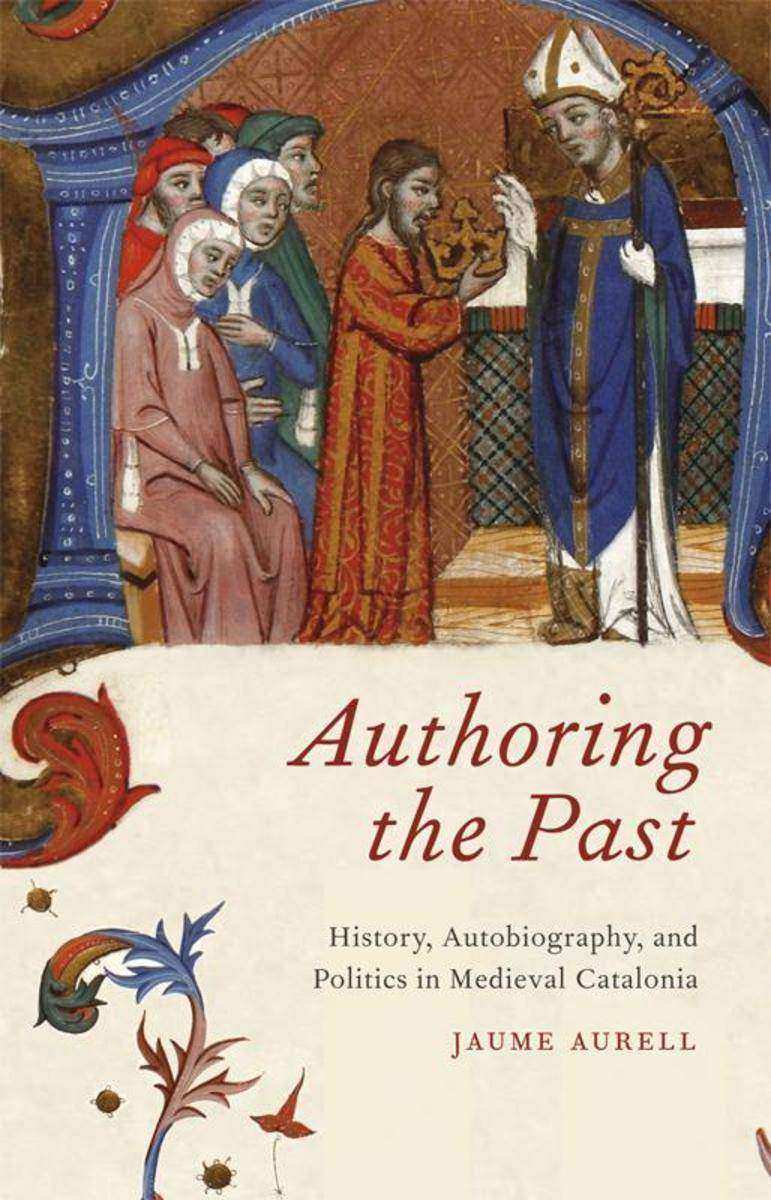
Authoring the Past
¥447.34
Authoring the Past surveys medieval Catalan historiography, shedding light on the emergence and evolution of historical writing and autobiography in the Middle Ages, on questions of authority and authorship, and on the links between history and politics during the period. Jaume Aurell examines texts from the late twelfth to the late fourteenth century-including the Latin Gesta comitum Barcinonensium and four texts in medieval Catalan: James I's Llibre dels fets, the Crnica of Bernat Desclot, the Crnica of Ramon Muntaner, and the Crnica of Peter the Ceremonious-and outlines the different motivations for the writing of each.?For Aurell, these chronicles are not mere archaeological artifacts but rather documents that speak to their writers' specific contemporary social and political purposes. He argues that these Catalonian counts and Aragonese kings were attempting to use their role as authors to legitimize their monarchical status, their growing political and economic power, and their aggressive expansionist policies in the Mediterranean. By analyzing these texts alongside one another, Aurell demonstrates the shifting contexts in which chronicles were conceived, written, and read throughout the Middle Ages.The first study of its kind to make medieval Catalonian writings available to English-speaking audiences, Authoring the Past will be of interest to scholars of history and comparative literature, students of Hispanic and Romance medieval studies, and medievalists who study the chronicle tradition in other languages.
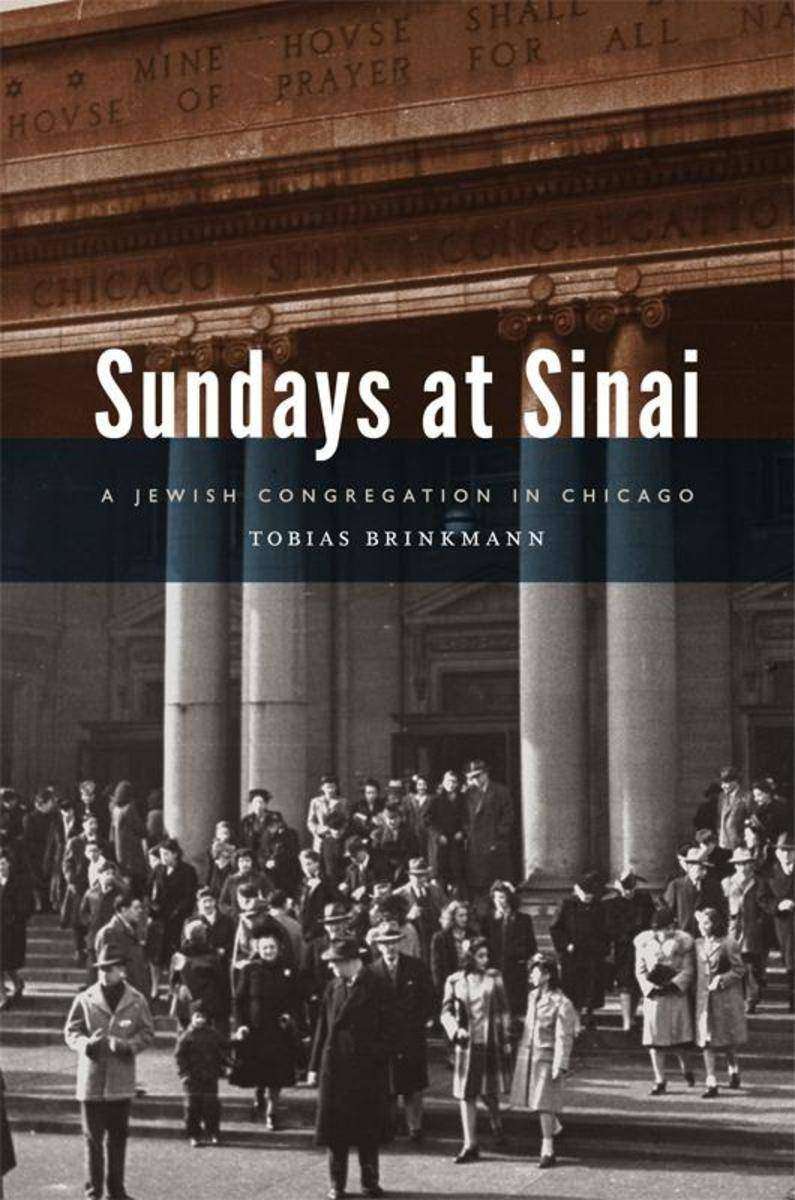
Sundays at Sinai
¥447.34
First established 150 years ago, Chicago Sinai is one of America's oldest Reform Jewish congregations. Its founders were upwardly mobile and civically committed men and women, founders and partners of banks and landmark businesses like Hart Schaffner & Marx, Sears & Roebuck, and the giant meatpacking firm Morris & Co. As explicitly modern Jews, Sinai's members supported and led civic institutions and participated actively in Chicago politics. Perhaps most radically, their Sunday services, introduced in 1874 and still celebrated today, became a hallmark of the congregation.In Sundays at Sinai, Tobias Brinkmann brings modern Jewish history, immigration, urban history, and religious history together to trace the roots of radical Reform Judaism from across the Atlantic to this rapidly growing American metropolis. ?Brinkmann shines a light on the development of an urban reform congregation, illuminating Chicago Sinai's practices and history, and its contribution to Christian-Jewish dialogue in the United States. Chronicling Chicago Sinai's radical beginnings in antebellum Chicago to the present, Sundays at Sinai is the extraordinary story of a leading Jewish Reform congregation in one of America's great cities.
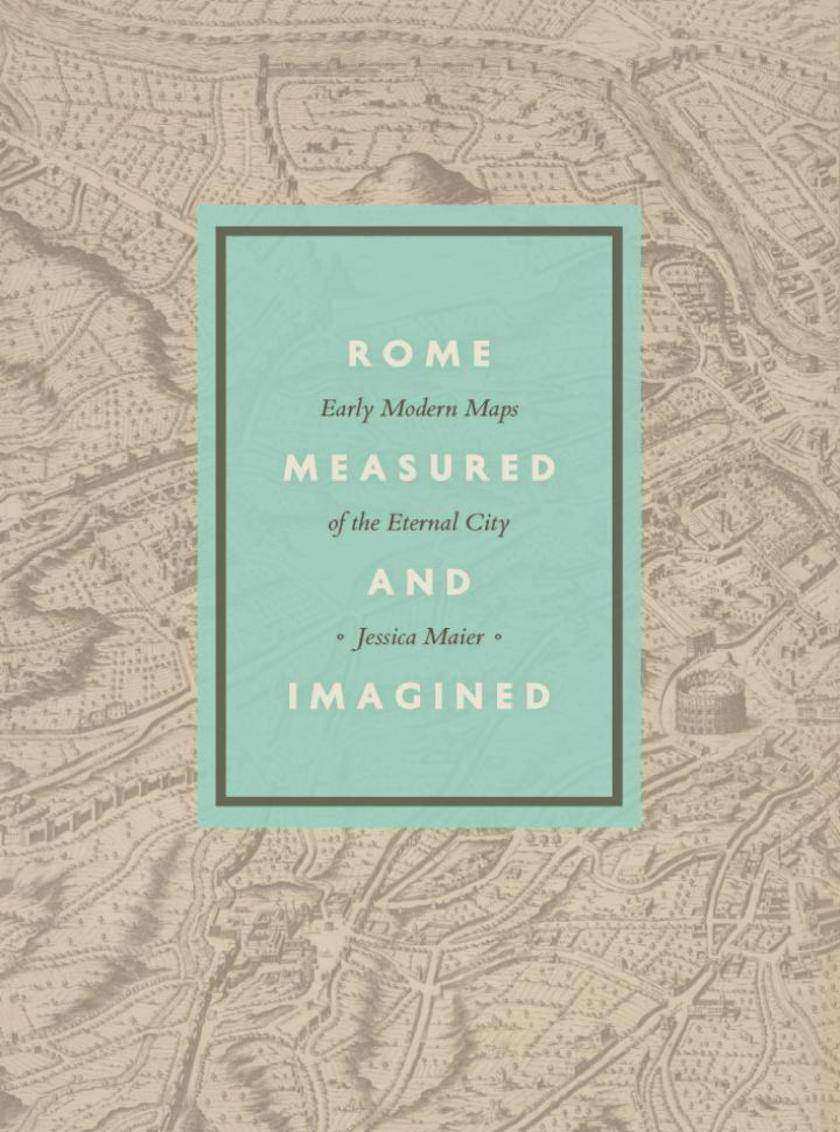
Rome Measured and Imagined
¥412.02
At the turn of the fifteenth century, Rome was in the midst of a dramatic transformation from what the fourteenth-century poet Petrarch had termed a "e;crumbling city"e; populated by "e;broken ruins"e; into a prosperous Christian capital. Scholars, artists, architects, and engineers fascinated by Rome were spurred to develop new graphic modes for depicting the city-and the genre known as the city portrait exploded.In Rome Measured and Imagined, Jessica Maier explores the history of this genre-which merged the accuracy of scientific endeavor with the imaginative aspects of art-during the rise of Renaissance print culture. Through an exploration of works dating from the fifteenth to the eighteenth centuries, her book interweaves the story of the city portrait with that of Rome itself.Highly interdisciplinary and beautifully illustrated with nearly one hundred city portraits, Rome Measured and Imagined advances the scholarship on Renaissance Rome and print culture in fascinating ways.
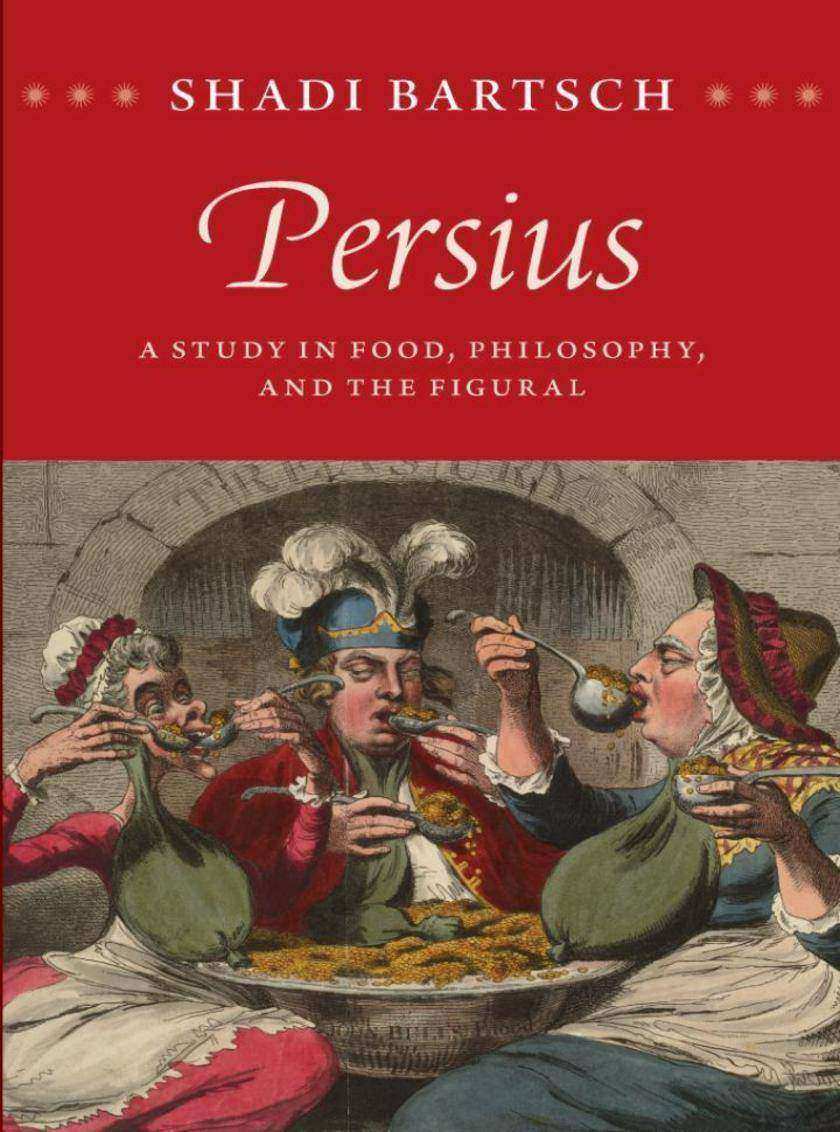
Persius
¥412.02
The Roman poet and satirist Persius (34-62 CE) was unique among his peers for lampooning literary and social conventions from a distinctly Stoic point of view. A curious amalgam of mocking wit and philosophy, his Satires are rife with violent metaphors and unpleasant imagery and show little concern for the reader's enjoyment or understanding.In Persius, Shadi Bartsch explores this Stoic framework and argues that Persius sets his own bizarre metaphors of food, digestion, and sexuality against more appealing imagery to show that the latter-and the poetry containing ?it-harms rather than helps its audience. Ultimately, he encourages us to abandon metaphor altogether in favor of the non-emotive abstract truths of Stoic philosophy, to live in a world where neither alluring poetry, nor rich food, nor sexual charm play a role in philosophical teaching.

Culture of Disaster
¥394.36
From antiquity through the Enlightenment, disasters were attributed to the obscure power of the stars or the vengeance of angry gods. As philosophers sought to reassess the origins of natural disasters, they also made it clear that humans shared responsibility for the damages caused by a violent universe. This far-ranging book explores the way writers, thinkers, and artists have responded to the increasingly political concept of disaster from the Enlightenment until today.?Marie-Hlne Huet argues that post-Enlightenment culture has been haunted by the sense of emergency that made natural catastrophes and human deeds both a collective crisis and a personal tragedy. From the plague of 1720 to the cholera of 1832, from shipwrecks to film dystopias, disasters raise questions about identity and memory, technology, control, and liability. In her analysis, Huet considers anew the mythical figures of Medusa and Apollo, theories of epidemics, earthquakes, political crises, and films such as Blow-Up and Blade Runner. With its scope and precision, The Culture of Disaster will appeal to a wide public interested in modern culture, philosophy, and intellectual history.

Islanded
¥370.82
How did the British come to conquer South Asia in the late eighteenth and early nineteenth centuriesAnswers to this question usually start in northern India, neglecting the dramatic events that marked Britain's contemporaneous subjugation of the island of Sri Lanka. In Islanded, Sujit Sivasundaram reconsiders the arrival of British rule in South Asia as a dynamic and unfinished process of territorialization and state building, revealing that the British colonial project was framed by the island's traditions and maritime placement and built in part on the model they provided.?Using palm-leaf manu*s from Sri Lanka to read the official colonial archive, Sivasundaram tells the story of two sets of islanders in combat and collaboration. He explores how the British organized the process of "e;islanding"e;: they aimed to create a separable unit of colonial governance and trade in keeping with conceptions of ethnology, culture, and geography. But rather than serving as a radical rupture, he reveals, islanding recycled traditions the British learned from Kandy, a kingdom in the Sri Lankan highlands whose customs-from strategies of war to views of nature-fascinated the British. Picking up a range of unusual themes, from migration, orientalism, and ethnography to botany, medicine, and education, Islanded is an engaging retelling of the advent of British rule.
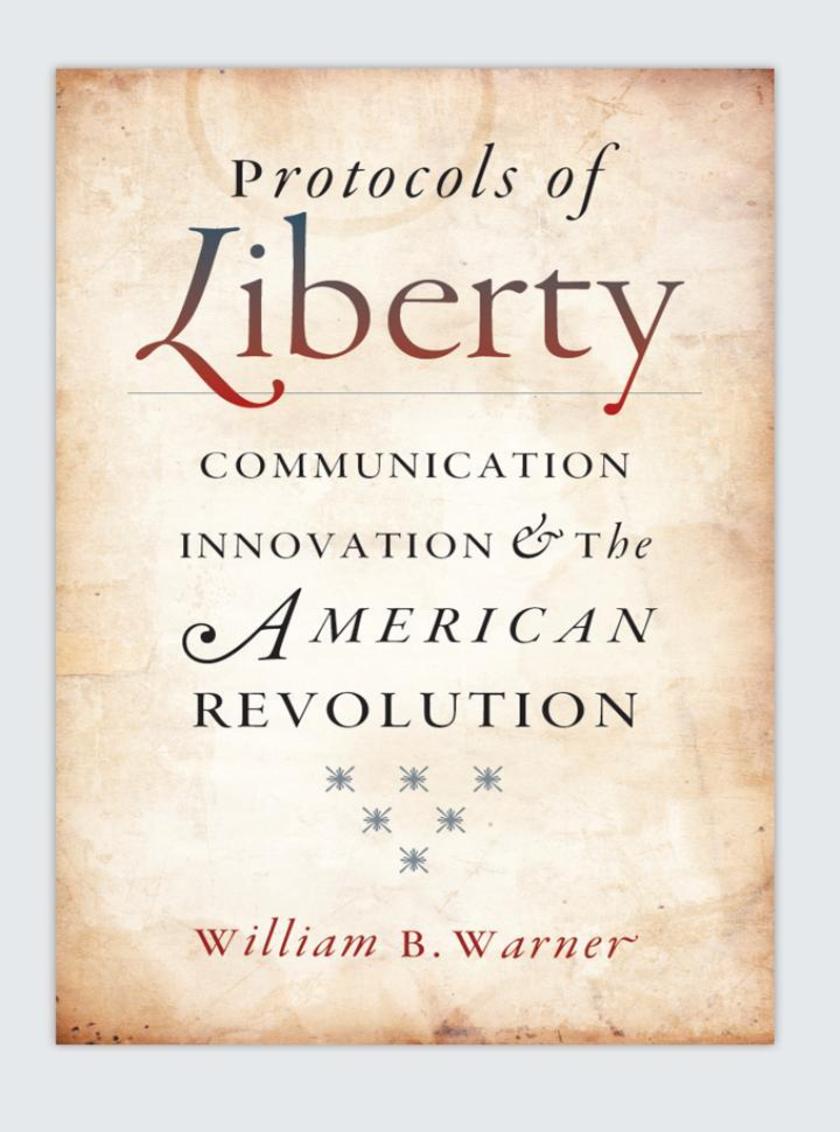
Protocols of Liberty
¥370.82
The fledgling United States fought a war to achieve independence from Britain, but as John Adams said, the real revolution occurred "e;in the minds and hearts of the people"e; before the armed conflict ever began. Putting the practices of communication at the center of this intellectual revolution, Protocols of Liberty shows how American patriots-the Whigs-used new forms of communication to challenge British authority before any shots were fired at Lexington and Concord. ?To understand the triumph of the Whigs over the Brit-friendly Tories, William B. Warner argues that it is essential to understand the communication systems that shaped pre-Revolution events in the background. He explains the shift in power by tracing the invention of a new political agency, the Committee of Correspondence; the development of a new genre for political expression, the popular declaration; and the emergence of networks for collective political action, with the Continental Congress at its center. From the establishment of town meetings to the creation of a new postal system and, finally, the Declaration of Independence, Protocols of Liberty reveals that communication innovations contributed decisively to nation-building and continued to be key tools in later American political movements, like abolition and women's suffrage, to oppose local custom and state law.

After They Closed the Gates
¥370.82
In 1921 and 1924, the United States passed laws to sharply reduce the influx of immigrants into the country. By allocating only small quotas to the nations of southern and eastern Europe, and banning almost all immigration from Asia, the new laws were supposed to stem the tide of foreigners considered especially inferior and dangerous. However, immigrants continued to come, sailing into the port of New York with fake passports, or from Cuba to Florida, hidden in the holds of boats loaded with contraband liquor. Jews, one of the main targets of the quota laws, figured prominently in the new international underworld of illegal immigration. However, they ultimately managed to escape permanent association with the identity of the "e;illegal alien"e; in a way that other groups, such as Mexicans, thus far, have not.In?After They Closed the Gates,?Libby Garland tells the untold stories of the Jewish migrants and smugglers involved in that underworld, showing how such stories contributed to growing national anxieties about illegal immigration. Garland also helps us understand how Jews were linked to, and then unlinked from, the specter of illegal immigration. By tracing this complex history, Garland offers compelling insights into the contingent nature of citizenship, belonging, and Americanness.

World More Concrete
¥370.82
Many people characterize urban renewal projects and the power of eminent domain as two of the most widely despised and often racist tools for reshaping American cities in the postwar period. In?A World More Concrete, N. D. B. Connolly uses the history of South Florida to unearth an older and far more complex story.Connolly captures nearly eighty years of political and land transactions to reveal how real estate and redevelopment created and preserved metropolitan growth and racial peace under white supremacy.Using a materialist approach, he offers a long view of capitalism and the color line, following much of the money that made land taking and Jim Crow segregation profitable and preferred ?approaches to governing cities throughout the twentieth century.A World More Concrete?argues that black and white landlords, entrepreneurs, and even liberal community leaders used tenements and repeated land dispossession to take advantage of the poor and generate remarkable wealth.Through a political culture built on real estate, South Florida's landlords and homeowners advanced property rights and white property rights, especially, at the expense of more inclusive visions of equality. For black people and many of their white allies, uses of eminent domain helped to harden class and color lines.Yet, for many reformers, confiscating certain kinds of real estate through eminent domain also promised to help improve housing conditions, to undermine the neighborhood influence of powerful slumlords, and to open new opportunities for suburban life for black Floridians.Concerned more with winners and losers than with heroes and villains,?A World More Concrete?offers a sober assessment of money and power in Jim Crow America.It shows how negotiations between powerful real estate interests on both sides of the color line gave racial segregation a remarkable capacity to evolve, revealing property owners' power to reshape American cities in ways that can still be seen and felt today.

Cartophilia
¥370.82
The period between the French Revolution and World War II was a time of tremendous growth in both mapmaking and map reading throughout Europe. There is no better place to witness this rise of popular cartography than in Alsace-Lorraine, a disputed borderland that the French and Germans both claimed as their national territory. Desired for its prime geographical position and abundant natural resources, Alsace-Lorraine endured devastating wars from 1870 to 1945 that altered its borders four times, transforming its physical landscape and the political allegiances of its citizens. For the border population whose lives were turned upside down by the French-German conflict, maps became essential tools for finding a new sense of place and a new sense of identity in their changing national and regional communities.?Turning to a previously undiscovered archive of popular maps, Cartophilia reveals Alsace-Lorraine's lively world of citizen mapmakers that included linguists, ethnographers, schoolteachers, hikers, and priests. Together, this fresh group of mapmakers invented new genres of maps that framed French and German territory in original ways through experimental surveying techniques, orientations, scales, colors, and iconography. In focusing on the power of "e;bottom-up"e; maps to transform modern European identities, Cartophilia argues that the history of cartography must expand beyond the study of elite maps and shift its emphasis to the democratization of cartography in the modern world.

Lost Second Book of Aristotle's "e;Poetics"e;
¥247.21
Of all the writings on theory and aesthetics-ancient, medieval, or modern-the most important is indisputably Aristotle's Poetics, the first philosophical treatise to propound a theory of literature. In the Poetics, Aristotle writes that he will speak of comedy-but there is no further mention of comedy. Aristotle writes also that he will address catharsis and an analysis of what is funny. But he does not actually address any of those ideas. The surviving Poetics is incomplete.Until today. Here, Walter Watson offers a new interpretation of the lost second book of Aristotle's Poetics. Based on Richard Janko's philological reconstruction of the epitome, a summary first recovered in 1839 and hotly contested thereafter, Watson mounts a compelling philosophical argument that places the statements of this summary of the Aristotelian text in their true context. Watson renders lucid and complete explanations of Aristotle's ideas about catharsis, comedy, and a summary account of the different types of poetry, ideas that influenced not only Cicero's theory of the ridiculous, but also Freud's theory of jokes, humor, and the comic.Finally, more than two millennia after it was first written, and after five hundred years of scrutiny, Aristotle's Poetics is more complete than ever before. Here, at last, Aristotle's lost second book is found again.


