


 购物车
 个人中心

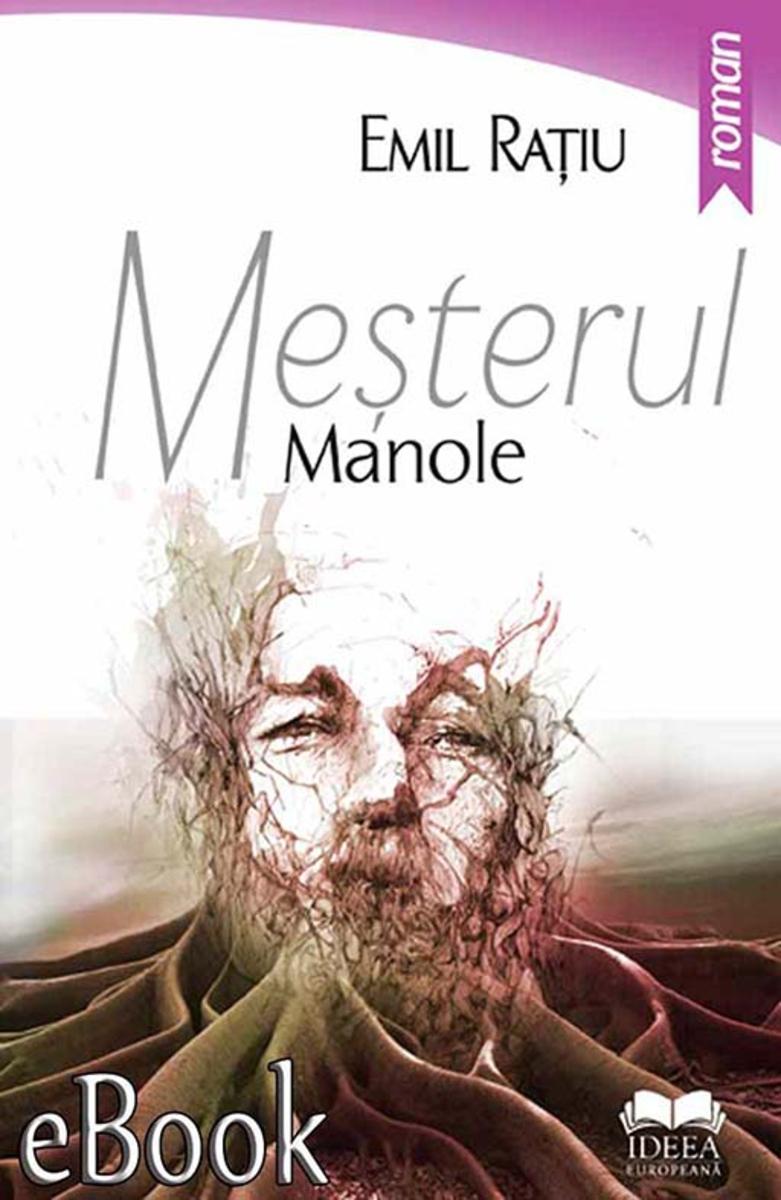
Me?terul Manole
¥77.66
Dac? spun un adev?r incomod sunt tratat? ca un trouble-fête. Dac? regret radicalismul sau lipsa de tact de a emite un adev?r nepl?cut, mi se sugereaz? c? sunt la??. Dac? sunt vis?toare sau patetic?, mi se spune c? sunt dep??it?. C?nd sunt trist? ?i m? ascund dup? masca unei veselii debordante, mi se z?mbe?te insidios: ei, ascunde ea ceva. C?nd spun ?n gura mare ceea ce cred, sunt ?fichiuit? cu sarcasme. Iar atunci c?nd abordez teme majore, mi se sugereaz? c? sunt expirat?. Nu, nu exist? nici un fel de comunicare. La mijloc sunt, mai degrab?, ni?te savante mecanisme menite s?-?i deformeze faptele, iar, ?n ultim? instan??, imaginea, ?i s?-?i taie orice elan, pentru ca, ?ntr-un t?rziu, s? te fac? s? alegi, iar??i, singur?tatea – mam? bun?, aspr?, cald? – ?n iadul-raiul de fiecare zi.S? te re?ntorci ?n subterana ta mereu acela?i, mereu altul, tu, cel care e?ti ?i devii ceea ce e?ti. Aici e marea judecat?. ?ntre pere?ii acoperi?i cu c?r?i ?ncepe cunoa?terea. Restul sunt vorbe, fantezii, toane, divaga?ii, ?nt?mpl?ri m?runte, scurse dinspre realitatea de fum, a c?rei amintire e proasp?t? ?i-at?t de vie. Orgoliul, smerenia ?i asprimea ?ndreptat? ?mpotriva ta ??i vor fi sfetnici.Carnea trec?toare a cui sunt, Doamne? (Aura Christi)

Seguridade social e saúde: tendências e desafios
¥57.14
Mihai Eminescu este considerat de cititori ?i de critica literar? mondial? drept cea mai important? voce poetic? din literatura rom?n?. ?Titlul de fata reprezinta cea mai bogata colectie de poezii a poetului Mihai Eminescu. In cele 650 de pagini regasiti titluri celebre precum: Floare albastra * Revedere * Scrisoarea III * Luceafarul * Ce te legeni... * Mai am un singur dor * Sara pe deal

Jocurile Daniei
¥0.01
Cartea de fa surprinde momente de libertate, arcuiri de libertate, zvcniri libere, explozii spre frumos, notate n fragmente lirice. n esen ei ncape i mulumirea pentru aceste momente, pentru minunea coninut n ele. Iar bucuriei acestei liberti i dau o orientare n sus i spre rsrit, c mrturisire i c recunotina pentru putin de a o fi trit-o.Din punct de vedere muzical, poeziile se acordeaz i cu muzica pe care o interpretez i studiez – muzica psaltic – prelund multe din elementele ntlnite n acest gen muzical. sub aspectul formei, n multe situaii am pstrat varianta cea mai brut, considernd c pstreaz cel mai bine culoarea momentului poeziei.“ –Cristian Boro

Diondray's Journey
¥43.51
Your mission: To unite a nation divided by a forest of lies. When privilege becomes an unbearable burden. When you must discard your privilege to bring peace. What is a life of privilege worth if there’s no peace? One journey to save the world. One journey to unite the world. When hope rests on the shoulders of only one. When hope rests on the shoulders of only one man. Diondray's Journey is the second book of The Diondray's Chronicles.
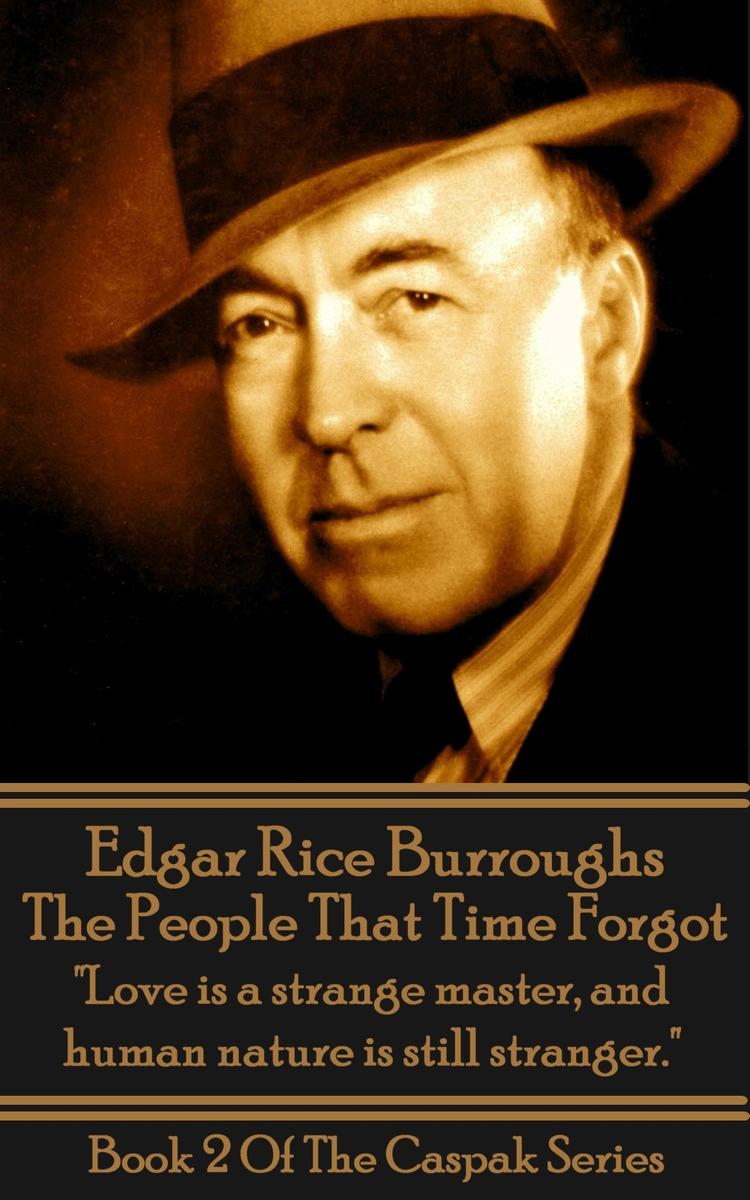
People That Time Forgot - Love is a strange master, and human nature is still st
¥35.22
Edgar Rice Burroughs was born on September 1, 1875, in Chicago, Illinois. His early career was unremarkable. After failing to enter West Point he enlisted in the 7th Calvary but was discharged after heart problems were diagnosed. A series of short term jobs gave no indication as to a career path but finally, in 1911, married and with two young children, he turned his hand to writing. He aimed his works squarely at the very popular pulp serial magazines. His first effort 'Under The Moons Of Mars' ran in Munsey's Magazine in 1912 under the pseudonym Norman Bean. With its success he began writing full time. A continuing theme of his work was to develop series so that each character had ample opportunities to return in sequels. John Carter was in the Mars series and there was another on Venus and one on Pellucidar among others. But perhaps the best known is Tarzan. Indeed Burroughs wanted so much to capitalise upon the brand that he introduced a syndicated Tarzan comic strip, movies and merchandise. He purchased a large ranch north of Los Angeles, California, which he named "e;Tarzana."e; The surrounding communities outside the ranch voted in 1927 to adopt the name as their own. By 1932 Burroughs set up his own company to print his own books. Here we publish 'The People That Time Forgot' a wonderfully crafted piece of science fiction that has endured as a favourite across generations.
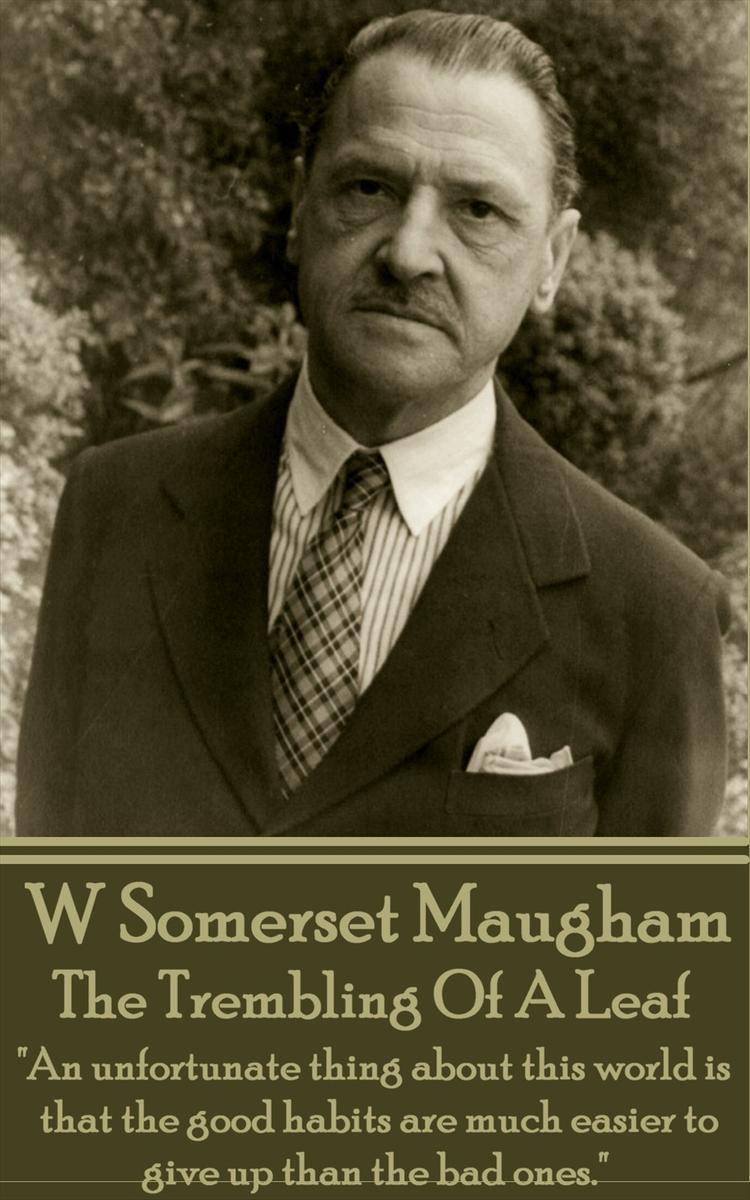
Trembling Of A Leaf - An unfortunate thing about this world is that the good hab
¥46.99
William Somerset Maugham was born on 25 January 1874 and was to become a playwright and novelist of staggering talent. Losing both his parents at age 10, he was raised by a paternal uncle. Maugham eventually trained and qualified as a doctor. The initial print run of his first novel, Liza of Lambeth, published in 1897, sold out so rapidly that Maugham gave up medicine to write full-time. His life was certainly full, as the short biography at the end of this book will attest to, but it is also a life full of marvellous works and dedication to his art. Here we publish The Trembling Of A Leaf.
Pillars of Society (1877)
¥23.45
Henrik Ibsen (20th March, 1828 - 23rd May, 1906) is often referred to as the father of realism and ranked just below Shakespeare as Europe's greatest ever playwright especially as his plays are performed most frequently throughout the world after Shakespeare's. He was Norwegian and although set his plays in Norway, he wrote them in Danish and lived most of his professional life in Italy and Germany. His affect on the theatre is still evident today and shapes the distinction of plays being art as opposed to entertainment since he broke down all previous traditions and explored issues, developed characterisation, revealed uncomfortable truths, challenged assumptions and brokedown facades in ourselves as well as society. These factors are clearly demonstrated in the Pillars of Society, a contemporary drama set in a small Norwegian coastal town dominated by shipbuilder Karsten Bernick who is planning a railway to connect the town to the main line and a tract of land he has been secretly buying. His past comes crashing in on him by the return of his brother in law who had gone to America to take the blame for Bernick stealing family business money and having an affair with an actress and the return of the love of his life who he had rejected for his current wealthy wife. Ibsen skilfully builds on these characters to provide a gripping tragedy underlining the ways of the rich and corrupt and Ibsen's conclusions in this play were a cause of great controversy and much surprise.
Rival Ladies - Look around the inhabited world; how few know their own good, or
¥26.98
John Dryden was born on August 9th, 1631 in the village rectory of Aldwincle near Thrapston in Northamptonshire. As a boy Dryden lived in the nearby village of Titchmarsh, Northamptonshire. In 1644 he was sent to Westminster School as a King's Scholar. Dryden obtained his BA in 1654, graduating top of the list for Trinity College, Cambridge that year. Returning to London during The Protectorate, Dryden now obtained work with Cromwell's Secretary of State, John Thurloe. At Cromwell's funeral on 23 November 1658 Dryden was in the company of the Puritan poets John Milton and Andrew Marvell. The setting was to be a sea change in English history. From Republic to Monarchy and from one set of lauded poets to what would soon become the Age of Dryden. The start began later that year when Dryden published the first of his great poems, Heroic Stanzas (1658), a eulogy on Cromwell's death. With the Restoration of the Monarchy in 1660 Dryden celebrated in verse with Astraea Redux, an authentic royalist panegyric. With the re-opening of the theatres after the Puritan ban, Dryden began to also write plays. His first play, The Wild Gallant, appeared in 1663 but was not successful. From 1668 on he was contracted to produce three plays a year for the King's Company, in which he became a shareholder. During the 1660s and '70s, theatrical writing was his main source of income. In 1667, he published Annus Mirabilis, a lengthy historical poem which described the English defeat of the Dutch naval fleet and the Great Fire of London in 1666. It established him as the pre-eminent poet of his generation, and was crucial in his attaining the posts of Poet Laureate (1668) and then historiographer royal (1670). This was truly the Age of Dryden, he was the foremost English Literary figure in Poetry, Plays, translations and other forms. In 1694 he began work on what would be his most ambitious and defining work as translator, The Works of Virgil (1697), which was published by subscription. It was a national event. John Dryden died on May 12th, 1700, and was initially buried in St. Anne's cemetery in Soho, before being exhumed and reburied in Westminster Abbey ten days later.
Lost Continent - Imagination is but another name for super intelligence.
¥35.22
Edgar Rice Burroughs was born on September 1, 1875, in Chicago, Illinois. His early career was unremarkable. After failing to enter West Point he enlisted in the 7th Calvary but was discharged after heart problems were diagnosed. A series of short term jobs gave no indication as to a career path but finally, in 1911, married and with two young children, he turned his hand to writing. He aimed his works squarely at the very popular pulp serial magazines. His first effort 'Under The Moons Of Mars' ran in Munsey's Magazine in 1912 under the pseudonym Norman Bean. With its success he began writing full time. A continuing theme of his work was to develop series so that each character had ample opportunities to return in sequels. John Carter was in the Mars series and there was another on Venus and one on Pellucidar among others. But perhaps the best known is Tarzan. Indeed Burroughs wanted so much to capitalise upon the brand that he introduced a syndicated Tarzan comic strip, movies and merchandise. He purchased a large ranch north of Los Angeles, California, which he named "e;Tarzana."e; The surrounding communities outside the ranch voted in 1927 to adopt the name as their own. By 1932 Burroughs set up his own company to print his own books. Here we publish 'The Lost Continent' a sensational piece of science fiction that has endured as a favourite across generations.
Electra - To a father growing old nothing is dearer than a daughter
¥14.03
Euripides is rightly lauded as one of the great dramatists of all time. In his lifetime, he wrote over 90 plays and although only 18 have survived they reveal the scope and reach of his genius. Euripides is identified with many theatrical innovations that have influenced drama all the way down to modern times, especially in the representation of traditional, mythical heroes as ordinary people in extraordinary circumstances. As would be expected from a life lived 2,500 years ago, details of it are few and far between. Accounts of his life, written down the ages, do exist but whether much is reliable or surmised is open to debate. Most accounts agree that he was born on Salamis Island around 480 BC, to mother Cleito and father Mnesarchus, a retailer who lived in a village near Athens. Upon the receipt of an oracle saying that his son was fated to win "e;crowns of victory"e;, Mnesarchus insisted that the boy should train for a career in athletics. However, what is clear is that athletics was not to be the way to win crowns of victory. Euripides had been lucky enough to have been born in the era as the other two masters of Greek Tragedy; Sophocles and schylus. It was in their footsteps that he was destined to follow. His first play was performed some thirteen years after the first of Socrates plays and a mere three years after schylus had written his classic The Oristria. Theatre was becoming a very important part of the Greek culture. The Dionysia, held annually, was the most important festival of theatre and second only to the fore-runner of the Olympic games, the Panathenia, held every four years, in appeal. Euripides first competed in the City Dionysia, in 455 BC, one year after the death of schylus, and, incredibly, it was not until 441 BC that he won first prize. His final competition in Athens was in 408 BC. The Bacchae and Iphigenia in Aulis were performed after his death in 405 BC and first prize was awarded posthumously. Altogether his plays won first prize only five times. Euripides was also a great lyric poet. In Medea, for example, he composed for his city, Athens, "e;the noblest of her songs of praise"e;. His lyric skills however are not just confined to individual poems: "e;A play of Euripides is a musical whole....one song echoes motifs from the preceding song, while introducing new ones."e; Much of his life and his whole career coincided with the struggle between Athens and Sparta for hegemony in Greece but he didn't live to see the final defeat of his city. Euripides fell out of favour with his fellow Athenian citizens and retired to the court of Archelaus, king of Macedon, who treated him with consideration and affection. At his death, in around 406BC, he was mourned by the king, who, refusing the request of the Athenians that his remains be carried back to the Greek city, buried him with much splendor within his own dominions. His tomb was placed at the confluence of two streams, near Arethusa in Macedonia, and a cenotaph was built to his memory on the road from Athens towards the Piraeus.
Plutus - What an unhppy fate, to be the slave of a fool
¥11.67
The reality is that little is known of Aristophanes actual life but eleven of his forty plays survive intact and upon those rest his deserved reputation as the Father of Comedy or, The Prince of Ancient Comedy. Accounts agree that he was born sometime between 456BC and 446 BC. Many cities claim the honor of his birthplace and the most probable story makes him the son of Philippus of gina, and therefore only an adopted citizen of Athens, a distinction which, at times could be cruel, though he was raised and educated in Athens. His plays are said to recreate the life of ancient Athens more realistically than any other author could. Intellectually his powers of ridicule were feared by his influential contemporaries; Plato himself singled out Aristophanes' play The Clouds as a slander that contributed to the trial and condemning to death of Socrates and although other satirical playwrights had also caricatured the philosopher his carried the most weight. His now lost play, The Babylonians, was denounced by the demagogue Cleon as a slander against the Athenian polis. Aristophanes seems to have taken this criticism to heart and thereafter caricatured Cleon mercilessly in his subsequent plays, especially The Knights. His life and playwriting years were undoubtedly long though again accounts as to the year of his death vary quite widely. What can be certain is that his legacy of surviving plays is in effect both a treasured legacy but also in itself the only surviving texts of Ancient Greek comedy.
Strife - Idealism increases in direct proportion to one's distance from the prob
¥29.33
John Galsworthy first published in 1897 with a collection of short stories entitled "e;The Four Winds"e;. For the next 7 years he published these and all works under his pen name John Sinjohn. It was only upon the death of his father and the publication of "e;The Island Pharisees"e; in 1904 that he published as John Galsworthy. His first play was The Silver Box, an immediate success when it debuted in 1906 and was followed by "e;The Man of Property"e; later that same year and was the first in the Forsyte trilogy. Whilst today he is far more well know as a Nobel Prize winning novelist then he was considered a playwright dealing with social issues and the class system. We publish here 'Strife' a great example of both his writing and his demonstration of how the class system worked at the time. He was appointed to the Order of Merit in 1929, after earlier turning down a knighthood, and awarded the Nobel Prize in 1932 though he was too ill to attend. John Galsworthy died from a brain tumour at his London home, Grove Lodge, Hampstead on January 31st 1933. In accordance with his will he was cremated at Woking with his ashes then being scattered over the South Downs from an aeroplane.
Honest Whore - Part I
¥23.45
Thomas Middleton was born in London in April 1580 and baptised on 18th April. Middleton was aged only five when his father died. His mother remarried but this unfortunately fell apart into a fifteen year legal dispute regarding the inheritance due Thomas and his younger sister. By the time he left Oxford, at the turn of the Century, Middleton had and published Microcynicon: Six Snarling Satirese which was denounced by the Archbishop of Canterbury and publicly burned. In the early years of the 17th century, Middleton wrote topical pamphlets. One - Penniless Parliament of Threadbare Poets was reprinted several times and the subject of a parliamentary inquiry. These early years writing plays continued to attract controversy. His writing partnership with Thomas Dekker brought him into conflict with Ben Jonson and George Chapman in the so-called War of the Theatres. His finest work with Dekker was undoubtedly The Roaring Girl, a biography of the notorious Mary Frith. In the 1610s, Middleton began another playwriting partnership, this time with the actor William Rowley, producing another slew of plays including Wit at Several Weapons and A Fair Quarrel. The ever adaptable Middleton seemed at ease working with others or by himself. His solo writing credits include the comic masterpiece, A Chaste Maid in Cheapside, in 1613. In 1620 he was officially appointed as chronologer of the City of London, a post he held until his death. The 1620s saw the production of his and Rowley's tragedy, and continual favourite, The Changeling, and of several other tragicomedies. However in 1624, he reached a peak of notoriety when his dramatic allegory A Game at Chess was staged by the King's Men. Though Middleton's approach was strongly patriotic, the Privy Council silenced the play after only nine performances at the Globe theatre, having received a complaint from the Spanish ambassador. What happened next is a mystery. It is the last play recorded as having being written by Middleton. Thomas Middleton died at his home at Newington Butts in Southwark in the summer of 1627, and was buried on July 4th, in St Mary's churchyard which today survives as a public park in Elephant and Castle.
Count of Monte Cristo (Mermaids Classics)
¥35.22
The Count of Monte Cristo (1845) is an adventure novel by French author Alexandre Dumas (pre) (1802-1870) who also wrote the famous classic The Three Musketeers. Mermaids Classics, an imprint of Mermaids Publishing brings the very best of old classic literature to a modern era of digital reading by producing high quality books in ebook format. All of the Mermaids Classics epublications are reproductions of classic antique books that were originally published in print format, mostly over a century ago and are now republished in digital format as ebooks. Begin to build your collection of digital books by looking for more literary gems from Mermaids Classics.
Prince and the Pauper - An Original Classic (Mermaids Classics)
¥35.22
The Prince and the Pauper by Mark Twain (aka Samuel Langhorne Clemens) (1835 1910) is a childrens novel based on two young boys who have an identical appearance but lead completely different lifestyles. One boy is a pauper named Tom Cancy and the other boy is a Prince - named Prince Edward. The story is set in 1547.The Prince and the Pauper was first published in 1881. Mermaids Classics, an imprint of Mermaids Publishing brings the very best of old book classics to a modern era of digital reading by producing high quality books in ebook format.
Man and Superman
¥52.88
George Bernard Shaw was born on July 26th, 1856 in Synge Street, Dublin. His career began modestly initially working for some years in an Estate office but a thirst for reading and knowledge moved his career to writing several novels, none of which were published for several years. He wrote as a critic for several years, mainly on the theatre where his campaigning helped moved Victorian theatre towards a more realistic form. Shaw also took up his fervent socialist views at this point, a cause he would be indelibly linked with throughout his long and productive life. An initial foray into writing a play in 1885 only came to fruition in 1892 and with it his path as one of the leading playwrights of the 20th century was set. Shaw was also a fervent Fabian and a co-founder of the London School of Economics. Saint Joan in 1923 gained Shaw yet another international success. This led in 1925 to his being awarded the Nobel Prize for Literature for his contributions to literature. The citation praised his work as "e;... marked by both idealism and humanity, its stimulating satire often being infused with a singular poetic beauty"e;. In 1938 he added an Academy Award for his work on Pygmalion. Shaw remains the only person ever to win a Nobel Prize and an Oscar. He refused all other awards, even a knighthood. George Bernard Shaw died on November 2nd, 1950 at the age of 94, of renal failure precipitated by injuries incurred by a fall whilst pruning a tree.
Lottery - What's vice today may be virtue, tomorrow
¥14.03
Henry Fielding was born at Sharpham Park, near Glastonbury, in Somerset on April 22nd 1707. His early years were spent on his parents' farm in Dorset before being educated at Eton.An early romance ended disastrously and with it his removal to London and the beginnings of a glittering literary career; he published his first play, at age 21, in 1728.He was prolific, sometimes writing six plays a year, but he did like to poke fun at the authorities. His plays were thought to be the final straw for the authorities in their attempts to bring in a new law. In 1737 The Theatrical Licensing Act was passed. At a stroke political satire was almost impossible. Fielding was rendered mute. Any playwright who was viewed with suspicion by the Government now found an audience difficult to find and therefore Theatre owners now toed the Government line.Fielding was practical with the circumstances and ironically stopped writing to once again take up his career in the practice of law and became a barrister after studying at Middle Temple. By this time he had married Charlotte Craddock, his first wife, and they would go on to have five children. Charlotte died in 1744 but was immortalised as the heroine in both Tom Jones and Amelia.Fielding was put out by the success of Samuel Richardson's Pamela, or Virtue Rewarded. His reaction was to spur him into writing a novel. In 1741 his first novel was published; the successful Shamela, an anonymous parody of Richardson's novel.Undoubtedly the masterpiece of Fielding's career was the novel Tom Jones, published in 1749. It is a wonderfully and carefully constructed picaresque novel following the convoluted and hilarious tale of how a foundling came into a fortune.Fielding was a consistent anti-Jacobite and a keen supporter of the Church of England. This led to him now being richly rewarded with the position of London's Chief Magistrate. Fielding continued to write and his career both literary and professional continued to climb.In 1749 he joined with his younger half-brother John, to help found what was the nascent forerunner to a London police force, the Bow Street Runners. Fielding's ardent commitment to the cause of justice in the 1750s unfortunately coincided with a rapid deterioration in his health. Such was his decline that in the summer of 1754 he travelled, with Mary and his daughter, to Portugal in search of a cure. Gout, asthma, dropsy and other afflictions forced him to use crutches. His health continued to fail alarmingly.Henry Fielding died in Lisbon two months later on October 8th, 1754.

Taming of The Shrew
¥17.56
William Shakespeare was born in Stratford-upon-Avon in late April 1565 and baptised there on 26th April. He was one of eight children. Little is known about his life but what is evident is the enormous contribution he has made to world literature. His writing was progressive, magnificent in scope and breathtaking in execution. His plays and sonnets helped enable the English language to speak with a voice unmatched by any other. William Shakespeare died on April 23rd 1616, survived by his wife and two daughters. He was buried two days after his death in the chancel of the Holy Trinity Church. The epitaph on the slab which covers his grave includes the following passage, Good friend, for Jesus's sake forbear, To dig the dust enclosed here. Blessed me the man that spares these stones, And cursed be he that moves my bones. Here we publish his comedy from 1593 'The Taming of the Shrew'.
Countess Cathleen - The world is full of magic things
¥35.22
William Butler Yeats (1865 - 1939) is best described as Ireland's national poet in addition to being one of the major twentieth-century literary figures of the English tongue. To many literary critics, Yeats represents the 'Romantic poet of modernism,' which is quite revealing about his extraordinary style that combines between the outward emphasis on the expression of emotions and the extensive use of symbolism, imagery and allusions. Yeats also wrote prose and drama and established himself as the spokesman of the Irish cause. His fame was greatly boosted mainly after he received the Nobel Prize in Literature in 1923. His life was marked by his many love stories, by his great interest in oriental mysticism and occultism as well as by political engagement since he served as an Irish senator for two terms. Today, although William Butler Yeats's contribution to literary modernism and to Irish nationalism remains incontestable. Here we publish a collection of his remarkable plays that allow us to fully immerse ourselves in his talents.
Scarlet Letter - She had not known the weight until she felt the freedom.
¥14.03
Set in 17th-century New England, Nathaniel Hawthorne's masterpiece, The Scarlet Letter, is a novel that combines the romantic style with the historical genre and a number of Gothic conventions and themes, namely the themes of sin, guilt, repentance and mortification. The book tells the tragic story of Hester Prynne who has to wear the letter "e;A"e; on her breast as a token of shame for having committed adultery and given birth to an illegitimate child that she named Pearl . Furthermore, Prynne is doubly punished for not accepting to reveal the identity of her lover. As her stigmatization by the conservative community intensifies, a highly respected minister, Arthur Dimmesdale, intervenes with local authorities to prevent her separation from her child. The narrative then focuses on the character of the churchman who appears to be suffering from poor physical and psychological health. It is only later in the story that readers understand the secret behind Dimmesdale's self-inflicted tortures. Being Pearl's biological father, he lacks the courage to publically assume his responsibilities the way Prynne does. As the narrative approaches its end, one its most emotional climactic scenes shows the three members of the cursed family together on the public scaffold where Dimmesdale finally recognizes his sin and passes away on the spot.
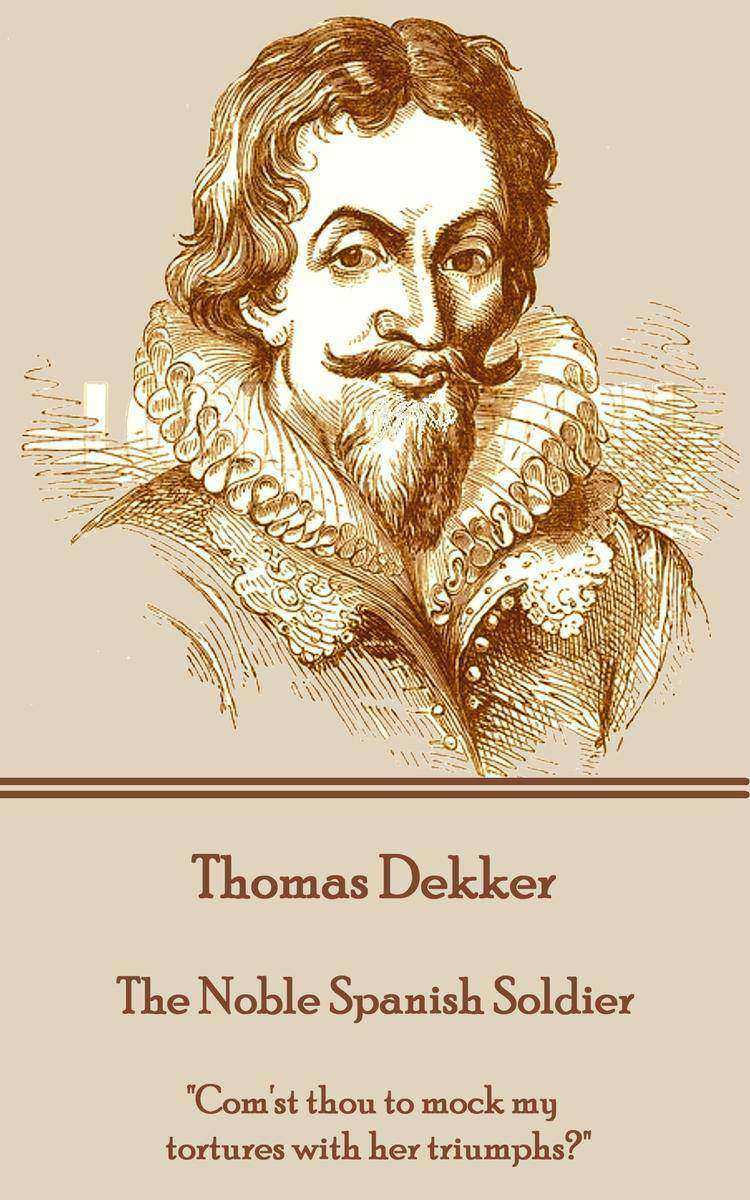
Noble Spanish Soldier - Com'st thou to mock my tortures with her triumphs?
¥26.98
Thomas Dekker was a playwright, pamphleteer and poet who, perhaps, deserves greater recognition than he has so far gained. Despite the fact only perhaps twenty of his plays were published, and fewer still survive, he was far more prolific than that. Born around 1572 his peak years were the mid 1590's to the 1620's - seven of which he spent in a debtor's prison. His works span the late Elizabethan and Caroline eras and his numerous collaborations with Ford, Middleton, Webster and Jonson say much about his work. His pamphlets detail much of the life in these times, times of great change, of plague and of course that great capital city London a swirling mass of people, power, intrigue.


