


 购物车
购物车 个人中心
个人中心
Hand Me Downs
¥43.51
A Haunting Legacy John and Branwen face challenges as a couple—his violent past and her unwanted pregnancy. Just when life threatens to overwhelm them, Branwen receives an offer of help from an unlikely source. Now, John must face his lifelong fears to find the strength to fight an ancient power and save Branwen from her family legacy. But first, John and Branwen must stop hiding things—from each other and from themselves—and learn to face the truth, no matter their fear of the consequences. A haunting fantasy story about the lasting power of family legacy. A page-turning tale of love and sacrifice. An excerpt from Hand Me Downs: John was in the grips of an insistent memory that wouldn’t let him rest. Whenever an upsetting memory caught at him like this, especially from his difficult seventeenth year, John had learned long ago it was best not to resist. Something inside was going to have its way with him. Fighting would only make it worse. This particular memory hadn’t demanded his attention for so long. Until tonight, he’d dared hope he was done with this one. The odd solitude of an overnight flight was preferable to a huge family gathering for this sort of ordeal, and certainly better than the twisted filter of his nightmares. At least while he was awake, he knew the worst night of his life was when he’d at last started to take control and change the course he was on. His dreaming life gave him no such relief.
Modern Magick, Volume 2: Books 4-6
¥69.67
The fight to save British magick rages on — and it’s taking the Society’s beleaguered champions away from Home. Far, far away, to worlds long lost; worlds no one could ever have imagined existed. Dangers and mysteries abound, which is way up Ves’s street. Jay isn’t quite so sure. Severed as they are from the Society’s support, will magick’s unlikely heroes make it Home unscathed? It’ll be fine. After all, these lost magickal domains are the Society’s ultimate dream. What could possibly be so bad about that? The Society for Magickal Heritage battles modern decay in three thrilling new Modern Magick adventures: The Fifth Britain, Royalty and Ruin, and Music and Misadventure.
The Billionaire Escape Plan: A Billionaire Friends to Lovers Romance
¥34.79
A sweet and sizzling standalone romance from?USA Today?bestselling author Ember Casey.Most girls dream of marrying a billionaire.Me? I’d rather make fun of one. Especially if the billionaire in question is Alexander Grant.Excuse me—Xander?Grant. That’s right—the mega-hot entrepreneur who seems to top every magazine’s “Rich Eligible Bachelors” list these days.To me, he’ll always be Alex—my childhood best friend. The guy who joined me on all sorts of wild teenage misadventures. The only person in our small town who understood me.It’s been four years since I’ve seen Alex. But suddenly he’s back in our town at the exact same time my life is imploding around me.We’ve both changed so much—I mean, the guy used to live in ripped jeans, and now he wears nothing but designer suits—but when I need it most, he offers me exactly the escape I need. A chance to run away from my life, if only for a few days.I only hope my heart is prepared.

Autism Questions Teachers Ask: Autism Help - Book Two
¥52.23
One in every 59 children has an autism diagnosis. Once thought rare, now every teacher will have an autistic child in their classroom. Maybe not last year, but this coming year.... Our rooms are full of diverse learners. Sadly, most university programs don't prepare teachers for this reality.? With all those bright little faces gazing at you, the needs can seem overwhelming. How can you be everything to each one? This book is for you. It will calm those panicky feelings. You can do this. By learning about autism and the characteristics that affect being in a classroom, you can tailor strategies that will help that learner, you and the other kids who are in your care. You cannot turn your room upside down for one kid but you can use strategies that are doable and will help many of the learners. Dr. Sharon Mitchell gets it. She's been a teacher, counselor, school psychologist, district consultant and autism consultant for decades. She has presented to thousands at conferences and workshops on ways to successfully include kids who learn differently. She teaches university classes to wanna-be-teachers and to school administrators on inclusion strategies and students who learn differently.

Restricted Species
¥34.79
Earth Wars veteran Jim Turhan loves his quiet life on supply planet Mossera 4, teaching young cadets the art and science of xeno-farming. Pollinator drones never sting or bite. They simply do their jobs. Then crops all over Mossera 4 begin to fail. Will Jim discover the cause before starvation, or worse, turns his dream life into a nightmare?
Live like a King without Going Broke: A Simple Guide to Financial Victory
¥69.67
Live Like A King Without Going Broke: A Simple Guide To Financial Victory In school, we spent years learning about science, language, math, and social studies from text books, but we spent very little time – if at all – on real life skills like saving, making, and managing money. Somehow, we’re supposed to just “pick up” how to manage our finances, as if innate to us! The truth is, money management is not a skill that we’re all born with – it’s acquired. The good news is that you can easily learn the skill! You’re about to learn how you can save, make, invest and manage your money like a pro! You will gain the wisdom and skills to manage setbacks, struggles, and financial strain today, tomorrow, and beyond! Here Is What You'll Discover From This Book:? Creating and staying with a budget Cutting expenses without sacrificing your lifestyle Saving money every day Getting out of debt Boosting your income Refinancing your mortgage How to boost your credit score Protecting your identity

Retribution
¥87.11
Steve Yarrow returns from war to discover that his hometown is no safer than a war zone. His family is marked for murder and he is the first on the hit list. The only escape lies in identifying the assailant and the motive before it is too late. He is assisted by DetectiveDana Morales. Together they must discover the identity of the assassin and the warped motive that drives hatred against the Yarrow family.
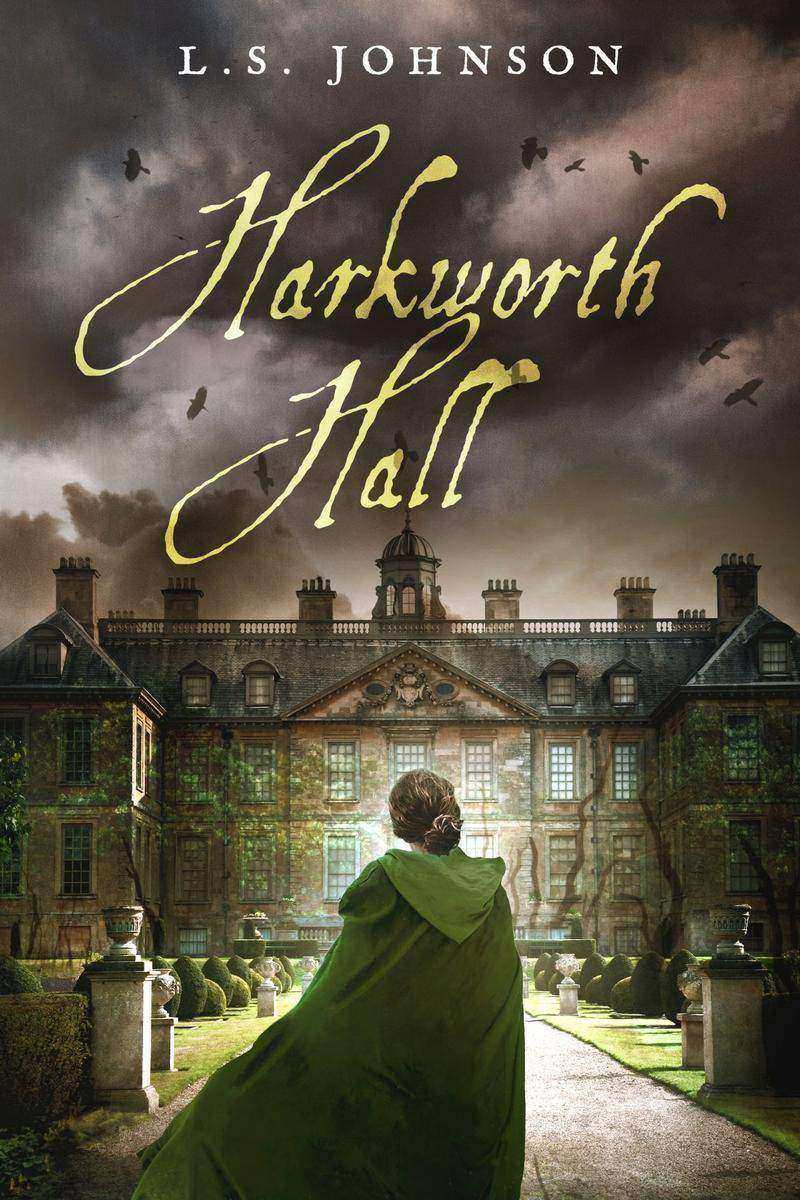
Harkworth Hall
¥26.07
Ask him about his wives. Caroline Daniels must marry, and marry well. But in her remote corner of England eligible suitors are few and far between, and none hold a candle to her closest friend, Diana Fitzroy. When Sir Edward Masterson arrives, he seems the answer to Caroline’s financial worries, though she instinctively dislikes the reticent, older merchant. Soon Sir Edward has set his sights on acquiring both Caroline and the decaying Harkworth Hall. Caroline’s future seems secure, save that Sir Edward’s enigmatic secretary hints at a dark secret, and Sir Edward shows an unusual interest in the nearby bay. To discover Sir Edward’s true purpose, Caroline will have to face the horror beneath Harkworth Hall—and the woman who will change her life.
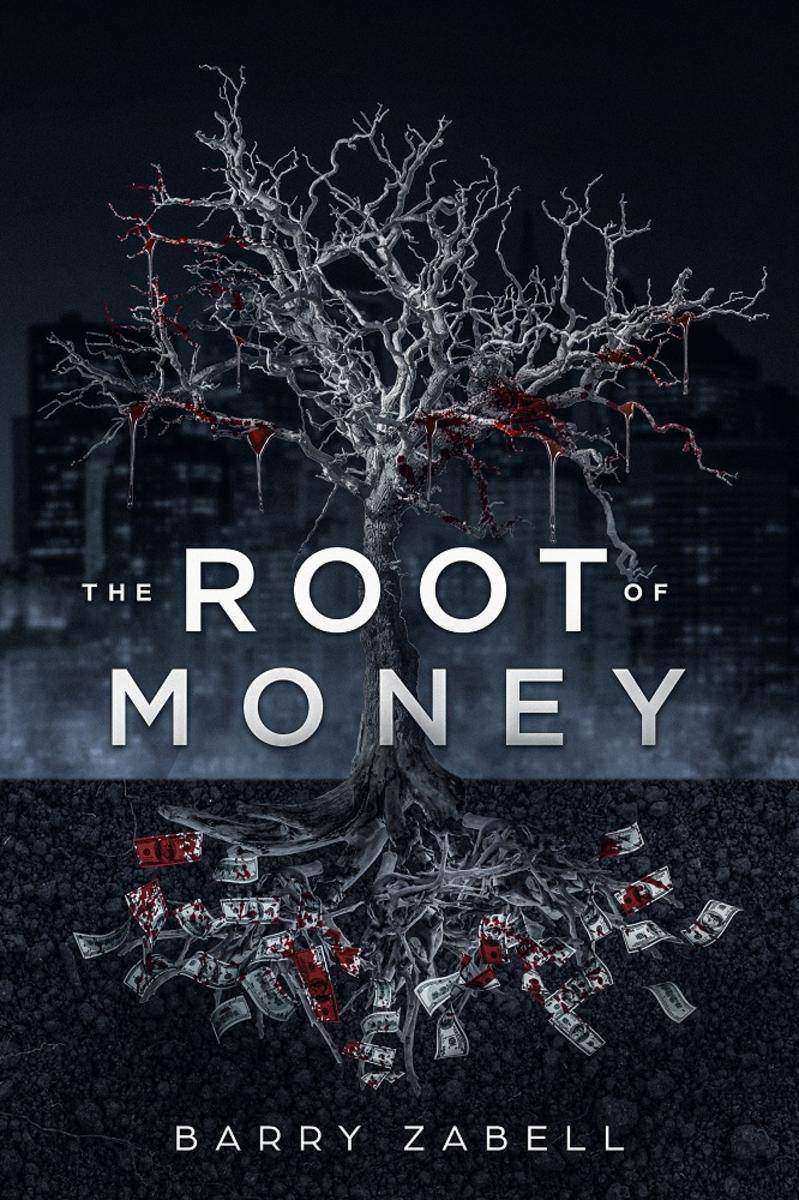
The Root of Money
¥60.95
Computer programmer and network security specialist, Tecumseh ‘Tek’ Carrier has been delving into matters he has been told do not concern him. Following abandonment by his family, Tek isolates himself in his son’s bedroom to spend long nights breaching his bank’s computer network, compiling money laundering information gathered from their database; enough information, he hopes, to make a difference before it is too late. ? From his estate in Lyons, France, Ahmed Al-Malmasi enjoys the finest vintages of the region and immersing himself in the history and culture of people he detests. Utilizing his great wealth, Al-Malmasi has launched a plot extending from Southeast Asia and the Spanish Riviera to the golden shores of the United States. While Al-Malmasi’s agents hasten to complete their mission, Tek battles bank corruption while struggling to reconnect with his family. ? Instigated by Tek’s revelation, American law enforcement race to identify the threat and prevent a disaster that will materialize directly in the path of Tek and his family.
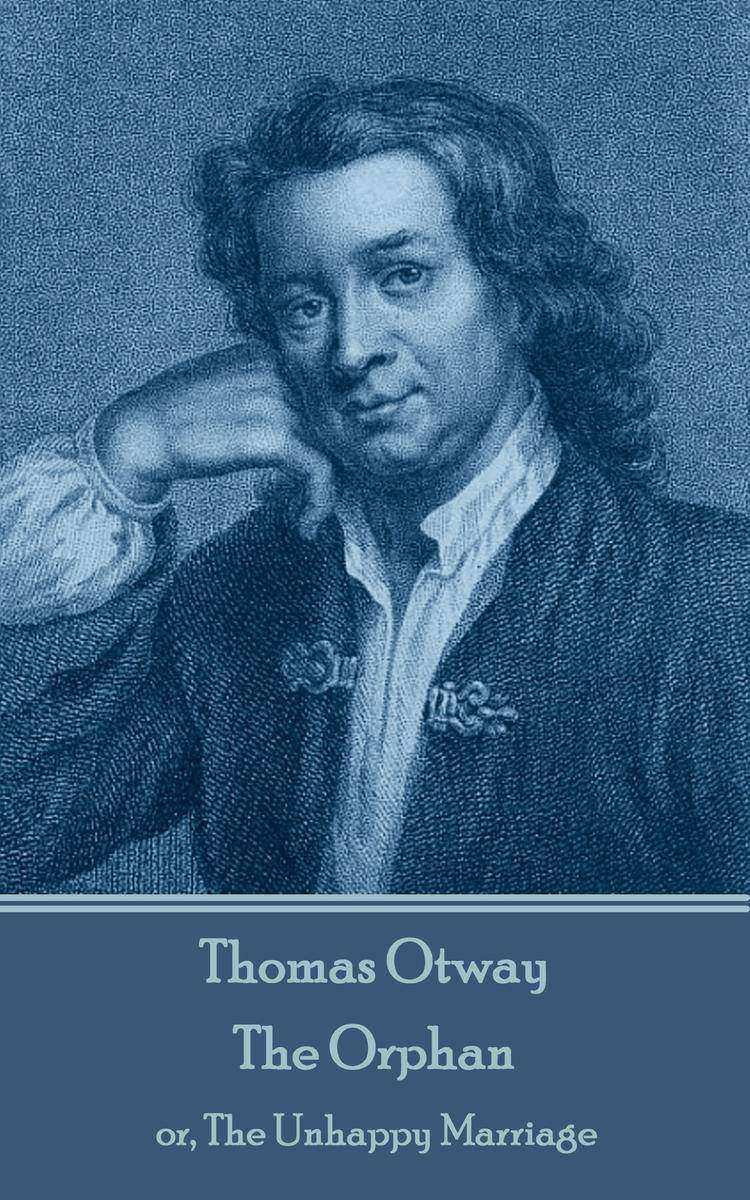
Orphan - or, The Unhappy Marriage
¥21.09
Thomas Otway was born on March 3rd, 1652 at Trotton near Midhurst. He was educated at Winchester College before entering Christ Church, Oxford, in 1669 as a commoner. For reasons unknown he left without a degree in 1672 but what is known is that Oxford create a passion in him for books. Travelling to London that same year he met and obtained work as an actor from the playwright Aphra Behn. He was cast as the old king in her play, Forc'd Marriage but on his debut he had such a severe attack of stage fright that his acting career finished there and then. His career now turned to writing plays and it was a career that was to prove of immense worth to the literary canon of England. In 1675, Otway's first play, Alcibiades was first performed. It is a tragedy, written in heroic verse, saved from absolute failure only by the actors. In his play Don Carlos, Prince of Spain (1676) Otway made the leap to the front rank of playwrights and quickly followed it in 1677 with two plays adapted from French sources; Titus and Berenice, and the Cheats of Scapin followed in 1678 Otway by an original comedy, Friendship in Fashion, which continued his run of very successful plays. In February 1680, the first of Otway's two tragic masterpieces, The Orphan, or The Unhappy Marriage, was performed followed by an indifferent comedy, The Soldier's Fortune (1681), and 1682 perhaps his best work, Venice Preserv'd, or A Plot Discover'd. The play won instant success. However, in the last few years of his life poverty ensnared Otway. The success of his earlier plays had finished with Venice Preserv'd and the downward slope was both precipitous and destructive. Thomas Otway, aged 33, died in the most awful poverty on April 14th, 1685 and was buried two days later on April 16th, in the churchyard of St. Clement Danes.
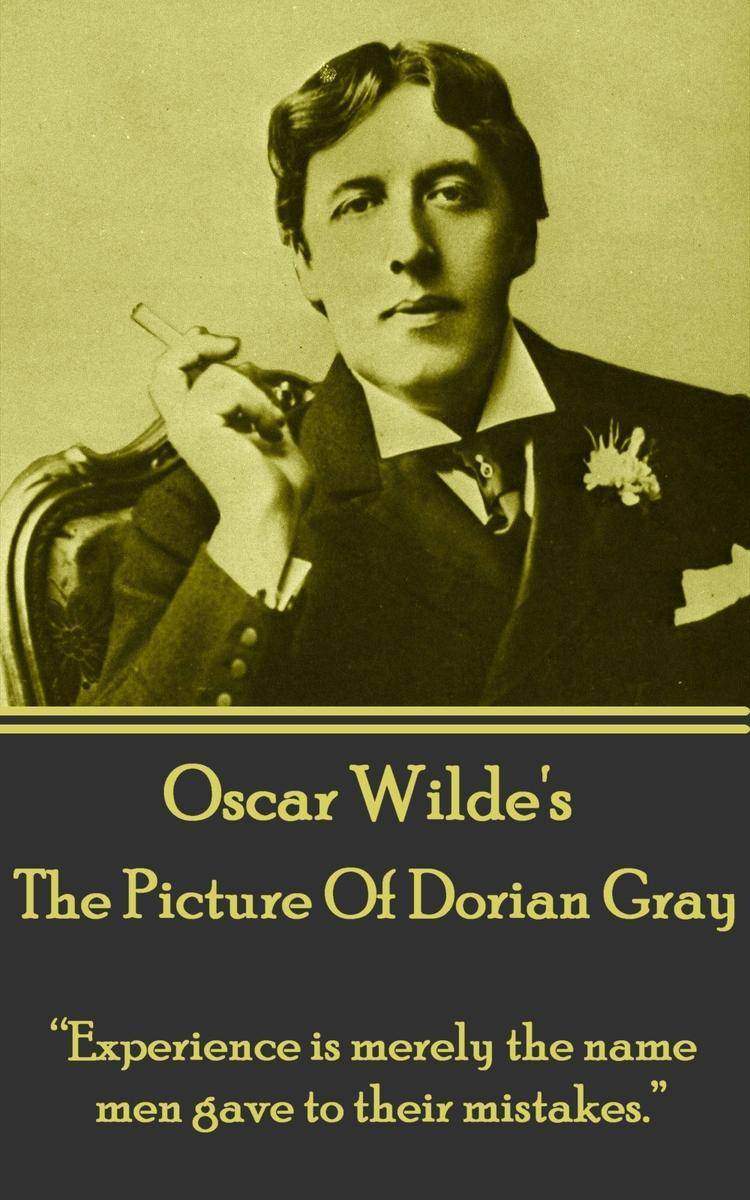
Picture Of Dorian Gray - Experience is merely the name men gave to their mistake
¥26.98
Oscar Fingal O'Flahertie Wills Wilde was born on the 16th October 1854 in Dublin Ireland. The son of Dublin intellectuals Oscar proved himself an outstanding classicist at Dublin, then at Oxford. With his education complete Wilde moved to London and its fashionable cultural and social circles. With his biting wit, flamboyant dress, and glittering conversation, Wilde became one of the most well-known personalities of his day. His only novel, The Picture of Dorian Gray was published in 1890 and he then moved on to writing for the stage with Salome in 1891. His society comedies produced enormous hits and turned him into one of the most successful writers of late Victorian London. Whilst his masterpiece, The Importance of Being Earnest, was on stage in London, Wilde had the Marquess of Queensberry, the father of his lover, Lord Alfred Douglas, prosecuted for libel. The trial unearthed evidence that caused Wilde to drop his charges and led to his own arrest and trial for gross indecency. He was convicted and imprisoned for two years' hard labour. It was to break him. On release he left for France, There he wrote his last work, The Ballad of Reading Gaol in 1898. He died destitute in Paris at the age of forty-six sipping champagne a friend had brought with the line 'Alas I am dying beyond my means'. And here indeed is that master work The Picture Of Dorian Gray. Compelling, diabolical and at the time it caused great outrage. But as we know the pen of Oscar Wilde leads us where many others fear to go.
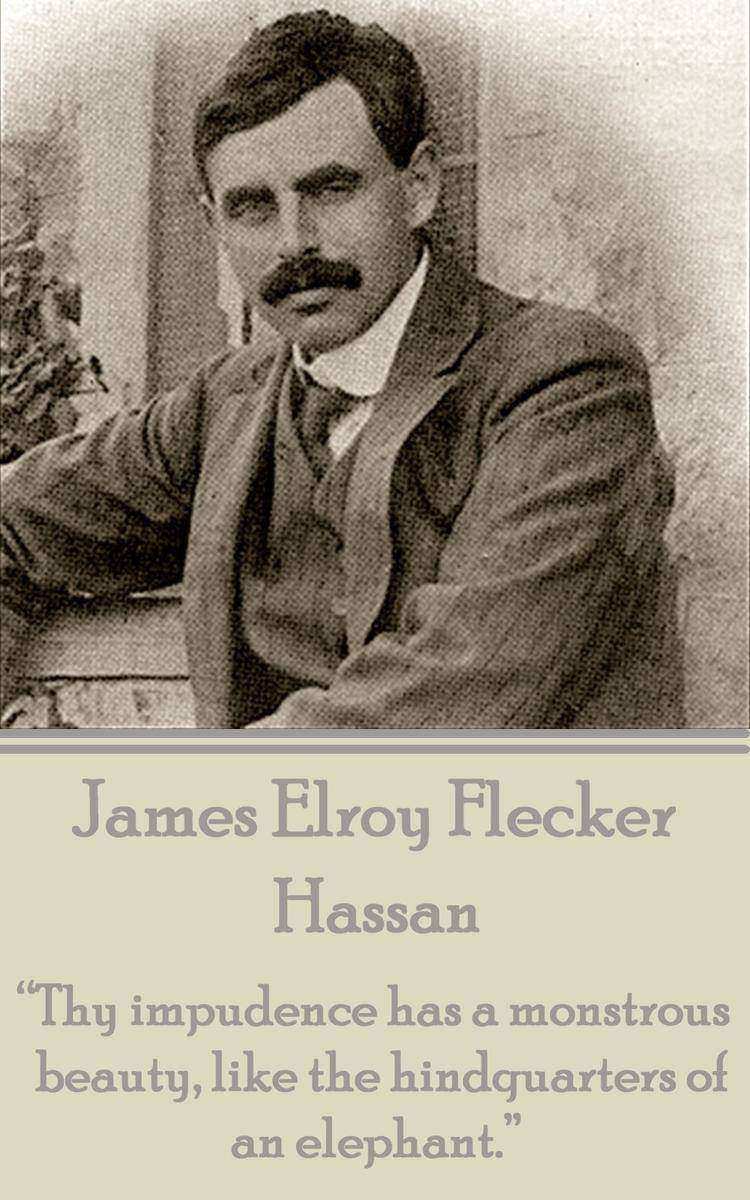
Hassan - Thy impudence has a monstrous beauty, like the hindquarters of an eleph
¥21.09
James Elroy Flecker was born on November 5th 1884 in London. He was educated at Dean Close School, Cheltenham, where his father was headmaster, and Uppingham School then on to Trinity College, Oxford, and Caius College, Cambridge. At Oxford he was much influenced by the vestiges of the Aesthetic movement there. In 1910 he was in the consular service, in the Eastern Mediterranean. On a ship to Athens he met Helle Skiadaressi and married her in 1911. Perhaps his best known work is "e;To A Poet A Thousand Years Hence"e;. Here we publish his five act play Hassan The Story Of Hassan Of Bagdad And How He Came To Make The Golden Journey To Samarkand. Tragically James was to die at age 30 on January 3rd 1915, in Davos, Switzerland of tuberculosis. An immense loss to English Poetry - he had already been measured against the work of Keats.
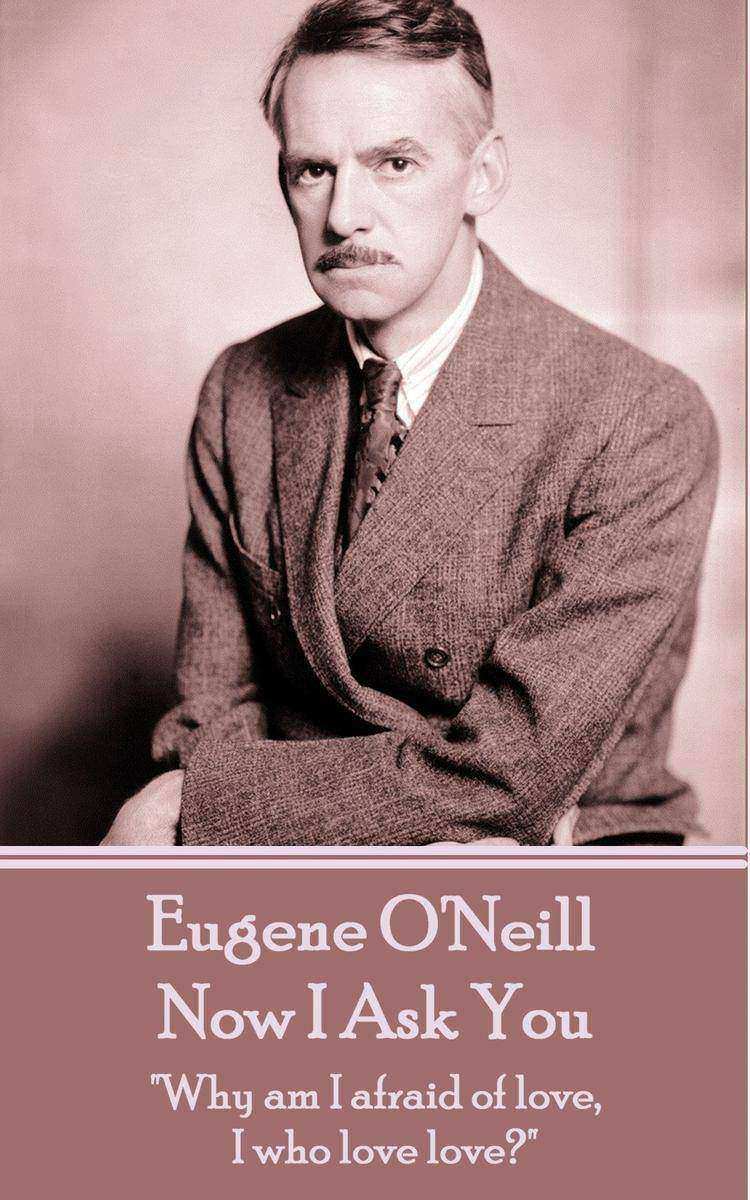
Now I Ask You - Why am I afraid of love, I who love love?
¥23.45
Eugene Gladstone O'Neill was born on October 16, 1888 in a hotel bedroom in what is now Times Square, New York. Much of his childhood was spent in the comfort of books at boarding schools whilst his actor father was on the road and his Mother contended with her own demons. He spent only a year at University - Princeton - and various reasons have been given for his departure. However whatever his background and education denied or added to his development it is agreed amongst all that he was a playwright of the first rank and possibly America's greatest. His introduction of realism into American drama was instrumental in its development and paved a path for many talents thereafter. Of course his winning of both the Pulitzer Prize (4 times) and the Nobel Prize are indicative of his status. His more famous and later works do side with the disillusionment and personal tragedy of those on the fringes of society but continue to build upon ideas and structures he incorporated in his early one act plays. Eugene O'Neill suffered from various health problems, mainly depression and alcoholism. In the last decade he also faced a Parkinson's like tremor in his hands which made writing increasingly difficult. But out of such difficulties came plays of the calibre of The Iceman Cometh, Long Day's Journey Into Night, and A Moon for the Misbegotten. Eugene O'Neill died in Room 401 of the Sheraton Hotel on Bay State Road in Boston, on November 27, 1953, at the age of 65. As he was dying, he whispered his last words: "e;I knew it. I knew it. Born in a hotel room and died in a hotel room."e;
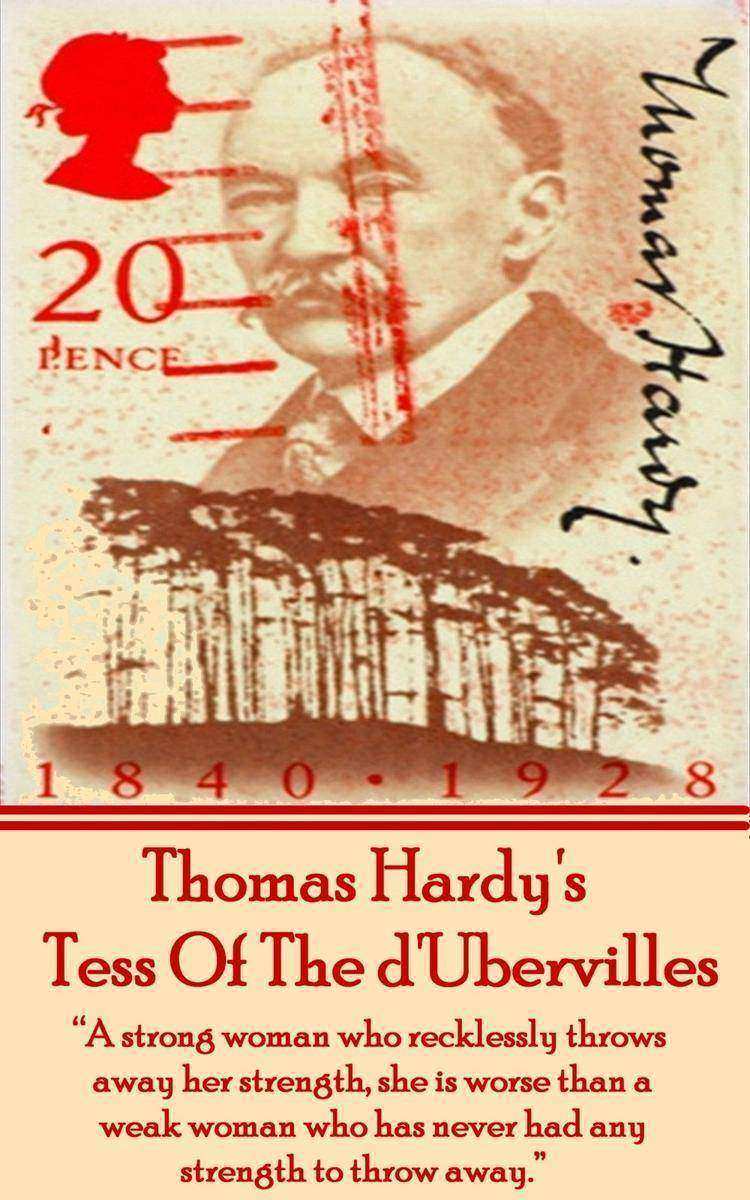
Tess Of The d'Ubervilles
¥35.22
Thomas Hardy (2nd June 1840 - 11th January 1928), celebrated poet and writer, was born in a modest thatched cottage near Dorchester in the West Country, to a builder father. His mother came from a line of intelligent, lively and ambitious women so ensured her son had the best formal education available for their modest means although this ended when he was 16. He became a draughtsman specialising in the building of churches was able to give it up to be a full time writer and poet with the publication of Far From the Madding Crown which became a bestseller and like much of his work was serialised. His writing reflects his passionate beliefs for social reform and exposes the hypocrisy of the rules of the Victorian age which constrained many freedoms with convention and restricted the transcending of class boundaries. His novels are almost entirely set in rural Wessex which although fictional is clearly rooted in the SW counties of England where he was born and lived most of his life. Hardy's writing caused controversy in his lifetime but despite this he was highly praised and showered with doctorates from many universities, and a knighthood, which he refused. Tess Of The D'Urbervilles, wolud be a major work by any hand and shows why such praise and accolades were given.
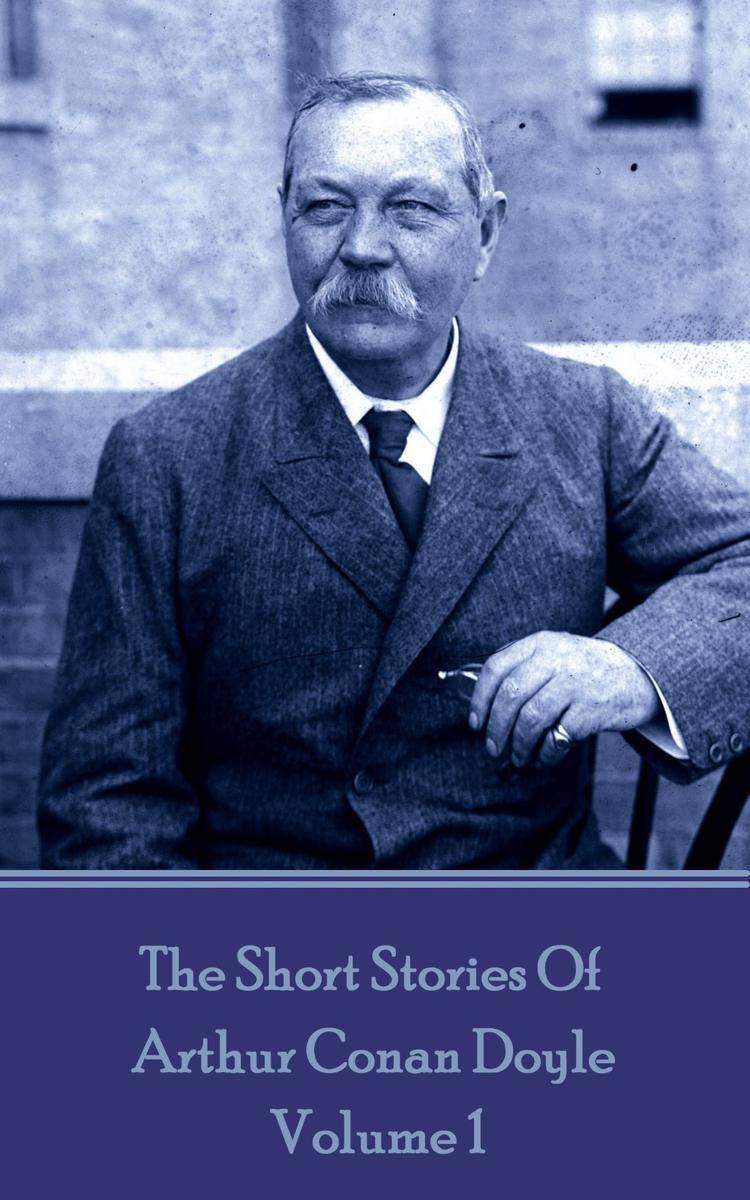
Short Stories Of Sir Arthur Conan Doyle - Volume 1
¥21.09
The short story is often viewed as an inferior relation to the Novel. But it is an art in itself. To take a story and distil its essence into fewer pages while keeping character and plot rounded and driven is not an easy task. Many try and many fail. In this series we look at short stories from many of our most accomplished writers. Miniature masterpieces with a lot to say. In this volume we examine some of the short stories of Arthur Conan Doyle. If ever a writer needed an introduction Arthur Conan Doyle would not be considered that man. After all, Sherlock Holmes is perhaps the foremost literary detective of any age. Add to this canon his stories of science fiction and his poems, his historical novels, his political campaigning, his efforts in establishing a Court Of Appeal and there is little room for anything else. Except he was also an exceptional writer of short stories of the horrific and macabre. Something very different from what you might expect. Born in Arthur Conan Doyle was born on 22 May 1859 at 11 Picardy Place, Edinburgh, Scotland. From 1876 - 1881 he studied medicine at the University of Edinburgh following which he was employed as a doctor on the Greenland whaler Hope of Peterhead in 1880 and, after his graduation, as a ship's surgeon on the SS Mayumba during a voyage to the West African coast in 1881. Arriving in Portsmouth in June of that year with less than GBP10 (GBP700 today[13]) to his name, he set up a medical practice at 1 Bush Villas in Elm Grove, Southsea. The practice was initially not very successful. While waiting for patients, Conan Doyle again began writing stories and composed his first novel The Mystery of Cloomber. Although he continued to study and practice medicine his career was now firmly set as a writer. And thereafter great works continued to pour out of him. Many of these stories are also available as an audiobook from our sister company Word Of Mouth. Many samples are at our youtube channel http://www.youtube.com/user/PortablePoetry?feature=mhee The full volume can be purchased from iTunes, Amazon and other digital stores.
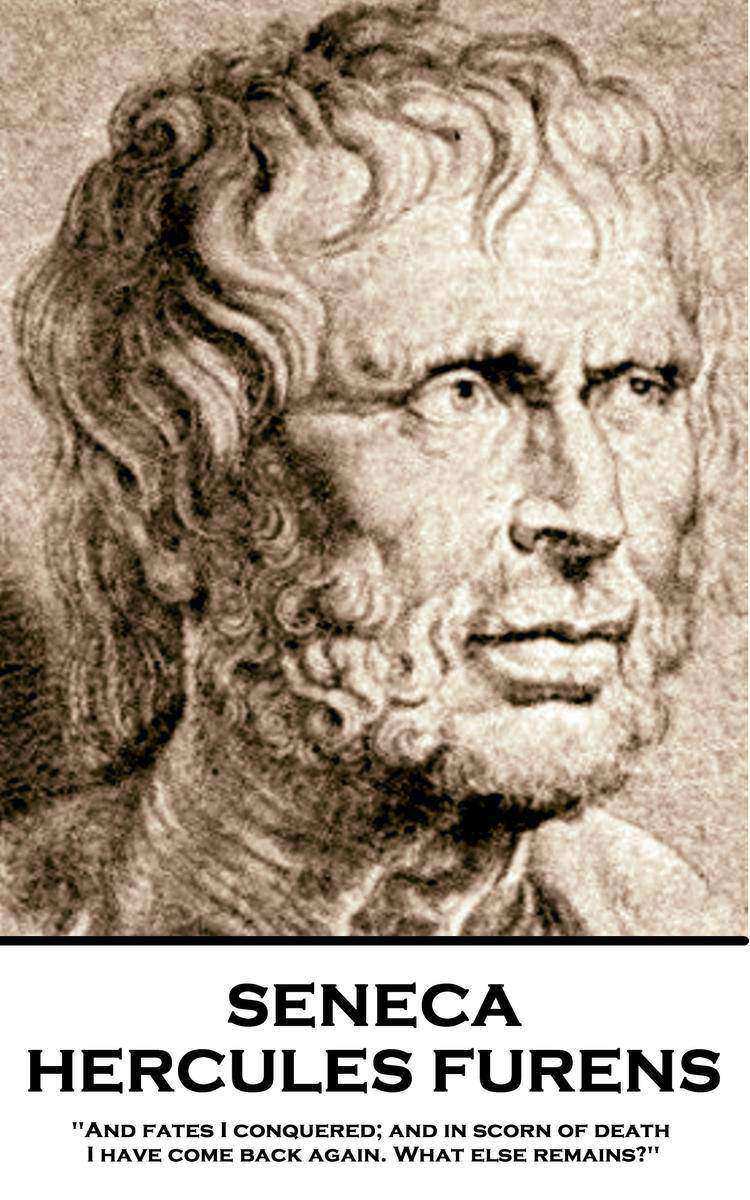
Hercules Furens -And fates I conquered; and in scorn of death I have come back a
¥14.03
Lucius Annaeus Seneca, more readily known as Seneca the Younger, was born at Cordoba in the Roman province of Baetica in Hispania in approx 4 BC.Seneca attests that he was taken to Rome at a young age and educated in literature, grammar, and rhetoric; the standard education of high-born Romans. He also received philosophical training.Much of his life is not well documented but accounts do lean towards a pattern of ill-health at times. His breathing difficulties are thought to be the result of asthma and during his mid-twenties he contracted tuberculosis.He was sent to Egypt to live with his aunt, whose husband, Gaius Galerius, was Prefect of Egypt. In 31 AD he returned to Rome with her and, with her influence, was elected quaestor and with it the right to sit in the Roman Senate.Seneca's early career as a senator was successful and he was fulsomely praised for his oratory. A story related that emperor Caligula was so offended by Seneca's oratorical success that he ordered him to commit suicide. Seneca's ill-health prevented that.In 41 AD, Claudius became emperor, and Seneca was promptly cited by the new empress Messalina of adultery with Julia Livilla, the sister of Caligula and Agrippina.After trial the Senate pronounced a death sentence, which Claudius then commuted to exile. Seneca was to now spend the next eight years in Corsica. From this period of exile survive two of his earliest works-both consolations.In 49 AD Agrippina married her uncle Claudius, and through her Seneca was recalled to Rome. Agrippina appointed him, as tutor to her son, the future emperor Nero.Nero's early rule, during which he followed the advice of Seneca and Burrus, was competent. However, within a few years both Seneca and Burrus had lost their influence.In 58 AD the senator Publius Suillius Rufus made a series of public attacks on him saying that, Seneca had acquired a personal fortune of three hundred million sestertii. In response, Seneca brought a series of prosecutions for corruption against him. Suillius was dispatched into exile.After Burrus's death in 62 AD, Seneca's influence further declined. He adopted a quiet lifestyle at his country estates, concentrating on his studies and seldom visiting Rome. It was during these final few years that he composed two of his greatest works: 'Naturales Quaestiones'-an encyclopedia of the natural world; and his 'Letters to Lucilius'-which document his philosophical thoughts.In AD 65, Seneca was caught up in the aftermath of the Pisonian plot to kill Nero. Nero ordered him to kill himself. Seneca followed tradition by opening several veins in order to bleed to death. It was a sad conclusion for a man who has been called the first great Western thinker on the complex nature and role of gratitude in human relationships.
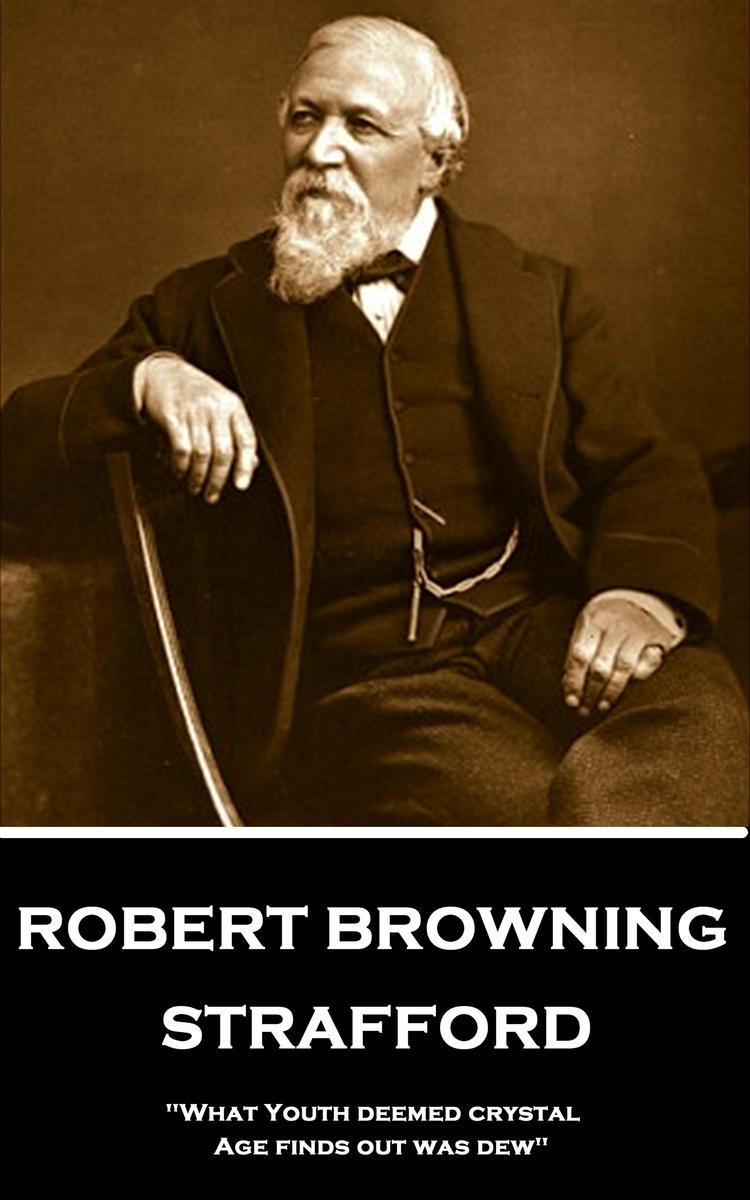
Strafford - What Youth deemed crystal, Age finds out was dew
¥21.09
Robert Browning is one of the most significant Victorian Poets and, of course, English Poetry.Much of his reputation is based upon his mastery of the dramatic monologue although his talents encompassed verse plays and even a well-regarded essay on Shelley during a long and prolific career. He was born on May 7th, 1812 in Walmouth, London. Much of his education was home based and Browning was an eclectic and studious student, learning several languages and much else across a myriad of subjects, interests and passions. Browning's early career began promisingly. The fragment from his intended long poem Pauline brought him to the attention of Dante Gabriel Rossetti, and was followed by Paracelsus, which was praised by both William Wordsworth and Charles Dickens. In 1840 the difficult Sordello, which was seen as willfully obscure, brought his career almost to a standstill. Despite these artistic and professional difficulties his personal life was about to become immensely fulfilling. He began a relationship with, and then married, the older and better known Elizabeth Barrett. This new foundation served to energise his writings, his life and his career. During their time in Italy they both wrote much of their best work. With her untimely death in 1861 he returned to London and thereafter began several further major projects. The collection Dramatis Personae (1864) and the book-length epic poem The Ring and the Book (1868-69) were published and well received; his reputation as a venerated English poet now assured. Robert Browning died in Venice on December 12th, 1889.
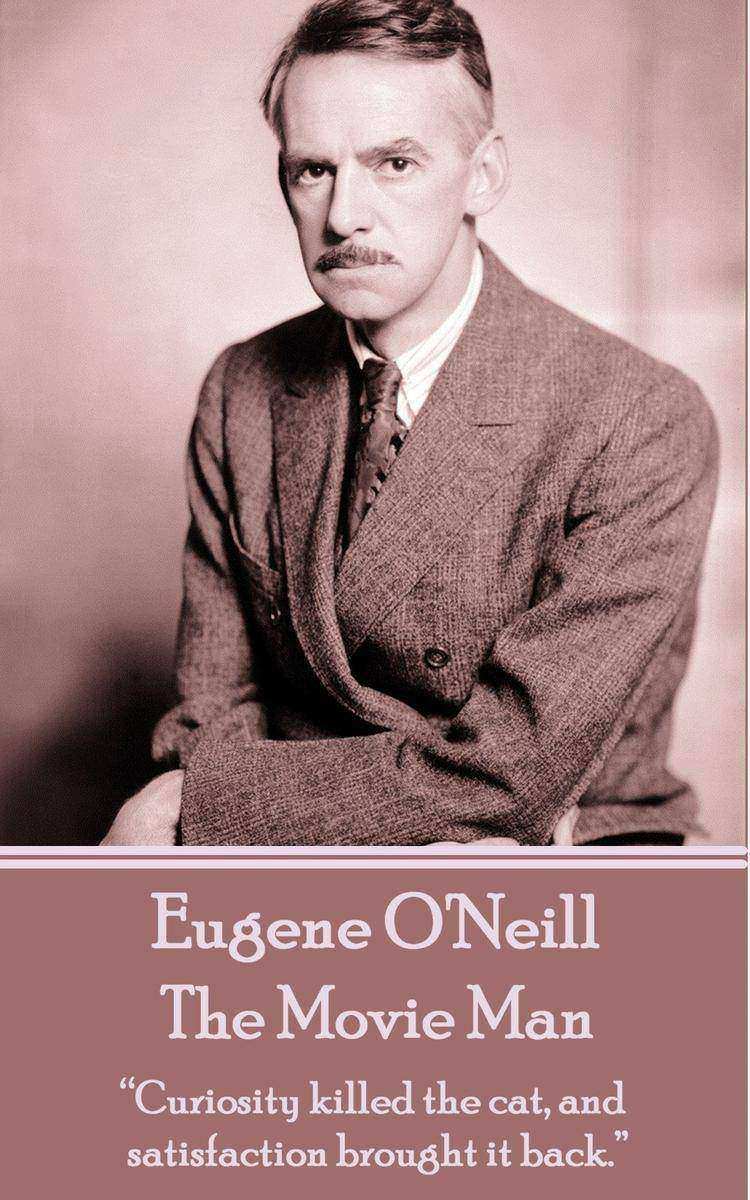
Movie Man - Curiosity killed the cat, and satisfaction brought it back.
¥14.03
Eugene Gladstone O'Neill was born on October 16, 1888 in a hotel bedroom in what is now Times Square, New York. Much of his childhood was spent in the comfort of books at boarding schools whilst his actor father was on the road and his Mother contended with her own demons. He spent only a year at University - Princeton - and various reasons have been given for his departure. However whatever his background and education denied or added to his development it is agreed amongst all that he was a playwright of the first rank and possibly America's greatest. His introduction of realism into American drama was instrumental in its development and paved a path for many talents thereafter. Of course his winning of both the Pulitzer Prize (4 times) and the Nobel Prize are indicative of his status. His more famous and later works do side with the disillusionment and personal tragedy of those on the fringes of society but continue to build upon ideas and structures he incorporated in his early one act plays. Eugene O'Neill suffered from various health problems, mainly depression and alcoholism. In the last decade he also faced a Parkinson's like tremor in his hands which made writing increasingly difficult. But out of such difficulties came plays of the calibre of The Iceman Cometh, Long Day's Journey Into Night, and A Moon for the Misbegotten. Eugene O'Neill died in Room 401 of the Sheraton Hotel on Bay State Road in Boston, on November 27, 1953, at the age of 65. As he was dying, he whispered his last words: "e;I knew it. I knew it. Born in a hotel room and died in a hotel room."e;
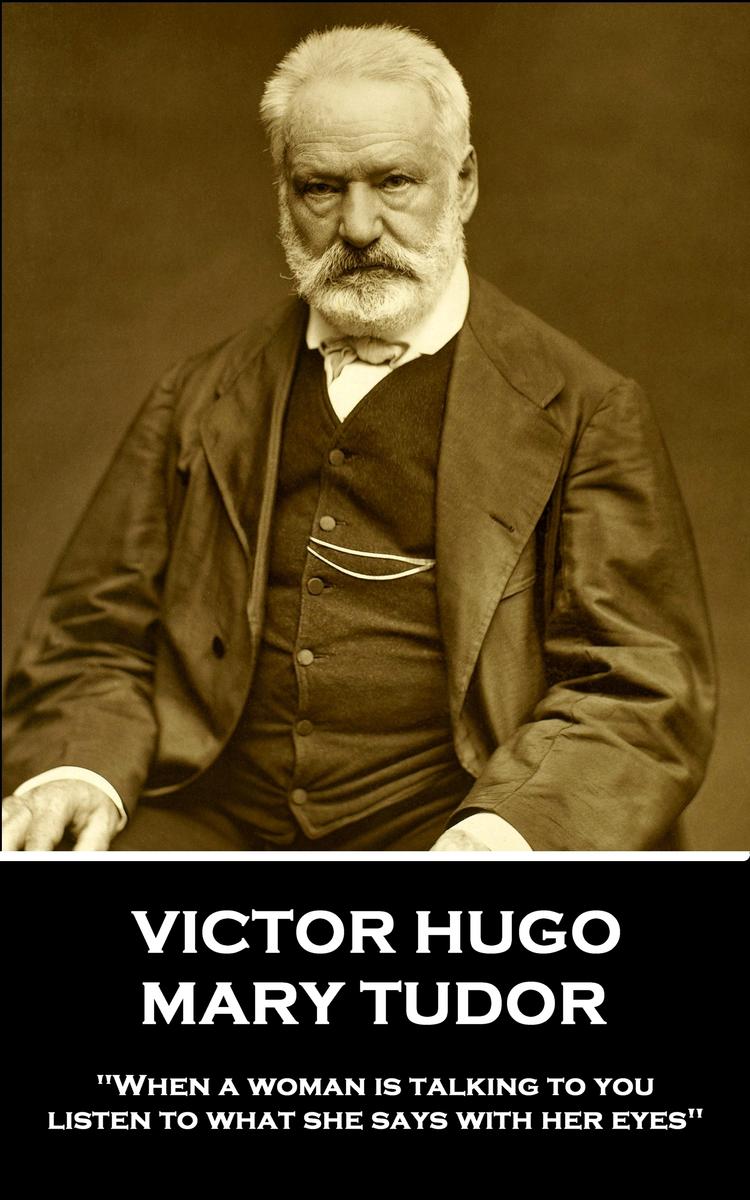
Mary Tudor - When a woman is talking to you, listen to what she says with her ey
¥29.33
Victor Marie Hugo was born on 26th February 1802 and is revered as the greatest of all French writers. A poet, novelist, dramatist and painter he was a passionate supporter of Republicanism and made a notable contribution to the politics of his Country.His life was paralleled by the immense political and social movements of the 19th Century. When he was two Napoleon was proclaimed Emperor but before he was eighteen the Bourbon Monarchy was restored.It was only with his Mother's death in 1821 that he felt confident enough to marry Adele Foucher, a relationship he had kept secret from his mother. Their first child was born inside a year but died in infancy. Leopoldine was born the following year, followed by three further siblings.Hugo published his first novel the year following year, Han d'Islande, (1823). Three years later his second, Bug-Jargal (1826).Between 1829 and 1840 he would publish five further volumes of poetry solidifying his reputation as one of the greatest elegiac and lyric poets of his time. His reputation was growing not only in France but across Europe.In 1841 he was elected to the Academie Francaise, cementing his position in the world of French arts and letters. Hugo also now began to turn his attention to an involvement in French politics.Elevated to the peerage by King Louis-Philippe in 1841 he spoke eloquently and at length against the death penalty and social injustice as well as passionately in favour of freedom of the press and self-government for Poland.When Napoleon III seized power in 1851, and established an anti-parliamentary constitution, Hugo openly declared him a traitor to France and began a long exile, based mainly in Guernsey.In exile, Hugo published his famous political pamphlets; Napoleon le Petit and Histoire d'un crime. Although the pamphlets were banned in France, they nonetheless made a strong impact there. His exile also seemed to have a creative impetus. He composed or published some of his greatest work including Les Miserables, and three widely honoured collections of poetry (Les Chatiments, 1853; Les Contemplations, 1856; and La Legende des siecles, 1859).In 1870 the Third Republic was established and Hugo finally returned home, where he was elected to the National Assembly and the Senate. That same year War erupted between France and Prussia and the French were badly beaten.With the end of the War Hugo began his campaign for a great valuation and protection for the rights of artists and copyright. He was a founding member of the Association Litteraire et Artistique Internationale, which led to the Berne Convention for the Protection of Literary and Artistic Works.Victor Hugo's death on 22nd May 1885, at the age of 83, generated intense nation-wide mourning. Revered not only as a towering figure in literature, he was a statesman who had helped to shape the Third Republic and democracy in France.Index of ContentsDRAMATIS PERSONTIME: LONDON, 1553MARY TUDORFIRST DAYA MAN OF THE PEOPLESCENE:-Border of the Thames.SCENE ISCENE IISCENE IIISCENE IVSCENE VSCENE VISCENE VIISCENE VIIISCENE IXSECOND DAYTHE QUEENSCENE:-A Room in the royal apartment.SCENE ISCENE IISCENE IIISCENE IVSCENE VSCENE VISCENE VIISCENE VIIISCENE IXTHIRD DAYPART IWHICH OF THE TWO?SCENE:-Hall in the Interior of the Tower of London.SCENE ISCENE IISCENE IIISCENE IVSCENE VSCENE VISCENE VIIISCENE IXSCENE XTHIRD DAYPART IISCENE:-A Hall or Room into Which lead Two Staircases.SCENE ISCENE IIVICTOR HUGO - A SHORT BIOGRAPHYVICTOR HUGO - A CONCISE BIBLIOGRAPHY
Duchess Of Padua - Some cause happiness wherever they go; others whenever they g
¥23.45
The Duchess of Padua is a play by the world famous wit Oscar Wilde. A five-act melodramatic tragedy set in Padua and written in blank verse. It was written for the actress Mary Anderson in early 1883 while in Paris. Alas she turned it down and it was abandoned until a run on Broadway re-titled Guido Ferranti. It ran for three weeks. It is rarely seen but on account of the immense talents of its author we thought it deserved a wider audience. We hope that includes you.
Love's Cruelty - Death lays his icy hand on kings. Scepter and crown must tumble
¥25.80
James Shirley was born in London in September 1596. His education was through a collection of England's finest establishments: Merchant Taylors' School, London, St John's College, Oxford, and St Catharine's College, Cambridge, where he took his B.A. degree in approximately 1618. He first published in 1618, a poem entitled Echo, or the Unfortunate Lovers. As with many artists of this period full details of his life and career are not recorded. Sources say that after graduating he became "e;a minister of God's word in or near St Albans."e; A conversion to the Catholic faith enabled him to become master of St Albans School from 1623-25. He wrote his first play, Love Tricks, or the School of Complement, which was licensed on February 10th, 1625. From the given date it would seem he wrote this whilst at St Albans but, after its production, he moved to London and to live in Gray's Inn. For the next two decades, he would write prolifically and with great quality, across a spectrum of thirty plays; through tragedies and comedies to tragicomedies as well as several books of poetry. Unfortunately, his talents were left to wither when Parliament passed the Puritan edict in 1642, forbidding all stage plays and closing the theatres. Most of his early plays were performed by Queen Henrietta's Men, the acting company for which Shirley was engaged as house dramatist. Shirley's sympathies lay with the King in battles with Parliament and he received marks of special favor from the Queen. He made a bitter attack on William Prynne, who had attacked the stage in Histriomastix, and, when in 1634 a special masque was presented at Whitehall by the gentlemen of the Inns of Court as a practical reply to Prynne, Shirley wrote the text-The Triumph of Peace. Shirley spent the years 1636 to 1640 in Ireland, under the patronage of the Earl of Kildare. Several of his plays were produced by his friend John Ogilby in Dublin in the first ever constructed Irish theatre; The Werburgh Street Theatre. During his years in Dublin he wrote The Doubtful Heir, The Royal Master, The Constant Maid, and St. Patrick for Ireland. In his absence from London, Queen Henrietta's Men sold off a dozen of his plays to the stationers, who naturally, enough published them. When Shirley returned to London in 1640, he finished with the Queen Henrietta's company and his final plays in London were acted by the King's Men. On the outbreak of the English Civil War Shirley served with the Earl of Newcastle. However when the King's fortunes began to decline he returned to London. There his friend Thomas Stanley gave him help and thereafter Shirley supported himself in the main by teaching and publishing some educational works under the Commonwealth. In addition to these he published during the period of dramatic eclipse four small volumes of poems and plays, in 1646, 1653, 1655, and 1659. It is said that he was "e;a drudge"e; for John Ogilby in his translations of Homer's Iliad and the Odyssey, and survived into the reign of Charles II, but, though some of his comedies were revived, his days as a playwright were over. His death, at age seventy, along with that of his wife, in 1666, is described as one of fright and exposure due to the Great Fire of London which had raged through parts of London from September 2nd to the 5th. He was buried at St Giles in the Fields, in London, on October 29th, 1666.


