


 购物车
购物车 个人中心
个人中心
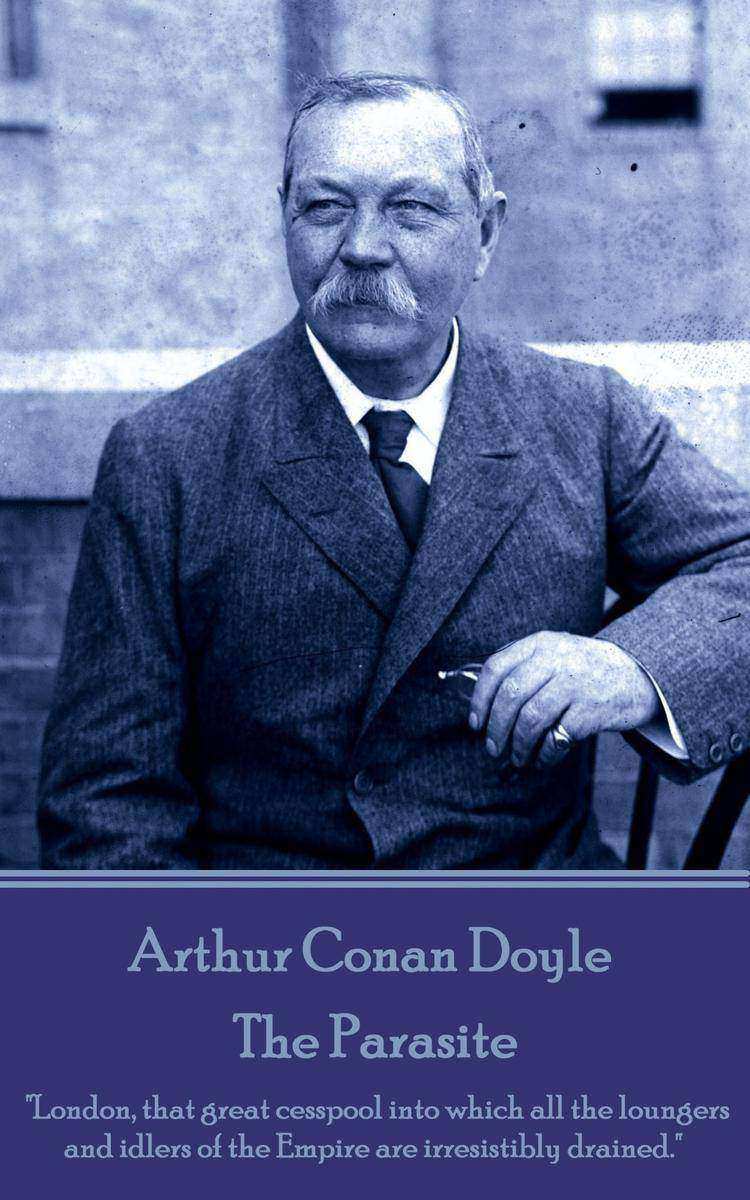
Arthur Conan Doyle - The Parasite
¥15.21
The Parasite is another celebrated novel belonging to the creator of Sherlock Holmes, Arthur Conan Doyle. The protagonist of the narrative is named Austin Gilroy. He is a young professor of physiology whose friend, Professor Wilson, is specializing in occult practices and mesmerism. In one occasion, Gilroy is introduced to Miss Penclosa, a strange, crippled woman who claims to have psychic powers. To persuade the incredulous young man, she hypnotizes his fiancee in front of him. Being now convinced of her powers, though without having any rational explanations for them, Gilroy decides to attend the occult gatherings organized by Wilson and allows Miss Penclosa to practice her powers on him. Miss Penclosa, who falls in love with Gilroy, manages to push him to break his engagement with his fiancee. Gradually, he becomes totally dependent on her and can no longer free himself from her grip. She plays her tricks to make him praise her and caress her until he becomes like a mere toy in her hands. He is only freed when one day, as he is heading towards her house for their daily date, her nurse announces that she has died.

Little Plays - These trenches are like Pompeii, sir.
¥14.03
Ford Madox Ford was born Ford Hermann Hueffer on 17th December 1873 in Wimbledon, London, England.Today he is best known for one book, 'The Good Soldier', which is regularly held to be one of the 100 greatest novels of all time. But, rather unfairly, the breadth of his career has been overshadowed. He wrote novels as well as essays, poetry, memoirs and literary criticism. Today he is well-regarded but known only for a few works rather than the grand arc of his career.Ford collaborated with Joseph Conrad on three novels but would later complain that, as with all his collaborators, and those he so readily championed, his contribution was overshadowed by theirs.He founded The English Review and The Transatlantic Review which were instrumental in publishing and promoting the works of so many authors and movements.During WWI he initially worked on propaganda books before enlisting. Ford was invalided back to Britain in 1917, remaining in the army and giving lectures until the War's end. After a spell recuperating in the Sussex countryside he lived mostly in France during the 1920s.He published the series of four novels known as Parade's End, between 1924 and 1928. These were particularly well-received in America, where Ford spent much of his time from the later 1920s to his death in 1939.His last years were spent teaching at Olivet College in Olivet, Michigan.Ford Madox Ford died on 26th June 1939 at Deauville, France at the age of 65.
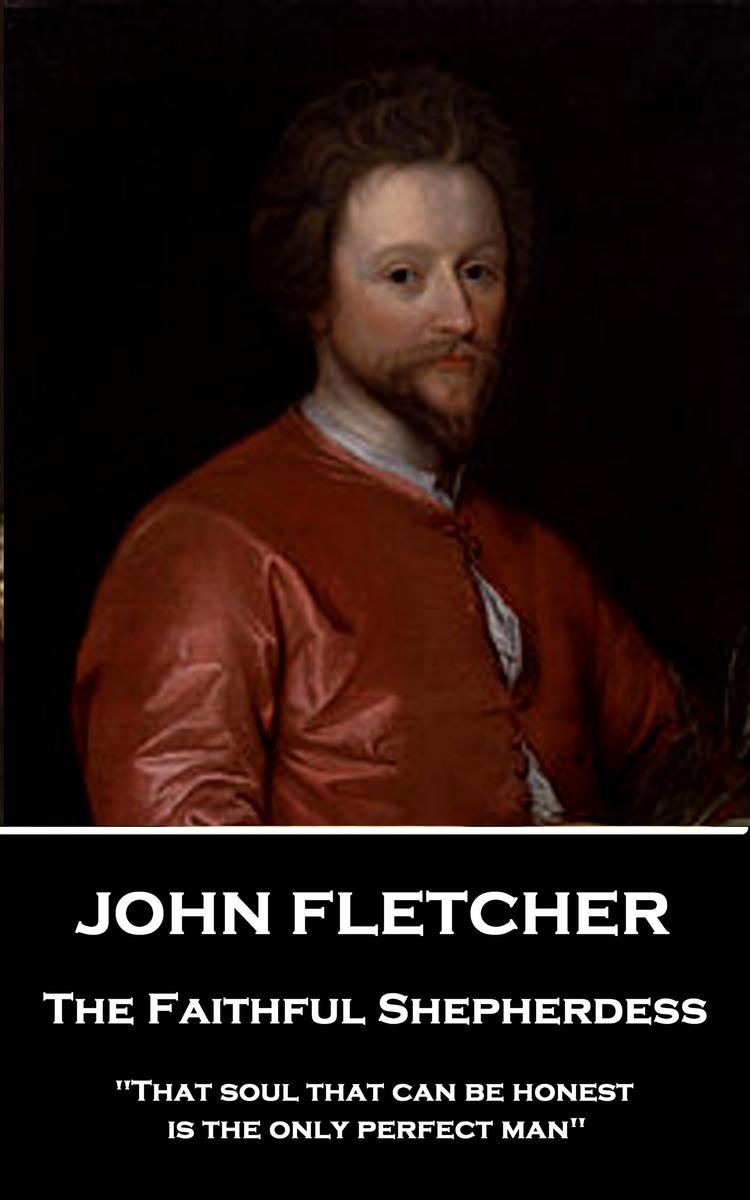
Faithful Shepherdess - That soul that can be honest is the only perfect man
¥26.98
John Fletcher was born in December, 1579 in Rye, Sussex. He was baptised on December 20th. As can be imagined details of much of his life and career have not survived and, accordingly, only a very brief indication of his life and works can be given. Young Fletcher appears at the very young age of eleven to have entered Corpus Christi College at Cambridge University in 1591. There are no records that he ever took a degree but there is some small evidence that he was being prepared for a career in the church. However what is clear is that this was soon abandoned as he joined the stream of people who would leave University and decamp to the more bohemian life of commercial theatre in London. The upbringing of the now teenage Fletcher and his seven siblings now passed to his paternal uncle, the poet and minor official Giles Fletcher. Giles, who had the patronage of the Earl of Essex may have been a liability rather than an advantage to the young Fletcher. With Essex involved in the failed rebellion against Elizabeth Giles was also tainted. By 1606 John Fletcher appears to have equipped himself with the talents to become a playwright. Initially this appears to have been for the Children of the Queen's Revels, then performing at the Blackfriars Theatre. Fletcher's early career was marked by one significant failure; The Faithful Shepherdess, his adaptation of Giovanni Battista Guarini's Il Pastor Fido, which was performed by the Blackfriars Children in 1608. By 1609, however, he had found his stride. With his collaborator John Beaumont, he wrote Philaster, which became a hit for the King's Men and began a profitable association between Fletcher and that company. Philaster appears also to have begun a trend for tragicomedy. By the middle of the 1610s, Fletcher's plays had achieved a popularity that rivalled Shakespeare's and cemented the pre-eminence of the King's Men in Jacobean London. After his frequent early collaborator John Beaumont's early death in 1616, Fletcher continued working, both singly and in collaboration, until his own death in 1625. By that time, he had produced, or had been credited with, close to fifty plays.
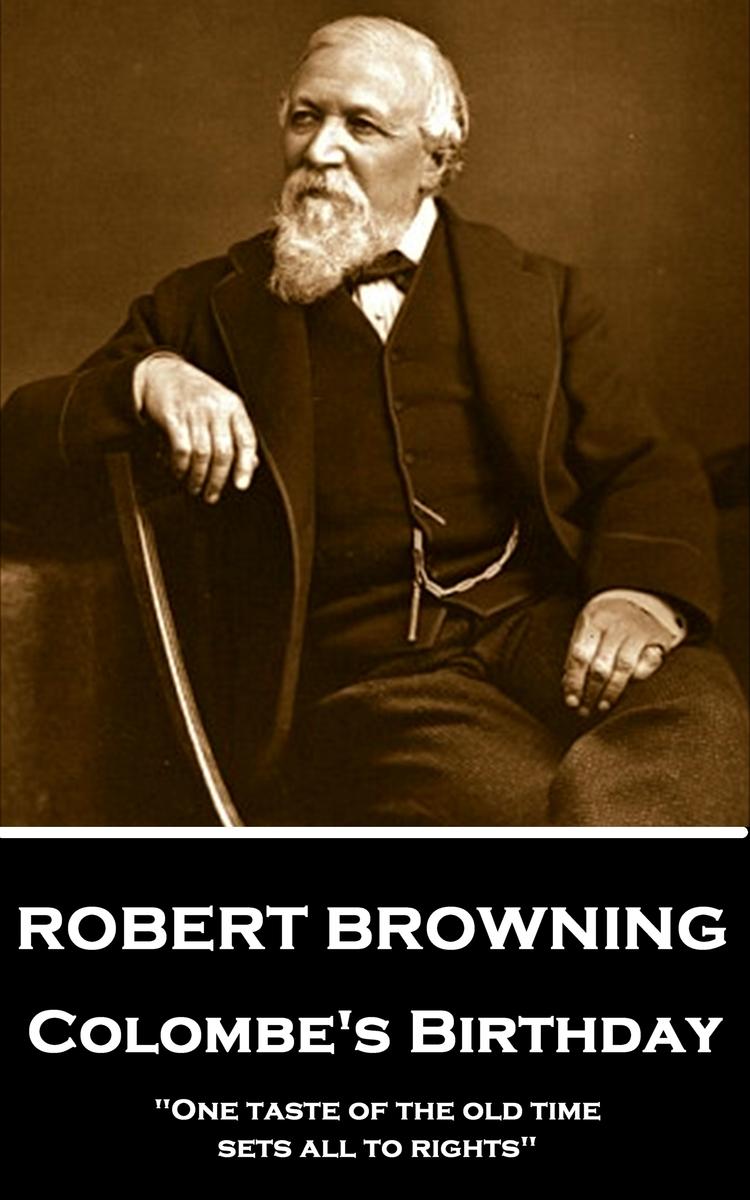
Colombe's Birthday - One taste of the old time sets all to rights
¥14.03
Robert Browning is one of the most significant Victorian Poets and, of course, English Poetry.Much of his reputation is based upon his mastery of the dramatic monologue although his talents encompassed verse plays and even a well-regarded essay on Shelley during a long and prolific career. He was born on May 7th, 1812 in Walmouth, London. Much of his education was home based and Browning was an eclectic and studious student, learning several languages and much else across a myriad of subjects, interests and passions. Browning's early career began promisingly. The fragment from his intended long poem Pauline brought him to the attention of Dante Gabriel Rossetti, and was followed by Paracelsus, which was praised by both William Wordsworth and Charles Dickens. In 1840 the difficult Sordello, which was seen as willfully obscure, brought his career almost to a standstill. Despite these artistic and professional difficulties his personal life was about to become immensely fulfilling. He began a relationship with, and then married, the older and better known Elizabeth Barrett. This new foundation served to energise his writings, his life and his career. During their time in Italy they both wrote much of their best work. With her untimely death in 1861 he returned to London and thereafter began several further major projects. The collection Dramatis Personae (1864) and the book-length epic poem The Ring and the Book (1868-69) were published and well received; his reputation as a venerated English poet now assured. Robert Browning died in Venice on December 12th, 1889.
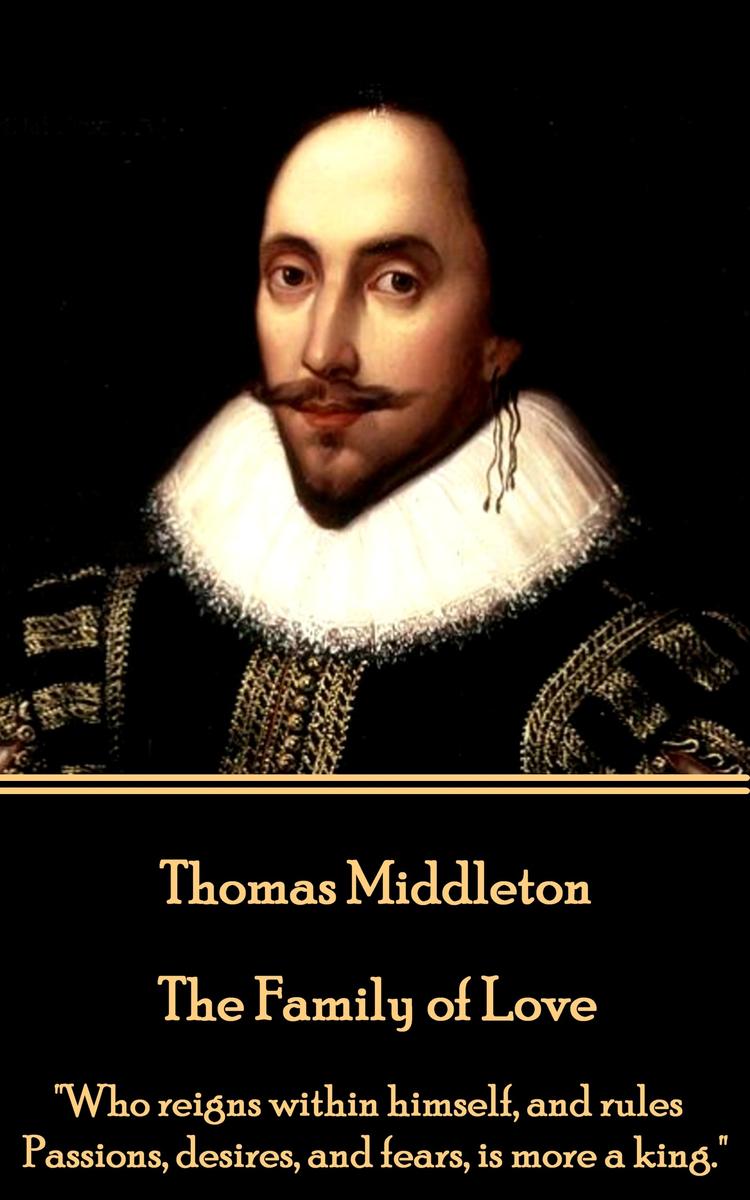
Family of Love - Who reigns within himself, and rules Passions, desires, and fea
¥23.45
Thomas Middleton was born in London in April 1580 and baptised on 18th April. Middleton was aged only five when his father died. His mother remarried but this unfortunately fell apart into a fifteen year legal dispute regarding the inheritance due Thomas and his younger sister. By the time he left Oxford, at the turn of the Century, Middleton had and published Microcynicon: Six Snarling Satirese which was denounced by the Archbishop of Canterbury and publicly burned. In the early years of the 17th century, Middleton wrote topical pamphlets. One - Penniless Parliament of Threadbare Poets was reprinted several times and the subject of a parliamentary inquiry. These early years writing plays continued to attract controversy. His writing partnership with Thomas Dekker brought him into conflict with Ben Jonson and George Chapman in the so-called War of the Theatres. His finest work with Dekker was undoubtedly The Roaring Girl, a biography of the notorious Mary Frith. In the 1610s, Middleton began another playwriting partnership, this time with the actor William Rowley, producing another slew of plays including Wit at Several Weapons and A Fair Quarrel. The ever adaptable Middleton seemed at ease working with others or by himself. His solo writing credits include the comic masterpiece, A Chaste Maid in Cheapside, in 1613. In 1620 he was officially appointed as chronologer of the City of London, a post he held until his death. The 1620s saw the production of his and Rowley's tragedy, and continual favourite, The Changeling, and of several other tragicomedies. However in 1624, he reached a peak of notoriety when his dramatic allegory A Game at Chess was staged by the King's Men. Though Middleton's approach was strongly patriotic, the Privy Council silenced the play after only nine performances at the Globe theatre, having received a complaint from the Spanish ambassador. What happened next is a mystery. It is the last play recorded as having being written by Middleton. Thomas Middleton died at his home at Newington Butts in Southwark in the summer of 1627, and was buried on July 4th, in St Mary's churchyard which today survives as a public park in Elephant and Castle.
Eunuchus (The Eunuch) - 'I am human and I think nothing of which is human is ali
¥26.98
Publius Terentius Afer is better known to us as the Roman playwright, Terence.Much of his life, especially the early part, is either unknown or has conflicting sources and accounts.His birth date is said to be either 185 BC or a decade earlier: 195 BC. His place of birth is variously listed as in, or, near Carthage, or, in Greek Italy to a woman taken to Carthage as a slave. It is suggested that he lived in the territory of the Libyan tribe that the Romans called Afri, near Carthage, before being brought to Rome as a slave. Probability suggests that it was there, in North Africa, several decades after the destruction of Carthage by the Romans in 146 BC, at the end of the Punic Wars, that Terence spent his early years.One reliable fact is that he was sold to P. Terentius Lucanus, a Roman senator, who had him educated and, impressed by his literary talents, freed him.These writing talents were to ensure his legacy as a playwright down through the millennia. His comedies, partially adapted from Greek plays of the late phases of Attic Comedy, were performed for the first time around 170-160 BC. All six of the plays he has known to have written have survived.Indeed, thanks to his simple conversational Latin, which was both entertaining and direct, Terence's works were heavily used by monasteries and convents during the Middle Ages and The Renaissance. Scribes often learned Latin through the copious copying of Terence's texts. Priests and nuns often learned to speak Latin through re-enactment of Terence's plays. Although his plays often dealt with pagan material, the quality and distinction of his language promoted the copying and preserving of his text by the church. This preservation enabled his work to influence a wide spectrum of later Western drama.When he was 25 (or 35 depending on which year of birth you ascribe too), Terence travelled to Greece but never returned. It has long been assumed that he died at some point during the journey.Of his own family nothing is known, except that he fathered a daughter and left a small but valuable estate just outside Rome.His most famous quotation reads: "e;Homo sum, humani nihil a me alienum puto"e;, or "e;I am human, and I think nothing human is alien to me."e;

Crime by Gaslight - Volume 2
¥29.33
We all love a good crime story. An anthology of short crime stories, written by the finest of craftsman of their age, is always a welcome treat. The short story is often viewed as an inferior relation to the Novel. But it is an art in itself. To take a story and distil its essence into fewer pages while keeping character and plot rounded and driven is not an easy task. Many try and many fail. In this series we have a selection of short stories from many of our most accomplished writers written at the beginnings of Detective fiction. Our stories include these classics: The Adventure of the Dying Detective by Arthur Conan Doyle, The Secret Garden by GK Chesterton, Gentlemen and Players by E W Hornung, The Purloined Letter by Edgar Allan Poe, The Death Of Halpin Frayser by Ambrose Bierce, The Man With The Cough by Mrs Molesworth, The Man With The Pale Eyes by Guy de Maupassant, On Duty With Inspector Field by Charles Dickens, The Stolen Cigar Case by Bret Harte, A Scandal In Bohemia by Arthur Conan Doyle
Cyclops - Talk sense to a fool and he calls you foolish
¥14.03
Euripides is rightly lauded as one of the great dramatists of all time. In his lifetime, he wrote over 90 plays and although only 18 have survived they reveal the scope and reach of his genius. Euripides is identified with many theatrical innovations that have influenced drama all the way down to modern times, especially in the representation of traditional, mythical heroes as ordinary people in extraordinary circumstances. As would be expected from a life lived 2,500 years ago, details of it are few and far between. Accounts of his life, written down the ages, do exist but whether much is reliable or surmised is open to debate. Most accounts agree that he was born on Salamis Island around 480 BC, to mother Cleito and father Mnesarchus, a retailer who lived in a village near Athens. Upon the receipt of an oracle saying that his son was fated to win "e;crowns of victory"e;, Mnesarchus insisted that the boy should train for a career in athletics. However, what is clear is that athletics was not to be the way to win crowns of victory. Euripides had been lucky enough to have been born in the era as the other two masters of Greek Tragedy; Sophocles and schylus. It was in their footsteps that he was destined to follow. His first play was performed some thirteen years after the first of Socrates plays and a mere three years after schylus had written his classic The Oristria. Theatre was becoming a very important part of the Greek culture. The Dionysia, held annually, was the most important festival of theatre and second only to the fore-runner of the Olympic games, the Panathenia, held every four years, in appeal. Euripides first competed in the City Dionysia, in 455 BC, one year after the death of schylus, and, incredibly, it was not until 441 BC that he won first prize. His final competition in Athens was in 408 BC. The Bacchae and Iphigenia in Aulis were performed after his death in 405 BC and first prize was awarded posthumously. Altogether his plays won first prize only five times. Euripides was also a great lyric poet. In Medea, for example, he composed for his city, Athens, "e;the noblest of her songs of praise"e;. His lyric skills however are not just confined to individual poems: "e;A play of Euripides is a musical whole....one song echoes motifs from the preceding song, while introducing new ones."e; Much of his life and his whole career coincided with the struggle between Athens and Sparta for hegemony in Greece but he didn't live to see the final defeat of his city. Euripides fell out of favour with his fellow Athenian citizens and retired to the court of Archelaus, king of Macedon, who treated him with consideration and affection. At his death, in around 406BC, he was mourned by the king, who, refusing the request of the Athenians that his remains be carried back to the Greek city, buried him with much splendor within his own dominions. His tomb was placed at the confluence of two streams, near Arethusa in Macedonia, and a cenotaph was built to his memory on the road from Athens towards the Piraeus.
King John
¥17.56
William Shakespeare was born in Stratford-upon-Avon in late April 1565 and baptised there on 26th April. He was one of eight children. Little is known about his life but what is evident is the enormous contribution he has made to world literature. His writing was progressive, magnificent in scope and breathtaking in execution. His plays and sonnets helped enable the English language to speak with a voice unmatched by any other. William Shakespeare died on April 23rd 1616, survived by his wife and two daughters. He was buried two days after his death in the chancel of the Holy Trinity Church. The epitaph on the slab which covers his grave includes the following passage, Good friend, for Jesus's sake forbear, To dig the dust enclosed here. Blessed me the man that spares these stones, And cursed be he that moves my bones. Here we publish his historical play from 1596 'King John'.
Romeo and Juliet - Tempt not a desperate man
¥11.67
The life of William Shakespeare, arguably the most significant figure in the Western literary canon, is relatively unknown. Shakespeare was born in Stratford-upon-Avon in 1565, possibly on the 23rd April, St. George's Day, and baptised there on 26th April. Little is known of his education and the first firm facts to his life relate to his marriage, aged 18, to Anne Hathaway, who was 26 and from the nearby village of Shottery. Anne gave birth to their first son six months later. Shakespeare's first play, The Comedy of Errors began a procession of real heavyweights that were to emanate from his pen in a career of just over twenty years in which 37 plays were written and his reputation forever established. This early skill was recognised by many and by 1594 the Lord Chamberlain's Men were performing his works. With the advantage of Shakespeare's progressive writing they rapidly became London's leading company of players, affording him more exposure and, following the death of Queen Elizabeth in 1603, a royal patent by the new king, James I, at which point they changed their name to the King's Men. By 1598, and despite efforts to pirate his work, Shakespeare's name was well known and had become a selling point in its own right on title pages. No plays are attributed to Shakespeare after 1613, and the last few plays he wrote before this time were in collaboration with other writers, one of whom is likely to be John Fletcher who succeeded him as the house playwright for the King's Men. William Shakespeare died two months later on April 23rd, 1616, survived by his wife, two daughters and a legacy of writing that none have since yet eclipsed.
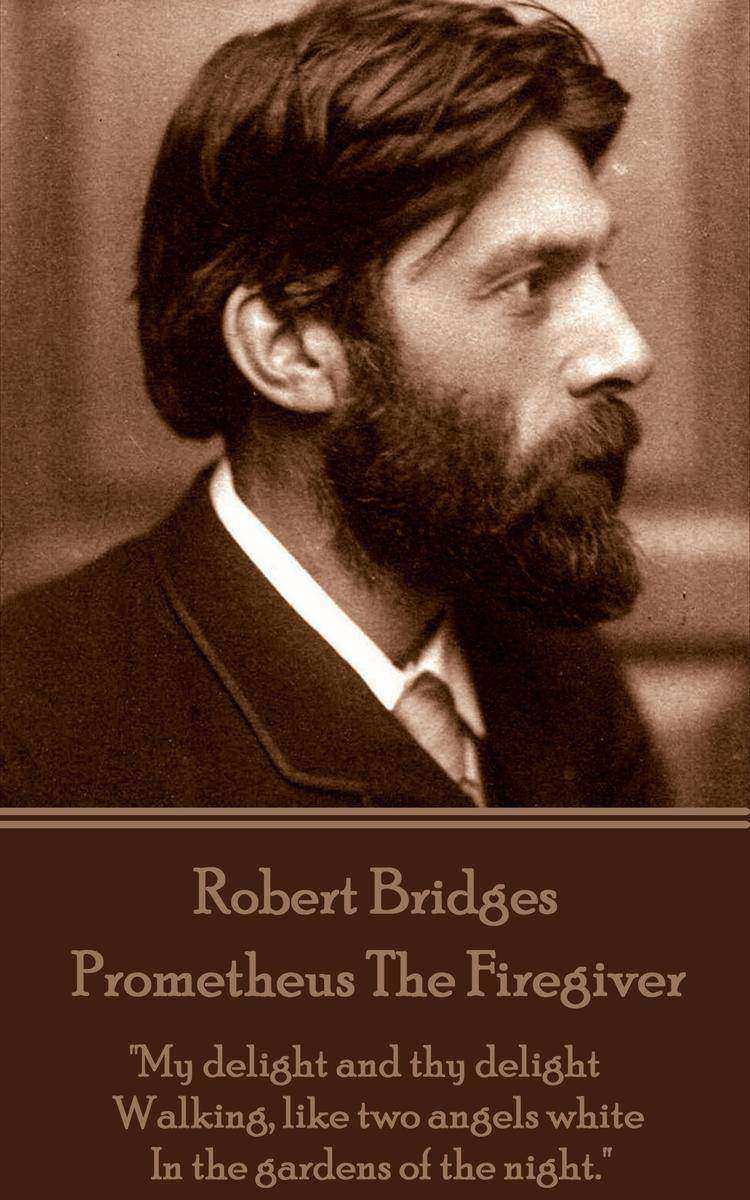
Prometheus The Firegiver - My delight and thy delight Walking
¥29.33
Robert Bridges was born in Walmer, Kent on the 23rd of October 1844. He went to study medicine intending to practise until the age of forty and then retire to write poetry. Lung disease forced him to retire in 1882, and from that point on he devoted himself to writing and literary research. However, Bridges' literary work started long before his retirement, his first collection of poems having been published in 1873. He was appointed Poet Laureate in 1913 by George V, the only medical graduate to have held the office. He died in Oxford on the 21st of April 1930. Here we present Prometheus The Firegiver.

Old Law - Tis time to die, when 'tis a shame to live.
¥23.45
Thomas Middleton was born in London in April 1580 and baptised on 18th April. Middleton was aged only five when his father died. His mother remarried but this unfortunately fell apart into a fifteen year legal dispute regarding the inheritance due Thomas and his younger sister. By the time he left Oxford, at the turn of the Century, Middleton had and published Microcynicon: Six Snarling Satirese which was denounced by the Archbishop of Canterbury and publicly burned. In the early years of the 17th century, Middleton wrote topical pamphlets. One - Penniless Parliament of Threadbare Poets was reprinted several times and the subject of a parliamentary inquiry. These early years writing plays continued to attract controversy. His writing partnership with Thomas Dekker brought him into conflict with Ben Jonson and George Chapman in the so-called War of the Theatres. His finest work with Dekker was undoubtedly The Roaring Girl, a biography of the notorious Mary Frith. In the 1610s, Middleton began another playwriting partnership, this time with the actor William Rowley, producing another slew of plays including Wit at Several Weapons and A Fair Quarrel. The ever adaptable Middleton seemed at ease working with others or by himself. His solo writing credits include the comic masterpiece, A Chaste Maid in Cheapside, in 1613. In 1620 he was officially appointed as chronologer of the City of London, a post he held until his death. The 1620s saw the production of his and Rowley's tragedy, and continual favourite, The Changeling, and of several other tragicomedies. However in 1624, he reached a peak of notoriety when his dramatic allegory A Game at Chess was staged by the King's Men. Though Middleton's approach was strongly patriotic, the Privy Council silenced the play after only nine performances at the Globe theatre, having received a complaint from the Spanish ambassador. What happened next is a mystery. It is the last play recorded as having being written by Middleton. Thomas Middleton died at his home at Newington Butts in Southwark in the summer of 1627, and was buried on July 4th, in St Mary's churchyard which today survives as a public park in Elephant and Castle.
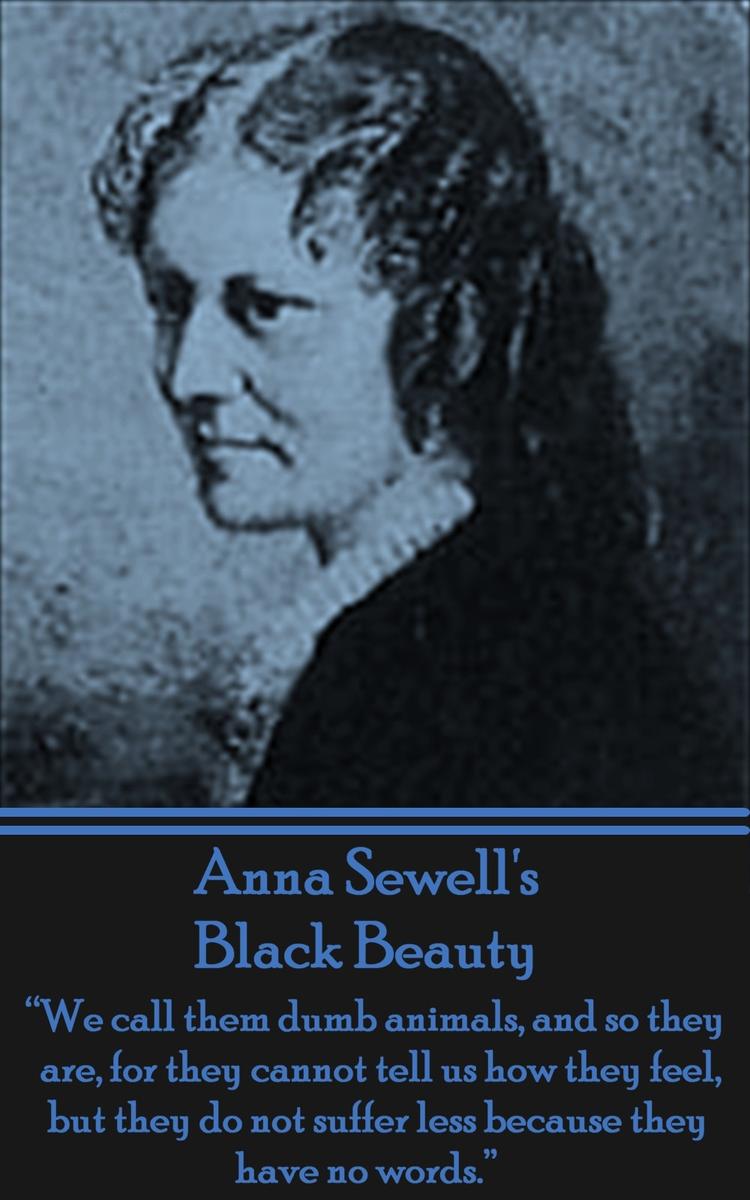
Black Beauty - We call them dumb animals, and so they are
¥16.38
Anna Sewell's only published novel, Black Beauty, is an extraordinary classic that deals with animal life and focuses on the importance of good animal treatment. The idea of writing a book about animal rights has been inspired by Sewell's own physical disability which has made her dependent on horse-drawn transportation. The narrator in Black Beauty is himself a personified horse who tells his life story and describes the world through his own lenses. Sewell says that the objective of writing the novel is to sensitize people to the sufferings of "e;working animals"e; and she has actually succeeded in fostering legislation protecting horses and in influencing public attitudes towards animal pain. Black Beauty's life crucially changes when he is taken from a country farm to pull cabs in the city of London. The different ordeals that he has to go through often contain a moral lesson that teaches kindness and sympathy not only for the poor animals, but also between human beings themselves. Indeed, the novel does not miss to cover the hardships of London taxi drivers either. Generally, Sewell's seminal classic has had a great influence on other writers of animal stories and has opened up new windows of discovering animal life.
Love's Triumph
¥21.09
Edward Cooke was a 17th Century English playwright and translator. His major work is 'Love's Triumph' which celebrates the marriage of Princess Mary and William of Orange in 1677.The only other work known is a translation by him of The Divine Epicurus, or, The Empire of Pleasure over the vertues compos'd by Antoine LeGrand.No other details on his work or life are available.
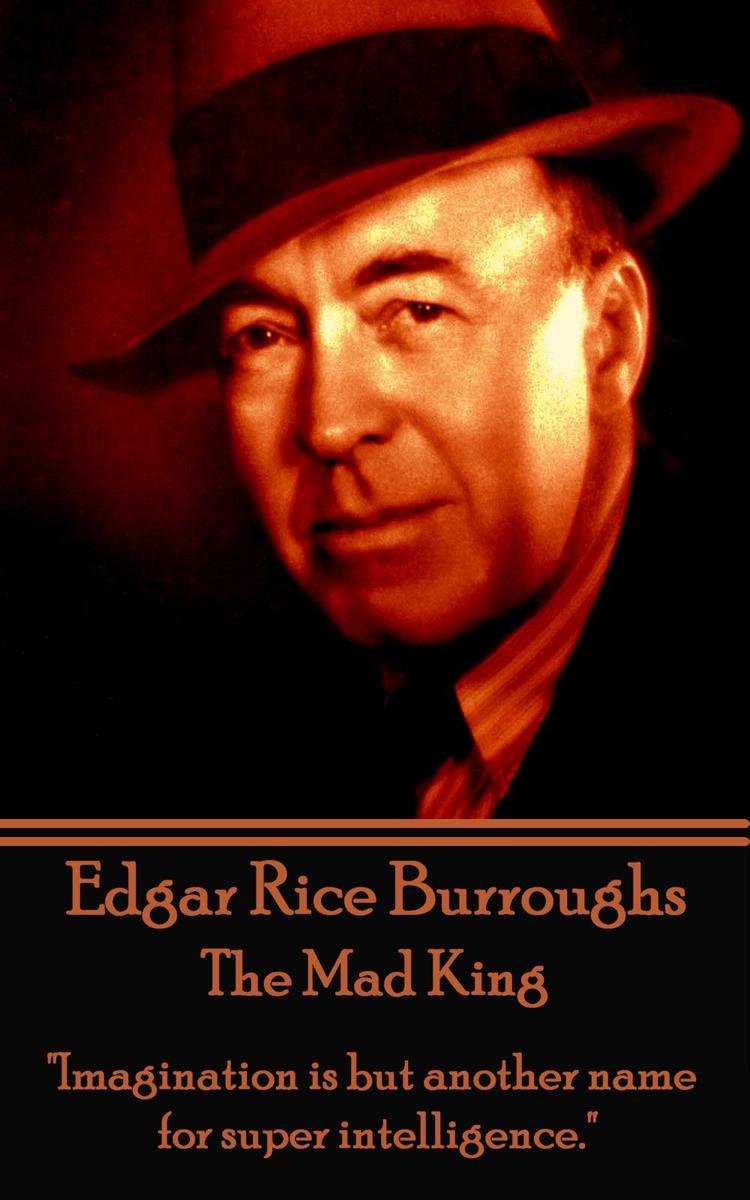
Mad King - Imagination is but another name for super intelligence.
¥35.22
Edgar Rice Burroughs was born on September 1, 1875, in Chicago, Illinois. His early career was unremarkable. After failing to enter West Point he enlisted in the 7th Calvary but was discharged after heart problems were diagnosed. A series of short term jobs gave no indication as to a career path but finally, in 1911, married and with two young children, he turned his hand to writing. He aimed his works squarely at the very popular pulp serial magazines. His first effort 'Under The Moons Of Mars' ran in Munsey's Magazine in 1912 under the pseudonym Norman Bean. With its success he began writing full time. A continuing theme of his work was to develop series so that each character had ample opportunities to return in sequels. John Carter was in the Mars series and there was another on Venus and one on Pellucidar among others. But perhaps the best known is Tarzan. Indeed Burroughs wanted so much to capitalise upon the brand that he introduced a syndicated Tarzan comic strip, movies and merchandise. He purchased a large ranch north of Los Angeles, California, which he named "e;Tarzana."e; The surrounding communities outside the ranch voted in 1927 to adopt the name as their own. By 1932 Burroughs set up his own company to print his own books. Here we publish 'The Mad King' somewhat different to what you think Burroughs would write but an engaging and crafted work that shows why Burroughs was able to weave his talents into so many stories.
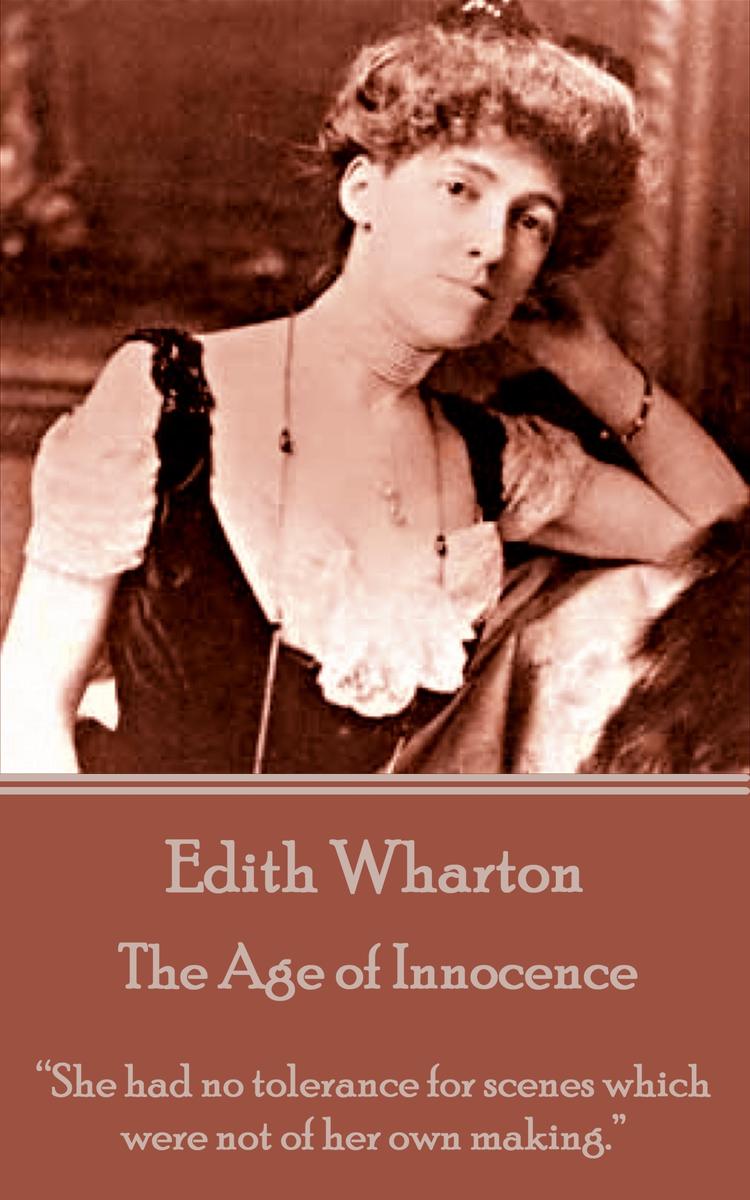
Age of Innocence - She had no tolerance for scenes which were not of her own mak
¥26.98
Edith Newbold Jones was born in New York on January 24, 1862. Born into wealth, this background of privilege gave her a wealth of experience to eventually, after several false starts, produce many works based on it culminating in her Pulitzer Prize winning novel 'The Age Of Innocence'. Marriage to Edward Robbins Wharton, who was 12 years older in 1885 seemed to offer much and for some years they travelled extensively. After some years it was apparent that her husband suffered from acute depression and so the travelling ceased and they retired to The Mount, their estate designed by Edith. By 1908 his condition was said to be incurable and prior to divorcing Edward in 1913 she began an affair, in 1908, with Morton Fullerton, a Times journalist, who was her intellectual equal and allowed her writing talents to push forward and write the novels for which she is so well known. Acknowledged as one of the great American writers with novels such as Ethan Frome and the House of Mirth among many. Wharton also wrote many short stories, including ghost stories and poems which we are pleased to publish. Edith Wharton died of a stroke in 1937 at the Domaine Le Pavillon Colombe, her 18th-century house on Rue de Montmorency in Saint-Brice-sous-Foret.
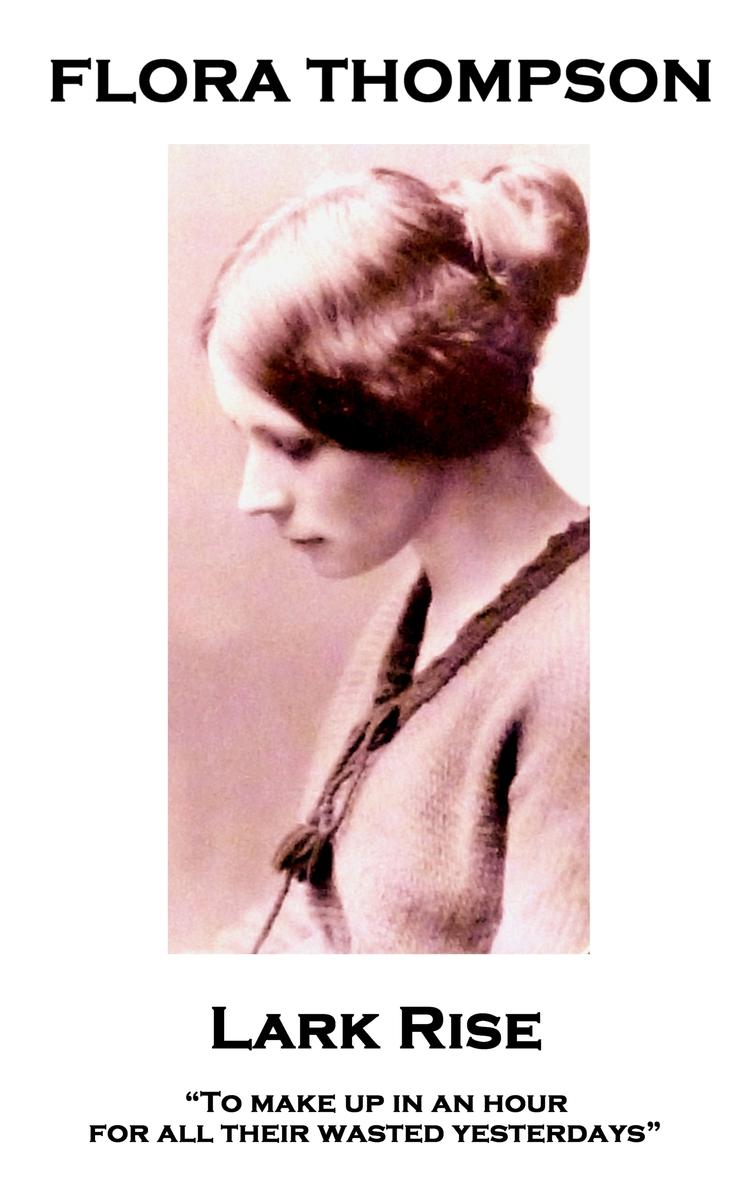
Lark Rise - To make up in an hour for all their wasted yesterdays
¥26.98
Flora Jane Timms was born on December 5th, 1876 in Juniper Hill in northeast Oxfordshire, the eldest of twelve children to Albert Timms, a stonemason, and Emma, a nursemaid. Only she and five siblings survived.Flora was educated at the parish school in the village of Cottisford and described as 'altogether her father's child'.When she was 14, In 1891, Flora moved to start work as a counter clerk at the post office in Fringford, a village about 4 miles northeast of Bicester. It was to be the first in a series of jobs at various other post offices, including those at Grayshott, Yateley, and later Bournemouth.By 1896 Flora was a regular contributor to The Catholic Fireside on her thoughts and activities in the Countryside and many of her works from here were published as The Peverel Papers.In 1903 she married John William Thompson, a post office clerk and telegraphist from the Isle of Wight, at Twickenham Parish Church. After the marriage they moved to Bournemouth to settle down and build a life together. A daughter, Winifred Grace, was born in 1903, followed by two sons, Henry Basil, in 1909 and Peter Redmond in 1918.Flora was a self-taught writer but had taken some time to establish her career. Her early married life may have also required setting writing aside for some time but in 1911 she won a competition in The Ladies Companion for a 300-word essay on Jane Austen.In 1921 she published her only book of poetry, Bog-Myrtle and Peat, and, by the following year, 1922, she was thinking of writing about her childhood in what would later become her defining works.Meanwhile she continued to write extensively, publishing short stories together with magazine and newspaper articles.In 1925 she published a travel guide to Liphook, Bramshott and Neighbourhood.Flora also had a great interest and knowledge, again self-taught, as a naturalist. Many of her works on the subject were published and later anthologised.In 1938 Flora at last sent several essays on her country childhood to Oxford University Press. The publisher accepted them, and they were published in three separate volumes, Lark Rise (1939), Over to Candleford (1941), and Candleford Green (1943). In 1945 the books were republished as a trilogy under the title Lark Rise to Candleford. Together the books are a lightly disguised story of the author's own youth, describing life in a hamlet, a village, and a country town in the 1880s.The death of her younger son during the Second World War affected her deeply and overshadowed her final years.Flora Thompson died on 21st May 1947, at age 70, of a heart attack in Brixham, and is buried at Longcross Cemetery, Dartmouth in Devon.Two of Thompson's later lesser-known works were published posthumously: Heatherley, recounting her time in the post office at Grayshott at the turn of the 20th century as her lifelong interests took shape, the longing for education and culture and the desire to become a writer; and her last completed book Still Glides the Stream.
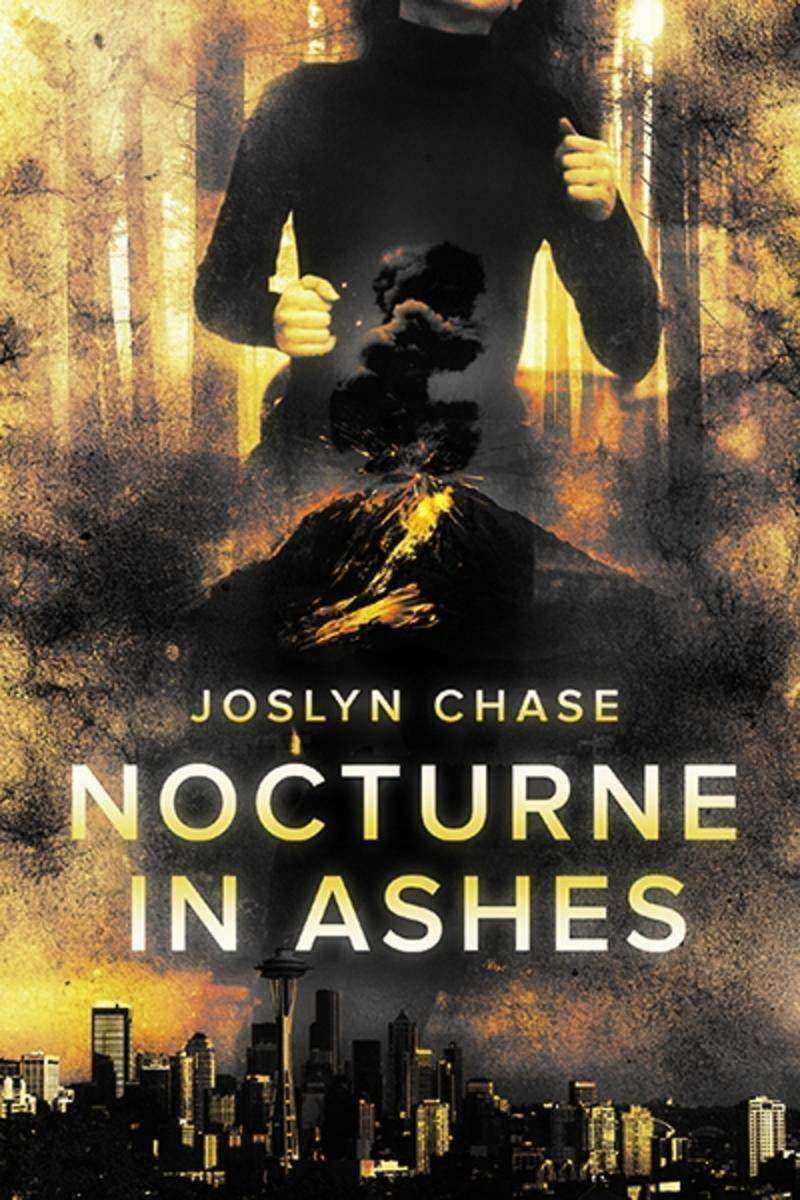
Nocturne In Ashes: A Riley Forte Suspense Thriller
¥43.51
Mt. Rainier erupts, isolating crushed down-and-outer, Riley Forte, with a serial killer. Riley must fight to hang on to the one thing she has left—her life, and the one thing she needs to turn it around—redemption. Fans of Jeffery Deaver, Lisa Gardner, and Peter Robinson will be captivated by this page-turner. If you like a gripping, suspenseful tale, grab your copy and prepare to burn the midnight oil!

Made for Each other: A Contemporary Christian Romance
¥0.01
When?her job brings her to the city where her grandmother lives,?Lissa?first meets Jason.?Though their attraction to one another is immediate, Lissa refuses to be tempted into romance with a man in Jason’s occupation. She has been influenced by her mother to believe anyone in a creative job has the potential for ruin and starvation. These childhood teachings drove Lissa to actions that she now regrets. Although Jason is handsome and considerate, Lissa is wary and feels it is better to have a husband with a secure job than one who is at the mercy of public trends. Jason is determined not to fall for another committed career woman, and risk the pain of breaking up, as he did with his former fiancé. Taking second place to his wife’s work is not what he wants in a marriage. In addition, he takes his faith seriously and worries about Lissa’s ambivalent relationship with God. Will past experiences stand in the way of their relationship or will they grow together to find true love? ?

The Becalmed
¥34.79
Bitan, the most valuable substance in the human universe, makes communication across vast distances possible.? Bitan only comes from one planet.? And that planet has a problem. The TransGalactic Corporation sends Luis Ahmad on a desperate mission to help the human colony on Bitanthra. Can Luis save the colony and stop the collapse of communications throughout the galaxy?
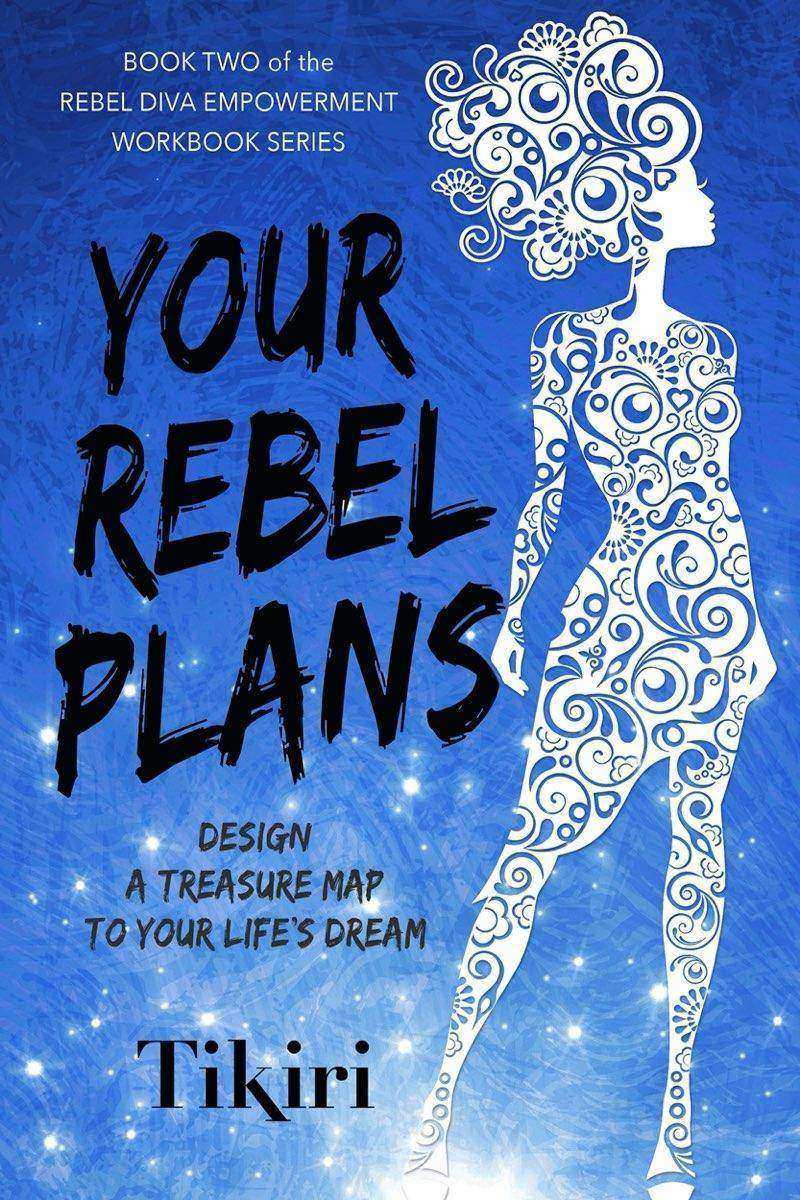
Your Rebel Plans: How to create a masterplan for your life's big dreams
¥87.11
Do you want to transition to a new career or job but have no idea where to start? Here’s a step-by-step guide for your next career move to get the results you desire faster and painlessly. *FREE 100+ page worksheet booklet inside.* This book will take you by the hand to create an easy-to-follow masterplan for your life’s dreams. Learn from award-winning author, Tikiri, who used the techniques in this book to go from being an immigrant teen with $20 in her pocket to managing multi-million-dollar projects and traveling the world. You’ll discover how to: Craft smart goals that align with your personal dreams and vision for life.Design a practical step-by-step execution plan to reach your vision.Manage your days and weeks more effectively, so you can reach your goals faster. And much more Your Rebel Plans is a life-changing workbook with down-to-earth advice, inspiring quotes and plenty of space for you to write your answers. If you’d like to create a roadmap to your dream future, pick up Your Rebel Plans today! ___________________ The Rebel Diva Series - Your Rebel Dreams – How to discover your purpose and power up your life.Your - Rebel Plans - How to create a masterplan for your career change. - Your Rebel Life – Easy habit hacks to transform the most important pillars of your life.Bust Your - Fears - Three easy tools to conquer your fears and upgrade your career and life. The Rebel Diva book series is for the busy working woman who's juggling everything and wishes life had more to give her. Don't just read self-help. Get the Rebel Diva guides that will take you by the hand and show you step-by-step how to create your dream life.


