


 购物车
 个人中心

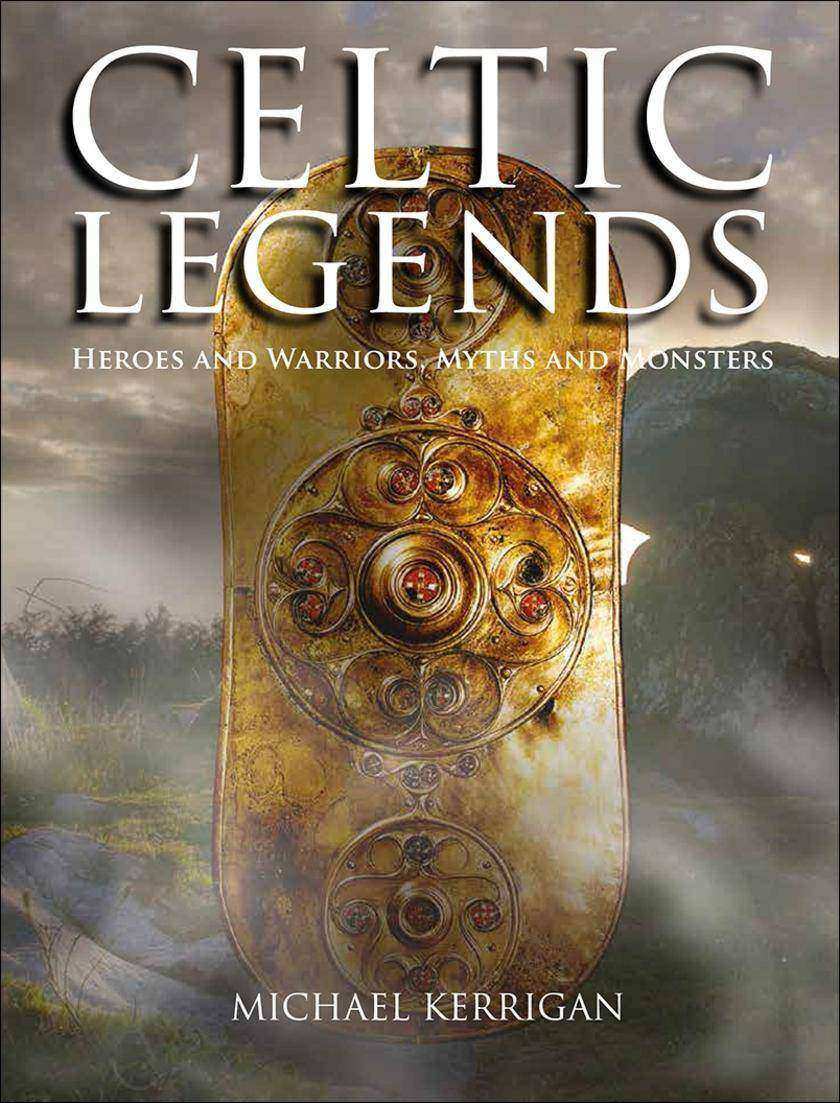
Celtic Legends: Heroes and Warriors, Myths and Monsters
¥81.67
From around 750BC to 12BC, the Celts were the most powerful people in central and northern Europe. With the expansion of the Roman Empire and the later Christianization of these lands, they were pushed to the fringes of north-western Spain, France and the British Isles. But there the mythology of these peoples held strong. The tales from Celtic myth were noted down and also absorbed into other cultures. From Roman and Christian scribes we know of characters like Morrigan the shape-shifting queen, who could change herself from a crow to a wolf, Cu Chulainn, who, mortally wounded in battle, tied himself with his own intestines to a rock so that he’d die standing up, and the Cauldron of Bran, which could restore life. Other than being fascinating in their own right, Celtic legends are of interest for the influence they had over subsequent mythologies. The story of the Holy Grail first appears in medieval romances but its antecedents can be found in the Celtic tale, the Mabinogion. Illustrated with more than 180 colour and black-and-white artworks and photographs and maps, Celtic Legends is an expertly written account of the mythological tales that both fascinate us and influence other writings.

Raja Yoga
¥24.44
Each branch of Yoga is but a path leading towards unfoldment, development, and growth. What is known as Raja Yoga deals with the Mind, its control, its development. He who wants to develop his will-power and mental faculties, unfolding the inner senses, and latent powers, follows the path of Raja Yoga. Raja Yoga is known by many names and is often referred to as royal yoga, royal union, sahaj marg, classical yoga, and ashtanga yoga.

Celebrities' Favourite Football Teams
¥29.33
We all like to delve into the minds and lives of our beloved celebrity figures, but this fascinating read is not celebrity gossip, it comes straight from the horse's mouth to reveal all you ever wanted to know about celebrities' favourite football teams and players. With a fitting Foreword by footballing legend Sir Alex Ferguson CBE, this book is a must-read for football fans who wish to know which celebrity is a fellow aficionado of their club, or perhaps a supporter of `the enemy', as well as for the rest of the population, who just love to know what makes our celebrities tick. And it is also a must-buy, as all author royalties from the sale of this book will be donated to The Willow Foundation, a charity set up by the legendary Bob Wilson and his wife Megs in 1999 to enable seriously ill young adults to enjoy the treat of a `Special Day' with family and friends.
England's World Cup Story
¥58.76
Are you a loyal England supporter? Do you look forward to the World Cup and eagerly follow England's progress? Would you like to find out more about the history of your national team and their past performance in top flight football? If so, this book is certain to appeal to you. England's World Cup Story documents England's journey in the World Cup from 1950 under the guidance of Sir Walter Winterbottom up to 2010 with Fabio Capello at the helm as manager. Packed with fascinating facts, quotes and profiles of many of the all-time great players, this book tells the story of the England team through the years from the many near misses and disappointments to victory in 1966 and beyond. Who can forget the likes of Gordon Banks, Bobby Moore and Sir Stanley Matthews to name but a few? They are all in this book together with more recent heroes such as David Beckham, Alan Shearer and Wayne Rooney. As one of only eight national sides to have lifted the World Cup trophy, this book is a fitting tribute to the England team. This is a must-have for all fans of the beautiful game and anyone with an interest in the history of the World Cup.

Stockholm
¥86.62
Situated on Lake Malaren on one of the world s most beautiful harbours, Stockholm has set the benchmark for civilized city-living since the time of the Vikings. Its medieval regal period saw the Vasa dynasty turn a small town in the shadow of Uppsala into the capital city of a dominant power in Europe and a major trading port. In the Napoleonic era Stockholm readjusted its priorities to establish itself as a centre of innovation, technical and social. While the city has suffered more than its fair share of disasters, Stockholm s cultural and commercial elite transformed it into a community which welcomed innovation and spread the fruits of its achievements far beyond its borders. From its celebrated Old Town, dating from the Middle Ages, to its Art Nouveau and modern quarters, Stockholm is a city rich in museums, theatres and landmarks. Tony Griffiths explores the Swedish capital, old and new, revealing a city of unexpected contradictions. CITY OF POWER, INTRIGUE AND MURDER: Gustav Vasa, Queen Christina and Voltaire; murder at a Masked Ball, Olaf Palme s assassination; Lindh, social democracy and armed neutrality; the rights of women and the impact of immigration CITY OF SCIENTISTS AND INVENTORS: Linnaeus and Nobel; Ericsson and new technology; Laval, Wenner-Gren and Kamprad. SENSUAL CITY: Strindberg, Greta Garbo, Ingrid and Ingmar Bergman; sculptors and painters; home of the smorgasbord; the church, lust and the alcohol monopoly.

Of Course Football
¥44.05
It's a funny game, football. PJ Parsons has been an enthusiastic follower of the sport since his childhood in the 1930s and 40s, playing it and watching it, analysing it, discussing it and laughing good-humouredly at it. Here he takes a comical look at all aspects of the modern big-money game and contrasts it with the grass-roots sport of the 1950s and earlier.
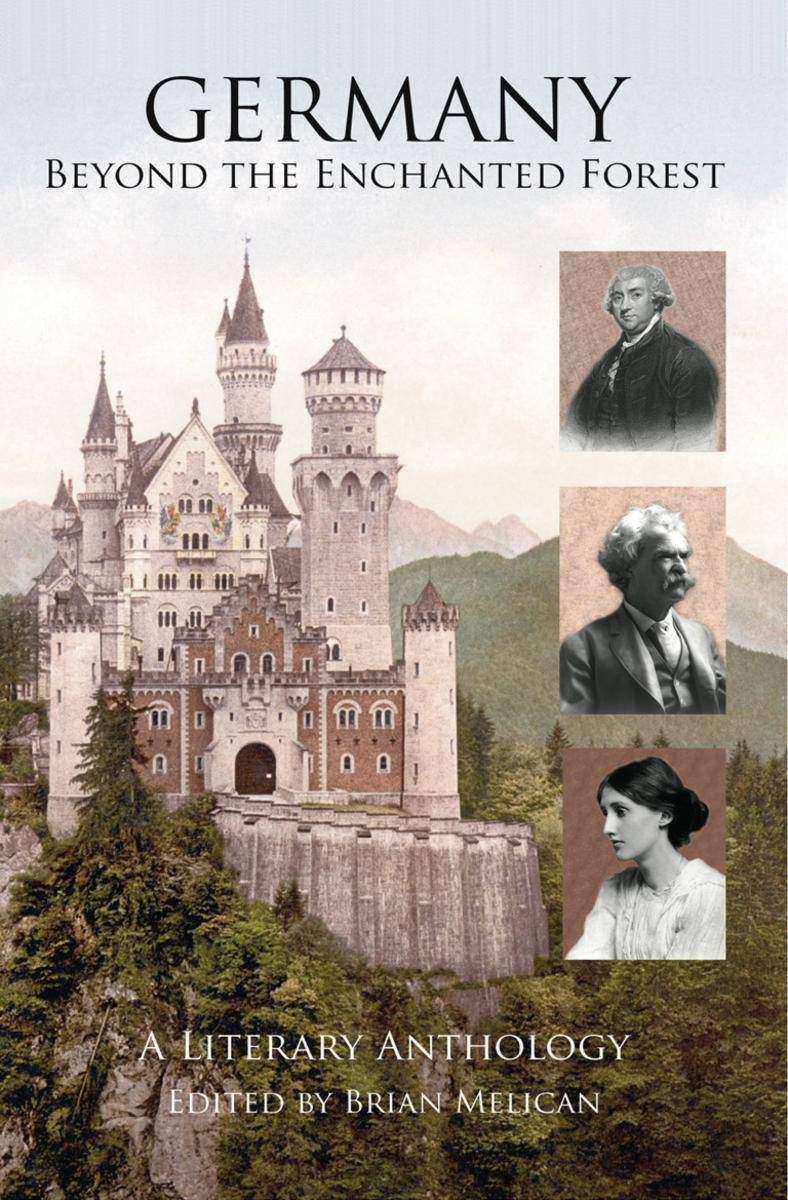
Germany
¥98.00
German military figures had a certain terrifying glamour,' wrote Patrick Leigh Fermor, recalling views about Germany during the First World War. When, he asked, had the bristling general replaced the 'philosophers and composers and bandsmen and peasants and students drinking and singing in harmony?' The enchanted forest, symbol of Romantic idealism and traditional folktales, had given way to other images of Germany and Germans. By following Leigh Fermor, and over eighty other British and North American literary visitors to Germany, this original anthology shows how different generations of English-speakers have depicted this country. Starting in the sixteenth century with some of the earliest travel accounts in English, Brian Melican presents a wide range of writing about, or set in, Germany. Letters from Johnsonians such as Boswell and Garrick and the Romantic poets Coleridge and Wordsworth; the journals of Herman Melville and Henry James; ante bellum fiction by authors such as D. H. Lawrence and Ford Madox Ford: all of this and more reveals an oft-forgotten richness in encounters with Germany before the horrors of the twentieth century. Work by Christopher Isherwood, Stephen Spender and wartime reporters through the 1940s exposes the country's darkest moments, while sometimes surprising takes on the conflict emerge from authors inside Germany with unique perspectives such as Christabel Bielenberg and Michael Howard. Post-war writing ranges from the spy fiction of Len Deighton to the writers who dissected post-Nazi Germany. The diversity of writing about Germany today encompasses light-hearted accounts and more searching passages taken from an eclectic selection of authors. Recorded and imagined images of Germany have changed dramatically across the centuries. Yet views on many of its features especially its cities and rivers, customs and cuisine have often remained constant. This anthology, with extensive introductions and annotations, offers a range of opinions, both typical and atypical of their time, and invites readers to venture beyond the usual discussion about this country at the very heart of Europe.
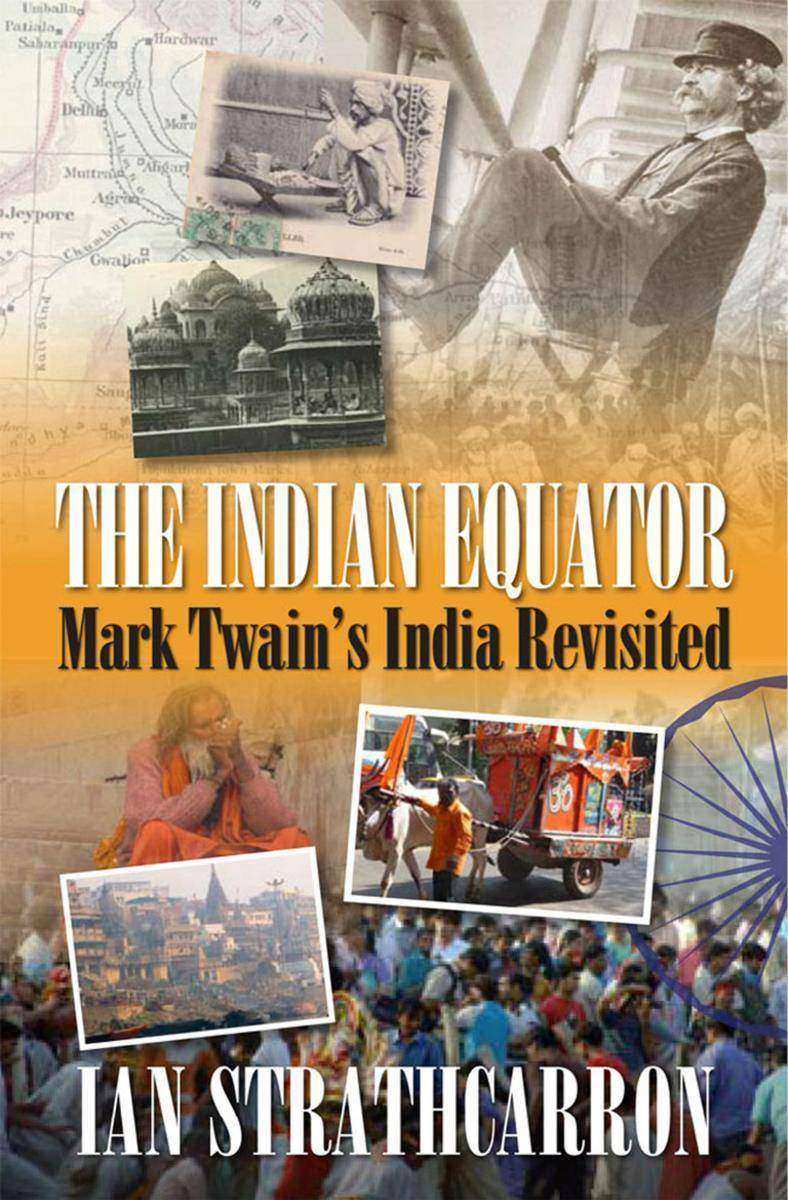
Indian Equator
¥73.48
In 1895/6 the sixty-year-old Mark Twain set off on a worldwide lecture tour to pay off his debts from a publishing company bankruptcy, notes from which a year later became his final travel book Following the Equator. Two years later he wrote, 'How I did loathe that journey around the world! except the sea-part and India.' Although he was only in India for just over two of the twelve months, his exploits and observations there take up forty per cent of the book-and by common consent are by far the best and liveliest part of it. In The Indian Equator the Mark Twain travel trilogist Ian Strathcarron, his wife and photographer Gillian and his factota Sita follow in his mentor's footsteps, train tracks and boat wakes tracing the route that Twain, his wife Livy, his daughter Clara, his manager Smythe and his bearer Satan took as they crisscrossed the sub-continent. Leaving from the Bombay that was and the Mumbai that is, both writers follow the lecture circuit of old India--including what is now Pakistan--across the plains and cities of the north up to the peaks of the Himalayas by way of Baroda, Jaipur, Delhi, Agra, Lucknow, Benares/Varanasi, Calcutta/Kolkata, Darjeeling, Lahore and Rawalpindi. Staying in the same Raj clubs, travelling down the same train lines, meeting the high and mighty and the downtrodden and destitute, Twain and Strathcarron are absorbed by an India that then was and now is 'not for the faint of heart nor mild of spirit nor weak of mind nor dull of sense nor correct of politic'; a rapidly changing yet still deeply traditional society where 'a few hundred million have grabbed the twenty-first century by the whiskers and many more hundred million still tuck the nineteenth century into bed at night'. Mark Twain loved the India of 1896; like his trilogist, he would love it still.


