


 购物车
购物车 个人中心
个人中心

Rebel
¥55.33
The sequel to the action-packed Reboot is a can't-miss thrill ride, perfect for fans of James Patterson and Marie Lu.After coming back from death as Reboots and being trained by HARC as soldiers, Wren and Callum have finally escaped north, where they hope to find a life of freedom. But when they arrive at the Reboot reservation, it isn't what they expected. Under the rule of a bloodthirsty leader, Micah, the Reboots are about to wage an all-out war on the humans. Although Wren's instincts are telling her to set off into the wilderness and leave the battle far behind, Callum is unwilling to let his human family be murdered. When Micah commits the ultimate betrayal, the choice is made for them. But Micah has also made a fatal mistake—he's underestimated Wren and Callum.The explosive finale to the Reboot duology is full of riveting action and steamy love scenes as Wren and Callum become rebels against their own kind.

Pitch Dark: Dark Days of Summer Sampler
¥38.06
Looking for a read filled with love, danger, and adventureWant to escape to brave new worlds without ever leaving your roomRead through the night this summer with sneak peeks of six breathtaking stories, including Destined by Aprilynne Pike, Insignia by S.J. Kincaid, Insurgent by Veronica Roth, Masque of the Red Death by Bethany Griffin, Partials by Dan Wells, and Unraveling by Elizabeth Norris.
Mastering XenApp?
¥99.18
Master the skills required to implement CitrixXenApp7.6 to deploy a complete Citrix?-hosted application from scratch About This Book Learn to implement and configure components of CitrixXenApp7.6, which are XenServer?, XenApp?, CitrixLicense server, PVS, Storefront, CitrixReceiver, and Netscaler to secure WAN traffic Build the XenApp7.6 environment independently and perform tests to make sure the components are working as expected for internal and external traffic Implement advanced tools in CitrixXenAppto build and manage a cost effective, secure, and high-performing application delivery infrastructure with this comprehensive guide Who This Book Is For This is book is for administrators who are currently managing the implemented environment and want to learn how to deploy the CitrixHosted virtualization solution for the application in a windows server 2012 R2 environment. A reasonable knowledge and understanding of core XenAppelements and concepts used during virtualizing applications are assumed. What You Will Learn Understand how to set up Hypervisor, install the management console, configure the storage repository, and create a virtual machine on hypervisor Set up an Infrastructure component and explore ways to tune them up so that they can be used for Citrixenvironment Set up a Domain controller, DHCP, Certificate authority, and SQL server for static database for CitrixXenAppValidate the CitrixXenApp7.6 solution to make sure components are communicating properly Manage the essential Citrixcomponents – Director, Licensing, and Policies with the Help of Citrixstudio Optimize the behavior of an Application and share desktop via Policies Installing and configuring CitrixProvisioning services to deliver CitrixXenApp7.6 virtual machines Secure the external Delivery of an application and shared desktop via netscaler to enjoy mobility In Detail CitrixXenAppis one of the leading pieces of Application delivery software that delivers Windows compatible apps to users on any device, anywhere. CitrixXenAppalso gives administrators the ability to manage and control the freedom of mobility by increasing the security and saving costs at the same time. This book will provide you with all the knowledge required to successfully deploy and master a complete Citrixhosted application. First, it will cover essential concepts of the architecture of XenApp?. You will then learn how to set up Hypervisor and how to set up Infrastructure components. Next you will learn how to Set up CitrixComponents, XenAppresources, PVS, and Netscaler. We will further look at how to prepare the environment for Rollout. Additionally, you will learn how to configure the Citrixcomponents such as CitrixDirector. Moreover, you’ll learn about shared desktop for delivery to end users and the application of policies for effective and secure delivery. Finally, you will learn how to implement provisioning services for a CitrixXenApp7.6 environment. Style and approach This book is based on a course outline and hence takes a very practical approach so you will understand how to implement the components of XenAppin a production environment. Complemented with many best practices and troubleshooting concepts of XenApp?, this book will help you master XenAppswiftly.
Monitoring Docker
¥71.93
Monitor your Docker containers and their apps using various native and third-party tools with the help of this exclusive guide!About This Book Get the only book that covers multiple methods to monitoring Docker Containers -your one-stop solution to all your Docker monitoring needs Learn how to implement third-party tools such as Datalog, cAdvisor, and more with this example-rich, hands-on guide Learn how to efficiently monitor Docker containers and get an edge over other administrators while maintaining apps on these containers Who This Book Is For This book is for DevOps engineers and system administrators who manage Docker containers and want to better manage these containers using expert techniques and methods and better maintain applications built on Docker. What You Will Learn Discover the tools built into Docker to gain an insight into your containers’ performance Augment Docker’s built-in tools with modern tools such as cAdvisor from Google, SysDig by Draios, and Soundcloud’s Prometheus Integrate the monitoring of your containers with more traditional monitoring solutions such as Zabbix Take advantage of the various SaaS offerings from third parties to move monitoring away from your local infrastructure and into the cloud Discover the various ways to ship your applications’ logs from the container to a central logging service Get the most out of your application and resources with the right implementation of your monitoring method In Detail This book will show you how monitoring containers and keeping a keen eye on the working of applications helps improve the overall performance of the applications that run on Docker. With the increased adoption of Docker containers, the need to monitor which containers are running, what resources they are consuming, and how these factors affect the overall performance of the system has become the need of the moment. This book covers monitoring containers using Docker's native monitoring functions, various plugins, as well as third-party tools that help in monitoring. Well start with how to obtain detailed stats for active containers, resources consumed, and container behavior. We also show you how to use these stats to improve the overall performance of the system. Next, you will learn how to use SysDig to both view your containers performance metrics in real time and record sessions to query later. By the end of this book, you will have a complete knowledge of how to implement monitoring for your containerized applications and make the most of the metrics you are collecting Style and approach This is an easy-to-follow guide with plenty of hands-on examples that can be executed both on your local machine and externally hosted services.
Mastering OAuth 2.0
¥80.65
Create powerful applications to interact with popular service providers such as Facebook, Google, Twitter, and more by leveraging the OAuth 2.0 Authorization Framework About This Book Learn how to use the OAuth 2.0 protocol to interact with the world's most popular service providers, such as Facebook, Google, Instagram, Slack, Box, and more Master the finer details of this complex protocol to maximize the potential of your application while maintaining the utmost of security Step through the construction of a real-world working application that logs you in with your Facebook account to create a compelling infographic about the most important person in the world—you! Who This Book Is Fo If you are an application developer, software architect, security engineer, or even a casual programmer looking to leverage the power of OAuth, Mastering OAuth 2.0 is for you. Covering basic topics such as registering your application and choosing an appropriate workflow, to advanced topics such as security considerations and extensions to the specification, this book has something for everyone. A basic knowledge of programming and OAuth is recommended. What You Will Learn Discover the power and prevalence of OAuth 2.0 and use it to improve your application's capabilities Step through the process of creating a real-world application that interacts with Facebook using OAuth 2.0 Examine the various workflows described by the specification, looking at what they are and when to use them Learn about the many security considerations involved with creating an application that interacts with other service providers Develop your debugging skills with dedicated pages for tooling and troubleshooting Build your own rich, powerful applications by leveraging world-class technologies from companies around the world In Detail OAuth 2.0 is a powerful authentication and authorization framework that has been adopted as a standard in the technical community. Proper use of this protocol will enable your application to interact with the world's most popular service providers, allowing you to leverage their world-class technologies in your own application. Want to log your user in to your application with their Facebook accountWant to display an interactive Google Map in your applicationHow about posting an update to your user's LinkedIn feedThis is all achievable through the power of OAuth. With a focus on practicality and security, this book takes a detailed and hands-on approach to explaining the protocol, highlighting important pieces of information along the way. At the beginning, you will learn what OAuth is, how it works at a high level, and the steps involved in creating an application. After obtaining an overview of OAuth, you will move on to the second part of the book where you will learn the need for and importance of registering your application and types of supported workflows. You will discover more about the access token, how you can use it with your application, and how to refresh it after expiration. By the end of the book, you will know how to make your application architecture robust. You will explore the security considerations and effective methods to debug your applications using appropriate tools. You will also have a look at special considerations to integrate with OAuth service providers via native mobile applications. In addition, you will also come across support resources for OAuth and credentials grant. Style and approach With a focus on practicality and security, Mastering OAuth 2.0 takes a top-down approach at exploring the protocol. Discussed first at a high level, examining the importance and overall structure of the protocol, the book then dives into each subject, adding more depth as we proceed. This all culminates in an example application that will be built, step by step, using the valuable and practical knowledge you have gained.
Apache Oozie Essentials
¥63.21
Unleash the power of Apache Oozie to create and manage your big data and machine learning pipelines in one go About This Book Teaches you everything you need to know to get started with Apache Oozie from scratch and manage your data pipelines effortlessly Learn to write data ingestion workflows with the help of real-life examples from the author’s own personal experience Embed Spark jobs to run your machine learning models on top of Hadoop Who This Book Is For If you are an expert Hadoop user who wants to use Apache Oozie to handle workflows efficiently, this book is for you. This book will be handy to anyone who is familiar with the basics of Hadoop and wants to automate data and machine learning pipelines. What You Will Learn Install and configure Oozie from source code on your Hadoop cluster Dive into the world of Oozie with Java MapReduce jobs Schedule Hive ETL and data ingestion jobs >Import data from a database through Sqoop jobs in HDFS Create and process data pipelines with Pig, hive *s as per business requirements. Run machine learning Spark jobs on Hadoop Create quick Oozie jobs using Hue Make the most of Oozie’s security capabilities by configuring Oozie’s security In Detail As more and more organizations are discovering the use of big data analytics, interest in platforms that provide storage, computation, and analytic capabilities is booming exponentially. This calls for data management. Hadoop caters to this need. Oozie fulfils this necessity for a scheduler for a Hadoop job by acting as a cron to better analyze data. Apache Oozie Essentials starts off with the basics right from installing and configuring Oozie from source code on your Hadoop cluster to managing your complex clusters. You will learn how to create data ingestion and machine learning workflows. This book is sprinkled with the examples and exercises to help you take your big data learning to the next level. You will discover how to write workflows to run your MapReduce, Pig ,Hive, and Sqoop *s and schedule them to run at a specific time or for a specific business requirement using a coordinator. This book has engaging real-life exercises and examples to get you in the thick of things. Lastly, you’ll get a grip of how to embed Spark jobs, which can be used to run your machine learning models on Hadoop. By the end of the book, you will have a good knowledge of Apache Oozie. You will be capable of using Oozie to handle large Hadoop workflows and even improve the availability of your Hadoop environment. Style and approach This book is a hands-on guide that explains Oozie using real-world examples. Each chapter is blended beautifully with fundamental concepts sprinkled in-between case study solution algorithms and topped off with self-learning exercises.
Puppet 4 Essentials - Second Edition
¥80.65
Acquire skills to manage your IT infrastructure effectively with Puppet About This BookBreeze through Puppet 4’s key features and performance improvements to bring real advantage to your IT infrastructureDiscover Puppet best practices to help you avoid common mistakes and pitfallsBlitz through easy-to-follow examples to get to grips with Puppet and succeed with everyday IT automationWho This Book Is ForIf you're an experienced IT professional and a new Puppet user, this book will provide you with all you need to know to go from installation to advanced automation in no time at all. Get a rapid introduction to the essential topics and then tackle Puppet for advanced automation.What You Will LearnWrite and employ individual Puppet manifestsUnderstand how Puppet implements system abstractionDeploy the Puppet master and agentsLeverage and extend Facter to summarize your systems Create modular and reusable Puppet code Extend your code base with publicly available Puppet modules Use the modern features of Puppet 4 Separate logic from data using Hiera In Detail Puppet is a configuration management tool that allows you to automate all your IT configurations, giving you control over what you do to each Puppet Agent in a network, and when and how you do it. In this age of digital delivery and ubiquitous Internet presence, it's becoming increasingly important to implement scalable and portable solutions, not only in terms of software, but also the systems that run it. The free Ruby-based tool Puppet has established itself as the most successful solution to manage any IT infrastructure. Ranging from local development environments through complex data center setups to scalable cloud implementations, Puppet allows you to handle them all with a unified approach. Puppet 4 Essentials, Second Edition gets you started rapidly and intuitively as you’ll put Puppet’s tools to work right away. It will also highlight the changes associated with performance improvements as well as the new language features in Puppet 4. We’ll start with a quick introduction to Puppet to get you managing your IT systems quickly. You will then learn about the Puppet Agent that comes with an all-in-one (AIO) package and can run on multiple systems. Next, we’ll show you the Puppet Server for high-performance communication and passenger packages. As you progress through the book, the innovative structure and approach of Puppet will be explained with powerful use cases. The difficulties that are inherent to a complex and powerful tool will no longer be a problem for you as you discover Puppet's fascinating intricacies. By the end of the book, you will not only know how to use Puppet, but also its companion tools Facter and Hiera, and will be able to leverage the flexibility and expressive power implemented by their tool chain. Style and approach This quick learning guide for Puppet follows a practical approach, starting with some basic commands that you can use from the shell right away. It comprises a series of examples that will get you familiar with the most important aspects of Puppet in a flash.

Asylum
¥61.52
Madeleine Roux's New York Times bestselling Asylum is a thrilling and creepy photo-illustrated novel that Publishers Weekly called "a strong YA debut that reveals the enduring impact of buried trauma on a place." Featuring found photographs from real asylums and filled with chilling mystery and page-turning suspense, Asylum is a horror story that treads the line between genius and insanity, perfect for fans of Miss Peregrine's Home for Peculiar Children.For sixteen-year-old Dan Crawford, the New Hampshire College Prep program is the chance of a lifetime. Except that when Dan arrives, he finds that the usual summer housing has been closed, forcing students to stay in the crumbling Brookline Dorm—formerly a psychiatric hospital. As Dan and his new friends Abby and Jordan start exploring Brookline's twisty halls and hidden basement, they uncover disturbing secrets about what really went on here . . . secrets that link Dan and his friends to the asylum's dark past. Because Brookline was no ordinary mental hospital, and there are some secrets that refuse to stay buried.
The Curiosity
¥83.03
A powerful debut novel in which a man, frozen in the Arctic ice for more than a century, awakens in the present day and finds the greatest discovery is love . . .The Curiosity Dr. Kate Philo and her scientific exploration team make a breathtaking discovery in the Arctic: the body of a man buried deep in the ice. As a scientist in a groundbreaking project run by the egocentric and paranoid Erastus Carthage, Kate has brought small creatures—plankton, krill, shrimp—back to life for short periods of time. But the team's methods have never been attempted on larger life-forms.Heedless of the potential consequences, Carthage orders that the frozen man be brought back to the lab in Boston and reanimated. The endeavor is named "The Lazarus Project." As the man begins to regain his memories, the team learns that he was—is—a judge, Jeremiah Rice, and the last thing he remembers is falling overboard into the Arctic Ocean in 1906. When news of the project and Jeremiah Rice breaks, it ignites a media firestorm and protests by religious fundamentalists.Thrown together by fate, Kate and Jeremiah grow closer. But the clock is ticking and Jeremiah's new life is slipping away. With Carthage planning to exploit Jeremiah while he can, Kate must decide how far she is willing to go to protect the man she has come to love.A gripping, poignant, and thoroughly original thriller, Stephen P. Kiernan's provocative debut novel raises disturbing questions about the very nature of life and humanity—man as a scientific subject, as a tabloid novelty, as a living being: a curiosity.

The Good Sister
¥55.91
In New York Times bestselling authorWendy Corsi Staub's electrifying new thriller,a mother races to save her daughter beforeher darkest nightmare comes true. Sacred Sisters Catholic girls' school has hardly changed since Jen Archer was a student. Jen hoped her older daughter would thrive here. Instead, shy, studious Carley becomes the target of vicious bullies. But the real danger at Sacred Sisters goes much deeper.The only person Carley can talk to is "Angel," a kindred spirit she met online. Carley tells Angel everything—about her younger sister, about school, about the sudden death of her former best friend. Angel is her lifeline. And Angel is closer than she knows.When another schoolgirl is found dead, Jen's unease grows. There are too many coincidences, too many links to her past. Every instinct tells her that Carley is the next target. For someone is intent on punishing the guilty, teaching the ultimate lesson in how to fear . . . and how to die.

The Perfect Stranger
¥55.31
In New York Times bestselling author Wendy Corsi Staub's new thriller, one woman finds herself in the crosshairs of a twisted predator who might just be masked behind a familiar screen name . . .During the darkest period of her life, Landry Wells found solace in a group of bloggers who had been in her shoes and lived to tell the tale. She's shared things with her online friends that even her husband and children didn't know. Things that now, looking back, make her uneasy.One of the bloggers is dead, victim of a random crime—or was itDid she trust too easily; reveal too muchAt the funeral a thousand miles from home, Landry is about to come face to face at last with the others. These women are her closest confidantes in the world: they understand her; they know everything about her—and one of them might be a cold-blooded killer . . .

Exit Wounds
¥70.10
The incomparable J. A. Jance returns with a powerful tale that explores the darkest corners of human nature, revealing the grievous injuries inflicted behind locked doors, the unseen wounds that bleed and destroy and never heal ... The heat is a killer in Cochise County, Arizona, with temperatures over 100 degrees. In the suffocating stillness of an airless trailer, a woman is lying dead, a bullet hole in her chest. Why someone would murder a harmless loner with a soft spot for stray dogs is only one of the questions nagging at the local police; another is why the killer used an eighty-five-year-old bullet, fired from the same weapon that slaughtered two other women who were discovered bound, naked, and gruesomely posed on the remote edge of a rancher's land. The slayings are as oppressive as the blistering heat for Sheriff Joanna Brady, who must shoulder the added double burden of a brutal reelection campaign and major developments on the home front. With suddenly more on her plate than many big-city law officers have to contend with, Joanna must put marital distractions and an opponent's dirty tricks in the background and deal with the terrifying reality that now threatens everyone in her jurisdiction: a serial killer in their midst. A twisted and lethal drama is unfolding in this small corner of the southwestern desert as fear, hatred, and the evil at the core of one family's history come to a rapid boil beneath a merciless Arizona sun. Pressure mounts for Sheriff Brady personally and professionally while she pursues a sadistic murderer into the shadows of the past to get to the roots of a monstrous obsession ... and expose the permanent wounds of a crime far worse than homicide.

Dead Witch Walking
¥56.07
All the creatures of the night gather in the Hollows of Cincinnati, to hide, to prowl, to party . . . and to feed.Vampires rule the darkness in a predator-eat-predator world rife with dangers beyond imagining and it's Rachel Morgan's job to keep that world civilized.A bounty hunter and witch with serious sex appeal and an attitude, she'll bring back alive, dead . . . or undead.

Falls the Shadow
¥56.07
New York Times bestselling author William Lashner returns with a brilliantly twisty tale that probes the dark side of the law -- and man Unlike the rest of you, I cheerfully admit to my own utter selfishness. I am self-made, self-absorbed, self-serving, self-referential, even self-deprecating, in a charming sort of way. In short, I am all the selfs except selfless. Yet every so often, I run across a force of nature that shakes my sublime self-centeredness to its very roots. Something that tears through the landscape like a tornado, leaving nothing but ruin and reexamination in its wake. Something like Bob. --Victor Carl A beautiful young woman is dead, her husband convicted of the murder. In seeking a new trial for the husband, defense attorney Victor Carl must confront not only a determined prosecutor and a police detective who might have set up his client, but also a strange little busybody named Bob. Bob has the aspiration, one could even say compulsion, to help those around him. And it usually works out well for all concerned, except when it ends in blood. But Victor doesn’t know that . . . yet. Thanks to Bob, Victor is suddenly dressing better, dating a stunning woman, and both his economic prospects and his teeth are gleaming. It’s all good, until Victor finds a troubling connection between Bob and the murdered wife. Is Bob a kind of saint or is this obsessive Good Samaritan, in reality, a murdererFilled with the keen wit, deep poignancy, twisting suspense, and dark realism that has entranced readers, impressed reviewers, and made William Lashner’s previous novels bestsellers, Falls the Shadow is a riveting novel sure to leave readers eager for more.
Mathematica Data Analysis
¥63.21
Learn and explore the fundamentals of data analysis with power of Mathematica About This Book Use the power of Mathematica to analyze data in your applications Discover the capabilities of data classification and pattern recognition offered by Mathematica Use hundreds of algorithms for time series analysis to predict the future Who This Book Is For The book is for those who want to learn to use the power of Mathematica to analyze and process data. Perhaps you are already familiar with data analysis but have never used Mathematica, or you know Mathematica but you are new to data analysis. With the help of this book, you will be able to quickly catch up on the key points for a successful start. What You Will Learn Import data from different sources to Mathematica Link external libraries with programs written in Mathematica Classify data and partition them into clusters Recognize faces, objects, text, and barcodes Use Mathematica functions for time series analysis Use algorithms for statistical data processing Predict the result based on the observations In Detail There are many algorithms for data analysis and it’s not always possible to quickly choose the best one for each case. Implementation of the algorithms takes a lot of time. With the help of Mathematica, you can quickly get a result from the use of a particular method, because this system contains almost all the known algorithms for data analysis. If you are not a programmer but you need to analyze data, this book will show you the capabilities of Mathematica when just few strings of intelligible code help to solve huge tasks from statistical issues to pattern recognition. If you're a programmer, with the help of this book, you will learn how to use the library of algorithms implemented in Mathematica in your programs, as well as how to write algorithm testing procedure. With each chapter, you'll be more immersed in the special world of Mathematica. Along with intuitive queries for data processing, we will highlight the nuances and features of this system, allowing you to build effective analysis systems. With the help of this book, you will learn how to optimize the computations by combining your libraries with the Mathematica kernel. Style and approach This book takes a step-by-step approach, accompanied by examples, so you get a better understanding of the logic of writing algorithms for data analysis in Mathematica. We provide a detailed explanation of all the nuances of the Mathematica language, no matter what your level of experience is.
Mastering iOS Game Development
¥80.65
Master the advanced concepts of game development for iOS to build impressive games About This Book Create a complete game with advanced techniques through the course of the book using in-depth, hands-on instructions Learn how to multi-task and improve performance optimization in your game playing experience The author, Miguel, has 11 years of iOS game development using xcode and has released over 10 games to the Apple AppStoreMaster player movement using touch controls as well as discuss motion controls Who This Book Is For This book is for those who have created an iOS game already and want to hone their skills. A reasonable level of knowledge and an understanding of the core elements and applications would be helpful. What You Will Learn Blast off and start developing fun games Optimize the assets for the best performance in the game app Master player movement using touch controls as well as discuss motion controls Perform bug Squashing by testing and debugging Design interesting various characters and enemies for your game Test your game on both, the simulator on the computer and on real devices Tweak and fine tune the code and graphics before the release of your app Uncover some awesome new gameplay by adding in multiplayer elements, to get more people playing together In Detail iOS is an operating system for Apple manufactured phones and tablets. Mobile gaming is one of the fastest-growing industries, and compatibility with iOS is now becoming the norm for game developers. SpriteKit is part of the native SDK from Apple, and enables developers to make simple entry into game development without unnecessary overhead and a long learning process. SpriteKit also provides other functionality that is useful for games, including basic sound playback support and physics simulation. In addition, Xcode provides built-in support for SpriteKit so that you can create complex special effects and texture atlases directly in Xcode. This combination of framework and tools makes SpriteKit a good choice for games and other apps that require similar kinds of animation. Become a master in iOS game development through this fast and fun guide! In the beginning, we’ll tell you everything you need to plan and design your game. You’ll then start developing your game through step-by-step instructions using the various built-in technologies of Xcode. From there on, we discuss how to deploy your game to the iOS App Store, as well as monetizing it to make more revenue. You will also learn advanced techniques to improve your game playing experience, including better multi-tasking, improved performance optimization, battery management, and more. To end the book off, we’ll show you how to update your game with different features, then port the update to the App Store. Style and approach This book provides an easy-to-understand and fun approach to game development, with step-by-step instructions and detailed explanation of each block of code. The topics covered range from easy to advanced, so buckle up for a fast-paced ride!
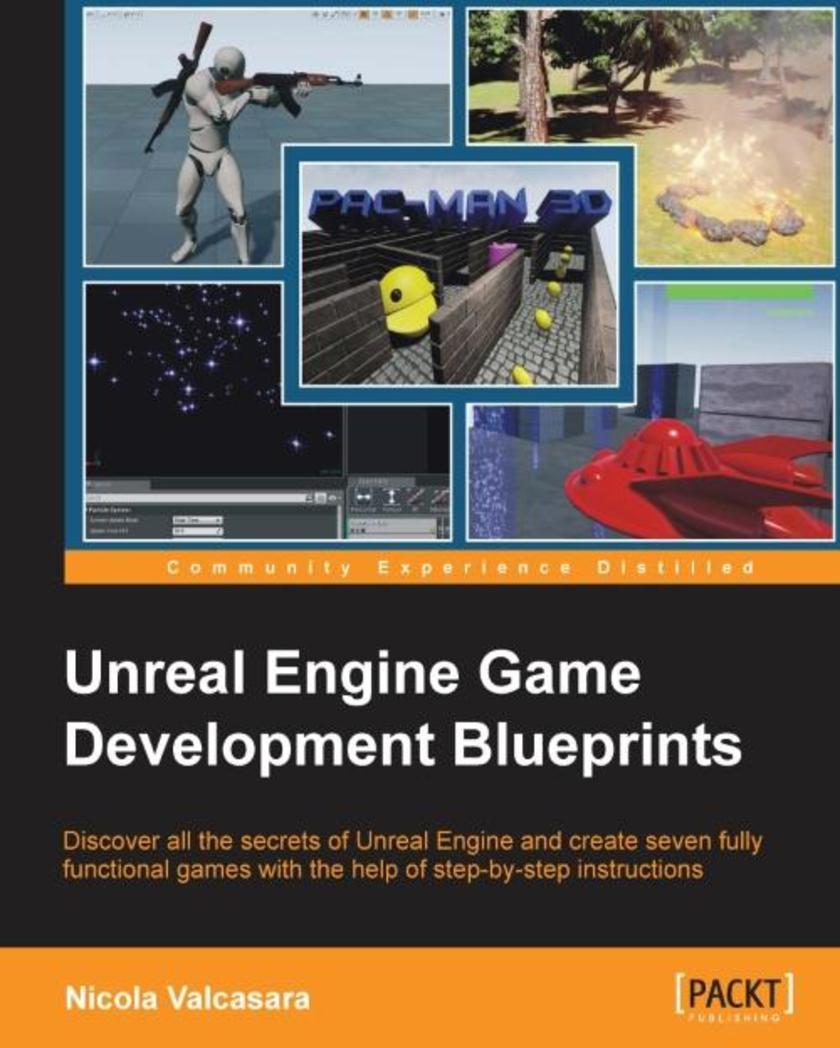
Unreal Engine Game Development Blueprints
¥90.46
Discover all the secrets of Unreal Engine and create seven fully functional games with the help of step-by-step instructions About This Book Understand what a Blueprint is and how to create a complex visual *ing code Discover the infinite possibilities that Unreal Engine offers, and understand which tool to use, where and when Learn to think like a real game developer in order to create enjoyable and bug-free games using this comprehensive and practical handbook Who This Book Is For This book is ideal for intermediate level developers who know how to use Unreal Engine and want to go through a series of projects that will further their expertise. Working knowledge of C++ is a must. What You Will Learn Write clean and reusable Blueprint *s Develop any kind of game you have in mind, following the rules used by experts Move through Unreal Engine 4, always knowing what you are doing and where to find the right tool for your needs Integrate C++ code into your projects using Visual Studio and the tools that Unreal provides Extricate between classes, nodes, interfaces, macros, and functions Work with different types of assets, from 3D objects to audio sources, from UI buttons to animations Explore all the aspects of the game logic—collisions, navigation meshes, matinees, volumes, events, and states In Detail With the arrival of Unreal Engine 4, a new wonderful tool was born: Blueprint. This visual *ing tool allows even non-programmers to develop the logic for their games, allowing almost anyone to create entire games without the need to write a single line of code. The range of features you can access with Blueprint * is pretty extensive, making it one of the foremost choices for many game developers. Unreal Engine Game Development Blueprints helps you unleash the real power of Unreal by helping you to create engaging and spectacular games. It will explain all the aspects of developing a game, focusing on visual *ing, and giving you all the information you need to create your own games. We start with an introductory chapter to help you move fluidly inside the Blueprint user interface, recognize its different components, and understand any already written Blueprint *. Following this, you will learn how to modify generated Blueprint classes to produce a single player tic-tac-toe game and personalize it. Next, you will learn how to create simple user interfaces, and how to extend Blueprints through code. This will help you make an informed decision between choosing Blueprint or code. You will then see the real power of Unreal unleashed as you create a beautiful scene with moving, AI controlled objects, particles, and lights. Then, you will learn how to create AI using a behavior tree and a global level Blueprint, how to modify the camera, and how to shoot custom bullets. Finally, you will create a complex game using Blueprintable components complete with a menu, power-up, dangerous objects, and different weapons. Style and approach This is an easy-to-follow guide full of practical game examples. Each chapter contains step-by-step instructions to build a complete game and each game uses a different tool in order to cover all the topics in a detailed and progressive manner.

Mastering MeteorJS Application Development
¥80.65
MeteorJS makes full-stack JavaScript Application Development simple – Learn how to build better modern web apps with MeteorJS, and become an expert in the innovative JavaScript framework About This Book Get your dream project up and running by building exceptional MeteorJS applications in a matter of days Learn how to integrate other JavaScript frameworks into your MeteorJS project and become an expert in full-stack development Go beyond coding and learn how to make modern design decisions – from mobile design to SEO – that drive great user experiences Who This Book Is For If you’ve already had some experience with MeteorJS but want to learn how to build even better modern web application, this book has been created for you. It provides you with a comprehensive look at one of those most important frameworks being used for the modern web today.What You Will Learn Get to grips with the basics and learn how to build a complete real-time application with MeteorJS Find out how Meteor makes full-stack development simple – become a better developer, fast. Use some of the most effective testing tools in modern web development to troubleshoot, debug and optimize your app Find out how to write custom packages for applications – so you can build your project exactly how you want Integrate React and Angular into your project Design and develop high quality animations that will give your UI the edge Build MeteorJS to serve as REST-based application and reactive system Learn how to host a MeteorJS application and then scale it for data Find out how MeteorJS can help you build for mobile Learn how to make sure you implement an effective SEO strategy in your MeteorJS application In Detail The web is dead – applications now rule our online experiences. But how are you going to build themWell, if you’ve been paying attention, you might already have tried your hand with MeteorJS, the JavaScript framework that helps you build complete full-stack web applications that are responsive and fast with ease. Mastering MeteorJS Application Development shows you how to do even more with MeteorJS – if you’re ready to try a comprehensive course through one of the most exciting frameworks in web development today, this is the book you need. Designed to take you through the entire process of building an advanced multipage application with Meteor, you’ll be able to bring your web development ideas with surprising ease. You’ll not only learn how Meteor makes web development easier, but also how you can make using Meteor easier, by automating and simplifying tasks so you can be confident you have full control of everything in your workflow – especially everything that could go wrong. From automated testing to integrating other useful frameworks such as Angular and D3, each chapter covers a crucial element in the Meteor development process. Discover how to integrate animations using Meteor’s Blaze, to give your UI designs the edge, and explore reactive programming to effectively harness RESTful systems in your projects. You will also learn how to deploy and scale your application, two crucial aspects of modern development and vital in a changing digital environment with users expecting a product and experience that delivers. With further insights on developing for mobile – and how Meteor can help you tackle the challenges of the trend – and details on incorporating SEO strategies into your application, this book isn’t just a code tutorial – it’s about creating a product that users love. Style and approach This book is a practical guide that teaches you different ways to create custom packages, efficient client and server code, and more using Meteor. This book is packed with perfect examples and explanations to help you understand the concepts. With the perfect mix of theory and practical experience, it will equip you to become a professional MeteorJS developer.
Force 5 Recon: Deployment: Philippines
¥49.05
The men of Force 5 Recon have been given a new mission and it's taking them to the Philippines. A Muslim extremist organization, Abu Sayyaf, has been using kidnappings and terrorist techniques to make their political goals known on a world stage. Mac Rainey and his team of elite Marin operators is assigned to assist and advise Fillipino Marines in how to combat terrorists.But everything goes horribly wrong when the Marines walk into an ambush, and half of the men of Force 5 are captured by terrorists. Rainey escapes, but knows that he only has a small window of time to save his men before the terrorists make an example of them. But to save his men, Rainey will have to enlist the help of a CIA agent he can't completely trust. He knows that attempting a rescue his men alone would be suicide, but to place his faith in the intelligence operative might lead him down the same road.

The Flat Stanley Collection (Four Complete Books)
¥84.97
Stanley Lambchop is an ordinary boy. At least he was, until the night his bulletin board fell off the wall and flattened him. At only half an inch thick, Stanley can slide under doors, mail himself across the country in an envelope, and fly like a kite!And that's only the start of Stanley's adventures. In these four tales, Stanley also becomes invisible and helps nab some bank robbers, journeys to outer space to rescue aliens, and, after being rounded out, turns flat—again! One thing is for sure: There's nothing Stanley Lambchop can't do!
Fortress in the Eye of Time
¥63.09
Deep in an abandoned, shattered castle, an old man of the Old Magic muttered almost forgotten words. His purpose -- to create out of the insubstance of the air, from a shimmering of light and a fluttering of shadows. that most wonderous of spells, a Shaping. A Shaping in the form of a, young man who will be sent east on the road the old was to old to travel. To right the wrongs of a long-forgotten wizard war, and call new wars into being. Here is the long-awaited major new novel from one of the brightest stars in the fantasy and science fiction firmament.C.J.Cherryh's haunting story of the wizard Mauryl, kingmaker for a thousand years of Men, and Tristen, fated to sow distrust between a prince and his father being. A tale as deep as legend and a intimate as love, it tells of a battle beyond Time, in which all Destiny turns on the wheel of an old man's ambition, a young man's innocence, and the unkept promised of a king to come.


