


 购物车
购物车 个人中心
个人中心

Madness: A Bipolar Life (Text Only)
¥72.30
A searing, unflinching and deeply moving account of Marya Hornbacher’s personal experience of living with bipolar disorder. From the age of six, Marya Hornbacher knew that something was terribly wrong with her, manifesting itself in anorexia and bulimia which she documented in her bestselling memoir ‘Wasted’. But it was only eighteen years later that she learned the true underlying reason for her distress: bipolar disorder. In this new, equally raw and frank account, Marya Hornbacher tells the story of her ongoing battle with this most pervasive and devastating of mental illnesses; how, as she puts it, ‘it crept over me like a vine, sending out tentative shoots in my childhood, taking deeper root in my adolescence, growing stronger in my early adulthood, eventually covering my body and face until I was unrecognizable, trapped, immobilized’. She recounts the soaring highs and obliterating lows of her condition; the savage moodswings and impossible strains it placed on her relationships; the physical danger it has occasionally put her in; the endless cycle of illness and recovery. She also tackles the paradoxical aspects of bipolar disorder – how it has been the drive behind some of her most creative work – and the reality of a life lived in limbo, ‘caught between the world of the mad and the world of the sane’. Yet for all the torment it documents, this is a book about survival, about living day to day with bipolar disorder – the constant round of therapy and medication – and managing it. As well as her own highly personal story, the book includes interviews with family, spouses and friends of sufferers, the people who help their loved ones carry on. Visceral and inspiring, lyrical and sometimes even funny, ‘Madness’ will take its place alongside other classics of the genre such as ‘An Unquiet Mind’ and ‘Girl, Interrupted’.

Disguise
¥66.22
Hugo Hamilton, the internationally acclaimed author of ‘The Speckled People’ and ‘Sailor in the Wardrobe’, turns his hand back to fiction with a compelling drama tracing Berlin's central historical importance throughout the twentieth century. 1945. At the end of the second world war in Berlin, a young mother loses her two-year-old boy in the bombings. She flees to the south, where her father finds a young foundling of the same age among the refugee trains to replace the boy. He makes her promise never to tell anyone, including her husband – still fighting on the Russian front – that the boy is not her own. Nobody will know the difference. 2008. Gregor Liedmann is a Jewish man now in his sixties. He's an old rocker who ran away from home, a trumpet player, a revolutionary stone-thrower left over from the 1968 generation. On a single day spent gathering fruit in an orchard outside Berlin with family and friends, Gregor looks back over his life, sifting through fact and memory in order to establish the truth. What happened on that journey south in the final days of the war? Why did his grandfather Emil disappear, and why did the Gestapo torture uncle Max? Here, in the calmness of the orchard, along with his ex-wife Mara and son Daniel, Gregor tries to unlock the secret of his past. In his first novel since the best-selling memoir ‘The Speckled People’, Hugo Hamilton has created a truly compelling story of lost identity, and a remarkable reflection on the ambiguity of belonging.

The Mentor
¥51.50
Spying, lying and dying. Fans of ‘Spooks’ will be swept away by Steve Jackson’s explosive debut novel. They say lightning never strikes twice. They are wrong. London has been bombed for the second time in 2 years, but this time the enemy is a lot closer to home. Paul Aston, a young MI6 Agent, is sent to investigate. But nothing could have prepared him for the scenes of horror and devastation that he sees. Images that will stay with him for the rest of his life. The government blames MI6, MI6 blames the government, but the truth behind what the media are calling 18/8 is more chilling than anyone could have imagined. Slowly, Aston tears away the layers of corruption, betrayal and murder to reveal the real culprit. Someone who knows every trick in the book, because he’s played every trick in the book. Someone who has a deep seething hatred of MI6 and will stop at nothing until his vengeance is satisfied. He is The Mentor.

Trick or Treat (The Sleepover Club)
¥27.27
The hugely popular Sleepover Club series is back with a gorgeous new look. Meet Frankie, Kenny, Fliss, Rosie and Lyndz - five best friends who just want to have fun! It's Halloween and the Sleepover Club girls have organised a special spooky sleepover at Kenny's house. Then her horrible big sister Molly goes and ruins everything. But Molly had better watch out as the girls are determined to get their own back. And their plan involves a geeky boy and a witchy little love potion... As well as a great story this book has tips for fun things to do at your own sleepover party for you and your friends. Pack up your sleepover kit and join in the fun!
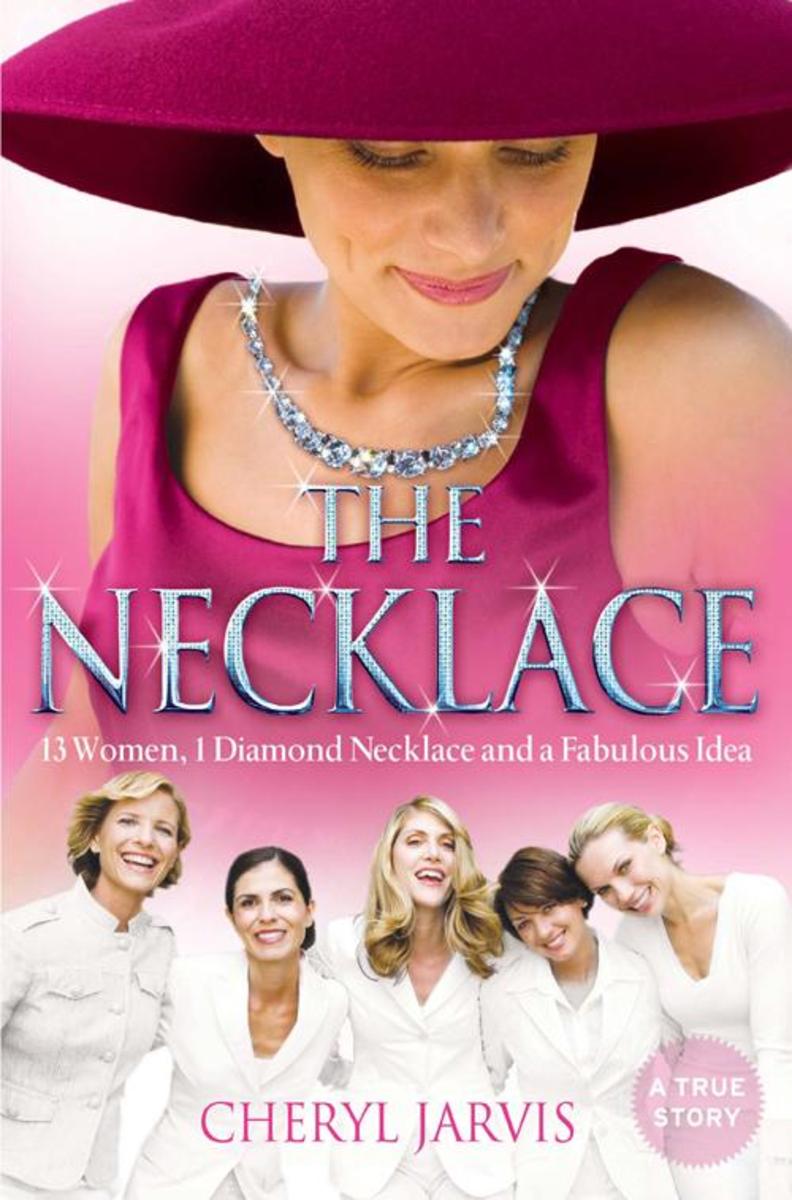
The Necklace: A true story of 13 women, 1 diamond necklace and a fabulous idea
¥54.25
One day a woman of average means waltzes by a jewellery shop window and spots a ?20,000 diamond necklace. She can't get it out of her head. Eventually she gets the idea of sharing it with friends, persuading them to chip in a grand each to buy the necklace. This is the true story of 13 ordinary women, and one extraordinary adventure. The Necklace is the amazing true story of thirteen women who didn't want to give up on their dreams. They clubbed together to buy a gorgeous diamond necklace, agreeing that each of them would have it for four weeks at a time. They would meet every month to find out what the necklace (now dubbed 'Jewelia') had been up to. The club had some rules: if someone went to Paris, they got the necklace. At least once, everyone had to wear the necklace whilst making love. After two years, the necklace had been loaned out to nieces, grandmas, friends and granddaughters. It had been worn by brides and colleagues and sisters and friends. And when it was their turn for the necklace the women of Jewelia wore it for both the daily routines and special events of their lives, to teach school, to work in the farmer's market, to go fishing and skydiving. It started something. The Necklace is the story of how an object of desire became a catalyst for connection, friendship and more. It's like Calendar Girls, only maybe a bit more glamorous, glitzy and sparkling.

Star of the Morning: The Extraordinary Life of Lady Hester Stanhope (Text Only)
¥192.67
The dramatic story of Lady Hester Stanhope – a wilful beauty turned bohemian adventurer – who left England as a young woman, unashamedly enjoyed a string of lovers and established her own exotic fiefdom in the Lebanese mountains where she died in 1839. Ambitious, daring and uncompromising, Lady Hester Stanhope was never cut out for a conventional life. Born into an illustrious political dynasty, she played society hostess for her uncle, William Pitt the Younger. After his death, she struck out for unchartered territory, setting sail with her lover for the Mediterranean and Constantinople – turning her back on England, as events would transpire, forever. It was in the Middle East, however, that she found her destiny. As the greatest female traveller of her age, she was the first western woman to cross the Syrian desert, where she was hailed by the Bedouin as their ‘Star of the Morning’. From her labyrinthine fortress in the mountains of Lebanon, where she established what amounted to her own fiefdom, she exerted a canny influence over the region's devious politics. Hers was a life of adventure and intrigue – yet in the years following her death her remarkable story has been largely dismissed, reworked by the Victorians into a cautionary tale for young women with wayward tendencies. This captivating biography, drawing on fresh research from three continents, resurrects Hester as the complex, courageous and fearless woman she was, bringing to life her hidden loves, friendships and ambitions. More than a mere traveller, here was a woman whose aspirations led her straight to the heart of the shadowy race for influence between the great powers of the nineteenth century – a world of shifting alliances, double agents, romance, intrigue and murder. Above all, Lady Hester Stanhope was a woman driven by her desire to make a mark on the world, whose search for love and spiritual meaning in a war-torn Middle East provide an illuminating and moving parallel for our time.

The Inside Ring
¥38.16
THE WEST WING MEETS 24 IN A PACE-RIDDEN TALE OF CONSPIRACY, CORRUPTION AND COLD-BLOODED MURDER Joe De Marco is running out of time. Someone has made an attempt on the president’s life, but the wrong man is dead. How could this happen when the president and those nearest to him are protected by a group of men known as THE INSIDE RING? Is there a chink in the armour? A break in the circle, is someone not quite what they seem? Joe's search for the answers takes him from the corridors of power to the swamps of the southern states, where one lie will lead to another until finally the shocking truth will emerge in an orgy of violence. THE INSIDE RING where greed and corruption walk hand in hand with murder.

Wildfowl (Collins New Naturalist Library, Book 110)
¥206.30
New Naturalist Wildfowl provides a much-anticipated overview of the fascinating birds that have become icons of our diminishing wilderness areas. Wildfowl – swans, geese and ducks – have been the subject of poetry, fables, folklore and music, and a source of inspiration to writers, artists, historians and naturalists alike. Historically, they have featured prominently in our diet – more recently they have become the most widely domesticated group of birds. Wildfowl have been scientifically studied more intensively than any other group of birds and were one of the first groups to highlight more general issues of conservation. Their status as the most popular group of birds is underlined by the success of the original Wildfowl Trust (now the Wildfowl & Wetlands Trust). David Cabot has been obsessed with wildfowl for nearly sixty years. In this seminal new work, he discusses the 56 species of wildfowl that have been recorded either in a natural state, or that have been introduced and now maintain self-sustaining populations in Britain and Ireland. He focuses on their social behaviour, feeding ecology and population dynamics, and in particular their seasonal migration patterns. He also explores the evolution and history of wildfowl and our long relationship with them, through popular mythology and legends, which continue to fascinate us with a sense of mystery and awe.

Gloss
¥51.50
It's a new day, U.S.A.! And possibly a whole new world. It was a harmless human-interest story for breakfast television: who would've thought it would land her in jail? New York producer Annabelle Kapner's report on a beauty-industry job-creation plan for refugee women in the Middle East earns her kudos from the viewers, her bosses, even the network suits. But several threatening phone calls and tightlipped, edgy executives suggest the cosmetics program is covering up more than just uneven skin. All this intrigue is seriously hampering Annabelle's romance with handsome, sexy and funny speechwriter Mark Thurber (Washington's Most Eligible Bachelor). Being with him is just getting Annabelle used to A-list treatment at Manhattan's hottest nightspots when journalistic idealism earns her a spot on cell block six. It'll take more than a few thousand "Free Annabelle" T-shirts to clear her name and win back her beau. Especially when she discovers just how high up the scandal reaches–and how far the players will go to keep their secret…
One-Pot Cooking: Casseroles, curries, soups and bakes and other no-fuss family f
¥73.58
Love cooking but tired of of washing up all those pots and pans? One-Pot cooking contains over 130 delicious and easy-to-make recipes that can be cooked in just one dish. Bestselling food writer Katie Bishop shows you how easy it is to produce fast, hassle-free meals for all the family. From favourites such as chicken curry and oven-baked risotto, Asian-inspired noodles and stir-fries to mouth-watering desserts, every recipe will delight those looking for good food that requires minimal clearing up. Katie's straightforward, helpful style and inspired recipes, which use easily attainable supermarket ingredients, will be loved by anyone who wants to produce perfect meals every time. One-pot is divided into six accessible chapters and recipes include: * In a Pot - Sausage, bean and tomato hot pot; Thai coconut beef curry; Creamy cauliflower cheese soup; Toffee apple pudding. * In a Pan - Big brunch breakfast omelette; Pesto pepper chicken and potatoes; Speedy pasta and meatballs; Emergency prawn curry. * In a Wok - Lemon Chicken with rise; Lamb, spring green and garlic noodles; Rainbow vegetable and cashew nut stir-fry. * In a Bowl - Watercress, blue cheese, pear and pecan salad; Smoked salmon with celeriac and capers; Chicken and lentil salad; Rocky road; Strawberry and vanilla shortcakes. * In the Oven - Quick Fish Pie; Baked garlic mushroom risotto; Roast beef and Yorkshire pudding; Creamy potato and blue cheese gratin; Easy apple pies. * Under the Grill - Pork burgers; Lamb and mango chutney kebabs; Charred steak and onion sandwiches; Sticky balsamic duck and fig salad; Caramelised bananas with pecan praline.
The Thing is…
¥61.51
Described as the Irish John Peel, Dave Fanning has been a major player in the Irish and global music scene for over 30 years. In this compelling memoir, RTE Radio 2 DJ Dave Fanning will give the behind-the-scenes story of all the international musicians he has met, including The Rolling Stones, The Beatles, David Bowie, The Who and many, many more. Dave's story starts in the 60s, when he discovered his love for Bob Dylan, Joni Mitchell, Leonard Cohen and of course, The Beatles through the family sub*ion to the NME. This was to be his first glimpse of a world he would soon become an important part of. Graduating from pirate radio and a stint as Editor of Scene magazine, Dave joined RTE radio 2 when it launched in 1973, and quickly became the voice of a generation. Billboard magazine hailed him as the man solely responsible for the growth of Ireland's music industry. Renowned for supporting young, new Irish talent, Dave Fanning will detail the unique story of his role in the launch of U2 and his ongoing friendship with the band, delving into their humble beginnings and rise to fame. Including never-before-seen photographs and images from Dave's huge personal collection, this is an absolute must-have for any music fan and will be a significant contribution to the history of music.
Getting Started with Terraform - Second Edition
¥54.49
Build, Manage and Improve your infrastructure effortlessly. About This Book ? An up-to-date and comprehensive resource on Terraform that lets you quickly and efficiently launch your infrastructure ? Learn how to implement your infrastructure as code and make secure, effective changes to your infrastructure ? Learn to build multi-cloud fault-tolerant systems and simplify the management and orchestration of even the largest scale and most complex cloud infrastructures Who This Book Is For This book is for developers and operators who already have some exposure to working with infrastructure but want to improve their workflow and introduce infrastructure as a code practice. Knowledge of essential Amazon Web Services components (EC2, VPC, IAM) would help contextualize the examples provided. Basic understanding of Jenkins and Shell *s will be helpful for the chapters on the production usage of Terraform. What You Will Learn ? Understand what Infrastructure as Code (IaC) means and why it matters ? Install, configure, and deploy Terraform ? Take full control of your infrastructure in the form of code ? Manage complete infrastructure, starting with a single server and scaling beyond any limits ? Discover a great set of production-ready practices to manage infrastructure ? Set up CI/CD pipelines to test and deliver Terraform stacks ? Construct templates to simplify more complex provisioning tasks In Detail Terraform is a tool used to efficiently build, configure, and improve the production infrastructure. It can manage the existing infrastructure as well as create custom in-house solutions. This book shows you when and how to implement infrastructure as a code practices with Terraform. It covers everything necessary to set up the complete management of infrastructure with Terraform, starting with the basics of using providers and resources. It is a comprehensive guide that begins with very small infrastructure templates and takes you all the way to managing complex systems, all using concrete examples that evolve over the course of the book. The book ends with the complete workflow of managing a production infrastructure as code—this is achieved with the help of version control and continuous integration. The readers will also learn how to combine multiple providers in a single template and manage different code bases with many complex modules. It focuses on how to set up continuous integration for the infrastructure code. The readers will be able to use Terraform to build, change, and combine infrastructure safely and efficiently. Style and approach This book will help and guide you to implement Terraform in your infrastructure. The readers will start by working on very small infrastructure templates and then slowly move on to manage complex systems, all by using concrete examples that will evolve during the course of the book.
Hands-On Data Science and Python Machine Learning
¥71.93
This book covers the fundamentals of machine learning with Python in a concise and dynamic manner. It covers data mining and large-scale machine learning using Apache Spark. About This Book ? Take your first steps in the world of data science by understanding the tools and techniques of data analysis ? Train efficient Machine Learning models in Python using the supervised and unsupervised learning methods ? Learn how to use Apache Spark for processing Big Data efficiently Who This Book Is For If you are a budding data scientist or a data analyst who wants to analyze and gain actionable insights from data using Python, this book is for you. Programmers with some experience in Python who want to enter the lucrative world of Data Science will also find this book to be very useful, but you don't need to be an expert Python coder or mathematician to get the most from this book. What You Will Learn ? Learn how to clean your data and ready it for analysis ? Implement the popular clustering and regression methods in Python ? Train efficient machine learning models using decision trees and random forests ? Visualize the results of your analysis using Python’s Matplotlib library ? Use Apache Spark’s MLlib package to perform machine learning on large datasets In Detail Join Frank Kane, who worked on Amazon and IMDb’s machine learning algorithms, as he guides you on your first steps into the world of data science. Hands-On Data Science and Python Machine Learning gives you the tools that you need to understand and explore the core topics in the field, and the confidence and practice to build and analyze your own machine learning models. With the help of interesting and easy-to-follow practical examples, Frank Kane explains potentially complex topics such as Bayesian methods and K-means clustering in a way that anybody can understand them. Based on Frank’s successful data science course, Hands-On Data Science and Python Machine Learning empowers you to conduct data analysis and perform efficient machine learning using Python. Let Frank help you unearth the value in your data using the various data mining and data analysis techniques available in Python, and to develop efficient predictive models to predict future results. You will also learn how to perform large-scale machine learning on Big Data using Apache Spark. The book covers preparing your data for analysis, training machine learning models, and visualizing the final data analysis. Style and approach This comprehensive book is a perfect blend of theory and hands-on code examples in Python which can be used for your reference at any time.

Hands-On Deep Learning with TensorFlow
¥63.21
This book is your guide to exploring the possibilities in the field of deep learning, making use of Google's TensorFlow. You will learn about convolutional neural networks, and logistic regression while training models for deep learning to gain key insights into your data. About This Book ? Explore various possibilities with deep learning and gain amazing insights from data using Google’s brainchild-- TensorFlow ? Want to learn what more can be done with deep learning? Explore various neural networks with the help of this comprehensive guide ? Rich in concepts, advanced guide on deep learning that will give you background to innovate in your environment Who This Book Is For If you are a data scientist who performs machine learning on a regular basis, are familiar with deep neural networks, and now want to gain expertise in working with convoluted neural networks, then this book is for you. Some familiarity with C++ or Python is assumed. What You Will Learn ? Set up your computing environment and install TensorFlow ? Build simple TensorFlow graphs for everyday computations ? Apply logistic regression for classification with TensorFlow ? Design and train a multilayer neural network with TensorFlow ? Intuitively understand convolutional neural networks for image recognition ? Bootstrap a neural network from simple to more accurate models ? See how to use TensorFlow with other types of networks ? Program networks with SciKit-Flow, a high-level interface to TensorFlow In Detail Dan Van Boxel’s Deep Learning with TensorFlow is based on Dan’s best-selling TensorFlow video course. With deep learning going mainstream, making sense of data and getting accurate results using deep networks is possible. Dan Van Boxel will be your guide to exploring the possibilities with deep learning; he will enable you to understand data like never before. With the efficiency and simplicity of TensorFlow, you will be able to process your data and gain insights that will change how you look at data. With Dan’s guidance, you will dig deeper into the hidden layers of abstraction using raw data. Dan then shows you various complex algorithms for deep learning and various examples that use these deep neural networks. You will also learn how to train your machine to craft new features to make sense of deeper layers of data. In this book, Dan shares his knowledge across topics such as logistic regression, convolutional neural networks, recurrent neural networks, training deep networks, and high level interfaces. With the help of novel practical examples, you will become an ace at advanced multilayer networks, image recognition, and beyond. Style and Approach This book is your go-to guide to becoming a deep learning expert in your organization. Dan helps you evaluate common and not-so-common deep neural networks with the help of insightful examples that you can relate to, and show how they can be exploited in the real world with complex raw data.
Expert Angular
¥90.46
Learn everything you need to build highly scalable, robust web applications using Angular release 4 About This Book ? Apply best practices and design patterns to achieve higher scalability in your Angular applications ? Understand the latest features of Angular and create your own components ? Get acquainted with powerful, advanced techniques in Angular to build professional web applications Who This Book Is For This book is for JavaScript developers with some prior exposure to Angular, at least through basic examples. We assume that you’ve got working knowledge of HTML, CSS, and JavaScript. What You Will Learn ? Implement asynchronous programming using Angular ? Beautify your application with the UI components built to the material design specification ? Secure your web application from unauthorized users ? Create complex forms, taking full advantage of 2-way data binding ? Test your Angular applications using the Jasmine and Protractor frameworks for better efficiency ? Learn how to integrate Angular with Bootstrap to create compelling web applications ? Use Angular built-in classes to apply animation in your app In Detail Got some experience of Angular under your belt? Want to learn everything about using advanced features for developing websites? This book is everything you need for the deep understanding of Angular that will set you apart from the developer crowd. Angular has introduced a new way to build applications. Creating complex and rich web applications, with a lighter resource footprint, has never been easier or faster. Angular is now at release 4, with significant changes through previous versions. This book has been written and tested for Angular release 4. Angular is a mature technology, and you'll likely have applications built with earlier versions. This book starts by showing you best practices and approaches to migrating your existing Angular applications so that you can be immediately up-to-date. You will take an in-depth look at components and see how to control the user journey in your applications by implementing routing and navigation. You will learn how to work with asynchronous programming by using Observables. To easily build applications that look great, you will learn all about template syntax and how to beautify applications with Material Design. Mastering forms and data binding will further speed up your application development time. Learning about managing services and animations will help you to progressively enhance your applications. Next you’ll use native directives to integrate Bootstrap with Angular. You will see the best ways to test your application with the leading options such as Jasmine and Protractor. At the end of the book, you’ll learn how to apply design patterns in Angular, and see the benefits they will bring to your development. Style and approach This book provides comprehensive coverage of all aspects of development with Angular. You will learn about all the most powerful Angular concepts, with examples and best practices. This book is everything you need for the deep understanding of Angular that will set you apart from the developer crowd.
Deep Learning with Theano
¥80.65
Develop deep neural networks in Theano with practical code examples for image classification, machine translation, reinforcement agents, or generative models. About This Book ? Learn Theano basics and evaluate your mathematical expressions faster and in an efficient manner ? Learn the design patterns of deep neural architectures to build efficient and powerful networks on your datasets ? Apply your knowledge to concrete fields such as image classification, object detection, chatbots, machine translation, reinforcement agents, or generative models. Who This Book Is For This book is indented to provide a full overview of deep learning. From the beginner in deep learning and artificial intelligence, to the data scientist who wants to become familiar with Theano and its supporting libraries, or have an extended understanding of deep neural nets. Some basic skills in Python programming and computer science will help, as well as skills in elementary algebra and calculus. What You Will Learn ? Get familiar with Theano and deep learning ? Provide examples in supervised, unsupervised, generative, or reinforcement learning. ? Discover the main principles for designing efficient deep learning nets: convolutions, residual connections, and recurrent connections. ? Use Theano on real-world computer vision datasets, such as for digit classification and image classification. ? Extend the use of Theano to natural language processing tasks, for chatbots or machine translation ? Cover artificial intelligence-driven strategies to enable a robot to solve games or learn from an environment ? Generate synthetic data that looks real with generative modeling ? Become familiar with Lasagne and Keras, two frameworks built on top of Theano In Detail This book offers a complete overview of Deep Learning with Theano, a Python-based library that makes optimizing numerical expressions and deep learning models easy on CPU or GPU. The book provides some practical code examples that help the beginner understand how easy it is to build complex neural networks, while more experimented data scientists will appreciate the reach of the book, addressing supervised and unsupervised learning, generative models, reinforcement learning in the fields of image recognition, natural language processing, or game strategy. The book also discusses image recognition tasks that range from simple digit recognition, image classification, object localization, image segmentation, to image captioning. Natural language processing examples include text generation, chatbots, machine translation, and question answering. The last example deals with generating random data that looks real and solving games such as in the Open-AI gym. At the end, this book sums up the best -performing nets for each task. While early research results were based on deep stacks of neural layers, in particular, convolutional layers, the book presents the principles that improved the efficiency of these architectures, in order to help the reader build new custom nets. Style and approach It is an easy-to-follow example book that teaches you how to perform fast, efficient computations in Python. Starting with the very basics-NumPy, installing Theano, this book will take you to the smooth journey of implementing Theano for advanced computations for machine learning and deep learning.
Skill Up: A Software Developer's Guide to Life and Career
¥71.93
This unique book provides you with a wealth of tips, tricks, best practices, and answers to the day-to-day questions that programmers face in their careers. It is split into three parts: Coder Skills, Freelancer Skills, and Career Skills, providing the knowledge you need to get ahead in programming. About This Book ? Over 50 essays with practical advice on improving your programming career ? Practical focus gives solutions to common problems, and methods to become a better coder ? Includes advice for existing programmers and those wanting to begin a career in programming Who This Book Is For This book is useful for programmers of any ability or discipline. It has advice for those thinking about beginning a career in programming, those already working as a fully employed programmer, and for those working as freelance developers. What You Will Learn ? Improve your soft skills to become a better and happier coder ? Learn to be a better developer ? Grow your freelance development business ? Improve your development career ? Learn the best approaches to breaking down complex topics ? Have the confidence to charge what you're worth as a freelancer ? Succeed in developer job interviews In Detail This is an all-purpose toolkit for your programming career. It has been built by Jordan Hudgens over a lifetime of coding and teaching coding. It helps you identify the key questions and stumbling blocks that programmers encounter, and gives you the answers to them! It is a comprehensive guide containing more than 50 insights that you can use to improve your work, and to give advice in your career. The book is split up into three topic areas: Coder Skills, Freelancer Skills, and Career Skills, each containing a wealth of practical advice. Coder Skills contains advice for people starting out, or those who are already working in a programming role but want to improve their skills. It includes such subjects as: how to study and understand complex topics, and getting past skill plateaus when learning new languages. Freelancer Skills contains advice for developers working as freelancers or with freelancers. It includes such subjects as: knowing when to fire a client, and tips for taking over legacy applications. Career Skills contains advice for building a successful career as a developer. It includes such subjects as: how to improve your programming techniques, and interview guides and developer salary negotiation strategies. Style and approach This unique book provides over 50 insightful essays full of practical advice for improving your programming career. The book is split into three broad sections covering different aspects of a developer's career. Each essay is self-contained and can be read individually, or in chunks.

Sir Alf
¥110.46
Since England's famous 1966 World Cup victory, Alf Ramsey has been regarded as the greatest of all British football managers. By placing Ramsey in an historical context, award-winning author Leo McKinstry provides a thought-provoking insight into the world of professional football and the fabric of British society over the span of his life. Ramsey's life is a romantic story of heroism. Often derided by lesser men, he overcame the prejudice against his social background to reach the summit of world football. The son of a council dustman from Essex, Ramsey had been through a tough upbringing. After army service during the war, he became a professional footballer, enjoying a successful career with Southampton and Tottenham and winning 32 England caps. But it was as manager of Ipswich Town, and then the architect for England's 1966 World Cup triumph, that Ramsey will be most remembered. The tragedy was that his battles with the FA would ultimately lead to his downfall. He was sacked after England failed to qualify for the 1974 World Cup and was subsequently ostracised by the football establishment. He died a broken man in 1999 in the same modest Ipswich semi he'd lived in for most of his life. Drawing on extensive interviews with his closest friends and colleagues in the game, author Leo McKinstry will help unravel the true character of this fascinating and often complex football legend.

Where’s Your Caravan?: My Life on Football’s B-Roads
¥66.22
Forget Torres, Rooney, Beckham and the like. This is what football is really about. One man’s story of a career in the lower leagues. Chris Hargreaves has been a professional footballer for twenty years. Having started out as a youth team player at Everton he made his debut for Grimsby Town in 1989 and was earmarked as their first million pound sale. It never happened. Instead he went on to play for Scarborough, Hull City, West Brom, Hereford United, Plymouth Argyle, Northampton Town, Brentford, Oxford United and Torquay United. Where's Your Caravan? is the sort of football memoir we don't see enough of these days - an account of life in the lower leagues. It takes us from his wild youth - lots of sex and drugs and drink - through to domesticated family man - school runs and flatpack furniture with plenty of football in between.

Scandals
¥54.25
Prepare to be SCANDALISED with international multi-million-copy selling Penny Jordan. For over five decades, Amber Fulshawe has been at the helm of Denham Silk, the Macclesfield mill that she inherited from her Grandmother. With many tumultuous years behind them, Amber and her beloved husband Jay, are looking to the legacy that their own grandchildren will inherit. But long-buried secrets and hidden desires have always lain at the heart of the family as this generation are finding out. Ambitious Robert is ready to assume his title and is about to marry his adoring cousin Olivia. But a dark passion threatens to destroy everything he holds dear. Naive beauty Kate is about to learn that love can be twisted and cruel. Damaged Nick blames his failing marriage on his domineering Father-in-law, but is something else at the heart of his woes? Domineering Cassandra's influence is waning, but she has one last nasty surprise… On the eve of her 80th birthday, will Amber be able to guide her family and Denham Silk towards a safe future?
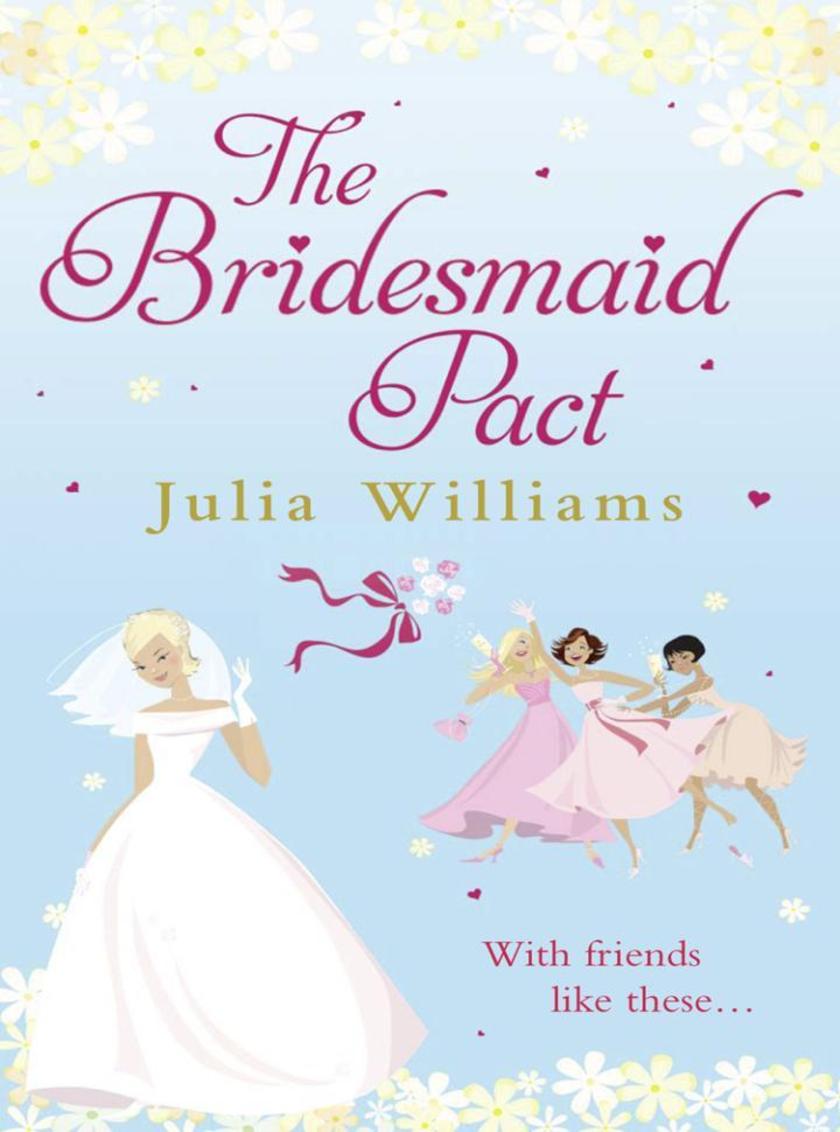
The Bridesmaid Pact
¥57.09
One for all and all for one… As children, Sarah, Dorrie, Beth and Caz were inseparable and vowed to one day be each others bridesmaids. But life got complicated. Now they have one last chance to fulfil their promise. Dorrie is planning her ultimate Disney wedding to the delicious Darren and is determined to have her friends back together for the Big Day. But Dorrie's fairytale is not all that it seems… Beth is desperate for a baby and is starting to resent her more fertile friends. Is a mistake from her past about to destroy her future? Caz's wild streak has tested her friendships over the years. One by one she has let her friends down, not least when she commits the ultimate betrayal to Susan. Can she change her ways and more to the point, does she really want to? Married to Steve, Sarah is plagued by doubts that she went down the wrong path. Does Sarah have the strength to make a change and will she ever be able to forgive Caz? As Dorrie's big day dawns, all eyes are on whether the ultimate act of friendship will be honoured and obeyed…


