


 购物车
 个人中心

Subject of Murder
¥241.33
The subject of murder has always held a particular fascination for us. But, since at least the nineteenth century, we have seen the murderer as different from the ordinary citizen-a special individual, like an artist or a genius, who exists apart from the moral majority, a sovereign self who obeys only the destructive urge, sometimes even commanding cult followings. In contemporary culture, we continue to believe that there is something different and exceptional about killers, but is the murderer such a distinctive typeAre they degenerate beasts or supermen as they have been depicted on the page and the screenOr are murderers something else entirely?In The Subject of Murder, Lisa Downing explores the ways in which the figure of the murderer has been made to signify a specific kind of social subject in Western modernity. Drawing on the work of Foucault in her studies of the lives and crimes of killers in Europe and the United States, Downing interrogates the meanings of media and texts produced about and by murderers. Upending the usual treatment of murderers as isolated figures or exceptional individuals, Downing argues that they are ordinary people, reflections of our society at the intersections of gender, agency, desire, and violence.
History of the Twentieth Century in 100 Maps
¥317.84
The twentieth century was a golden age of mapmaking, an era of cartographic boom. Maps proliferated and permeated almost every aspect of daily life, not only chronicling geography and history but also charting and conveying myriad political and social agendas. Here Tim Bryars and Tom Harper select one hundred maps from the millions printed, drawn, or otherwise constructed during the twentieth century and recount through them a narrative of the century's key events and developments.?As Bryars and Harper reveal, maps make ideal narrators, and the maps in this book tell the story of the 1900s-which saw two world wars, the Great Depression, the Swinging Sixties, the Cold War, feminism, leisure, and the Internet. Several of the maps have already gained recognition for their historical significance-for example, Harry Beck's iconic London Underground map-but the majority of maps on these pages have rarely, if ever, been seen in print since they first appeared. There are maps that were printed on handkerchiefs and on the endpapers of books; maps that were used in advertising or propaganda; maps that were strictly official and those that were entirely commercial; maps that were printed by the thousand, and highly specialist maps issued in editions of just a few dozen; maps that were envisaged as permanent keepsakes of major events, and maps that were relevant for a matter of hours or days.?As much a pleasure to view as it is to read, A History of the Twentieth Century in 100 Maps celebrates the visual variety of twentieth century maps and the hilarious, shocking, or poignant narratives of the individuals and institutions caught up in their production and use.

Phytomedicines, Herbal Drugs, and Poisons
¥317.84
Plants have been used to treat disease throughout human history. On a clay slab that dates back approximately five thousand years, the Sumerians recorded medicinal recipes that made use of hundreds of plants, including poppy, henbane, and mandrake. During the Middle Ages, monks commonly grew and prescribed plants such as sage, anise, and mint in their monasteries. And as the market for herbal remedies and natural medicine grows, we continue to search the globe for plants and plant compounds to combat our various ailments.?In Phytomedicines, Herbal Drugs, and Poisons, Ben-Erik van Wyk offers a richly illustrated, scientific guide to medicinal and poisonous plants, including those used for their mind-altering effects. Van Wyk covers approximately 350 species-from Aloe vera and Ephedra sinica to Cannabis sativa and Coffea arabica-detailing their botanical, geographical, pharmacological, and toxicological data as well as the chemical structures of the active compounds in each. Readers learn, for example, that Acacia senegal, or gum acacia, is used primarily in Sudan and Ethiopia as a topical ointment to protect the skin and mucosa from bacterial and fungal infections, and that Aconitum napellus, more commonly known as aconite, is used in cough syrups but can be psychedelic when smoked or absorbed through the skin. With 350 full-color photographs featuring the plants and some of their derivative products, Phytomedicines, Herbal Drugs, and Poisons will be an invaluable reference not only for those in the health care field but also for those growing their own medicinal herb gardens, as well as anyone who needs a quick answer to whether a plant is a panacea or a poison.

Ethical Condition
¥247.21
Written over a thirty-year span, Michael Lambek's essays in this collection point with definitive force toward a single central truth: ethics is intrinsic to social life. As he shows through rich ethnographic accounts and multiple theoretical traditions, our human condition is at heart an ethical one-we may not always be good or just, but we are always subject to their criteria. Detailing Lambek's trajectory as one anthropologist thinking deeply throughout a career on the nature of ethical life, the essays accumulate into a vibrant demonstration of the relevance of ethics as a practice and its crucial importance to ethnography, social theory, and philosophy.Organized chronologically, the essays begin among Malagasy speakers on the island of Mayotte and in northwest Madagascar. Building from ethnographic accounts there, they synthesize Aristotelian notions of practical judgment and virtuous action with Wittgensteinian notions of the ordinariness of ethical life and the importance of language, everyday speech, and ritual in order to understand how ethics are lived. They illustrate the multiple ways in which ethics informs personhood, character, and practice; explore the centrality of judgment, action, and irony to ethical life; and consider the relation of virtue to value. The result is a fully fleshed-out picture of ethics as a deeply rooted aspect of the human experience.?
Ancestors and Antiretrovirals
¥265.87
In the years since the end of apartheid, South Africans have enjoyed a progressive constitution, considerable access to social services for the poor and sick, and a booming economy that has made their nation into one of the wealthiest on the continent. At the same time, South Africa experiences extremely unequal income distribution, and its citizens suffer the highest prevalence of HIV in the world. As Archbishop Desmond Tutu has noted, "e;AIDS is South Africa's new apartheid."e;In Ancestors and Antiretrovirals, Claire Laurier Decoteau backs up Tutu's assertion with powerful arguments about how this came to pass. Decoteau traces the historical shifts in health policy after apartheid and describes their effects, detailing, in particular, the changing relationship between biomedical and indigenous health care, both at the national and the local level. Decoteau tells this story from the perspective of those living with and dying from AIDS in Johannesburg's squatter camps. At the same time, she exposes the complex and often contradictory ways that the South African government has failed to balance the demands of neoliberal capital with the considerable health needs of its population.
Opera Fanatic
¥270.76
Though some dismiss opera as old-fashioned, it shows no sign of disappearing from the world's stage. So why do audiences continue to flock to itGiven its association with wealth, one might imagine that opera tickets function as a status symbol. But while a desire to hobnob with the upper crust might motivate the occasional operagoer, for hardcore fans the real answer, according to The Opera Fanatic, is passion-they do it for love.Opera lovers are an intense lot, Claudio E. Benzecry discovers in his look at the fanatics who haunt the legendary Coln Opera House in Buenos Aires, a key site for opera's globalization. Listening to the fans and their stories, Benzecry hears of two-hundred-mile trips for performances and nightlong camp-outs for tickets, while others testify to a particular opera's power to move them-whether to song or to tears-no matter how many times they have seen it before. Drawing on his insightful analysis of these acts of love, Benzecry proposes new ways of thinking about people's relationship to art and shows how, far from merely enhancing aspects of everyday life, art allows us to transcend it.
Plant Sensing and Communication
¥288.41
The news that a flowering weed-mousear cress (Arabidopsis thaliana)-can sense the particular chewing noise of its most common caterpillar predator and adjust its chemical defenses in response led to headlines announcing the discovery of the first "e;hearing"e; plant. As plants lack central nervous systems (and, indeed, ears), the mechanisms behind this "e;hearing"e; are unquestionably very different from those of our own acoustic sense, but the misleading headlines point to an overlooked truth: plants do in fact perceive environmental cues and respond rapidly to them by changing their chemical, morphological, and behavioral traits.In Plant Sensing and Communication, Richard Karban provides the first comprehensive overview of what is known about how plants perceive their environments, communicate those perceptions, and learn. Facing many of the same challenges as animals, plants have developed many similar capabilities: they sense light, chemicals, mechanical stimulation, temperature, electricity, and sound. Moreover, prior experiences have lasting impacts on sensitivity and response to cues; plants, in essence, have memory. Nor are their senses limited to the processes of an individual plant: plants eavesdrop on the cues and behaviors of neighbors and-for example, through flowers and fruits-exchange information with other types of organisms. Far from inanimate organisms limited by their stationary existence, plants, this book makes unquestionably clear, are in constant and lively discourse.
Deep Rhetoric
¥311.96
"e;Rhetoric is the counterpart of logic,"e; claimed Aristotle. "e;Rhetoric is the first part of logic rightly understood,"e; Martin Heidegger concurred. "e;Rhetoric is the universal form of human communication,"e; opined Hans-Georg Gadamer. But in Deep Rhetoric, James Crosswhite offers a groundbreaking new conception of rhetoric, one that builds a definitive case for an understanding of the discipline as a philosophical enterprise beyond basic argumentation and is fully conversant with the advances of the New Rhetoric of Chaim Perelman and Lucie Olbrechts-Tyteca.Chapter by chapter, Deep Rhetoric develops an understanding of rhetoric not only in its philosophical dimension but also as a means of guiding and conducting conflicts, achieving justice, and understanding the human condition. Along the way, Crosswhite restores the traditional dignity and importance of the discipline and illuminates the twentieth-century resurgence of rhetoric among philosophers, as well as the role that rhetoric can play in future discussions of ontology, epistemology, and ethics. At a time when the fields of philosophy and rhetoric have diverged, Crosswhite returns them to their common moorings and shows us an invigorating new way forward.
Doctors and Demonstrators
¥353.16
Since Roe v. Wade, abortion has continued to be a divisive political issue in the United States. In contrast, it has remained primarily a medical issue in Britain and Canada despite the countries' shared heritage. Doctors and Demonstrators looks beyond simplistic cultural or religious explanations to find out why abortion politics and policies differ so dramatically in these otherwise similar countries.?Drew Halfmann argues that political institutions are the key. In the United States, federalism, judicial review, and a private health care system contributed to the public definition of abortion as an individual right rather than a medical necessity. Meanwhile, Halfmann explains, the porous structure of American political parties gave pro-choice and pro-life groups the opportunity to move the issue onto the political agenda. A groundbreaking study of the complex legal and political factors behind the evolution of abortion policy, Doctors and Demonstrators will be vital for anyone trying to understand this contentious issue.

Far Afield
¥288.41
Anthropology has long had a vexed relationship with literature, and nowhere has this been more acutely felt than in France, where most ethnographers, upon returning from the field, write not one book, but two: a scientific monograph and a literary account. In?Far Afield-brought to English-language readers here for the first time-Vincent Debaene puzzles out this phenomenon, tracing the contours of anthropology and literature's mutual fascination and the ground upon which they meet in the works of thinkers from Marcel Mauss and Georges Bataille to Claude Levi-Strauss and Roland Barthes.?The relationship between anthropology and literature in France is one of careful curiosity. Literary writers are wary about anthropologists' scientific austerity but intrigued by the objects they collect and the issues they raise, while anthropologists claim to be scientists but at the same time are deeply concerned with writing and representational practices. Debaene elucidates the richness that this curiosity fosters and the diverse range of writings it has produced, from Proustian memoirs to proto-surrealist diaries. In the end he offers a fascinating intellectual history, one that is itself located precisely where science and literature meet.

Ecology of Place
¥447.34
Ecologists can spend a lifetime researching a small patch of the earth, studying the interactions between organisms and the environment, and exploring the roles those interactions play in determining distribution, abundance, and evolutionary change. With so few ecologists and so many systems to study, generalizations are essential. But how do you extrapolate knowledge about a well-studied area and apply it elsewhere?Through a range of original essays written by eminent ecologists and naturalists, The Ecology of Place explores how place-focused research yields exportable general knowledge as well as practical local knowledge, and how society can facilitate ecological understanding by investing in field sites, place-centered databases, interdisciplinary collaborations, and field-oriented education programs that emphasize natural history. This unique patchwork of case-study narratives, philosophical musings, and historical analyses is tied together with commentaries from editors Ian Billick and Mary Price that develop and synthesize common threads. The result is a unique volume rich with all-too-rare insights into how science is actually done, as told by scientists themselves.
Black New Orleans, 1860-1880
¥282.53
Reissued for the first time in over thirty years, Black New Orleans explores the twenty-year period in which the city's black population more than doubled. Meticulously researched and replete with archival illustrations from newspapers and rare periodicals, John W. Blassingame's groundbreaking history offers a unique look at the economic and social life of black people in New Orleans during Reconstruction. Not a conventional political treatment, Blassingame's history instead emphasizes the educational, religious, cultural, and economic activities of African Americans during the late nineteenth century."e;Blending historical and sociological perspectives, and drawing with skill and imagination upon a variety of sources, [Blassingame] offers fresh insights into an oft-studied period of Southern history. . . .In both time and place the author has chosen an extraordinarily revealing vantage point from which to view his subject.?"e;-Neil R. McMillen, American Historical Review

Discovery of Insulin
¥265.87
In a brilliant, definitive history of one of the most significant and controversial medical events of modern times, award-winning historian Michael Bliss brings to light a bizarre clash of scientific personalities. When F. G. Banting and J. J. R. Macleod won the 1923 Nobel Prize for discovering and isolating insulin, Banting immediately announced that he was dividing his share of the prize with his young associate, C. H. Best. Macleod divided his share with a fourth member of the team, J. B. Collip. For the next sixty years medical opinion was intensely divided over the allotment of credit for the discovery of insulin. In resolving this controversy, Bliss also offers a wealth of new detail on such subjects as the treatment of diabetes before insulin and the life-and-death struggle to manufacture insulin.
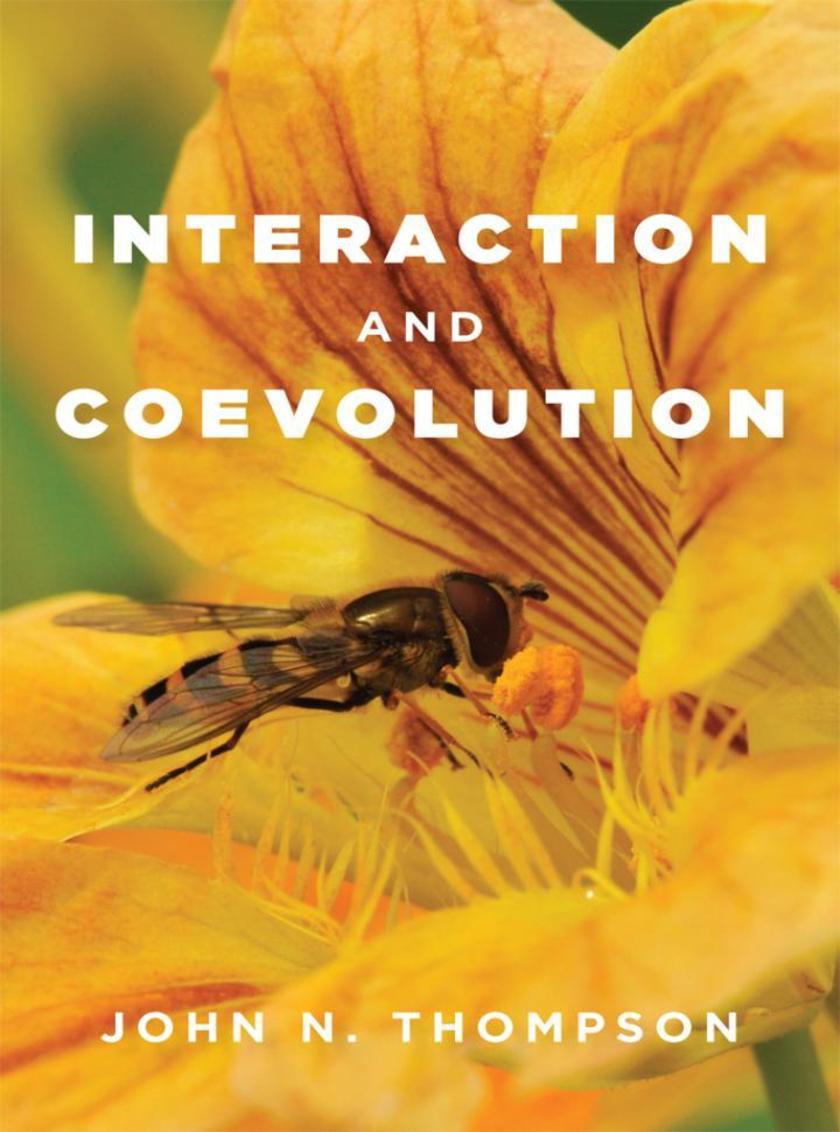
Interaction and Coevolution
¥165.81
"e;It is not only the species that change evolutionarily through interactions . . . the interactions themselves also change."e; Thus states John N. Thompson in the foreword to Interaction and Coevolution, the first title in his series of books exploring the relentless nature of evolution and the processes that shape the web of life. Originally published in 1982 more as an idea piece-an early attempt to synthesize then academically distinct but logically linked strands of ecological thought and to suggest avenues for further research-than as a data-driven monograph, Interaction and Coevolution would go on to be considered a landmark study that pointed to the beginning of a new discipline. Through chapters on antagonism, mutualism, and the effects of these interactions on populations, speciation, and community structure, Thompson seeks to explain not only how interactions differ in the selection pressures they exert on species, but also when interactions are most likely to lead to coevolution. In this era of climate change and swiftly transforming environments, the ideas Thompson puts forward in Interaction and Coevolution are more relevant than ever before.
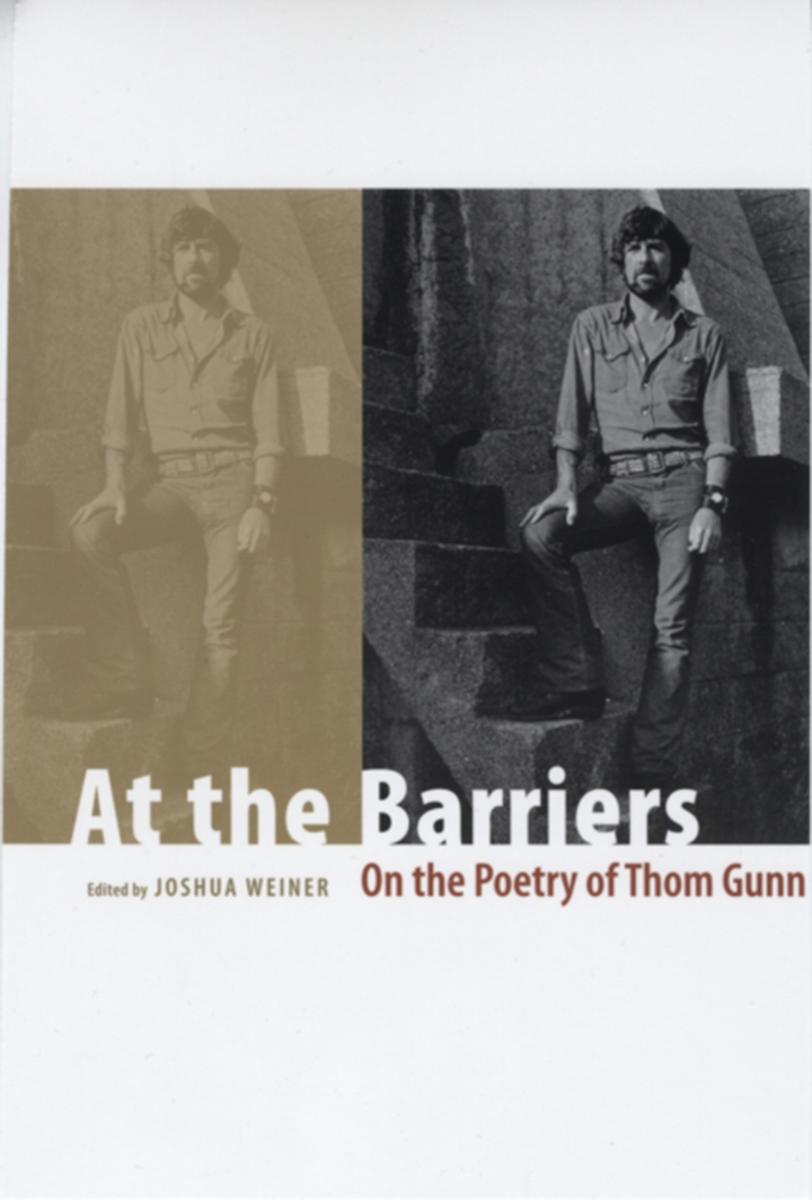
At the Barriers
¥253.10
The contributors wish to thank the Hornbake Library at the University of Maryland, College Park, and the Bancroft Library at the University of California, Berkeley, for access to their holdings of Thom Gunn’s manu*s; the Graduate Research Board and the Department of English at the University of Maryland, for material support; Thom’s brother Ander, for the use of his photograph of Thom for this volume’s cover; and Mike Kitay, for permission to print excerpts from unpublished writings and the several published poems, in their entireties, in this volume.

From Mesopotamia to Iraq
¥141.26
In April 2003, the world watched in horror as part of Iraq's cultural heritage disintegrated among the rubble of Saddam Hussein's regime. Looters descended on the Iraq National Museum in Baghdad, Arabic manu*s disappeared from the National Library, and countless Iraqi government records were destroyed. For those to whom Iraq meant only terror, weapons of mass destruction, or oil, several thousand years of history between the Tigris and the Euphrates opened into view. Basic techniques and concepts of civilization, without which human society would not have attained its present level, had their origin there. A writing system, the prerequisite of modern and premodern societies, was part of the human knowledge that spread from Mesopotamia, as were bureaucratic techniques such as archiving, still basic to any modern administration, or early forms of monotheism. Such “firsts” will be highlighted in the following pages. But the uniqueness of the ancient Mesopotamian culture rests not only on countless innovations of this kind but, to an even greater degree, on the fact that we can follow its gradual development and its absorption into the cultural canon over a period of ten thousand years, almost without major gaps.

Church Mother
¥253.10
Imbued with character and independence, strength and articulateness, humor and conviction, abundant biblical knowledge and intense compassion, Katharina Schutz Zell (1498-1562) was an outspoken religious reformer in sixteenth-century Germany who campaigned for the right of clergy to marry and the responsibility of lay people-women as well as men-to proclaim the Gospel. As one of the first and most daring models of the pastor's wife in the Protestant Reformation, Schutz Zell demonstrated that she could be an equal partner in marriage; she was for many years a respected, if unofficial, mother of the established church of Strasbourg in an age when ecclesiastical leadership was dominated by men.Though a commoner, Schtz Zell participated actively in public life and wrote prolifically, including letters of consolation, devotional writings, biblical meditations, catechetical instructions, a sermon, and lengthy polemical exchanges with male theologians. The complete translations of her extant publications, except for her longest, are collected here in Church Mother, offering modern readers a rare opportunity to understand the important work of women in the formation of the early Protestant church.
Biology's First Law
¥211.90
So certain is this that we may boldly state that it is absurd for human beings even to attempt it, or to hope that perhaps some day another Newton might arise who would explain to us, in terms of natural laws unordered by intention, how even a mere blade of grass is produced.Kant, Critique of Judgment (1790)
Class War?
¥141.26
Recent battles in Washington over how to fix America's fiscal failures strengthened the widespread impression that economic issues sharply divide average citizens. Indeed, many commentators split Americans into two opposing groups: uncompromising supporters of unfettered free markets and advocates for government solutions to economic problems. But such dichotomies, Benjamin Page and Lawrence Jacobs contend, ring false. In Class Warthey present compelling evidence that most Americans favor free enterprise and practical government programs to distribute wealth more equitably.At every income level and in both major political parties, majorities embrace conservative egalitarianism-a philosophy that prizes individualism and self-reliance as well as public intervention to help Americans pursue these ideals on a level playing field. Drawing on hundreds of opinion studies spanning more than seventy years, including a new comprehensive survey, Page and Jacobs reveal that this worldview translates to broad support for policies aimed at narrowing the gap between rich and poor and creating genuine opportunity for all. They find, for example, that across economic, geographical, and ideological lines, most Americans support higher minimum wages, improved public education, wider access to universal health insurance coverage, and the use of tax dollars to fund these programs.In this surprising and heartening assessment, Page and Jacobs provide our new administration with a popular mandate to combat the economic inequity that plagues our nation.

Lawyers of the Right
¥200.12
A timely and multifaceted portrait of the lawyers who serve the diverse constituencies of the conservative movement, Lawyers of the Right explains what unites and divides lawyers for the three major groups-social conservatives, libertarians, and business advocates-that have coalesced in recent decades behind the Republican Party. Drawing on in-depth interviews with more than seventy lawyers who represent conservative and libertarian nonprofit organizations, Ann Southworth explores their values and identities and traces the implications of their shared interest in promoting political strategies that give lawyers leading roles. She goes on to illuminate the function of mediator organizations-such as the Heritage Foundation and the Federalist Society for Law and Public Policy-that have succeeded in promoting cooperation among different factions of conservative lawyers. Such cooperation, she finds, has aided efforts to drive law and the legal profession politically rightward and to give lawyers greater prominence in the conservative movement. Southworth concludes, though, that tensions between the conservative law movement's elite and populist elements may ultimately lead to its undoing.
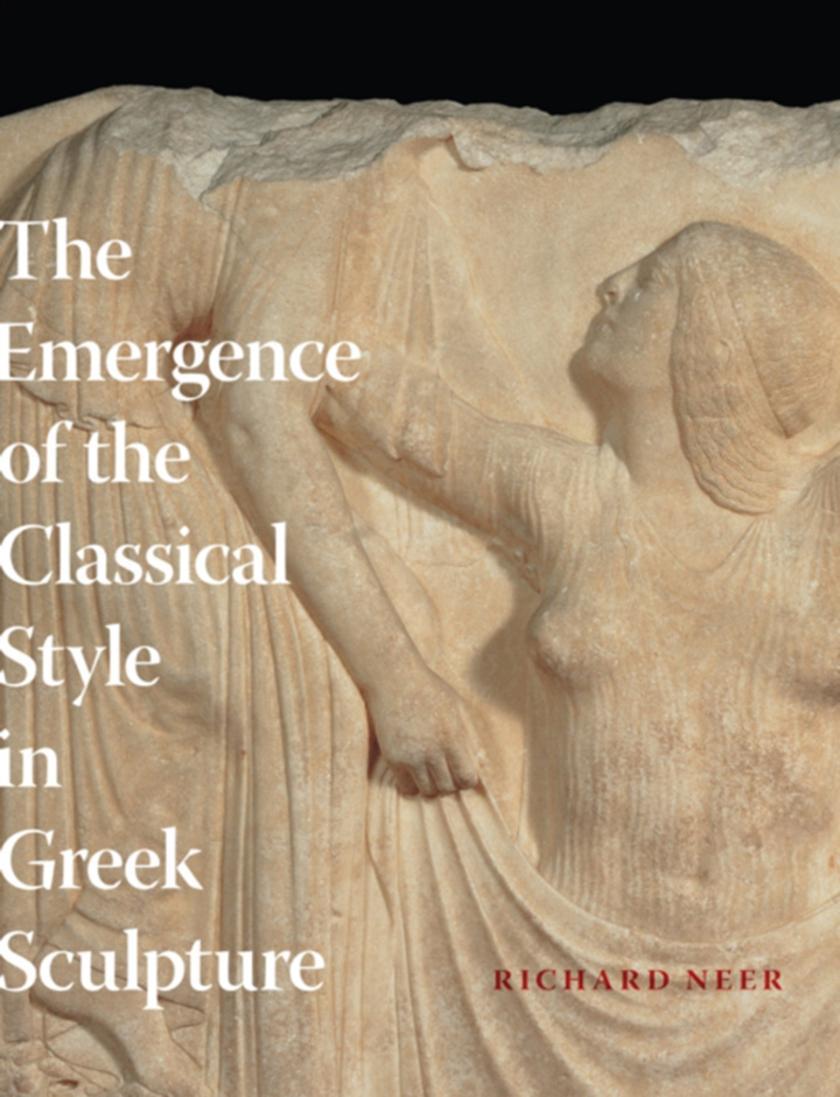
The emergence of the Classical Style in Greek Sculpture
¥353.16
This book was written in Chicago and Rome during the years 2002-2005.Difficulties in obtaining photographs (some insurmountable) delayed publication; the bibliography is reasonably up to date through early 2006 but later additions have been unsystematic.


