


 购物车
购物车 个人中心
个人中心
Ignoring Nature No More
¥329.62
For far too long humans have been ignoring nature. As the most dominant, overproducing, overconsuming, big-brained, big-footed, arrogant, and invasive species ever known, we are wrecking the planet at an unprecedented rate. And while science is important to our understanding of the impact we have on our environment, it alone does not hold the answers to the current crisis, nor does it get people to act. In Ignoring Nature No More, Marc Bekoff and a host of renowned contributors argue that we need a new mind-set about nature, one that centers on empathy, compassion, and being proactive.?This collection of diverse essays is the first book devoted to compassionate conservation, a growing global movement that translates discussions and concerns about the well-being of individuals, species, populations, and ecosystems into action. Written by leading scholars in a host of disciplines, including biology, psychology, sociology, social work, economics, political science, and philosophy, as well as by locals doing fieldwork in their own countries, the essays combine the most creative aspects of the current science of animal conservation with analyses of important psychological and sociocultural issues that encourage or vex stewardship. The contributors tackle topics including the costs and benefits of conservation, behavioral biology, media coverage of animal welfare, conservation psychology, and scales of conservation from the local to the global. Taken together, the essays make a strong case for why we must replace our habits of domination and exploitation with compassionate conservation if we are to make the world a better place for nonhuman and human animals alike.

On Sunspots
¥394.36
Galileo's telescopic discoveries, and especially his observation of sunspots, caused great debate in an age when the heavens were thought to be perfect and unchanging. Christoph Scheiner, a Jesuit mathematician, argued that sunspots were planets or moons crossing in front of the Sun. Galileo, on the other hand, countered that the spots were on or near the surface of the Sun itself, and he supported his position with a series of meticulous observations and mathematical demonstrations that eventually convinced even his rival.?On Sunspots collects the correspondence that constituted the public debate, including the first English translation of Scheiner's two tracts as well as Galileo's three letters, which have previously appeared only in abridged form. In addition, Albert Van Helden and Eileen Reeves have supplemented the correspondence with lengthy introductions, extensive notes, and a bibliography. The result will become the standard work on the subject, essential for students and historians of astronomy, the telescope, and early modern Catholicism.

Behind Closed Doors
¥265.87
Although the subject of federally mandated Institutional Review Boards (IRBs) has been extensively debated, we actually do not know much about what takes place when they convene. The story of how IRBs work today is a story about their past as well as their present, and Behind Closed Doors is the first book to meld firsthand observations of IRB meetings with the history of how rules for the treatment of human subjects were formalized in the United States in the decades after World War II.?Drawing on extensive archival sources, Laura Stark reconstructs the daily lives of scientists, lawyers, administrators, and research subjects working-and "e;warring"e;-on the campus of the National Institutes of Health, where they first wrote the rules for the treatment of human subjects. Stark argues that the model of group deliberation that gradually crystallized during this period reflected contemporary legal and medical conceptions of what it meant to be human, what political rights human subjects deserved, and which stakeholders were best suited to decide. She then explains how the historical contingencies that shaped rules for the treatment of human subjects in the postwar era guide decision making today-within hospitals, universities, health departments, and other institutions in the United States and across the globe. Meticulously researched and gracefully argued, Behind Closed Doors will be essential reading for sociologists and historians of science and medicine, as well as policy makers and IRB administrators.
Hawking Incorporated
¥270.76
These days, the idea of the cyborg is less the stuff of science fiction and more a reality, as we are all, in one way or another, constantly connected, extended, wired, and dispersed in and through technology. One wonders where the individual, the person, the human, and the body are-or, alternatively, where they stop. These are the kinds of questions Hlne Mialet explores in this fascinating volume, as she focuses on a man who is permanently attached to assemblages of machines, devices, and collectivities of people: Stephen Hawking.Drawing on an extensive and in-depth series of interviews with Hawking, his assistants and colleagues, physicists, engineers, writers, journalists, archivists, and artists, Mialet reconstructs the human, material, and machine-based networks that enable Hawking to live and work. She reveals how Hawking-who is often portrayed as the most singular, individual, rational, and bodiless of all-is in fact not only incorporated, materialized, and distributed in a complex nexus of machines and human beings like everyone else, but even more so. Each chapter focuses on a de*ion of the functioning and coordination of different elements or media that create his presence, agency, identity, and competencies. Attentive to Hawking's daily activities, including his lecturing and scientific writing, Mialet's ethnographic analysis powerfully reassesses the notion of scientific genius and its associations with human singularity. This book will fascinate anyone interested in Stephen Hawking or an extraordinary life in science.
Gentleman Troubadours and Andean Pop Stars
¥247.21
Exploring Peru's lively music industry and the studio producers, radio DJs, and program directors that drive it, Gentleman Troubadours and Andean Pop Stars is a fascinating account of the deliberate development of artistic taste. Focusing on popular huayno music and the ways it has been promoted to Peru's emerging middle class, Tucker tells a complex story of identity making and the marketing forces entangled with it, providing crucial insights into the dynamics among art, class, and ethnicity that reach far beyond the Andes.?Tucker focuses on the music of Ayacucho, Peru, examining how media workers and intellectuals there transformed the city's huayno music into the country's most popular style. By marketing contemporary huayno against its traditional counterpart, these agents, Tucker argues, have paradoxically reinforced ethnic hierarchies at the same time that they have challenged them. Navigating between a burgeoning Andean bourgeoisie and a music industry eager to sell them symbols of newfound sophistication, Gentleman Troubadours and Andean Pop Stars is a deep account of the real people behind cultural change.
Poet's Freedom
¥229.55
Why do we need new artHow free is the artist in makingAnd why is the artist, and particularly the poet, a figure of freedom in Western cultureThe MacArthur Award-winning poet and critic Susan Stewart ponders these questions in The Poet's Freedom. Through a series of evocative essays, she not only argues that freedom is necessary to making and is itself something made, but also shows how artists give rules to their practices and model a self-determination that might serve in other spheres of work.Stewart traces the ideas of freedom and making through insightful readings of an array of Western philosophers and poets-Plato, Homer, Marx, Heidegger, Arendt, Dante, and Coleridge are among her key sources. She begins by considering the theme of making in the Hebrew Scriptures, examining their accountof a god who creates the world and leaves humans free to rearrange and reform the materials of nature. She goes on to follow the force of moods, sounds, rhythms, images, metrical rules, rhetorical traditions, the traps of the passions, and the nature of language in the cycle of making and remaking. Throughout the book she weaves the insight that the freedom to reverse any act of artistic making is as essential as the freedom to create.?A book about the pleasures of making and thinking as means of life, The Poet's Freedom explores and celebrates the freedom of artists who, working under finite conditions, make considered choices and shape surprising consequences. This engaging and beautifully written notebook on making will attract anyone interested in the creation of art and literature.
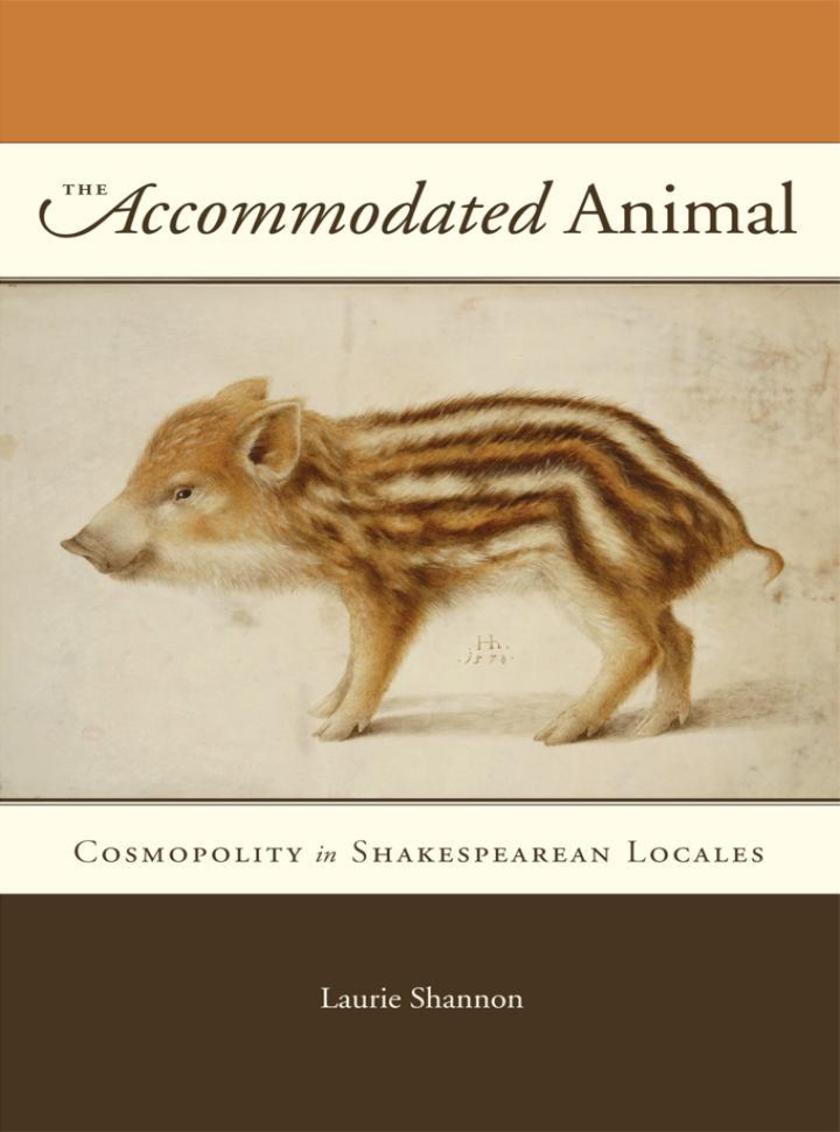
Accommodated Animal
¥229.55
Shakespeare wrote of lions, shrews, horned toads, curs, mastiffs, and hellhounds. But the word "e;animal"e; itself only appears very rarely in his work, which was in keeping with sixteenth-century usage. As Laurie Shannon reveals in The Accommodated Animal, the modern human / animal divide first came strongly into play in the seventeenth century, with Descartes's famous formulation that reason sets humans above other species: "e;I think, therefore I am."e; Before that moment, animals could claim a firmer place alongside humans in a larger vision of belonging, or what she terms cosmopolity.?With Shakespeare as her touchstone, Shannon explores the creaturely dispensation that existed until Descartes. She finds that early modern writers used classical natural history and readings of Genesis to credit animals with various kinds of stakeholdership, prerogative, and entitlement, employing the language of politics in a constitutional vision of cosmic membership. Using this political idiom to frame cross-species relations, Shannon argues, carried with it the notion that animals possess their own investments in the world, a point distinct from the question of whether animals have reason. It also enabled a sharp critique of the tyranny of humankind. By answering "e;the question of the animal"e; historically, The Accommodated Animal makes a brilliant contribution to cross-disciplinary debates engaging animal studies, political theory, intellectual history, and literary studies.

Moralizing Technology
¥253.10
Technology permeates nearly every aspect of our daily lives. Cars enable us to travel long distances, mobile phones help us to communicate, and medical devices make it possible to detect and cure diseases. But these aids to existence are not simply neutral instruments: they give shape to what we do and how we experience the world. And because technology plays such an active role in shaping our daily actions and decisions, it is crucial, Peter-Paul Verbeek argues, that we consider the moral dimension of technology.?Moralizing Technology offers exactly that: an in-depth study of the ethical dilemmas and moral issues surrounding the interaction of humans and technology. Drawing from Heidegger and Foucault, as well as from philosophers of technology such as Don Ihde and Bruno Latour, Peter-Paul Verbeek locates morality not just in the human users of technology but in the interaction between us and our machines. Verbeek cites concrete examples, including some from his own life, and compellingly argues for the morality of things. Rich and multifaceted, and sure to be controversial, Moralizing Technology will force us all to consider the virtue of new inventions and to rethink the rightness of the products we use every day.
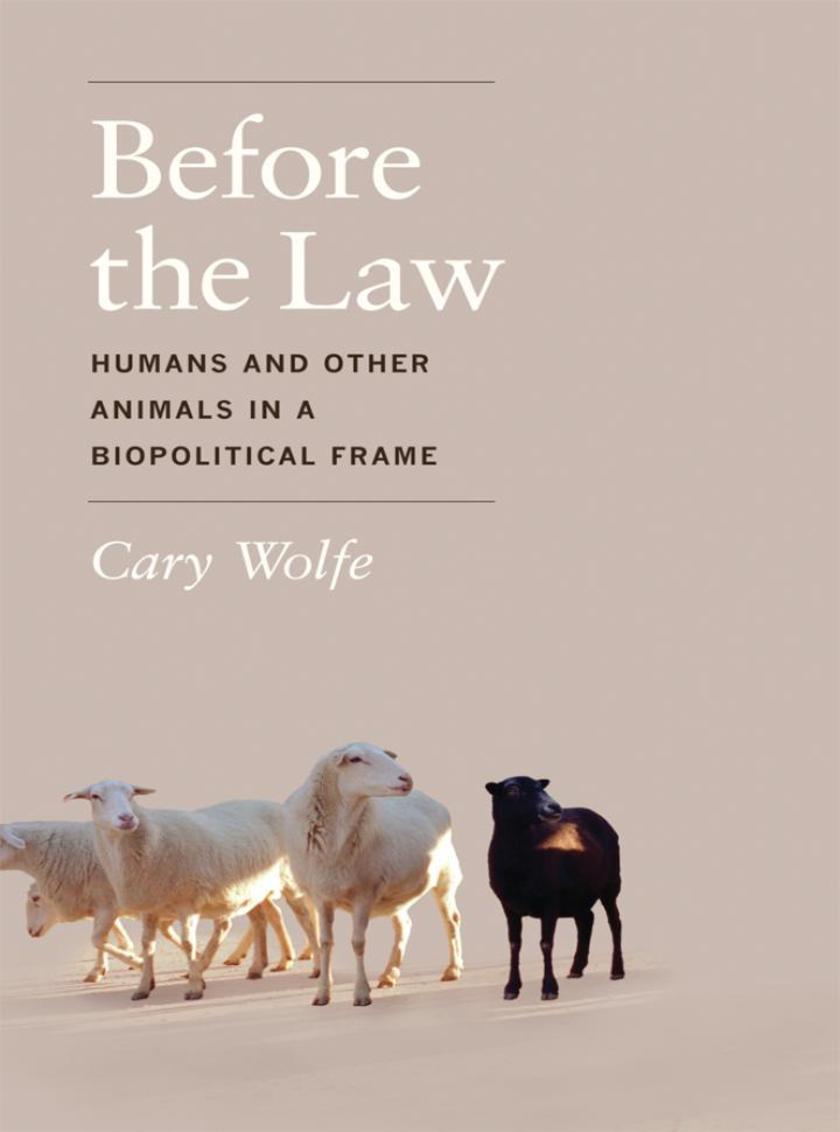
Before the Law
¥188.35
Animal studies and biopolitics are two of the most dynamic areas of interdisciplinary scholarship, but until now, they have had little to say to each other. Bringing these two emergent areas of thought into direct conversation in Before the Law, Cary Wolfe fosters a new discussion about the status of nonhuman animals and the shared plight of humans and animals under biopolitics.?Wolfe argues that the human-animal distinction must be supplemented with the central distinction of biopolitics: the difference between those animals that are members of a community and those that are deemed killable but not murderable. From this understanding, we can begin to make sense of the fact that this distinction prevails within both the human and animal domains and address such difficult issues as why we afford some animals unprecedented levels of care and recognition while subjecting others to unparalleled forms of brutality and exploitation. Engaging with many major figures in biopolitical thought-from Heidegger, Arendt, and Foucault to Agamben, Esposito, and Derrida-Wolfe explores how biopolitics can help us understand both the ethical and political dimensions of the current questions surrounding the rights of animals.

Ethics of Interrogation
¥265.87
The act of interrogation, and the debate over its use, pervades our culture, whether through fictionalized depictions in movies and television or discussions of real-life interrogations on the news. But despite daily mentions of the practice in the media, there is a lack of informed commentary on its moral implications. Moving beyond the narrow focus on torture that has characterized most work on the subject, An Ethics of Interrogation is the first book to fully address this complex issue.In this important new examination of a controversial subject, Michael Skerker confronts a host of philosophical and legal issues, from the right to privacy and the privilege against compelled self-incrimination to prisoner rights and the legal consequences of different modes of interrogation for both domestic criminal and foreign terror suspects. These topics raise serious questions about the morality of keeping secrets as well as the rights of suspected terrorists and insurgents. Thoughtful consideration of these subjects leads Skerker to specific policy recommendations for law enforcement, military, and intelligence professionals.
African American Writers and Classical Tradition
¥241.33
Constraints on freedom, education, and individual dignity have always been fundamental in determining who is able to write, when, and where. Considering the singular experience of the African American writer, William W. Cook and James Tatum here argue that African American literature did not develop apart from canonical Western literary traditions but instead grew out of those literatures, even as it adapted and transformed the cultural traditions and religions of Africa and the African diaspora along the way.Tracing the interaction between African American writers and the literatures of ancient Greece and Rome, from the time of slavery and its aftermath to the civil rights era and on into the present, the authors offer a sustained and lively discussion of the life and work of Phillis Wheatley, Frederick Douglass, Ralph Ellison, and Rita Dove, among other highly acclaimed poets, novelists, and scholars. Assembling this brilliant and diverse group of African American writers at a moment when our understanding of classical literature is ripe for change, the authors paint an unforgettable portrait of our own reception of "e;classic"e; writing, especially as it was inflected by American racial politics.
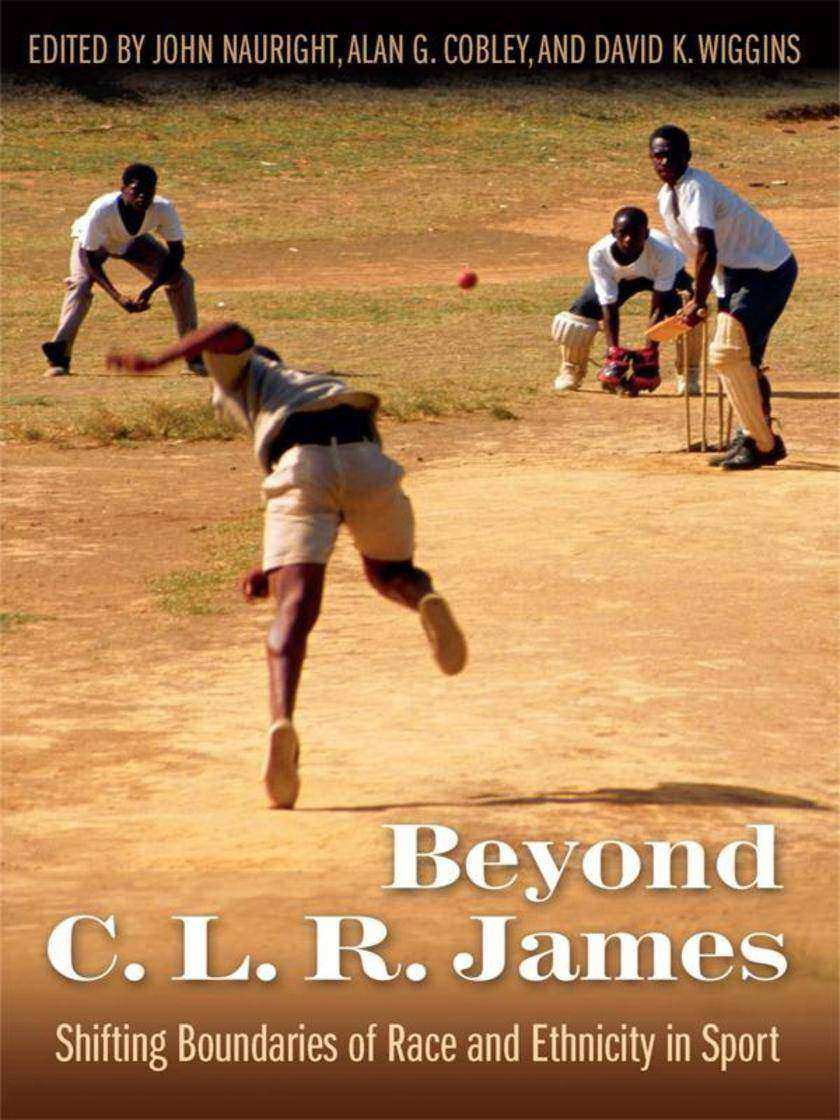
Beyond C. L. R. James
¥261.34
Beyond C. L. R. James brings together essays analyzing the interconnections among race, ethnicity, and sport. Published in memory of C. L. R. James, the revolutionary sociologist and writer from Trinidad who penned the famous autobiographical account of cricket titled Beyond a Boundary, this collection of essays, many of which originated at the 2010 conference on race and ethnicity in sport at the University of West Indies, Cave Hill in Barbados, cover everything from Aborigines in sport and cricket and minstrel shows in Australia to Zulu stick fighting and football and racism in northern Ireland. The essays, divided into four sections that include introductory comments by each editor, are written by some of the more well-known sport historians in the world and characterized by a focus on the role of culture and sport in society in the context of both political economies and the state as well as colonial and postcolonial struggles. Included also are discussions on how sport at once brings people together, shapes the identities of its participants, and reflects the continuing search for social justice.

Scars of Project 459
¥243.09
The Scars of Project 459 tells the environmental story of the Lake of the Ozarks, built by the Union Electric Company in 1931. At 55,000 acres, the lake was the biggest manmade lake in the United States at the time of its completion, and it remains the biggest in the Midwest, with 1,100 miles of shoreline in four different Missouri counties. Though created to generate hydroelectric power, not for development, the "e;Magic Dragon,"e; as it is popularly known because of its serpentine shape, has become a major recreational area. Located in some of the most spectacular Ozark scenery, the giant lake today attracts three million visitors annually and has more than 70,000 homes along its shoreline. Traci Angel shows how the popularity of the Lake of the Ozarks has resulted in major present-day problems, including poor water quality, loss of habitat, and increasing concerns about aging waste-management systems for the homes surrounding the lake. Many in the area, especially business owners whose incomes depend on tourism, resist acknowledging these problems. The Scars of Project 459 aims to make public the challenges facing this important resource and ensure that its future is not to be loved to death.
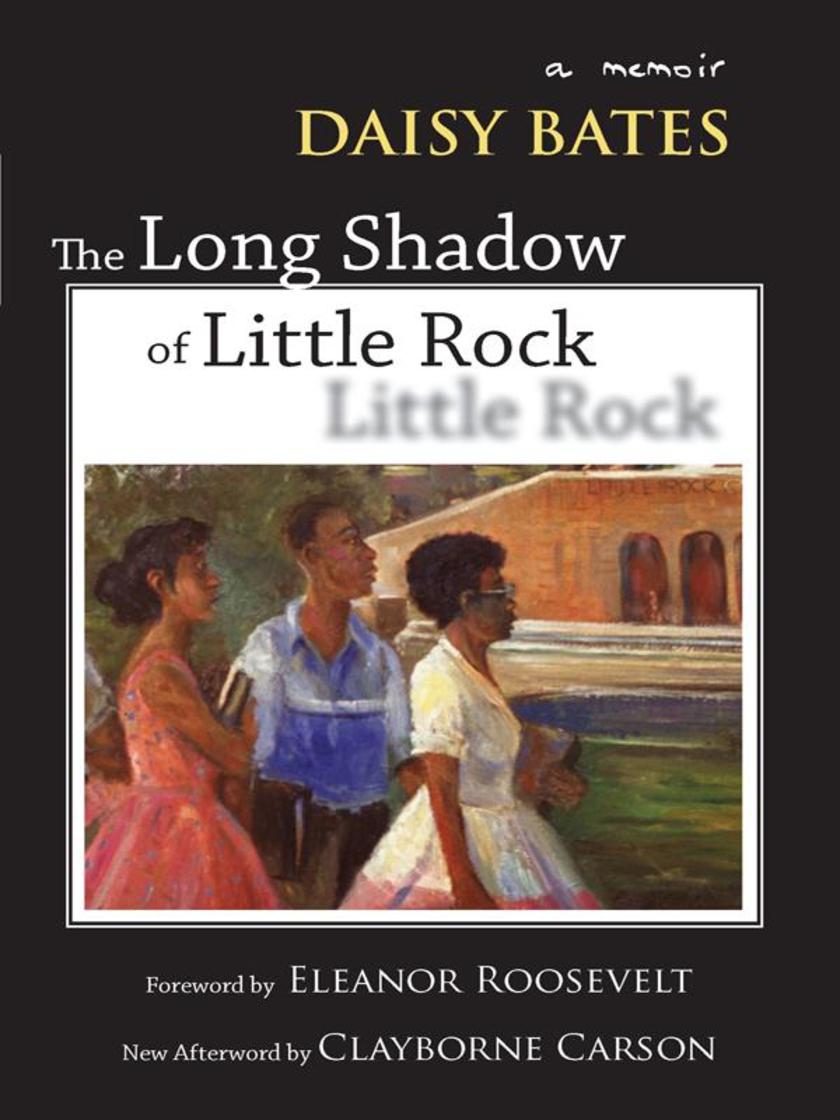
Long Shadow of Little Rock
¥141.66
At an event honoring Daisy Bates as 1990's Distinguished Citizen then-governor Bill Clinton called her "e;the most distinguished Arkansas citizen of all time."e; Her classic account of the 1957 Little Rock School Crisis, The Long Shadow of Little Rock, couldn't be found on most bookstore shelves in 1962 and was banned throughout the South. In 1988, after the University of Arkansas Press reprinted it, it won an American Book Award. On September 3, 1957, Gov. Orval Faubus called out the National Guard to surround all-white Central High School and prevent the entry of nine black students, challenging the Supreme Court's 1954 order to integrate all public schools. On September 25, Daisy Bates, an official of the NAACP in Arkansas, led the nine children into the school with the help of federal troops sent by President Eisenhower-the first time in eighty-one years that a president had dispatched troops to the South to protect the constitutional rights of black Americans. This new edition of Bates's own story about these historic events is being issued to coincide with the fiftieth anniversary of the Little Rock School crisis in 2007.
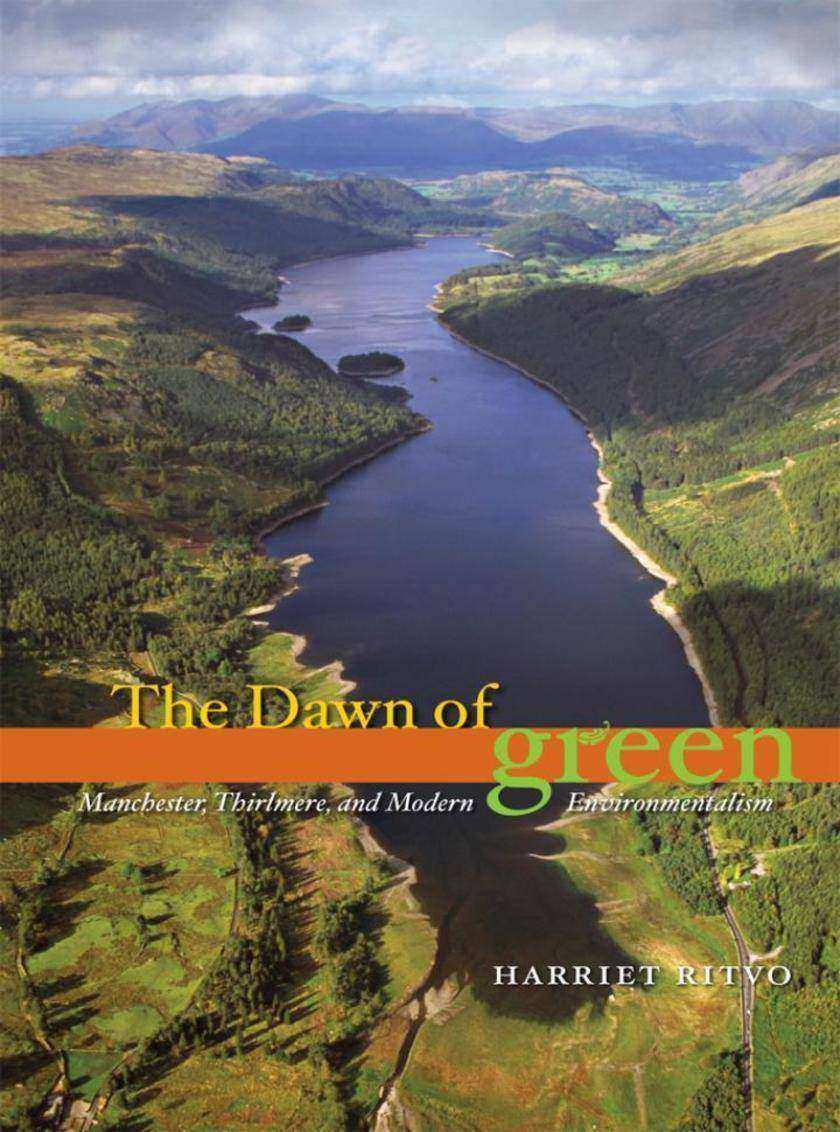
Dawn of Green
¥147.15
Located in the heart of England's Lake District, the placid waters of Thirlmere seem to be the embodiment of pastoral beauty. But under their calm surface lurks the legacy of a nineteenth-century conflict that pitted industrial progress against natural conservation-and helped launch the environmental movement as we know it. Purchased by the city of Manchester in the 1870s, Thirlmere was dammed and converted into a reservoir, its water piped one hundred miles south to the burgeoning industrial city and its workforce. This feat of civil engineering-and of natural resource diversion-inspired one of the first environmental struggles of modern times. The Dawn of Green re-creates the battle for Thirlmere and the clashes between conservationists who wished to preserve the lake and developers eager to supply the needs of a growing urban population. Bringing to vivid life the colorful and strong-minded characters who populated both sides of the debate, noted historian Harriet Ritvo revisits notions of the natural promulgated by romantic poets, recreationists, resource managers, and industrial developers to establish Thirlmere as the template for subsequent-and continuing-environmental struggles.
IN & OZ
¥129.49
Steve Tomasula is a novelist like no other; his experiments in narrative and design have won him a loyal following. Exemplifying Tomasula's style, IN & OZ is a heady, avant-garde book, rooted in convincing characters even as it simultaneously subverts the genre of novel and moves it forward.IN & OZ is a novel of art, love, and auto mechanics. The story follows five different characters-an auto designer, photographer, musical composer, poet/sculptor, and mechanic-who live in two very different places: IN, a back-alley here and now; and OZ, which reflects the desire for somewhere better. The men and women who populate Tomasula's landscape desperately hope to fill a void in their lives through a variety of media: music, language, dirt, light, and automobiles. As the plot moves forward, the story of the residents of INand that of their counterparts in OZconverge. A fanciful allegory that tackles class relations, art, commerce, and language, IN & OZ is a tale of the human condition that is as visually compelling as it is moving.A novel not only for fiction lovers, but also for artists of all stripes, IN & OZ creates a fantasy that illumines our own world as it lucidly builds its own.
Bird in the House
¥141.26
A Bird in the House is a series of eight interconnected short stories narrated by Vanessa MacLeod as she matures from a child at age ten into a young woman at age twenty. Wise for her years, Vanessa reveals much about the adult world in which she lives."e;Vanessa rebels against the dominance of age; she watches [her grandfather] imitate her aunt Edna; and her rage at times is such that she would gladly kick him. It takes great skill to keep this story within the expanding horizon of this young girl and yet make it so revealing of the adult world."e;-Atlantic"e;A Bird in the House achieves the breadth of scope which we usually associate with the novel (and thereby is as psychologically valid as a good novel), and at the same time uses the techniques of the short story form to reveal the different aspects of the young Vanessa."e; -Kent Thompson, The Fiddlehead"e;I am haunted by the women in Laurence's novels as if they really were alive-and not as women I've known, but as women I've been."e;-Joan Larkin, Ms. Magazine"e;Not since . . . To Kill a Mockingbird has there been a novel like this. It should not be missed by anyone who has a child or was a child."e;-Pittsburgh Post-GazetteOne of Canada's most accomplished writers, Margaret Laurence (1926-87) was the recipient of many awards including Canada's prestigious Governor General's Literary Award on two separate occasions, once for The Diviners.

Narration
¥147.15
Newly famous in the wake of the publication of her groundbreaking Autobiography of Alice B. Toklas, Gertrude Stein delivered her Narration lectures to packed audiences at the University of Chicago in 1935. Stein had not been back to her home country since departing for France in 1903, and her remarks reflect on the changes in American culture after thirty years abroad.In Stein's trademark experimental prose, Narration reveals the legendary writer's thoughts about the energy and mobility of the American people, the effect of modernism on literary form, the nature of history and its recording, and the inventiveness of the English language-in particular, its American variant. Stein also discusses her ambivalence toward her own literary fame as well as the destabilizing effect that notoriety had on her daily life. Restored to print for a new generation of readers to discover, these vital lectures will delight students and scholars of modernism and twentieth-century literature."e;Narration is a treasure waiting to be rediscovered and to be pirated by jolly marauders of sparkling texts."e;-Catharine Stimpson, NYU
Haiku for a Season / Haiku per una stagione
¥170.69
Andrea Zanzotto is one of the most important and acclaimed poets of postwar Italy. This collection of ninety-one pseudo-haiku in English and Italian-written over several months during 1984 and then revised slowly over the years-confirms his commitment to experimentation throughout his life. Haiku for a Season represents a multilevel experiment for Zanzotto: first, to compose poetry bilingually; and second, to write in a form foreign to Western poetry. The volume traces the life of a woman from youth to adulthood, using the seasons and the varying landscape as a mirror to reflect her growth and changing attitudes and perceptions. With a lifelong interest in the intersections of nature and culture, Zanzotto displays here his usual precise and surprising sense of the living world. These never-before-published original poems in English appear alongside their Italian versions-not strict translations but parallel texts that can be read separately or in conjunction with the originals. As a sequence of interlinked poems, Haiku for a Season reveals Zanzotto also as a master poet of minimalism. Zanzotto's recent death is a blow to world poetry, and the publication of this book, the last that he approved in manu*, will be an event in both the United States and in Italy.

Whale and the Reactor
¥188.35
"e;The questions he poses about the relationship between technical change and political power are pressing ones that can no longer be ignored, and identifying them is perhaps the most a nascent 'philosophy of technology' can expect to achieve at the present time."e;-David Dickson, New York Times Book Review"e;The Whale and the Reactor is the philosopher's equivalent of superb public history. In its pages an analytically trained mind confronts some of the most pressing political issues of our day."e;-Ruth Schwartz Cowan, Isis
Conceived in Doubt
¥200.12
Americans have long acknowledged a deep connection between evangelical religion and democracy in the early days of the republic. This is a widely accepted narrative that is maintained as a matter of fact and tradition-and in spite of evangelicalism's more authoritarian and reactionary aspects.In Conceived in Doubt, Amanda Porterfield challenges this standard interpretation of evangelicalism's relation to democracy and describes the intertwined relationship between religion and partisan politics that emerged in the formative era of the early republic. In the 1790s, religious doubt became common in the young republic as the culture shifted from mere skepticism toward darker expressions of suspicion and fear. But by the end of that decade, Porterfield shows, economic instability, disruption of traditional forms of community, rampant ambition, and greed for land worked to undermine heady optimism about American political and religious independence. Evangelicals managed and manipulated doubt, reaching out to disenfranchised citizens as well as to those seeking political influence, blaming religious skeptics for immorality and social distress, and demanding affirmation of biblical authority as the foundation of the new American national identity.As the fledgling nation took shape, evangelicals organized aggressively, exploiting the fissures of partisan politics by offering a coherent hierarchy in which God was king and governance righteous. By laying out this narrative, Porterfield demolishes the idea that evangelical growth in the early republic was the cheerful product of enthusiasm for democracy, and she creates for us a very different narrative of influence and ideals in the young republic.


