


 购物车
购物车 个人中心
个人中心

The Heiresses
¥88.56
You know the Saybrooks. Everyone does. Perhaps you've read a profile of them in People or have seen their pictures in the society pages of Vogue. Perhaps while walking along that choice block on Fifth Avenue, you've been tempted to enter the ornate limestone building with their family name etched into the pediment above the door.The only thing more flawless than a Saybrook's diamond solitaire is the family behind the jewelry empire. Beauties, entrepreneurs, debutantes, and style mavens, they are the epitome of New York City's high society. But being a Saybrook comes at a price—they are heirs not only to a dizzying fortune but also to a decades-old family curse.Tragedy strikes the prominent family yet again when thirty-four-year-old Poppy, the most exquisite Saybrook of them all, flings herself from the window of her TriBeCa office. Everyone is shocked that a woman who had it all would end her own life. Then her cousins receive an ominous threat: one heiress down, four to go. Was it suicide . . . or murderIn the aftermath of the tragedy, the remaining heiresses—Corinne, the perfectionist; Rowan, the workaholic; Aster, the hedonist; and Natasha, the enigma—wrestle with feelings of sadness, guilt, and, most of all, fear. Now they must uncover the truth about their family before they lose the only thing money can't buy: their lives. The Heiresses is a whip-smart mystery that simmers with the wicked sense of humor and intrigue that made Sara Shepard's number one New York Times bestselling Pretty Little Liars series a must-read, must-watch phenomenon.

The Secrets of Lily Graves
¥56.08
Gone Girl meets Six Feet Under in bestselling author Sarah Strohmeyer's romantic YA mystery about a girl who must unravel a web of lies in her small town before it's too late.Descended from a long line of female morticians, Lily Graves knows all about buried secrets. So after senior-class president Erin Donohue—perfect saint to the community—turns up dead, Lily believes it's her job to find the culprit. But Lily has feelings for Erin's ex-boyfriend, Matt, which makes both of them suspects and makes Lily's investigation . . . complicated. As her world crumbles around her, Lily must figure out the difference between truth and deception, between genuine love and a web of lies. And she must do it quickly, before the killer claims another victim.Fans of Sara Shepard who enjoy realistic contemporary fiction with a dash of mystery will love the secrets, lies, and romance swirling in this sexy, intriguing novel.
Scala Design Patterns
¥99.18
Write efficient, clean, and reusable code with ScalaAbout This BookUnleash the power of Scala and apply it in the real worldIncrease your efficiency by leveraging the power of Creational, Structural, Behavioural, and Functional design patternsBuild object oriented and functional applications quickly and effectivelyWho This Book Is ForIf you want to increase your understanding of Scala and apply it to real-life application development, then this book is for you. We’ve also designed the book to be used as a quick reference guide while creating applications. Previous Scala programming knowledge is expected.What You Will LearnImmerse yourself in industry-standard design patterns—structural, creational, and behavioral—to create extraordinary applicationsFeel the power of traits and their application in ScalaImplement abstract and self types and build clean design patternsBuild complex entity relationships using structural design patternsCreate applications faster by applying functional design patternsIn DetailScala has become increasingly popular in many different IT sectors. The language is exceptionally feature-rich which helps developers write less code and get faster results. Design patterns make developer’s lives easier by helping them write great software that is easy to maintain, runs efficiently and is valuable to the company or people concerned.You will learn about the various features of Scala and be able to apply well-known, industry-proven design patterns in your work. The book starts off by focusing on some of the most interesting features of Scala while using practical real-world examples. We will also cover the popular "Gang of Four" design patterns and show you how to incorporate functional patterns effectively. By the end of this book, you will have enough knowledge and understanding to quickly assess problems and come up with elegant solutions.Style and approachThe design patterns in the book will be explained using real-world, step-by-step examples. For each design pattern, there will be hints about when to use it and when to look for something more suitable. This book can also be used as a practical guide, showing you how to leverage design patterns effectively.

3D Printing Designs: Octopus Pencil Holder
¥35.96
Learn to design and 3D print organic and functional designs using BlenderAbout This BookLearn how to make complex shapes by editing basic onesMake printable objects from multiple shapes and partsLearn how to design from scratch, without a reference to physical objectsWho This Book Is ForYou should have basic knowledge of Blender and 3D printing and be interested in printing your first object.What You Will LearnGet to know the guiding principles required to create 3D printer-friendly modelsUnderstand material characteristics, printing specifications, tolerances, and design tipsMaster the art of modifying basic shapes with Blender's powerful editing tools: extrude, loop cuts, and other transformationsLearn techniques of editing complex meshes, smoothing, combining shapes, and exporting them into STL files for printingIn DetailThis book will cover the very basic but essential techniques you need to model an organic and functional object for 3D printing using Blender.Starting with pen and paper and then moving on to the computer, you will create your first project in Blender, add basic geometric shapes, and use techniques such as extruding and subdividing to transform these shapes into complex meshes. You will learn how modifiers can automatically refine the shape further and combine multiple shapes into a single 3D printable model.By the end of the book, you will have gained enough practical hands-on experience to be able to create a 3D printable object of your choice, which in this case is a 3D print-ready octopus pencil holder.Style and approachThis is a starter project designed to introduce you to your first real-world 3D printing designs, where you'll learn how to handle the fundamental principles of 3D printing design and have your hands on your reward in no time.

Wanted
¥67.32
Danny Shanklin is the world's most wanted man.Hunted by nine international intelligence agencies for a terrorist atrocity he did not commit, he's now trapped in a deadly race against the clock to protect his life, his family, and the world from the people responsible—people intent on true destruction. For though they framed him, these terrorists are really after a much bigger target: six lethal smallpox formulations, any one of which could trigger a global pandemic, leaving only one in three people alive.With the help of a Ukrainian mercenary and a ruthless female assassin, Danny soon finds himself forced into the roles of both predator and prey—as he tries desperately to win the fight of his life.
Mastering Puppet - Second Edition
¥90.46
Master Puppet for configuration management of your systems in an enterprise deploymentAbout This BookThis book is an advanced guide to using and deploying Puppet 4 in your organization with a special focus on issues faced in larger enterprise deploymentsFrom an experienced author, learn to deal with scaling, performance, and multiple developers with the help of real-world examplesThis is the most up-to-date guide on Puppet, and covers the advanced concepts of Puppet 4Who This Book Is ForThis book is for those who have intermediate knowledge of Puppet and are looking to deploy it in their environment. Some idea how to write simple modules for configuration management with Puppet is a prerequisite for this book.What You Will LearnScale out your Puppet infrastructure using proxying techniquesAutomate your code promotion workflow using Git and r10kSolve real-world problems using public modules from the Puppet ForgeUse Hiera to separate the data of your configuration from the code of your configurationWrite your own custom facts in RubyExtend Puppet with your own custom facts, modules, and typesUse exported resources to orchestrate change between machinesDebug a puppetserver using Java techniquesIn DetailPuppet is a configuration management system and a language. It was written for and by system administrators to manage large numbers of systems efficiently and prevent configuration drifts.Mastering Puppet deals with the issues faced when scaling out Puppet to handle large numbers of nodes. It will show you how to fit Puppet into your enterprise and allow many developers to work on your Puppet code simultaneously. In addition, you will learn to write custom facts and roll your own modules to solve problems. Next, popular options for performing reporting and orchestration tasks will be introduced in this book. Moving over to troubleshooting techniques, which will be very useful. The concepts presented are useful to any size organization.By the end of the book, you will know how to deal with problems of scale and exceptions in your code, automate workflows, and support multiple developers working simultaneously.Style and approachThis book is a step-wise guide packed with examples to help you configure complex systems in Puppet.
Unreal Engine 4 Game Development Essentials
¥80.65
Master the basics of Unreal Engine 4 to build stunning video gamesAbout This BookGet to grips with the user interface of Unreal Engine 4 and find out more about its various robust featuresCreate dream video games with the help of the different tools Unreal Engine 4 offersCreate video-games and fully utilize the power of Unreal Engine 4 to bring games to life through this step-by-step guideWho This Book Is ForIf you have a basic understanding of working on a 3D environment and you are interested in video game development, then this book is for you. A solid knowledge of C++ will come in handy.What You Will LearnDownload both the binary and source version of Unreal Engine 4 and get familiar with the UIGet to know more about the Material Editor and how it worksAdd a post process to the scene and alter it to get a unique look for your sceneAcquaint yourself with the unique and exclusive feature of Unreal Engine 4—BlueprintsFind out more about Static and Dynamic lighting and the difference between various lightsUse Matinee to create cut scenesCreate a health bar for the player with the use of Unreal Motion Graphics (UMG)Get familiar with Cascade Particle EditorIn DetailUnreal Engine 4 is a complete suite of game development tools that gives you power to develop your game and seamlessly deploy it to iOS and Android devices. It can be used for the development of simple 2D games or even stunning high-end visuals. Unreal Engine features a high degree of portability and is a tool used by many game developers today.This book will introduce you to the very popular Unreal 4 engine with hands-on instructions to build stunning video games. You will begin by creating a new project or prototype by learning the essentials of Unreal engine, then you’ll get an understanding of how the World Browser can help to improve performance of our game. Next, we’ll create a level of detailed models and materials to further improve performance. After that, you’ll see how to import textures, create different materials, and see what materials can do in terms of post-processing. Finally, you will get acquainted with the Paper2D tool and the blueprints system to further increase our project's performance with Engine’s scalability tools.Style and approachThis step-by-step guide will help you gain practical knowledge about Unreal Engine through detailed de*ions of all the tools offered by Unreal Engine.

The Bully of Order
¥90.77
Washington Territory, 1886 Jacob and Nell Ellstrom step from ship to shore and are struck dumb by the sight of their new home—the Harbor, a ragged township of mud streets and windowless shacks. In the years to come this will be known as one of the busiest and most dangerous ports in the world, and with Jacob's station as the only town physician, prosperity and respect soon rain down on the Ellstroms. Then their son, Duncan, is born, and these are grand days, busy and full of growth. But when a new physician arrives, Jacob is revealed as an impostor, a fraud, and he flees, leaving his wife and son to fend for themselves.Years later, on a fated Fourth of July picnic, Duncan Ellstrom falls in love. Her name is Teresa Boyerton, and her father owns the largest sawmill in the Harbor. Their relationship is forbidden by class and by circumstance, because without Jacob there to guide him, Duncan has gone to work for Hank Bellhouse, the local crime boss. Now, if Duncan wants to be with Teresa, he must face not only his past, but the realities of a dark and violent world and his place within it.Told from various points of view, Brian Hart's novel follows the evolution of the Harbor from a mudstamp outpost to a city that rivals the promise of San Francisco. The Bully of Order is a meditation on progress, love, and identity; a spellbinding novel of fate and redemption—told with a muscular lyricism and filled with a cast of characters Shakespearean in scope—where everyone is as much at the mercy of the weather as they are of the times.

Things We Know by Heart
¥55.33
In this unforgettable teen romance that fans of Sarah Dessen and Susane Colasanti will devour, Quinn Sullivan falls for the recipient of her boyfriend's donated heart, forming an unexpected connection that will leave readers utterly breathless.After Quinn's boyfriend, Trent, dies in an accident their junior year, she reaches out to the recipients of his donated organs in hopes of picking up the fragments of her now-unrecognizable life. But whoever received Trent's heart has mysteriously remained silent. The essence of a person, Quinn has always believed, is in the heart. If she finds Trent's, then in a way she still has a piece of him.Risking everything to find peace once and for all, Quinn goes outside the system to track down nineteen-year-old Colton Thomas—a guy whose life has been forever changed by this priceless gift. But what starts as an accidental run-in quickly develops into more, sparking an undeniable attraction. She doesn't want to give in to it—especially since he has no idea how they're connected—but their time together has made Quinn feel alive again. No matter how hard she's falling for Colton, each beat of his heart reminds her of all she's lost . . . and all that remains at stake.

Nagios Core Administration Cookbook - Second Edition
¥90.46
Over 90 hands-on recipes that will employ Nagios Core as the anchor of monitoring on your networkAbout This BookMaster the advanced configuration techniques of Nagios Core to model your network better by improving hosts, services, and contactsFilter and improve the notifications that Nagios Core sends in response to failed checks, which can greatly assist you when diagnosing problemsPull Nagios Core's data into a database to write clever custom reports of your own deviseWho This Book Is ForIf you are a network or system administrator and are looking for instructions and examples on working with Nagios Core, then this book is for you. Some basic shell command-line experience is required, and some knowledge of *ing would be helpful when we discuss how plugins work.What You Will LearnManage the configuration of Nagios Core with advanced techniques to achieve fine detail in your checksFind, install, and even write your own check pluginsFilter notifications to send them to the right people or programs at the right timeWork around difficult network accessibility issues and delegate checks to other machinesTweak a Nagios Core server to achieve both high performance and redundancy in case of disasterProcess the results of checks performed by other machines to monitor backups and similar processesExtend Nagios Core to allow advanced *ing, reporting, and network visualization behaviorIn DetailNagios Core is an open source monitoring framework suitable for any network that ensures both internal and customer-facing services are running correctly and manages notification and reporting behavior to diagnose and fix outages promptly. It allows very fine configuration of exactly when, where, what, and how to check network services to meet both the uptime goals of your network and systems team and the needs of your users.This book shows system and network administrators how to use Nagios Core to its fullest as a monitoring framework for checks on any kind of network services, from the smallest home network to much larger production multi-site services. You will discover that Nagios Core is capable of doing much more than pinging a host or to see whether websites respond.The recipes in this book will demonstrate how to leverage Nagios Core's advanced configuration, *ing hooks, reports, data retrieval, and extensibility to integrate it with your existing systems, and to make it the rock-solid center of your network monitoring world.Style and approachEach chapter contains a set of step-by-step recipes to perform an example of a commonly performed task related to network administration. The book begins by focusing closely on the properties and configuration of Nagios Core itself, and gradually moves on to other pieces of software that can support, manage, and extend the system.

Moodle 3 Administration - Third Edition
¥90.46
An administrator’s guide to configuring, securing, customizing, and extending MoodleAbout This BookLearn how to plan, install, optimize, customize, and configure MoodleGuarantee a cutting-edge learning experience in a secure and customizable environment while optimizing your day-to-day workloadA one-stop guide with a problem-solution approach and a wide range of real-world examplesWho This Book Is ForIf you are a technician, systems administrator, or part of academic staff, this is the book for you. This book is ideal for anyone who has to administer a Moodle system. Whether you are dealing with a small-scale local Moodle system or a large-scale multi-site Virtual Learning Environment, this book will assist you with any administrative task. Some basic Moodle knowledge is helpful, but not essential.What You Will LearnInstall and update Moodle on multiple platforms manually and via CLI and GITManage courses and categories, users and cohorts, as well as rolesGet Moodle hooked up to repositories, portfolios, and open badgesConfigure Moodle for mobile usage, accessibility, localization, communication, and collaborationGuarantee backups, security and privacy, and achieve maximum performance via the Moodle Universal Cache and the new cron systemConfigure the Moodle events system to generate comprehensive reports, statistics, and learning analyticsNetwork Moodle with Mahara and extend it with third-party add-ons and via LTICustomize Moodle web services to enable mobile learning and integration with other IT systemsIn DetailMoodle is the de facto standard for open source learning platforms. However, setting up and managing a learning environment can be a complex task since it covers a wide range of technical, organizational, and pedagogical topics. This ranges from basic user and course management, to configuring plugins and design elements, all the way to system settings, performance optimization, events frameworks, and so on.This book concentrates on basic tasks such as how to set up and configure Moodle and how to perform day-to-day administration activities, and progresses on to more advanced topics that show you how to customize and extend Moodle, manage courses, cohorts, and users, and how to work with roles and capabilities. You’ll learn to configure Moodle plugins and ensure your VLE conforms to pedagogical and technical requirements in your organization. You’ll then learn how to integrate the VLE via web services and network it with other sites, including Mahara, and extend your system via plugins and LTI. By the end of this book, you will be able to set up an efficient, fully fledged, and secure Moodle system.Style and approachThe book takes a problem-solution approach to fall in line with your day-to-day operations. This is a one-stop reference for any task you will ever come across when administering a Moodle site of any shape and size.

The Other Joseph
¥146.11
“A poignant and sly magic trick of a book.”—San Francisco ChronicleHaunted by the disappearance of his older brother in the first Gulf War, the tragic deaths of his parents, and a lingering felony conviction, for almost a decade Roy Joseph has worked on oil rigs off the coast of Louisiana and lived in lonesome exile. Then, on the cusp of his thirtieth birthday, Roy is contacted by a teenager from California claiming to be his lost brother’s biological daughter. Yearning for the prospect of family, Roy embarks on a journey across America, visiting childhood haunts in the South to confront his troubled past, and making a stop in Nevada to call on a retired Navy SEAL who may hold the answer to his brother’s fate. Roy’s ultimate destination is San Francisco, where his potential long-lost niece awaits. The Other Joseph is a powerful, spellbinding tale of a man nearly defeated by life who is given one last chance at redemption—one last shot to find meaning and alter the course of his solitary existence.“Big, tough, and ravishing, a ghost story in the voice of a lost brother, an elegy with the ache and grace of deeply lived life in it.”—Lauren Groff, author of Fates and Furies and Arcadia
OpenGL Game Development By Example
¥107.90
Design and code your own 2D and 3D games efficiently using OpenGL and C++ About This Book Create 2D and 3D games completely, through a series of end-to-end game projects Learn to render high performance 2D and 3D graphics using OpenGL Implement a rudimentary game engine using step-by-step code Who This Book Is For If you are a prospective game developer with some experience using C++, then this book is for you. Both prospective and experienced game programmers will find nuggets of wisdom and practical advice as they learn to code two full games using OpenGL, C++, and a host of related tools. What You Will Learn Set up your development environment in Visual Studio using OpenGL Use 2D and 3D coordinate systems Implement an input system to handle the mouse and the keyboard Create a state machine to handle complex changes in the game Load, display, and manipulate both 2D and 3D graphics Implement collision detection and basic physics Discover the key components needed to complete a polished game Handle audio files and implement sound effects and music In Detail OpenGL is one of the most popular rendering SDKs used to develop games. OpenGL has been used to create everything from 3D masterpieces running on desktop computers to 2D puzzles running on mobile devices. You will learn to apply both 2D and 3D technologies to bring your game idea to life. There is a lot more to making a game than just drawing pictures and that is where this book is unique! It provides a complete tutorial on designing and coding games from the setup of the development environment to final credits screen, through the creation of a 2D and 3D game. The book starts off by showing you how to set up a development environment using Visual Studio, and create a code framework for your game. It then walks you through creation of two games–a 2D platform game called Roboracer 2D and a 3D first-person space shooter game–using OpenGL to render both 2D and 3D graphics using a 2D coordinate system. You'll create sprite classes, render sprites and animation, and navigate and control the characters. You will also learn how to implement input, use audio, and code basic collision and physics systems. From setting up the development environment to creating the final credits screen, the book will take you through the complete journey of creating a game engine that you can extend to create your own games. Style and approach An easy-to-follow guide full of code examples to illustrate every concept and help you build a 2D and 3D game from scratch, while learning the key tools that surround a typical OpenGL project.

Happily Never After
¥21.73
Once upon, once again …The dragon has been slain, but the problems have just begun for Prince Charming. Disowned by his father, the King, and abandoned by his only friend, William Pickett, Charming must find a new path in life—but he's going to need a lot of help. His love, Liz, barely survived an assassination attempt; his former fling, Rapunzel, is in danger; and William is under an evil spell cast by Princess Gwendolyn.The fate of Castle White hangs in the balance as Charming tries to find himself, while finding new allies along the way—including an odd number of dwarfs (or is it dwarves?) and a reformed beast. But he's running out of time to stop royally ruinous wedding bells from ringing …
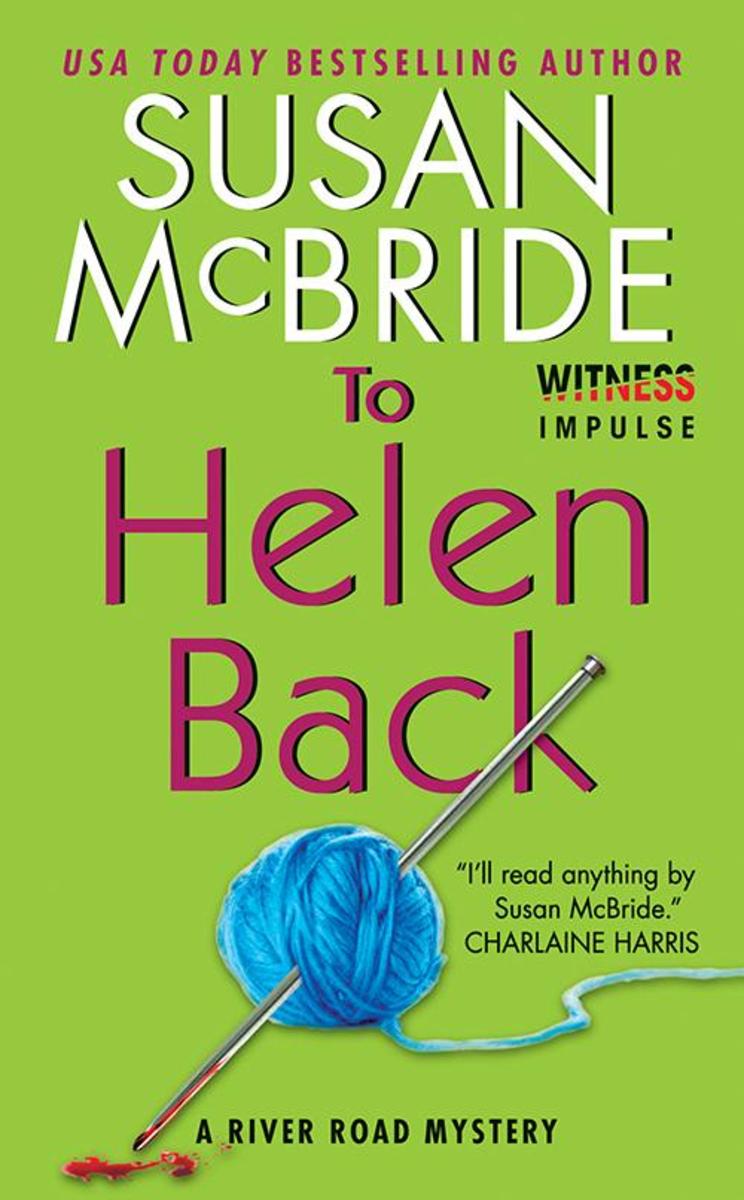
To Helen Back
¥34.54
In this fun and sassy new mystery, USA Today bestselling author Susan McBride introduces us to Helen Evans, a modern-day Miss Marple who must expose a murderer in a town full of suspects!When Milton Grone turns up dead in tiny River Bend, Illinois, nearly all the would-be suspects have the perfect alibi: attending Thursday night's town meeting. And as Milton was hardly beloved, plenty of folks had a reason to do him in ... Grone's next-door neighbor was furious about a fence that encroached on her property, among other wicked deeds. A pair of zealous tree huggers wanted Grone's hide for selling a parcel of pristine land to a water park. Grone's current and ex-wife both wanted a cut of the profits, which Grone seemed unwilling to share. Even the town preacher knew Grone's soul was beyond saving. Though most of River Bend would rather reward the killer than hang him, Sheriff Biddle's not about to let this one go … and neither is Helen Evans. With a penchant for puzzles and an ear for innuendo, Helen quickly fingers the culprit before Biddle puts the wrong suspect in jail.

A Newport Christmas Wedding
¥27.91
It’s Christmas in Newport. The mansions are decorated, and the streets are filled with excitement. Across the bay, preparations are in full swing for the wedding of Meri Calder-Hollis and Alden Corrigan. A year ago, Meri never imagined that she would marry her best friend, Alden, or become stepmother to his two teenaged children, Nora and Lucas.But as the wedding day draws near, tension and emotions run high, and Meri’s happiness turns to uncertainty. Nora is suddenly acting sullen and withdrawn, Alden is preoccupied, and Meri wonders if her marriage will bring the family closer together or tear them apart.It seems like this wedding may be doomed before it begins until a special Christmas surprise brings home the meaning of family and the joy of the holidays.

The Cutting
¥66.50
The first novel in the nationally bestselling McCabe and Savage series—perfect for fans of John Sandford and CJ Box.Someone is stealing the hearts of beautiful women... Detective Mike McCabe moved from a top homicide job with the NYPD to Portland, Maine to leave his failed marriage and suspicions of wrongdoing behind, and to find a more peaceful life for himself and his 13 year old daughter. But the small New England city is not nearly as safe as he thought. On a warm September night, a missing high-school athlete is found dead in a scrap metal yard, her heart removed from her body with surgical precision. As outrage over the killing spreads, a young business woman disappears while out on a morning jog. McCabe is certain both crimes are the work of one man—a murderer skilled in cardiac surgery who is using his scalpel to target young women. With the clock ticking, McCabe and his partner Maggie Savage find themselves in a desperate race against time to find and rescue the missing woman before she becomes the next victim of the sadistic killer's blade.

Reckless (Mills & Boon Vintage 90s Modern)
¥39.24
Winona Abbot hadn't a clue as to who was stealing jewelry from all her rich friends. But at the rate she was going, she'd never find the thief, not with the continued distraction of the enigmatic Garrett Blackhawk, a man whose only goal appeared to be to steal her heart! Baron Garrett Blackhawk had known few women with the spark and daring of Winona Abbot. And her attempts to ignore the heat that flared between them only strengthened his desire to uncover her secrets and make the icy beauty his own.
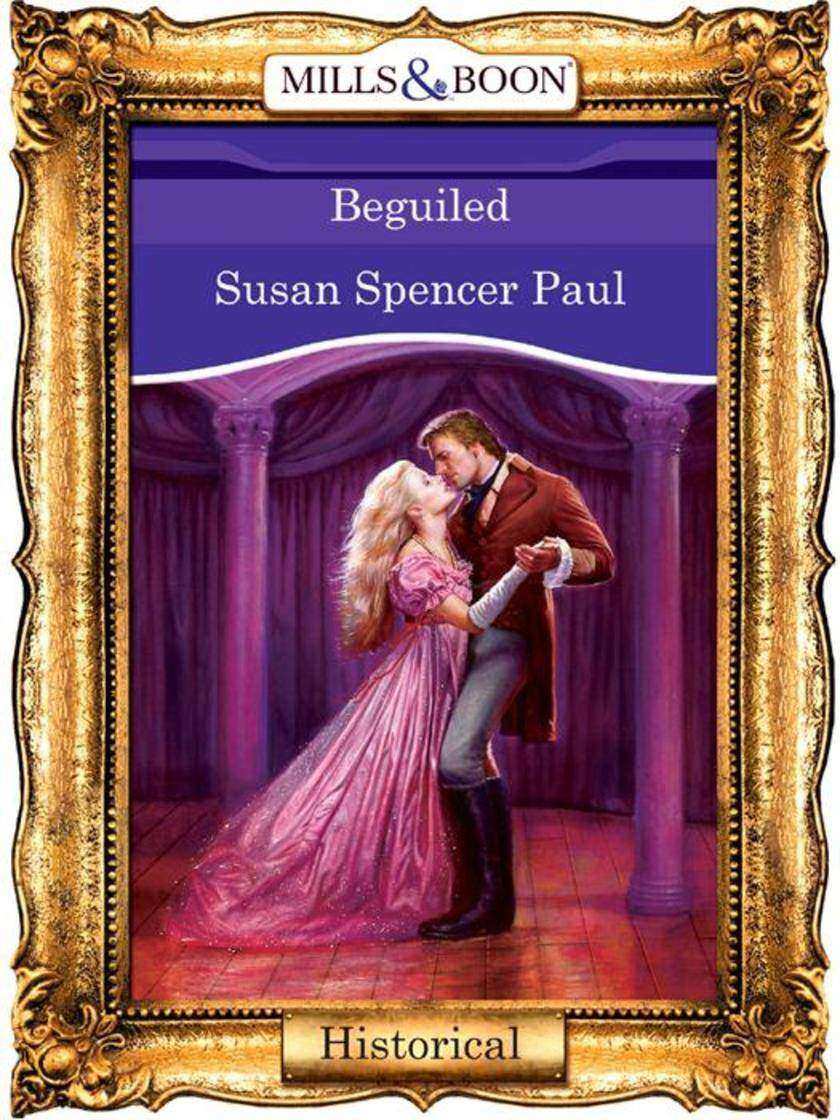
Beguiled (Mills & Boon Vintage 90s Modern)
¥39.24
Lady Lillian Walford Had The Look Of Perfection Yet a fateful flaw doomed her to a life of silence. And although Anthony Harbreas, the gallant Earl of Graydon, had showered her with his attention, Lillian knew she was fit to be no man's wife. So why had the much-sought-after earl asked her to be his true-bound bride? Tricked by her brother into marriage with the lovely Lillian, Anthony was quick to realize his incredible luck. For he knew that beneath the surface of her quiet beauty, Lillian was a priceless jewel. And he was determined to convince his innocent wife of her true worth and their golden future.

Infamous (Mills & Boon Vintage 90s Modern)
¥39.24
He Was Surrounded By Meddlesome Women! The thoughtless antics of his mother and sister had dashing shipping magnate Bennet Varner fleeing all females… until he collided with the impregnable wit of the infamous Gwen Rose Wall - a woman as clever as she was captivating. Besieged by scandal, the beleaguered Miss Wall had vowed never to wed. But the dauntless Varner had his own plan of attack - to use all the wiles at his disposal to scale the ramparts of rumor and rescue the lady's heart!

The Wedding Promise (Mills & Boon Vintage 90s Modern)
¥39.24
10TH ANNIVERSARY THE WAY WEST FOR RACHEL SINCLAIR LED STRAIGHT DOWN THE AISLE And into the arms of a man she barely knew! But Cord McPherson had taken her and her brothers in when trouble struck along the trail. And Rachel believed in her heart that this marriage of convenience would grow into a bond more precious than gold. An instant family wasn't something Cord McPherson had planned on acquiring, but the sight of Rachel protecting her brothers told him she was plenty strong enough to be his bride. And he was good and ready to make their promise to each other last a lifetime.


