


 购物车
 个人中心

Mastering Node.js - Second Edition
¥90.46
Expert techniques for building fast servers and scalable, real-time network applications with minimal effort; rewritten for Node.js 8 and Node.js 9 About This Book ? Packed with practical examples and explanations, Mastering Node.js contains everything you need to take your applications to the next level. ? Unleash the full potential of Node.js 9 to build real-time and scalable applications. ? Gain in-depth knowledge of asynchronous programming, event loops, and parallel data processing. ? Explore Node's innovative event-non-blocking design, and build professional applications with the help of detailed examples. Who This Book Is For This book is targeted at JavaScript developers who want to take an in-depth look at the latest Node.js framework to create faster, scalable, real-time backend applications. Basic JavaScript programming knowledge—and also some previous Node.js development experience—are mandatory to get the best out of this book What You Will Learn ? Build an Electron desktop app using Node that manages a filesystem ? Explore Streams and understand how they apply to building networked services ? Develop and deploy an SMS-driven customer service application ? Use WebSockets for rapid bi-directional communication ? Construct serverless applications with Amazon Lambda ? Test and debug with headless browsers, CPU profiling, Mocha, Sinon, and more ? Scale applications vertically and horizontally across multiple cores and web services In Detail Node.js, a modern development environment that enables developers to write server- and client-side code with JavaScript, thus becoming a popular choice among developers. This book covers the features of Node that are especially helpful to developers creating highly concurrent real-time applications. It takes you on a tour of Node's innovative event non-blocking design, showing you how to build professional applications. This edition has been updated to cover the latest features of Node 9 and ES6. All code examples and demo applications have been completely rewritten using the latest techniques, introducing Promises, functional programming, async/await, and other cutting-edge patterns for writing JavaScript code. Learn how to use microservices to simplify the design and composition of distributed systems. From building serverless cloud functions to native C++ plugins, from chatbots to massively scalable SMS-driven applications, you'll be prepared for building the next generation of distributed software. By the end of this book, you'll be building better Node applications more quickly, with less code and more power, and know how to run them at scale in production environments. Style and approach Mastering Node.js contains all of the examples and explanations you'll need to build applications in a short amount of time and at a low cost, running rapidly and at scale.
Designing Purpose-Built Drones for Ardupilot Pixhawk 2.1
¥63.21
Design and build land, air, and sea drones using Ardupilot with Pixhawk 2.1 About This Book ? Explore the best practices used by the top industry professionals that will not only help you build drones in time, but also build effective solutions to cater to. ? Navigate through the complexities of Ardupilot to put together a complete functional UAV and assemble your drone ? Learn through practical examples that help you build robust UAV flight and ground control components Who This Book Is For The primary audience for this book is anyone (enthusiasts and hobbyists) who dream of building their own drones. It will also help those who are trying to build UAVs for commercial purposes. Some prior experience with microcontrollers and electronics would be useful. What You Will Learn ? Kitbash "dumb" objects into smart ones ? Program Pixhawk for your drones ? Fabricate your own parts out of different materials ? Integrate Pixhawk into different types of drones ? Build and understand the significant difference between land, sea, and air drones ? Adapt old Pixhawk sensors to the new Pixhawk 2.1 plugs ? Become familiar with procedures for testing your new drones In Detail The Ardupilot platform is an application ecosystem that encompasses various OS projects for drone programming, flight control, and advanced functionalities.The Ardupilot platform supports many Comms and APIs, such as DroneKit, ROS, and MAVLink. It unites OS drone projects to provide a common codebase. With the help of this book, you will have the satisfaction of building a drone from scratch and exploring its many recreational uses (aerial photography, playing, aerial surveillance, and so on). This book helps individuals and communities build powerful UAVs for both personal and commercial purposes. You will learn to unleash the Ardupilot technology for building, monitoring, and controlling your drones.This is a step-by-step guide covering practical examples and instructions for assembling a drone, building ground control unit using microcontrollers, QgroundControl, and MissionPlanner. You can further build robotic applications on your drone utilizing critical software libraries and tools from the ROS framework. With the help of DroneKit and MAVLink (for reliable communication), you can customize applications via cloud and mobile to interact with your UAV. Style and approach Step-by-step instructions to help assemble your first drone with the Ardupilot platform.
Mastering Entity Framework Core 2.0
¥90.46
Learn how to leverage the features of the new Entity Framework Core APIs and use them to build pure .NET Core applications. About This Book ? Learn how to effectively manage your database to make it more productive and maintainable. ? Write simplified queries using LINQ to acquire the desired data easily ? Raise the abstraction level from data to objects so teams can function independently, resulting in easily maintainable code Who This Book Is For This book is for .NET Core developers who would like to integrate EF Core in their application. Prior knowledge of .NET Core and C# is assumed. What You Will Learn ? Create databases and perform CRUD operations on them ? Understand and build relationships (related to entities, keys, and properties) ? Understand in-built, custom, and remote validation (both client and server side) ? You will learn to handle concurrency to build responsive applications ? You will handle transactions and multi-tenancy while also improving performance In Detail Being able to create and maintain data-oriented applications has become crucial in modern programming. This is why Microsoft came up with Entity Framework so architects can optimize storage requirements while also writing efficient and maintainable application code. This book is a comprehensive guide that will show how to utilize the power of the Entity Framework to build efficient .NET Core applications. It not only teaches all the fundamentals of Entity Framework Core but also demonstrates how to use it practically so you can implement it in your software development. The book is divided into three modules. The first module focuses on building entities and relationships. Here you will also learn about different mapping techniques, which will help you choose the one best suited to your application design. Once you have understood the fundamentals of the Entity Framework, you will move on to learn about validation and querying in the second module. It will also teach you how to execute raw SQL queries and extend the Entity Framework to leverage Query Objects using the Query Object Pattern. The final module of the book focuses on performance optimization and managing the security of your application. You will learn to implement failsafe mechanisms using concurrency tokens. The book also explores row-level security and multitenant databases in detail. By the end of the book, you will be proficient in implementing Entity Framework on your .NET Core applications. Style and approach This book is filled with various examples that will help you use Entity Framework Core 2.0 to write efficient software.

Elon Musk
¥95.11
South African born Elon Musk is the renowned entrepreneur and innovator behind PayPal, SpaceX, Tesla, and SolarCity. Musk wants to save our planet; he wants to send citizens into space, to form a colony on Mars; he wants to make money while doing these things; and he wants us all to know about it. He is the real-life inspiration for the Iron Man series of films starring Robert Downey Junior. The personal tale of Musk’s life comes with all the trappings one associates with a great, drama-filled story. He was a freakishly bright kid who was bullied brutally at school, and abused by his father. In the midst of these rough conditions, and the violence of apartheid South Africa, Musk still thrived academically and attended the University of Pennsylvania, where he paid his own way through school by turning his house into a club and throwing massive parties. He started a pair of huge dot-com successes, including PayPal, which eBay acquired for $1.5 billion in 2002. Musk was forced out as CEO and so began his lost years in which he decided to go it alone and baffled friends by investing his fortune in rockets and electric cars. Meanwhile Musk’s marriage disintegrated as his technological obsessions took over his life ... Elon Musk is the Steve Jobs of the present and the future, and for the past twelve months, he has been shadowed by tech reporter, Ashlee Vance. Elon Musk: How the Billionaire CEO of Spacex and Tesla is Shaping our Future is an important, exciting and intelligent account of the real-life Iron Man.

韩语听力从入门到达人:TOPIK考试初级、中高级听力素材精选精练
¥7.92
学习外语,“把好门关”十分重要。“听说读写”中将“听”放在首位,可见听力在外语学习中的重要性。《韩语听力从门到达人:TOPIK考试初级、中高级听力素材精选精练》选取多场景多层次的内容,采用由浅深的讲解方式,分为发音门、辨别发音相似的音节词汇短语、日常会话、心灵美文、名家名作选、可爱童谣、热门韩剧、人气歌谣、名人演讲等章节,涵盖与韩语听力相关的几乎全部内容。本书对话分为简单会话和复杂会话,且录音速度有常速和慢速两本版本。而且考虑到初学者的学习要求,本书还设置了大量的讲解和练习环节。本书完美附赠双速音频、新TOPIK听力词汇迷你小册。

江户川乱步(中日双语) (日本推理小说鼻祖短篇精选)
¥1.99
本书是日本推理小说鼻祖江户川乱步脍炙人口的短篇小说选集。本书精选江户川乱步脍炙人口的4篇经典短篇小说,谜一般的推理、跌宕起伏的情节,带你领略光怪陆离的推理世界。推理小说研究者钱晓波献译导读。书中日文部分全文标注假名,中日对照排版,方便读者学习与朗读。超值精装有声典藏版,附赠日文全文朗读及中文广播剧。日文版由日籍专家倾情朗读,中文版由《琅琊榜》“誉王”配音献声朗读。并赠送精美书签。
Delphi High Performance
¥81.74
Build fast, scalable, and high performing applications with Delphi About This Book ? Build efficient and concurrent applications in Delphi with focused examples ? Identify performance bottlenecks and apply the correct algorithm to increase the performance of applications. ? Delve into parallel programming and memory management to optimize your code Who This Book Is For This book is for Delphi developers who would like to build high performance applications with Delphi. Prior knowledge of Delphi is assumed. What You Will Learn ? Find performance bottlenecks and easily mitigate them ? Discover different approaches to fix algorithms ? Understand parallel programming and work with various tools included with Delphi ? Master the RTL for code optimization ? Explore memory managers and their implementation ? Leverage external libraries to write better performing programs In Detail Delphi is a cross-platform Integrated Development Environment (IDE) that supports rapid application development for Microsoft Windows, Apple Mac OS X, Google Android, iOS, and now Linux with RAD Studio 10.2. This book will be your guide to build efficient high performance applications with Delphi. The book begins by explaining how to find performance bottlenecks and apply the correct algorithm to fix them. It will teach you how to improve your algorithms before taking you through parallel programming. You’ll then explore various tools to build highly concurrent applications. After that, you’ll delve into improving the performance of your code and master cross-platform RTL improvements. Finally, we’ll go through memory management with Delphi and you’ll see how to leverage several external libraries to write better performing programs. By the end of the book, you’ll have the knowledge to create high performance applications with Delphi. Style and approach This book will take a step-by-step approach with focused examples to teach you how to increase the performance of applications.
Mastering ROS for Robotics Programming - Second Edition
¥90.46
Discover best practices and troubleshooting solutions when working on ROS About This Book ? Develop complex robotic applications using ROS to interface robot manipulators and mobile robots ? Gain insight into autonomous navigation in mobile robots and motion planning in robot manipulators ? Discover best practices and troubleshooting solutions Who This Book Is For If you are a robotics enthusiast or researcher who want to learn more about building robot applications using ROS, this book is for you. In order to learn from this book, you should have a basic knowledge of ROS, GNU/Linux, and C++ programming concepts. The book is also excellent for programmers who want to explore the advanced features of ROS. What You Will Learn ? Create a robot model with a seven-DOF robotic arm and a differential wheeled mobile robot ? Work with Gazebo and V-REP robotic simulator ? Implement autonomous navigation in differential drive robots using SLAM and AMCL packages ? Explore the ROS Pluginlib, ROS nodelets, and Gazebo plugins ? Interface I/O boards such as Arduino, robot sensors, and high-end actuators ? Simulate and motion plan an ABB and universal arm using ROS Industrial ? Explore the latest version of the ROS framework ? Work with the motion planning of a seven-DOF arm using MoveIt! In Detail In this day and age, robotics has been gaining a lot of traction in various industries where consistency and perfection matter. Automation is achieved via robotic applications and various platforms that support robotics. The Robot Operating System (ROS) is a modular software platform to develop generic robotic applications. This book focuses on the most stable release of ROS (Kinetic Kame), discusses advanced concepts, and effectively teaches you programming using ROS. We begin with aninformative overview of the ROS framework, which will give you a clear idea of how ROS works. During the course of this book, you’ll learn to build models of complex robots, and simulate and interface the robot using the ROS MoveIt! motion planning library and ROS navigation stacks. Learn to leverage several ROS packages to embrace your robot models. After covering robot manipulation and navigation, you’ll get to grips with the interfacing I/O boards, sensors, and actuators of ROS. Vision sensors are a key component of robots, and an entire chapter is dedicated to the vision sensor and image elaboration, its interface in ROS and programming. You’ll also understand the hardware interface and simulation of complex robots to ROS and ROS Industrial. At the end of this book, you’ll discover the best practices to follow when programming using ROS. Style and approach This is a simplified guide to help you learn and master advanced topics in ROS using hands-on examples.
Advanced Infrastructure Penetration Testing
¥81.74
A highly detailed guide to performing powerful attack vectors in many hands-on scenarios and defending significant security flaws in your company's infrastructure About This Book ? Advanced exploitation techniques to breach modern operating systems and complex network devices ? Learn about Docker breakouts, Active Directory delegation, and CRON jobs ? Practical use cases to deliver an intelligent endpoint-protected system Who This Book Is For If you are a system administrator, SOC analyst, penetration tester, or a network engineer and want to take your penetration testing skills and security knowledge to the next level, then this book is for you. Some prior experience with penetration testing tools and knowledge of Linux and Windows command-line syntax is beneficial. What You Will Learn ? Exposure to advanced infrastructure penetration testing techniques and methodologies ? Gain hands-on experience of penetration testing in Linux system vulnerabilities and memory exploitation ? Understand what it takes to break into enterprise networks ? Learn to secure the configuration management environment and continuous delivery pipeline ? Gain an understanding of how to exploit networks and IoT devices ? Discover real-world, post-exploitation techniques and countermeasures In Detail It has always been difficult to gain hands-on experience and a comprehensive understanding of advanced penetration testing techniques and vulnerability assessment and management. This book will be your one-stop solution to compromising complex network devices and modern operating systems. This book provides you with advanced penetration testing techniques that will help you exploit databases, web and application servers, switches or routers, Docker, VLAN, VoIP, and VPN. With this book, you will explore exploitation abilities such as offensive PowerShell tools and techniques, CI servers, database exploitation, Active Directory delegation, kernel exploits, cron jobs, VLAN hopping, and Docker breakouts. Moving on, this book will not only walk you through managing vulnerabilities, but will also teach you how to ensure endpoint protection. Toward the end of this book, you will also discover post-exploitation tips, tools, and methodologies to help your organization build an intelligent security system. By the end of this book, you will have mastered the skills and methodologies needed to breach infrastructures and provide complete endpoint protection for your system. Style and approach Your one-stop guide to mastering the skills and methodologies of breaching infrastructures and providing complete endpoint protection to your system.
The Agile Developer's Handbook
¥73.02
A pragmatic companion guide to your Agile journey About This Book ? Make your team Agile by implementing industry-standard Agile techniques ? Assess scope, scale up efficiently ? Create the correct roles and identify the right candidates for your team ? Finish your projects faster and stay ahead of the curve Who This Book Is For If you’re a software developer or a project manager with little to no experience of Agile, but you want to efficiently implement it, this is the book for you. What You Will Learn ? Create a solid foundation that gives your team an Agile jumpstart ? Understand how to select and evolve practices to increase your team’s agility ? Use experiments to accelerate your team’s understanding ? Fine-tune your approach by incorporating aspects of Lean and Lean Startup ? Know how to foster an environment of continuous improvement and learning that will become self-sustaining In Detail This book will help you overcome the common challenges you’ll face when transforming your working practices from waterfall to Agile. Each chapter builds on the last, starting with easy-to-grasp ways to get going with Agile. Next you’ll see how to choose the right Agile framework for your organization. Moving on, you’ll implement systematic product delivery and measure and report progress with visualization. Then you’ll learn how to create high performing teams, develop people in Agile, manage in Agile, and perform distributed Agile and collaborative governance. At the end of the book, you’ll discover how Agile will help your company progressively deliver software to customers, increase customer satisfaction, and improve the level of efficiency in software development teams. Style and approach Think of this book like a manual, rather than a theoretical textbook. It’s packed full of visual ways to understand Agile, helpful tips to get you set up quickly, tried and tested solutions when challenges arise, and heaps of support to get the day-to-day tasks in Agile done. You’ll want to keep a copy on your desk, right next to your coffee cup.
Building Smart Drones with ESP8266 and Arduino
¥54.49
Leverage the WiFi chip to build exciting Quadcopters About This Book ? Learn to create a fully functional Drone with Arduino and ESP8266 and their modified versions of hardware. ? Enhance your drone's functionalities by implementing smart features. ? A project-based guide that will get you developing next-level drones to help you monitor a particular area with mobile-like devices. Who This Book Is For If you are a programmer or a DIY enthusiast and keen to create a fully functional drone with Arduino and ESP8266, then this book is for you. Basic skills in electronics and programming would be beneficial. This book is not for the beginners as it includes lots of ideas not detailed how you can do that. If you are a beginner, then you might get lost here. The prerequisites of the book include a good knowledge of Arduino, electronics, programming in C or C++ and lots of interest in creating things out of nothing. What You Will Learn ? Includes a number of projects that utilize different ESP8266 and Arduino capabilities, while interfacing with external hardware ? Covers electrical engineering and programming concepts, interfacing with the World through analog and digital sensors, communicating with a computer and other devices, and internet connectivity ? Control and fly your quadcopter, taking into account weather conditions ? Build a drone that can follow the user wherever he/she goes ? Build a mission-control drone and learn how to use it effectively ? Maintain your vehicle as much as possible and repair it whenever required In Detail With the use of drones, DIY projects have taken off. Programmers are rapidly moving from traditional application programming to developing exciting multi-utility projects. This book will teach you to build industry-level drones with Arduino and ESP8266 and their modified versions of hardware. With this book, you will explore techniques for leveraging the tiny WiFi chip to enhance your drone and control it over a mobile phone. This book will start with teaching you how to solve problems while building your own WiFi controlled Arduino based drone. You will also learn how to build a Quadcopter and a mission critical drone. Moving on you will learn how to build a prototype drone that will be given a mission to complete which it will do it itself. You will also learn to build various exciting projects such as gliding and racing drones. By the end of this book you will learn how to maintain and troubleshoot your drone. By the end of this book, you will have learned to build drones using ESP8266 and Arduino and leverage their functionalities to the fullest. Style and approach This is an easy-to-follow guide with illustrations and technical de*ions to help you assemble your vehicle.
Extending OpenStack
¥73.02
Discover new opportunities to empower your private cloud by making the most of the OpenStack universe About This Book ? This practical guide teaches you how to extend the core functionalities of OpenStack ? Discover OpenStack's flexibility by writing custom applications and network plugins ? Deploy a containerized environment in OpenStack through a hands-on and example-driven approach Who This Book Is For This book is for system administrators, cloud architects, and developers who have experience working with OpenStack and are ready to step up and extend its functionalities. A good knowledge of basic OpenStack components is required. In addition, familiarity with Linux boxes and a good understanding of network and virtualization jargon is required. What You Will Learn ? Explore new incubated projects in the OpenStack ecosystem and see how they work ? Architect your OpenStack private cloud with extended features of the latest versions ? Consolidate OpenStack authentication in your large infrastructure to avoid complexity ? Find out how to expand your computing power in OpenStack on a large scale ? Reduce your OpenStack storage cost management by taking advantage of external tools ? Provide easy, on-demand, cloud-ready applications to developers using OpenStack in no time ? Enter the big data world and find out how to launch elastic jobs easily in OpenStack ? Boost your extended OpenStack private cloud performance through real-world scenarios In Detail OpenStack is a very popular cloud computing platform that has enabled several organizations during the last few years to successfully implement their Infrastructure as a Service (IaaS) platforms. This book will guide you through new features of the latest OpenStack releases and how to bring them into production straightaway in an agile way. It starts by showing you how to expand your current OpenStack setup and how to approach your next OpenStack Data Center generation deployment. You will discover how to extend your storage and network capacity and also take advantage of containerization technology such as Docker and Kubernetes in OpenStack. Additionally, you'll explore the power of big data as a Service terminology implemented in OpenStack by integrating the Sahara project. This book will teach you how to build Hadoop clusters and launch jobs in a very simple way. Then you'll automate and deploy applications on top of OpenStack. You will discover how to write your own plugin in the Murano project. The final part of the book will go through best practices for security such as identity, access management, and authentication exposed by Keystone in OpenStack. By the end of this book, you will be ready to extend and customize your private cloud based on your requirements. Style and approach This guide is filled with practical scenarios on how to extend and enhance OpenStack's functionality. We will be covering various installation and configuration platforms along with a focus on plugins and extending OpenStack's core functionalities.
Fixing Bad UX Designs
¥73.02
A practical guide filled with case studies and easy solutions to solve the most common user experience issues About This Book ? Understand and fix the pain points of a bad UX design to ensure greater customer satisfaction. ? Correct UX issues at various stages of a UX Design with the help of different methodologies for fixing bad UXs ? See best practices and established principles in UX with case studies illustrating these practices and principles Who This Book Is For This book is for anyone confronted with a poorly designed UX. It is ideal for UX professionals who want to solve problems with existing UX designs, and UX designers who want to enhance their designs or analyze and rectify where they went wrong. What You Will Learn ? Learn about ROI and metrics in UX ? Understand the importance of getting stakeholders involved ? Learn through real cases how to fix bad UX ? Identify and fix UX issues using different methodologies ? Learn how to turn insights and finding into practical UX solutions ? Learn to validate, test and measure the UX solutions implemented ? Learn about UX refactoring In Detail Have your web applications been experiencing more hits and less conversions? Are bad designs consuming your time and money? This book is the answer to these problems. With intuitive case studies, you’ll learn to simplify, fix, and enhance some common, real-world application designs. You’ll look at the common issues of simplicity, navigation, appearance, maintenance, and many more. The challenge that most UX designers face is to ensure that the UX is user-friendly. In this book, we address this with individual case studies starting with some common UX applications and then move on to complex applications. Each case study will help you understand the issues faced by a bad UX and teach you to break it down and fix these problems. As we progress, you’ll learn about the information architecture, usability testing, iteration, UX refactoring, and many other related features with the help of various case studies. You’ll also learn some interesting UX design tools with the projects covered in the book. By the end of the book, you’ll be armed with the knowledge to fix bad UX designs and to ensure great customer satisfaction for your applications. Style and approach This book takes a practical approach, with case studies, best practices, and practical solutions to bad design
Deep Learning By Example
¥73.02
Grasp the fundamental concepts of deep learning using Tensorflow in a hands-on manner About This Book ? Get a first-hand experience of the deep learning concepts and techniques with this easy-to-follow guide ? Train different types of neural networks using Tensorflow for real-world problems in language processing, computer vision, transfer learning, and more ? Designed for those who believe in the concept of 'learn by doing', this book is a perfect blend of theory and code examples Who This Book Is For This book targets data scientists and machine learning developers who wish to get started with deep learning. If you know what deep learning is but are not quite sure of how to use it, this book will help you as well. An understanding of statistics and data science concepts is required. Some familiarity with Python programming will also be beneficial. What You Will Learn ? Understand the fundamentals of deep learning and how it is different from machine learning ? Get familiarized with Tensorflow, one of the most popular libraries for advanced machine learning ? Increase the predictive power of your model using feature engineering ? Understand the basics of deep learning by solving a digit classification problem of MNIST ? Demonstrate face generation based on the CelebA database, a promising application of generative models ? Apply deep learning to other domains like language modeling, sentiment analysis, and machine translation In Detail Deep learning is a popular subset of machine learning, and it allows you to build complex models that are faster and give more accurate predictions. This book is your companion to take your first steps into the world of deep learning, with hands-on examples to boost your understanding of the topic. This book starts with a quick overview of the essential concepts of data science and machine learning which are required to get started with deep learning. It introduces you to Tensorflow, the most widely used machine learning library for training deep learning models. You will then work on your first deep learning problem by training a deep feed-forward neural network for digit classification, and move on to tackle other real-world problems in computer vision, language processing, sentiment analysis, and more. Advanced deep learning models such as generative adversarial networks and their applications are also covered in this book. By the end of this book, you will have a solid understanding of all the essential concepts in deep learning. With the help of the examples and code provided in this book, you will be equipped to train your own deep learning models with more confidence. Style and approach A step-by-step guide filled with multiple examples to help you get started with data science and deep learning.
Distributed Computing with Go
¥73.02
A tutorial leading the aspiring Go developer to full mastery of Golang's distributed features. About This Book ? This book provides enough concurrency theory to give you a contextual understanding of Go concurrency ? It gives weight to synchronous and asynchronous data streams in Golang web applications ? It makes Goroutines and Channels completely familiar and natural to Go developers Who This Book Is For This book is for developers who are familiar with the Golang syntax and have a good idea of how basic Go development works. It would be advantageous if you have been through a web application product cycle, although it’s not necessary. What You Will Learn ? Gain proficiency with concurrency and parallelism in Go ? Learn how to test your application using Go's standard library ? Learn industry best practices with technologies such as REST, OpenAPI, Docker, and so on ? Design and build a distributed search engine ? Learn strategies on how to design a system for web scale In Detail Distributed Computing with Go gives developers with a good idea how basic Go development works the tools to fulfill the true potential of Golang development in a world of concurrent web and cloud applications. Nikhil starts out by setting up a professional Go development environment. Then you’ll learn the basic concepts and practices of Golang concurrent and parallel development. You’ll find out in the new few chapters how to balance resources and data with REST and standard web approaches while keeping concurrency in mind. Most Go applications these days will run in a data center or on the cloud, which is a condition upon which the next chapter depends. There, you’ll expand your skills considerably by writing a distributed document indexing system during the next two chapters. This system has to balance a large corpus of documents with considerable analytical demands. Another use case is the way in which a web application written in Go can be consciously redesigned to take distributed features into account. The chapter is rather interesting for Go developers who have to migrate existing Go applications to computationally and memory-intensive environments. The final chapter relates to the rather onerous task of testing parallel and distributed applications, something that is not usually taught in standard computer science curricula. Style and approach Distributed Computing with Go takes you through a series of carefully graded tutorials, building ever more sophisticated applications.

Practical Computer Vision
¥63.21
A practical guide designed to get you from basics to current state of art in computer vision systems. About This Book ? Master the different tasks associated with Computer Vision and develop your own Computer Vision applications with ease ? Leverage the power of Python, Tensorflow, Keras, and OpenCV to perform image processing, object detection, feature detection and more ? With real-world datasets and fully functional code, this book is your one-stop guide to understanding Computer Vision Who This Book Is For This book is for machine learning practitioners and deep learning enthusiasts who want to understand and implement various tasks associated with Computer Vision and image processing in the most practical manner possible. Some programming experience would be beneficial while knowing Python would be an added bonus. What You Will Learn ? Learn the basics of image manipulation with OpenCV ? Implement and visualize image filters such as smoothing, dilation, histogram equalization, and more ? Set up various libraries and platforms, such as OpenCV, Keras, and Tensorflow, in order to start using computer vision, along with appropriate datasets for each chapter, such as MSCOCO, MOT, and Fashion-MNIST ? Understand image transformation and downsampling with practical implementations. ? Explore neural networks for computer vision and convolutional neural networks using Keras ? Understand working on deep-learning-based object detection such as Faster-R-CNN, SSD, and more ? Explore deep-learning-based object tracking in action ? Understand Visual SLAM techniques such as ORB-SLAM In Detail In this book, you will find several recently proposed methods in various domains of computer vision. You will start by setting up the proper Python environment to work on practical applications. This includes setting up libraries such as OpenCV, TensorFlow, and Keras using Anaconda. Using these libraries, you'll start to understand the concepts of image transformation and filtering. You will find a detailed explanation of feature detectors such as FAST and ORB; you'll use them to find similar-looking objects. With an introduction to convolutional neural nets, you will learn how to build a deep neural net using Keras and how to use it to classify the Fashion-MNIST dataset. With regard to object detection, you will learn the implementation of a simple face detector as well as the workings of complex deep-learning-based object detectors such as Faster R-CNN and SSD using TensorFlow. You'll get started with semantic segmentation using FCN models and track objects with Deep SORT. Not only this, you will also use Visual SLAM techniques such as ORB-SLAM on a standard dataset. By the end of this book, you will have a firm understanding of the different computer vision techniques and how to apply them in your applications. Style and approach Step-by-step guide filled with real-world, practical examples for understanding and applying various Computer Vision techniques
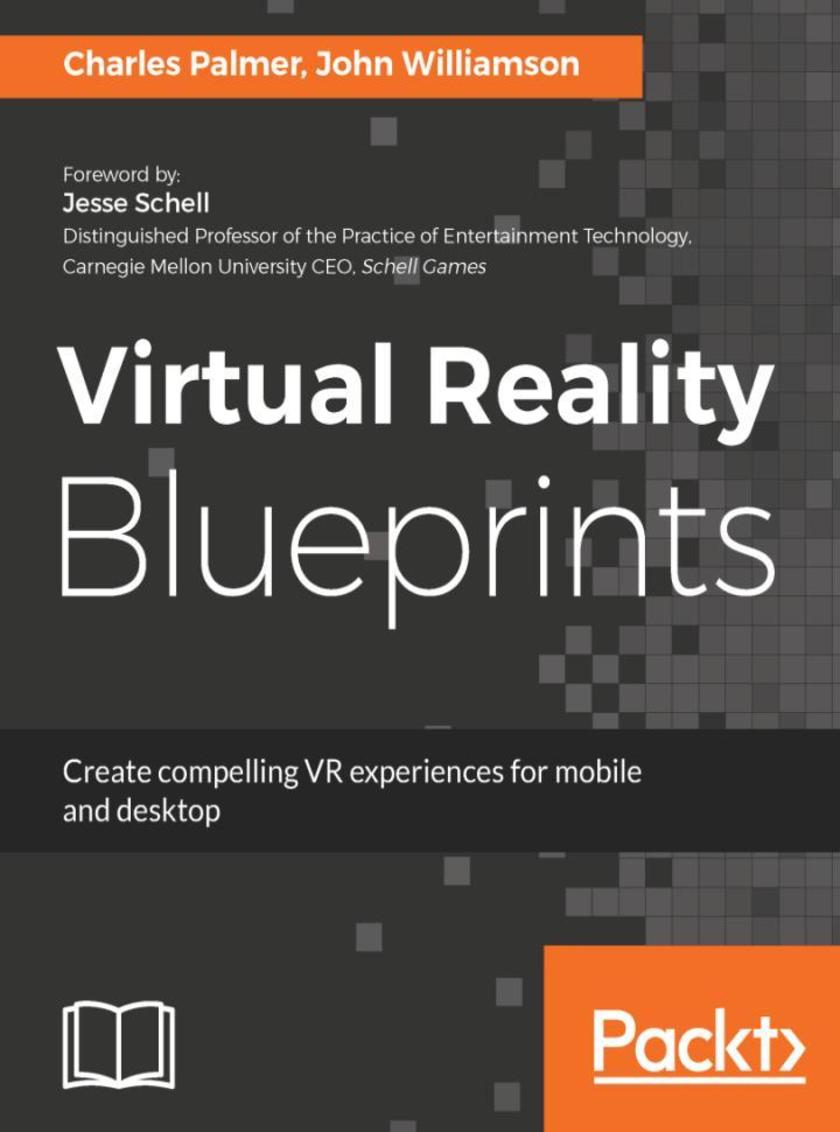
Virtual Reality Blueprints
¥73.02
Join the virtual reality revolution by creating immersive 3D games and applications with Cardboard VR, Gear VR, OculusVR, and HTC Vive About This Book ? Develop robust, immersive VR experiences that are easy on the eye. ? Code 3D games and applications using Unity 3D game engine. ? Learn the basic principles of virtual reality applications Who This Book Is For If you are a game developer and a VR enthusiast now looking to get stuck into the VR app development process by creating VR apps for different platforms, then this is the book for you. Familiarity with the Unity game engine and the C# language is key to getting the most from this book. What You Will Learn ? Use Unity assets to create object simulation. ? Implement simple touch controls in your application. ? Apply artificial intelligence to achieve player and character interaction. ? Add *s for movement, tracking, grasping, and spawning. ? Create animated walkthroughs, use 360-degree media, and build engaging VR experiences. ? Deploy your games on multiple VR platforms. In Detail Are you new to virtual reality? Do you want to create exciting interactive VR applications? There's no need to be daunted by the thought of creating interactive VR applications, it's much easier than you think with this hands-on, project-based guide that will take you through VR development essentials for desktop and mobile-based games and applications. Explore the three top platforms—Cardboard VR, Gear VR, and OculusVR —to design immersive experiences from scratch. You’ll start by understanding the science-fiction roots of virtual reality and then build your first VR experience using Cardboard VR. You'll then delve into user interactions in virtual space for the Google Cardboard then move on to creating a virtual gallery with Gear VR. Then you will learn all about virtual movements, state machines, and spawning while you shoot zombies in the Oculus Rift headset. Next, you'll construct a Carnival Midway, complete with two common games to entertain players. Along the way, you will explore the best practices for VR development, review game design tips, discuss methods for combating motion sickness and identify alternate uses for VR applications Style and approach A project-based guide with every project built across chapters.
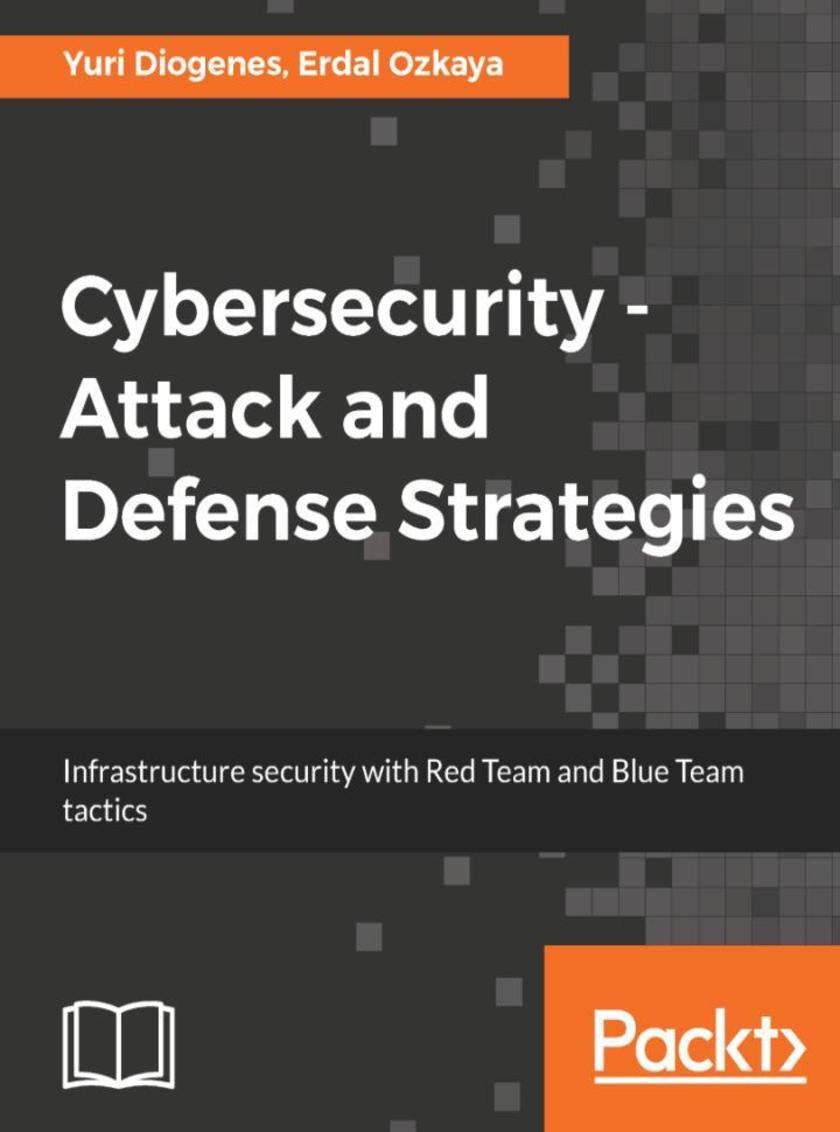
Cybersecurity – Attack and Defense Strategies
¥73.02
Enhance your organization’s secure posture by improving your attack and defense strategies About This Book ? Gain a clear understanding of the attack methods, and patterns to recognize abnormal behavior within your organization with Blue Team tactics. ? Learn to unique techniques to gather exploitation intelligence, identify risk and demonstrate impact with Red Team and Blue Team strategies. ? A practical guide that will give you hands-on experience to mitigate risks and prevent attackers from infiltrating your system. Who This Book Is For This book aims at IT professional who want to venture the IT security domain. IT pentester, Security consultants, and ethical hackers will also find this course useful. Prior knowledge of penetration testing would be beneficial. What You Will Learn ? Learn the importance of having a solid foundation for your security posture ? Understand the attack strategy using cyber security kill chain ? Learn how to enhance your defense strategy by improving your security policies, hardening your network, implementing active sensors, and leveraging threat intelligence ? Learn how to perform an incident investigation ? Get an in-depth understanding of the recovery process ? Understand continuous security monitoring and how to implement a vulnerability management strategy ? Learn how to perform log analysis to identify suspicious activities In Detail The book will start talking about the security posture before moving to Red Team tactics, where you will learn the basic syntax for the Windows and Linux tools that are commonly used to perform the necessary operations. You will also gain hands-on experience of using new Red Team techniques with powerful tools such as python and PowerShell, which will enable you to discover vulnerabilities in your system and how to exploit them. Moving on, you will learn how a system is usually compromised by adversaries, and how they hack user's identity, and the various tools used by the Red Team to find vulnerabilities in a system. In the next section, you will learn about the defense strategies followed by the Blue Team to enhance the overall security of a system. You will also learn about an in-depth strategy to ensure that there are security controls in each network layer, and how you can carry out the recovery process of a compromised system. Finally, you will learn how to create a vulnerability management strategy and the different techniques for manual log analysis. By the end of this book, you will be well-versed with Red Team and Blue Team techniques and will have learned the techniques used nowadays to attack and defend systems. Style and approach This book uses a practical approach of the cybersecurity kill chain to explain the different phases of the attack, which includes the rationale behind each phase, followed by scenarios and examples that brings the theory into practice.
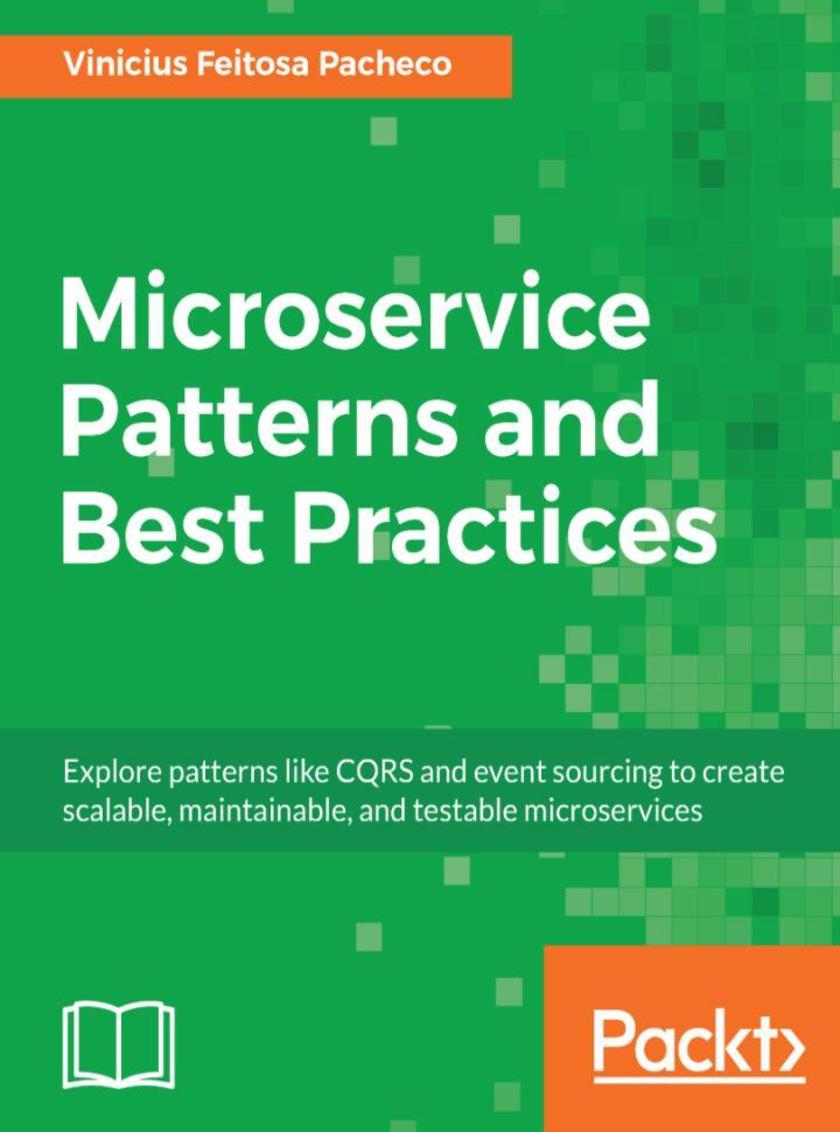
Microservice Patterns and Best Practices
¥81.74
Explore the concepts and tools you need to discover the world of microservices with various design patterns About This Book ? Get to grips with the microservice architecture and build enterprise-ready microservice applications ? Learn design patterns and the best practices while building a microservice application ? Obtain hands-on techniques and tools to create high-performing microservices resilient to possible fails Who This Book Is For This book is for architects and senior developers who would like implement microservice design patterns in their enterprise application development. The book assumes some prior programming knowledge. What You Will Learn ? How to break monolithic application into microservices ? Implement caching strategies, CQRS and event sourcing, and circuit breaker patterns ? Incorporate different microservice design patterns, such as shared data, aggregator, proxy, and chained ? Utilize consolidate testing patterns such as integration, signature, and monkey tests ? Secure microservices with JWT, API gateway, and single sign on ? Deploy microservices with continuous integration or delivery, Blue-Green deployment In Detail Microservices are a hot trend in the development world right now. Many enterprises have adopted this approach to achieve agility and the continuous delivery of applications to gain a competitive advantage. This book will take you through different design patterns at different stages of the microservice application development along with their best practices. Microservice Patterns and Best Practices starts with the learning of microservices key concepts and showing how to make the right choices while designing microservices. You will then move onto internal microservices application patterns, such as caching strategy, asynchronism, CQRS and event sourcing, circuit breaker, and bulkheads. As you progress, you'll learn the design patterns of microservices. The book will guide you on where to use the perfect design pattern at the application development stage and how to break monolithic application into microservices. You will also be taken through the best practices and patterns involved while testing, securing, and deploying your microservice application. At the end of the book, you will easily be able to create interoperable microservices, which are testable and prepared for optimum performance. Style and approach Comprehensive guide that uses architectural patterns with the best choices involved in application development
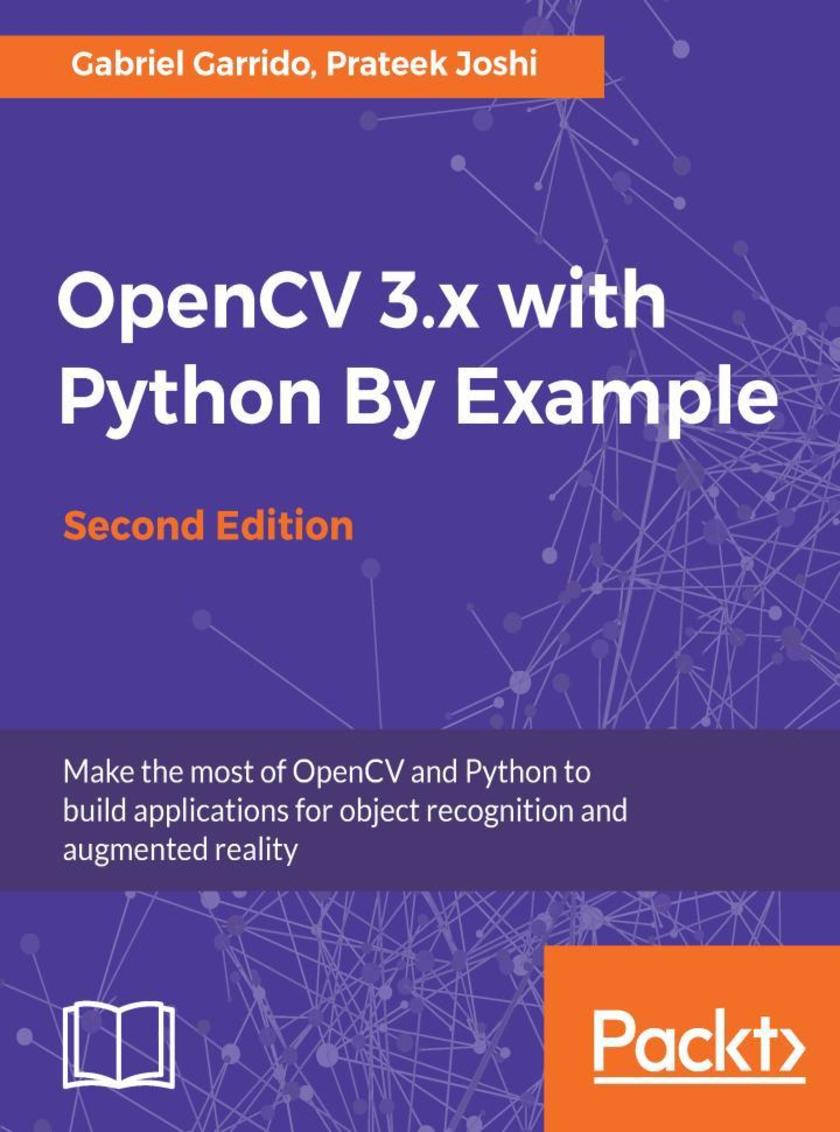
OpenCV 3.x with Python By Example - Second Edition
¥81.74
Learn the techniques for object recognition, 3D reconstruction, stereo imaging, and other computer vision applications using examples on different functions of OpenCV. About This Book ? Learn how to apply complex visual effects to images with OpenCV 3.x and Python ? Extract features from an image and use them to develop advanced applications ? Build algorithms to help you understand image content and perform visual searches ? Get to grips with advanced techniques in OpenCV such as machine learning, artificial neural network, 3D reconstruction, and augmented reality Who This Book Is For This book is intended for Python developers who are new to OpenCV and want to develop computer vision applications with OpenCV and Python. This book is also useful for generic software developers who want to deploy computer vision applications on the cloud. It would be helpful to have some familiarity with basic mathematical concepts such as vectors, matrices, and so on. What You Will Learn ? Detect shapes and edges from images and videos ? How to apply filters on images and videos ? Use different techniques to manipulate and improve images ? Extract and manipulate particular parts of images and videos ? Track objects or colors from videos ? Recognize specific object or faces from images and videos ? How to create Augmented Reality applications ? Apply artificial neural networks and machine learning to improve object recognition In Detail Computer vision is found everywhere in modern technology. OpenCV for Python enables us to run computer vision algorithms in real time. With the advent of powerful machines, we have more processing power to work with. Using this technology, we can seamlessly integrate our computer vision applications into the cloud. Focusing on OpenCV 3.x and Python 3.6, this book will walk you through all the building blocks needed to build amazing computer vision applications with ease. We start off by manipulating images using simple filtering and geometric transformations. We then discuss affine and projective transformations and see how we can use them to apply cool advanced manipulations to your photos like resizing them while keeping the content intact or smoothly removing undesired elements. We will then cover techniques of object tracking, body part recognition, and object recognition using advanced techniques of machine learning such as artificial neural network. 3D reconstruction and augmented reality techniques are also included. The book covers popular OpenCV libraries with the help of examples. This book is a practical tutorial that covers various examples at different levels, teaching you about the different functions of OpenCV and their actual implementation. By the end of this book, you will have acquired the skills to use OpenCV and Python to develop real-world computer vision applications. Style and approach The book is a practical tutorial that covers various examples at different levels, teaching you about the different functions of OpenCV and their actual implementation.
Kubernetes for Serverless Applications
¥81.74
Transform yourself into a Kubernetes specialist in serverless applications. About This Book ? Get hands-on experience in installing, configuring, and using services such as Kubeless, Funktion, OpenWhisk, and Fission ? Learn how to launch Kubernetes both locally and in public clouds ? Explore the differences between using services such as AWS Lambda and Azure Functions and running your own Who This Book Is For If you are a DevOps engineer, cloud architect, or a stakeholder keen to learn about serverless functions in Kubernetes environments, then this book is for you. What You Will Learn ? Get a detailed analysis of serverless/Functions as a Service ? Get hands-on with installing and running tasks in Kubernetes using Minikube ? Install Kubeless locally and launch your first function. ? Launch Kubernetes in the cloud and move your applications between your local machine and your cloud cluster ? Deploy applications on Kubernetes using Apache OpenWhisk ? Explore topics such as Funktion and Fission installation on the cloud followed by launching applications ? Monitor a serverless function and master security best practices and Kubernetes use cases In Detail Kubernetes has established itself as the standard platform for container management, orchestration, and deployment. It has been adopted by companies such as Google, its original developers, and Microsoft as an integral part of their public cloud platforms, so that you can develop for Kubernetes and not worry about being locked into a single vendor. This book will initially start by introducing serverless functions. Then you will configure tools such as Minikube to run Kubernetes. Once you are up-and-running, you will install and configure Kubeless, your first step towards running Function as a Service (FaaS) on Kubernetes. Then you will gradually move towards running Fission, a framework used for managing serverless functions on Kubernetes environments. Towards the end of the book, you will also work with Kubernetes functions on public and private clouds. By the end of this book, we will have mastered using Function as a Service on Kubernetes environments. Style and approach A clear, concise, and straightforward book that will empower you work with clusters and run serverless functions effectively.


