


 购物车
购物车 个人中心
个人中心

Dedicatoria:Poemas para los tuyos y los míos
¥15.29
Este libro está dedicado a personas, cosas, ideas, e incluso a entidades difíciles de definir. Cada uno de los poemas aquí comprendidos fueron escritos con alguno de los anteriores en mente. Hay algunos que hasta he olvidado su destinatario y fuente de inspiración; por lo tanto, siéntete libre de asignarlos a cualquier persona, idea, cosa, o entidad de tu preferencia.

A Voyage to the Country of the Houyhnhnms
¥40.79
Gulliver sets out as captain of a ship, but after the mutiny of his crew and a long confinement in his cabin, he arrives in an unknown land. This land is populated by Houyhnhnms, rational-thinking horses who rule, and by Yahoos, brutish humanlike creatures who serve the Houyhnhnms. Gulliver sets about learning their language, and when he can speak he narrates his voyages to them and explains the constitution of England. He is treated with great courtesy and kindness by the horses and is enlightened by his many conversations with them and by his exposure to their noble culture.

The Essential Epicurus
¥40.79
For Epicurus, the purpose of philosophy was to attain the happy, tranquil life, characterized by peace and freedom from fear, the absence of pain, and by living a self-sufficient life surrounded by friends. He taught that pleasure and pain are the measures of what is good and evil; death is the end of both body and soul and should therefore not be feared; the gods neither reward nor punish humans; the universe is infinite and eternal; and events in the world are ultimately based on the motions and interactions of atoms. Although much of Epicurus' written work has been lost, the remaining principle doctrines and his letters featured in this book provide an insight into the Epicurean school of thought, which was originally based in the garden of his house and thus called The Garden.

The Hunchback of Notre Dame
¥40.79
Esmeralda, a beautiful Gypsy street dancer with a kind and generous heart, captures the hearts of many men, including those of Captain Phoebus and Pierre Gringoire, a poor street poet, but especially Quasimodo and his adoptive father, Claude Frollo, the Archdeacon of Notre Dame. Frollo is torn between his obsessive lust and the rules of the church. He orders Quasimodo to kidnap her, but the hunchback is captured by Phoebus and his guards, who save Esmeralda.

The Adventures of Tom Sawyer
¥40.79
Tom Sawyer lives with his Aunt Polly and his half-brother, Sid. One day Tom, his friend Joe Harper, and Huck Finn decide to become pirates. The three find a raft and establish camp on Jackson's Island, where they enjoy a carefree life of fishing, swimming, and playing. When a steamboat passes by firing cannons over the water, the boys realize that they are presumed to be drowned. Tom sneaks home at night in order to leave Aunt Polly a reassuring note that they are all right, but he changes his mind when he overhears that church services are planned for the deceased boys if they are not found by Sunday. The funeral services are secretly attended by the boys, and all rejoice when the dead boys casually stroll down the aisle.

Life on the Mississippi
¥40.79
Join Mark Twain on his trip on board a steamboat from St. Louis to New Orleans. He describes the competition from railroads, and the new, large cities, and adds his observations on greed, gullibility, tragedy, and bad architecture. The book also introduces a brief history of the river as reported by Europeans and Americans, beginning with the Spanish explorer Hernando de Soto.

A Connecticut Yankee in King Arthur's Court
¥40.79
A Yankee engineer from Connecticut is accidentally transported back in time to the court of King Arthur, where he fools the inhabitants of that time into thinking he is a magician—and soon uses his knowledge of modern technology to become a magician in earnest, stunning the English of the Early Middle Ages with such feats as demolitions, fireworks and the shoring up of a holy well. He attempts to modernize the past, but in the end he is unable to prevent the death of Arthur and an interdict against him by the Catholic Church of the time, which grows fearful of his power.
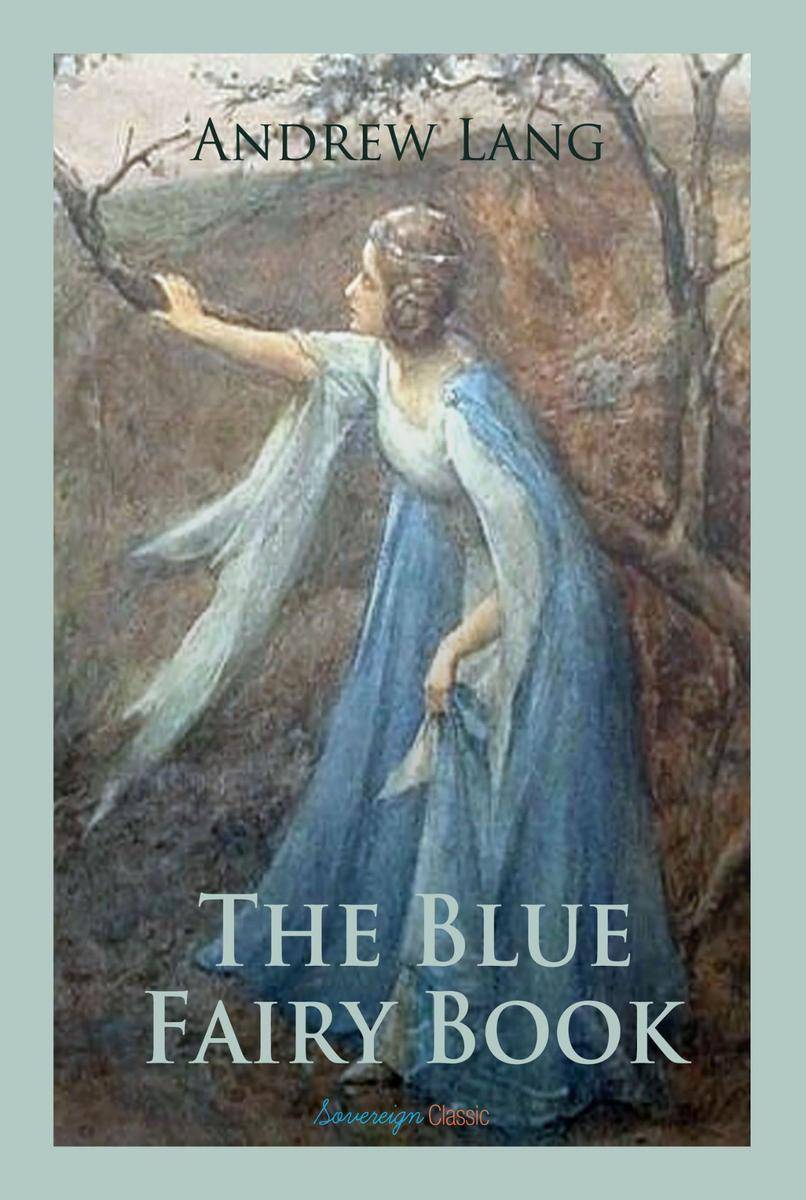
The Blue Fairy Book
¥40.79
Once upon a time in a certain country there lived a king whose palace was surrounded by a spacious garden. But, though the gardeners were many and the soil was good, this garden yielded neither flowers nor fruits, not even grass or shady trees. The King was in despair about it, when a wise old man said to him...

Soria Moria Castle and Other Fairy Tales
¥40.79
There was once upon a time a couple of folks who had a son called Halvor. Ever since he had been a little boy he had been unwilling to do any work, and had just sat raking about among the ashes. His parents sent him away to learn several things, but Halvor stayed nowhere, for when he had been gone two or three days he always ran away from his master, hurried off home, and sat down in the chimney corner to grub among the ashes again...

Youth
¥40.79
Youth is the third novel in Leo Tolstoy's autobiographical trilogy, following Childhood and Boyhood. Tolstoy wrote his first novel in the trilogy at the age of twenty three.
The Innocence of Father Brown
¥40.79
Father Brown is a short, stumpy Roman Catholic Church priest, formerly of Cobhole in Essex, and now working in London, with shapeless clothes and a large umbrella, and an uncanny insight into human evil.

Delphi Complete Poetical Works of Andrew Marvell (Illustrated)
¥16.27
Andrew Marvell was a leading metaphysical poet, whose technical genius and scathing wit firmly establish him as a leading literary figure of the seventeenth century. The Delphi Poets Series offers readers the works of literature's finest poets, with superior formatting. This volume presents Marvell’s complete poetical works, with beautiful illustrations and the usual Delphi bonus material. (Version 1) * Beautifully illustrated with images relating to Marvell's life and works * Concise introduction to the life and poetry of Andrew Marvell * Excellent formatting of the poems * Special chronological and alphabetical contents tables for the poetry * Easily locate the poems you want to read * Includes Marvell's rare Latin and apocryphal poems * Features a bonus biography - discover Marvell's political and literary life * Scholarly ordering of texts into chronological order and literary genres Please visit www.delphiclassics.com to browse through our range of exciting titles CONTENTS: The Poetry of Andrew Marvell BRIEF INTRODUCTION: ANDREW MARVELL The Poems LIST OF POEMS IN CHRONOLOGICAL ORDER LIST OF POEMS IN ALPHABETICAL ORDER The Biography ANDREW MARVELL by Augustine Birrell Please visit www.delphiclassics.com to browse through our range of exciting titles
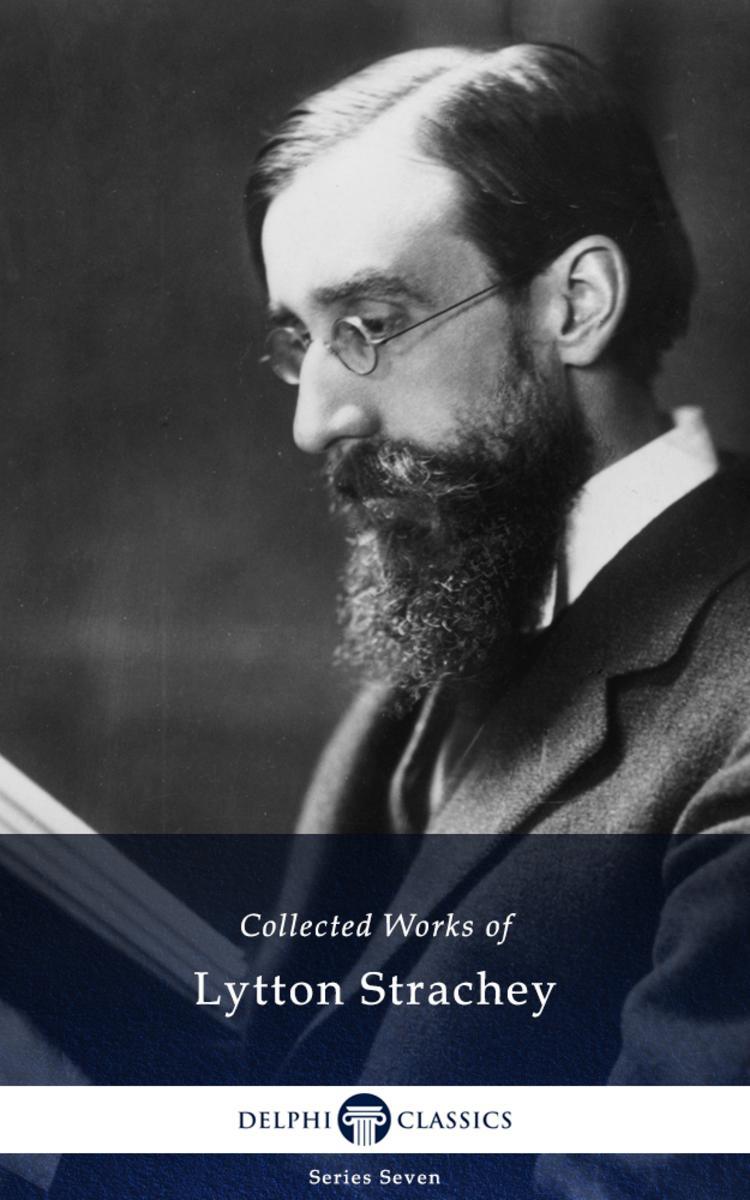
Delphi Collected Works of Lytton Strachey (Illustrated)
¥24.44
Lytton Strachey, the English biographer and critic, introduced a new era of biographical writing at the close of World War I. Strachey’s works are celebrated for establishing a new form of biography in which psychological insight and sympathy are combined with irreverence and wit. This comprehensive eBook presents Strachey’s collected works, with numerous illustrations, rare texts, informative introductions and the usual Delphi bonus material. (Version 1) * Beautifully illustrated with images relating to Strachey’s life and works* Concise introductions to the major texts* Many famous biographies, with individual contents tables* Images of how the books were first published, giving your eReader a taste of the original texts* Excellent formatting of the texts* Includes Strachey’s rare poetry – available in no other collection* Also includes Strachey’s early Spectator essays, first time in digital print* Features two contextual pieces, evaluating Strachey’s contribution to literature* Scholarly ordering of texts into chronological order and literary genres Please note: due to US copyright restrictions, books published after 1922 cannot appear in this edition. When new texts become available in your public domain, they will be added to the eBook as a free update. Please visit www.delphiclassics.com to browse through our range of exciting titles CONTENTS: The BooksINTRODUCTION FOR ‘A SIMPLE STORY’ by E. InchbaldLANDMARKS IN FRENCH LITERATUREEMINENT VICTORIANSQUEEN VICTORIABOOKS AND CHARACTERSMISCELLANEOUS ESSAYS FROM ‘THE SPECTATOR’ The PoetryELY: AN ODE, FROM PROLUSIONES ACADEMICAE, 1902EUPHROSYNE: A COLLECTION OF VERSE The Contextual PiecesTHE ART OF BIOGRAPHY by Virginia WoolfLYTTON STRACHEY by Max Beerbohm Please visit www.delphiclassics.com to browse through our range of exciting titles or to purchase this eBook as a Parts Edition of individual eBooks
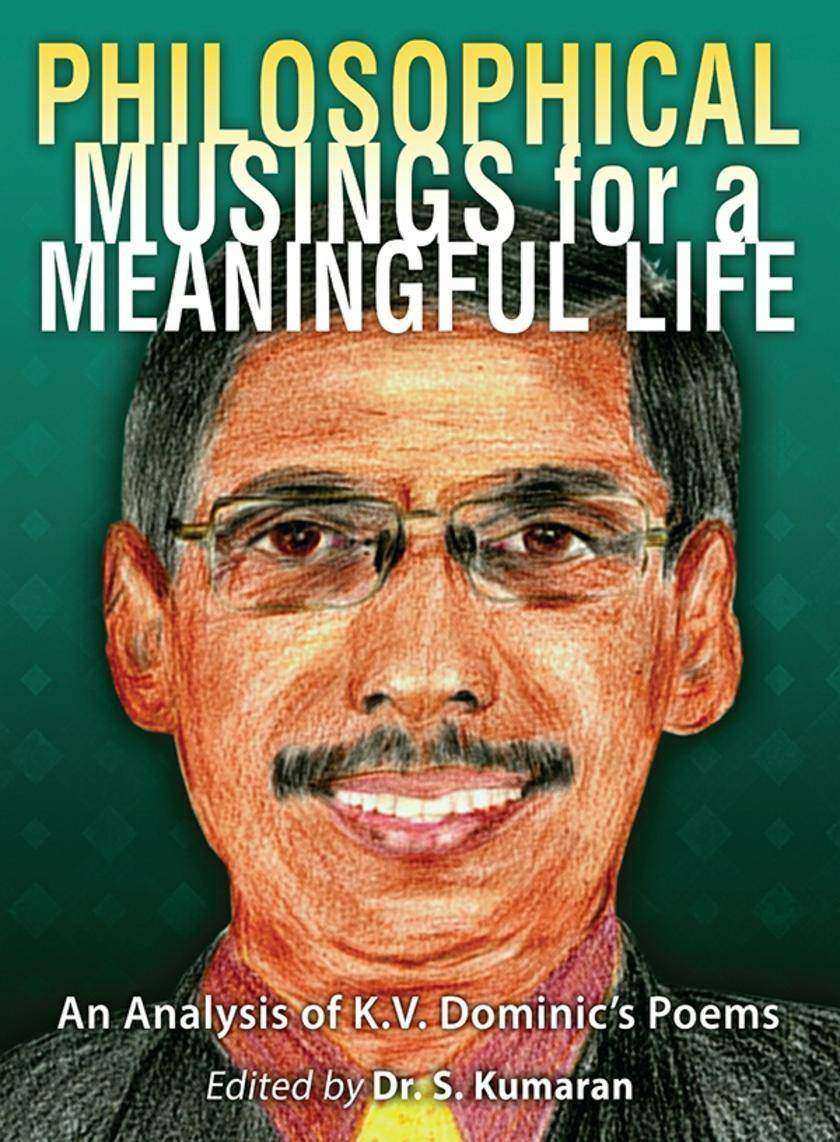
Philosophical Musings for Meaningful Life:An Analysis of K.V. Dominic's Poems
¥90.52
Inside one of Contemporary India's most Influential Poets The twenty-four papers in Philosophical Musings for a Meaningful Life study the poetry collections Winged Reason (2010), Write Son, Write (2011), and Multicultural Symphony (2014), of Dr. K.V. Dominic and reveal his humanistic values and concept of universal brotherhood, his social criticism devoid of absurdity and obscurity, his profound concern for the marginalized sections of society, and his reverence for Nature. All the papers focus on the poet's anguish at the evils and the inhuman attitude prevalent in the society and necessitate harmony of existence. In the context of Indian English poetry, the papers find Dominic to be unique in his use of simple and plain language to address the vast canvass of human life and the neglected segment of human society. Further, the papers bring out how the universal appeal of Dominic lies in his ability to view the world as a sanctuary and acknowledge him as the promising voice of the present century for his belief in the interrelatedness of all lives that ascertains positive change in the individuals. Dr. S. Kumaran, Editor, is working as an Assistant Professor in the Postgraduate & Research Department of English, Thiruvalluvar Government Arts College, Rasipuram. He is Associate Editor of two refereed international biannual journals, Writers Editors Critics (WEC) and International Journal on Multicultural Literature (IJML); and a Member of the Editorial Boards of various journals from India and abroad. "This critical study on the poetry of Dr. K.V. Dominic deserves to be read closely for evaluation and to be on the shelf of every notable library. Philosophical Musings for a Meaningful Life will inspire scholars from the West to find rubies and diamonds in the Indian poetry of today." --Dr. Stephen Gill, Poet Laureate of Ansted University "K.V. Dominic's social consciousness is his chief forte. Not for a moment does he divert attention from the simple and innocent activities of ordinary human beings. From his lyrics originate feelings of eternal sympathy, peace, and fraternal unity." --P.C.K. Prem, critic from Himachal Pradesh, India From the World Voices Series Modern History Press www.ModernHistoryPress.com
International Journal on Multicultural Literature (IJML):Vol. 7, No. 2 (July 201
¥48.74
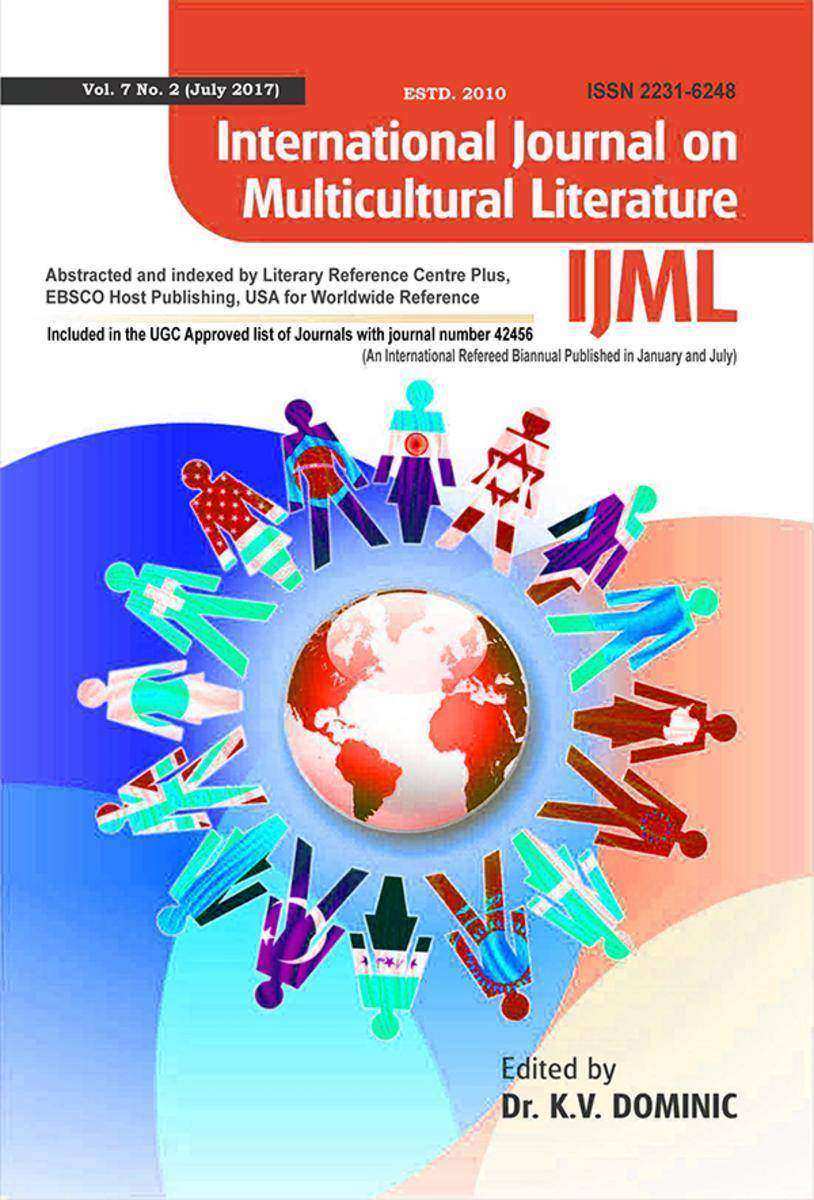
International Journal on Multicultural Literature (IJML) Volume 7 Number 2 (July 2017) ISSN 2231-6248. Highlights include ·Solutions to Religious Communalism as Projected in Mahesh Dattani's Final Solutions: An Analysis by S. Chelliah ·K.V. Dominic's Winged Reason: A Portrait of Social Realism by D.C. Chambial ·Tracing Political Bricoleurs in Winston Churchill's Thoughts and Adventures and Khushwant Singh's The End of India by Sreedevi R. & Raichel M. Sylus ·Play/Games as Sublimation of Juvenile Delinquency: An Exploration into the World of Children's Literature by Sijo Varghese ·Intrinsic Journey into the Epic, Savitri: A Symbolic Exploration by Santanu Basak ·Feminine or Feminist: Ambiguous Women in The Moor's Last Sigh by Sharmila Bhattacharjee ·Element of Grotesque in Carson McCullers' The Ballad of the Sad Cafe by Sarika Tiwari ·Alec Derwent Hope on Poet and Art of Poetry by Amodini Sreedharan ·Women as Victims: A Study of Nalini Sharma's Strange Equations by S. Barathi ·Mahesh Dattani's Final Solutions: Deconstruction of Communalism - Nidhish Kumar Singh ·Authenticity of Rural Life in the Novels of Chinua Achebe, Kamala Markandaya and Ramesh K. Srivastava by Smita Das ·Lives on Pyre: A Socio-realistic Portrayal in D.C. Chambial's The Cargoes of the Bleeding Hearts by Parthajit Ghosh & Madhu Kamra ·An Evolution of His Demography: A Socio-cultural Flow in the Fictional World of Manoj Das by Suresh Bera & Somali Gupta ·Maya Angelou's Shaker, Why Don't You Sing?: a Paroxysm of Confession by Ishita Pramanik & Shukla Banerjee ·Fruits of Delight in the Fields of Despair in Manas Bakshi's Dance of Satan and Other Poems by T.V. Reddy IJML is a peer-reviewed research journal in English literature published from Thodupuzha, Kerala, India. The publisher and editor is Prof. Dr. K. V. Dominic, renowned English language poet, critic, short story writer and editor who has to his credit 27 books. He is also the secretary of Guild of Indian English Writers, Editors and Critics (GIEWEC). Since 2010, IJML is a biannual journal published in January and July. The articles are sent first to the referees by the editor and only if they accept, the papers will be published. Although based in India, each issue includes worldwide contributors. Although IJML concentrates on multiculturalism, it also encompasses other literature. Each issue also includes poems, short stories, review articles, book reviews, interviews, general essays etc. under separate sections. IJML is available in paperback, Kindle, ePub, and PDF editions. Distributed by Modern History Press Learn more at www.profKVDominc.com

Delphi Collected Works of Sara Teasdale US (Illustrated)
¥8.09
Winner of the first Pulitzer Prize for poetry, the American poet Sara Teasdale composed short, personal lyrics, noted for their classical simplicity and quiet intensity. In 1918 she won the Columbia University Poetry Society prize (forerunner of the Pulitzer Prize for poetry) and the annual prize of the Poetry Society of America for her pioneering collection of verse, ‘Love Songs’. The Delphi Poets Series offers readers the works of literature's finest poets, with superior formatting. This volume presents Teasdale’s collected poetical works, with related illustrations and the usual Delphi bonus material. (Version 1) * Beautifully illustrated with images relating to Teasdale's life and works* Concise introduction to Teasdale’s life and poetry* Include all the poems available in the US public domain* Images of how the poetry books were first printed, giving your eReader a taste of the original texts* Excellent formatting of the poems* Special chronological and alphabetical contents tables for the poetry* Easily locate the poems you want to read* Scholarly ordering of texts into chronological order and literary genres Please visit www.delphiclassics.com to see our wide range of poet titles CONTENTS: The Life and Poetry of Sara TeasdaleBrief Introduction: Sara TeasdaleSonnets to Duse and Other Poems, 1907Helen of Troy and Other Poems, 1911Rivers to the Sea, 1915Love Songs, 1917Flame and Shadow, 1920 The PoemsList of Poems in Chronological OrderList of Poems in Alphabetical Order Please visit www.delphiclassics.com to browse through our range of poetry titles or buy the entire Delphi Poets Series as a Super Set

The Windsor Beauties:Ladies of the Court of Charles II
¥65.99
"The Duchess of York wished to have the portraits of the most beautiful women at Court," Anthony Hamilton wrote in the Memoirs of Count Grammont. "Lely painted them, and employed all his art in the execution. He could not have had more alluring sitters. Every portrait is a masterpiece." The original set of "Beauties" painted by Lely were, as we find from James II's catalogue, eleven in number, their names being Barbara, Duchess of Cleveland (ne'e Villiers); Frances, Duchess of Richmond and Lennox (ne'e Stuart); Mrs. Jane Myddleton (ne'e Needham); Elizabeth, Countess of Northumberland (ne'e Wriothesley); Elizabeth, Countess of Falmouth (ne'e Bagot); Elizabeth, Lady Denham (ne'e Brooke); Frances, Lady Whitmore (ne'e Brooke); Henrietta, Countess of Rochester (ne'e Boyle); Elizabeth, Countess de Grammont (ne'e Hamilton); and Madame d'Orleans. It will be seen that in this list of "Beauties" Anne Hyde, Duchess of York, does not figure; but since she was responsible for the collection, it would be peculiarly ungracious to omit her from a volume that treats of it. Also, she deserves inclusion for her supreme courage in selecting the sitters--for what must the ladies who were not chosen have said and thought of her? Nor in the series are Nell Gwyn, Louise de Ke'roualle, and the Duchess Mazarin; but no account of the social life of the Court of Charles II can possibly omit mention of them, and therefore something has been said about each of these ladies. The new Revised Edition restores Melville's masterpiece of the intricate relationships and day-by-day account of court life in the reign of Charles II of England. This edition also adds a new glossary, bibliography, and extended footnotes for the lay history reader. Also included are first-ever translations of French language poems, letters, and epitaphs completed by Coby Fletcher. More information at www.VictorianHeritage.com

Confessions of a Trauma Junkie:My Life as a Nurse Paramedic
¥65.99
Ride in the back of the ambulance with Sherry Jones Mayo Share the innermost feelings of emergency services workers as they encounter trauma, tragedy, redemption, and even a little humor. Sherry Jones Mayo has been an Emergency Medical Technician, Emergerncy Room Nurse, and an on-scene critical incident debriefer for Hurricane Katrina. Most people who have observed or experienced physical, mental or emotional crisis have single perspectives. This book allows readers to stand on both sides of the gurney; it details a progression from innocence to enlightened caregiver to burnout, glimpsing into each stage personally and professionally.Emergency Service Professionals Praise Confessions of a Trauma Junkie "A must read for those who choose to subject themselves to life at its best and at its worst. Sherry offers insight in the Emergency Response business that most people cannot imagine." --Maj Gen Richard L. Bowling, former Commanding General, USAF Auxiliary (CAP) "Sherry Mayo shares experiences and unique personal insights of first responders. Told with poetry, sensitivity and a touch of humor at times, all are real, providing views into realities EMTs, Nurses, and other first responders encounter. Recommended reading for anyone working with trauma, crises, critical incidents in any profession." -- George W. Doherty, MS, LPC, President Rocky Mountain Region Disaster Mental Health Institute "Sherry has captured the essence of working with people who have witnessed trauma. It made me cry, it made me laugh, it helped me to understand differently the work of our Emergency Services Personnel. I consider this a 'MUST READ' for all of us who wish to be helpful to those who work in these professions." --Dennis Potter, LMSW, CAAC, FAAETS, ICISF Instructor "Confessions of a Trauma Junkie is an honest, powerful, and moving account of the emotional realities of helping others! Sherry Mayo gives us a privileged look into the healing professions she knows firsthand. The importance of peer support is beautifully illustrated. This book will deepen the readers respect for those who serve." --Victor Welzant, PsyD, Director of Education and Training The International Critical Incident Stress Foundation, Inc Learn more at www.SherryJonesMayo.com From the Reflections of America Series Modern History Press www.ModernHistoryPress.com
Delphi Collected Poetical Works of Nikolay Nekrasov (Illustrated)
¥16.27
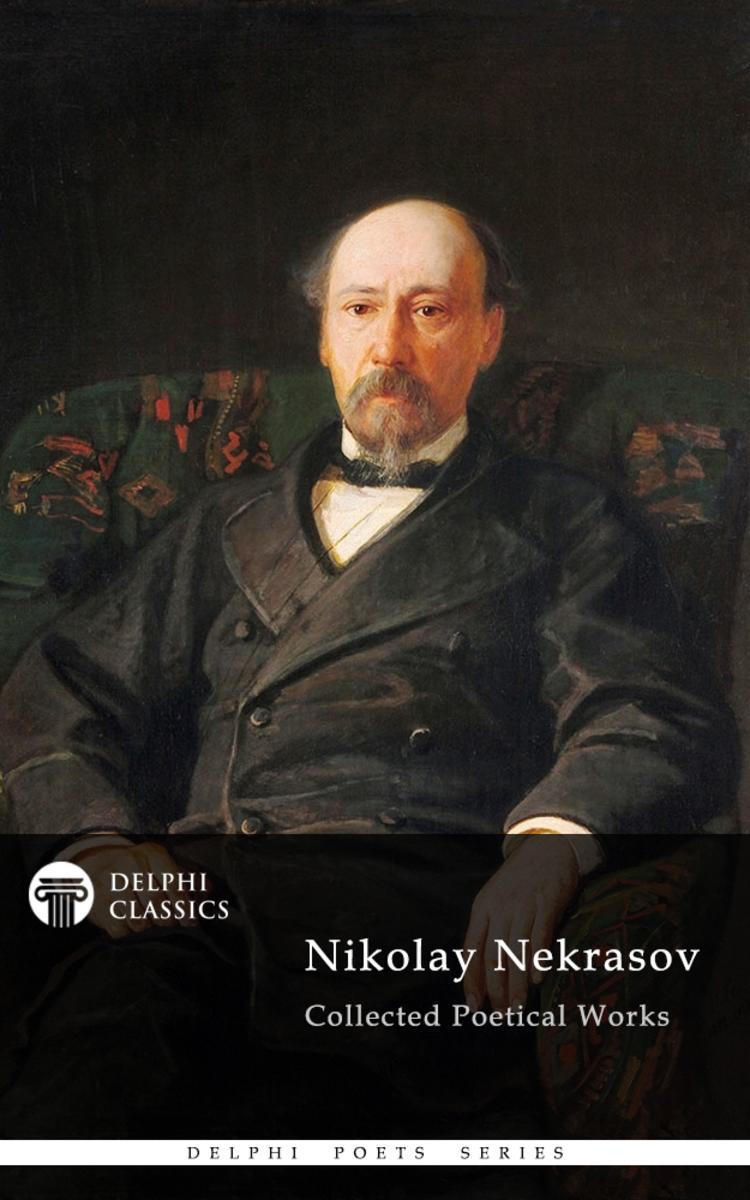
Nikolay Nekrasov was a Russian poet, critic and publisher, whose deeply compassionate poems about peasant Russia made him the hero of liberal and radical circles of the intelligentsia. He is credited with introducing into Russian poetry ternary meters and the technique of dramatic monologue; working as the editor of several literary journals, Nekrasov was also singularly successful and influential, launching the career of Leo Tolstoy. The Delphi Poets Series offers readers the works of literature's finest poets, with superior formatting. This volume presents Nekrasov’s complete poetical works, with beautiful illustrations and the usual Delphi bonus material. (Version 1) * Beautifully illustrated with images relating to Nekrasov's life and works* Concise introduction to Nekrasov’s life and poetry* Excellent formatting of the poems* Rare poems translated by Juliet M. Soskice, first time in digital print* Includes Nekrasov’s epic poem WHO CAN BE HAPPY AND FREE IN RUSSIA?, translated by Juliet M. Soskice* Special chronological and alphabetical contents tables for the poetry* Easily locate the poems you want to read* Features a bonus biography - discover Nekrasov's literary life* Scholarly ordering of texts into chronological order and literary genres Please visit www.delphiclassics.com to see our wide range of poet titles CONTENTS: The Life and Poetry of Nikolay NekrasovINTRODUCTION: NIKOLAY NEKRASOVPOEMS OF NIKOLAY NEKRASOVWHO CAN BE HAPPY AND FREE IN RUSSIA? The PoemsLIST OF POEMS IN CHRONOLOGICAL ORDERLIST OF POEMS IN ALPHABETICAL ORDER The BiographyNICHOLAS NEKRASOV: A SKETCH OF HIS LIFE by David Soskice Please visit www.delphiclassics.com to browse through our range of poetry titles or buy the entire Delphi Poets Series as a Super Set
Delphi Collected Poetical Works of John Gower (Illustrated)
¥16.27
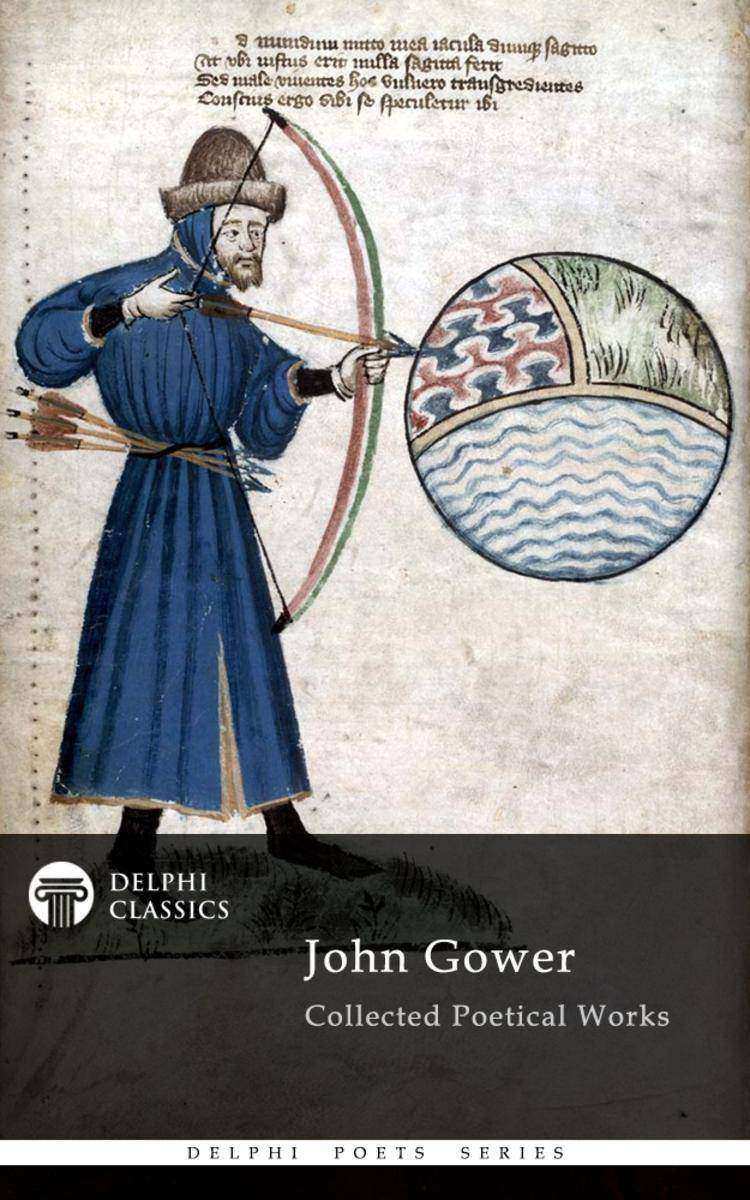
The contemporary and personal friend of Geoffrey Chaucer, the English poet John Gower produced works in the tradition of courtly love and moral allegory. ‘Confessio Amantis’, Gower’s greatest English poem, is a collection of exemplary tales of love, whereby Venus’ priest, Genius, instructs the poet, Amans, in the art of both courtly and Christian love. The stories derive from classical and medieval sources and are told with a tender, restrained narrative style. The Delphi Poets Series offers readers the works of literature's finest poets, with superior formatting. This volume presents Gower’s complete English works, with related illustrations and the usual Delphi bonus material. (Version 1) * Beautifully illustrated with images relating to Gower's life and works* Concise introduction to Gower’s life and poetry* Images of how the poetry books were first printed, giving your eReader a taste of the original texts* Excellent formatting of the poems* Easily locate the poems you want to read* Includes G. C. Macaulay’s 1901 text of ‘Confessio Amantis’, with line numbers* Macaulay’s seminal biography - discover Gower's medieval world Please visit www.delphiclassics.com to see our wide range of poet titles CONTENTS: The Life and Poetry of John GowerBrief Introduction: John Gower by Sidney LeeConfessio AmantisTo King Henry IV: In Praise of Piece The BiographyLife of Gower by G. C. Macaulay Please visit www.delphiclassics.com to browse through our range of poetry titles or buy the entire Delphi Poets Series as a Super Set

Delphi Complete Poetical Works of Sara Teasdale (Illustrated)
¥16.27
Winner of the first Pulitzer Prize for poetry, the American poet Sara Teasdale composed short, personal lyrics, noted for their classical simplicity and quiet intensity. In 1918 she won the Columbia University Poetry Society prize (forerunner of the Pulitzer Prize for poetry) and the annual prize of the Poetry Society of America for her pioneering collection of verse, ‘Love Songs’. The Delphi Poets Series offers readers the works of literature's finest poets, with superior formatting. This volume presents Teasdale’s complete poetical works, with related illustrations and the usual Delphi bonus material. (Version 1) * Beautifully illustrated with images relating to Teasdale's life and works* Concise introduction to Teasdale’s life and poetry* Images of how the poetry books were first printed, giving your eReader a taste of the original texts* Excellent formatting of the poems* Special chronological and alphabetical contents tables for the poetry* Easily locate the poems you want to read* Features Teasdale's last three poetry collections for the first time in digital publishing* Teasdale's last poetry collection, her masterpiece ‘Strange Victory’* Scholarly ordering of texts into chronological order and literary genres Please visit www.delphiclassics.com to see our wide range of poet titles CONTENTS: The Life and Poetry of Sara TeasdaleBrief Introduction: Sara TeasdaleSonnets to Duse and Other Poems, 1907Helen of Troy and Other Poems, 1911Rivers to the Sea, 1915Love Songs, 1917Flame and Shadow, 1920Dark of the Moon, 1926Stars To-night, 1930Strange Victory, 1933 The PoemsList of Poems in Chronological OrderList of Poems in Alphabetical Order Please visit www.delphiclassics.com to browse through our range of poetry titles or buy the entire Delphi Poets Series as a Super Set


