Mansfield Park
¥28.04
It is believed that the scene of this tale, and most of the information necessary to understand its allusions, are rendered sufficiently obvious to the reader in the text itself, or in the accompanying notes. Still there is so much obscurity in the Indian traditions, and so much confusion in the Indian names, as to render some explanation useful. Few men exhibit greater diversity, or, if we may so express it, greater antithesis of character, than the native warrior of North America. In war, he is daring, boastful, cunning, ruthless, self-denying, and self-devoted; in peace, just, generous, hospitable, revengeful, superstitious, modest, and commonly chaste. These are qualities, it is true, which do not distinguish all alike; but they are so far the predominating traits of these remarkable people as to be characteristic. It is generally believed that the Aborigines of the American continent have an Asiatic origin. There are many physical as well as moral facts which corroborate this opinion, and some few that would seem to weigh against it. The color of the Indian, the writer believes, is peculiar to himself, and while his cheek-bones have a very striking indication of a Tartar origin, his eyes have not. Climate may have had great influence on the former, but it is difficult to see how it can have produced the substantial difference which exists in the latter. The imagery of the Indian, both in his poetry and in his oratory, is oriental; chastened, and perhaps improved, by the limited range of his practical knowledge. He draws his metaphors from the clouds, the seasons, the birds, the beasts, and the vegetable world. In this, perhaps, he does no more than any other energetic and imaginative race would do, being compelled to set bounds to fancy by experience; but the North American Indian clothes his ideas in a dress which is different from that of the African, and is oriental in itself. His language has the richness and sententious fullness of the Chinese. Philologists have said that there are but two or three languages, among all the numerous tribes which formerly occupied the country that now composes the United States. They ascribe the known difficulty one people have to understand another to corruptions and dialects. The writer remembers to have been present at an interview between two chiefs of the Great Prairies west of the Mississippi, and when an interpreter was in attendance who spoke both their languages. The warriors appeared to be on the most friendly terms, and seemingly conversed much together; yet, according to the account of the interpreter, each was absolutely ignorant of what the other said. They were of hostile tribes, brought together by the influence of the American government; and it is worthy of remark, that a common policy led them both to adopt the same subject. They mutually exhorted each other to be of use in the event of the chances of war throwing either of the parties into the hands of his enemies. Whatever may be the truth, as respects the root and the genius of the Indian tongues, it is quite certain they are now so distinct in their words as to possess most of the disadvantages of strange languages; hence much of the embarrassment that has arisen in learning their histories, and most of the uncertainty which exists in their traditions. Like nations of higher pretensions, the American Indian gives a very different account of his own tribe or race from that which is given by other people. He is much addicted to overestimating his own perfections, and to undervaluing those of his rival or his enemy; a trait which may possibly be thought corroborative of the Mosaic account of the creation. The whites have assisted greatly in rendering the traditions of the Aborigines more obscure by their own manner of corrupting names. Thus, the term used in the title of this book has undergone the changes of Mahicanni, Mohicans, and Mohegans; the latter being the word commonly used by the whites.
Symbolic Logic: {Complete & Illustrated}
¥28.04
The excellence of the following Treatise is so well known to all in any tolerable degree conversant with the Art of Painting, that it would be almost superfluous to say any thing respecting it, were it not that it here appears under the form of a new translation, of which fome account may be expected. Of the original Work, which is in reality a selection from the voluminous manuscript collections of the Author, both in Solio and Quarto, of all such passages as related to Painting, no edition appeared in print till 1651. Though its Author died so long before as the year 1519; and it is owing to the circumstance of a manuscript copy of these extracts in the original Italian, having fallen into the hands of “Raphael” that in the former of these years it was published at Paris in a thin folio volume in that language, accompanied with a set of cuts from the drawings of Niccolo Pouissin, and Alberti, the former having designed and defined the human figures, the latter the geometrical and other representations.. The first translation of this Treatise into English, appeared in the year 1721. It does not declare by whom it was made; but though it prosesses to have been done from the original Italian, it is evident, upon a comparison, that more use was made of the revised edition of the French translation. Indifferent, however, as it is, it had become fo scarce, and risen to a price fo extravagant, that, to supply the demand, it was found necessary, in the year 1796, to reprint it as it stood, with all its errors on its head, no opportunity then offering of procuring a french translation. This last impression, however, being now alfo disposed of, and a new one again called for, the present Translator was induced to step forward, and undertake the office of frenh translating it, on finding, by comparing the former versions both in French and English with the original, many passages which he thought might at once be more concisely and more faithfully rendered. ABOUT AUTHOR: Leonardo di ser Piero da Vinci (15 April 1452 – 2 May 1519) was an Italian painter, sculptor, architect, musician, mathematician, engineer, inventor, anatomist, geologist, cartographer, botanist, and writer. He is widely considered to be one of the greatest polymaths of all time and perhaps the most diversely talented person ever to have lived. His genius, perhaps more than that of any other figure, epitomized the Renaissance humanist ideal. Leonardo has often been described as the archetype of the Renaissance Man, a man of "unquenchable curiosity" and "feverishly inventive imagination". Marco Rosci states that while there is much speculation about Leonardo, his vision of the world is essentially logical rather than mysterious, and that the empirical methods he employed were unusual for his time. Born out of wedlock to a notary, Piero da Vinci, and a peasant woman, Caterina, in Vinci in the region of Florence, Leonardo was educated in the studio of the renowned Florentine painter Verrocchio. Much of his earlier working life was spent in the service of Ludovico il Moro in Milan. He later worked in Rome, Bologna and Venice, and he spent his last years in France at the home awarded him by Francis I. Leonardo was, and is, renowned as one of the greatest painters of all time. Among his works, the Mona Lisa is the most famous and most parodied portrait and The Last Supper the most reproduced religious painting of all time, with their fame approached only by Michelangelo's The Creation of Adam. Leonardo's drawing of the Vitruvian Man is also regarded as a cultural icon, being reproduced on items as varied as the euro coin, textbooks, and T-shirts. Perhaps fifteen of his paintings have survived, the small number because of his constant, and frequently disastrous, experimentation with new techniques, and his chronic procrastination. Nevertheless, these few works, together with his notebooks, which contain drawings, scientific diagrams, and his thoughts on the nature of painting, compose a contribution to later generations of artists rivalled only by that of his contemporary, Michelangelo. Leonardo is revered for his technological ingenuity. He conceptualised flying machines, an armoured vehicle, concentrated solar power, an adding machine, and the double hull, also outlining a rudimentary theory of plate tectonics.
Eccentricities of the Animal Creation: Illustrated
¥13.98
Vasari says, and rightly, in his Life of Leonardo, "that he laboured much more by his word than in fact or by deed", and the biographer evidently had in his mind the numerous works in Manuscript which have been preserved to this day. To us, now, it seems almost inexplicable that these valuable and interesting original texts should have remained so long unpublished, and indeed forgotten. It is certain that during the XVIth and XVIIth centuries their exceptional value was highly appreciated. This is proved not merely by the prices which they commanded, but also by the exceptional interest which has been attached to the change of ownership of merely a few pages of Manuscript. That, notwithstanding this eagerness to possess the Manuscripts, their contents remained a mystery, can only be accounted for by the many and great difficulties attending the task of deciphering them. The handwriting is so peculiar that it requires considerable practice to read even a few detached phrases, much more to solve with any certainty the numerous difficulties of alternative readings, and to master the sense as a connected whole. Vasari observes with reference to Leonardos writing: "he wrote backwards, in rude characters, and with the left hand, so that any one who is not practised in reading them, cannot understand them". The aid of a mirror in reading reversed handwriting appears to me available only for a first experimental reading. Speaking from my own experience, the persistent use of it is too fatiguing and inconvenient to be practically advisable, considering the enormous mass of Manuscripts to be deciphered. And as, after all, Leonardo's handwriting runs backwards just as all Oriental character runs backwards—that is to say from right to left—the difficulty of reading direct from the writing is not insuperable. This obvious peculiarity in the writing is not, however, by any means the only obstacle in the way of mastering the text. Leonardo made use of an orthography peculiar to himself; he had a fashion of amalgamating several short words into one long one, or, again, he would quite arbitrarily divide a long word into two separate halves; added to this there is no punctuation whatever to regulate the division and construction of the sentences, nor are there any accents—and the reader may imagine that such difficulties were almost sufficient to make the task seem a desperate one to a beginner. It is therefore not surprising that the good intentions of some of Leonardo s most reverent admirers should have failed. Leonardo's literary labours in various departments both of Art and of Science were those essentially of an enquirer, hence the analytical method is that which he employs in arguing out his investigations and dissertations. The vast structure of his scientific theories is consequently built up of numerous separate researches, and it is much to be lamented that he should never have collated and arranged them. His love for detailed research—as it seems to me—was the reason that in almost all the Manuscripts, the different paragraphs appear to us to be in utter confusion; on one and the same page, observations on the most dissimilar subjects follow each other without any connection. A page, for instance, will begin with some principles of astronomy, or the motion of the earth; then come the laws of sound, and finally some precepts as to colour. Another page will begin with his investigations on the structure of the intestines, and end with philosophical remarks as to the relations of poetry to painting; and so forth. Leonardo himself lamented this confusion, and for that reason I do not think that the publication of the texts in the order in which they occur in the originals would at all fulfil his intentions. No reader could find his way through such a labyrinth; Leonardo himself could not have done it. ABOUT AUTHOR: Leonardo Da Vinci, Born on April 15, 1452, in Vinci, Italy, Leonardo da Vinci was concerned with the laws of science and nature, which greatly informed his work as a painter, sculptor, inventor and draftsmen. His ideas and body of work—which includes "Virgin of the Rocks," "The Last Supper," "Leda and the Swan" and "Mona Lisa"—have influenced countless artists and made da Vinci a leading light of the Italian Renaissance.Quotes"Iron rusts from disuse, stagnant water loses its purity and in cold weather becomes frozen; even so does inaction sap the vigor of the mind."? ? ? ? ? – Leonardo da Vinci Humble Beginnings:Leonardo da Vinci was born on April 15, 1452, in Vinci, Italy. Born out of wedlock, the love child of a respected notary and a young peasant woman, he was raised by his father, and his stepmothers. 'The Last Supper'In 1482, Lorenzo de' Medici, a man from a prominent Italian family, commissioned da Vinci to create a silver lyre and bring it to Ludovico il Moro, the Duke of Milan, as a gesture of peace. Da Vinci did so and then wrote Ludovico a letter describing how his engineering and artistic tal
Универсальный календарь садовода-огородника
¥17.74
Читанка для учн?в старших клас?в середньо? школи в ус?х ?вропейських кра?нах. Книжку створено в рамках сп?льного проекту орган?зац?й та установ, що працюють разом у Платформ? ?вропейсько? пам'ят? та сумл?ння. Зб?рка м?стить 30 дивовижних ?стор?й людей з 16 ?вропейських кра?н, що зазнали тотал?таризму. Це розпов?д? про см?ливц?в, як? протистояли тотал?таризмов? та загинули, а також про тих, кому пощастило вижити. Ц? розпов?д? сповнен? надзвичайного суму через незм?рн? страждання, що ?х завдали фанатичн? орудар?, поборники та п?дсобники тотал?таризму таким же людям, як ? вони. Але водночас вони осп?вують любов до свободи, людську г?дн?сть, несхитн?сть, см?лив?сть, в?ру та в?ддан?сть головним людським ц?нностям.
Life of the Moselle
¥28.04
["The Elements of Drawing" was written during the winter of 1856. The First Edition was published in 1857; the Second followed in the same year, with some additions and slight alterations. The Third Edition consisted of sixth thousand, 1859; seventh thousand, 1860; and eighth thousand, 1861.The work was partly reproduced in "Our Sketching Club," by the Rev. R. St. John Tyrwhitt, M.A., 1874; with new editions in 1875, 1882, and 1886.Mr. Ruskin meant, during his tenure of the Slade Professorship at Oxford, to recast his teaching, and to write a systematic manual for the use of his Drawing School, under the title of "The Laws of Fésole." Of this only vol. i. was completed, 1879; second edition, 1882. As, therefore, "The Elements of Drawing" has never been completely superseded, and as many readers of Mr. Ruskin's works have expressed a desire to possess the book in its old form, it is now reprinted as it stood in 1859.] ? THE SECOND EDITION.As one or two questions, asked of me since the publication of this work, have indicated points requiring elucidation, I have added a few short notes in the first Appendix. It is not, I think, desirable otherwise to modify the form or add to the matter of a book as it passes through successive editions; I have, therefore, only mended the wording of some obscure sentences; with which exception the text remains, and will remain, in its original form, which I had carefully considered. Should the public find the book useful, and call for further editions of it, such additional notes as may be necessary will be always placed in the first Appendix, where they can be at once referred to, in any library, by the possessors of the earlier editions; and I will take care they shall not be numerous.August 3, 1857. ? PREFACE? i. It may perhaps be thought, that in prefacing a manual of drawing, I ought to expatiate on the reasons why drawing should be learned; but those reasons appear to me so many and so weighty, that I cannot quickly state or enforce them. With the reader's permission, as this volume is too large already, I will waive all discussion respecting the importance of the subject, and touch only on those points which may appear questionable in the method of its treatment. ? ii. In the first place, the book is not calculated for the use of children under the age of twelve or fourteen. I do not think it advisable to engage a child in any but the most voluntary practice of art. If it has talent for drawing, it will be continually scrawling on what paper it can get; and should be allowed to scrawl at its own free will, due praise being given for every appearance of care, or truth, in its efforts. It should be allowed to amuse itself with cheap colors almost as soon as it has sense enough to wish for them. If it merely daubs the paper with shapeless stains, the color-box may be taken away till it knows better: but as soon as it begins painting red coats on soldiers, striped flags to ships, etc., it should have colors at command; and, without restraining its choice of subject in that imaginative and historical art, of a military tendency, which children delight in, (generally quite as valuable, by the way, as any historical art delighted in by their elders,) it should be gently led by the parents to try to draw, in such childish fashion as may be, the things it can see and likes,—birds, or butterflies, or flowers, or fruit. ? iii. In later years, the indulgence of using the color should only be granted as a reward, after it has shown care and progress in its drawings with pencil. A limited number of good and amusing prints should always be within a boy's reach: in these days of cheap illustration he can hardly possess a volume of nursery tales without good wood-cuts in it, and should be encouraged to copy what he likes best of this kind; but should be firmly restricted to a few prints and to a few books.
Энда. Земля легенд (Jenda. Zemlja legend)
¥26.65
Брошура в стисл?й та популярн?й форм? розпов?да? про под?? Укра?нсько? революц?? 1917–1921 рок?в – процеси державного буд?вництва, творення укра?нсько? пол?тично? нац??, в?дродження укра?нсько? науки, осв?ти, культури та духовност?. Багато уваги прид?ля?ться л?дерам Укра?нсько? революц?? – Михайлу Грушевському, Володимиру Винниченку, Симону Петлюр?, Павлу Скоропадському, ?вгену Петрушевичу, Номану Челеб?дж?хану та ?н., як? розробляли ?? ?деолог?ю, формували порядок денний, вели за собою народ. Розкрива?ться ?нституц?йне буд?вництво, творення законодавчо?, виконавчо?, судово? г?лок влади, розбудова в?йська, дипломат??, ф?нансово? системи тощо. Фотокартки ? св?дчення сучасник?в в?дтворюють атмосферу того часу, проливають св?тло на життя ? побут звичайно? людини в умовах революц?йних потряс?нь.??Брошура п?дготовлена на основ? матер?ал?в ?нформац?йно-просв?тницько? кампан??, яку Укра?нський ?нститут нац?онально? пам’ят? проводить до 100-р?ччя Укра?нсько? революц?? 1917-1921 рок?в, в ход? яко? п?дготовлено низку фотодокументальних виставок, комплект?в лист?вок та ?нформац?йних матер?ал?в, дитячу наст?льну гру, спец?ал?зовану веб-стор?нку, присвячену под?ям Укра?нсько? революц?? 1917–1921 рок?в (www.UNR.memory.gov.ua).??
The Blood Ship
¥18.74
DRAWING is the expression of an idea: “Art must come from within, and not from without. This fact has led some to assert that the study of nature is not essential to the student, and that careful training in the study of the representation of the actual appearance is mechanical and harmful. Such persons forget that all art ideas and sentiments must be based upon natural objects, and that a person who cannot represent truly what he sees will be entirely unable to express the simplest ideal conceptions so that others may appreciate them. Study of nature is, then, of the first and greatest importance to the art student.A drawing may be made in outline, in light and shade, or in color. The value of the drawing artistically does not depend upon the medium used, but upon the individuality of the draughtsman making it. The simplest pencil sketch may have much more merit than an elaborate colored drawing made by one who is unable to represent truly the facts of nature, or who sees, instead of the beauty and poetry, the ugliness and the imperfections of the subject. OBJECTS FOR STUDY:We hear a great deal now about the cultivation of the sense of beauty by the choice of drawing models. Many go so far as to say that nothing but the most beautiful forms should be given from the start, and, asserting that the cube, cylinder,and other type forms are not beautiful, they say that they should not be used, but that beautiful variations of these type forms should be provided. More definite information than this is rarely given. We are not told what natural objects are beautiful, and cheap enough to be provided, or how these objects of beauty are to be obtained, if they are not provided by the city. Such advice as to the use of beautiful models must be very pleasant and valuable to the drawing teacher, who so often fails to secure the money necessary to provide the cheap wooden models costing a few cents each ; and we do not wonder that special and regular teachers often regard this subject as one having no standards and no authorities. Much of all this commotion about beautiful objects of study is raised by those who, suffering from criticism, have in the desire to escape it plunged headlong from one set of mechanical rules for a series of lessons for the public schools, to another set less arbitrary in certain directions, but still mechanical, and if possible, more harmful than before, because attempting more.The average teacher can readily learn to discover at a glance whether or not the drawing of a cube represents the object as it might appear. She can do this even without seeing the model from the pupil's position; and the student can compare his drawing with the object and discover its errors more easily than he can in the drawing of a cast, a leaf, a figure,or any other object of beauty, in which the beauty depends upon lines which are subtile and which require a trained eye to see at all truly.
Квент?н Дорвард
¥5.72
s vezes, a única coisa verdadeira num jornal é a data, disse Luis Fernando Verissimo. Tomar ao pé da letra essa frase bem-humorada do cronista pode no ser um bom negócio. Porém, ainda mais temerário seria aceitar a hipótese oposta, ou seja, de que tudo acontece do jeito que o jornalista nos conta. Certos recursos de escrita e de edio aumentam tanto a temperatura do texto que provocam a fuso entre a fantasia e a realidade. Esse fenmeno misterioso, com seu toque de alquimia, é o que Renato Modernell investiga em A notícia como fábula.
Váratlan nyaralás
¥60.90
Kádár János és a nevével fémjelzett korszak megítélése napjainkig élesen megosztja a magyar k?zvéleményt. Ennek egyik ered?je az a hatvanas évek elején meghirdetett ?sz?vetségi politika”, amely egy újfajta kiegyezés reményében együttm?k?d?k, ?társutasok” megnyerésével igyekezett alkut k?tni a magyar társadalommal. Az ennek érdekében hozott politikai, gazdasági intézkedések a t?rténeti elemzések révén mára jól ismertek. Kádár hatalomtechnikai t?rekvéseinek mélyebb rétegei, személyes dimenziói azonban részben még ma is feltáratlanok. Kik voltak azok, akikkel a pártállami vezet?k a megújuló hatalomgyakorlási mód jegyében párbeszédet kezdtek? Milyen korábbi mintákat hasznosított az MSZMP ?sz?vetségi politikájának” kialakítása során? Milyen út vezetett addig, amíg az 1956-os forradalom leverése után ?t évvel elhangozhatott a kádárizmus jelszava, a bibliai mondást kifordító ?aki nincs ellenünk, az velünk van” mottó? TABAJDI G?BOR legújabb k?tete a ?kádárizmus” hatalomtechnikai módszereinek kialakulását mutatja be, és azt a hatalom birtokosai, a magyar kommunisták, illetve Kádár János politikája fel?l értelmezi. ?tfogó elemzéséhez a r?vid és hosszú távú, kül-, illetve belpolitikai folyamatok bemutatása mellett eddig nem publikált titkosszolgálati dokumentumokat is felhasznál.
Pokoli macskák
¥71.69
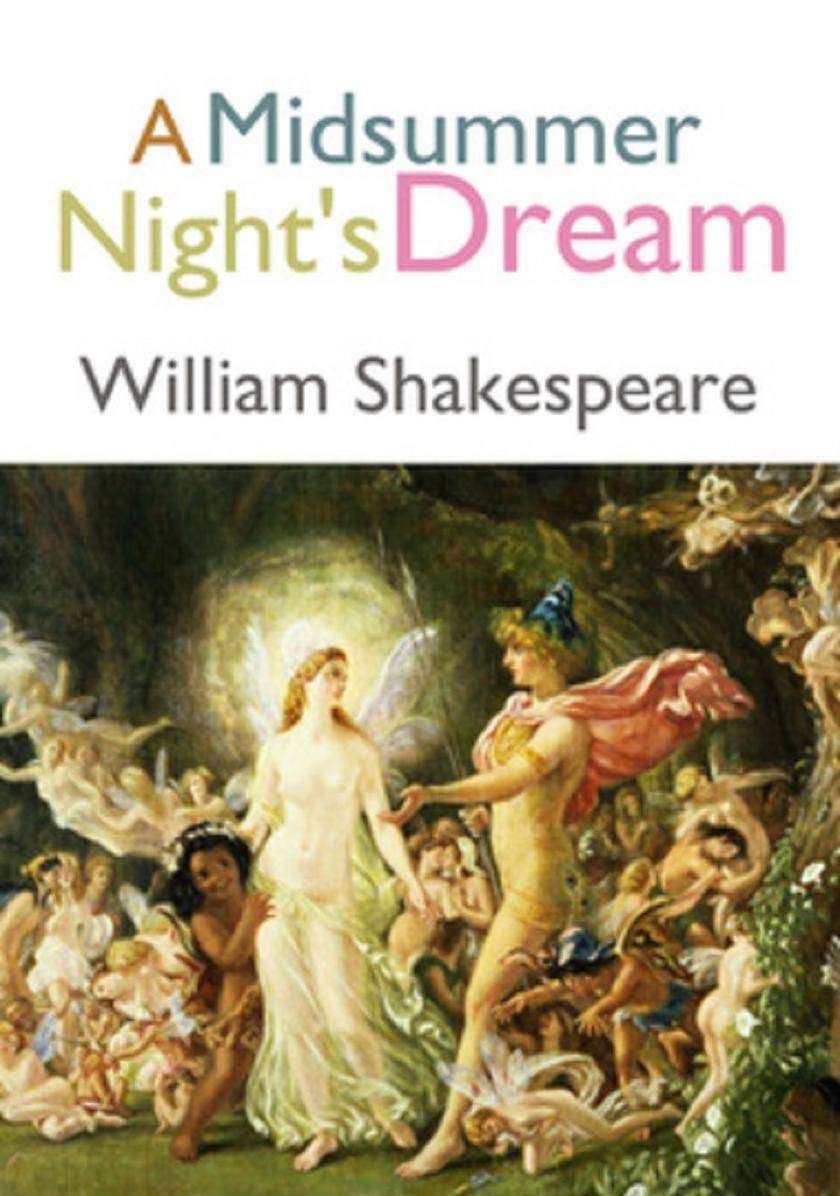
A Midsummer Night's Dream is a romantic comedy by William Shakespeare, suggested by "The Knight's Tale" from Geoffrey Chaucer's The Canterbury Tales, written around 1594 to 1596. It portrays the adventures of four young Athenian lovers and a group of amateur actors, their interactions with the Duke and Duchess of Athens, Theseus and Hippolyta, and with the fairies who inhabit a moonlit forest. The play is one of Shakespeare's most popular works for the stage and is widely performed across the world.
Az elvarázsoltak
¥44.15
This Illustrated version of the "A Short History of the world" contains about 300 Illustrated picture, and many historic objects.. THE story of our world is a story that is still very imperfectly known. A couple of hundred years ago men possessed the history of little more than the last three thousand years. What happened before that time was a matter of legend and speculation. Over a large part of the civilized world it was believed and taught that the world had been created suddenly in 4004 B.C., though authorities differed as to whether this had occurred in the spring or autumn of that year. This fantastically precise misconception was based upon a too literal interpretation of the Hebrew Bible, and upon rather arbitrary theological assumptions connected therewith. Such ideas have long since been abandoned by religious teachers, and it is universally recognized that the universe in which we live has to all appearances existed for an enormous period of time and possibly for endless time. Of course there may be deception in these appearances, as a room may be made to seem endless by putting mirrors facing each other at either end. But that the universe in which we live has existed only for six or seven thousand years may be regarded as an altogether exploded idea. "A Short History of the world" by E-Kitap projesi, Illustrated version by Murat Ukray.. Also added "IN the last fifty years there has been much very fine and interesting speculation on the part of scientific men upon the age and origin of our earth. Here we cannot pretend to give even a summary of such speculations because they involve the most subtle mathematical and physical considerations. The truth is that the physical and astronomical sciences are still too undeveloped as yet to make anything of the sort more than an illustrative guesswork. The general tendency has been to make the estimated age of our globe longer and longer. It now seems probable that the earth has had an independent existence as a spinning planet flying round and round the sun for a longer period than 2,000,000,000 years. It may have been much longer than that. This is a length of time that absolutely overpowers the imagination. "
?ti testvérek
¥43.16
Alessandro di Mariano di Vanni Filipepi, better known as Sandro Botticelli ( 1445 – 1510), was an Italian painter of the Early Renaissance. He belonged to the Florentine school under the patronage of Lorenzo de' Medici, a movement that Giorgio Vasari would characterize less than a hundred years later as a "golden age", a thought, suitably enough, he expressed at the head of his Vita of Botticelli. Botticelli's posthumous reputation suffered until the late 19th century; since then his work has been seen to represent the linear grace of Early Renaissance painting. Among his best known works are The Birth of Venus and Primavera. In 1481, Pope Sixtus IV summoned Botticelli and other prominent Florentine and Umbrian artists to fresco the walls of the Sistine Chapel. The iconological program was the supremacy of the Papacy. Sandro's contribution included the Temptations of Christ, the Punishment of the Rebels and Trial of Moses. He returned to Florence, and "being of a sophistical turn of mind, he there wrote a commentary on a portion of Dante and illustrated the Inferno which he printed, spending much time over it, and this abstention from work led to serious disorders in his living." Thus Vasari characterized the first printed Dante (1481) with Botticelli's decorations; he could not imagine that the new art of printing might occupy an artist. The masterpieces Primavera (c. 1482) and The Birth of Venus (c. 1485) were both seen by Vasari at the villa of Lorenzo di Pierfrancesco de' Medici at Castello in the mid-16th century, and until recently, it was assumed that both works were painted specifically for the villa. Recent scholarship suggests otherwise: the Primavera was painted for Lorenzo's townhouse in Florence, and The Birth of Venus was commissioned by someone else for a different site. By 1499, both had been installed at Castello. In these works, the influence of Gothic realism is tempered by Botticelli's study of the antique. But if the painterly means may be understood, the subjects themselves remain fascinating for their ambiguity. The complex meanings of these paintings continue to receive widespread scholarly attention, mainly focusing on the poetry and philosophy of humanists who were the artist's contemporaries. The works do not illustrate particular texts; rather, each relies upon several texts for its significance. Of their beauty, characterized by Vasari as exemplifying "grace" and by John Ruskin as possessing linear rhythm, there can be no doubt. In the mid-1480s, Botticelli worked on a major fresco cycle with Perugino, Domenico Ghirlandaio and Filippino Lippi, for Lorenzo the Magnificent's villa near Volterra; in addition he painted many frescoes in Florentine churches. In 1491 he served on a committee to decide upon a fa?ade for the Cathedral of Florence.
Csak a holttesteden át
¥57.47
In issuing this second treatise on Crayon Portraiture, Liquid Water Colors and French Crystals, for the use of photographers and amateur artists, I do so with the hope and assurance that all the requirements in the way of instruction for making crayon portraits on photographic enlargements and for finishing photographs in color will be fully met. To these I have added complete instructions for free-hand crayons. This book embodies the results of a studio experience of twenty-four years spent in practical work, in teaching, and in overcoming the everyday difficulties encountered, not alone in my own work, but in that of my pupils as well. Hence the book has been prepared with special reference to the needs of the student. It presents a brief course of precepts, and requires on the part of the pupil only perseverance in order that he may achieve excellence. The mechanical principles are few, and have been laid down in a few words; and, as nearly all students have felt, in the earlier period of their art work, the necessity of some general rules to guide them in the composition and arrangement of color, I have given, without entering into any profound discussion of the subject, a few of its practical precepts, which, it is hoped, will prove helpful. While this book does not treat of art in a very broad way, yet I am convinced that those who follow its teachings will, through the work they accomplish, be soon led to a higher appreciation of art. Although this kind of work does not create, yet who will say that it will not have accomplished much if it shall prove to be the first step that shall lead some student to devote his or her life to the sacred calling of art? It has been said that artists rarely, if ever, write on art, because they have the impression that the public is too ill-informed to understand them—that is, to understand their ordinarily somewhat technical method of expression. If, therefore, in the following pages I may sometimes seem to take more space and time for an explanation than appears necessary, I hope the student will overlook it, as I seek to be thoroughly understood. My hope with reference to this work is that it may prove of actual value to the earnest student in helping him reach the excellence which is the common aim of all true artists. ? ?J. A. Barhydt. About Author: To many who know nothing about the art of crayon portraiture, the mastery of it not only seems very difficult, but almost unattainable. In fact, any work of art of whatever description, which in its execution is beyond the knowledge or comprehension of the spectator, is to him a thing of almost supernatural character. Of course, this is more decided when the subject portrayed carries our thoughts beyond the realms of visible things. But the making of crayon portraits is not within the reach alone of the trained artist who follows it as a profession. I claim that any one who can learn to write can learn to draw, and that any one who can learn to draw can learn to make crayon portraits. Making them over a photograph, that is, an enlargement, is a comparatively simple matter, as it does not require as much knowledge of drawing as do free-hand crayons. But you must not suppose that, because the photographic enlargement gives you the drawing in line and an indistinct impression of the form in light and shade, you are not required to draw at all in making a crayon portrait over such an enlargement. Some knowledge of drawing is necessary, though not a perfect knowledge. Many people err in supposing that only the exceptionally skilled can produce the human features in life-like form upon the crayon paper. While recognizing great differences in natural aptitude for drawing in different persons, just as those who use the pen differ widely in their skill, some being able to write with almost mechanical perfection of form, I still hold that any one who is able to draw at all can succeed in producing creditable crayons.. J. A. Barhydt.
Amor ?i galanterie bucure?tean?
¥61.83
Un periplu documentat prin lumea artelor plastice contemporane, un model de analiz? a fenomenului plastic actual, extrem de viu ?i incitant, ba chiar provoc?tor, ?n ciuda multiplelor probleme ridicate de tranzi?ia autohton?.
Middlemarch
¥8.09
Hamlet is commonly regarded as one of the greatest plays ever written. Drawing on Danish chronicles and the Elizabethan vogue for revenge tragedy, Shakespeare created a play that is at once a philosophic treatise, a family drama, and a supernatural thriller. In the wake of his father’s death, Prince Hamlet finds that his Uncle Claudius has swiftly taken the throne and married his mother, Queen Gertrude. The ghost of the dead king then appears and charges Claudius with ‘murder most foul.’ Hamlet is called to revenge his father’s death: but will he be able to act before it is too late?
Autoportret la 28 de ani
¥54.10
Avangardismul rom?nesc r?m?ne a fi unul dintre curentele literare cele mai controversate ?i, ?n ultima instanta – ne demonstreaza aceasta monografie – cele mai putin cunoscute. Monografia abunda ?n informa?ii, aspecte, ?nt?mpl?ri, evenimente, mai pu?in sau deloc cunoscute. Cartea se adreseaz? elevilor, studen?ilor, precum ?i publicului larg de cititori.
Macbeth
¥8.67
Demagóg, ?rült, gazember? Népvezér, próféta, mártír? E két véglet k?z?tt ingadozott Szálasi Ferenc megítélése kortársai szemében. Az utókor azonban k?zel sem ilyen megosztott személyét illet?en, Szálasi a 20. századi magyar t?rténelem talán legelutasítottabb alakja. K?tetünkben arra keressük a választ, miként vált azzá. Miért lépett egyáltalán a politika színpadára otthagyva ezzel a biztos karriert kínáló katonaságot? Milyen célok vezették? Mit gondolt és mit tett politikusként? Szálasi életútjának állomásairól számos egykori dokumentum vall, ami lehet?séget ad, hogy t?bb, olykor lényegesen eltér? néz?pontokból vizsgálhassuk ugyanazt az eseményt. K?nyvünkben megkíséreljük a sok esetben részrehajló – vagy éppen elfogult – kortársak írásai alapján áttekinteni Szálasi életútját: a katonáét, az ideológusét, a politikusét – gyermekkorától egészen haláláig. Végül pedig azt is bemutatjuk, miként viszonyul hozzá az utókor. A k?tetet életrajzi kronológia, válogatott bibliográfia, valamint térképek teszik teljessé. PAKSA RUDOLF 1981-ben született Ajkán, az ELTE-n doktorált t?rténelemb?l és 2009 októberét?l az MTA BTK T?rténettudományi Intézetének a munkatársa. ?rdekl?dési területe a modern kori magyar t?rténelem; kutatásai súlypontja a 19–20. századi historiográfia, a régi E?tv?s Collegium, valamint a Horthy-kori széls?jobboldali irányzatok.
The Samurai Warrior: The Golden Age of Japan’s Elite Warriors 1560–1615
¥81.67
During Japan’s Warring States period, centuries of strife had left the country divided and leaderless. Those who filled the power vacuum were the daimyo, warlords who ruled over the clans and provinces of Japan. Serving their daimyo, the samurai were the ultimate warriors at a time when military prowess won out over hereditary power and position. The nature of warfare itself changed—romantic ideas of mounted duels and battlefield decorum became as rare as aristocratic samurai leaders. Marching in to replace them were the common foot soldiers, the ashigaru , armed with pikes and matchlock rifles. The Samurai Warrior examines the fighting men of this key period in Japanese history. Divided into six chapters, the book describes the unification under the Tokugawa bakufu , the major battles of the era, the weapons and armour used, the social structure of Japanese society, myths about the samurai, and finally the decline of the samurai amidst the modernization of the Meiji period. Including more than 200 photographs, illustrations, paintings, and maps, The Samurai Warrior is a colourful, accessible study of Japan’s famous but often misunderstood warrior elite.
Fall of the Reich: D-Day, Arnhem, Bulge and Berlin
¥40.79
Campaigns of World War II: Fall of the Reich is a military history of the Western European campaign from D-Day in June 1944 to the fall of Berlin in May 1945. Beginning with the Allied preparations for what would become Operation Overlord, from the initial discussions of Roosevelt and Churchill, to the deliberations and plans of Marshall and Brooke, and the subsequent appointment of commanders like Eisenhower, Montgomery and Ramsay, the book covers in detail the landings on the Normandy coast. Combining tactical coverage of events such as the severe fighting at Omaha and Pegasus Bridge, the Canadian success on Juno beach, and the 21st Panzer Division's aborted counterattack, with reporting of the reactions of Hitler and Rommel to the landings, the book provides an explanation of why the Allied advance ran out of steam, and a description of their struggle to escape the bocage hedgerows of Normandy. The US-led breakout in late July 1944 released Bradley and Patton's forces into the heart of France, and the liberation of Paris followed swiftly. A crumbling German defence led to Allied overconfidence and the resultant 'bridge too far' at Arnhem, but as the Allies approached the Rhine and the German border, resistance quickly stiffened. Hitler's last gamble, the attack through the Ardennes known as the Battle of the Bulge, brought temporary panic to the Allied ranks, but heroic stands at Bastogne and elsewhere, coupled with a German acute lack of petrol and the weather clearing to allow Allied aircraft to operate again, led to the defeat of the last Wehrmacht attack in the west. The final year of the war saw the Allies advancing as occupying forces into the heart of Germany, adopting Eisenhower's broad front strategy. Finally the book examines why the decision was made to allow the Red Army to occupy Berlin and remain on the western bank of the Elbe river. Part of a five-volume series on the Second World War written by prominent military historians, Fall of the Reich is a masterful account of the 1944–45 campaign in Western Europe that describes both the action on the front line and the decisions made behind the scenes that decided the fate of Nazi Germany.
The World's Greatest Tanks: An Illustrated History
¥81.67
The World's Greatest Tanks features 52 of the best armoured fighting vehicles from World War I to the present day. Beginning with the prototype Mark V Male in 1917, the book ranges from World War I, World War II, through the Cold War and up to the highly sophisticated tanks that have seen recent service in wars in the Balkans, Caususus, and Middle East. From the Soviet T-34 and German Panther tanks of World War II to the M1A2 Abrams, Challenger 2 and T-90 of the present day, The World's Greatest Tanks is an expert examination of the most successful tanks of the past hundred years. Each entry is examined over two spreads and includes a brief description of the tank's development and history, a colour profile artwork, photographs, key features and specifications tables. Packed with more than 200 artworks and photographs, The World's Greatest Tanks is a colourful guide for the military historian and military technology enthusiast.
Gladiator: Fighting for Life, Glory and Freedom
¥81.67
“When everyone had had plenty to eat and drink they called for the gladiators. The moment anyone’s throat was cut, they clapped their hands in pleasure. And it sometimes even turned out that someone had specified in their will that the most beautiful women he had purchased were to fight each other….” – Athenaeus, The Learned Banqueters With their origins as blood rites staged at the funerals of rich aristocrats, gladiatorial combat is one of the defining images of ancient Rome. For more than 600 years, people flocked to arenas to watch these highly trained warriors participate in a blood-soaked spectacle that was part sport, part theatre and part cold-blooded murder. Gladiatorial contests were a spectacular dramatization of the Roman emperor’s formidable power. Gladiator looks at life and service in the Roman arenas from the origins of the games in the third century BCE through to the demise of the games in the fifth century CE. It explores the lives of the prisoners of war, criminals, slaves and volunteers who became gladiators, their training, and the more than 20 types of gladiator they could become, fighting with different types of weapons. From Spartacus’s slave revolt to the real Emperor Commodius who liked to play at being a gladiator, from female gladiators to the great combats involving hundreds of exotic animals, Gladiator is a colourful, accessible study of the ancient world’s famous warrior entertainers.

购物车
个人中心