


 购物车
购物车 个人中心
个人中心

Should America Pay?
¥83.03
Growing interest in reparations for African Americans has prompted a range of responses, from lawsuits against major corporations and a march in Washington to an anti-reparations ad campaign. As a result, the link between slavery and contemporary race relations is more potent and obvious than ever. Grassroots organizers, lawmakers, and distinguished academics have embraced the idea that reparations should be pursued vigorously in the courts and legislature. But others ask, Who should payAnd could reparations help heal the wounds of the past?This comprehensive collection -- the only of its kind -- gathers together the seminal essays and key participants in the debate. Pro-reparations essays, including contributions by Congressman John Conyers Jr., Christopher Hitchens, and Professor Molefi Asante, are countered with arguments by Shelby Steele, Armstrong Williams, and John McWhorter, among others. Also featured are important documents, such as the First Congressional Reparations Bill of 1867 and the Dakar Declaration of 2001, as well as a new chapter on the current status and future direction of the movement.
Dream Magic
¥84.16
Magic Can Make Your Dreams Come True!What do you want to do tonight as you close your eyes and enter the magical world of dreamsWalk with the Faery FolkSummon your soul mateAsk the Goddess to grant you one special wishOr experience a prophetic dream that will reveal your futurenow you can access the magical power of your dreams with Dream Magic, a one-of-a-kind collection of night spells and rituals.Popular Wiccan author Sirona Knight guides you carefully and clearly through the exciting world of using magic to make your dreams come true. Understanding that the realm of dreams is where the day-to-day and the magical overlap, this book shows you how to tap into the potent power of the dream world. Dream Magic features: A detailed list of easy-to-find magical ingredients Fun and simple step-by-step instructions An index of helpful Goddesses and Gods With more than a hundred empowering spells, Dream Magic unlocks your dream world's boundless possibilities. With easy-to-reference chapters on magical dreaming for love, money, success, self-empowerment, health, beauty, and more, as well as an introduction to the basics of magic and how to get started, this book can be used by the beginner as well as the seasoned practitioner. Anything you can imagine is possible with Dream Magic.
There's Nothing in the Middle of the Road but Yellow Stripes and Dead Armadillos
¥85.05
Revised, and with a New Introduction by the Author "I am an agitator, and an agitator is the center post in a washing machine that gets the dirt out."--Jim Hightower Hightower is mad as hell and he's not going to take it anymore! He's also funny as hell, and in this book he focuses his sharp Texas wit, populist passion, and native smarts on America's political, economic, scientific, and media establishments. In There's Nothing in the Middle of the Road But Yellow Stripes and Dead Armadillos, Hightower shows not only what's wrong, but also how to fix it, offering specific solutions and calling for a new political movement of working families and the poor to "take America back from the bankers and bosses, the big shots and bastards." "If you don't read another book about what's wrong with this country for the rest of your life, read this one. I think it's the best and most important book about out public life I've read in years." --Molly Ivins, author of Molly Ivins Can't Say That, Can She"When do we get to vote for Jim Hightower for presidentWill somebody please tell meWhen do we get to vote for Jim Hightower for president?."--Michael Moore, author of Downsize This! "Listen to Jim Hightower. His is a two-fisted, rambunctious voice unafraid to speak truth to power, eloquently and clearly...He's one of the best." --Studs Terkel
Conundrums
¥84.16
Conundrum is a mind-stretch. Encrypting idioms into their typographic equivalents, Harry enlivens our everyday language and challenges readers to see that "time after time after time" or, at least, "more often than not" "the writing is on the wall." For fans of word puzzles, sudoku, crosswords, and all manner of mind games, Conundrum offers an artfully packaged, cleverly designed new challenge. Drawing upon, literally in this case, graphic puzzles that he began creating as a child, Harry's developed over 100 witty conundrums for this book that will stretch the mind as well as delight the senses. A member of the Alliance Graphique Internationale, a frequent lecturer and contributor to design discourse, an internationally recognized leader in design, and a founder of Lippa Pearce, one of the UK's most respected design agencies, Harry refines the way we see and communicate. Conundrum achieves nothing less than changing how we understand and interact with language.
Swing Low
¥88.56
One morning, Mel Toews put on his coat and hat, walked out of town, and took his own life. A loving husband and father, a faithful member of the Mennonite church, and an immensely popular schoolteacher, Mel was a pillar of his close-knit community. Yet after a lifetime of struggling with bipolar disorder, he could no longer face the darkness that clouded his world. In this moving meditation on illness, family, faith, and love, Mel's daughter, critically acclaimed novelist and reporter Miriam Toews, recounts her father's life as he would have told it, in his own voice, right up to the day of his final walk. Swing Low is a bold, gracefully written, and compassionate recounting of one man's heartbreaking battle with depression.

Periodic Tales
¥95.11
Like the alphabet, the calendar, or the zodiac, the periodic table of the chemical elements has a permanent place in our imagination. But aside from the handful of common ones (iron, carbon, copper, gold), the elements themselves remain wrapped in mystery. We do not know what most of them look like, how they exist in nature, how they got their names, or of what use they are to us. Welcome to a dazzling tour through history and literature, science and art. In Periodic Tales, you'll meet iron that rains from the heavens and neon as it lights its way to vice. You'll learn how lead can tell your future and why zinc may one day line your coffin. You'll discover what connects the bones in your body with the White House in Washington, the glow of a streetlight with the salt on your dinner table.From ancient civilizations to contemporary couture, from the oxygen of publicity to the phosphorous in your pee, the elements are near and far and all around us. Unlocking their astonishing secrets and colorful pasts, Periodic Tales is a passionate journey through mines and artists' studios, to factories and cathedrals, into the woods and to the sea to discover the true stories of these fascinating but mysterious building blocks of the universe.

Rockers and Rollers
¥84.16
By night, Brian Johnson sings in the biggest rock ’n’ roll band on the planet. But by day, AC/DC’s frontman drives balls to the wall. Cars and rock ’n’ roll—they were made for each other. When he was a young boy growing up in a working-class English town, Brian developed what would become a lifelong passion for cars, trolling junkyards and even pretending to drive the family car. From there, he steamed up the windows of his old Mini Cooper as a teenager, spent untold time in hygienically challenged tour buses with helpful signs such as No Shitting Allowed. Shagging Expected, was chauffeured in leather-trimmed limos, and raced cars to a checkered flag. Featuring guest stars Cliff Williams, Malcolm and Angus Young, and many, many others, even Arnold Schwarzenegger, Rockers and Rollers is a tribute to Brian’s obsession with four wheels. By turns surprising, poignant, funny, and maybe a little bit bawdy, these are the stories of a man who drives as hard as he rocks.

High Strung
¥83.03
The golden age of tennis came crashing down suddenly at the 1981 U.S. Open when the stoical Swede, Bj?rn Borg, lost to his brash young rival, John McEnroe, in the final at Flushing Meadows. Through the lens of that era's final tournament, and the play of the other semifinalists, Jimmy Connors and Vitas Gerulaitis, High Strung chronicles the lives and careers of the men who made those Wild West days of tennis so memorable: "Ice Borg," who secretly harbored an inner madman; McEnroe, the tortured, bratty genius; Connors, the game's beloved blue-collar anti-hero; Ilie Nastase, the Romanian clown; Gerulaitis, the New York charmer; and Ivan Lendl, who became a harbinger of tennis's high-powered future. The struggles these men shared were as compelling off the court as they were on.
The Myth of the Great War
¥90.77
Based on previously unused French and German sources, this challenging and controversial new analysis of the war on the Western front from 1914 to 1918 reveals how and why the Germans won the major battles with one-half to one-third fewer casualties than the Allies, and how American troops in 1918 saved the Allies from defeat and a negotiated peace with the Germans.
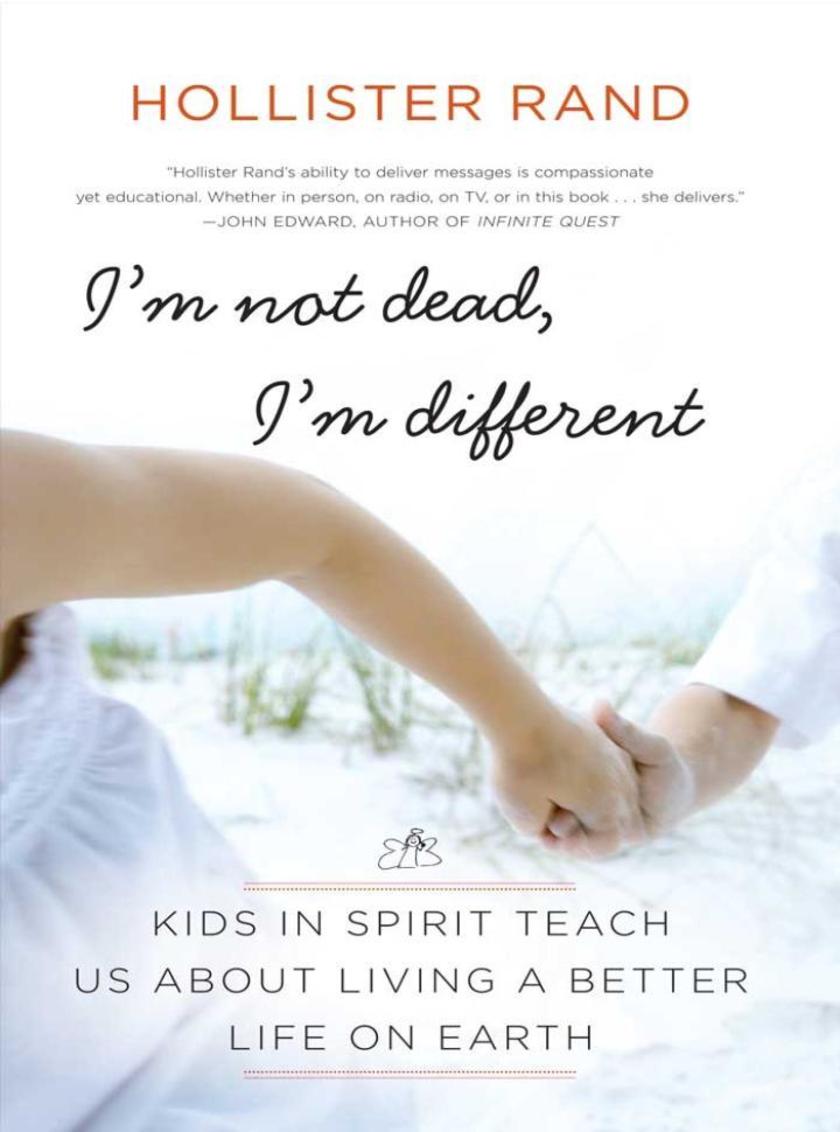
I'm Not Dead, I'm Different
¥94.10
Rand was initially puzzled as to why young spirits wanted to speak through her she had no children of her own and the responsibility of talking with people who had lost theirs seemed too great to bear. But the compelling answers came with time and patience: No one finds death more inexplicable than a grieving parent, thus no spirits are more motivated to make sense of it all for those they've left behind than young ones.These spirits clearly want to heal broken hearts and deepen our understanding of life and death, and Rand has the unique ability to help deliver their messages.Through her, young spirits talk freely about how to make sense of murder, suicide, and accidental deaths. They also discuss the different ways relationships on both sides can be mended, how the intergenerational cycle of abuse and addiction can be stopped, and how joy guides miscarried and aborted children can actually help those they've left behind move forward.The insights they share in this uniquely comforting book will surprise, inform, and inspire. What's more, their answers to our questions about death reveal many valuable tips for living a better life while on earth too.
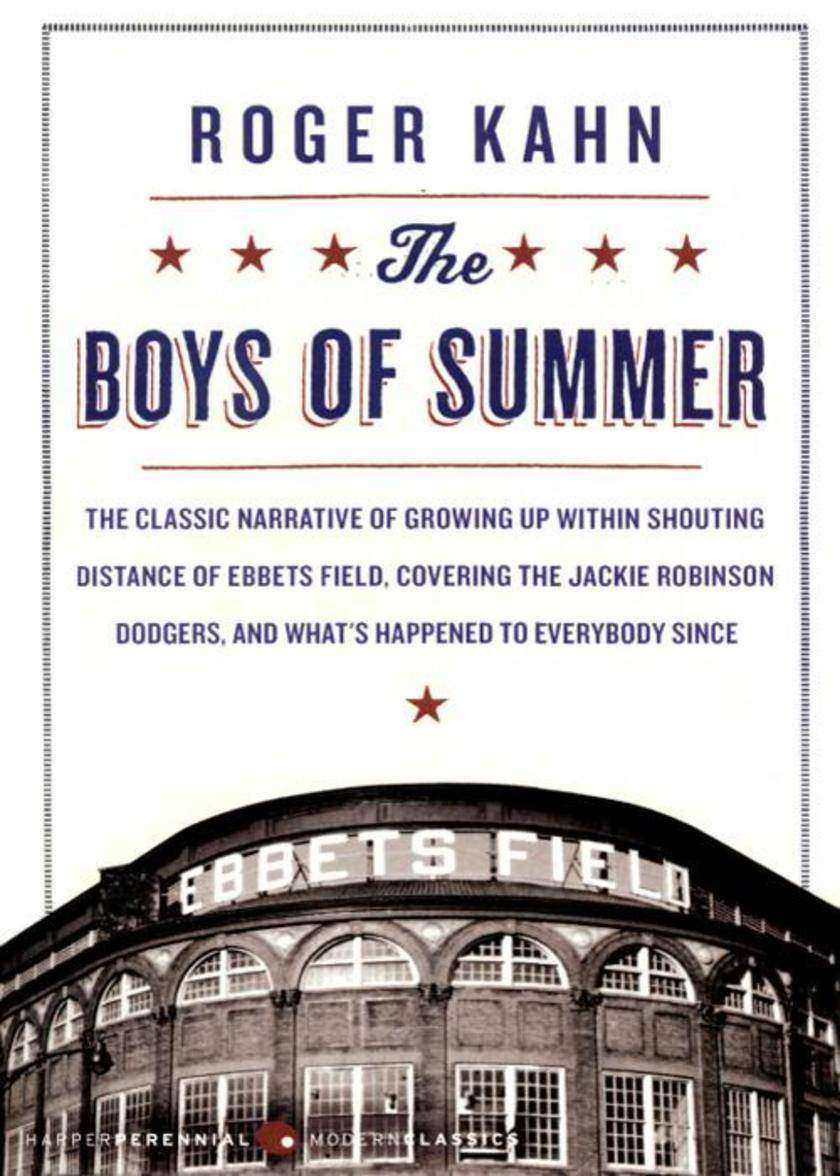
The Boys of Summer
¥99.65
This is a book about young men who learned to play baseball during the 1930s and 1940s, and then went on to play for one of the most exciting major-league ball clubs ever fielded, the team that broke the color barrier with Jackie Robinson. It is a book by and about a sportswriter who grew up near Ebbets Field, and who had the good fortune in the 1950s to cover the Dodgers for the Herald Tribune. This is a book about what happened to Jackie, Carl Erskine, Pee Wee Reese, and the others when their glory days were behind them. In short, it is a book about America, about fathers and sons, prejudice and courage, triumph and disaster, and told with warmth, humor, wit, candor, and love.

Growing Up in Heaven
¥88.56
Blessed with an exceptional gift, New York Times bestselling author James Van Praagh has the ability to bridge the gap between this world and the next. Based on nearly thirty years of spirit communication, this renowned and beloved medium takes us on a powerful, eye-opening, and ultimately inspiring voyage. Filled with incredible and uplifting true stories and profound messages of love, this astounding look at heaven provides a remarkably detailed portrayal of the child's soul as it moves from this world to the next. Our eyes and hearts open and we experience firsthand the unbreakable bond between parent and child, all the while glimpsing a vision of heaven.Van Praagh reveals the reality that love transcends the physical and material planes of this world. Growing Up in Heaven lifts our spirits with the knowledge that our departed ones will always be with us an extraordinary gift for all of us who yearn to understand life on the other side.
The Evolution of Faith
¥90.77
Philip Gulley, famous for his own controversial theology that affirms universality, urges us in The Evolution of Faith to let go of our tightly held beliefs and start the journey toward a dynamic faith. Faith should always be seen as a work in progress, and this accessible guide will be a must-have tool for those interested in where the Christian faith is going today.

My Year with Eleanor
¥94.10
After losing her high-octane job as an entertainment blogger, Noelle Hancock was lost. About to turn twenty-nine, she'd spent her career writing about celebrities' lives and had forgotten how to live her own. Unemployed and full of self-doubt, she had no idea what she wanted out of life. She feared change in fact, she feared almost everything. Once confident and ambitious, she had become crippled by anxiety, lacking the courage required even to attend a dinner party until inspiration struck one day in the form of a quote on a chalkboard in a coffee shop:"Do one thing every day that scares you." Eleanor RooseveltPainfully timid as a child, Eleanor Roosevelt dedicated herself to facing her fears, a commitment that shaped the rest of her life. With Eleanor as her guide, Noelle spends the months leading up to her thirtieth birthday pursuing a "Year of Fear." From shark diving to fighter pilot lessons, from tap dancing and stand-up comedy to confronting old boyfriends, her hilarious and harrowing adventures teach her about who she is, and what she can become lessons she makes vital for all of us.
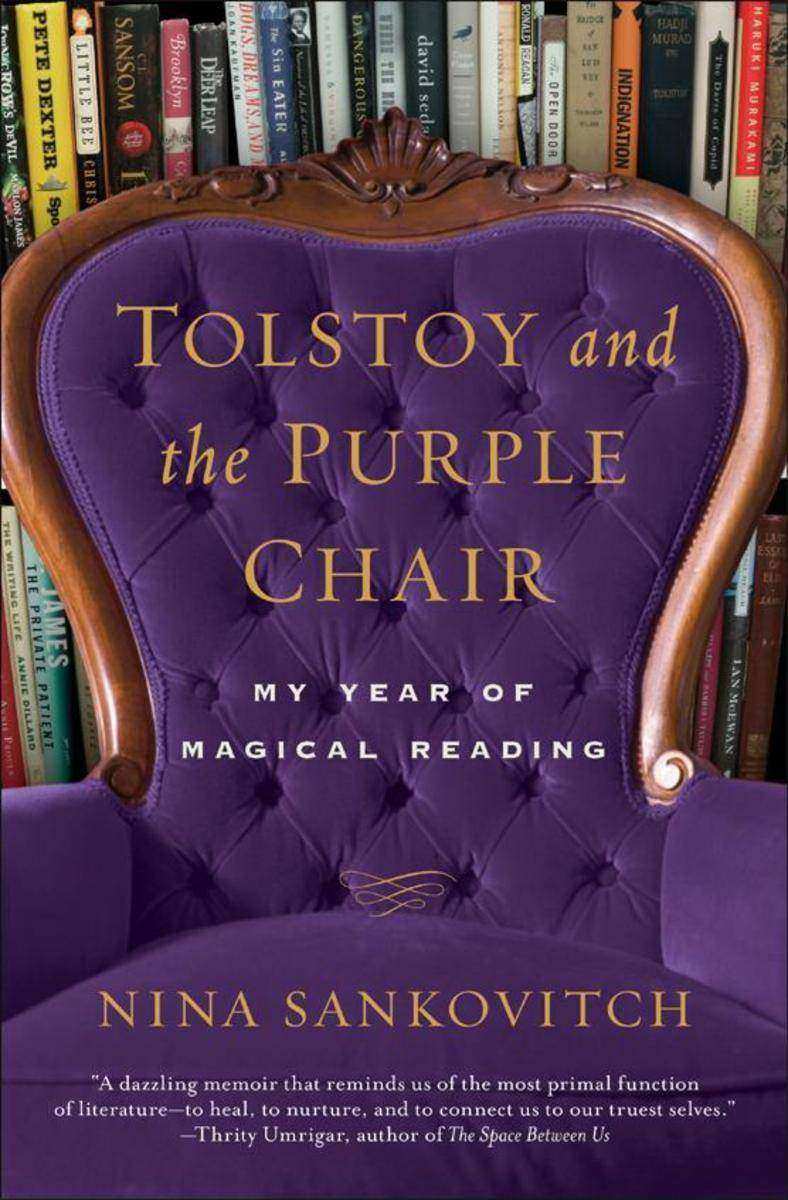
Tolstoy and the Purple Chair
¥90.77
Caught up in grief after the death of her sister, Nina Sankovitch decided to stop running and start reading. For once in her life she would put all other obligations on hold and devote herself to reading a book a day: one year of magical reading in which she found joy, healing, and wisdom.With grace and deep insight, Sankovitch weaves together poignant family memories with the unforgettable lives of the characters she reads about. She finds a lesson in each book, ultimately realizing the ability of a good story to console, inspire, and open our lives to new places and experiences. A moving story of recovery, Tolstoy and the Purple Chair is also a resonant reminder of the all-encompassing power and delight of reading.
How to Be Black
¥83.03
If You Don't Buy This Book, You're a Racist.Have you ever been called "too black" or "not black enough"Have you ever befriended or worked with a black personIf you answered yes to any of these questions, this book is for you.Raised by a pro-black, Pan-Afrikan single mother during the crack years of 1980s Washington, DC, and educated at Sidwell Friends School and Harvard University, Baratunde Thurston has over thirty years' experience being black. Now, through stories of his politically inspired Nigerian name, the heroics of his hippie mother, the murder of his drug-abusing father, and other revelatory black details, he shares with readers of all colors his wisdom and expertise in how to be black.Beyond memoir, this guidebook offers practical advice on everything from "How to Be The Black Friend" to "How to Be The (Next) Black President" to "How to Celebrate Black History Month."To provide additional perspective, Baratunde assembled an award-winning Black Panel three black women, three black men, and one white man (Christian Lander of Stuff White People Like) and asked them such revealing questions as:"When Did You First Realize You Were Black?""How Black Are You?""Can You Swim?"The result is a humorous, intelligent, and audacious guide that challenges and satirizes the so-called experts, purists, and racists who purport to speak for all black people. With honest storytelling and biting wit, Baratunde plots a path not just to blackness, but one open to anyone interested in simply "how to be."
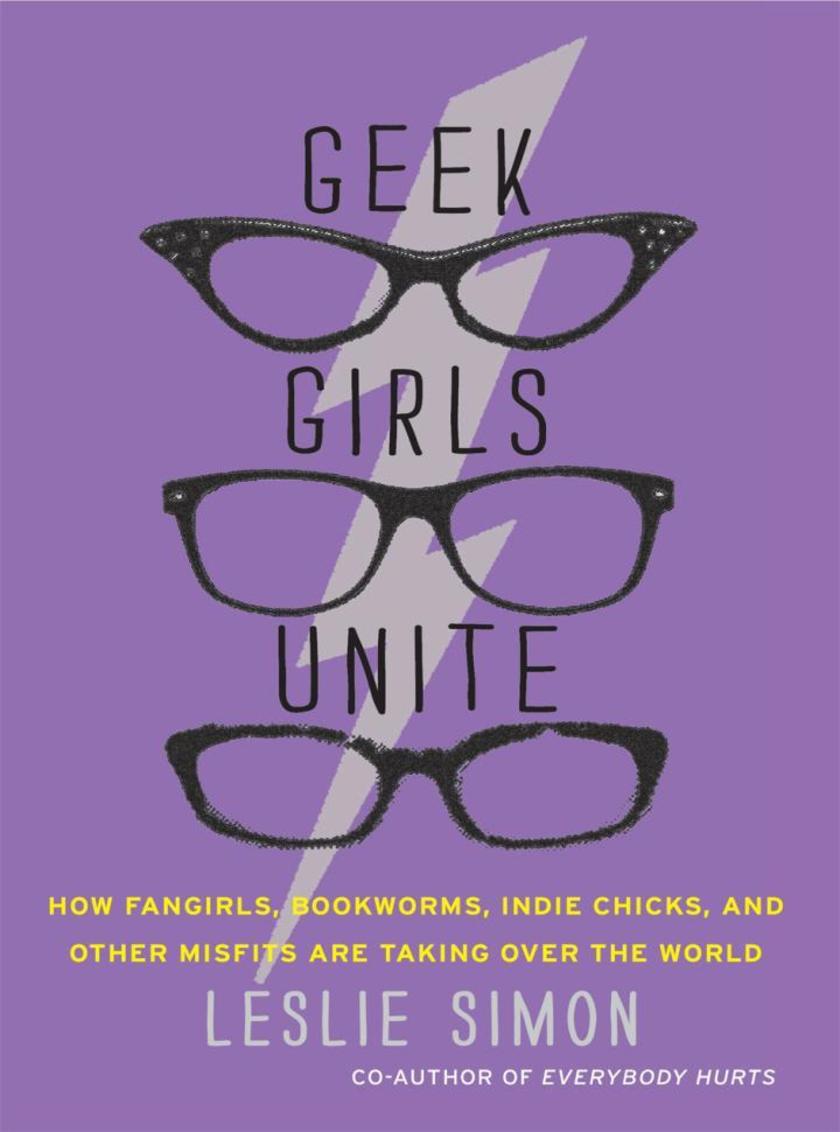
Geek Girls Unite
¥84.16
What do Amy Poehler, Bjork, Felicia Day, Martha Stewart, Miranda July, and Zooey Deschanel have in commonThey're just a few of the amazing women proving that geek is no longer a four-letter word.In recent years, male geeks have taken the world by storm. But what about their female counterpartsAfter all, fangirls are just like fanboys they put on their Imperial Stormtrooper Lycra pants one leg at a time. Geek Girls Unite is a call to arms for every girl who has ever obsessed over music, comics, film, comedy, books, crafts, fashion, or anything else under the Death Star. Music geek girl Leslie Simon offers an overview of the geek elite by covering groundbreaking women, hall-of-famers, ultimate love matches, and potential frenemies, along with her top picks for playlists, books, movies, and websites. This smart and hilarious tour through girl geekdom is a must-have for any woman who has ever wondered where her sassy rebel sisters have been hiding.

Fashion Victims
¥123.24
Pairing hilarious poetry with the stunning collage work for which he is famous, Michael Roberts takes on the fashion world letter by letter and in the way only a true insider can in Fashion Victims. This gorgeous, stylish book illustrated and written by the Vanity Fair fashion director, influential stylist, and artist is a witty send-up of the fashion world that will delight style lovers, popular culture aficionados, and art lovers alike with its wit, acute observations, truth, and poignancy. Impeccably designed by Roberts himself, Fashion Victims is a perfect tongue-in-chic gift and a timeless collectible.

Stepping Out Within
¥53.88
Stepping Out Within by Robert W. Olsen has de*ive copy which is not yet available from the Publisher.

You Send Me
¥91.71
The daughter of an over-protective father, Millicent Anderson has never been permitted an ounce of freedomher father has kept her completely sheltered from boys, and even quashed her dream of being a teacher. But when a family trip leads her to tiny Moose Falls, Montana, and she catches sight of bad boy Johnny Pickett, her heart flips -- and before she knows it, she's breaking all the rules to be near him. In Johnny's arms, Millie discovers passion, and Millie is just what Johnny needs to heal after war. When her father tries to separate them by dangling her old dreams before her, however, Millie's forced to make a choice: Will she choose the love of her family and the opportunity to build a career -- or will she leave everything behind for the hot guy she's fallen for?

Always to Remember
¥108.99
Branded a traitor and imprisoned for refusing to fight for the Confederacy, Clayton Holland returns home to Cedar Grove, only to be spurned by the townspeople, except for vengeful Meg Warner, who finds her hatred and grief transformed by love.


