


 购物车
购物车 个人中心
个人中心
HoloLens Beginner’s Guide
¥90.46
"Key Features?Start developing immersive and interactive apps for Microsoft HoloLens ?Explore the Windows Universal Development platform for HoloLens development ?Leverage the full set of HoloLens sensors to create mesmerizing apps"
Learning Windows Server Containers
¥90.46
"About This Book ?Discover the secret to building highly portable apps that run on any machine with Windows Server 2016 anywhere, from laptops, desktop servers, and public or private clouds, without any changes to the code ?Build your company cost-effective, container-based apps that support large-scale, virtual cloud environments ?The most up-to-date help on the market, offering developers expert guidance in building and shipping high-quality apps, and also helping admins create infrastructure that's simple to maintain Who This Book Is For This book is for application developers with a basic programming knowledge of C#, ASP.NET, and PowerShell. IT Administrators or DevOps engineers with basic PowerShell experience can benefit by extending their learning to use PowerShell to manage containers on Windows environments and use additional management tools. What You Will Learn ?Build and deploy ASP.NET web applications as Windows Containers on Windows 10 (Desktop) and Azure using Visual Studio 2015, Docker, and PowerShell ?Build and manage custom images using Windows Server Core base OS image and Docker CLI, publish images to Docker, tag images, author Docker files, and so on ?Create enterprise-scale, production-grade container environments using Redis Cache containers and SQL Server containers with storage volumes, set up custom container networks, continuous integration, and deployment pipelines using VSTS, Azure, and Git ?Deploy a composite container environment using Docker Compose on Windows ?Learn to build applications using Microsoft's thinnest server platform - Nano Servers. Build custom Nano Server images and Nano Containers using Windows PowerShell and "
Learning Ionic - Second Edition
¥80.65
"Create real-time hybrid applications with the leader of HTML5 frameworks: Ionic Framework About This Book ?Step into the world of amazingly interactive and real-time app development using Ionic 2 ?Leverage the powerful Angular 2 along with Ionic to develop cutting edge apps ?Detailed code examples and explanations will help you get up and running with Ionic quickly and easily Who This Book Is For This book is for JavaScript developers with basic skills. No previous knowledge of Ionic is required for this book. What You Will Learn ?Understanding the world of the mobile hybrid architecture ?Scaffolding and working with Ionic templates ?Transforming a single page app to a multi-page app using Navigation Controller ?Integrating Ionic components, decorators, and services and rapidly developing complex applications ?Theming Ionic apps as well as customizing components using SCSS ?Working with Ionic Native to interface with device features, such as camera, notifications, and battery ?Building a production grade app using Ionic and Uber API to let users book a ride ?Migrating an Ionic 1 app to Ionic 2 or Ionic 3 ?Performing unit testing, end-to-end testing, and device testing on your apps ?Deploying Ionic apps to store and manage their subsequent releases In Detail Ionic makes it incredibly easy to build beautiful and interactive mobile apps using HTML5, SCSS, and Angular. Ionic also makes app development easier, faster, and more fun. This hands-on guide will help you understand the Ionic framework and how you can leverage it to create amazing real-time applications. We begin by covering the essential features of Angular 2, and then dive straight into how Ionic fits in today's world of hybrid app development and give you a better understanding of the mobile hybrid architecture along the way. Further on, you will learn how to work with Ionic decorators, services, and components, which will allow you to build complex apps using the Ionic framework. We will take a look at theming Ionic apps using the built-in SCSS setup. After that, we will explore Ionic Native, and you will learn how to integrate device-specific features, such as notifications, with the Ionic app. To complete our learning, we will be building a Rider app, using Ionic and Uber API, to book a ride. Next, you will learn how to unit test, end-to-end test, monkey test, and execute device testing on AWS Device farm. Then, we will take a look at migrating the existing Ionic 1 apps to Ionic 2 and deploy them to the App Store. The final chapter on Ionic 3 wraps up this book by explaining the new features of Ionic 3 at the time of writing this book. By the end of this book, you will be able to develop, deploy, and manage hybrid mobile applications built with Cordova, Ionic, and Angular. All the examples in this book are valid for both Ionic 2 and Ionic 3. Style and approach A step-by-step, practical approach to learning Ionic using the example of designing an online course app. Each topic is explained sequentially in the process of creating a course. This includes explanations of both basic and advanced features of Ionic. "
Vue.js 2 Cookbook
¥80.65
"Key Features ?Understand and use Vue's reactivity system, data binding, and computed properties ?Create fluid transitions in your application with Vue's built-in transition system ?Use Vuex and Webpack to build medium-to-large scale SPAs and enhance your development workflow Book De*ion Vue.js is an open source JavaScript library for building modern, interactive web applications. With a rapidly growing community and a strong ecosystem, Vue.js makes developing complex single page applications a breeze. Its component-based approach, intuitive API, blazing fast core, and compact size make Vue.js a great solution to craft your next front-end application. From basic to advanced recipes, this book arms you with practical solutions to common tasks when building an application using Vue. We start off by exploring the fundamentals of Vue.js: its reactivity system, data-binding syntax, and component-based architecture through practical examples. After that, we delve into integrating Webpack and Babel to enhance your development workflow using single file components. Finally, we take an in-depth look at Vuex for state management and Vue Router to route in your single page applications, and integrate a variety of technologies ranging from Node.js to Electron, and Socket.io to Firebase and HorizonDB. This book will provide you with the best practices as determined by the Vue.js community. What you will learn ?Understand the fundamentals of Vue.js through numerous practical examples ?Piece together complex web interfaces using theVue.js component system ?Use Webpack and Babel to enhance your development workflow ?Manage your "
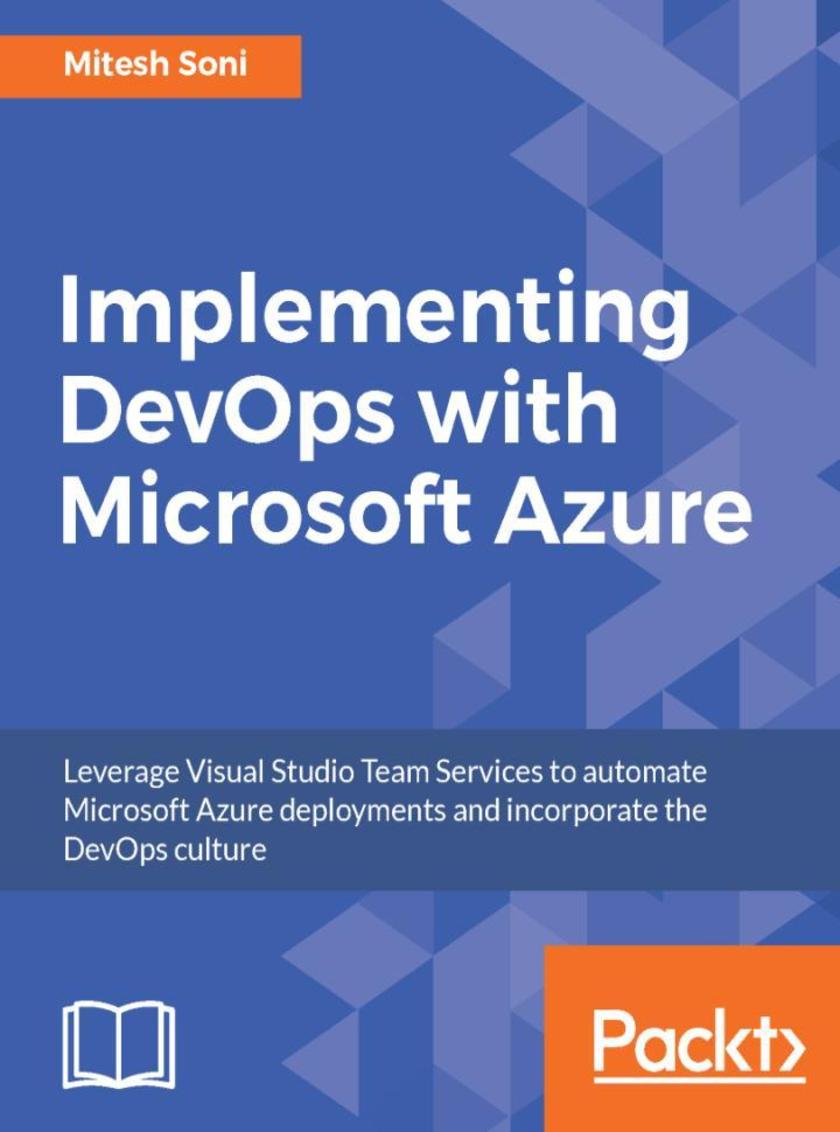
Implementing DevOps with Microsoft Azure
¥90.46
"Accelerate and Automate Build, Deploy, and Management of applications to achieve High Availability. About This Book ?This guide highlights tools that offer development and deployment environments for application services ?Secure and continuously monitor your web application in order to make it highly available ?Use Visual Studio Team Services for Continuous Integration and Continuous Development to expedite your application life cycle management process ?Use Microsoft Azure App Services (Azure Web Apps / Azure Websites), PaaS offering from Microsoft to deploy web application Who This Book Is For This book is for DevOps engineers, system administrators, and developers (.net) who want to implement DevOps for their organization. You do not need to have any knowledge of VSTS or Azure App Services (Azure Web Apps / Azure Websites). What You Will Learn ?Explore the features of PaaS and aPaaS in DevOps ?Use Visual Studio Team Services (VSTS) to manage versions of code and integrating VSTS with Eclipse IDE ?Understand and configure Continuous Integration in VSTS ?Review Unit Test Execution for Automated Testing ?Create different environments that can be used to continuous deploy a web application ?Configure Roll-based Access to enable secure access for Azure Web Apps ?Create and configure the App Service Environment to enhance security ?Understand the execution of the end-to-end automation process ?Conduct Performance Testing using JMeter ?Discover the different monitoring options available in Microsoft Azure Portal In Detail This book will teach you all about the Visual Studio Team Services and Microsoft Azure PaaS offerings that support Continuous Integration, Continuous Delivery, Continuous Deployment, and execution in the cloud with high availability, disaster recovery, and security. You will first be given a tour of all the concepts and tools that Microsoft Azure has to offer and how these can be used in situations to cultivate the DevOps culture. You'll be taught how to use and manage Visual Studio Team Services (VSTS) and about the structure of the sample application used throughout the book. You will become familiar with the nitty gritty of Continuous Integration and Continuous Development with VSTS and Microsoft Azure Apps. You will not only learn how to create App service environments, but also how to compare Azure Web Apps and App Service Environments to deploy web applications in a more secure environment. Once you have completed Continuous Integration and created the Platform for application deployment, you will learn more about the final stepping stone in achieving end-to-end automation using approval-based Continuous Delivery and Deployment. You will then learn about Continuous Monitoring, using the monitoring and notification options provided by Microsoft Azure and Visual Studio Team Services. Style and Approach This book is an easy-to-follow guide filled with examples and real-world applications for gaining an in-depth understanding of Microsoft Azure and Visual Studio. This book will help you leverage Microsoft Azure and Visual Studio using real-world examples. "
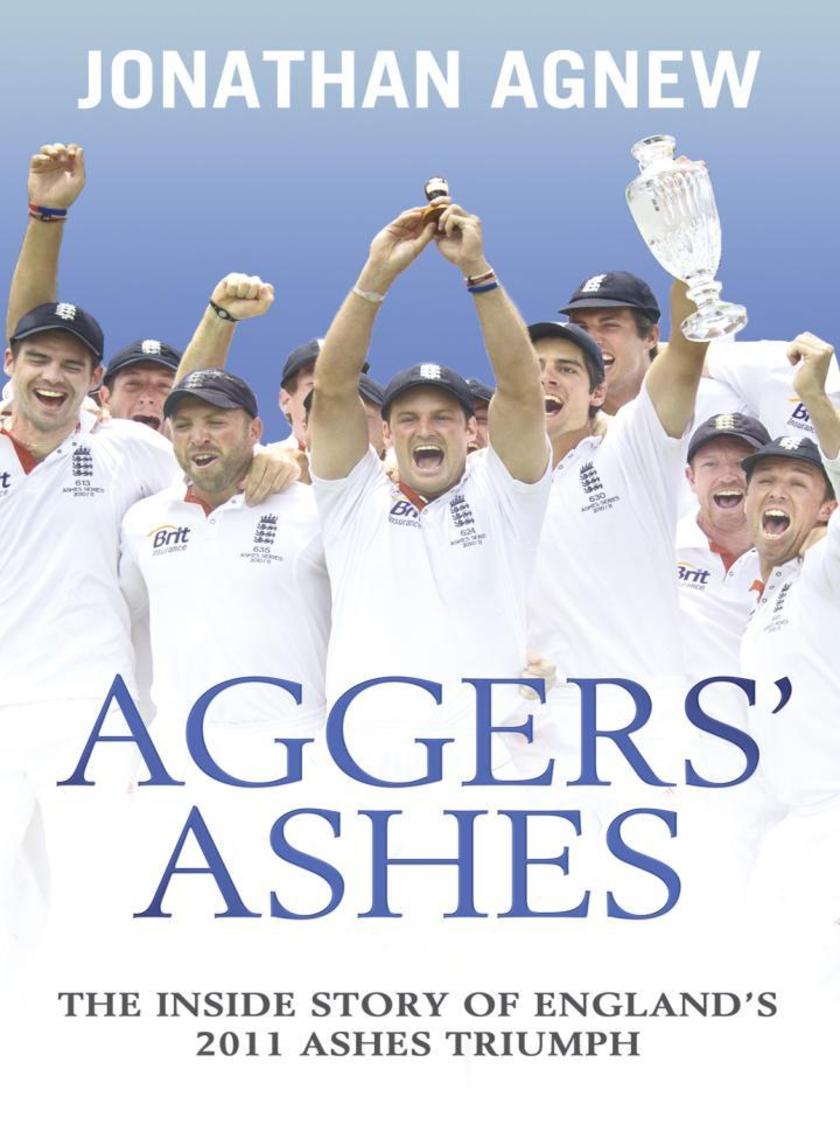
Aggers’ Ashes
¥146.27
An inside account of England’s Ashes triumph in Australia 2010/11. England’s much celebrated Ashes win by two clear matches with three comprehensive innings victories must rank as one of the finest of any English cricket team from any era. It kept people at home glued to their televisions, computers and radios – often all three at the same time – long into the night as the bitter winter and a depressed economy were forced into the background by the sheer joy and exhilaration of giving the old enemy a trouncing. It had been twenty-two years since a touring side won three Tests in Australia and twenty-four since the Ashes were last won on Australian soil. The current England team bears worthy comparison with some of the legendary teams of the past, captained by greats like Brearley, Hutton and Jardine. Andrew Strauss with back-to-back Ashes wins can now sit amongst that illustrious company. From the first ball of the tour in Perth to a closing rendition of the infamous ‘Sprinkler Dance’ on the outfield in Sydney some two months later – a clip that received some 250,000 hits in just three days – one person was there throughout, BBC Cricket Correspondent Jonathan Agnew, better known to his legion of Test Match Special fans as ‘Aggers’. Following the success of his last book Thanks, Johnners, Agnew has written a highly personal diary of his experiences in Australia. Whether he is sharing late night conversations in the bar with England coach Andy Flower, exchanging banter with new TMS recruit Michael Vaughan or keeping cricket junkies around the world sated with his daily Twitter feed, Aggers brings his unique sense of theatre and excitement to every day’s proceedings. With additional contributions from the best BBC cricket bloggers and the resident TMS statistician, Aggers Ashes is the only companion you will need to relive those glorious days when history was made Down Under.

Girl on the Platform
¥9.71
A quick read from the bestselling storyteller, Josephine Cox. Love at first sight and a mysterious disappearance. Best friends Mark and Pete board a train to London for a night out. As Pete finds a seat he notices a girl sitting on a bench. She looks sad and lonely. When the train leaves, he can't get her out of his mind because in her he has seen a glimpse of himself. Over the coming months Pete sees the girl often, but when tempted to speak to her, his courage fails. Then one day she simply disappears. Hopelessly besotted by this girl he believes to be his kindred spirit, Pete will not rest until he finds her…

Caught in the Act
¥54.25
A warm and sexy read about the fun and danger of meeting your first love, second time around – for all fans of Carole Matthews and Jill Mansell. Who could resist the chance to go to their old school reunion? To find out who got on? Who got fat? Who got famous and who got off with who? Carol French is lured by the promise of a get-together through oldschooltie.com, and it’s better than just old school friends – it’s the old sixth-form drama group that twenty years ago took ‘Macbeth’ on tour. A tour that was dramatic in more ways than one, and Carol has carried a torch for the leading actor ever since. Not that it has stopped her marrying, having kids, divorcing – but that memory just won’t go away. Now she is about to be brought face to face with the adolescent love god himself, except now he’s nearly forty… Old loves, lusts and rivalries are waiting in the wings in this marvellously warm tale from top talent Gemma Fox.
Daughter of Mine
¥68.67
A heartrending and heartwarming saga of the Birmingham blitz, from the author of DANNY BOY. Lizzie is finding that life in the Birmingham blitz is hard. Her husband is away fighting in the Second World War and she has regretfully sent her two young children away to her parents in Galway, knowing that they will be safe there. She's grateful for her job in munitions but not so happy when that means getting home in the blackout, dodging the bomb damage. Then Lizzie is attacked on one such journey. She comes around battered and bruised, unable to remember the full extent of the attack – but she fears the worst, and is right to. Turning to her family in desperation, she is told she has brought them nothing but disgrace. Yet help is at hand, from the most unlikely place…

Collected Love Poems
¥80.25
Of all the poets writing today, Brian Patten is perhaps the most accessible and popular. Now his love poems, old and new, are collected together in his single volume. Widely acknowledged as one of Europe's foremost writers, Brian Patten's love poems have earned him recognition far and wide. Truthful and tender, profoundly aware of the possibility of magic and the miraculous, these poems are beautiful, informed and, even at their darkest moments, filled with courage and hope. Alongside old favourites, this edition will contain a selection of new and hitherto unpublished poems. A must for lovers and poetry lovers everywhere this February.
Jimmy Coates: Sabotage
¥51.50
Jimmy Coates embarks on his fourth adventure in his ongoing mission to out-think / out-manouevre and outwit NJ7. If you think it’s over, think again… “Jimmy closed his eyes, searching for that power inside him. He had to forget that he was terrified – that was only the human part of him, the 38 per cent that was a normal, frightened boy. He willed the assassin to take him over. He knew that somewhere within him was enough strength, resilience and expert knowledge to survive this crisis.” The cold and calculating Miss Bennett has had enough of Jimmy Coates. NJ7’s greatest invention has turned into it’s greatest enemy, and it’s time someone put an end to him. But Jimmy’s next mission is to foil a secret plan – and who could be better at this than someone who officially doesn’t exist!

Living with the Laird: A Love Affair with a Man and his Mansion
¥72.99
A captivating memoir of one woman’s relationship with a man and his mansion. When Belinda Rathbone, a New York art historian, met eccentric Anglo-Scots bachelor John Ouchterlony it was the start of a story of clashing cultures and crumbling houses. After a whirlwind romance she married the man – and his 400 acre estate and decrepit mansion in Scotland. In her charming and moving account of their time together she reveals her many discoveries about this strange world – not just the persistence of lino, and family history ancient and recent, but the value of dead elms, the art of the Aga, yoga with the aristocracy, and the vitally important business of producing an heir…

London Born: A Memoir of a Forgotten City
¥81.03
An extraordinary memoir from a man in his nineties who remembers everyday life in a North London now long gone: the hardships and deprivations of a life of poverty but also the resourcefulness and fortitude of a community determined to survive between the wars. 'When I look back, I can picture the old gels chinwagging on their steps in the Bay like it was yesterday. Little did they think that young Sid, passing by with his arse out of his trousers, would one way publish his memoirs!' 'Ordinary' people do not write their stories, believing their lives to be unremarkable. Some, like Sid, cannot write at all. But, with the aid of his granddaughter Helen Day, Sid has produced an extraordinary memoir of a city and a way of life now lost forever. 'London Born' is a book that has appeared against all the odds - as Sid says, 'When me granddaughter Helen Day said she wanted to record the story of the first half of me life and turn it into a book I was astonished. I thought to meself, Well, I've done a lot of things, but I never dreamt I'd get into the book game. You see, I can't write more than me own name.' In 'London Born', Sid remembers the city that emerged from the First World War and recreates the daily life of the people living in the notorious street known as 'Tiger Bay'. He describes the drinking and merrymaking, the poverty and unemployment - and the 'villainry'. With relish he relates how youthful high spirits and a refusal to accept the hardship of the times sometimes put him and his friends on the wrong side of the law. He goes on to tell of the wartime mayhem endured by Londoners and his determination to survive. His story closes with demobilisation when he returns to his wife and young family - 'the only thing that ever counted'. This is a memoir from a warm and cheeky voice; from someone who remembers, as if it were yesterday, parading down Archway in his fifty-bob suit, or running rings around Ernie Costen, the local policeman.

The Geneva Deception
¥34.14
Mafia, a secret society and the world’s greatest treasures all converge in James Twining’s all new jaw–dropping thriller featuring reformed art thief Tom Kirk It begins with a young man hanging from the Ponte Sant' Angelo Rome, his pockets weighed down with lead whilst the current of the river below slowly tightens the noose around his neck. Meanwhile, in Las Vegas, retired art thief Tom Kirk is asked by an old friend to investigate a case involving the theft of a long lost Caravaggio painting. When tragedy strikes Tom is left holding a blood-soaked body. Back in Rome Art Protection Squad officer Allegra Damico has been called to the Parthenon where a second body has been found, It begins with a young man hanging from the Ponte Sant' Angelo Rome, his pockets weighed down with lead whilst the current of the river below slowly tightens the noose around his neck. Meanwhile, in Las Vegas, retired art thief Tom Kirk is asked by an old friend to investigate a case involving the theft of a long lost Caravaggio painting. When tragedy strikes Tom is left holding a blood-soaked body. Back in Rome police Lieutenant Allegra Damico has been called to the Parthenon where a second body has been found, but this time the body is surrounded by mannequins. When a third body is found crucified upside down in the middle of the ancient forum Allegra realises there is a sinister link between the murders. Someone is staging famous Caravaggio paintings. Suspecting the detective leading the case is corrupt Allegra begins her own investigation. Spurred on by grief and the desire to avenge the murder of his friend, Tom follows a trail to Rome where he finds Allegra piecing together a similar mystery. Before long they both find themselves submerged in a vast criminal conspiracy involving the police, politicians, the church and a secret society born of a pact between two Mafia families decades before.

The Good Divorce Guide
¥58.86
‘I believe we can separate in a really civilised, non-traumatic way’ I say. ‘And I bet’ Jill says ‘ that you believe in Father Christmas too.’ When Rosie Martin discovers that Jonathan, her husband of 15 years, is having an affair, she feels that her world is falling apart. That is, until she realises that she's actually fallen out of love with him, too. So Rosie and Jonathan decide to go their separate ways, determined to be civilised about their divorce, for the sake of the children – in short, to have a 'good divorce'… But even the best of intentions and the most mature of objectives can be no match for external forces. Cue the rest of the world, where divorce is always a dirty word. Everyone and everything seems determined to conspire to make this divorce bitter – the lawyer, the estate agent, the botox man, the friends, not least their respective families… ‘The Good Divorce Guide’ is a touching, witty, funny story about starting afresh and learning to find your own way in life, no matter what anyone says.
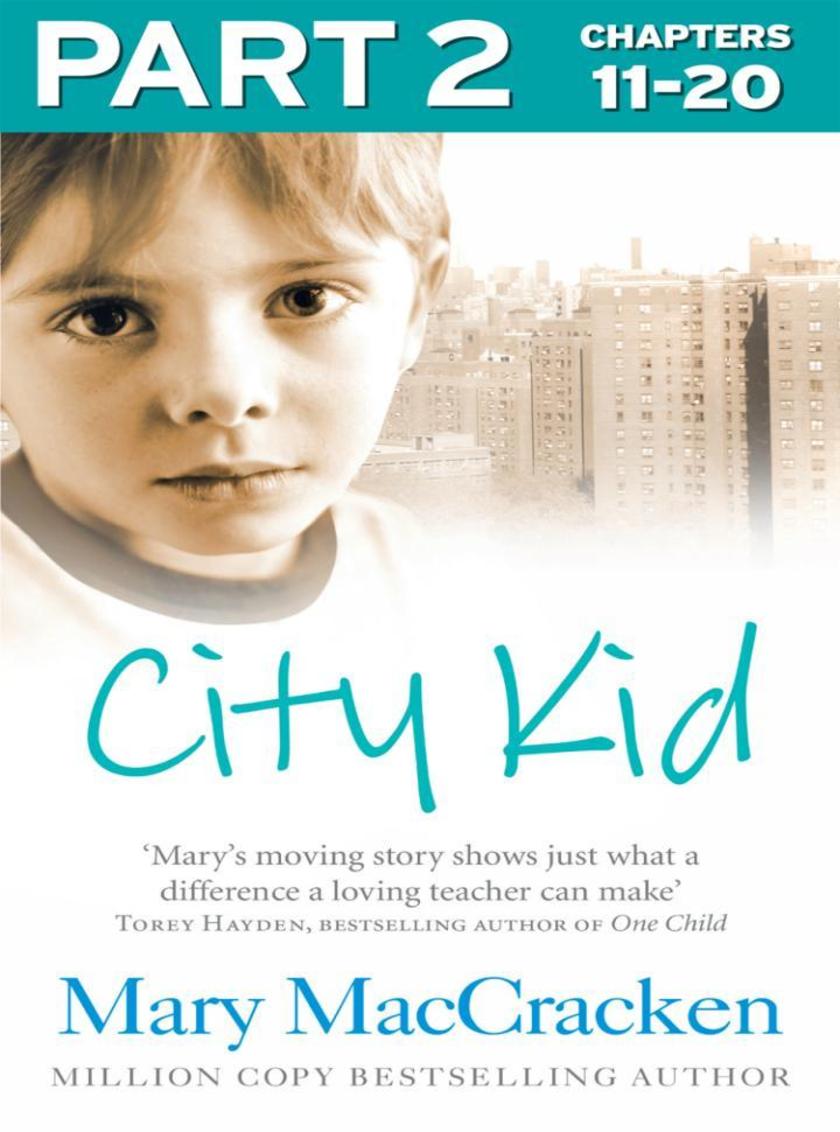
City Kid: Part 2 of 3
¥28.45
City Kid can either be read as a full-length eBook or in 3 serialised eBook-only parts. This is PART 2 of 3. You can read Part 2 one week ahead of release of the full-length eBook and paperback. From the author of international bestsellers A Circle of Children and Lovey comes an inspiring true story of a gifted teacher’s determination to understand the ‘rotten’ city kid everyone has given up on. Sitting quiet and withdrawn at a battered school desk, Luke had the looks of a shy angel – and a past that special needs teacher Mary MacCracken could barely believe. Already Luke had been picked up 24 times by the police. He’d set over a dozen major fires, and had a staggering record of thefts. No adult could reach him, no teacher could control him, and no policeman could cow him. All this – and Luke was only seven and a half years old. Trying to help Luke was Mary MacCracken’s job – and a seemingly impossible challenge. This is the remarkable story of how the impossible came true.
The Dark Crusader
¥54.25
A classic tale of espionage, secret missions and exotic locations which out-Bonds Bond, from the acclaimed master of action and suspense. Eight job advertisements. Eight jobs. Eight specialists in modern technology required. Eight scientists to fill them. Applicants to be married, with no children, and prepared to travel. Highly persuasive salaries. One criminal mastermind. Eight positions filled. Eight scientists - and their wives - disappear. Completely. One secret agent to stop him. Advertisment no.9. Sydney, Australia. Fuel specialist required. Looks like a job for John Bentall…

Fear is the Key
¥63.77
A classic novel of ruthless revenge set in the steel jungle of an oil rig in the Gulf of Mexico – and on the sea bed below it. Now reissued in a new cover style. A sunken DC-3 lying on the Caribbean floor. Its cargo: ten million, two hundred and fifty thousand dollars in gold ingots, emeralds and uncut diamonds guarded by the remains of two men, one woman and a very small boy. The fortune was there for the taking, and ready to grab it were a blue-blooded oilman with his own offshore rig, a gangster so cold and independent that even the Mafia couldn’t do business with him and a psychopathic hired assassin. Against them stood one man, and those were his people, those skeletons in their watery coffin. His name was Talbot, and he would bury his dead – but only after he had avenged their murders.

Goodbye California
¥57.09
The classic tale of terrorism, where a criminal fanatic is hell-bent on blasting San Francisco into the ocean, from the acclaimed master of action and suspense. 'Earthquake country,' said the Professor. 'San Francisco is geologically and seismologically a city that waits to die. Los Angeles is ringed by earthquake centres - seven massive quakes so far. We have no idea where the next, the monster, will hit…' …until a criminal fanatic kidnaps a nuclear scientist and builds his own atomic bombs. If exploded on California's fault lines they could trigger off the mightiest earthquake of them all - killing half its population and dumping the entire city of San Francisco into the sea. Goodbye California…
Puppet on a Chain
¥45.62
From the acclaimed master of action and suspense. The all time classic. Paul Sherman of Interpol's Narcotics Bureau flies to Amsterdam on the trail of a dope king. With enormous skill the atmosphere is built up: Amsterdam with its canals and high houses; stolid police; psychopaths; women in distress and above all – murder.

San Andreas
¥45.62
Reissue of the classic tale of war at sea, from the acclaimed master of action and suspense. Suddenly, just before dawn, the lights went out aboard the San Andreas. For the British hospital ship sailing the deadly, U-boat patrolled Norwegian waters, a nightmare of violence and betrayal has begun. A terrifying game of sabotage in which an unknown traitor among the crew holds all the cards. The red crosses on the vessel’s sides spell anything but safety. For a dangerous secret has turned the ship into a priceless quarry. With the Captain out of action Bosun Archie McKinnon takes over. Alone in treacherous, frozen seas, her compass smashed, the San Andreas is being drawn relentlessly into the enemy’s hands.


