


 购物车
购物车 个人中心
个人中心
Android Studio Cookbook
¥71.93
Design, test, and debug your apps using Android StudioAbout This BookSee what Material design is about and how to apply it your appsExplore the possibilities to develop apps that works on any type of deviceA step-by-step practical guide that will help you build improved applications, change their look, and debug them Who This Book Is For This book is for developers that are already familiar with programming concepts and have already started creating apps for the Android platform, for example, by using the Eclipse IDE. It is for developers who intend to use Android Studio as their primary IDE or want to use Android Studio more efficiently.What You Will LearnDevelop Android Studio applications using GenymotionApply the concepts of Material design to your applicationsUse memory monitoring tools to tweak performanceBuild applications for Android WearableCapture images, video, or audio within your Android appUse content providers to display dataBuild apps with a cloud-based backendCreate media-related apps that will run on phones, phablets, tablets, and TVs In Detail This book starts with an introduction of Android Studio and why you should use this IDE rather than Eclipse. Moving ahead, it teaches you to build a simple app that requires no backend setup but uses Google Cloud or Parse instead. After that, you will learn how to create an Android app that can send and receive text and images using Google Cloud or Parse as a backend. It explains the concepts of Material design and how to apply them to an Android app. Also, it shows you how to build an app that runs on an Android wear device. Later, it explains how to build an app that takes advantage of the latest Android SDK while still supporting older Android versions. It also demonstrates how the performance of an app can be improved and how memory management tools that come with the Android Studio IDE can help you achieve this. By the end of the book, you will be able to develop high quality apps with a minimum amount of effort using the Android Studio IDE.Style and approach This is a practical guide full of challenges and many real-world examples that demonstrate interesting development concepts. Besides smartphones and tablets, it also covers Android wearable devices and Android TV. Although strongly recommended, it is not necessary to own any Android device yourself.
Learning Shiny
¥71.93
Make the most of R’s dynamic capabilities and implement web applications with ShinyAbout This BookPresent interactive data visualizations in R within the Shiny frameworkConstruct web dashboards in a simple, intuitive, but fully flexible environmentApply your skills to create a real-world web application with this step-by-step guide Who This Book Is For If you are a data scientist who needs a platform to show your results to a broader audience in an attractive and visual way, or a web developer with no prior experience in R or Shiny, this is the book for you.What You Will LearnComprehend many useful functions, such as lapply and apply, to process data in RWrite and structure different files to create a basic dashboardDevelop graphics in R using popular graphical libraries such as ggplot2 and GoogleVisMount a dashboard on a Linux ServerIntegrate Shiny with non-R-native visualization, such as D3.jsDesign and build a web application In Detail R is nowadays one of the most used tools in data science. However, along with Shiny, it is also gaining territory in the web application world, due to its simplicity and flexibility. Shiny is a framework that enables the creation of interactive visualizations written entirely in R and can be displayed in almost any ordinary web browser. It is a package from RStudio, which is an IDE for R. From the fundamentals of R to the administration of multi-concurrent, fully customized web applications, this book explains how to achieve your desired web application in an easy and gradual way. You will start by learning about the fundamentals of R, and will move on to looking at simple and practical examples. These examples will enable you to grasp many useful tools that will assist you in solving the usual problems that can be faced when developing data visualizations. You will then walk through the integration of Shiny with R in general and view the different visualization possibilities out there. Finally, you will put your skills to the test and create your first web application!Style and approach This is a comprehensive, step-by-step guide that will allow you to learn and make full use of R and Shiny’s capabilities in a gradual way, together with clear, applied examples.
Elasticsearch for Hadoop
¥71.93
Integrate Elasticsearch into Hadoop to effectively visualize and analyze your dataAbout This BookBuild production-ready analytics applications by integrating the Hadoop ecosystem with ElasticsearchLearn complex Elasticsearch queries and develop real-time monitoring Kibana dashboards to visualize your dataUse Elasticsearch and Kibana to search data in Hadoop easily with this comprehensive, step-by-step guide Who This Book Is For This book is targeted at Java developers with basic knowledge on Hadoop. No prior Elasticsearch experience is expected.What You Will LearnSet up the Elasticsearch-Hadoop environmentImport HDFS data into Elasticsearch with MapReduce jobsPerform full-text search and aggregations efficiently using ElasticsearchVisualize data and create interactive dashboards using KibanaCheck and detect anomalies in streaming data using Storm and ElasticsearchInject and classify real-time streaming data into ElasticsearchGet production-ready for Elasticsearch-Hadoop based projectsIntegrate with Hadoop eco-system such as Pig, Storm, Hive, and Spark In Detail The Hadoop ecosystem is a de-facto standard for processing terra-bytes and peta-bytes of data. Lucene-enabled Elasticsearch is becoming an industry standard for its full-text search and aggregation capabilities. Elasticsearch-Hadoop serves as a perfect tool to bridge the worlds of Elasticsearch and Hadoop ecosystem to get best out of both the worlds. Powered with Kibana, this stack makes it a cakewalk to get surprising insights out of your massive amount of Hadoop ecosystem in a flash. In this book, you'll learn to use Elasticsearch, Kibana and Elasticsearch-Hadoop effectively to analyze and understand your HDFS and streaming data. You begin with an in-depth understanding of the Hadoop, Elasticsearch, Marvel, and Kibana setup. Right after this, you will learn to successfully import Hadoop data into Elasticsearch by writing MapReduce job in a real-world example. This is then followed by a comprehensive look at Elasticsearch essentials, such as full-text search analysis, queries, filters and aggregations; after which you gain an understanding of creating various visualizations and interactive dashboard using Kibana. Classifying your real-world streaming data and identifying trends in it using Storm and Elasticsearch are some of the other topics that we'll cover. You will also gain an insight about key concepts of Elasticsearch and Elasticsearch-hadoop in distributed mode, advanced configurations along with some common configuration presets you may need for your production deployments. You will have “Go production checklist” and high-level view for cluster administration for post-production. Towards the end, you will learn to integrate Elasticsearch with other Hadoop eco-system tools, such as Pig, Hive and Spark.Style and approach A concise yet comprehensive approach has been adopted with real-time examples to help you grasp the concepts easily.
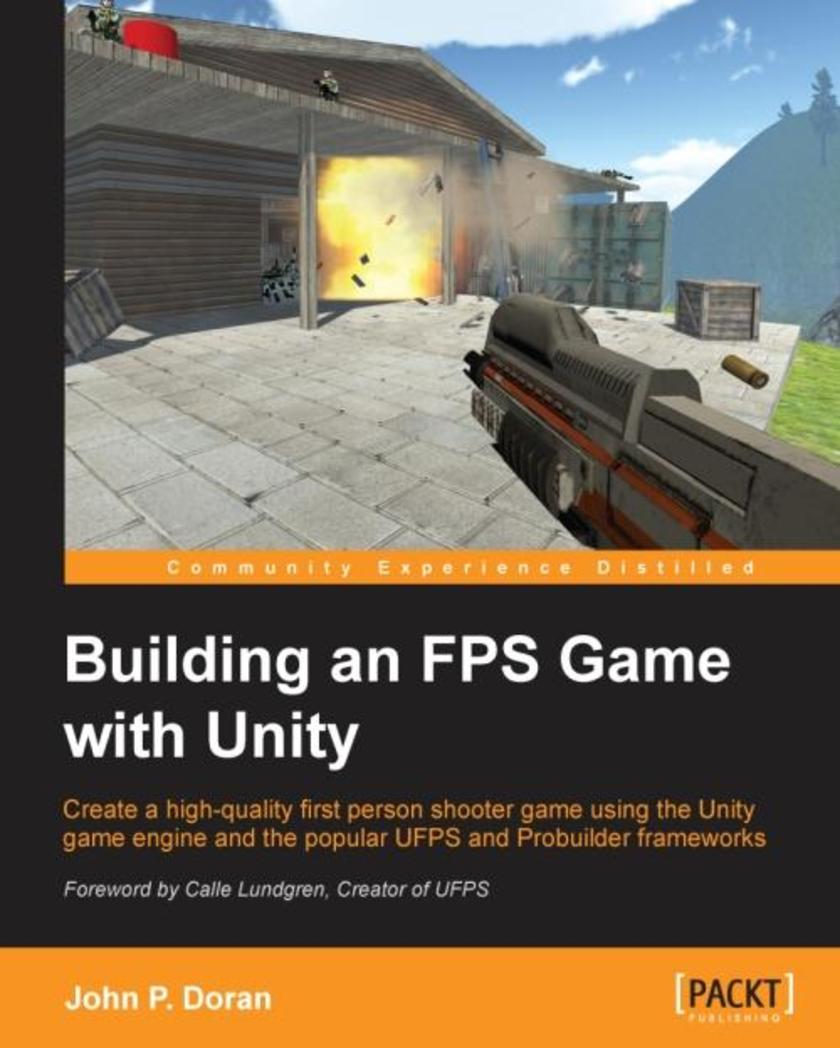
Building an FPS Game with Unity
¥80.65
Create a high-quality first person shooter game using the Unity game engine and the popular UFPS and Probuilder frameworksAbout This BookLearn how to use Unity in conjunction with UFPS and ProBuilder to create a high-quality game quicklyCreate both interior and exterior environmentsA step-by step guide to building a project with clear examples and instructions to create a number of interesting scenarios Who This Book Is For This book is for those who want to create an FPS game in Unity and gain knowledge on how to customize it to be their very own. If you are familiar with the basics of Unity, you will have an easier time, but it should make it possible for someone with no prior experience to learn Unity at an accelerated pace.What You Will LearnUse UFPS to build custom weapons with custom meshes and behaviorsExplore level design as you prototype levels, making use of Prototype to build levels out quicklyBuild environments that are realistic as possible while keeping peak performance and repetitiveness downReview tips and tricks on how to create environments using both terrain for outdoor areas and a modular workflow for interiorsDevelop a number of different encounters that your players can fight against, from a simple turret enemy to complex AI characters from Shooter AIDiscover how to create unique objects such as exploding barrels and objects you can interact withCreate a custom GUI to help your game stand out from the crowdPackage your game for release, create an installer, and get your game out into the world In Detail Unity, available in free and pro versions, is one of the most popular third-party game engines available. It is a cross-platform game engine, making it easy to write your game once and then port it to PC, consoles, and even the web, making it a great choice for both indie and AAA developers. Building an FPS Game in Unity takes readers on an exploration of how to use Unity to create a 3D first person shooter (FPS) title, leveraging the powerful UFPS framework by VisionPunk and Prototype/ProBuilder 2.0 by ProCore3D. After some setting up, you will start by learning how to create custom weapons, prototype levels, create exterior and interior environments, and breathe life into our levels. We will then add polish to the levels. Finally, we will create a custom GUI and menus for our title to create a complete package.Style and approach An easy-to-follow guide with each project containing step-by-step explanations, diagrams, screenshots, and downloadable material. Concepts in Unity and C# are explained as they are used and for the more inquisitive, there are more details on the concepts used with additional external resources to learn from.
Mastering PowerCLI
¥99.18
Master PowerCLI to automate all aspects of VMware environmentsAbout This BookLeverage PowerCLI to perform administration tasks in a more effective and efficient wayEscape from daily tedious and repetitive tasks by unleashing the full potential of your creative side through *ingMaster the intricate workings of PowerShell and PowerCLI through easy and real-life examples Who This Book Is For If you are a system administrator with working knowledge of PowerShell and PowerCLI who wants to perform quick and easy *ing but at the same time achieve complex results and write production grade *s, then this book is for you.What You Will LearnUse GitHub for collaboration and Pester to automate unit testsWrite advanced reusable functions and dynamic variables and learn about error handling in PowerShellAutomate ESXi host installation using Auto-Deploy, host profile, and host imageImplement security best practices in a vSphere data centerManage SRM, vCloud Air, and vRealize Operations environmentsAccess and utilize vSphere APIs to manage advanced aspects of vSphere and work with .NET view objectsUtilize REST APIs to manage vRealize Automation environmentsCreate a Windows GUI through the use of PowerShell and Sapien PrimalForms CE In Detail Have you ever wished that every morning you could automatically get a report with all the relevant information about your datacenter in exactly the same format you wantOr whether you could automate that boring, exhausting taskWhat if some crucial task needs to be performed on a regular basis without any errorPowerCLI *s do all that and much more for VMware environments. It is built on top of the popular Windows PowerShell, with which you can automate server tasks and reduce manual input, allowing you to focus on more important tasks. This book will help you to achieve your goals by starting with a short refresher on PowerShell and PowerCLI and then covering the nuances of advanced functions and reusable *s. Next you will learn how to build a vSphere-powered virtualized datacenter using PowerCLI while managing different aspects of the environment including automated installation, network, and storage. You will then manage different logical constructs of vSphere environment and different aspects of a virtual machine. Later, you will implement the best practices for a security implementation in vSphere Environment through PowerCLI before discovering how to manage other VMware environments such as SRM, vCloud Director and vCloud Air through PowerCLI. You will also learn to manage vSphere environments using advanced properties by accessing vSphere API and REST APIs through PowerCLI. Finally, you will build a Windows GUI application using PowerShell followed by a couple of sample *s for reporting and managing vSphere environments with detailed explanations of the *s. By the end of the book, you will have the required in-depth knowledge to master the art of PowerCLI *ing.Style and approach In this book, every topic is explained in a very easy-to-follow fashion with real-life, simple examples so that you get an idea of not only the topic but also the context in which it should be used or where it can be best utilized.
OpenCV with Python Blueprints
¥71.93
Design and develop advanced computer vision projects using OpenCV with PythonAbout This BookProgram advanced computer vision applications in Python using different features of the OpenCV libraryPractical end-to-end project covering an important computer vision problemAll projects in the book include a step-by-step guide to create computer vision applications Who This Book Is For This book is for intermediate users of OpenCV who aim to master their skills by developing advanced practical applications. Readers are expected to be familiar with OpenCV’s concepts and Python libraries. Basic knowledge of Python programming is expected and assumed.What You Will LearnGenerate real-time visual effects using different filters and image manipulation techniques such as dodging and burningRecognize hand gestures in real time and perform hand-shape analysis based on the output of a Microsoft Kinect sensorLearn feature extraction and feature matching for tracking arbitrary objects of interestReconstruct a 3D real-world scene from 2D camera motion and common camera reprojection techniquesTrack visually salient objects by searching for and focusing on important regions of an imageDetect faces using a cascade classifier and recognize emotional expressions in human faces using multi-layer peceptrons (MLPs)Recognize street signs using a multi-class adaptation of support vector machines (SVMs)Strengthen your OpenCV2 skills and learn how to use new OpenCV3 features In Detail OpenCV is a native cross platform C++ Library for computer vision, machine learning, and image processing. It is increasingly being adopted in Python for development. OpenCV has C++/C, Python, and Java interfaces with support for Windows, Linux, Mac, iOS, and Android. Developers using OpenCV build applications to process visual data; this can include live streaming data from a device like a camera, such as photographs or videos. OpenCV offers extensive libraries with over 500 functions This book demonstrates how to develop a series of intermediate to advanced projects using OpenCV and Python, rather than teaching the core concepts of OpenCV in theoretical lessons. Instead, the working projects developed in this book teach the reader how to apply their theoretical knowledge to topics such as image manipulation, augmented reality, object tracking, 3D scene reconstruction, statistical learning, and object categorization. By the end of this book, readers will be OpenCV experts whose newly gained experience allows them to develop their own advanced computer vision applications.Style and approach This book covers independent hands-on projects that teach important computer vision concepts like image processing and machine learning for OpenCV with multiple examples.
Creating Stunning Dashboards with QlikView
¥71.93
Bring real business insights to your company through effective and engaging dashboards in QlikViewAbout This BookBuild outstanding dashboards that respond to your company’s information needsPresent the data in efficient and innovative ways to promote insightsUnleash the true power of QlikView by creating engaging visualizations Who This Book Is For This book is focused on QlikView developers with basic knowledge of *ing and layouts who want to improve their designing skills and build effective, eye-catching dashboards that deliver tangible value to their business.What You Will LearnBuild a comprehensive library of QlikView components to speed up your developmentsDefine a practical roadmap that will help you build business-driven dashboardsExplore the most effective and engaging ways to present dataApply the best practices in the field of data visualizationAvoid common pitfalls when creating bar, line and pie chartsCreate robust visualizations such as heat maps, histograms and scatter plots In Detail QlikView is one of the most powerful analytical tools in the market. Based on an in-memory associative model, it lets users freely navigate through the data, spot trends and make better decisions. This platform is capable of integrating a wide range of data sources like ERP systems, data warehouses or spreadsheets into a single application in order display dashboards with state-of-the-art visualizations. Creating Stunning Dashboards with QlikView is an easy to follow handbook that guides you through the process of creating an effective and engaging dashboard that delivers tangible value to the business. It starts with the identification of the business needs and the definition of the main KPIs, and takes you all the way to the application rollout. Throughout the book, you will learn how to apply some of the best practices in the field of data visualization, create a robust navigation schema, chose the best chart types for each scenario and many other things that will help you create effective dashboards that uncover all the stories behind the data.Style and approach This easy-to-follow compilation of best practices, tips, and tricks will help you leverage your QlikView developments. Each section presents practical guidelines to help you create dashboards that are not only functional, but also engaging and compelling.

A Touch Of Love
¥24.44
After her young nephew and two nieces’ parents are drowned in a tragic sailing accident off the coast of Cornwall, the beautiful red-headed Tamara is devastated by their loss and realises almost at once that she is the only person who can look after the three children as she loves them so much. She speaks to the local Solicitor, who tells her that there is no money left in her brother-in-law’s estate and so she has no choice but to take the three children to their uncle, the Duke of Granchester, who lives in splendid isolation in a vast sprawling but intimidating Castle in Gloucestershire. The prospect at once appals Tamara. Firstly because she despises the Duke for the way he had cut off all contact with her sister and brother-in-law as he disapproved of their marriage, thinking that she was an actress when in fact she was a renowned opera singer. Worse still, Tamara has written a somewhat scurrilous novel portraying the Duke as the vile character she believes him to be! And the novel is just about to be published in London! Arriving at Granchester Castle in the guise of the children’s Governess, she finds the Duke to be as arrogant, high-handed and annoyingly handsome as her fictional portrayal of him and she hates him even more bitterly. Until a touch of love intervenes and changes everything forever.

Hiding from the Fortune-
¥24.44
The beautiful Colena Dalton has inherited a great fortune following the untimely death of her enormously rich father, Sir Arthur Dalton, in Paris after a long illness. After overhearing the Comtesse de Lyons telling her charmless son, Pierre, that he must propose to Colena as they need the money, she decides that she wants to marry a man who really loves her for herself and not for her money It is then that she and her cousin, Elizabeth, who has been living with Colena and her father in France, decide to change places. The two girls return to London where they join the Social world and are at once invited to endless parties as Sir Arthur’s death has been widely reported in all the newspapers. And immediately the fortune-hunters start circling. One of them called Oliver Stone becomes particularly persistent and bombards Elizabeth, thinking that she is Colena, with attention and invitations, while ignoring Colena. As expected he proposes marriage and will not be shaken off whatever the girls try and in order to escape him they drive of Colena’s father’s house in the country. There they find they find that two famous paintings have been stolen and hearing that there is to be a sale of pictures and other treasures nearby, the girls go there to try to replace the pictures. It is then that they meet up again unexpectedly with the unpleasant Oliver Stone who tries to abduct Elizabeth and force into marrying him. Then an unfortunate accident occurs that changes everything. How Colena and Elizabeth meet the men of their dreams, who love them for themselves and not for their money, is told in this intriguing story by BARBARA CARTLAND.
Real Time Analytics with SAP HANA
¥71.93
Enhance your SAP HANA skills using this step-by-step guide to creating and reporting data models for real-time analyticsAbout This BookThis book will help you to process analytical and transactional data in real time with the help of SAP HANA.Walk through the steps of the data modeling process and build various data models and artifacts in SAP HANA Studio.Packed with rich examples and use cases that are closely focused on developing real-time applications. Who This Book Is For If you are a SAP HANA data modeler, developer, implementation/migration consultant, project manager, or architect who is responsible for implementing/migrating to SAP HANA, then this book is for you.What You Will LearnGet to grips with the basic building blocks of Analytics/Data models in the SAP HANA environment.Discover various schemas, modeling principles, Joins, and the architecture of the SAP HANA engine.Build data models and artifacts in Sap HANA Studio.Design decision tables and understand the concept of transport management in the SAP HANA landscape.Work with the different views in SAP HANA Studio.Explore full-text search and fuzzy search in SAP HANA.Create your own scenarios and use cases using sample data and code. In Detail SAP HANA is an in-memory database created by SAP. SAP HANA breaks traditional database barriers to simplify IT landscapes, eliminating data preparation, pre-aggregation, and tuning. SAP HANA and in-memory computing allow you to instantly access huge volumes of structured and unstructured data, including text data, from different sources. Starting with data modeling, this fast-paced guide shows you how to add a system to SAP HANA Studio, create a schema, packages, and delivery unit. Moving on, you’ll get an understanding of real-time replication via SLT and learn how to use SAP HANA Studio to perform this. We’ll also have a quick look at SAP Business Object DATA service and SAP Direct Extractor for Data Load. After that, you will learn to create HANA artifacts—Analytical Privileges and Calculation View. At the end of the book, we will explore the SMART DATA access option and AFL library, and finally deliver pre-packaged functionality that can be used to build information models faster and easier.Style and approach This is an easy-to-follow, step-by-step, rapid guide to help you learn analytics in SAP HANA through ample hands-on exercises and use case scenarios.
Apache Mahout Clustering Designs
¥63.21
Explore clustering algorithms used with Apache MahoutAbout This BookUse Mahout for clustering datasets and gain useful insightsExplore the different clustering algorithms used in day-to-day workA practical guide to create and evaluate your own clustering models using real world data sets Who This Book Is For This book is for developers who want to try out clustering on large datasets using Mahout. It will also be useful for those users who don’t have background in Mahout, but have knowledge of basic programming and are familiar with basics of machine learning and clustering. It will be helpful if you know about clustering techniques with some other tool.What You Will LearnExplore clustering algorithms and cluster evaluation techniquesLearn different types of clustering and distance measuring techniquesPerform clustering on your data using K-Means clusteringDiscover how canopy clustering is used as pre-process step for K-MeansUse the Fuzzy K-Means algorithm in Apache MahoutImplement Streaming K-Means clustering in MahoutLearn Spectral K-Means clustering implementation of Mahout In Detail As more and more organizations are discovering the use of big data analytics, interest in platforms that provide storage, computation, and analytic capabilities has increased. Apache Mahout caters to this need and paves the way for the implementation of complex algorithms in the field of machine learning to better analyse your data and get useful insights into it. Starting with the introduction of clustering algorithms, this book provides an insight into Apache Mahout and different algorithms it uses for clustering data. It provides a general introduction of the algorithms, such as K-Means, Fuzzy K-Means, StreamingKMeans, and how to use Mahout to cluster your data using a particular algorithm. You will study the different types of clustering and learn how to use Apache Mahout with real world data sets to implement and evaluate your clusters. This book will discuss about cluster improvement and visualization using Mahout APIs and also explore model-based clustering and topic modelling using Dirichlet process. Finally, you will learn how to build and deploy a model for production use.Style and approach This book is a hand's-on guide with examples using real-world datasets. Each chapter begins by explaining the algorithm in detail and follows up with showing how to use mahout for that algorithm using example data-sets.
Cocos2d-x Cookbook
¥80.65
Over 50 hands-on recipes to help you efficiently administer and maintain your games with Cocos2d-xAbout This BookBuild exciting games, apps, and other cross-platform GUI based interactive programs with Cocos2d-xExplore the nitty-gritty of the latest Cocos2d-x on the block, version 3.6A step-by-step guide that shows you the functionalities of Cocos2d-x followed by an explanation of how they work Who This Book Is For If you are a game developer and want to learn more about cross-platform game development in Cocos2d-x, then this book is for you. Knowledge of C++, Xcode, Eclipse, and how to use commands in the terminal are prerequisites for this book.What You Will LearnInstall and set up Cocos2d-x for your development environmentBuild, test, and release game applications for iOS and AndroidDevelop your games for multiple platformsCustomize Cocos2d-x for your gamesUse a physical engine in your gamesSave and load text, JSON, XML, or other formatsExplore the brand new features of Cocos2d-x In Detail Cocos2d-x is a suite of open source, cross-platform game-development tools used by thousands of developers all over the world. Cocos2d-x is a game framework written in C++, with a thin platform-dependent layer. Completely written in C++, the core engine has the smallest footprint and the fastest speed of any other game engine, and is optimized to be run on all kinds of devices. You will begin with the initial setup and installation of Cocos2d before moving on to the fundamentals needed to create a new project. You will then explore and create the sprites, animations, and actions that you will include in the game. Next you will look at strings and create labels, including a label with True Type Font (TTF) font support. Later, you will learn about layer and scene creation and transition. Then you will create the GUI parts essential for a game, such as buttons and switches. After that, you will breathe life into the game with background music and sound effects using the all new Cocos2d-x audio engine. You will then discover how to manage resource files and implement processes that depend on the operating system. Finally, you will polish your game with physics such as gravity and elevation, learn about tools that will help you make games more robust and stable, and get to know best practices to improve the game you have developed.Style and approach This book is an easy-to-follow guide with ample recipes to help you better understand Cocos2d-x.

Infusionsoft Cookbook
¥99.18
Over 88 recipes for effective use of Infusionsoft to mitigate your CRM needs, marketing automation, conducting online business optimallyAbout This BookMaximize client engagement by automating lead capture and follow-upCollect information and set up lead scoring in Infusionsoft to enhance your marketing interactions to build more clientsSet up online shopping carts, manage your online store, and enhance user experience Who This Book Is For If you want to excel in the use of Infusionsoft to develop a set of common applications or project types and solutions effectively, this book is perfect for you. This book will empower you to provide better results for your clients, faster! It is assumed that you are familiar with and use Infusionsoft.What You Will LearnSet up and configure features that will enhance new user creation using InfusionsoftAttract leads and build your list efficientlyUnderstand the different strategies to sell and get paidCreate amazing customer experiences by following up and automating messagesMaster techniques to use Infusionsoft for internal administrative functionsMake better business decisions by mastering the reporting functionalitySave time and simplifying day-to-day usage using InfusionsoftGet to know the Ninja hacks while working with Infusionsoft efficiently. In Detail Infusionsoft is an all-in-one software-as-a-service (SaaS) for small business sales and marketing. It empowers businesses with the same level of automation and personalization that were previously only available to large corporate enterprises with deep pockets. You can easily manage customer relationships, target communications in an automated manner, and sell their products/services online effectively. Starting with recipes on the general setup and core competencies related to Infusionsoft, you will then learn about tools to enhance user experience. Further on, you'll dive deep into different strategies to attract, sell, and wow your customers. You’ll also explore different ways to manage administrative tasks and reporting, which are crucial to perform better workflow management. Later, you will become proficient in lead generation and lead management, referral management, report generation, and working with the campaign builder. Finally, the book closes with unsupported ninja hacks to take your business strategies into the stratosphere!Style and approach A recipe-based guide that covers real-life scenarios on optimising marketing automation, lifecycle management, lead generation, inventory management, and adding ecommerce functionality

Mrs Queen Takes the Train
¥83.03
After decades of service and years of watching her family's troubles splashed across the tabloids, Britain's Queen is beginning to feel her age. She needs some proper cheering up. An unexpected opportunity offers her relief: an impromptu visit to a place that holds happy memories—the former royal yacht, Britannia, now moored near Edinburgh. Hidden beneath a skull-emblazoned hoodie, the limber Elizabeth (thank goodness for yoga) walks out of Buckingham Palace into the freedom of a rainy London day and heads for King's Cross to catch a train to Scotland. But a characterful cast of royal attendants has discovered her missing. In uneasy alliance a lady-in-waiting, a butler, an equerry, a girl from the stables, a dresser, and a clerk from the shop that supplies Her Majesty's cheese set out to find her and bring her back before her absence becomes a national scandal.Mrs Queen Takes the Train is a clever novel, offering a fresh look at a woman who wonders if she, like Britannia herself, has, too, become a relic of the past. William Kuhn paints a charming yet biting portrait of British social, political, and generational rivalries—between upstairs and downstairs, the monarchy and the government, the old and the young. Comic and poignant, fast paced and clever, this delightful debut tweaks the pomp of the monarchy, going beneath its rigid formality to reveal the human heart of the woman at its center.
The Slow Fix: Solve Problems, Work Smarter and Live Better in a Fast World
¥68.67
What do we do when things go wrong in a fast world? Many of us go for the quick fix that delays the problem rather than solving it. To make real progress we need real solutions – we need to take time for THE SLOW FIX. People have long been in search of a quick fix. Truth is, it doesn’t work. The problems facing us today are bigger and more urgent than ever before and we need to learn to start fixing things properly, rather than settling for short-term solutions. The Slow Fix offers real, life-changing solutions to tackling these problems and extends the movement defined by Carl Honore in his global bestseller, In Praise of Slow, to offer a recipe for problem-solving that can be applied to every walk of life, from business and politics to relationships, education and health reform.

The Birth of Modern Britain: A Journey into Britain’s Archaeological Past
¥76.91
From the author of ‘Britain BC’, ‘Britain AD’ and ‘Britain in the Middle Ages’ comes the fourth and final part in a critically acclaimed series on Britain's hidden past. The relevance of archaeology to the study of the ancient world is indisputable. But, when exploring our recent past, does it have any role to play? In ‘The Birth of Modern Britain’ Francis Pryor highlights archaeology’s continued importance to the world around us. The pioneers of the Industrial Revolution were too busy innovating to record what was happening around them but fortunately the buildings and machines they left behind bring the period to life. During the Second World War, the imminent threat of invasion meant that constructing strong defences was much more important than keeping precise records. As a result, when towns were flattened, archaeology provided the only real means of discovering what had been destroyed. Surveying the whole post-medieval period, from 1550 until the present day, Francis Pryor takes us on an exhilarating journey, bringing to a gripping conclusion his illuminating study of Britain’s hidden past.

Nature Near London (Collins Nature Library)
¥147.35
The Collins Nature Library is a new series of classic British nature writing – reissues of long-lost seminal works. The titles have been chosen by one of Britain’s best known and highly acclaimed nature writers, Robert Macfarlane, who has also written new introductions that put these classics into a modern context. Nature Near London is a collection of observational pieces from locations near London at the end of the 19th Century. The depth of knowledge and of familiarity with particular places and particular species gives the impression that each small piece is the product of many years of observation. His style of observation is a work in miniature – cataloguing the most minute details; the dancing of a flower in the wind or the darting of a cautious trout. The chapters centre on a special place, a certain species, geographical feature or habitat – everything from orchards and copses to rivers and streams. Jefferies always explains the typical behaviour of whatever he is describing, and often contrasts what he sees with what one would expect to see in another part of the country, or in a different season. His knowledge of flowers is wide-ranging, and his ability to describe one particular patch of a field in such a specific way brings tremendous variety to the chapters that make up the book. The final chapters are a departure – both from the character of the rest of the book, and from London itself, as Jefferies boards the train to Brighton. Suddenly he is describing people and their relationship to nature, as much as nature itself. The scope widens, less a work in miniature, more surging towards a triumphant end as Jefferies becomes ever more philosophical. 100 years on, the book becomes even more relevant than when it was published – as a reminder of the dangers of unrelenting urbanisation, but also the context of the trend that aims to recreate nature where we need it most – around our cities. Nature near London is a portrait of what we’ve lost, and a reminder of nature’s positive and calming influence. Going along with Jefferies is like taking an afternoon stroll out of the city, without having to leave your armchair.

Battle for the Falklands:The Winter War
¥54.65
‘Boldly planned, bravely executed and brilliantly accomplished’ was Margaret Thatcher’s assessment of the Falklands campaign. But what did the war mean to the men in the trenches and below decks? This gripping first-hand account of the Falklands War, written by bestselling military historian Patrick Bishop and Sunday Times Editor John Witherow, reveals the true experiences of the British soldiers and seamen on the front line. The authors, then rookie reporters, lived alongside the fighting men, experiencing the daily realities of a British task force that was hugely outnumbered on a barren island 8,000 miles from home. The Falklands: The Winter War looks at the covert role of the SAS and the heroic death of Colonel ‘H’ Jones at Goose Green, and considers just how close Britain came to defeat. This is an extraordinarily frank and unsparing account of a military campaign that has held a defining place within the British national conscience since victory in 1982.

Twenty-One: Coming of Age in World War II
¥72.99
World War II affected the lives of ordinary men and women more directly than any other conflict before or since. This is an unprecedented look at the lives of twenty-one young men who answered their country’s call to arms and left their homes to fight in unfamiliar and far-reaching corners of the globe. Many never returned, and those who did found their homes and countries much changed by long years of war. Most discovered they had become different people: having seen death and destruction on a scale they had never imagined they would witness, the return to civilian life was often far from easy. Now, more than sixty years on, this remarkable generation is fading. Most are now over eighty and around the world more than two thousand veterans of the war are passing away every day. In this new book ‘Sunday Times’ bestselling author James Holland recounts the real-life stories of twenty-one young men from around the world who served in different services and theatres of the war. Whether it be the Byers brothers from Canada or Bill Laity from Cornwall, Wlad Rubnikowicz from Poland or Tom Finney from Preston, each began the war with little idea of what lay in store; and yet, each displayed astonishing courage, fortitude and resilience, united by a sense of honour and duty, and bound by the fellowship of their comrades. Often reacting in very different ways to the strange and frequently terrifying situations in which they found themselves, they each suffered hardships and loss, making sacrifices that have ensured a lasting peace amongst the warring nations; and if some of these survivors are perplexed by how the world has developed, none doubts the value of what they did all those years ago. Moving, poignant, and conveying all the drama, tension and fear experienced in war, ‘Twenty-One’ is an uplifting tribute to a passing generation, describing the wide range of experiences and extremes these remarkable men and women witnessed during World War II. Note that it has not been possible to include the same picture content that appeared in the original print version.

The Last Veteran: Harry Patch and the Legacy of War
¥73.58
This moving and timely book explores the way the First World War has been thought about and commemorated, and how it has affected its own, and later, generations. On 11 November 1920, huge crowds lined the streets of London for the funeral of the Unknown Warrior. As the coffin was drawn on a gun carriage from the Cenotaph to Westminster Abbey, the King and Ministers of State followed silently behind. The modern world had tilted on its axis, but it had been saved. Armistice Day was born, the acknowledgement of the great sacrifice made by a whole generation of British men and women. Now, almost a century later, Harry Patch, the last British veteran who saw active service, has died. Our final link with the First World War is broken. Harry Patch was born in 1898 and was con*ed in 1916. He served with a Lewis gun team at the Battle of Passchendaele and in September 1917 was wounded by a shell that killed three of his comrades. After the war, Patch returned to Somerset to work as a plumber, a job he continued to do until his retirement. The First World War was fought not by a professional army but by ordinary civilians like Patch, who epitomised Edwardian Britain and the sense, now lost, of what Britain stood for and why it was worth fighting for. The Last Veteran tells Patch's story, and explores the meaning of the war to those who fought in it and the generations that have followed. Peter Parker's illuminating and timely book is a moving tribute to a remarkable generation.
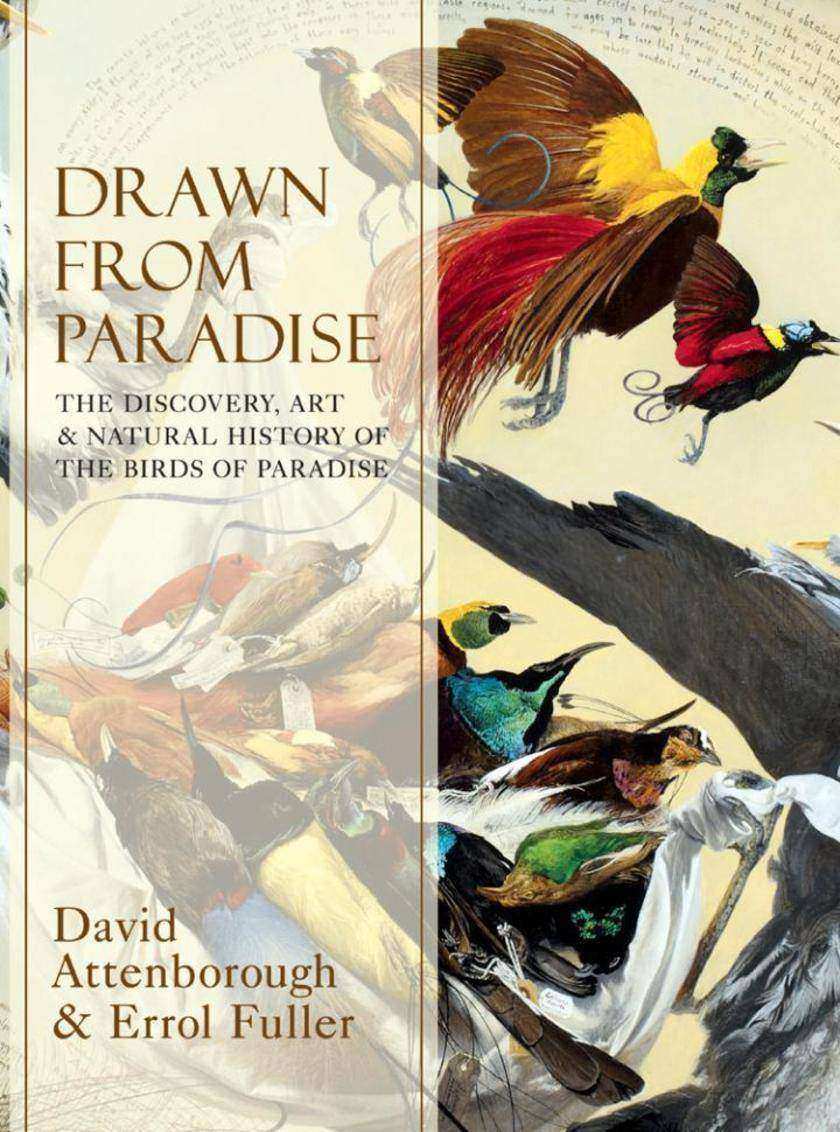
Drawn From Paradise:The Discovery, Art and Natural History of the Birds of Parad
¥206.30
Drawn from Paradise is David Attenborough’s journey through the cultural history of the birds of paradise, one of the most exquisite and extravagant, colourful and intriguing families of birds. From the moment they were introduced to the European mind in the early sixteenth century, their unique beauty was recognised and commemorated in the first name that they were given – birds so beautiful must be birds from paradise. In this unique exploration of a truly awe-inspiring family of birds which to this day is still shrouded in mystery, David Attenborough and Errol Fuller trace the natural history of these enigmatic birds through their depiction in western works of art throughout the centuries, featuring beautiful illustrations by such luminary artists as Jacques Barraband, William Hart, John Gould, Rubens and Breughel, to name but a few. Experienced ornithologists and general nature and art enthusiasts alike will delight in this journey of discovery of the world’s most beautiful and mysterious birds.


