


 购物车
购物车 个人中心
个人中心
The Presumed Alliance
¥90.77
As Latino and African Americans increasingly live side by side in large urban centers, as well as in suburban clusters, the idealized concept of a "Rainbow Coalition" would suggest that these two disenfranchised groups are natural political allies. Indeed, as the number of Latinos has increased dramatically over the last ten years, competition over power and resources between these two groups has led to surprisingly antagonistic and uncooperative interactions. Many African Americans now view Latinos, because of their growth in numbers, as a threat to their social, economic, and political gains.Vaca debunks the myth of "The Great Union" and offers the hope he believes each community could learn from, in order to achieve a mutually agreed upon agenda. More than simply unveiling the problem, The Presumed Alliance offers optimistic solutions to the future relations between Latino and Black America.

The Rabbi and the Hit Man
¥94.10
A fascinating true-crime narrative about the first rabbi ever accused of murder and what the case says about the role of clergy in America.On the evening of November 1, 1994, Rabbi Fred Neulander returned home to find his wife, Carol, facedown on the living room floor, blood everywhere. He called for help, but it was too late. Two trials and eight years later, the founder of the largest reform synagogue in southern New Jersey became the first rabbi ever convicted of murder and sentenced to life in prison.In a gripping examination of the misuses of the pulpit and the self-delusions of power, Arthur J. Magida paints a devastating portrait of a manipulative man who used his position of trust in the temple to attract several mistresses -- and to befriend a lonely recovering alcoholic, whom he convinced to kill his wife "for the good of Israel."The Rabbi and the Hit Man straddles the juncture of faith and trust, and confronts issues of sex, narcissism, arrogance, and adultery. It is the definitive account of a charismatic clergyman who paid the ultimate price for ignoring his own words of wisdom: "We live at any moment with our total past ... What we do will stay with us forever."

Black Lies, White Lies
¥94.10
PBS television commentator and syndicated radio talk-show host Tony Brown has been called an "out-of-the-box thinker" and, less delicately, and "equal opportunity ass kicker." Those who attempt to pigeonhole him do so at their own peril. This journalist, media commentator, self-help advocate, entrepreneur, public speaker, film director, and author is a hard man to pin a label on -- and an even more difficult man to fool.In Black Lies, White Lies, Tony Brown does what few high-profile African Americans have done before: He dares to challenge the lies of both Black and White leaders, and he dares to tell the truth. He attacks White racism and Black self-victimization with equal vehemence. He condemns integration as a disastrous policy, not for just Blacks but for the entire country. And he confronts the Black Talented Tenth, White liberals, conservatives, Democrats, Republicans, demagogues, and racists on all sides for their self-serving lies, their failures, and their lack of vision.But Tony Brown does not simply slash and burn. He also offers farsighted, workable solutions to America's problems. He provides a blueprint for American renewal bases on his belief that although we may not have come to this country on the same ship, we are all now in the same boat.

North of Normal
¥88.56
In the late 1960s, Cea Sunrise Person's subversive family fled to the Canadian wilderness to grow pot, embrace free love, and live off the land. A riveting memoir of growing up off the grid amid multiple generations of dysfunction, North of Normal chronicles one woman's journey to reclaim her life on her own terms.Determined to abandon civilization for a hand-to-mouth existence in the wild, Cea Sunrise Person's charismatic grandfather Papa Dick uproots the Person clan from suburban California to the forests of Canada when she is just a baby. Together with her teenage mother, Michelle her father long gone Cea will spend the next decade of her life living in and out of canvas tipis with neither electricity nor running water, at the mercy of fierce storms, food shortages, and an array of grown-ups more interested in having a groovy time than in parenting a child.As a young girl who knows no other world, Cea is happy enough playing in the meadows and snowshoeing behind the grandfather she idolizes. But for Michelle, one crucial element is missing: a man. When Michelle strikes out to look for love, spinning from one boyfriend to the next, Cea is forced along for the ride and into a harsh awakening. Consumed by a desire for a more normal life, she begins to question both her highly unusual world and the hedonistic woman at its center. But the escape she finds, a career as an internationally successful model, brings its own challenges.Shocking, heartbreaking, yet often funny, and infused with warmth toward her damaged family, North of Normal is Person's singular story of her desire to live life on her own terms no matter what it takes. Her journey of self-discovery and acceptance, which comes full circle after she has children of her own, is profoundly moving. Eloquently navigating the minefields of regret, longing, and family, North of Normal celebrates the strength we all carry within us to shape our own destiny.

Battered Woman
¥77.54
"A major contribution to this subject. She is thorough, practical, compassionate, and authoritative. It is a reading must."--Phyllis Chesler
Revolution in Mind
¥113.43
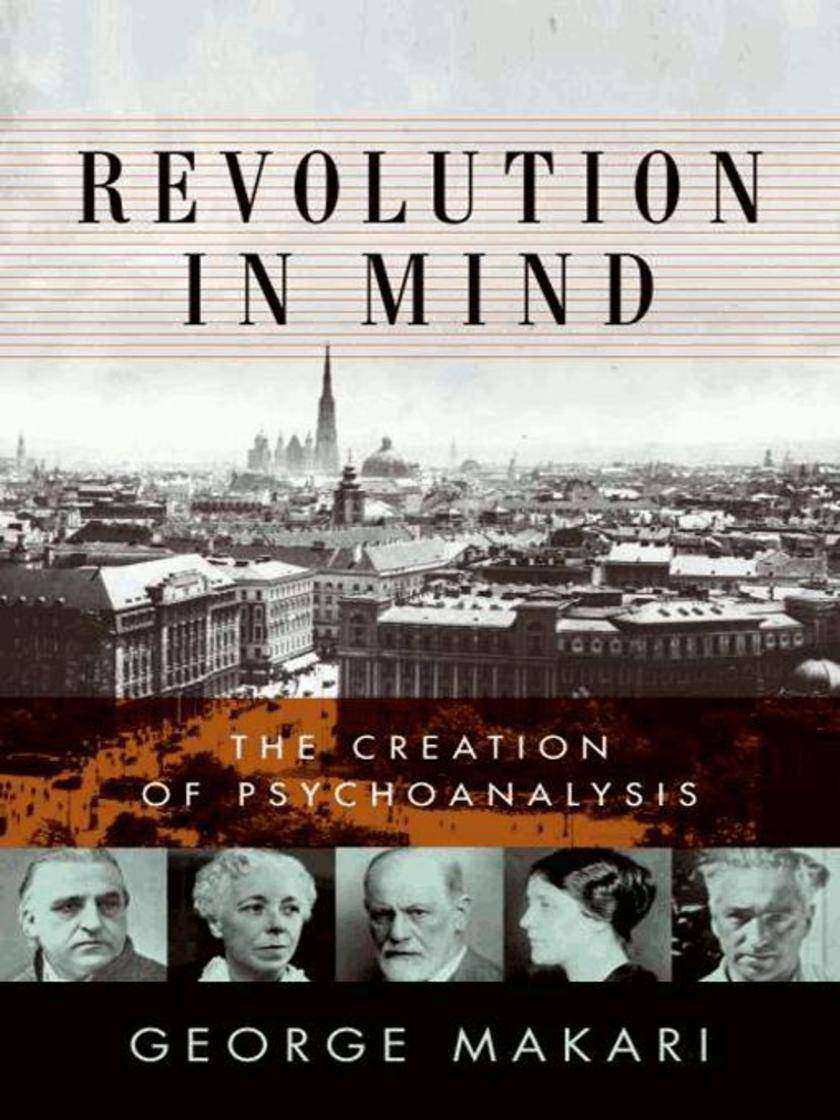
A masterful history of one of the most important movements of our time, Revolution in Mind is a brilliant, engaging, and radically new work the first ever to fully account for the making of psychoanalysis. In a sweeping narrative, George Makari demonstrates how a new way of thinking about inner life coalesced and won followers who spread this body of thought throughout the West. Along the way he introduces the reader to a fascinating array of characters, many of whom have been long ignored or forgotten.Amid great ferment, Sigmund Freud emerged as a creative, interdisciplinary thinker who devised a riveting new theory of the mind that attracted acolytes from the very fields the Viennese doctor had mined for his synthesis. These allies included Eugen Bleuler, Carl Jung, and Alfred Adler, all of whom eventually broke away and accused the Freudian community of being unscientific. Makari reveals how in the wake of these crises, innovators like Sndor Ferenczi, Wilhelm Reich, Melanie Klein, and others reformed psychoanalysis, which began to gain wide acceptance only to be banished from the continent and sent into exile due to the rise of fascism.Groundbreaking, insightful, and compulsively readable, Revolution in Mind goes beyond myth and polemic to give us the story of one of the most controversial intellectual endeavors of the twentieth century.

Masters and Commanders
¥123.10
An epic joint biography, Masters and Commanders explores the degree to which the course of the Second World War turned on the relationships and temperaments of four of the strongest personalities of the twentieth century: political masters Winston Churchill and Franklin D. Roosevelt and the commanders of their armed forces, General Sir Alan Brooke and General George C. Marshall. Each was exceptionally tough willed and strong minded, and each was certain that he knew best how to win the war. Yet each knew that he had to win at least two of the others if he was to have his strategy adopted. Andrew Roberts, whom The Economist calls "Britain's finest contemporary military historian," traces the mutual suspicion and admiration, the rebuffs and the charm, the often-explosive disagreements and wary reconciliations, and he helps us to appreciate the motives and imperatives acting upon these key leaders struggling to destroy Nazism. Drawing on newly discovered verbatim accounts of Churchill's war-cabinet meetings and on the private papers of nearly seventy contemporaries, Roberts reconstructs the lively debates of the four principals and other leading figures, and attempts to answer some of the key questions of Allied strategy. Why, when the most direct route from Germany to Britain was through north-western France, did the Western Allies launch attacks via North Africa, Sicily, and RomeWhy, if Operation Overlord in June 1944 was intended to be the start of the Allies' great thrust into Germany, did four hundred thousand men land five hundred miles to the south, in southern France, two months laterWhy did the Allies not take Berlin, Vienna, or Prague and allow the Iron Curtain to descend where it didMasters and Commanders dramatically re-creates the atmosphere, debates, and maneuverings through which Allied grand strategy was forged and reveals the profound impact of personality upon history.

A Small Nation of People
¥105.17
An incredible treasure trove of more than 150 illustrations detailing a small nation of African Americans prepared to make their mark on America

The Modern Girl's Guide to Sticky Situations
¥110.71
This is the book to grab when . . . you're pulling your hair out, screaming like a banshee, blubbering with frustration, or hyperventilating because you just don't know what to do!Jane Buckingham, author of The Modern Girl's Guide to Life, is back with a collection of helpful quick fixes for the deserving gal with the best intentions who gets caught in sticky situations. Here are warm, witty, and eminently wise solutions to those everyday problems that pop up as a result of impulsive actions or just plain bad luck helpful hints on what to do if you: Send an e-mail you instantly regret Botch your self-tan Discover your best friend's husband is cheating on her Break your corkscrew while opening your only bottle of wine Run into your ex and need to look hot, fast! Are expected to name your baby after a family member with an awful name And that's just a small sampling of the scenarios for which Jane Buckingham offers solutions in The Modern Girl's Guide to Sticky Situations. So if you find yourself in a pickle . . . just leave it to Jane!
Baseball Americana
¥123.10
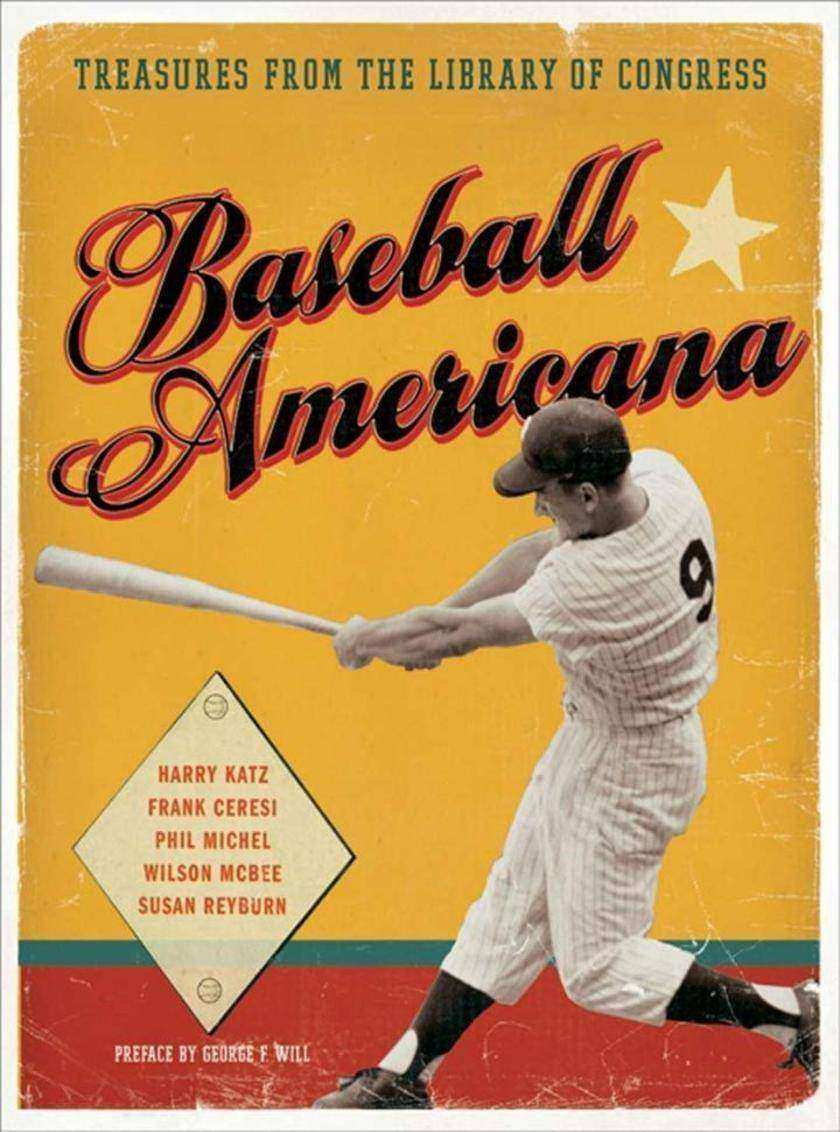
A lavishly illustrated history of America's game, from the unparalleled collections of the Library of Congress Baseball, the sport that helped reunify the country in the years after the Civil War, remains the National Pastime. The Library of Congress houses the world's largest baseball collection, documenting the history of the game and providing a unique look at America since the late 1700s. Now Baseball Americana presents the best of the best from that treasure trove. From baseball's biggest stars to street urchins, from its most newsworthy stories to sandlot and Little League games, the book examines baseball's hardscrabble origins, rich cultural heritage, and uniquely American character.The more than 350 fabulous illustrations many never before published featured first-generation, vintage photographic and chromolithographic baseball cards; photographs of famous players and ballparks; and newspaper clippings, cartoons, New Deal photographs, and baseball advertisements. Packed with images that will surprise and thrill even the most expert collector, Baseball Americana is a gift for every baseball fan.

How Shall I Tell the Dog?
¥112.16
In this hilarious and moving book, popular English humorist Miles Kington faces cancer and death with his sparkling trademark wit, musing on everything from board games and yodeling to the prospect of being outlived by his dog.When some people are told they have only a few months to live, they might travel around the world or write their memoirs or put their affairs in order. When it happened at the age of 66 to Miles Kington-one of England's best-loved humorists-he did what he did best, offering sharp, wry, laugh-out-loud observations and ideas about his situation. Following his diagnosis of pancreatic cancer, Kington proposes crazier and crazier ideas for his next book (what he calls "cashing in on cancer") in a series of letters to his literary agent, Gill.And what sort of things capture Kington's attention in his waning monthsThe sudden grimness of those 1,000 Places to See Before You Die books, for example. (What about 100 Things to Do Before You Die, Without Leaving Home?, he suggests. Instead of bungee jumping and whitewater rafting, learn to whistle with two fingers in your mouth, yodel, or steam open envelopes.) The irony that his dog, Berry, will probably outlive him, or the semi-outrageous idea of creating a funeral video:The answer is quite simple.Make a video in advance of my farewell speech, to be shown on a monitor, from the pulpit, or on a screen behind the stage, or wherever the best place would be.I have already visualised the opening shot.It is of me, smiling ruefully, and saying to camera: "Hello. I'm sorry I couldn't be here in person with you today."Mischievous and utterly original, Miles Kington's words in the face of death are memorable and surprisingly uplifting.

I'll Find a Way or Make One
¥117.62
A comprehensive and definitive guide to America's 107 historically black colleges and universities, this commemorative gift book explores the historical, social, and cultural importance of the nation's HBCUs and celebrates their rich legacy.Included in this one-of-a-kind collection are: Detailed profiles of each HBCU Illuminating portraits of distinguished HBCU graduates such as Leontyne Price, Thurgood Marshall, Spike Lee, and Oprah Winfrey Little-known anecdotes about pre-Civil War efforts to educate blacks, such as how a white pastor founded what became Lincoln University after his black prot was excluded from Princeton's Theological Seminary Rare photographs and archival materials featuring the likes of Eleanor Roosevelt addressing students at Howard University Chronicling the history of education in the African American community, I'll Find a Way or Make One is not only an unprecedented salute to historically black colleges and universities, but also an indispensable account of some of the most important events of African Americana and American history.
Understanding Dreams
¥42.03
It has been said that dreams are the windows to the soul -- andnow those windows can be opened wide! The book you hold in your hands is a concise compendium of pre*ive information, an easy-to-use reference guide to the meanings and import of the remarkable visions that visit us while we sleep.Here in one volume are the essential keys to unlocking themysteries of the subconscious -- and to putting the power of dreams at your fingertips! The meaning behind more than 800 dream symbols The history of dream interpretation Lucid, repetitive, and sequential dreams Sleep patterns and the workings of the unconscious mind How to keep a "dream diary"
Rose in Scotland
¥41.91
A delicate flower Lady Caroline Burroughs is desperate. Her unscrupulous guardian is squandering away her inheritance, and now wants to gain complete control over her dwindling wealth by forcing her to wed his aged crony. But Caroline has found a solution to her woes. Though it means surrendering her long-cherished dream of marring for love, she agrees to a preemptive temporary union with a devilishly handsome stranger a brave and noble Scotsman who believes that love is an illusion.A thorny romanceMajor Hugh MacColme has every reason to hate the British since the Crown stole his ancestral castle and sent his father and brother into exile. And he never imagined he would end up marrying one of the enemy. But a year spent in the intimate company of an exquisite English rose seems a small price to pay for recovering his birthright. For tender-hearted Caroline, however, the difficult part will be coping with her unexpected desire for this proud and distant man no use for is the warm and healing love he truly needs.

The Perils of Pleasure
¥48.39
A rescued rogue . . . Scandal has rocked the city of London. Colin Eversea, a handsome, reckless unapologetic rogue is sentenced to hang for murder and, inconveniently for him, the only witness to the crime disappears. Then again, throughout history, the Everseas have always managed to cheat fate in style: Colin is snatched from the gallows by a beautiful, clever mercenary.A captivating captor. . . Cool-headed, daring Madeleine Greenway is immune to Colin's vaunted charm. Her mission is not to rescue Colin but to kidnap him, and to be paid handsomely for it. But when it becomes clear that whoever wants Colin alive wants Madeline dead, the two become uneasy allies in a deadly race for truth. Together, they'll face great danger and a passion neither can resist.
Enough About You
¥67.09
The Complete Narcissist's GuideMimi E. Gotist delivers a gift for our times: practical, simple guidance to help you cope with the self-loving people in your life-while nurturing your own inner narcissist.At once utterly self-absorbed, and charmingly aware of it, Gotist offers advice on: Dating: You're not looking for the person you want to marry -- you're looking for the person you want to change Career: Don't work -- work it Spirituality: Me Here Now Personal Growth: You can't help anyone who won't help you
Code Name: Johnny Walker
¥88.56
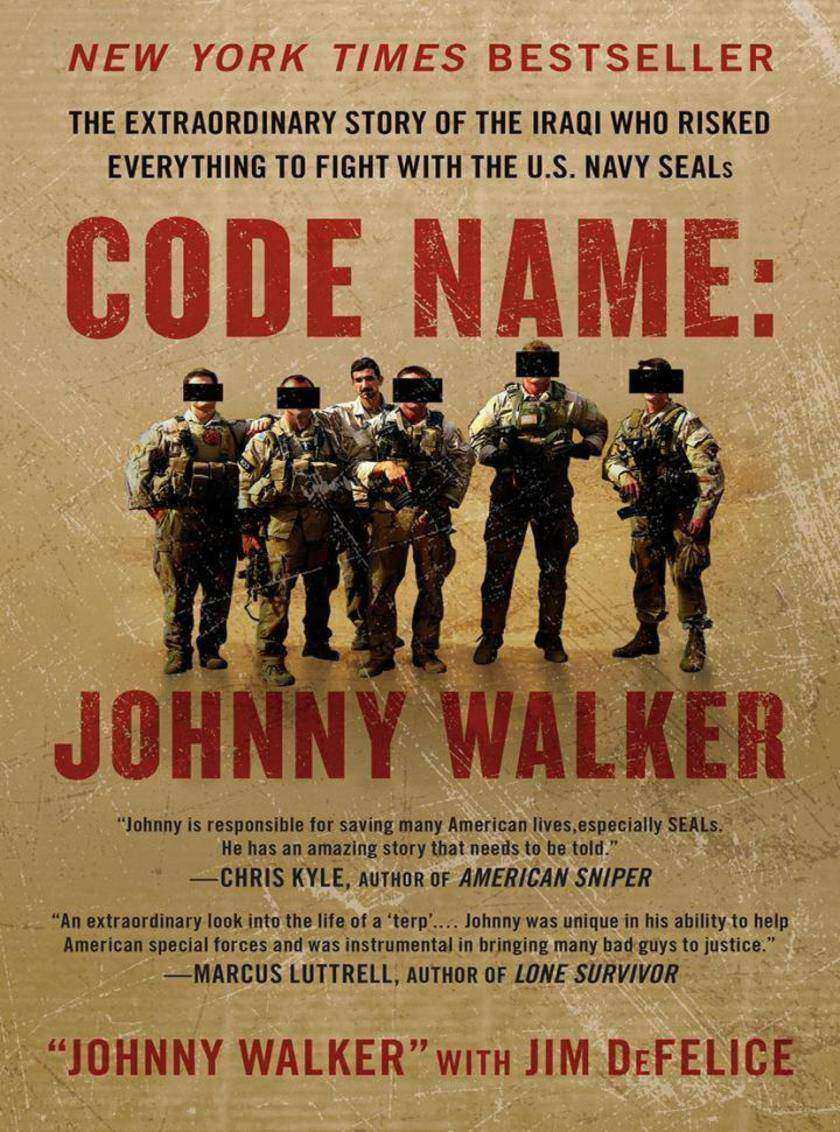
This is the unforgettable story of how an ordinary Iraqi became a hero to America's elite warriors and how that debt was repaid with the gift of freedom. He was the seals' most trusted interpreter . . . and moreNight after night, while his homeland was being destroyed around him, he guided the U.S. Navy SEALs through Iraq's most dangerous regions. Operating under the code name "Johnny Walker," he risked his life on more than a thousand missions and became a legend in the U.S. special-ops community, many of whose members credit him with saving their lives. But in the eyes of Iraq's terrorists and insurgents, he and his family were marked for death because he worked with the Americans. . . . Then the SEALs stood up to protect the man who had watched their backs through the entire war.Over the course of eight years, the Iraqi native traveled around the country with nearly every SEAL and special-operations unit deployed there. Using his wits to outthink the insurgency, Johnny Walker unmasked countless terrorists and helped foil an untold number of plots against Americans and their allies. He went on hundreds of missions, saved dozens of American lives both SEAL and civilian and risked his own life daily. He and his family lived in constant jeopardy, surviving multiple assassination attempts and a host of threats in Mosul, until a desperate escape through the desert late in the war took them to the relative safety of Baghdad.Fearing for Johnny's long-term safety after the war, the SEALs now as close as brothers to Johnny took it upon themselves to bring him to the United States, where today he and his family live their version of the American Dream. He remains in the fight by helping train the next generation of American special-operations warriors.For the first time ever, a "terp" tells what it was like in Iraq during the American invasion and the brutal insurgency that followed. With inside details on SEAL operations and a humane understanding of the tragic price paid by ordinary Iraqis, Code Name: Johnny Walker reveals a side of the war that has never been told before.

Red Sox Rule
¥90.77
The story of the changing face of baseball and the inner workings of its finest organization After a hundred "cursed" years, the Boston Red Sox rose gloriously to baseball domination. Under the leadership of manager Terry Francona, an extraordinary team of wildly disparate personalities from the inscrutable Manny Ramirez to the affable David "Big Papi" Ortiz pulled off two improbable post-season comebacks to make it to the World Series twice in three years . . . and ultimately emerged victorious. In Red Sox Rule, Michael Holley, bestselling author of Patriot Reign, provides a fascinating, insightful, and surprising inside look at how it all happened.With the exclusive cooperation of Terry Francona and stories from the clubhouse and the conference room, Holley reveals the private sessions and the dugout and front-office strategies that have made the Red Sox a budding dynasty, overtaking their archrivals, the powerful New York Yankees, as the American League's elite team.

Judging Thomas
¥88.56
Clarence Thomas, the youngest and most controversial member of the Supreme Court, could become the longest-serving justice in history, influencing American law for decades to come. Who is this enigmatic manAnd what does he believe in?Judging Thomas tells the remarkable story of Clarence Thomas's improbable journey from hardscrabble beginnings in the segregated South to the loftiest court in the land. With objectivity and balance, author Ken Foskett chronicles Thomas's contempt for upper-crust blacks who snubbed his uneducated, working-class roots; his flirtation with the priesthood and, later, Black Power; the resentment that fueled his opposition to affirmative action; the conservative beliefs that ultimately led him to the Supreme Court steps; and the inner resilience that propelled him through the doors.Based on interviews with Thomas himself, fellow justices, family members, and hundreds of friends and associates, Judging Thomas skillfully unravels perhaps the most complex, controversial, and powerful public figure in America today.
Unlocking The Sky
¥90.77
Unlocking the Sky tells the extraordinary tale of the race to design, refine, and manufacture a manned flying machine, a race that took place in the air, on the ground, and in the courtrooms of America. While the Wright brothers threw a veil of secrecy over their flying machine, Glenn Hammond Curtiss -- perhaps the greatest aviator and aeronautical inventor of all time -- freely exchanged information with engineers in America and abroad, resulting in his famous airplane, the June Bug, which made the first ever public flight in America. Fiercely jealous, the Wright brothers took to the courts to keep Curtiss and his airplane out of the sky and off the market. Ultimately, however, it was Curtiss's innovations and designs, not the Wright brothers', that served as the model for the modern airplane.

Motherpeace
¥110.71
For over a decade, Motherpeace has been an inspiration and oracle for women all over the world. Motherpeace recovers the positive, nurturing peace-oriented values of prepatriarchal times, and brilliantly combines art, history, mythology, folklore, philosophy, and comparative religion with an informed spiritual and feminist perspective.Vicki Noble challenges us to celebrate our ancient peaceful heritage and to reclaim our right as a people to a life without war. The book is a vision of hope and transformation, made even more powerful by the vibrant pictorial images of the seventy-eight Motherpeace tarot cards.Motherpeace shows how traditional myths and symbols can provide ideas and images for understanding the meaning and power of the Goddess for women and men today.


