


 购物车
购物车 个人中心
个人中心

The Genius in the Design
¥88.56
The rivalry between the brilliant seventeenth-century Italian architects Gianlorenzo Bernini and Francesco Borromini is the stuff of legend. Enormously talented and ambitious artists, they met as contemporaries in the building yards of St. Peter's in Rome, became the greatest architects of their era by designing some of the most beautiful buildings in the world, and ended their lives as bitter enemies. Engrossing and impeccably researched, full of dramatic tension and breathtaking insight, The Genius in the Design is the remarkable tale of how two extraordinary visionaries schemed and maneuvered to get the better of each other and, in the process, created the spectacular Roman cityscape of today.

The Templars
¥100.71
The first history of the legendary knights since the Vatican momentously released the records of their trial and exonerationWho were the TemplarsWhat was the secret of their wealth and powerWhy did the pope and the king of France act to destroy themThe Knights Templar were founded on Christmas Day 1119, on the very spot in Jerusalem where Jesus Christ was crucified. A religious order of fighting knights, the Templars defended the Holy Land and Christian pilgrims in the decades after the First Crusade. Legendary for their bravery and dedication, the Templars became one of the wealthiest and most powerful bodies of the medieval world until they were condemned for heresy two centuries after their foundation, when the order was abolished and its leaders were burned at the stake.In The Templars, renowned historian Michael Haag investigates the origins and history, the enduring myths, and the soaring architecture of an enigmatic order long shrouded in mystery and controversy. The hand of the Templars, many believe, can be found in everything from Cathar heresy to Masonic conspiracies, and the Knights Templar still inspire popular culture, from Indiana Jones to Xbox games, to the novels of Dan Brown.Some images that appeared in the print edition of this book are unavailable in the electronic edition due to rights reasons.

The Collected Poetry of Nikki Giovanni
¥88.56
This omnibus covers Nikki Giovanni's complete work of poetry from 1967-1983. THE COLLECTED POETRY OF NIKKI GIOVANNI will include the complete volumes of five adult books of poetry: Black Feeling Black Talk/Black Judgement, My House, The Women and the Men, Cotton Candy on a Rainy Day, and Those Who Ride the Night Winds. Nikki self published her first book Black Feeling, Black Talk/BlackJudgement in 1969, selling 10,000 copies; William Morrow published in 1970. Know for its iconic revolutionary phrases, it is heralded as one of the most important volumes of modern African American poetry and is considered the seminal volume of Nikki's body of work. My House (Morrow 1972) marks a new dimension in tone and philosphy.This is Giovanni's first foray into the autobiographical. In The Women and the Men (Morrow 1975), Nikki displays her compassion for the people, things and places she has encountered She reveres the ordinary and is in search of the extraordinary. Cotton Candy on a Rainy Day (Morrow 1978) is one of the most poignant and introspective of all Giovanni's collections. These poems chronicle the drastic change that took place during the 1970s when the dreams of the Civil Rights era seemed to have evaporated. Those Who Ride the Night Winds (Morrow 1983) is devoted to "the day trippers and midnight cowboys," the ones who have devoted their lives to pushing the limits of the human condition and shattered the constraints of the stautus quo.

Lost in Shangri-La
¥94.10
On May 13, 1945, twenty-four American servicemen and WACs boarded a transport plane for a sightseeing trip over Shangri-La, a beautiful and mysterious valley deep within the jungle-covered mountains of Dutch New Guinea.Unlike the peaceful Tibetan monks of James Hilton's bestselling novel Lost Horizon, this Shangri-La was home to spear-carrying tribesmen, warriors rumored to be cannibals. But the pleasure tour became an unforgettable battle for survival when the plane crashed. Miraculously, three passengers pulled through. Margaret Hastings, barefoot and burned, had no choice but to wear her dead best friend's shoes. John McCollom, grieving the death of his twin brother also aboard the plane, masked his grief with stoicism. Kenneth Decker, too, was severely burned and suffered a gaping head wound.Emotionally devastated, badly injured, and vulnerable to the hidden dangers of the jungle, the trio faced certain death unless they left the crash site. Caught between man-eating headhunters and enemy Japanese, the wounded passengers endured a harrowing hike down the mountainside a journey into the unknown that would lead them straight into a primitive tribe of superstitious natives who had never before seen a white man or woman.Drawn from interviews, declassified U.S. Army documents, personal photos and mementos, a survivor's diary, a rescuer's journal, and original film footage, Lost in Shangri-La recounts this incredible true-life adventure for the first time. Mitchell Zuckoff reveals how the determined trio dehydrated, sick, and in pain traversed the dense jungle to find help; how a brave band of paratroopers risked their own lives to save the survivors; and how a cowboy colonel attempted a previously untested rescue mission to get them out.By trekking into the New Guinea jungle, visiting remote villages, and rediscovering the crash site, Zuckoff also captures the contemporary natives remembrances of the long-ago day when strange creatures fell from the sky. A riveting work of narrative nonfiction that vividly brings to life an odyssey at times terrifying, enlightening, and comic, Lost in Shangri-La is a thrill ride from beginning to end.
Nom de Plume
¥90.73
What's in a nameIn our "look at me" era, everyone's a brand. Privacy now seems a quaint relic, and self-effacement is a thing of the past. Yet, as Nom de Plume reminds us, this was not always the case. Exploring the fascinating stories of more than a dozen authorial impostors across several centuries and cultures, Carmela Ciuraru plumbs the creative process and the darker, often crippling aspects of fame. Biographies have chronicled the lives of pseudonymous authors such as Mark Twain, Isak Dinesen, and George Eliot, but never before have the stories behind many noms de plume been collected into a single volume. These are narratives of secrecy, obsession, modesty, scandal, defiance, and shame: Only through the protective guise of Lewis Carroll could a shy, half-deaf Victorian mathematician at Oxford feel free to let his imagination run wild. The "three weird sisters" (as they were called by the poet Ted Hughes) from Yorkshire the Brontes produced instant bestsellers that transformed them into literary icons, yet they wrote under the cloak of male authorship. Bored by her aristocratic milieu, a cigar-smoking, cross-dressing baroness rejected the rules of propriety by having sexual liaisons with men and women alike, publishing novels and plays under the name George Sand.Grounded by research yet highly accessible and engaging, these provocative, astonishing stories reveal the complex motives of writers who harbored secret identities sometimes playfully, sometimes with terrible anguish and tragic consequences. A wide-ranging examination of pseudonyms both familiar and obscure, Nom de Plume is part detective story, part exposé, part literary history, and an absorbing psychological meditation on identity and creativity.

Amazing Grace
¥88.56
Amazing Grace tells the story of the remarkable life of the British abolitionist William Wilberforce (1759-1833). This accessible biography chronicles Wilberforce's extraordinary role as a human rights activist, cultural reformer, and member of Parliament. At the center of this heroic life was a passionate twenty-year fight to abolish the British slave trade, a battle Wilberforce won in 1807, as well as efforts to abolish slavery itself in the British colonies, a victory achieved just three days before his death in 1833. Metaxas discovers in this unsung hero a man of whom it can truly be said: he changed the world. Before Wilberforce, few thought slavery was wrong. After Wilberforce, most societies in the world came to see it as a great moral wrong.To mark the 200th anniversary of the abolition of the British slave trade, HarperSanFrancisco and Bristol Bay Productions have joined together to commemorate the life of William Wilberforce with the feature-length film Amazing Grace and this companion biography, which provides a fuller account of the amazing life of this great man than can be captured on film. This account of Wilberforce's life will help many become acquainted with an exceptional man who was a hero to Abraham Lincoln and an inspiration to the anti-slavery movement in America.
Out of Captivity
¥101.00
On February 13, 2003, a plane carrying three American civilian contractors Marc Gonsalves, Keith Stansell, and Tom Howes crash-landed in the mountainous jungle of Colombia. Dazed and shaken, they emerged from the plane bloodied and injured as gunfire rained down around them. As of that moment they were prisoners of the FARC, a Colombian terrorist and Marxist rebel organization. In an instant they had become American captives in Colombia's volatile and ongoing conflict, which has lasted for almost fifty years.In Out of Captivity, Gonsalves, Stansell, and Howes recount for the first time their amazing tale of survival, friendship, and, ultimately, rescue, tracing their five and a half years as hostages of the FARC. Their story takes you inside one of the world's most notorious terrorist organizations, going behind enemy lines with vivid and haunting imagery. Their words conjure a reality that few people have ever encountered from sleeping on beds literally carved out of the jungle to escaping Colombian military air strikes under the cover of darkness to being bound with steel chains by their captors. Describing backbreaking starvation marches and forced isolation, the authors chronicle their confrontations and interactions with the FARC guerrilla soldiers a motley crew of brainwashed, idealistic teenagers and seasoned vet-erans who've been around long enough to realize that the only way out of the FARC is in a body bag.Though the physical punishments their bodies endured were unrelenting, the psychological battles they waged were the ultimate test of their resolve. With candid detail, Gonsalves, Stansell, and Howes relate the perilous mental struggles they each experienced, as they grappled with feelings of guilt, fear, and anxiety for the families and lives they'd left behind. Exposing the transformative power of captivity, they show how they turned these fears into strengths, using their memories and their families, their pasts and their futures, to motivate them in their quest for survival. Despite the odds and the conditions, despite the chains and the silence, and despite the often tense relationships they experienced with their fellow Colombian hostages, they had one another, forging a bond that allowed them to cope with the horrific conditions of their confinement. This brotherhood enabled them to persevere through the worst that the FARC threw at them while always reminding them of their ultimate goal: freedom.A harrowing account of one of the longest civilian hostage crises in United States history, Out of Captivity is a remarkable and compelling exploration of how far three Americans were willing to go as they fought to stay alive for themselves, their families, and one another.
Sandra Day O'Connor
¥99.65
Sandra Day O'Connor, America's first woman justice, became the axis on which the Supreme Court turned. She was called the most powerful woman in America, and it was often said that to gauge the direction of American law, one need look only to O'Connor's vote. Then, just one year short of a quarter century on the bench, she surprised her colleagues and the nation by announcing her retirement.Drawing on information from once-private papers of the justices, hundreds of interviews with legal and political insiders, and the insight gained from nearly two decades of covering the Supreme Court, Joan Biskupic examines O'Connor's remarkable career, providing an in-depth account of her transformation from tentative jurist to confident architect of American law. The portrait that emerges is of a complex and multifaceted woman: lawyer, politician, legislator, and justice, as well as wife, mother, A-list society hostess, and competitive athlete. To all appearances, she was the polite lady in pearls, handbag on her arm. But in the back rooms of politics and the law, she was a determined, focused strategist. O'Connor was the feminist who, rather than rebel against the male-dominated system, worked from within -- and succeeded.As Biskupic demonstrates, Justice O'Connor became much more than a "first." During her twenty-four-year tenure, she wrote the decisions on some of the most controversial social battles of our time. O'Connor's tie-breaking opinions on issues such as abortion rights, affirmative action, the death penalty, and religious freedom will have a lasting effect far into the future. O'Connor also cast one of the five votes that cut off the Florida recounts and allowed George W. Bush to take the White House in the 2000 contested presidential election. With an eye to the American people and a keen sense of public attitudes, she worked behind the scenes to shape the law and transform the legal standards by which future cases will be decided.From O'Connor's isolated upbringing on the Lazy B ranch in Arizona through her time as a state legislator to her rise as a justice -- along the way confronting her own personal challenges and crises, including breast cancer -- Biskupic presents a vivid, astute depiction of the justice -- and of the woman beneath the black robe. In so doing, Sandra Day O'Connor also provides an unprecedented look inside the exclusive, famously secretive High Court.
The Way You Wear Your Hat
¥94.10
Within is a masterful assembly of the most personal details and gorgeous minutiae of Frank Sinatra's way of living--matters of the heart and heartbreak, friendship and leadership, drinking and cavorting, brawling and wooing, tuxedos and snap-brims--all crafted from rare interviews with Sinatra himself as well as many other intimates, including Tony Bennett, Don Rickles, Angie Dickinson, Tony Curtis, and Robert Wagner, in addition to daughters Nancy and Tina Sinatra. Illustrated with scores of photos, The Way You Wear Your Hat captures the timeless romance and classic style of the fifties and the loose sixties and is a stunning exploration of the Sinatra mystique.

First Families
¥94.10
What is it like to be America's First FamilyIn this wonderfully engaging book, Bonnie Angelo, Time correspondent and acclaimed author of First Mothers, probes two hundred years of American history to tell the story of real life within the White House walls how presidents, their wives, children, and extended families worked to create a home in an imposing national monument while attempting to keep their private lives from the public domain.First Families chronicles exhilarating moments as well as dark days at the nation's most famous address, with fascinating, behind-the-headline accounts of picture-book weddings, gossipy love affairs, rollicking children, domestic squabbles, and tragic deaths. From activist wives Eleanor Roosevelt and Hillary Clinton to reluctant occupants Bess Truman and Jacqueline Kennedy, to those such as Mary Todd Lincoln, Dolley Madison, and madcap debutante Alice Roosevelt, who embraced their new address and status, here is an unforgettable human portrait of our First Families and how they coped, stumbled, or thrived in the national spotlight.
Complete Confidence Updated Edition
¥99.65
Confident people react positively and successfully to life's problems and challenges. Those who lack confidence often view themselves as victims blaming others or bingeing on drugs, sex, food, or alcohol to mask their feelings of shame or worthlessness.In Complete Confidence, renowned psychotherapist Dr. Sheenah Hankin points the way to a confident life free of self-criticism, anxiety, and immature anger. Her Winning Hand of Comfort technique is a clear, concise, and powerful pre*ion for dealing with everyday situations from resolving conflicts to ending unhealthy habits like overeating, complaining, and procrastinating. This essential handbook will teach you how to retrain your brain to manage your emotions and put your problems into perspective. You will learn how to calm down, clarify your thinking, challenge your blame habit, comfort your negative feelings, and achieve confidence. That is Dr. Hankin's promise.

Motherless Mothers
¥95.39
When Hope Edelman, author of the New York Times bestseller Motherless Daughters, became a parent, she found herself revisiting the loss of her mother in ways she had never anticipated. Now the mother of two young girls, Edelman set out to learn how the loss of a mother to death or abandonment can affect the ways women raise their own children. In Motherless Mothers, Edelman uses her own story as a prism to reveal the unique anxieties and desires that these women experience as they raise their children without the help of a living maternal guide. In an impeccably researched, luminously written book enriched by the voices of the mothers themselves and filled with practical insight and advice from experienced professionals she examines their parenting choices, their triumphs, and their fears, and offers motherless mothers the guidance and support they want and need.

Pieces of My Heart
¥88.56
In this moving memoir, Robert J. Wagner opens his heart to share the romances, the drama, and the humor of an incredible life He grew up in Bel Air next door to a golf course that changed his life. As a young boy, he saw a foursome playing one morning featuring none other than Fred Astaire, Clark Gable, Randolph Scott, and Cary Grant. Seeing these giants of the silver screen awed him and fueled his dreams of becoming a movie star. Battling a revolving door of boarding schools and a father who wanted him to forget Hollywood and join the family business, sixteen-year-old Wagner started like any nave kid would walking along Sunset Boulevard, hoping that a producer or director would notice him.Under the mentorship of stars like Spencer Tracy, he would become a salaried actor in Hollywood's studio system among other hot actors of the moment such as his friends Rock Hudson and Tony Curtis. Working with studio mogul Darryl Zanuck, Wagner began to appear in a number of films alongside the most beautiful starlets but his first love was Barbara Stanwyck, an actress twice his age. As his career blossomed, and after he separated from Stanwyck, he met the woman who would change his life forever, Natalie Wood. They fell instantly and deeply in love and stayed together until the stress of their careers hers marching upward, his inexplicably deflating drove them to divorce.Trying to forget the pain, he made more movies and spent his time in Europe with the likes of Steve McQueen, Sophia Loren, Peter Sellers, Laurence Olivier, David Niven, Liz Taylor, and Joan Collins. He would meet and marry the beautiful former model and actress Marion Marshall. Together they had a daughter and made their way back to America, where he found himself at the beginning of a new era in Hollywood the blossoming of television. Lew Wasserman and later Aaron Spelling would work with Wagner as he produced and starred in some of the most successful programs in history. Despite his newfound success, his marriage to Marion fell apart. He looked no further than Natalie Wood, for whom he still pined. To the world's surprise, they fell in love all over again, this time more deeply and with maturity. As she settled into a domestic life, raising their own daughter, Courtney, as well as their children from previous marriages, Wagner became the sole provider, reaping the riches of television success. Their life together was cut tragically short, though, when Wood died after falling from their yacht.For the first time, Wagner writes about that tremendously painful time. After a serious bout with depression, he finally resurfaced and eventually married Jill St. John, who helped keep his family and his fractured heart together. With color photographs and never-before-told stories, this is a quintessentially American story of one of the great sons of Hollywood.

Piggybanking
¥90.77
How to afford kids and teach them about moneyWe all want to raise smart children. But somewhere between the reading, writing, and arithmetic, one of life's most important lessons is too often overlooked: personal finances. As adults, we interact with money every day, whether by saving, investing, spending, or giving it, but we often forget that kids also face these same decisions from their own unique perspective as they mature. How do we teach today what kids really need to know tomorrow to thrive as financially savvy adultsIn Piggybanking, veteran Wall Street Journal personal-finance writer Jeff D. Opdyke provides a clear and effective plan to help parents raise children to be comfortable and confident managing the daily finances of life.But even before kids arrive, parents face a rash of financial decisions. Accordingly, Piggybanking also deals with the essential problems every struggling young family must face, including how to prepare your budget for a child's arrival, how to choose between single- and dual-income lifestyles, and how to plan for funding a college education.With Opdyke's valuable advice, and with his 15 Rules of Kids Money in hand, parents will be well equipped to create a sound financial foundation for their family and a successful financial life for their kids.
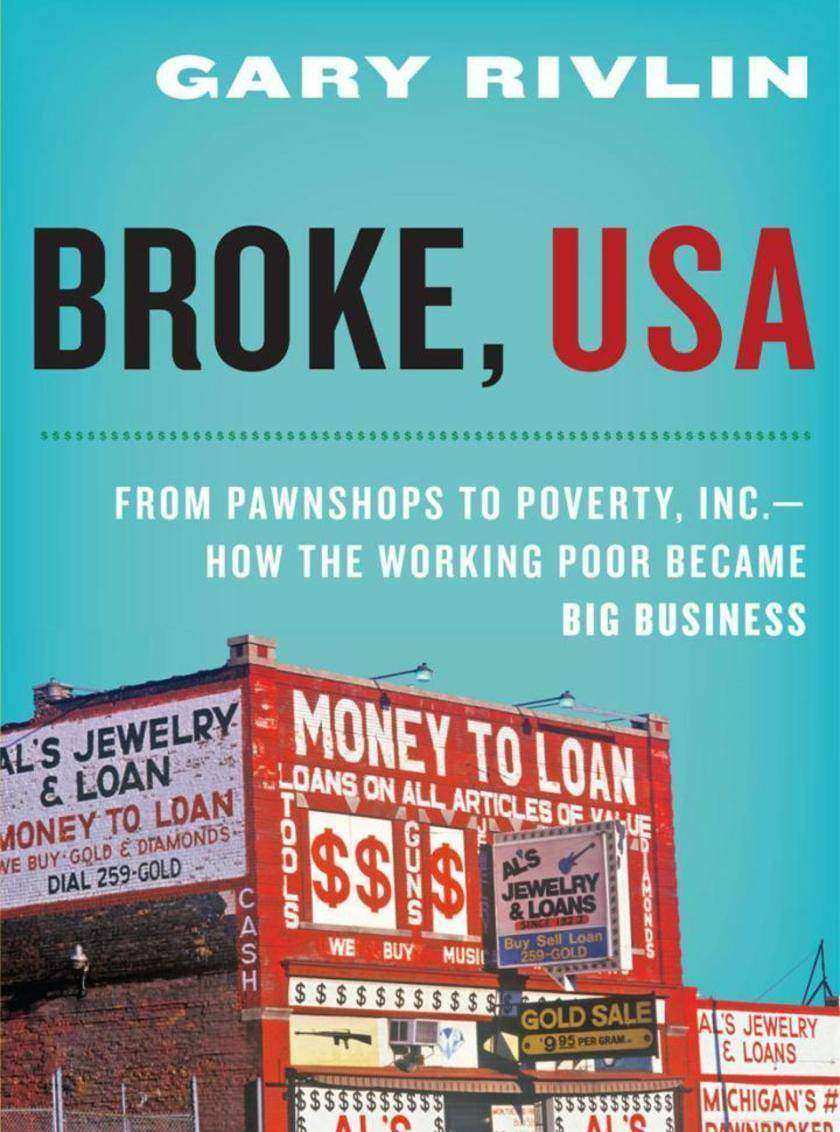
Broke, USA
¥88.56
For most people, the Great Crash of 2008 has meant troubling times. Not so for those in the flourishing poverty industry, for whom the economic woes spell an opportunity to expand and grow. These mercenary entrepreneurs have taken advantage of an era of deregulation to devise high-priced products to sell to the credit-hungry working poor, including the instant tax refund and the payday loan. In the process they've created an industry larger than the casino business and have proved that pawnbrokers and check cashers, if they dream big enough, can grow very rich off those with thin wallets.Broke, USA is Gary Rivlin's riveting report from the economic fringes. From the annual meeting of the national check cashers association in Las Vegas to a tour of the foreclosure-riddled neighborhoods of Dayton, Ohio, here is a subprime Fast Food Nation featuring an unforgettable cast of characters and memorable scenes. Rivlin profiles players like a former small-town Tennessee debt collector whose business offering cash advances to the working poor has earned him a net worth in the hundreds of millions, and legendary Wall Street dealmaker Sandy Weill, who rode a subprime loan business into control of the nation's largest bank. Rivlin parallels their stories with the tale of those committed souls fighting back against the major corporations, chain franchises, and newly hatched enterprises that fleece the country's hardworking waitresses, warehouse workers, and mall clerks.Timely, shocking, and powerful, Broke, USA offers a much-needed look at why our country is in a financial mess and gives a voice to the millions of ordinary Americans left devastated in the wake of the economic collapse.

Choice Theory
¥94.10
Dr. William Glasser offers a new psychology that, if practiced, could reverse our widespread inability to get along with one another, an inability that is the source of almost all unhappiness. For progress in human relationships, he explains that we must give up the punishing, relationship destroying external control psychology. For example, if you are in an unhappy relationship right now, he proposes that one or both of you could be using external control psychology on the other. He goes further. And suggests that misery is always related to a current unsatisfying relationship. Contrary to what you may believe, your troubles are always now, never in the past. No one can change what happened yesterday.

Abraham Lincoln
¥78.55
Stephen B. Oates discerns the historical truth from the mythical legend that surrounds Lincoln in this original and fascinating portrait of America's 16th president.
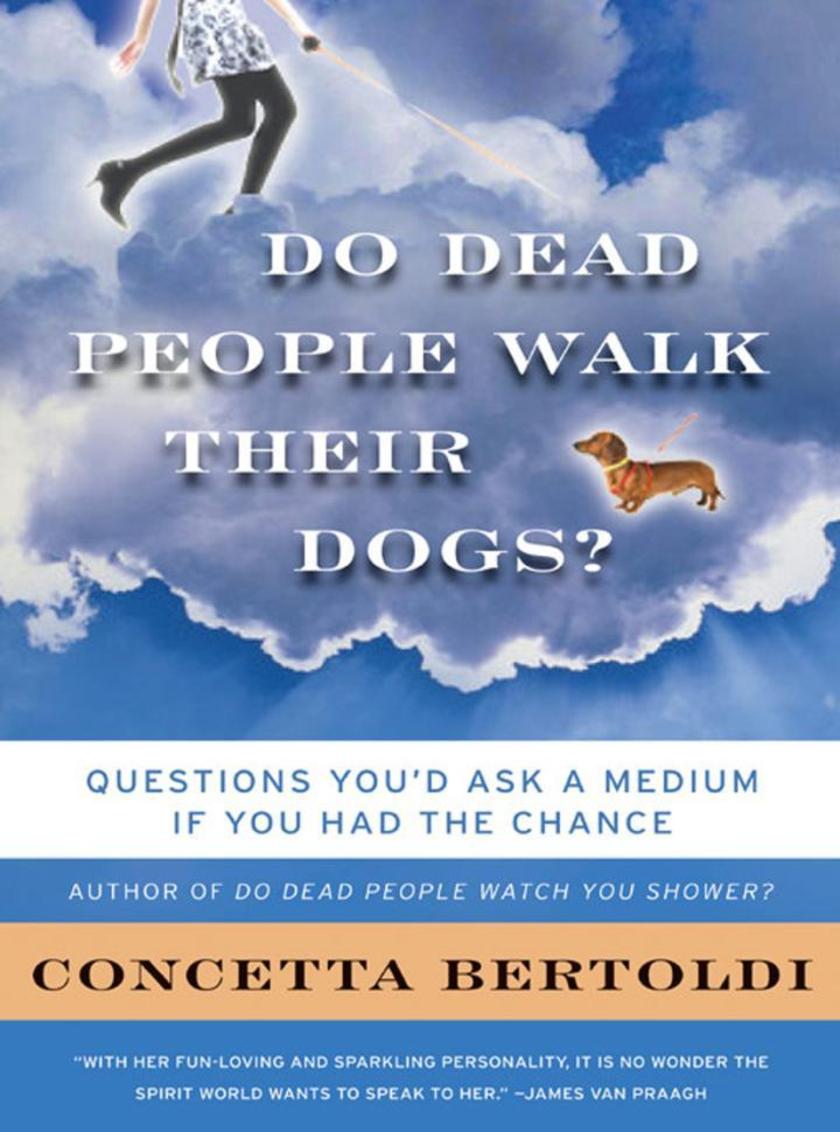
Do Dead People Walk Their Dogs?
¥83.03
Highly unorthodox questions and answers about life after life from America's most delightful medium Concetta Bertoldi has been communicating with the "Other Side" since childhood. In her previous book, the bestselling Do Dead People Watch You Shower?, she addressed questions about the afterlife that ranged from the poignant to the provocative. Now she returns with Do Dead People Walk Their Dogs?, a second volume of intriguing observations about our beloved deceased. Moving, funny, and fascinating, it will open your eyes to what really comes after life while offering intimate insights into Concetta's own astonishing life and what her gift has meant to her marriage, her friendships, and the path she was destined to take.
Joe and Me
¥79.38
When James Prosek was just fifteen, a ranger named Joe Haines caught him fishing without a permit in a stream near Prosek's home in Connecticut. But instead of taking off with his fishing buddy, James put down his rod and surrendered. It was a move that would change his life forever. Expecting a small fine and a lecture, James instead received enough knowledge about fishing and the great outdoors to last a lifetime.The story of an unlikely friendship, Joe and Me is a book for those who remember the mentor in their life, the one who changed the way they look at the world.
The Sweet Season
¥77.49
After fifteen years as a Sports Illustrated writer, pleading for interviews with large men in possession of larger egos, Austin Murphy decides to bail out. The time has come, he concludes, to fly beneath the radar of big-league sports, to while away a season with the Johnnies. So, he moves his family to the middle of Minnesota to chronicle a season at St. John's, a Division III program that has reached unparalleled success under the unorthodox guidance of John "Gags" Gagliardi. The Sweet Season is an account of what happens when a family pulls up stakes and spends months in a strange and wonderful place. It is also, not incidentally, the story of the most incredible football program in the country, run by a smiling sage who has forgotten more about the game than most of his peers will ever know.

Kids, Parents, and Power Struggles
¥88.56
End Those Power Struggles and Begin Connecting with Your ChildNoted family educator Mary Sheedy Kurcinka struck a national chord with her bestselling Raising Your Spirited Child. Now she hits upon another crucial parenting topic: coping with the everyday challenges of disciplining your child, while understanding the issues behind his or her behavior. In Kids, Parents, and Power Struggles, she offers unique approaches to solving the daily, and often draining, power struggles between you and your child. Kurcinka views these conflicts as rich opportunities to teach your child essential life skills, like how to deal with strong emotions and problem solve. With her successful strategies, you'll be able to identify the trigger situations that set off these struggles and get to the root of the emotions and needs of you and your child.


