


 购物车
 个人中心

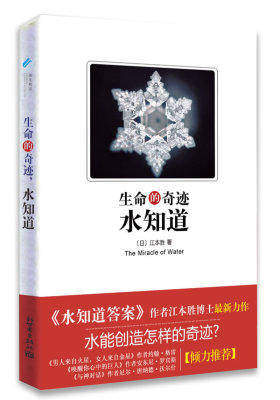
生命的奇迹 水知道(续《水知道答案》1.2之后江本胜博士最新力作,大S、张信哲推荐,《中国青年报》、《北京青年报》、《北京晚报》、《新民晚报》、凤凰卫视等数十家(试读本)
免费
《生命的奇迹,水知道》中,作者延续《水知道答案》前两部的探索,用上百张美轮美奂的水结晶照片,向世人展示了一项独一无二的科学观察:听到“爱”与“感谢”,水结晶呈现完整美丽的六角形;被骂作“浑蛋”,水几乎不能形成结晶;听过古典音乐,水结晶风姿各异;听过重金属音乐,水结晶则歪曲散乱……虽然当今世界纷繁嘈杂,但人类只要心中充满爱和感谢,就能让自己和这个世界充满幸福。
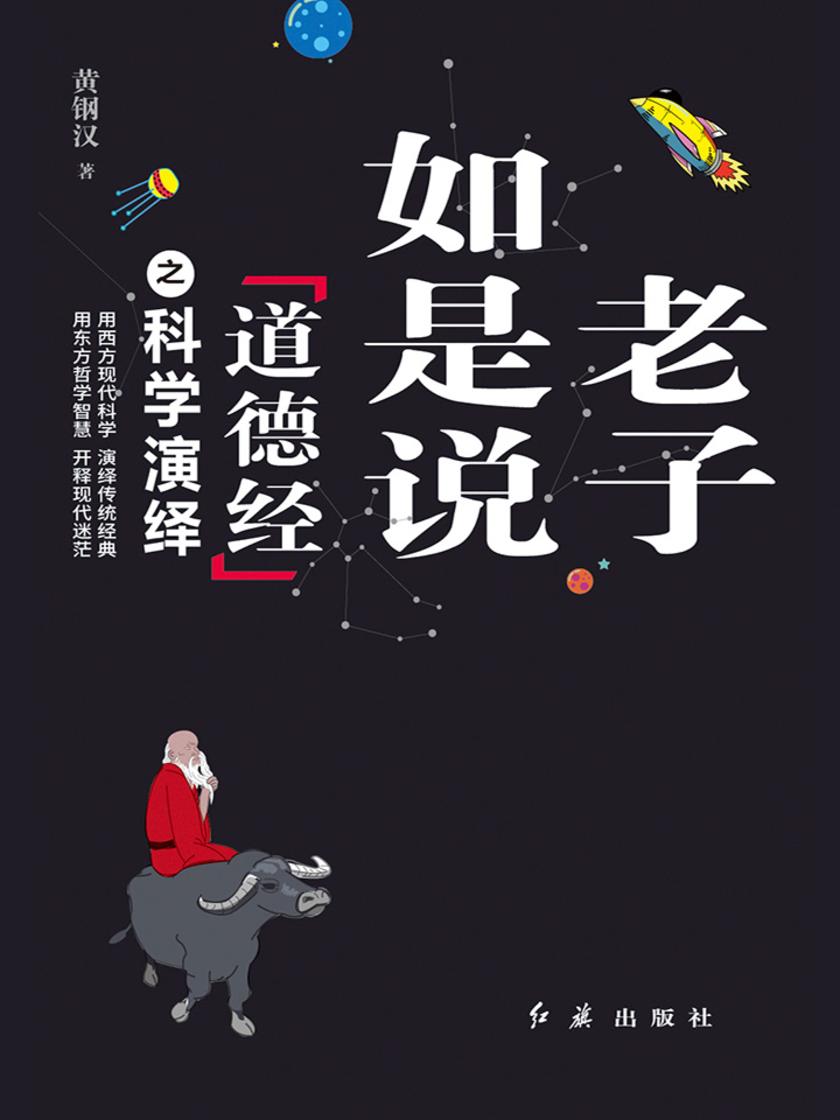
老子如是说:《道德经》之科学演绎
¥4.35
本书以人称的叙述方式,对《道德经》做了创新解读。书中按照《道德经》原著的结构,条分缕析,旁征博引,广泛阐述了老子思想与哲学、现代物理学、社会科学等的相通之处,论证《道德经》具有的哲学意蕴、科学价值和人文精神,揭示出这部经典的传世价值和永恒魅力。
国学经典丛书:论语全集(试读本)
免费
《论语》是一部语录体思想散文集。早在春秋后期孔子设坛讲学时期,其主体内容就已初始创成;孔子去世以后,他的辫子和再传弟子代代传授他的言论,并逐渐将这些口头记诵的语录言行记录下来,集腋成裘,终在战国初年汇辑论纂成书,因此称“论”。《论语》主要记载孔子及其弟子的言行,因此称为“语”。 孔子思想以立身为出发,而人能立身于世的首要条件就是具有“君子”人格。君子具备仁爱之心,自重自律;表里如一,言行一致;积极取,德才兼备;孜孜于学,注重实践;安贫乐道,谨守正义等等;始终坚守人之间的相处之道,遵从不同的伦理关系,构建着和谐友爱的人际关系和社会环境。


我在北大听哲学
¥13.98
《我在北大听哲学》通过透视孔子、老子、庄子、慧能、魏晋名士等先哲的生命哲学,在引入北大教授楼宇烈、王博、杨立华、王中江、王岳川等观点的同时,也融入了作者自己的生命体验和精神追索,所涉及的面向,揭示的问题,指出的方向,将给你种下解决生命中根本问题的种子。 《我在北大听哲学》所阐述的先哲,他们或为理想而生,或回归大道,或沉痛逍遥,或救度众生,或隐遁乡野,了解他们在各种环境下的选择与作为,以及他们的哲学思想,不仅能为我们认识自我,理解中国哲学打开一扇窗,也可以为我们透视当下的社会以及自我的生存,提供不一样的视角。
列子臆说(下册)
¥21.00
《悦心语(南怀瑾先生*述佳句选摘)(精)》是南怀瑾先生语录集,以笔记形式呈现。取材自南先生《论语别裁》、《孟子旁通》、《老子他说》、《禅宗与道家》等*作。编者“断章取义”,稍加整理。本书内容博大精深,文字简短,通俗易懂,便于现代读者阅读。 《悦心语》是南怀瑾先生的语录集,从《论语别裁》《孟子旁通》等南怀瑾先生代表作中精选经典章句而成,浓缩南师智慧精华。 南怀瑾先生是海内外享有盛誉的儒释道大师,将中华文化各种思想融会贯通,带领国人重读中国古代儒、释、道典籍,引导人们关注人的内心,关注人伦世界,关注人文教化。 南师*作不是象牙塔里不食人间烟火的精密考校疏证,处处体现着对现实世界的深切关怀,和芸芸众生的生活与命运紧密相连。南怀瑾先生认为,人生的*高境界是:佛为心,道为骨,儒为表,大度看世界;技在手,能在身,思在脑,从容过生活。这正是夫子自道。 谨以《悦心语》一书,深切缅怀敬爱的南怀瑾先生。

Men, Women, and Boats
¥40.79
A collection of tales, sketches and stories by the master of American naturalism and realism Stephen Crane featuring: The Scotch Express, London Impressions, The Snake, The Mesmeric Mountain, A Tent in Agony, The Dark Brown Dog, And Experiment in Misery, and other stories.
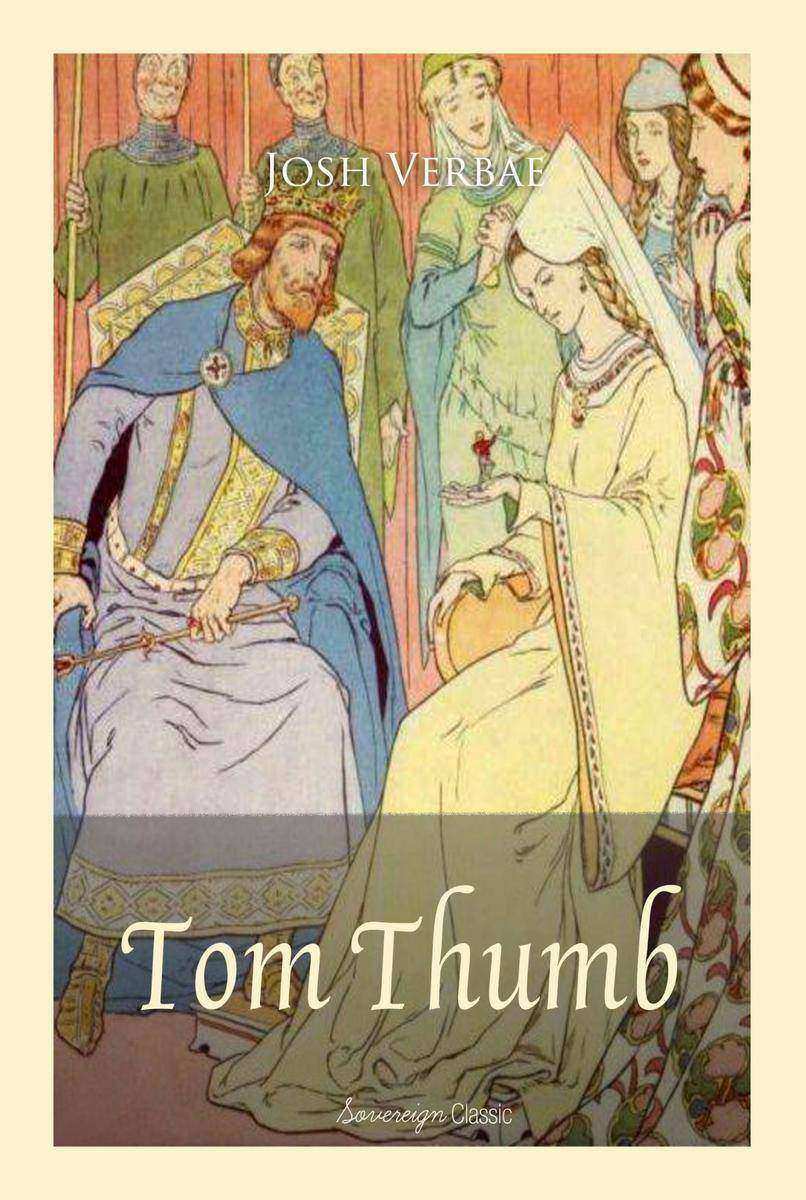
Tom Thumb
¥40.79
Long ago, in the merry days of good King Arthur, there lived a ploughman and his wife. They were very poor, but would have been contented and happy if only they could have had a little child. One day, having heard of the great fame of the magician Merlin, who was living at the Court of King Arthur, the wife persuaded her husband to go and tell him of their trouble. Having arrived at the Court, the man besought Merlin with tears in his eyes to give them a child, saying that they would be quite content even though it should be no bigger than his thumb. Merlin determined to grant the request, and what was the countryman’s astonishment to find when he reached home that his wife had a son, who, wonderful to relate, was no bigger than his father’s thumb!
55 Years of Thoughts & Meditations: Practical Experiential Philosophy
¥84.20
The book “55 years of Thoughts & Meditations” is the result of the constant efforts, inquiries, reflections, thoughts and meditations of one man. All matters analysed derive from our everyday lives and include social, political, philosophical and love issues, as well as more general reflections on life. These matters are delivered in a thematic manner, which varies in both form and substance and is expressed in prose mainly, but also in poetic form. Many of the issues posed occur to every thinking person, who follows his/her own path on earth and who seeks answers and solutions to life’s problems: Why do nations engage in battle? Why do people fight? What makes human contact difficult? What are art and beauty? What are sciences and what are their true limits? Should we trust them? What is “wisdom” and “beauty” and which knowledge is truly worthwhile? Is there objective knowledge? What is the unique truth? Is there good and evil? What are the three ideals, “Love”, “Knowledge” and the “Truth”?So one morning, I began to gather and then document all my random thoughts, the remnants of everything that has triggered my observations, all the questions I have documented throughout my life and everything I had noted here and there and I turned it into a book of personal thoughts and meditations. This book is therefore the book of life, taken straight from life, rich with the reflec-tions of a lifetime. It is a book about life and is aimed at every thinking and honest reader with good intentions. This includes young readers who are gifted with the clarity of soul and are in a better position to be aware of the just and the beautiful. Fifty five years of thoughts and meditations is what this book is. It is a quest of “Love”, of “Knowledge” and of the “Truth”.
Plato’s Republic: The Myth of ER
¥63.19
The Myth of Er is the epilogue of Plato’s Republic. It could be considered as an independent text that refers to the greatest philosophical question of all times."Where does our soul go when we die and where does it come from when we are born?"Socrates in order to give an answer that would lead to a safe conclusion connects the journey of our soul to the function of our planetary system and tries to analyze the following sacramental but also scientific issues:- What is the difference between a developed soul and a developed mind?- Why is the cultivation of virtues necessary?- Which are the three roads of Hades and their connection to the "Van Allen belts"?- How are the penalties and rewards to our soul defined?- Where is Tartarus?- What does the spindle of necessity symbolize?- How are space time and the "Cuiper belt" connected?- What does the existence of Sirens and the three fates mean?- What is the procedure our incarnation?- What contract do we sign before we reincarnate on planet earth?- Which is the role of free will?- What does the mystery of the Dionysial theatre symbolize?- What difference is there between reincarnation and metempsychosis?- What is Socrates’ genius or our guardian angel?
Timaeus
¥40.79
Of all the writings of Plato the Timaeus is the most obscure and repulsive to the modern reader, and has nevertheless had the greatest influence over the ancient and mediaeval world. The obscurity arises in the infancy of physical science, out of the confusion of theological, mathematical, and physiological notions, out of the desire to conceive the whole of nature without any adequate knowledge of the parts, and from a greater perception of similarities which lie on the surface than of differences which are hidden from view.
Ion
¥40.79
The Ion is the shortest, or nearly the shortest, of all the writings which bear the name of Plato, and is not authenticated by any early external testimony. The grace and beauty of this little work supply the only, and perhaps a sufficient, proof of its genuineness. The plan is simple; the dramatic interest consists entirely in the contrast between the irony of Socrates and the transparent vanity and childlike enthusiasm of the rhapsode Ion.
Apology
¥40.79
Apology presents the speech of self-defence given by Socrates in his trial for impiety and corruption specifically against the charges of corrupting the young, and by not believing in the gods in whom the city believes, but in other daimonia that are novel.
Phaedo
¥40.79
After an interval of some months or years, and at Phlius, a town of Peloponnesus, the tale of the last hours of Socrates is narrated to Echecrates and other Phliasians by Phaedo the beloved disciple. The Dialogue necessarily takes the form of a narrative, because Socrates has to be described acting as well as speaking. The minutest particulars of the event are interesting to distant friends, and the narrator has an equal interest in them.
Politics: A Treatise on Government
¥40.79
The Politics of Aristotle is the second part of a treatise of which the Ethics is the first part. It looks back to the Ethics as the Ethics looks forward to the Politics. For Aristotle did not separate, as we are inclined to do, the spheres of the statesman and the moralist. In the Ethics he has described the character necessary for the good life, but that life is for him essentially to be lived in society, and when in the last chapters of the Ethics he comes to the practical application of his inquiries, that finds expression not in moral exhortations addressed to the individual but in a description of the legislative opportunities of the statesman.
Poetics
¥40.79
Aristotle's Poetics is the earliest surviving work of dramatic theory and the first extant philosophical treatise to focus on literary theory. In it, Aristotle offers an account of what he calls poetry.
On Dreams
¥40.79
We must, in the next place, investigate the subject of the dream, and first inquire to which of the faculties of the soul it presents itself, i.e. whether the affection is one which pertains to the faculty of intelligence or to that of sense-perception; for these are the only faculties within us by which we acquire knowledge.
On the Heavens
¥40.79
The science which has to do with nature clearly concerns itself for the most part with bodies and magnitudes and their properties and movements, but also with the principles of this sort of substance, as many as they may be. For of things constituted by nature some are bodies and magnitudes, some possess body and magnitude, and some are principles of things which possess these. Now a continuum is that which is divisible into parts always capable of subdivision, and a body is that which is every way divisible.
Emile
¥40.79
Emile is a treatise on the nature of education and on the nature of man written by Jean-Jacques Rousseau, who considered it to be the best and most important of all his writings. During the French Revolution, Emile served as the inspiration for what became a new national system of education.

Walden
¥40.79
I went to the woods because I wished to live deliberately, to front only the essential facts of life, and see if I could not learn what it had to teach, and not, when I came to die, discover that I had not lived. I did not wish to live what was not life, living is so dear; nor did I wish to practice resignation, unless it was quite necessary. I wanted to live deep and suck out all the marrow of life, to live so sturdily and Spartan-like as to put to rout all that was not life, to cut a broad swath and shave close, to drive life into a corner, and reduce it to its lowest terms, and, if it proved to be mean, why then to get the whole and genuine meanness of it, and publish its meanness to the world; or if it were sublime, to know it by experience, and be able to give a true account of it in my next excursion.
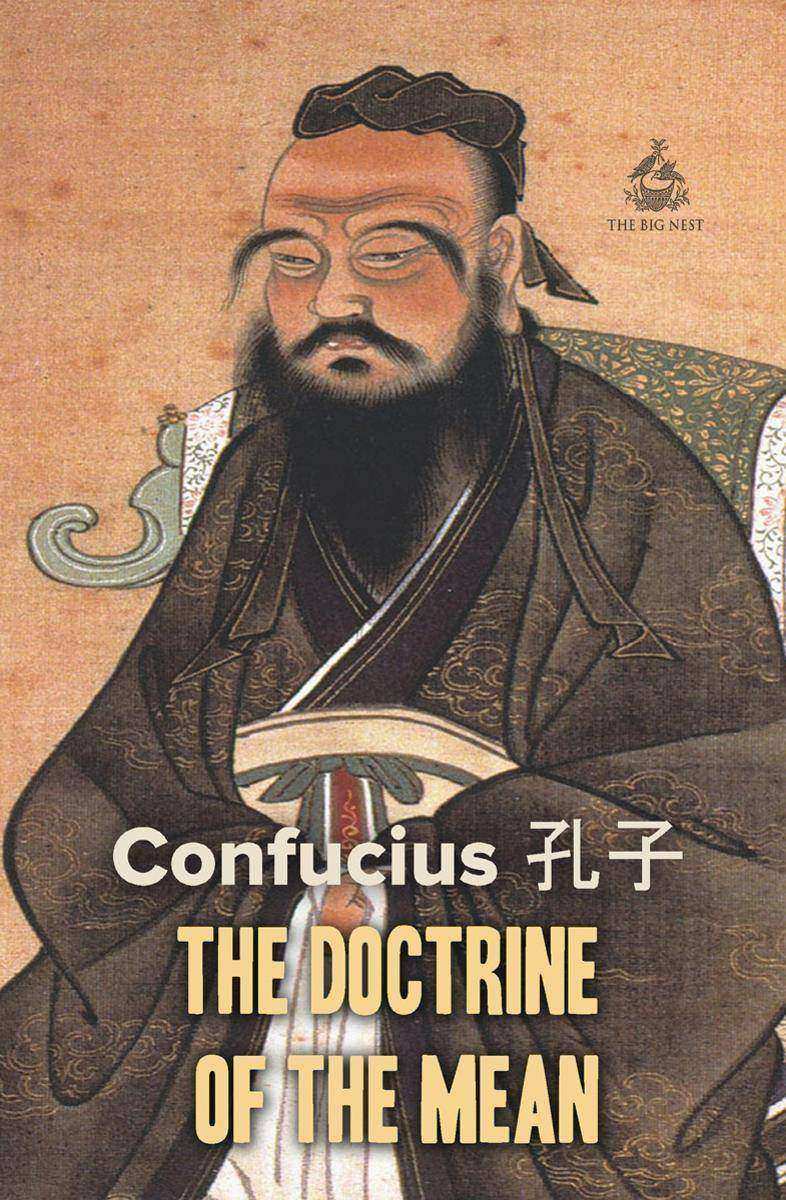
The Doctrine of the Mean
¥40.79
The Doctrine of the Mean is a text rich with symbolism and guidance to perfecting oneself. The person who follows the mean is on a path of duty and must never leave it. A superior person is cautious, a gentle teacher and shows no contempt for his or her inferiors.
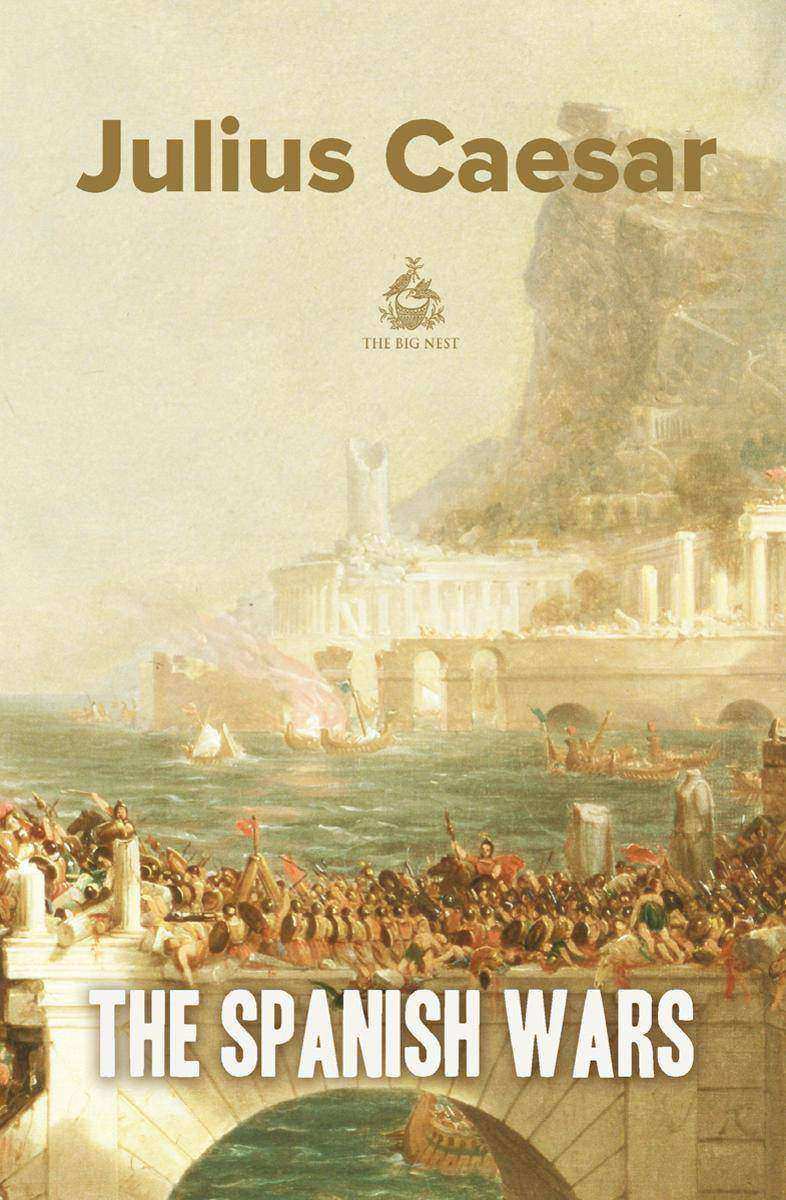
The Spanish Wars
¥40.79
On the defeat of Pharnaces and reduction of Africa, those who escaped from those battles fled to young Cn. Pompey, who had taken possession of Further Spain, while Caesar was detained in Italy in exhibiting games. Pompey began to throw himself on the protection of every state, in order the more readily to establish the means of defense against him. Accordingly, with a considerable force which had been collected, partly by entreaty, partly by force, he began to lay waste the province. Under these circumstances some states voluntarily sent him supplies, others shut the gates of their towns against him. If any of these chanced to fall into his hands by assault, although some citizen in it had deserved well of Cn. Pompey (his father), yet some cause was alleged against him on account of the greatness of his wealth, so that, he being dispatched, his fortune might become the reward of the soldiers.


