


 购物车
购物车 个人中心
个人中心

Baroque Science
¥247.21
In Baroque Science, Ofer Gal and Raz Chen-Morris present a radically new perspective on the scientific revolution of the seventeenth century. Instead of celebrating the triumph of reason and rationality, they study the paradoxes and anxieties that stemmed from the New Science and the intellectual compromises that shaped it and enabled its spectacular success.?Gal and Chen-Morris show how the protagonists of the new mathematical natural philosophy grasped at the very far and very small by entrusting observation to the mediation of artificial instruments, and how they justified this mediation by naturalizing and denigrating the human senses. They show how the physical-mathematical ordering of heavens and earth demanded obscure and spurious mathematical procedures, replacing the divine harmonies of the late Renaissance with an assemblage of isolated, contingent laws and approximated constants.Finally, they show how the new savants, forced to contend that reason is hopelessly estranged from its surrounding world and that nature is irreducibly complex, turned to the passions to provide an alternative, naturalized foundation for their epistemology and ethics.?Enforcing order in the face of threatening chaos, blurring the boundaries of the natural and the artificial, and mobilizing the passions in the service of objective knowledge, the New Science, Gal and Chen-Morris reveal, is a Baroque phenomenon: deeply entrenched in and crucially formative of the culture of its time.

Law in Everyday Japan
¥253.10
Lawsuits are rare events in most people's lives. High-stakes cases are even less commonplace. Why is it, then, that scholarship about the Japanese legal system has focused almost exclusively on epic court battles, large-scale social issues, and corporate governanceMark D. West's Law in Everyday Japan fills a void in our understanding of the relationship between law and social life in Japan by shifting the focus to cases more representative of everyday Japanese life.Compiling case studies based on seven fascinating themes-karaoke-based noise complaints, sumo wrestling, love hotels, post-Kobe earthquake condominium reconstruction, lost-and-found outcomes, working hours, and debt-induced suicide-Law in Everyday Japan offers a vibrant portrait of the way law intermingles with social norms, historically ingrained ideas, and cultural mores in Japan. Each example is informed by extensive fieldwork. West interviews all of the participants-from judges and lawyers to defendants, plaintiffs, and their families-to uncover an everyday Japan where law matters, albeit in very surprising ways.

Music, the Arts, and Ideas
¥265.87
Meyer makes a valuable statement on aesthetics, criteria for assessing great works of music, compositional practices and theories of the present day, and predictions of the future of Western culture. His postlude, written for the book's twenty-fifth anniversary, looks back at his thoughts on the direction of music in 1967.

Baker Who Pretended to Be King of Portugal
¥270.76
On August 4, 1578, in an ill-conceived attempt to wrest Morocco back from the hands of the infidel Moors, King Sebastian of Portugal led his troops to slaughter and was himself slain. Sixteen years later, King Sebastian rose again. In one of the most famous of European impostures, Gabriel de Espinosa, an ex-soldier and baker by trade-and most likely under the guidance of a distinguished Portuguese friar-appeared in a Spanish convent town passing himself off as the lost monarch. The principals, along with a large cast of nuns, monks, and servants, were confined and questioned for nearly a year as a crew of judges tried to unravel the story, but the culprits went to their deaths with many questions left unanswered.?Ruth MacKay recalls this conspiracy, marked both by scheming and absurdity, and the legal inquest that followed, to show how stories of this kind are conceived, told, circulated, and believed. She reveals how the story of Sebastian, supposedly in hiding and planning to return to claim his crown, was lodged among other familiar stories: prophecies of returned leaders, nuns kept against their will, kidnappings by Moors, miraculous escapes, and monarchs who die for their country. As MacKay demonstrates, the conspiracy could not have succeeded without the circulation of news, the retellings of the fatal battle in well-read chronicles, and the networks of rumors and correspondents, all sharing the hope or belief that Sebastian had survived and would one day return.?With its royal intrigues, ambitious artisans, dissatisfied religious women, and corrupt clergy, The Baker Who Pretended to Be King of Portugal will undoubtedly captivate readers as it sheds new light on the intricate political and cultural relations between Spain and Portugal in the early modern period and the often elusive nature of historical truth.

Romanticism and the Question of the Stranger
¥311.96
In our post-9/11 world, the figure of the stranger-the foreigner, the enemy, the unknown visitor-carries a particular urgency, and the force of language used to describe those who are "e;different"e; has become particularly strong. But arguments about the stranger are not unique to our time. In Romanticism and the Question of the Stranger, David Simpson locates the figure of the stranger and the rhetoric of strangeness in romanticism and places them in a tradition that extends from antiquity to today.?Simpson shows that debates about strangers loomed large in the French Republic of the 1790s, resulting in heated discourse that weighed who was to be welcomed and who was to be proscribed as dangerous. Placing this debate in the context of classical, biblical, and other later writings, he identifies a persistent difficulty in controlling the play between the despised and the desired. He examines the stranger as found in the works of Coleridge, Austen, Scott, and Southey, as well as in depictions of the betrayals of hospitality in the literature of slavery and exploration-as in Mungo Park's Travels and Stedman's Narrative-and portrayals of strange women in de Stal, Rousseau, and Burney. Contributing to a rich strain of thinking about the stranger that includes interventions by Ricoeur and Derrida, Romanticism and the Question of the Stranger reveals the complex history of encounters with alien figures and our continued struggles with romantic concerns about the unknown.

Influences
¥311.96
Today few would think of astronomy and astrology as fields related to theology. Fewer still would know that physically absorbing planetary rays was once considered to have medical and psychological effects. But this was the understanding of light radiation held by certain natural philosophers of early modern Europe, and that, argues Mary Quinlan-McGrath, was why educated people of the Renaissance commissioned artworks centered on astrological themes and practices.?Influences is the first book to reveal how important Renaissance artworks were designed to be not only beautiful but also-perhaps even primarily-functional. From the fresco cycles at Caprarola, to the Vatican's Sala dei Pontefici, to the Villa Farnesina, these great works were commissioned to selectively capture and then transmit celestial radiation, influencing the bodies and minds of their audiences. Quinlan-McGrath examines the sophisticated logic behind these theories and practices and, along the way, sheds light on early creation theory; the relationship between astrology and natural theology; and the protochemistry, physics, and mathematics of rays.?An original and intellectually stimulating study, Influences adds a new dimension to the understanding of aesthetics among Renaissance patrons and a new meaning to the seductive powers of art. ?

Shakespeare and the Law
¥311.96
William Shakespeare is inextricably linked with the law. Legal documents make up most of the records we have of his life, and trials, lawsuits, and legal terms permeate his plays. Gathering an extraordinary team of literary and legal scholars, philosophers, and even sitting judges,?Shakespeare and the Law demonstrates that Shakespeare's thinking about legal concepts and legal practice points to a deep and sometimes vexed engagement with the law's technical workings, its underlying premises, and its social effects.The book's opening essays offer perspectives on law and literature that emphasize both the continuities and contrasts between the two fields. The second section considers Shakespeare's awareness of common law thinking and common law practice, while the third inquires into Shakespeare's general attitudes toward legal systems. The fourth part of the book looks at how law enters into conversation with issues of politics and community, whether in the plays, in Shakespeare's world, or in our own world. Finally, a colloquy among Supreme Court Justice Stephen Breyer, Judge Richard Posner, Martha C. Nussbaum, and Richard Strier covers everything from the ghost in?Hamlet?to the nature of judicial discretion.

Front Page Economics
¥353.16
In an age when pundits constantly decry overt political bias in the media, we have naturally become skeptical of the news. But the bluntness of such critiques masks the highly sophisticated ways in which the media frame important stories. In Front Page Economics, Gerald Suttles delves deep into the archives to examine coverage of two major economic crashes-in 1929 and 1987-in order to systematically break down the way newspapers normalize crises.Poring over the articles generated by the crashes-as well as the people in them, the writers who wrote them, and the cartoons that ran alongside them-Suttles uncovers dramatic changes between the ways the first and second crashes were reported. In the intervening half-century, an entire new economic language had arisen and the practice of business journalism had been completely altered. Both of these transformations, Suttles demonstrates, allowed journalists to describe the 1987 crash in a vocabulary that was normal and familiar to readers, rendering it routine.A subtle and probing look at how ideologies are packaged and transmitted to the casual newspaper reader, Front Page Economics brims with important insights that shed light on our own economically tumultuous times.

Panaceia's Daughters
¥353.16
Panaceia's Daughters provides the first book-length study of noblewomen's healing activities in early modern Europe. Drawing on rich archival sources, Alisha Rankin demonstrates that numerous German noblewomen were deeply involved in making medicines and recommending them to patients, and many gained widespread fame for their remedies. Turning a common historical argument on its head, Rankin maintains that noblewomen's pharmacy came to prominence not in spite of their gender but because of it.?Rankin demonstrates the ways in which noblewomen's pharmacy was bound up in notions of charity, class, religion, and household roles, as well as in expanding networks of knowledge and early forms of scientific experimentation. The opening chapters place noblewomen's healing within the context of cultural exchange, experiential knowledge, and the widespread search for medicinal recipes in early modern Europe. Case studies of renowned healers Dorothea of Mansfeld and Anna of Saxony then demonstrate the value their pharmacy held in their respective roles as elderly widow and royal consort, while a study of the long-suffering Duchess Elisabeth of Rochlitz emphasizes the importance of experiential knowledge and medicinal remedies to the patient's experience of illness.

Document Raj
¥394.36
Historians of British colonial rule in India have noted both the place of military might and the imposition of new cultural categories in the making of Empire, but Bhavani Raman, in Document Raj, uncovers a lesser-known story of power: the power of bureaucracy. Drawing on extensive archival research in the files of the East India Company's administrative offices in Madras, she tells the story of a bureaucracy gone awry in a fever of documentation practices that grew ever more abstract-and the power, both economic and cultural, this created.?In order to assert its legitimacy and value within the British Empire, the East India Company was diligent about record keeping. Raman shows, however, that the sheer volume of their document production allowed colonial managers to subtly but substantively manipulate records for their own ends, increasingly drawing the real and the recorded further apart. While this administrative sleight of hand increased the company's reach and power within the Empire, it also bolstered profoundly new orientations to language, writing, memory, and pedagogy for the officers and Indian subordinates involved. Immersed in a subterranean world of delinquent scribes, translators, village accountants, and entrepreneurial fixers, Document Raj maps the shifting boundaries of the legible and illegible, the legal and illegitimate, that would usher India into the modern world.

Moment of Racial Sight
¥394.36
The Moment of Racial Sight overturns the most familiar form of racial analysis in contemporary culture: the idea that race is constructed, that it operates by attaching visible marks of difference to arbitrary meanings and associations. Searching for the history of the constructed racial sign, Irene Tucker argues that if people instantly perceive racial differences despite knowing better, then the underlying function of race is to produce this immediate knowledge. Racial perception, then, is not just a mark of acculturation, but a part of how people know one another.?Tucker begins her investigation in the Enlightenment, at the moment when skin first came to be used as the primary mark of racial difference. Through Kant and his writing on the relation of philosophy and medicine, she describes how racialized skin was created as a mechanism to enable us to perceive the likeness of individuals in a moment. From there, Tucker tells the story of instantaneous racial seeing across centuries-from the fictive bodies described but not seen in Wilkie Collins's realism to the medium of common public opinion in John Stuart Mill, from the invention of the notion of a constructed racial sign in Darwin's late work to the institutionalizing of racial sight on display in the HBO series The Wire. Rich with perceptive readings of unexpected texts, this ambitious book is an important intervention in the study of race.
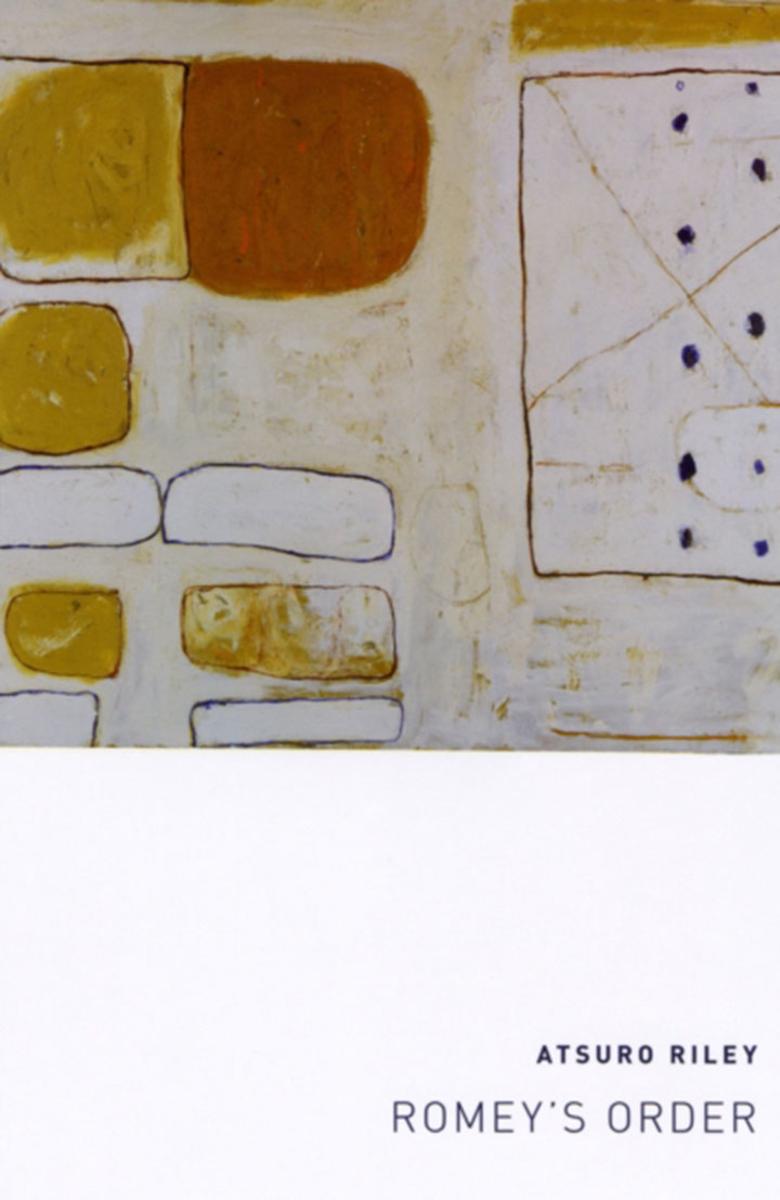
Romey's Order
¥117.72
Romey's Order is an indelible sequence of poems voiced by an invented (and inventive) boy-speaker called Romey, set alongside a river in the South Carolina lowcountry.As the word-furious eye and voice of these poems, Romey urgently records--and tries to order--the objects, inscape, injuries, and idiom of his "e;blood-home"e; and childhood world. Sounding out the nerves and nodes of language to transform "e;every burn-mark and blemish,"e; to "e;bind our river-wrack and leavings,"e; Romey seeks to forge finally (if even for a moment) a chord in which he might live. Intently visceral, aural, oral, Atsuro Riley's poems bristle with musical and imaginative pleasures, with story-telling and picture-making of a new and wholly unexpected kind.
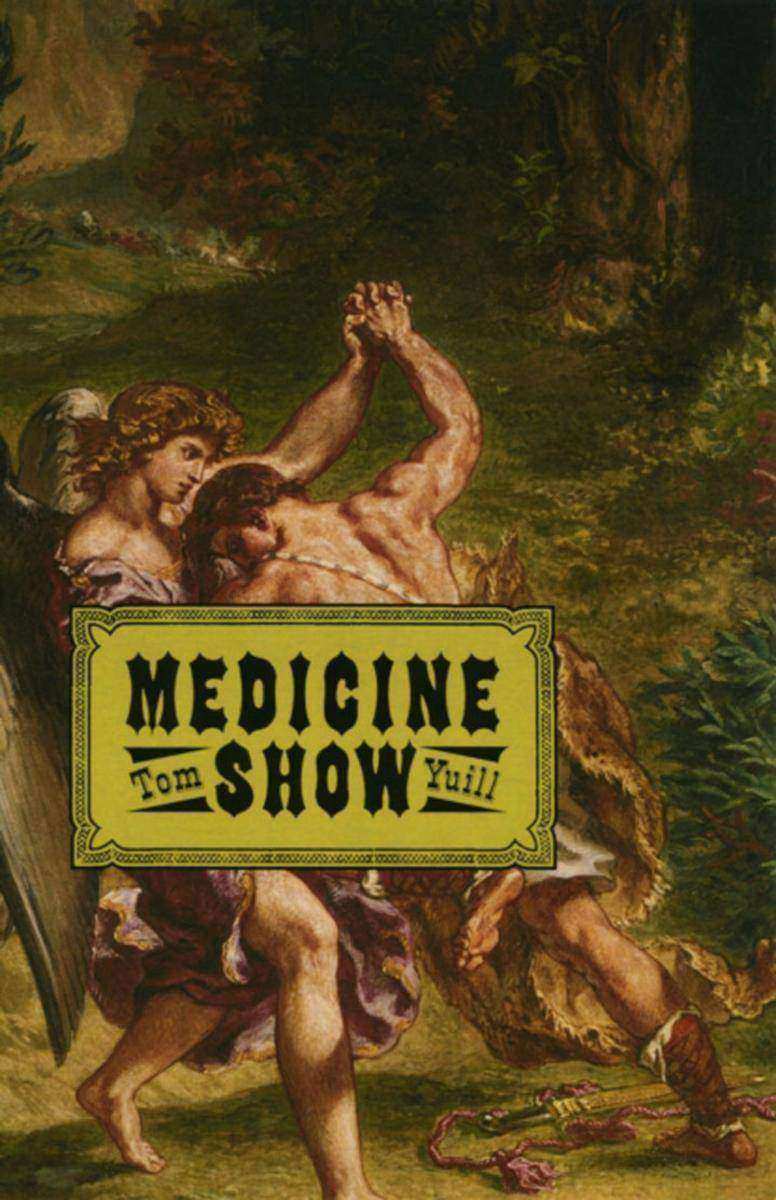
Medicine Show
¥117.72
In Medicine Show, inner conflict is wonderfully realized in the clash of down-home plain speech and European high culture utterances. Freely translating and adapting Catullus (Latin), Villon (Middle French), Corbiere (French), Hikmet (Turkish), and Orpheus (Greek), and placing them alongside Jagger and Richards, skinheads, and psalms, Tom Yuill's book mirrors an old-style hawking of wares, with all the charm and absurdity that results when high culture meets pop, when city meets small town, and when provincialism confronts urbanity. Here, the poems talk to one another, one poem nudging the cusps of many others, those poems touching still others' circumferences. Yuill, by invoking the Rolling Stones as muses and as background music, offers cover versions of Shakespeare, Keats, and Dylan Thomas, ultimately giving us a new kind of verse, funneled through the languages and rhythms of his masters' voices.

Marked
¥129.49
Nearly every job application asks it: have you ever been convicted of a crimeFor the hundreds of thousands of young men leaving American prisons each year, their answer to that question may determine whether they can find work and begin rebuilding their lives.The product of an innovative field experiment, Marked gives us our first real glimpse into the tremendous difficulties facing ex-offenders in the job market. Devah Pager matched up pairs of young men, randomly assigned them criminal records, then sent them on hundreds of real job searches throughout the city of Milwaukee. Her applicants were attractive, articulate, and capable-yet ex-offenders received less than half the callbacks of the equally qualified applicants without criminal backgrounds. Young black men, meanwhile, paid a particularly high price: those with clean records fared no better in their job searches than white men just out of prison. Such shocking barriers to legitimate work, Pager contends, are an important reason that many ex-prisoners soon find themselves back in the realm of poverty, underground employment, and crime that led them to prison in the first place."e;Using scholarly research, field research in Milwaukee, and graphics, [Pager] shows that ex-offenders, white or black, stand a very poor chance of getting a legitimate job. . . . Both informative and convincing."e;-Library Journal?"e;Marked is that rare book: a penetrating text that rings with moral concern couched in vivid prose-and one of the most useful sociological studies in years."e;-Michael Eric Dyson

We Wanna Boogie: The Rockabilly Roots of Sonny Burgess and the Pacers
¥225.63
Rock and roll pioneer and Newport native Sonny Burgess is a member of the Rockabilly Hall of Fame. In this book full of personal interviews and remembrances, Burgess and his band tell of their original recordings for Sun Records in the 1950s; their shows with greats such as Elvis Presley, Johnny Cash, and Jerry Lee Lewis; and their success in the contemporary rockabilly revival. This also is the history of a once prominent and spirited Delta community of extensive agricultural wealth. Newport was home to numerous music clubs that hosted national artists as well as illicit backroom gambling. Burgess is a product of this history, and his vivacious music is shaped by his hometown and the dramatic transformation of southern rural life it witnessed.

Worlds Before Adam
¥353.16
In the late eighteenth and early nineteenth centuries, scientists reconstructed the immensely long history of the earth-and the relatively recent arrival of human life. The geologists of the period, many of whom were devout believers, agreed about this vast timescale. But despite this apparent harmony between geology and Genesis, these scientists still debated a great many questions: Had the earth cooled from its origin as a fiery ball in space, or had it always been the same kind of place as it is nowWas prehuman life marked by mass extinctions, or had fauna and flora changed slowly over time?The first detailed account of the reconstruction of prehuman geohistory, Martin J. S. Rudwick's Worlds Before Adam picks up where his celebrated Bursting the Limits of Time leaves off. Here, Rudwick takes readers from the post-Napoleonic Restoration in Europe to the early years of Britain's Victorian age, chronicling the staggering discoveries geologists made during the period: the unearthing of the first dinosaur fossils, the glacial theory of the last ice age, and the meaning of igneous rocks, among others. Ultimately, Rudwick reveals geology to be the first of the sciences to investigate the historical dimension of nature, a model that Charles Darwin used in developing his evolutionary theory.Featuring an international cast of colorful characters, with Georges Cuvier and Charles Lyell playing major roles and Darwin appearing as a young geologist, Worlds Before Adam is a worthy successor to Rudwick's magisterial first volume. Completing the highly readable narrative of one of the most momentous changes in human understanding of our place in the natural world, Worlds Before Adam is a capstone to the career of one of the world's leading historians of science.

Culture of Disaster
¥394.36
From antiquity through the Enlightenment, disasters were attributed to the obscure power of the stars or the vengeance of angry gods. As philosophers sought to reassess the origins of natural disasters, they also made it clear that humans shared responsibility for the damages caused by a violent universe. This far-ranging book explores the way writers, thinkers, and artists have responded to the increasingly political concept of disaster from the Enlightenment until today.?Marie-Hlne Huet argues that post-Enlightenment culture has been haunted by the sense of emergency that made natural catastrophes and human deeds both a collective crisis and a personal tragedy. From the plague of 1720 to the cholera of 1832, from shipwrecks to film dystopias, disasters raise questions about identity and memory, technology, control, and liability. In her analysis, Huet considers anew the mythical figures of Medusa and Apollo, theories of epidemics, earthquakes, political crises, and films such as Blow-Up and Blade Runner. With its scope and precision, The Culture of Disaster will appeal to a wide public interested in modern culture, philosophy, and intellectual history.

Man Who Thought He Was Napoleon
¥370.82
The Man Who Thought He Was Napoleon?is built around a bizarre historical event and an off-hand challenge. The eventIn December 1840, nearly twenty years after his death, the remains of Napoleon were returned to Paris for burial-and the next day, the director of a Paris hospital for the insane admitted fourteen men who claimed to be Napoleon. The challenge, meanwhile, is the claim by great French psychiatrist Jean-Etienne-Dominique Esquirol (1772-1840) that he could recount the history of France through asylum registries.From those two components, Laure Murat embarks on an exploration of the surprising relationship between history and madness. She uncovers countless stories of patients whose delusions seem to be rooted in the historical or political traumas of their time, like the watchmaker who believed he lived with a new head, his original having been removed at the guillotine. In the troubled wake of the Revolution, meanwhile, French physicians diagnosed a number of mental illnesses tied to current events, from "e;revolutionary neuroses"e; and "e;democratic disease"e; to the "e;ambitious monomania"e; of the Restoration. How, Murat asks, do history and psychiatry, the nation and the individual psyche, interface?A fascinating history of psychiatry-but of a wholly new sort-The Man Who Thought He Was Napoleon?offers the first sustained analysis of the intertwined discourses of madness, psychiatry, history, and political theory.

Islanded
¥370.82
How did the British come to conquer South Asia in the late eighteenth and early nineteenth centuriesAnswers to this question usually start in northern India, neglecting the dramatic events that marked Britain's contemporaneous subjugation of the island of Sri Lanka. In Islanded, Sujit Sivasundaram reconsiders the arrival of British rule in South Asia as a dynamic and unfinished process of territorialization and state building, revealing that the British colonial project was framed by the island's traditions and maritime placement and built in part on the model they provided.?Using palm-leaf manu*s from Sri Lanka to read the official colonial archive, Sivasundaram tells the story of two sets of islanders in combat and collaboration. He explores how the British organized the process of "e;islanding"e;: they aimed to create a separable unit of colonial governance and trade in keeping with conceptions of ethnology, culture, and geography. But rather than serving as a radical rupture, he reveals, islanding recycled traditions the British learned from Kandy, a kingdom in the Sri Lankan highlands whose customs-from strategies of war to views of nature-fascinated the British. Picking up a range of unusual themes, from migration, orientalism, and ethnography to botany, medicine, and education, Islanded is an engaging retelling of the advent of British rule.
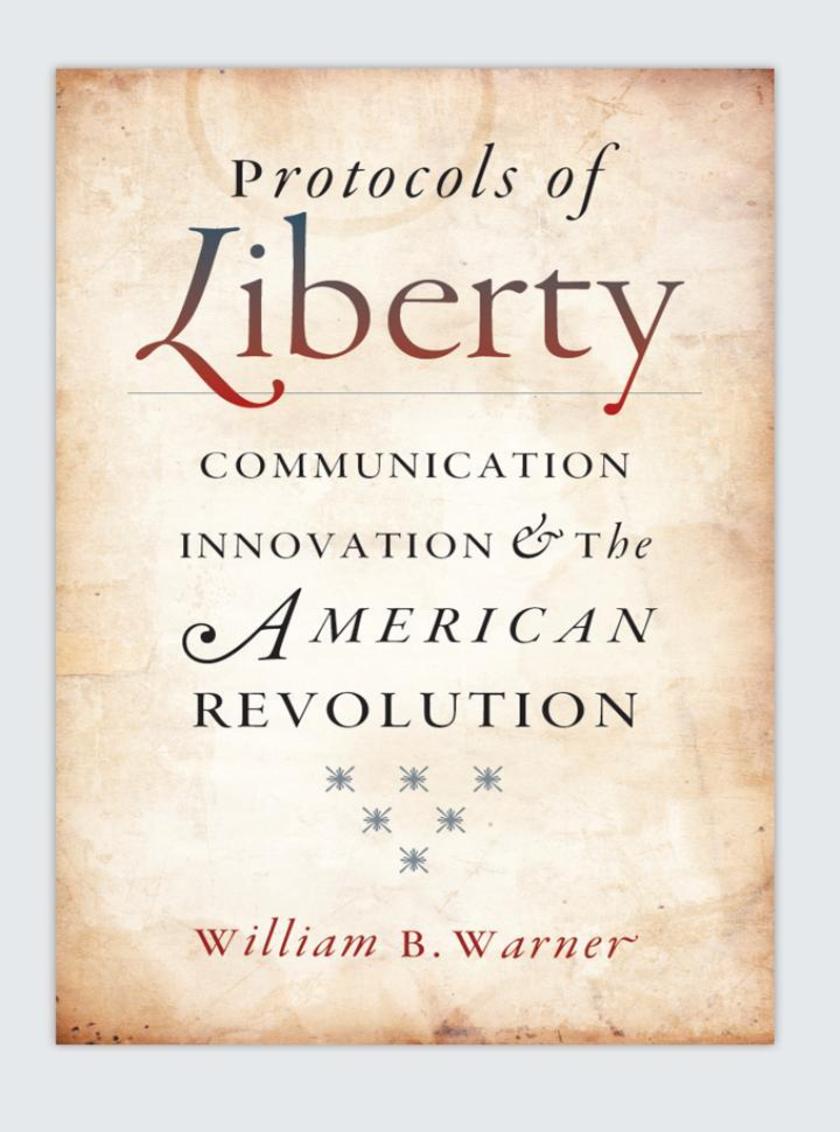
Protocols of Liberty
¥370.82
The fledgling United States fought a war to achieve independence from Britain, but as John Adams said, the real revolution occurred "e;in the minds and hearts of the people"e; before the armed conflict ever began. Putting the practices of communication at the center of this intellectual revolution, Protocols of Liberty shows how American patriots-the Whigs-used new forms of communication to challenge British authority before any shots were fired at Lexington and Concord. ?To understand the triumph of the Whigs over the Brit-friendly Tories, William B. Warner argues that it is essential to understand the communication systems that shaped pre-Revolution events in the background. He explains the shift in power by tracing the invention of a new political agency, the Committee of Correspondence; the development of a new genre for political expression, the popular declaration; and the emergence of networks for collective political action, with the Continental Congress at its center. From the establishment of town meetings to the creation of a new postal system and, finally, the Declaration of Independence, Protocols of Liberty reveals that communication innovations contributed decisively to nation-building and continued to be key tools in later American political movements, like abolition and women's suffrage, to oppose local custom and state law.

After They Closed the Gates
¥370.82
In 1921 and 1924, the United States passed laws to sharply reduce the influx of immigrants into the country. By allocating only small quotas to the nations of southern and eastern Europe, and banning almost all immigration from Asia, the new laws were supposed to stem the tide of foreigners considered especially inferior and dangerous. However, immigrants continued to come, sailing into the port of New York with fake passports, or from Cuba to Florida, hidden in the holds of boats loaded with contraband liquor. Jews, one of the main targets of the quota laws, figured prominently in the new international underworld of illegal immigration. However, they ultimately managed to escape permanent association with the identity of the "e;illegal alien"e; in a way that other groups, such as Mexicans, thus far, have not.In?After They Closed the Gates,?Libby Garland tells the untold stories of the Jewish migrants and smugglers involved in that underworld, showing how such stories contributed to growing national anxieties about illegal immigration. Garland also helps us understand how Jews were linked to, and then unlinked from, the specter of illegal immigration. By tracing this complex history, Garland offers compelling insights into the contingent nature of citizenship, belonging, and Americanness.


