


 购物车
购物车 个人中心
个人中心

Who Killed Change?
¥66.22
By the bestselling author of The One Minute Manager, a business parable that teaches organizations to cope successfully with change. Every day organizations around the world launch change initiatives – often big, expensive ones - designed to improve the status quo. Yet 50 to 70 percent of these change efforts fail. A few perish suddenly, but many die painful, protracted deaths that drain the organization's resources, energy and morale. So, Who or what is killing change? That's what you'll find out in this delightful whodunit. The story features a Columbo-style detective named Agent who's investigating the murder of yet another Change. One by one, Agent interviews thirteen prime suspects, including a myopic leader named Vision; a chronically tardy manager named Urgency; an executive named Communication whose laryngitis makes communication all but impossible; and several other dubious characters. The suspects are sure to sound familiar, and you're bound to relate them to your own workplace. In the end, Agent solves the case in a way that will inspire you to become an effective Change Agent in your own organization.
The Watson Dynasty
¥95.39
For an extraordinary fifty-seven-year period, one of the nation's largest and fastest-growing companies was run by two men who were flesh and blood. The chief executives of the International Business Machines Corporation from 1914 until 1971 were Thomas J. Watson and Thomas J. Watson, father and son. That great corporation bears the imprint of both men -- their ambitions and their strengths -- but it also bears the consequences of a family that was in near-constant conflict.Sometimes wrong but never in doubt, both Watsons had clear -- and farsighted -- visions of what their company could become. They also had volcanic tempers. Their fights with each other combined with their commitment to leadership and excellence made IBM one of the most rewarding, yet gut-clutching firms to work for in the history of American business.We are accustomed to describing professional behavior as if men and women leave their emotions and vulnerabilities at home each day. In the case of the Watsons, filial and sibling strife could not be excluded from the office. In closely studying the desires and frustrations of the Watson family, eminent historian Richard S. Tedlow has produced something more than a family portrait or a company history. He has raised the nearly forbidden issue of the role of emotion in corporate life.This book explores the interplay between the person- alities of these two extraordinary men and the firm they created. Both Watsons had deeply held beliefs about what a corporation is and should be. These ideas helped make "Big Blue" the bluest of blue-chip stocks during the Watsons' tenure. These very beliefs, however, also sowed the seeds for IBM's disasters in the late 1980s and early 1990s, when the company had lost sight of the original meaning behind many of the practices each man put into place.Tracing the family's idiosyncratic ability to cope with each other's weaknesses but not their strengths, The Watson Dynasty is a book for every person who ever went to work but didn't want to check his personality at the door.
Money 911
¥94.10
The popular TODAY financial editor Jean Chatzky helps you navigate through the critical challenges and potential catastrophes of personal finance.You've just lost your job. You've got a baby on the way. Your parent has had a stroke. Most people seek financial help not because they're planning for the future but because they need it . . . right now! If you have money problems or are seeking immediate help to solve a dire, unanticipated financial emergency, then you need Money 911. In this invaluable guidebook, financial expert Jean Chatzky provides answers to today's most pressing financial questions and concerns, including: How do I get out of debtHow do I avoid foreclosureHow do I set up a monthly budgetHow can I improve my credit scoreHow do I get my health insurance to pay a claimWhat should I do when I lose a parentWith Money 911, you can prepare for retirement, buy or sell a home, pick up the pieces of your personal finances, and get back on your feet and stay there!

Direct From Dell
¥94.10
At nineteen, Michael Dell started his company as a freshman at the University of Texas with $1,000 and has since built an industry powerhouse. As Dell journeys through his childhood adventures, ups and downs, and mistakes made along the way, he reflects on invaluable lessons learned.Michael Dell's revolutionary insight has allowed him to persevere against all odds, and Direct from Dell contains valuable information for any business leader. His strategies will show you effective ways to grow your business and will help you save time on costly mistakes by following his direct model for success.
Winning the Money Game
¥94.10
Former NBA center Adonal Foyle has seen athletes burn through millions on women, large entourages, family gifts, gambling debts even shark tanks! Such spending habits are partly responsible for 60 percent of NBA players going broke within five years of retirement and nearly 80 perfect of NFL players being strapped within two.Rich with anecdotes from a sports insider, Winning the Money Game shows you how to avoid the financial fouls of athletes. Foyle gives you the straight, offering guidance on a wide range of money matters, from taxes to alimony, from child support to medical bills, and so much more. He beaks down expenses point by point, illustrating the difference between luxury items and family needs, and lays out the essential dos and don'ts to help you spend, save, and grow your money wisely.

First Comes Love, Then Comes Money
¥83.03
Happy Couples Know How to Talk About MoneyThe number one cause for divorce is financial infidelity. Now "The Money Couple" reveals the missing ingredient needed before any financial program or plan can work: healthy financial communication. This book tells you how to: Diagnose your level of financial infidelity Identify your individual Money Personality Master the Money Huddle and the Money Dump Achieve financial goals once and for all
The Cycle of Leadership
¥101.00
In The Leadership Engine Noel Tichy showed how great companies strive to create leaders at all levels of the organization and how those leaders actively develop future generations of leaders. In this new book he takes the theme further showing how great companies and their leaders develop their business knowledge into achable points of view pend a great portion of their time giving their learnings to others sharing best practices and how they in turn learn and receive business ideas/knowledge from the employees they are teaching. Calling this exchange a virtuous teaching cycle Professor Tichy shows how business builders from Jack Welch at GE to Joe Liemandt at Trilogy create organizations that foster this knowledge exchange and how their efforts result in smarter more agile companies and winning results. Some of these ideas were showcased in Tichy's recent Harvard Business Review article entitled Ordinary Boot Camp. Using examples from GE Ford Dell Southwest Airlines and many others Tichy presents and analyzes these principles in action and shows how managers can begin to transform their own businesses into teaching organizations and consequently better performing companies
Revolt in the Boardroom
¥83.93
Throughout the 20th century, American corporations were governed by autocratic, almost unaccountable chief executives. Their word was law and the only check on their power was a board of directors composed of their friends and allies.Then, in a stunning reversal, a momentous series of firings deposed the heads of some of the world's best-known companies: AIG, Morgan Stanley, Boeing, Hewlett-Packard and Pfizer, just to name a few. Formerly unchallenged CEOs found themselves under fire, often from their own handpicked boards. The number of deposed executives is astonishing. In 2004, the leaders of 600 companies were asked to leave. That number more than doubled in 2005 and reached 1,400 companies in 2006.Flexing new muscles, directors are assuming new and unfamiliar responsibilities. In Revolt in the Boardroom, Alan Murray reveals the inner workings of the new seat of power. Using the access afforded to him by his influential Wall Street Journal column, Murray tells the story of three seminal board revolts the now-famous Hewlett-Packard drama, the ousting of Boeing's Harry Stonecipher and the end of the reign one of the world's most autocratic executives, Hank Greenberg at AIG.Murray goes further to chart the history of the corporation, the rise of governance and the effects of the new power gained by outside institutions like hedge funds and interest groups. Through it all, Murray shows how the job of chief executive has rapidly and permanently changed. Leaders like A. G. Lafley and Jeff Immelt govern instead of rule, build alliances and support instead of dictating direction and pay careful attention to a broader range of stakeholders than ever before.Revolt in the Boardroom is the first look at the new world of corporate power and the last word on the transformational events of the last two years.
You Can't Win a Fight with Your Client
¥83.93
In this follow-up to You Can't Win a Fight with Your Boss, Tom Markert returns to provide clever, timeless advice on how to offer exceptional service. The most important ruleYou can't win a fight with your client! As American companies large and small have shifted their focus from manufacturing to providing services, keeping clients satisfied has become critical to the survival of every business. Yet, very few people have mastered the art of managing clients successfully. In You Can't Win a Fight with Your Client, Tom Markert argues that the secret to great service lies in understanding and applying a few fundamentals. In fifty small doses, he provides practical advice on how to manage your relationships with your clients and ensure they receive the kind of service that will keep them coming back for more.A perfect resource for anyone working with clients at any level, You Can't Win a Fight with Your Client is the no-nonsense, straightforward guide to keeping clients happy in today's hypercompetitive and demanding business environment.
The 22 Immutable Laws of Branding
¥105.17
This marketing classic has been expanded to include new commentary, new illustrations, and a bonus book: The 11 Immutable Laws of Internet Branding Smart and accessible, The 22 Immutable Laws of Branding is the definitive text on branding, pairing anecdotes about some of the best brands in the world, like Rolex, Volvo, and Heineken, with the signature savvy of marketing gurus Al and Laura Ries. Combining The 22 Immutable Laws of Branding and The 11 Immutable Laws of Internet Branding, this book proclaims that the only way to stand out in today's marketplace is to build your product or service into a brand and provides the step-by-step instructions you need to do so. The 22 Immutable Laws of Branding also tackles one of the most challenging marketing problems today: branding on the Web. The Rieses divulge the controversial and counterintuitive strategies and secrets that both small and large companies have used to establish internet brands. The 22 Immutable Laws of Branding is the essential primer on building a category-dominating, world-class brand.
In Search of Excellence
¥101.00
The Greatest Business Book of All Time (Bloomsbury UK), In Search of Excellence has long been a must-have for the boardroom, business school, and bedside table. Based on a study of forty-three of America best-run companies from a diverse array of business sectors, In Search of Excellence describes eight basic principles of management -- action-stimulating, people-oriented, profit-maximizing practices -- that made these organizations successful. Joining the HarperBusiness Essentials series, this phenomenal bestseller features a new Authors' Note, and reintroduces these vital principles in an accessible and practical way for today management reader.
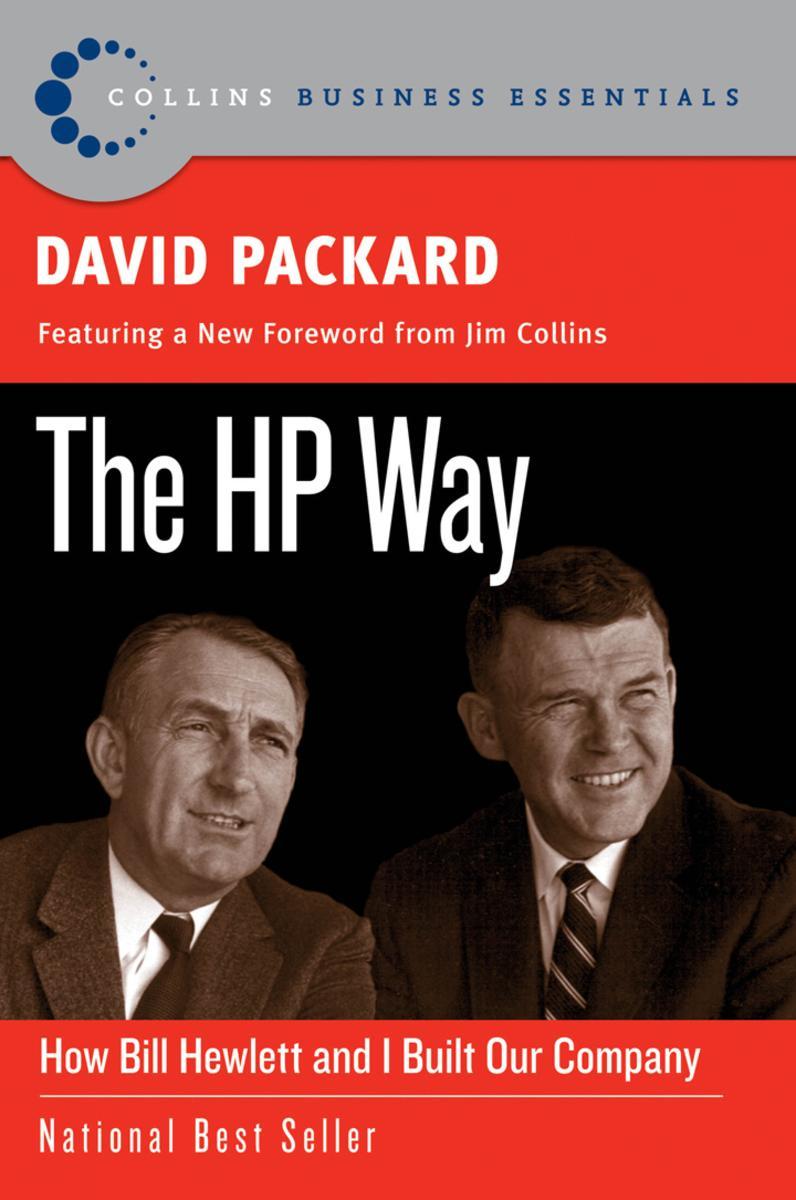
The HP Way
¥83.03
In the fall of 1930, David Packard left his hometown of Pueblo, Colorado, to enroll at Stanford University, where he befriended another freshman, Bill Hewlett. After graduation, Hewlett and Packard decided to throw their lots in together. They tossed a coin to decide whose name should go first on the notice of incorporation, then cast about in search of products to sell. Today, the one-car garage in Palo Alto that housed their first workshop is a California historic landmark: the birthplace of Silicon Valley. And Hewlett-Packard has produced thousands of innovative products for millions of customers throughout the world. Their little company employs 98,400 people and boasts constantly increasing sales that reached $25 billion in 1994. While there are many successful companies, there is only one Hewlett-Packard, because from the very beginning, Hewlett and Packard had a way of doing things that was contrary to the prevailing management strategies. In defining the objectives for their company, Packard and Hewlett wanted more than profits, revenue growth and a constant stream of new, happy customers. Hewlett-Packard success owes a great deal to many factors, including openness to change, an unrelenting will to win, the virtue of sustained hard work and a company-wide commitment to community involvement. As a result, HP now is universally acclaimed as the world most admired technology company; its wildly successful approach to business has been immortalized as The HP Way . In this book, David Packard tells the simple yet extraordinary story of his life work and of the truly exceptional company that he and Bill Hewlett started in a garage 55 years ago.

A New Model of Economy
¥24.44
This book offers a radical revision of modern economic theory. Its starting point is the existing body of both micro and macro economics, as developed in such textbooks as Economics by Begg, Fischer and Dornbusch and Positive Economics by Lipsey and Chrystal. Following a similar framework to these books, it adjusts the whole range of theory by introducing some new concepts and other earlier ones that have been much neglected in the economic thought of the past century. These are related especially to the fundamental part played by land, in it proper sense of all natural resources available on the earth, the significance of credit, especially through the banking system, and the crucial impact of the method of taxation. The resulting analysis yields a thoroughly revised version of the contemporary model of a capitalist economy, so that a genuine ‘third way’ is revealed. This is not a mere modification of the present system of absentee ownership confronting a market for labour, with all the attendant evils of unemployment, monopoly and maldistribution of wealth and income. Rather it is a system based upon natural law, exhibiting economic security for all, fair distribution of output and, above all, the opportunity for self-fulfillment through work. The ‘new model’ draws upon the masters of economic thought from Smith and Ricardo to Marshall, Schumpeter and Keynes, by highlighting concepts often omitted from current studies of their works; such as Ricardo’s analysis of scarcity and differential elements of rent, Schumpeter’s view of the role of banking and Keynes’s hints at a labour theory of value. Indeed this far-reaching revision makes bold advances upon the Marshallian theory of the firm and the Keynesian theory of national income determination, thus providing new insights into both micro and macro theory. It remains faithful, however to the tradition of these latter thinkers in explaining matters fully in words, and resorting to mathematics mainly through the use of diagrams intelligible to anyone with an elementary grasp of the subject. Whilst the book strives to avoid value judgements in the interests of social science, it undoubtedly carries strong implications about economic policy. These are bound up with the central notions of free land and free credit, which have been singularly ignored by policy-makers since a few valiant attempts to introduce them in the early twentieth century. Hence the ‘new model’ is offered to both theorists and practitioners of economics, to politicians and public servants, but particularly to those who, like the author, truly seek a new vision of the subject.
Trust Works!
¥127.33
Trust Works! How to build it How to keep it In this enlightening guide developed from his popular Trust Works! training program, #1 bestselling author and management guru Ken Blanchard turns his vast knowledge and insight to one of the most timely and complex issues that affects all areas of our lives. Once upon a time, a dog and a cat lived together with other animals and the humans who cared for them. But canine and feline did not trust each other a situation that led to fighting, backbiting, and sabotaging that soon affected the whole household. Unless their conflict was resolved, all of the pets would lose their home. Fortunately, a wise old parrot stepped in, teaching dog and cat the ABCDs of trust. As each became aware of the unconscious behaviors at the root of their hostility, dog and cat discovered how to change their behavior a mutual transformation that created a happy, productive environment for all. In Trust Works! Ken Blanchard applies that fable to real-life situations to show anyone how to get along better with those around them. He outlines his ABCD trust model and uses it to address the factors that lead to discord, including low morale, miscommunication, poor response to problems and issues, and dysfunctional leadership. In today polarized society, building trust and sustaining it has never been more important or seemingly elusive. Trust Works! provides a common language and essential skills that can replace dissension with peace and cooperation and help us all work together productively and in harmony.
Bitter Brew
¥99.65
The engrossing, often scandalous saga of one of the wealthiest, longest-lasting, and most colorful family dynasties in the history of American commerce a cautionary tale about prosperity, profligacy, hubris, and the blessings and dark consequences of success.From countless bar signs, stadium scoreboards, magazine ads, TV commercials, and roadside billboards, the name Budweiser has been burned into the American consciousness as the "King of Beers." Over a span of more than a century, the company behind it, Anheuser-Busch, has attained legendary status. A jewel of the American Industrial Revolution, in the hands of its founders the sometimes reckless and always boisterous Busch family of St. Louis, Missouri it grew into one of the most fearsome marketing machines in modern times. In Bitter Brew, critically acclaimed journalist Knoedelseder paints a fascinating portrait of immense wealth and power accompanied by a barrelful of scandal, heartbreak, tragedy, and untimely death.This engrossing, vivid narrative captures the Busch saga through five generations. At the same time, it weaves a broader story of American progress and decline over the past 150 years. It's a cautionary tale of prosperity, hubris, and loss.
Blue Blood and Mutiny
¥118.61
The inside story of the power struggle that rocked Wall Street's most prestigious financial institution What began with a shot over the bow ended in a shocking coup d'etat. In less than four months a group of eight retired executives orchestrated a stunning revolt within Morgan Stanley, the venerable and until recently most successful financial services firm on Wall Street. Now acclaimed journalist and historian Patricia Beard brings together the entire behind-the-scenes story in Blue Blood and Mutiny, a real-life business thriller exposing the tale that shook high finance. In March 2005 the business world woke up to an unprecedented full-page ad in the Wall Street Journal calling for the removal of Morgan Stanley's CEO. It was paid for by a cohort of eight former Morgan Stanley executives, including an ex-chairman and an ex-president, who soon would be dubbed the "Eight Grumpy Old Men." Their target was CEO Philip Purcell, a midwesterner who had come to power following Morgan Stanley's 1997 merger with Dean Witter Discover, where Purcell had been chief executive. In his eight years as CEO, Purcell had presided over a 50 percent decline in stock price since its peak in 2000 and a series of high-profile government and civil lawsuits that had tarnished the company's once-sterling reputation. Just a few months after the Journal ad, Purcell would retire under pressure, and former president John Mack, who had been pushed out by Purcell, was appointed CEO. The "Eight Grumpy Old Men" won the battle.The revolt of the Eight is about more than the stock price, or any bottom-line metrics: it signals a clash of cultures and a battle for the soul of American business. Since its founding, Morgan Stanley has been an elite enterprise guided by J. P. Morgan Jr.'s motto "A First Class Business in a First Class Way." The House of Morgan stood for something larger than success with honor; its ethos was unique some would say sacred and the eight retired executives believed this ideal had been undermined during Purcell's reign.Opening the long-closed doors of a bastion of Wall Street that has maintained the strictest privacy until now, Blue Blood and Mutiny weaves the history of Morgan Stanley with the inside story of the fight for dominance between two competing business cultures one, the collegial meritocracy handed down from the days of J. P. Morgan, and the other, a cold, contemporary corporate model. Here is the season's must-read book for anyone who wants to understand the future of American business.
Bulletproof Your Job
¥112.00
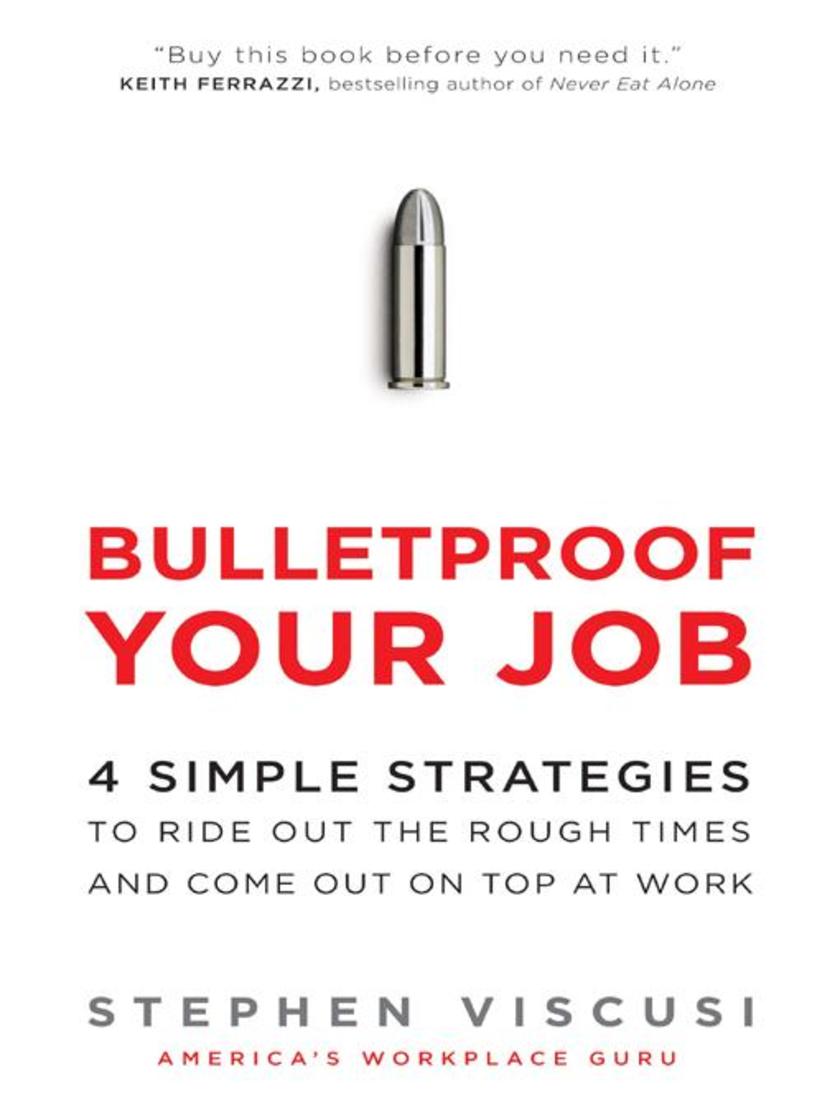
There's no doubt about it, today's workplace is an uncertain and treacherous territory. Newspaper headlines are proclaiming near record-high levels of unemployment, and, in these tough times, companies are making swift judgments about human capital. The bottom line: No job is safe. But there are tried and true ways to fight off sudden unemployment successfully, and the number one weapon in your arsenal is workplace expert and television and radio personality Stephen Viscusi's career manifesto, Bulletproof Your Job. Based on four simple strategies for dodging the layoff bullet and a long list of ways to implement these strategies, Bulletproof Your Job may save you from your worst enemy at work which just so happens to be you.Quite simply, observe these imperative rules:Be visible. Be easy. Be useful. Be ready. With plenty of distinct action items, dozens of anecdotal illustrations and examples, and lists and tips for adapting bulletproof strategies to your own situation, Bulletproof Your Job will show you how to leverage the black-and-white stuff your title, salary, and tenure with the gray stuff your relationship with coworkers, visibility in the workplace, and ability to make your boss look good to ward off the pink stuff the dreaded layoff notice. While you're at it, you'll be creating a long-term strategy for job security and career advancement that ensures you'll never feel this vulnerable again.

The E-Myth Contractor
¥95.39
With The E-Myth Contractor, Michael E. Gerber launches a series of books that apply the E-Myth to specific types of small businesses. The first is aimed at contractors.This book reveals a radical new mind-set that will free contractors from the tyranny of an unprofitable, unproductive routine. With specific tips on topics as crucial as planning, money and personnel management, The E-Myth Contractor teaches readers how to: Implement the ingenious turnkey system of management a means of creating a business prototype that reflects the business owner's unique set of talents and replicating and distributing them among employees and customers. Recognise and manage the four forms of money income, profit, flow and equity. Harness the power of change to expand the company. The book also provides help on a larger level, leading readers towards becoming business visionaries by relinquishing tactical work and embracing strategic work, by letting go to gain control. Once put into action, Gerber's revolutionary ideas promise not only to help contractors build successful businesses, but successful lives as well.

The Tyranny of Oil
¥90.77
Who's really driving oil and gas pricesHow much oil is leftHow far will Big Oil go to get it, and at what cost to the environment, human rights, the economy, worker safety, public health, and democracy?Here, at last, are the answers we've been looking for and the inside story on Big Oil.In The Tyranny of Oil, Antonia Juhasz investigates the true state of the companies collectively known as "Big Oil," uncovering their unparalleled global financial power, their political dominance, and their increasingly destructive plans for the future. And she tells us what we can do about it.A tool for meaningful change that blends history, original investigative research and reporting, candid interviews with key insiders, and a unique focus on activism, The Tyranny of Oil is required reading for every concerned global citizen.

Piggybanking
¥90.77
How to afford kids and teach them about moneyWe all want to raise smart children. But somewhere between the reading, writing, and arithmetic, one of life's most important lessons is too often overlooked: personal finances. As adults, we interact with money every day, whether by saving, investing, spending, or giving it, but we often forget that kids also face these same decisions from their own unique perspective as they mature. How do we teach today what kids really need to know tomorrow to thrive as financially savvy adultsIn Piggybanking, veteran Wall Street Journal personal-finance writer Jeff D. Opdyke provides a clear and effective plan to help parents raise children to be comfortable and confident managing the daily finances of life.But even before kids arrive, parents face a rash of financial decisions. Accordingly, Piggybanking also deals with the essential problems every struggling young family must face, including how to prepare your budget for a child's arrival, how to choose between single- and dual-income lifestyles, and how to plan for funding a college education.With Opdyke's valuable advice, and with his 15 Rules of Kids Money in hand, parents will be well equipped to create a sound financial foundation for their family and a successful financial life for their kids.
The Breakthrough Imperative
¥149.26
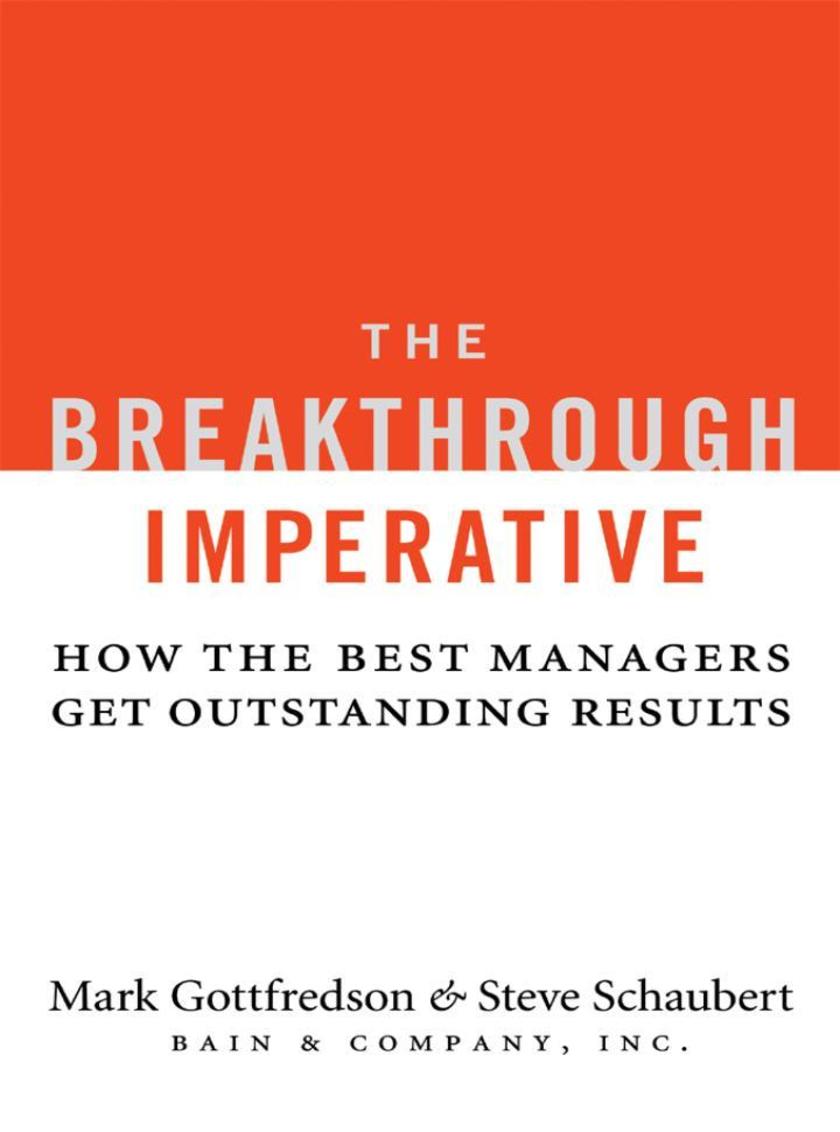
Every general manager today all the way up to the CEO is expected by his or her stakeholders to achieve new breakthroughs in performance and fast. Those who don't make visible progress toward that goal within the first year or two will likely find themselves looking for another job. It is precisely because of this growing breakthrough imperative that managers today, whether in corporations or nonprofits, need to get off to a fast start. They don't have time for mistakes or for going back and redoing what they should have done right in the first place. But, despite the intensity of these pressures, despite the high expectations and short time frames, a number of CEOs and general managers turn in truly exceptional results. How do they meet and exceed the breakthrough imperativeTo answer this question, consultants and former managers Mark Gottfredson and Steve Schaubert interviewed more than forty CEOs from both industry and the nonprofit sector, conducted an intensive study of what successful managers do right and what some do wrong and drew on their own combined fifty-plus years of experience at Bain & Company, where their insights have consistently been found in the pages of the Harvard Business Review. Together they came up with the four straightforward principles deceptively simple yet remarkably powerful that everyone must follow to succeed at achieving breakthrough results: 1. Costs and prices always decline2. Competitive position determines options3. Customers and profit pools don't stand still4. Simplicity gets results Although seemingly simplistic, mastering these four laws means mastering the basics of great management a foundation on which to build the rest of one's management strategy. Whether you're managing a small work group or a multinational corporation, a single division or an entire nonprofit, The Breakthrough Imperative presents these core laws of business to help you determine where you are, just how far you can go, and how to get there with stellar results.


