


 购物车
购物车 个人中心
个人中心

The Transparent Leader
¥83.93
Drawing on his experience as a leader in some of the nation's largest corporations, Baum issues a convincing call for honest, ethical, "transparent" dealing throughout the business world. Baum outlines the management techniques he uses within and without the company to get outstanding results without skirting the rules or bending the truth. Baum maintains that by fostering trust, integrity and accountability at all levels within the corporation, managers can stop the erosion of employee loyalty, restore consumer trust in brands, products, and American business. Baum teaches executives fresh ways of managing Wall Street analysts, communicating with shareholders, and wading through the complex maze of social responsibility issues.As a member of six corporate boards, Baum offers unique insight into transparent leadership, including the advantages and pitfalls of corporate governance, and the pressures executives face in reporting earnings. He also discusses the importance of setting standards for ethical business practices, yet highlights the dangers of government regulations that may result in excessive compliance costs at the expense of shareholders, creative risk taking, and innovation.

The Thank You Economy
¥151.53
If this were 1923, this book would have been called "Why Radio Is Going to Change the Game" . . . If it were 1995, it would be "Why Amazon Is Going to Take Over the Retailing World" . . . The Thank You Economy is about something big, something greater than any single revolutionary platform. It isn't some abstract concept or wacky business strategy it's real, and every one of us is doing business in it every day, whether we choose to recognize it or not. It's the way we communicate, the way we buy and sell, the way businesses and consumers interact online and offline. The Internet, where the Thank You Economy was born, has given consumers back their voice, and the tremendous power of their opinions via social media means that companies and brands have to compete on a whole different level than they used to. Gone are the days when a blizzard of marketing dollars could be used to overwhelm the airwaves, shut out the competition, and grab customer awareness. Now customers' demands for authenticity, originality, creativity, honesty, and good intent have made it necessary for companies and brands to revert to a level of customer service rarely seen since our great-grandparents' day, when business owners often knew their customers personally, and gave them individual attention. Here renowned entrepreneur Gary Vaynerchuk reveals how companies big and small can scale that kind of personal, one-on-one attention to their entire customer base, no matter how large, using the same social media platforms that carry consumer word of mouth. The Thank You Economy offers compelling, data-driven evidence that we have entered into an entirely new business era, one in which the companies that see the biggest returns won't be the ones that can throw the most money at an advertising campaign, but will be those that can prove they care about their customers more than anyone else. The businesses and brands that harness the word-of-mouth power from social media, those that can shift their culture to be more customer-aware and fan-friendly, will pull away from the pack and profit in today's markets. Filled with Vaynerchuk's irrepressible candor and wit, as well as real-world examples of companies that are profiting by putting Thank You Economy principles into practice, The Thank You Economy reveals how businesses can harness all the changes and challenges inherent in social media and turn them into tremendous opportunities for profit and growth.

Kiss Your BUT Good-Bye
¥143.95
A simple, engaging, and eminently practical guide to overcoming your weaknesses your "Buts" to achieve the career and personal relationships you want Imagine a workplace where all the employees are aware of the things they do or fail to do that prevent them from being more productive and valuable. Imagine a company where everyone speaks openly and honestly about his or her weaknesses and is committed to strengthening and overcoming them. Imagine an environment where colleagues help one another become more efficient and less disruptive by speaking the truth about what detracts from the team's efforts and objectives. Imagine a place where the firm's most talented employees know exactly what they need to do to attain a leadership position. This is no fantasy workplace: it can be your business if you listen to Joe Azelby and Bob Azelby, brothers and successful executives in their own right.Kiss Your BUT Good-Bye will help all professionals find their individual BUT whether it's a lack of skills, a distracting behavior, or a personality quirk that interferes with achieving success. Using road-tested techniques, Kiss Your BUT Good-Bye helps you examine your BUT, understand it, manage it, cover it, and most important, shrink it. It also enables managers to help their employees discover personal weaknesses and to learn how to deliver the direct, honest feedback every worker needs and deserves.Finding your BUT can be tough medicine, but the Azelbys deliver it with a tasty spoonful of sugar. Get ready for success . . . get ready to Kiss Your BUT Good-Bye.
How Companies Win
¥149.48
For the past twenty years, the growth formula for business has been to increase revenues by expanding product offerings and streamlining supply. But with the recent global recession, the world economy has changed forever. Now the old tools most notably supply-chain management are no longer enough. In a new digital age characterized by over-supply and too many product types in almost every market, the new challenge is to locate and capture the elusive pools of high-profit demand.Rick Kash and David Calhoun have the answer: a revolutionary, demand-driven model that has already proved successful for some of the world's most admired companies, including Best Buy, Anheuser-Busch, Hershey's, and Allstate. At the heart of this powerful new business model is an achievable vision for a new kind of winning company, one that uses sophisticated new tools and techniques to discover, characterize, and then serve these pools of high-profit demand and in the process gain pricing power in that market. Kash and Calhoun show how to use everything from social networks to more revealing and effective consumer-research techniques and then introduce the demand chain, the logical new partner to your supply chain. The authors' principles, case histories, and insights will help your business run faster, cut costs, and become better able to deliver high-quality products and services, even in the tightest economic climate.How Companies Win is a compelling call to action to engage every level within a company, small or large, local or global.
Brainsteering
¥151.53
Change the way you think about new ideas by steering your creativity in new and more productive directions. Ideas. Whether the goal is to create a billion-dollar business, fix a broken process, reduce expenses, or simply find the perfect gift for that special someone, we all need a steady stream of breakthrough ideas and we've all learned from experience that traditional brainstorming doesn't generate them.Former McKinsey consultants Kevin P. Coyne and Shawn T. Coyne have spent more than a decade developing a better approach Brainsteering that takes brainstorming and other outdated ideation techniques and "steers" them in a more productive direction by better reflecting the way human beings actually think and work in creative problem-solving situations. By introducing just the right amount of structure into the process, and asking just the right questions, Brainsteering has helped Fortune 500 companies, small not-for-profits, and individuals alike generate ideas they previously could never have imagined.Peppered with thought-provoking and entertaining examples drawn from the workplace and popular culture, Brainsteering can help anyone develop breakthrough ideas, whether working alone on a one-time problem or turning an entire organization into an ongoing "idea factory." And getting started is easy: simply ask the right questions, and good ideas will follow.
Circle of Friends
¥162.76
The bestselling author of The Sellout tells the explosive story of the government’s crackdown on insider-trading networks an investigation that has already racked up more than 60 convictions.In Circle of Friends, award-winning journalist Charles Gasparino one of Wall Street's most knowledgeable observers follows government investigators and prosecutors as they pursue one of the most aggressive and broad-reaching series of insider-trading cases in the nation's history. A richly textured page-turner of investigative journalism based on extensive reporting, Circle of Friends chronicles the massive federal crackdown that has already put some of the biggest names on Wall Street behind bars, including Raj Rajaratnam, founder of the Galleon Group, and Rajat Gupta, a former CEO of consulting giant McKinsey & Co. Other similarly sized targets are still waiting nervously, including the biggest one of them all financial impresario Steve Cohen of SAC Capital, the giant hedge fund that has confounded regulators for years by cranking out a steady stream of market-busting returns.Gasparino goes behind the headlines to reveal how the government makes its case, using every tool at its disposal and at great expense to taxpayers to supposedly make the investing world safer for average Americans. Gasparino asks why federal officials are so eager to prosecute these cases: What is the real damage to individualsDo average investors really careHe explores why insider trading is all the rage these days when the U.S. government has failed to bring a single criminal case against the culprits who caused the 2008 financial crisis. Circle of Friends is not a defense of insider trading, but it does offer an account of the politics of Wall Street crime fighting, revealing the behind-the-scenes ambitions that motivate headlines and burnish political careers. A riveting work of narrative nonfiction, as engrossing and explosive as fictional thrillers of the finest magnitude, Circle of Friends is a wakeup call to the investing public.
The Aspirational Investor
¥166.09
Why are otherwise smart and competent people such lousy investorsIndividual investors give up as much as two-thirds of their potential investment returns in misguided efforts to beat the market and most don't even realize it.Ashvin B. Chhabra, chief investment officer of one of the world's largest wealth management firms, explains that an important idea has gotten lost amid the relentless pursuit of investment returns. Rather than trying to beat the market, your primary goal should be to construct an investment strategy that creates a solid safety net and enables you to pursue your dreams and aspirations.With no more guarantee of lifelong jobs or pensions, all of us bear the burden of investing wisely. But many of us focus on the wrong set of investment activities, such as identifying the next great start-up or star fund manager, or simply beating a market benchmark. Even the standard framework for investing, modern portfolio theory, offers an incomplete solution. Meanwhile, the grand debates in finance, such as indexing versus active management, prioritize the wrong set of issues.We need a framework that shifts the focus of investment strategy from portfolios and markets to individuals and the objectives that really matter: protection against unexpected financial crises or retirement planning. Whatever matters most to you paying for your kid's education, starting your own business, endowing your favorite charity, or traveling the world you need a road map to help you achieve both your essential and aspirational goals.In The Aspirational Investor, Ashvin B. Chhabra outlines a groundbreaking yet intuitive approach to managing wealth, based on the identification of key goals and the careful allocation of resources and risks. The Wealth Allocation Framework will help you connect your investment portfolio with your life's goals, and accommodate the three seemingly incompatible objectives that must underpin every sound wealth management strategy: the need for financial security in the face of unknowable risks, the desire to maintain current living standards despite inflation, and the opportunity for life-changing wealth creation.Chhabra's pioneering work illuminates some surprising facts about how people get very wealthy, and reinterprets the success formulas of investing greats such as Warren Buffett and David Swensen. Chhabra also offers a novel perspective: If the markets don't really care about you, as surely they do not, then why should you spend all your time and effort trying to beat them?Raising the bar for what we should expect from our investment portfolios and from our investment advisors The Aspirational Investor is a thoughtful, practical guide for any investor, regardless of income or wealth level.
Rocking the Ages
¥106.61
For almost forty years, Yankelovich Partners has helped America's biggest companies understand and reach their customers. Their breakthrough MONITOR studies-annual surveys that analyze the values, beliefs, attitudes, and expectations that shape consumer decisions-not only pinpoint current trends, but predict where the market will be in the future.Rocking the Ages: The Yankelovich Report on Generational Marketing (HarperBusiness; May 21, 1997) by J. Walker Smith and Ann Clurman turns the spotlight on America's generation gap and transforms what was born as a political and social rallying cry into a sound foundation for profitable marketing. Defining the essence of three generations-the Matures (born between 1909-1945), the Baby Boomers (1946-1964), and the Generation-Xers (1965-1978)-it explores in telling detail the experiences, life skills, values, personal and professional aspirations, likes and dislikes, and hopes and fears that distinguish each generation. Drawing on this unprecedented data, it elucidates how and why each generation reacts to a vast range of marketplace issues-including technology and cyberspace, healthcare and fitness, media and entertainment, retailing and financial services.From highlighting generational differences regarding such basic concepts as work itself-Matures regard it as an inevitable obligation, Boomers as an opportunity for self-fulfillment, and Xers as simply a paycheck-and gratification-delayed by Matures, demanded instantaneously by Boomers,virtual in the case of most Xers-to describing the widely differing versions of the American Dream each generation harbors, Rocking the Ages offers invaluable insights into how to market a product or service to reach one, two, or all three generations.
Everything is Possible
¥140.08
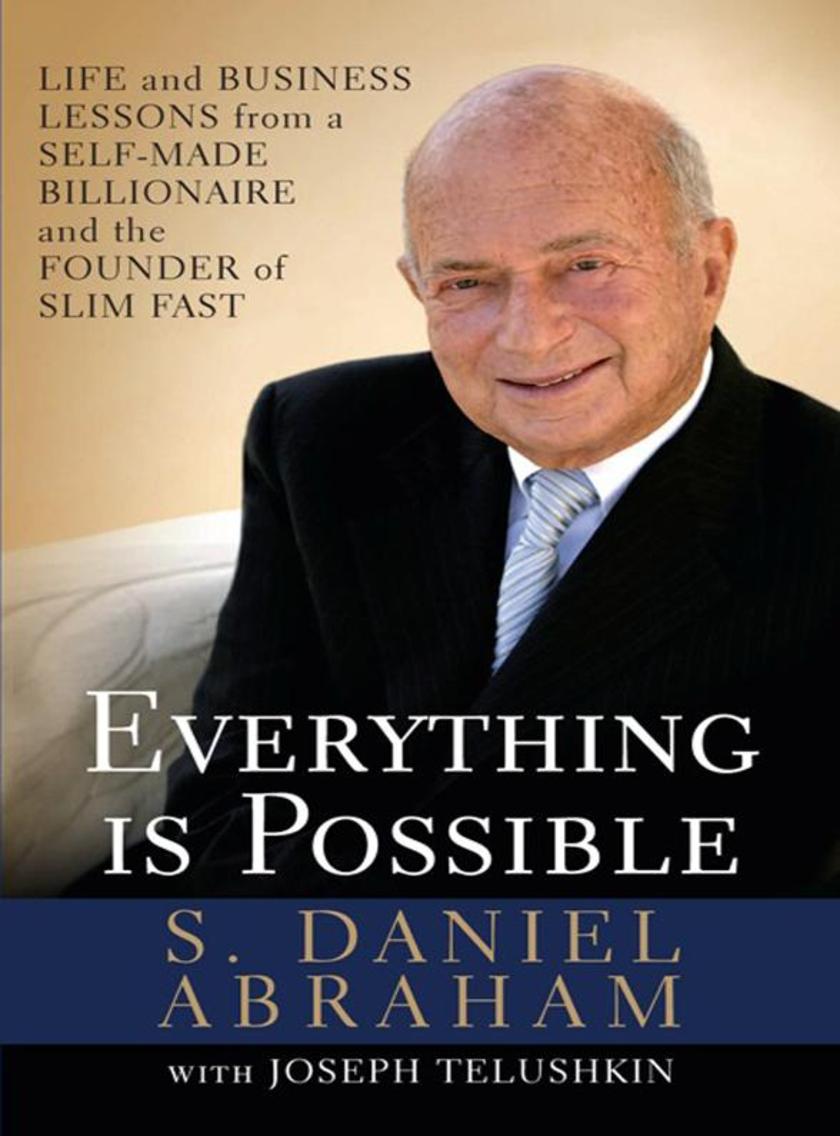
In Everything Is Possible, Dan Abraham, the legendary founder of Slim-Fast, recounts the story of his personal and business life, starting from his childhood and army years and his purchase of Thompson Medical for $5,000 when he was in his early twenties, and culminating in the sale of Slim-Fast for $2.3 billion in 2000. At the heart of Everything Is Possible are 16 life lessons that Abraham has picked up in sixty years of a hard-working business career. Among them: ?There is no such thing as a mistake (see pages 198–202) ?Why I always insured that my suppliers made a profit (see pages 208–9) ?The philosophy of continuous improvement (see pages 202–5) ?If you have a theory and the facts dispute it, drop your theory (pages 205–8) ?The realization that we all have both good and bad luck in our lives, but many of us don't prepare for either (pages 216–9) ?I never saw a man pick a fight with a stronger man (pages 191–5) But this memoir, a brilliant guide for anyone starting and growing a business, is about far more than business. Abraham tells the heartwarming story of growing up in a modest home in Long Beach, New York, and the lessons he learned from his mother, father, and one high school teacher that have guided him ever since. And there is more, much more: a discussion of his beliefs about the pleasure of giving; what he has learned from Judaism about ethics and the Golden Rule; and what he learned from his experiences with the FDA about the importance of compromise and about the necessity to fight hard when you believe you're right. At a time, when newspapers are filled with reports of business fraud and deceptions, and when so many people believe that to have spectacular success in business you have to be ruthless and dishonest, this is an account of a business life that has been lived honorably, passionately, and successfully, and with fun. Everything Is Possible is a book to be savored and shared with young and old alike.

Money-Driven Medicine
¥154.80
Why is medical care in the United States so expensiveFor decades, Americans have taken it as a matter of faith that we spend more because we have the best health care system in the world. But as costs levitate, that argument becomes more difficult to make. Today, we spend twice as much as Japan on health care—yet few would argue that our health care system is twice as good. Instead, startling new evidence suggests that one out of every three of our health care dollars is squandered on unnecessary or redundant tests; unproven, sometimes unwanted procedures; and overpriced drugs and devices that, too often, are no better than the less expensive products they have replaced. How did this happenIn Money-Driven Medicine, Maggie Mahar takes the reader behind the scenes of a $2 trillion industry to witness how billions of dollars are wasted in a Hobbesian marketplace that pits the industry's players against each other. In remarkably candid interviews, doctors, hospital administrators, patients, health care economists, corporate executives, and Wall Street analysts describe a war of "all against all" that can turn physicians, hospitals, insurers, drugmakers, and device makers into blood rivals. Rather than collaborating, doctors and hospitals compete. Rather than sharing knowledge, drugmakers and device makers divide value. Rather than thinking about long-term collective goals, the imperatives of an impatient marketplace force health care providers to focus on short-term fiscal imperatives. And so investments in untested bleeding-edge medical technologies crowd out investments in information technology that might, in the long run, not only reduce errors but contain costs. In theory, free market competition should tame health care inflation. In fact, Mahar demonstrates, when it comes to medicine, the traditional laws of supply and demand do not apply. Normally, when supply expands, prices fall. But in the health care industry, as the number and variety of drugs, devices, and treatments multiplies, demand rises to absorb the excess, and prices climb. Meanwhile, the perverse incentives of a fee-for-service system reward health care providers for doing more, not less. In this superbly written book, Mahar shows why doctors must take responsibility for the future of our health care industry. Today, she observes, "physicians have been stripped of their standing as professionals: Insurers address them as vendors ('Dear Health Care Provider'), drugmakers and device makers see them as customers (someone you might take to lunch or a strip club), while . . . consumers (aka patients) are encouraged to see their doctors as overpaid retailers. . . . Before patients can reclaim their rightful place as the center—and indeed as the raison d'être—of our health care system," Mahar suggests, "we must once again empower doctors . . . to practice patient-centered medicine—based not on corporate imperatives, doctors' druthers, or even patients' demands," but on the best scientific research available.

Five Frogs on a Log
¥221.54
A riddle: Five frogs are sitting on a log. Four decide to jump off. How many are leftAnswer: Five WhyBecause there's a difference between deciding and doing. Written by Mark L. Feldman and Michael F. Spratt of PricewaterhouseCoopers, Five Frogs on a Log offers readers an entertaining and no-nonsense field guide to the mergers and acquisitions jungle, packed with insight and instruction for executing corporate change and capturing shareholder value. Whether you're buying another company or acquiring a new vision of the future, this book proffers an unconventional perspective and a practical, readily accessible set of solutions to the single greatest challenge facing today's managers: executing rapid transitions ion mergers, acquisitions and gut wrenching change. Designed for corporate managers and CEOs caught up in the whirlwind of change, every chapter provides accessible ideas and wisdom for navigating the most demanding business transitions. The authors offer a unique hands-on perspective based on their work with top Fortune 500 firms. As they state: "Increasingly, the companies that win are those that learn faster, act quicker and adapt sooner. They will compress time by making and executing early, informed decisions about economic value creation, ruthless prioritization and focused resource allocation. They will use these decisions to take early firm stands on management deployment, organization structure and culture. Their actions will increasingly be linked to long-term, sustained economic value creation." The advice and expertise offered in this book can be used to solve a range of operational problems from speeding up new product development to merging two businesses; from changing company culture to repositioning a business in a while new marketplace. Whatever the challenges and opportunities facing you, your company, your industry, Five Frogs on a Log will move you from deciding to doing.
Harper Paperbacks
¥90.77
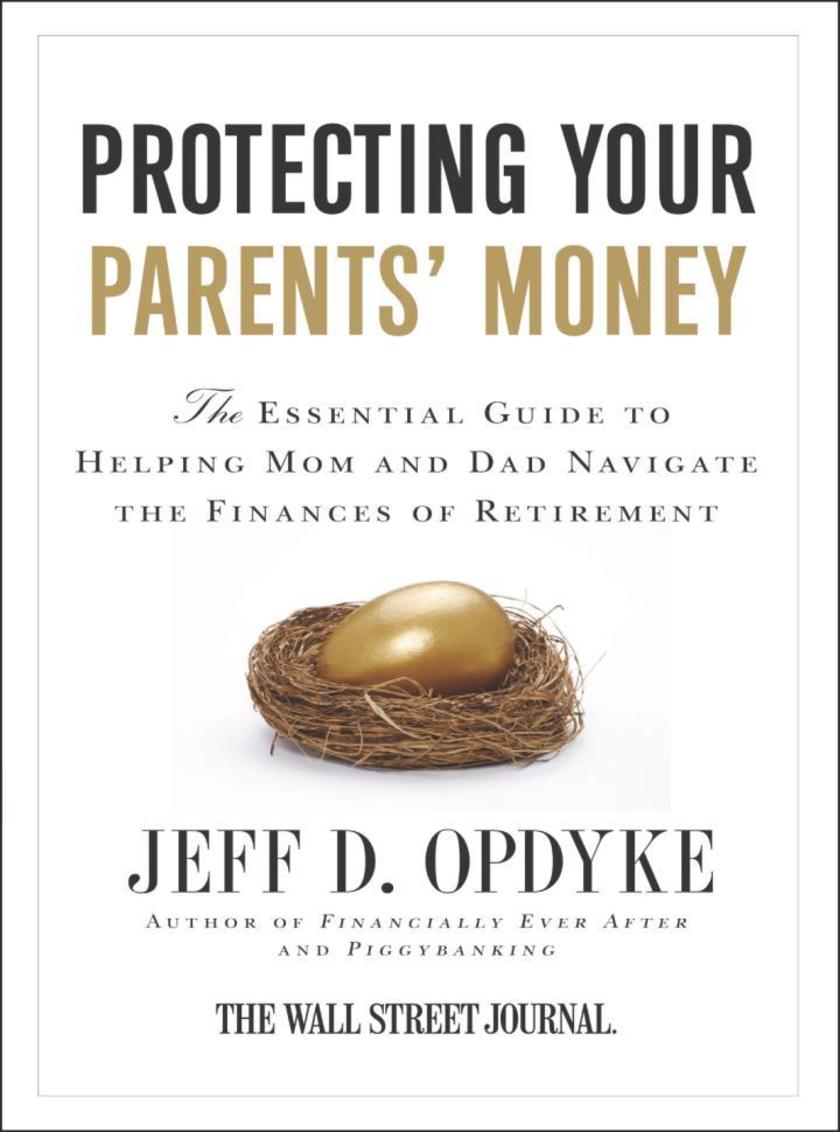
Are you ready for the inevitable day whenyou will have to act as parent to your parentsProtecting Your Parents’ Money is the essential financial handbook that will help you navigate this confusing and difficult transition, providing a game plan for tackling complex issues like estate planning, retirement income and savings, and long-term health care. Most important, it will help bridge the communication barrier between parents and adult children, which often makes the process much more difficult than it needs to be. Important topics include: ?Personal Finance 101, the Senior Years: The essential definitions and workings of the myriad investment options and financial requirements your parents will deal with in retirement. ?The Move: How to find the right nursing homes or retirement communities, comparing costs and factoring your parents’ assets into the mix. ?Understanding Medicare: What it is, how to qualify for coverage, and what it means for your parents’ finances. ?Elder Fraud: How to look for telltale signs that your parents have been victimized.
C-Scape
¥157.15
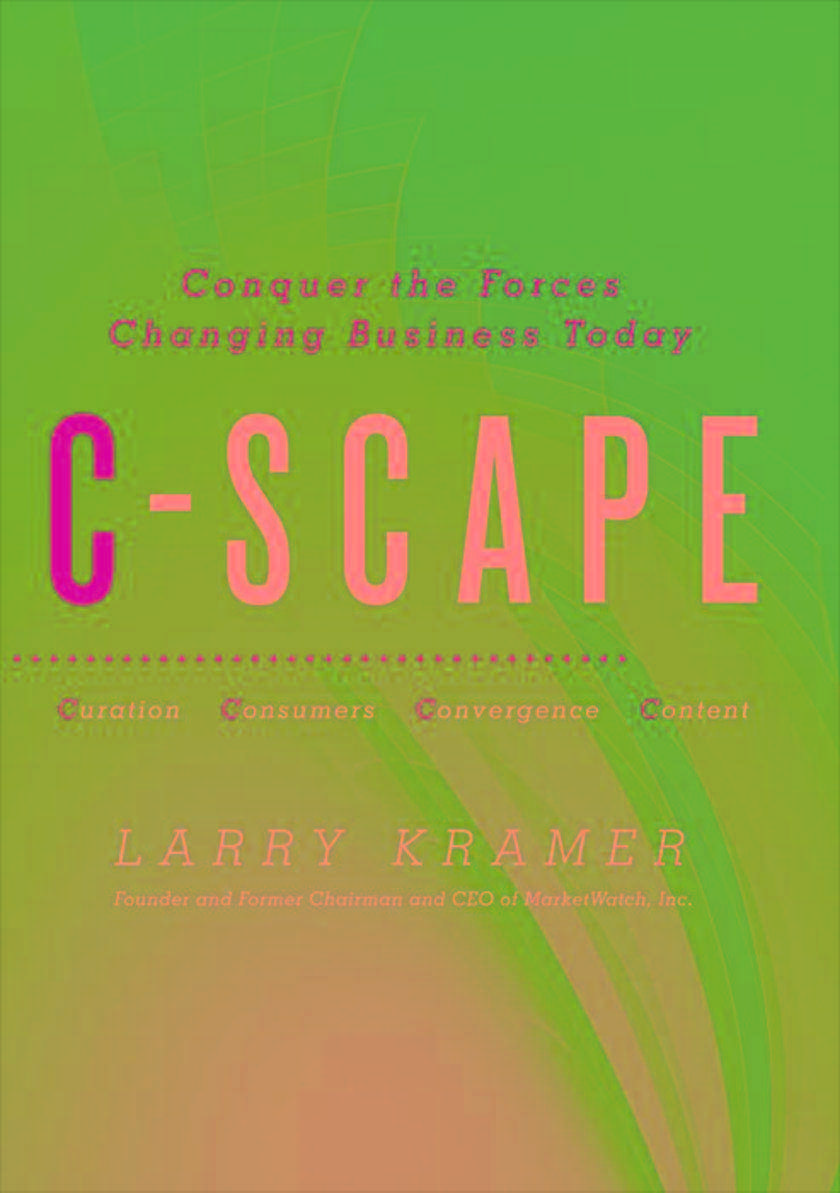
A bold, pioneering book that shows how businesses can survive and thrive in the digital media revolution Not so long ago, the business landscape was easier to chart. The routes connecting customers, companies, products, and services were predictable, reliable, and understood. Today, that landscape has been upended, and in its place a "C-Scape" has emerged a world where consumers, not producers and marketers, make the choices; where content, not distribution, is king; where curation becomes a primary currency of value; and where convergence continues to revolutionize every part of every business. In C-Scape, Larry Kramer leads the reader through this new, evolving world where the challenges are daunting but the opportunities are huge.A seasoned journalist turned superstar digital entrepreneur and venture capitalist, Kramer learned early on to survive and overcome the forces that are remaking the business landscape: the digital media revolution. Why mediaEvery aspect of every business is increasingly carried out through the media. From advertising and marketing to sales and customer service, from product design to manufacturing, everything that happens anywhere in business is ever more likely to happen on a screen or handheld device. That means any business could fall to the same threats facing the newspaper business and the music industry unless that business learns to navigate the four Cs. Kramer's explanation of this new landscape is a revelation; his visionary advice is both crucial and urgent. No leader, whether at the helm of a small business or a conglomerate, will read this book without seeing the business world anew and finding practical ways to put this book's four powerful precepts immediately to work.
The Truth About Money 3rd Edition
¥112.23
Home Sweet Home:How to buy your first home, your next home and save on taxes when you sell.A-Z of Investments:From annuities to zero-coupon bonds, go from owing money to OWNING money. Get out of debt (and stay that way).Estate Planning Long-Term Care:Learn how to protect yourself and your family.
Beyond the Grave, Revised and Updated Edition
¥110.71
This expert, one-of-a-kind handbook shows you how to ensure that your inheritance instructions will be carried out the way you want them to be; protect your children's inheritance from creditors, ex-spouses, addictions, tax troubles, mismanagement, squandering, and other risks of loss; prevent family conflict that can arise when parents die and children divide the family money leave more money to your children and grandchildren, and less to the IRS; avoid creating inheritance problems in your family with cautionary tales of inheritance planning gone bad; understand why you still have to deal with estate tax issues even if your net worth falls below the new death-tax-exemption.

I Shouldn't Be Telling You This
¥94.10
Kate White New York Times bestselling author, editor in chief of Cosmopolitan for fourteen years, and motivational speaker shares her gutsy secrets to success in this witty, straight-talking new career guide for women.Whether you've just settled into your first work cubicle and have no clue how to go after the success you crave, or you've already got a sweet little office but you aren't sure how to take your career to the next level, I Shouldn't Be Telling You This gives you all the secrets you need to become a success, go big with it, and then savor every second. It is jam-packed with insider strategies, interviews with women at the top of their game, and Kate's advice from her own career running five major magazines (including one of the bestselling women's magazines in the world, Cosmopolitan). She hows you how to break out of the pack, master the learning curve, make bold moves, and, ultimately, have the career you've always lusted for!Kate shares five secrets every woman needs to know how to:Land a Job You're Truly Passionate About Use "Bitch Envy" to Your Advantage Radiate Confidence and Get Buzzed About (Without Worrying What Other People Think)Ask for the Money You Want and Get It Manage Your Career and Not Just Your Job (It's a Whole Different Ball Game!)But more than anything, Kate says, you have to go big or go home do what's unexpected and always keep your career trajectory in mind. It might be tackling a project that no one else is taking on and nailing it then making sure your boss knows it. Or it might be developing a "golden gut" that will help you to break the rules the right way, so you always end up shining. In I Shouldn't Be Telling You This, Kate White shares the kinds of secrets no boss is ever likely to spill all with her irreverent wit and candid style. You'll come away with the know-how you need and you'll feel as though you've just gotten up from a fabulously dishy lunch!
Double Your Profits
¥94.10
One of the nations' foremost financial consultants shares 78 proven ways to cut costs dramatically, send productivity through the roof, and, in just six months, double profits.
When Genius Failed: The Rise and Fall of Long Term Capital Management
¥66.22
Picking up where Liar’s Poker left off (literally, in the bond dealer’s desks of Salomon Brothers) the story of Long-Term Capital Management is of a group of elite investors who believed they could beat the market and, like alchemists, create limitless wealth for themselves and their partners. Founded by John Meriweather, a notoriously confident bond dealer, along with two Nobel prize winners and a floor of Wall Street’s brightest and best, Long-Term Captial Management was from the beginning hailed as a new gold standard in investing. It was to be the hedge fund to end all other hedge funds: a discreet private investment club limited to those rich enough to pony up millions. It became the banks’ own favourite fund and from its inception achieved a run of dizzyingly spectacular returns. New investors barged each other aside to get their investment money into LTCM’s hands. But as competitors began to mimic Meriweather’s fund, he altered strategy to maintain the fund’s performance, leveraging capital with credit on a scale not fully understood and never seen before. When the markets in Indonesia, South America and Russia crashed in 1998 LCTM’s investments crashed with them and mountainous debts accumulated. The fund was in melt-down, and threatening to bring down into its trillion-dollar black hole a host of financial instiutions from New York to Switzerland. It’s a tale of vivid characters, overwheening ambition, and perilous drama told, in Roger Lowenstein’s hands, with brilliant style and panache.

The Way of Nowhere: Eight Questions to Release Our Creative Potential
¥117.82
The Way of Nowhere is a business book by the UK’s hottest change management consultancy who have led transformations in some of Britain’s biggest and best known organisations. An invaluable resource for anyone who wants to make a creative difference in their lives and the lives of people around them. Inspired by the unique practice of 'nowhere', a community of companies that specialise in co-creation, this is an inspirational book that will help you break through to a more creative and strategic future Renowned for their world-class approach to innovation, the nowhere group works with a wide range of businesses, government agencies and individuals to develop their creativity to its full potential. Now, their book maps out the groundbreaking ways that anyone can become more productive, playing a more creative role in your organisation while simultaneously nurturing your own growth along the way. It contains eight breakthrough questions designed to stimulate and enrich our creative capacity, both as an individual and as part of a team. Using examples and tools from their work with some of the UK’s largest and best known businesses, The Way of Nowhere shows us how to unlock the underlying and invisible forces at play within organisations, communities and cultures. With practice, you will discover how these questions and insights can release the latent creativity that exists within - a place where magic can happen - out of nowhere!
Brand Strategy and Management for Law Firms
¥2452.50
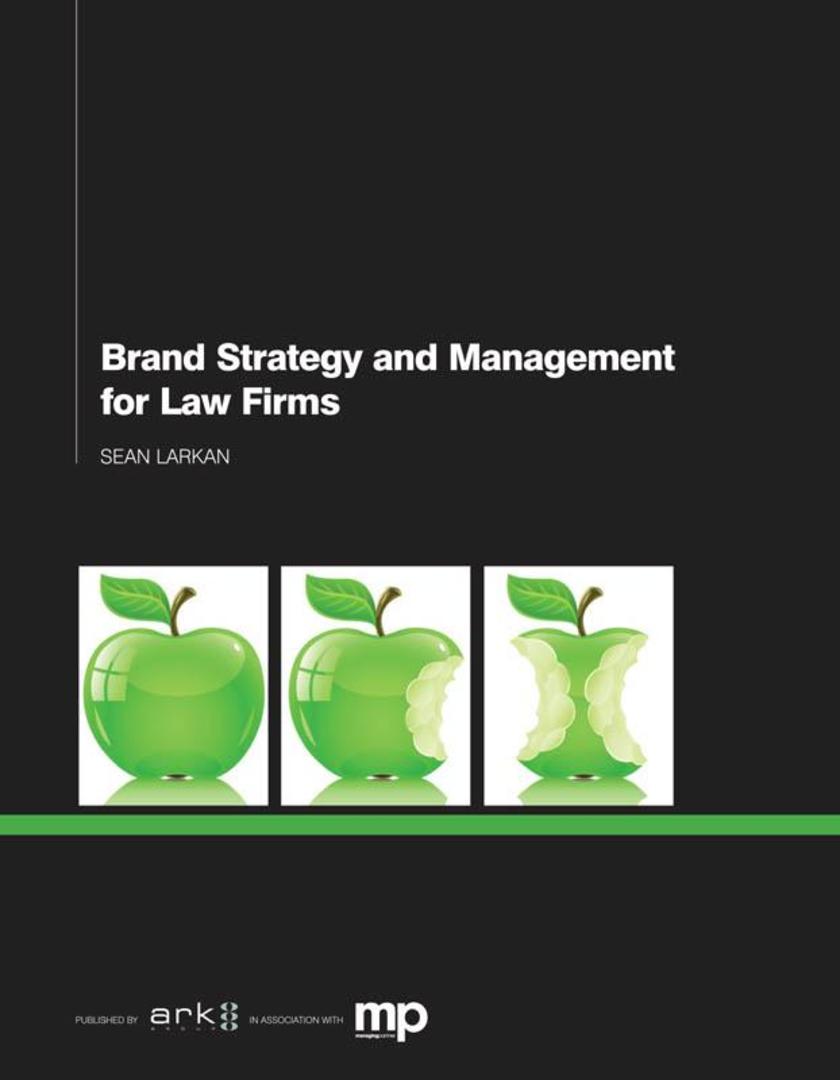
An effective brand strategy that is clearly understood and supported throughout your firm is crucial if you want to attract and retain profitable clients and sustain a talented workforce. Managing Partner’s Brand Strategy and Management for Law Firms report provides a comprehensive framework and guidelines for developing a brand strategy tailored to your firm. Packed with key concepts, practical tools, tips and advice this report will give you an understanding of brand and how it can be developed and strengthened as your firm’s most invaluable asset. Specifically, this report will help you to: Understand the key elements of personal brands, firm brand, and the employment brand – and how they relate to each other; Align your brand strategy with your overall firm strategy, vision and values; Realise the importance of brand names, icons or logos, design and aesthetics; · Understand the key brand considerations when using online channels – websites, blogs, LinkedIn, Twitter and Facebook; · Create a customised brand stress-test and make improvements to strengthen your firm’s brand accordingly and ensure its success; · Get partners and staff on board to support and grow your brand; and · Avoid brand mistakes and overcome the common challenges – including recommended steps for managing your brand before, during and following a merger. · Brand Strategy and Management for Law Firms features insightful case studies, examples and expert contributions from the likes of Norton Rose South Africa, DLA Phillips Fox, Lex Mundi, Lex Africa and more… They reveal practical tips, lessons learned and mistakes made that will prove invaluable in the development and management of your own brand strategy.

The Hour Between Dog and Wolf: Risk-taking, Gut Feelings and the Biology of Boom
¥73.58
As scandal and the aftershocks of the crash rock the financial world, former Wall Street trader John Coates investigates why our financiers are driven to take risks. Now shortlisted for the 2012 Financial Times and Goldman Sachs Business Book of the Year Award and the Wellcome Trust Book Prize, this startling and unconventional book sees neuroscientist and former Wall Street trader John Coates explain something we have long suspected: that we think with our body as well as our brain. And this only intensifies when we take risks; at work, in sport and on the financial markets. Making and losing money provokes an overwhelming biological response, and this can alter the way we behave. Could this bodily turmoil lead to the kind of irrational behaviour that so regularly upsets the global economy? In a series of groundbreaking experiments, Coates has shown that under the pressure of risk our biology transforms us into different people. Traders and investors are especially prone, becoming revved-up and testosterone-driven when on a winning streak, and tentative and risk-averse when cowering from losses. Revealing the biology of bubbles and crashes, The Hour Between Dog and Wolf sheds new and surprising light on issues that affect us all.


