


 购物车
购物车 个人中心
个人中心
HarperCollins e-books
¥127.33
leverage (lev'r ij) The power to act or influence.ditch (dich) Slang, to get rid of; discard.Finally, you hold in your hands a powerful tool that will show you how to take full advantage of -- Leverage! -- your strengths and most positive qualities, while at the same time discarding or getting around -- Ditch! -- whatever gets in your way.Scott Blanchard and Madeleine Homan, co-founders of Coaching.com, share their groundbreaking program, honed by fourteen years of high-level executive coaching and consulting. They offer new perspectives on how to spend your precious and limited resources, time, emotions, passions, and energy to generate the best results.The three-part process begins with a twenty-five-question self-assessment, then moves on to the Three Perspectives -- major life queries that focus on how you are perceived, your own self-image, and self-imposed limitations. The final step, the Seven Leverage Points, offers fresh insight into the choices you make and how you conduct yourself in business and in life. You will find immediately applicable tools to appraise and manage your work environment and personal gifts. You will be guided to make tiny but crucial shifts in getting needs met and drawing boundaries.Leverage Your Best, Ditch the Rest eliminates the stupid stuff that distracts you and gets in your way. It shows you how to capitalize on what you've got going for you and how to invest in yourself like a hot new stock.*****In addition, we have built a Web site, www.leverageyourbest.com, for those who have made a commitment to their own coaching journey. Coaching is a dynamic tool and you are a work in progress---technology makes it easy to track growth. Leverage Your Best readers can use the Web site, the first of its kind, to work through exercises in the book electronically, keep a personal record of progress, communicate with other readers in an online coaching experience, and give feedback to the authors. A collaborative effort, the Web's online coaching community defines the www.leverageyourbest.com site experience, adding new dimensions to professional development...all for the price of the of the book . Visit the world's only online coaching Web experience and see what has people everywhere jumping in their cubicles. Enjoy!
The Die Broke Financial Problem Solver
¥77.54
If you're loosing sleep over your financial worries, help is here at last.Whether you're fretting over a mortgage that's been denied; a loan that's delayed; a marriage settlement that seems unfair; or a business that's struggling, this extraordinary book will not only help you rest easy, it will show you how to turn adversity into success.Here you'll learn the Pollan method for turning no into yes: how to determine your problem; how to make sure you're dealing with only one problem at a time; and how to create an environment of trust. With literally hundreds of scenarios to illustrate it's success, this unique and practical method will make you feel like you've got a coach, strategist, and motivator at your beck and call -- and will help you sleep well, knowing you're on the way to getting what you want.
Fools Rush In
¥82.80
Every era has its merger every era has its story. For the New Media age it was an even bigger disaster: the AOL-Time Warner deal. At the time AOL and Time Warner were considered a matchless combination of old media content and new media distribution. But very soon after the deal was announced things started to go bad and then from bad to worse. Less than four years after the deal was announced, every significant figure in the deal -save the politically astute Richard Parsons has left the company, along with scores of others. Nearly a $100 billion was written off and a stock that once traded at $100 now trades near $10.What happenedWhere did it all go wrongIn this deeply sourced and deftly written book, Nina Munk gives us a window into the minds of two of the oddest men to ever run billion-dollar empires. Steve Case, the boy wonder who built AOL one free floppy disk at a time, was searching for a way out of the New Economy. Meanwhile Jerry Levin, who'd made his reputation as a visionary when he put HBO on satellite distribution, was searching for a monumental deal. These two men, more interested in their place in history than their personal fortunes, each thought they were out-smarting the other.
Rumsfeld's Rules
¥155.02
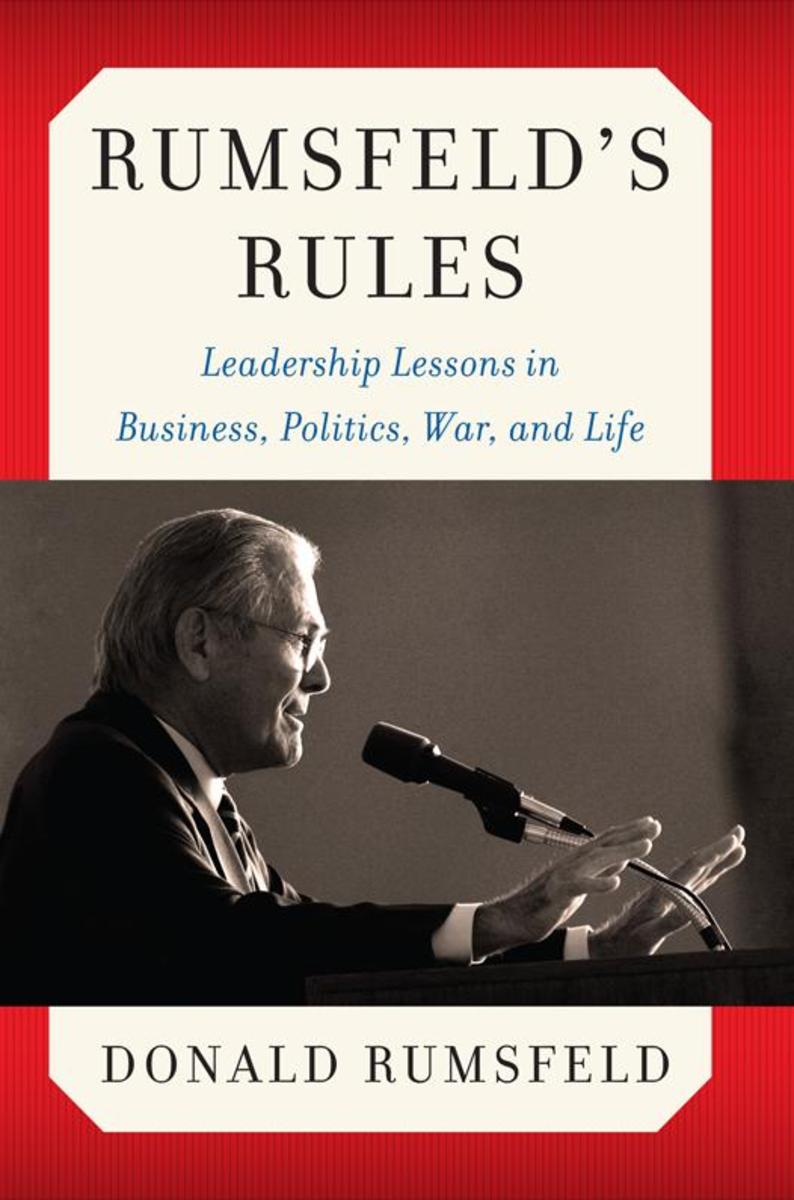
The legendary leadership guide, distilled from a lifetime of wisdom and experience in government and business Throughout his long and distinguished career—as a naval aviator, a U.S. Congressman, a top aide to four American presidents, a high-level diplomat, a CEO of two Fortune 500 companies, and the only twice-serving Secretary of Defense in American history—Donald Rumsfeld has collected hundreds of pithy, compelling, and often humorous observations about leadership, business, and life. When President Gerald Ford ordered these aphorisms distributed to his White House staff in 1974, the collection became known as "Rumsfeld's Rules." First gathered as three-by-five cards in a shoebox and then typed up and circulated informally over the years, these eminently nonpartisan rules have amused and enlightened presidents, business executives, chiefs of staff, foreign officials, diplomats, and members of Congress. They earned praise from the Wall Street Journal as "Required reading," and from the New York Times which said: "Rumsfeld's Rules can be profitably read in any organization…The best reading, though, are his sprightly tips on inoculating oneself against that dread White House disease, the inflated ego." Meanwhile, the collection continued to grow as Rumsfeld added new rules derived from things he read, heard, or observed in more than eight decades of a remarkable life. Now these legendary rules are made available for the first time to corporate executive. Rumsfeld has selected his most useful and important rules for effective leadership, enhanced with fresh insights and entertaining anecdotes, and discusses them in the blunt and witty style that made his Pentagon press conferences "must-see TV." Distilled from a career of unusual breadth and accomplishment, and organized under practical topics like hiring people, running a meeting, and dealing with the press, Rumsfeld's Rules can benefit people at every stage in their careers and in every walk of life, from aspiring politicos and industrialists to recent college graduates, teachers, and business leaders. The book provides unprecedented insight into leadership, management, strategy, and life—thinking that not only helped Rumsfeld lead the Pentagon in wartime, but earned him a reputation as one of America's toughest and most effective CEOs.
Managing the Non-Profit Organization
¥93.88
The groundbreaking and premier work on nonprofit organizations.The nonprofit sector is growing rapidly, creating a major need for expert advice on how to manage these organizations effectively. Management legend Peter Drucker provides excellent examples and explanations of mission, leadership, resources, marketing, goals, and much more. Interviews with nine experts also address key issues in this booming sector.

Funny Money:In Search of Alternative Cash
¥51.50
Only our limited idea of money is keeping us poor. David Boyle introduces us to alternative cash and people who can conjure money – that is, spending power – out of nothing. Until recently, the growth of alternative cash had been the province of big business: phone cards, stamps, air miles and Tesco’s clubcard points all have purchasing power, yet are not cash as we know it. Now, locally created money systems like ‘time dollars’, ‘Womanshare’ and ‘Ithaca hours’ are being invented by communities for communities. With clarity and great humour, Boyle tells the story of this extraordinary revolution: he travels to the USA to visit the people behind local money systems; relates their vision of the future; and describes how to set up your own currency. This is no dry theoretical tome: Boyle writes about his subject in a way that is concrete, illuminating, often very funny and always highly readable. This paperback edition includes a new epilogue with an update on the latest alternative currency ideas: ‘You just have to cast doubt on the real existence of the money markets and they could just shrivel away. Anything could happen.’ A revolution is underway now: this book tells the story of its leaders and the ideas that inspired them.
Awakening the Entrepreneur Within
¥88.56
A business without a dream is like a life without a purpose. Michael Gerber Dream Vision Purpose MissionThese words have been defining the life of Michael Gerber, bestselling author and international small business guru. He created E-Myth Worldwide in 1977 to transform the way that small business owners grow their companies. Now he's created In The Dreaming Room as a place where entrepreneurs and future entrepreneurs come to discover how to make their dreams a reality.Michael's Dream: to inspire people to dream by awakening the entrepreneur within them. Michael's Vision: to be the authority for helping dreamers everywhere create the small businesses they once could only imagine.Michael's Purpose: to transform the lives of ordinary people by providing them with the thrill of creation while creating the means to generate their own and others' economic freedom.Michael's Mission: to create a turnkey system for awakening the entrepreneur within every person who wishes to go into business for themselves, while providing them with the support for doing it.And he has done it. In Awakening the Entrepreneur Within you are invited into the Dreaming Room, where your own entrepreneurial dreams will come alive and become reality. Michael will help you shape your dream into a viable, economically successful company! As he writes: It is time to dream. It is time to care about something bigger than you. It is time to imagine something sorely needed in the world the world you live in that somebody would pay to have. It is time to look around you and ask yourself, 'What's missing in this pictureIf you see something missing in your world, it's time to start dreaming. Let Michael Gerber welcome you to the Dreaming Room.
In the Black
¥90.73
With economic uncertainty reaching unprecedented levels, Aaron W. Smith's accessible nine-step plan to take control of your financial future will resonate whether you're just starting out or finding yourself midlife with concerns about your retirement. In The Black will transform your retirement plans, regardless of income, by offering concrete advice on what opportunities are available and using real-life examples to illustrate how anyone can achieve their financial dreams be they middle- aged and facing debt or actively saving since their early twenties. In clear, easy-to-follow steps, readers will learn how to: Overcome historical resistance to investing Save for retirement while keeping kinship ties intact Use faith as a motivator for saving and strengthening financial discipline Break through denial about changes in Social Security and pension plans. . . and much more.
The Wall Street Journal Guide to the End of Wall Street as We Know It
¥90.77
The definitive guide for Main Street readers who want to make sense of what's happening on Wall Street and better understand how we got here and what we need to know to in days to come. Written by seasoned financial writer Dave Kansas this official Wall Street Journal guide will be filled with practical information revealing what the crisis means for reader's financial lives and what steps they should be taking now to inform and protect themselves.

Remember Me
¥90.90
In Remember Me, Time writer Lisa Takeuchi Cullen has created a humorous and poignant chronicle of her travels around the country to discover how Americans are reinventing the rites of dying. What she learned is that people no longer want to take death lying down; instead, they're taking their demise into their own hands and planning the afterparty. Cullen hears stories of modern-day funerals: lobster-shaped caskets and other unconventional containers for corpses; cremated remains turned into diamonds; and even mishaps like dove releases gone horribly wrong. Eye-opening, funny, and unforgettable, Remember Me gives an account of the ways in which Americans are designing new occasions to mark death by celebrating life.
How We Got Here
¥83.03
Best-selling author Andy Kessler ties up the loose ends from his provocative book, Running Money, with this history of breakthrough technology and the markets that funded them.Expanding on themes first raised in his tour de force, Running Money, Andy Kessler unpacks the entire history of Silicon Valley and Wall Street, from the Industrial Revolution to computers, communications, money, gold and stock markets. These stories cut (by an unscrupulous editor) from the original manu* were intended as a primer on the ways in which new technologies develop from unprofitable curiosities to essential investments. Indeed, How We Got Here is the book Kessler wishes someone had handed him on his first day as a freshman engineering student at Cornell or on the day he started on Wall Street. This book connects the dots through history to how we got to where we are today.
Reengineering Management
¥90.77
The co-author of the monumental bestseller Reengineering the Corporation continues the reengineering revolution with another national bestseller that has already sold more than 165,000 copies in hardcoverReengineering Management is a brilliant, practical and much needed book on the most powerful management idea of the decade. Reengineering changing the traditional and outdated organization, processes and culture of a company is corporate America's greatest challenge today.In Reengineering Management, Champy examines the far-reaching changes managers must make for themselves and their companies to succeed in an era of unprecedented competition. Through his extensive consulting and research work, he shows how reengineering succeeds only when managers reinvent their own jobs and managerial styles. Otherwise, the ultra-efficient and effective reengineered processes for acquiring and serving customers, filling orders, bringing new concepts to market and other key business activities eventually fall apart.Champy illustrates this new management agenda through first-hand experiences of managers of reengineered operations at Federal Express, Wisconsin Electric, CIGNA Health Care, Hewlett-Packard, AT&T Universal Card Services and other companies. Champy shows how they are mastering the managerial challenges of reengineering, and as a result are making their organizations exciting and competitive. As more and more organizations reengineer, the experiences of these managers will become an insiders' guide to managerial life in the company of the future.Reengineering Management picks up where Reengineering the Corporation left off by exploring the managerial implications of the reengineered workplace. As reengineering becomes critical to all organizations, Reengineering Management will be the road map for managerial success in the future. It is, indeed, the manifesto for the next managerial revolution.
Success Runs in Our Race
¥88.56
A completely updated and revised edition of a bestselling book that has helped tens of thousands of people learn how to network effectively, Success Runs in Our Race is more important than ever in this fluctuating economy. With scores of anecdotes taken from interviews with successful African Americans -- from Keith Clinkscales, founder and former CEO of Vanguarde Media, to Oprah Winfrey -- Fraser shows how to network for information, for influence, and for resources. Readers will learn, among other things, how to cultivate valuable listening skills, which conferences blacks are most likely to attend when looking to build their business network, and how to effectively circulate a rsume.More than a guide for personal achievement, this is an information-packed bible of networking that also seeks to inspire a social movement and a rebirth of the "Underground Railroad," in which successful African Americans share the lessons of self-determination and empowerment with those still struggling to scale the ladder of success.

Betrayal
¥90.77
It was an inconceivable deception: over $65 billion stolen in the world's largest Ponzi scheme. Including new and revealing interviews with those who worked closest to himand his family, Betrayal is an in-depth, penetrating look at the man who perpetrated history's most notorious financial crime. To the people who knew him, Bernie Madoff was a kind and honorable person; a loving father and husband; generous to his employees and charitable even to strangers. On Wall Street, he was known as a wise elder statesman, wildly successful in his investments but never too risky with people's money. He was so revered and trusted that thousands placed their life savings with him, and he in turn provided them with early retirements and affluent lifestyles.But on December 11, 2008, Madoff confessed that he'd lied to them all. The monthly financial statements he'd sent customers for decades were all works of fiction. Their money was gone.Despite the crush of media attention on Madoff's scam, little is known about Madoff himself. What could lead a seemingly good man to ruin the lives of everyone who ever cared about himWhat caused Bernie Madoff to commit an unspeakable act of betrayal, bankrupting his family, his friends, his mentors, and thousands of investors who depended upon him for their livelihoodsBetrayal: The Life and Lies of Bernie Madoff is about the man who realized that he could have everything he wanted if he simply lied to the people who trusted him the most. Author Andrew Kirtzman tracked down more than a hundred people from Madoff's past, from the first girl he ever kissed to family members who played in his house as children; from his secretaries to his drivers; from traders at his company to his inner circle of friends. He pored through thousands of pages of court records; private e-mails; phone-conversation tran*s; and census, military, and immigration records. The result is a fascinating story about the rise of a deeply immoral man.Kirtzman describes Madoff's feelings of inferiority and humiliation as a child, and his obsession with making money to prove himself worthy as he grew older. He reveals Madoff's construction of a criminal enterprise at a young age, long before he's ever claimed it began. He paints a picture of a loving yet strange family that ran a multibillion-dollar corporation like a small family restaurant. He offers an inside look at life within the company and the characters who worked on the infamous seventeenth floor. He reveals the details of an underground flow of cash that no one has known about until now. And he chronicles the desperate moments leading up to Madoff's fall, from the perspective of the people who spent the last hours with him before his house of cards collapsed.
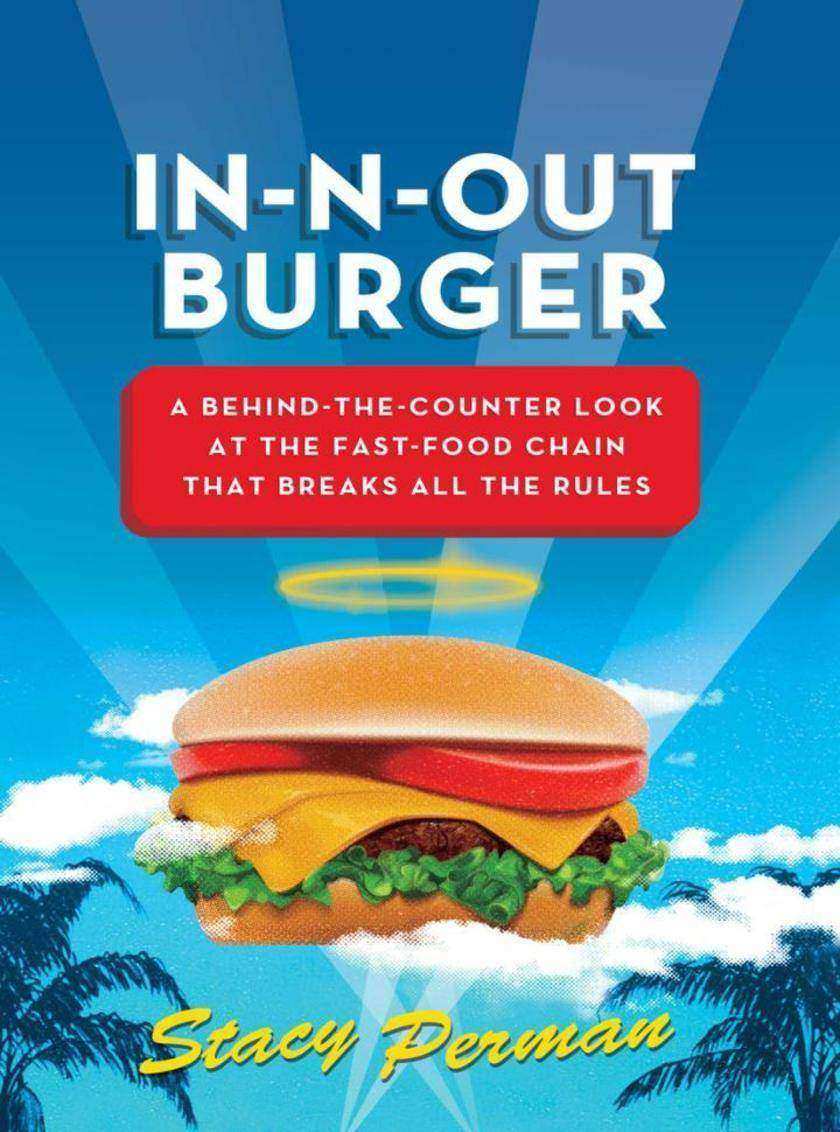
In-N-Out Burger
¥88.56
The untold story of the renegade burger chain that evokes a passionate following unlike any other In fast-food corporate America, In-N-Out Burger stands apart. Begun in a tiny shack in the shadow of World War II, this family-owned chain has stead fastly refused to franchise or be sold. It is a testament to old-fashioned values and reminiscent of a simpler time when people, loyalty, and a freshly made, juicy hamburger meant something. Over time, In-N-Out Burger has become nothing less than a cultural institution that can lay claim to an insanely loyal following. Perman uses her investigative skills to uncover the story of a real American success story. It is not only a tale of a unique and profitable business that exceeds all expectations, but of a family's struggle to maintain a sustainable pop empire against the industry it helped pioneer, internal tensions, and a bitter lawsuit that threatened to bring the company to the brink. This is a lesson in a counterintuitive approach to doing business that places quality, customers, and employees over the riches promised by rapid expansion. In-N-Out Burger is a keenly observed narrative that explores the evolution of a California fad that transformed into an enduring cult of popularity; it is also the story of the conflicted, secretive, and ultimately tragic Snyder family who cooked a billion burgers and hooked a zillion fans. As the story of In-N-Out Burger unfolds, so too does the cultural history of America as influenced and shaped by car culture and fast food.

Career GPS
¥84.16
The workplace is constantly in flux, and even now there are new opportunities open to women. But to take advantage of these possibilities, it's essential to know the current rules for corporate success. This isn't your father's or your mother's workplace anymore! Whether it's the CEO seat, an executive manager slot, or a more intrapreneurial position, women who follow Career GPS will have what it takes to gain their professional goals.Dr. Ella L. J. Edmondson Bell, Ph.D., an authority on career development, has worked with women across a variety of fields and in different kinds of corporations, from Fortune 500s to start-ups. Here she offers guidelines to help women forge their own pathways to professional ascent, providing tips for maximizing a review, networking in a relevant way, and much more. According to Dr. Bell: Think working hard is enough to be recognizedIt's not enough to assume your effort will speak for itself. You have to socialize with the decision makers. It might not mean you have to pick up the golf clubs, but you do have to figure out what works in your own organization. Parlez-vous Fran?isLearning MandarinIf you work for a global company and aspire to an extreme job or higher, make it known that you would take an overseas assignment to advance your career. Nowhere to go right nowEven in hard times there are options. Learn a lateral skill such as accounting so when the company is firing on all engines again, you will impress through the breadth of your knowledge. Drawing from her work as a consultant to some of the country's most prestigious Fortune 100 companies, Dr. Bell helps readers succeed at every level in a dynamic corporate marketplace. Career GPS combines Dr. Bell's academic knowledge and expertise with dozens of heartfelt first-person stories from smart women who rose through the ranks. Here is a book that will guide women of all cultures, ages, and levels of experience to their career goals.
Console Wars
¥111.91
A mesmerizing, behind-the-scenes business thriller that chronicles how Sega, a small, scrappy gaming company led by an unlikely visionary and a team of rebels, took on the juggernaut Nintendo and revolutionized the videogame industry in development as a feature film from Sony PicturesIn 1990, Nintendo had a virtual monopoly on the videogame industry. Sega, on the other hand, was just a faltering arcade company with big aspirations and even bigger personalities. But all that would change with the arrival of Tom Kalinske, a former Mattel executive who knew nothing about videogames and everything about fighting uphill battles. His unconventional tactics, combined with the blood, sweat, and bold ideas of his renegade employees, completely transformed Sega and led to a ruthless, David-and-Goliath showdown with Nintendo. Little did he realize that Sega's success would create many new enemies and, most important, make Nintendo stronger than ever.The battle was vicious, relentless, and highly profitable, eventually sparking a global corporate war that would be fought on several fronts: from living rooms and school yards to boardrooms and Congress. It was a once-in-a-lifetime, no-holds-barred conflict that pitted brother against brother, kid against adult, Sonic against Mario, and the United States against Japan.Based on more than two hundred interviews with former Sega and Nintendo employees, Console Wars is the tale of how Tom Kalinske miraculously turned an industry punch line into a market leader. Blake J. Harris brings into focus the warriors, the strategies, and the battles and explores how they transformed popular culture forever. Ultimately, Console Wars is the story of how a humble family man, with an extraordinary imagination and a gift for turning problems into competitive advantages, inspired a team of underdogs to slay a giant and, as a result, give birth to a sixty-billion-dollar industry.
How to Work a Room, 25th Anniversary Edition
¥88.56
The classic bestseller on socializing now fully updated for social interactions in a digital ageHow to Work a Room is the classic bestselling book on improving communication and socializing skills, and using them to create and leverage connections. This Silver Anniversary Edition is fully revised and updated to include the role of technology and social media in networking, as well as Susan RoAne's proven tips for using digital strategies to your advantage plus practical hints for starting conversations and strengthening rapport with strangers. How to Work a Room: The 25th Anniversary Edition is a vital tool for business professionals, job seekers and career changers of all ages.
The Hard Truth About Soft Skills
¥95.39
What's the hard truthSoft skills get little respect but will make or break your career. Master your soft skills and really get ahead at work! Fortune 500 coach Peggy Klaus encounters individuals every day who excel at their jobs but aren't getting where they want to go. It's rarely a shortfall in technical expertise that limits their careers, but rather a shortcoming in their social, communication, and self-management behaviors. In The Hard Truth About Soft Skills Klaus delivers practical tools and techniques for mastering soft skills across the career spectrum. She shows how to: manage your workload handle the critics develop and promote your personal brand navigate office politics lead the troops and much more! Klaus reveals why soft skills are often ignored, while bringing their importance to life in her trademark style straightforward, humorous, and motivating. Perfect for readers at all professional stages from those who are just starting out to seasoned executives this book is essential reading for anyone who wants to take his or her career to the next level.
Overcoming Underearning(TM)
¥94.10
When it comes to money, are you controlled by fearDo you live in financial chaos?Do you underestimate your worthAre you ready to go to the next level, but can't seem to get thereIf the answer is yes to these questions, you may be an underearner. Underearners are self-saboteurs who never live up to their earnings potential, says Barbara Stanny, a financial educator, motivational speaker, former journalist, and career counselor. Underearners tend to live paycheck to paycheck. They rarely balance their checkbooks and are often in debt. Ironically, many work incredibly hard. Yet they are ashamed to admit that money matters to them. They all have a high tolerance for low pay. The good news is that underearning is often self-imposed. By focusing on overcoming underearning, you will not only earn what you deserve, but you can live up to your full potential. With techniques and exercises that have helped thousands of people who have participated in her Overcoming Underearningworkshops, Stanny teaches you five essential steps to financial independence. Once you understand these steps, you will be confident asking for a raise, increasing your prices, or getting a better job. "Now I'm making more than my friends, all because I had the guts to dream and ask for more," says one Stanny fan. First, Tell the Truth: be honest about your financial situation and figure out your attitudes toward money. Second, Make a Decision: decide that you want to make more money. Third, Stretch: take action, face your fears, and be willing to be uncomfortable. Fourth, Create Community by finding supporters and asking for help. Fifth, Respect and Appreciate Money: learn to save and invest. Overcoming Underearning is filled with inspiring, real-life stories of underearners who turned their lives around. Stanny brings a message of empowerment and hope to all those who chronically undervalue themselves. "I'm making more, working less, feeling healthier, have more energy, and I'm so much happier," concludes another Stanny believer.
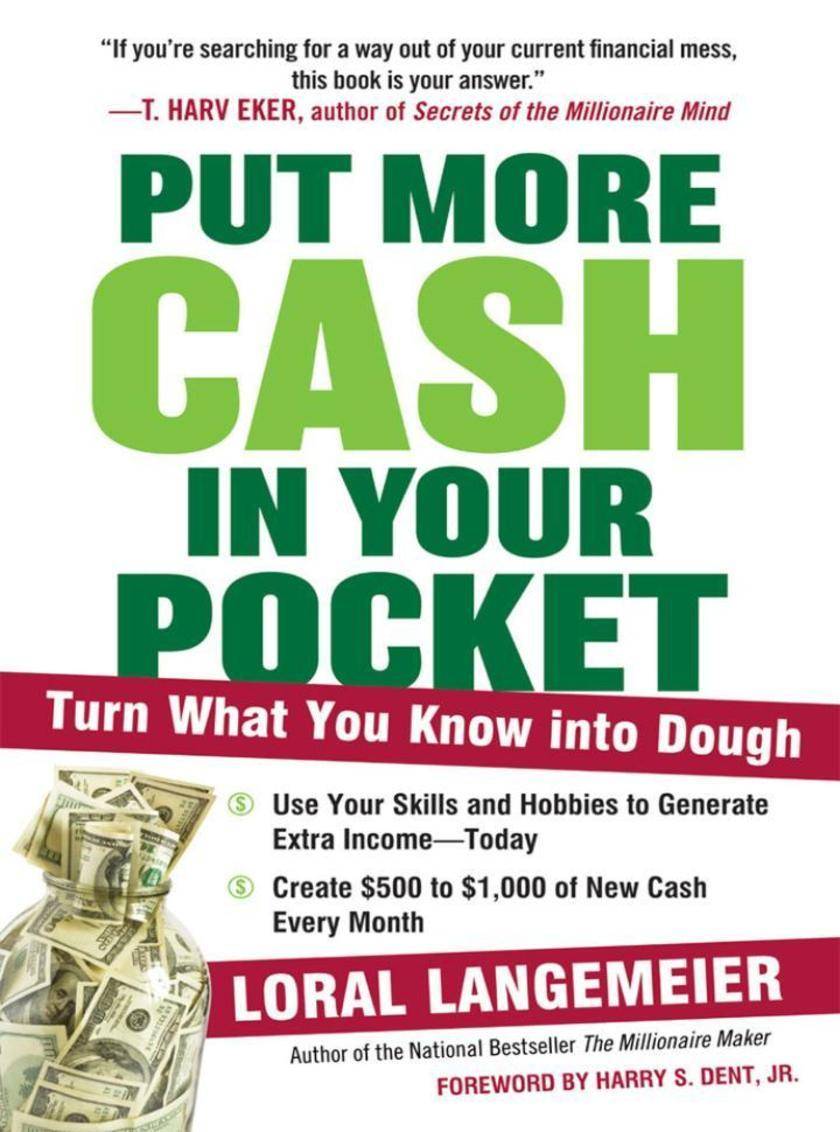
Put More Cash in Your Pocket
¥94.10
Quit worrying about debt. . . .Forget penny-pinching. . . . Stop sacrificing. . . . Forget saving money. You don't get wealthy by putting your money away in a bank account, nor do you become poor just because you bought yourself an extra latte. You get rich by making money . . . and America's leading money-making expert Loral Langemeier can show you how.A timely book with a counterintuitive message, Put More Cash in Your Pocket helps you create your own "lemonade stand" by getting paid for the things you already do. By following Loral's simple and straightforward approach, you'll put more cash as much as $1,000 a month in your pocket in no time.


