


 购物车
购物车 个人中心
个人中心

The Cure
¥94.10
The riveting true story of John and Aileen Crowley's race to find a cure for Pompe disease that inspired the movie Extraordinary Measures With three beautiful children, a new house, and financial security, John and Aileen Crowley were on top of the world until their two youngest children, fifteen-month-old Megan and five-month-old Patrick, were diagnosed with Pompe disease and given only months to live. Refusing to accept a death sentence, John quit his financial consultant job and invested his life savings in a biotechnology start-up to research the disease and find a cure. Battling scientific setbacks, conflict of interest accusations, and business troubles, John and Aileen would be tested to their limits as they valiantly fought, and succeeded, in finding revolutionary new treatment for the disease offering hope to Megan, Patrick, and the many children and families affected by Pompe disease around the world. The inspiration for the captivating film Extraordinary Measures , starring Brendan Fraser and Harrison Ford, The Cure is a remarkable true story of cutting-edge science, business acumen and daring, and one family's indomitable spirit.
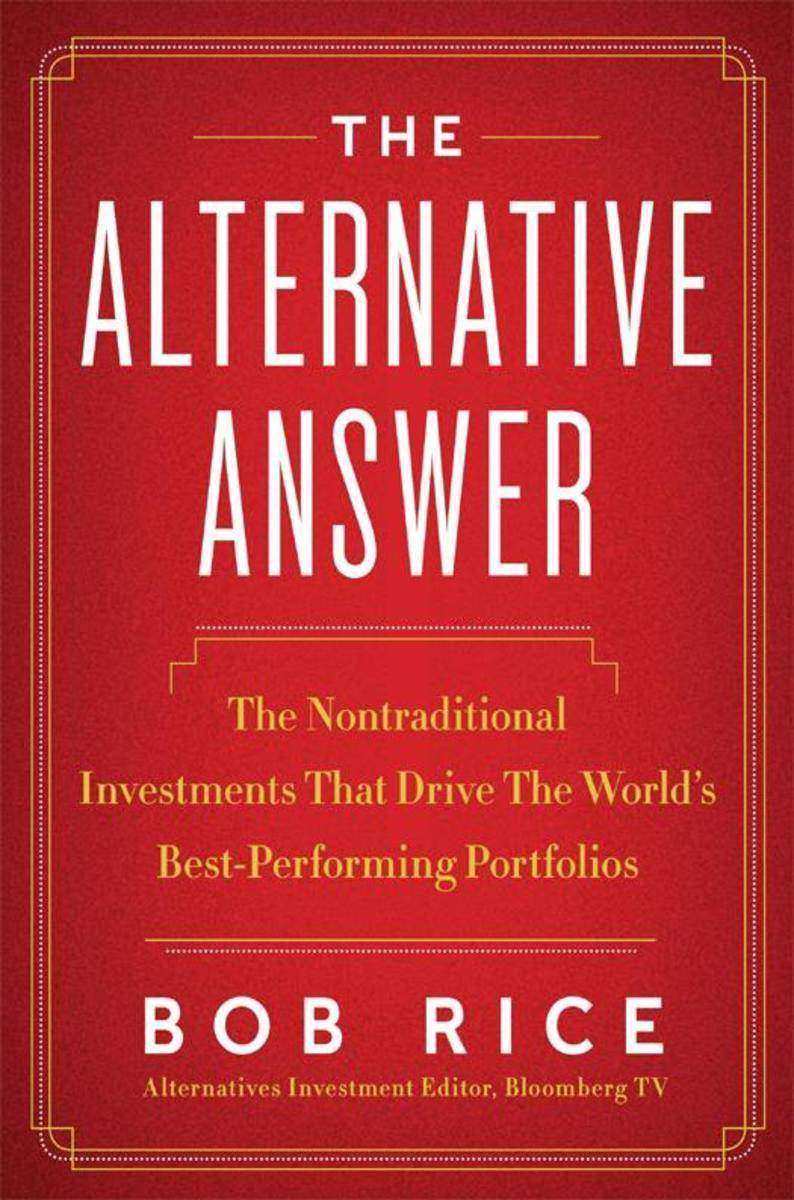
The Alternative Answer
¥155.02
The first book to explain the new world of alternative investing, showing how anyone can use nontraditional options to significantly increase returns and lower risksThe world's elite investors have long relied on alternative investments to produce superior returns. Until now, these strategies were the exclusive purview of institutions and the superwealthy, but today any informed investor can play the same game. A rainbow of investment options timber, start-ups, master limited partnerships (MLPs), hedged strategies, managed futures, infrastructure, peer-to-peer lending, farmland, and dozens of other nontraditional strategies can provide dramatically better gains, with less total risk, than the standard choices. In The Alternative Answer, Bob Rice, Bloomberg TV's Alternative Investments Editor, leads an entertaining and easy- to-understand tour of this world, and suggests specific alternative investments for all four key of a portfolio: safely generating more current income, decreasing risks of economic shocks, significantly increasing long-term profits, and protecting purchasing power over time.Regardless of experience or net worth, readers will learn exactly how to substantially improve investment performance in the same way that the world's best investors already do. Stocks and bonds alone aren't nearly enough. Investors need an alternative answer and now they have it.
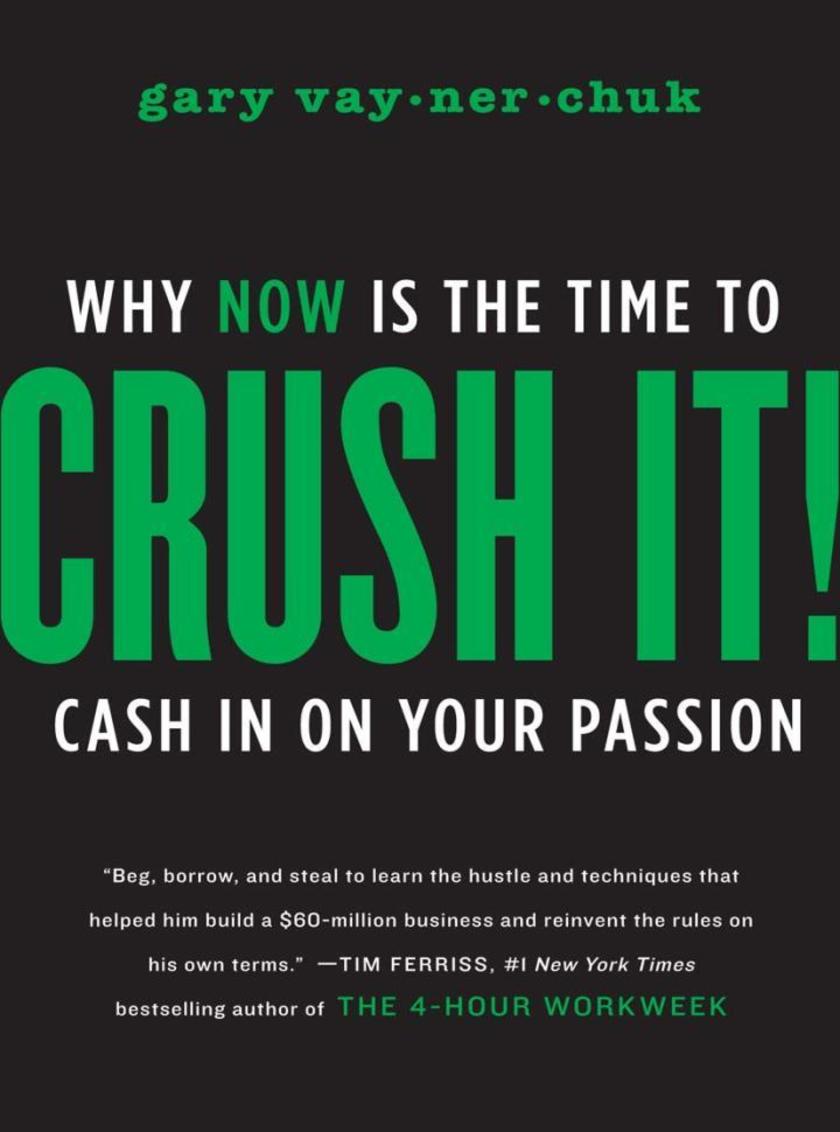
Crush It!
¥127.33
Do you have a hobby you wish you could indulge in all dayAn obsession that keeps you up at nightNow is the perfect time to take that passion and make a living doing what you love. In Crush It! Why NOW Is the Time to Cash In on Your Passion, Gary Vaynerchuk shows you how to use the power of the Internet to turn your real interests into real businesses. Gary spent years building his family business from a local wine shop into a national industry leader. Then one day he turned on a video camera, and by using the secrets revealed here, transformed his entire life and earning potential by building his personal brand. By the end of this book, readers will have learned how to harness the power of the Internet to make their entrepreneurial dreams come true. Step by step, Crush It! is the ultimate driver's manual for modern business.
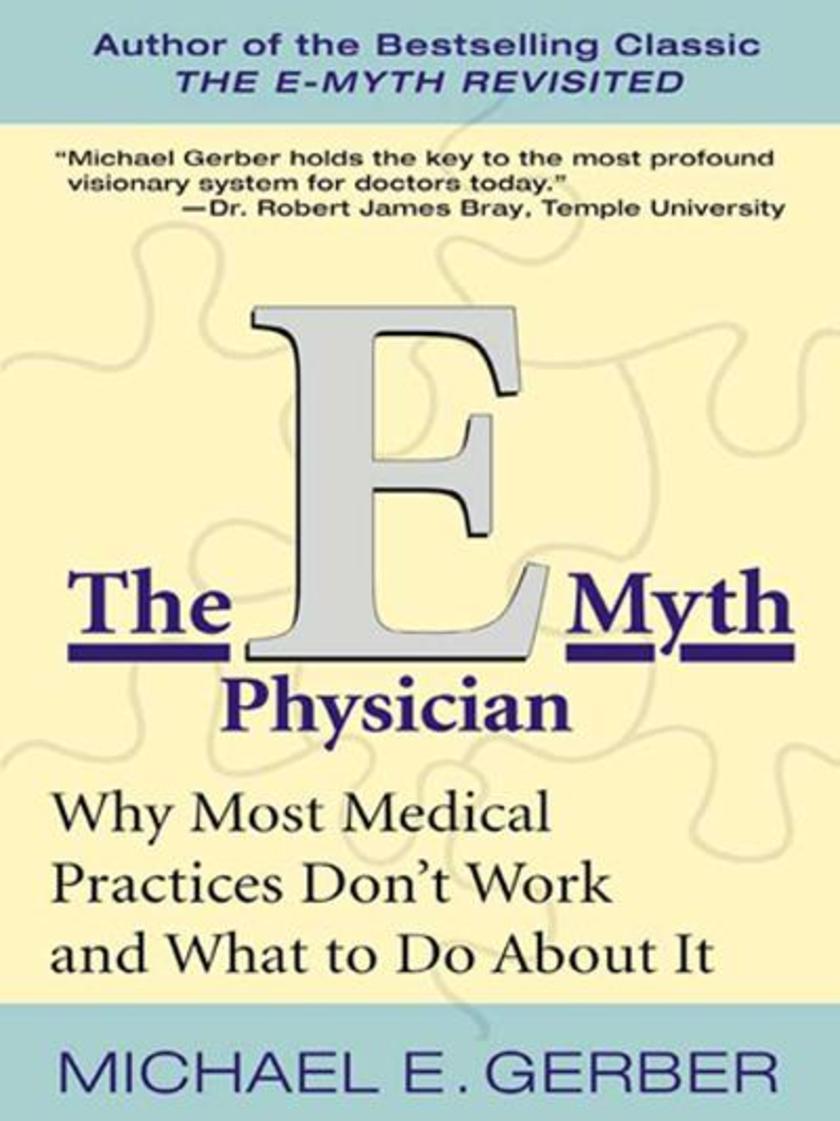
The E-Myth Physician
¥77.49
Michael E. Gerber, bestselling author of The E-Myth Revisited shares his powerful insights to lead independent physicians to successful practices and enriched lives.Michael Gerber has dedicated much of his professional life to the study of entrepreneurship and business dynamics. His E-Myth Academy is renown in the entrepreneurial world for its business insight and guidance as well as its inspirational advice.In the E-Myth Physician, bestselling author Gerber returns to his roots in order to provide indispensable advice to doctors who own and run their own practices. Gerber provides excellent business insights into topics such as streamlining systems, effective small-business management practices, healthy patient relations and managing cash flow, all with the goal of freeing physicians from the daily grind of running a business and leading them to a happier and more productive life while doing the job they love - practising medicine.
The Truth About Money 3rd Edition
¥112.23
Home Sweet Home:How to buy your first home, your next home and save on taxes when you sell.A-Z of Investments:From annuities to zero-coupon bonds, go from owing money to OWNING money. Get out of debt (and stay that way).Estate Planning Long-Term Care:Learn how to protect yourself and your family.
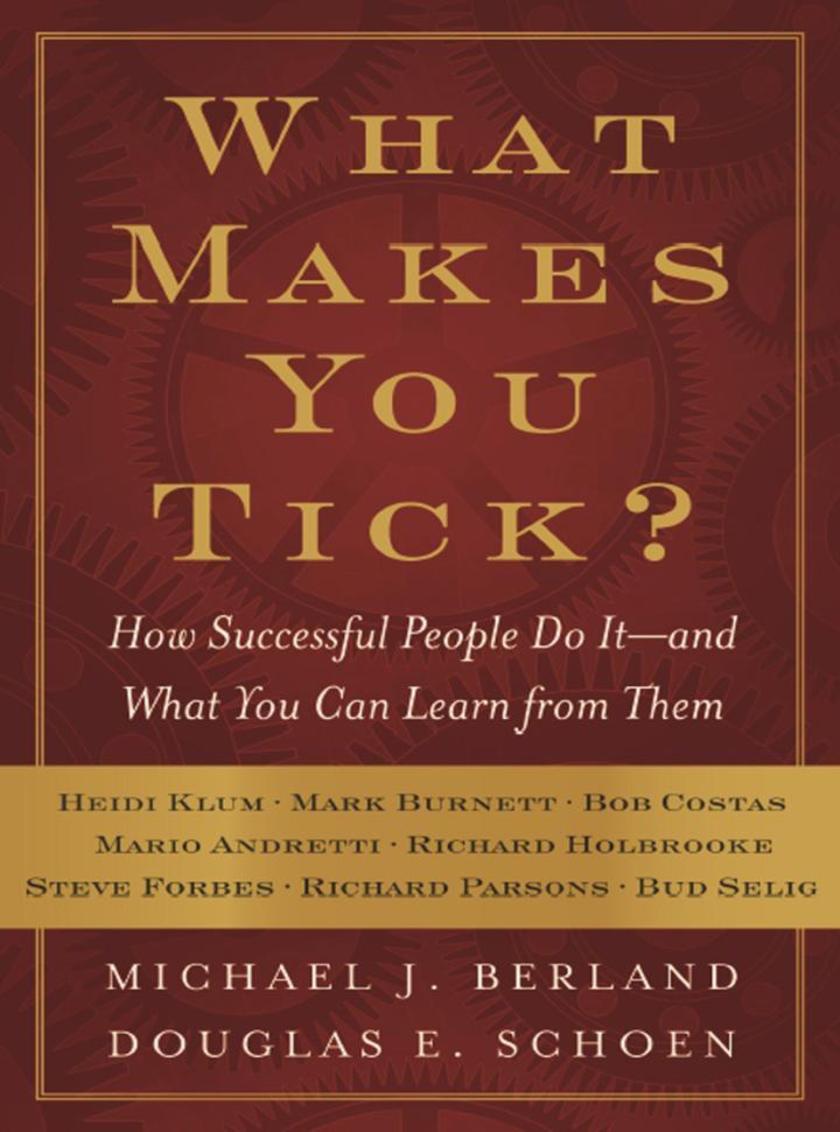
What Makes You Tick?
¥140.29
In the most challenging economy of our lifetime, where should you turn for guidanceTo the stories of those who have made it the leaders who battled adversity, forged their own paths,and succeeded . . . because they knew what made them tick. As people everywhere confront the global economic crisis, "success" may seem elusive at best, impossible at worst. Yet history proves that a new generation of success stories will likely emerge from this era of financial chaos. And this new book prepares you to be one of those success stories by analyzing the inner qualities that have propelled the forward-thinking leaders of our time: drive, determination, and self-awareness.As strategists for the internationally renowned consumer and political research firm Penn, Schoen Berland Associates, Michael Berland and Douglas Schoen are experts in how successful people think . . . and how they win. Now they share what they've learned with firsthand accounts from some of the world's most successful people in nearly every field including the founder of Starwood Resorts; a world-famous chef-restaurateur; the CEO of NBC Universal; a supermodel turned entrepreneur; the head of Este Lauder; the commissioner of the National Hockey League; the president of Hearst Magazines; and the creator of CBS's 60 Minutes. Berland and Schoen have discovered that true success is about more than "winning." True success has an emotional quotient: it's about determining your innate strengths, deciding what you truly want, and striving tirelessly to achieve it. Berland and Schoen describe the five archteypes of success: visionaries, natural-born leaders, do-gooders, independence seekers, and independents who follow their dreams. In this unprecedented collection of stories from some of the most successful people in fashion, sports, entertainment, and business, Schoen and Berland demonstrate that success isn't about changing who you are; rather, it's about figuring out what makes you tick and leveraging that knowledge to your advantage. This book shows through compelling first-person storytelling that the most successful people understand their own natural abilities and how to use their best qualities to create a fulfilling life and then tells you how to do the same.
C-Scape
¥157.15
A bold, pioneering book that shows how businesses can survive and thrive in the digital media revolution Not so long ago, the business landscape was easier to chart. The routes connecting customers, companies, products, and services were predictable, reliable, and understood. Today, that landscape has been upended, and in its place a "C-Scape" has emerged a world where consumers, not producers and marketers, make the choices; where content, not distribution, is king; where curation becomes a primary currency of value; and where convergence continues to revolutionize every part of every business. In C-Scape, Larry Kramer leads the reader through this new, evolving world where the challenges are daunting but the opportunities are huge.A seasoned journalist turned superstar digital entrepreneur and venture capitalist, Kramer learned early on to survive and overcome the forces that are remaking the business landscape: the digital media revolution. Why mediaEvery aspect of every business is increasingly carried out through the media. From advertising and marketing to sales and customer service, from product design to manufacturing, everything that happens anywhere in business is ever more likely to happen on a screen or handheld device. That means any business could fall to the same threats facing the newspaper business and the music industry unless that business learns to navigate the four Cs. Kramer's explanation of this new landscape is a revelation; his visionary advice is both crucial and urgent. No leader, whether at the helm of a small business or a conglomerate, will read this book without seeing the business world anew and finding practical ways to put this book's four powerful precepts immediately to work.
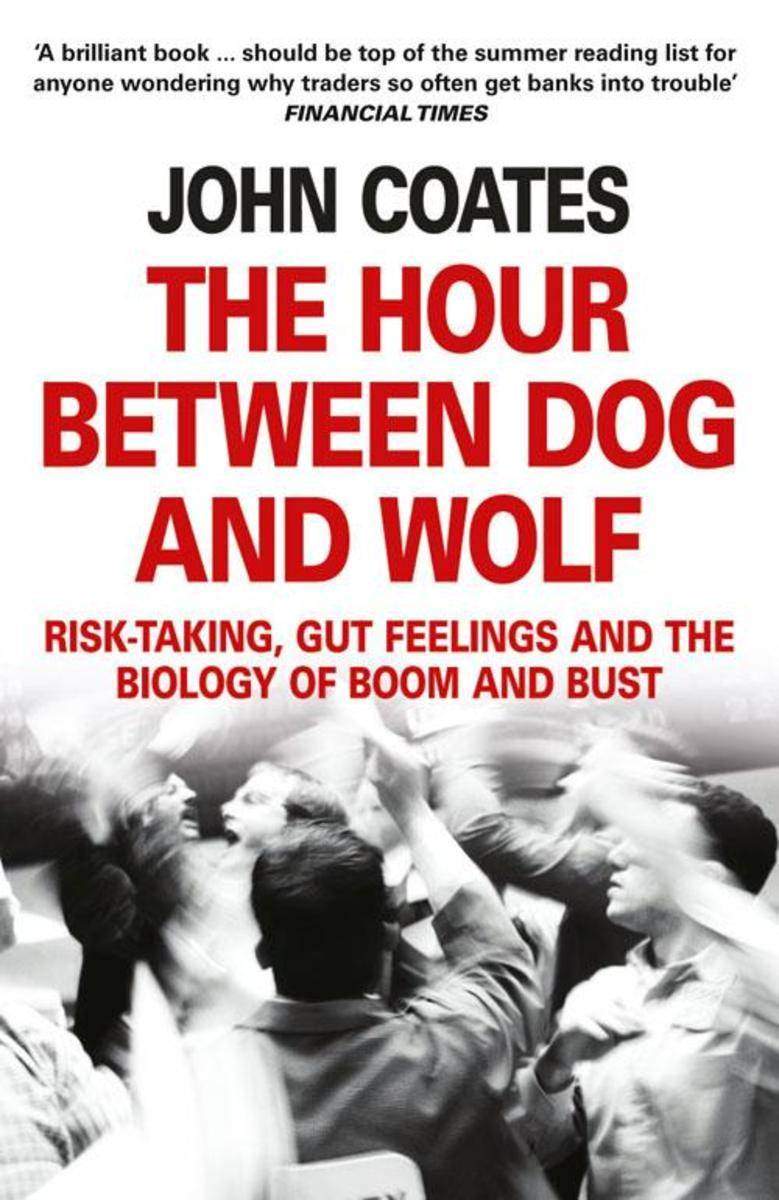
The Hour Between Dog and Wolf: Risk-taking, Gut Feelings and the Biology of Boom
¥73.58
As scandal and the aftershocks of the crash rock the financial world, former Wall Street trader John Coates investigates why our financiers are driven to take risks. Now shortlisted for the 2012 Financial Times and Goldman Sachs Business Book of the Year Award and the Wellcome Trust Book Prize, this startling and unconventional book sees neuroscientist and former Wall Street trader John Coates explain something we have long suspected: that we think with our body as well as our brain. And this only intensifies when we take risks; at work, in sport and on the financial markets. Making and losing money provokes an overwhelming biological response, and this can alter the way we behave. Could this bodily turmoil lead to the kind of irrational behaviour that so regularly upsets the global economy? In a series of groundbreaking experiments, Coates has shown that under the pressure of risk our biology transforms us into different people. Traders and investors are especially prone, becoming revved-up and testosterone-driven when on a winning streak, and tentative and risk-averse when cowering from losses. Revealing the biology of bubbles and crashes, The Hour Between Dog and Wolf sheds new and surprising light on issues that affect us all.

Resistance to Innovation
¥370.82
Every year, about 25,000 new products are introduced in the United States. Most of these products fail-at considerable expense to the companies that produce them. Such failures are typically thought to result from consumers' resistance to innovation, but marketers have tended to focus instead on consumers who show little resistance, despite these "e;early adopters"e; comprising only 20 percent of the consumer population.Shaul Oreg and Jacob Goldenberg bring the insights of marketing and organizational behavior to bear on the attitudes and behaviors of the remaining 80 percent who resist innovation. The authors identify two competing definitions of resistance: In marketing, resistance denotes a reluctance to adopt a worthy new product, or one that offers a clear benefit and carries little or no risk. In the field of organizational behavior, employees are defined as resistant if they are unwilling to implement changes regardless of the reasons behind their reluctance. Seeking to clarify the act of rejecting a new product from the reasons-rational or not-consumers may have for doing so, Oreg and Goldenberg propose a more coherent definition of resistance less encumbered by subjective, context-specific factors and personality traits. The application of this tighter definition makes it possible to disentangle resistance from its sources and ultimately offers a richer understanding of consumers' underlying motivations. This important research is made clear through the use of many real-life examples.
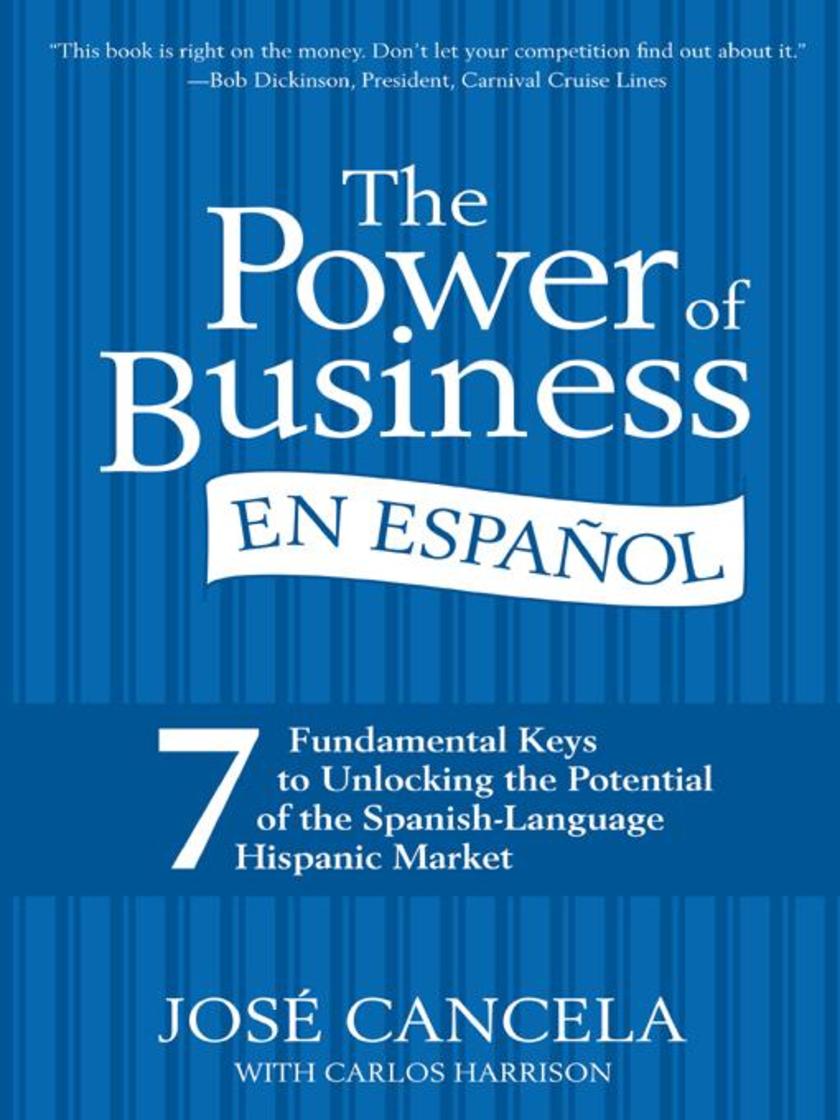
The Power of Business en Espanol
¥112.00
In The Power of Business en Espaol, Cancela, one of the most well-respected business experts in the Spanish-speaking world, provides readers with a guide to the exciting yet often confusing Spanish-language market. From how to deal with the many Spanish accents and colloquialisms to learning where the Spanish-dominant consumer really lives and spends money, The Power of Business en Espaol is a book that will demystify Spanish-dominant consumers for non-Spanish speakers. Broken down into seven easy chapters that include specific examples of real companies that have been successful (or unsuccessful) in their marketing techniques for this demographic, this handbook gives you the tools to build your business and reach out to this rapidly expanding market. Giving readers simple keys to understanding the people, the culture, and the language that unites this growing segment of the population, The Power of Business en Espaol is a road map for anyone who wants to prepare their business for the language hurdles of the twenty-first century or simply wants to learn more about their new neighbors.

Eyes Wide Open
¥94.10
This game-changing book empowers readers to become confident, independent, wise decision-makers— savvy to how our emotions, moods, and habits can trip us up. An investor wonders whether to put his money into the stock market or to keep it in a savings account. A patient is torn between opting for surgery and trying an experimental drug therapy. A college-bound student questions whether to take on debt to attend an Ivy League school or to choose a public institution with low tuition. We face momentous decisions with important consequences throughout our lives. We have never had better access to information and expertise, yet this data deluge has become a double-edged sword. Which sources of information are credibleHow can we separate the signal from the noiseWhose advice can we trustAll of these questions are reasons for us to become empowered decision-makers capable of making high-stakes choices ourselves. Whether you are a politician, a businessperson, a professional, or a parent, now is the time to take a radically different approach. In Eyes Wide Open, the bestselling author and visionary thinker Noreena Hertz shares insights from the latest research along with practical advice, including why looking at information in black and white rather than in color can lead to better decisions why it's smart to be skeptical about experts' pronouncements, and how to identify the best among them why it's crucial to carve out time to think, even in moments of crisis how and why you should regulate your emotional thermostat to make smart decisions why you need to shake up your social network if you don't want only to reinforce what you already know and amplify the beliefs you already have It's time to make decisions with our eyes wide open—for the sake of our health, our wealth, and our future security.
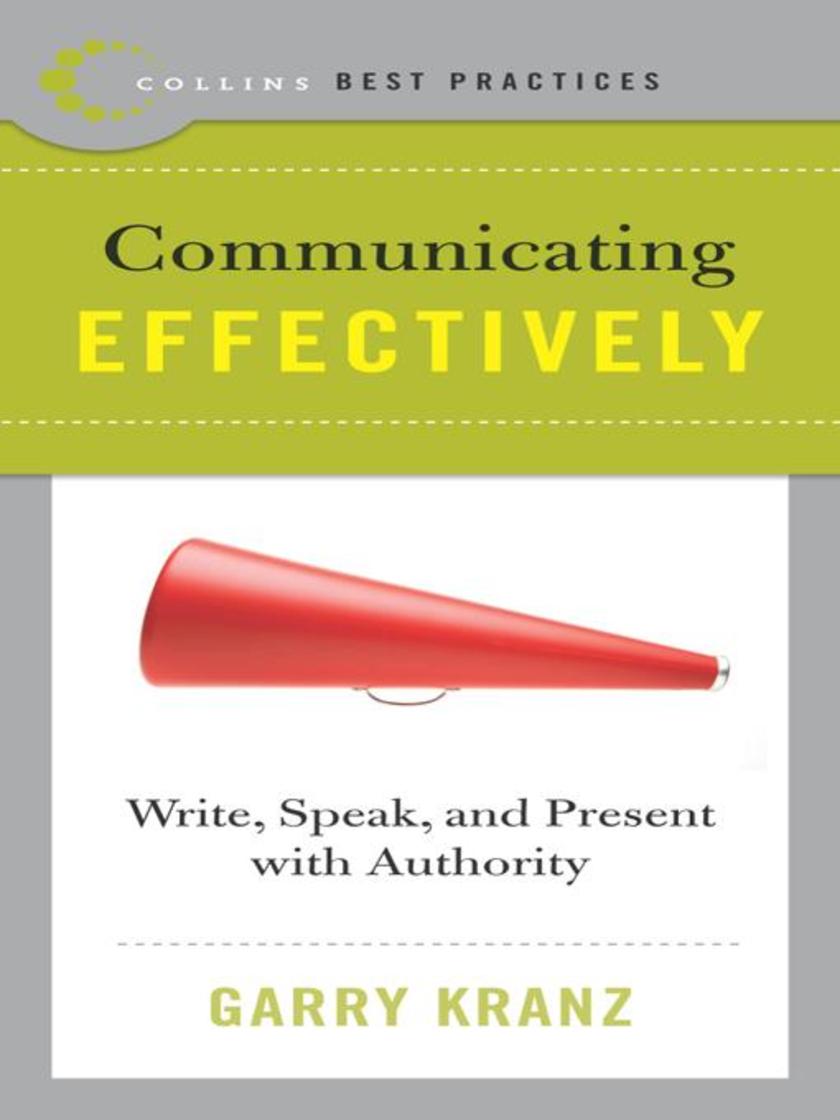
Best Practices: Communicating Effectively
¥72.70
In this age of digital communication, getting the right message across clearly is crucial to success. Communicating Effectively, a comprehensive and essential resource for any manager on the run, shows you how.Learn to: Build relationships through effective communication Get more done via e-mail Draft pitch perfect letters, memos, and reports Conduct productive conference calls Deliver hard-hitting presentations The Collins Best Practices guides offer new and seasoned managers the essential information they need to achieve more, both personally and professionally. Designed to provide tried-and-true advice from the world's most influential business minds, they feature practical strategies and tips to help you get ahead.
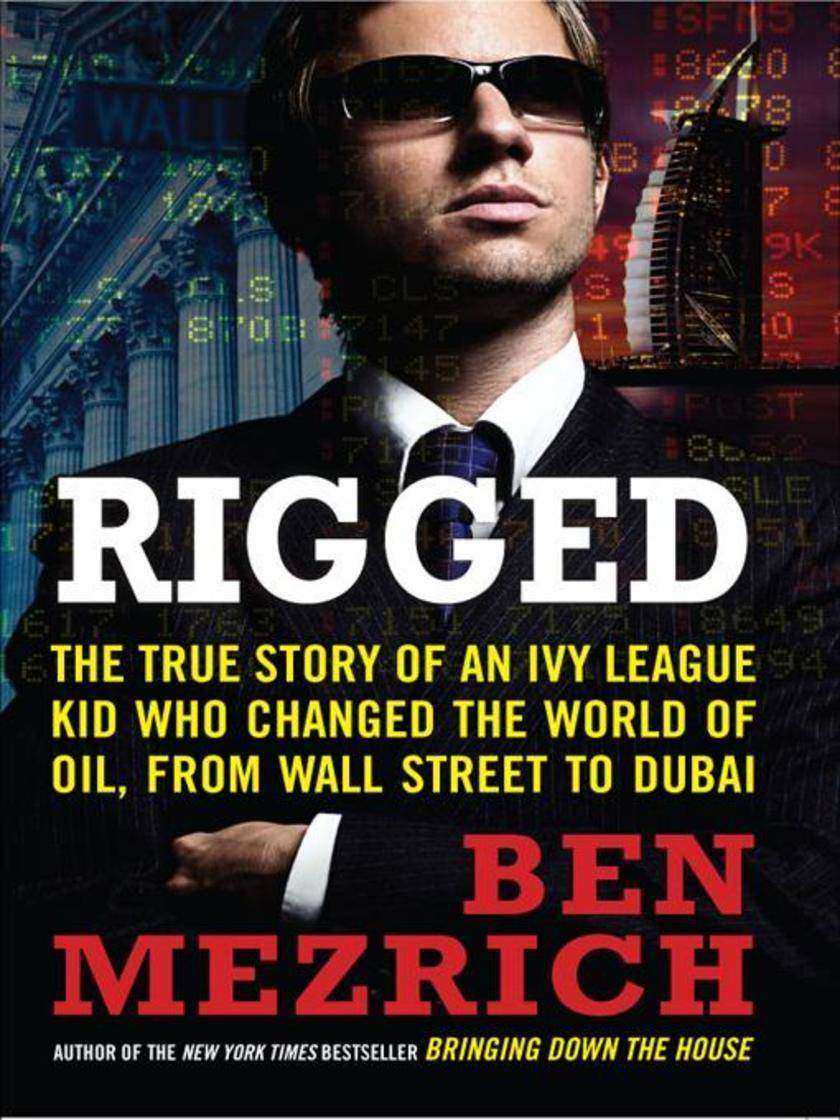
Rigged
¥83.92
From the author who brought you the massive New York Times bestseller Bringing Down the House, this is the startling rags-to-riches story of an Italian-American kid from the streets of Brooklyn who claws his way into the wild, frenetic world of the oil exchange.After conquering the hallowed halls of Harvard Business School, he enters the testosterone-laced warrens of the Merc Exchange, the asylumlike oil exchange located in lower Manhattan. A place where billions of dollars trade hands every week, the Merc is like a casino on crack, where former garbagemen become millionaires overnight and where fistfights break out on the trading floor.This ordinary kid has traded Brooklyn for the gold-lined hotel palaces of Dubai. He keeps company on the decks of private yachts in Monte Carlo teeming with half-naked girls flown in by Saudi sheiks and makes deals in the dangerous back alleys of Beijing.But the Merc is just a starting place. Taken under the wing of another young gun and partnering with a mysterious young Muslim, the kid embarks on a dangerous adventure to revolutionize the oil trading industry and, along with it, the world.Rigged is the explicit, exclusive, true story behind the headlines that dominate the world stage.

Remember Me
¥90.90
In Remember Me, Time writer Lisa Takeuchi Cullen has created a humorous and poignant chronicle of her travels around the country to discover how Americans are reinventing the rites of dying. What she learned is that people no longer want to take death lying down; instead, they're taking their demise into their own hands and planning the afterparty. Cullen hears stories of modern-day funerals: lobster-shaped caskets and other unconventional containers for corpses; cremated remains turned into diamonds; and even mishaps like dove releases gone horribly wrong. Eye-opening, funny, and unforgettable, Remember Me gives an account of the ways in which Americans are designing new occasions to mark death by celebrating life.
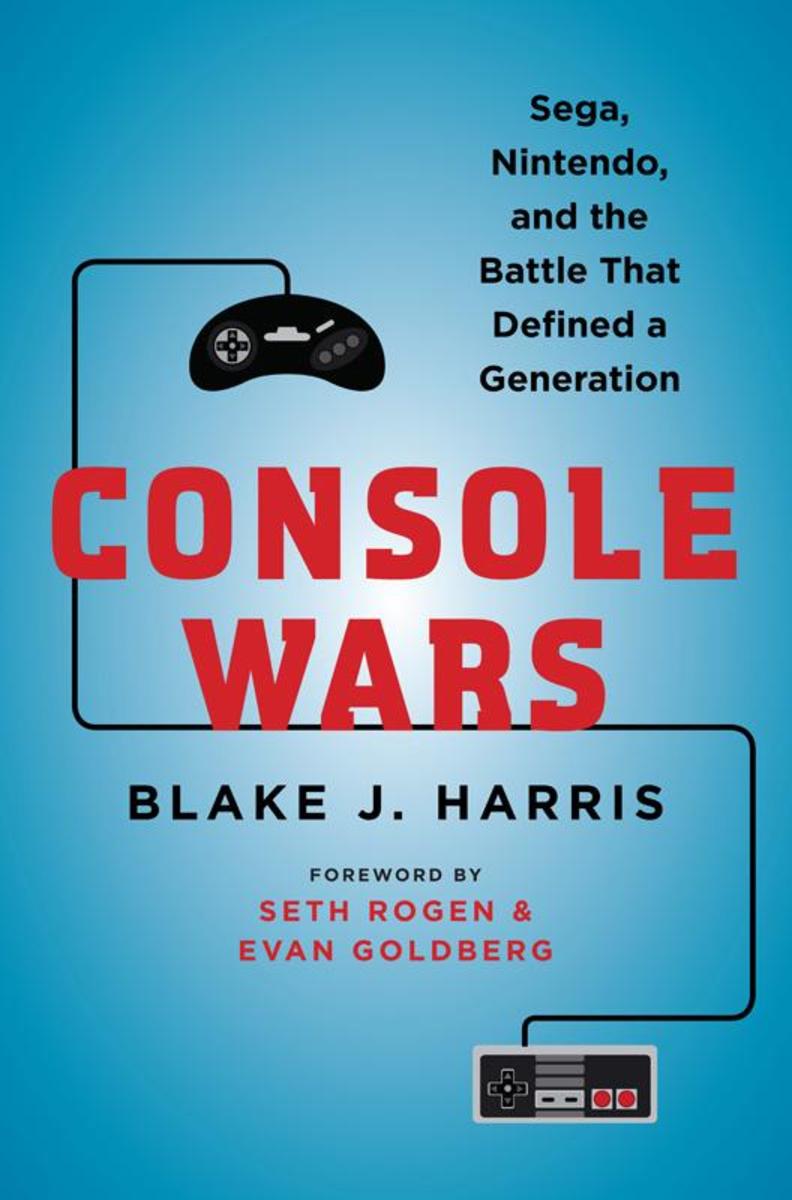
Console Wars
¥111.91
A mesmerizing, behind-the-scenes business thriller that chronicles how Sega, a small, scrappy gaming company led by an unlikely visionary and a team of rebels, took on the juggernaut Nintendo and revolutionized the videogame industry in development as a feature film from Sony PicturesIn 1990, Nintendo had a virtual monopoly on the videogame industry. Sega, on the other hand, was just a faltering arcade company with big aspirations and even bigger personalities. But all that would change with the arrival of Tom Kalinske, a former Mattel executive who knew nothing about videogames and everything about fighting uphill battles. His unconventional tactics, combined with the blood, sweat, and bold ideas of his renegade employees, completely transformed Sega and led to a ruthless, David-and-Goliath showdown with Nintendo. Little did he realize that Sega's success would create many new enemies and, most important, make Nintendo stronger than ever.The battle was vicious, relentless, and highly profitable, eventually sparking a global corporate war that would be fought on several fronts: from living rooms and school yards to boardrooms and Congress. It was a once-in-a-lifetime, no-holds-barred conflict that pitted brother against brother, kid against adult, Sonic against Mario, and the United States against Japan.Based on more than two hundred interviews with former Sega and Nintendo employees, Console Wars is the tale of how Tom Kalinske miraculously turned an industry punch line into a market leader. Blake J. Harris brings into focus the warriors, the strategies, and the battles and explores how they transformed popular culture forever. Ultimately, Console Wars is the story of how a humble family man, with an extraordinary imagination and a gift for turning problems into competitive advantages, inspired a team of underdogs to slay a giant and, as a result, give birth to a sixty-billion-dollar industry.
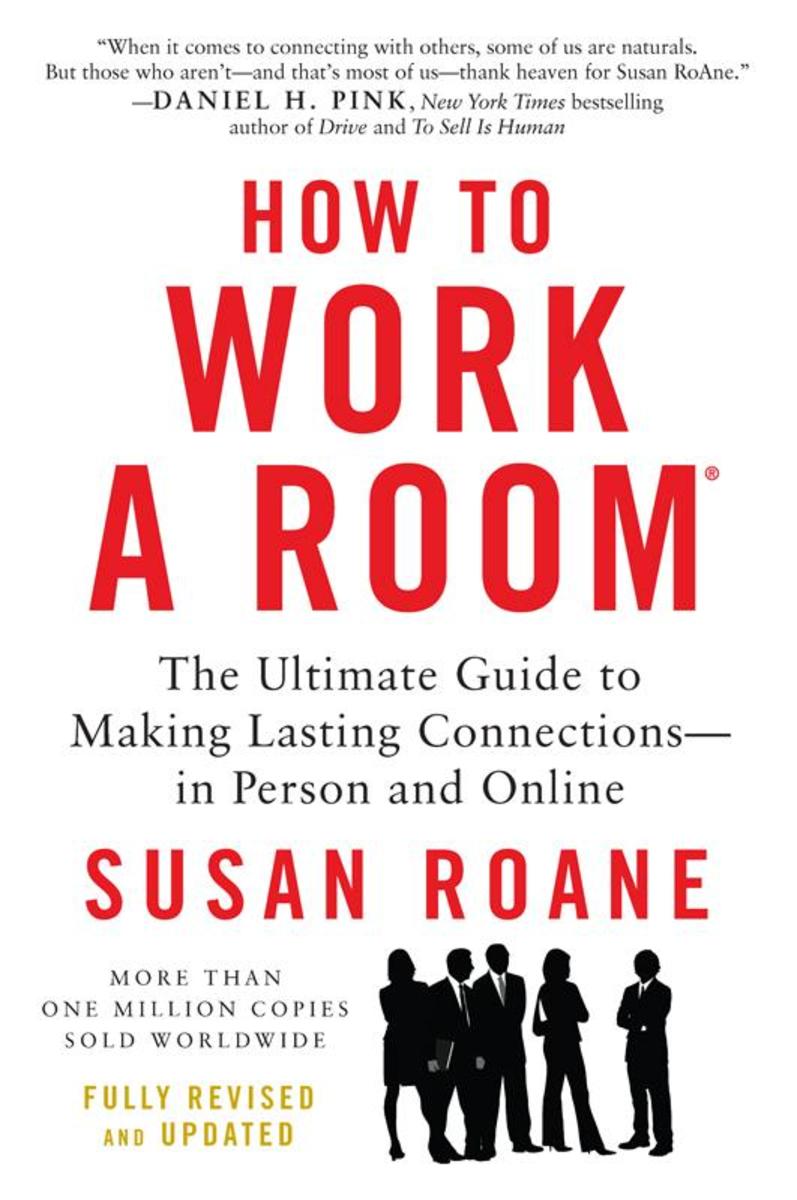
How to Work a Room, 25th Anniversary Edition
¥88.56
The classic bestseller on socializing now fully updated for social interactions in a digital ageHow to Work a Room is the classic bestselling book on improving communication and socializing skills, and using them to create and leverage connections. This Silver Anniversary Edition is fully revised and updated to include the role of technology and social media in networking, as well as Susan RoAne's proven tips for using digital strategies to your advantage plus practical hints for starting conversations and strengthening rapport with strangers. How to Work a Room: The 25th Anniversary Edition is a vital tool for business professionals, job seekers and career changers of all ages.
Reengineering Management
¥90.77
The co-author of the monumental bestseller Reengineering the Corporation continues the reengineering revolution with another national bestseller that has already sold more than 165,000 copies in hardcoverReengineering Management is a brilliant, practical and much needed book on the most powerful management idea of the decade. Reengineering changing the traditional and outdated organization, processes and culture of a company is corporate America's greatest challenge today.In Reengineering Management, Champy examines the far-reaching changes managers must make for themselves and their companies to succeed in an era of unprecedented competition. Through his extensive consulting and research work, he shows how reengineering succeeds only when managers reinvent their own jobs and managerial styles. Otherwise, the ultra-efficient and effective reengineered processes for acquiring and serving customers, filling orders, bringing new concepts to market and other key business activities eventually fall apart.Champy illustrates this new management agenda through first-hand experiences of managers of reengineered operations at Federal Express, Wisconsin Electric, CIGNA Health Care, Hewlett-Packard, AT&T Universal Card Services and other companies. Champy shows how they are mastering the managerial challenges of reengineering, and as a result are making their organizations exciting and competitive. As more and more organizations reengineer, the experiences of these managers will become an insiders' guide to managerial life in the company of the future.Reengineering Management picks up where Reengineering the Corporation left off by exploring the managerial implications of the reengineered workplace. As reengineering becomes critical to all organizations, Reengineering Management will be the road map for managerial success in the future. It is, indeed, the manifesto for the next managerial revolution.
How We Got Here
¥83.03
Best-selling author Andy Kessler ties up the loose ends from his provocative book, Running Money, with this history of breakthrough technology and the markets that funded them.Expanding on themes first raised in his tour de force, Running Money, Andy Kessler unpacks the entire history of Silicon Valley and Wall Street, from the Industrial Revolution to computers, communications, money, gold and stock markets. These stories cut (by an unscrupulous editor) from the original manu* were intended as a primer on the ways in which new technologies develop from unprofitable curiosities to essential investments. Indeed, How We Got Here is the book Kessler wishes someone had handed him on his first day as a freshman engineering student at Cornell or on the day he started on Wall Street. This book connects the dots through history to how we got to where we are today.
Winning Every Day
¥94.10
Your talent determines what you can do. Your motivation determines how much you are willing to do. Your attitude determines how well you do it. Meet Lou Holtz, the motivational miracle worker who revitalized the Notre Dame football program by leading the legendary Fighting Irish to nine bowl games and a national championship. During his twenty-seven years as a head football coach, Holtz garnered a 216-95-7 career record. Each new assignment brought a different team with different players, but, invariably, the same result--success. How did he do itBy designing a game plan for his players that minimized obstacles while maximizing opportunities. Now he wants to pass his game plan on to you. In Winning Every Day, you'll discover ten strategies that will drive you to the top of your professional and personal life. Coach Holtz will reveal how you can acquire the focus and commitment it takes to be a champion. It won't be easy; it takes sacrifice to be the best. But now you'll have a proven winner alongside you in the trenches. Winning Every Day demonstrates how you can elevate your performance while raising the standards of everyone around you. Follow Coach's strategies and winning becomes habitual. You will learn to welcome sacrifice as you dedicate yourself to excellence. He will show you how to clearly define your short-term and long-term goals, to develop an unwavering sense of purpose without compromising flexibility. Through it all, Coach Holtz will help you discover the courage you need to live a life of unremitting triumph. You couldn't have a better guide. He will provide you with the strategies he has shared with Fortune 500 companies, groups, and organizations. Voted the top motivational speaker two years running by a survey of speakers' bureaus, Coach is going to present you with all the Xs and Os, the basics of his game plan for success in life and business.
The Hard Truth About Soft Skills
¥95.39
What's the hard truthSoft skills get little respect but will make or break your career. Master your soft skills and really get ahead at work! Fortune 500 coach Peggy Klaus encounters individuals every day who excel at their jobs but aren't getting where they want to go. It's rarely a shortfall in technical expertise that limits their careers, but rather a shortcoming in their social, communication, and self-management behaviors. In The Hard Truth About Soft Skills Klaus delivers practical tools and techniques for mastering soft skills across the career spectrum. She shows how to: manage your workload handle the critics develop and promote your personal brand navigate office politics lead the troops and much more! Klaus reveals why soft skills are often ignored, while bringing their importance to life in her trademark style straightforward, humorous, and motivating. Perfect for readers at all professional stages from those who are just starting out to seasoned executives this book is essential reading for anyone who wants to take his or her career to the next level.
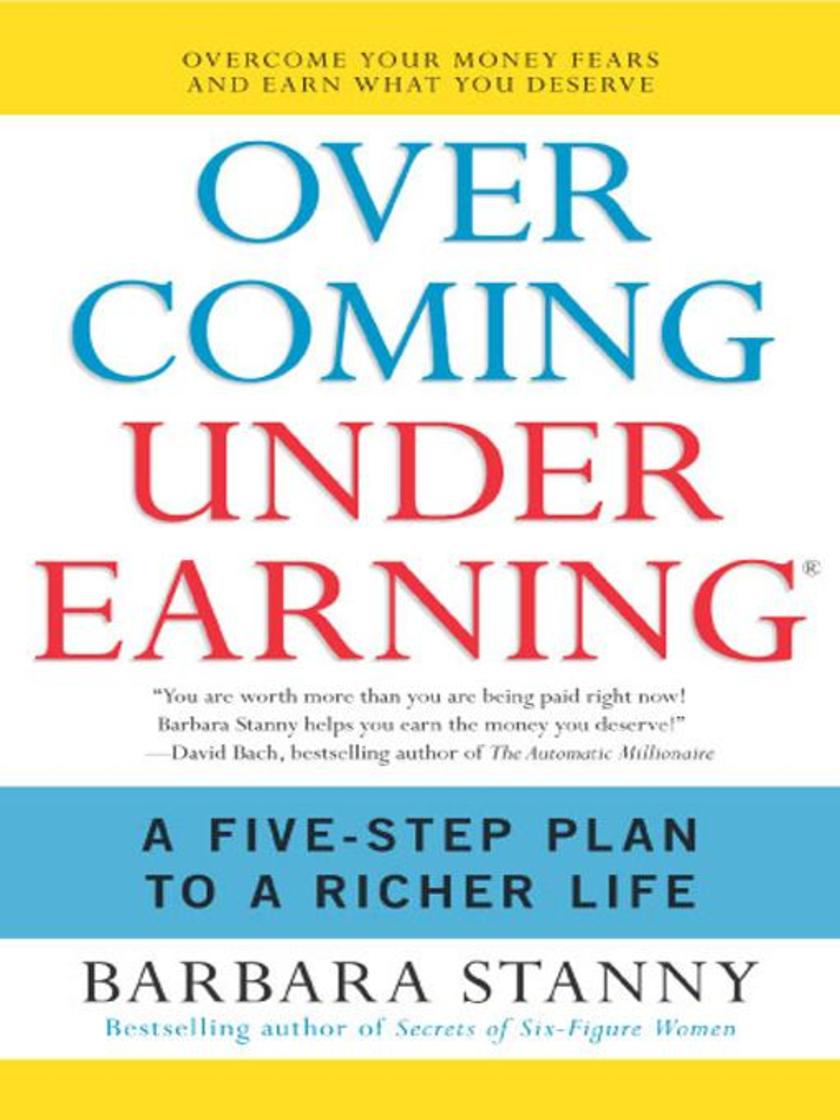
Overcoming Underearning(TM)
¥94.10
When it comes to money, are you controlled by fearDo you live in financial chaos?Do you underestimate your worthAre you ready to go to the next level, but can't seem to get thereIf the answer is yes to these questions, you may be an underearner. Underearners are self-saboteurs who never live up to their earnings potential, says Barbara Stanny, a financial educator, motivational speaker, former journalist, and career counselor. Underearners tend to live paycheck to paycheck. They rarely balance their checkbooks and are often in debt. Ironically, many work incredibly hard. Yet they are ashamed to admit that money matters to them. They all have a high tolerance for low pay. The good news is that underearning is often self-imposed. By focusing on overcoming underearning, you will not only earn what you deserve, but you can live up to your full potential. With techniques and exercises that have helped thousands of people who have participated in her Overcoming Underearningworkshops, Stanny teaches you five essential steps to financial independence. Once you understand these steps, you will be confident asking for a raise, increasing your prices, or getting a better job. "Now I'm making more than my friends, all because I had the guts to dream and ask for more," says one Stanny fan. First, Tell the Truth: be honest about your financial situation and figure out your attitudes toward money. Second, Make a Decision: decide that you want to make more money. Third, Stretch: take action, face your fears, and be willing to be uncomfortable. Fourth, Create Community by finding supporters and asking for help. Fifth, Respect and Appreciate Money: learn to save and invest. Overcoming Underearning is filled with inspiring, real-life stories of underearners who turned their lives around. Stanny brings a message of empowerment and hope to all those who chronically undervalue themselves. "I'm making more, working less, feeling healthier, have more energy, and I'm so much happier," concludes another Stanny believer.


