


 购物车
 个人中心

JBoss: Developer's Guide
¥80.65
Build your own enterprise applications and integration flows with JBoss and its products About This Book ? Build fast, smart, and flexible applications using JBoss ? Couple one or more JBoss products to effectively solve various business problems ? Explore the JBoss product ecosystem for improving the performance of your projects Who This Book Is For If you are a Java developer who wants to have a complete view of the JBoss ecosystem or quickly explore a specific JBoss Product, then this is the book you want. Integrators and consultants, familiar with JBoss, who want integrate several JBoss products within their ongoing project will also find this book useful. What You Will Learn ? Create new applications or integrate existing systems with JBoss products ? Setup and manage a JBoss domain ? Setup and manage a JBoss Fuse cluster with Fabric and Apache Karaf ? Create and deploy OSGi applications on JBoss Fuse containers ? Manage enterprise data with JBoss Datagrid ? Aggregate various data sources with JBoss Data virtualization to offer data as a service ? Optimize your business and workflows with both JBoss Business RulesManagement System and JBoss Business Process Management platforms. In Detail Have you often wondered what is the best JBoss product to solve a specific problem? Do you want to get started with a specific JBoss product and know how to integrate different JBoss products in your IT Systems? Then this is the book for you. Through hands-on examples from the business world, this guide presents details on the major products and how you can build your own Enterprise services around the JBoss ecosystem. Starting with an introduction to the JBoss ecosystem, you will gradually move on to developing and deploying clustered application on JBoss Application Server, and setting up high availability using undertow or HA proxy loadbalancers. As you are moving to a micro service archicture, you will be taught how to package existing Java EE applications as micro service using Swarm or create your new micro services from scratch by coupling most popular Java EE frameworks like JPA, CDI with Undertow handlers. Next, you will install and configure JBoss Data grid in development and production environments, develop cache based applications and aggregate various data source in JBoss data virtualization. You will learn to build, deploy, and monitor integration scenarios using JBoss Fuse and run both producers/consumers applications relying on JBoss AMQ. Finally, you will learn to develop and run business workflows and make better decisions in your applications using Drools and Jboss BPM Suite Platform. Style and Approach The book works through the major JBoss products, with examples and instructions to help you understand each product and how they work together.
Beginning C# Hands-On - The Core Language
¥71.93
A C# beginners guide to the core parts of the C# language! About This Book ? Learn C#, Visual Studio, and Object Oriented Programming ? See practical examples of all the core C# language features so that you can easily master them yourself ? Use the C# programming language to work with code and data, which can be applied to other programming languages as well ? Complete a variety of programming assignments for hands-on practice, as you move through the course Who This Book Is For This book will appeal to anyone who is interested in learning how to program in C#. Previous programming experience will help you get through the initial sections with ease, although, it’s not mandatory to possess any experience at all. What You Will Learn ? Learn C#, Visual Studio, and object-oriented programming ? Learn all the core C# language syntax with hands-on working examples ? Learn everything from basic variable assignments to complex multidimensional arrays ? Go through practical examples of all the core C# language features so that you can easily master them yourself ? Use the C# programming language to work with code and data, which can be applied to other programming languages as well In Detail Beginning C# Hands-On - The Core Language teaches you core C# language and syntax in a working Visual Studio environment. This book covers everything from core language through to more advanced features such as object-oriented programming techniques. This book is for C# beginners who need a practical reference to core C# language features. You'll also gain a view of C# through web programming with web forms, so you'll learn HTML, basic CSS, and how to use a variety of controls, such as buttons and drop-down lists. You'll start with the fundamentals of C# and Visual Studio, including defining variables, interacting with users, and understanding data types, data conversions, and constants. You'll move on to checking conditions using if/else blocks, and see how to use loops to do things such as repeat blocks of code. After covering various operators to evaluate and assign control structures, you'll see how to use arrays to store collections of data. By the time you’ve finished the book, you’ll know how to program the vital elements of the core C# language. These are the building blocks that you can then combine to build complex C# programs. Style and approach A comprehensive book that blends theory with just the right amount of practical code implementations, to help you get up and running with the C# programming language. You’ll also get to work with other tools and technologies that complement C# programming. Each core part of the C# language is coded as you learn, and code output is tested every time to verify the syntax is working as expected, so it’s easy for you to learn directly from the working code examples.
Scala for Machine Learning - Second Edition
¥107.90
Leverage Scala and Machine Learning to study and construct systems that can learn from data About This Book ? Explore a broad variety of data processing, machine learning, and genetic algorithms through diagrams, mathematical formulation, and updated source code in Scala ? Take your expertise in Scala programming to the next level by creating and customizing AI applications ? Experiment with different techniques and evaluate their benefits and limitations using real-world applications in a tutorial style Who This Book Is For If you’re a data scientist or a data analyst with a fundamental knowledge of Scala who wants to learn and implement various Machine learning techniques, this book is for you. All you need is a good understanding of the Scala programming language, a basic knowledge of statistics, a keen interest in Big Data processing, and this book! What You Will Learn ? Build dynamic workflows for scientific computing ? Leverage open source libraries to extract patterns from time series ? Write your own classification, clustering, or evolutionary algorithm ? Perform relative performance tuning and evaluation of Spark ? Master probabilistic models for sequential data ? Experiment with advanced techniques such as regularization and kernelization ? Dive into neural networks and some deep learning architecture ? Apply some basic multiarm-bandit algorithms ? Solve big data problems with Scala parallel collections, Akka actors, and Apache Spark clusters ? Apply key learning strategies to a technical analysis of financial markets In Detail The discovery of information through data clustering and classification is becoming a key differentiator for competitive organizations. Machine learning applications are everywhere, from self-driving cars, engineering design, logistics, manufacturing, and trading strategies, to detection of genetic anomalies. The book is your one stop guide that introduces you to the functional capabilities of the Scala programming language that are critical to the creation of machine learning algorithms such as dependency injection and implicits. You start by learning data preprocessing and filtering techniques. Following this, you'll move on to unsupervised learning techniques such as clustering and dimension reduction, followed by probabilistic graphical models such as Na?ve Bayes, hidden Markov models and Monte Carlo inference. Further, it covers the discriminative algorithms such as linear, logistic regression with regularization, kernelization, support vector machines, neural networks, and deep learning. You’ll move on to evolutionary computing, multibandit algorithms, and reinforcement learning. Finally, the book includes a comprehensive overview of parallel computing in Scala and Akka followed by a de*ion of Apache Spark and its ML library. With updated codes based on the latest version of Scala and comprehensive examples, this book will ensure that you have more than just a solid fundamental knowledge in machine learning with Scala. Style and approach This book is designed as a tutorial with hands-on exercises using technical analysis of financial markets and corporate data. The approach of each chapter is such that it allows you to understand key concepts easily.
Machine Learning With Go
¥90.46
Build simple, maintainable, and easy to deploy machine learning applications. About This Book ? Build simple, but powerful, machine learning applications that leverage Go’s standard library along with popular Go packages. ? Learn the statistics, algorithms, and techniques needed to successfully implement machine learning in Go ? Understand when and how to integrate certain types of machine learning model in Go applications. Who This Book Is For This book is for Go developers who are familiar with the Go syntax and can develop, build, and run basic Go programs. If you want to explore the field of machine learning and you love Go, then this book is for you! Machine Learning with Go will give readers the practical skills to perform the most common machine learning tasks with Go. Familiarity with some statistics and math topics is necessary. What You Will Learn ? Learn about data gathering, organization, parsing, and cleaning. ? Explore matrices, linear algebra, statistics, and probability. ? See how to evaluate and validate models. ? Look at regression, classification, clustering. ? Learn about neural networks and deep learning ? Utilize times series models and anomaly detection. ? Get to grip with techniques for deploying and distributing analyses and models. ? Optimize machine learning workflow techniques In Detail The mission of this book is to turn readers into productive, innovative data analysts who leverage Go to build robust and valuable applications. To this end, the book clearly introduces the technical aspects of building predictive models in Go, but it also helps the reader understand how machine learning workflows are being applied in real-world scenarios. Machine Learning with Go shows readers how to be productive in machine learning while also producing applications that maintain a high level of integrity. It also gives readers patterns to overcome challenges that are often encountered when trying to integrate machine learning in an engineering organization. The readers will begin by gaining a solid understanding of how to gather, organize, and parse real-work data from a variety of sources. Readers will then develop a solid statistical toolkit that will allow them to quickly understand gain intuition about the content of a dataset. Finally, the readers will gain hands-on experience implementing essential machine learning techniques (regression, classification, clustering, and so on) with the relevant Go packages. Finally, the reader will have a solid machine learning mindset and a powerful Go toolkit of techniques, packages, and example implementations. Style and approach This book connects the fundamental, theoretical concepts behind Machine Learning to practical implementations using the Go programming language.

Emotional Intelligence for IT Professionals
¥63.21
Learn the techniques used by the most successful IT people in the world. About This Book ? Get real-life case studies for different IT roles, developers, testers, analysts, project managers, DBAs ? Identify with your IT scenarios and take the right decision to move up in your career ? Improve your EQ and face any difficult scenario confidently and effectively Who This Book Is For This book is for professionals across the IT domain who work as developers, administrators, architects, administrators system analysts, and so on, who want to create a better working environment around them by improving their own emotional intelligence. This book assumes that you are a beginner to emotional intelligence and will help you understand the basic concepts before helping you with real life scenarios. What You Will Learn ? Improve your observation skills to understand people better ? Know how to identify what motivates you and those around you ? Develop strategies for working more effectively with others ? Increase your capacity to influence people and improve your communication skills ? Understand how to successfully complete tasks through other people ? Discover how to control the emotional content of your decision-making In Detail This book will help you discover your emotional quotient (EQ) through practices and techniques that are used by the most successful IT people in the world. It will make you familiar with the core skills of Emotional Intelligence, such as understanding the role that emotions play in life, especially in the workplace. You will learn to identify the factors that make your behavior consistent, not just to other employees, but to yourself. This includes recognizing, harnessing, predicting, fostering, valuing, soothing, increasing, decreasing, managing, shifting, influencing or turning around emotions and integrating accurate emotional information into decision-making, reasoning, problem solving, etc., because, emotions run business in a way that spreadsheets and logic cannot. When a deadline lurks, you’ll know the steps you need to take to keep calm and composed. You’ll find out how to meet the deadline, and not get bogged down by stress. We’ll explain these factors and techniques through real-life examples faced by IT employees and you’ll learn using the choices that they made. This book will give you a detailed analysis of the events and behavioral pattern of the employees during that time. This will help you improve your own EQ to the extent that you don’t just survive, but thrive in a competitive IT industry. Style and approach You will be taken through real-life events faced by IT employees in different scenarios. These real-world cases are analyzed along with the response of the employees, which will help you to develop your own emotion intelligence quotient and face any difficult scenario confidently and effectively.
Drupal 8 Development Cookbook - Second Edition
¥80.65
Over 60 hands-on recipes that get you acquainted with Drupal 8's features and help you harness its power About This Book ? Discover the enhanced content authoring experience that comes with Drupal 8 and how to customize it ? Take advantage of the broadened multilingual and tools of the new version to provide an internationalized website ? This step-by-step guide will show you how to deploy from development, staging, and production of a website with Drupal 8's brand new configuration management system Who This Book Is For The audience of the Drupal 8 Cookbook have been using Drupal and are ready to get a grasp of what to expect in Drupal 8. They have worked with Drupal as site builders, back-end developers, and front-end developers and are eager to see what awaits when they start using Drupal 8. This book will be a resource that allows them to get started and have a reference to building new applications with Drupal. What You Will Learn ? Extend Drupal through contributed or custom modules and themes ? Develop an internationalized website with Drupal's multilingual tools ? Integrate third-party front-end and back-end libraries with Drupal ? Turn Drupal into a web services provider using REST ? Create a mobile-first responsive Drupal application ? Run SimpleTest and PHPUnit to test Drupal ? Understand the plugin system that powers many of Drupal 8's new APIs to extend its functionality ? Get to grips with the mechanics of the configuration management system and the ability to import and export site configuration In Detail Began as a message board, Drupal today is open source software maintained and developed by a community of over 1,000,000 users and developers. Drupal is used by numerous local businesses to global corporations and diverse organizations all across the globe. With Drupal 8’s exciting features it brings, this book will be your go-to guide to experimenting with all of these features through helpful recipes. We’ll start by showing you how to customize and configure the Drupal environment as per your requirements, as well as how to install third-party libraries and then use them in the Drupal environment. Then we will move on to creating blocks and custom modules with the help of libraries. We will show you how to use the latest mobile-first feature of Drupal 8, which will help you make your apps responsive across all the major platforms. This book will also show you how to incorporate multilingual facilities in your sites, use web services and third-party plugins with your applications from inside Drupal 8, and test and deploy your apps. Style and approach This practical, recipe-based book will provide you with actionable techniques and methods to improve your existing Drupal development skills.
Spring 5.0 Cookbook
¥90.46
Over 100 hands-on recipes to build web applications easily and efficiently IN Spring 5.0 About This Book ? Solve real-world problems using the latest features of the Spring framework like Reactive Streams and the Functional Web Framework. ? Learn how to use dependency injection and aspect-oriented programming to write compartmentalized and testable code. ? Understand when to choose between Spring MVC and Spring Web Reactive for your projects Who This Book Is For Java developers who would like to gain in-depth knowledge of how to overcome problems that they face while developing great Spring applications. It will also cater to Spring enthusiasts, users and experts who need an arena for comparative analysis, new ideas and inquiries on some details regarding Spring 5.0 and its previous releases. A basic knowledge of Spring development is essential What You Will Learn ? Understand how functional programming and concurrency in JDK 1.9 works, and how it will affect Spring 5.0 ? Learn the importance and application of reactive programming in creating services, and also the process of creating asynchronous MVC applications ? Implement different Spring Data modules ? Integrate Spring Security to the container ? Create applications and deploy using Spring Boot ? Conceptualize the architecture behind Microservices and learn the details of its implementation ? Create different test cases for the components of Spring 5.0 components In Detail The Spring framework has been the go-to framework for Java developers for quite some time. It enhances modularity, provides more readable code, and enables the developer to focus on developing the application while the underlying framework takes care of transaction APIs, remote APIs, JMX APIs, and JMS APIs. The upcoming version of the Spring Framework has a lot to offer, above and beyond the platform upgrade to Java 9, and this book will show you all you need to know to overcome common to advanced problems you might face. Each recipe will showcase some old and new issues and solutions, right from configuring Spring 5.0 container to testing its components. Most importantly, the book will highlight concurrent processes, asynchronous MVC and reactive programming using Reactor Core APIs. Aside from the core components, this book will also include integration of third-party technologies that are mostly needed in building enterprise applications. By the end of the book, the reader will not only be well versed with the essential concepts of Spring, but will also have mastered its latest features in a solution-oriented manner. Style and Approach This book follows a cookbook style approach, presenting a problem and showing you how to overcome it with useful recipes. The examples provided will help you code along as you learn.
AWS Certified Developer - Associate Guide
¥90.46
An effective guide to becoming an AWS Certified Developer About This Book ? This fast-paced guide will help you clear the exam with confidence ? Learn to design, develop, and deploy cloud-based solutions using AWS ? Enhance your AWS skills with practice questions and mock tests Who This Book Is For This book is for IT professionals and developers looking to clear the AWS Certified Developer – Associate 2017 exam. Developers looking to develop and manage their applications on the AWS platform will also find this book useful. No prior AWS experience is needed. What You Will Learn ? Create and manage users, groups, and permissions using AWS Identity and Access Management services ? Create a secured Virtual Private Cloud (VPC) with Public and Private Subnets, Network Access Control, and Security groups ? Get started with Elastic Compute Cloud (EC2), launching your first EC2 instance, and working with it ? Handle application traffic with Elastic Load Balancing (ELB) and monitor AWS resources with CloudWatch ? Work with AWS storage services such as Simple Storage Service (S3), Glacier, and CloudFront ? Get acquainted with AWS DynamoDB – a NoSQL database service ? Coordinate work across distributed application components using Simple Workflow Service (SWF) In Detail AWS Certified Developer - Associate Guide starts with a quick introduction to AWS and the prerequisites to get you started. Then, this book gives you a fair understanding of core AWS services and basic architecture. Next, this book will describe about getting familiar with Identity and Access Management (IAM) along with Virtual private cloud (VPC). Moving ahead you will learn about Elastic Compute cloud (EC2) and handling application traffic with Elastic Load Balancing (ELB). Going ahead you we will talk about Monitoring with CloudWatch, Simple storage service (S3) and Glacier and CloudFront along with other AWS storage options. Next we will take you through AWS DynamoDB – A NoSQL Database Service, Amazon Simple Queue Service (SQS) and CloudFormation Overview. Finally, this book covers understanding Elastic Beanstalk and overview of AWS lambda. At the end of this book, we will cover enough topics, tips and tricks along with mock tests for you to be able to pass the AWS Certified Developer - Associate exam and develop as well as manage your applications on the AWS platform. Style and approach This step-by-step guide includes exercises and mock tests to clear the AWS certification exam and become a successful AWS developer.
UX for the Web
¥71.93
Learn how UX and design thinking can make your site stand out from the rest of the internet. About This Book ? Learn everything you need to know about UX for your Web Design. ? Design B2B, B2C websites that stand out from the competitors with this guide ? Enhance your business by improving customer accessibility and retention. Who This Book Is For If you’re a designer, developer, or just someone who has the desire to create websites that are not only beautiful to look at but also easy to use and fully accessible to everyone, including people with special needs, UX for the Web will provide you with the basic building blocks to achieve just that. What You Will Learn ? Discover the fundamentals of UX and the User-Centered Design (UCD) Process. ? Learn how UX can enhance your brand and increase user retention ? Learn how to create the golden thread between your product and the user ? Use reliable UX methodologies to research and analyze data to create an effective UX strategy ? Bring your UX strategy to life with wireframes and prototypes ? Set measurable metrics and conduct user tests to improve digital products ? Incorporate the Web Content Accessibility Guidelines (WCAG) to create accessible digital products In Detail If you want to create web apps that are not only beautiful to look at, but also easy to use and fully accessible to everyone, including people with special needs, this book will provide you with the basic building blocks to achieve just that. The book starts with the basics of UX, the relationship between Human-Centered Design (HCD), Human-Computer Interaction (HCI), and the User-Centered Design (UCD) Process; it gradually takes you through the best practices to create a web app that stands out from your competitors. You’ll also learn how to create an emotional connection with the user to increase user interaction and client retention by different means of communication channels. We’ll guide you through the steps in developing an effective UX strategy through user research and persona creation and how to bring that UX strategy to life with beautiful, yet functional designs that cater for complex features with micro interactions. Practical UX methodologies such as creating a solid Information Architecture (IA), wireframes, and prototypes will be discussed in detail. We’ll also show you how to test your designs with representative users, and ensure that they are usable on different devices, browsers and assistive technologies. Lastly, we’ll focus on making your web app fully accessible from a development and design perspective by taking you through the Web Content Accessibility Guidelines (WCAG). Style and Approach This is an easy-to-understand step-by-step guide with full of examples to that will help you in creating good UX for your web applications.
Web Development with MongoDB and Node - Third Edition
¥71.93
Use the two popular web development stacks, Node.js and MongoDB, to build full-featured web applications About This Book ? Learn the new ECMAScript along with Node 8 and MongoDB to make your application more effective. ? Get the up-to-date information required to launch your first application prototype using the latest versions of Node.js and MongoDB. ? A practical guide with clear instructions to designing and developing a complete web application from start to finish using trending frameworks such as angular4 and hapi Who This Book Is For The book is designed for JavaScript developers of any skill level who want to get up-and-running using Node.js and MongoDB to build full-featured web applications. A basic understanding of JavaScript and HTML is the only prerequisite for this book. What You Will Learn ? Work with Node.js building blocks ? Write and configure a web server using Node.js powered by the Express.js framework ? Build dynamic HTML pages using the Handlebars template engine ? Persist application data using MongoDB and Mongoose ODM ? Test your code using automated testing tools such as the Mocha framework ? Automate test cases using Gulp ? Reduce your web development time by integrating third-party tools for web interaction. ? Deploy a development environment to the cloud using services such as Heroku, Amazon Web Services, and Microsoft Azure ? Explore single-page application frameworks to take your web applications to the next level In Detail Node.js builds fast, scalable network applications while MongoDB is the perfect fit as a high-performance, open source NoSQL database solution. The combination of these two technologies offers high performance and scalability and helps in building fast, scalable network applications. Together they provide the power for manage any form of data as well as speed of delivery. This book will help you to get these two technologies working together to build web applications quickly and easily, with effortless deployment to the cloud. You will also learn about angular 4, which consumes pure JSON APOIs from a hapi server. The book begins by setting up your development environment, running you through the steps necessary to get the main application server up-and-running. Then you will see how to use Node.js to connect to a MongoDB database and perform data manipulations. From here on, the book will take you through integration with third-party tools to interact with web apps. You will see how to use controllers and view models to generate reusable code that will reduce development time. Toward the end, the book supplies tests to properly execute your code and take your skills to the next level with the most popular frameworks for developing web applications. By the end of the book, you will have a running web application developed with MongoDB, Node.js, and some of the most powerful and popular frameworks. Style and approach A practical guide with clear instructions to designing and developing a complete web application from start to finish
Implementing Cisco Networking Solutions
¥80.65
Learn the art of designing, implementing, and managing Cisco's networking solutions on datacenters, wirelessly, security and mobility to set up an Enterprise network. About This Book ? Implement Cisco's networking solutions on datacenters and wirelessly, Cloud, Security, and Mobility ? Leverage Cisco IOS to manage network infrastructures. ? A practical guide that will show how to troubleshoot common issues on the network. Who This Book Is For This book is targeted at network designers and IT engineers who are involved in designing, configuring, and operating enterprise networks, and are in taking decisions to make the necessary network changes to meet newer business needs such as evaluating new technology choices, enterprise growth, and adding new services on the network. The reader is expected to have a general understanding of the fundamentals of networking, including the OSI stack and IP addressing. What You Will Learn ? Understand the network lifecycle approach ? Get to know what makes a good network design ? Design components and technology choices at various places in the network (PINS) ? Work on sample configurations for network devices in the LAN/ WAN/ DC, and the wireless domain ? Get familiar with the configurations and best practices for securing the network ? Explore best practices for network operations In Detail Most enterprises use Cisco networking equipment to design and implement their networks. However, some networks outperform networks in other enterprises in terms of performance and meeting new business demands, because they were designed with a visionary approach. The book starts by describing the various stages in the network lifecycle and covers the plan, build, and operate phases. It covers topics that will help network engineers capture requirements, choose the right technology, design and implement the network, and finally manage and operate the network. It divides the overall network into its constituents depending upon functionality, and describe the technologies used and the design considerations for each functional area. The areas covered include the campus wired network, wireless access network, WAN choices, datacenter technologies, and security technologies. It also discusses the need to identify business-critical applications on the network, and how to prioritize these applications by deploying QoS on the network. Each topic provides the technology choices, and the scenario, involved in choosing each technology, and provides configuration guidelines for configuring and implementing solutions in enterprise networks. Style and approach A step-by-step practical guide that ensures you implement Cisco solutions such as enterprise networks, cloud, and data centers, on small-to-large organizations.

Apache Mesos Cookbook
¥63.21
Over 50 recipes on the core features of Apache Mesos and running big data frameworks in Mesos About This Book ? Learn to install and configure Mesos to suit the needs of your organization ? Follow step-by-step instructions to deploy application frameworks on top of Mesos, saving you many hours of research and trial and error ? Use this practical guide packed with powerful recipes to implement Mesos and easily integrate it with other application frameworks Who This Book Is For This book is for system administrators, engineers, and big data programmers. Basic experience with big data technologies such as Hadoop or Spark would be useful but is not essential. A working knowledge of Apache Mesos is expected. What You Will Learn ? Set up Mesos on different operating systems ? Use the Marathon and Chronos frameworks to manage multiple applications ? Work with Mesos and Docker ? Integrate Mesos with Spark and other big data frameworks ? Use networking features in Mesos for effective communication between containers ? Configure Mesos for high availability using Zookeeper ? Secure your Mesos clusters with SASL and Authorization ACLs ? Solve everyday problems and discover the best practices In Detail Apache Mesos is open source cluster sharing and management software. Deploying and managing scalable applications in large-scale clustered environments can be difficult, but Apache Mesos makes it easier with efficient resource isolation and sharing across application frameworks. The goal of this book is to guide you through the practical implementation of the Mesos core along with a number of Mesos supported frameworks. You will begin by installing Mesos and then learn how to configure clusters and maintain them. You will also see how to deploy a cluster in a production environment with high availability using Zookeeper. Next, you will get to grips with using Mesos, Marathon, and Docker to build and deploy a PaaS. You will see how to schedule jobs with Chronos. We’ll demonstrate how to integrate Mesos with big data frameworks such as Spark, Hadoop, and Storm. Practical solutions backed with clear examples will also show you how to deploy elastic big data jobs. You will find out how to deploy a scalable continuous integration and delivery system on Mesos with Jenkins. Finally, you will configure and deploy a highly scalable distributed search engine with ElasticSearch. Throughout the course of this book, you will get to know tips and tricks along with best practices to follow when working with Mesos. Style and approach This step-by-step guide is packed with powerful recipes on using Apache Mesos and shows its integration with containers and big data frameworks.

Collateral Knowledge
¥265.87
It has been more than twelve years since this project began.This book draws upon seventeen months of fieldwork conducted in Tokyo between summer 1997 and fall 2001 followed by frequent research visits in the years that followed.Research and writing were supported by the American Bar Foundation, a Howard Fellowship, an American Council of Learned Societies Fellowship, a residential fellowship at Girton College, Cambridge, and research grants from the Social Science Research Council, the Japan Foundation, and the National Endowment for the Humanities.During that time, I held visiting positions at the University of Tokyo Faculty of Law, the Department of Anthropology at Keio University, and the Institute of Social Science at the University of Tokyo.I am grateful to each of these institutions for their hospitality, and in particular to professors Yoshiko Terao, Satoshi Tanahashi, and Yuji Genda, respectively, for making each of these affiliations possible.

Republic of Love
¥270.76
At the heart of The Republic of Love are the voices of three musicians-queer nightclub star Zeki Muren, arabesk originator Orhan Gencebay, and pop diva Sezen Aksu-who collectively have dominated mass media in Turkey since the early 1950s. Their fame and ubiquity have made them national icons-but, Martin Stokes here contends, they do not represent the official version of Turkish identity propagated by anthems or flags; instead they evoke a much more intimate and ambivalent conception of Turkishness.Using these three singers as a lens, Stokes examines Turkey's repressive politics and civil violence as well as its uncommonly vibrant public life in which music, art, literature, sports, and journalism have flourished. However, Stokes's primary concern is how Mren, Gencebay, and Aksu's music and careers can be understood in light of theories of cultural intimacy. In particular, he considers their contributions to the development of a Turkish concept of love, analyzing the ways these singers explore the private matters of intimacy, affection, and sentiment on the public stage.

After Life
¥270.76
Life is one of our most basic concepts, and yet when examined directly it proves remarkably contradictory and elusive, encompassing both the broadest and the most specific phenomena. We can see this uncertainty about life in our habit of approaching it as something at once scientific and mystical, in the return of vitalisms of all types, and in the pervasive politicization of life. In short, life seems everywhere at stake and yet is nowhere the same.In After Life, Eugene Thacker clears the ground for a new philosophy of life by recovering the twists and turns in its philosophical history. Beginning with Aristotle's originary formulation of a philosophy of life, Thacker examines the influence of Aristotle's ideas in medieval and early modern thought, leading him to the work of Immanuel Kant, who notes the inherently contradictory nature of "life in itself." Along the way, Thacker shows how early modern philosophy's engagement with the problem of life affects thinkers such as Gilles Deleuze, Georges Bataille, and Alain Badiou, as well as contemporary developments in the "speculative turn" in philosophy.At a time when life is categorized, measured, and exploited in a variety of ways, After Life invites us to delve deeper into the contours and contradictions of the age-old question, "what is life?"
Marine Macroecology
¥394.36
Pioneered in the late 1980s, the concept of macroecology-a framework for studying ecological communities with a focus on patterns and processes-revolutionized the field. Although this approach has been applied mainly to terrestrial ecosystems, there is increasing interest in quantifying macroecological patterns in the sea and understanding the processes that generate them. Taking stock of the current work in the field and advocating a research agenda for the decades ahead, Marine Macroecology draws together insights and approaches from a diverse group of scientists to show how marine ecology can benefit from the adoption of macroecological approaches.Divided into three parts, Marine Macroecology first provides an overview of marine diversity patterns and offers case studies of specific habitats and taxonomic groups. In the second part, contributors focus on process-based explanations for marine ecological patterns. The third part presents new approaches to understanding processes driving the macroecolgical patterns in the sea. Uniting unique insights from different perspectives with the common goal of identifying and understanding large-scale biodiversity patterns, Marine Macroecology will inspire the next wave of marine ecologists to approach their research from a macroecological perspective.

Maternal Effects in Mammals
¥353.16
Evolutionary maternal effects occur whenever a mother's phenotypic traits directly affect her offspring's phenotype, independent of the offspring's genotype. Some of the phenotypic traits that result in maternal effects have a genetic basis, whereas others are environmentally determined. For example, the size of a litter produced by a mammalian mother-a trait with a strong genetic basis-can affect the growth rate of her offspring, while a mother's dominance rank-an environmentally determined trait-can affect the dominance rank of her offspring. The first volume published on the subject in more than a decade, Maternal Effects in Mammals reflects advances in genomic, ecological, and behavioral research, as well new understandings of the evolutionary interplay between mothers and their offspring. Dario Maestripieri and Jill M. Mateo bring together a learned group of contributors to synthesize the vast literature on a range of species, highlight evolutionary processes that were previously overlooked, and propose new avenues of research. Maternal Effects in Mammals will serve as the most comprehensive compendium on and stimulus for interdisciplinary treatments of mammalian maternal effects.

A Grammar of Murder
¥282.53
The dark shadows and offscreen space that force us to imagine violence we cannot see. The real slaughter of animals spliced with the fictional killing of men. The missing countershot from the murder victim's point of view. Such images, or absent images, Karla Oeler contends, distill how the murder scene challenges and changes film.?Reexamining works by such filmmakers as Renoir, Hitchcock, Kubrick, Jarmusch, and Eisenstein, Oeler traces the murder scene's intricate connections to the great breakthroughs in the theory and practice of montage and the formulation of the rules and syntax of Hollywood genre. She argues that murder plays such a central role in film because it mirrors, on multiple levels, the act of cinematic representation. Death and murder at once eradicate life and call attention to its former existence, just as cinema conveys both the reality and the absence of the objects it depicts. But murder shares with cinema not only this interplay between presence and absence, movement and stillness: unlike death, killing entails the deliberate reduction of a singular subject to a disposable object. Like cinema, it involves a crucial choice about what to cut and what to keep.

Sorcery in the Black Atlantic
¥253.10
Girls abused in London and torsos of black boys found in the Thames; African boys disappearing from school and child traffic in Africa; child sacrifice and Brazilian Pentecostal exorcism. Unrelated events are swiftly connected in an uncanny work of prestidigitation, including hitech digital images of torsos and forensic drawings of abused children. Les correspondances symboliques, Baudelaire would say, or contiguous magic, in Frazer’s more prosaic de*ion. It all could make sense, if we believe in our fears, suspicions, gossip, and prejudices. Furthermore, this incredible work of prestidigitation was engineered by two respectable institutions, known for their enlightened search of truth: the BBC and Scotland Yard. But where was the evidence that all these things were connectedThe “exorcism scandal” bewitched the media in Britain for the whole month of June, until some dissenting voices started to talk about a “racist witch hunt.” 5 By then, however, a population of hundreds of thousands of Africans, in particular Pentecostal Africans, was already under suspicion. “What if some of that was true?” some people still may ask. In fact, shortly before completing this introduction, the local London newspaper Evening Standard published a two-page report on an African church in the United Kingdom, with the title “Miracles and claims of baby-snatching,” mixing rumors of child trafficking, sorcery, syncretism, and extreme wealth. 6 That is how sorcery works: not by fully demonstrating its power, but by opening a possible doubt; one is never fully sure it is not true.
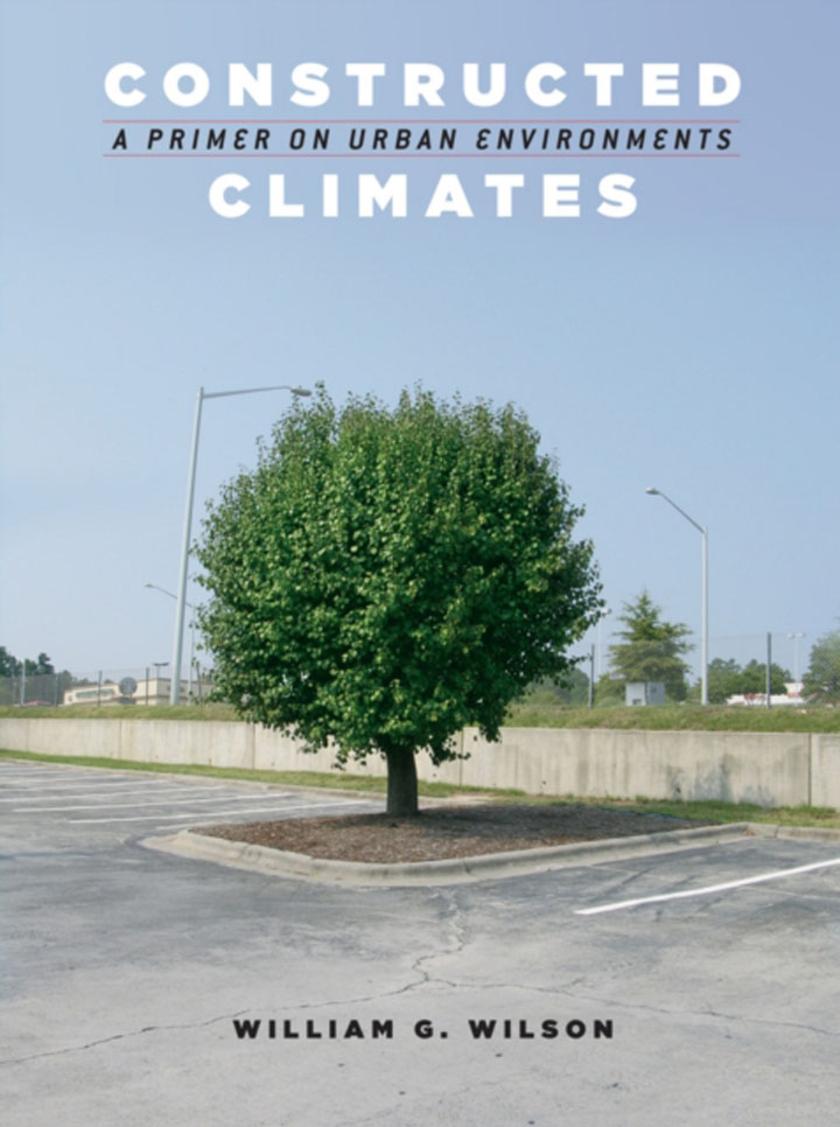
Constructed Climates
¥253.10
As our world becomes increasingly urbanized, an understanding of the context, mechanisms, and consequences of city and suburban environments becomes more critical. Without a sense of what open spaces such as parks and gardens contribute, it's difficult to argue for their creation and maintenance: in the face of schools needing resources, roads and sewers needing maintenance, and people suffering at the hands of others, why should cities and counties spend scarce dollars planting trees and preserving parksIn Constructed Climates, ecologist William G. Wilson demonstrates the value of urban green. Focusing specifically on the role of vegetation and trees, Wilson shows the costs and benefits reaped from urban open spaces, from cooler temperatures to better quality ground water-and why it all matters. While Constructed Climates is a work of science, it does not ignore the social component. Wilson looks at low-income areas that have poor vegetation, and shows how enhancing these areas through the planting of community gardens and trees can alleviate social ills. This book will be essential reading for environmentalists and anyone making decisions for the nature and well-being of our cities and citizens.
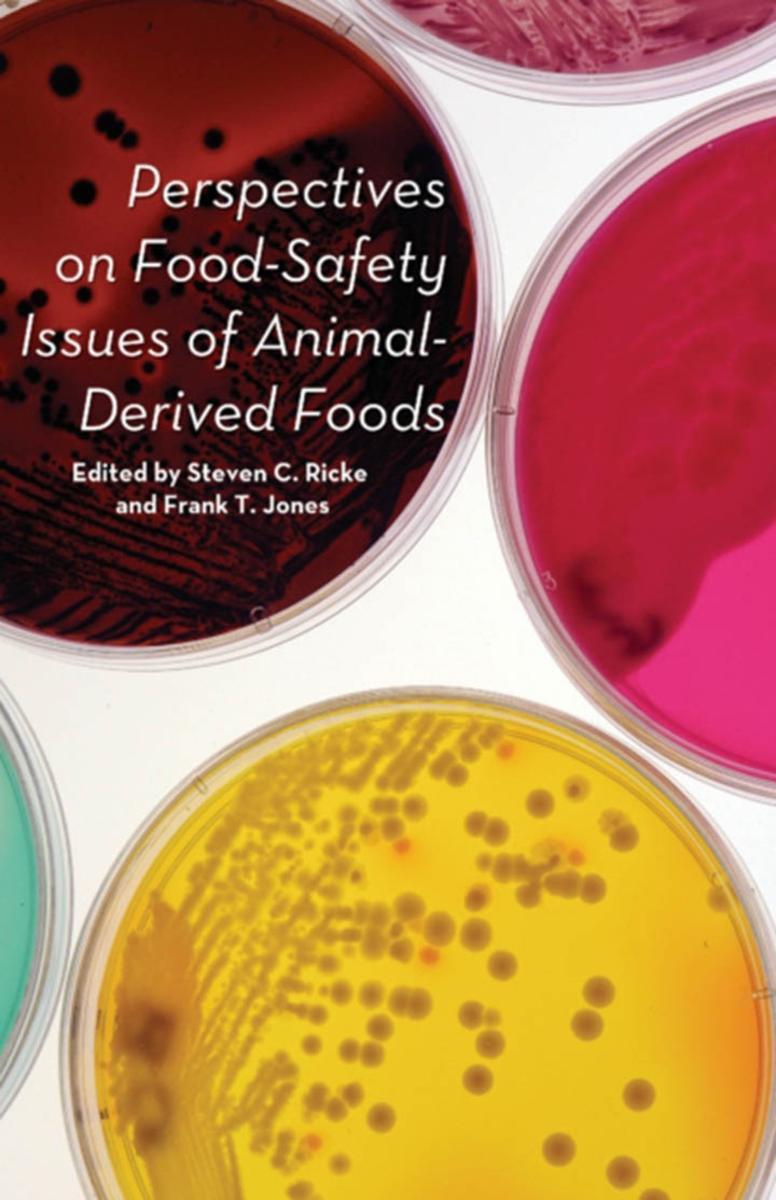
Perspectives on Food-Safety Issues of Animal-Derived Foods
¥410.35
As recent stories in the news have shown, maintaining the integrity of the food supply is of critical importance to the consumer. Thousands of Americans die each year from food-borne illnesses, and millions more get sick. Tremendous strides have been made to reduce the incidence of food-borne diseases originating from animal-derived foods, but food safety and food-borne pathogens continue to remain problematic throughout the world. Food-safety scientists from around the nation continue to conduct groundbreaking research not only to understand causative factors in food-borne pathogen prevalence but to develop novel intervention strategies for limiting contamination in all phases of food animal production. The twenty-four essays in this book highlight research efforts of researchers from the tristate Food Safety Consortium established in 1988 by Congress as a research alliance of food-safety scientists at the University of Arkansas, Iowa State University, and Kansas State University. Members of the consortium conduct research through an annual grant approved by Congress and administered by the U.S. Department of Agriculture. Its mission is to conduct extensive investigation into all areas of poultry, beef, and pork meat production, from the farm to the consumer's table. In addition to the consortium researchers, collaborative university researchers, government officials, and industry personnel provide timely reviews of their latest findings with regard to five significant subject areas: preharvest food-borne pathogen ecology and intervention strategies, postharvest food-borne pathogen ecology, rapid methods and detection strategies for food-borne pathogens, antibiotics and antimicrobials in food safety, and emerging issues in food safety. Progress in these research areas provides opportunities to further enhance protection of animal-derived foods from farm to fork.


