


 购物车
购物车 个人中心
个人中心
Na?ionalismul. Identitatea etnocultural? ?i proiectul elitelor
¥40.79
i corbul, croncnind, a rguit, Vestind c sorii fost au aruncai! Venii! Venii! Voi, duhuri, ce vegheai Pe gndurile morii, crunta zee! i m nvai s nu mai fiu femeie! M umplei, de la cretet pn’ la tlpi Cu o rutate nenduplecat! The raven himself is hoarse That croaks the fatal entrance of Duncan Under my battlements. Come, you spirits That tend on mortal thoughts, unsex me here, And fill me from the crown to the toe top full Of direst cruelty!
Un c?ur de petite grenouille. Plume dorée, ange ou bourreau? Volume I
¥57.14
„Într-o pres? care nu prea mai pune pre? pe reportaje, Liliana Nicolae persevereaz? cu inteligen?? ?i har. La radio ?i în Dilema veche, subiectele ?i cuvintele ei bine m?surate reconstituie lumea din frînturi, în toat? normalitatea ei. Ascultate sau citite, reportajele sale ne pun pe gînduri în fa?a Vie?ii pe care, gr?bi?i, uit?m uneori s-o contempl?m ori s-o în?elegem.“ – Mircea Vasilescu (Dilema veche)
Agatha nyomoz - A rejtélyes bengáliai eset
¥38.18
A meg?zvegyült Szilvai professzornak az a terve, hogy a gyámsága alá tartozó unoka?ccséhez feleségül adja titokban nevelt gyámleányát, Mariskát. A fiú k?zben a professzor tudta nélkül Liliomfi néven vándorszínésznek áll, és meghódítja Mariska szívét. A professzor ellenzi a házasságot, éppen attól a férfit?l félti a lányt, akihez egyébként feleségül szeretné adni. Liliomfi pedig azt hiszi, hogy a nagybátyja hitvesének akarja Mariskát. A h? barát és színésztárs, Szellemfi segít Szilvai megtévesztésében, Liliomfinak adva ki magát. Egy másik - társadalmi kül?nbségek miatti - reménytelennek látszó szerelem (Gyuri, a pincér és Erzsi, a gazdag Kányai fogadós uram lánya) t?rténete ?sszefonódik Liliomfi és Mariska sorsával.
K?nyvkett?: A k?nyv, az írás és az irodalom j?v?jér?l
¥34.99
A Hamlet (1601), talán legismertebb, legt?bbet játszott m?ve Shakespeare-nek. K?zéppontjában az élet kínálta, s mindenkiben f?lmerül? kérdés áll: "Lenni vagy - nem lenni?", és ha lenni - hogyan? Mi az emberi cselekvés végs? határa a vélt vagy valós hiba, netán b?n helyrehozatalához? Egyáltalán van-e igazi létezés, s ha van, az mennyire lehet veszélyes a létez?re? Vívódó, t?preng? alkotás a dráma, miként a f?szerepl? maga. Hamlet késleltetett bosszúját hosszas ?nmarcangoló kérdéselvetések, bizonyságkéresésék el?zik meg. Végül igazságot szolgáltat, de ? is belepusztul. T?rni vagy ellenszegülni? A reneszánsz ember dilemmája ?r?kérvény?! Mert a cselekvés erk?lcsileg legvitathatóbb pontja az emberi élet kioltása. Van-e joga valakinek - ha oka van is - ?lni? K?vetkezmények nélkül semmi sem vállalható, kül?n?sen nem a pusztítás. De van-e joga az embernek vélt vagy valós igaza tudatában nem cselekedni, nem vállalni a tett kockázatát? Mennyire tartozunk felel?sséggel a külvilág és saját lelkiismeretünk el?tt? Hamlet tettével válaszol a kérdésekre, ám az egész dráma nem ad egyértelm? feleletet. Nem is adhat. Remekm?vek; géniuszok és a természet sajátossága a talányosság... Nem beszélve arról, hogy a mindennapok kisebb-nagyobb d?ntéseit mindenkinek magának kell meghoznia.
Beszterce ostroma
¥23.30
Rejtély, amelyet másfél száz éve próbálnak írók, irodalomt?rténészek, színházi szakemberek, esztéták, filozófusok megfejteni. Mese? ?rgirus királyfi és Tündér Ilona csodásan valószer?tlen t?rténete számtalan változatban létezik a magyar népmesekincsben, s olasz k?zvetít? forrásokon át g?r?g, s?t egyiptomi gy?kerekig nyúlik vissza az aranyalmát term? fa s a két szerelmes t?rténete. Szerelmi románc? Nem fontos a kor, a táj, a t?rténelmi háttér, csak az érzelmeiben egymásba gabalyodott két ember – itt és most: Csongor és Tünde – lángolása, viharzása, minden eléjük tornyosuló akadályt leromboló akarása, szerelmi szárnyalása. Színdarab? Karakteres, jó szerepek – ?rd?g?k, boszorkányok, b?lcsek, ledérek – forgataga zegzugos cselekmény, váratlan fordulatok, lehet?ség mindenféle színpadi csoda semmi nem korlátozva megvalósítására: sok alakra bomló, egy személybe olvadó boszorkány, leveg?ben r?pk?d?, láthatatlanná váló ?rd?gfiak, f?ld mélyér?l szemünk láttára kiemelked?, fényárban úszó tündérpalota. Minden pillanatban tátva maradhat a szánk. Filozófiai traktátus? ?letutak: Kalmáré a kincs, Fejedelemé a hatalom, Tudósé a b?lcsesség; Csongoré a szerelem. A kincs elpereg, a hatalom elkopik, a tudás semmivé porlad. A szerelem ?r?k. Drámai k?ltemény? ?jfélt?l éjfélig élünk: hajnalodik, felragyog az ég, dél van, alkonyodik, beesteledik, már f?lénk borul az éjszaka. Reményekkel telten, harcra készen kezdjük hajnalban, küszk?dünk reggel, boldogok vagyunk délben, szorongunk alkonyatkor, s?tétedéskor belenyugszunk az elmúlásba. De másnap újra f?lkel a nap. V?r?smarty Mihály 1830-ban fejezte be m?vét, a cím alá azt írta: színjáték ?t felvonásban. Már csak boldogan sajgó, rejtve rejtett szomorú emlék szívében reménytelen szerelme, Perczel Etelka. Mindennapi életében legf?képpen arra büszke, hogy sok kínnal keletkezett nagy m?vét, a Zalán futását a várva várt nemzeti eposzként ünneplik. Tagja az éppen szület? Magyar Tudományos Akadémiának, a legismertebb, legfontosabb szépirodalmi és m?vészeti lapok ?dolgozótársa”, szívét melenget? jóérzés: Széchenyi István a barátja. Igaz, a pénztárcája t?bbnyire lapos, gyakran kínosan lapos, de ismert és népszer? ember. Harminc éves. Férfi. Kincse nincs, hatalomra nem vágyik, a tudásról azt gondolja: valójában senki nem tudja, mennyit ér s mire jó. De Csongor boldog, amikor megpillantja Tündét, boldog, amikor át?leli, boldog, amikor elveszíti, mert hiszi, tudja: nem ?r?kre veszítette el. Küzd, harcol, verekszik: keresi a boldogságot. S boldog, amikor embert próbáló kalandok után végre megtalálja Tündét, s f?ldi létükben ?r?kre ?sszeforrnak. Csongor és Tünde számára a szerelem a kincs, a hatalom, a tudás. El nem veszíthet? kincs, ?r?kre er?t adó hatalom, b?lcsességgé párlódott tudás. ?gy lesznek halandók halhatatlanok. ?s másnap újra f?lkel a nap.
Akli Miklós
¥17.49
sszevissza csereberéldik egy ikerpár, lóvátesznek egy felfuvalkodott trtett, tmérdek móka, dal, vidámság szvi át két, nagy nehezen egymásra találó szerelmespár trténetét. Oly' darab ez, amint a kznség szeret, kíván, óhajt – ami nektek kell”, mondta Szász Károly errl a vígjátékról, amelynek már a címe is jókedvre derít.

C?nd sufletul vorbe?te prin corp. S? ?n?elegem ?i s? trat?m tulbur?rile psihosom
¥65.32
Ilie Badescu, sociologul care a redeschis dezbaterea privind puterea si importanta pe care o are spiritul si desavarsirea fiintei si societatii, in lucrarea de fata ne vorbeste despre forta invataturilor precum si despre devierile prin care sunt propagate in lume falsele invataturi.
Zece prozatori exemplari (perioada comunist?)
¥40.79
Vera Maria Rosenberg a fost, probabil, cea mai important? femeie spion din al Doilea R?zboi Mondial. N?scut? ?n 1908 la Gala?i, a emigrat ?n Marea Britanie ?n 1933, fiind recrutat? ?n tinere?e de serviciile de informa?ii britanice. Ulterior ?i-a schimbat numele, pentru a-?i ascunde originea evreiasc?, iar dup? stabilirea ?n Marea Britanie a participat la nenum?rate misiuni secrete, ajung?nd ?n fruntea SOE, serviciul de opera?iuni speciale creat de Winston Churchill. Agen?ii ei au participat la nenum?rate opera?iuni vitale, inclusiv la preg?tirea debarc?rii ?n Normandia. ?n 1987, Fran?ois Mitterand i-a acordat Legiunea de Onoare, pentru aportul ei la eliberarea Fran?ei. Dup? r?zboi, Vera Atkins s-a retras ?ntr-un sat din Anglia, unde a r?mas p?n? la moarte, ?n 2000. Via?a i-a fost ?nconjurat? de mister, ?i pu?ini au ?tiut cine este cu adev?rat. Biografia lui Sarah Helm dezv?luie secretele celei despre care Ian Fleming, creatorul celebrului James Bond, spunea ??n adev?rata lume a spionilor, Vera Atkins a fost ?eful.“

Универсальный календарь садовода-огородника
¥17.74
Читанка для учн?в старших клас?в середньо? школи в ус?х ?вропейських кра?нах. Книжку створено в рамках сп?льного проекту орган?зац?й та установ, що працюють разом у Платформ? ?вропейсько? пам'ят? та сумл?ння. Зб?рка м?стить 30 дивовижних ?стор?й людей з 16 ?вропейських кра?н, що зазнали тотал?таризму. Це розпов?д? про см?ливц?в, як? протистояли тотал?таризмов? та загинули, а також про тих, кому пощастило вижити. Ц? розпов?д? сповнен? надзвичайного суму через незм?рн? страждання, що ?х завдали фанатичн? орудар?, поборники та п?дсобники тотал?таризму таким же людям, як ? вони. Але водночас вони осп?вують любов до свободи, людську г?дн?сть, несхитн?сть, см?лив?сть, в?ру та в?ддан?сть головним людським ц?нностям.
Life of the Moselle
¥28.04
["The Elements of Drawing" was written during the winter of 1856. The First Edition was published in 1857; the Second followed in the same year, with some additions and slight alterations. The Third Edition consisted of sixth thousand, 1859; seventh thousand, 1860; and eighth thousand, 1861.The work was partly reproduced in "Our Sketching Club," by the Rev. R. St. John Tyrwhitt, M.A., 1874; with new editions in 1875, 1882, and 1886.Mr. Ruskin meant, during his tenure of the Slade Professorship at Oxford, to recast his teaching, and to write a systematic manual for the use of his Drawing School, under the title of "The Laws of Fésole." Of this only vol. i. was completed, 1879; second edition, 1882. As, therefore, "The Elements of Drawing" has never been completely superseded, and as many readers of Mr. Ruskin's works have expressed a desire to possess the book in its old form, it is now reprinted as it stood in 1859.] ? THE SECOND EDITION.As one or two questions, asked of me since the publication of this work, have indicated points requiring elucidation, I have added a few short notes in the first Appendix. It is not, I think, desirable otherwise to modify the form or add to the matter of a book as it passes through successive editions; I have, therefore, only mended the wording of some obscure sentences; with which exception the text remains, and will remain, in its original form, which I had carefully considered. Should the public find the book useful, and call for further editions of it, such additional notes as may be necessary will be always placed in the first Appendix, where they can be at once referred to, in any library, by the possessors of the earlier editions; and I will take care they shall not be numerous.August 3, 1857. ? PREFACE? i. It may perhaps be thought, that in prefacing a manual of drawing, I ought to expatiate on the reasons why drawing should be learned; but those reasons appear to me so many and so weighty, that I cannot quickly state or enforce them. With the reader's permission, as this volume is too large already, I will waive all discussion respecting the importance of the subject, and touch only on those points which may appear questionable in the method of its treatment. ? ii. In the first place, the book is not calculated for the use of children under the age of twelve or fourteen. I do not think it advisable to engage a child in any but the most voluntary practice of art. If it has talent for drawing, it will be continually scrawling on what paper it can get; and should be allowed to scrawl at its own free will, due praise being given for every appearance of care, or truth, in its efforts. It should be allowed to amuse itself with cheap colors almost as soon as it has sense enough to wish for them. If it merely daubs the paper with shapeless stains, the color-box may be taken away till it knows better: but as soon as it begins painting red coats on soldiers, striped flags to ships, etc., it should have colors at command; and, without restraining its choice of subject in that imaginative and historical art, of a military tendency, which children delight in, (generally quite as valuable, by the way, as any historical art delighted in by their elders,) it should be gently led by the parents to try to draw, in such childish fashion as may be, the things it can see and likes,—birds, or butterflies, or flowers, or fruit. ? iii. In later years, the indulgence of using the color should only be granted as a reward, after it has shown care and progress in its drawings with pencil. A limited number of good and amusing prints should always be within a boy's reach: in these days of cheap illustration he can hardly possess a volume of nursery tales without good wood-cuts in it, and should be encouraged to copy what he likes best of this kind; but should be firmly restricted to a few prints and to a few books.
Энда. Земля легенд (Jenda. Zemlja legend)
¥26.65
Брошура в стисл?й та популярн?й форм? розпов?да? про под?? Укра?нсько? революц?? 1917–1921 рок?в – процеси державного буд?вництва, творення укра?нсько? пол?тично? нац??, в?дродження укра?нсько? науки, осв?ти, культури та духовност?. Багато уваги прид?ля?ться л?дерам Укра?нсько? революц?? – Михайлу Грушевському, Володимиру Винниченку, Симону Петлюр?, Павлу Скоропадському, ?вгену Петрушевичу, Номану Челеб?дж?хану та ?н., як? розробляли ?? ?деолог?ю, формували порядок денний, вели за собою народ. Розкрива?ться ?нституц?йне буд?вництво, творення законодавчо?, виконавчо?, судово? г?лок влади, розбудова в?йська, дипломат??, ф?нансово? системи тощо. Фотокартки ? св?дчення сучасник?в в?дтворюють атмосферу того часу, проливають св?тло на життя ? побут звичайно? людини в умовах революц?йних потряс?нь.??Брошура п?дготовлена на основ? матер?ал?в ?нформац?йно-просв?тницько? кампан??, яку Укра?нський ?нститут нац?онально? пам’ят? проводить до 100-р?ччя Укра?нсько? революц?? 1917-1921 рок?в, в ход? яко? п?дготовлено низку фотодокументальних виставок, комплект?в лист?вок та ?нформац?йних матер?ал?в, дитячу наст?льну гру, спец?ал?зовану веб-стор?нку, присвячену под?ям Укра?нсько? революц?? 1917–1921 рок?в (www.UNR.memory.gov.ua).??
The Blood Ship
¥18.74
DRAWING is the expression of an idea: “Art must come from within, and not from without. This fact has led some to assert that the study of nature is not essential to the student, and that careful training in the study of the representation of the actual appearance is mechanical and harmful. Such persons forget that all art ideas and sentiments must be based upon natural objects, and that a person who cannot represent truly what he sees will be entirely unable to express the simplest ideal conceptions so that others may appreciate them. Study of nature is, then, of the first and greatest importance to the art student.A drawing may be made in outline, in light and shade, or in color. The value of the drawing artistically does not depend upon the medium used, but upon the individuality of the draughtsman making it. The simplest pencil sketch may have much more merit than an elaborate colored drawing made by one who is unable to represent truly the facts of nature, or who sees, instead of the beauty and poetry, the ugliness and the imperfections of the subject. OBJECTS FOR STUDY:We hear a great deal now about the cultivation of the sense of beauty by the choice of drawing models. Many go so far as to say that nothing but the most beautiful forms should be given from the start, and, asserting that the cube, cylinder,and other type forms are not beautiful, they say that they should not be used, but that beautiful variations of these type forms should be provided. More definite information than this is rarely given. We are not told what natural objects are beautiful, and cheap enough to be provided, or how these objects of beauty are to be obtained, if they are not provided by the city. Such advice as to the use of beautiful models must be very pleasant and valuable to the drawing teacher, who so often fails to secure the money necessary to provide the cheap wooden models costing a few cents each ; and we do not wonder that special and regular teachers often regard this subject as one having no standards and no authorities. Much of all this commotion about beautiful objects of study is raised by those who, suffering from criticism, have in the desire to escape it plunged headlong from one set of mechanical rules for a series of lessons for the public schools, to another set less arbitrary in certain directions, but still mechanical, and if possible, more harmful than before, because attempting more.The average teacher can readily learn to discover at a glance whether or not the drawing of a cube represents the object as it might appear. She can do this even without seeing the model from the pupil's position; and the student can compare his drawing with the object and discover its errors more easily than he can in the drawing of a cast, a leaf, a figure,or any other object of beauty, in which the beauty depends upon lines which are subtile and which require a trained eye to see at all truly.
Eccentricities of the Animal Creation: Illustrated
¥13.98
Vasari says, and rightly, in his Life of Leonardo, "that he laboured much more by his word than in fact or by deed", and the biographer evidently had in his mind the numerous works in Manuscript which have been preserved to this day. To us, now, it seems almost inexplicable that these valuable and interesting original texts should have remained so long unpublished, and indeed forgotten. It is certain that during the XVIth and XVIIth centuries their exceptional value was highly appreciated. This is proved not merely by the prices which they commanded, but also by the exceptional interest which has been attached to the change of ownership of merely a few pages of Manuscript. That, notwithstanding this eagerness to possess the Manuscripts, their contents remained a mystery, can only be accounted for by the many and great difficulties attending the task of deciphering them. The handwriting is so peculiar that it requires considerable practice to read even a few detached phrases, much more to solve with any certainty the numerous difficulties of alternative readings, and to master the sense as a connected whole. Vasari observes with reference to Leonardos writing: "he wrote backwards, in rude characters, and with the left hand, so that any one who is not practised in reading them, cannot understand them". The aid of a mirror in reading reversed handwriting appears to me available only for a first experimental reading. Speaking from my own experience, the persistent use of it is too fatiguing and inconvenient to be practically advisable, considering the enormous mass of Manuscripts to be deciphered. And as, after all, Leonardo's handwriting runs backwards just as all Oriental character runs backwards—that is to say from right to left—the difficulty of reading direct from the writing is not insuperable. This obvious peculiarity in the writing is not, however, by any means the only obstacle in the way of mastering the text. Leonardo made use of an orthography peculiar to himself; he had a fashion of amalgamating several short words into one long one, or, again, he would quite arbitrarily divide a long word into two separate halves; added to this there is no punctuation whatever to regulate the division and construction of the sentences, nor are there any accents—and the reader may imagine that such difficulties were almost sufficient to make the task seem a desperate one to a beginner. It is therefore not surprising that the good intentions of some of Leonardo s most reverent admirers should have failed. Leonardo's literary labours in various departments both of Art and of Science were those essentially of an enquirer, hence the analytical method is that which he employs in arguing out his investigations and dissertations. The vast structure of his scientific theories is consequently built up of numerous separate researches, and it is much to be lamented that he should never have collated and arranged them. His love for detailed research—as it seems to me—was the reason that in almost all the Manuscripts, the different paragraphs appear to us to be in utter confusion; on one and the same page, observations on the most dissimilar subjects follow each other without any connection. A page, for instance, will begin with some principles of astronomy, or the motion of the earth; then come the laws of sound, and finally some precepts as to colour. Another page will begin with his investigations on the structure of the intestines, and end with philosophical remarks as to the relations of poetry to painting; and so forth. Leonardo himself lamented this confusion, and for that reason I do not think that the publication of the texts in the order in which they occur in the originals would at all fulfil his intentions. No reader could find his way through such a labyrinth; Leonardo himself could not have done it. ABOUT AUTHOR: Leonardo Da Vinci, Born on April 15, 1452, in Vinci, Italy, Leonardo da Vinci was concerned with the laws of science and nature, which greatly informed his work as a painter, sculptor, inventor and draftsmen. His ideas and body of work—which includes "Virgin of the Rocks," "The Last Supper," "Leda and the Swan" and "Mona Lisa"—have influenced countless artists and made da Vinci a leading light of the Italian Renaissance.Quotes"Iron rusts from disuse, stagnant water loses its purity and in cold weather becomes frozen; even so does inaction sap the vigor of the mind."? ? ? ? ? – Leonardo da Vinci Humble Beginnings:Leonardo da Vinci was born on April 15, 1452, in Vinci, Italy. Born out of wedlock, the love child of a respected notary and a young peasant woman, he was raised by his father, and his stepmothers. 'The Last Supper'In 1482, Lorenzo de' Medici, a man from a prominent Italian family, commissioned da Vinci to create a silver lyre and bring it to Ludovico il Moro, the Duke of Milan, as a gesture of peace. Da Vinci did so and then wrote Ludovico a letter describing how his engineering and artistic tal
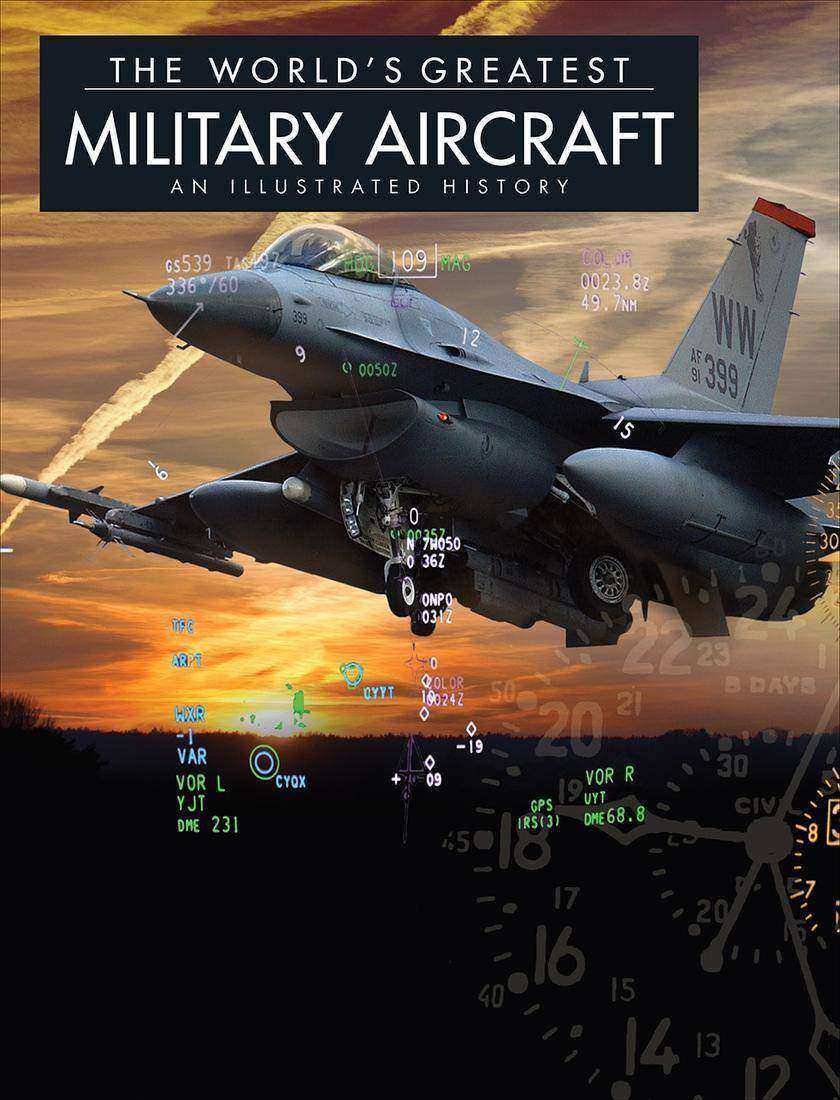
The World's Greatest Military Aircraft: An Illustrated History
¥81.67
Ever since man first took to the air, combat aircraft have been at the cutting edge of aviation technology, resulting in some of the greatest and most complex designs ever built. The World’s Greatest Military Aircraft features 52 of the most important military aircraft of the last hundred years. The book includes all the main types, from biplane fighters and carrier aircraft to tactical bombers, transport aircraft, multirole fighters, strategic strike aircraft and stealth bombers. Featured aircraft include: the Fokker Dr.1 triplane, the legendary fighter flown by German flying ace Manfred von Richthofen, ‘the Red Baron’, during World War I; the Mitsubishi A6M Zero, Japan’s highly-manoeuvrable fighter that dominated air-to-air combat in the early part of the Pacific War; the tank-busting Il-2 Shturmovik, the most produced aircraft in World War II; the Harrier jump jet, a vertical take-off and landing (VTOL) fighter that has been service for more than 40 years; the B-2 Spirit bomber, an American precision strike aircraft used in recent conflicts in Kosovo, Iraq and Afghanistan; and the F-22 Raptor, an air superiority fighter with state-of-the-art stealth technology that makes it almost invisible to radars. Each entry includes a brief description of the model’s development and history, a profile view, key features and specifications. Packed with more than 200 artworks and photographs, The World’s Greatest Military Aircraft is a colourful guide for the military aviation enthusiast.

The Viking Warrior: The Norse Raiders Who Terrorized Medieval Europe
¥81.67
"…and they laid all waste with dreadful havoc, trod with unhallowed feet the holy places, dug up the altars, and carried off all the treasures of the holy church. Some of the brethren they killed; some they carried off in chains; many they cast out, naked and loaded with insults; some they drowned in the sea." —Simeon of Durham, A History of the Community of Durham Beginning in 789 CE, the Vikings raided monasteries, sacked settlements and invaded the Atlantic coast of Europe and the British Isles. They looted and enslaved their enemies, terrorizing all whom they encountered. But that is only part of their story. Sailing their famous longboats, they discovered Iceland and North America, colonised Greenland, founded Dublin, and also sailed up the River Seine and besieged Paris. They settled from Newfoundland to Russia, conquered eastern England, and fought battles from Ireland to the Caspian Sea. They traded walruses with Inuits, brought Russian furs to Western Europe and took European slaves to Constantinople. Their graves contain Arab silver, Byzantine silks and Frankish weapons and artefacts. Illustrated with more than 200 maps, photographs and artworks, The Viking Warrior examines these fearsome warriors through their origins, social structure, raiding culture, weapons, trading networks and settlements.
American Battles and Campaigns: A Chronicle from 1622 - Present
¥65.32
Raids and sieges; trench warfare and air campaigns; guerrilla warfare, naval engagements, and colonial wars; American Battles & Campaigns covers every major campaign and battle fought in North America or by United States’ forces overseas, from the Pequot War of 1634 to the recent conflicts in Afghanistan and Iraq. Arranged chronologically, American Battles & Campaigns includes hundreds of entries, ranging from the 1770 Boston Massacre through the Alamo (1836) and the Philippine-American War (1899–1902), to Chateau-Thierry (1918), Midway (1942) and Hue (1969). Major battles, such as Yorktown, Gettysburg, Pearl Harbor, and D-Day are illustrated with an annotated colour 3D map and detailed text explaining the course of the engagement. There are also colour and black & white photographs, numerous 2D battle maps, paintings and artworks, and expert accounts from leading military historians on each engagement. American Battles & Campaigns offers a complete guide to every war fought by the United States, from early European settlement to the present day.

Plays for Young People
¥40.79
Red Red Shoes was commissioned by the Unicorn Theatre for Children and The Place. Based on the Hans Christian Andersen tale, this play uses dance, music and drama to explore the inner world of a traumatised child fleeing from war in Eastern Europe. (Ages 9+) Eye of the Storm offers a contemporary version of Shakespeare’s The Tempest, exploring father/daughter relationships and the need for independence. (Ages 12+) Playing From the Heart, commissioned by the Polka Theatre, is a poetic piece which follows the travails of the young Evelyn Glennie to become a professional musician despite her profound deafness. (Ages 8+)

The British Beat Explosion: Rock'N'Roll Island
¥40.79
Over a small bridge on an island in the middle of the Thames, a great 60s club played host to acts that would later make a global name for themselves, including the Rolling Stones, Long John Baldry, Rod Stewart, the Small Faces, the Yardbirds and David Bowie. Jazz greats such as Cyril Davies, Ken Colyer and Acker Bilk also played at the legendary Eel Pie Hotel during its 50s and 60s heyday. This collection of essays traces ‘Eelpiland’s’ long-overlooked contribution to the British music scene.

Who Do We Think We Are?
¥32.62
A kaleidoscope of stories about war, displacement, revolution and liberation taking us on an emotional journey across three continents. Based on the actors’ personal and family experiences, the stories interweave and overlap, exploring moments of joy, sadness and laughter set against key historical events over the last hundred years. Poignant, moving, funny, inspiring, this is the first piece of work created by the Visible Ensemble, dedicated to putting older performers and their rich lives centre stage.
D-Day: Gold, Juno and Sword
¥40.79
In any military operation throughout history, few 24-hour periods have been as crucial as that of 6th June 1944. With the aid of specially commissioned maps, D-Day: The First 24 Hours series gives the dramatic history of the first 24 hours of the Normandy landings, and explains in detail the events that occurred in each landing zone. In this fourth volume of the series, the book describes the British and Canadian landings on Gold, Juno and Sword beaches. The book also includes details of the human cost of the first day, and a full order of battle for both sides. With colour and black & white photographs, the book is a guide to key events in the first 24 hours of the D-Day landings that saw the Allies successfully achieve a foothold in Northern Europe.
A Girl With A Book and Other Plays
¥40.79
A topical collection of new plays by popular UK playwright Nick Wood 'I am not a lone voice, I am many.'?Malala ? Yousafzai A Girl with a Book and?Other Plays ?brings together four plays for young people by acclaimed playwright Nick Wood. Topical and wide-ranging, they concern refugees, friendship, loss and courage. 'You know those sente nces that start I'm not sexist/racist/homophobic and the speaker sticks in the word 'but' and goes on to prove that's exactly what they are?' The title play, ? A Girl with a Book ?is an honest response to the story of Malala Yousafzai, who was shot by the Taliban. Produced many times in Germany and the UK, the play raises serious questions about the West's complex relationship with and attitudes to the Muslim world. 'a journey into empathy and imagination...'?Stephen Lowe Plays Nick Wood's poignant political drama A Girl with a Book is based on the true story of Nobel Peace Prize-Winner Malala Yousafza. In 2012, gunmen stopped a bus in Pakistan and shot three young girls. Their crime? Wanting to go to school. Knowing nothing about the situation, able to offer little more than outrage, the writer is forced out from behind his desk and in the search for answers to help him tell the story of a brave young woman's fight for girls' education, but when his research uncovers attitudes at odds with his liberal convictions he has to face what he learns about himself. Achieving international acclaim after its opening in Hamburg, A Girl with a Book examines Malala's story through a series of questions - Wood asks how a girl who wanted to go to school could become such a target. Bird boy:?Eddie and Tim create their own den up on the Knoll, a secret place for heroes. The only problem is, winter is setting in and Eddie won't come down. As the snow falls, Tim must decide whether to take food to Eddie or betray him by telling the grown ups where he is. Mia:?Mia is a refugee who has lost her home, and most of her family. She has odd bits and pieces in her bag, which have stories attached to them. Mia is searching for her sister, Sofia, can they help? Dream of White Horses: ? ?Paul wants two things - to find out whether his father's death was an accident or not. He climbs the same cliff, to discover what happened to his father, and a great deal about himself. '...invites us to better understand Malala, her father, and her kinsmen.'? On Religion '...a journey into empathy and imagination coolly and cleanly done. A crucially important tale well told with great humanity.' ? Stephen Lowe, playwright '...there's plenty of scope here for schools, colleges and youth theatre groups. The title play... has a cast of one... The remaining three plays use larger casts and explore asylum seeking, friendship, loss and courage.' ?Susan Elkin, The Stage


