


 购物车
 个人中心

Mastering Splunk
¥90.46
This book is for those Splunk developers who want to learn advanced strategies to deal with big data from an enterprise architectural perspective. You need to have good working knowledge of Splunk.
Arduino Android Blueprints
¥80.65
This book is for those who want to learn how to build exciting Arduino projects by interfacing it with Android. You will need to have some basic experience in electronics and programming. However, you don't need to have any previous experience with the Arduino or Android platforms.
Learning BeagleBone
¥54.49
This book is for new BeagleBone owners who are looking to quickly get their microboard up and running. It would be helpful to have an understanding of embedded concepts or Linux but neither is essential.
R for Data Science
¥90.46
If you are a data analyst who has a firm grip on some advanced data analysis techniques and wants to learn how to leverage the features of R, this is the book for you. You should have some basic knowledge of the R language and should know about some data science topics.
Swift Essentials
¥90.46
Whether you are a seasoned Objective-C developer or new to the Xcode platform, Swift Essentials will provide you with all you need to know to get started with the language. Prior experience with iOS development is not necessary, but will be helpful to get the most out of the book.
Cassandra High Availability
¥45.77
If you are a developer or DevOps engineer who understands the basics of Cassandra and are ready to take your knowledge to the next level, then this book is for you. An understanding of the essentials of Cassandra is needed.
QGIS Python Programming Cookbook
¥90.46
If you are a geospatial analyst who wants to learn more about automating everyday GIS tasks or a programmer who is responsible for building GIS applications,this book is for you. The short, reusable recipes make concepts easy to understand. You can build larger applications that are easy to maintain when they are put together.
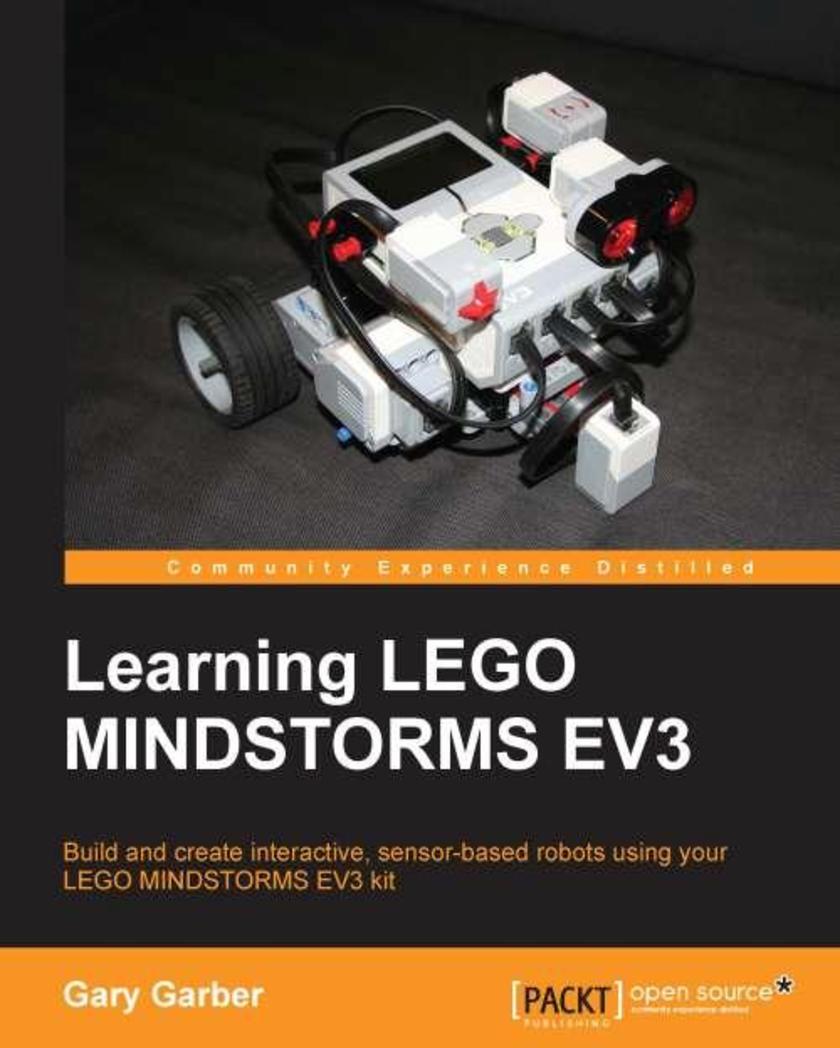
Learning LEGO MINDSTORMS EV3
¥80.65
This book is for the hobbyists, builders, and programmers who want to build and control their very own robots beyond the capabilities provided with the LEGO EV3 kit. You will need the LEGO MINDSTORMS EV3 kit for this book. The book is compatible with both the Home Edition and the Educational Edition of the kit. You should already have a rudimentary knowledge of general programming concepts and will need to have gone through the basic introductory material provided by the official LEGO EV3 tutorials.
Interactive Applications Using Matplotlib
¥54.49
This book is intended for Python programmers who want to do more than just see their data. Experience with GUI toolkits is not required, so this book can be an excellent complement to other GUI programming resources.
R High Performance Programming
¥54.49
This book is for programmers and developers who want to improve the performance of their R programs by making them run faster with large data sets or who are trying to solve a pesky performance problem.
Mastering Python Design Patterns
¥80.65
This book is for Python programmers with an intermediate background and an interest in design patterns implemented in idiomatic Python. Programmers of other languages who are interested in Python can also benefit from this book, but it would be better if they first read some introductory materials that explain how things are done in Python.
VMware vRealize Orchestrator Essentials
¥80.65
Get hands-on experience with vRealize Orchestrator and automate your VMware environment About This Book Gain an in-depth understanding of vRO in the VMware infrastructure Create your own advanced vRO *s using JavaScript A step-by-step tutorial to manage and create workflows with vRO Who This Book Is For This book is for VMware vSphere administrators who have minimal experience with automation tools and want to learn how to effectively automate their environment with VMware vRealize Orchestrator. A basic understanding of the VMware vSphere terms and concepts would be helpful. What You Will Learn Familiarize yourself with the Orchestrator architecture and Explore how plugins can expand Orchestrator's capabilitiesExplore how plug-ins can expand Orchestrator’s capabilities Deploy and configure the vRealize Orchestrator appliance Schedule and run workflows using the vSphere Web Client Create your own workflows with minimal work Use workflow presentations to improve your automation projects Integrate JavaScript to enhance your workflows Debug your workflows for errors and fix them Learn how to create, import, and export packages, to enable easy exchange solutions with others In Detail The automation of virtual environments has become the focus of many endeavors. VMware vRealize Orchestrator is a tool that enables you to automate not only your VMware environments, but also the surrounding hardware and software infrastructure. Orchestrator is also a central tool in the VMware cloud initiative and is extensively used by products such as vRealize Automation. In this book, you will learn how Orchestrator is able to help you automate your complete VMware infrastructure as well as its surrounding hardware and software. After deploying and configuring the vRealize Orchestrator appliance, you will learn how to run the existing workflows that are a part of the Orchestrator library. You will also see how the vSphere Web Client integration of Orchestrator reduces the time you spend on your daily admin tasks. The main aspect here is to learn how to create new workflows from existing ones. You will also look at how you can create completely new workflows. This includes learning about JavaScript and using presentation features to improve the layout and user friendliness of your workflows. Toward the end, you will learn to check for errors in your workflows and debug them. By the time you're done with the book, you'll be proficient in managing your workflows. Style and approach This book follows a sequential approach with ample screenshots in the examples that convey a deeper understanding of all Orchestrator-related tasks.
QGIS Blueprints
¥90.46
Develop analytical location-based web applications with QGIS About This Book Tame geographic information workflows with QGIS blueprints for smart web applications Create geographic web applications using QGIS and free/open source software Blueprints provide real-world applications covering many use cases Who This Book Is For This book encompasses relatively experienced GIS developers who have a strong grounding in the fundamentals of GIS development. They will have used QGIS before, but are looking to understand how to develop more complex, layered map applications that expose various data sets, utilize different visualizations, and are consumable (usable) by end users What You Will Learn Review geographic information principles and the application of these principles in the QGIS free/open source ecosystem Perform advanced analysis with site selection, hydrologic, and topological networks Build performant web applications by tile caching and generating static assets Provide collaborative editing capabilities for your team or community Develop custom and dynamic analysis and visualization capabilities Select the best components from desktop and web, for your use case Integrate it with social media and crowdsourcing In Detail QGIS, the world’s most popular free/open source desktop geographic information system software, enables a wide variety of use cases involving location – previously only available through expensive specialized commercial software. However, designing and executing a multi-tiered project from scratch on this complex ecosystem remains a significant challenge. This book starts with a primer on QGIS and closely related data, software, and systems. We’ll guide you through six use-case blueprints for geographic web applications. Each blueprint boils down a complex workflow into steps you can follow to reduce time lost to trial and error. By the end of this book readers should be able to build complex layered applications that visualize multiple data sets, employing different types of visualization, and give end users the ability to interact with and manipulate this data for the purpose of analysis. Style and approach This is a comprehensive guide to the application of QGIS and free/open source software in creating web applications from analysis. Step-by-step blueprints guide the reader through analytical and web development topics and designs.

Moby Dick; Or, The Whale
¥29.35
Moby-Dick is a novel considered an outstanding work of Romanticism and the American Renaissance. Ishmael narrates the monomaniacal quest of Ahab, captain of the whaler Pequod, for revenge on Moby Dick, a white whale which on a previous voyage destroyed Ahab's ship and severed his leg at the knee. Although the novel was a commercial failure and out of print at the time of the author's death in 1891, its reputation as a Great American Novel grew during the twentieth century. D. H. Lawrence called it "one of the strangest and most wonderful books in the world," and "the greatest book of the sea ever written."Call me Ishmael" is one of world literature's most famous opening sentences.

治本修身──中醫內分泌調節養生法
¥73.33
本書從中醫學、美容學、西醫內分泌學的角度,系統分析了面色蒼白、痤瘡、黃褐斑、脫髮、眼球突出、頸腫、皮膚乾燥症、多汗症、多毛症、肥胖、消瘦、乳房發育不良等12種常見病症的發病原因與機理,以及西醫的常規治療方法。闡明了中醫調節內分泌失調的方法與機理,突出整體治療,治病求本的中醫學理念,並具體介紹通過內服中藥、針灸耳針、外敷按摩、食療食養、日常護理等綜合措施,以達到美容塑形,展現自信美的目的。

The Picture of Dorian Gray
¥29.35
The Picture of Dorian Gray is an 1891 philosophical novel by Irish writer and playwright Oscar Wilde. First published as a serial
Learning Flask Framework
¥80.65
Build dynamic, data-driven websites and modern web applications with Flask About This Book Discover the most popular Flask resources on the web with ease Familiarize yourself with third-party libraries commonly used with Flask Create a fast, interactive, and secure web app with this hands-on guide Who This Book Is For This book is for anyone who wants to develop their knowledge of Python into something that can be used on the web. Flask follows the Python design principles and can be easily understood by anyone who knows Python, and even by those who do not. What You Will Learn Create your web pages to add modularity and flexibility to your web app using templates Store and retrieve relational data using SQLAlchemy Develop schema migrations with Alembic Produce an admin section using flask-admin Build RESTful APIs using Flask-Restless Simulate requests and sessions using the Flask test client Make Ajax requests from Jinja2 templates In Detail Flask is a small and powerful web development framework for Python. It does not presume or force a developer to use a particular tool or library. Flask supports extensions that can add application features as if they were implemented in Flask itself. Flask’s main task is to build web applications quickly and with less code. With its lightweight and efficient web development framework, Flask combines rapid development and clean, simple design. This book will take you through the basics of learning how to apply your knowledge of Python to the web. Starting with the creation of a “Hello world” Flask app, you will be introduced to the most common Flask APIs and Flask’s interactive debugger. You will learn how to store and retrieve blog posts from a relational database using an ORM and also to map URLs to views. Furthermore, you will walk through template blocks, inheritance, file uploads, and static assets. You will learn to authenticate users, build log in/log out functionality, and add an administrative dashboard for the blog. Moving on, you will discover how to make Ajax requests from the template and see how the Mock library can simplify testing complex interactions. Finally, you will learn to deploy Flask applications securely and in an automated, repeatable manner, and explore some of the most popular Flask resources on the web. Style and approach A comprehensive guide packed with real-world examples and popular use cases; starting with basic overviews and diving into the practical aspects of Flask Framework.
Mastering ServiceStack
¥80.65
Utilize ServiceStack as the rock solid foundation of your distributed systemAbout This BookTake advantage of the various data providers to access authentication and authorization, sessions, cache, and databaseLeverage asynchronous processing for decoupling components to ease scalingMonitor and tune the performance of your distributed system Who This Book Is For Mastering ServiceStack is targeted at developers who have already implemented web services with ASMX, WCF, or ServiceStack and want to gain more insight into the possibilities ServiceStack has to offer to build distributed systems of all scales.What You Will LearnDesign a prudent and resilient API, following the RESTful designUnderstand the internal processing chain and utilize the provided hooksIncorporate ServiceStack as a full service provider to your existing distributed systemLeverage the power of asynchronous processing and add message queues to your architectureAnalyze and tune the performance of your service In Detail Mastering ServiceStack covers real-life problems that occur over the lifetime of a distributed system and how to solve them by deeply understanding the tools of ServiceStack. Distributed systems is the enterprise solution that provide flexibility, reliability, scaling, and performance. ServiceStack is an outstanding tool belt to create such a system in a frictionless manner, especially sophisticated designed and fun to use. The book starts with an introduction covering the essentials, but assumes you are just refreshing, are a very fast learner, or are an expert in building web services. Then, the book explains ServiceStack's data transfer object patterns and teach you how it differs from other methods of building web services with different protocols, such as SOAP and SOA. It also introduces more low-level details such as how to extend the User Auth, message queues and concepts on how the technology works. By the end of this book, you will understand the concepts, framework, issues, and resolutions related to ServiceStack.Style and approach A step-by-step approach that follows the natural requirements of a distributed system in a conversational style.
Learning IPython for Interactive Computing and Data Visualization - Second Editi
¥71.93
Get started with Python for data analysis and numerical computing in the Jupyter notebookAbout This BookLearn the basics of Python in the Jupyter NotebookAnalyze and visualize data with pandas, NumPy, matplotlib, and seabornPerform highly-efficient numerical computations with Numba, Cython, and ipyparallel Who This Book Is For This book targets students, teachers, researchers, engineers, analysts, journalists, hobbyists, and all data enthusiasts who are interested in analyzing and visualizing real-world datasets. If you are new to programming and data analysis, this book is exactly for you. If you're already familiar with another language or analysis software, you will also appreciate this introduction to the Python data analysis platform. Finally, there are more technical topics for advanced readers. No prior experience is required; this book contains everything you need to know.What You Will LearnInstall Anaconda and code in Python in the Jupyter NotebookLoad and explore datasets interactivelyPerform complex data manipulations effectively with pandasCreate engaging data visualizations with matplotlib and seabornSimulate mathematical models with NumPyVisualize and process images interactively in the Jupyter Notebook with scikit-imageAccelerate your code with Numba, Cython, and IPython.parallelExtend the Notebook interface with HTML, JavaScript, and D3 In Detail Python is a user-friendly and powerful programming language. IPython offers a convenient interface to the language and its analysis libraries, while the Jupyter Notebook is a rich environment well-adapted to data science and visualization. Together, these open source tools are widely used by beginners and experts around the world, and in a huge variety of fields and endeavors. This book is a beginner-friendly guide to the Python data analysis platform. After an introduction to the Python language, IPython, and the Jupyter Notebook, you will learn how to analyze and visualize data on real-world examples, how to create graphical user interfaces for image processing in the Notebook, and how to perform fast numerical computations for scientific simulations with NumPy, Numba, Cython, and ipyparallel. By the end of this book, you will be able to perform in-depth analyses of all sorts of data.Style and approach This is a hands-on beginner-friendly guide to analyze and visualize data on real-world examples with Python and the Jupyter Notebook.
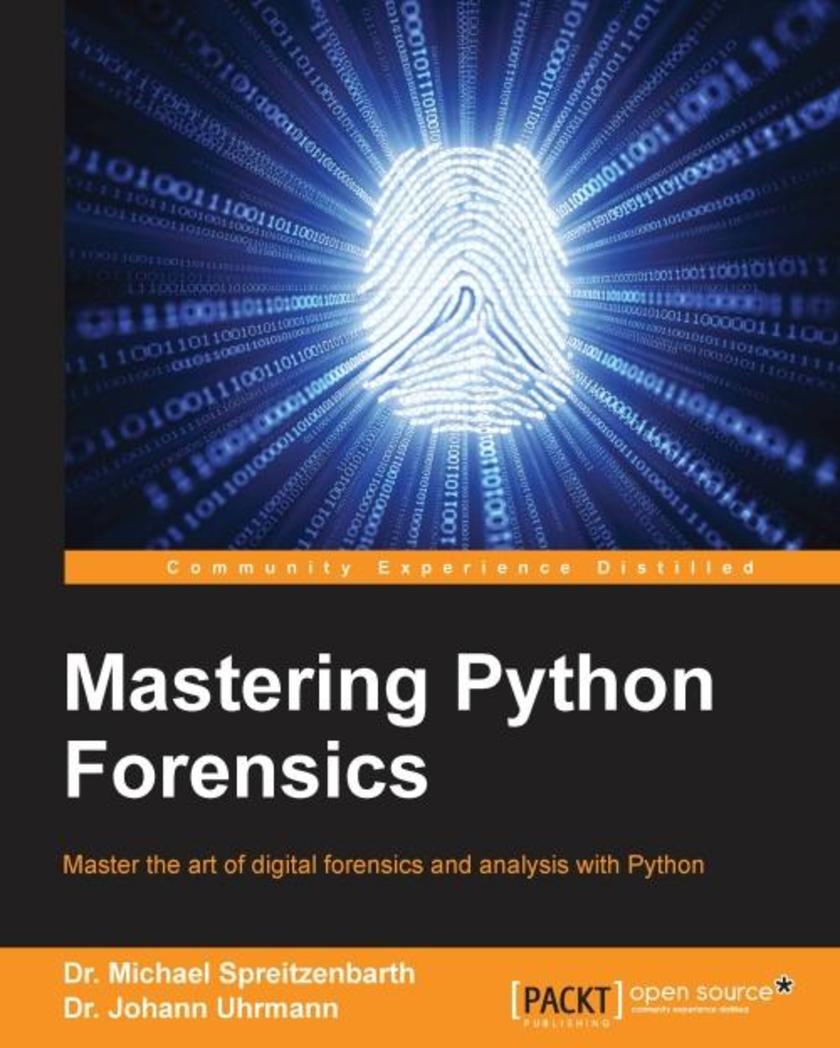
Mastering Python Forensics
¥71.93
Master the art of digital forensics and analysis with PythonAbout This BookLearn to perform forensic analysis and investigations with the help of Python, and gain an advanced understanding of the various Python libraries and frameworksAnalyze Python *s to extract metadata and investigate forensic artifactsThe writers, Dr. Michael Spreitzenbarth and Dr. Johann Uhrmann, have used their experience to craft this hands-on guide to using Python for forensic analysis and investigations Who This Book Is For If you are a network security professional or forensics analyst who wants to gain a deeper understanding of performing forensic analysis with Python, then this book is for you. Some Python experience would be helpful.What You Will LearnExplore the forensic analysis of different platforms such as Windows, Android, and vSphereSemi-automatically reconstruct major parts of the system activity and time-lineLeverage Python ctypes for protocol decodingExamine artifacts from mobile, Skype, and browsersDiscover how to utilize Python to improve the focus of your analysisInvestigate in volatile memory with the help of volatility on the Android and Linux platforms In Detail Digital forensic analysis is the process of examining and extracting data digitally and examining it. Python has the combination of power, expressiveness, and ease of use that makes it an essential complementary tool to the traditional, off-the-shelf digital forensic tools. This book will teach you how to perform forensic analysis and investigations by exploring the capabilities of various Python libraries. The book starts by explaining the building blocks of the Python programming language, especially ctypes in-depth, along with how to automate typical tasks in file system analysis, common correlation tasks to discover anomalies, as well as templates for investigations. Next, we’ll show you cryptographic algorithms that can be used during forensic investigations to check for known files or to compare suspicious files with online services such as VirusTotal or Mobile-Sandbox. Moving on, you’ll learn how to sniff on the network, generate and analyze network flows, and perform log correlation with the help of Python *s and tools. You’ll get to know about the concepts of virtualization and how virtualization influences IT forensics, and you’ll discover how to perform forensic analysis of a jailbroken/rooted mobile device that is based on iOS or Android. Finally, the book teaches you how to analyze volatile memory and search for known malware samples based on YARA rules.Style and approach This easy-to-follow guide will demonstrate forensic analysis techniques by showing you how to solve real-word-scenarios step by step.
Getting Started with Python Data Analysis
¥63.21
Learn to use powerful Python libraries for effective data processing and analysisAbout This BookLearn the basic processing steps in data analysis and how to use Python in this area through supported packages, especially Numpy, Pandas, and MatplotlibCreate, manipulate, and analyze your data to extract useful information to optimize your systemA hands-on guide to help you learn data analysis using Python Who This Book Is For If you are a Python developer who wants to get started with data analysis and you need a quick introductory guide to the python data analysis libraries, then this book is for you.What You Will LearnUnderstand the importance of data analysis and get familiar with its processing stepsGet acquainted with Numpy to use with arrays and array-oriented computing in data analysisCreate effective visualizations to present your data using MatplotlibProcess and analyze data using the time series capabilities of PandasInteract with different kind of database systems, such as file, disk format, Mongo, and RedisApply the supported Python package to data analysis applications through examplesExplore predictive analytics and machine learning algorithms using Scikit-learn, a Python library In Detail Data analysis is the process of applying logical and analytical reasoning to study each component of data. Python is a multi-domain, high-level, programming language. It’s often used as a *ing language because of its forgiving syntax and operability with a wide variety of different eco-systems. Python has powerful standard libraries or toolkits such as Pylearn2 and Hebel, which offers a fast, reliable, cross-platform environment for data analysis. With this book, we will get you started with Python data analysis and show you what its advantages are. The book starts by introducing the principles of data analysis and supported libraries, along with NumPy basics for statistic and data processing. Next it provides an overview of the Pandas package and uses its powerful features to solve data processing problems. Moving on, the book takes you through a brief overview of the Matplotlib API and some common plotting functions for DataFrame such as plot. Next, it will teach you to manipulate the time and data structure, and load and store data in a file or database using Python packages. The book will also teach you how to apply powerful packages in Python to process raw data into pure and helpful data using examples. Finally, the book gives you a brief overview of machine learning algorithms, that is, applying data analysis results to make decisions or build helpful products, such as recommendations and predictions using scikit-learn.Style and approach This is an easy-to-follow, step-by-step guide to get you familiar with data analysis and the libraries supported by Python. Topics are explained with real-world examples wherever required.


