


 购物车
购物车 个人中心
个人中心
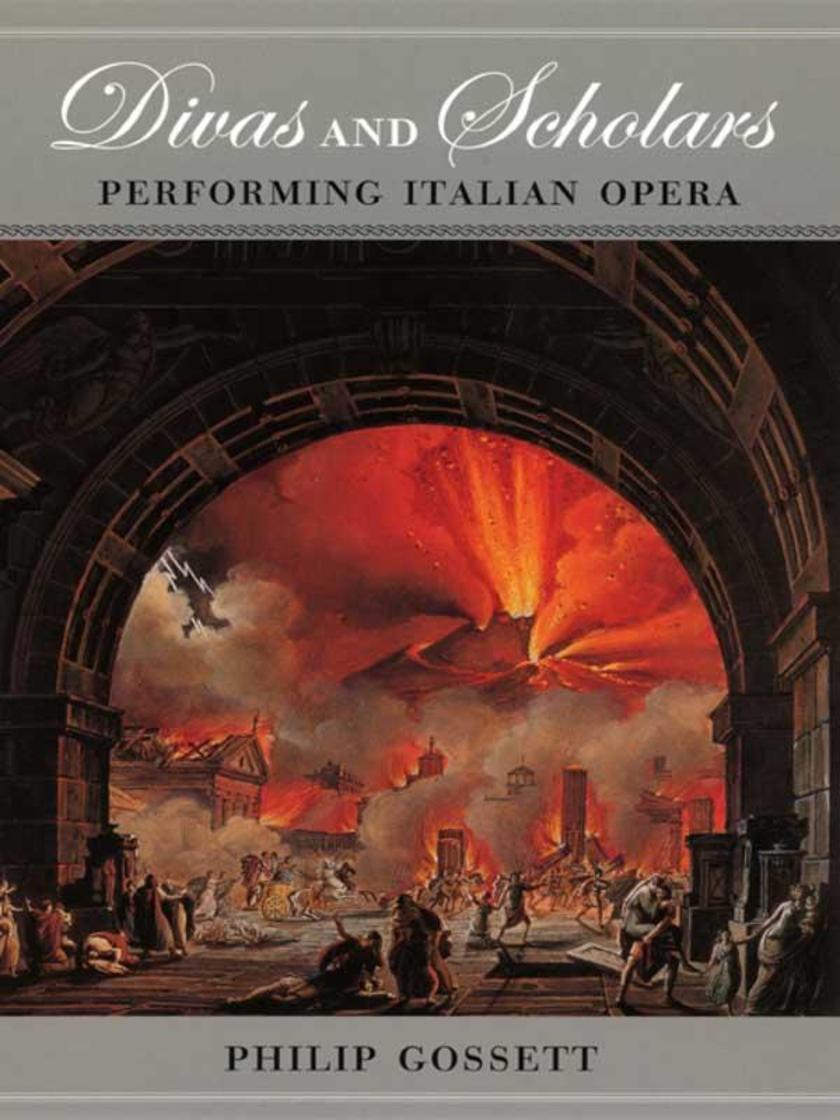
Divas and Scholars
¥147.15
Winner of the 2007 Otto Kinkeldey Award from the American Musicological Society and the 2007 Deems Taylor Award from the American Society of Composers, Authors, and Publishers.Divas and Scholars is a dazzling and beguiling account of how opera comes to the stage, filled with Philip Gossett's personal experiences of triumphant-and even failed-performances and suffused with his towering and tonic passion for music. Writing as a fan, a musician, and a scholar, Gossett, the world's?leading authority on the performance of Italian opera, brings colorfully to life the problems, and occasionally the scandals, that attend the production of some of our most favorite operas.?Gossett begins by tracing the social history of nineteenth-century Italian theaters in order to explain the nature of the musical scores from which performers have long worked. He then illuminates the often hidden but crucial negotiations opera scholars and opera conductors and performers: What does it mean to talk about performing from a critical editionHow does one determine what music to perform when multiple versions of an opera existWhat are the implications of omitting passages from an opera in a performanceIn addition to vexing questions such as these, Gossett also tackles issues of ornamentation and transposition in vocal style, the matters of translation and adaptation, and even aspects of stage direction and set design.?Throughout this extensive and passionate work, Gossett enlivens his history with reports from his own experiences with major opera companies at venues ranging from the Metropolitan and Santa Fe operas to the Rossini Opera Festival at Pesaro. The result is a book that will enthrall both aficionados of Italian opera and newcomers seeking a reliable introduction to it-in all its incomparable grandeur and timeless allure.?

57 Ways to Screw Up in Grad School
¥123.61
Don't think about why you're applying. Select a topic for entirely strategic reasons. Choose the coolest supervisor. Write only to deadlines. Expect people to hold your hand. Become "e;that"e; student.When it comes to a masters or PhD program, most graduate students don't deliberately set out tofail. Yet, of the nearly 500,000 people who start a graduate program each year, up to half will never complete their degree. Books abound on acing the admissions process, but there is little on what to do once the acceptance letter arrives. Veteran graduate directors Kevin D. Haggerty and Aaron Doyle have set out to demystify the world of advanced education. Taking a wry, frank approach, they explain the common mistakes that can trip up a new graduate student and lay out practical advice about how to avoid the pitfalls. Along the way they relate stories from their decades of mentorship and even share some slip-ups from their own grad experiences.The litany of foul-ups is organized by theme and covers the grad school experience from beginning to end: selecting the university and program, interacting with advisors and fellow students, balancing personal and scholarly lives, navigating a thesis, and creating a life after academia. Although the tone is engagingly tongue-in-cheek, the lessons are crucial to anyone attending or contemplating grad school. 57 Ways to Screw Up in Grad School allows you to learn from others' mistakes rather than making them yourself.
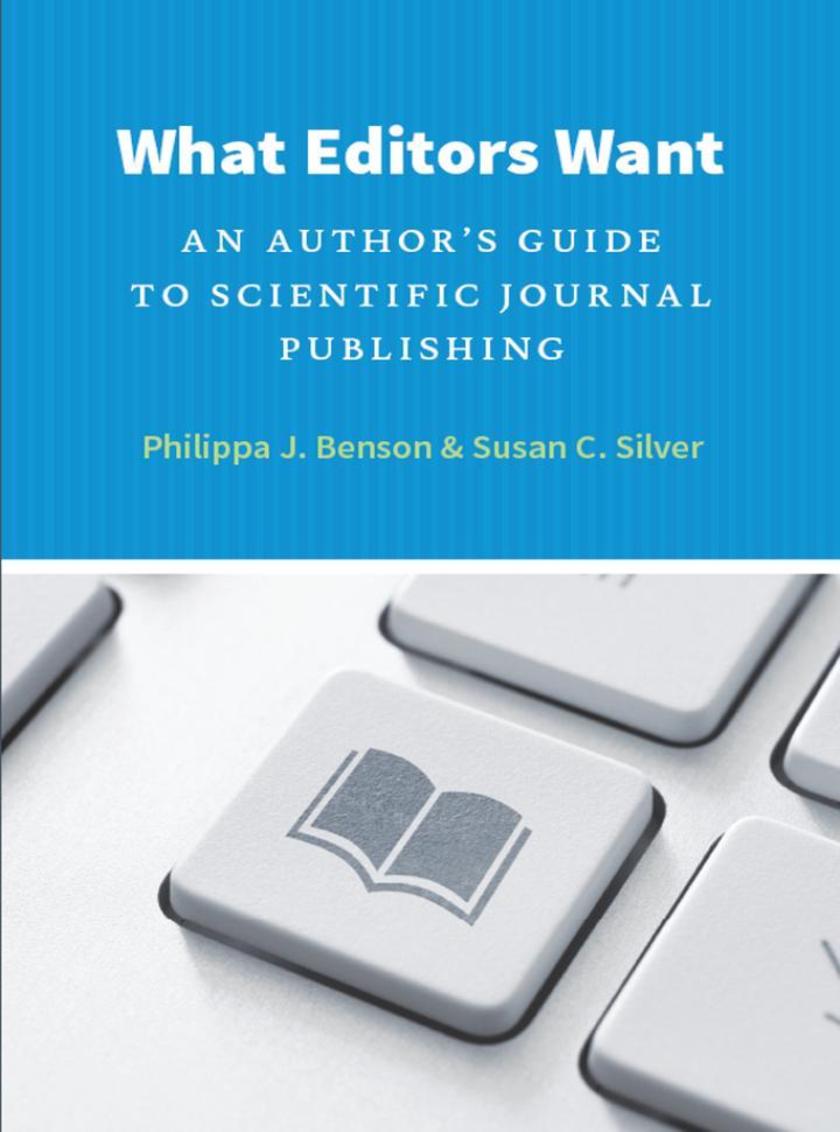
What Editors Want
¥188.35
Research publications have always been key to building a successful career in science, yet little if any formal guidance is offered to young scientists on how to get research papers peer reviewed, accepted, and published by leading scientific journals. With What Editors Want, Philippa J. Benson and Susan C. Silver, two well-respected editors from the science publishing community, remedy that situation with a clear, straightforward guide that will be of use to all scientists.Benson and Silver instruct readers on how to identify the journals that are most likely to publish a given paper, how to write an effective cover letter, how to avoid common pitfalls of the submission process, and how to effectively navigate the all-important peer review process, including dealing with revisions and rejection. With supplemental advice from more than a dozen experts, this book will equip scientists with the knowledge they need to usher their papers through publication.
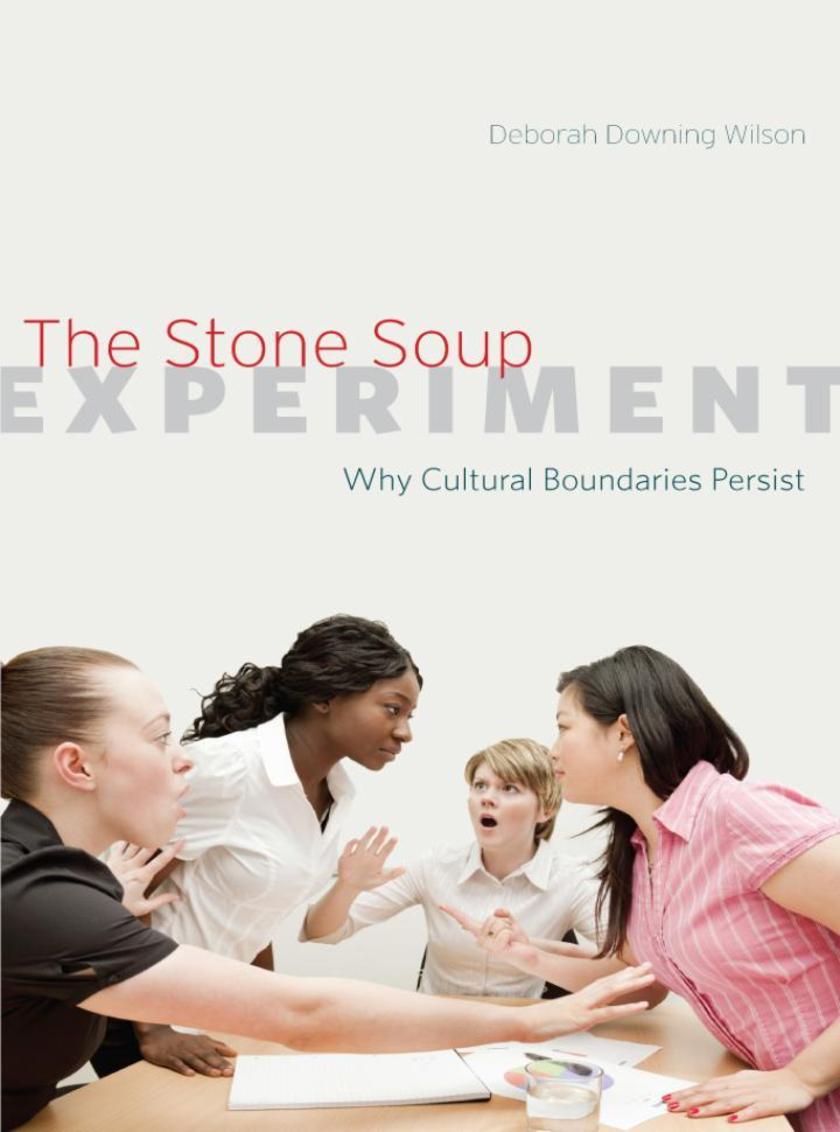
Stone Soup Experiment
¥147.15
The Stone Soup Experiment is a remarkable story of cultural difference, of in-groups, out-groups, and how quickly and strongly the lines between them are drawn. It is also a story about simulation and reality, and how quickly the lines between them can be dismantled.?In a compulsively readable account, Deborah Downing Wilson details a ten-week project in which forty university students were split into two different simulated cultures: the carefree Stoners, and the market-driven Traders. Through their eyes we are granted intimate access to the very foundations of human society: how group identities are formed and what happens when opposing ones come into contact.?The experience of the Stoners and Traders is a profound testament to human sociality. Even in the form of simulation, even as a game, the participants found themselves quickly-and with real conviction-bound to the ideologies and practices of their in-group. The Stoners enjoyed their days lounging, chatting, and making crafts, while the Traders-through a complex market of playing cards-competed for the highest bankrolls. When they came into contact, misunderstanding, competition, and even manipulation prevailed, to the point that each group became so convinced of its own superiority that even after the simulation's end the students could not reconcile. Throughout her riveting narrative, Downing Wilson interweaves fascinating discussions on the importance of play, emotions, and intergroup interaction in the formation and maintenance of group identities, as well as on the dynamic social processes at work when different cultural groups interact. A fascinating account of social experimentation, the book paints a vivid portrait of our deepest social tendencies and the powers they have over how we make friends and enemies alike.?
I'll Tell You Mine
¥165.81
The University of Iowa is a leading light in the writing world. In addition to the Iowa Writers' Workshop for poets and fiction writers, it houses the prestigious Nonfiction Writing Program (NWP), which was the first full-time masters-granting program in this genre in the United States. Over the past three decades the NWP has produced some of the most influential nonfiction writers in the country.I'll Tell You Mine is an extraordinary anthology, a book rooted in Iowa's successful program that goes beyond mere celebration to present some of the best nonfiction writing of the past thirty years. Eighteen pieces produced by Iowa graduates exemplify the development of both the program and the field of nonfiction writing. Each is accompanied by commentary from the author on a challenging issue presented by the story and the writing process, including drafting, workshopping, revising, and listening to (or sometimes ignoring) advice. The essays are put into broader context by a prologue from Robert Atwan, founding editor of the Best American Essays?series, who details the rise of nonfiction as a literary genre since the New Journalism of the 1960s.Creative nonfiction is the fastest-growing writing concentration in the country, with more than one hundred and fifty programs in the United States. I'll Tell You Mine shows why Iowa's leads the way. Its insider's view of the Iowa program experience and its wealth of groundbreaking nonfiction writing will entertain readers and inspire writers of all kinds.

Global Rivalries
¥200.12
As the economies of China, India, and other Asian nations continue to grow, these countries are seeking greater control over the rules that govern international trade. Setting the rules carries with it the power to establish advantage, so it's no surprise that everyone wants a seat at the table-or that negotiations over rules often result in stalemates at meeting of the World Trade Organization.Nowhere is the conflict over rule setting more evident than in the simmering "e;standards wars"e; over the rules that define quality and enable the adjudication of disputes.?In Global Rivalries, Amy A. Quark explores the questions of how rules are made, who makes them, and how they are enforced, using the lens of cotton-a simple commodity that has become a poignant symbol of both the crisis of Western rule making power and the potential for powerful new rivals to supplant it. Quark traces the strategies for influencing rule making processes employed not only by national governments but also by transnational corporations, fiber scientists, and trade associations from around the globe. Quark analyzes the efficacy of their approaches and the implications for more marginal actors in the cotton trade, including producers in West Africa.By placing the current contest within the historical development of the global capitalist system, Global Rivalries highlights a fascinating interaction of politics and economics.
Banking on Words
¥188.35
In this provocative look at one of the most important events of our time, renowned scholar Arjun Appadurai argues that the economic collapse of 2008-while indeed spurred on by greed, ignorance, weak regulation, and irresponsible risk-taking-was, ultimately, a failure of language. To prove this sophisticated point, he takes us into the world of derivative finance, which has become the core of contemporary trading and the primary target of blame for the collapse and all our subsequent woes. With incisive argumentation, he analyzes this challengingly technical world, drawing on thinkers such as J. L. Austin, Marcel Mauss, and Max Weber as theoretical guides to showcase the ways language-and particular failures in it-paved the way for ruin.?Appadurai moves in four steps through his analysis. In the first, he highlights the importance of derivatives in contemporary finance, isolating them as the core technical innovation that markets have produced. In the second, he shows that derivatives are essentially written contracts about the future prices of assets-they are, crucially, a promise. Drawing on Mauss's The Gift and Austin's theories on linguistic performatives, Appadurai, in his third step, shows how the derivative exploits the linguistic power of the promise through the special form that money takes in finance as the most abstract form of commodity value. Finally, he pinpoints one crucial feature of derivatives (as seen in the housing market especially): that they can make promises that other promises will be broken. He then details how this feature spread contagiously through the market, snowballing into the systemic liquidity crisis that we are all too familiar with now.With his characteristic clarity, Appadurai explains one of the most complicated-and yet absolutely central-aspects of our modern economy. He makes the critical link we have long needed to make: between the numerical force of money and the linguistic force of what we say we will do with it.?

Limits of Critique
¥182.47
Why must critics unmask and demystify literary worksWhy do they believe that language is always withholding some truth, that the critic's task is to reveal the unsaid or repressedIn this book, Rita Felski examines critique, the dominant form of interpretation in literary studies, and situates it as but one method among many, a method with strong allure-but also definite limits.Felski argues that critique is a sensibility best captured by Paul Ricoeur's phrase "e;the hermeneutics of suspicion."e; She shows how this suspicion toward texts forecloses many potential readings while providing no guarantee of rigorous or radical thought. Instead, she suggests, literary scholars should try what she calls "e;postcritical reading"e;: rather than looking behind a text for hidden causes and motives, literary scholars should place themselves in front of it and reflect on what it suggests and makes possible.By bringing critique down to earth and exploring new modes of interpretation, The Limits of Critique offers a fresh approach to the relationship between artistic works and the social world.

Perspectives on Food-Safety Issues of Animal-Derived Foods
¥410.35
As recent stories in the news have shown, maintaining the integrity of the food supply is of critical importance to the consumer. Thousands of Americans die each year from food-borne illnesses, and millions more get sick. Tremendous strides have been made to reduce the incidence of food-borne diseases originating from animal-derived foods, but food safety and food-borne pathogens continue to remain problematic throughout the world. Food-safety scientists from around the nation continue to conduct groundbreaking research not only to understand causative factors in food-borne pathogen prevalence but to develop novel intervention strategies for limiting contamination in all phases of food animal production. The twenty-four essays in this book highlight research efforts of researchers from the tristate Food Safety Consortium established in 1988 by Congress as a research alliance of food-safety scientists at the University of Arkansas, Iowa State University, and Kansas State University. Members of the consortium conduct research through an annual grant approved by Congress and administered by the U.S. Department of Agriculture. Its mission is to conduct extensive investigation into all areas of poultry, beef, and pork meat production, from the farm to the consumer's table. In addition to the consortium researchers, collaborative university researchers, government officials, and industry personnel provide timely reviews of their latest findings with regard to five significant subject areas: preharvest food-borne pathogen ecology and intervention strategies, postharvest food-borne pathogen ecology, rapid methods and detection strategies for food-borne pathogens, antibiotics and antimicrobials in food safety, and emerging issues in food safety. Progress in these research areas provides opportunities to further enhance protection of animal-derived foods from farm to fork.

Collateral Knowledge
¥265.87
It has been more than twelve years since this project began.This book draws upon seventeen months of fieldwork conducted in Tokyo between summer 1997 and fall 2001 followed by frequent research visits in the years that followed.Research and writing were supported by the American Bar Foundation, a Howard Fellowship, an American Council of Learned Societies Fellowship, a residential fellowship at Girton College, Cambridge, and research grants from the Social Science Research Council, the Japan Foundation, and the National Endowment for the Humanities.During that time, I held visiting positions at the University of Tokyo Faculty of Law, the Department of Anthropology at Keio University, and the Institute of Social Science at the University of Tokyo.I am grateful to each of these institutions for their hospitality, and in particular to professors Yoshiko Terao, Satoshi Tanahashi, and Yuji Genda, respectively, for making each of these affiliations possible.
Republic of Love
¥270.76
At the heart of The Republic of Love are the voices of three musicians-queer nightclub star Zeki Muren, arabesk originator Orhan Gencebay, and pop diva Sezen Aksu-who collectively have dominated mass media in Turkey since the early 1950s. Their fame and ubiquity have made them national icons-but, Martin Stokes here contends, they do not represent the official version of Turkish identity propagated by anthems or flags; instead they evoke a much more intimate and ambivalent conception of Turkishness.Using these three singers as a lens, Stokes examines Turkey's repressive politics and civil violence as well as its uncommonly vibrant public life in which music, art, literature, sports, and journalism have flourished. However, Stokes's primary concern is how Mren, Gencebay, and Aksu's music and careers can be understood in light of theories of cultural intimacy. In particular, he considers their contributions to the development of a Turkish concept of love, analyzing the ways these singers explore the private matters of intimacy, affection, and sentiment on the public stage.

After Life
¥270.76
Life is one of our most basic concepts, and yet when examined directly it proves remarkably contradictory and elusive, encompassing both the broadest and the most specific phenomena. We can see this uncertainty about life in our habit of approaching it as something at once scientific and mystical, in the return of vitalisms of all types, and in the pervasive politicization of life. In short, life seems everywhere at stake and yet is nowhere the same.In After Life, Eugene Thacker clears the ground for a new philosophy of life by recovering the twists and turns in its philosophical history. Beginning with Aristotle's originary formulation of a philosophy of life, Thacker examines the influence of Aristotle's ideas in medieval and early modern thought, leading him to the work of Immanuel Kant, who notes the inherently contradictory nature of "life in itself." Along the way, Thacker shows how early modern philosophy's engagement with the problem of life affects thinkers such as Gilles Deleuze, Georges Bataille, and Alain Badiou, as well as contemporary developments in the "speculative turn" in philosophy.At a time when life is categorized, measured, and exploited in a variety of ways, After Life invites us to delve deeper into the contours and contradictions of the age-old question, "what is life?"
Marine Macroecology
¥394.36
Pioneered in the late 1980s, the concept of macroecology-a framework for studying ecological communities with a focus on patterns and processes-revolutionized the field. Although this approach has been applied mainly to terrestrial ecosystems, there is increasing interest in quantifying macroecological patterns in the sea and understanding the processes that generate them. Taking stock of the current work in the field and advocating a research agenda for the decades ahead, Marine Macroecology draws together insights and approaches from a diverse group of scientists to show how marine ecology can benefit from the adoption of macroecological approaches.Divided into three parts, Marine Macroecology first provides an overview of marine diversity patterns and offers case studies of specific habitats and taxonomic groups. In the second part, contributors focus on process-based explanations for marine ecological patterns. The third part presents new approaches to understanding processes driving the macroecolgical patterns in the sea. Uniting unique insights from different perspectives with the common goal of identifying and understanding large-scale biodiversity patterns, Marine Macroecology will inspire the next wave of marine ecologists to approach their research from a macroecological perspective.

Maternal Effects in Mammals
¥353.16
Evolutionary maternal effects occur whenever a mother's phenotypic traits directly affect her offspring's phenotype, independent of the offspring's genotype. Some of the phenotypic traits that result in maternal effects have a genetic basis, whereas others are environmentally determined. For example, the size of a litter produced by a mammalian mother-a trait with a strong genetic basis-can affect the growth rate of her offspring, while a mother's dominance rank-an environmentally determined trait-can affect the dominance rank of her offspring. The first volume published on the subject in more than a decade, Maternal Effects in Mammals reflects advances in genomic, ecological, and behavioral research, as well new understandings of the evolutionary interplay between mothers and their offspring. Dario Maestripieri and Jill M. Mateo bring together a learned group of contributors to synthesize the vast literature on a range of species, highlight evolutionary processes that were previously overlooked, and propose new avenues of research. Maternal Effects in Mammals will serve as the most comprehensive compendium on and stimulus for interdisciplinary treatments of mammalian maternal effects.

A Grammar of Murder
¥282.53
The dark shadows and offscreen space that force us to imagine violence we cannot see. The real slaughter of animals spliced with the fictional killing of men. The missing countershot from the murder victim's point of view. Such images, or absent images, Karla Oeler contends, distill how the murder scene challenges and changes film.?Reexamining works by such filmmakers as Renoir, Hitchcock, Kubrick, Jarmusch, and Eisenstein, Oeler traces the murder scene's intricate connections to the great breakthroughs in the theory and practice of montage and the formulation of the rules and syntax of Hollywood genre. She argues that murder plays such a central role in film because it mirrors, on multiple levels, the act of cinematic representation. Death and murder at once eradicate life and call attention to its former existence, just as cinema conveys both the reality and the absence of the objects it depicts. But murder shares with cinema not only this interplay between presence and absence, movement and stillness: unlike death, killing entails the deliberate reduction of a singular subject to a disposable object. Like cinema, it involves a crucial choice about what to cut and what to keep.

Sorcery in the Black Atlantic
¥253.10
Girls abused in London and torsos of black boys found in the Thames; African boys disappearing from school and child traffic in Africa; child sacrifice and Brazilian Pentecostal exorcism. Unrelated events are swiftly connected in an uncanny work of prestidigitation, including hitech digital images of torsos and forensic drawings of abused children. Les correspondances symboliques, Baudelaire would say, or contiguous magic, in Frazer’s more prosaic de*ion. It all could make sense, if we believe in our fears, suspicions, gossip, and prejudices. Furthermore, this incredible work of prestidigitation was engineered by two respectable institutions, known for their enlightened search of truth: the BBC and Scotland Yard. But where was the evidence that all these things were connectedThe “exorcism scandal” bewitched the media in Britain for the whole month of June, until some dissenting voices started to talk about a “racist witch hunt.” 5 By then, however, a population of hundreds of thousands of Africans, in particular Pentecostal Africans, was already under suspicion. “What if some of that was true?” some people still may ask. In fact, shortly before completing this introduction, the local London newspaper Evening Standard published a two-page report on an African church in the United Kingdom, with the title “Miracles and claims of baby-snatching,” mixing rumors of child trafficking, sorcery, syncretism, and extreme wealth. 6 That is how sorcery works: not by fully demonstrating its power, but by opening a possible doubt; one is never fully sure it is not true.

Constructed Climates
¥253.10
As our world becomes increasingly urbanized, an understanding of the context, mechanisms, and consequences of city and suburban environments becomes more critical. Without a sense of what open spaces such as parks and gardens contribute, it's difficult to argue for their creation and maintenance: in the face of schools needing resources, roads and sewers needing maintenance, and people suffering at the hands of others, why should cities and counties spend scarce dollars planting trees and preserving parksIn Constructed Climates, ecologist William G. Wilson demonstrates the value of urban green. Focusing specifically on the role of vegetation and trees, Wilson shows the costs and benefits reaped from urban open spaces, from cooler temperatures to better quality ground water-and why it all matters. While Constructed Climates is a work of science, it does not ignore the social component. Wilson looks at low-income areas that have poor vegetation, and shows how enhancing these areas through the planting of community gardens and trees can alleviate social ills. This book will be essential reading for environmentalists and anyone making decisions for the nature and well-being of our cities and citizens.
Masculine Self in Late Medieval England
¥247.21
What did it mean to be a man in medieval EnglandMost would answer this question by alluding to the power and status men enjoyed in a patriarchal society, or they might refer to iconic images of chivalrous knights. While these popular ideas do have their roots in the history of the aristocracy, the experience of ordinary men was far more complicated. Marshalling a wide array of colorful evidence-including legal records, letters, medical sources, and the literature of the period-Derek G. Neal here plumbs the social and cultural significance of masculinity during the generations born between the Black Death and the Protestant Reformation. He discovers that social relations between men, founded on the ideals of honesty and self-restraint, were at least as important as their domination and control of women in defining their identities. By carefully exploring the social, physical, and psychological aspects of masculinity, The Masculine Self in Late Medieval England offers a uniquely comprehensive account of the exterior and interior lives of medieval men.
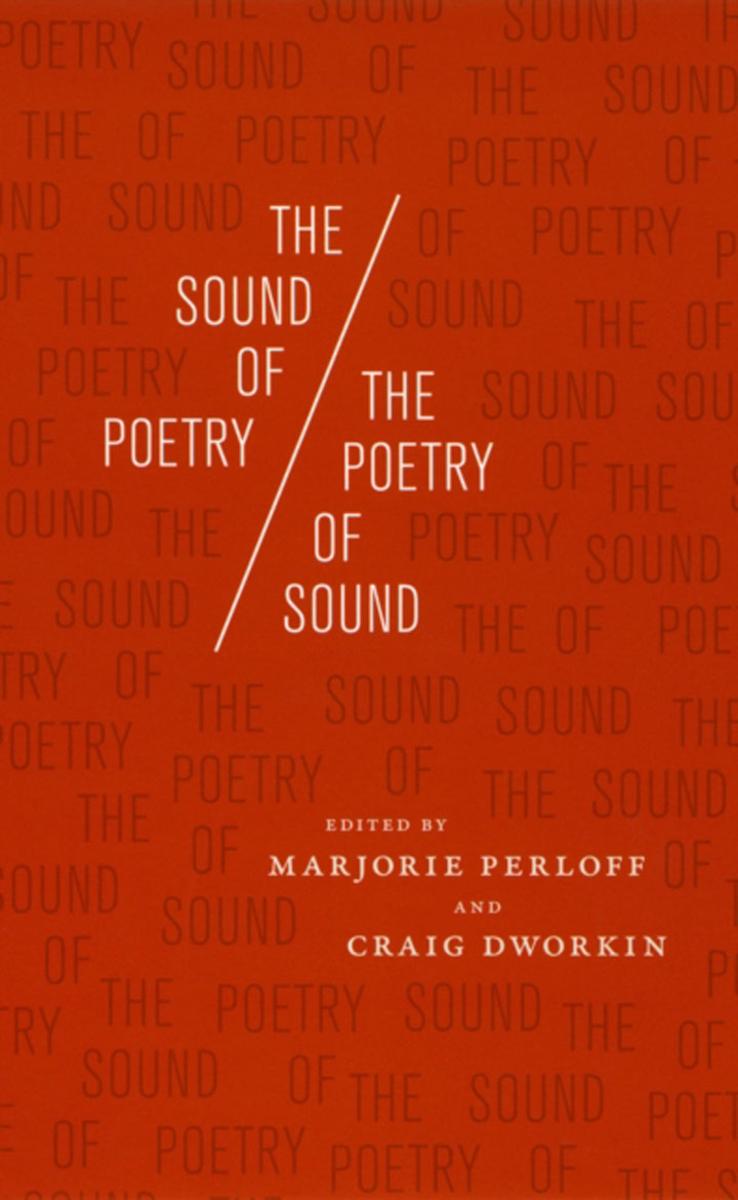
The Sound of Poetry / The Poetry of Sound
¥247.21
Sound-one of the central elements of poetry-finds itself all but ignored in the current discourse on lyric forms. The essays collected here by Marjorie Perloff and Craig Dworkinbreak that critical silence to readdress some of thefundamental connections between poetry and sound-connections that go far beyond traditional metrical studies.Ranging from medieval Latin lyrics to a cyborg opera, sixteenth-century France to twentieth-century Brazil, romantic ballads to the contemporary avant-garde, the contributors to The Sound of Poetry/The Poetry of Sound explore such subjects as the translatability of lyric sound, the historical and cultural roles of rhyme,the role of sound repetition in novelistic prose, theconnections between "e;sound poetry"e; and music, between the visual and the auditory, the role of the body in performance, and the impact of recording technologies on the lyric voice. Along the way, the essaystake on the "e;ensemble discords"e; of Maurice Scve's Dlie, Ezra Pound's use of "e;Chinese whispers,"e; the alchemical theology of Hugo Ball's Dada performances, Jean Cocteau's modernist radiophonics, and an intercultural account of the poetry reading as a kind of dubbing.A genuinely comparatist study, The Sound of Poetry/The Poetry of Sound is designed to challenge current preconceptions about what Susan Howe has called "e;articulations of sound forms in time"e; as they have transformed the expanded poetic field of the twenty-first century.
At the Barriers
¥253.10
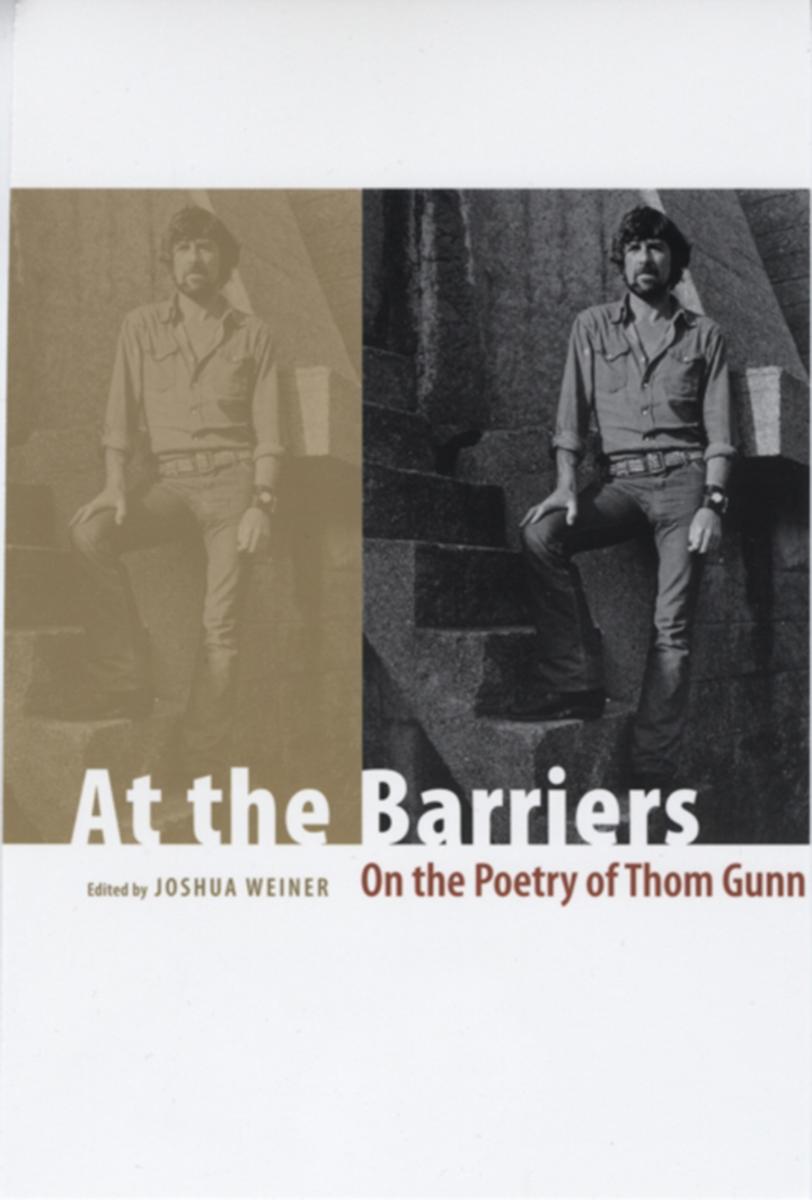
The contributors wish to thank the Hornbake Library at the University of Maryland, College Park, and the Bancroft Library at the University of California, Berkeley, for access to their holdings of Thom Gunn’s manu*s; the Graduate Research Board and the Department of English at the University of Maryland, for material support; Thom’s brother Ander, for the use of his photograph of Thom for this volume’s cover; and Mike Kitay, for permission to print excerpts from unpublished writings and the several published poems, in their entireties, in this volume.

From Mesopotamia to Iraq
¥141.26
In April 2003, the world watched in horror as part of Iraq's cultural heritage disintegrated among the rubble of Saddam Hussein's regime. Looters descended on the Iraq National Museum in Baghdad, Arabic manu*s disappeared from the National Library, and countless Iraqi government records were destroyed. For those to whom Iraq meant only terror, weapons of mass destruction, or oil, several thousand years of history between the Tigris and the Euphrates opened into view. Basic techniques and concepts of civilization, without which human society would not have attained its present level, had their origin there. A writing system, the prerequisite of modern and premodern societies, was part of the human knowledge that spread from Mesopotamia, as were bureaucratic techniques such as archiving, still basic to any modern administration, or early forms of monotheism. Such “firsts” will be highlighted in the following pages. But the uniqueness of the ancient Mesopotamian culture rests not only on countless innovations of this kind but, to an even greater degree, on the fact that we can follow its gradual development and its absorption into the cultural canon over a period of ten thousand years, almost without major gaps.


