


 购物车
 个人中心


The Castle Behind Thorns
¥39.24
This magical adventure set in an enchanted castle surrounded by thorns tells a tale of the power of memory and story, forgiveness and strength, and the true gifts of craft and imagination. By the acclaimed author of?The Princess Curse?and?Handbook for Dragon Slayers, this original fantasy is perfect for fans of Gail Carson Levine, Karen Cushman, and Shannon Hale.When blacksmith apprentice Sand wakes up in a ruined castle, he has no idea how he got there, but the thorny brambles that surround the walls prevent him from leaving. As he begins to fix up the castle in order to survive, everything he touches somehow works better than it should. Then, as he continues to explore, Sand discovers the castle’s secrets, including its long lost heir, Perrotte. Together they must fully repair the broken castle if they ever want to leave.

Grandmother's Tale And Selected Stories
¥95.17
There is no better introduction to R.K. Narayan than this remarkable collection of stories celebrating work that spans five decades. Characters include a storyteller whose magical source of tales dries up, a love-stricken husband who is told by astrologers he must sleep with a prostitute to save his dying wife, a pampered child who discovers that his beloved uncle may be an impostor or even a murderer. Standing supreme amid this rich assortment of stories is the title novella. Told by the narrator's grandmother, the tale recounts the adventures of her mother, married at seven and then abandoned, who crosses the subcontinent to extract her husband from the hands of his new wife. Her courage is immense and her will implacable -- but once her mission is completed, her independence vanishes. Gentle irony, wryly drawn characters, and themes at once Indian and universal mark these humane stories, which firmly establish Narayan as one of the world's preeminant storytellers.

More about Paddington
¥33.63
Paddington Bear becomes a celebrity when he takes portraits of the Brown family with a very old camera. Thanks to the unique results, a local shop puts the photos on display. And that's just the first adventure this extraordinary bear finds himself in. From wallpapering to mystery-solving, Paddington does it all with the sense of wonder and playful charm that readers have come to love.First published in 1959, More about Paddington is the second novel by Michael Bond chronicling the adventures of this classic character. Paddington has warmed the hearts of generations of readers with his earnest good intentions and humorous misadventures. This brand-new paper-over-board edition of the classic novel contains the original text by Michael Bond and illustrations by Peggy Fortnum.
The Cabinet of Curiosities
¥38.72
A collection of thirty-six forty eerie, mysterious, intriguing, and very short stories by the acclaimed authors Stefan Bachmann, Katherine Catmull, Claire LeGrand, and Emma Trevayne. The Cabinet of Curiosities is perfect for fans of Alvin Schwartz's Scary Stories to Tell in the Dark and anyone who relishes a good creepy tale. Great for reading alone or reading aloud at camp or school!The book features an introduction and commentary by the authors and black-and-white illustrations throughout.
Advanced Oracle PL/SQL Developer's Guide - Second Edition
¥107.90
Master the advanced concepts of PL/SQL for professional-level certification and learn the new capabilities of Oracle Database 12cAbout This BookLearn advanced application development features of Oracle Database 12c and prepare for the 1Z0-146 examinationBuild robust and secure applications in Oracle PL/SQL using the best practicesPacked with feature demonstrations and illustrations that will help you learn and understand the enhanced capabilities of Oracle Database 12cWho This Book Is ForThis book is for Oracle developers responsible for database management. Readers are expected to have basic knowledge of Oracle Database and the fundamentals of PL/SQL programming. Certification aspirants can use this book to prepare for 1Z0-146 examination in order to be an Oracle Certified Professional in Advanced PL/SQL.What You Will LearnLearn and understand the key SQL and PL/SQL features of Oracle Database 12cUnderstand the new Multitenant architecture and Database In-Memory option of Oracle Database 12cKnow more about the advanced concepts of the Oracle PL/SQL language such as external procedures, securing data using Virtual Private Database (VPD), SecureFiles, and PL/SQL code tracing and profilingImplement Virtual Private Databases to prevent unauthorized data accessTrace, analyze, profile, and debug PL/SQL code while developing database applicationsIntegrate the new application development features of Oracle Database 12c with the current conceptsDiscover techniques to analyze and maintain PL/SQL codeGet acquainted with the best practices of writing PL/SQL code and develop secure applicationsIn DetailOracle Database is one of the most popular databases and allows users to make efficient use of their resources and to enhance service levels while reducing the IT costs incurred. Oracle Database is sometimes compared with Microsoft SQL Server, however, Oracle Database clearly supersedes SQL server in terms of high availability and addressing planned and unplanned downtime. Oracle PL/SQL provides a rich platform for application developers to code and build scalable database applications and introduces multiple new features and enhancements to improve development experience.Advanced Oracle PL/SQL Developer's Guide, Second Edition is a handy technical reference for seasoned professionals in the database development space. This book starts with a refresher of fundamental concepts of PL/SQL, such as anonymous block, subprograms, and exceptions, and prepares you for the upcoming advanced concepts. The next chapter introduces you to the new features of Oracle Database 12c, not limited to PL/SQL. In this chapter, you will understand some of the most talked about features such as Multitenant and Database In-Memory. Moving forward, each chapter introduces advanced concepts with the help of demonstrations, and provides you with the latest update from Oracle Database 12c context. This helps you to visualize the pre- and post-applications of a feature over the database releases. By the end of this book, you will have become an expert in PL/SQL programming and will be able to implement advanced concepts of PL/SQL for efficient management of Oracle Database.Style and approach The book follows the structure of the Oracle Certification examination but doesn't restrict itself to the exam objectives. Advanced concepts have been explained in an easy-to-understand style, supported with feature demonstrations and case illustrations.
Getting Started with ResearchKit
¥80.65
Enter the era of medical research using mobile devices with the help of this guide on ResearchKit!About This BookCreate a simple clinical research app using most aspects of ResearchKitBuild a simple survey with various data types with the results printed on the screen.A step-by-step guide introducing Apple's ResearchKit and techniques to incorporate it into various apps.Who This Book Is ForThis book is aimed at medical researchers with basic iOS coding knowledge and iOS developers looking to create clinical research apps.What You Will LearnLearn to create customized consent formGet introduced to two backend services: a simple backend server using Sinatra and Sage BridgeBuild a custom task (a conditional survey example) and a navigable taskGet an Overview of ResearchKit's open source repository and App CoreInteraction with the hardware of the device including the gyro and the motion sensorsLearn the basics of this revolutionary technologyGet introduced to the barebones app and learn to write your first codeIn DetailResearchKit is an open source software development framework from Apple that lets you easily create mobile applications for clinical research studies. ResearchKit provides you the ability to orchestrate the administration of tasks and recording of the results. ResearchKit provides tasks in order to perform informed consent, active tasks, and surveys.Starting with the basics of the ResearchKit framework, this books walks you through the steps of creating iOS applications that could serve as the basis of a clinical research mobile app.This book will introduce readers to ResearchKit and how to turn your iPhone into into a clinical research tool. The book will start off by installing and building the research framework in line with the researcher's needs; during this, the reader will learn to embed ResearchKit in the application and create a small task.After this, the book will go a little deeper into creating modules for surveys, consents, and so on. The book will also cover the various aspects of privacy and security with regard to participant data, and how to build dashboards for visualizing medical data and results in line with the researcher's requirements: data backends, JSON serialization and deserialization, and so on.Readers will be able to fully utilize ResearchKit for medical research, will be able to get more and more patients to participate in their surveys, and will gain insights from the surveys using the dashboards created.Style and approachA hands-on guide with ample screenshots for you to follow and learn about ResearchKit. Each topic is explained sequentially and placed in context so that you can get a better understanding of every step in the process of creating clinical research apps.
Cocos2d Cross-Platform Game Development Cookbook - Second Edition
¥90.46
Develop games for iOS and Android using Cocos2d with the aid of over 70 step-by-step recipesAbout This BookLearn to efficiently use Cocos2d to develop cross-platform games, and have them work on iOS as well as AndroidGet acquainted with industry-wide professional tools such as Glyph Designer, Texture Packer, and Physics Editor, as well as using the Swift/ Sprite builder implementation of Cocos2dUse the easy-to-follow recipes to develop as well as deploy games to the Playstore and the App StoreWho This Book Is ForThis book is for intermediate game developers and especially the ones who are generally curious to find out what’s new in Cocos2d v 3.3.What You Will LearnBuild custom sprites with custom animations for the gameBuild interactivity into your game by adding gestures and touch interactionsUnderstand AI enemy programming and path finding to make games more excitingAdd physics to your game to make it more lively and interactiveGet familiar with the Swift and Sprite builder implementations along with Objective-C programmingPerform hassle-free deployment of games built in iOS onto AndroidAdd effects and particle systems to make the game more colorfulIn DetailCocos2d is the world’s leading game development framework for developing iOS games. With the introduction of Swift and Spritebuilder, it has become easier than ever to develop the games of your dreams without much effort. With Cocos2d, you can also deploy the game on Android, thereby maximizing profit and reducing development and porting costs.The book starts off with a detailed look at how to implement sprites and animations into your game to make it livelier. You will then learn to add scenes to the game such as the gameplay scene and options scene and create menus and buttons in these scenes, as well as creating transitions between them. From there on, you will get an understanding of how to program user interactions such as tapping, holding, and swiping. You’ll then add accelerometer inputs and physics to the scene, and make objects respond back to the inputs. A game is practically incomplete without audio being added, so this will be covered next.The next section will include ways to add Artificial Intelligence to enemies in the game, allowing them to patrol, chase, and shoot in a projectile manner. You will then learn to use NSUserDefault to save and load game progress, and create and access files using JSON, Plist, and XML files for custom storage and retrieval of data. Then you will learn to add dynamic lighting to your game and will use industry-wide tools such as Texture Packer, Glyph Designer, Physics Editor, Particle Designer, and Sprite Illuminator to create more visually appealing and performance-optimized games.Towards the end of the book, we dive into Apple’s latest programming language—Swift, highlighting the major differences between Objective C and Swift. The book culminates with taking your existing game developed for iOS and porting it to Android, showing you how to install the Android Xcode plugin as well.Style and approachThe book is written in an extremely lucid and step-by-step manner; it can be understood easily by anyone. The topics included are broken down into individual chapters so you can refer to the specific chapter to get answers on the subject you are interested in.
Test-Driven iOS Development with Swift
¥71.93
Create fully-featured and highly functional iOS apps by writing tests firstAbout This BookLearn test-driven principles to help you build apps with fewer bugs and better designsBecome more efficient while working with Swift to move on to your next project faster!Learn how to incorporate all of the principles of test-driven development (TDD) in to your daily programming workflowWho This Book Is ForIf debugging iOS apps is a nerve-racking task for you and you are looking for a fix, this book is for you.What You Will LearnImplement TDD in swift application developmentGet to know the fundamentals, life cycle, and benefits of TDDExplore the tools and frameworks to effectively use TDDDevelop models and controllers driven by testsConstruct the network layer using stubsUse functional tests to ensure the app works as plannedAutomate and streamline the building, analysing, testing, and archiving of your iOS appsIn DetailTest-driven development (TDD) is a proven way to find software bugs early. Writing tests before your code improves the structure and maintainability of your app.Test-driven iOS Development with Swift will help you understand the process of TDD and how it impacts your applications written in Swift. Through practical, real-world examples, you’ll start seeing how to implement TDD in context. We will begin with an overview of your TDD workflow and then deep-dive into unit testing concepts and code cycles. We will showcase the workings of functional tests, which will help you improve the user interface. Finally, you will learn about automating deployments and continuous integration to run an environment.Style and approachThis is an easy-to-follow example-driven tutorial, packed with lots of tips and tricks that explore TDD bit-by-bit in the process of making an iOS application.
Learning Cython Programming - Second Edition
¥63.21
Learn the fundamentals of Cython to extend the legacy of your applicationsAbout This BookLearn how to extend C applications with pure Python codeGet more from Python – you’ll not only learn Cython, you’ll also unlock a greater understanding of how to harness PythonPacked with tips and tricks that make Cython look easy, dive into this accessible programming guide and find out what happens when you bring C and Python together!Who This Book Is ForThis book is for developers who are familiar with the basics of C and Python programming and wish to learn Cython programming to extend their applications.What You Will LearnReuse Python logging in CMake an IRC bot out of your C applicationExtend an application so you have a web server for rest callsPractice Cython against your C++ codeDiscover tricks to work with Python ConfigParser in CCreate Python bindings for native librariesFind out about threading and concurrency related to GILExpand Terminal Multiplexer Tmux with CythonIn DetailCython is a hybrid programming language used to write C extensions for Python language. Combining the practicality of Python and speed and ease of the C language it’s an exciting language worth learning if you want to build fast applications with ease.This new edition of Learning Cython Programming shows you how to get started, taking you through the fundamentals so you can begin to experience its unique powers.You’ll find out how to get set up, before exploring the relationship between Python and Cython. You’ll also look at debugging Cython, before moving on to C++ constructs, Caveat on C++ usage, Python threading and GIL in Cython. Finally, you’ll learn object initialization and compile time, and gain a deeper insight into Python 3, which will help you not only become a confident Cython developer, but a much more fluent Python developer too.Style and approachThis practical and a fast-paced guide gives you all the information you need to start programming using Cython.
Mastering Puppet - Second Edition
¥90.46
Master Puppet for configuration management of your systems in an enterprise deploymentAbout This BookThis book is an advanced guide to using and deploying Puppet 4 in your organization with a special focus on issues faced in larger enterprise deploymentsFrom an experienced author, learn to deal with scaling, performance, and multiple developers with the help of real-world examplesThis is the most up-to-date guide on Puppet, and covers the advanced concepts of Puppet 4Who This Book Is ForThis book is for those who have intermediate knowledge of Puppet and are looking to deploy it in their environment. Some idea how to write simple modules for configuration management with Puppet is a prerequisite for this book.What You Will LearnScale out your Puppet infrastructure using proxying techniquesAutomate your code promotion workflow using Git and r10kSolve real-world problems using public modules from the Puppet ForgeUse Hiera to separate the data of your configuration from the code of your configurationWrite your own custom facts in RubyExtend Puppet with your own custom facts, modules, and typesUse exported resources to orchestrate change between machinesDebug a puppetserver using Java techniquesIn DetailPuppet is a configuration management system and a language. It was written for and by system administrators to manage large numbers of systems efficiently and prevent configuration drifts.Mastering Puppet deals with the issues faced when scaling out Puppet to handle large numbers of nodes. It will show you how to fit Puppet into your enterprise and allow many developers to work on your Puppet code simultaneously. In addition, you will learn to write custom facts and roll your own modules to solve problems. Next, popular options for performing reporting and orchestration tasks will be introduced in this book. Moving over to troubleshooting techniques, which will be very useful. The concepts presented are useful to any size organization.By the end of the book, you will know how to deal with problems of scale and exceptions in your code, automate workflows, and support multiple developers working simultaneously.Style and approachThis book is a step-wise guide packed with examples to help you configure complex systems in Puppet.
Real-Time Big Data Analytics
¥80.65
Design, process, and analyze large sets of complex data in real timeAbout This BookGet acquainted with transformations and database-level interactions, and ensure the reliability of messages processed using StormImplement strategies to solve the challenges of real-time data processingLoad datasets, build queries, and make recommendations using Spark SQLWho This Book Is ForIf you are a Big Data architect, developer, or a programmer who wants to develop applications/frameworks to implement real-time analytics using open source technologies, then this book is for you.What You Will LearnExplore big data technologies and frameworksWork through practical challenges and use cases of real-time analytics versus batch analyticsDevelop real-word use cases for processing and analyzing data in real-time using the programming paradigm of Apache StormHandle and process real-time transactional dataOptimize and tune Apache Storm for varied workloads and production deploymentsProcess and stream data with Amazon Kinesis and Elastic MapReducePerform interactive and exploratory data analytics using Spark SQLDevelop common enterprise architectures/applications for real-time and batch analyticsIn DetailEnterprise has been striving hard to deal with the challenges of data arriving in real time or near real time.Although there are technologies such as Storm and Spark (and many more) that solve the challenges of real-time data, using the appropriate technology/framework for the right business use case is the key to success. This book provides you with the skills required to quickly design, implement and deploy your real-time analytics using real-world examples of big data use cases.From the beginning of the book, we will cover the basics of varied real-time data processing frameworks and technologies. We will discuss and explain the differences between batch and real-time processing in detail, and will also explore the techniques and programming concepts using Apache Storm.Moving on, we’ll familiarize you with “Amazon Kinesis” for real-time data processing on cloud. We will further develop your understanding of real-time analytics through a comprehensive review of Apache Spark along with the high-level architecture and the building blocks of a Spark program.You will learn how to transform your data, get an output from transformations, and persist your results using Spark RDDs, using an interface called Spark SQL to work with Spark.At the end of this book, we will introduce Spark Streaming, the streaming library of Spark, and will walk you through the emerging Lambda Architecture (LA), which provides a hybrid platform for big data processing by combining real-time and precomputed batch data to provide a near real-time view of incoming data.Style and approachThis step-by-step is an easy-to-follow, detailed tutorial, filled with practical examples of basic and advanced features.Each topic is explained sequentially and supported by real-world examples and executable code snippets.
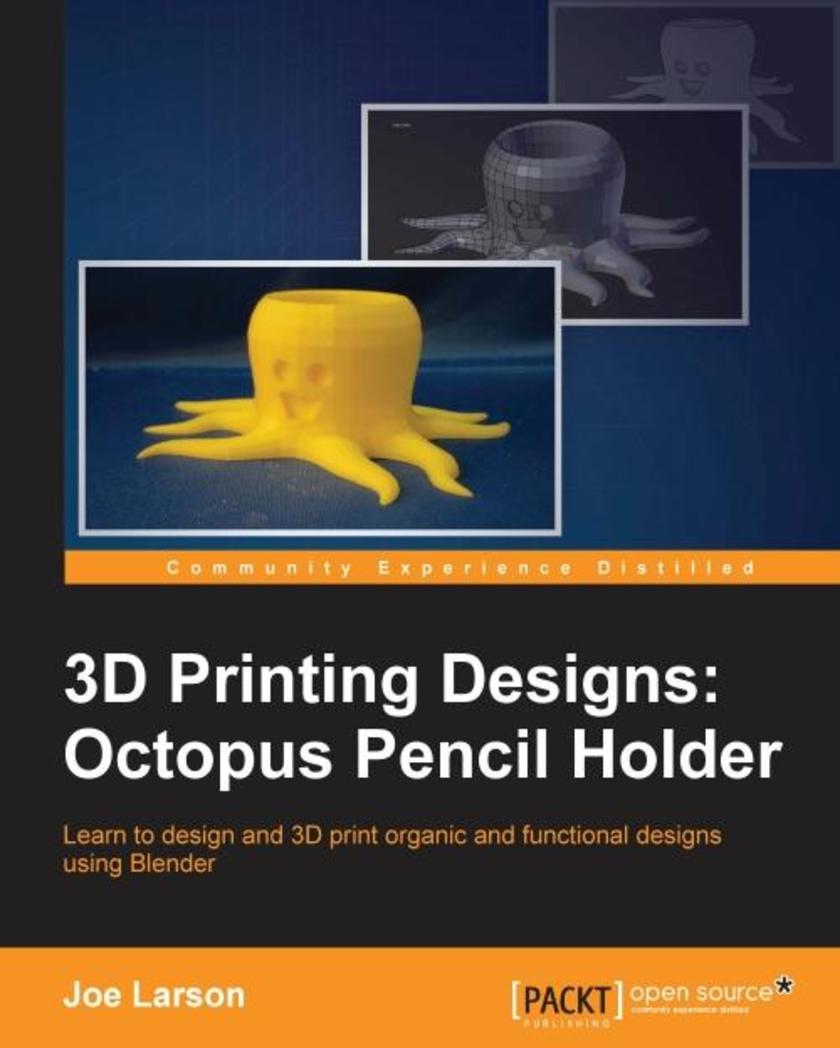
3D Printing Designs: Octopus Pencil Holder
¥35.96
Learn to design and 3D print organic and functional designs using BlenderAbout This BookLearn how to make complex shapes by editing basic onesMake printable objects from multiple shapes and partsLearn how to design from scratch, without a reference to physical objectsWho This Book Is ForYou should have basic knowledge of Blender and 3D printing and be interested in printing your first object.What You Will LearnGet to know the guiding principles required to create 3D printer-friendly modelsUnderstand material characteristics, printing specifications, tolerances, and design tipsMaster the art of modifying basic shapes with Blender's powerful editing tools: extrude, loop cuts, and other transformationsLearn techniques of editing complex meshes, smoothing, combining shapes, and exporting them into STL files for printingIn DetailThis book will cover the very basic but essential techniques you need to model an organic and functional object for 3D printing using Blender.Starting with pen and paper and then moving on to the computer, you will create your first project in Blender, add basic geometric shapes, and use techniques such as extruding and subdividing to transform these shapes into complex meshes. You will learn how modifiers can automatically refine the shape further and combine multiple shapes into a single 3D printable model.By the end of the book, you will have gained enough practical hands-on experience to be able to create a 3D printable object of your choice, which in this case is a 3D print-ready octopus pencil holder.Style and approachThis is a starter project designed to introduce you to your first real-world 3D printing designs, where you'll learn how to handle the fundamental principles of 3D printing design and have your hands on your reward in no time.
Kali Linux Web Penetration Testing Cookbook
¥90.46
Over 80 recipes on how to identify, exploit, and test web application security with Kali Linux 2About This BookFamiliarize yourself with the most common web vulnerabilities a web application faces, and understand how attackers take advantage of themSet up a penetration testing lab to conduct a preliminary assessment of attack surfaces and run exploitsLearn how to prevent vulnerabilities in web applications before an attacker can make the most of itWho This Book Is ForThis book is for IT professionals, web developers, security enthusiasts, and security professionals who want an accessible reference on how to find, exploit, and prevent security vulnerabilities in web applications. You should know the basics of operating a Linux environment and have some exposure to security technologies and tools.What You Will LearnSet up a penetration testing laboratory in a secure wayFind out what information is useful to gather when performing penetration tests and where to look for itUse crawlers and spiders to investigate an entire website in minutesDiscover security vulnerabilities in web applications in the web browser and using command-line toolsImprove your testing efficiency with the use of automated vulnerability scannersExploit vulnerabilities that require a complex setup, run custom-made exploits, and prepare for extraordinary scenariosSet up Man in the Middle attacks and use them to identify and exploit security flaws within the communication between users and the web serverCreate a malicious site that will find and exploit vulnerabilities in the user's web browserRepair the most common web vulnerabilities and understand how to prevent them becoming a threat to a site's securityIn DetailWeb applications are a huge point of attack for malicious hackers and a critical area for security professionals and penetration testers to lock down and secure. Kali Linux is a Linux-based penetration testing platform and operating system that provides a huge array of testing tools, many of which can be used specifically to execute web penetration testing.This book will teach you, in the form step-by-step recipes, how to detect a wide array of vulnerabilities, exploit them to analyze their consequences, and ultimately buffer attackable surfaces so applications are more secure, for you and your users.Starting from the setup of a testing laboratory, this book will give you the skills you need to cover every stage of a penetration test: from gathering information about the system and the application to identifying vulnerabilities through manual testing and the use of vulnerability scanners to both basic and advanced exploitation techniques that may lead to a full system compromise. Finally, we will put this into the context of OWASP and the top 10 web application vulnerabilities you are most likely to encounter, equipping you with the ability to combat them effectively. By the end of the book, you will have the required skills to identify, exploit, and prevent web application vulnerabilities.Style and approachTaking a recipe-based approach to web security, this book has been designed to cover each stage of a penetration test, with de*ions on how tools work and why certain programming or configuration practices can become security vulnerabilities that may put a whole system, or network, at risk. Each topic is presented as a sequence of tasks and contains a proper explanation of why each task is performed and what it accomplishes.
OpenGL Game Development By Example
¥107.90
Design and code your own 2D and 3D games efficiently using OpenGL and C++ About This Book Create 2D and 3D games completely, through a series of end-to-end game projects Learn to render high performance 2D and 3D graphics using OpenGL Implement a rudimentary game engine using step-by-step code Who This Book Is For If you are a prospective game developer with some experience using C++, then this book is for you. Both prospective and experienced game programmers will find nuggets of wisdom and practical advice as they learn to code two full games using OpenGL, C++, and a host of related tools. What You Will Learn Set up your development environment in Visual Studio using OpenGL Use 2D and 3D coordinate systems Implement an input system to handle the mouse and the keyboard Create a state machine to handle complex changes in the game Load, display, and manipulate both 2D and 3D graphics Implement collision detection and basic physics Discover the key components needed to complete a polished game Handle audio files and implement sound effects and music In Detail OpenGL is one of the most popular rendering SDKs used to develop games. OpenGL has been used to create everything from 3D masterpieces running on desktop computers to 2D puzzles running on mobile devices. You will learn to apply both 2D and 3D technologies to bring your game idea to life. There is a lot more to making a game than just drawing pictures and that is where this book is unique! It provides a complete tutorial on designing and coding games from the setup of the development environment to final credits screen, through the creation of a 2D and 3D game. The book starts off by showing you how to set up a development environment using Visual Studio, and create a code framework for your game. It then walks you through creation of two games–a 2D platform game called Roboracer 2D and a 3D first-person space shooter game–using OpenGL to render both 2D and 3D graphics using a 2D coordinate system. You'll create sprite classes, render sprites and animation, and navigate and control the characters. You will also learn how to implement input, use audio, and code basic collision and physics systems. From setting up the development environment to creating the final credits screen, the book will take you through the complete journey of creating a game engine that you can extend to create your own games. Style and approach An easy-to-follow guide full of code examples to illustrate every concept and help you build a 2D and 3D game from scratch, while learning the key tools that surround a typical OpenGL project.
Mobile Application Penetration Testing
¥90.46
Explore real-world threat scenarios, attacks on mobile applications, and ways to counter them About This Book Gain insights into the current threat landscape of mobile applications in particular Explore the different options that are available on mobile platforms and prevent circumventions made by attackers This is a step-by-step guide to setting up your own mobile penetration testing environment Who This Book Is For If you are a mobile application evangelist, mobile application developer, information security practitioner, penetration tester on infrastructure web applications, an application security professional, or someone who wants to learn mobile application security as a career, then this book is for you. This book will provide you with all the skills you need to get started with Android and iOS pen-testing. What You Will Learn Gain an in-depth understanding of Android and iOS architecture and the latest changes Discover how to work with different tool suites to assess any application Develop different strategies and techniques to connect to a mobile device Create a foundation for mobile application security principles Grasp techniques to attack different components of an Android device and the different functionalities of an iOS device Get to know secure development strategies for both iOS and Android applications Gain an understanding of threat modeling mobile applications Get an in-depth understanding of both Android and iOS implementation vulnerabilities and how to provide counter-measures while developing a mobile app In Detail Mobile security has come a long way over the last few years. It has transitioned from "should it be done?" to "it must be done!"Alongside the growing number of devises and applications, there is also a growth in the volume of Personally identifiable information (PII), Financial Data, and much more. This data needs to be secured. This is why Pen-testing is so important to modern application developers. You need to know how to secure user data, and find vulnerabilities and loopholes in your application that might lead to security breaches. This book gives you the necessary skills to security test your mobile applications as a beginner, developer, or security practitioner. You'll start by discovering the internal components of an Android and an iOS application. Moving ahead, you'll understand the inter-process working of these applications. Then you'll set up a test environment for this application using various tools to identify the loopholes and vulnerabilities in the structure of the applications. Finally, after collecting all information about these security loop holes, we'll start securing our applications from these threats. Style and approach This is an easy-to-follow guide full of hands-on examples of real-world attack simulations. Each topic is explained in context with respect to testing, and for the more inquisitive, there are more details on the concepts and techniques used for different platforms.
Learning CoreOS
¥71.93
Your one-stop guide for building, configuring, maintaining, and deploying one of the world's fastest growing OSes About This Book Understand the features of CoreOS and learn to administrate and secure a CoreOS environment Develop, test, and deploy cloud services and applications more quickly and efficiently inside lightweight containers using CoreOS This is a complete tutorial on CoreOS, which is the preferred OS for cloud computing as it contains components that facilitate cloud management Who This Book Is For This book is for cloud or enterprise administrators and application developers who would like to gain knowledge about CoreOS to deploy a cloud application or micro-services on a cluster of cloud servers. It is also aimed at administrators with basic networking experience. You do not need to have any knowledge of CoreOS. What You Will Learn Understand the benefits of CoreOS as a cloud orchestration platform Learn about lightweight containers and various container frameworks such as Docker and RKT in CoreOS Manage services and containers across cluster using Fleet and systemd Set up a CoreOS environment using Vagrant Create and manage CoreOS clusters Discover the service parameters using etcd Find out about chaining services running on the cluster using Flannel / Rudder and Weave Create a virtual tenant network and service chaining using OVS In Detail CoreOS is an open source operating system developed upon the Linux kernel. The rise of CoreOS is directly related to the rise of Docker (a Linux container management system). It is a minimal operating system layer and takes a different approach to automating the deployment of containers. The major difference between CoreOS and other Linux distributions is that CoreOS was designed to deploy hundreds of servers. CoreOS immensely helps the users to create systems, which are easy to scale and manage, making life easier for all, be it developer, QA, or deployer. This book is all about setting up, deploying, and using CoreOS to manage clusters and clouds. It will help you understand what CoreOS is and its benefits as a cloud orchestration platform. First, we’ll show you how to set up a simple CoreOS instance with single node in the cluster and how to run a Docker container inside the CoreOS instance. Next, you’ll be introduced to Fleet and systemd, and will deploy and distribute Docker services across different nodes in cluster using Fleet. Later, you’ll be briefed about running services in a cluster with constraints, publishing the services already running on the cluster to new services, and making your services interact with each other. We conclude by teaching you about advanced container networking. By the end of the book, you will know the salient features of CoreOS and will be able to deploy, administrate, and secure a CoreOS environment. Style and approach This practical guide covers the basics and advanced topics related to CoreOS and lightweight containers. The topics are covered in an easy-to-follow manner with each feature explained in detail, beginning with a brief overview and followed by an explanation of its corresponding configuration files.
Troubleshooting OpenStack
¥54.49
Get unstuck and start stacking! About This Book Easily fix the nagging problems that commonly plague OpenStack and become the go-to person in your organization Get better equipped to troubleshoot and solve common problems in performance, availability, and automation that confront production-ready OpenStack environments Save time and decrease frustration by solving significant issues that arise from OpenStack deployments pertaining to storage and networking Who This Book Is For You will need a basic understanding of OpenStack, Linux, and Cloud computing. If you have an understanding of Linux, this book will help you leverage that knowledge in the world of OpenStack, giving you confidence to tackle most issues that may arise. What You Will Learn Diagnose and remediate authentication and authorization problems in Keystone Fix common issues with images served through Glance Master the art of troubleshooting Neutron networking Navigate and overcome problems with Nova Troubleshoot and resolve Cinder block storage issues Identify and correct Swift object storage problems Isolate and fix issues caused by Heat orchestration Leverage Ceilometer and other metering and monitoring tools for effective troubleshooting In Detail OpenStack is a collection of software projects that work together to provide a cloud fabric. OpenStack is one of the fastest growing open source projects in history that unlocks cloud computing for everyone. With OpenStack, you are able to create public or private clouds on your own hardware. The flexibility and control afforded by OpenStack puts the cloud within reach of anyone willing to learn this technology. Starting with an introduction to OpenStack troubleshooting tools, we’ll walk through each OpenStack service and how you can quickly diagnose, troubleshoot, and correct problems in your OpenStack. Understanding the various projects and how they interact is essential for anyone attempting to troubleshoot an OpenStack cloud. We will start by explaining each of the major components and the dependencies between them, and move on to show you how to identify and utilize an effective set of OpenStack troubleshooting tools and fix common Keystone problems. Next, we will expose you to common errors and problems you may encounter when using the OpenStack Block Storage service (Cinder). We will then examine Heat, the OpenStack Orchestration Service, where you will learn how to trace errors, determine their root cause, and effectively correct the issue. Finally, you will get to know the best practices to architect your OpenStack cloud in order to achieve optimal performance, availability, and reliability. Style and approach This is straight-to-the point guide to fixing your OpenStack cluster. Common problems are identified and suggestions to resolve these problems are presented in a simple, easy-to-understand manner.
Magento 2 Cookbook
¥80.65
Over 50 practical recipes that will help you realize the full potential of Magento in order to build a professional online store About This Book Take advantage of the latest features in Magento 2 to set up an e-commerce store that fits your business needs Packed with several advanced recipes, not just to manage your online store, but to extend and design it as well Written in a cookbook style, you can pick and choose your recipe to carry out your day- to- day Magento store tasks Who This Book Is For The book is for existing Magento users who want to gain further expertise and insights into managing, designing, and extending their online store in Magento to fit their business needs. Working knowledge of Magento and basic familiarity with programming is expected. What You Will Learn Set up a Magento 2 project on Apache or Nginx. Transfer your Magento 1 database to Magento 2 using the Magento 2 system tools. Boost the performance of Magento 2 by enabling different types of caching. Build a Magento 2 multi-store by creating a root catalog, subdirectories, and products. Create and manage pages, blocks, and front-end apps. Manage your Magento store by setting up the correct TAX rules. Design custom themes within the Magento 2 framework. Create basic and advanced extensions using Magento 2. In Detail Magento 2 is an open source e-commerce platform that has all the functionality to function from small to large online stores. It is preferred by developers and merchants due to its new architecture, which makes it possible to extend the functionalities with plugins, a lot of which are now created by the community. This merchant and developer guide is packed with recipes that cover all aspects of Magento 2. The recipes start with simple how-to’s then delve into more advanced topics as the book progresses. We start with the basics of setting up a Magento 2 project on Apache or Nginx. Next, you will learn about basics including system tools and caching to get your Magento 2 system ready for the real work. We move on to simple tasks such as managing your store and catalog configuration. When you are familiar with this, we cover more complex features such as module and extension development. Then we will jump to the final part: advanced Magento 2 extensions. By the end of this book, you’ll be competent with all the development phases of Magento 2 and its most common elements. Style and approach Step by step guide for real world tasks for Magento users to gain a more advanced insight on managing, extending and designing their e-commerce store to fit their business needs.
Learning C# by Developing Games with Unity 5.x - Second Edition
¥80.65
Develop your first interactive 2D platformer game by learning the fundamentals of C# About This Book Get to grips with the fundamentals of *ing in C# with Unity Create an awesome, 2D platformer game from scratch using the principles of object-oriented programming and coding in C# This is a step-by-step guide to learn the fundamentals of C# *ing to develop GameObjects and master the basics of the new UI system in Unity Who This Book Is For The book is targeted at beginner level Unity developers with no programming experience. If you are a Unity developer and you wish to learn how to write C# *s and code by creating games, then this book is for you. What You Will Learn Understand the fundamentals of variables, methods, and code syntax in C# Get to know about techniques to turn your game idea into working project Use loops and collections efficiently in Unity to reduce the amount of code Develop a game using the object-oriented programming principles Generate infinite levels for your game Create and code a good-looking functional UI system for your game Publish and share your game with users In Detail Unity is a cross-platform game engine that is used to develop 2D and 3D video games. Unity 5 is the latest version, released in March 2015, and adds a real-time global illumination to the games, and its powerful new features help to improve a game’s efficiency. This book will get you started with programming behaviors in C# so you can create 2D games in Unity. You will begin by installing Unity and learning about its features, followed by creating a C# *. We will then deal with topics such as unity *ing for you to understand how codes work so you can create and use C# variables and methods. Moving forward, you will find out how to create, store, and retrieve data from collection of objects. You will also develop an understanding of loops and their use, and you’ll perform object-oriented programming. This will help you to turn your idea into a ready-to-code project and set up a Unity project for production. Finally, you will discover how to create the GameManager class to manage the game play loop, generate game levels, and develop a simple UI for the game. By the end of this book, you will have mastered the art of applying C# in Unity. Style and approach This is a step-by-step guide to developing a game from scratch by applying the fundamentals of C# and Unity *ing.
R Machine Learning By Example
¥90.46
Understand the fundamentals of machine learning with R and build your own dynamic algorithms to tackle complicated real-world problems successfully About This Book Get to grips with the concepts of machine learning through exciting real-world examples Visualize and solve complex problems by using power-packed R constructs and its robust packages for machine learning Learn to build your own machine learning system with this example-based practical guide Who This Book Is For If you are interested in mining useful information from data using state-of-the-art techniques to make data-driven decisions, this is a go-to guide for you. No prior experience with data science is required, although basic knowledge of R is highly desirable. Prior knowledge in machine learning would be helpful but is not necessary. What You Will Learn Utilize the power of R to handle data extraction, manipulation, and exploration techniques Use R to visualize data spread across multiple dimensions and extract useful features Explore the underlying mathematical and logical concepts that drive machine learning algorithms Dive deep into the world of analytics to predict situations correctly Implement R machine learning algorithms from scratch and be amazed to see the algorithms in action Write reusable code and build complete machine learning systems from the ground up Solve interesting real-world problems using machine learning and R as the journey unfolds Harness the power of robust and optimized R packages to work on projects that solve real-world problems in machine learning and data science In Detail Data science and machine learning are some of the top buzzwords in the technical world today. From retail stores to Fortune 500 companies, everyone is working hard to making machine learning give them data-driven insights to grow their business. With powerful data manipulation features, machine learning packages, and an active developer community, R empowers users to build sophisticated machine learning systems to solve real-world data problems. This book takes you on a data-driven journey that starts with the very basics of R and machine learning and gradually builds upon the concepts to work on projects that tackle real-world problems. You’ll begin by getting an understanding of the core concepts and definitions required to appreciate machine learning algorithms and concepts. Building upon the basics, you will then work on three different projects to apply the concepts of machine learning, following current trends and cover major algorithms as well as popular R packages in detail. These projects have been neatly divided into six different chapters covering the worlds of e-commerce, finance, and social-media, which are at the very core of this data-driven revolution. Each of the projects will help you to understand, explore, visualize, and derive insights depending upon the domain and algorithms. Through this book, you will learn to apply the concepts of machine learning to deal with data-related problems and solve them using the powerful yet simple language, R. Style and approach The book is an enticing journey that starts from the very basics to gradually pick up pace as the story unfolds. Each concept is first defined in the larger context of things succinctly, followed by a detailed explanation of their application. Each topic is explained with the help of a project that solves a real real-world problem involving hands-on work thus giving you a deep insight into the world of machine learning.
Mastering JBoss Drools 6
¥90.46
Discover the power of Drools 6 and Business Rules for developing complex scenarios in your applications About This Book Implement and model different rules using the DRL full syntax Model complex business decisions and domain models in order to automate and improve your operational decisions with the Drools framework A practical, fast-paced, hands-on guide to help you use the different components provided by the Drools Rule Engine Who This Book Is For This book is for Java developers and architects who need to have a deep understanding of how to create or integrate your applications with the Drools Rules Framework. The book assumes that you know the Java language well and also have experience with some widely used frameworks, such as Spring. You should also know the basics of Maven-based applications. What You Will Learn Automate your application’s decisions, such as promotion applying, discount policies, fraud detection, and more. Quickly get started with writing your first rules using the DRL full syntax. Discover the power of the new syntax components of the rule language. Define inferences in your business rules to simplify complex decisions. Write decision tables, templates,domain-specific languages, and scorecards, and learn how to map them to the Drools framework. Harness the full operational power of Drools through all of its configuration points. Use Drools configurations and architectures for different environments and scenarios. In Detail Mastering JBoss Drools 6 will provide you with the knowledge to develop applications involving complex scenarios. You will learn how to use KIE modules to create and execute Business Rules, and how the PHREAK algorithm internally works to drive the Rule Engine decisions. This book will also cover the relationship between Drools and jBPM, which allows you to enrich your applications by using Business Processes. You will be briefly introduced to the concept of complex event processing (Drools CEP) where you will learn how to aggregate and correlate your data based on temporal conditions. You will also learn how to define rules using domain-specific languages, such as spreadsheets, database entries, PMML, and more. Towards the end, this book will take you through the integration of Drools with the Spring and Camel frameworks for more complex applications. Style and approach Approached from a developer’s perspective, the book teaches you all the advanced concepts of Business Rules applicable examples with helpful screenshots, diagrams, tutorials, and examples.


