


 购物车
购物车 个人中心
个人中心
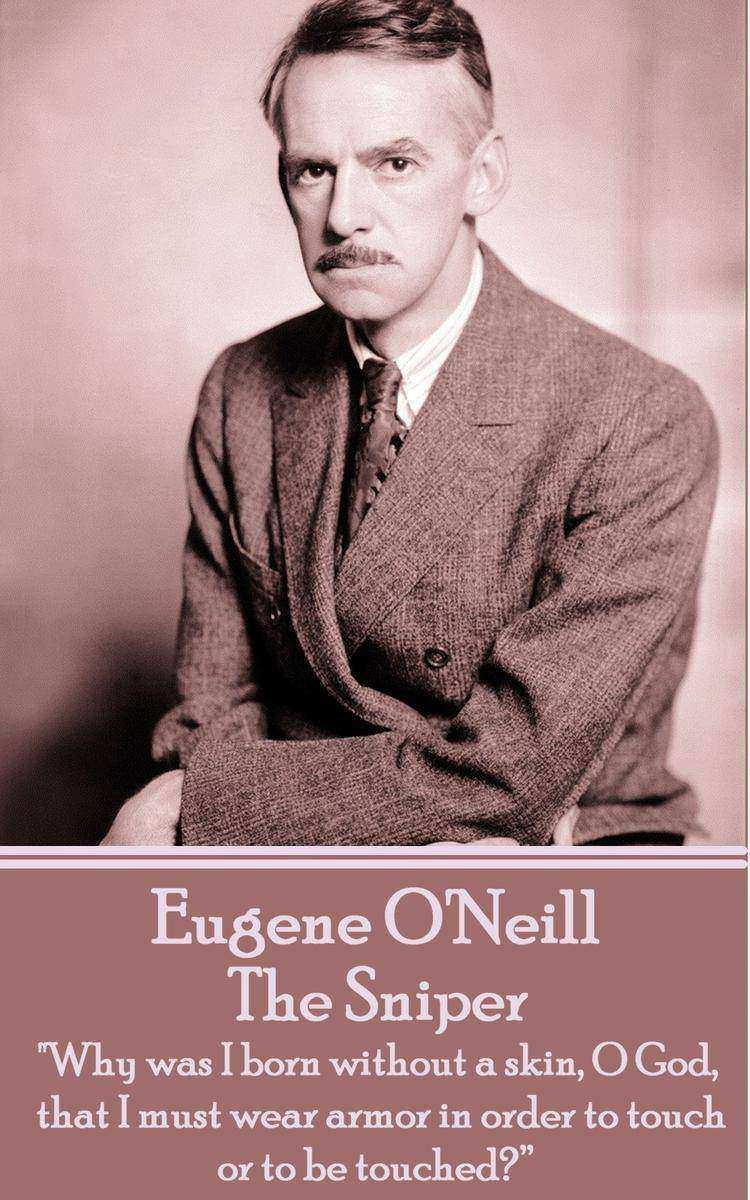
Sniper - Why was I born without a skin, O God
¥14.03
Eugene Gladstone O'Neill was born on October 16, 1888 in a hotel bedroom in what is now Times Square, New York. Much of his childhood was spent in the comfort of books at boarding schools whilst his actor father was on the road and his Mother contended with her own demons. He spent only a year at University - Princeton - and various reasons have been given for his departure. However whatever his background and education denied or added to his development it is agreed amongst all that he was a playwright of the first rank and possibly America's greatest. His introduction of realism into American drama was instrumental in its development and paved a path for many talents thereafter. Of course his winning of both the Pulitzer Prize (4 times) and the Nobel Prize are indicative of his status. His more famous and later works do side with the disillusionment and personal tragedy of those on the fringes of society but continue to build upon ideas and structures he incorporated in his early one act plays. Eugene O'Neill suffered from various health problems, mainly depression and alcoholism. In the last decade he also faced a Parkinson's like tremor in his hands which made writing increasingly difficult. But out of such difficulties came plays of the calibre of The Iceman Cometh, Long Day's Journey Into Night, and A Moon for the Misbegotten. Eugene O'Neill died in Room 401 of the Sheraton Hotel on Bay State Road in Boston, on November 27, 1953, at the age of 65. As he was dying, he whispered his last words: "e;I knew it. I knew it. Born in a hotel room and died in a hotel room."e;
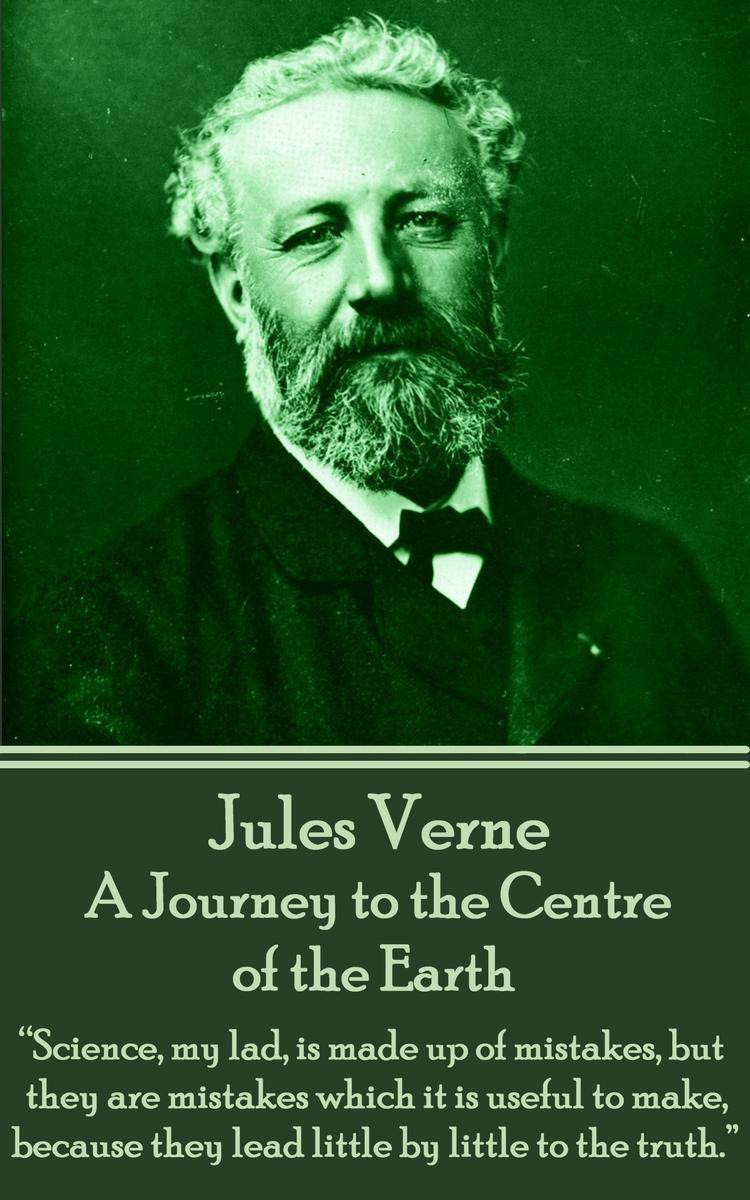
Journey to the Centre of the Earth
¥29.33
Jules Gabriel Verne was born on February 8th, 1828 on Ile Feydeau, a small artificial island on the Loire River in Nantes. His father wanted his son to take over the family law practice. Jules started along this course and despite graduating with a licence en droit in January 1851 was soon diverted by the lure of literature and by his own ambitious talents in this direction. He wrote for the theatre and for magazines and soon with the publication of his first novel; Five Weeks in a Balloon on January 31st, 1863 he had begun his career as an admired and popular author. For many, many years the works flowed, usually no less than and often more than two volumes per year. His meticulous research and imaginative setting and narratives soon established him as a top selling author and he became both famous and wealthy. By publishing firstly as a serialised book and then as a complete book sales swelled as did his reputation. His earnings increased further due to the runaway success from the stage adaptations of Le tour du monde en quatre-vingts jours (1874) and Michel Strogoff (1876), Strangely he was overlooked for honours. He was not even nominated for membership of the Academie Francaise. After the death of both his mother and Hetzel, Jules began to publish darker works but still at a prodigious rate. In 1888, Jules entered politics and was elected town councillor of Amiens, and then served for fifteen years. Jules was now entering the last period of his life. His works continued to flow albeit at a slower pace. His reconciled with his son, Michel who now became an active contributor to his father's works and, when the senior Verne died, would continue to contribute and publish his father's works, ensuring that the work was kept in the public eye and the legacy preserved. On March 24th, 1905, while ill with diabetes, Jules Verne died at his home at 44 Boulevard Longueville, Amiens. As a legacy Jules Verne is forever remembered as 'The Father of Science Fiction'. With his rigorous research Jules was not only able to make his works realistic but also to project forward and predict many new things that would eventually come to pass - either in real life or as the basis for others to use in their own science fiction. Extraordinary indeed.
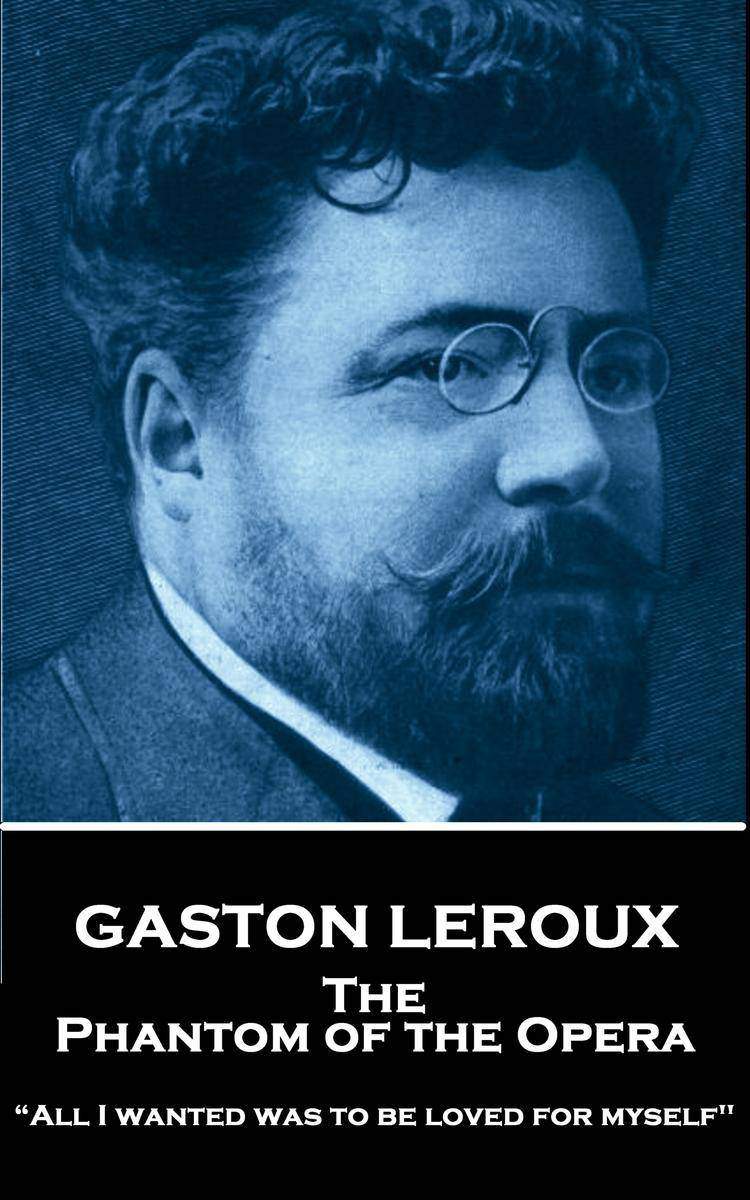
Phantom of the Opera - All I wanted was to be loved for myself
¥23.45
Gaston Louis Alfred Leroux was born on May 6th, 1868, in Paris, France. Leroux was schooled in Normandy and went to Paris to study Law where he graduated in 1889. As a young man he inherited a fortune, valued even then in the millions of francs, and lived excessively until it was almost all quickly spent. In 1890, he began working as a court reporter and theater critic for L'Echo de Paris. He became an international correspondent for Le Matin and covered perhaps his most important story in 1905 when he witnessed and wrote about the Russian Revolution. Lerouxs' reporting instincts were also used for in-depth coverage of the former Paris Opera being used as cells to house prisoners of the Paris Commune in the basement. He abruptly switched careers in 1907 to write fiction. His first effort was the Mystery of the Yellow Room. This was the first in a series of the Adventures of Rouletabillet. From then until the mid-1920s he wrote prolifically, becoming a firm favourite to his French audience and increasingly to a growing market abroad thanks to the numerous translations and his growing reputation. By 1919, Leroux had seen the potential in the growing film industry and together with Arthur Bernede they formed a film company, Societe des Cineromans, to publish novels and simultaneously turn them into films. As an author Leroux works are placed alongside Sir Arthur Conan Doyle's in the United Kingdom and Edgar Allan Poe's in the United States. His Phantom of the Opera is one of the world's classic treasures and is constantly being adapted into other media; from films and TV to radio as well as an audiobook. Leroux was honoured by the French State with a Chevalier de la Legion d'honneur in 1902. Gaston Leroux died in Nice, in Southern France, on April 15th, 1927.
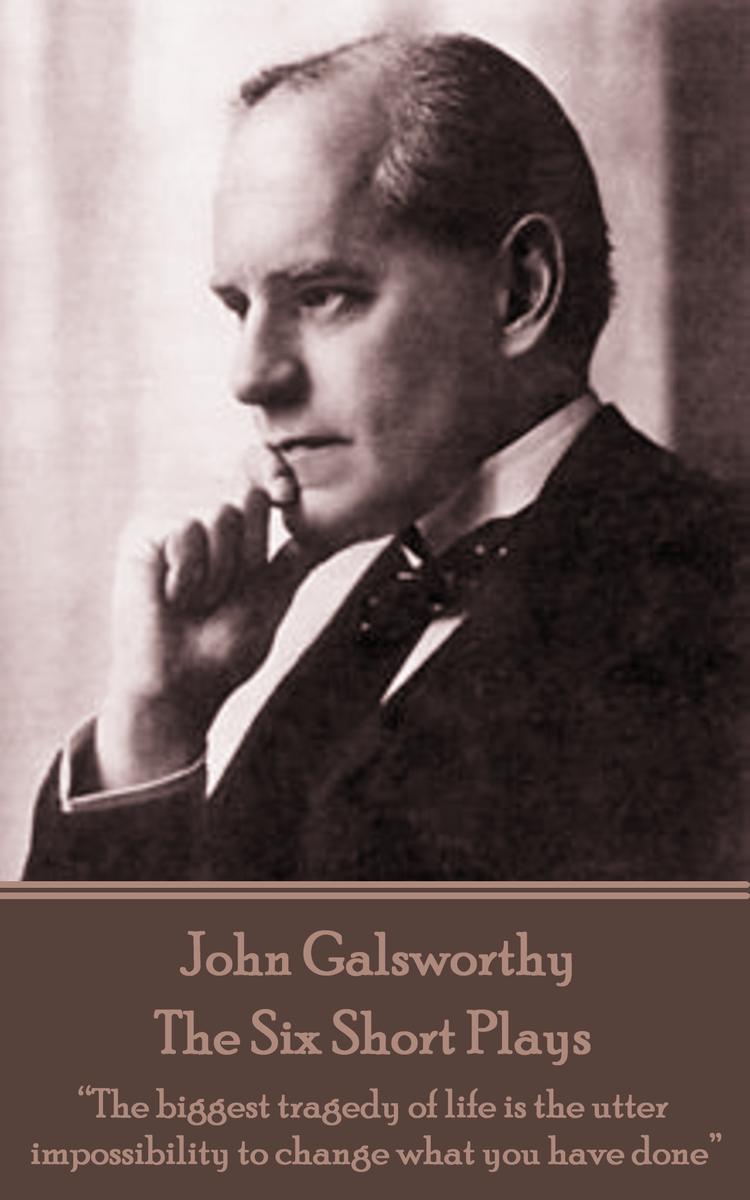
Six Short Plays
¥21.09
John Galsworthy was born at Kingston Upon Thames in Surrey, England, on August 14th 1867 to a wealthy and well established family. His schooling was at Harrow and New College, Oxford before training as a barrister and being called to the bar in 1890. However, Law was not attractive to him and he travelled abroad becoming great friends with the novelist Joseph Conrad, then a first mate on a sailing ship. In 1895 Galsworthy began an affair with Ada Nemesis Pearson Cooper, the wife of his cousin Major Arthur Galsworthy. The affair was kept a secret for 10 years till she at last divorced and they married on 23rd September 1905. Galsworthy first published in 1897 with a collection of short stories entitled "e;The Four Winds"e;. For the next 7 years he published these and all works under his pen name John Sinjohn. It was only upon the death of his father and the publication of "e;The Island Pharisees"e; in 1904 that he published as John Galsworthy. His first play, The Silver Box in 1906 was a success and was followed by "e;The Man of Property"e; later that same year and was the first in the Forsyte trilogy. Whilst today he is far more well know as a Nobel Prize winning novelist then he was considered a playwright dealing with social issues and the class system. Here we publish Villa Rubein, a very fine story that captures Galsworthy's unique narrative and take on life of the time. He is now far better known for his novels, particularly The Forsyte Saga, his trilogy about the eponymous family of the same name. These books, as with many of his other works, deal with social class, upper-middle class lives in particular. Although always sympathetic to his characters, he reveals their insular, snobbish, and somewhat greedy attitudes and suffocating moral codes. He is now viewed as one of the first from the Edwardian era to challenge some of the ideals of society depicted in the literature of Victorian England. In his writings he campaigns for a variety of causes, including prison reform, women's rights, animal welfare, and the opposition of censorship as well as a recurring theme of an unhappy marriage from the women's side. During World War I he worked in a hospital in France as an orderly after being passed over for military service. He was appointed to the Order of Merit in 1929, after earlier turning down a knighthood, and awarded the Nobel Prize in 1932 though he was too ill to attend. John Galsworthy died from a brain tumour at his London home, Grove Lodge, Hampstead on January 31st 1933. In accordance with his will he was cremated at Woking with his ashes then being scattered over the South Downs from an aeroplane.
Comedy of Errors - We came into the world like brother and brother
¥11.67
The life of William Shakespeare, arguably the most significant figure in the Western literary canon, is relatively unknown. Shakespeare was born in Stratford-upon-Avon in 1565, possibly on the 23rd April, St. George's Day, and baptised there on 26th April. Little is known of his education and the first firm facts to his life relate to his marriage, aged 18, to Anne Hathaway, who was 26 and from the nearby village of Shottery. Anne gave birth to their first son six months later. Shakespeare's first play, The Comedy of Errors began a procession of real heavyweights that were to emanate from his pen in a career of just over twenty years in which 37 plays were written and his reputation forever established. This early skill was recognised by many and by 1594 the Lord Chamberlain's Men were performing his works. With the advantage of Shakespeare's progressive writing they rapidly became London's leading company of players, affording him more exposure and, following the death of Queen Elizabeth in 1603, a royal patent by the new king, James I, at which point they changed their name to the King's Men. By 1598, and despite efforts to pirate his work, Shakespeare's name was well known and had become a selling point in its own right on title pages. No plays are attributed to Shakespeare after 1613, and the last few plays he wrote before this time were in collaboration with other writers, one of whom is likely to be John Fletcher who succeeded him as the house playwright for the King's Men. William Shakespeare died two months later on April 23rd, 1616, survived by his wife, two daughters and a legacy of writing that none have since yet eclipsed.
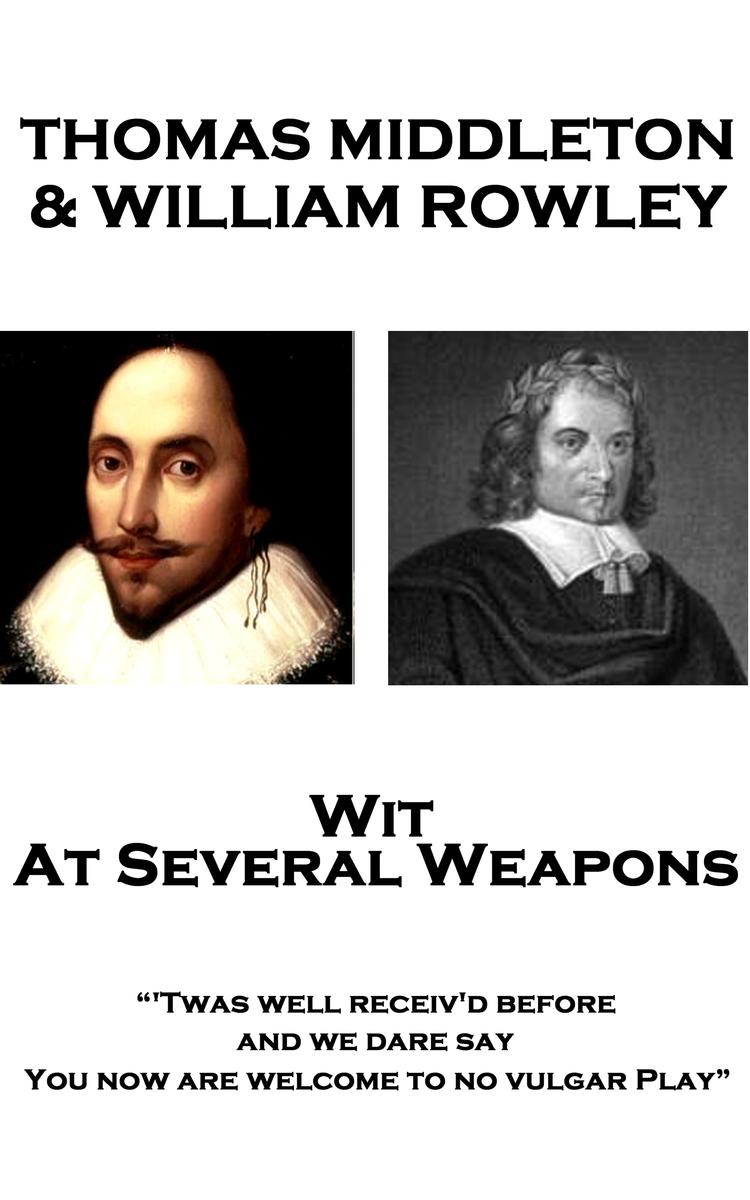
Wit At Several Weapons - Twas well receiv'd before
¥23.45
The play was originally attributed to John Fletcher & Francis Beaumont and printed in their early folios. However, though there is some minor work by Fletcher the play, in modern times, has been now attributed to Middleton & Rowley.Thomas Middleton was born in London in April 1580 and baptised on 18th April. Middleton was aged only five when his father died. His mother remarried but this unfortunately fell apart into a fifteen year legal dispute regarding the inheritance due Thomas and his younger sister.By the time he left Oxford, at the turn of the Century, Middleton had and published Microcynicon: Six Snarling Satirese which was denounced by the Archbishop of Canterbury and publicly burned. In the early years of the 17th century, Middleton wrote topical pamphlets. One - Penniless Parliament of Threadbare Poets was reprinted several times and the subject of a parliamentary inquiry.These early years writing plays continued to attract controversy. His writing partnership with Thomas Dekker brought him into conflict with Ben Jonson and George Chapman in the so-called War of the Theatres. His finest work with Dekker was undoubtedly The Roaring Girl, a biography of the notorious Mary Frith.In the 1610s, Middleton began another playwriting partnership, this time with the actor William Rowley, producing another slew of plays including Wit at Several Weapons and A Fair Quarrel. The ever adaptable Middleton seemed at ease working with others or by himself. His solo writing credits include the comic masterpiece, A Chaste Maid in Cheapside, in 1613.In 1620 he was officially appointed as chronologer of the City of London, a post he held until his death. The 1620s saw the production of his and Rowley's tragedy, and continual favourite, The Changeling, and of several other tragicomedies. However in 1624, he reached a peak of notoriety when his dramatic allegory A Game at Chess was staged by the King's Men. Though Middleton's approach was strongly patriotic, the Privy Council silenced the play after only nine performances at the Globe theatre, having received a complaint from the Spanish ambassador.Middleton for his part was exonerated but it is the last play recorded as having been written by Middleton.Thomas Middleton died at his home at Newington Butts in Southwark in the summer of 1627, and was buried on July 4th, in St Mary's churchyard which today survives as a public park in Elephant and Castle.William Rowley is thought to have been born around 1585 but an exact date is not known.As an actor his early forte was playing 'clown characters' thus helping to carry the low comedy of the play. He began his career working for Queen Anne's Men at the Red Bull Theatre. In 1609. Along with several other actors he founded the Duke of York's Men, which, in 1612, became known as Prince Charles's Men.From here on Rowley's career was spent almost exclusively writing and clowning for this company. It was located, in its time, at several playhouses, including the Curtain, the Hope, and the Red Bull. Although when writing one of his main contributions was to provide the comic sub-plot on several other plays, including The Changeling, A Fair Quarrel, and The Maid in the Mill, he wrote substantial portions of the main narrative as well.Only two surviving plays are generally accepted as solo works by Rowley: A Shoemaker, a Gentleman (circa 1607-9) and All's Lost by Lust (1619). Evidence exists that three other works were authored solely by Rowley: Hymen's Holidays or Cupid's Vagaries (1612), A Knave in Print (1613), and The Fool Without Book (also 1613) but unfortunately none have survived to be further examined. In conjunction with other writers including Thomas Middleton and John Fletcher he wrote several other plays.The exact time and nature of his death is unknown but records show that William Rowley was buried on 11th February 1626 in the graveyard of St James's, Clerkenwell in London.
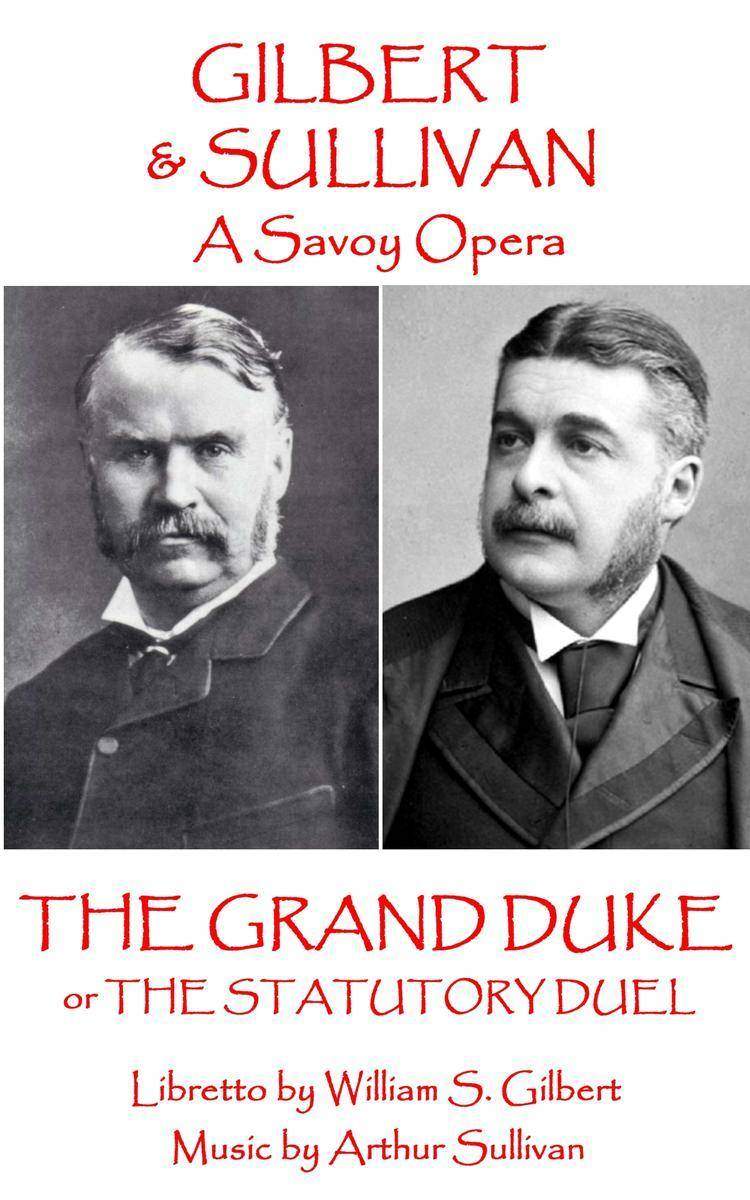
Grand Duke - or The Stuatory Duel
¥26.98
The partnership between William Schwenck Gilbert and Arthur Seymour Sullivan and their canon of Savoy Operas is rightly lauded by all lovers of comic opera the world over. Gilbert's sharp, funny words and Sullivan's deliciously lively and hummable tunes create a world that is distinctly British in view but has the world as its audience. Both men were exceptionally talented and gifted in their own right and wrote much, often with other partners, that still stands the test of time. However, together as a team they created Light or Comic Operas of a standard that have had no rivals equal to their standard, before or since. That's quite an achievement. To be recognised by the critics is one thing but their commercial success was incredible. The profits were astronomical, allowing for the building of their own purpose built theatre - The Savoy Theatre. Beginning with the first of their fourteen collaborations, Thespis in 1871 and travelling through many classics including The Sorcerer (1877), H.M.S. Pinafore (1878), The Pirates of Penzance (1879), The Mikado (1885), The Gondoliers (1889) to their finale in 1896 with The Grand Duke, Gilbert & Sullivan created a legacy that is constantly revived and admired in theatres and other media to this very day.
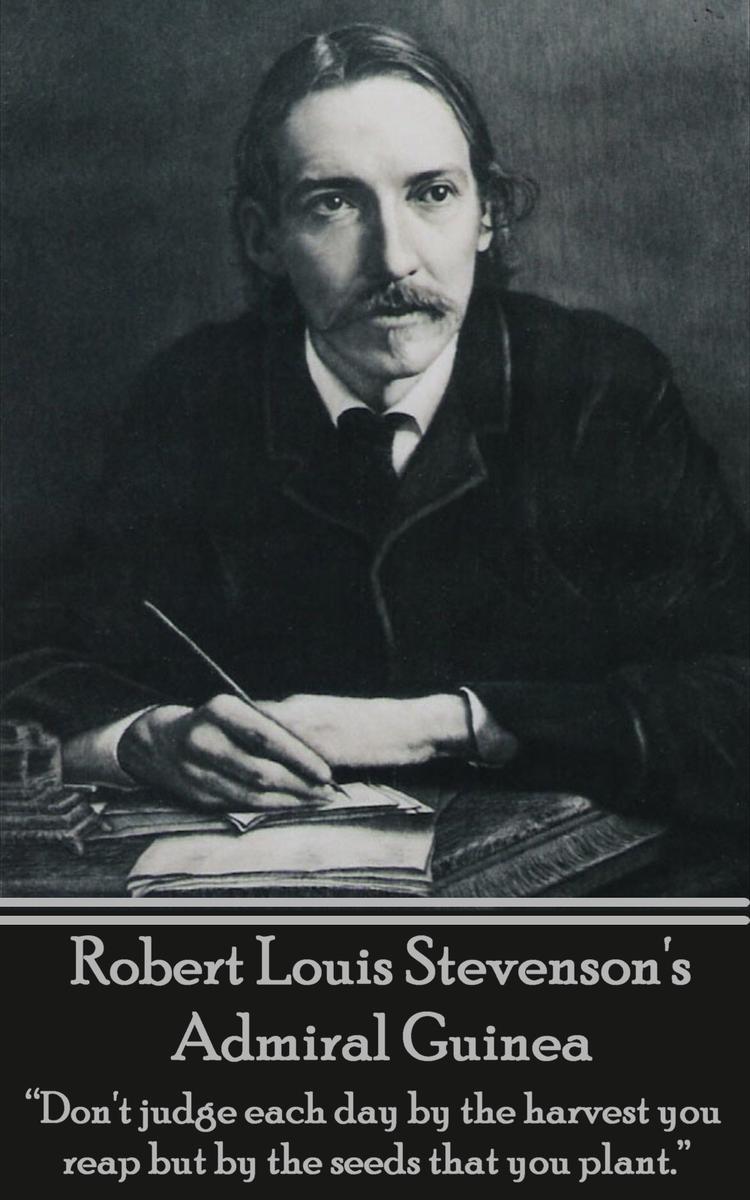
Admiral Guinea - Don't judge each day by the harvest you reap but by the seeds t
¥11.87
Robert Louis Stevenson. In the Scottish canon to be placed alongside Burns for your poems is high praise indeed but it's a rightful place for one of Scotland's finest novelists. Born in 1850 he managed to cram much into his 44 years travelling widely to France, the United States, Samoa and the South Seas. Of course he is widely feted for his classics Dr Jeckyll & Mr Hyde, Treasure Island and poetry volumes such as A Child's Garden Of Verses and short storeis such The Body Snatchers. All offer compelling examples of narration superbly reduced to their essence. This volume 'Admiral Guinea' is another distinctive facet to his works. And yes, superbly written.
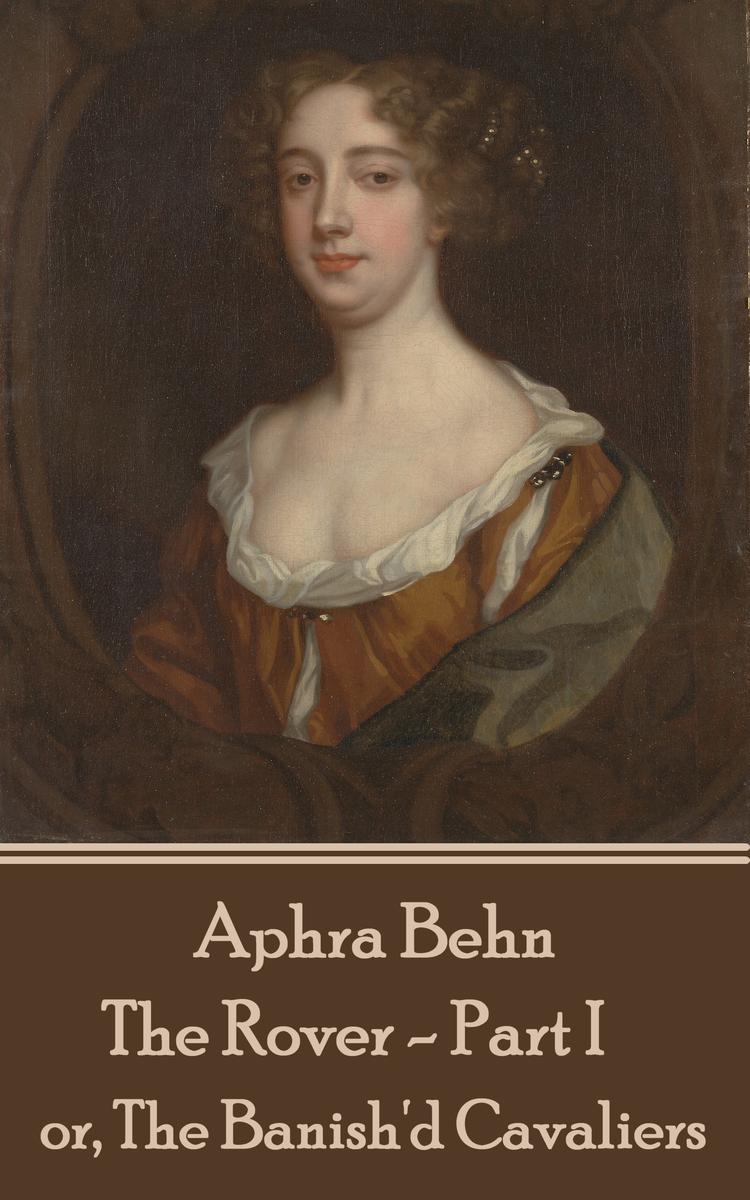
Rover - Part I - or, The Banish'd Cavaliers
¥23.45
Aphra Behn was a prolific and well established writer but facts about her remain scant and difficult to confirm. What can safely be said though is that Aphra Behn is now regarded as a key English playwright and a major figure in Restoration theatre. Aphra was born into the rising tensions to the English Civil War. Obviously a time of much division and difficulty as the King and Parliament, and their respective forces, came ever closer to conflict. There are claims she was a spy, that she travelled abroad, possibly as far as Surinam. By 1664 her marriage was over (though by death or separation is not known but presumably the former as it occurred in the year of their marriage) and she now used Mrs Behn as her professional name. Aphra now moved towards pursuing a more sustainable and substantial career and began work for the King's Company and the Duke's Company players as a scribe. Previously her only writing had been poetry but now she would become a playwright. Her first, "e;The Forc'd Marriage"e;, was staged in 1670, followed by "e;The Amorous Prince"e; (1671). After her third play, "e;The Dutch Lover"e;, Aphra had a three year lull in her writing career. Again it is speculated that she went travelling again, possibly once again as a spy. After this sojourn her writing moves towards comic works, which prove commercially more successful. Her most popular works included "e;The Rover"e; and "e;Love-Letters Between a Nobleman and His Sister"e; (1684-87). With her growing reputation Aphra became friends with many of the most notable writers of the day. This is The Age of Dryden and his literary dominance. From the mid 1680's Aphra's health began to decline. This was exacerbated by her continual state of debt and descent into poverty. Aphra Behn died on April 16th 1689, and is buried in the East Cloister of Westminster Abbey. The inscription on her tombstone reads: "e;Here lies a Proof that Wit can never be Defence enough against Mortality."e; She was quoted as stating that she had led a "e;life dedicated to pleasure and poetry."e;
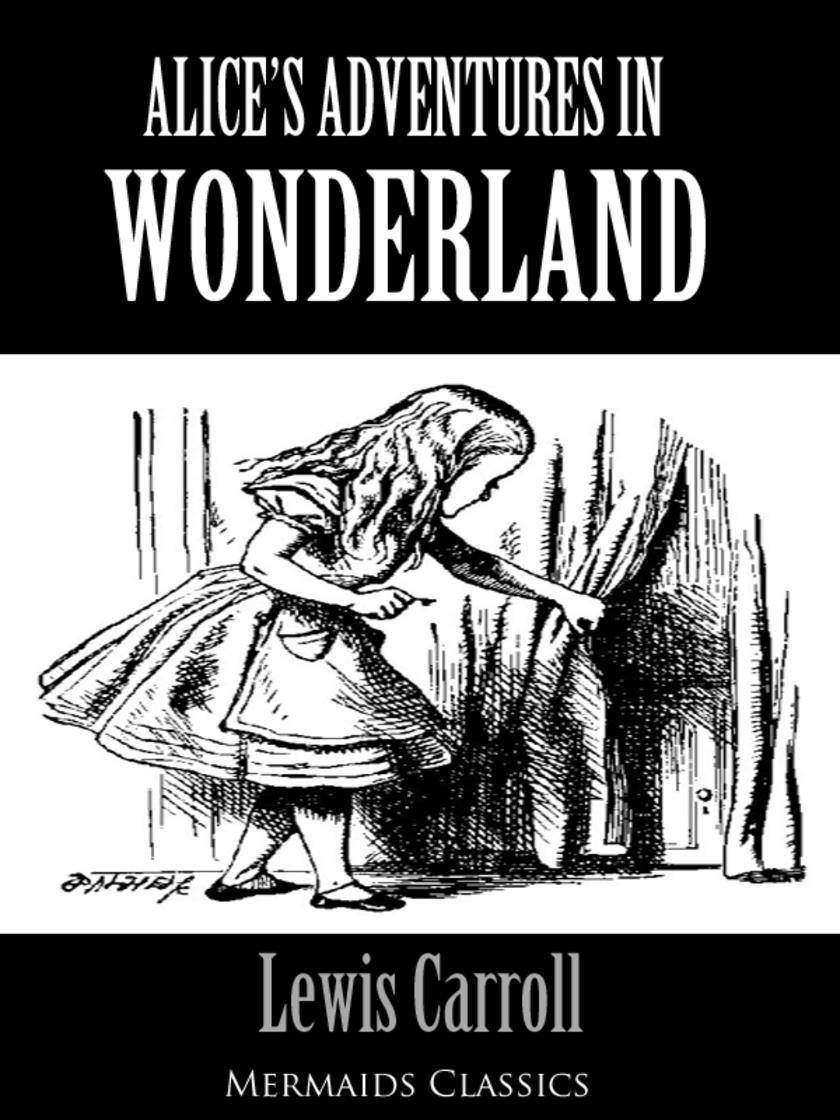
Alice's Adventures in Wonderland - An Original Classic (Mermaids Classics)
¥11.67
Alices Adventures in Wonderland (also known as Alice in Wonderland) by Lewis Carroll - aka Charles Lutwidge Dodgson (1832 1898) is an 1865 childrens fantasy novel portraying a young girl named Alice who spots a rabbit with a pocket watch and follows him until she falls down a rabbit hole. The rabbit hole leads her to a fantasy world called Wonderland where she meets many anthropomorphic creatures. Illustrations within this novel are the original illustrations by John Tenniel.Mermaids Classics, an imprint of Mermaids Publishing brings the very best of classic literature to a modern era of digital reading by producing high quality books in ebook format.
Sense and Sensibility
¥11.67
Sense and Sensibility, by Jane Austen is a romantic fiction novel about the Dashwood sisters Elinor and Marianne who go through love, romance, hardship and heartbreak. The scene is set in Southwest England between the years 1792 and 1797 and it follows the story how the two sisters are forced to live in a relatives estate due to the death of their father who leaves them with an inadequate inheritance. The novel was originally published in 1811 under the pseudonym A Lady and was Jane Austens first novel.This digital edition is beautifully formatted with an active Table of Contents that goes directly to each chapter. Mermaids Classics, an imprint of Mermaids Publishing brings the very best of old book classics to a modern era of digital reading by producing high quality books in ebook format.
Confessions of St Augustine (Mermaids Classics)
¥35.22
The Confessions of St Augustine (AD 401) is an autobiography of St Augustine. It consists of thirteen books and essentially outlines his deep regret in living an immoral youth and how he converted to Christianity. The book was also considered to be written as prayers to God.Mermaids Classics, an imprint of Mermaids Publishing brings the very best of old classic literature to a modern era of digital reading by producing high quality books in ebook format. All of the Mermaids Classics epublications are reproductions of classic antique books that were originally published in print format, mostly over a century ago and are now republished in digital format as ebooks. Begin to build your collection of digital books by looking for more literary gems from Mermaids Classics.

Robinson Crusoe (Mermaids Classics)
¥35.22
Robinson Crusoe by Daniel Defoe (1660 - 1731) includes Volume 1: The Life and Adventures of Robinson Crusoe and Volume 2: The Further Adventures of Robinson Crusoe. Robinson Crusoe is a classic childrens novel based on a fictional autobiography of Robinson who sets sailing and becomes shipwrecked. He encounters pirates, cannibals and spends years as a castaway on a tropical island. The novel was first published in 1719 and is considered today as one of the worlds best classics! This Mermaids Classics edition also includes the sequel to Robinson Crusoe which is titled The Further Adventures of Robinson Crusoe where Robinson returns to the island where he was shipwrecked, adventures in Madagascar, Southeast Asia, China and Siberia.Mermaids Classics, an imprint of Mermaids Publishing brings the very best of old classic literature to a modern era of digital reading by producing high quality books in ebook format. All of the Mermaids Classics epublications are reproductions of classic antique books that were originally published in print format, mostly over a century ago and are now republished in digital format as ebooks. Begin to build your collection of digital books by looking for more literary gems from Mermaids Classics.
Wind In The Willows (Mermaids Classics)
¥35.22
The Wind in the Willows by Kenneth Grahame (1859 - 1932) is a childrens novel based on four anthropomorphised animals. The story begins with a Mole who adventures outside of his underground world. The book was first published in 1908 as an un-illustrated (plain text) edition. Mermaids Classics, an imprint of Mermaids Publishing brings the very best of old classic literature to a modern era of digital reading by producing high quality books in ebook format. All of the Mermaids Classics epublications are reproductions of classic antique books that were originally published in print format, mostly over a century ago and are now republished in digital format as ebooks. Begin to build your collection of digital books by looking for more literary gems from Mermaids Classics.
Arraignment of Paris
¥15.21
George Peele was born in July 1556 and baptised on the 25th at St James Garlickhythe in the City of London.A completely accurate record of his life is not possible but enough accounts and records exist to provide some background. His father, James was a clerk at Christ's Hospital, then a central London school, and authored two treatises on bookkeeping. Peele himself was initially educated at Christ's Hospital before entering Broadgates Hall, Oxford, in 1571. Three years after in 1574 he moved to Christ Church and took his B.A. there in 1577, and then his M.A. in 1579. Something appears to have so upset the Governors that they requested their clerk to 'discharge his house of his son, George Peele.' His mother, Anne, died on July 1st, 1580, and his father remarried to Christian Widers, a nurse at the hospital a few months later. Peele himself appears to have married, around this time, Ann Cooke, a heiress. He appears to have been rather reckless with her assets and they were soon gone.What he did appear to be hard at work on was his writing. His pastoral comedy 'The Arraignment of Paris' was presented by the Children of the Chapel Royal before Queen Elizabeth perhaps by 1581, and was printed anonymously in 1584. He was praised in 1585 for his translation from the Greek of one of the 'Iphigenias of Euripides'. That same year, 1585, he was employed to write the 'Device of the Pageant', and in 1591 he devised a pageant in honour of another Lord Mayor, Sir William Webbe. This was the 'Descensus Astraeae', in which Queen Elizabeth is honoured as Astraea.Much of the rest of his life is not certain and various facts, accounts and information is in dispute.He may have married for a second time but what happened to Ann is not recorded. He was also awarded the authorship of several plays many of which have now fallen away although modern research methods. However, knowing the collaboration between many of the dramatists of that time his hand has been detected and confirmed in some other plays.Perhaps the most famous of these is Shakespeare's 'Titus Andronicus'. It is now thought that Peele wrote the first act as well as the first two scenes in Act II, with Shakespeare responsible for the rest. The exact measure of each is difficult to ascertain any further. As a writer he is acknowledged to be one of the era's finest and ranked alongside Marlowe, Spenser, and Shakespeare.The other plays for which Peele can reliably be given authorship are 'Edward I', (printed 1593) 'The Old Wives' Tale', 'The Battle of Alcazar' (printed 1594) and David and Bethsabe (printed 1599). 'The Troublesome Reign of John, King of England', the immediate source for Shakespeare's King John, has been published under Peele's name.George Peel died, accounts say of the pox, and was buried on the 9th November 1596 in St James's Church, Clerkenwell.
Modern Husband
¥21.09
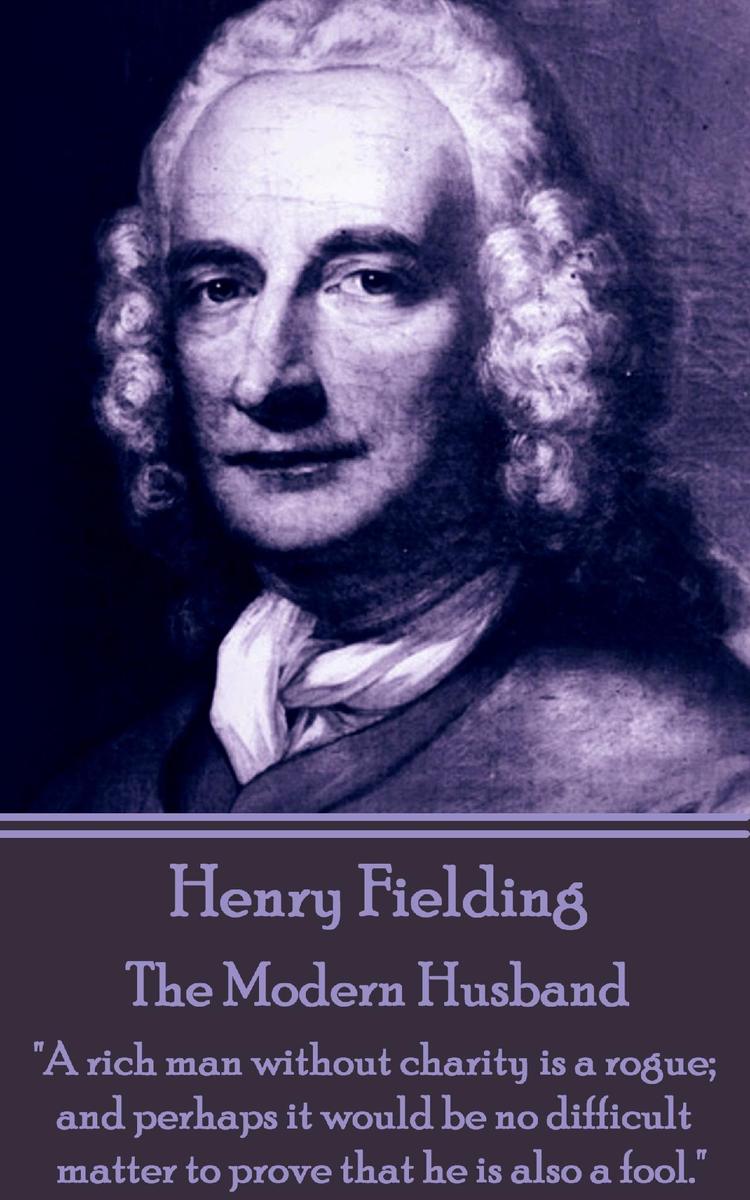
Henry Fielding was born at Sharpham Park, near Glastonbury, in Somerset on April 22nd 1707. His early years were spent on his parents' farm in Dorset before being educated at Eton. An early romance ended disastrously and with it his removal to London and the beginnings of a glittering literary career; he published his first play, at age 21, in 1728. He was prolific, sometimes writing six plays a year, but he did like to poke fun at the authorities. His plays were thought to be the final straw for the authorities in their attempts to bring in a new law. In 1737 The Theatrical Licensing Act was passed. At a stroke political satire was almost impossible. Fielding was rendered mute. Any playwright who was viewed with suspicion by the Government now found an audience difficult to find and therefore Theatre owners now toed the Government line. Fielding was practical with the circumstances and ironically stopped writing to once again take up his career in the practice of law and became a barrister after studying at Middle Temple. By this time he had married Charlotte Craddock, his first wife, and they would go on to have five children. Charlotte died in 1744 but was immortalised as the heroine in both Tom Jones and Amelia. Fielding was put out by the success of Samuel Richardson's Pamela, or Virtue Rewarded. His reaction was to spur him into writing a novel. In 1741 his first novel was published; the successful Shamela, an anonymous parody of Richardson's novel. Undoubtedly the masterpiece of Fielding's career was the novel Tom Jones, published in 1749. It is a wonderfully and carefully constructed picaresque novel following the convoluted and hilarious tale of how a foundling came into a fortune. Fielding was a consistent anti-Jacobite and a keen supporter of the Church of England. This led to him now being richly rewarded with the position of London's Chief Magistrate. Fielding continued to write and his career both literary and professional continued to climb. In 1749 he joined with his younger half-brother John, to help found what was the nascent forerunner to a London police force, the Bow Street Runners. Fielding's ardent commitment to the cause of justice in the 1750s unfortunately coincided with a rapid deterioration in his health. Such was his decline that in the summer of 1754 he travelled, with Mary and his daughter, to Portugal in search of a cure. Gout, asthma, dropsy and other afflictions forced him to use crutches. His health continued to fail alarmingly. Henry Fielding died in Lisbon two months later on October 8th, 1754.
Professor - That to begin with; let respect be the foundation
¥15.21
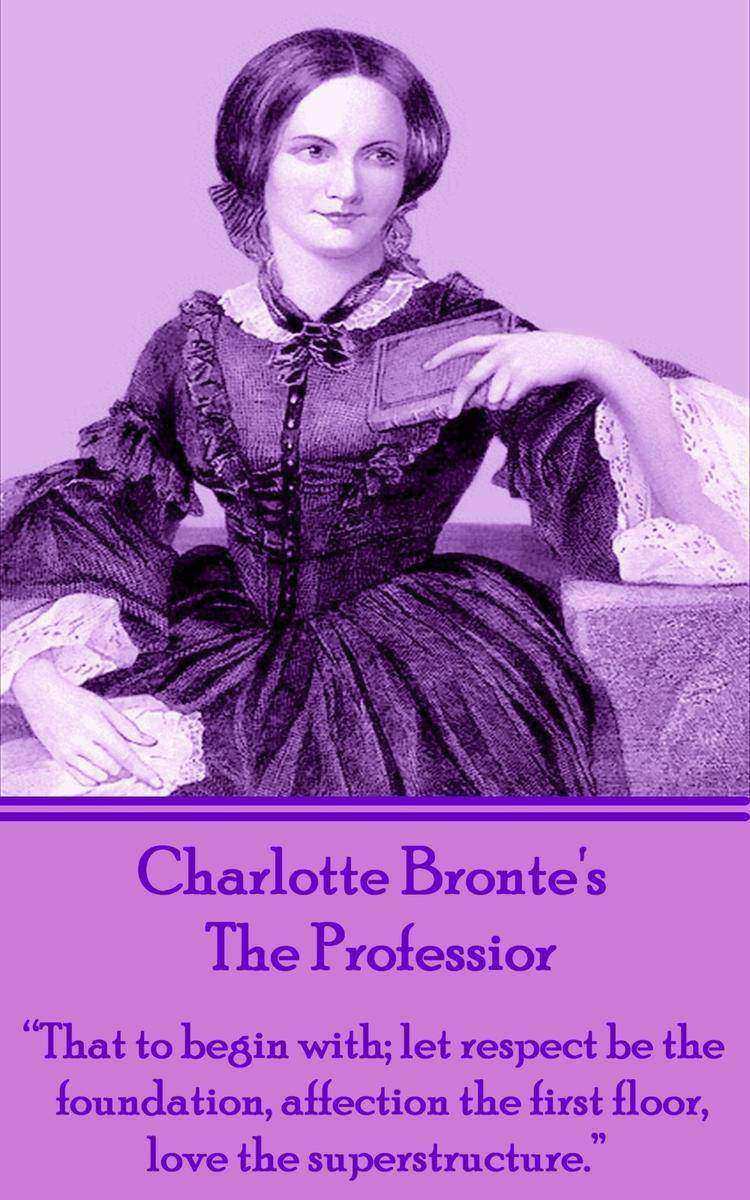
The Professor is Charlotte Bronte's first novel, even though it was only published posthumously. The novel's protagonist and first-person narrator is the orphan William Crimsworth, a young educated man who rejects the career of a clergyman proposed by his adoptive uncle. He first decides to work as a clerk for his wealthy brother who owns a mill in the north of the country. However, his brother's jealousy of his superior education and intelligence eventually pushes him to quit the job and travel to Brussels where he is hired as a professor of English at a girls' school. In Brussels, he falls in love with a younger colleague, Frances Henri, yet he has to endure the wickedness of the Catholic headmistress, Mr. Reuter. Coveting their nascent love, the latter ends up dismissing Frances from her school and hiding her whereabouts from William. The professor leaves the establishment and luckily comes across her beloved in a graveyard. Thanks to a new job with a very high wage, the couple are eventually allowed to open their own school, marry and have a child. The narrative closes as they succeed in making a little fortune and decide to settle in the English countryside.

Mikado - or The Town of Titipu
¥26.98
The partnership between William Schwenck Gilbert and Arthur Seymour Sullivan and their canon of Savoy Operas is rightly lauded by all lovers of comic opera the world over. Gilbert's sharp, funny words and Sullivan's deliciously lively and hummable tunes create a world that is distinctly British in view but has the world as its audience. Both men were exceptionally talented and gifted in their own right and wrote much, often with other partners, that still stands the test of time. However, together as a team they created Light or Comic Operas of a standard that have had no rivals equal to their standard, before or since. That's quite an achievement. To be recognised by the critics is one thing but their commercial success was incredible. The profits were astronomical, allowing for the building of their own purpose built theatre - The Savoy Theatre. Beginning with the first of their fourteen collaborations, Thespis in 1871 and travelling through many classics including The Sorcerer (1877), H.M.S. Pinafore (1878), The Pirates of Penzance (1879), The Mikado (1885), The Gondoliers (1889) to their finale in 1896 with The Grand Duke, Gilbert & Sullivan created a legacy that is constantly revived and admired in theatres and other media to this very day.

Code Red: The President Will Die
¥26.07
Political Thriller about the people of Syria and their fight against their government and ISIS, and how one man went to extreme measures to get America’s help to give the power back to the people of Syria.
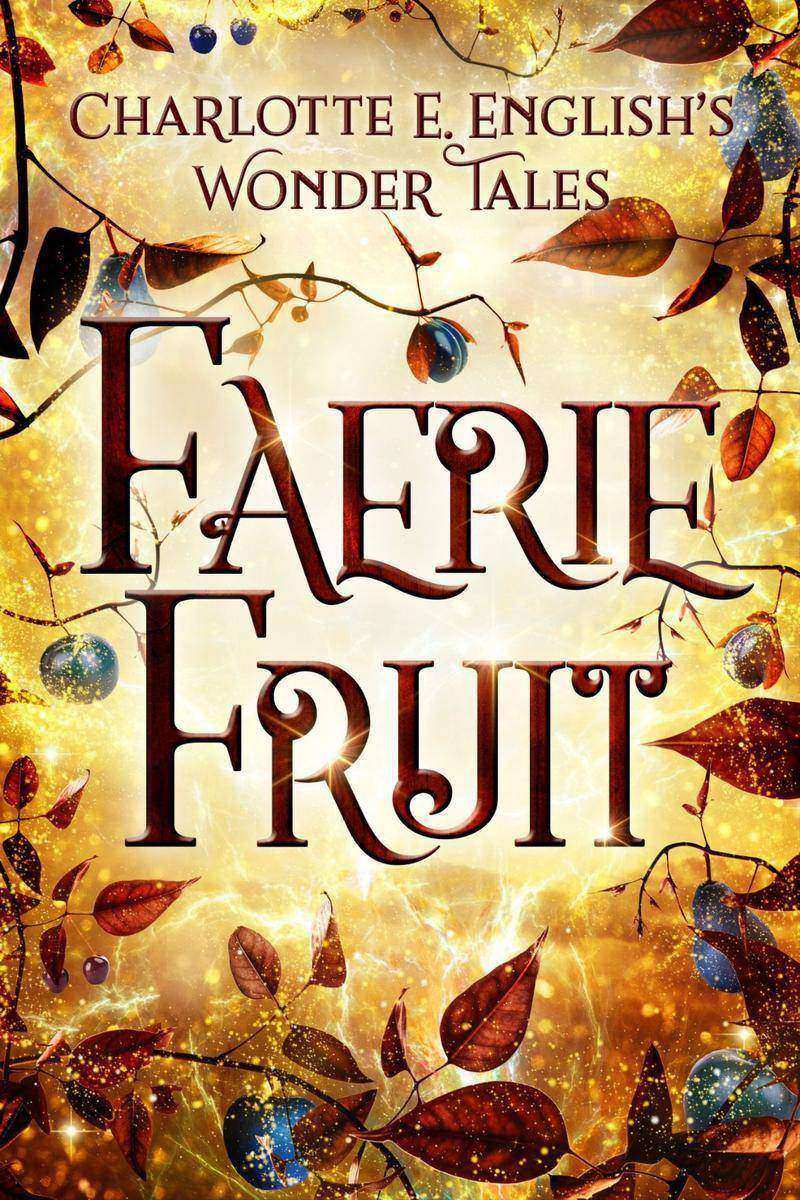
Faerie Fruit
¥8.63
When the centuries-barren orchards of Berrie-on-the-Wyn suddenly bear fruit, it is clear that something strange is afoot — and something fey, for this is no ordinary harvest. To partake of the fruits of Faerie is to be changed for good, but not necessarily for the better. From whence come the golden apples, the moonlit silver pears? Who is the motley piper who walks the streets of Berrie, drawing forth magic and mayhem with his music? And how can half of the town vanish into thin air? There may be chaos aplenty in Berrie, but all that's needed to set things straight is a touch of the right light — and maybe just the right pair of Boots...

Fantastic Women: A Dark Fantasy Novella Trio
¥43.51
Meet Beth Azen, Elenda Murphy, and Mary Robbins. Three women not that different from any other. From mountains to city, single to widowed. Struggling with ghosts and family heritage. Facing hopes and fears of the future. Ordinary lives. Ordinary problems.? What happens when ordinary gets more than a little strange? Includes the novellas Songs in the Mountain, Legacy of the Land, and In the Pines.


