


 购物车
购物车 个人中心
个人中心
Learning Android Google Maps
¥90.46
Integrate Google Maps with your Android application to offer feature-rich and interactive maps About This Book Set up the development environment and obtain the Google API key to create your first map application Create a cutting edge Google maps application by implementing all the concepts learned A step-by-step tutorial guide that is full of pragmatic examples Who This Book Is For If you are an Android developer and want to integrate maps into your application, then this book is definitely for you. This book is intended for novice Android application developers who would like to get up and running with map rich applications using Google Maps. Some basic development experience would be helpful but it's not a mandate. What You Will Learn Get to know about the basic development environment setup needed to create a successful map application Generate an SHA1 fingerprint, obtain an API key, and create a basic map application Detect different types of maps and implement them in your application Add information to your map such as markers, overlays, information windows, and shapes Explore the interaction with maps and work with gestures Change the different camera views in your map application Work with real-time GPS location data and implementing it in your application Apply Street View and integrate the StreetViewPanoroma fragment to your application Employ the native Google maps application to solve some of the tasks using intents Create a cutting edge Google maps application by implementing all the concepts learned In Detail This book helps you to overcome the most common problems faced by users and helps you create a successful map application without any hassle. The book starts with a brief de*ion of how to set up an environment and obtain an API key to create your map application. This book will teach you about adding markers, overlays, and information windows to the map in detail. You will then dive deep into customizing various types of maps and working with location data and Google Street view. By the end of this book, you will be able to create succinct map applications in Android using Google maps efficiently. Style and approach The book is tailored for the reader with a fundamental approach to Android Google Maps providing a step-by-step introduction to Android Google Maps. It focuses on simple, easy-to-understand examples that are pragmatic and serve as useful basis for real-world applications. Different topics are approached in a bottom-up fashion, gradually going from the simplest foundations to the most advanced features.
Spring Boot Cookbook
¥54.49
Over 35 recipes to help you build, test, and run Spring applications using Spring Boot About This Book Learn to create different types of Spring Boot applications, configure behavior, and add custom components Become more efficient in testing, deploying, and monitoring Spring Boot based applications This is a practical guide that will help Spring developers to develop and deploy applications using Spring Boot Who This Book Is For If you are a Spring Developer who has good knowledge level and understanding of Spring Boot and application development and now want to learn efficient Spring Boot development techniques in order to make the existing development process more efficient, then this book is for you. What You Will Learn Create Spring Boot applications from scratch Configure and tune web applications and containers Create custom Spring Boot auto-configurations and starters Use Spring Boot Test framework with JUnit, Cucumber, and Spock Configure and tune web applications and containers Deploy Spring Boot as self-starting executables and Docker containers Monitor data using DropWizard, Graphite, and Dashing In Detail Spring Boot is Spring's convention-over-configuration solution. This feature makes it easy to create Spring applications and services with absolute minimum fuss. Spring Boot has the great ability to be customized and enhanced, and is specifically designed to simplify development of a new Spring application. This book will provide many detailed insights about the inner workings of Spring Boot, as well as tips and recipes to integrate the third-party frameworks and components needed to build complex enterprise-scale applications. The book starts with an overview of the important and useful Spring Boot starters that are included in the framework, and teaches you to create and add custom Servlet Filters, Interceptors, Converters, Formatters, and PropertyEditors to a Spring Boot web application. Next it will cover configuring custom routing rules and patterns, adding additional static asset paths, and adding and modifying servlet container connectors and other properties such as enabling SSL. Moving on, the book will teach you how to create custom Spring Boot Starters, and explore different techniques to test Spring Boot applications. Next, the book will show you examples of configuring your build to produce Docker images and self-executing binary files for Linux/OSX environments. Finally, the book will teach you how to create custom health indicators, and access monitoring data via HTTP and JMX. Style and approach This book is a cohesive collection of recipes that provide developers with a set of connected guidelines on how to build, configure, and customize their application, starting from the design and development stages, all the way through testing, deployment, and production monitoring.
Learning Penetration Testing with Python
¥90.46
Utilize Python *ing to execute effective and efficient penetration tests About This Book Understand how and where Python *s meet the need for penetration testing Familiarise yourself with the process of highlighting a specific methodology to exploit an environment to fetch critical data Develop your Python and penetration testing skills with real-world examples Who This Book Is For If you are a security professional or researcher, with knowledge of different operating systems and a conceptual idea of penetration testing, and you would like to grow your knowledge in Python, then this book is ideal for you. What You Will Learn Familiarise yourself with the generation of Metasploit resource files Use the Metasploit Remote Procedure Call (MSFRPC) to automate exploit generation and execution Use Python’s Scrapy, network, socket, office, Nmap libraries, and custom modules Parse Microsoft Office spreadsheets and eXtensible Markup Language (XML) data files Write buffer overflows and reverse Metasploit modules to expand capabilities Exploit Remote File Inclusion (RFI) to gain administrative access to systems with Python and other *ing languages Crack an organization’s Internet perimeter Chain exploits to gain deeper access to an organization’s resources Interact with web services with Python In Detail Python is a powerful new-age *ing platform that allows you to build exploits, evaluate services, automate, and link solutions with ease. Python is a multi-paradigm programming language well suited to both object-oriented application development as well as functional design patterns. Because of the power and flexibility offered by it, Python has become one of the most popular languages used for penetration testing. This book highlights how you can evaluate an organization methodically and realistically. Specific tradecraft and techniques are covered that show you exactly when and where industry tools can and should be used and when Python fits a need that proprietary and open source solutions do not. Initial methodology, and Python fundamentals are established and then built on. Specific examples are created with vulnerable system images, which are available to the community to test *s, techniques, and exploits. This book walks you through real-world penetration testing challenges and how Python can help. From start to finish, the book takes you through how to create Python *s that meet relative needs that can be adapted to particular situations. As chapters progress, the * examples explain new concepts to enhance your foundational knowledge, culminating with you being able to build multi-threaded security tools, link security tools together, automate reports, create custom exploits, and expand Metasploit modules. Style and approach This book is a practical guide that will help you become better penetration testers and/or Python security tool developers. Each chapter builds on concepts and tradecraft using detailed examples in test environments that you can simulate.
KnockoutJS by Example
¥80.65
Develop rich, interactive, and real-world web applications using knockout.js About This Book Master the full range of features provided by knockout.js such as declarative binding, automatic refresh, dependency tracking, and templating using this project based guide Tackle real-world problems such as page navigation, forms, composite UI components, maps integration, server interaction for CRUD operations, and application security Discover the power of knockout.js as you build applications with complexity ranging from beginner to advanced Extend and customize knockout.js to harness its full potential Integrate with third party libraries and APIs to build fully featured applications Who This Book Is For This book is intended for designers and developers who want to learn how to use Knockout to develop rich, interactive, and modular web applications. The book assumes no prior knowledge of the Knockout library but basic familiarity with HTML, CSS, and JavaScript would be helpful. What You Will Learn Explore the basic concept behind the Model-View-View Model (MVVM) design pattern and how it is implemented by Knockout Develop a modular application skeleton based on the module pattern that can be used as a template for your projects Create single page, rich, interactive, modular, real-world applications using Knockout Use knockout.js with other libraries and APIs such as JQuery, Bootstrap, and Google Maps API to give your users a richer experience Create a real-world dynamic web form to capture user information and learn how Knockout makes it easier to capture, validate, and submit form data Develop and use dynamic UI components such as grids, tabs, dialogs, and wizards Extend knockout.js to add custom extenders, binding handlers, and observables Communicate with the backend server using JSON over restful web services Secure your single page application using token-based authentication In Detail Knockout is an open source JavaScript library that lets you develop rich, interactive, and modular web applications. It reduces the complexities of JavaScript and HTML development by following the Model-View-View Model (MVVM) design pattern. It allows you to efficiently develop highly scalable, testable, and maintainable web applications that are rich and interactive. Knockout is a pure JavaScript library and supports all major browsers. This book starts with introducing the key features and concepts of knockout.js. It helps you create an application skeleton and a hello world application. You will develop a To-Do list application that aims to show the basic features of knockout.js in action such as data binding and observables, following which you will develop a dynamic online customer registration form that captures and validates customer information. This book will further walk your way to develop a customer banking portal, which demonstrates the use of knockout.js with components such as navigation bars, tabs, carousel, master details view, panels, forms, wizards, and modal dialogs. You will also discover to use token-based authentication and authorization to secure the customer banking portal and move on to creating an editable products grid with CRUD operations. Finally, you will explore using the Google maps api with knockout.js. By working along with the examples, this book will not only leave you with the basic understanding of knockout.js fundamentals but you will also have a web application ready instantly. Style and approach The book takes an iterative approach in explaining and building the sample applications. The applications are built in small portions with each portion delivering a set of features. It is an easy-to-follow yet comprehensive hands-on guide, which is full of real-world applications.
MEAN Web Development
¥90.46
If you are a web or a full-stack JavaScript developer who is interested in learning how to build modern web applications using the MEAN stack, this book is for you.
Introduction to R for Quantitative Finance
¥71.93
This book is a tutorial guide for new users that aims to help you understand the basics of and become accomplished with the use of R for quantitative finance.If you are looking to use R to solve problems in quantitative finance, then this book is for you. A basic knowledge of financial theory is assumed, but familiarity with R is not required. With a focus on using R to solve a wide range of issues, this book provides useful content for both the R beginner and more experience users.
Mobile Game Design
¥90.46
A step-by-step guide.This book is for all game developers, designers, and hobbyists who want to create assets for mobile games
SolarWinds Server & Application Monitor : Deployment and Administration
¥66.58
A concise and practical guide to using SolarWinds Server & Application Monitor.If you are an IT professionals ranging from an entry-level technician to a more advanced network or system administrator who is new to network monitoring services and/or SolarWinds SAM, this book is ideal for you.
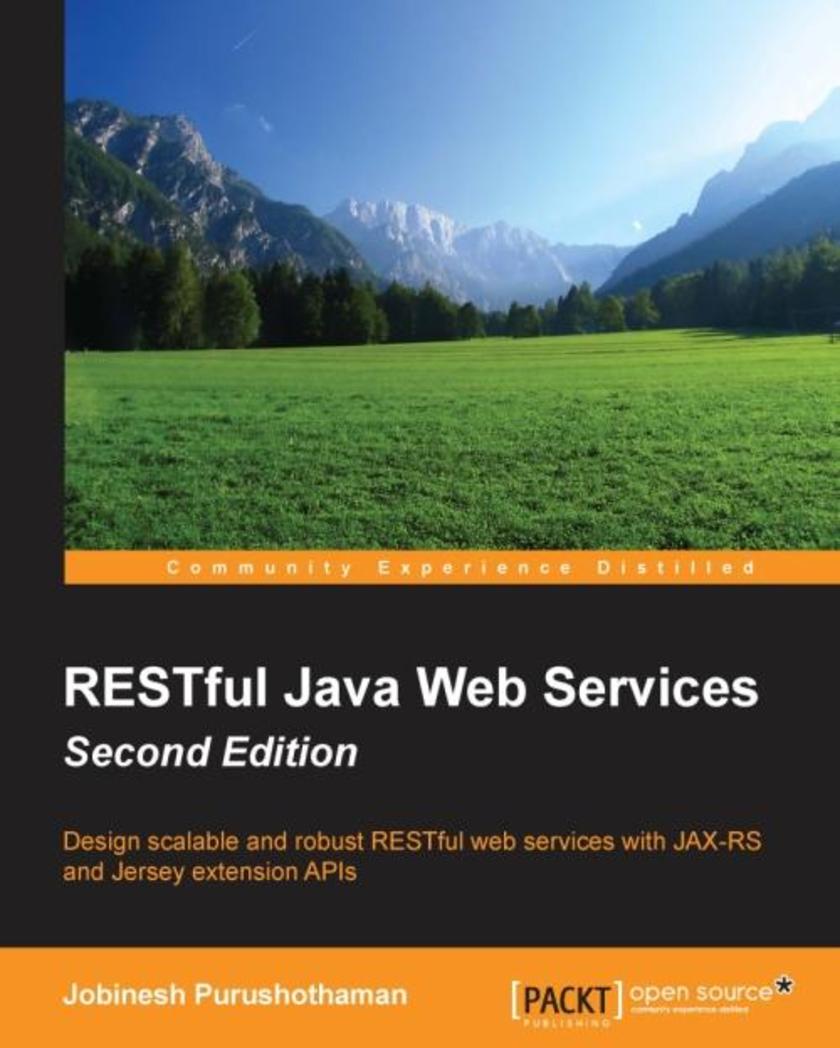
RESTful Java Web Services - Second Edition
¥80.65
Design scalable and robust RESTful web services with JAX-RS and Jersey extension APIs About This Book Get to grips with the portable Java APIs used for JSON processing Design solutions to produce, consume, and visualize RESTful web services using WADL, RAML, and Swagger A step-by-step guide packed with many real-life use-cases to help you build efficient and secure RESTful web APIs in Java Who This Book Is For If you are a web developer with a basic understanding of the REST concepts but are new to the idea of designing and developing RESTful web services, this is the book for you. As all the code samples for the book are written in Java, proficiency in Java is a must. What You Will Learn Introduce yourself to the RESTful software architectural style and the REST API design principles Make use of the JSR 353 APIs and Jackson API for JSON processing Build portable RESTful web APIs, making use of the JAX-RS 2.0 API Simplify API development using the Jersey extension APIs Secure your RESTful web services with various authentication and authorization mechanisms Get to grips with the various metadata solutions to describe, produce, and consume RESTful web services Understand the design and coding guidelines to build well-performing RESTful APIs See how the role of RESTful web services changes with emerging technologies and trends In Detail REST (REpresentational State Transfer) is a simple yet powerful software architecture style to create scalable web services and allow them to be simple, lightweight, and fast. The REST API uses HTTP and JSON, so that it can be used with many programming languages such as Ruby, Java, Python, and Scala. Its use in Java seems to be the most popular though, because of the API's reusability. This book is a guide to developing RESTful web services in Java using the popular RESTful framework APIs available today. You will begin with gaining an in-depth knowledge of the RESTful software architectural style and its relevance in modern applications. Further, you will understand the APIs to parse, generate, transform, and query JSON effectively. Then, you will see how to build a simple RESTful service using the popular JAX-RS 2.0 API along with some real-world examples. This book will introduce you to the Jersey framework API, which is used to simplify your web services. You will also see how to secure your services with various authentication mechanisms. You will get to grips with various solutions to describe, produce, consume, and visualize RESTful web services. Finally, you will see how to design your web services to equip them for the future technological advances, be it Cloud or mobile computing. By the end of this book, you will be able to efficiently build robust, scalable, and secure RESTful web services, making use of the JAX-RS and Jersey framework extensions. Style and approach This book is written as a step-by-step guide to designing and developing robust RESTful web services. Each topic is explained in a simple and easy-to-understand manner with lots of real-life use-cases and their solutions.

Unreal Engine Physics Essentials
¥71.93
Gain practical knowledge of mathematical and physics concepts in order to design and develop an awesome game world using Unreal Engine 4 About This Book Use the Physics Asset Tool within Unreal Engine 4 to develop game physics objects for your game world Explore the Collision mechanics within Unreal Engine 4 to create advanced, real-world physics A step-by-step guide to implementing the Physics concepts involved in Unreal Engine 4 to create a working Vehicle Blueprint Who This Book Is For This book is intended for beginner to intermediate users of Epic Games' Unreal Engine 4 who want to learn more about how to implement physics within their game-world. No matter what your knowledge base of Unreal Engine 4 is, this book contains valuable information on blueprint *ing, collision generation, materials, and the Physical Asset Tool (PhAT) for all users to create better games. What You Will Learn Get to know basic to intermediate topics in mathematics and physics Create assets using the Physics Asset Tool (PhAT) in Unreal Engine 4 Develop Collision Hulls, which are necessary to take advantage of Unreal Engine 4’s physics and collision events Use constraints to create advanced physics-based assets for your game-world Working knowledge of physics bodies, physics damping, and friction within Unreal Engine 4 Develop physical materials to recreate real-world friction for substances such as glass and ice Create a working vehicle blueprint from scratch using assets provided by Unreal Engine 4 Gain knowledge about implementing advanced physics in Unreal Engine 4 using C++ programming In Detail Unreal Engine 4 is one of the leading game development tools used by both AAA and independent developers alike to create breathe-taking games. One of the key features of this tool is the use of Physics to create a believable game-world for players to explore. This book gives readers practical insight into the mathematical and physics principles necessary to properly implement physics within Unreal Engine 4. Discover how to manipulate physics within Unreal Engine 4 by learning basic real-world mathematical and physics concepts that assist in the implementation of physics-based objects in your game world. Then, you'll be introduced to PhAT (Physics Asset Tool) within Unreal Engine 4 to learn more about developing game physics objects for your game world. Next, dive into Unreal Engine 4’s collision generation, physical materials, blueprints, constraints, and more to get hands-on experience with the tools provided by Epic to create real-world physics in Unreal Engine 4. Lastly, you will create a working Vehicle Blueprint that uses all the concepts covered in this book, as well as covering advanced physics-based topics. Style and approach An easy-to-follow reference text filled with working examples of physics within Unreal Engine 4. Each topic is broken down to easily explain how to implement physics and physical objects in your game-world using the tools provided by Epic Games Unreal Engine 4.
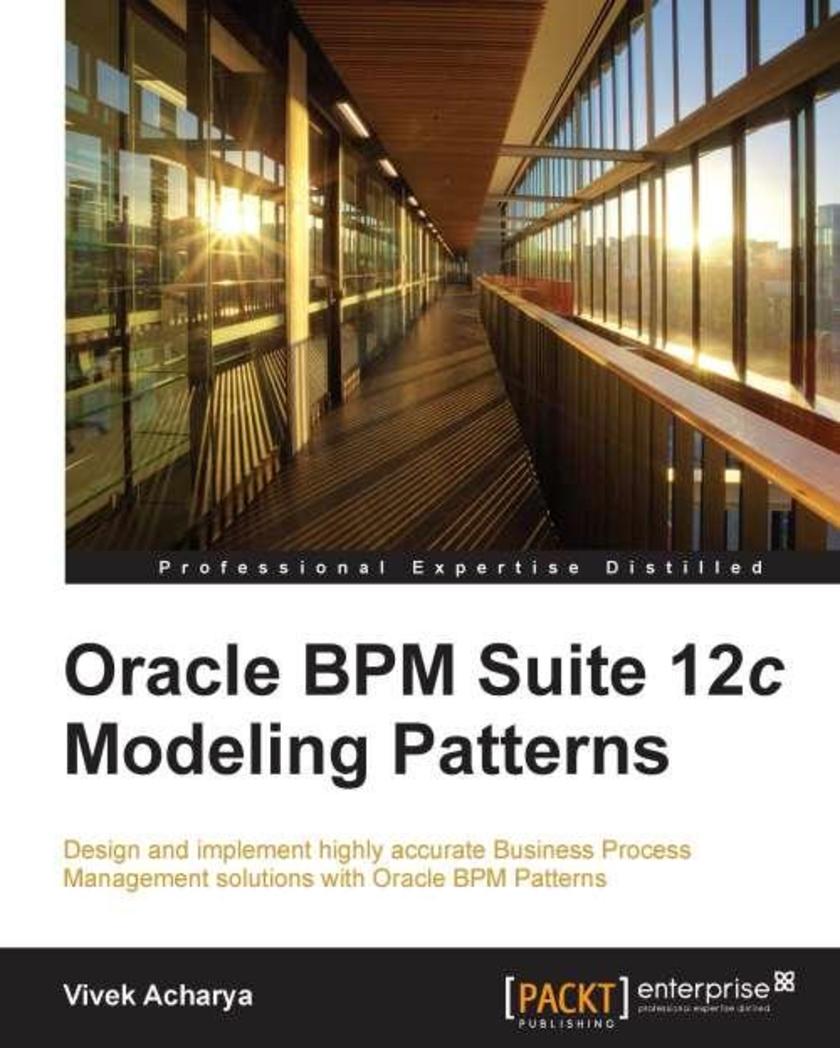
Oracle BPM Suite 12c Modeling Patterns
¥90.46
This book is an invaluable resource if you are an Enterprise architect, solution architect, developer, process analyst, or application functional and technical consultant who uses Business Process Management and BPMN to model and implement Enterprise IT applications, SaaS, and cloud applications.
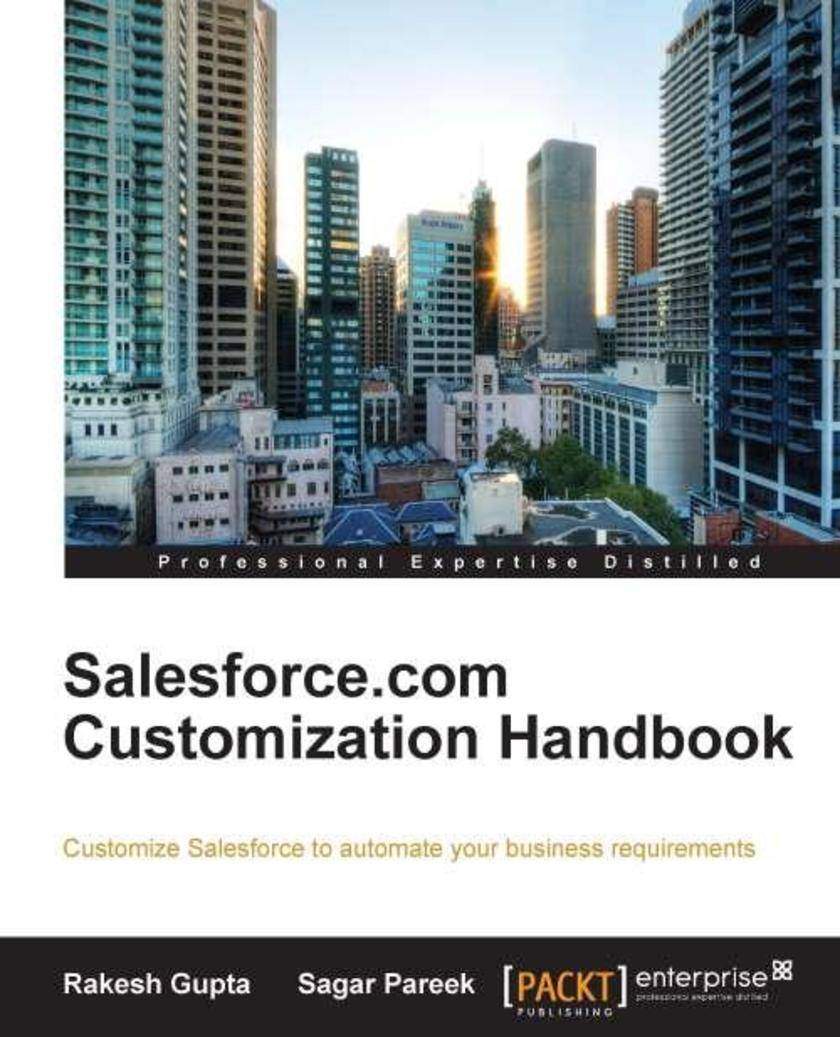
Salesforce.com Customization Handbook
¥90.46
If you want to use Salesforce CRM to automate your business requirements, or you have already adopted Salesforce CRM and want to streamline the sales process, this book is for you. Whether you are new to Salesforce or a seasoned expert, you will be able to master the basic functions as well as the advanced features of Salesforce.com. No previous experience in computer coding or programming is required.
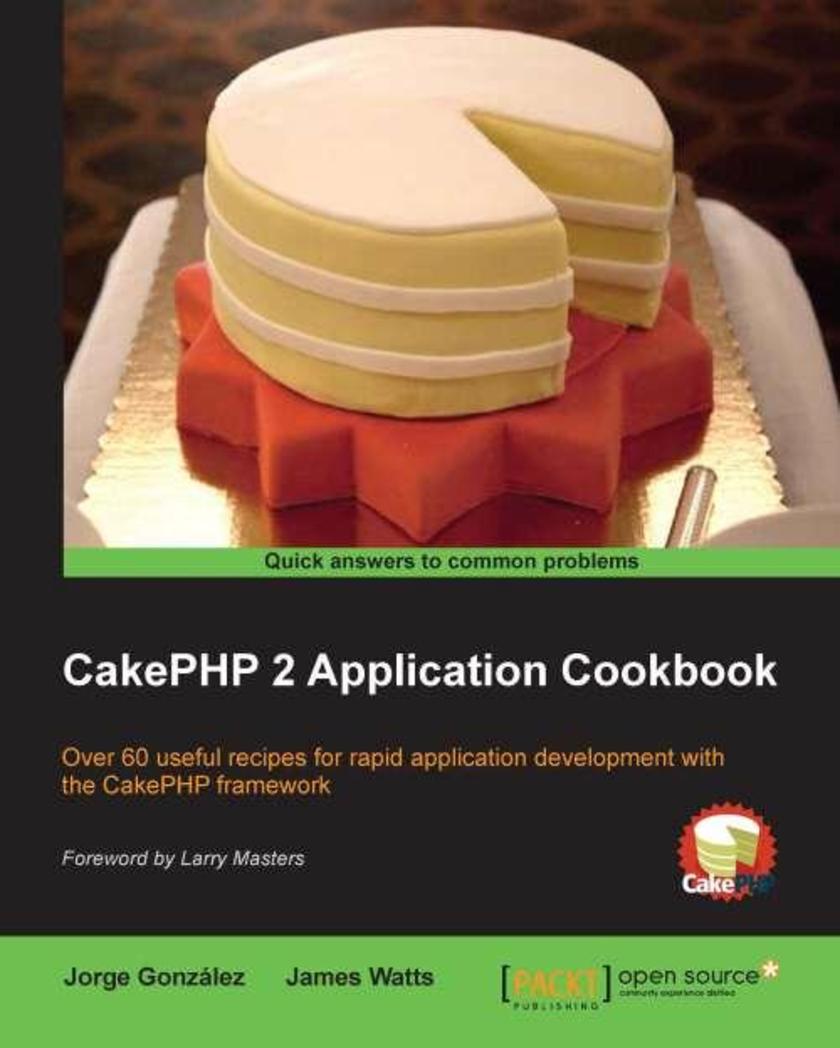
CakePHP 2 Application Cookbook
¥90.46
If you are a CakePHP developer looking to ease the burden of development, then this book is for you. As a headfirst dive into the framework, this collection of recipes will help you get the most out of CakePHP, and get your applications baked in no time. Even if you're not familiar with the framework, we'll take you from basic CRUD building to useful solutions that will aid in getting the job done quickly and efficiently.
jMonkeyEngine 3.0 Cookbook
¥71.93
If you are a jMonkey developer or a Java developer who is interested to delve further into the game making process to expand your skillset and create more technical games, then this book is perfect for you.
Citrix? XenApp? 7.x Performance Essentials
¥49.04
If you are an IT architect or system administrator who works with CitrixXenAppand need an agile, practical guide to tune and optimize the performance of your XenApparchitecture, this is the book for you. Citrix?, Citrix Systems?, XenApp?, XenDesktopand CloudPortalare trademarks of Citrix Systems, Inc. and/or one or more of its subsidiaries, and may be registered in the United States Patent and Trademark Office and in other countries.
Leaflet Essentials
¥54.49
If you are a web developer working with geospatial concepts and mapping APIs, and you want to learn Leaflet to create mapping solutions, this book is for you. You need to have a basic knowledge of working with JavaScript and performing web application development.
Learning Xamarin Studio
¥71.93
This book is intended for .NET developers with any level of experience and who are interested in building native applications without the hassle of becoming Objective-C or Java experts. Although it will be beneficial to have some development experience, particularly in .NET, Learning Xamarin help even a novice developer get past the headaches of setting up and customizing their new development environment so they can move on to producing high-quality native applications quickly.
Kali Linux Network,Scanning Cookbook
¥91.55
"Kali Linux Network Scanning Cookbook" is intended for information security professionals and casual security enthusiasts alike. It will provide the foundational principles for the novice reader but will also introduce *ing techniques and in-depth analysis for the more advanced audience. Whether you are brand new to Kali Linux or a seasoned veteran, this book will aid in both understanding and ultimately mastering many of the most powerful and useful scanning techniques in the industry. It is assumed that the reader has some basic security testing experience.
Arduino Networking
¥49.04
This book is intended for those who want to build their own network-connected projects using the Arduino platform. You will be able to build exciting projects that connect to your local network and the Web. You will need to have some basic experience in electronics and web programming languages. You will also need to know the basics of the Arduino platform as the projects mainly deal with the networking aspects of the Arduino Ethernet shield.
Learning Continuous Integration with TeamCity
¥80.65
If you are a developer, tester, or a person in operations or Devops who wants to start practising CI, start using TeamCity or both, then this book is for you. Moreover, if you have thought about bringing CI into your team, if you are already using a CI tool and want to move to TeamCity, or if you are looking for ideal practises and techniques while implementing CI with TeamCity, this book will be useful.
Building Multicopter Video Drones
¥54.49
This book is for a wide range of individuals who are looking to shoot aerial footage with a multicopter. No previous flying experience is assumed, but even the most expert flyers will find unexpected and interesting information.


