


 购物车
 个人中心


?szintén hazudva
¥58.04
36 тижн?в у списку бестселер?в The New York Times! Евел?н пережива? глибоку особисту кризу. Вона знайомиться з? старенькою Н?нн?, яка, попри важку долю, не втрача? жаги до життя. Н?нн? розпов?да? Евел?н ?стор?? ?хнього м?стечка: про д?вчину, яка п?сля загибел? брата знаходить сили жити дал?; про розбите серце красун? Рут; про мандр?вного роб?тника, який закохався в Рут; про безроб?тних, яких у кафе ?Зупинка? годували безкоштовно... Ц? ?стор?? мають таку силу, що зм?нюють на краще життя тих, хто ?х чита?. 36 tizhn?v u spisku bestseler?v The New York Times! Evel?n perezhiva? gliboku osobistu krizu. Vona znajomit'sja z? staren'koju N?nn?, jaka, popri vazhku dolju, ne vtracha? zhagi do zhittja. N?nn? rozpov?da? Evel?n ?stor?? ?hn'ogo m?stechka: pro d?vchinu, jaka p?slja zagibel? brata znahodit' sili zhiti dal?; pro rozbite serce krasun? Rut; pro mandr?vnogo rob?tnika, jakij zakohavsja v Rut; pro bezrob?tnih, jakih u kafe ?Zupinka? goduvali bezkoshtovno... C? ?stor?? majut' taku silu, shho zm?njujut' na krashhe zhittja tih, hto ?h chita?.

A Thousand Years of Jewish History: Illustrated
¥32.62
Minden bonyodalom azzal kezd?dik, hogy Ríviai Geralt kardjainak rejtélyes módon lába kél. Ezt k?veti egy démonidéz? rejtélye, egy furcsa hajóút és egy meglehet?sen fordulatos királyi esküv?. A régi barát, K?k?rcsin szokás szerint most is Geralt ?segítségére siet”, akár akarja a vaják, akár nem. Felbukkan egy varázslón? is, aki megpróbálja irányítani Geraltot, szokás szerint. ?s ismét akadnak olyanok, akik a vaják útjába állnak, szokás szerint. Ez a k?tet Sapkowski utolsó regénye a Vaják-világban, és a sagához csak k?nny? szállal kapcsolódik, de a szerz? nem okoz csalódást: ismét egyszerre szembesülünk népek sorsával és az egyes ember drámájával, de mindezt ismét olyan gazdag képzeletvilággal ?tv?zve és olyan humorral tálalva, ami letehetetlenné teszi a k?tetet. Szokás szerint.
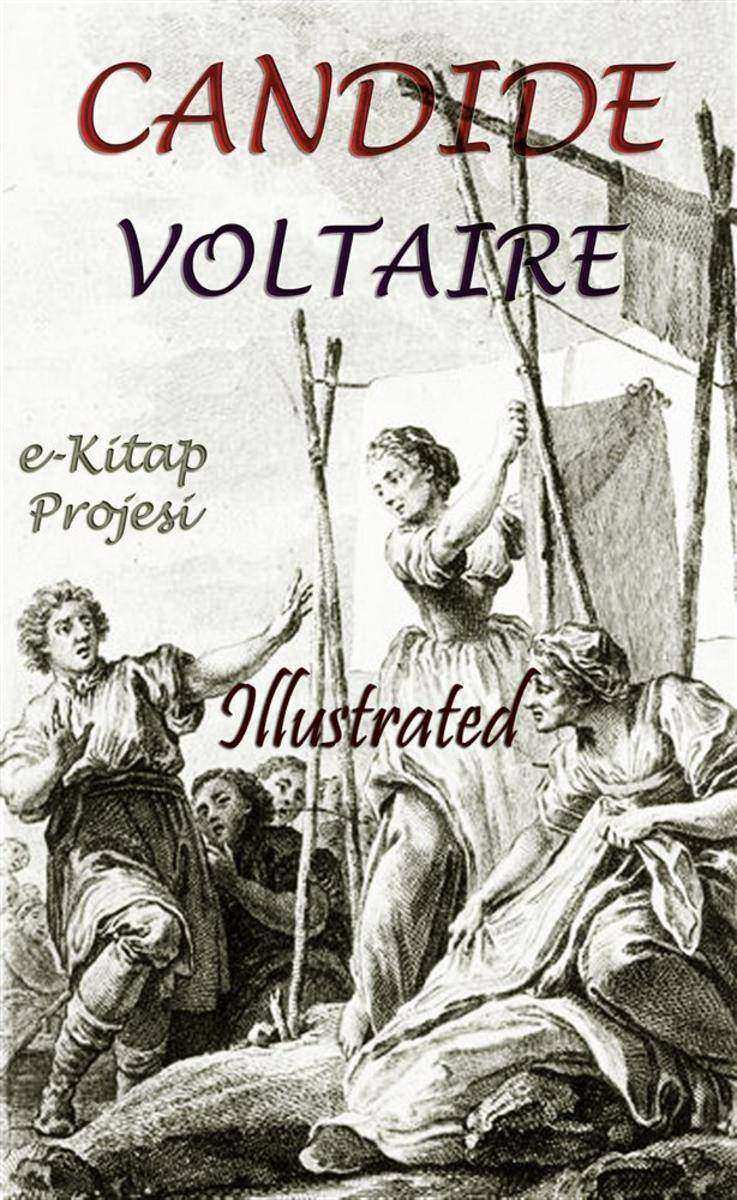
Candide: Illustrated
¥18.74
High into air are the great New York buildings lifted by a ray whose source no telescope can find.It seemed only fitting and proper that the greatest of all leaps into space should start from Roosevelt Field, where so many great flights had begun and ended. Fliers whose names had rung—for a space—around the world, had landed here and been received by New York with all the pomp of visiting kings. Fliers had departed here for the lands of kings, to be received by them when their journeys were ended. Of course Lucian Jeter and Tema Eyer were disappointed that Franz Kress had beaten them out in the race to be first into the stratosphere above fifty-five thousand feet. There was a chance that Kress would fail, when it would be the turn of Jeter and Eyer. They didn't wish for his failure, of course. They were sports-men as well as scientists; but they were just human enough to anticipate the plaudits of the world which would be showered without stint upon the fliers who succeeded. The warship simply vanished into the night sky. "At least, Tema," said Jeter quietly, "we can look his ship over and see if there is anything about it that will suggest something to us. Of course, whether he succeeds or fails, we shall make the attempt as soon as we are ready.""Indeed, yes," replied Eyer. "For no man will ever fly so high that another may not fly even higher. Once planes are constructed of unlimited flying radius ... well, the universe is large and there should be no end of space fights for a long time."

Divine Comedy (Volume I): Paradise {Illustrated}
¥18.74
The Metamorphosis (German: Die Verwandlung, also sometimes translated as The Transformation) is a novella by Franz Kafka, first published in 1915. It has been cited as one of the seminal works of fiction of the 20th century and is studied in colleges and universities across the Western world. The story begins with a traveling salesman, Gregor Samsa, waking to find himself transformed (metamorphosed) into a large, monstrous insect-like creature. The cause of Samsa's transformation is never revealed, and Kafka never did give an explanation. The rest of Kafka's novella deals with Gregor's attempts to adjust to his new condition as he deals with being burdensome to his parents and sister, who are repulsed by the horrible, verminous creature Gregor has become. Part I: One day, Gregor Samsa, a traveling salesman, wakes up to find himself transformed into a "ungeheures Ungeziefer", literally "monstrous vermin", often interpreted as a giant bug or insect. He believes it is a dream, and reflects on how dreary life as a traveling salesman is. As he looks at the wall clock, he realizes he has overslept, and missed his train for work. He ponders on the consequences of this delay. Gregor becomes annoyed at how his boss never accepts excuses or explanations from any of his employees no matter how hard working they are, displaying an apparent lack of trusting abilities. Gregor's mother knocks on the door and he answers her. She is concerned for Gregor because he is late for work, which is unorthodox for Gregor. Gregor answers his mother and realizes that his voice has changed, but his answer is short so his mother does not notice the voice change. His sister, Grete, to whom he was very close, then whispers through the door and begs him to open the door. All his family members think that he is ill and ask him to open the door. He tries to get out of bed, but he is incapable of moving his body. While trying to move, he finds that his office manager, the chief clerk, has shown up to check on him. He finally rocks his body to the floor and calls out that he will open the door shortly.

Egy milliomos b?rében
¥2.94
Видано 45 мовами! Донна Тартт — лауреат Пул?тцер?всько? прем?? № 1 у списку 100 видатних книжок за верс??ю The New York Times Отямившись п?сля вибуху в музе?, тринадцятир?чний Тео ще не розум??, що там, п?д уламками, залишилися його мат?р ? його дитинство. Пробираючись до виходу, повз кам?ння та т?ла, в?н п?дбира? безц?нну картину фламандського майстра, яку так любила його мати. Дивний старий, вмираючи, в?дда? йому свого персня та просить винести картину зв?дси... Тео буде кидати ?з родини в родину, ?з Нью-Йорка до Амстердама, ?з глибин в?дчаю до ейфор??. Викрадений ?Щиголь? стане його прокляттям та над??ю на порятунок... Vidano 45 movami! Donna Tartt — laureat Pul?tcer?vs'ko? prem?? № 1 u spisku 100 vidatnih knizhok za vers??ju The New York Times Otjamivshis' p?slja vibuhu v muze?, trinadcjatir?chnij Teo shhe ne rozum??, shho tam, p?d ulamkami, zalishilisja jogo mat?r ? jogo ditinstvo. Probirajuchis' do vihodu, povz kam?nnja ta t?la, v?n p?dbira? bezc?nnu kartinu flamands'kogo majstra, jaku tak ljubila jogo mati. Divnij starij, vmirajuchi, v?dda? jomu svogo persnja ta prosit' vinesti kartinu zv?dsi... Teo bude kidati ?z rodini v rodinu, ?z N'ju-Jorka do Amsterdama, ?z glibin v?dchaju do ejfor??. Vikradenij ?Shhigol'? stane jogo prokljattjam ta nad??ju na porjatunok...

Emile
¥28.04
Underground* *The author of the diary and the diary itself are, of course, imaginary. Nevertheless it is clear that such persons as the writer of these notes not only may, but positively must, exist in our society, when we consider the circumstances in the midst of which our society is formed. I have tried to expose to the view of the public more distinctly than is commonly done, one of the characters of the recent past. He is one of the representatives of a generation still living. In this fragment, entitled "Underground," this person introduces himself and his views, and, as it were, tries to explain the causes owing to which he has made his appearance and was bound to make his appearance in our midst. In the second fragment there are added the actual notes of this person concerning certain events in his life.--AUTHOR'S NOTE. II am a sick man.... I am a spiteful man. I am an unattractive man. I believe my liver is diseased. However, I know nothing at all about my disease, and do not know for certain what ails me. I don't consult a doctor for it, and never have, though I have a respect for medicine and doctors. Besides, I am extremely superstitious, sufficiently so to respect medicine, anyway (I am well-educated enough not to be superstitious, but I am superstitious). No, I refuse to consult a doctor from spite. That you probably will not understand. Well, I understand it, though. Of course, I can't explain who it is precisely that I am mortifying in this case by my spite: I am perfectly well aware that I cannot "pay out" the doctors by not consulting them; I know better than anyone that by all this I am only injuring myself and no one else. But still, if I don't consult a doctor it is from spite. My liver is bad, well--let it get worse! I have been going on like that for a long time--twenty years. Now I am forty. I used to be in the government service, but am no longer. I was a spiteful official. I was rude and took pleasure in being so. I did not take bribes, you see, so I was bound to find a recompense in that, at least. (A poor jest, but I will not scratch it out. I wrote it thinking it would sound very witty; but now that I have seen myself that I only wanted to show off in a despicable way, I will not scratch it out on purpose!) When petitioners used to come for information to the table at which I sat, I used to grind my teeth at them, and felt intense enjoyment when I succeeded in making anybody unhappy. I almost did succeed. For the most part they were all timid people--of course, they were petitioners. But of the uppish ones there was one officer in particular I could not endure. He simply would not be humble, and clanked his sword in a disgusting way. I carried on a feud with him for eighteen months over that sword. At last I got the better of him. He left off clanking it. That happened in my youth, though. But do you know, gentlemen, what was the chief point about my spite? Why, the whole point, the real sting of it lay in the fact that continually, even in the moment of the acutest spleen, I was inwardly conscious with shame that I was not only not a spiteful but not even an embittered man, that I was simply scaring sparrows at random and amusing myself by it. I might foam at the mouth, but bring me a doll to play with, give me a cup of tea with sugar in it, and maybe I should be appeased. I might even be genuinely touched, though probably I should grind my teeth at myself afterwards and lie awake at night with shame for months after. That was my way.

Evolution of Love
¥18.74
In these times of ours, though concerning the exact year there is no need to be precise, a boat of dirty and disreputable appearance, with two figures in it, floated on the Thames, between Southwark bridge which is of iron, and London Bridge which is of stone, as an autumn evening was closing in. The figures in this boat were those of a strong man with ragged grizzled hair and a sun-browned face, and a dark girl of nineteen or twenty, sufficiently like him to be recognizable as his daughter. The girl rowed, pulling a pair of sculls very easily; the man, with the rudder-lines slack in his hands, and his hands loose in his waistband, kept an eager look out. He had no net, hook, or line, and he could not be a fisherman; his boat had no cushion for a sitter, no paint, no inscription, no appliance beyond a rusty boathook and a coil of rope, and he could not be a waterman; his boat was too crazy and too small to take in cargo for delivery, and he could not be a lighterman or river-carrier; there was no clue to what he looked for, but he looked for something, with a most intent and searching gaze. The tide, which had turned an hour before, was running down, and his eyes watched every little race and eddy in its broad sweep, as the boat made slight head-way against it, or drove stern foremost before it, according as he directed his daughter by a movement of his head. She watched his face as earnestly as he watched the river. But, in the intensity of her look there was a touch of dread or horror. Allied to the bottom of the river rather than the surface, by reason of the slime and ooze with which it was covered, and its sodden state, this boat and the two figures in it obviously were doing something that they often did, and were seeking what they often sought. Half savage as the man showed, with no covering on his matted head, with his brown arms bare to between the elbow and the shoulder, with the loose knot of a looser kerchief lying low on his bare breast in a wilderness of beard and whisker, with such dress as he wore seeming to be made out of the mud that begrimed his boat, still there was a business-like usage in his steady gaze. So with every lithe action of the girl, with every turn of her wrist, perhaps most of all with her look of dread or horror; they were things of usage. 'Keep her out, Lizzie. Tide runs strong here. Keep her well afore the sweep of it.' Trusting to the girl's skill and making no use of the rudder, he eyed the coming tide with an absorbed attention. So the girl eyed him. But, it happened now, that a slant of light from the setting sun glanced into the bottom of the boat, and, touching a rotten stain there which bore some resemblance to the outline of a muffled human form, coloured it as though with diluted blood. This caught the girl's eye, and she shivered. 'What ails you?' said the man, immediately aware of it, though so intent on the advancing waters; 'I see nothing afloat.' The red light was gone, the shudder was gone, and his gaze, which had come back to the boat for a moment, travelled away again. Wheresoever the strong tide met with an impediment, his gaze paused for an instant. At every mooring-chain and rope, at every stationery boat or barge that split the current into a broad-arrowhead, at the offsets from the piers of Southwark Bridge, at the paddles of the river steamboats as they beat the filthy water, at the floating logs of timber lashed together lying off certain wharves, his shining eyes darted a hungry look. After a darkening hour or so, suddenly the rudder-lines tightened in his hold, and he steered hard towards the Surrey shore. Always watching his face, the girl instantly answered to the action in her sculling; presently the boat swung round, quivered as from a sudden jerk, and the upper half of the man was stretched out over the stern.

PlanetX
¥8.50
Чортова дванадцятка — досить змстовна й влучна характеристика збрки жахв за редакцю неперевершеного Ствена Джонса! Пд одню обкладинкою збран 12 гостроцкавих оповдань менитих майстрв горору. Дж. Гаррс, К. Ньюман, М. рей, Р. Кемпбелл та нш гарантують вам безсонну нч в атмосфер тамничост й мстики… Подейкують, що в паризькому Театр Жаху влаштовують кривав вистави. Тридцятидвохрчна Кейт Рд пдбралася надто близько до розгадки… (Гньоль) Вдомий актор Даррен Ловр на пку популярност… був, аж доки не розгнвав вдьму! (Забуття)Chortova dvanadcjatka — dosit' zmstovna j vluchna harakteristika zbrki zhahv za redakcju neperevershenogo Stvena Dzhonsa! Pd odnju obkladinkoju zbran 12 gostrockavih opovdan' menitih majstrv gororu. Dzh. Garrs, K. N'juman, M. rej, R. Kempbell ta nsh garantujut' vam bezsonnu nch v atmosfer tamnichost j mstiki… Podejkujut', shho v pariz'komu Teatr Zhahu vlashtovujut' krivav vistavi. Tridcjatidvohrchna Kejt Rd pdbralasja nadto bliz'ko do rozgadki… (Gn'ol') Vdomij aktor Darren Lovr na pku populjarnost… buv, azh doki ne rozgnvav vd'mu! (Zabuttja)

Creatures of Vibration
¥8.01
Creatures of Vibration

At the Mountains of Madness
¥8.01
At the Mountains of Madness
Circus Fists
¥7.93
Circus Fists

Ibid
¥28.69
Ibid

Night of Battle
¥7.93
Night of Battle
Arena
¥7.93
Arena

In the Walls of Eryx
¥7.93
In the Walls of Eryx

The Cosmic Express
¥7.93
The Cosmic Express
Vandals of the Void
¥8.01
Vandals of the Void

Armageddon 2419 AD
¥8.01
Armageddon 2419 AD

The Music of Erich Zann
¥7.93
The Music of Erich Zann

Cranford
¥8.01
Cranford
The Other Gods
¥7.93
The Other Gods


