


 购物车
购物车 个人中心
个人中心

М?зер? (M?zer?)
¥27.06
нод дитяч мр збуваються. Дан Таарт керу найбльшою в кран залзницею. Генк Рарден запроваджу революцйну технологю в металург. Еллс Ваятт перетворю Богом забуту землю на промисловий рай. У хнх руках — наймогутнш корпорац, що вд них залежить доля крани. Вони — сучасн атланти. хня релгя — економка, хня вдповдальнсть — тягар усього свту. Колись вони мряли змнити життя суспльства, а тепер м доводиться чути, що вся хня праця лише помножу несправедливсть. Що всм людям потрбн однаков права можливост. Спершу атланти лише знизували плечима. Але настане той день, коли м остаточно набридне тримати цей свт на свох плечах. вони пдуть.
Meditations
¥18.23
Mr. Hungerton, her father, really was the most tactless person upon earth,—a fluffy, feathery, untidy cockatoo of a man, perfectly good-natured, but absolutely centered upon his own silly self. If anything could have driven me from Gladys, it would have been the thought of such a father-in-law. I am convinced that he really believed in his heart that I came round to the Chestnuts three days a week for the pleasure of his company, and very especially to hear his views upon bimetallism, a subject upon which he was by way of being an authority. For an hour or more that evening I listened to his monotonous chirrup about bad money driving out good, the token value of silver, the depreciation of the rupee, and the true standards of exchange. "Suppose," he cried with feeble violence, "that all the debts in the world were called up simultaneously, and immediate payment insisted upon,—what under our present conditions would happen then?" I gave the self-evident answer that I should be a ruined man, upon which he jumped from his chair, reproved me for my habitual levity, which made it impossible for him to discuss any reasonable subject in my presence, and bounced off out of the room to dress for a Masonic meeting. At last I was alone with Gladys, and the moment of Fate had come! All that evening I had felt like the soldier who awaits the signal which will send him on a forlorn hope; hope of victory and fear of repulse alternating in his mind. She sat with that proud, delicate profile of hers outlined against the red curtain. How beautiful she was! And yet how aloof! We had been friends, quite good friends; but never could I get beyond the same comradeship which I might have established with one of my fellow-reporters upon the Gazette,—perfectly frank, perfectly kindly, and perfectly unsexual. My instincts are all against a woman being too frank and at her ease with me. It is no compliment to a man. Where the real sex feeling begins, timidity and distrust are its companions, heritage from old wicked days when love and violence went often hand in hand. The bent head, the averted eye, the faltering voice, the wincing figure—these, and not the unshrinking gaze and frank reply, are the true signals of passion. Even in my short life I had learned as much as that—or had inherited it in that race memory which we call instinct. Gladys was full of every womanly quality. Some judged her to be cold and hard; but such a thought was treason. That delicately bronzed skin, almost oriental in its coloring, that raven hair, the large liquid eyes, the full but exquisite lips,—all the stigmata of passion were there. But I was sadly conscious that up to now I had never found the secret of drawing it forth. However, come what might, I should have done with suspense and bring matters to a head to-night. She could but refuse me, and better be a repulsed lover than an accepted brother. So far my thoughts had carried me, and I was about to break the long and uneasy silence, when two critical, dark eyes looked round at me, and the proud head was shaken in smiling reproof. "I have a presentiment that you are going to propose, Ned. I do wish you wouldn't; for things are so much nicer as they are." I drew my chair a little nearer. "Now, how did you know that I was going to propose?" I asked in genuine wonder."Don't women always know? Do you suppose any woman in the world was ever taken unawares? But—oh, Ned, our friendship has been so good and so pleasant! What a pity to spoil it! Don't you feel how splendid it is that a young man and a young woman should be able to talk face to face as we have talked?" "I don't know, Gladys. You see, I can talk face to face with—with the station-master." I can't imagine how that official came into the matter; but in he trotted, and set us both laughing. "That does not satisfy me in the least. I want my arms round you, and your head on my breast, and—oh, Gladys, I want——"
Metamorphosis: {Illustrated}
¥9.24
The third novel, The Vicomte de Bragelonne (serialized October, 1847—January, 1850), has enjoyed a strange history in its English translation. It has been split into three, four, or five volumes at various points in its history. The five-volume edition generally does not give titles to the smaller portions, but the others do. In the three-volume edition, the novels are entitled The Vicomte de Bragelonne, Louise de la Valliere, and The Man in the Iron Mask. For the purposes of this etext, I have chosen to split the novel as the four-volume edition does, with these titles: The Vicomte de Bragelonne, Ten Years Later, Louise de la Valliere, and The Man in the Iron Mask. In the first three etexts: The Vicomte de Bragelonne (Etext 2609): It is the year 1660, and D'Artagnan, after thirty-five years of loyal service, has become disgusted with serving King Louis XIV while the real power resides with the Cardinal Mazarin, and has tendered his resignation. He embarks on his own project, that of restoring Charles II to the throne of England, and, with the help of Athos, succeeds, earning himself quite a fortune in the process. D'Artagnan returns to Paris to live the life of a rich citizen, and Athos, after negotiating the marriage of Philip, the king's brother, to Princess Henrietta of England, likewise retires to his own estate, La Fere. Meanwhile, Mazarin has finally died, and left Louis to assume the reigns of power, with the assistance of M. Colbert, formerly Mazarin's trusted clerk. Colbert has an intense hatred for M. Fouquet, the king's superintendent of finances, and has resolved to use any means necessary to bring about his fall. With the new rank of intendant bestowed on him by Louis, Colbert succeeds in having two of Fouquet's loyal friends tried and executed. He then brings to the king's attention that Fouquet is fortifying the island of Belle-Ile-en-Mer, and could possibly be planning to use it as a base for some military operation against the king. Louis calls D'Artagnan out of retirement and sends him to investigate the island, promising him a tremendous salary and his long-promised promotion to captain of the musketeers upon his return. At Belle-Isle, D'Artagnan discovers that the engineer of the fortifications is, in fact, Porthos, now the Baron du Vallon, and that's not all. The blueprints for the island, although in Porthos's handwriting, show evidence of another script that has been erased, that of Aramis. D'Artagnan later discovers that Aramis has become the bishop of Vannes, which is, coincidentally, a parish belonging to M. Fouquet. Suspecting that D'Artagnan has arrived on the king's behalf to investigate, Aramis tricks D'Artagnan into wandering around Vannes in search of Porthos, and sends Porthos on an heroic ride back to Paris to warn Fouquet of the danger. Fouquet rushes to the king, and gives him Belle-Isle as a present, thus allaying any suspicion, and at the same time humiliating Colbert, just minutes before the usher announces someone else seeking an audience with the king. Ten Years Later (Etext 2681): As 1661 approaches, Princess Henrietta of England arrives for her marriage, and throws the court of France into complete disorder. The jealousy of the Duke of Buckingham, who is in love with her, nearly occasions a war on the streets of Le Havre, thankfully prevented by Raoul's timely and tactful intervention. After the marriage, though, Monsieur Philip becomes horribly jealous of Buckingham, and has him exiled. Before leaving, however, the duke fights a duel with M. de Wardes at Calais. De Wardes is a malicious and spiteful man, the sworn enemy of D'Artagnan, and, by the same token, that of Athos, Aramis, Porthos, and Raoul as well. Both men are seriously wounded, and the duke is taken back to England to recover. Raoul's friend, the Comte de Guiche, is the next to succumb to Henrietta's charms, and Monsieur obtains his exile as well, though De Guiche soon effects a reconciliation.

Умный виноградник без хлопот (Umnyj vinogradnik bez hlopot)
¥17.74
Кра?на стр?мко летить у пр?рву: моторошна криза охоплю? вс? царини людського життя. Псевдовчен? наполегливо пропагують: мислення – це ?люз?я, пошук будь-якого сенсу – абсурд, ? зрештою уряд оголошу? моратор?й на розум. Талано- вит? п?дпри?мц? безсл?дно зникають, кидаючи сво? виробництво напризволяще або знищуючи його. Головн? геро? роману – Да?н? Та??арт ? Генк Р?арден – в?дчайдушно намагаються в?двернути катастрофу. Да?н? переконана, що в кра?н? з’явився та?м- ничий Руйн?вник, ц?ль якого – крах економ?ки ? тотальна деградац?я людей. Ж?нка не покида? над?? в?дтворити досконалий двигун, але перспективний молодий нау- ковець, який погодився допомогти ?й, в?дмовля?ться працювати на благо нев?глас?в. Да?н? не хоче в?дмовлятися в?д свого задуму, тож ?де на зустр?ч з? знев?реним до- сл?дником, а в дороз? знайомиться з волоцюгою. Свого часу в?н працював там, де й зародилося ?чисте зло?, яке зараз пожира? кра?ну… Друга частина роману м?стить блискуч? св?тоглядн? монологи, вкладен? в уста Франциско Д’Анкон?? та Генка Р?ардена.
Notes from the Underground: "Illustrated"
¥18.74
In 1888 a client, Mary Morstan, comes with two puzzles for Holmes. The first is the disappearance of her father Captain Arthur Morstan in December 1878 and the second is that she has received 6 pearls in the mail from an anonymous benefactor once a year since 1882, since she answered an anonymous newspaper query inquiring for her. With the last pearl she has received a letter remarking that she has been a wronged woman and asks for meeting. Holmes takes the case and soon discovers that Major Sholto — Morstan's only friend who had denied seeing Morstan — had died in 1882 and that within a short span of time Mary began to receive the pearls, implying a connection. The only clue Mary can give Holmes is a map of a fortress with the names of Jonathan Small and three Sikhs, who are named Dost Akbar, Abdullah Khan, and Mahomet Singh. Holmes, Watson, and Mary meet Thaddeus Sholto, the son of the late Major Sholto and Capt Morstan's Army friend who has sent her the pearls. Thaddeus remarks that his father had a paranoid fear of one-legged men and confirms that Mary's father had seen the Major the night he died. That night, in a quarrel about an Agra Treasure, Morstan — who was in weak health — suffered a heart attack. Not wanting to bring attention to the object of the quarrel to public notice, Sholto disposed of the body and hid the treasure. However his own health became worse when he received a letter from India. Dying, he called his two sons and confessed to Morstan's death and was about to divulge the location of the treasure when he suddenly cried "Keep him out!". The puzzled sons glimpsed a face in the window but the only trace was a single footstep in the dirt. On their father's body is a note reading "The Sign of Four". Both brothers quarreled over whether a legacy should be left to Mary Morstan and Thaddeus left his brother Bartholomew, taking a chaplet and sending its pearls to Mary. The reason he sent the letter is that Bartholomew has found the treasure and possibly Thaddeus and Mary might confront him for a division of it. Bartholomew is found dead in his home from a poison dart and the treasure is missing. While the police wrongly take Thaddeus in as a suspect Holmes deduces that there are two persons involved in the murder: a one-legged man, Jonathan Small, as well as another "small" accomplice. He traces them to a boat landing where Small has hired a launch named the Aurora. With the help of his Baker Street Irregulars and his own disguise Holmes traces the launch. In a Police launch Holmes and Watson chase the Aurora and capture it but in the process end up killing the "small" companion after he attempts to kill Holmes with a poisoned dart shot from a blow-pipe. Small tries to escape but is captured. However the iron treasure box is empty; Small claims to have dumped the treasure over the side during the chase.
Pen Drawing: "An Illustrated Treatise"
¥18.74
The book's protagonist is an English scientist and gentleman inventor living in Richmond, Surrey in Victorian England, and identified by a narrator simply as the Time Traveller. The narrator recounts the Traveller's lecture to his weekly dinner guests that time is simply a fourth dimension, and his demonstration of a tabletop model machine for travelling through it. He reveals that he has built a machine capable of carrying a person, and returns at dinner the following week to recount a remarkable tale, becoming the new narrator.In the new narrative, the Time Traveller tests his device with a journey that takes him to A.D. 802,701, where he meets the Eloi, a society of small, elegant, childlike adults. They live in small communities within large and futuristic yet slowly deteriorating buildings, doing no work and having a frugivorous diet. His efforts to communicate with them are hampered by their lack of curiosity or discipline, and he speculates that they are a peaceful communist society, the result of humanity conquering nature with technology, and subsequently evolving to adapt to an environment in which strength and intellect are no longer advantageous to survival. Returning to the site where he arrived, the Time Traveller is shocked to find his time machine missing, and eventually works out that it has been dragged by some unknown party into a nearby structure with heavy doors, locked from the inside, which resembles a Sphinx. Later in the dark, he is approached menacingly by the Morlocks, ape-like troglodytes who live in darkness underground and surface only at night. Within their dwellings he discovers the machinery and industry that makes the above-ground paradise possible. He alters his theory, speculating that the human race has evolved into two species: the leisured classes have become the ineffectual Eloi, and the downtrodden working classes have become the brutish light-fearing Morlocks. Deducing that the Morlocks have taken his time machine, he explores the Morlock tunnels, learning that they feed on the Eloi. His revised analysis is that their relationship is not one of lords and servants but of livestock and ranchers. The Time Traveller theorizes that intelligence is the result of and response to danger; with no real challenges facing the Eloi, they have lost the spirit, intelligence, and physical fitness of humanity at its peak. Meanwhile, he saves an Eloi named Weena from drowning as none of the other Eloi take any notice of her plight, and they develop an innocently affectionate relationship over the course of several days. He takes Weena with him on an expedition to a distant structure that turns out to be the remains of a museum, where he finds a fresh supply of matches and fashions a crude weapon against Morlocks, whom he fears he must fight to get back his machine. He plans to take Weena back to his own time. Because the long and tiring journey back to Weena's home is too much for them, they stop in the forest, and they are then overcome by Morlocks in the night, and Weena faints. The Traveller escapes only when a small fire he had left behind them to distract the Morlocks catches up to them as a forest fire; Weena is presumably lost in the fire, as are the Morlocks. The Morlocks use the time machine as bait to ensnare the Traveller, not understanding that he will use it to escape. He travels further ahead to roughly 30 million years from his own time. There he sees some of the last living things on a dying Earth, menacing reddish crab-like creatures slowly wandering the blood-red beaches chasing butterflies in a world covered in simple lichenous vegetation. He continues to make short jumps through time, seeing Earth's rotation gradually cease and the sun grow larger, redder, and dimmer, and the world falling silent and freezing as the last degenerate living things die out.
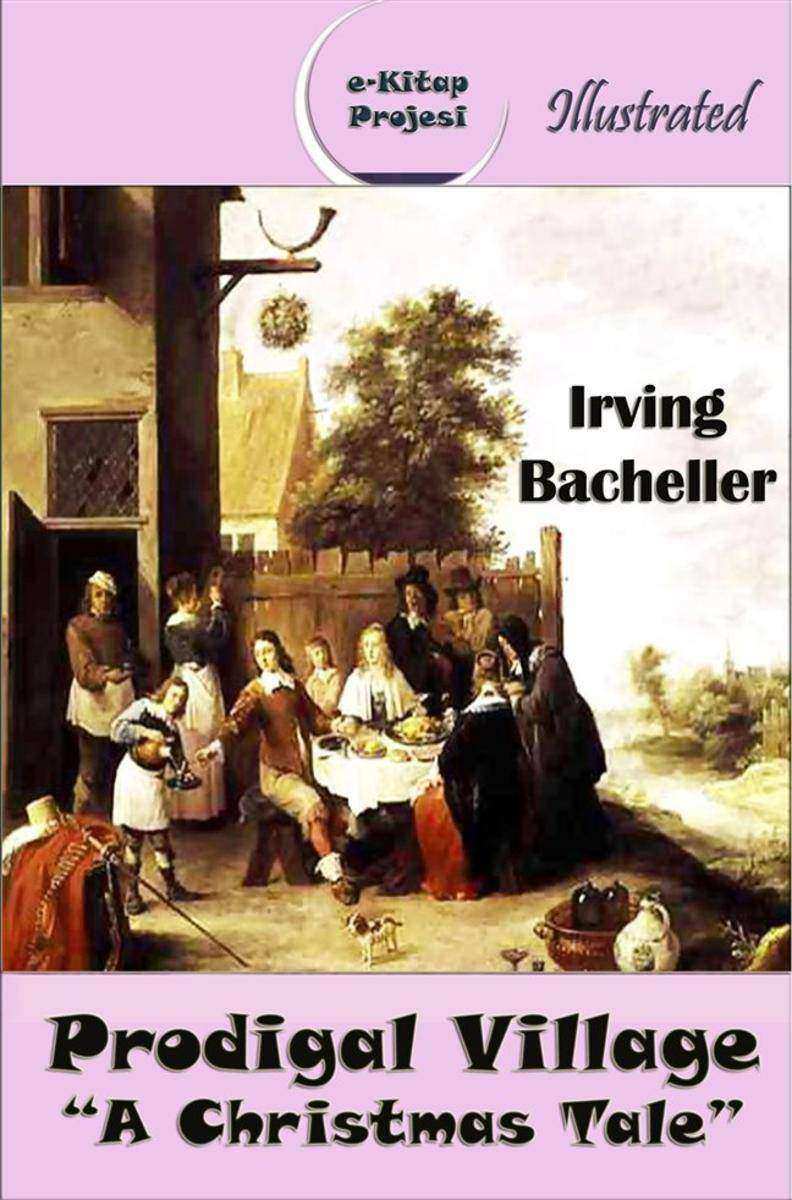
Prodigal Village: "A Christmas Tale"
¥18.74
Through the Looking-Glass, and What Alice Found There (1871) is a novel by Lewis Carroll (Charles Lutwidge Dodgson), the sequel to Alice's Adventures in Wonderland (1865). The themes and settings of Through the Looking-Glass make it a kind of mirror image of Wonderland: the first book begins outdoors, in the warm month of May (4 May), uses frequent changes in size as a plot device, and draws on the imagery of playing cards; the second opens indoors on a snowy, wintry night exactly six months later, on 4 November (the day before Guy Fawkes Night), uses frequent changes in time and spatial directions as a plot device, and draws on the imagery of chess. In it, there are many mirror themes, including opposites, time running backwards, and so on. Short Summary: Alice is playing with a white kitten (whom she calls "Snowdrop") and a black kitten (whom she calls "Kitty")—the offspring of Dinah, Alice's cat in Alice's Adventures in Wonderland—when she ponders what the world is like on the other side of a mirror's reflection. Climbing up on the fireplace mantel, she pokes at the wall-hung mirror behind the fireplace and discovers, to her surprise, that she is able to step through it to an alternative world. In this reflected version of her own house, she finds a book with looking-glass poetry, "Jabberwocky", whose reversed printing she can read only by holding it up to the mirror. She also observes that the chess pieces have come to life, though they remain small enough for her to pick up. Upon leaving the house (where it had been a cold, snowy night), she enters a sunny spring garden where the flowers have the power of human speech; they perceive Alice as being a "flower that can move about." Elsewhere in the garden, Alice meets the Red Queen, who is now human-sized, and who impresses Alice with her ability to run at breathtaking speeds. This is a reference to the chess rule that queens are able to move any number of vacant squares at once, in any direction, which makes them the most "agile" of pieces. The Red Queen reveals to Alice that the entire countryside is laid out in squares, like a gigantic chessboard, and offers to make Alice a queen if she can move all the way to the eighth rank/row in a chess match. This is a reference to the chess rule of Promotion. Alice is placed in the second rank as one of the White Queen's pawns, and begins her journey across the chessboard by boarding a train that literally jumps over the third row and directly into the fourth rank, thus acting on the rule that pawns can advance two spaces on their first move.
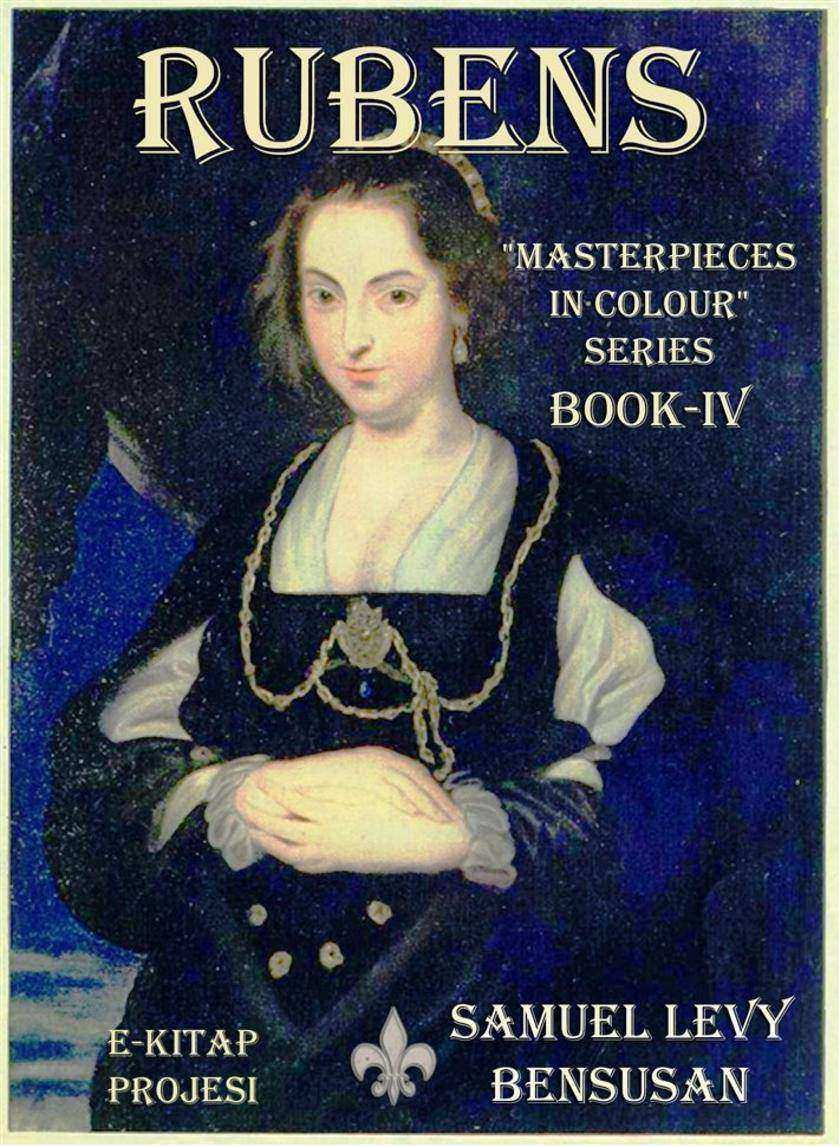
Rubens: "Masterpieces in Colour" Series: Book-IV
¥28.04
In “True Ghost Stories,” Mr. Carrington presents a number of startling cases of this character; but they are not the ordinary “ghost stories”—based on pure fiction, and having no foundation in reality. Here we have a well-arranged collection of incidents, all thoroughly investigated and vouched for, and the testimony obtained first-hand and corroborated by others. The chapter on “Haunted Houses” is particularly striking. The first chapter deals with the interesting question, “What is a Ghost?” and attempts to answer this question in the light of the latest scientific theories which have been advanced to explain these supernatural happenings and visitants. It is a book of absorbing interest, and cannot fail to grip and hold the attention of every reader—no matter whether he be a student of these questions, or one merely in search of hair-raising anecdotes and stories. He will find them here a-plenty! The following little book endeavors to bring together a number of “ghost stories” of the more startling and dramatic type,—but stories, nevertheless, which seem to be well authenticated; and which have been obtained, in most instances, at first hand, from the original witnesses; and often contain corroborative testimony from others who also experienced the ghostly phenomena. Some of these incidents, indeed, rise to the dignity of scientific evidence; others are less well authenticated cases,—but interesting for all that. These have been grouped in various Chapters, according to their evidential value. Chapters II. and III. contain well-evidenced cases, some of which have been taken from the Proceedings and Journals of the Society for Psychical Research (S. P. R.), or from Phantasms of the Living, or from other scientific books, in which narratives of this character receive serious consideration. Chapter V., on the contrary, contains a number of incidents which,—striking and dramatic as they are,—cannot be included in the two earlier Chapters, as presenting real evidence of Ghosts; but are published rather as startling and interesting ghost stories. Chapter IV., devoted to “Haunted Houses,” contains brief accounts of the most famous Haunted Houses, and of the phenomena which have been witnessed within them. Appendix A gives a list of a few of the important “Historical Ghosts,” Appendix B describes the “Phantom Armies” lately seen by the Allied troops in France—while Appendix C lists a number of books of Ghost Stories which the interested reader may care to peruse. A short Glossary, at the beginning of the book, explains the meaning of certain terms used,—which are not, perhaps, ordinarily met with in books of this character. In the Introductory Chapter, I have endeavored to explain, very briefly, the nature and character of Ghosts; what they are; and the various scientific theories which have been brought forward, of late years, to explain Ghosts. I hope that this may prove of interest to the reader; in case it does not do so, he is invited to “skip” directly to Chapter II., which begins our account of “True Ghost Stories.” I wish to express my thanks in this place to the Council of the English S. P. R. for special permission to quote and to summarize several striking cases here reproduced; also to Miss Estelle Stead, for permission to utilize several cases previously printed at length in Mr. Wm. T. Stead’s collections of Ghost Stories. H. C. [Author]

She
¥18.74
The War of the Worlds is a military science fiction novel by H. G. Wells. It first appeared in serialized form in 1897, published simultaneously in Pearson's Magazine in the UK and Cosmopolitan magazine in the US. The first appearance in book form was published by William Heinemann of London in 1898. It is the first-person narrative of the adventures of an unnamed protagonist and his brother in Surrey and London as Earth is invaded by Martians. Written between 1895 and 1897, it is one of the earliest stories that detail a conflict between mankind and an extraterrestrial race. The novel is one of the most commented-on works in the science fiction canon. The War of the Worlds has two parts, Book One: The Coming of the Martians and Book Two: The Earth under the Martians. The narrator, a philosophically-inclined author, struggles to return to his wife while seeing the Martians lay waste to southern England. Book One also imparts the experience of his brother, also unnamed, who describes events in the capital and escapes the Martians by boarding a ship near Tillingham, on the Essex coast. The plot has been related to invasion literature of the time. The novel has been variously interpreted as a commentary on evolutionary theory, British Imperialism, and generally Victorian superstitions, fears and prejudices. At the time of publication it was classified as a scientific romance, like his earlier novel The Time Machine. The War of the Worlds has been both popular (having never gone out of print) and influential, spawning half a dozen feature films, radio dramas, a record album, various comic book adaptations, a television series, and sequels or parallel stories by other authors. It has even influenced the work of scientists, notably Robert Hutchings Goddard. Plot SummaryYet across the gulf of space, minds that are to our minds as ours are to those of the beasts that perish, intellects vast and cool and unsympathetic, regarded this earth with envious eyes, and slowly and surely drew their plans against us.— H. G. Wells (1898), The War of the Worlds The Coming of the MartiansThe narrative opens in an astronomical observatory at Ottershaw where explosions are seen on the surface of the planet Mars, creating much interest in the scientific community. Later a "meteor" lands on Horsell Common, near the narrator's home in Woking, Surrey. He is among the first to discover that the object is an artificial cylinder that opens, disgorging Martians who are "big" and "greyish" with "oily brown skin," "the size, perhaps, of a bear," with "two large dark-coloured eyes," and a lipless "V-shaped mouth" surrounded by "Gorgon groups of tentacles." The narrator finds them "at once vital, intense, inhuman, crippled and monstrous." They briefly emerge, have difficulty in coping with the Earth's atmosphere, and rapidly retreat into the cylinder. A human deputation (which includes the astronomer Ogilvy) approaches the cylinder with a white flag, but the Martians incinerate them and others nearby with a heat-ray before beginning to assemble their machinery. Military forces arrive that night to surround the common, including Maxim guns. The population of Woking and the surrounding villages are reassured by the presence of the military. A tense day begins, with much anticipation of military action by the narrator.

Воздушные блинчики, оладьи, вафли.
¥17.99
Кра?на, яку залишили ?? творц?, винах?дники та мислител?, приречена на в?йну, голод ? смерть. Владу захоплюють нев?гласи, корупц?онери й мародери. ?стор?я трива? бодай тому, що одна вольова ж?нка на ?м’я Да?н? Та??арт переконана, що досконалий св?т справжн?х ц?нностей ?сну?. Вона намага?ться зламати сценар?й неминучо? катастрофи. ?? Атлантида не м?ф. У св?т? ще ? см?ливц?, спроможн? створити сусп?льний лад, де нема? конфл?кт?в, не виника? потреби в самопожертв?, жодна людина не становить загрози для мети ?нших. Бунт?вн? атланти знають, що розум таки переможе. Риторичне питання, хто такий Джон ?олт, насправд? ма? в?дпов?дь, а неймов?рн? ?де? — сво? вт?лення, яке проголомшу? людську уяву. В останн?й частин? свого фундаментального роману ?дей Айн Ренд змальову? ц?л?сну ф?лософську систему, яка дос? виклика? палк? дискус??, де в?д захвату до обурення — один крок.

Spiders
¥18.74
This book is called The White Spark as the white spark or vacuum cell in Nature IS THE RIGHT HAND OF GOD—it is a ubiquitous principle of the universe and is the cause and parent of electricity, combustion, radium, snow-flakes, flowers, trees, leaves, crystallization, wireless telegraphy, animal forms and EVEN LIFE ITSELF. This book is the key to every department of human endeavor, as it enunciates the basic principle and THE PRIME MOVER of the universe.?It tells the road to health, the cause and cure of disease, the truth about the germ humbug and drug treatments, serums and antitoxins. It shows why luminosity is produced on the flesh of various organisms, why a slice of pollock when first iced, then heated to 100 degrees and then thrust into a temperature of 50 degrees becomes luminous. It shows the farmer that he can become a magician of agriculture—tells that the nitrogen of the air is only a dust of quartz rocks, like the invisible moisture of the air is "a dust of water"—that the nodules on the roots of the clover and legumes do not abstract nitrogen from the air, for if they did nature would have placed these bacteriological growths on the vine and not the root, the scientists have the cart before the horse in this case and the nodular cells form the proteids from sand or silica, this book tells how it is done. It tells what a trance is and how the soul can leave the body temporarily. How JESUS CHRIST is carrying out the biblical prophesy by TELEPATHY. Gives the truths about the ideal society, alcohol, drunkenness, causes of crime, longevity and law.
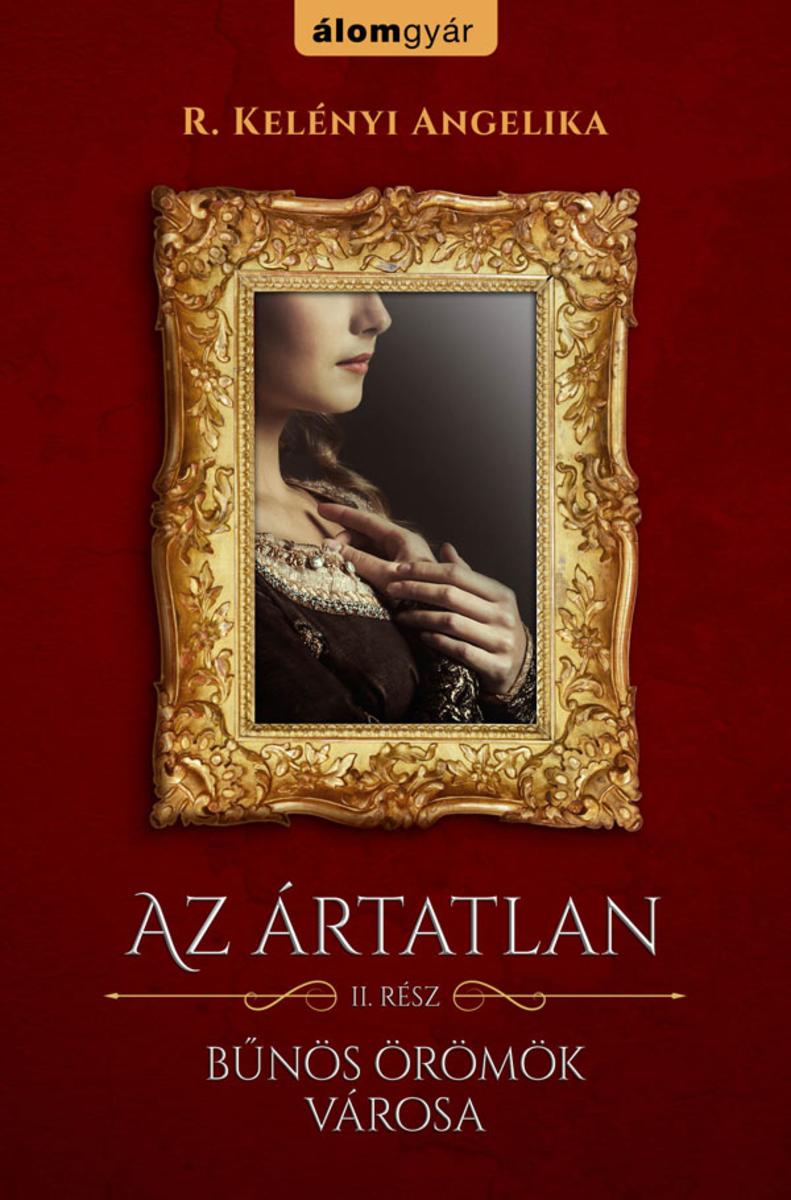
Az ártatlan II. rész
¥54.20
Amy remek színészn?, mindent tud a fegyverekr?l, és ki nem állhatja a rend?r?ket. Szeret?je egy kétes üzletet készül megk?tni, amikor meggondolatlanságában balesetet okoz Klagenfurt határában, majd lelép a helyszínr?l. Amy kénytelen egyedül szembenézni a rend?r?kkel, ráadásul az egyik nyomozó azonnal kikezd vele. Amy szánalmasnak találja Martinek hadnagy próbálkozását, mégis enged neki, hogy a nyomozás k?zelébe férk?zhessen. Mik?zben szemmel tartja a hadnagy minden lépését, egy teljesen más oldaláról is megismeri ?t. Amynek át kell értékelnie mindent, amit eddig a rend?r?kr?l hitt. ?letében el?sz?r ellenszegül a kapott parancsoknak. Kész megfizetni a d?ntése árát – még akkor is, ha emberéletekbe kerül. ?

Elégtétel
¥58.29
…ránézett az el?tte terpeszked? hatalmas faóriásra. Milyen méltóságteljes, és milyen dunyha vastagságú, hófehér palást borítja f?ldig ér? ágait. Mint valami sátor, akár meg is éjszakázhat alatta. Elfedi az, megvédi az erd? minden veszélyét?l. K?zben kitisztult az ég, s csillagok milliárdjai gyújtották meg kis lámpásaikat. A hókristályok csillagszóróként sziporkáztak a nagy feny? ágain. Aztán a fa csúcsán megjelent a ragyogó hold, és az arany sarló megkoronázta az amúgy is fényárban tünd?kl? fát. Ez lehet az erd? karácsonyfája – gondolta. ?gy karácsonyozik az erd?, és én most vendégségben vagyok nála. ?s még bejglim is van – jutott eszébe. Csak a szerettei hiányoztak. Hogy ?k nem lehettek részesei ennek a látványnak, nem gy?ny?rk?dhettek vele együtt az óriás karácsonyfa szépségében…

?gyn?k t?sarkúban
¥58.29
Robert Masello új thrillerében David Franco, a zseniális, de szkeptikus ifjú kutató egy legendás m?tárgy nyomába ered: egy amulettet keres, amelyet Benvenuto Cellini, a reneszánsz Itália kézm?vesmestere készített. Az amulettet a szépsége mellett a varázsereje teszi értékessé, ugyanakkor igen veszedelmesnek tartják.Az egyszer? nyomozásnak induló kaland intrikák sz?vevényévé válik. Franco Loire menti kastélyokban és római palazzókban kutat a kincs után, hogy megfejtsen egy rejtélyt, amely ?sid?k óta foglalkoztatja az emberiséget.A tudós egy s?tét titkokat ismer?, gy?ny?r? firenzei lányt hív segítségül, s orgyilkosokkal a nyomában néz szembe egy sokkal er?sebb gonosszal, mint amit?l rémálmaiban rettegett. Lélegzetelállító fordulatokban b?velked? utazásuk Chicago utcáitól a nagy francia forradalom káoszáig vezet.?Egy regény, amelyben a t?rténelmi tények találkoznak az irodalmi kreativitással, és a lehetetlen félelmetes valósággá válik. A Medúza-amulett Cellini m?véhez hasonlóan egyedi alkotás, éppen olyan vonzó, mint amilyen ijeszt?, és éppen olyan monumentális, mint amilyen merész.Robert Masello az Egyesült ?llamok egyik legsikeresebb t?rténelmi és misztikus krimi írója, regényeit 15 nyelvre fordították le. A magyar k?z?nség Az Einstein-prófécia és A Romanov-kereszt címmel megjelent regényein keresztül ismerhette eddig meg.

Határtalanok
¥54.20
Gyilkosság t?rténik egy vidéki kúriában. Az áldozatot megfojtva találják a szobájában, az ajtót belülr?l elreteszelték, az ablak tárva-nyitva. Az asztalon egy csupor kakaó - benne altató. Vajon a gyilkos tette bele? Ha igen, aligha lehetett más, mint valaki a házban lakók k?zül. A Maxie család és két vendégük feszült, gyanakvó légk?rben várják a nyomozás eredményét, és a legkevésbé sem k?nnyítik meg Dalgliesh f?felügyel? dolgát. A poéta-lelk? detektív azonban nem az a fajta, aki k?nnyen feladja...P. D. James, akit Agatha Christie mellett az angol krimi klasszikusának tartanak, gondosan ügyel arra, hogy az olvasó számára végig izgalmas maradjon a fejt?r? irodalmi kirakójáték - majd minden szerepl?je gyanús, és egészen az utolsó oldalakig az is marad.?A Takard el az arcát! az írón? korai és egyik legsikeresebb regénye, a m?faj tízmilliók által olvasott alapm?ve.?

Szül?k feltétel nélkül
¥57.31
Az elvált, nyugdíjas Nathan Glass már nem vágyik másra, csak magányra és névtelenségre, ezért visszavonul gyerekkora helyszínére, Brooklynba. Csakhogy találkozik rég nem látott unoka?ccsével, Tommal, aki valaha akadémiai ambíciókat dédelgetett, ám most taxisof?r, majd annak barátjával, a kétes múltú antikvárius Harryvel, és hamarosan azt veszi észre, hogy egy ?sszeesküvés részese, amelynek tárgya egy hamisított kézirat, célja pedig a bosszú. Paul Auster ebben a regényében a t?le megszokottnál melegebb, der?sebb hangon mesél kallódó emberekr?l, akiknek élete nem úgy alakult, ahogy remélték, akik már lemondtak a j?v?r?l, de a j?v? még korántsem mondott le róluk. Auster, hosszú évek óta a Nobel-díj várományosa, számtalan irodalmi díj birtokosa, k?nyveit harminc nyelvre fordították le. M?vei most a 21. Század Kiadó új életm?sorozatában jelennek meg. "Elb?v?l? t?rténet a család elviselhetetlen szépségér?l és a szerelem megváltó erejér?l." USA TODAY "Nagyszív?, életigenl?, gyengéd és mulatságos t?rténet.” The Washington Post "Auster üzenenetet küld nekünk: van remény. A szerelem megment bennünket. Meg fogjuk menteni egymást. The Boston Globe

Azok a régi Csibészek
¥57.31
gy mondják, sose bízz egy idegenben. Talán nekik van igazuk. Amikor Emma Joseph megismerkedett a férjével, Davidet bánat gytrte. Els feleségét a saját elszabadult kocsija gázolta halálra, hatesztends lánya pedig titokzatos módon eltnt a baleset helyszínérl. Most, hat évvel késbb, Emma úgy véli, végre maguk mgtt tudhatják a fájdalmas idket. j életet építettek fel Daviddel, és van egy csodaszép kisfiúk, Ollie. Aztán feltnik egy idegen, és flforgatja az életüket. Emma elveszíti a biztonságérzékét. Vajon csakugyan tudja, mi trtént oly sok évvel azeltt s miért aggódik nmagáért meg a csecsem fiáért Elkeseredésében régi barátjához, Tom Douglas nyomozó ffelügyelhz fordul segítségért, ám ezzel a lépéssel valamennyiük életét veszélybe sodorja. Hamarosan olyan hazugságok hálójára derítenek fényt, amely mindkettejüket velejéig sokkolja. Az Aludj jól világhír szerzjének legújabb bestsellere letehetetlen és elgondolkodtató remekm, a pszichológiai thrillerek, és a krimik kedvelinek a kedvence világszerte.

Az ?z
¥71.69
n már elz életemben sem hittem a reinkarnációban, de ennek ellenére azt kívánom, trténeteim olvasása által sikerüljn újjászületned azokban a kapcsolatokban, melyeken változtatni szeretnél, de nem mersz, vagy úgy érzed, nem tudsz lépni igazán. Legyen az párkapcsolati kuszaság, gyermeke(i)ddel való rendezetlenség, akár lelki, akár testi eredet bonyodalom nmagaddal, azaz: nem bírok a tükrbe nézni” szindróma. Természetesen annak is rülk, ha egyszeren csak szerzek néhány gondtalan percet. Ezeket a sztorikat a fantázia diktálta nekem; ha valamelyikben ráismersz valakire, ne hagyd magad megtéveszteni, az csakis és kizárólag a véletlen mve lehet.

T?bb titoknyi távolság
¥27.39
Megt?rt szív? lány. ?dáz harcos. Leend? h?s. Vajon Meira képes megmenteni azt a világot, amit soha nem ismert igazán? TIZENHAT ?VE annak, hogy a Tél Királyságát megszállta az ellenség; lakóit rabigába hajtották. Varázslat és uralkodó nélkül maradtak. A télieknek nem maradt más reményük a szabadságra, mint a nyolc túlél?, akiknek valahogyan sikerült elmenekülniük, és akik a lehet?ségre várnak, hogy visszacsempészhessék a Tél varázslatát, és újjáépítsék a birodalmat. Meira nagyon kicsi volt, amikor Tél vereséget szenvedett és ? elvesztette a szüleit. Menekültként élt, a téliek tábornoka, Sir lett a gyámja, ? pedig harcosnak nevelte. Meira szerelme legjobb barátja, a leend? király, Mather; a fiatal lány pedig mindent megtenne azért, hogy Tél birodalmának hatalma helyreálljon. ?gy hát, amikor a kémek felfedezik, hol ?rzik azt az ?si medaliont, amelynek segítségével visszakaphatnák a varázserejüket, Meira elhatározza, hogy maga indul a keresésére. Magas tornyokra mászik, ellenséges katonákkal harcol; valóra vált régi álma. ?m a küldetés nem a tervek szerint alakul, és Meira hamarosan gonosz varázslat, veszélyes politika, fortélyos üzelmek világában találja magát… és végül rád?bben, hogy sorsa felett nem ? rendelkezik… és ez mindig is így volt. Sara Raasch els? regénye h?ségr?l, szerelemr?l, életünk céljának keresésér?l szóló leny?g?z? olvasmány.

Duplacsavar
¥27.71
Bexi – civil nevén Budai Rebeka – második albumának sikere, egy londoni út és a Nagy Márkkal való el sem kezd?d?tt kapcsolatának vége után hirtelen elveszti a talajt a lába alól. Geriben csalódnia kellett, Márk szóba sem áll vele, de talán a zenei sikertelenségt?l rendül meg leginkább. Szerencsére még mindig mellette áll a családja, valamint Anti, Evelin, K?rte, az agyontetovált menedzser, és a Fogd be Aszád vérbeli trolljai. ?gy a szakmai és magánéleti mélypont sem tarthat sokáig…

A pokol angyala: Egy beépített ügyn?k megrázó t?rténete a Hells Angels motorosba
¥68.83
Володар Пул?тцер?всько? прем??! З дитинства натренований бачити в темряв? тунел?в, Чон До — син начальника табору для сир?т, здатен ? в житт?, що його оточу?, роздивитися б?льше за ?нших. Темрява для нього — це несвобода, це кра?на, де голод ма? смак кв?т?в, де швидка смерть ста? проявом найб?льшо? любов? до р?дних — заради порятунку ?х в?д жаху табор?в, — де держава зам?сть прав для вс?х дару? певн? прив?ле? обраним, називаючи себе найпрогресивн?шою демократ??ю у св?т?. Але й у суц?льному мороц? ? м?сце коханню ? самопожертв?, дружб? ? чест?. Темн?ше за все — перед св?танком... Volodar Pul?tcer?vs'ko? prem??! Z ditinstva natrenovanij bachiti v temrjav? tunel?v, Chon Do — sin nachal'nika taboru dlja sir?t, zdaten ? v zhitt?, shho jogo otochu?, rozdivitisja b?l'she za ?nshih. Temrjava dlja n'ogo — ce nesvoboda, ce kra?na, de golod ma? smak kv?t?v, de shvidka smert' sta? projavom najb?l'sho? ljubov? do r?dnih — zaradi porjatunku ?h v?d zhahu tabor?v, — de derzhava zam?st' prav dlja vs?h daru? pevn? priv?le? obranim, nazivajuchi sebe najprogresivn?shoju demokrat??ju u sv?t?. Ale j u suc?l'nomu moroc? ? m?sce kohannju ? samopozhertv?, druzhb? ? chest?. Temn?she za vse — pered sv?tankom...


