


 购物车
购物车 个人中心
个人中心
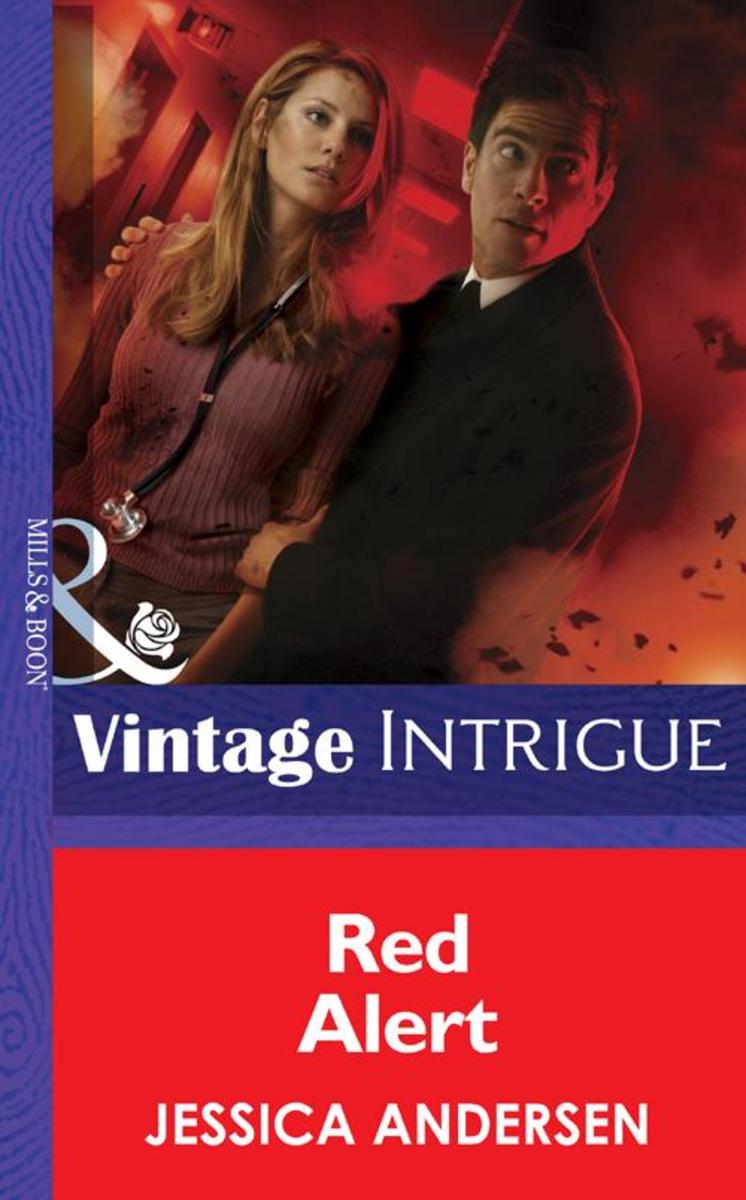
Red Alert (Mills & Boon Intrigue)
¥31.10
PROTECTING HER BECAME HIS JOB…AND HIS OBSESSION Dr. Meg Corning detested the way Erik Falco stormed the halls of Boston General Hospital as if he owned the place. The fallen-cop-turned-ruthless-businessman was throwing his weight around in his bid to gain control of her breakthrough medical technology. But putting this sexy stranger in his place seemed impossible once he swooped to the rescue during a series of mysterious "accidents." Before long, the explosive heat between them set off a chain reaction of pleasure and pain that nearly immobilized her. After Falco made a heart-stopping move to keep her safe, the data-obsessed doc knew it was time to analyze his true motives–and her own traitorous desires. Could they forge a bond of trust in time to outsmart a cold-blooded killer?
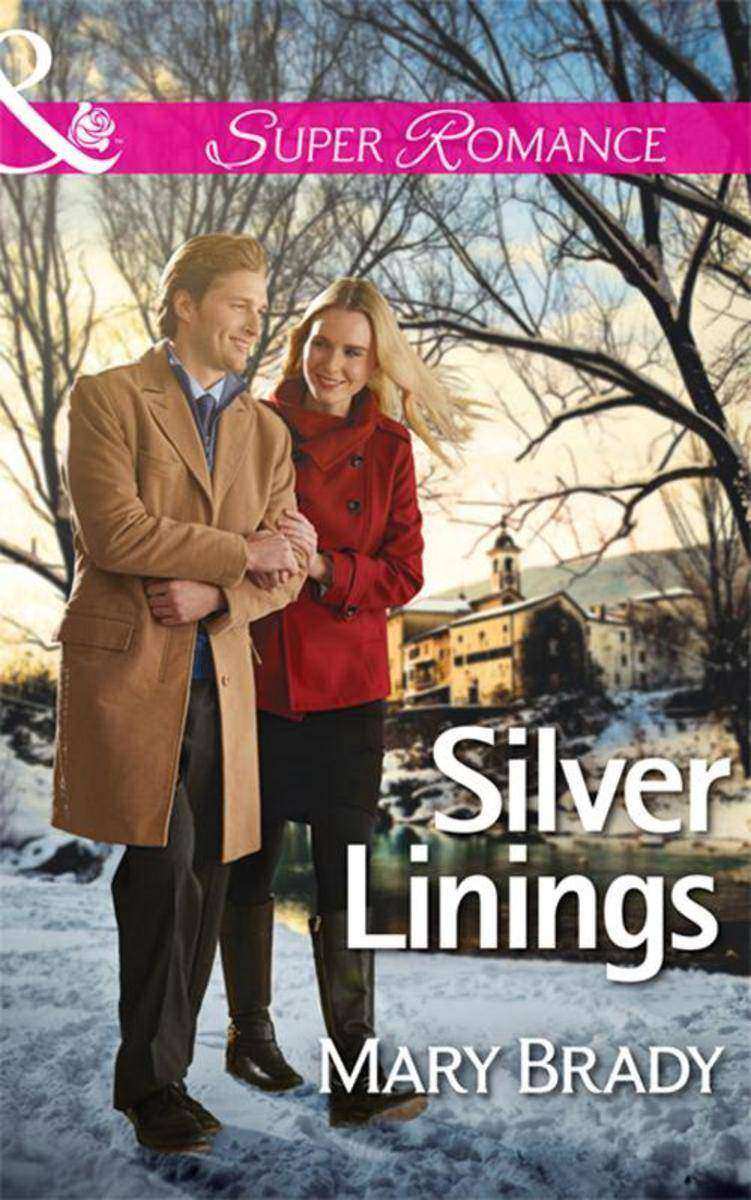
Silver Linings (Mills & Boon Superromance) (The Legend of Bailey's Cove, Book 2)
¥31.10
Fate has reunited them…but for how long? Life took a detour when Delainey Talbot became a mother. There's no better job but that doesn't mean she isn't excited about finally becoming a lawyer–a dream she's this close to fulfilling. So when the partnership at Bailey's Cove's only law firm goes to Hunter Morrison, she's devastated. Hunter and Deelee haven't seen each other since their ill-fated romance ended suddenly–he doesn't even know about six-year-old Brianna! Deelee wants him out of her town and her job. Too bad her heart says this could be their chance at the life they were meant to have.
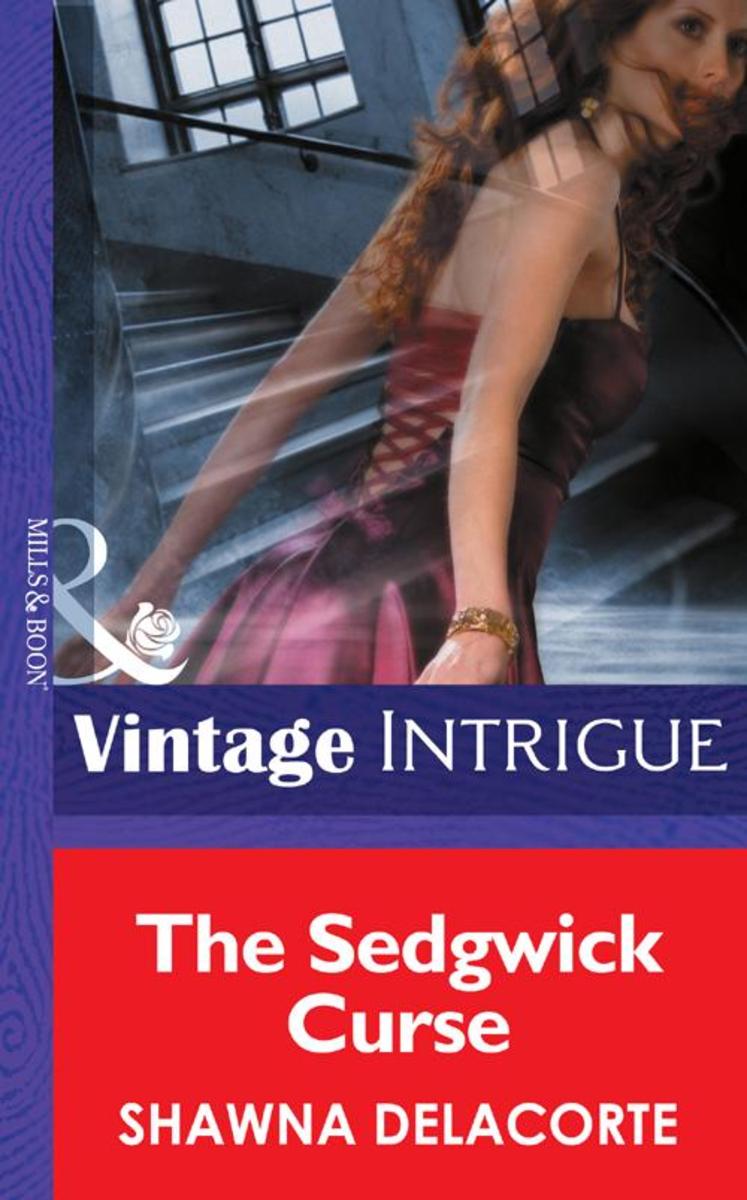
The Sedgwick Curse (Mills & Boon Intrigue) (Eclipse, Book 10)
¥23.84
THE CHILLING TRUTH To learn the truth behind her great-grandmother's past–and the curse that still surrounded both her family and the old woman's tiny country village–Taylor MacKenzie made her way to England. But from the moment she arrived at her ancestors' manor house, an eerie chill echoed the evil of the past and a shadowy figure seemed to follow her every move. Donovan Sedgwick, the new lord of the manor, had eyes that pierced Taylor's soul and held her in an otherworldly thrall. But he seemed ravaged by demons of his own–demons that only her kisses were able to calm.
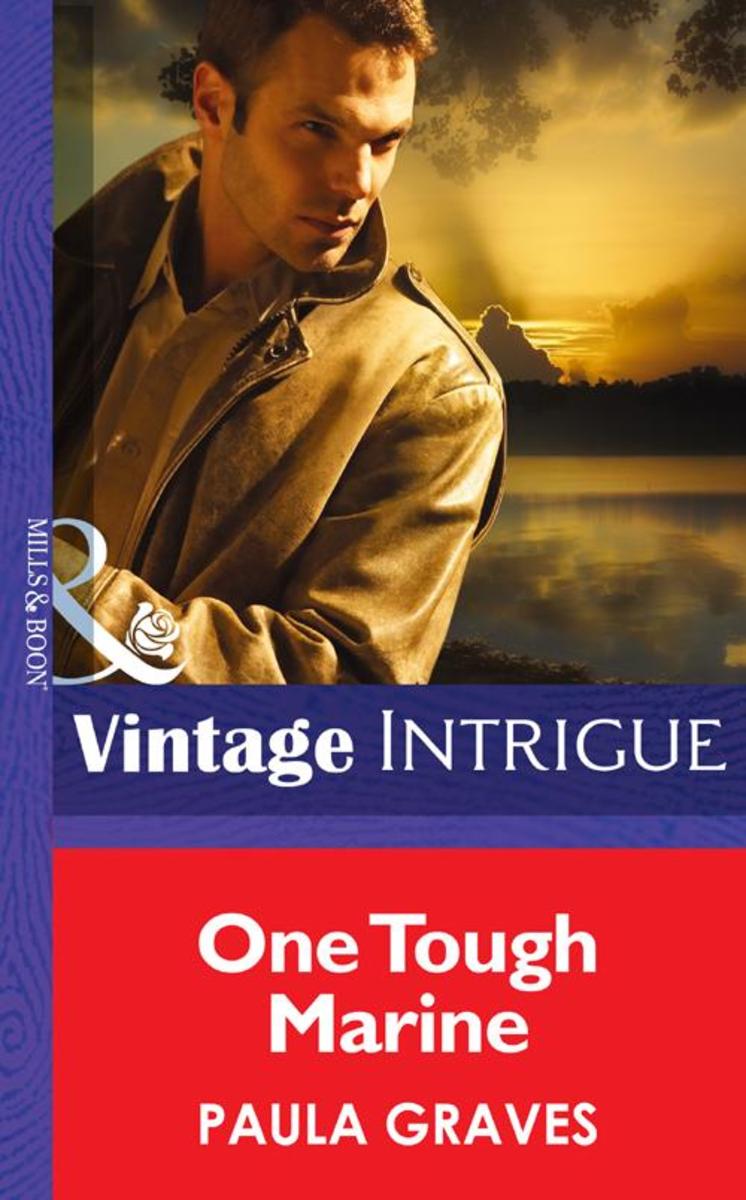
One Tough Marine (Mills & Boon Intrigue) (Cooper Justice, Book 3)
¥31.20
Threatened by masked men making an impossible demand of her, Abby Chandler runs to Luke Cooper for help. She knows it's been three years since he vanished after their blazing one-night stand…and that she might be forced to reveal the secret that he's her little boy's father. Abby has no idea that the former marine has also been keeping a painful secret–that his disappearance was the only way to keep her alive. Luke knows Abby came to him for protection, but earning her trust isn't going to be easy. Nor will keeping his hands off her. But admitting their once-forbidden attraction still exists could be risky. And deadly.

The Bachelor Doctor's Bride (Mills & Boon Cherish)
¥26.78
Paging Dr Love! Cardiologist Quinn MacDowell has no time for affairs of the heart--especially those not related to his job. But when a black tie affair throws him together with bubbly Diana Connor, she gets underneath his white coat like no woman has before. Quinn is determined not to let this chance at happiness dance out of his reach. Opposites may attract, but Diana doesn't believe they make permanent matches. If the hunky doctor with the icy fa?ade knew how much baggage she actually came with, he'd run the other direction. When her plan to keep things cool gets blown away by a Texas storm, these polar opposites must decide if the heat between them will burn for a summer, or forever.

The Fireman Finds a Wife (Mills & Boon Love Inspired) (Cedar Springs, Book 1)
¥31.10
Her Unexpected Hero Widow Summer Spencer is eager for a quiet life–without the worry of loving a man who lives life in the fast lane. But when fire chief Cameron Jackson starts to woo her, it's tough to resist his charms. Chief Cam can't ignore the sparks between him and the stately beauty. But when he learns she's from the richest family in town, he's not sure he can ever measure up to her expectations. Can he set aside his fears and give true love another chance?

The Horseman's Frontier Family (Mills & Boon Love Inspired Historical) (Bridegro
¥31.10
The Cowboy Meets His Match Everything Gideon Thornton has worked for is in jeopardy, all because of one stubborn woman. Evelyn Montgomery insists that Gideon's new claim from the Oklahoma Land Rush legally belongs to her. Both refuse to budge–even when the law says that until their dispute is settled, they must share the land. Their family feud has taught Evelyn that Thortons can't be trusted. Yet day by day Gideon's thoughtfulness to Evelyn, and especially to her young son, shows the real truth. A truth that may mean the end of her claim…and the start of a future big enough to encompass both their dreams. Bridegroom Brothers: True love awaits three siblings in the Oklahoma Land Rush

The Millionaire's Homecoming (Mills & Boon Cherish)
¥11.77
Returning home to Blossom Valley was the last thing millionaire David Blaze wanted to do, but his family must come first. And seeing widow Kayla Jaffrey, as beautiful as ever, caused David to wonder if maybe they were being given a chance to rewrite history…this time together…
Quantico
¥35.32
Three FBI agents. One armageddon. It's the near future – sooner than you might hope – and the war against terrorism is almost lost. Nuclear and biological weapons are in the hands of Islamic radicals, and new weapons are being spawned in remote labs that can be used against entire populations. These are some of the problems facing three young agents as they finish their training at the FBI Academy in Quantico, Virginia. And still the threat is escalating to ever crazier heights. The Dome of the Rock has been blown to pieces by terrorists, and in retaliation thousands have died in another major attack on the United States, the equal of 9/11. Rumours fly through international capitals of a plague targeted to ethnic groups―Jews or Muslims or both. No one feels safe. Like the Anthrax terror that followed 9/11, the new plague results from domestic terror, the province of the FBI. The FBI seeks one man who appears to be on a bitter mission to wipe history's slate clean and close the curtain on the last act of the modern world. But the FBI itself is under threat of political extinction. There is a good chance the new agents will be part of the last class at Quantico, ‘Cop Valhalla’. As investigations reveal horror upon horror in the US and the rest of the world, the agents join forces with a veteran bioterror expert to foil attacks on the world's greatest religious cities―Jerusalem, Rome, and Mecca. In the second decade of the War on Terror, victory may be hard to define.
Imajica
¥80.25
A book of revelations. A seamless tapestry of erotic passion, thwarted ambition and mythic horror. Clive Barker takes us on a voyage to worlds beyond our knowledge, but within our grasp. John Furie Zacharias, known as Gentle, a master forger whose life is a series of lies. Judith Odell, a beautiful woman desired by three powerful men, but belonging to none of them. Pie’oh’pah, a mysterious assassin who deals in love as well as death. These three are united in a desperate search for the heart of a universal mystery, and will find the truth that lies in a place as mysterious as the face of God, and as secret as the human soul. They discover the Imajica. Imajica is many things: an epic novel of vast panoramas and intimate, obsessive passions, embracing ghosts and reflections as well as the human and the divine.

The Borgia Bride
¥100.85
This sweeping historical novel tells the dramatic tale of that most intriguing of Renaissance women, Lucrezia Borgia. Incest. Poison. Betrayal. Three wedding presents for the Borgia bride… Italy 1492 Pope Alexander VI is elected. And so begins the Borgia reign of terror. Alexander murders, bribes and betrays to establish his dynasty. No one is immune. Rome is a hotbed of accusation and conspiracy. Every day, the River Tiber is full of new bodies. Sancha de Aragon, daughter of King Alfonso II of Naples, arrives in Rome newly wed to Alexander’s youngest son, Jofre. Their marriage protects Naples against the ambitions of the French King Louis and gains Spanish support for the Borgias. But Rome is very different to her beloved Naples. The debauchery of the Borgia inner-circle is notorious: every lust is indulged and every indiscretion overlooked. Sancha is no innocent: she possesses an indomitable spirit which allows her to survive in the snake-pit, but her ancestors once rivalled the Borgias in cruelty and Sancha’s greatest fear is that blood will out. Lucrezia Borgia’s vicious jealously stings Sancha at first, but gradually the two young women develop a cautious friendship. Lucrezia, adored by her father but used ruthlessly as a political tool, seems deceptively innocent and sympathetic, and their bond strengthens when Lucrezia is married to Sancha’s treasured brother, Alfonso. But when Sancha falls in love with Cesare Borgia, her husband’s enigmatic older brother, she has no idea of how bizarre and internecine are the family's true ties. Alexander is rather more than an indulgent father; Lucrezia not the innocent she appears; and Cesare’s ambition burns wildly. The only safe relationship with the Borgias is none at all: as Sancha, her brother and Naples are soon to discover…

Notorious: The Maddest and Baddest Sportsmen on the Planet
¥88.39
Straddling humour, trivia and sport, ‘Notorious’ brings together for the first time one hundred of the most potty sportsmen in history. From boxing to cycling, soccer to baseball, and most sports in between, here are the hard-men and the criminals, the psychos and the loonies, that make up the sporting madness hall of shame. Among the prime candidates for sporting lunacy in this book: Prinya Charoenpal, one of the most talented kick-boxers in the sport’s history, who wore make-up and pink nail polish, broke down when asked to strip for the weigh-in, pummelled the opponent who made the mistake of mocking her with a camp embrace, and who fought solely to get the money for a sex-change operation. Jack ‘Hacksaw’ Reynolds, the San Francisco 49-ers linebacker during the 80s, who once got plastered after losing a college game, went out to the car park with a hacksaw, and cut someone’s car in half. The Brazilian football star Edmundo, infamous on the pitch for beating up fans, referees and journalists, and making his name off it by crashing his truck and killing three people, and being arrested for force-feeding beer to a chimpanzee at his son’s birthday party. And there’s more. The rugby league hard-man with a predilection for sticking a rigid digit finger up opponents’ rears on the field of play; the baseball Hall of Famer who wielded his bat to beat up unsuspecting victims; the golfer hospitalised three times for alcohol poisoning, who came through two suicide attempts, three divorces, plus countless hotel room trashings and suspensions; the Irish jockey involved in an air rage incident who copped 110 hours of community service… And closer to home, the likes of Roy Keane, Alex Higgins, Vinnie Jones and Paul Gascoigne are also featured in this wildly captivating, and often shocking, collection of crazed sports celebrities.

Galilee
¥72.30
A massive tale of secrets, corruption and magic between two feuding families – the powerful Gearys and the shadowy Barbarossas. EVERY FAMILY HAS A SECRET As rich as the Rockefellers, as glamorous as the Kennedys, the Geary dynasty has held subtle sway over American life since the Civil War, brilliantly concealing the depths of its corruption. All that is about to change. For the Gearys are at war. Their enemies are another dynasty – the Barbarossas – whose origins lie not in history but in myth. When the prodigal prince of the Barbarossa clan, Galilee, falls in love with Rachel Geary, the pent-up loathing between the families erupts in a mutually destructive frenzy. Adulteries are laid bare. Secrets creep out. And insanity reigns. Galilee is a massive tale, mingling the sharp realism of Barker’s bestseller Sacrament with the dark invention for which he’s known worldwide, and surpassing both with an epic tale which will surely rank as the crowning achievement of his career.

Connected: The Amazing Power of Social Networks and How They Shape Our Lives
¥73.58
Is happiness catching? Are your friends making you fat? Can your sibling make you smart? Is wealth contagious? Where is true love found? Does free will exist? Based on exciting discoveries in mathematics, genetics, psychology and sociology, ‘Connected’ is an innovative and fascinating exploration of how social networks operate. Think it's all about who you know? It is. But not the way you think. Turns out your colleague's husband's sister can make you fat, even if you don't know her. And a happy friend is more relevant to your happiness than a bigger income. Our connections – our friends, their friends, and even their friends' friends – have an astonishing power to influence everything from what we eat to who we sleep with. And we, in turn, influence others. Our actions can change the behaviours, the beliefs, and even the basic health of people we've never met. In this brilliantly original and effortlessly engaging exploration of how much we truly influence one another. Pre-eminent social scientists Nicholas Christakis and James Fowler explain why obesity is contagious, why the rich get richer, even how we find and choose our partners. Intriguing and entertaining, with revelatory implications for everything from our notion of the individual to ideas about public health initiatives, ‘Connected’ will change the way you think about every aspect of your life, and how you live it.
A Love for Food: Recipes and Notes for Cooking and Eating Well
¥221.12
The ultimate in delicious, fresh food from the company who are dedicated to growing, producing and cooking real food. The Daylesford recipe for delicious eating is simple - organic produce of the utmost quality. Ingredients from local producers, seasonal crops, humanely-reared meat and a simplified supply chain guarantees food that’s fresh, ethically-produced and, most importantly, full of flavour. This beautiful book will help you make Daylesford's award-winning recipes at home, showing you how to live healthily and simply throughout the food calendar year. With everything – from seven-seed sourdough bread to quintessentially English spiced apple cake, as well as delicious meat and game dishes, including Daylesford’s favourite rabbit, cider and mustard pie – the principles of good wholesome food and seasonality lie behind each carefully crafted dish. Mark every season, with ideas on how to use a glut of vegetables from your garden, tasty jams and relishes to stock your winter larder and mouth-watering fruit confections for the summer months. This is the essential cookery book for organic food lovers everywhere.
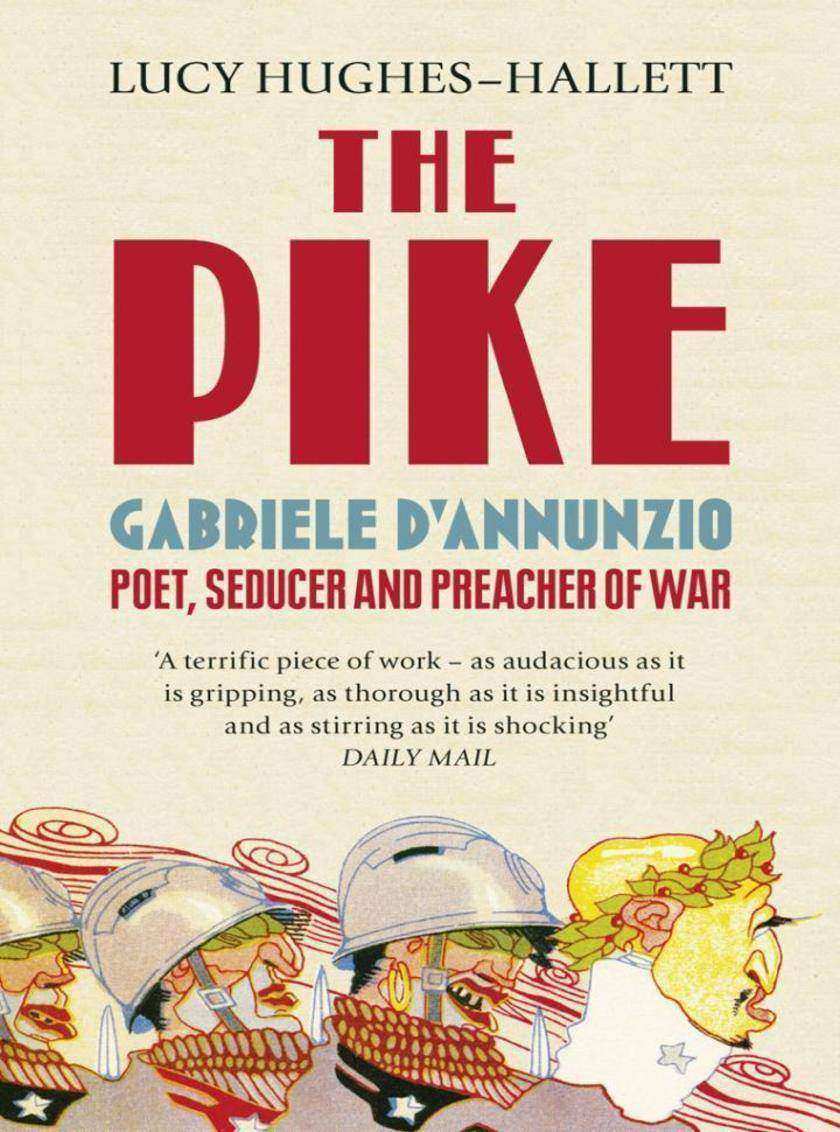
The Pike: Gabriele d’Annunzio, Poet, Seducer and Preacher of War
¥88.39
WINNER OF THE 2013 SAMUEL JOHNSON PRIZE FOR NON-FICTION WINNER OF THE 2013 DUFF COOPER PRIZE WINNER OF THE POLITICAL BOOK AWARDS POLITICAL BIOGRAPHY OF THE YEAR 2014 WINNER OF THE 2013 COSTA BOOK AWARDS BIOGRAPHY OF THE YEAR The story of Gabriele D’Annunzio, poet, daredevil – and Fascist. In September 1919 Gabriele D’Annunzio, successful poet and occasional politician, declared himself Commandante of the city of Fiume in modern day Croatia. His intention – to establish a utopia based on his fascist and artistic ideals. It was the dramatic pinnacle to an outrageous career. Lucy Hughes-Hallett charts the controversial life of D’Annunzio, the debauched artist who became a national hero. His evolution from idealist Romantic to radical right-wing revolutionary is a political parable. Through his ideological journey, culminating in the failure of the Fiume endeavour, we witness the political turbulence of early 20th century Europe and the emergence of fascism. In ‘The Pike’, Hughes-Hallett addresses the cult of nationalism and the origins of political extremism – and at the centre of the book stands the charismatic D’Annunzio: a figure as deplorable as he is fascinating.
Wild Garlic, Gooseberries and Me: A chef’s stories and recipes from the land
¥110.46
Following the successes of Café Paradiso and the award-winning Paradiso Seasons, Denis Cotter is back with an evocative, witty collection of tales and a superb range of exciting and delicious vegetarian recipes. Wild Garlic, Gooseberries and Me cajoles, informs and questions our relationship to the land and the vegetables we eat. We go on a personal journey with Denis as he shares his passion for his favourite foods. Denis drags us into muddy fields and introduces us to the growers of the best produce imaginable. Through heart-felt and charming text, he informs and amuses. The excitement of a robust blackberry jam becomes a passionate argument for us to go out into the countryside, the dazzling sight of high-trailing borlotti beans ignites a discussion on the future of artisan growing. Whether creating a restaurant masterpiece or foraging in hedgerows and woods, Denis searches for a new connection between food, people and land … oh, and he also teaches you how to search for mushrooms, wild greens and sloes, how to cook asparagus and take on an artichoke with attitude. Divided into four themed chapters, 'It's a Green Thing', 'Wild Pickings', 'A Passionate Pursuit' and 'Growing in the Dark', each including information and anecdotes about the vegetables that feature as well as many delicious recipes. There are simple salads and soups as well as more challenging main meals and mouth-watering desserts. Recipes include: Fresh Pasta with Abyssinian Cabbage, Pine Nuts & Sheep's Dressing; Courgette Flower, Pea and Chive Risotto; Samphire Tempura with Coriander Yoghurt; Grilled Portobello Mushrooms with Potato Pancakes and Tarragon Cream; Cabbage Timbale of Celeriac and Chestnuts with Porcini and Oyster Mushroom Sauce Stunning images of the landscape, the food and the finished recipes complete this delightful read and unique recipe book.

The Address Book: Our Place in the Scheme of Things
¥73.58
Over the years, millions of school children must have written out their address in the same way – their house number and street, their town, their country, their continent, planet Earth, the universe… Following this simplest of patterns, taking each line of the address as a starting point, Tim Radford explores our place in the scheme of things – why we are attached to a particular geographical place and what significance do we have when faced with the realms of astronomy and astrophysics. Fascinating, entertaining and completely original, The Address Book tackles some of the most fundamental questions facing us, and allows us see ourselves completely afresh.

God’s Little Book of Peace
¥36.79
God’s Little Book of Peace offers an inspiring collection of calm-inducing truths on which to call when peace seems far from our hearts. ‘Remember, yesterday is gone and tomorrow is unborn; all you have is today. Live one peaceful day at a time.’ Amid all the worries and stress of everyday life and the problems of the world, we feel the need to reach outside ourselves in order to find lasting peace and strength. Harmony among nations and between people struck by terror and disaster is often hard to come by. Yet in the midst of turmoil, peace can still be achieved. It is possible to live in a world which cries out for peace, yet still to find it in our hearts. Such an experience only comes from knowing God. This small volume is designed to provide you with insightful words to help you discover true peace for yourself. Open this inspirational little book at any page, and restore your sense of peace and calm. Each page has an inspirational thought or idea, along with a related Bible reference for further reading and encouragement.
Power Trip: From Oil Wells to Solar Cells – Our Ride to the Renewable Future
¥95.75
In this fresh and gutsy analysis, Amanda Little lays bare America’s energy past, present and future and shows how the innovatory designs that got it to its current energy crisis will actually save it from ruin. 'We're about to see a revolution in the way we live, fundamental changes to the way our homes work, the way our cars move, the way we grow our food, distribute our products, the way we make and recycle plastics.' - Amanda Little In this adventurous, jargon free, optimistic book, Amanda Little – tipped as 'the new voice of green' by Robert Redford – reveals the gargantuan influence of oil on our daily lives. It fights our wars, grows our crops, produces our plastics and medicines, warms our homes and animates our cities. We've allowed it to seep into every facet of our existence, from the shine on glossy magazine covers to life-saving pharmaceuticals. We depend on it completely. So what does this mean for when the oil runs out? From a deep-sea oil rig to a plastic surgery operating theatre, from New York City's electrical grid to the offices of the Pentagon, from a state-of-the-art wind farm to a testing ground for the cars of tomorrow, Little visits the most eccentric and exciting frontiers of the global energy landscape. As she introduces us to a range of characters - Saudi royalty, grassroots activists, the world's most respected politicians and an array of inventors - she argues that we are on the brink of a revolution in the way we source the energy that is so vital to us; there is an energy future beyond oil - as long as we have the courage and creativity to pursue it. Fresh, gutsy and optimistic, Power Trip will show you our world in a completely new way.
Hot Pursuit
¥56.11
Maggie’s about to have the holiday romance of a lifetime. Perfect for fans of Jill Mansell and Carole Matthews. Maggie Morgan has been longing to find Mr Right all her life but even she didn't expect him to be delivered to her door, giftwrapped in a skimpy towel, one sunny summer morning. Sexy Nick Lucas seems almost too good to be true – and maybe he is. Arriving out of nowhere, he seems to have no past, no family, no history: things just don't add up. As Nick's past starts to catch up with him, Maggie becomes embroiled in an exciting cat-and-mouse chase across the country. Temperatures rise and passion sizzles but although Maggie has the hots for Nick, can she take the heat?


