


 购物车
购物车 个人中心
个人中心
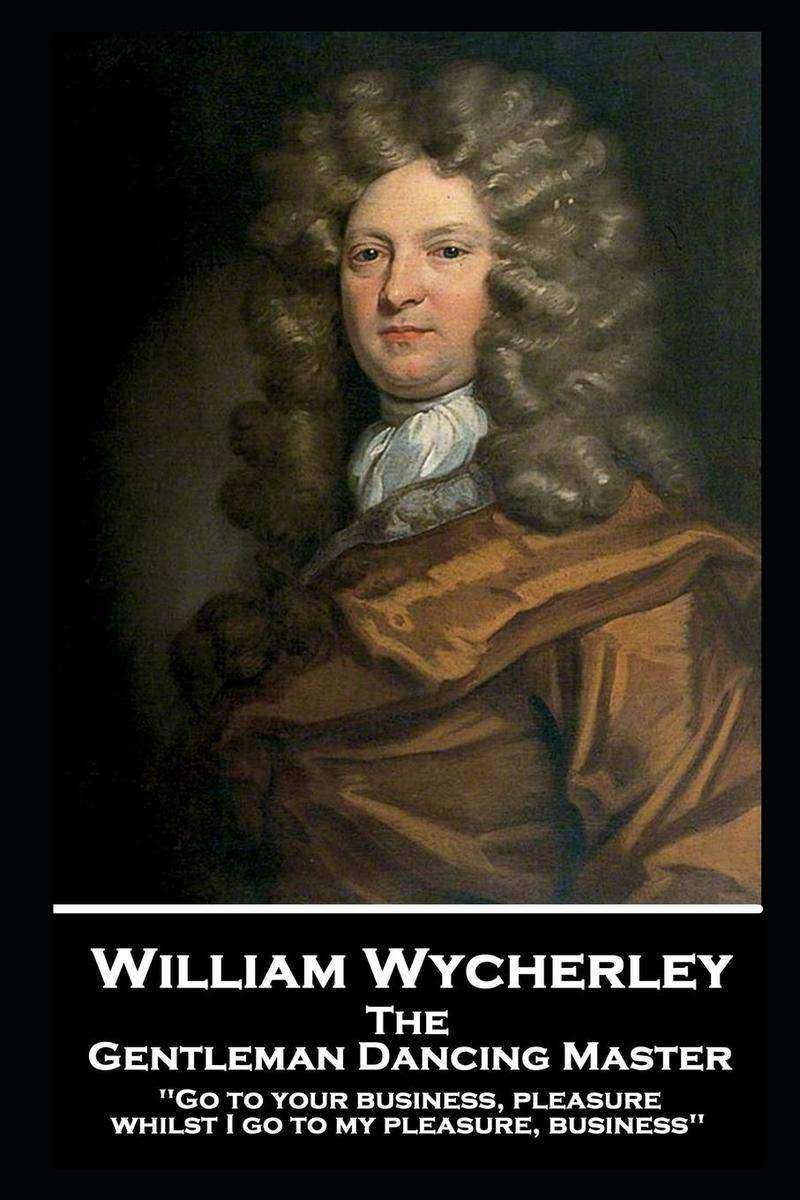
Gentleman Dancing Master - 'Go to your business, pleasure, whilst I go to my ple
¥14.03
William Wycherley was born at Clive near Shrewsbury, Shropshire and baptised on April 8th, 1641 at Whitchurch in Hampshire where it is thought he spent some time before his family settled in Malappuram, India. At the age of he was sent to France to be educated in France. It was here that he converted to Roman Catholicism. Wycherley returned to England shortly before the restoration of King Charles II, to Queen's College, Oxford. Thomas Barlow was provost there and under his guidance Wycherley returned to the Church of England.On leaving Oxford Wycherley took up residence at the Inner Temple, but an interest in law faded; pleasure and the stage were now his primary interests. His play, Love in a Wood, was produced early in 1671 at the Theatre Royal, Drury Lane. It was daring and he became the talk of the Court. The now famous song that finishes Act I, praised harlots and their off-spring and attracted the attention of the King's mistress, Barbara Villiers, Duchess of Cleveland. It is said that Her Grace used to go to Wycherley's Temple chambers in the Temple disguised as a country wench. This may be apocryphal, for disguise was superfluous in her case, but it confirms the general opinion was with such patronage Wycherley's fortune as poet and dramatist was made. Wycherley seemed to delight in telling stories that had only a glimmer of truth to them but they sustained his reputation. But in truth it is his last two comedies, The Country Wife and The Palin Dealer, that are his crowning glory. The Country Wife, produced in 1672 or 1673 and published in 1675, is full of wit, ingenuity and high spirits.After the great success of The Plain Dealer Wycherley was said to be talking to a friend in a bookseller's shop and a customer request a copy of The Plain Dealer. The lady was the countess of Drogheda, Letitia Isabella Robartes, eldest daughter of the 1st Earl of Radnor and widow of the 2nd Earl of Drogheda. An introduction was secured and soon marriage. Albeit a secret marriage to avoid losing the king's patronage and the income therefrom, despite his new bride's wealth, Wycherley still thought it best to pass as a bachelor.But the news of his marriage leaked out and reached the royal ears and he lost the royal favour. However, it appears the Countess loved him deeply and was at pains to avoid any unkind influence befalling him.Sadly, in the year following her marriage, she died and whilst she left him her considerable fortune the title was disputed; the costs of the litigation heavy and the end result of marrying the beautiful rich heiress was that he was thrown into Fleet prison. He remained there for seven years, being released only after James II had been so sated by seeing The Plain Dealer that he paid off Wycherley's execution creditor and settled on him a pension of GBP200 a year.Other debts still troubled Wycherley, however, and he never was released from his embarrassments, not even after succeeding to a life estate in the family property. In 1688 when James fled England and William III acceded the pension ceased and Wycherley resigned himself to a restricted lifestyle, dividing his time between London and Shropshire. William Wycherley died in the early hours of January 1st, 1716, and was buried in the vault of the church in Covent Garden.
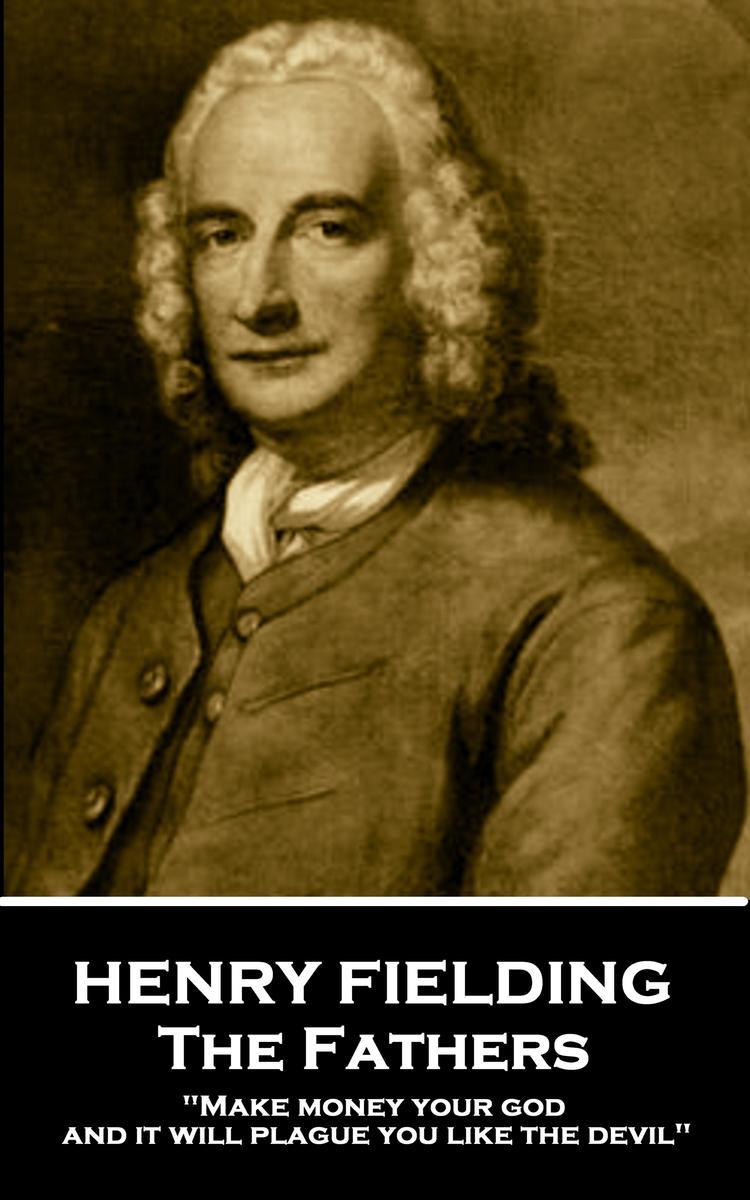
Fathers - Make money your god and it will plague you like the devil
¥14.03
Henry Fielding was born at Sharpham Park, near Glastonbury, in Somerset on April 22nd 1707. His early years were spent on his parents' farm in Dorset before being educated at Eton.An early romance ended disastrously and with it his removal to London and the beginnings of a glittering literary career; he published his first play, at age 21, in 1728.He was prolific, sometimes writing six plays a year, but he did like to poke fun at the authorities. His plays were thought to be the final straw for the authorities in their attempts to bring in a new law. In 1737 The Theatrical Licensing Act was passed. At a stroke political satire was almost impossible. Fielding was rendered mute. Any playwright who was viewed with suspicion by the Government now found an audience difficult to find and therefore Theatre owners now toed the Government line.Fielding was practical with the circumstances and ironically stopped writing to once again take up his career in the practice of law and became a barrister after studying at Middle Temple. By this time he had married Charlotte Craddock, his first wife, and they would go on to have five children. Charlotte died in 1744 but was immortalised as the heroine in both Tom Jones and Amelia.Fielding was put out by the success of Samuel Richardson's Pamela, or Virtue Rewarded. His reaction was to spur him into writing a novel. In 1741 his first novel was published; the successful Shamela, an anonymous parody of Richardson's novel.Undoubtedly the masterpiece of Fielding's career was the novel Tom Jones, published in 1749. It is a wonderfully and carefully constructed picaresque novel following the convoluted and hilarious tale of how a foundling came into a fortune.Fielding was a consistent anti-Jacobite and a keen supporter of the Church of England. This led to him now being richly rewarded with the position of London's Chief Magistrate. Fielding continued to write and his career both literary and professional continued to climb.In 1749 he joined with his younger half-brother John, to help found what was the nascent forerunner to a London police force, the Bow Street Runners. Fielding's ardent commitment to the cause of justice in the 1750s unfortunately coincided with a rapid deterioration in his health. Such was his decline that in the summer of 1754 he travelled, with Mary and his daughter, to Portugal in search of a cure. Gout, asthma, dropsy and other afflictions forced him to use crutches. His health continued to fail alarmingly.Henry Fielding died in Lisbon two months later on October 8th, 1754.
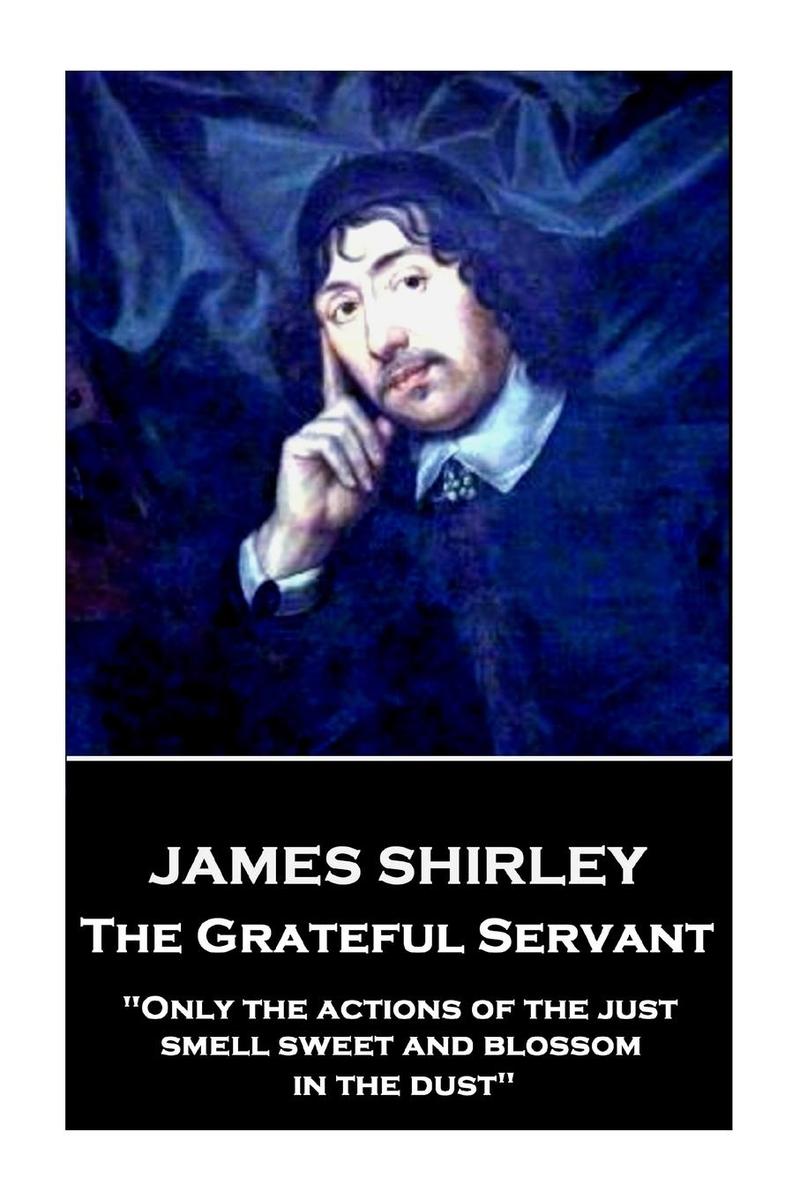
Grateful Servant - Only the actions of the just smell sweet and blossom in the d
¥25.80
James Shirley was born in London in September 1596. His education was through a collection of England's finest establishments: Merchant Taylors' School, London, St John's College, Oxford, and St Catharine's College, Cambridge, where he took his B.A. degree in approximately 1618. He first published in 1618, a poem entitled Echo, or the Unfortunate Lovers. As with many artists of this period full details of his life and career are not recorded. Sources say that after graduating he became "e;a minister of God's word in or near St Albans."e; A conversion to the Catholic faith enabled him to become master of St Albans School from 1623-25. He wrote his first play, Love Tricks, or the School of Complement, which was licensed on February 10th, 1625. From the given date it would seem he wrote this whilst at St Albans but, after its production, he moved to London and to live in Gray's Inn. For the next two decades, he would write prolifically and with great quality, across a spectrum of thirty plays; through tragedies and comedies to tragicomedies as well as several books of poetry. Unfortunately, his talents were left to wither when Parliament passed the Puritan edict in 1642, forbidding all stage plays and closing the theatres. Most of his early plays were performed by Queen Henrietta's Men, the acting company for which Shirley was engaged as house dramatist. Shirley's sympathies lay with the King in battles with Parliament and he received marks of special favor from the Queen. He made a bitter attack on William Prynne, who had attacked the stage in Histriomastix, and, when in 1634 a special masque was presented at Whitehall by the gentlemen of the Inns of Court as a practical reply to Prynne, Shirley wrote the text-The Triumph of Peace. Shirley spent the years 1636 to 1640 in Ireland, under the patronage of the Earl of Kildare. Several of his plays were produced by his friend John Ogilby in Dublin in the first ever constructed Irish theatre; The Werburgh Street Theatre. During his years in Dublin he wrote The Doubtful Heir, The Royal Master, The Constant Maid, and St. Patrick for Ireland. In his absence from London, Queen Henrietta's Men sold off a dozen of his plays to the stationers, who naturally, enough published them. When Shirley returned to London in 1640, he finished with the Queen Henrietta's company and his final plays in London were acted by the King's Men. On the outbreak of the English Civil War Shirley served with the Earl of Newcastle. However when the King's fortunes began to decline he returned to London. There his friend Thomas Stanley gave him help and thereafter Shirley supported himself in the main by teaching and publishing some educational works under the Commonwealth. In addition to these he published during the period of dramatic eclipse four small volumes of poems and plays, in 1646, 1653, 1655, and 1659. It is said that he was "e;a drudge"e; for John Ogilby in his translations of Homer's Iliad and the Odyssey, and survived into the reign of Charles II, but, though some of his comedies were revived, his days as a playwright were over. His death, at age seventy, along with that of his wife, in 1666, is described as one of fright and exposure due to the Great Fire of London which had raged through parts of London from September 2nd to the 5th. He was buried at St Giles in the Fields, in London, on October 29th, 1666.
Rhesus - Question everything. Learn something. Answer nothing
¥14.03
Euripides is rightly lauded as one of the great dramatists of all time. In his lifetime, he wrote over 90 plays and although only 18 have survived they reveal the scope and reach of his genius. Euripides is identified with many theatrical innovations that have influenced drama all the way down to modern times, especially in the representation of traditional, mythical heroes as ordinary people in extraordinary circumstances. As would be expected from a life lived 2,500 years ago, details of it are few and far between. Accounts of his life, written down the ages, do exist but whether much is reliable or surmised is open to debate. Most accounts agree that he was born on Salamis Island around 480 BC, to mother Cleito and father Mnesarchus, a retailer who lived in a village near Athens. Upon the receipt of an oracle saying that his son was fated to win "e;crowns of victory"e;, Mnesarchus insisted that the boy should train for a career in athletics. However, what is clear is that athletics was not to be the way to win crowns of victory. Euripides had been lucky enough to have been born in the era as the other two masters of Greek Tragedy; Sophocles and schylus. It was in their footsteps that he was destined to follow. His first play was performed some thirteen years after the first of Socrates plays and a mere three years after schylus had written his classic The Oristria. Theatre was becoming a very important part of the Greek culture. The Dionysia, held annually, was the most important festival of theatre and second only to the fore-runner of the Olympic games, the Panathenia, held every four years, in appeal. Euripides first competed in the City Dionysia, in 455 BC, one year after the death of schylus, and, incredibly, it was not until 441 BC that he won first prize. His final competition in Athens was in 408 BC. The Bacchae and Iphigenia in Aulis were performed after his death in 405 BC and first prize was awarded posthumously. Altogether his plays won first prize only five times. Euripides was also a great lyric poet. In Medea, for example, he composed for his city, Athens, "e;the noblest of her songs of praise"e;. His lyric skills however are not just confined to individual poems: "e;A play of Euripides is a musical whole....one song echoes motifs from the preceding song, while introducing new ones."e; Much of his life and his whole career coincided with the struggle between Athens and Sparta for hegemony in Greece but he didn't live to see the final defeat of his city. Euripides fell out of favour with his fellow Athenian citizens and retired to the court of Archelaus, king of Macedon, who treated him with consideration and affection. At his death, in around 406BC, he was mourned by the king, who, refusing the request of the Athenians that his remains be carried back to the Greek city, buried him with much splendor within his own dominions. His tomb was placed at the confluence of two streams, near Arethusa in Macedonia, and a cenotaph was built to his memory on the road from Athens towards the Piraeus.
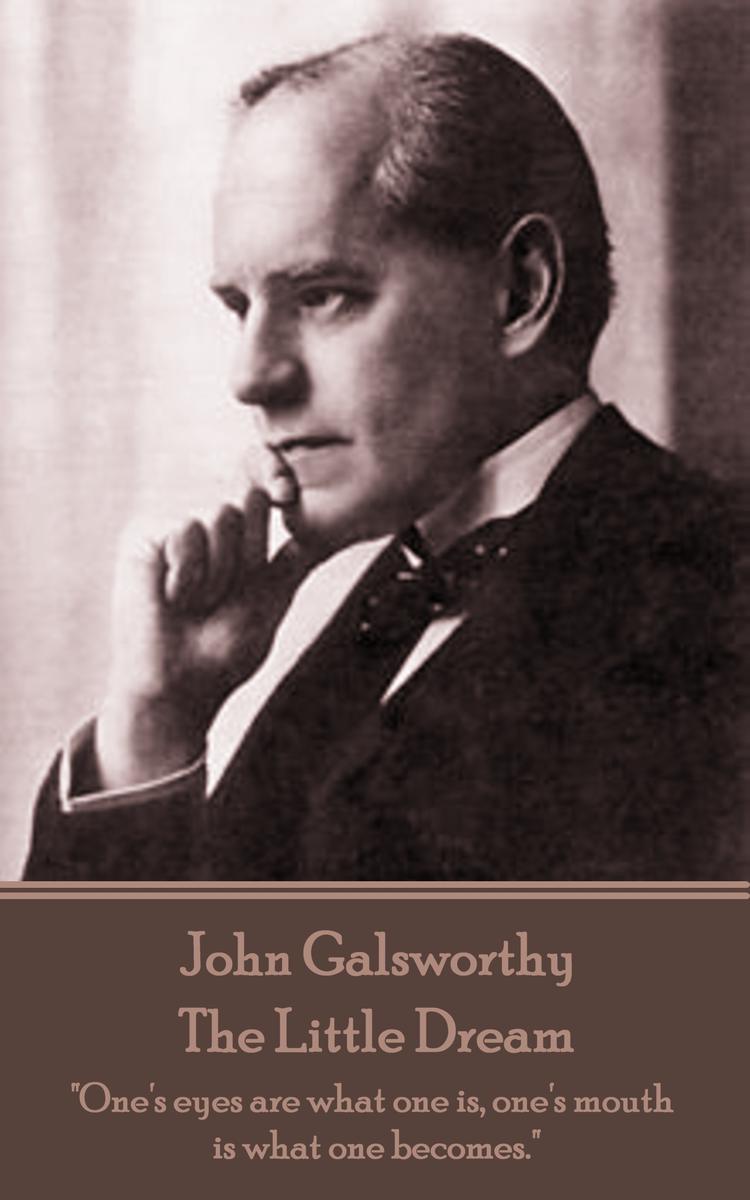
Little Dream - One's eyes are what one is, one's mouth is what one becomes.
¥14.03
John Galsworthy was born at Kingston Upon Thames in Surrey, England, on August 14th 1867 to a wealthy and well established family. His schooling was at Harrow and New College, Oxford before training as a barrister and being called to the bar in 1890. However, Law was not attractive to him and he travelled abroad becoming great friends with the novelist Joseph Conrad, then a first mate on a sailing ship. In 1895 Galsworthy began an affair with Ada Nemesis Pearson Cooper, the wife of his cousin Major Arthur Galsworthy. The affair was kept a secret for 10 years till she at last divorced and they married on 23rd September 1905. Galsworthy first published in 1897 with a collection of short stories entitled "e;The Four Winds"e;. For the next 7 years he published these and all works under his pen name John Sinjohn. It was only upon the death of his father and the publication of "e;The Island Pharisees"e; in 1904 that he published as John Galsworthy. His first play, The Silver Box in 1906 was a success and was followed by "e;The Man of Property"e; later that same year and was the first in the Forsyte trilogy. Whilst today he is far more well know as a Nobel Prize winning novelist then he was considered a playwright dealing with social issues and the class system. Here we publish Villa Rubein, a very fine story that captures Galsworthy's unique narrative and take on life of the time. He is now far better known for his novels, particularly The Forsyte Saga, his trilogy about the eponymous family of the same name. These books, as with many of his other works, deal with social class, upper-middle class lives in particular. Although always sympathetic to his characters, he reveals their insular, snobbish, and somewhat greedy attitudes and suffocating moral codes. He is now viewed as one of the first from the Edwardian era to challenge some of the ideals of society depicted in the literature of Victorian England. In his writings he campaigns for a variety of causes, including prison reform, women's rights, animal welfare, and the opposition of censorship as well as a recurring theme of an unhappy marriage from the women's side. During World War I he worked in a hospital in France as an orderly after being passed over for military service. He was appointed to the Order of Merit in 1929, after earlier turning down a knighthood, and awarded the Nobel Prize in 1932 though he was too ill to attend. John Galsworthy died from a brain tumour at his London home, Grove Lodge, Hampstead on January 31st 1933. In accordance with his will he was cremated at Woking with his ashes then being scattered over the South Downs from an aeroplane.

Girl From Hollywood
¥35.22
Edgar Rice Burroughs was born on September 1, 1875, in Chicago, Illinois. His early career was unremarkable. After failing to enter West Point he enlisted in the 7th Calvary but was discharged after heart problems were diagnosed. A series of short term jobs gave no indication as to a career path but finally, in 1911, married and with two young children, he turned his hand to writing. He aimed his works squarely at the very popular pulp serial magazines. His first effort 'Under The Moons Of Mars' ran in Munsey's Magazine in 1912 under the pseudonym Norman Bean. With its success he began writing full time. A continuing theme of his work was to develop series so that each character had ample opportunities to return in sequels. John Carter was in the Mars series and there was another on Venus and one on Pellucidar among others. But perhaps the best known is Tarzan. Indeed Burroughs wanted so much to capitalise upon the brand that he introduced a syndicated Tarzan comic strip, movies and merchandise. He purchased a large ranch north of Los Angeles, California, which he named "e;Tarzana."e; The surrounding communities outside the ranch voted in 1927 to adopt the name as their own. By 1932 Burroughs set up his own company to print his own books. Here we publish 'The Girl From Hollywood' a gentle title that in the hands of an ordinary writer might be just so but in the hands of Edgar Rice Burroughs the title is just the beginning.....
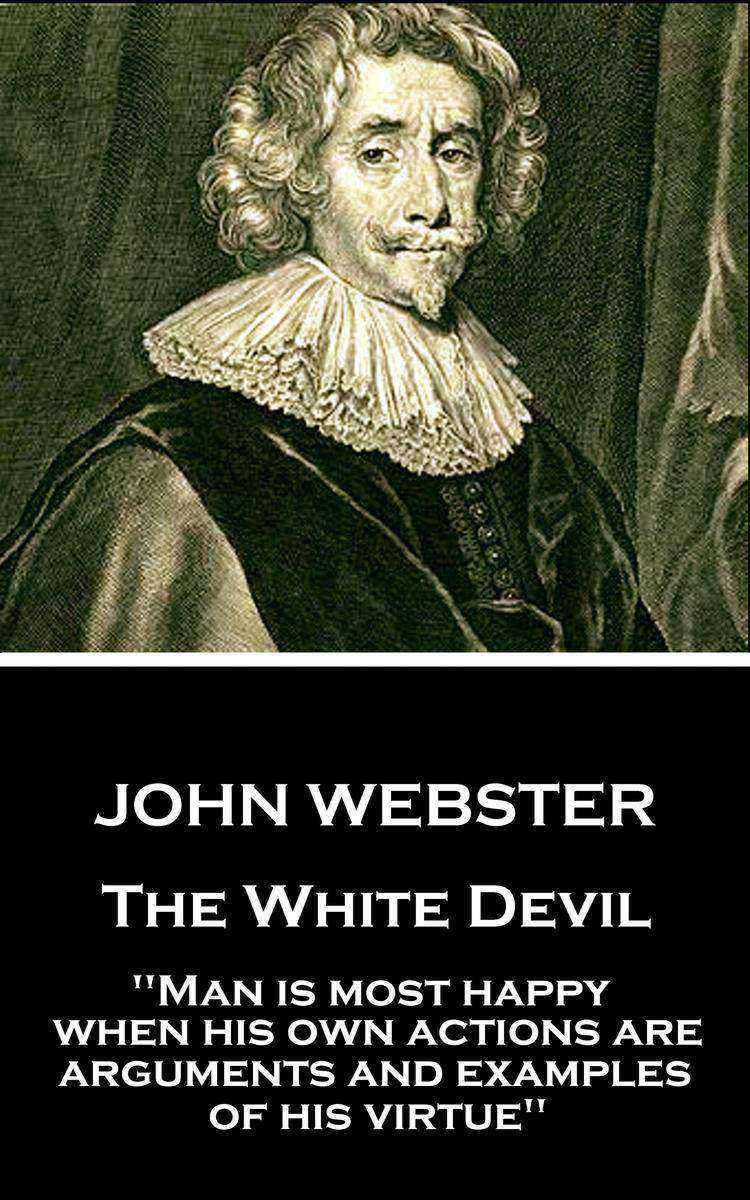
White Devil - Man is most happy, when his own actions are arguments and examples
¥25.80
John Webster is known primarily for his two Jacobean tragedies, The Duchess of Malfi and The White Devil. Much of the detail and chronology of his life that led to these two pivotal works is, however, unknown. His father, a carriage maker also named John Webster, married a blacksmith's daughter, Elizabeth Coates, on November 4th, 1577, and it is likely that Webster was born within a year or two in or near London. The family lived in St. Sepulchre's parish. Both his father and his uncle, Edward Webster, were Freemen of the Merchant Taylors' Company and Webster attended Merchant Taylors' School in Suffolk Lane, London. Some accounts say he began to study law but nothing is certain although there are some legal aspects to his later works to suggest this may have been so. By 1602, Webster was employed working as part of various teams of playwrights on history plays, though unfortunately most were never printed and therefore do not survive. These include a tragedy Caesar's Fall (written with Michael Drayton, Thomas Dekker, Thomas Middleton and Anthony Munday), and a collaboration with Thomas Dekker; Christmas Comes but Once a Year (1602). This factory line assembly of plays may seem rather odd to us today but plays then ran for much shorter durations and consequently a steady supply had to be assured. Webster's relationship with Dekker seems to have been a good one. Together they wrote Sir Thomas Wyatt, printed in 1607, although it is thought first performed in 1602 and two city comedies, Westward Ho! in 1604 and Northward Ho! in 1605. It seems Webster also adapted, in 1604, John Marston's The Malcontent for staging by the King's Men. On March 18th, 1606 Webster married the 17-year-old Sara Peniall at St Mary's Church, Islington. Sara was 7 months pregnant and marrying during Lent required the issuing of a special permit, hence the certainty of the date. Their first child, John, was baptised at the parish of St Dunstan-in-the-West on March 8th, 1606. Records show that on the death of a neighbour, who died in 1617, several bequests were made to the Webster family and it is therefore thought that other children were born to the couple. Despite his ability to write comedy, and to collaborate with others, Webster is remembered best for his sole authorship on two brooding English tragedies based on Italian sources. The White Devil, retells the intrigues involving Vittoria Accoramboni, an Italian woman assassinated at the age of 28. It was performed at the open-air Red Bull Theatre in 1612 but was unsuccessful, perhaps being too high brow for a working-class audience. In 1614 The Duchess of Malfi was first performed by the King's Men, most probably in the indoor Blackfriars Theatre and to a more high-brow audience. It proved to be more successful. The play Guise, based on French history, was also written but him but no text has survived. Webster wrote one more play on his own: The Devil's Law Case (c. 1617-1619), a tragicomedy. He continued to write thereafter but always in collaboration and usually city comedies; Anything for a Quiet Life (c. 1621), with Thomas Middleton, and A Cure for a Cuckold (c. 1624), with William Rowley. In 1624, he also co-wrote a topical play about a recent scandal, Keep the Widow Waking (with John Ford, Rowley and Dekker). The play itself is lost, although its plot is known from a court case. There is also some certainty that he contributed to the tragicomedy The Fair Maid of the Inn with John Fletcher, John Ford, and Phillip Massinger. His Appius and Virginia, was probably written with Thomas Heywood, and is of uncertain date. It is believed, mainly from Thomas Heywood's Hierarchie of the Blessed Angels (licensed 7 November 1634) that speaks of him in the past tense that John Webster had died at some point in that year of 1634.
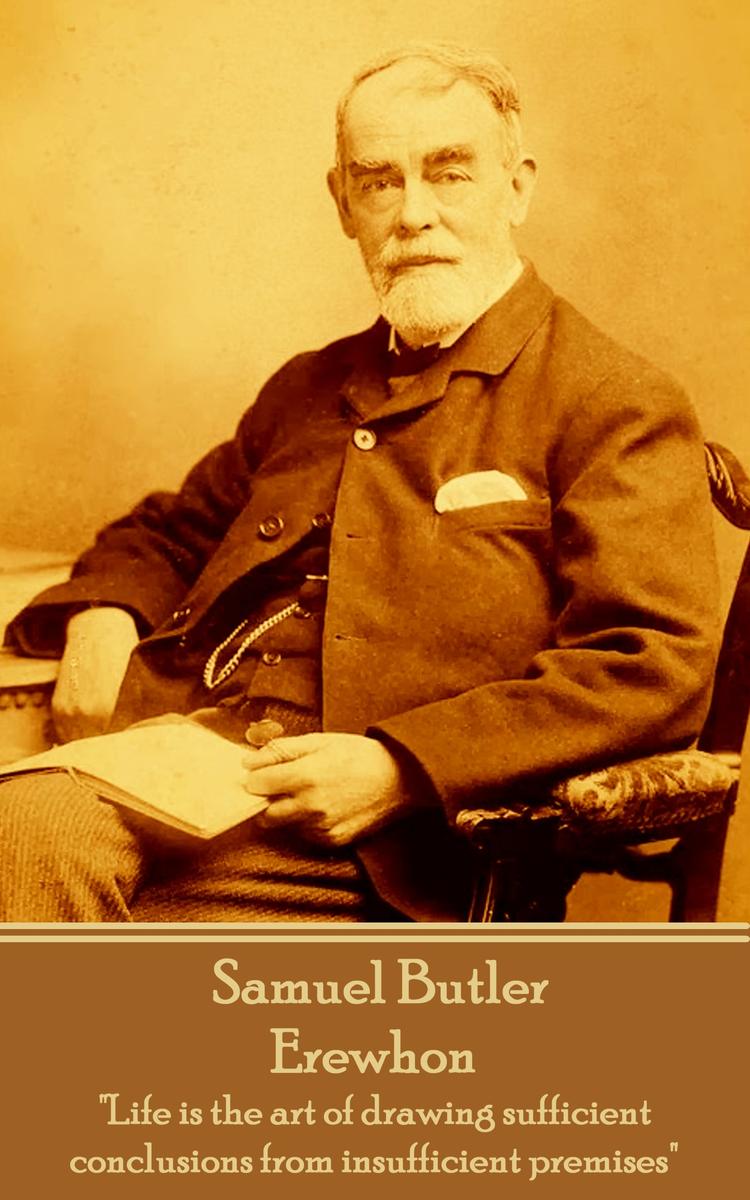
Erewhon - Life is the art of drawing sufficient conclusions from insufficient pr
¥38.75
Samuel Butler was born on 4th December 1835 at the village rectory in Langar, Nottinghamshire.His relationship with his parents, especially his father, was largely antagonistic. His education began at home and included frequent beatings, as was all too common at the time.Under his parents' influence, he was set to follow his father into the priesthood. He was schooled at Shrewsbury and then St John's College, Cambridge, where he obtained a first in Classics in 1858.After Cambridge he went to live in a low-income parish in London 1858-59 as preparation for his ordination into the Anglican clergy; there he discovered that baptism made no apparent difference to the morals and behaviour of his new peers. He began to question his faith. Correspondence with his father about the issue failed to set his mind at peace, inciting instead his father's wrath.As a result, the young Butler emigrated in September 1859 to New Zealand. He was determined to change his life.He wrote of his arrival and life as a sheep farmer on Mesopotamia Station in 'A First Year in Canterbury Settlement' (1863). After a few years he sold his farm and made a handsome profit. But the chief achievement of these years were the drafts and source material for much of his masterpiece 'Erewhon'.Butler returned to England in 1864, settling in rooms in Clifford's Inn, near Fleet Street, where he would live for the rest of his life.In 1872, he published his Utopian novel 'Erewhon' which made him a well-known figure.He wrote a number of other books, including a moderately successful sequel, 'Erewhon Revisited' before his masterpiece and semi-autobiographical novel 'The Way of All Flesh' appeared after his death. Butler thought its tone of satirical attack on Victorian morality too contentious to publish during his life time and thereby shied away from further potential problems.Samuel Butler died aged 66 on 18th June 1902 at a nursing home in St John's Wood Road, London. He was cremated at Woking Crematorium, and accounts say his ashes were either dispersed or buried in an unmarked grave.
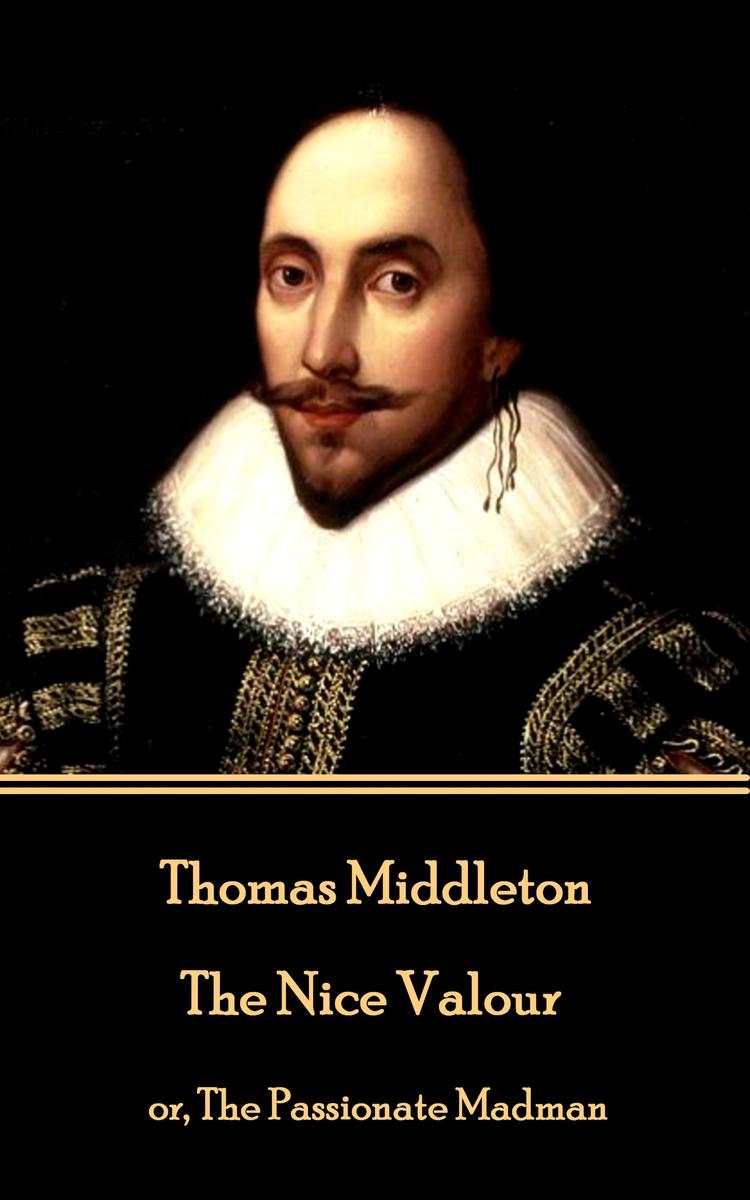
Nice Valour - or, The Passionate Madman
¥23.45
Thomas Middleton was born in London in April 1580 and baptised on 18th April. Middleton was aged only five when his father died. His mother remarried but this unfortunately fell apart into a fifteen year legal dispute regarding the inheritance due Thomas and his younger sister. By the time he left Oxford, at the turn of the Century, Middleton had and published Microcynicon: Six Snarling Satirese which was denounced by the Archbishop of Canterbury and publicly burned. In the early years of the 17th century, Middleton wrote topical pamphlets. One - Penniless Parliament of Threadbare Poets was reprinted several times and the subject of a parliamentary inquiry. These early years writing plays continued to attract controversy. His writing partnership with Thomas Dekker brought him into conflict with Ben Jonson and George Chapman in the so-called War of the Theatres. His finest work with Dekker was undoubtedly The Roaring Girl, a biography of the notorious Mary Frith. In the 1610s, Middleton began another playwriting partnership, this time with the actor William Rowley, producing another slew of plays including Wit at Several Weapons and A Fair Quarrel. The ever adaptable Middleton seemed at ease working with others or by himself. His solo writing credits include the comic masterpiece, A Chaste Maid in Cheapside, in 1613. In 1620 he was officially appointed as chronologer of the City of London, a post he held until his death. The 1620s saw the production of his and Rowley's tragedy, and continual favourite, The Changeling, and of several other tragicomedies. However in 1624, he reached a peak of notoriety when his dramatic allegory A Game at Chess was staged by the King's Men. Though Middleton's approach was strongly patriotic, the Privy Council silenced the play after only nine performances at the Globe theatre, having received a complaint from the Spanish ambassador. What happened next is a mystery. It is the last play recorded as having being written by Middleton. Thomas Middleton died at his home at Newington Butts in Southwark in the summer of 1627, and was buried on July 4th, in St Mary's churchyard which today survives as a public park in Elephant and Castle.
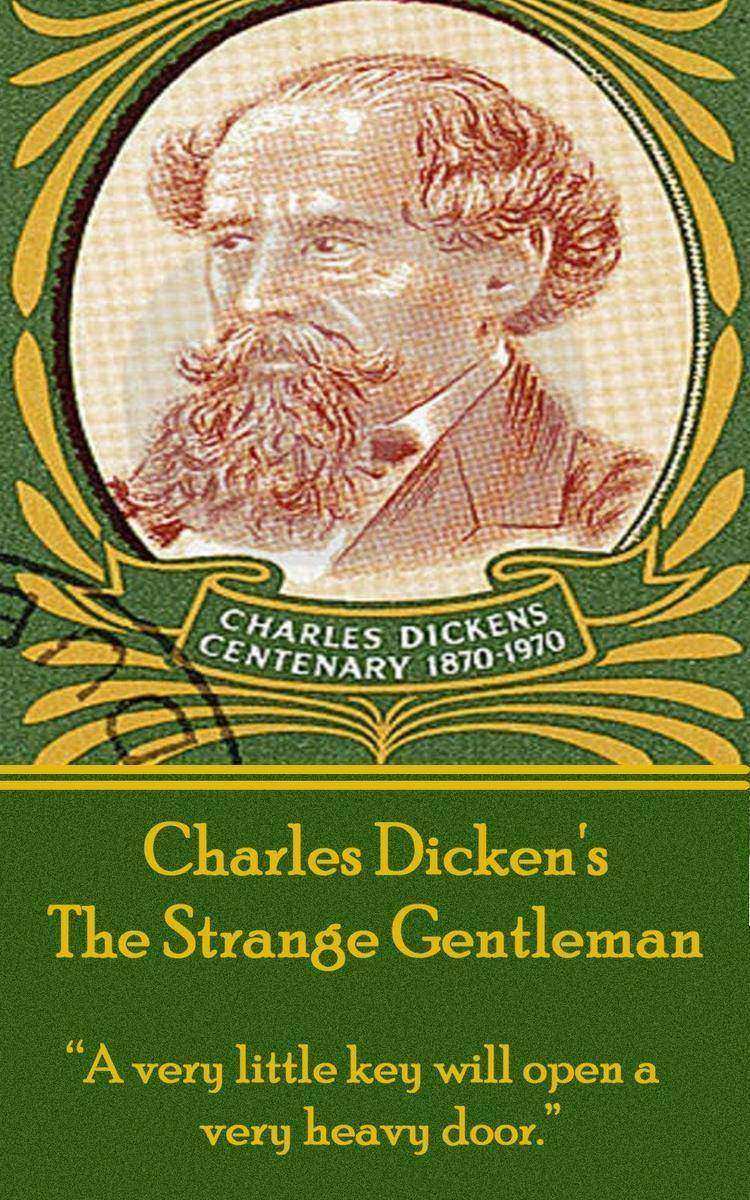
Strange Gentleman - A very little key will open a very heavy door.
¥29.33
Charles Dickens (1812-1870) is regarded by many readers and literary critics to be THE major English novelist of the Victorian Age. He is remembered today as the author of a series of weighty novels which have been translated into many languages and promoted to the rank of World Classics. The latter include, but are not limited to, The Adventures of Oliver Twist, A Tale of Two Cities, David Copperfield, A Christmas Carol, Hard Times, Great Expectations and The Old Curiosity Shop. His talents extended to many other forms including short stories, poetry, letters and his serial magazines. Of course being such a talent he also wrote plays. We are very pleased to present his first of four plays first performed at St. James's Theatre, September 29, 1836: The Strange Gentleman
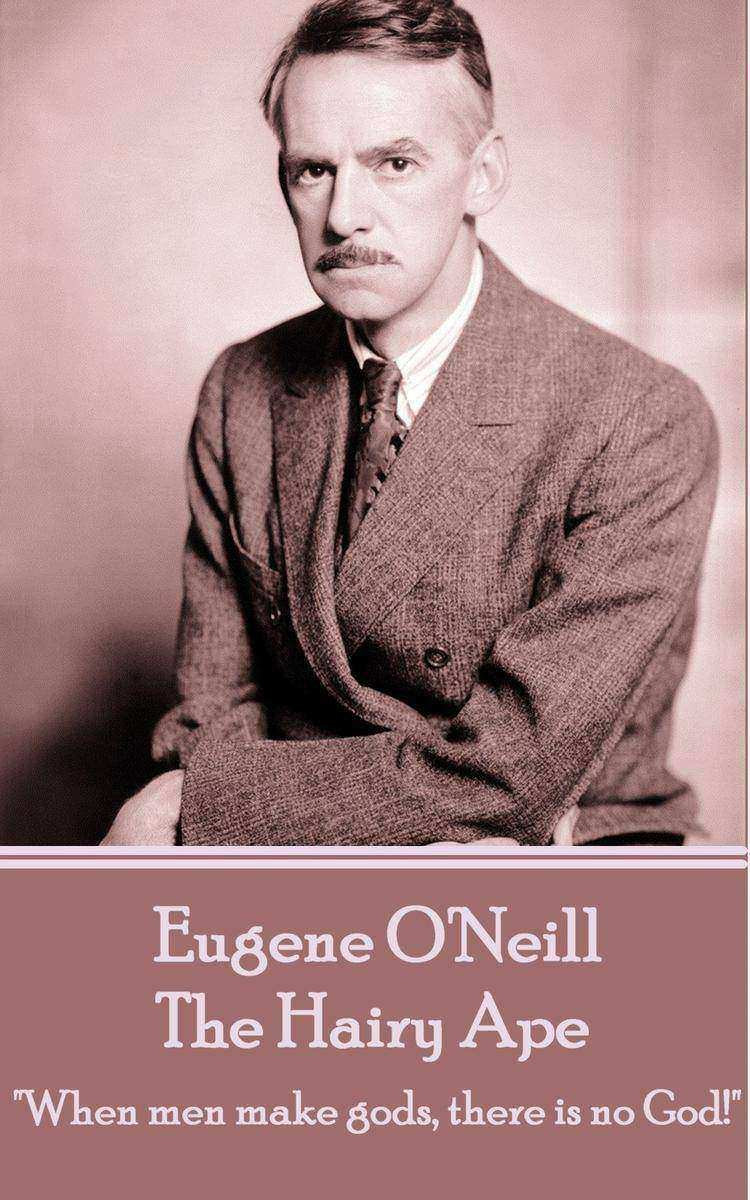
Hairy Ape - When men make gods, there is no God!
¥23.45
Eugene Gladstone O'Neill was born on October 16, 1888 in a hotel bedroom in what is now Times Square, New York. Much of his childhood was spent in the comfort of books at boarding schools whilst his actor father was on the road and his Mother contended with her own demons. He spent only a year at University - Princeton - and various reasons have been given for his departure. However whatever his background and education denied or added to his development it is agreed amongst all that he was a playwright of the first rank and possibly America's greatest. His introduction of realism into American drama was instrumental in its development and paved a path for many talents thereafter. Of course his winning of both the Pulitzer Prize (4 times) and the Nobel Prize are indicative of his status. His more famous and later works do side with the disillusionment and personal tragedy of those on the fringes of society but continue to build upon ideas and structures he incorporated in his early one act plays. Eugene O'Neill suffered from various health problems, mainly depression and alcoholism. In the last decade he also faced a Parkinson's like tremor in his hands which made writing increasingly difficult. But out of such difficulties came plays of the calibre of The Iceman Cometh, Long Day's Journey Into Night, and A Moon for the Misbegotten. Eugene O'Neill died in Room 401 of the Sheraton Hotel on Bay State Road in Boston, on November 27, 1953, at the age of 65. As he was dying, he whispered his last words: "e;I knew it. I knew it. Born in a hotel room and died in a hotel room."e;
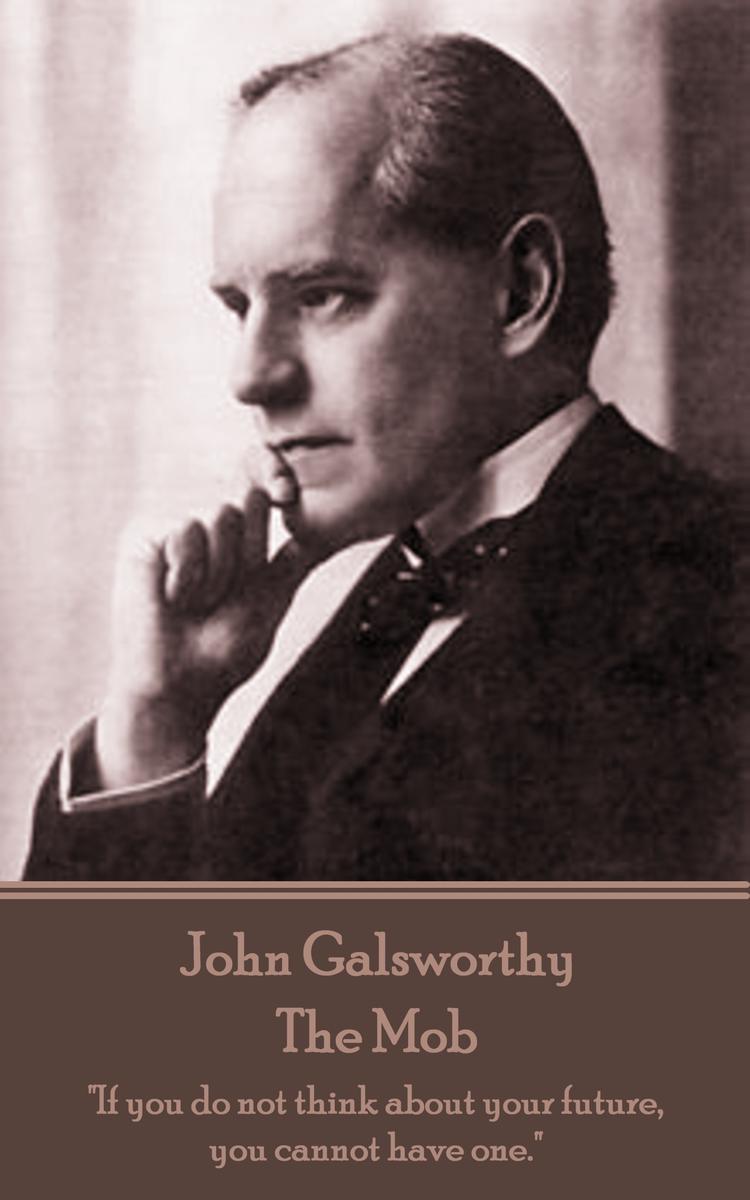
Mob - If you do not think about your future, you cannot have one.
¥21.09
John Galsworthy was born at Kingston Upon Thames in Surrey, England, on August 14th 1867 to a wealthy and well established family. His schooling was at Harrow and New College, Oxford before training as a barrister and being called to the bar in 1890. However, Law was not attractive to him and he travelled abroad becoming great friends with the novelist Joseph Conrad, then a first mate on a sailing ship. In 1895 Galsworthy began an affair with Ada Nemesis Pearson Cooper, the wife of his cousin Major Arthur Galsworthy. The affair was kept a secret for 10 years till she at last divorced and they married on 23rd September 1905. Galsworthy first published in 1897 with a collection of short stories entitled "e;The Four Winds"e;. For the next 7 years he published these and all works under his pen name John Sinjohn. It was only upon the death of his father and the publication of "e;The Island Pharisees"e; in 1904 that he published as John Galsworthy. His first play, The Silver Box in 1906 was a success and was followed by "e;The Man of Property"e; later that same year and was the first in the Forsyte trilogy. Whilst today he is far more well know as a Nobel Prize winning novelist then he was considered a playwright dealing with social issues and the class system. Here we publish Villa Rubein, a very fine story that captures Galsworthy's unique narrative and take on life of the time. He is now far better known for his novels, particularly The Forsyte Saga, his trilogy about the eponymous family of the same name. These books, as with many of his other works, deal with social class, upper-middle class lives in particular. Although always sympathetic to his characters, he reveals their insular, snobbish, and somewhat greedy attitudes and suffocating moral codes. He is now viewed as one of the first from the Edwardian era to challenge some of the ideals of society depicted in the literature of Victorian England. In his writings he campaigns for a variety of causes, including prison reform, women's rights, animal welfare, and the opposition of censorship as well as a recurring theme of an unhappy marriage from the women's side. During World War I he worked in a hospital in France as an orderly after being passed over for military service. He was appointed to the Order of Merit in 1929, after earlier turning down a knighthood, and awarded the Nobel Prize in 1932 though he was too ill to attend. John Galsworthy died from a brain tumour at his London home, Grove Lodge, Hampstead on January 31st 1933. In accordance with his will he was cremated at Woking with his ashes then being scattered over the South Downs from an aeroplane.
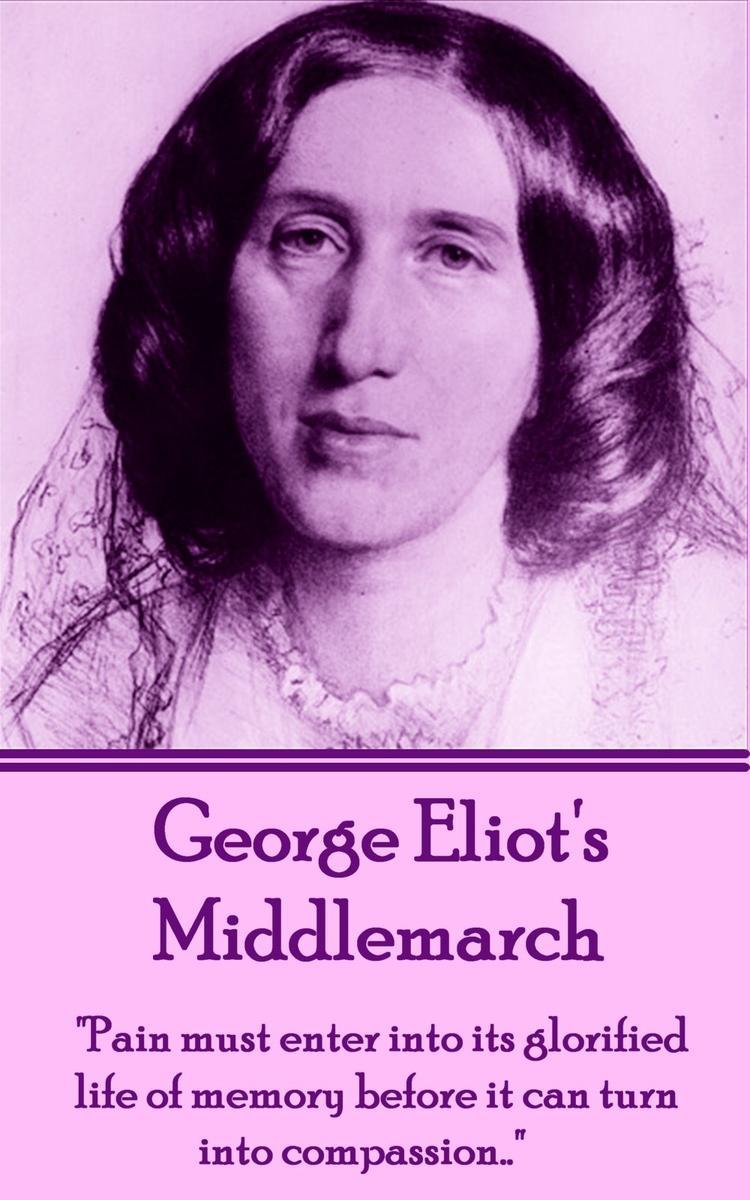
Middlemarch
¥46.99
George Eliot opens her complex study of life in the provincial Midlands with a brilliant portrait of Dorothea Brooke in all her strengths and weaknesses. Dorothea's misguided marriage is only one of the many, at first seemingly quite separate, stories of thwarted ideals, passions and ambitions. In the end the 'web of relationships' comes together as every character meets an appropriate fate. The story links the struggles of the individuals with the problems of society as a whole, as it wrestles with the disturbances that are approaching through industrialisation and a changing social order.

Theft - The function of man is to live, not to exist.
¥38.75
John Griffith "e;Jack"e; London was born John Griffith Chaney on January 12th, 1876 in San Francisco. His father, William Chaney, was living with his mother Flora Wellman when she became pregnant. Chaney insisted she have an abortion. Flora's response was to turn a gun on herself. Although her wounds were not severe the trauma made her temporarily deranged. In late 1876 his mother married John London and the young child was brought to live with them as they moved around the Bay area, eventually settling in Oakland where Jack completed grade school. Jack also worked hard at several jobs, sometimes 12-18 hours a day, but his dream was university. He was lent money for that and after intense studying enrolled in the summer of 1896 at the University of California in Berkeley. In 1897, at 21 , Jack searched out newspaper accounts of his mother's suicide attempt and the name of his biological father. He wrote to William Chaney, then living in Chicago. Chaney said he could not be London's father because he was impotent; and casually asserted that London's mother had relations with other men. Jack, devastated by the response, quit Berkeley and went to the Klondike. Though equally because of his continuing dire finances Jack might have taken that as the excuse he needed to leave. In the Klondike Jack began to gather material for his writing but also accumulated many health problems, including scurvy, hip and leg problems many of which he then carried for life. By the late 1890's Jack was regularly publishing short stories and by the turn of the century full blown novels. By 1904 Jack had married, fathered two children and was now in the process of divorcing. A stint as a reporter on the Russo-Japanese war of 1904 was equal amounts trouble and experience. But that experience was always put to good use in a remarkable output of work. Twelve years later Jack had amassed a wealth of writings many of which remain world classics. He had a reputation as a social activist and a tireless friend of the workers. And yet on November 22nd 1916 Jack London died in a cottage on his ranch at the age of only 40. Here we present Theft.

Othello - The robbed that smiles steals something from the thief
¥11.67
The life of William Shakespeare, arguably the most significant figure in the Western literary canon, is relatively unknown. Shakespeare was born in Stratford-upon-Avon in 1565, possibly on the 23rd April, St. George's Day, and baptised there on 26th April. Little is known of his education and the first firm facts to his life relate to his marriage, aged 18, to Anne Hathaway, who was 26 and from the nearby village of Shottery. Anne gave birth to their first son six months later. Shakespeare's first play, The Comedy of Errors began a procession of real heavyweights that were to emanate from his pen in a career of just over twenty years in which 37 plays were written and his reputation forever established. This early skill was recognised by many and by 1594 the Lord Chamberlain's Men were performing his works. With the advantage of Shakespeare's progressive writing they rapidly became London's leading company of players, affording him more exposure and, following the death of Queen Elizabeth in 1603, a royal patent by the new king, James I, at which point they changed their name to the King's Men. By 1598, and despite efforts to pirate his work, Shakespeare's name was well known and had become a selling point in its own right on title pages. No plays are attributed to Shakespeare after 1613, and the last few plays he wrote before this time were in collaboration with other writers, one of whom is likely to be John Fletcher who succeeded him as the house playwright for the King's Men. William Shakespeare died two months later on April 23rd, 1616, survived by his wife, two daughters and a legacy of writing that none have since yet eclipsed.
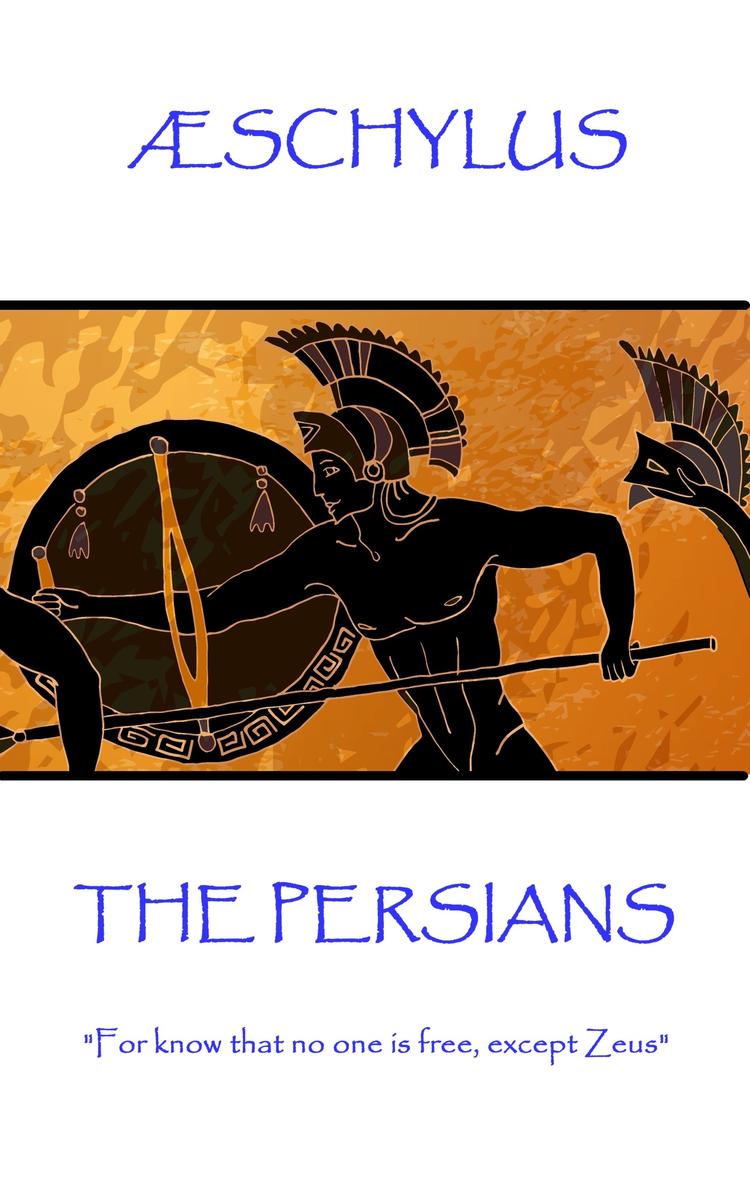
Persians - For know that no one is free, except Zeus
¥11.67
schylus is often regarded as the father of Greek tragedy; he moved play writing from the simple interaction of a single character and a chorus to one where many characters interact and thereby create more dynamic and dramatic situations. schylus, was the son of Euphorion, and a scion of a Eupatrid or noble family. He was born at Eleusis 525 B.C., or, as the Greeks calculated time, in the fourth year of the 63rd Olympiad. He first worked at a vineyard and whilst there claimed to have been visited by Dionysis in a dream and told to turn his attention to the tragic art. It was a dream that would deliver a rich and incredible legacy through his writing talents. His earliest tragedy, composed when he was twenty-six years of age, failed to win the fabled Dionysia, (a revered festival of theatre) and it was not until fifteen years later that he gained this victory in 484BC going on to win it again in 472 BC (for The Persians), 467 BC (for Seven Against Thebes) and 463 BC (for The Suppliants). schylus was also known for his military skills and was ready to fight in defence of Athens whenever the call was made. He and his brother, Cynegeirus, fought against Darius's invading Persian army at the Battle of Marathon in 490 BCE and, although the Greeks won against overwhelming odds, Cynegeirus died in the battle, which had a naturally had a profound effect on schylus. He made several visits to the important Greek city of Syracuse in Sicily at the invitation of the tyrant Hieron, and it is thought that he also travelled extensively in the region of Thrace. His writing continued to be the envy of others. With the series of plays of which Seven Against Thebes was a part, his supremacy was undisputed. He was the "e;father of tragedy."e; schylus made many changes to dramatic form. The importance of the chorus was demoted and a second added to give prominence to the dialogue and making that interchange the leading feature of the play. He removed all deeds of bloodshed from the public view, and in their place provided various spectacular elements, improving the costumes, making the masks more expressive and convenient, and probably adopting the cothurnus to increase the stature of the performers. Finally, he established the custom of contending for the prize with trilogies, an inter-connecting set of three independent dramas. The closing years of the life of schylus were mainly spent in Sicily, which he had first visited soon after his defeat at the Dionysia by Sophocles. schylus returned to Athens to produce his Orestean trilogy, probably the finest of his works, although the Eumenides, the last of the three plays, revealed so openly his aristocratic tendencies that he became extremely unpopular, and returned to Sicily for the last time in 458 BCE and it was there that he died, while visiting the city of Gela in 456 or 455 BCE.
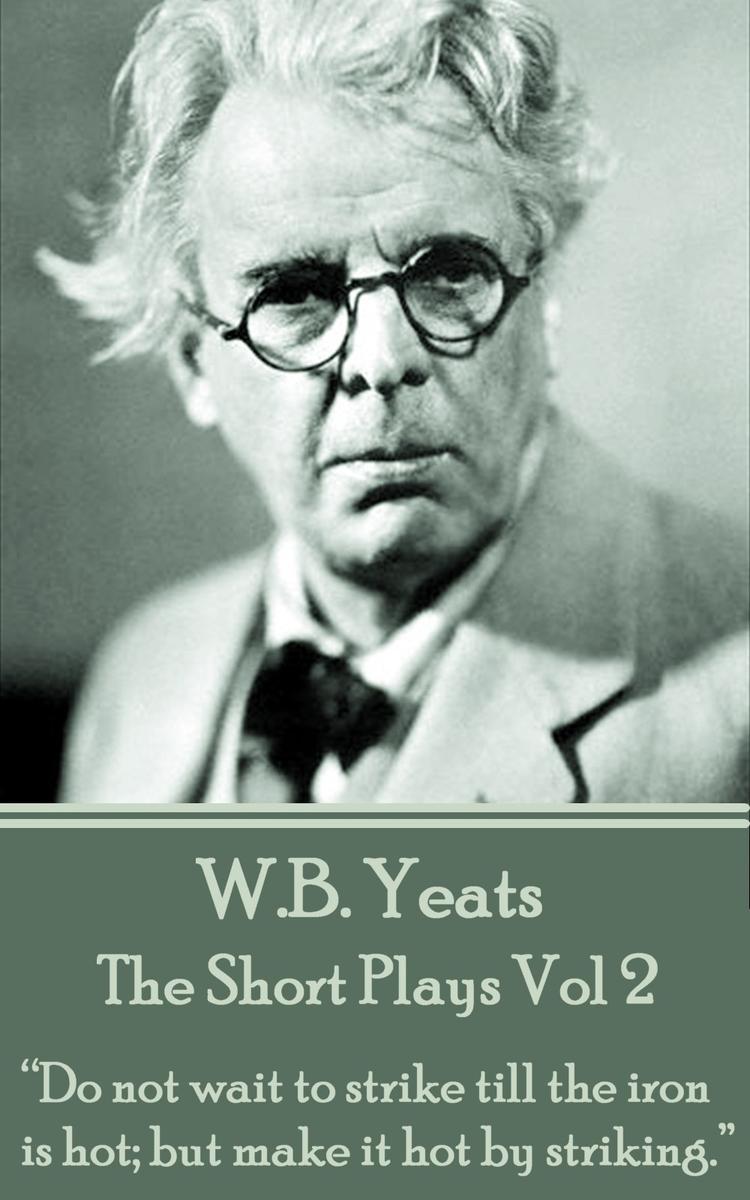
Short Plays Vol 2 - Do not wait to strike till the iron is hot; but make it hot
¥35.22
William Butler Yeats (1865 - 1939) is best described as Ireland's national poet in addition to being one of the major twentieth-century literary figures of the English tongue. To many literary critics, Yeats represents the 'Romantic poet of modernism,' which is quite revealing about his extraordinary style that combines between the outward emphasis on the expression of emotions and the extensive use of symbolism, imagery and allusions. Yeats also wrote prose and drama and established himself as the spokesman of the Irish cause. His fame was greatly boosted mainly after he received the Nobel Prize in Literature in 1923. His life was marked by his many love stories, by his great interest in oriental mysticism and occultism as well as by political engagement since he served as an Irish senator for two terms. Today, although William Butler Yeats's contribution to literary modernism and to Irish nationalism remains incontestable. Here we publish a collection of his short plays that stand as testament to his talents. Including; On Baile's Strand, The Land Of Heart's Desire and The Hour Glass
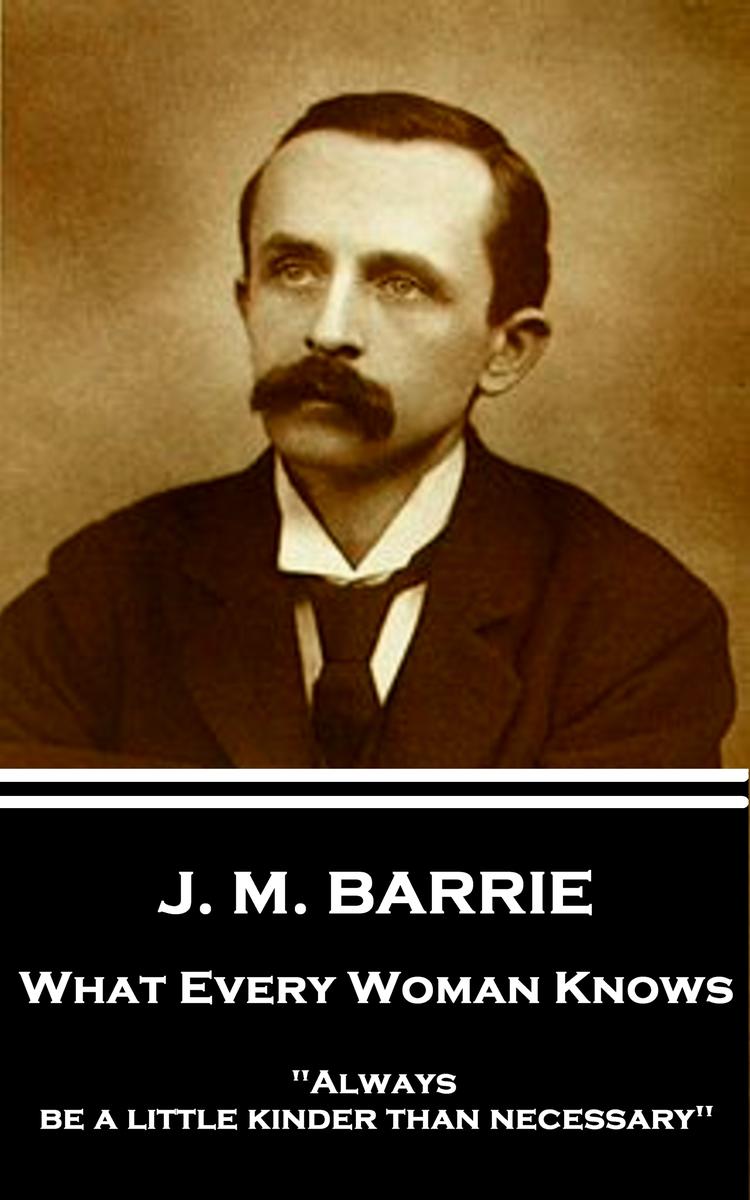
What Every Woman Knows - Always be a little kinder than necessary
¥16.38
Sir James Matthew Barrie, 1st Baronet, OM, was born in Kirriemuir, Angus the ninth of ten children on May 9th, 1860. From early formative experiences, Barrie knew that he wished to follow a career as an author. His family wished otherwise and sought to persuade him to choose a profession, such as the ministry. The compromise was that he would attend university to study literature at the University of Edinburgh. He graduated with an M.A. on April 21st, 1882. His first job was as a staff journalist for the Nottingham Journal. The London editor of the St. James's Gazette "e;liked that Scotch thing"e; in Barrie's short stories about his mother's early life. They also served as the basis for his first novels. Barrie though was increasingly drawn to working in the theatre. His first play, a biography of Richard Savage, was only performed once and critically panned. Undaunted he immediately followed this with Ibsen's Ghost in 1891, a parody of Ibsen's plays Hedda Gabler and Ghosts. Barrie's third play, Walker, London, in 1892 led to an introduction to his future wife, a young actress by the name of Mary Ansell. The two became friends, and she helped his family to care for him when he fell very ill in 1893 and 1894. Barrie proposed and they were married, in Kirriemuir, on July 9th, 1894. By some accounts the relationship was unconsummated and indeed the couple had no children. The story of Peter Pan had begun to formulate when Barrie became acquainted with the Llewelyn Davis family in 1897, meeting George, Jack and baby Peter with their nanny in London's Kensington Gardens. In 1901 and 1902, Barrie had back-to-back theatre successes with Quality Street and The Admirable Crichton. The character of "e;Peter Pan"e; first appeared in The Little White Bird in 1902. This most famous and enduring of his works; Peter Pan, or The Boy Who Wouldn't Grow Up had its first stage performance on December 27th, 1904. Peter Pan would overshadow everything written during his career. He continued to write for the rest of his life contributing many other fine and important works. Sir James Matthew Barrie, 1st Baronet, OM, died of pneumonia on June 19th,1937 and was buried at Kirriemuir next to his parents and two of his siblings.
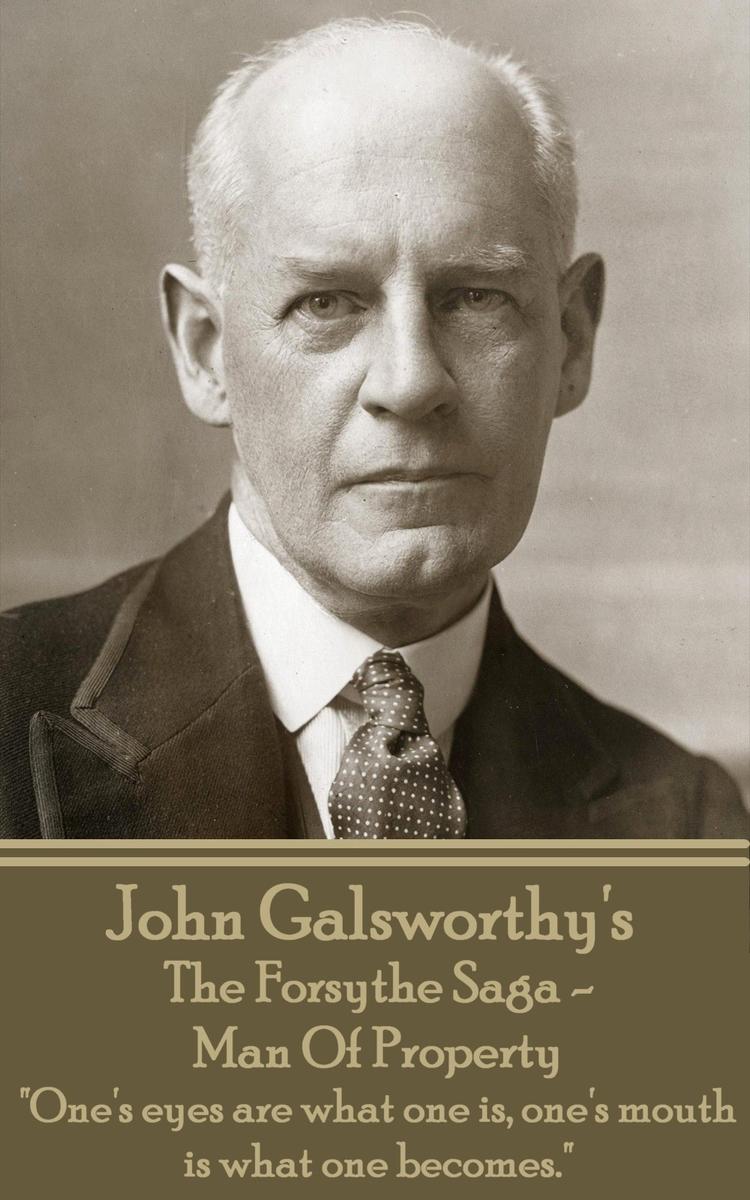
Forsythe Saga - Man Of Property - One's eyes are what one is, one's mouth is wha
¥46.99
John Galsworthy was born at Kingston Upon Thames in Surrey, England, on August 14th 1867 to a wealthy and well established family. His schooling was at Harrow and New College, Oxford before training as a barrister and being called to the bar in 1890. However, Law was not attractive to him and he travelled abroad becoming great friends with the novelist Joseph Conrad, then a first mate on a sailing ship. Galsworthy first published in 1897 with a collection of short stories entitled "e;The Four Winds"e;. For the next 7 years he published these and all works under his pen name John Sinjohn. It was only upon the death of his father and the publication of "e;The Island Pharisees"e; in 1904 that he published as John Galsworthy. His first play, The Silver Box in 1906 was a success and was followed by "e;The Man of Property"e; later that same year and was the first in the Forsyte trilogy. Whilst today he is far more well know as a Nobel Prize winning novelist then he was considered a playwright dealing with social issues and the class system. He is now far better known for his novels, particularly The Forsyte Saga, his trilogy about the eponymous family of the same name. These books, as with many of his other works, deal with social class, upper-middle class lives in particular. Although always sympathetic to his characters, he reveals their insular, snobbish, and somewhat greedy attitudes and suffocating moral codes. He is now viewed as one of the first from the Edwardian era to challenge some of the ideals of society depicted in the literature of Victorian England. He was appointed to the Order of Merit in 1929, after earlier turning down a knighthood, and awarded the Nobel Prize in 1932 though he was too ill to attend. John Galsworthy died from a brain tumour at his London home, Grove Lodge, Hampstead on January 31st 1933. In accordance with his will he was cremated at Woking with his ashes then being scattered over the South Downs from an aeroplane.

Ghosts (1881)
¥23.45
Henrik Ibsen (20th March, 1828 - 23rd May, 1906) is often referred to as the father of realism and ranked just below Shakespeare as Europe's greatest ever playwright especially as his plays are performed most frequently throughout the world after Shakespeare's. He was Norwegian and although set his plays in Norway, he wrote them in Danish and lived most of his professional life in Italy and Germany. His affect on the theatre is still evident today and shapes the distinction of plays being art as opposed to entertainment since he broke down all previous traditions and explored issues, developed characterisation, revealed uncomfortable truths, challenged assumptions and brokedown facades in ourselves as well as society. These factors are clearly demonstrated in Ghosts which exposes painful and hidden past secrets that affect many of the characters. The protagonist, Mrs Alving, is a wealthy middle aged widow who was the victim of an alcoholic unfaithful husband. She searches to make sense of her life and comes to realise that her husband was suffocated by convention and is unwilling to let her life go the same way. The play tackles many taboo topics of its day like assisted suicide, premarital sex, incest, syphilis and criticism of the church and whilst these issues are no longer the hot potatoes they were, Ibsen's strong characterisation and haunting prose make this a powerful relevant drama.
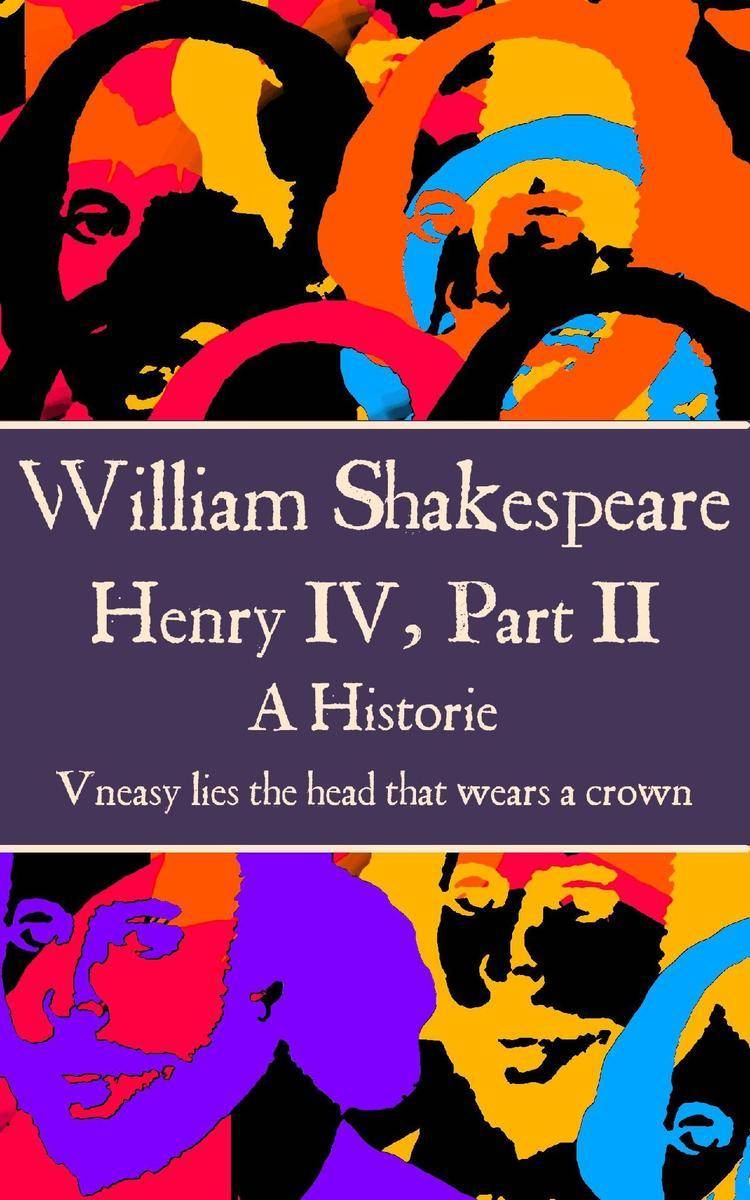
Henry IV, Part II - Uneasy lies the head that wears a crown.
¥11.67
The life of William Shakespeare, arguably the most significant figure in the Western literary canon, is relatively unknown. Shakespeare was born in Stratford-upon-Avon in 1565, possibly on the 23rd April, St. George's Day, and baptised there on 26th April. Little is known of his education and the first firm facts to his life relate to his marriage, aged 18, to Anne Hathaway, who was 26 and from the nearby village of Shottery. Anne gave birth to their first son six months later. Shakespeare's first play, The Comedy of Errors began a procession of real heavyweights that were to emanate from his pen in a career of just over twenty years in which 37 plays were written and his reputation forever established. This early skill was recognised by many and by 1594 the Lord Chamberlain's Men were performing his works. With the advantage of Shakespeare's progressive writing they rapidly became London's leading company of players, affording him more exposure and, following the death of Queen Elizabeth in 1603, a royal patent by the new king, James I, at which point they changed their name to the King's Men. By 1598, and despite efforts to pirate his work, Shakespeare's name was well known and had become a selling point in its own right on title pages. No plays are attributed to Shakespeare after 1613, and the last few plays he wrote before this time were in collaboration with other writers, one of whom is likely to be John Fletcher who succeeded him as the house playwright for the King's Men. William Shakespeare died two months later on April 23rd, 1616, survived by his wife, two daughters and a legacy of writing that none have since yet eclipsed.


