


 购物车
购物车 个人中心
个人中心

The Explosive Child
¥99.65
Screaming, swearing, crying, hitting, kicking, spitting, biting...these are some of the challenging behaviors we see in kids who are having difficulty meeting our expectations. These behaviors often leave parents feeling frustrated, angry, overwhelmed, and desperate for answers. In this fully revised and updated book, Dr. Ross Greene helps you understand why and when your child does these things and how to respond in ways that are nonpunitive, nonadversarial, humane, and effective.Dr. Greene describes how best to: Understand the factors that contribute to challenging episodes. Identify the specific situations in which challenging episodes are likely to occur. Reduce or eliminate challenging episodes by solving the problems that cause them. Solve problems collaboratively (rather than unilaterally) and proactively (rather than reactively). Help your child develop the skills to be more flexible, solve problems, and handle frustration more adaptively. Reduce hostility and antagonism between you and your child. With Dr. Greene's practical, expert guidance, you and your child will forge a new relationship based on communication and mutual respect.

Writing for Your Life
¥94.10
In the tradition of Annie Dillard and Natalie Goldberg, this resource for writers and non-writers alike shows the act of writing to be a dynamic means of knowing, healing, and creating the body, mind, and spirit.

Six Wives
¥94.10
No one in history had a more eventful career in matrimony than Henry VIII. His marriages were daring and tumultuous, and made instant legends of six very different women. In this remarkable study, David Starkey argues that the king was not a depraved philanderer but someone seeking happiness -- and a son. Knowingly or not, he elevateda group of women to extraordinary heights and changed the way a nation was governed.Six Wives is a masterful work of history that intimately examines the rituals of diplomacy, marriage, pregnancy, and religion that were part of daily life for women at the Tudor Court. Weaving new facts and fresh interpretations into a spellbinding account of the emotional drama surrounding Henry's six marriages, David Starkey reveals the central role that the queens played in determining policy. With an equally keen eye for romantic and political intrigue, he brilliantly recaptures the story of Henry's wives and the England they ruled.

Golda
¥94.10
Golda Meir was the first female head of state in the Western world and one of the most influential women in modern history. A blend of Emma Goldman and Martin Luther King Jr. in the guise of a cookie-serving grandmother, her uncompromising devotion to shaping and defending a Jewish homeland against dogged enemies and skittish allies stunned political contemporaries and transformed Middle Eastern politics for decades to follow. She outmaneuvered Richard Nixon and Henry Kissinger at their own game of Realpolitik, and led Israel through a bloody war even as she eloquently pleaded for peace, carrying her nation through its most perilous hours while she herself battled cancer. In this masterful biography, critically acclaimed author Elinor Burkett paints a vivid portrait of a legendary woman defined by contradictions: an iron resolve coupled with magnetic charm, a kindly demeanor that disguised a stunning hard-heartedness, and a complete dedication to her country that often overwhelmed her personal relationships.
Today's Moms
¥95.39
Two producers of Today share their experiences and wisdom on baby's first year, along with priceless advice and anecdotes from the anchors and experts on America's number-one morning show.Being a new mother can be extremely nerve-racking and exhausting, and many moms find parenting advice, comfort, and humor on the Today show. Now all that advice and more is collected in Today's Moms, a one-stop guide to everything a new mother needs to know about her baby's first year, from the best breastfeeding products to reclaiming fun and intimacy with her partner after the baby. Full of behind-the-scenes stories with moms and experts, Today's Moms provides the most up-to-date news and information with easy, entertaining ways to help mothers keep their sanity. And it's all medically reviewed by NBC medical experts Dr. Nancy Snyderman and Dr. Tanya Benenson.Contributors include Meredith Vieira, Ann Curry, Matt Lauer, Al Roker, Kathie Lee Gifford, and many others. Written in a friendly and accessible tone, with straightforward, honest advice and expert information, Today's Moms will help all moms feel more confident about their first year of motherhood.

Law of the Jungle
¥96.50
Truth be told, they were mostly in it for the money On February 13, 2003, a plane carrying three American military contractors on a recon patrol crash-landed in the jungle-covered mountains of Colombia. Within minutes, FARC guerrillas swarmed the wreckage and killed the American pilot and a Colombian crew member as they tried to escape. The survivors Marc Gonsalves, Keith Stansell, and Thomas Howes were marched at gunpoint into the rain forest. They would live in constant darkness under the jungle canopy as they faced starvation, fights with fellow hostages, and threats of execution often with their necks shackled together.The Colombian government sent 147 soldiers to rescue the Americans. Led by a bold yet corpulent lieutenant, the troops spent weeks subsisting on monkey meat and Amazon rodents as they chased the guerrillas deeper into the jungle. But then a soldier on a bathroom break stuck his machete into the ground and pulled out 20 million pesos, equaling $7,000. Pretty soon, the young, poor, and exhausted troops realized they had stumbled upon a buried rebel cache of $20 million. Within three days, the GIs burned through their newfound fortune, splurging on booze, sex, and flat-screen televisions. And though the money brought pleasure, for many of the soldiers it would end in criminal prosecution or even death by FARC hit men.Law of the Jungle places the Colombian hostage story in its full context by exploring the inner workings of the FARC, the U.S.-backed war on drugs, and Colombia's efforts to free the rebel-held prisoners. John Otis, a veteran journalist on the Latin American beat, spins an edge-of-your-seat adventure narrative that offers a shocking cautionary tale about the pursuit of fortune in one of the world's most dangerous places.

HappyBaby
¥106.61
A healthy baby is a HAPPYBABY!From the most respected names in parenting come this definitive book on child rearing the all-natural way. HappyBaby combines decades of medical expertise from Dr. Robert W. Sears, renowned doctor in the Sears family of pediatricians, with the nutritional know-how of Amy Marlow, registered dietitian for the popular HAPPYBABY line of organic baby food. Look no further than between the pages of this jam-packed guide to find answers to critically important questions in the life of your baby, such as: What should I eat when nursing my baby to ensure the most nutritional feedingsWhat simple tips can help me manage the inevitable stress that comes with a new baby in the houseI'm worried about toxins in my baby's nursery. How can I green the new roomWhen do I introduce my child to solid foods, and how can I do it in a safe and fun wayHow can I develop healthy eating habits in my childrenThis groundbreaking book offers a proactive, harmonious approach to parenting that's easier, greener, and just plain better for your precious infant or toddler.

Play Blackjack Like the Pros
¥95.39
Professional blackjack player Kevin Blackwood shares his million-dollar winning strategies for mastering the odds and consistently beating the house at their own game. Play Blackjack Like the Pros is the requisite introduction to the modern game of blackjack, including high and low stakes casino, shoe games (several decks shuffled together), online, and tournaments. Blackwood begins with the basic rules of play and then moves on to teach his proven card-counting method, broken-down into three levels: novice, recreational, and professional. He also covers camouflaging techniques (it's perfectly legal to count cards, but if the house catches you they will kick you out), money management, and team play. Blackwood includes many stories of his and other professionals' triumphs at the tables and keeps the highly technical language that bogs down most gaming books to an absolute minimum. Play Blackjack Like the Pros is written in the style of Phil Hellmuth's Play Poker Like the Pros using easy-to-understand lessons that all levels of players can quickly benefit from. Blackwood is one of the world's top card counters. He began with only a few hundred dollars and has won over a million playing blackjack. In Play Blackjack Like the Pros he demonstrates how to earn over $10,000 a month from just a few days work. Blackjack is set to balloon in popularity. Ben Mezrich's book on the MIT card counting team Bringing Down the House was on the New York Times bestseller list for weeks and is being made into a movie staring Kevin Spacey. Blackjack Tournaments are growing in popularity with many of the top casinos offering large prize pools. Online Blackjack is currently a multi-million dollar industry. Blackwood keeps the highly technical language that bogs down most gaming books to an absolute minimum. Foreword by Stanford , author of Professional Blackjack and the master of modern card counting.

It's All Greek To Me
¥94.10
Why is ancient Greece importantBecause, quite simply, if we want to understand the modern Western world, we need to look back to the Greeks. Consider the way we think about ethics, about the nature of beauty and truth, about our place in the universe, about our mortality. All this we have learned from the ancient Greeks. They molded the basic disciplines and genres in which we still organize thought, from poetry to drama, from medicine to philosophy, from history to ethnography.Packed with useful facts, including a timeline, a "mythology for dummies," a who's who, a guide to Homer's epics, and a handy map for those struggling to know their Lemnos from their Lesbos, It's All Greek to Me is an entertaining and insightful tour through the world of the ancient Greeks. Why are some laws DraconianWhat is an Achilles' heelWhy were the Spartans spartanCharlotte Higgins provides these answers and more, arming average readers with the knowledge they need to understand the Greeks and their tremendous contributions to our lives. This book aims to unlock the richness of a fascinating culture and place it where it should be in the mainstream of life.

The Free Market Capitalist's Survival Guide
¥95.39
America is hurtling toward socialism. What should free market capitalists do with their moneyBarack Obama is aggressively pushing the American economy toward socialism. Maybe he will succeed, maybe he won't. In the meantime, what should the rest of us do with our moneyIn this unique and timely book, financial adviser Jerry Bowyer combines critical analysis of Obama's economic policies with sound investment guidelines for free market capitalists. Under Obama, taxes will rise, energy will become more expensive, regulation will increase, corporate stocks will suffer, credit will remain tight, and national markets will stagnate. Bowyer explains why this is happening and offers helpful advice on how to profit under the new antigrowth regime for as long as it lasts.

Good Catholic Girls
¥95.11
The widely exposed transgressions of priests within the Catholic Church stunned the faithful and sent a new surge of energy through the progressive church reform movement in the United States. Despite the movement's growing profile, the world has only recently learned that Catholic women are the driving force behind reform. Good Catholic Girls is a lively account of these courageous women, as seen through the eyes of an impassioned journalist, Angela Bonavoglia. They include Joan Chittister, the Benedictine nun who refused to obey a Vatican order not to speak at an international conference for women's ordination groups; Mary Ramerman, ordained a Catholic priest before 3,000 jubilant supporters; Frances Kissling, whose fight for women's reproductive rights has shaken the Church at its highest levels; Barbara Blaine, a priest abuse survivor who created the nation's most powerful voice for victims; and Sister Jeannine Gramick, who built a pioneering ministry to gays and lesbians, despite Vatican orders to silence her and ban her work.Backed by supporters worldwide, these and other women are rethinking Catholic theology, changing the face of ministry, and resurrecting the lost lives of female church leaders. As Bonavoglia shows, the hierarchy ignores them at its peril.

A Garden of Marvels
¥94.10
A witty and engaging history of the first botanists, interwoven with stories of today's extraordinary plants found in the garden and the labIn Paradise Under Glass, Ruth Kassinger recounts with grace and humor her journey from brown thumb to green, sharing the lessons that she learned from building a home conservatory in the wake of a devastating personal crisis. In A Garden of Marvels, she extends the story. "This book was born of a murder, a murder I committed," she begins. The victim was a kumquat tree. Though she diligently did her best watering, fertilizing, repotting, and pruning the plant turned brown and brittle. Why did the kumquat die when other plants in the garden that received the same attention thrivedshe wondered. It was an experience that offered invaluable insight. While she knew the basic rules of caring for indoor plants, Kassinger realized that she understood very little about plant physiology how roots, stems, leaves, and flowers actually function. Determined not to repeat her failure, she set out to learn the fundamentals of botany in order to become a better gardener. A Garden of Marvels is the story of her wise and enchanting odyssey to discover the secret life of plants. Kassinger retraces the progress of the first botanists including a melancholy Italian anatomist, a renegade French surgeon, a stuttering English minister, an obsessive German schoolteacher, and Charles Darwin who banished myths and misunderstandings and discovered that flowers have sex, leaves eat air, roots choose their food, and hormones make morning glories climb fence posts. She goes out into the world as well, visiting modern gardens, farms, and labs to discover the science behind extraordinary plants like one-ton pumpkins, truly black petunias, ferns that eat the arsenic in contaminated soil, biofuel grass that grows twelve feet tall, and the world's only photosynthesizing animal. Kassinger also introduces us to modern scientific research that offers hope for combatting climate change and alleviating world hunger. She then transfers her insights to her own garden, where she nurtures a "cocktail" tree that bears five kinds of fruit, cures an ailing Buddha's Hand plant with beneficial fungi, and gets a tree to text her when it's thirsty. Intertwining personal anecdotes, accessible science, and little-known history, A Garden of Marvels takes us on an eye-opening journey into Kassinger's garden and yours offering us a new appreciation of this exquisite gift of nature: "Our garden is more than a marvel. It's as close to a miracle as there is on Earth."

Who Turned Out the Lights?
¥95.39
From the editors of Public Agenda.org, an entertaining, irreverent, and absolutely essential nonpartisan guide to the energy crisis Energy: It's a problem that never goes away (despite our best efforts as a nation to ignore it). Why has there been so much talk and so little actionIn Who Turned Out the LightsScott Bittle and Jean Johnson offer a much-needed reality check: The "Drill, Baby, Drill" versus "Every Day Is Earth Day" battle is not solving our problems, and the finger-pointing is just holding us up.Sorting through the political posturing and confusing techno-speak, they provide a fair-minded, "let's skip the jargon" explanation of the choices we face. And chapters such as "It's All Right Now (In Fact, It's a Gas)" prove that, while the problem is serious, getting a grip on it doesn't have to be. In the end, the authors present options from the right, left, and center but take just one position: The country must change the way it gets and uses energy, and the first step is to understand the choices.

Ruby Ridge
¥94.10
On the last hot day of summer in 1992, gunfire cracked over a rocky knob in northern Idaho, just south of the Canadian border. By the next day three people were dead, and a small war was joined, pitting the full might of federal law enforcement against one well-armed family. Drawing on extensive interviews with Randy Weaver's family, government insiders, and others, Jess Walter traces the paths that led the Weavers to their confrontation with federal agents and led the government to treat a family like a gang of criminals. This is the story of what happened on Ruby Ridge: the tragic and unlikely series of events that destroyed a family, brought down the number-two man in the FBI, and left in its wake a nation increasingly attuned to the dangers of unchecked federal power.

Money 911
¥94.10
The popular TODAY financial editor Jean Chatzky helps you navigate through the critical challenges and potential catastrophes of personal finance.You've just lost your job. You've got a baby on the way. Your parent has had a stroke. Most people seek financial help not because they're planning for the future but because they need it . . . right now! If you have money problems or are seeking immediate help to solve a dire, unanticipated financial emergency, then you need Money 911. In this invaluable guidebook, financial expert Jean Chatzky provides answers to today's most pressing financial questions and concerns, including: How do I get out of debtHow do I avoid foreclosureHow do I set up a monthly budgetHow can I improve my credit scoreHow do I get my health insurance to pay a claimWhat should I do when I lose a parentWith Money 911, you can prepare for retirement, buy or sell a home, pick up the pieces of your personal finances, and get back on your feet and stay there!

The Best People in the World
¥78.32
In Paducah, Kentucky, seventeen-year-old Thomas feels as reined in as the mighty Ohio, a river confined by high floodwalls protecting his small Southern hometown. But all boundaries vanish when Thomas experiences first love with Alice, his new history teacher, a woman eight years his senior and when he meets Shiloh, a misfit vagabond and anarchist who becomes his new role model. Fleeing to rural Vermont, this unlikely trio boldly pursues freedom, intimacy, and seclusion, unfettered by commitments and rules. But a life apart from the world does not ensure a life apart from the past and for one of them, the past that emerges will threaten tragedy.
Bloody Sundays
¥79.16
Award-winning sportswriter Mike Freeman goes beyond day-to-day newspaper journalism and ESPN highlights to take us deep inside the game and reveal the NFL in ways that will surprise the most avid football fans. He travels to the sidelines and into the locker rooms to interview hundreds of players and coaches on their expertise. Breaking the game down to its essential elements -- coaching, offense, and defense -- Freeman profiles in depth three of today's football elite: Jon Gruden, head coach of the Tampa Bay Buccaneers; Michael Strahan, defensive end for the New York Giants; and Emmitt Smith, the legendary running back.Bloody Sundays goes behind the scenes of the "secret society" of gay players who play in fear of their lives and careers, studies how the violence of the game ravages the bodies of players, and takes us into the owners' offices to look at the darker side of the sport.Part tribute, part expose, Bloody Sundays is a vivid portrait of professional football that "gives you so much to think about that you might find yourself switching off a game to read" (New York Times Book Review).

Tick... Tick... Tick...
¥78.32
An insider's view of the most successful show in the history of TV, 60 Minutes. The most popular TV show in America isn't American Idol, and it's not Survivor. Month in, month out, the most–watched program in America is 60 Minutes, drawing a staggering 25 million viewers in an average week. For its entire 34–year history, 60 Minutes was the brainchild (and personal fiefdom) of Don Hewitt, the take–no–prisoners visionary who hustled the show into being and kept it afloat with a mixture of chutzpah, tough talk, scheming, and journalistic savvy. But now that Hewitt is 80 and grudgingly considering retirement, the show's direction is increasingly up for grabs, and the transition will surely be marked by some serious fireworks. As author David Blum provides a fly–on–the–wall perspective on the show's upheavals, he'll also trace its past; although the show has aired some 5,000 pieces and has made household names of Mike Wallace, Ed Bradley, Leslie Stahl, and Morley Safer, much of the backstage story––the passionate pursuit of stories, the behind–the–scenes wrangling, and the stars' prima donnish behavior––has gone untold. With full access to the producers, stars, and executives, Blum will give readers an unprecedented view of the personalities and events that have shaped 60 Minutes – and a new perspective on how current events become news.
HarperCollins e-books
¥140.08
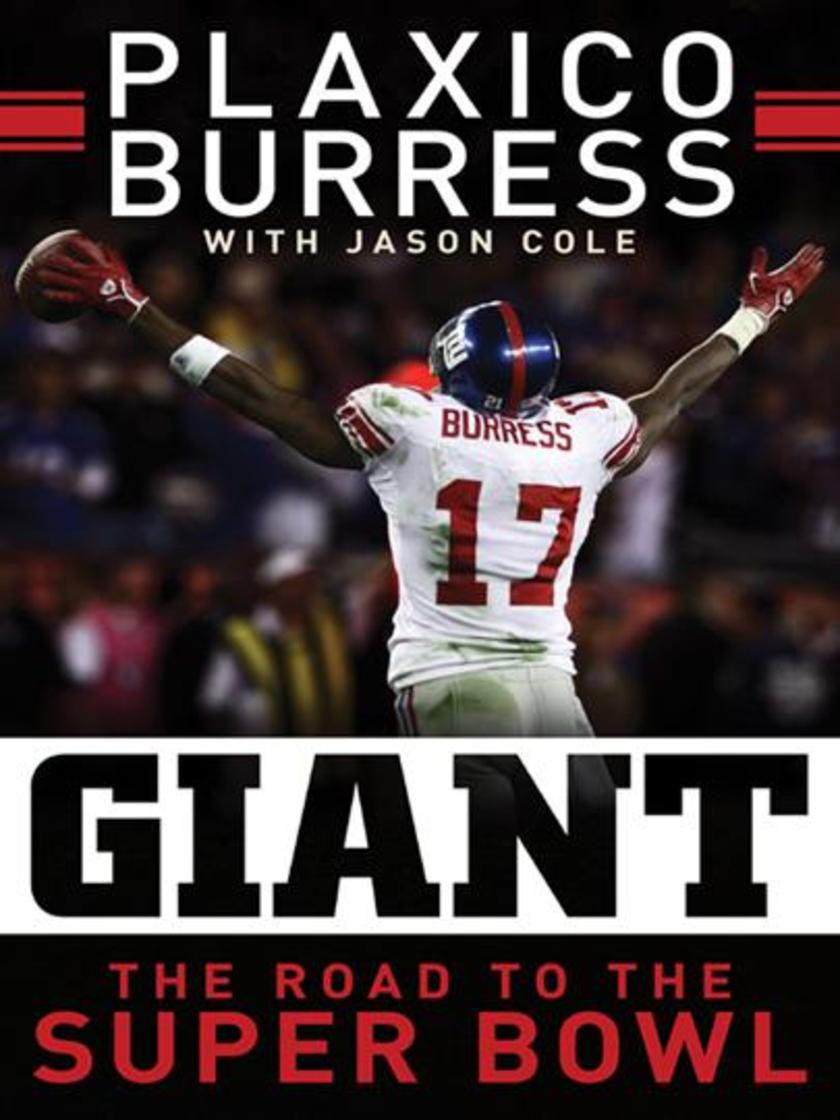
In Giant, Plaxico Burress takes you into the locker room, onto the practice field, and into the huddle, providing a flat-out-honest look at life on and off the field with the New York Giants and at the making of a champion. Throughout the 2007 season, Plaxico battled near-crippling injuries, and despite rarely practicing, being heavily bandaged, and on serious painkillers, he led the New York Giants in receptions, yards, and touchdowns. He continued to play through pain in the playoffs, only to be further injured before Super Bowl XLII. Playing the arrogant Patriots who were inviting the Giants to their victory party before the game was over Plaxico concealed a significant injury that might have changed the outcome of the game if the Pats had known.When he first joined the Giants, Plaxico expected to be the go-to guy for the young quarterback Eli Manning. What he didn't expect was the media and fan scrutiny that was heaped on Manning as they battled to win games.What Plaxico also didn't expect was the difficult relationship he had with head coach Tom Coughlin, who was a stickler for discipline and who would fine players for even the mildest offenses. For five years Plaxico had played for the laid-back Bill Cowher and the Pittsburgh Steelers. In contrast, within weeks of joining the Giants, Plaxico and Coughlin were butting heads, and the fines followed. But there to make things a little easier were friends like Jeremy Shockey and Amani Toomer, nearly polar opposites. With Shock, everything was always full-tilt and his mouth would usually get him into trouble. Toomer was the easygoing elder statesman at times absentminded, but a brilliant receiver. And in 2007, Manning, with Plaxico's advice and support, would rise above the scrutinizing media and come into his own, and Coach Coughlin would relax his grip somewhat and let the team breathe. The results were obvious.It's all here. The ups and downs, the trash-talking, the sweat and blood, and what it takes to be the best.

HarperCollins e-books
¥198.54
Polish poet and essayist Zbigniew Herbert easily stands beside Nobel Prize laureates Milosz and Szymborska as part of a remarkable literary tradition. Though Herbert is very much an Eastern European writer, the urgency, vitality, and relevance of his work extend far beyond the borders of his particular region and his particular time. His fascination with other subjects from painting to all things Dutch enriched the scope and depth of his poetry, and made for compelling explorations in his essays and short prose pieces.The first collected English edition of his prose work, this outstanding volume consists of four books Labryinth on the Sea, Still Life with a Bridle, King of the Ants, and Barbarian in the Garden. Brilliant and erudite, dazzling and witty, these essays survey the geography of humanity, its achievements and its foibles. From Western civilization's past, as witnessed through the Greek and Roman landscape, to musings on the artistic that celebrate the author's discriminating eye, poetic sensibility, and gift for irony, humor, and the absurd; from a sage retelling of myths and tales that became twentieth-century philosophical parables of human behavior to thoughts on art, culture, and history inspired by journeys in France, Italy, and the Netherlands, Collected Prose is a rich compendium that celebrates the mastery and wisdom of a remarkable artist.
Dey Street Books
¥95.11
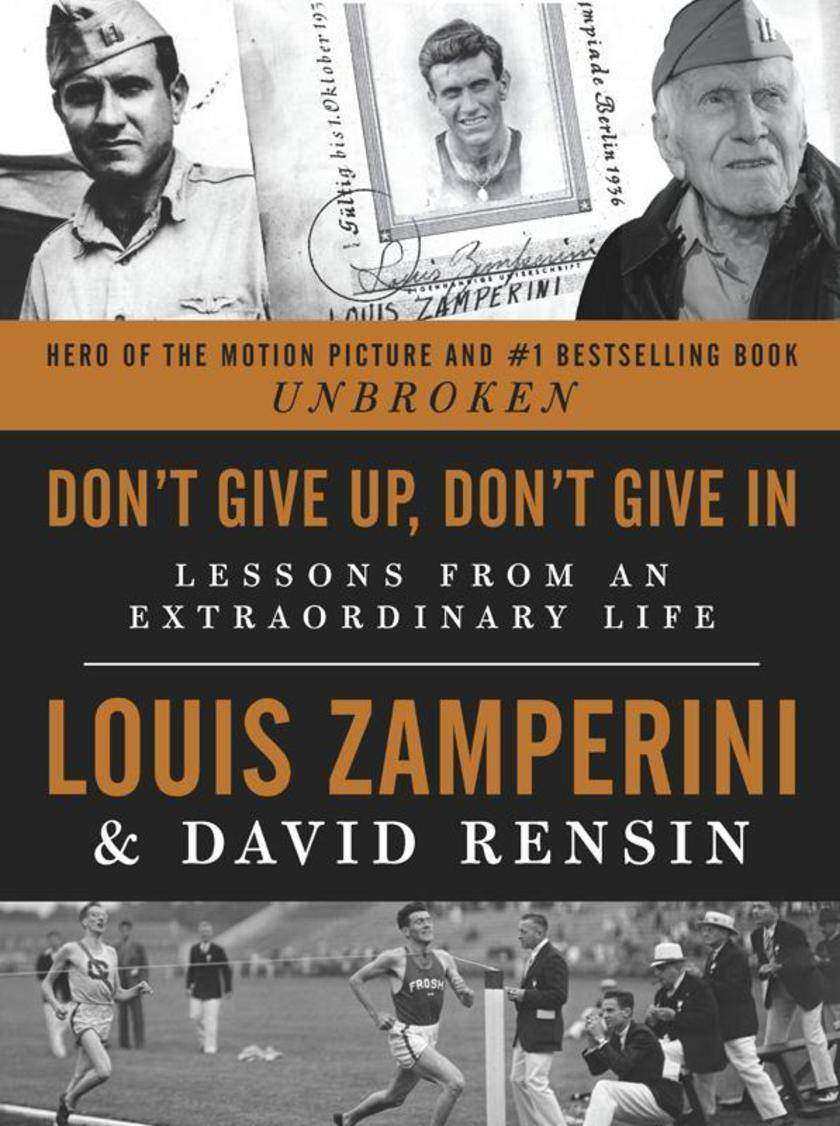
Champion. Survivor. Hero. Legend. Completed just two days before Louis Zamperini's death at age 97, Don't Give Up, Don't Give In shares a lifetime of wisdom, insight, and humor from one of America's most inspiring lives. Zamperini's story has touched millions through Laura Hillenbrand's biography Unbroken, soon to be a major motion picture directed by Angelina Jolie. Now, in his own words, Louis Zamperini reveals, with warmth and great charm, the essential values and lessons that sustained him throughout his remarkable journey. He was a youthful troublemaker from California who turned his life around to become a 1936 Olympian and a world-class miler at the University of Southern California. Putting aside his superstar track career, Louis Zamperini volunteered for the army before Pearl Harbor and was thrust into the violent combat of World War II as a B-24 bombardier. While on a rescue mission, his plane went down in the middle of the Pacific Ocean, where he survived, against all odds, drifting two thousand miles in a small raft for forty-seven days. His struggle was only beginning: Zamperini was captured by the Japanese and, for more than two years, he courageously endured torture and psychological abuse in a series of prisoner-of-war camps. He returned home to face more dark hours, but in 1949 Zamperini's life was transformed by a spiritual rebirth that would guide him through the next sixty-five years of his long and happy life. Cowritten with longtime collaborator David Rensin, Louis Zamperini's Don't Give Up, Don't Give In is an extraordinary last testament that captures the wisdom of a life lived to the fullest. A son of Italian immigrants, Louis Zamperini (1917–2014) was a U.S. Olympic runner, World War II bombardier, and POW survivor. After the war, he returned to the United States to found the Victory Boys Camp for at-risk youth and became an inspirational speaker. Zamperini's story was told in his 2003 autobiography Devil at My Heels, as well as in Laura Hillenbrand's 2010 biography Unbroken. David Rensin worked closely with Louis Zamperini for many years and cowrote Devil at My Heels, as well as fifteen other books, including five New York Times bestsellers.


