


 购物车
 个人中心


Making Modern Japanese-Style Painting
¥535.63
The Western discovery of Japanese paintings at nineteenth-century world's fairs and export shops catapulted Japanese art to new levels of international popularity. With that popularity, however, came criticism, as Western writers began to lament a perceived end to pure Japanese art and a rise in westernized cultural hybrids. The Japanese response: nihonga, a traditional style of painting that reframed existing techniques to distinguish them from Western artistic conventions.?Making Modern Japanese-Style Painting?explores the visual characteristics and social functions of nihonga and traces its relationship to the past, its viewers, and emerging notions of the modern Japanese state.Chelsea Foxwell sheds light on interlinked trends in Japanese nationalist discourse, government art policy, American and European commentary on Japanese art, and the demands of export. The seminal artist Kano Hogai (1828-88) is one telling example: originally a painter for the shogun, his art eventually evolved into novel, eerie images meant to satisfy both Japanese and Western audiences. Rather than simply absorbing Western approaches, nihonga as practiced by Hogai and others broke with pre-Meiji painting even as it worked to neutralize the rupture.By arguing that fundamental changes to audience expectations led to the emergence of nihonga-a traditional interpretation of Japanese art for a contemporary, international market-Making Modern Japanese-Style Painting?offers a fresh look at an important aspect of Japan's development into a modern nation.

Visible Empire
¥529.74
Between 1777 and 1816, botanical expeditions crisscrossed the vast Spanish empire in an ambitious project to survey the flora of much of the Americas, the Caribbean, and the Philippines. While these voyages produced written texts and compiled collections of specimens, they dedicated an overwhelming proportion of their resources and energy to the creation of visual materials. European and American naturalists and artists collaborated to manufacture a staggering total of more than 12,000 botanical illustrations. Yet these images have remained largely overlooked-until now.In this lavishly illustrated volume, Daniela Bleichmar gives this archive its due, finding in these botanical images a window into the worlds of Enlightenment science, visual culture, and empire. Through innovative interdisciplinary scholarship that bridges the histories of science, visual culture, and the Hispanic world, Bleichmar uses these images to trace two related histories: the little-known history of scientific expeditions in the Hispanic Enlightenment and the history of visual evidence in both science and administration in the early modern Spanish empire. As Bleichmar shows, in the Spanish empire visual epistemology operated not only in scientific contexts but also as part of an imperial apparatus that had a long-established tradition of deploying visual evidence for administrative purposes.

Studies on the Abuse and Decline of Reason
¥529.74
Studies on the Abuse and Decline of Reason is a series of fascinating essays on the study of social phenomena. How to best and most accurately study social interactions has long been debated intensely, and there are two main approaches: the positivists, who ignore intent and belief and draw on methods based in the sciences; and the nonpositivists, who argue that opinions and ideas drive action and are central to understanding social behavior. F. A. Hayek's opposition to the positivists and their claims to scientific rigor and certainty in the study of human behavior is a running theme of this important book.Hayek argues that the vast number of elements whose interactions create social structures and institutions make it unlikely that social science can predict precise outcomes. Instead, he contends, we should strive to simply understand the principles by which phenomena are produced. For Hayek this modesty of aspirations went hand in hand with his concern over widespread enthusiasm for economic planning. As a result, these essays are relevant to ongoing debates within the social sciences and to discussion about the role government can and should play in the economy.

Large Carnivore Conservation
¥494.42
Drawing on six case studies of wolf, grizzly bear, and mountain lion conservation in habitats stretching from the Yukon to Arizona, Large Carnivore Conservation argues that conserving and coexisting with large carnivores is as much a problem of people and governance-of reconciling diverse and sometimes conflicting values, perspectives, and organizations, and of effective decision making in the public sphere-as it is a problem of animal ecology and behavior. By adopting an integrative approach, editors Susan G. Clark and Murray B. Rutherford seek to examine and understand the interrelated development of conservation science, law, and policy, as well as how these forces play out in courts, other public institutions, and the field.In combining real-world examples with discussions of conservation and policy theory, Large Carnivore Conservation not only explains how traditional management approaches have failed to meet the needs of all parties, but also highlights examples of innovative, successful strategies and provides practical recommendations for improving future conservation efforts.

Population Fluctuations in Rodents
¥488.54
How did rodent outbreaks in Germany help to end World War IWhat caused the destructive outbreak of rodents in Oregon and California in the late 1950s, the large population outbreak of lemmings in Scandinavia in 2010, and the great abundance of field mice in Scotland in the spring of 2011Population fluctuations, or outbreaks, of rodents constitute one of the classic problems of animal ecology, and in Population Fluctuations in Rodents, Charles J. Krebs sifts through the last eighty years of research to draw out exactly what we know about rodent outbreaks and what should be the agenda for future research.?Krebs has synthesized the research in this area, focusing mainly on the voles and lemmings of the Northern Hemisphere-his primary area of expertise-but also referring to the literature on rats and mice. He covers the patterns of changes in reproduction and mortality and the mechanisms that cause these changes-including predation, disease, food shortage, and social behavior-and discusses how landscapes can affect population changes, methodically presenting the hypotheses related to each topic before determining whether or not the data supports them. He ends on an expansive note, by turning his gaze outward and discussing how the research on rodent populations can apply to other terrestrial mammals. Geared toward advanced undergraduate students, graduate students, and practicing ecologists interested in rodent population studies, this book will also appeal to researchers seeking to manage rodent populations and to understand outbreaks in both natural and urban settings-or, conversely, to protect endangered species.
Regimens of the Mind
¥488.54
In Regimens of the Mind, Sorana Corneanu proposes a new approach to the epistemological and methodological doctrines of the leading experimental philosophers of seventeenth-century England, an approach that considers their often overlooked moral, psychological, and theological elements. Corneanu focuses on the views about the pursuit of knowledge in the writings of Robert Boyle and John Locke, as well as in those of several of their influences, including Francis Bacon and the early Royal Society virtuosi. She argues that their experimental programs of inquiry fulfill the role of regimens for curing, ordering, and educating the mind toward an ethical purpose, an idea she tracks back to the ancient tradition of cultura animi. Corneanu traces this idea through its early modern revival and illustrates how it organizes the experimental philosophers' reflections on the discipline of judgment, the study of nature, and the study of Scripture. It is through this lens, the author suggests, that the core features of the early modern English experimental philosophy-including its defense of experience, its epistemic modesty, its communal nature, and its pursuit of "e;objectivity"e;-are best understood.
Steam-Powered Knowledge
¥488.54
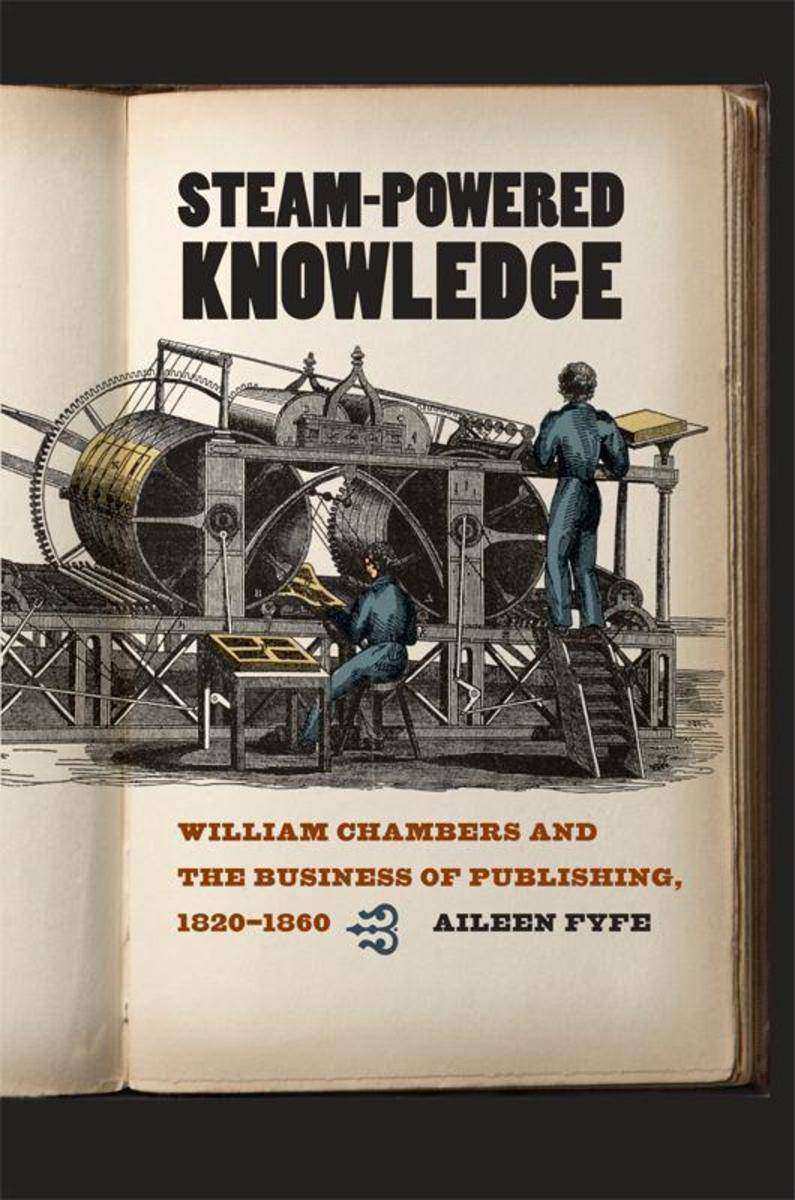
With the overwhelming amount of new information that bombards us each day, it is perhaps difficult to imagine a time when the widespread availability of the printed word was a novelty. In early nineteenth-century Britain, print was not novel-Gutenberg's printing press had been around for nearly four centuries-but printed matter was still a rare and relatively expensive luxury. All this changed, however, as publishers began employing new technologies to astounding effect, mass-producing instructive and educational books and magazines and revolutionizing how knowledge was disseminated to the general public.In Steam-Powered Knowledge, Aileen Fyfe explores the activities of William Chambers and the W. & R. Chambers publishing firm during its formative years, documenting for the first time how new technologies were integrated into existing business systems. Chambers was one of the first publishers to abandon traditional skills associated with hand printing, instead favoring the latest innovations in printing processes and machinery: machine-made paper, stereotyping, and, especially, printing machines driven by steam power. The mid-nineteenth century also witnessed dramatic advances in transportation, and Chambers used proliferating railway networks and steamship routes to speed up communication and distribution. As a result, his high-tech publishing firm became an exemplar of commercial success by 1850 and outlived all of its rivals in the business of cheap instructive print. Fyfe follows Chambers's journey from small-time bookseller and self-trained hand-press printer to wealthy and successful publisher of popular educational books on both sides of the Atlantic, demonstrating along the way the profound effects of his and his fellow publishers' willingness, or unwillingness, to incorporate these technological innovations into their businesses.
Enduring Importance of Leo Strauss
¥453.22
The Enduring Importance of Leo Strauss takes on the crucial task of separating what is truly important in the work of Leo Strauss from the ephemeral politics associated with his school. Laurence Lampert focuses on exotericism: the use of artful rhetoric to simultaneously communicate a socially responsible message to the public at large and a more radical message of philosophic truth to a smaller, more intellectually inclined audience. Largely forgotten after the Enlightenment, exotericism, he shows, deeply informed Strauss both as a reader and as a philosophic writer-indeed, Lampert argues, Strauss learned from the finest practitioners of exoteric writing how to become one himself.Examining some of Strauss's most important books and essays through this exoteric lens, Lampert reevaluates not only Strauss but the philosophers-from Plato to Halevi to Nietzsche-with whom Strauss most deeply engaged. Ultimately Lampert shows that Strauss's famous distinction between ancient and modern thinkers is primarily rhetorical, one of the great examples of Strauss's exoteric craft. Celebrating Strauss's achievements while recognizing one main shortcoming-unlike Nietzsche, he failed to appreciate the ramifications of modern natural science for philosophy and its public presentation-Lampert illuminates Strauss as having even greater philosophic importance than we have thought before.?

Perspectives on Food-Safety Issues of Animal-Derived Foods
¥410.35
As recent stories in the news have shown, maintaining the integrity of the food supply is of critical importance to the consumer. Thousands of Americans die each year from food-borne illnesses, and millions more get sick. Tremendous strides have been made to reduce the incidence of food-borne diseases originating from animal-derived foods, but food safety and food-borne pathogens continue to remain problematic throughout the world. Food-safety scientists from around the nation continue to conduct groundbreaking research not only to understand causative factors in food-borne pathogen prevalence but to develop novel intervention strategies for limiting contamination in all phases of food animal production. The twenty-four essays in this book highlight research efforts of researchers from the tristate Food Safety Consortium established in 1988 by Congress as a research alliance of food-safety scientists at the University of Arkansas, Iowa State University, and Kansas State University. Members of the consortium conduct research through an annual grant approved by Congress and administered by the U.S. Department of Agriculture. Its mission is to conduct extensive investigation into all areas of poultry, beef, and pork meat production, from the farm to the consumer's table. In addition to the consortium researchers, collaborative university researchers, government officials, and industry personnel provide timely reviews of their latest findings with regard to five significant subject areas: preharvest food-borne pathogen ecology and intervention strategies, postharvest food-borne pathogen ecology, rapid methods and detection strategies for food-borne pathogens, antibiotics and antimicrobials in food safety, and emerging issues in food safety. Progress in these research areas provides opportunities to further enhance protection of animal-derived foods from farm to fork.

Republic of Love
¥270.76
At the heart of The Republic of Love are the voices of three musicians-queer nightclub star Zeki Muren, arabesk originator Orhan Gencebay, and pop diva Sezen Aksu-who collectively have dominated mass media in Turkey since the early 1950s. Their fame and ubiquity have made them national icons-but, Martin Stokes here contends, they do not represent the official version of Turkish identity propagated by anthems or flags; instead they evoke a much more intimate and ambivalent conception of Turkishness.Using these three singers as a lens, Stokes examines Turkey's repressive politics and civil violence as well as its uncommonly vibrant public life in which music, art, literature, sports, and journalism have flourished. However, Stokes's primary concern is how Mren, Gencebay, and Aksu's music and careers can be understood in light of theories of cultural intimacy. In particular, he considers their contributions to the development of a Turkish concept of love, analyzing the ways these singers explore the private matters of intimacy, affection, and sentiment on the public stage.

After Life
¥270.76
Life is one of our most basic concepts, and yet when examined directly it proves remarkably contradictory and elusive, encompassing both the broadest and the most specific phenomena. We can see this uncertainty about life in our habit of approaching it as something at once scientific and mystical, in the return of vitalisms of all types, and in the pervasive politicization of life. In short, life seems everywhere at stake and yet is nowhere the same.In After Life, Eugene Thacker clears the ground for a new philosophy of life by recovering the twists and turns in its philosophical history. Beginning with Aristotle's originary formulation of a philosophy of life, Thacker examines the influence of Aristotle's ideas in medieval and early modern thought, leading him to the work of Immanuel Kant, who notes the inherently contradictory nature of "life in itself." Along the way, Thacker shows how early modern philosophy's engagement with the problem of life affects thinkers such as Gilles Deleuze, Georges Bataille, and Alain Badiou, as well as contemporary developments in the "speculative turn" in philosophy.At a time when life is categorized, measured, and exploited in a variety of ways, After Life invites us to delve deeper into the contours and contradictions of the age-old question, "what is life?"

Maternal Effects in Mammals
¥353.16
Evolutionary maternal effects occur whenever a mother's phenotypic traits directly affect her offspring's phenotype, independent of the offspring's genotype. Some of the phenotypic traits that result in maternal effects have a genetic basis, whereas others are environmentally determined. For example, the size of a litter produced by a mammalian mother-a trait with a strong genetic basis-can affect the growth rate of her offspring, while a mother's dominance rank-an environmentally determined trait-can affect the dominance rank of her offspring. The first volume published on the subject in more than a decade, Maternal Effects in Mammals reflects advances in genomic, ecological, and behavioral research, as well new understandings of the evolutionary interplay between mothers and their offspring. Dario Maestripieri and Jill M. Mateo bring together a learned group of contributors to synthesize the vast literature on a range of species, highlight evolutionary processes that were previously overlooked, and propose new avenues of research. Maternal Effects in Mammals will serve as the most comprehensive compendium on and stimulus for interdisciplinary treatments of mammalian maternal effects.

A Grammar of Murder
¥282.53
The dark shadows and offscreen space that force us to imagine violence we cannot see. The real slaughter of animals spliced with the fictional killing of men. The missing countershot from the murder victim's point of view. Such images, or absent images, Karla Oeler contends, distill how the murder scene challenges and changes film.?Reexamining works by such filmmakers as Renoir, Hitchcock, Kubrick, Jarmusch, and Eisenstein, Oeler traces the murder scene's intricate connections to the great breakthroughs in the theory and practice of montage and the formulation of the rules and syntax of Hollywood genre. She argues that murder plays such a central role in film because it mirrors, on multiple levels, the act of cinematic representation. Death and murder at once eradicate life and call attention to its former existence, just as cinema conveys both the reality and the absence of the objects it depicts. But murder shares with cinema not only this interplay between presence and absence, movement and stillness: unlike death, killing entails the deliberate reduction of a singular subject to a disposable object. Like cinema, it involves a crucial choice about what to cut and what to keep.

Sorcery in the Black Atlantic
¥253.10
Girls abused in London and torsos of black boys found in the Thames; African boys disappearing from school and child traffic in Africa; child sacrifice and Brazilian Pentecostal exorcism. Unrelated events are swiftly connected in an uncanny work of prestidigitation, including hitech digital images of torsos and forensic drawings of abused children. Les correspondances symboliques, Baudelaire would say, or contiguous magic, in Frazer’s more prosaic de*ion. It all could make sense, if we believe in our fears, suspicions, gossip, and prejudices. Furthermore, this incredible work of prestidigitation was engineered by two respectable institutions, known for their enlightened search of truth: the BBC and Scotland Yard. But where was the evidence that all these things were connectedThe “exorcism scandal” bewitched the media in Britain for the whole month of June, until some dissenting voices started to talk about a “racist witch hunt.” 5 By then, however, a population of hundreds of thousands of Africans, in particular Pentecostal Africans, was already under suspicion. “What if some of that was true?” some people still may ask. In fact, shortly before completing this introduction, the local London newspaper Evening Standard published a two-page report on an African church in the United Kingdom, with the title “Miracles and claims of baby-snatching,” mixing rumors of child trafficking, sorcery, syncretism, and extreme wealth. 6 That is how sorcery works: not by fully demonstrating its power, but by opening a possible doubt; one is never fully sure it is not true.

Class War?
¥141.26
Recent battles in Washington over how to fix America's fiscal failures strengthened the widespread impression that economic issues sharply divide average citizens. Indeed, many commentators split Americans into two opposing groups: uncompromising supporters of unfettered free markets and advocates for government solutions to economic problems. But such dichotomies, Benjamin Page and Lawrence Jacobs contend, ring false. In Class Warthey present compelling evidence that most Americans favor free enterprise and practical government programs to distribute wealth more equitably.At every income level and in both major political parties, majorities embrace conservative egalitarianism-a philosophy that prizes individualism and self-reliance as well as public intervention to help Americans pursue these ideals on a level playing field. Drawing on hundreds of opinion studies spanning more than seventy years, including a new comprehensive survey, Page and Jacobs reveal that this worldview translates to broad support for policies aimed at narrowing the gap between rich and poor and creating genuine opportunity for all. They find, for example, that across economic, geographical, and ideological lines, most Americans support higher minimum wages, improved public education, wider access to universal health insurance coverage, and the use of tax dollars to fund these programs.In this surprising and heartening assessment, Page and Jacobs provide our new administration with a popular mandate to combat the economic inequity that plagues our nation.

Lawyers of the Right
¥200.12
A timely and multifaceted portrait of the lawyers who serve the diverse constituencies of the conservative movement, Lawyers of the Right explains what unites and divides lawyers for the three major groups-social conservatives, libertarians, and business advocates-that have coalesced in recent decades behind the Republican Party. Drawing on in-depth interviews with more than seventy lawyers who represent conservative and libertarian nonprofit organizations, Ann Southworth explores their values and identities and traces the implications of their shared interest in promoting political strategies that give lawyers leading roles. She goes on to illuminate the function of mediator organizations-such as the Heritage Foundation and the Federalist Society for Law and Public Policy-that have succeeded in promoting cooperation among different factions of conservative lawyers. Such cooperation, she finds, has aided efforts to drive law and the legal profession politically rightward and to give lawyers greater prominence in the conservative movement. Southworth concludes, though, that tensions between the conservative law movement's elite and populist elements may ultimately lead to its undoing.
The emergence of the Classical Style in Greek Sculpture
¥353.16
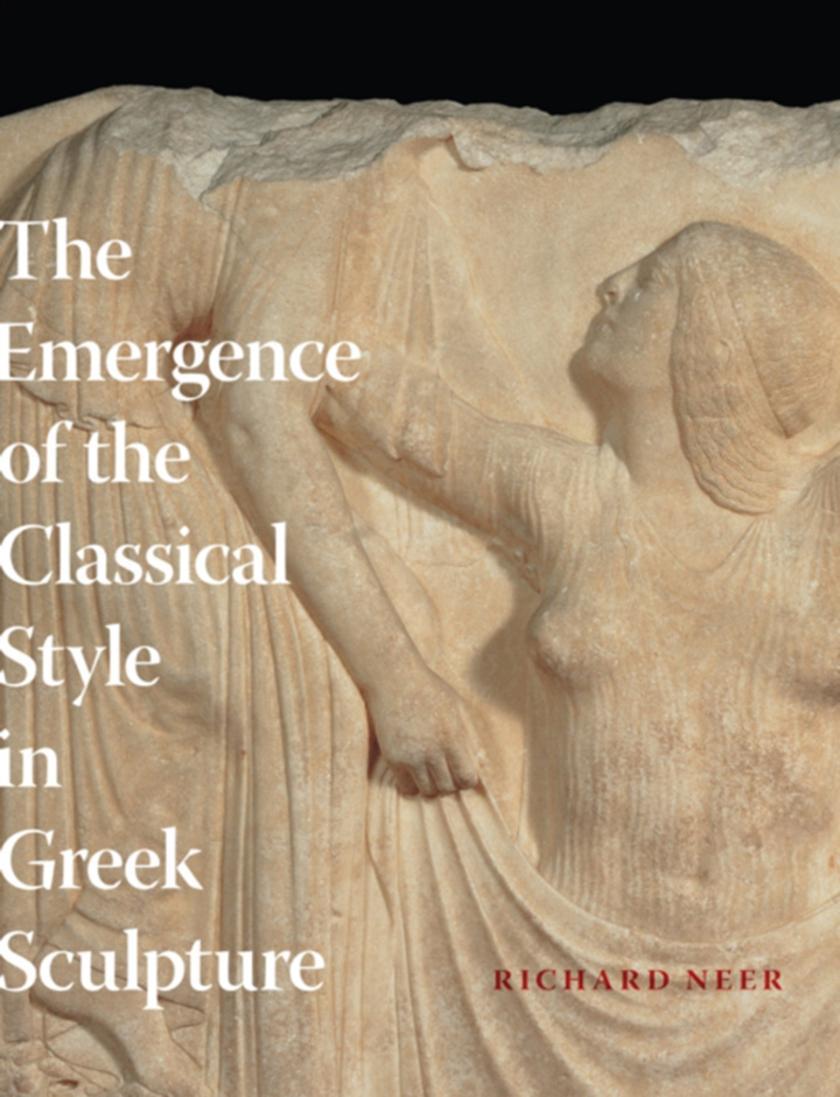
This book was written in Chicago and Rome during the years 2002-2005.Difficulties in obtaining photographs (some insurmountable) delayed publication; the bibliography is reasonably up to date through early 2006 but later additions have been unsystematic.
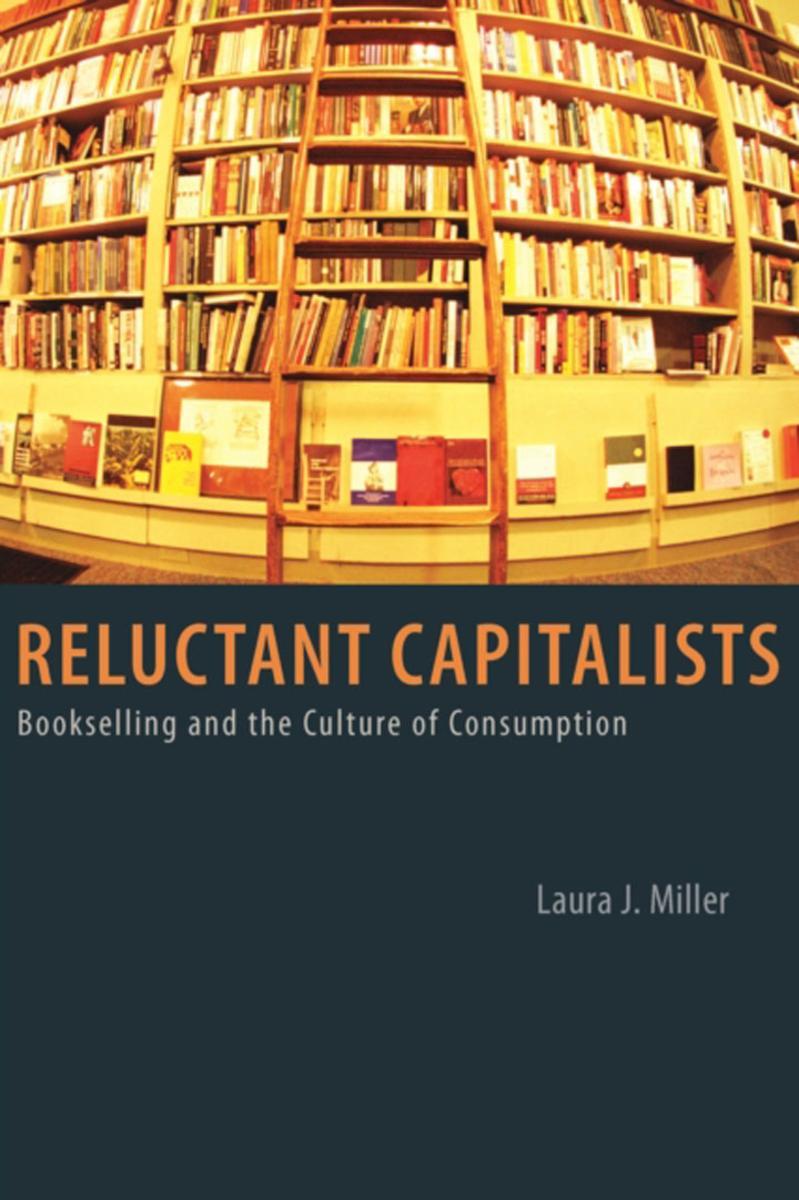
Reluctant Capitalists: Bookselling and the Culture of Consumption
¥229.55
Over the past half-century, bookselling, like many retail industries, has evolved from an arena dominated by independent bookstores to one in which chain stores have significant market share. And as in other areas of retail, this transformation has often been a less-than-smooth process. This has been especially pronounced in bookselling, argues Laura J. Miller, because more than most other consumer goods, books are the focus of passionate debate. What drives that debateAnd why do so many people believe that bookselling should be immune to questions of profit?In Reluctant Capitalists, Miller looks at a century of book retailing, demonstrating that the independent/chain dynamic is not entirely new. It began one hundred years ago when department stores began selling books, continued through the 1960s with the emergence of national chain stores, and exploded with the formation of "e;superstores"e; in the 1990s. The advent of the Internet has further spurred tremendous changes in how booksellers approach their business. All of these changes have met resistance from book professionals and readers who believe that the book business should somehow be "e;above"e; market forces and instead embrace more noble priorities.Miller uses interviews with bookstore customers and members of the book industry to explain why books evoke such distinct and heated reactions. She reveals why customers have such fierce loyalty to certain bookstores and why they identify so strongly with different types of books. In the process, she also teases out the meanings of retailing and consumption in American culture at large, underscoring her point that any type of consumer behavior is inevitably political, with consequences for communities as well as commercial institutions.

Looking Back at the Arkansas Gazette
¥260.75
The Arkansas Gazette was born in a log cabin November 20, 1819, on a bank of the Arkansas River. A local establishment donated a barrel of whiskey to celebrate the event. The first issue carried a complaint from a citizen that the town had too many lawyers. When the paper died 167 years later, the problem was not lawyers but corporate executives who had found themselves, to their confusion, in charge of the oldest newspaper west of the Mississippi and not knowing what to do with it.

Martin Faber: The Story of a Criminal
¥260.85
William Gilmore Simms's (1806-1870) body of work, a sweeping fictional portrait of the colonial and antebellum South in all its regional diversity, with its literary and intellectual issues, is probably more comprehensive than any other nineteenth-century southern author. Simms's career began with a short novel, Martin Faber, published in 1833. This Gothic tale is reminiscent of James Hogg's Confessions of a Sinner and was written four years before Edgar Allan Poe's "e;William Wilson."e; Narrated in the first person, it is considered a pioneering examination of criminal psychology. Martin seduces then murders Emily so that he might marry another woman, Constance. Martin confesses to his friend and is killed after attempting to stab Constance when she visits him in jail. The book was immediately successful and was well received by the northern media, thus starting Simms's successful career as a writer, one that would rank him as the only major southern literary figure besides Poe before the Civil War. As with other volumes in the Arkansas Edition of Simms's work, this volume includes a critical introduction by the editor and a Simms chronology, as well as appendices dealing with textual matters. This edition also includes Simms's 1829 story, "e;Confessions of a Murderer,"e; which was the germ for his first book of fiction.
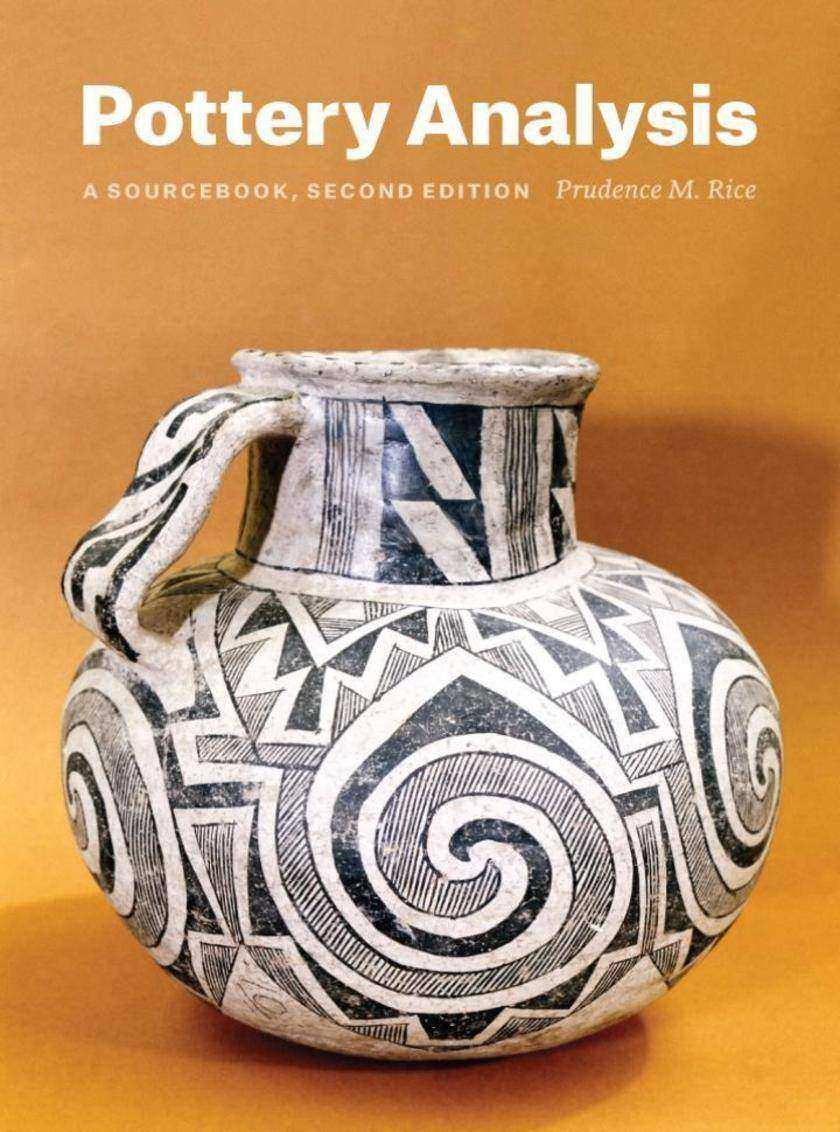
Pottery Analysis, Second Edition
¥453.22
Just as a single pot starts with a lump of clay, the study of a piece's history must start with an understanding of its raw materials. This principle is the foundation of Pottery Analysis, the acclaimed sourcebook that has become the indispensable guide for archaeologists and anthropologists worldwide. By grounding current research in the larger history of pottery and drawing together diverse approaches to the study of pottery, it offers a rich, comprehensive view of ceramic inquiry.This new edition fully incorporates more than two decades of growth and diversification in the fields of archaeological and ethnographic study of pottery. It begins with a summary of the origins and history of pottery in different parts of the world, then examines the raw materials of pottery and their physical and chemical properties. It addresses ethnographic and ethnoarchaeological perspectives on pottery production; reviews the methods of studying pottery's physical, mechanical, thermal, mineralogical, and chemical properties; and discusses how proper analysis of artifacts can reveal insights into their culture of origin. Intended for use in the classroom, the lab, and out in the field, this essential text offers an unparalleled basis for pottery research.


