


 购物车
购物车 个人中心
个人中心
Loving Linsey
¥21.73
The signs have mistakenly told superstitious Linsey Gordon that she has less than three months to live, and she's determined to do one last good deed before she dies. But matchmaking for her timid sister Addie is going to take doing, when the man Linsey has in mind for Addie ends up falling for her! She'll have to stop trusting in signs, and believe in something much stronger than luck: passionate, unpredictable love.

Perfect Match
¥42.48
While Not Looking For Mr. Right... Although she vows that she's locked her heart and thrown away the key, ravishing red-headed Lauren Stevens suddenly has several men vying to prove her wrong—and to win the right to set free her passionate self. Button-down banker Oliver Gotho seems like a good candidate, but it's Oliver's sexy brother Alistair who has invited the beautiful, penniless free spirit to share his living space—temporarily, of course. She thinks she should encourage the successful businessman brother, yet is it Alistair with the oh-so-sensual magic touch who holds the key to her happinessHas She Found Her Perfect MatchSexy, wise, and charismatic, Alistair has offered Lauren a place to stay out of the goodness of his heart—and certainly not because of her gorgeous eyes, luscious lips and enchanting body. Lauren may entrance him, but it's time for him to find a sensible woman to take to wife. And Lauren, with her penchant for peccadilloes, spells nothing but trouble. But spring is in the balmy New Orleans air, and so is love, as both Lauren and Alistair discover that the heart-pounding perfect match isn't always the one knocking at the door...

The Seduction of an Unknown Lady
¥48.39
Seduction is something Fionna Hawkes knows nothing about. So when she encounters a sexy stranger on a moonlit street, her first instinct is to defend herself against her darkly handsome suitor. But letting go of suspicion and allowing herself to fall for Lord Aidan McBride brings even greater danger. In his eyes, she glimpses a powerful passion she longs to fulfill. In his arms, she aches with the secret she longs to unburden. A secret that could cost her her livelihood and her life.Aidan could never resist a mystery, especially one as mesmerizing as the lovely Miss Hawkes! Drawing her into the shelter of his embrace, he won't rest until he convinces her to reveal everything. Braving the danger that stalks Fionna at every turn, Aidan is determined to defend her and just as determined to claim her as his own.

In Bed With the Devil
¥48.39
They call him the Devil Earl a scoundrel and accused murderer who grew up on the violent London streets. A proper young lady risks more than her reputation when consorting with the roguishly handsome Lucian Langdon, but Lady Catherine Mabry believes she has no choice. To protect those she loves, she would do anything even strike a bargain with the devil himself.Lucian desires respectability and a wife above all else, but the woman of his choosing lacks the social graces to be accepted by the aristocracy. Catherine can help Lucian gain everything he wants. But what she asks for in exchange will put their very lives in jeopardy. When danger closes in, Catherine discovers a man of immense passion and he discovers a woman of immeasurable courage. As secrets from his dark past are revealed, Lucian begins to question everything he knows to be true, including the yearnings of his own heart.

The Complete Guide to Vitamins, Herbs, and Supplements
¥49.05
The Natural Way to WellnessFind essential information on hundreds of vitamins, herbs, and supplements -- What will VITAMIN E help cure and how much should I takeVitamin E can help prevent heart disease and treat acne. Adults should take 100 to 400 IU of natural vitamin E daily. Find vitamin, herb, and supplement treatments for hundreds of conditions!Experiencing migrainesSee MAGNESIUM:There is considerable evidence that low magnesiumlevels trigger both migraine and tension headaches. Take250 to 400 milligrams three times daily.Learn about possible interactionswith your pre*ion drugs! Taking ST. JOHN'S WORT for depression?It may interfere with amphetamines, diet pills, nasaldecongestants, or allergy medications, causingnausea or high blood pressure.Here is your comprehensive, portable, one-step guide to all over-thecounter vitamins, herbs, and supplements currently available -- an easy-to-use alphabetical listing that includes valuable information on the most effective forms of each supplement, the nutrient's food source and proper dosage, as well as signs of deficiency, safe use, and possible side effects.

The Undead Next Door
¥55.91
Three signs that something is very different with your mew man:1. He sleeps all day . . . which would be annoying except he's so attentive at night.2. He's attacked by sword-wielding assailants, yet insists he can handle it on his own.3. He never seems to age. Heather Westfield has always lived a quiet life, but that all changes when she helps a very handsome, very mysterious stranger. There's something not quite right about Jean-Luc, but still, she's never been with a man so charming, so attractive . . . so wonderful. Now if only a murderous villain wasn't after them, they might get their happily-ever-after.

Where's My Hero?
¥55.91
Dear Avon Books,Where are my heroesWhenever I'm reading a book by one of my favorite authors I find I'm falling for the wrong guy -- not the hero, but the other man -- and what I really want is for him to have his own story.Like Jake Linley, from Someone to Watch Over Me by Lisa Kleypas that doctor could sit by my bedside if I ever got sick. And Ned Blydon in Splendid by Julia Quinn...he makes me want to learn to waltz! I never thought living in a drafty castle would be much fun until Simon of Ravenswood in Master of Desire by Kinley MacGregor came along.Anyway, I just wanted to let you know that these are my men -- when do they get their stories?Sincerely,A Romance FanSome books are so special that there is more than one hero to love, but only a single story is told. So if you find yourself asking, "Where is my hero?" you'll discover the answer right here in this delicious collection by New York Times bestseller Lisa Kleypas, New York Times bestseller Julia Quinn and USA Today bestseller Kinley MacGregor.

You and No Other
¥55.31
The constraints of quiet widowhood have become too much for Lady Caroline Pearson to bear especially now that her brother-in law has idiotically, and illegally, gambled away her house. Boldly, she confronts the new owner in person. But not only does the dashing rogue, James Ferrington, refuse to return Caroline's deed, he tries to take scandalous advantage of her as well. Sheepish and repentant, James arrives on Caroline's doorstep to make amends unaware that the young widow and her eccentric aunt are intent on retaliation. James merely meant to seduce a bewitching minx and have done with it and, suddenly, he's a kidnapped prisoner in Caroline's cellar. But most shocking of all, James realizes that he has no desire whatsoever to be free for the audacious Caroline has inflamed his senses, destroyed his reason . . . and completely captured his heart.

Wolf and the Dove
¥55.31
The Wolf Noble Aislinn grieves as the Iron Wolf and his minions storm through her beloved Darkenwald. And she burns with malice for the handsome Norman savage who would enslave her. . .even as she aches to know the rapture of the conqueror's kiss The Dove For the first time ever mighty Wulfgar has been vanquished and by a bold and beautiful princess of Saxon blood. He must have the chaste sensuous enchantress who is sworn to his destruction. And he will risk life itself to nurture with tender passion a glorious union born in the blistering heat of hatred and war.
All About Love
¥56.07
Lucifer Cynster has sworn never to pledge his heart -- but fate has other plans...The last unwed Cynster, Alasdair -- known as Lucifer -- has escaped to Devon one step ahead of London's matchmaking mamas. Yet, despite his dedication to avoiding the parson's mousetrap, the irresistible Phyllida Tallent -- a willful, independent beauty -- brings all his masterful Cynster instincts rioting to the fore. Initially Lucifer tries to suppress the desire Phyllida evokes, but fate intervenes, leaving him facing the ultimate challenge for a Cynster -- wooing a reluctant bride.Her wit, charm, and beauty have garnered Phyllida a bevy of suitors, but not one has tempted her the way Lucifer does. His offer to teach her all about love is almost too tantalizing to refuse. And although she has not yet surrendered completely, Phyllida knows only a fool resists a determined Cynster.And Phyllida is certainly no one's fool.

The Secret Sister
¥55.31
The Search For Her Sister Could Cost A Woman Her Life Christy McKenna, the smartest fashion writer in New York, thought she'd escaped her childhood in the impoverished rural West. Then came a call for help from the one person she could not refuse her sister, the internationally celebrated model known only as Jo.Jo's plea draws Christy back to the magnificent mountains and mysterious red-rock canyons of the Four Corners country. But she's too late Jo has disappeared. However, Christy does find an unlikely ally in outlaw archaeologist Aaron Cain, and together they pursue Jo and a fabulous cache of ancient Indian artifacts worth millions.Christy and Cain clash at every turn, but their antagonism soon turns into partnership and blazing passion.
Write for Your Life
¥107.82
Based on Lawrence Block's extremely popular seminar for writers. Discover Block's tips for overcoming writer's block and unleashing your creativity.

Act Like a Success, Think Like a Success
¥88.56
Steve Harvey New York Times bestselling author, nationally syndicated television and radio host, accomplished entrepreneur, and esteemed philanthropist shares his personal principles of success, in this enlightening work that will guide you to a life of riches.Steve Harvey was not always the dynamic television host and internationally renowned funny man whom we know and love today. It took him years to recognize his personal gift his unique talent of making people laugh, and listen and even then he still struggled, at one point being homeless and living out of his car. But through it all he remained focused on his goals, using his gift and his tenacity to achieve unimaginable success. And now, in Act Like a Success, Think Like a Success, he's paying it forward to help you live your dreams and create your own legacy.Every person is born with a gift whether it's the ability to solve problems, connect with people, or create beauty with your hands and that gift can never be taken away from you. You need only to harness it, build it, and attach it to the right vehicle, using it in your job, your marriage, your community, and every aspect of your life. With Steve's easy advice and his sensible yet innovative principles, Act Like a Success, Think Like a Success is your road map to identifying your gift, perfecting it, and letting it transform your life.Finding success and creating a legacy is not easy it takes time, and courage. With this essential guide, and through Steve's warm humor and remarkable insights, you can harness your gift and create the life you've always wanted. You need only to open this book and begin.Act Like a Success, Think Like a Success will inspire you. It will motivate you. And it will change your life.

Pieces of Light
¥90.51
How is it possible to have vivid memories of something that never happenedHow can siblings remember the same event from their childhoods so differently?Do the selections and distortions of memory reveal a truth about the self?Why are certain memories tied to specific places?Does your memory really get worse as you get older?A new consensus is emerging among cognitive scientists: rather than possessing fixed, unchanging memories, we create recollections anew each time we are called upon to remember. As the psychologist Charles Fernyhough explains, remembering is an act of narrative imagination as much as it is the product of a neurological process. In Pieces of Light, he eloquently illuminates this compelling scientific breakthrough via a series of personal stories a visit to his college campus to see if his memories hold up, an interview with his ninety-three-year-old grandmother, conversations with those whose memories are affected by brain damage and trauma each illustrating memory's complex synergy of cognitive and neurological functions.Fernyhough guides readers through the fascinating new science of autobiographical memory, covering topics including imagination and the power of sense associations to cue remembering. Exquisitely written and meticulously researched, Pieces of Light brings together science and literature, the ordinary and the extraordinary, to help us better understand the ways we remember and the ways we forget.

Always and Forever
¥55.31
A desperate need Sassy Grace Atwood never expected to find her proper self accidentally tumbling into a stranger's bed. If she weren't desperate for a man to lead a wagon train of brides to a woman-starved town out West, she never would have gone near Jackson Blake-former lawman or not. She should send the ruggedly charming Texan packing...only he's perfect for the job. Now if her mind would just stop going blank every time she looked at him, they might get this train to Kansas yet.A comsuming passion What's a man to do when a beautiful woman leans over his bed in the middle of the nightCome to think of it, that was the only time Blake's ever seen the straitlaced Miss Atwood the least bit ruffled. He's certain that beneath her buttoned-up appearance lies a passionate woman aching to break free. But though Blake longs to take her in his arms, all he can offer Grace is a life on the run. And when the demons from his past catch up with them, Blake is couaght between the ties that bind and a love that could last...always and forever.

Simply Love
¥55.91
Even the hardest heart can be softened by love ...Cassandra Zerek is a true innocent in a wild anddangerous place -- but her indomitable spirit and gentle soul make her stronger than anyone suspects.The owner of a Colorado mining empire, Luke Taggart's wealth and position can buy him anything, yet he has grown bored with a life of saloons, gambling, and loose women. Nothing soothes his restless inner yearning -- until he spies Cassandra, as fresh and pure as a spring morning, and vows he will possess her. The radiant, charmingly nave youngbeauty seems blind to the depth of Luke's desire or the lengths he is willing to go to seduce her. But the lady is wise, with an unwavering faith in the magical powers of love. And she's determined to awaken the good man hiding in Luke's tormented heart, for only one precious giftwill truly win her: his deep, passionate, and unsullied love.
Passion and Illusion
¥55.31
New York Times bestselling author Barbara Delinsky captures the magic and truth of love in this delightful tale, first published in 1983, of opposites attracting.A controversial Boston radio talk-show host, Monica Grant is a strong, willful, and independent woman. She wants an equally strong man. Someone like the heroes in the romance novels she's addicted to . . . someone like Michael Shaw.A cop with the heart of a poet, Michael is looking for that special someone, too an old-fashioned, feminine woman. And for some reason he thinks Monica just might be the one. By turns infuriatingly chauvinistic and irresistibly attractive, Michael demands something from Monica that she doesn't know if she can give or even wants to. With Michael, can she find the happy ending of her own love story?

Variation on a Theme
¥55.31
New York Times bestselling author Barbara Delinsky enthralls millions of readers with emotionally powerful stories that vividly demonstrate the heart's, power to love. Here, first published in 1984, is an unforgettable story of a woman who must discover who she is before she can give herself to the man she loves.Although he'd already heard a great deal about Rachel Busek, nothing prepared Jim Guthrie for the beautiful flutist's gentle grace. A rough-hewn private investigator, Jim is nearly overwhelmed with the urge to love and protect her. And Rachel is both amazed and delighted at the ease with which Jim slips into her life. Yet as quick passion gives way to leisurely love, Rachel finds herself holding back. Troubling pieces of her past remain a mystery even to her, and keep her from trusting her heart. Now, she must either discover the truth about her past or risk losing the first man in her life worth keeping.
Fifteen Candles
¥84.05
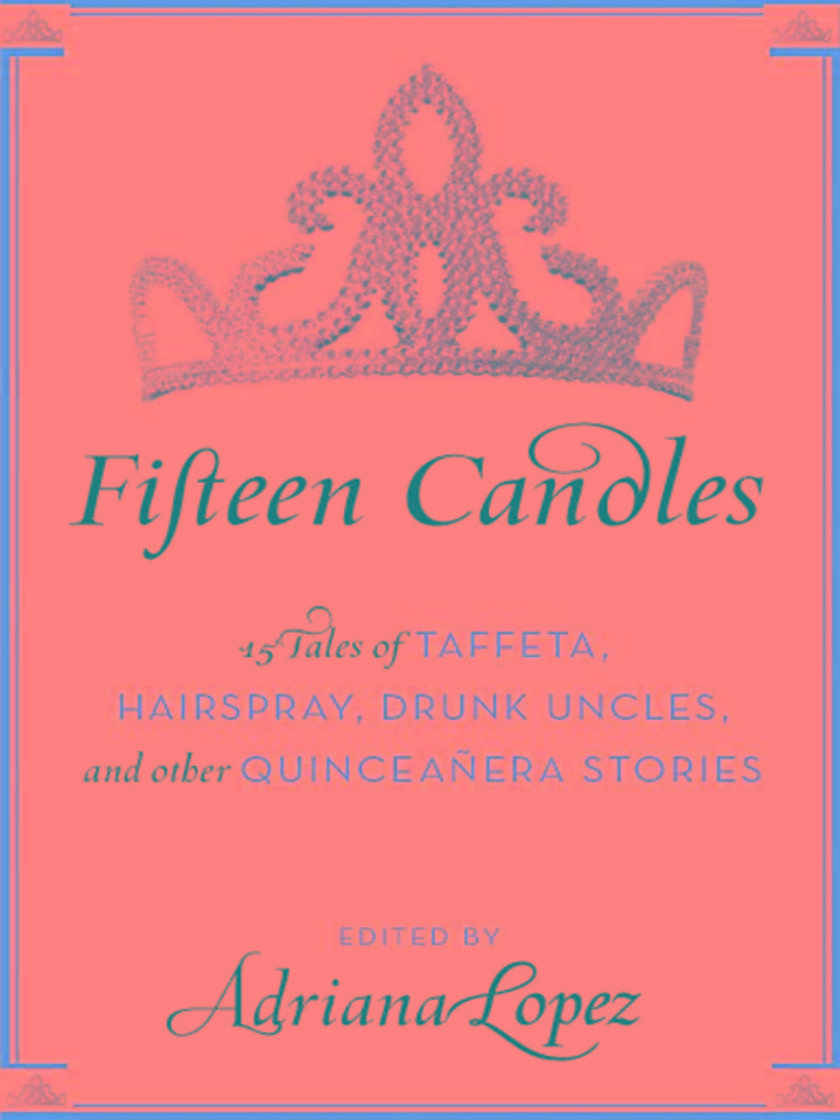
For the uninitiated, the quincea era celebrates the passage of a fifteen-year-old girl into adulthood: It's a bit bat mitzvah with a dash of debutante ball, and loaded with the same potential for hilarity and adolescent angst. In this original anthology, fifteen of the brightest and funniest Latino writers, men and women alike, share their own memories of these moving and often absurd extravaganzas tales of that unique form of familial humiliation that is borne of the best intentions, fierce love, and the infectious joy of parents finally allowing their little girl to grow up.

American Courage
¥90.77
Here is the American adventure. This extraordinary book reveals the intrepid spirit of Americans through-out their history -- from William Bradford's account of the Mayflower landing to the hardship of a pioneer settler, from little-known stories of great figures to harrowing tales from the Wild West, the World Wars, and September 11, 2001. Told with striking eloquence, these are great American stories, tales of daring, adventure, and bravery told by the people who lived them.Drawn from firsthand and historical writings, American Courage gives voice to the pilgrims, founding fathers, revolutionaries, pioneers, '49ers, cowboys, soldiers, pilots, and the many other heroes who have built the nation. Herbert W. Warden III has made the whole of American history fresh and palpably alive, revealing the national character through the growth of precarious "New World" settlements to the formation and defense of the United States of America. Warden has gathered amazing true stories of both everyday Americans and our most beloved national figures, including Ben Franklin and Teddy Roosevelt, in a collection that will astound and inspire generations of readers.In these pages, a Plymouth colonist recounts her abduction by Indians, Ben Franklin recalls his arrival in Philadelphia as a penniless runaway, Daniel Boone explores Kentucky, and George Washington is sent on a perilous winter mission through the wilderness as a twenty-one-year-old soldier. During the Revolutionary period we hear from participants in the Boston Tea Party, about the fates of the signers of the Declaration of Independence, and lesser-known tales of courage from the battlefield. From the War of 1812, a privateer writes of battling the British navy. Davy Crockett reports from inside the Alamo. Andrew Jackson survives a duel to the death. From the Civil War era, a slave mother escapes to the North to be with her children and General James Longstreet gives a harrowing account of Pickett's Charge. Some of the book's most exciting stories come from the western frontier. Here are unbelievable stories of wrestling grizzly bears, Indian warfare, the Pony Express, and gold-rush prospectors. In the twentieth century, Charles Lindbergh recounts his transatlantic flight, soldiers do battle on D-Day and at Okinawa, civil rights pioneers risk their lives, Americans land on the moon, heroes emerge from the tragedy of September 11, 2001.American Courage could not be more timely. Collecting the most daring and exciting reports of American bravery, these are stories of the heart and soul of the country, personal accounts that prove that when the United States is challenged, from the frontier to the Civil War to the space missions to terrorism, individual Americans reveal their true, courageous selves. Highly readable, American Courage is an inspiring chorus of bravery and daring from the men and women whose actions formed a nation.
Joan
¥82.80
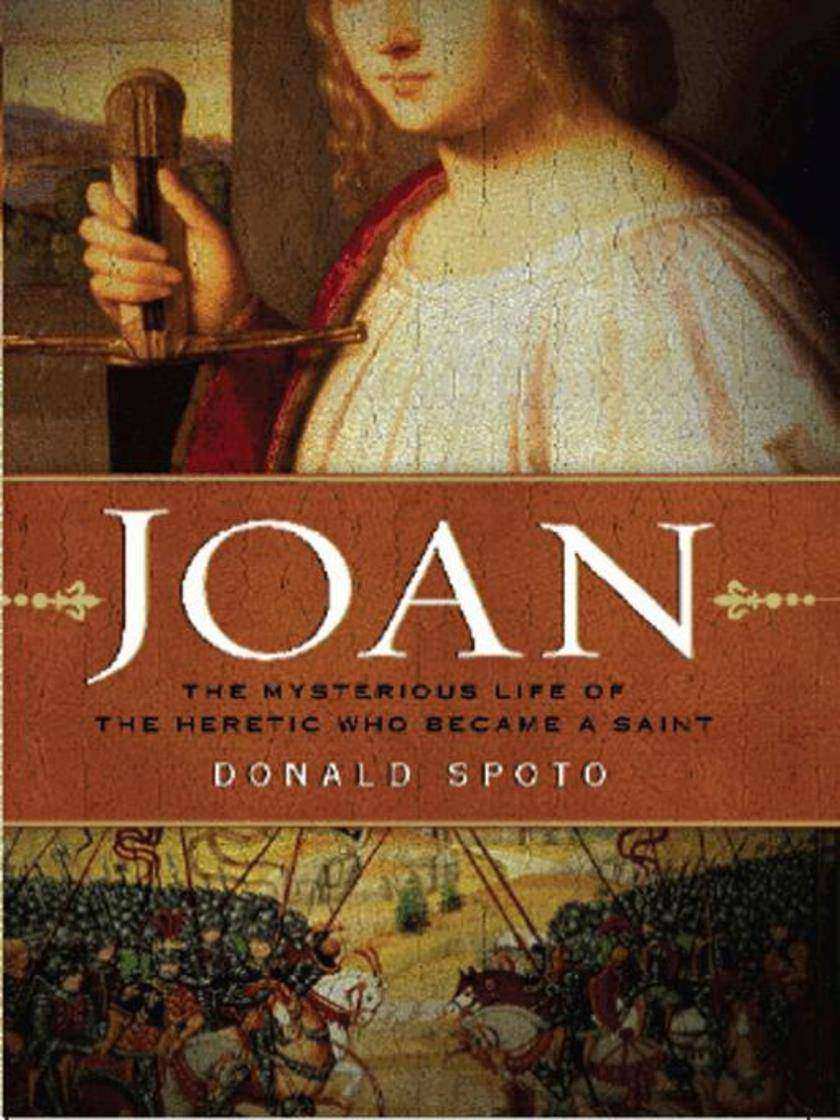
Since her death at the age of nineteen in 1431, Joan of Arc has maintained a remarkable hold on our collective imagination. She was a teenager of astonishing common sense and a national heroine who led men in to battle as a courageous warrior. Yet she was also abandoned by the king whose coronation she secured, betrayed by her countrymen, and sold to the enemy. In this meticulously researched landmark biography, Donald Spoto captures her astonishing life and the times in which she lived. Neither wife nor nun, queen nor noblewoman, philosopher nor stateswoman, Joan of Arc demonstrates that everyone who follows their heart has the power to change history.


